Hunter Valley Laser Scanning | CAD-Ready SolidWorks & Inventor

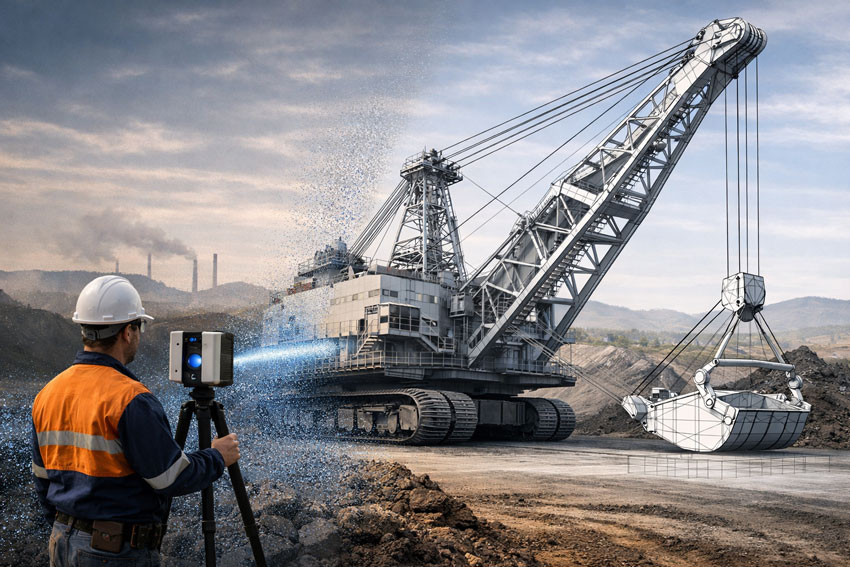
Engineering-grade LiDAR scanning of a dragline at a Hunter Valley mine producing CAD-ready data for SolidWorks and Autodesk Inventor

Hunter Valley Laser Scanning | CAD-Ready SolidWorks & Inventor

Engineering-Grade 3D & LiDAR Scanning Built for SolidWorks & Autodesk Inventor

The Hunter Valley is home to critical mining, power generation, manufacturing, and heavy-industry assets. In these environments, laser scanning is only valuable if the data can be used directly in engineering design software.

At Hamilton By Design, we deliver Hunter Valley laser scanning services that are purpose-built for engineering workflows โ€” ensuring scan data can be reliably used in SolidWorks and Autodesk Inventor without rework, approximation, or loss of accuracy.


Why โ€œScan-Onlyโ€ Data Is a Problem

Many laser scanning services focus on data capture only. While the point cloud may look impressive, it often fails at the most important step:

Can the scan be used directly in CAD and engineering design?

If the answer is no, the scan has limited value.

Common issues with low-grade or technician-only scanning include:

  • Point clouds that are not registered or scaled correctly
  • Insufficient accuracy for mechanical design tolerances
  • Poor alignment to real-world coordinate systems
  • Data that cannot be reliably modelled in SolidWorks or Inventor
  • Extra time and cost spent โ€œfixingโ€ scan data before design can begin

Why would you spend money on a scan that cannot be used for engineering?


Engineer performing engineering-grade laser scanning of a dragline excavator at a Hunter Valley mine for SolidWorks and Autodesk Inventor design

Engineering-Grade Laser Scanning โ€” Designed for CAD Use

Hamilton By Design approaches laser scanning as an engineering input, not a visual deliverable.

Our Hunter Valley laser scanning services are planned and executed so that scan data can be:

  • Used directly in SolidWorks
  • Imported and referenced accurately in Autodesk Inventor
  • Modelled into fabrication-ready geometry
  • Trusted for mechanical, structural, and layout decisions

This means the scan is not the end product โ€” it is the foundation for engineering and design.


Why Scanner Capability Matters

Not all scanners โ€” or scanning providers โ€” are equal.

Low-accuracy or inappropriate scanning equipment can result in:

  • Global accuracy drift
  • Poor definition of critical interfaces
  • Inability to confidently model mating parts, pipework, or steelwork
  • Designs that โ€œlook rightโ€ on screen but fail on site

Hamilton By Design uses engineering-grade scanning equipment and workflows, ensuring the captured data supports:

  • Mechanical equipment upgrades
  • Structural modifications
  • Conveyor, chute, and platform design
  • Fabrication and installation planning

Hunter Valley Applications Where CAD-Ready Scans Matter

Mining & CHPP Upgrades

Laser scanning of conveyors, transfer stations, chutes, and structures that must integrate precisely with new mechanical equipment.

Power Generation & Utilities

Accurate capture of plant rooms, pipework, platforms, and access systems for compliance and upgrade works.

Manufacturing & Heavy Industry

Reliable spatial data to support machinery installation, relocation, and layout optimisation.

Brownfield Construction & Retrofits

Engineering-grade scans to avoid clashes, rework, and costly shutdown overruns.


Engineer-Led Scanning โ€” Not Just Data Capture

At Hamilton By Design, laser scanning is delivered by engineers who understand how the data will be used.

This ensures:

  • Scan resolution and accuracy are matched to design intent
  • Critical interfaces are captured correctly
  • Data integrates seamlessly with CAD workflows
  • Accountability is maintained from scan through to design and documentation

You donโ€™t just receive a point cloud โ€” you receive usable engineering data.


Deliverables That Engineers Can Actually Use

Depending on your project, we provide:

  • Registered, engineering-grade point clouds
  • CAD-ready reference data for SolidWorks and Inventor
  • Section views and alignment references
  • Models and drawings derived directly from scan data
  • Documentation suitable for fabrication and construction

Everything is scoped so the scan adds value immediately, not later after rework.


Hunter Valley Laser Scanning โ€” Designed to Be Used, Not Admired

Laser scanning should remove uncertainty, not create more work.

By ensuring scan data can be used directly in SolidWorks and Autodesk Inventor, Hamilton By Design helps Hunter Valley projects move from site capture to design, fabrication, and installation with confidence.

Hamilton By Design delivers engineering-grade laser scanning in the Hunter Valley โ€” built for real engineering outcomes, not just visualisation.

Contact us to discuss your Hunter Valley laser scanning requirements or arrange an engineering-led site scan.

Name
Would you like us to arrange a phone consultation for you?
Address

3D Construction Scanning Darwin

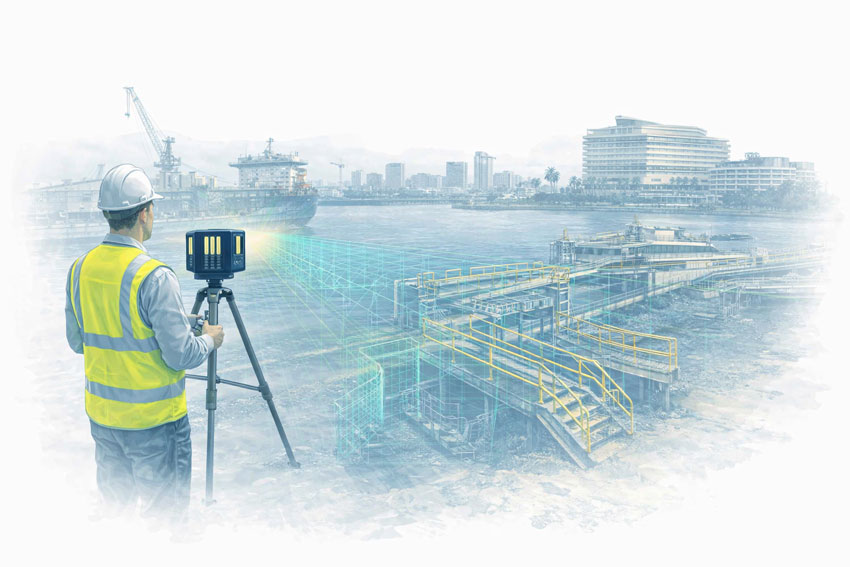
Engineering-grade 3D laser scanner capturing Darwin port infrastructure, harbour assets, and urban skyline

Engineering-Grade LiDAR for Accurate As-Built & Construction Delivery

Construction projects in Darwin operate in a demanding environment โ€” tropical weather, remote logistics, accelerated schedules, and complex interfaces between structural, mechanical, and architectural elements. 3D construction scanning provides a reliable digital foundation to reduce risk, eliminate rework, and support confident decision-making throughout the project lifecycle.

Hamilton By Design delivers engineering-grade 3D construction scanning in Darwin, supporting contractors, engineers, builders, and asset owners with accurate spatial data, as-built models, and construction-ready documentation.

๐Ÿ‘‰ Learn more about our Darwin scanning capability:
https://www.hamiltonbydesign.com.au/3d-scanning-in-darwin/
https://www.hamiltonbydesign.com.au/home/engineering-services/3d-scanning-darwin/darwin-lidar-laser-scanning-services/


What Is 3D Construction Scanning?

3D construction scanning uses high-accuracy LiDAR laser scanners to capture the real-world geometry of construction sites, partially completed works, and existing assets. The output is a dense, survey-grade point cloud that can be used to create:

  • Accurate as-built drawings
  • BIM and digital twin models
  • Clash detection and coordination models
  • Verification of construction tolerances
  • Retrofit and upgrade designs

Unlike traditional tape or total-station methods, LiDAR captures millions of points per second, ensuring complex geometry is recorded correctly the first time.


Engineering-grade 3D laser scanner capturing Darwin port infrastructure, harbour assets, and urban skyline

Why 3D Construction Scanning Matters in Darwin

Construction in Darwin often involves:

  • Live brownfield sites
  • Remote or logistically constrained projects
  • Tight shutdown or installation windows
  • High consequences of dimensional errors

3D construction scanning enables:

โœ” Reduced rework and RFIs
โœ” Improved trade coordination
โœ” Accurate verification before fabrication
โœ” Faster design and approval cycles
โœ” Safer site data capture with minimal disruption

This is particularly valuable for industrial buildings, ports, power generation facilities, defence infrastructure, and commercial developments across the Northern Territory.


Typical Construction Applications

As-Built Verification

Confirm what has actually been built โ€” not what was assumed โ€” before handover, certification, or the next construction stage.

Construction Progress Capture

Document progress at key milestones to support planning, claims, and coordination.

Retrofit & Upgrade Projects

Capture existing structures accurately before mechanical, electrical, or structural upgrades commence.

Clash Detection & Coordination

Overlay scanned data with design models to identify clashes early and avoid costly site changes.


Hamilton By Design logo displayed on a blue tilted rectangle with a grey gradient background

Engineering-Led Scanning โ€” Not Just Data Capture

At Hamilton By Design, 3D construction scanning is delivered by engineers, not just scanning technicians. This means:

  • Scan strategies aligned to engineering outcomes
  • Data captured at appropriate accuracy for construction tolerances
  • Deliverables tailored for CAD, BIM, and fabrication workflows
  • Clear accountability from scan to design to documentation

Our scanning integrates directly with mechanical design, structural analysis, and construction documentation services โ€” providing a single source of truth for your project.


Deliverables to Suit Construction Teams

Depending on your requirements, we can provide:

  • Registered point clouds
  • CAD-ready models
  • Revit / BIM outputs
  • Section views and construction references
  • Engineering drawings derived from scan data

All deliverables are tailored to suit builders, engineers, subcontractors, and asset owners.


Our clients:


3D Construction Scanning Darwin โ€” Partner with Confidence

Whether you are delivering a new build, managing a complex refurbishment, or upgrading an existing facility, 3D construction scanning in Darwin provides the clarity and accuracy needed to build with confidence.

Hamilton By Design supports construction projects across Darwin and the Northern Territory with engineering-grade LiDAR scanning, practical deliverables, and real-world construction experience.

Let Connect us to discuss your project requirements or arrange a site scan.

Name
Would you like us to arrange a phone consultation for you?
Address

From Reality to Results: How Hamilton By Design Delivers Engineering Success Through SolidWorks, Laser Scanning, and Intelligent Data Sharing

In complex engineering environments, success is rarely determined by a single calculation or drawing. It is determined by clarityโ€”clarity of information, clarity of intent, and clarity across every handover point between site, engineer, fabricator, and installer.

Hamilton By Design was created around this idea.

Across mining, heavy industry, infrastructure, and complex buildings, projects increasingly fail not because engineers lack capability, but because teams are working from incomplete, inconsistent, or unreliable information. Assumptions creep in. Measurements are approximated. Old drawings are trusted when they should not be. By the time fabrication or installation begins, risk has already been locked into the project.

Hamilton By Design approaches engineering differently. By combining engineer-led 3D laser scanning, SolidWorks-based mechanical design, and clear, practical data sharing, we reduce uncertainty at the very start of a projectโ€”and that single shift changes everything that follows.


Engineering begins with reality, not assumptions

Every project starts with an existing environment. Whether it is a CHPP in the Bowen Basin, a brownfield processing plant, a congested industrial building, or a live infrastructure asset, the reality on site is often more complex than any drawing suggests.

Hamilton By Design begins with capturing reality as it actually exists.

Using high-accuracy 3D laser scanning, site conditions are recorded in full context: structure, equipment, services, clearances, and access constraints. This is not about producing pretty visualsโ€”it is about creating a measurable, defensible digital reference that engineers can trust.

Unlike traditional measurement methods, laser scanning:

  • Captures millions of data points per second
  • Records geometry that is difficult or unsafe to measure manually
  • Preserves site information long after access windows close
  • Eliminates reliance on assumptions and partial measurements

For engineering teams, this changes the starting point of the project from โ€œwhat we think is thereโ€ to โ€œwhat we know is there.โ€


Why the FARO Focus S70 fits Hamilton By Designโ€™s workflow

4

Hamilton By Design uses the FARO Focus S70 laser scanner because it strikes the right balance between accuracy, portability, and ease of useโ€”qualities that matter in live industrial environments.

The Focus S70 is particularly well suited to:

  • Brownfield industrial sites
  • Mining and materials-handling plants
  • Buildings with tight access or active operations
  • Remote locations where speed and reliability matter

From a practical engineering perspective, its ease of deployment is critical. Scans can be completed quickly, often without disrupting operations, and without the need for complex setup or prolonged site occupation. This means:

  • Shorter site visits
  • Reduced exposure to operational risk
  • More flexibility around shutdown or access windows

Just as importantly, the data produced is clean, consistent, and immediately usable within downstream engineering workflows.

At Hamilton By Design, scanning is not outsourced or treated as a separate discipline. The same engineers who design the solution are involved in planning the scan, understanding what information matters, and verifying that the captured data is fit for purpose.

This engineer-led approach is one of the quiet but critical advantages that underpins project success.


Turning point clouds into engineering intelligence

Raw point clouds are powerfulโ€”but only if they are translated into meaningful engineering information.

This is where Hamilton By Designโ€™s use of SolidWorks becomes central to our workflow.

SolidWorks provides a flexible, parametric modelling environment that allows scanned data to be transformed into:

  • Accurate 3D mechanical models
  • Structural steel frameworks
  • Equipment layouts
  • Platforms, guards, chutes, and pipework
  • Assemblies designed specifically for fabrication and installation

By importing and referencing point clouds directly within SolidWorks, engineers are no longer designing in isolation. Every model is built in context, anchored to the real geometry of the site.

This approach delivers several key advantages:

  • Components fit the first time
  • Clearances are verified early
  • Interfaces with existing assets are fully understood
  • Installation sequencing can be considered during design

Rather than working around uncertainty, engineers are free to focus on optimisation, constructability, and safety.


SolidWorks as a collaboration platform, not just a design tool

One of the most underestimated strengths of SolidWorks is how well it supports collaboration and communication across project teams.

At Hamilton By Design, SolidWorks models are not treated as internal artefacts. They are shared, reviewed, and used as communication tools.

Through native files, neutral formats, and lightweight viewing options:

  • Fabricators can interrogate geometry before cutting steel
  • Site teams can visualise assemblies before installation
  • Clients can understand scope and interfaces without reading complex drawings
  • Engineers can identify risks long before they appear on site

This transparency dramatically reduces misinterpretation. When everyone is looking at the same modelโ€”derived from the same scanโ€”alignment improves naturally.

The result is fewer RFIs, fewer site surprises, and a smoother transition from design to construction.


Fabrication-ready outcomes, not theoretical models

Hamilton By Design places a strong emphasis on fabrication-ready deliverables.

Because models are developed with manufacturing in mind, downstream drawings are clearer, more consistent, and easier to build from. This includes:

  • Clear general arrangement drawings
  • Detailed part and assembly drawings
  • Logical BOMs aligned to procurement
  • Realistic tolerances based on site conditions

Fabricators appreciate drawings that reflect how things are actually builtโ€”not just how they look on screen. By grounding design in scan data and modelling within SolidWorks, Hamilton By Design produces outputs that align closely with workshop reality.

This reduces rework in the shop and stress during shutdowns, where time pressure is highest.


Technology alone does not deliver project success. The real differentiator is how information is shared.

Hamilton By Design places significant emphasis on making data:

  • Accessible
  • Understandable
  • Reusable

Point clouds, models, drawings, and supporting data are structured so they can be:

  • Revisited for future projects
  • Used by different stakeholders
  • Built upon rather than recreated

This is particularly valuable in long-life industrial assets, where todayโ€™s modification becomes tomorrowโ€™s interface.

By maintaining continuity of data across projects, clients build a digital assetโ€”not just a set of drawings. Over time, this reduces engineering cost, shortens project timelines, and increases confidence in future upgrades.


Ease of use drives adoption and value

One of the reasons the FARO Focus S70 and SolidWorks work so well together is their ease of use relative to the value they deliver.

Ease of use matters because:

  • It shortens learning curves
  • It reduces reliance on niche specialists
  • It allows engineers to stay focused on engineering, not software complexity

At Hamilton By Design, tools are selected not because they are fashionable, but because they support repeatable, reliable outcomes.

Scanning workflows are streamlined. Modelling practices are consistent. File structures are logical. This discipline ensures that projects scale smoothly, whether they involve a small retrofit or a major plant upgrade.


Reducing risk where it matters most

In industrial and mining projects, risk concentrates at interfaces:

  • New steel to old steel
  • New equipment to existing plant
  • Design intent to site execution

Hamilton By Designโ€™s integrated workflow reduces risk at these interfaces by ensuring:

  • Geometry is verified early
  • Interfaces are modelled, not guessed
  • Decisions are made with full context

This approach shifts risk out of the shutdown window and into the design phaseโ€”where it is cheaper and safer to manage.


A philosophy built around accountability

What truly differentiates Hamilton By Design is not just technology, but ownership.

The same team is responsible for:

  • Capturing site data
  • Interpreting it
  • Designing the solution
  • Producing fabrication-ready outputs

There is no fragmentation between disciplines, no handover gaps where responsibility becomes unclear. This single-source accountability builds trust with clients, fabricators, and site teams alike.


The compound effect of doing it right

When accurate data, SolidWorks-based design, and clear information sharing come together, the benefits compound:

  • Fewer site visits
  • Shorter design cycles
  • More confident fabrication
  • Smoother installations
  • Better long-term asset knowledge

Over time, this approach changes how projects are delivered. Engineering becomes proactive rather than reactive. Problems are solved digitally instead of on site. Teams collaborate instead of firefighting.


Engineering for real-world success

Hamilton By Designโ€™s workflow is not built around theory. It is built around what actually happens on site.

By grounding every project in reality through laser scanning, translating that reality into SolidWorks models, and sharing information clearly across all stakeholders, Hamilton By Design helps projects succeed where it matters most: in fabrication shops, during shutdowns, and on live sites.

In an industry where uncertainty is expensive and time is unforgiving, clarity becomes the most valuable engineering output of all.

That is the philosophy behind Hamilton By Designโ€”and the reason our approach continues to deliver consistent, practical success across complex engineering projects.

Hamilton By Design logo displayed on a blue tilted rectangle with a grey gradient background

Our Clients:

Name
Would you like us to arrange a phone consultation for you?
Address

3D Scanning Engineering in Bendigo

3D Scanning Engineering in Bendigo

Bendigo is one of Victoriaโ€™s most complex and rewarding engineering environments. Built on deep historic mining ground and filled with active heritage buildings, civic infrastructure, and growing regional development, engineering in Bendigo is rarely straightforward. Almost every project involves existing assets, unknown conditions, and modern performance expectations layered onto historic foundations.

In this environment, assumptions create risk. Accurate as-built information, practical engineering judgement, and buildable documentation are essential.

Hamilton By Design supports Bendigo projects with engineering-led 3D LiDAR laser scanning, mechanical and structural engineering, 3D modelling, FEA, and easy-to-build fabrication drawings with engineering approval โ€” delivering confidence from site capture through to construction.


Engineering in Bendigo: Built on History, Designed for the Future

Most engineering work in Bendigo is brownfield by default. Projects commonly involve:

  • Heritage and civic buildings still in daily use
  • Industrial and institutional facilities built over decades
  • Ground influenced by historic underground mining
  • Ageing infrastructure under increasing demand

At the same time, Bendigo faces future pressures around population growth, infrastructure renewal, climate resilience, and energy performance โ€” all without compromising heritage value.

This makes accurate site data and conservative, well-verified engineering more important than ever.


3D Laser Scanning for Bendigo Projects

High-accuracy 3D LiDAR laser scanning is the foundation of successful engineering in Bendigo.

Hamilton By Design captures precise as-built data for:

  • Heritage buildings and complex structures
  • Industrial and institutional facilities
  • Plant rooms, services corridors, and structural frames
  • Sites with limited, inaccurate, or missing drawings

3D scanning records the true geometry of what exists โ€” including settlement, deflection, misalignment, and undocumented modifications โ€” without disturbing sensitive heritage fabric.

This allows:

  • Better early-stage decisions
  • Reduced design assumptions
  • Safer upgrades to existing assets
  • Fewer surprises during construction

Learn more about our scanning capability here:
3D Laser Scanning


3D Modelling from Real As-Built Conditions

From the point cloud, Hamilton By Design develops accurate 3D CAD models that reflect what is actually on site.

Our 3D modelling services support:

  • Brownfield refurbishments and upgrades
  • Integration of new services into old buildings
  • Clash detection in heritage-constrained environments
  • Constructability and staging reviews
  • Digital asset records for long-term planning

In Bendigo, modelling from real as-built data significantly reduces risk when working within heritage and subsurface constraints.

Explore our modelling services:
3D CAD Modelling


FEA for Existing and Heritage Assets

Many Bendigo projects involve extending the life of structures designed to older standards or subject to unknown historical modifications. Finite Element Analysis (FEA) is used to verify performance and support safe, defensible decisions.

Hamilton By Design applies FEA to:

  • Assess structural capacity and load paths
  • Check deflection, fatigue, and buckling
  • Verify strengthening and modification strategies
  • Support compliance upgrades without unnecessary replacement

By analysing as-built geometry, FEA results are more representative of real behaviour โ€” critical when dealing with historic structures and mined ground.

Learn more about our analysis capability:
FEA Capabilities


Easy-to-Build Fabrication Drawings with Engineering Approval

Clear, practical documentation is essential for Bendigo projects, where construction often occurs within tight sites, around live assets, or under heritage constraints.

Hamilton By Design delivers easy-to-build fabrication and installation drawings, including:

  • General arrangement drawings
  • Fabrication and workshop details
  • Installation and staging layouts
  • As-built documentation

Drawings are produced directly from scanned data and validated 3D models and can be issued with engineering approval, giving builders and fabricators confidence that what is built will fit, function, and comply.

View our drafting services here:
Drafting Services


Hamilton By Design logo displayed on a blue tilted rectangle with a grey gradient background

Why Hamilton By Design in Bendigo?

Hamilton By Design offers a single-source, engineering-led digital workflow โ€” from site capture through to modelling, analysis, and construction documentation.

For Bendigo clients, this means:

  • Reduced risk on heritage and brownfield sites
  • Fewer assumptions and fewer site surprises
  • Designs grounded in real site conditions
  • Fabrication-ready drawings backed by engineering sign-off

Whether you are upgrading heritage buildings, modifying institutional facilities, or planning future-ready infrastructure, Hamilton By Design delivers accurate, practical, and build-ready engineering solutions tailored to Bendigoโ€™s unique challenges.

Our clients

Name
Would you like us to arrange a phone consultation for you?
Address

3D Scanning Engineering in Parks

3D Scanning in Parks NSW

Parks (Parkes), NSW is one of Australiaโ€™s most strategically important inland engineering centres. Known globally for the Parkes Radio Telescope and nationally for its role as a freight, rail, and agricultural hub, engineering in Parks is driven by precision, logistics, and reliability. Projects here often support large catchment areas, seasonal peak demand, and long-distance supply chains โ€” which means there is little tolerance for rework or uncertainty.

Hamilton By Design supports Parks projects with engineering-led 3D LiDAR laser scanning, mechanical and structural engineering, 3D modelling, FEA, and easy-to-build fabrication drawings, helping clients move from site data to construction with confidence.


Engineering in Parks: Precision Meets Logistics

Engineering in Parks is shaped by several unique factors:

  • National-scale scientific and communications infrastructure
  • Inland rail, intermodal freight, and bulk logistics
  • Grain handling, storage, and agricultural processing
  • Emerging industrial development through the Special Activation Precinct

These environments demand engineering solutions that are accurate, robust, and practical, especially where assets operate continuously or are difficult to access once installed.


3D Laser Scanning for Parks Projects

Accurate 3D LiDAR laser scanning is the foundation of successful engineering in Parks.

Hamilton By Design captures high-resolution as-built data for:

  • Rail and logistics infrastructure
  • Grain silos, conveyors, and bulk-handling systems
  • Industrial buildings and plant
  • Existing assets with limited or outdated drawings

3D scanning records the true geometry of assets โ€” including misalignment, deflection, settlement, and undocumented modifications. This is critical in Parks, where infrastructure is often upgraded in stages and must remain operational during works.

The result is fewer assumptions, fewer site visits, and reduced construction risk.

Learn more here:
3D Laser Scanning


3D Modelling from Real As-Built Conditions

From the point cloud, Hamilton By Design develops accurate 3D CAD models that reflect what is actually on site.

Our 3D modelling services support:

  • Brownfield upgrades and capacity increases
  • Clash detection around existing services and structures
  • Modular and transportable designs
  • Fabrication planning and installation sequencing
  • Long-term digital asset records

For Parks projects โ€” where components are often fabricated offsite and installed under tight timeframes โ€” modelling from real data significantly improves build confidence.

Explore our modelling capability:
3D CAD Modelling


FEA to Verify Performance and Reliability

Many assets in Parks operate under high cyclic loading, seasonal peaks, and demanding inland conditions. Finite Element Analysis (FEA) is used to confirm performance and guide upgrade decisions.

Hamilton By Design applies FEA to:

  • Verify structural capacity of existing assets
  • Assess fatigue, stress concentrations, and deflection
  • Check modifications to silos, frames, and handling systems
  • Support strengthening and life-extension strategies

By analysing as-built geometry, FEA results are more representative of real behaviour โ€” critical for assets that must operate reliably during harvest and freight peaks.

Learn more about our analysis services:
FEA Capabilities


Easy-to-Build Fabrication and Installation Drawings

Clear, practical documentation is essential for regional projects where fabrication and installation teams rely on drawings to get the job done efficiently.

Hamilton By Design produces easy-to-build fabrication drawings, including:

  • General arrangement drawings
  • Fabrication and workshop details
  • Installation and lifting layouts
  • As-built documentation

Because drawings are developed directly from scanned data and validated 3D models, they align closely with site reality, reduce ambiguity, and minimise rework.

View our drafting services here:
Drafting Services


Hamilton By Design logo displayed on a blue tilted rectangle with a grey gradient background

Why Hamilton By Design in Parks?

Hamilton By Design provides an integrated digital engineering workflow โ€” from site capture through to modelling, analysis, and construction documentation.

For Parks clients, this means:

  • Fewer assumptions in complex logistics environments
  • Reduced risk during upgrades and expansions
  • Designs that suit inland conditions and heavy utilisation
  • Fabrication-ready drawings that support efficient construction

Whether you are upgrading grain infrastructure, expanding logistics facilities, or modifying existing industrial assets, Hamilton By Design delivers practical, build-ready engineering solutions tailored to the unique demands of Parks, NSW.

If youโ€™re planning a project in Parks, weโ€™re ready to help โ€” starting with accurate data and carrying it through to construction-ready outcomes.

Our clients

Name
Would you like us to arrange a phone consultation for you?
Address

3D Scanning Engineering in Port Augusta

3D Scanning in Port Augusta

Port Augusta is one of South Australiaโ€™s most strategically important engineering centres. Sitting at the crossroads of national road and rail networks, and at the gateway to the outback, it supports projects that stretch far beyond the city itself โ€” from energy infrastructure and utilities to mining, transport, and heavy industry.

Engineering in Port Augusta is shaped by distance, scale, and reliability. Projects often serve remote locations, operate in harsh environments, and leave little room for rework once construction begins. That makes accurate site data, practical engineering, and buildable documentation essential.

Hamilton By Design supports Port Augusta projects with 3D LiDAR laser scanning, mechanical and structural engineering, 3D modelling, FEA, and fabrication-ready drafting, providing a clear digital pathway from site capture to construction.


Engineering in Port Augusta: Built for Distance and Infrastructure

Unlike plant-centric industrial cities, Port Augusta engineering is infrastructure-led. Work here often involves:

  • Power generation, transmission, and energy transition assets
  • Rail, road, and logistics infrastructure
  • Water, pipeline, and utility systems
  • Facilities that support remote and regional projects

These environments demand engineering solutions that are robust, conservative, and well verified, particularly when access is limited and installation conditions are challenging.

Hamilton By Designโ€™s workflow is designed to reduce uncertainty before fabrication and construction begin.


3D Laser Scanning for Port Augusta Projects

Accurate 3D LiDAR laser scanning is the foundation of successful engineering in Port Augusta.

We capture high-resolution, engineering-grade scans of:

  • Existing infrastructure and industrial facilities
  • Power and utility assets
  • Rail-adjacent structures and corridors
  • Buildings, platforms, and access systems

3D scanning records the true as-built condition of assets โ€” including misalignment, deflection, settlement, and undocumented modifications. This is critical in Port Augusta, where legacy infrastructure often predates modern digital records.

Our scan data helps to:

  • Reduce site visits to remote locations
  • Eliminate fit-up surprises during installation
  • Improve safety and shutdown planning
  • Support confident design decisions

Learn more about our scanning services here:
3D Laser Scanning


3D Modelling from Real As-Built Conditions

Once scanning is complete, Hamilton By Design converts point cloud data into accurate 3D CAD models that reflect site reality.

Our 3D modelling services support:

  • Infrastructure upgrades and extensions
  • Brownfield modifications
  • Clash detection and constructability reviews
  • Modular and transportable designs
  • Digital asset records

For Port Augusta projects โ€” where components may be fabricated offsite and installed remotely โ€” accurate modelling significantly reduces risk and improves build confidence.

Explore our modelling capability:
3D CAD Modelling


FEA to Verify Performance and Extend Asset Life

Many Port Augusta projects involve existing assets that must continue operating under new loads, standards, or operating conditions. Finite Element Analysis (FEA) allows these decisions to be made with confidence.

Hamilton By Design applies FEA to:

  • Verify structural capacity
  • Assess fatigue and stress concentrations
  • Check deflection, buckling, and thermal effects
  • Support strengthening or life-extension strategies

By basing analysis on as-built geometry, FEA results are more representative of real behaviour โ€” especially important for infrastructure exposed to heat, dust, and long service lives.

Learn more about our analysis services:
FEA Capabilities


Easy-to-Build Fabrication and Installation Drawings

Clear, practical documentation is critical for Port Augusta projects, particularly where fabrication and installation teams may be working remotely or under tight schedules.

Hamilton By Design produces easy-to-build fabrication drawings, including:

  • General arrangement drawings
  • Fabrication and workshop details
  • Installation and lifting layouts
  • As-built documentation

Because drawings are developed directly from scanned data and validated 3D models, they are aligned with site conditions and fabrication realities โ€” reducing ambiguity and minimising construction delays.

View our drafting services here:
Drafting Services


Hamilton By Design logo displayed on a blue tilted rectangle with a grey gradient background

Why Hamilton By Design for Port Augusta Engineering?

Hamilton By Design offers a single, integrated workflow โ€” from site capture through to engineering, analysis, and construction documentation.

For Port Augusta clients, this means:

  • Better decisions earlier in the project
  • Fewer assumptions and fewer site surprises
  • Designs that suit remote and infrastructure-driven environments
  • Fabrication-ready outputs that support efficient construction

Whether you are upgrading existing infrastructure, supporting energy transition projects, or delivering assets for remote locations, Hamilton By Design provides engineering-led 3D scanning and digital engineering solutions tailored to Port Augustaโ€™s unique demands.

If youโ€™re planning a project in or around Port Augusta, weโ€™re ready to help โ€” starting with accurate data and carrying it through to buildable outcomes.

Our Clients

Name
Would you like us to arrange a phone consultation for you?
Address