Yeppoon Mining Engineering & 3D Laser Scanning Services | Hamilton By Design

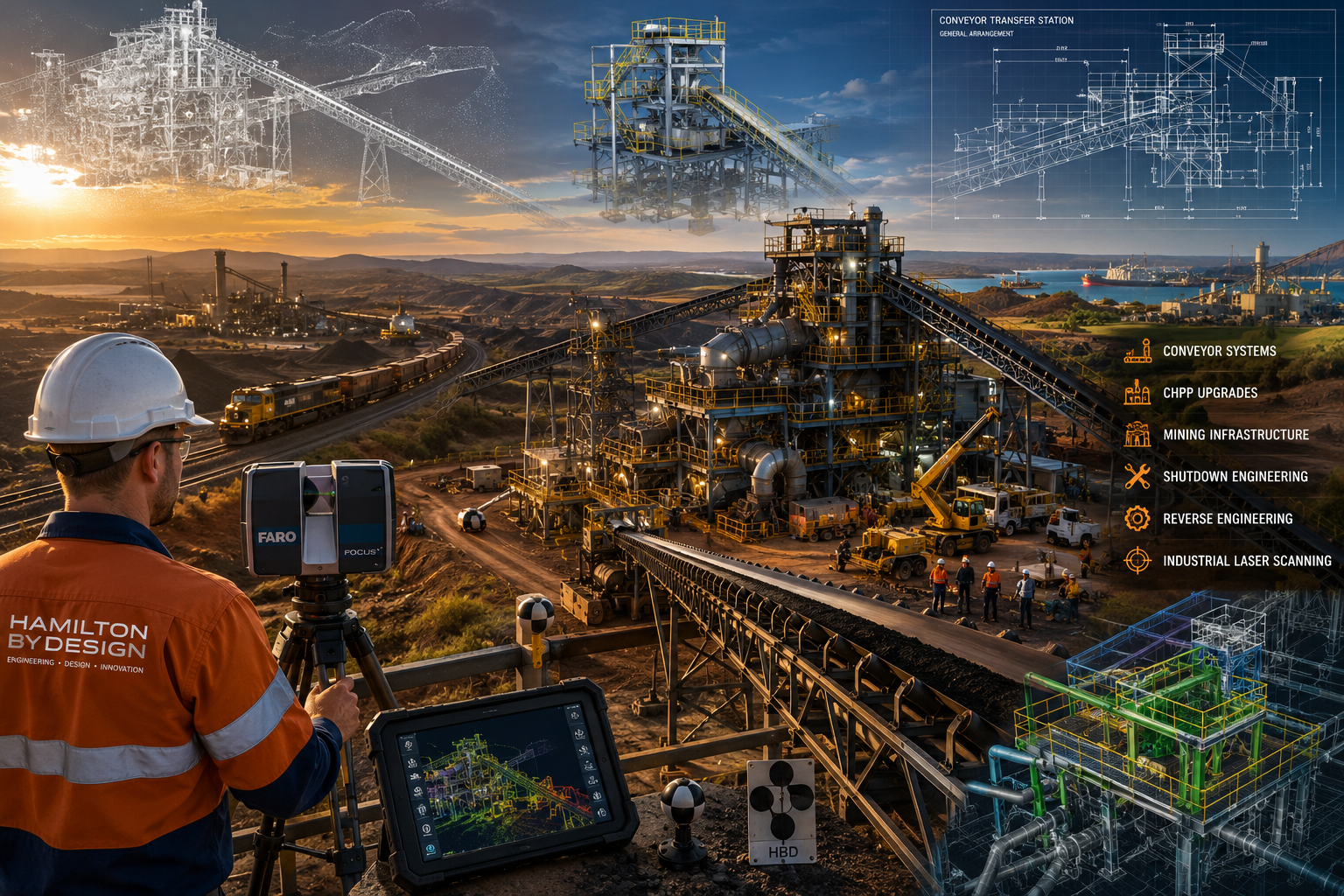
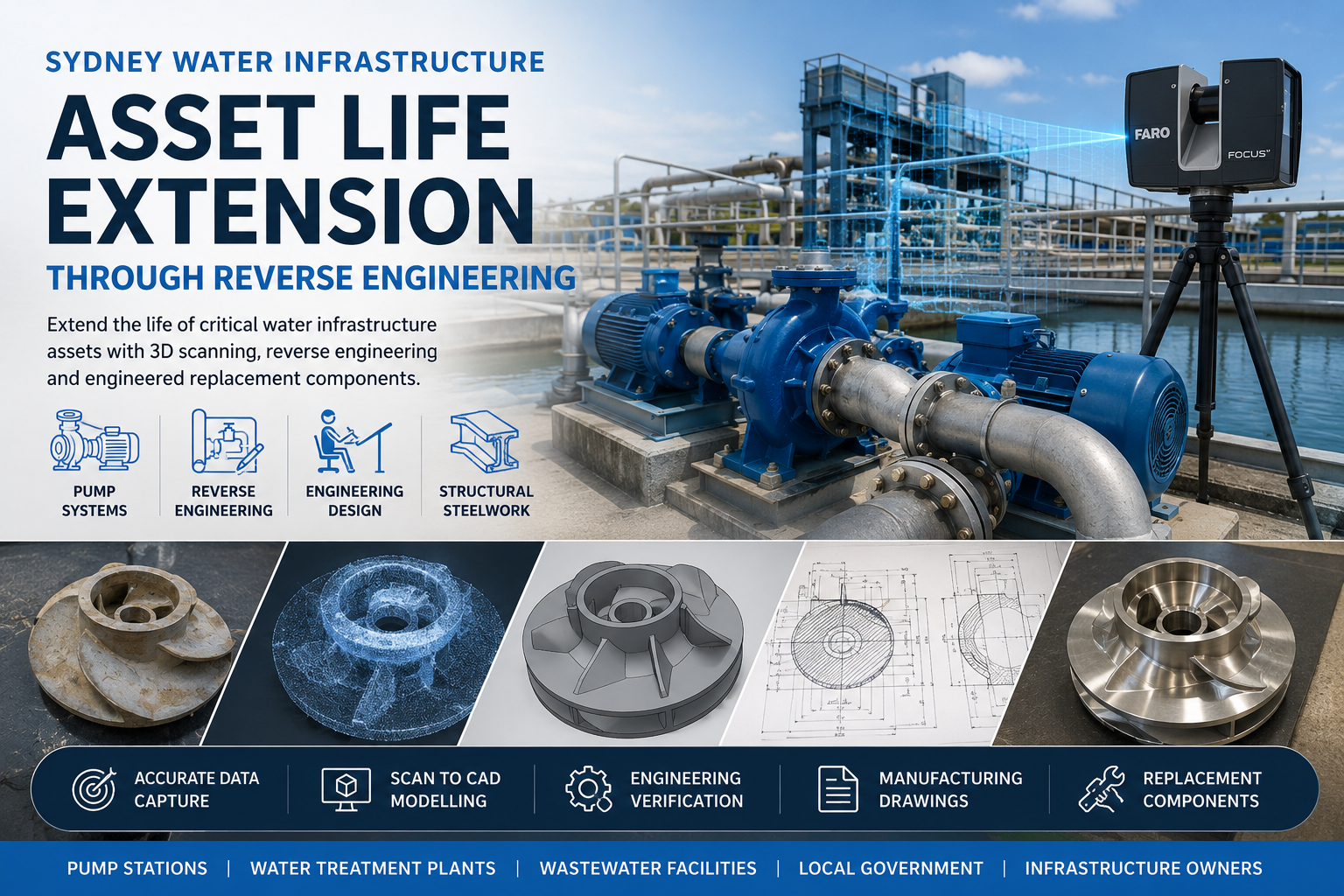
Engineering-grade 3D laser scanning and mining infrastructure project in Central Queensland, showing a conveyor transfer station, CHPP facility, coal train, industrial laser scanner, point cloud modelling and reverse engineering workflows supporting shutdown engineering and mining operations.

Yeppoon + Mechanical Engineering +Industrial Laser Scanning + Mining Infrastructure Services = Hamilton By Design

Supporting Central Queensland Mining, CHPP & Materials Handling Projects

Yeppoon sits at the gateway to Central Queensland’s mining and industrial sectors. While the Capricorn Coast is well known for tourism and marine industries, the region also supports major coal mining operations, coal handling and preparation plants (CHPP), bulk materials handling facilities, industrial infrastructure and shutdown maintenance projects throughout the Bowen Basin and Central Queensland.

At Hamilton By Design, we provide engineering-grade 3D laser scanning, mechanical engineering, reverse engineering and drafting services supporting mining, processing and materials handling facilities throughout Yeppoon, Rockhampton and the wider Central Queensland region.

Our team understands industrial facilities because we come from industry. Our experience includes mining operations, CHPP facilities, smelting plants, conveyor systems, materials handling infrastructure and brownfield plant modifications.


Why Yeppoon?

Yeppoon provides strategic access to some of Australia’s most significant mining and industrial operations.

The region supports:
  • Bowen Basin coal mines
  • Coal handling and preparation plants (CHPP)
  • Bulk materials handling systems
  • Port infrastructure
  • Industrial processing facilities
  • Heavy engineering workshops
  • Mining maintenance contractors
  • Marine and coastal infrastructure
  • Transport and logistics operations

For engineering companies supporting mining infrastructure, Yeppoon offers direct access to clients operating throughout Central Queensland.


Engineering-Grade 3D Laser Scanning

Not all scans are equal.

At Hamilton By Design, we specialise in engineering-grade terrestrial LiDAR scanning designed to support practical engineering outcomes.

Our scanning services assist with:

  • Conveyor upgrades
  • CHPP modifications
  • Shutdown planning
  • Structural steel verification
  • Pipework design
  • Access platform design
  • Brownfield plant upgrades
  • Equipment replacement projects
  • Existing condition surveys
  • Industrial asset capture

We deliver registered point cloud data suitable for:

  • SolidWorks
  • Autodesk Revit
  • AutoCAD
  • Navisworks
  • Inventor
  • Recap
  • Digital engineering workflows

Whether capturing an entire processing plant or a critical conveyor transfer station, our team provides accurate engineering-grade information for design, fabrication and construction.


Conveyor Systems & Materials Handling

Conveyors are the backbone of many mining and processing operations throughout Central Queensland.

Hamilton By Design supports projects involving:

  • Conveyor upgrades
  • Transfer station modifications
  • Conveyor gantries
  • Belt feeder systems
  • Chute design
  • Structural modifications
  • Maintenance access improvements
  • Conveyor replacement projects

Accurate site information is critical when working within operating facilities where shutdown durations are limited and installation tolerances are tight.

Our laser scanning and engineering services help reduce risk by ensuring designs are based on real-world site conditions.


CHPP Upgrades & Brownfield Modifications

Coal Handling and Preparation Plants continue to evolve as production requirements change and equipment reaches the end of its service life.

Hamilton By Design supports CHPP projects including:

  • Structural modifications
  • Conveyor upgrades
  • Pipework design
  • Access system improvements
  • Transfer chute modifications
  • Equipment replacements
  • Existing condition verification
  • Shutdown planning support

Using engineering-grade scan data, we help project teams understand existing site conditions before fabrication and installation begin.


Shutdown Engineering Support

Shutdowns are often where accurate engineering information provides the greatest value.

Every hour of downtime carries significant cost.

Our services assist shutdown teams with:

  • Existing condition capture
  • Site verification
  • Fabrication support
  • Installation planning
  • Clash detection
  • As-built verification
  • Asset documentation

Laser scanning prior to shutdown activities can significantly reduce rework, site fitment issues and project delays.


Reverse Engineering Services

Many mining and processing facilities continue to operate equipment where original drawings are incomplete, unavailable or no longer represent the asset currently installed.

Hamilton By Design provides reverse engineering services for:

  • Conveyor components
  • Chutes and transfer systems
  • Pump components
  • Castings
  • Wear liners
  • Structural assemblies
  • Fabricated equipment
  • Legacy plant infrastructure

Our team combines practical manufacturing knowledge with modern scanning technologies to develop detailed models and fabrication drawings suitable for refurbishment or replacement.


Mining Infrastructure Engineering

Mining infrastructure requires practical engineering solutions capable of operating in demanding environments.

We support projects involving:

  • Materials handling systems
  • Conveyor structures
  • Access platforms
  • Maintenance walkways
  • Structural steelwork
  • Pipework systems
  • Plant modifications
  • Asset upgrades

Our engineering approach focuses on constructability, maintainability and long-term asset performance.


Why Hamilton By Design?

Hamilton By Design combines practical trade experience with engineering capability.

Our background includes:
  • Mechanical engineering
  • Fitting and machining
  • Industrial drafting
  • Mining operations
  • Smelting facilities
  • Materials handling systems
  • Site-based engineering
  • Industrial maintenance

We understand that successful projects require more than accurate models. They require engineering solutions that can be fabricated, installed and maintained within real operating environments.


3D LiDAR scanning and 3D modelling service button โ€” laser scanner capturing a point cloud for engineering and CAD modelling
Mechanical engineering services

Servicing Yeppoon & Central Queensland

Hamilton By Design supports projects throughout:
  • Yeppoon
  • Rockhampton
  • Gladstone
  • Emerald
  • Blackwater
  • Moranbah
  • Dysart
  • Mackay
  • Bowen Basin
  • Central Queensland

Whether you require engineering-grade laser scanning, reverse engineering, conveyor design support or detailed drafting services, our team is available to assist.


Engineering Support for Central Queensland Industry

Hamilton By Design provides engineering-grade 3D laser scanning, mechanical engineering, drafting and reverse engineering services supporting mining infrastructure, CHPP facilities, conveyor systems and industrial processing plants throughout Yeppoon and Central Queensland.

Contact Us – Talk to Us

Contact our team to discuss your next project and discover how accurate site data and practical engineering experience can improve project outcomes, reduce shutdown risk and support long-term asset performance.

Name
Would you like us to arrange a phone consultation for you?
Address
CHPP Engineering title graphic featuring bold white text reading "CHPP Engineering" centred on a blue rounded rectangle background.
Pipework Drafting title graphic featuring bold white text reading "Pipework Drafting" centred on a blue rounded rectangle background.
3D LiDAR Scanning for Engineering Projects title graphic featuring bold white text on a blue rounded rectangle background.

3D LiDAR Scanning for Fit-Outs, Engineering and As-Built Verification

3D LiDAR Scanning for Fit-Outs, Engineering & As-Built Verification | Hamilton By Design

For high-quality fit-outs, industrial upgrades and brownfield engineering projects, accurate site information matters before design work begins.

Hamilton By Design provides engineer-led 3D LiDAR scanning, point cloud processing and scan-to-CAD services for clients who need reliable site data for mechanical, structural and fit-out projects.

We do not promise what cannot be delivered. Every site is different, and every client needs a different level of information. Our role is to understand the project, capture the required data, and provide practical deliverables that support design, fabrication, installation and approval.

Why 3D LiDAR Scanning Matters

Fit-out and engineering projects often fail when drawings do not match the real site.

Walls may not be square. Floors may not be level. Services may have moved. Structural steel, pipework, ducts, cable trays and access constraints may not be shown correctly on older drawings.

3D LiDAR scanning helps capture the existing conditions before decisions are made.

This can assist with:

  • retail and commercial fit-outs
  • mechanical plant upgrades
  • structural steel modifications
  • brownfield industrial projects
  • conveyor, chute and pipework layouts
  • plant rooms and service corridors
  • fabrication and installation planning
  • as-built verification
  • scan-to-CAD modelling
3D CAD Modelling Australia service banner for Hamilton By Design

Engineer-Led Scanning, Not Just Survey Data

Hamilton By Design predominantly works with terrestrial LiDAR sensors for engineering-grade site capture. We also have access to SLAM scanning technology where the project suits that method.

The difference is not just the scanner. The difference is understanding what the scan is being used for.

A real estate scan may help sell or present a property. An engineering scan may need to support design decisions, clearances, fabrication drawings, structural interfaces, maintenance access and construction risk.

We can work with real estate agents if they want to pay mining and engineering industry rates. However, our main focus is mechanical, structural and industrial clients who need accurate data for real project outcomes.

Applications for Fit-Out and Commercial Projects

High-end fit-outs often require a detailed understanding of the existing building envelope. Cabinetry, counters, displays, ceilings, lighting, mechanical services and architectural features all need to fit within the real space.

A 3D point cloud can help designers and project teams review:

  • walls, floors and ceiling levels
  • columns, beams and bulkheads
  • mechanical, electrical and plumbing services
  • access restrictions
  • floor changes and set-downs
  • existing structural constraints
  • space available for custom joinery or equipment

This can reduce the risk of site rework, poor fit-up, late design changes and installation delays.

Applications for Industrial and Mining Projects

Hamilton By Design is especially suited to industrial and mining environments where site conditions are complex and the consequences of poor measurement are higher.

We assist with:

  • mechanical equipment layouts
  • structural steel layouts
  • conveyor and transfer point upgrades
  • pipework and pump skids
  • shutdown planning
  • brownfield plant modifications
  • access and maintenance reviews
  • clash checking against existing conditions
  • CAD models and drawings from point cloud data

Deliverables

Depending on the project, deliverables may include:

  • registered point clouds
  • scan location plans
  • 2D plans, sections and elevations
  • 3D CAD models
  • general arrangement drawings
  • fabrication support drawings
  • as-built records
  • marked-up review packs
  • engineering design support

We only provide the level of detail required for the project. Some clients only need registered point clouds. Others need CAD models, drawings and engineering input.

Our Approach

  1. Understand the project purpose
  2. Confirm the level of detail required
  3. Select the right scanning method
  4. Capture the site safely and efficiently
  5. Register and process the point cloud
  6. Develop CAD or drawing outputs where required
  7. Support review, design and fabrication decisions
3D LiDAR scanning and 3D modelling service button โ€” laser scanner capturing a point cloud for engineering and CAD modelling
Mechanical engineering services

Why Work With Hamilton By Design

Hamilton By Design combines 3D LiDAR scanning with mechanical and structural engineering experience.

That means we are not only capturing geometry. We are thinking about how the data will be used by engineers, fabricators, project managers, installers and asset owners.

For projects where accuracy, access, fit-up and engineering judgement matter, engineer-led scanning can provide better value than a low-cost scan with no design understanding.

Call to Action

Need accurate site data before design, fabrication or fit-out work begins?

Contact Hamilton By Design to discuss 3D LiDAR scanning, point cloud processing and scan-to-CAD support for your next project.

Finite Element Analysis (FEA) engineering simulation button
Mechanical engineering services

Engineering and 3D LiDAR Scanning Services in Prineville, Oregon

Prineville, Oregon has a long industrial history built around timber, forestry, sawmills, and manufacturing. While the region is now recognised internationally for technology infrastructure and data centres, the timber and wood processing industries continue to play a major role in the local economy and industrial landscape.

Across sawmills, woodworking facilities, manufacturing plants, and industrial operations, companies are under increasing pressure to improve safety, reduce downtime, modernise aging infrastructure, and maintain accurate engineering documentation.

This is where Hamilton By Design Co. can assist.

Hamilton By Design Co. provides engineer-led 3D LiDAR scanning, scan-to-CAD services, structural drafting, mechanical engineering support, and industrial digital engineering workflows for timber processing facilities, woodworking operations, industrial plants, and manufacturing infrastructure.

By combining engineering knowledge with high-accuracy terrestrial LiDAR scanning technology, Hamilton By Design helps companies reduce project risk, improve fabrication accuracy, and develop reliable as-built documentation for maintenance, shutdowns, plant upgrades, and future expansion projects.

Many timber mills and woodworking facilities contain highly mechanical environments involving:

  • conveyors,
  • transfer systems,
  • saw lines,
  • material handling systems,
  • dust extraction infrastructure,
  • hydraulic equipment,
  • structural steel platforms,
  • rotating machinery,
  • and processing equipment.

Over decades of operation, many industrial facilities evolve through ongoing modifications, maintenance activities, and equipment replacements. In many cases, original drawings no longer reflect actual onsite conditions.

3D CAD Modelling Australia service banner for Hamilton By Design

This creates significant engineering and commercial risks when companies attempt to:

  • install new machinery,
  • modify conveyors,
  • replace structural steel,
  • increase production capacity,
  • redesign transfer systems,
  • or upgrade processing infrastructure.

Outdated or inaccurate drawings can result in:

  • fabrication clashes,
  • installation delays,
  • increased labour costs,
  • shutdown overruns,
  • safety concerns,
  • and costly rework onsite.

Hamilton By Design assists companies by capturing engineering-grade point cloud data using terrestrial 3D LiDAR scanning systems. Instead of relying on manual measurements or outdated PDFs, industrial facilities can be digitally captured with millimetre-level accuracy before engineering or fabrication work begins.

Unlike low-cost visual-only scanning services, Hamilton By Design operates as an engineer-led organisation focused on practical industrial and fabrication outcomes.

Using engineering-grade terrestrial LiDAR scanning equipment, facilities can be scanned to support:

  • sawmill upgrades,
  • conveyor redesigns,
  • mechanical modifications,
  • structural steel alterations,
  • equipment replacements,
  • dust extraction upgrades,
  • and brownfield shutdown projects.

Captured point cloud data can then be converted into:

  • 3D CAD models,
  • as-built layouts,
  • fabrication drawings,
  • structural steel models,
  • mechanical assemblies,
  • engineering sections and elevations,
  • and controlled documentation packages.

For timber mills and woodworking facilities, this provides a more reliable engineering foundation for maintenance planning, fabrication, construction, and operational upgrades.

The woodworking and timber industries contain significant operational and mechanical risks. Equipment failures involving conveyors, saw systems, platforms, guarding, lifting systems, or structural supports can create serious safety consequences if engineering design, modifications, or fabrication are not properly managed.

Hamilton By Design supports companies through:

  • accurate site measurement,
  • engineering-grade scanning,
  • structural and mechanical drafting,
  • engineering modelling,
  • and controlled engineering documentation systems.

Modern engineering workflows increasingly rely on:

  • accurate as-built data,
  • finite element analysis (FEA),
  • controlled revision systems,
  • and engineering governance platforms

to ensure modifications are properly documented and validated before installation.

Using technologies such as:

  • terrestrial LiDAR scanning,
  • SolidWorks 3D modelling,
  • engineering simulation tools,
  • and the 3DEXPERIENCE platform,

project teams can better understand loading conditions, structural interactions, fabrication requirements, and installation constraints before work proceeds onsite.

This helps reduce engineering uncertainty while improving safety, planning accuracy, and project coordination.

Hamilton By Design can also assist companies operating within brownfield industrial environments where construction and upgrades occur around existing operational equipment.

Brownfield facilities often present challenges including:

  • restricted access,
  • undocumented modifications,
  • tight shutdown windows,
  • difficult measurement conditions,
  • and limited historical engineering information.

Through engineer-led scanning and digital engineering workflows, Hamilton By Design supports:

  • shutdown planning,
  • point cloud registration,
  • scan-to-CAD conversion,
  • equipment modelling,
  • and engineering drawing development.

This allows engineers, fabricators, and project managers to work from accurate digital representations of the facility rather than assumptions or incomplete historical records.

For timber mills, woodworking facilities, and industrial plants in Prineville, this can significantly improve:

  • fabrication accuracy,
  • installation efficiency,
  • shutdown coordination,
  • and project delivery outcomes.

Hamilton By Design can support industrial facilities with:

  • conveyor engineering,
  • transfer chute layouts,
  • structural steel drafting,
  • equipment support structures,
  • maintenance platforms,
  • pipework drafting,
  • access systems,
  • and mechanical design support.

By integrating point cloud data directly into the engineering workflow, new infrastructure can be designed within the context of actual site conditions.

This is particularly valuable in older forestry and industrial facilities where:

  • tolerances are tight,
  • access is restricted,
  • and existing drawings may no longer reflect reality.

As industrial facilities continue modernising, engineering governance and drawing control are becoming increasingly important. Many projects now require controlled revision systems, audit-ready documentation, and accurate digital engineering records.

Hamilton By Design supports structured engineering workflows through:

  • controlled drawing revisions,
  • digital engineering management,
  • engineering document governance,
  • and coordinated CAD environments.

This assists companies in maintaining:

  • accurate as-built drawings,
  • traceable engineering changes,
  • controlled fabrication information,
  • and long-term digital asset records.

For industrial facilities in Prineville, this supports safer operations, improved maintenance planning, and more efficient future expansion projects.

As Prineville continues growing across timber processing, forestry, manufacturing, industrial infrastructure, and technology sectors, the demand for accurate engineering information will continue increasing.

Hamilton By Design combines:

  • engineering expertise,
  • industrial plant knowledge,
  • terrestrial LiDAR scanning,
  • 3D CAD modelling,
  • and engineering governance systems

to support safer and more efficient industrial project delivery.

Hamilton By Design logo displayed on a blue tilted rectangle with a grey gradient background

Whether assisting with a timber mill upgrade, woodworking facility expansion, conveyor modification, shutdown project, structural steel redesign, or industrial mechanical installation, engineer-led 3D scanning provides a practical pathway toward improved engineering accuracy, reduced project risk, and more reliable long-term infrastructure management.

3D LiDAR scanning and 3D modelling service button โ€” laser scanner capturing a point cloud for engineering and CAD modelling
Mechanical engineering services

Why FARO Laser Scanners Deliver the Best Outcomes for Mining and Manufacturing Sites

ARO laser scanning workflow showing point cloud processing, SOLIDWORKS modelling, and fabrication drawings for a mining and manufacturing plant

In mining and manufacturing, the difference between success and rework comes down to one thing:

The quality of your dataโ€”and how you use it.

While many providers can โ€œcapture a scan,โ€ not all can deliver usable engineering outcomes. This is where FARO laser scanners and the FARO software ecosystem stand apart.


Engineer-Led Scanning vs Generic Data Capture

Most scanning providers deliver:

  • Raw point clouds
  • Mesh files (STL, OBJ)
  • Limited usability for engineering

At Hamilton By Design, we take a different approach:

Engineering-led scanning using FARO tools, built for design, modelling, and fabrication.

The real advantage of FARO is not just the hardwareโ€”itโ€™s the software ecosystem that turns scan data into engineering decisions.


The Real Advantage: FARO SCENE Software

At the core of the FARO workflow is FARO SCENE, purpose-built for point cloud processing, registration, and validation.

Unlike generic tools, SCENE allows:

1. Hybrid Registration (Accuracy You Can Trust)

  • Combine cloud-to-cloud, targets, and survey control
  • Validate alignment visually and numerically
  • Eliminate stitching errors before they reach design

โžก๏ธ This ensures engineering-grade accuracy, not just visual alignment

FARO SCENE enables flexible registration workflows that combine multiple methods for precise alignment of complex sites


2. On-Site Registration (No Return Visits)

  • Register scans in the field
  • Identify gaps immediately
  • Confirm coverage before leaving site

โžก๏ธ Critical for:

  • Shutdowns
  • Remote mine sites
  • High-cost mobilisation environments

SCENE supports real-time, on-site registration and validation, allowing immediate data verification and reducing the need for rework


3. Clean, Usable Point Clouds (Not Just Raw Data)

  • Automatic filtering of noise
  • Colour balancing
  • Duplicate point removal
  • Density optimisation

โžก๏ธ Result:
Clean datasets ready for CAD, not bloated unusable files

SCENE includes filtering, validation, and optimisation tools to improve data quality and usability for downstream workflows


4. Full Workflow Integration (Scan โ†’ CAD โ†’ Engineering)

FARO integrates directly into engineering workflows:

  • Export to CAD and BIM platforms
  • Compatible with tools like:
    • SOLIDWORKS
    • Revit
    • Navisworks

โžก๏ธ This is the key difference:

FARO data is built to be engineered, not just viewed

SCENE enables export into multiple CAD and point cloud formats for modelling and engineering applications


5. Visual Validation (What You See Is What You Build)

  • 3D visualisation
  • VR inspection
  • Flythrough and walkthrough capability

โžก๏ธ Engineers and stakeholders can:

  • Verify design intent
  • Identify clashes early
  • Reduce construction risk

SCENE supports immersive 2D, 3D, and VR visualisation for detailed project evaluation


6. Scalable for Large Industrial Sites

Mining and manufacturing sites are:

  • Large
  • Complex
  • Often poorly documented

FARO SCENE allows:

  • Management of thousands of scans
  • Structured project organisation
  • Fast visualisation of large datasets

โžก๏ธ This is critical for:

  • CHPP plants
  • Smelters
  • Conveyor systems
  • Brownfield upgrades

Why This Matters for Mining & Manufacturing

Reduce Rework

Accurate, validated data reduces:

  • Site clashes
  • Fabrication errors
  • Installation delays

Improve Shutdown Efficiency

  • Capture once
  • Model correctly
  • Execute without surprises

Enable Brownfield Engineering

Most sites are not โ€œgreenfieldโ€:

  • Legacy assets
  • Unknown geometry
  • Modifications over time

โžก๏ธ FARO enables:
True as-built modelling, not assumptions


Support Fabrication-Level Detail

With the right workflow (FARO + engineering):

  • Steel detailing
  • Mechanical integration
  • Conveyor and chute design
  • Retrofit design

โžก๏ธ Deliverables become:
Fabrication-readyโ€”not conceptual


FARO vs โ€œOther Scanning Solutionsโ€

Many alternatives focus on:

  • Speed over accuracy
  • Visual outputs over engineering use
  • Meshes instead of parametric models

FARO, combined with SCENE, delivers:

  • Controlled accuracy
  • Transparent registration
  • Engineering-ready outputs

The Hamilton By Design Approach

We donโ€™t just use FARO toolsโ€”we use them properly.

  • Engineer-led scanning
  • Structured workflows
  • Point cloud to CAD conversion
  • SOLIDWORKS-based modelling
  • Fabrication-ready deliverables

Our focus is on outcomesโ€”not just data.


Anyone can scan.

Very few can:

  • Validate the data
  • Convert it into engineering models
  • Deliver drawings that can be built

Thatโ€™s why FARO, when used correctly, is not just a scanning toolโ€”

Itโ€™s a complete engineering data solution for mining and manufacturing.


3D LiDAR scanning and 3D modelling service button โ€” laser scanner capturing a point cloud for engineering and CAD modelling
Mechanical engineering services

Our Clients


Name
Would you like us to arrange a phone consultation for you?
Address
3D CAD Modelling Australia service banner for Hamilton By Design

3D Laser Scanning Port Macquarie | Engineering-Grade LiDAR by Mechanical Engineers

3D Laser Scanning Port Macquarie โ€“ Why Accuracy Matters for Engineering Projects

If you’re planning a plant upgrade, fabrication project, or site modification in Port Macquarie, the quality of your 3D scan data directly impacts the success of your project.

At Hamilton By Design, we provide engineering-grade 3D laser scanning services led by mechanical engineers, ensuring the data captured is not only accurate, but also suitable for real-world design, fabrication, and construction outcomes.

Not All 3D Scanning Is the Same

With the rise of low-cost scanning technology, many providers now offer handheld scanning solutions as a fast and affordable option.

While these systems can be useful for general visualisation, they often rely on SLAM-based positioning, which estimates location as the operator moves through a site.

This can introduce:

  • positional drift over distance
  • reduced dimensional accuracy
  • inconsistencies in large or complex environments

In many cases, these services are delivered by non-qualified operators using handheld equipment without a clear understanding of engineering requirements.

Why Mechanical Engineers Deliver Better Outcomes

3D scanning is only one part of the process. The real value comes from how the data is understood and applied.

A mechanical engineer-led scanning approach ensures:

  • critical areas are prioritised during capture
  • scan density aligns with fabrication requirements
  • line-of-sight limitations are identified and managed
  • downstream modelling and design risks are reduced
  • data is validated against real engineering constraints

Rather than simply collecting data, mechanical engineers focus on what the data needs to achieve.

The Risk of Handheld โ€œCowboyโ€ Scanning

While handheld scanning has its place, relying solely on it โ€” particularly when carried out by inexperienced or non-qualified operators โ€” often leads to poor engineering outcomes.

These โ€œfast and cheapโ€ approaches can produce point clouds and 3D models that look correct visually but are not dimensionally reliable.

Typical issues include:

  • accumulated positional drift across the model
  • misalignment of structural and mechanical elements
  • missing critical geometry due to poor capture planning
  • inconsistent scaling across large areas

The result is 3D models that cannot be trusted for fabrication, retrofit design, or installation.

Why Tripod-Based LiDAR Scanning Is Different

Tripod-mounted LiDAR scanners capture data from fixed, controlled positions, delivering a stable and repeatable dataset.

This is critical when your project requires:

  • accurate tie-in points
  • fabrication-ready measurements
  • structural or mechanical design
  • clash detection and modelling
  • confidence in as-built conditions

For engineering projects, the difference is clear:

Handheld scanning shows you what it looks like.
LiDAR scanning โ€” guided by mechanical engineers โ€” tells you what it actually is.

The Risk of Low-Accuracy Data

Choosing the wrong scanning method โ€” or the wrong provider โ€” can lead to:

  • rework during fabrication
  • misalignment on installation
  • increased project costs
  • delays during shutdowns or upgrades

In industrial environments, even small dimensional errors can have significant downstream impacts.

A Smarter Approach to Reality Capture

At Hamilton By Design, we take an engineering-led approach to 3D scanning, combining the right technology with real engineering expertise.

Where required, we may use multiple capture methods โ€” but critical areas are always captured using high-accuracy LiDAR scanning guided by mechanical engineering judgement.

Supporting Port Macquarie and Regional NSW

We support clients across Port Macquarie and regional New South Wales, delivering professional 3D laser scanning services for industrial facilities, manufacturing plants, infrastructure upgrades, and mechanical and structural projects.

Talk to Hamilton By Design – Contact Us

If you need accurate, engineering-grade site data in Port Macquarie, backed by mechanical engineering expertise, get in touch to discuss your project.


Name
Would you like us to arrange a phone consultation for you?
Address

Our clients

Mechanical Engineers

3D Lidar Scanning

3D CAD Modelling Australia service banner for Hamilton By Design

LiDAR Scanning vs Handheld Scanning for Engineering Projects | Hamilton By Design

Tripod LiDAR scanner and handheld 3D scanner capturing an industrial plant with point cloud overlay for engineering design

LiDAR Scanning vs Handheld Scanning for Engineering Projects

When clients first look at 3D scanning solutions, one of the most common questions is whether they need a tripod-based LiDAR scanner or a handheld scanner. Both technologies have a place, but the right choice depends on the outcome required.

At Hamilton By Design, we focus on engineering-led reality capture. That means selecting the scanning method that best supports accurate design, fabrication, brownfield upgrades, and reliable project delivery.

3D LiDAR scanning and 3D modelling service button โ€” laser scanner capturing a point cloud for engineering and CAD modelling
Mechanical engineering services

What is the difference?

A tripod-based LiDAR scanner captures highly accurate point cloud data from fixed scan positions. This method is ideal when projects require dependable geometry, repeatable measurements, and engineering-grade outputs.

A handheld scanner is typically used to move quickly through a space and capture data on the go. It can be useful for general visualisation, rapid site understanding, and concept-level work, but it is not always the best fit where tight tolerances or fabrication-ready information is required.

Benefits of tripod-based LiDAR scanning

Higher accuracy

Tripod-based LiDAR scanning is better suited to projects where dimensional accuracy matters. This is particularly important for:

  • plant upgrades
  • tie-in design
  • structural modifications
  • pipework alterations
  • reverse engineering
  • fabrication support

Reliable fixed-position data

Because scans are captured from known stationary positions, the data can be registered into a stable point cloud. This gives engineers, designers, and project teams greater confidence in the model and the measurements taken from it.

Better for engineering and design

Where a project needs scan-to-CAD modelling, design development, clash checking, or digital twin support, tripod LiDAR scanning generally provides the more dependable base dataset.

Stronger project governance

Engineering projects need traceable and reviewable information. LiDAR scanning supports this by providing a robust record of existing conditions that can be referenced throughout the project lifecycle.

Benefits of handheld scanning

Faster capture over large areas

Handheld scanning can be useful where speed is more important than precision, or where the objective is to quickly understand a space.

Flexible for walkthrough-style capture

These systems can help capture general layouts, access routes, and broader site context in areas where rapid movement is an advantage.

Useful for concept and visualisation work

For early-stage planning or non-critical site representation, handheld scanning can sometimes provide a suitable outcome.

Which one is right for your project?

If your project involves fabrication, engineering design, plant modification, shutdown planning, or accurate as-built records, tripod-based LiDAR scanning is usually the better choice.

If your priority is speed, general layout capture, or conceptual understanding, handheld scanning may have a role.

In many cases, the best result comes from an engineering-led approach, where the required deliverables drive the capture method.

Why Hamilton By Design?

Hamilton By Design provides engineering-grade 3D laser scanning and reality capture services for industrial, mining, mechanical, and brownfield environments. Our focus is not just on collecting data, but on delivering data that supports real engineering outcomes.

We understand that a point cloud is only valuable if it helps reduce uncertainty, improve design confidence, and support practical decision-making.

Learn more

To explore our broader scanning and engineering services, visit:

Talk to Hamilton By Design

If you need accurate site data for design, drafting, reverse engineering, or plant upgrades, Hamilton By Design can help you choose the right scanning approach for your project.

Contact us to discuss your site, deliverables, and required level of detail.


Name
Would you like us to arrange a phone consultation for you?
Address


3D CAD Modelling Australia service banner for Hamilton By Design