Extend the Life of Critical Water Infrastructure Assets Across Sydney NSW
Hamilton By Design provides reverse engineering, 3D LiDAR scanning, Scan-to-CAD, engineering design and replacement component development services for water infrastructure assets throughout Sydney NSW. We help water utilities, local government authorities, wastewater treatment facilities, sewer pump stations, power stations and infrastructure operators extend the life of critical assets when OEM support is no longer available, replacement parts are obsolete, original manufacturers no longer exist, or complete asset replacement is prohibitively expensive.
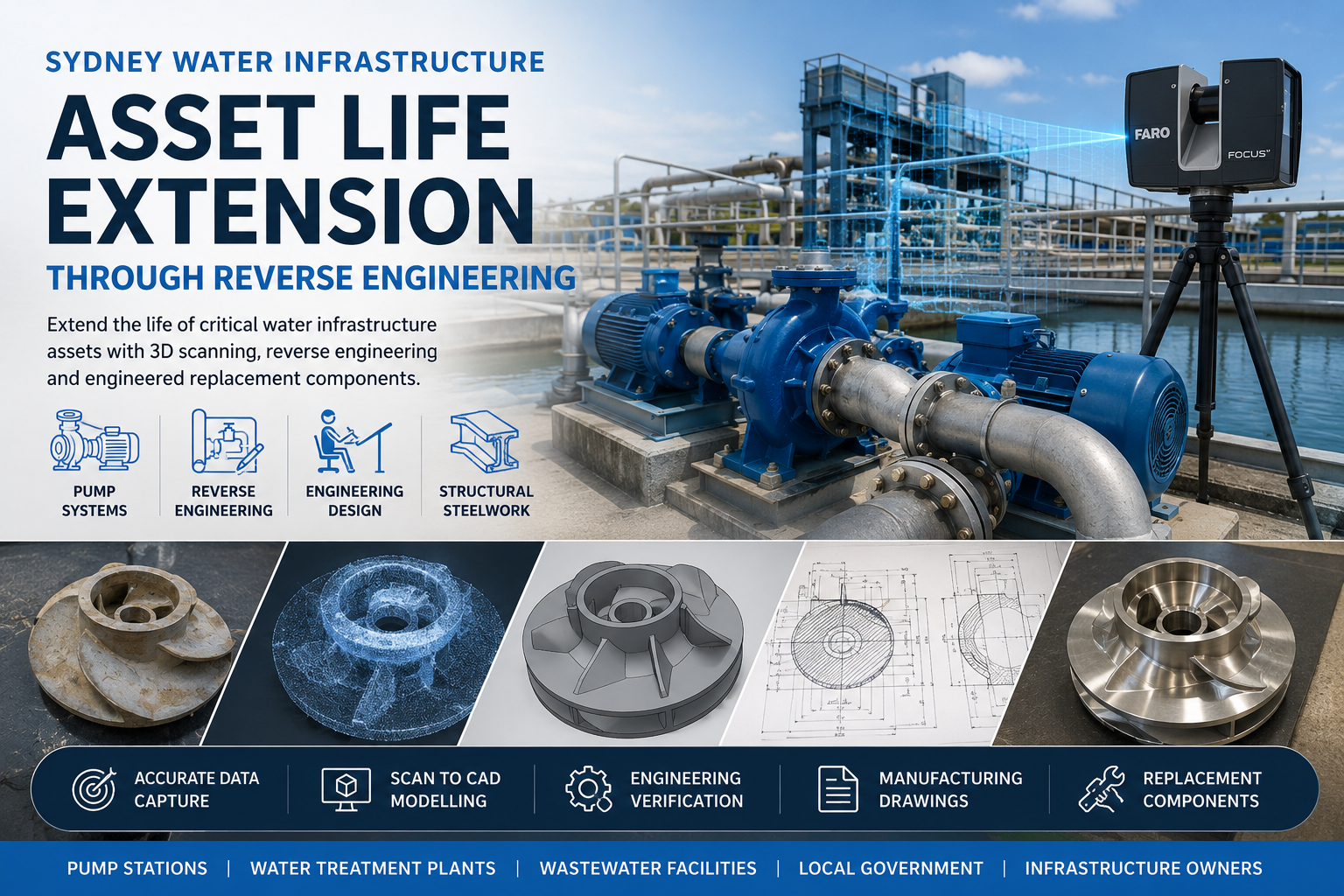
Many water infrastructure assets continue to operate effectively long after original equipment manufacturers have discontinued support. Rather than replacing entire systems, Hamilton By Design uses engineering-grade 3D scanning, reverse engineering and detailed design documentation to recreate components, assemblies and equipment that can no longer be sourced through traditional supply channels.
Our services help asset owners reduce downtime, minimise capital expenditure, improve maintenance planning and extend the operational life of critical infrastructure assets.
Reverse Engineering Solutions for Sydney Water Infrastructure
Water and wastewater infrastructure across Sydney contains thousands of mechanical and structural assets that have been operating for decades. Many of these systems remain structurally sound but are increasingly difficult to maintain due to unavailable spare parts, missing documentation and ageing equipment.
Hamilton By Design specialises in reverse engineering and asset life extension for:
- Pump Stations
- Water Treatment Plants
- Wastewater Treatment Plants
- Sewer Pump Stations
- Water Distribution Infrastructure
- Reservoir Facilities
- Power Stations
- Mining Water Infrastructure
- Mechanical Equipment
- Structural Steelwork
- Pipework Systems
- Valve Assemblies
- Access Platforms and Walkways
Our engineering-led approach enables clients to maintain existing infrastructure while avoiding unnecessary replacement of complete systems.
Common Challenges Facing Asset Owners
OEM Support Has Been Discontinued
Many infrastructure assets continue operating long after manufacturers cease supporting equipment. Spare parts become difficult or impossible to obtain, creating maintenance challenges and increasing operational risk.
Hamilton By Design can reverse engineer existing components and develop manufacturing documentation for replacement parts when OEM support is no longer available.
Obsolete Replacement Parts
Asset owners frequently encounter situations where pumps, valves, gearboxes, hydraulic systems or structural components remain operational but replacement parts are no longer manufactured.
Using 3D scanning and reverse engineering, we recreate obsolete components from existing assets, worn parts or physical samples.
Original Manufacturers No Longer Exist
Many water infrastructure assets installed decades ago were supplied by manufacturers that have since merged, changed ownership or ceased operations entirely.
Where original design information is unavailable, our engineering team can reconstruct components using physical measurements, laser scanning and engineering analysis.
Missing Drawings and Documentation
Many facilities operate equipment with limited or incomplete documentation. Original drawings may be lost, outdated or unavailable.
Hamilton By Design develops accurate digital engineering documentation including:
- General Arrangement Drawings
- Manufacturing Drawings
- Assembly Drawings
- Fabrication Drawings
- 3D CAD Models
- Asset Records
Long Lead Times for Imported Components
Critical infrastructure often depends on specialised equipment with long procurement lead times.
Reverse engineering can significantly reduce downtime by enabling local manufacture of replacement components rather than waiting months for imported parts.
Asset Replacement Costs Are Prohibitive
Replacing entire systems may involve significant capital expenditure, extensive shutdown periods and operational disruption.
Asset life extension strategies often provide substantial cost savings by replacing only the components that have deteriorated while retaining serviceable infrastructure.
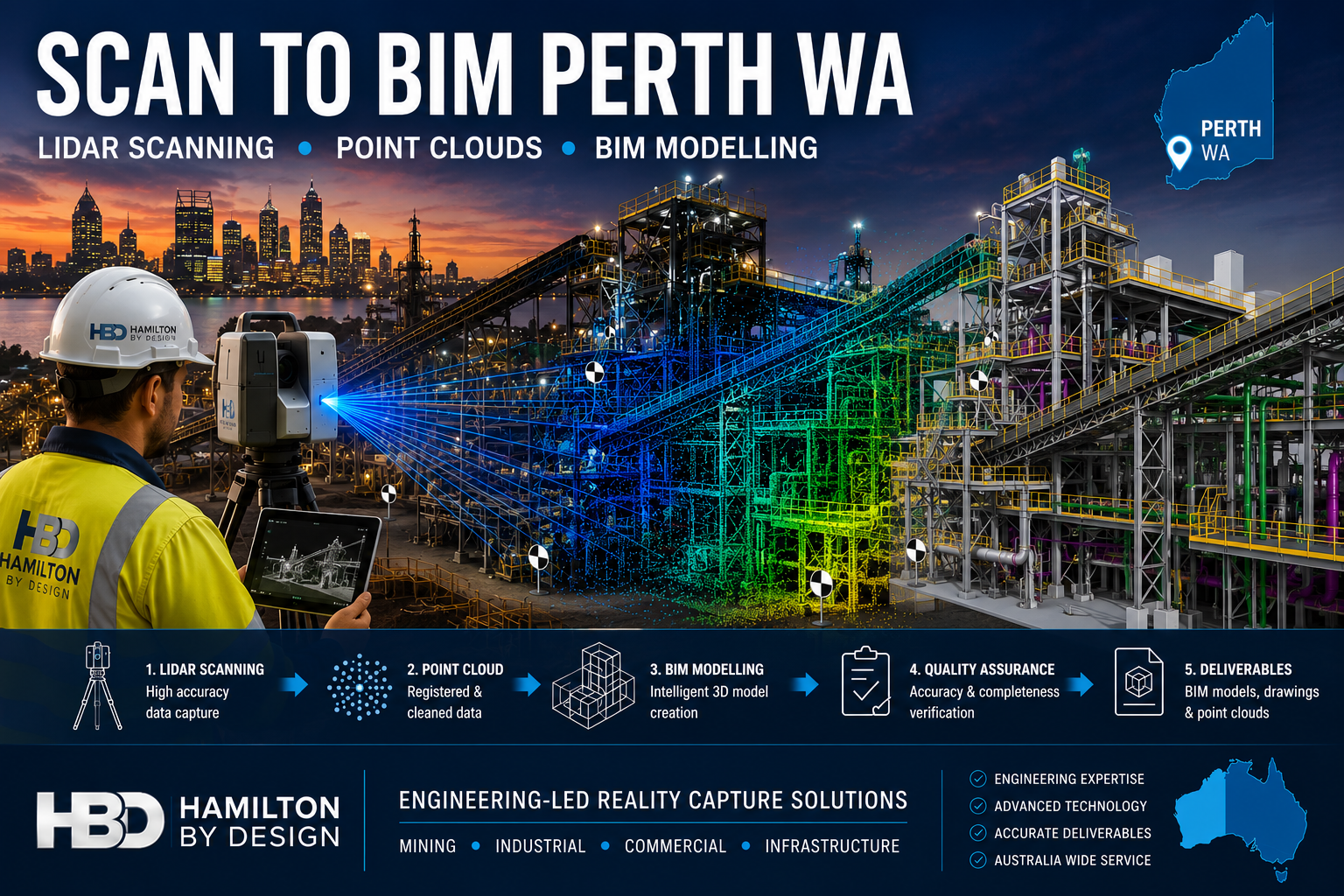
Engineering-Grade 3D LiDAR Scanning
Successful reverse engineering begins with accurate data capture.
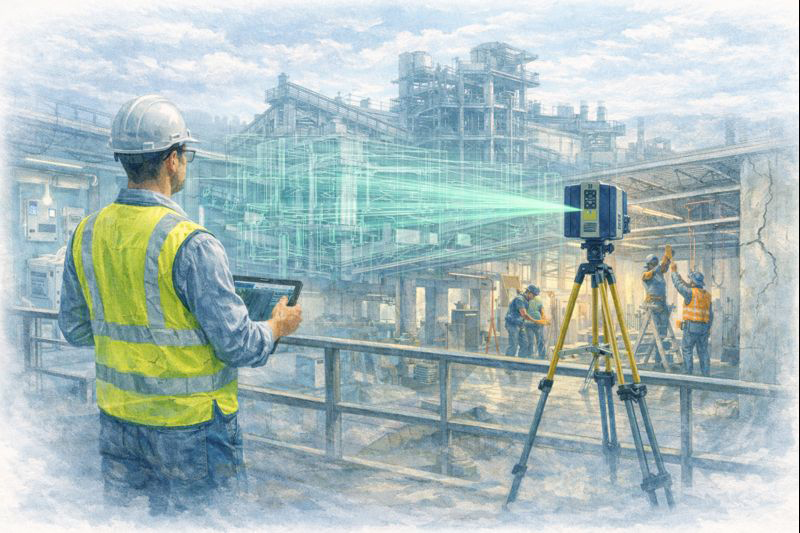
Hamilton By Design uses advanced FARO 3D scanning technology to capture precise measurements of existing infrastructure, equipment and plant environments.
Applications include:
- Pump Stations
- Treatment Plants
- Pipework Networks
- Valve Assemblies
- Structural Steelwork
- Mechanical Equipment
- Brownfield Facilities
Benefits include:
- Accurate As-Built Information
- Reduced Site Rework
- Improved Design Accuracy
- Faster Engineering Delivery
- Enhanced Project Planning
Scan-to-CAD and Digital Asset Capture
Following site capture, point cloud data is processed and converted into engineering deliverables suitable for design, maintenance and manufacturing activities.
Deliverables may include:
- E57 Point Clouds
- RCP Files
- RCS Files
- AutoCAD Models
- SolidWorks Models
- STEP Files
- Parasolid Files
- DWG Drawings
- DXF Files
This process provides asset owners with accurate digital records of existing infrastructure for future maintenance and upgrade projects.
Reverse Engineering of Critical Infrastructure Components
Hamilton By Design regularly reverse engineers components that are no longer available through original manufacturers.
Typical components include:
Pump Components
- Impellers
- Pump Casings
- Pump Shafts
- Wear Rings
- Mechanical Assemblies
Valve Assemblies
- Valve Bodies
- Actuation Components
- Sealing Systems
- Mounting Arrangements
Mechanical Equipment
- Bearing Housings
- Couplings
- Gearbox Components
- Hydraulic Cylinders
- Rotating Equipment
Structural Infrastructure
- Access Platforms
- Walkways
- Handrails
- Structural Steelwork
- Equipment Supports
Process Plant Equipment
- Pipe Spools
- Conveyor Components
- Chute Liners
- Material Handling Equipment
Engineering Design and Verification
Reverse engineering involves more than reproducing geometry.
Hamilton By Design applies engineering principles to evaluate:
- Material Selection
- Structural Performance
- Manufacturing Methods
- Operational Requirements
- Installation Constraints
- Long-Term Reliability
Where required, Finite Element Analysis (FEA) can be undertaken to assess component performance and identify opportunities for improvement over the original design.
This ensures replacement components are suitable for ongoing operation within demanding infrastructure environments.
Manufacturing Documentation and Deliverables
Following reverse engineering, Hamilton By Design develops manufacturing-ready documentation suitable for fabrication, machining and procurement.
Typical deliverables include:
- Manufacturing Drawings
- Fabrication Drawings
- Assembly Drawings
- General Arrangement Drawings
- Bills of Materials
- CAD Models
- STEP Files
- Parasolid Files
- DWG Files
- DXF Files
- Material Specifications
- Engineering Reports
These deliverables provide asset owners and contractors with the information required to manufacture replacement components accurately and efficiently.
Our Reverse Engineering Process
1. Site Inspection and Asset Assessment
Existing infrastructure is reviewed to determine project requirements, access constraints and available documentation.
2. 3D LiDAR Scanning and Measurement
Engineering-grade scanning captures accurate asset geometry and surrounding infrastructure.
3. Point Cloud Processing
Captured data is registered, validated and prepared for engineering use.
4. Reverse Engineering
Components and assemblies are modelled using SolidWorks and AutoCAD.
5. Engineering Verification
Materials, fitment, functionality and operational requirements are assessed.
6. Manufacturing Documentation
Detailed engineering drawings and models are prepared.
7. Installation and Ongoing Support
Hamilton By Design can provide engineering support during manufacture, installation and commissioning activities.
Supporting Water Utilities and Infrastructure Owners Across Sydney
Hamilton By Design supports organisations responsible for maintaining critical infrastructure throughout Sydney NSW.
Our clients include:
- Water Utilities
- Water Treatment Facilities
- Wastewater Treatment Facilities
- Local Government Authorities
- Infrastructure Owners
- Power Generation Facilities
- Mining Operations
- Engineering Consultancies
- Maintenance Contractors
By combining reverse engineering, 3D LiDAR scanning, engineering design and manufacturing documentation, we help asset owners extend the life of critical infrastructure while reducing replacement costs and operational risk.

Need Assistance Extending the Life of Water Infrastructure Assets?
If your organisation is facing obsolete equipment, missing documentation, discontinued OEM support or long lead times for replacement parts, Hamilton By Design can help.
Our engineering team provides Sydney-based reverse engineering, 3D scanning and asset life extension services designed to keep critical infrastructure operating safely and efficiently.
Contact Hamilton By Design to discuss your water infrastructure asset life extension project.
Talk to Us – Contact Us
Our clients: