Why FARO Laser Scanners Deliver the Best Outcomes for Mining and Manufacturing Sites

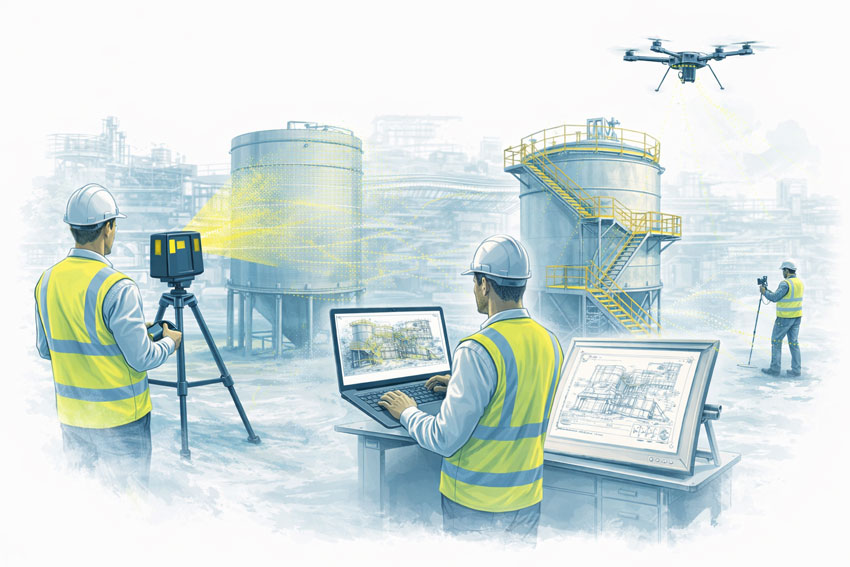
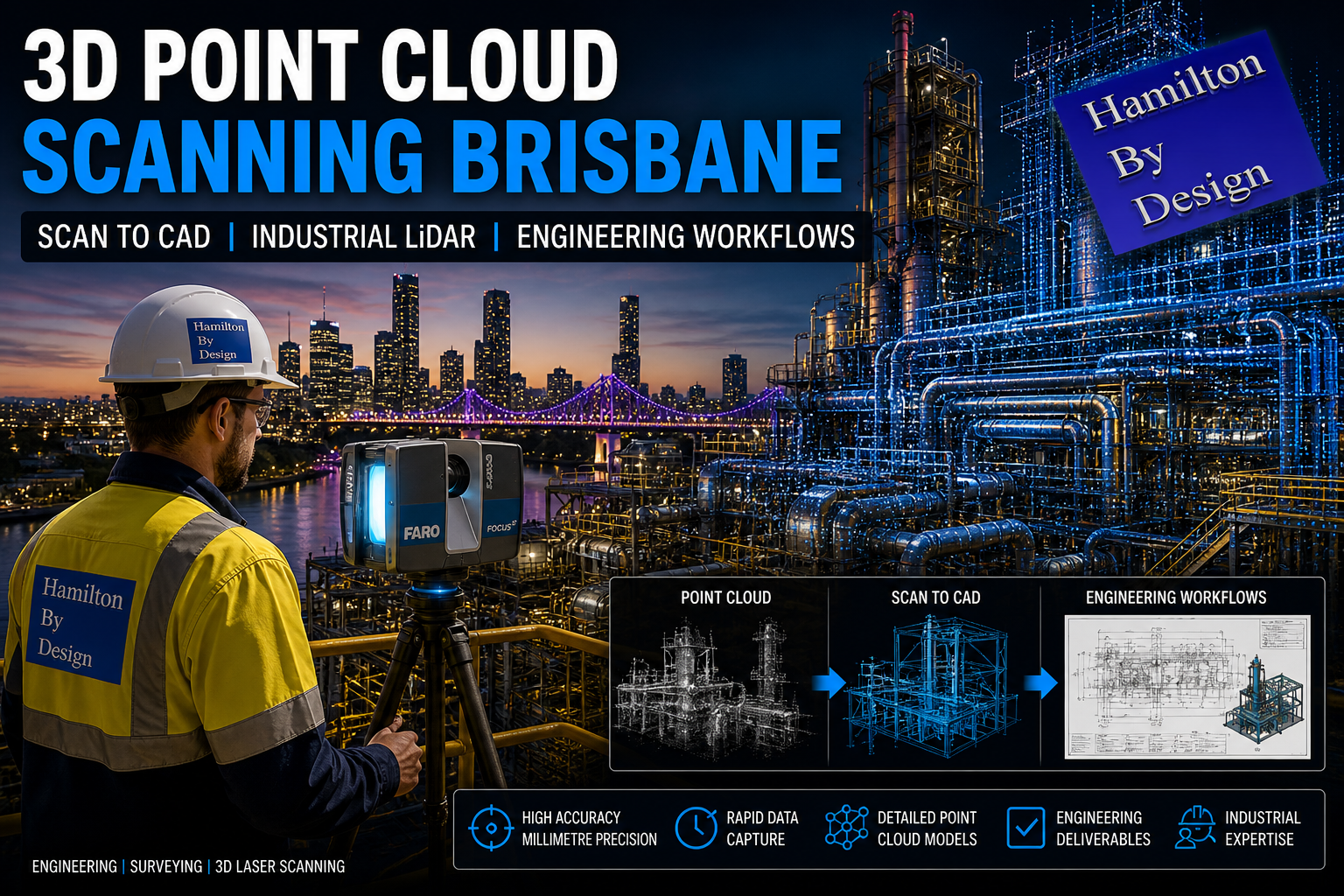
ARO laser scanning workflow showing point cloud processing, SOLIDWORKS modelling, and fabrication drawings for a mining and manufacturing plant

In mining and manufacturing, the difference between success and rework comes down to one thing:

The quality of your dataโ€”and how you use it.

While many providers can โ€œcapture a scan,โ€ not all can deliver usable engineering outcomes. This is where FARO laser scanners and the FARO software ecosystem stand apart.


Engineer-Led Scanning vs Generic Data Capture

Most scanning providers deliver:

  • Raw point clouds
  • Mesh files (STL, OBJ)
  • Limited usability for engineering

At Hamilton By Design, we take a different approach:

Engineering-led scanning using FARO tools, built for design, modelling, and fabrication.

The real advantage of FARO is not just the hardwareโ€”itโ€™s the software ecosystem that turns scan data into engineering decisions.


The Real Advantage: FARO SCENE Software

At the core of the FARO workflow is FARO SCENE, purpose-built for point cloud processing, registration, and validation.

Unlike generic tools, SCENE allows:

1. Hybrid Registration (Accuracy You Can Trust)

  • Combine cloud-to-cloud, targets, and survey control
  • Validate alignment visually and numerically
  • Eliminate stitching errors before they reach design

โžก๏ธ This ensures engineering-grade accuracy, not just visual alignment

FARO SCENE enables flexible registration workflows that combine multiple methods for precise alignment of complex sites


2. On-Site Registration (No Return Visits)

  • Register scans in the field
  • Identify gaps immediately
  • Confirm coverage before leaving site

โžก๏ธ Critical for:

  • Shutdowns
  • Remote mine sites
  • High-cost mobilisation environments

SCENE supports real-time, on-site registration and validation, allowing immediate data verification and reducing the need for rework


3. Clean, Usable Point Clouds (Not Just Raw Data)

  • Automatic filtering of noise
  • Colour balancing
  • Duplicate point removal
  • Density optimisation

โžก๏ธ Result:
Clean datasets ready for CAD, not bloated unusable files

SCENE includes filtering, validation, and optimisation tools to improve data quality and usability for downstream workflows


4. Full Workflow Integration (Scan โ†’ CAD โ†’ Engineering)

FARO integrates directly into engineering workflows:

  • Export to CAD and BIM platforms
  • Compatible with tools like:
    • SOLIDWORKS
    • Revit
    • Navisworks

โžก๏ธ This is the key difference:

FARO data is built to be engineered, not just viewed

SCENE enables export into multiple CAD and point cloud formats for modelling and engineering applications


5. Visual Validation (What You See Is What You Build)

  • 3D visualisation
  • VR inspection
  • Flythrough and walkthrough capability

โžก๏ธ Engineers and stakeholders can:

  • Verify design intent
  • Identify clashes early
  • Reduce construction risk

SCENE supports immersive 2D, 3D, and VR visualisation for detailed project evaluation


6. Scalable for Large Industrial Sites

Mining and manufacturing sites are:

  • Large
  • Complex
  • Often poorly documented

FARO SCENE allows:

  • Management of thousands of scans
  • Structured project organisation
  • Fast visualisation of large datasets

โžก๏ธ This is critical for:

  • CHPP plants
  • Smelters
  • Conveyor systems
  • Brownfield upgrades

Why This Matters for Mining & Manufacturing

Reduce Rework

Accurate, validated data reduces:

  • Site clashes
  • Fabrication errors
  • Installation delays

Improve Shutdown Efficiency

  • Capture once
  • Model correctly
  • Execute without surprises

Enable Brownfield Engineering

Most sites are not โ€œgreenfieldโ€:

  • Legacy assets
  • Unknown geometry
  • Modifications over time

โžก๏ธ FARO enables:
True as-built modelling, not assumptions


Support Fabrication-Level Detail

With the right workflow (FARO + engineering):

  • Steel detailing
  • Mechanical integration
  • Conveyor and chute design
  • Retrofit design

โžก๏ธ Deliverables become:
Fabrication-readyโ€”not conceptual


FARO vs โ€œOther Scanning Solutionsโ€

Many alternatives focus on:

  • Speed over accuracy
  • Visual outputs over engineering use
  • Meshes instead of parametric models

FARO, combined with SCENE, delivers:

  • Controlled accuracy
  • Transparent registration
  • Engineering-ready outputs

The Hamilton By Design Approach

We donโ€™t just use FARO toolsโ€”we use them properly.

  • Engineer-led scanning
  • Structured workflows
  • Point cloud to CAD conversion
  • SOLIDWORKS-based modelling
  • Fabrication-ready deliverables

Our focus is on outcomesโ€”not just data.


Anyone can scan.

Very few can:

  • Validate the data
  • Convert it into engineering models
  • Deliver drawings that can be built

Thatโ€™s why FARO, when used correctly, is not just a scanning toolโ€”

Itโ€™s a complete engineering data solution for mining and manufacturing.


3D LiDAR scanning and 3D modelling service button โ€” laser scanner capturing a point cloud for engineering and CAD modelling
Mechanical engineering services

Our Clients


Name
Would you like us to arrange a phone consultation for you?
Address
3D CAD Modelling Australia service banner for Hamilton By Design

3D Laser Scanning Port Macquarie | Engineering-Grade LiDAR by Mechanical Engineers

3D Laser Scanning Port Macquarie โ€“ Why Accuracy Matters for Engineering Projects

If you’re planning a plant upgrade, fabrication project, or site modification in Port Macquarie, the quality of your 3D scan data directly impacts the success of your project.

At Hamilton By Design, we provide engineering-grade 3D laser scanning services led by mechanical engineers, ensuring the data captured is not only accurate, but also suitable for real-world design, fabrication, and construction outcomes.

Not All 3D Scanning Is the Same

With the rise of low-cost scanning technology, many providers now offer handheld scanning solutions as a fast and affordable option.

While these systems can be useful for general visualisation, they often rely on SLAM-based positioning, which estimates location as the operator moves through a site.

This can introduce:

  • positional drift over distance
  • reduced dimensional accuracy
  • inconsistencies in large or complex environments

In many cases, these services are delivered by non-qualified operators using handheld equipment without a clear understanding of engineering requirements.

Why Mechanical Engineers Deliver Better Outcomes

3D scanning is only one part of the process. The real value comes from how the data is understood and applied.

A mechanical engineer-led scanning approach ensures:

  • critical areas are prioritised during capture
  • scan density aligns with fabrication requirements
  • line-of-sight limitations are identified and managed
  • downstream modelling and design risks are reduced
  • data is validated against real engineering constraints

Rather than simply collecting data, mechanical engineers focus on what the data needs to achieve.

The Risk of Handheld โ€œCowboyโ€ Scanning

While handheld scanning has its place, relying solely on it โ€” particularly when carried out by inexperienced or non-qualified operators โ€” often leads to poor engineering outcomes.

These โ€œfast and cheapโ€ approaches can produce point clouds and 3D models that look correct visually but are not dimensionally reliable.

Typical issues include:

  • accumulated positional drift across the model
  • misalignment of structural and mechanical elements
  • missing critical geometry due to poor capture planning
  • inconsistent scaling across large areas

The result is 3D models that cannot be trusted for fabrication, retrofit design, or installation.

Why Tripod-Based LiDAR Scanning Is Different

Tripod-mounted LiDAR scanners capture data from fixed, controlled positions, delivering a stable and repeatable dataset.

This is critical when your project requires:

  • accurate tie-in points
  • fabrication-ready measurements
  • structural or mechanical design
  • clash detection and modelling
  • confidence in as-built conditions

For engineering projects, the difference is clear:

Handheld scanning shows you what it looks like.
LiDAR scanning โ€” guided by mechanical engineers โ€” tells you what it actually is.

The Risk of Low-Accuracy Data

Choosing the wrong scanning method โ€” or the wrong provider โ€” can lead to:

  • rework during fabrication
  • misalignment on installation
  • increased project costs
  • delays during shutdowns or upgrades

In industrial environments, even small dimensional errors can have significant downstream impacts.

A Smarter Approach to Reality Capture

At Hamilton By Design, we take an engineering-led approach to 3D scanning, combining the right technology with real engineering expertise.

Where required, we may use multiple capture methods โ€” but critical areas are always captured using high-accuracy LiDAR scanning guided by mechanical engineering judgement.

Supporting Port Macquarie and Regional NSW

We support clients across Port Macquarie and regional New South Wales, delivering professional 3D laser scanning services for industrial facilities, manufacturing plants, infrastructure upgrades, and mechanical and structural projects.
Talk to Hamilton By Design – Contact Us

If you need accurate, engineering-grade site data in Port Macquarie, backed by mechanical engineering expertise, get in touch to discuss your project.


Name
Would you like us to arrange a phone consultation for you?
Address

Our clients
Mechanical Engineers

3D Lidar Scanning

3D CAD Modelling Australia service banner for Hamilton By Design

LiDAR Scanning vs Handheld Scanning for Engineering Projects | Hamilton By Design

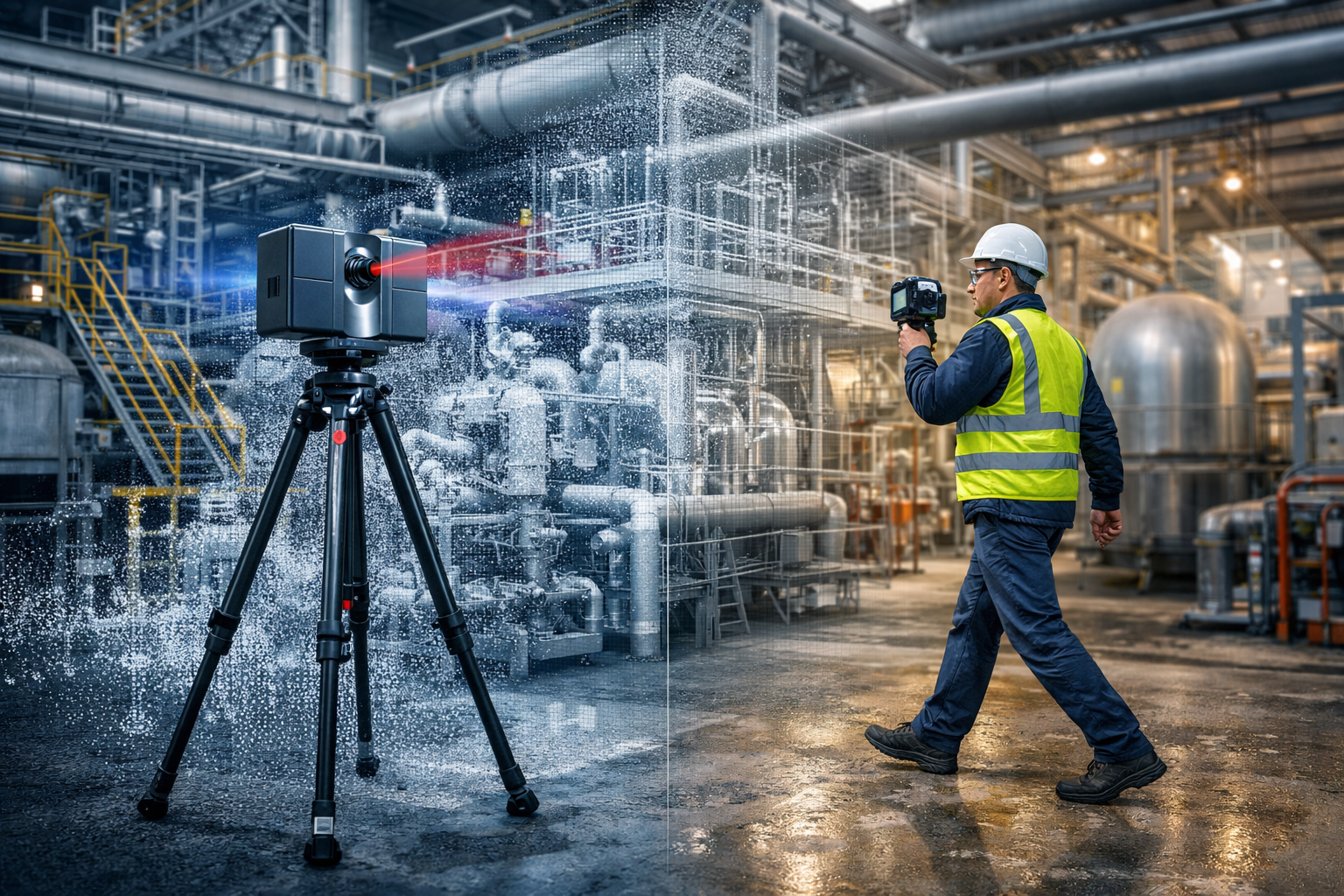
Tripod LiDAR scanner and handheld 3D scanner capturing an industrial plant with point cloud overlay for engineering design

LiDAR Scanning vs Handheld Scanning for Engineering Projects

When clients first look at 3D scanning solutions, one of the most common questions is whether they need a tripod-based LiDAR scanner or a handheld scanner. Both technologies have a place, but the right choice depends on the outcome required.
At Hamilton By Design, we focus on engineering-led reality capture. That means selecting the scanning method that best supports accurate design, fabrication, brownfield upgrades, and reliable project delivery.

3D LiDAR scanning and 3D modelling service button โ€” laser scanner capturing a point cloud for engineering and CAD modelling
Mechanical engineering services

What is the difference?

A tripod-based LiDAR scanner captures highly accurate point cloud data from fixed scan positions. This method is ideal when projects require dependable geometry, repeatable measurements, and engineering-grade outputs.

A handheld scanner is typically used to move quickly through a space and capture data on the go. It can be useful for general visualisation, rapid site understanding, and concept-level work, but it is not always the best fit where tight tolerances or fabrication-ready information is required.

Benefits of tripod-based LiDAR scanning

Higher accuracy

Tripod-based LiDAR scanning is better suited to projects where dimensional accuracy matters. This is particularly important for:

  • plant upgrades
  • tie-in design
  • structural modifications
  • pipework alterations
  • reverse engineering
  • fabrication support

Reliable fixed-position data

Because scans are captured from known stationary positions, the data can be registered into a stable point cloud. This gives engineers, designers, and project teams greater confidence in the model and the measurements taken from it.
Better for engineering and design

Where a project needs scan-to-CAD modelling, design development, clash checking, or digital twin support, tripod LiDAR scanning generally provides the more dependable base dataset.

Stronger project governance

Engineering projects need traceable and reviewable information. LiDAR scanning supports this by providing a robust record of existing conditions that can be referenced throughout the project lifecycle.
Benefits of handheld scanning

Faster capture over large areas

Handheld scanning can be useful where speed is more important than precision, or where the objective is to quickly understand a space.

Flexible for walkthrough-style capture

These systems can help capture general layouts, access routes, and broader site context in areas where rapid movement is an advantage.

Useful for concept and visualisation work

For early-stage planning or non-critical site representation, handheld scanning can sometimes provide a suitable outcome.

Which one is right for your project?

If your project involves fabrication, engineering design, plant modification, shutdown planning, or accurate as-built records, tripod-based LiDAR scanning is usually the better choice.

If your priority is speed, general layout capture, or conceptual understanding, handheld scanning may have a role.

In many cases, the best result comes from an engineering-led approach, where the required deliverables drive the capture method.

Why Hamilton By Design?

Hamilton By Design provides engineering-grade 3D laser scanning and reality capture services for industrial, mining, mechanical, and brownfield environments. Our focus is not just on collecting data, but on delivering data that supports real engineering outcomes.

We understand that a point cloud is only valuable if it helps reduce uncertainty, improve design confidence, and support practical decision-making.

Learn more

To explore our broader scanning and engineering services, visit:

Talk to Hamilton By Design

If you need accurate site data for design, drafting, reverse engineering, or plant upgrades, Hamilton By Design can help you choose the right scanning approach for your project.

Contact us to discuss your site, deliverables, and required level of detail.


Name
Would you like us to arrange a phone consultation for you?
Address


3D CAD Modelling Australia service banner for Hamilton By Design

What Is the Difference Between a Terrestrial Scanner and a LiDAR Scanner?

Terrestrial, mobile SLAM and drone LiDAR scanners capturing an industrial plant with engineers reviewing point cloud data and drawings

Terrestrial vs LiDAR Scanners | Whatโ€™s the Difference?

Confusion around terrestrial scanning and LiDAR scanning is common โ€” and understandable.
The two terms are often used interchangeably, even though they describe different things.

This page explains the difference in plain language, shows where each approach fits, and helps you decide what level of accuracy and risk is appropriate for your project.


Short Answer (If Youโ€™re in a Hurry)

LiDAR describes the laser measurement technology.
Terrestrial describes how and where that LiDAR scanner is deployed.

Most terrestrial scanners use LiDAR, but not all LiDAR scanners are terrestrial.


Illustration comparing terrestrial LiDAR, mobile SLAM LiDAR and drone scanning on an industrial facility

What Is LiDAR?

LiDAR (Light Detection and Ranging) is a method of measuring distance using laser light.

How LiDAR works

  • A laser pulse is emitted
  • The pulse reflects off an object
  • The return time is measured
  • Distance is calculated and stored as a 3D point

Millions of these points form a point cloud that represents real-world geometry.

What LiDAR is good for

  • Accurate 3D measurement
  • Complex geometry
  • Low-light or enclosed environments
  • Engineering, construction, and industrial sites

LiDAR answers: How is distance measured?


What Is a Terrestrial Scanner?

A terrestrial scanner is a ground-based scanning system, usually mounted on a tripod or fixed position.

Key characteristics

  • Fixed scan position
  • Controlled setup and coverage
  • Known geometry and reference
  • High repeatability and validation

Typical environments

  • Processing plants and CHPPs
  • Structural steelwork
  • Conveyor systems
  • Brownfield tie-ins
  • As-built verification
  • Shutdown-critical fit-up work

Terrestrial answers: Where and how is the LiDAR deployed?


How the Two Terms Relate (This Is the Important Part)

A terrestrial scanner is a platform.
A LiDAR scanner is a technology.

Most modern terrestrial scanners are terrestrial LiDAR scanners.

Example: a tripod-mounted system such as the FARO Focus S-Series is:

  • LiDAR-based (laser measurement)
  • Terrestrial (ground-based, fixed setup)

Other Common LiDAR Scanner Types (And Why It Matters)

Scanner TypeHow Itโ€™s UsedTypical Outcome
Terrestrial LiDARTripod / fixedHighest control & accuracy
Mobile / SLAM LiDARHandheld / walk-throughFast capture, lower control
Vehicle-mounted LiDARCar / trolleyCorridor mapping
Aerial LiDARDrone / aircraftLarge areas, low detail

All are โ€œLiDARโ€, but not all are suitable for engineering design or fabrication.


Why This Distinction Matters for Projects

Many issues occur when:

  • A LiDAR scan is assumed to be engineering-grade
  • A mobile or SLAM scan is used beyond its intent
  • Accuracy, validation, or limitations are not clearly understood

This doesnโ€™t mean one method is wrong โ€” it means each has a purpose.

The key is aligning the scanner type with:

  • Required accuracy
  • Risk tolerance
  • Fit-up criticality
  • Intended use of the data

Our clients:


Simple Decision Guide (Client in Control)

If you need:

  • Fabrication or replacement parts โ†’ Terrestrial LiDAR
  • Shutdown-critical fit-up โ†’ Terrestrial LiDAR
  • Structural verification โ†’ Terrestrial LiDAR
  • Rapid site context only โ†’ Mobile / SLAM LiDAR
  • Large terrain or stockpiles โ†’ Aerial LiDAR

There is no โ€œone best scannerโ€ โ€” only the right scanner for the outcome you want.


Comparison at a Glance

RequirementTerrestrial LiDARMobile / SLAM LiDAR
Accuracy controlHighModerate
RepeatabilityHighLower
Engineering defensibilityStrongLimited
Fit-up confidenceSuitableNot recommended
Capture speedSlowerFaster
Best use caseDesign & fabricationVisualisation & context

A Note on Engineering Use

Where scanning data feeds into engineering design, documentation, or fabrication, higher-control methods are typically required to align with engineering practice and Australian Standards expectations.

That doesnโ€™t remove choice โ€” it simply means the assumptions and limitations must match the intended use.


How We Approach This (Without Locking You In)

Weโ€™re happy to:

  • Work with terrestrial, mobile, or supplied scan data
  • Validate data before design where required
  • Align scanning effort with your risk, budget, and outcome
  • Clearly document assumptions and limitations

You stay in control of the approach โ€” our role is to make sure the data supports the outcome you expect.


Hamilton By Design logo displayed on a blue tilted rectangle with a grey gradient background
3D LiDAR scanning and 3D modelling service button โ€” laser scanner capturing a point cloud for engineering and CAD modelling
Mechanical engineering services

Next Step

If youโ€™re unsure which scanning method suits your project:

Fill out the contact form and tell us:

  • What you want to build, replace, or verify
  • How the data will be used
  • Any constraints (budget, time, shutdown windows)

Weโ€™ll help you select a fit-for-purpose scanning approach, not just a scanner.


Name
Would you like us to arrange a phone consultation for you?
Address
Finite Element Analysis (FEA) engineering simulation button
Mechanical engineering services

3D Scanning Melbourne CBD

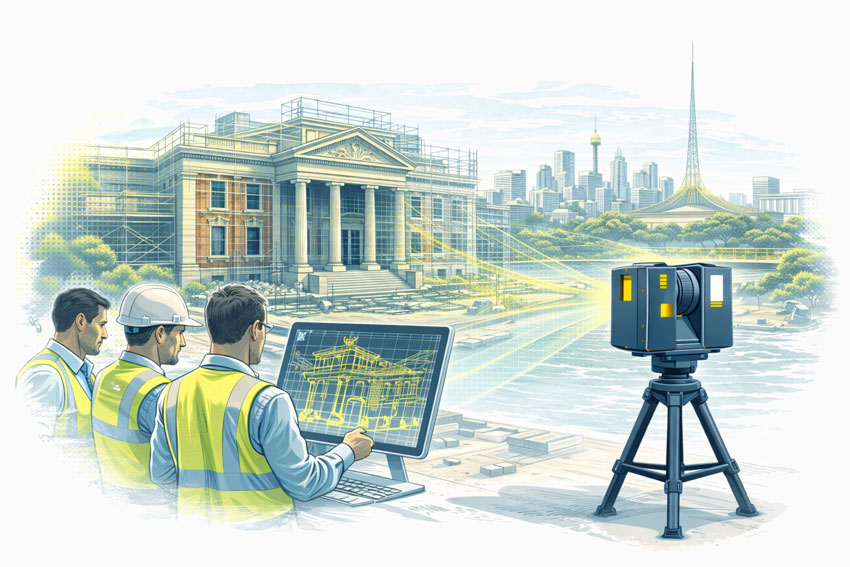
Engineering-led LiDAR point cloud modelling of a Melbourne building with CAD data derived from 3D laser scanning

3D Scanning Melbourne CBD | Engineering-Grade Laser Scanning

Blue 3D LiDAR scanner icon on a tripod with scanning waves

Hamilton By Design provides engineering-grade 3D scanning services in Melbourne CBD, supporting designers, engineers, builders, and asset owners working in one of Australiaโ€™s most complex urban environments. Melbourne CBD projects are characterised by tight access, heritage overlays, staged construction, and dense services. Our 3D laser scanning workflows deliver accurate existing-condition data that allows engineering decisions to be made with confidence โ€” before work begins on site.


Why 3D Scanning Is Critical in Melbourne CBD

Melbourneโ€™s CBD presents challenges that cannot be reliably addressed using legacy drawings or assumed dimensions:

  • High-rise and podium structures with layered services
  • Heritage buildings integrated with modern construction
  • Restricted access and limited shutdown windows
  • Tight tolerance interfaces between new and existing works

3D laser scanning provides a measured digital record of what truly exists, allowing project teams to design within real constraints rather than assumptions.


Engineering-Led Laser Scanning

Hamilton By Design approaches scanning from an engineering perspective, not just data capture.

Our Melbourne CBD scanning services are designed to support:

  • Engineering design development
  • Certified drawings and documentation
  • Constructability and coordination reviews
  • Retrofit and upgrade projects

This approach aligns with our broader Melbourne capability:
3D Laser Scanning & Engineering Services Across Melbourne


From Scan Data to Engineering Decisions

A high-quality scan only delivers value when it is structured for engineering use.

Our Melbourne CBD deliverables support:

  • Accurate dimensional verification
  • Clearance and interface checking
  • Structural and mechanical alignment
  • Clash detection prior to construction

These outputs enable designers to work confidently in 3D, knowing the underlying data reflects real-world conditions.

Related Melbourne capability:
Mechanical Engineering & LiDAR Scanning in Melbourne


3D Scanning for Construction & Retrofit Projects

Melbourne CBD projects often involve brownfield upgrades, refurbishments, and live environments.

Our scanning services support:

  • Pre-construction verification
  • Staged construction planning
  • Retrofit design in occupied buildings
  • Coordination across multiple trades

By resolving spatial constraints digitally, project teams reduce rework, RFIs, and site-based uncertainty.

Melbourne scanning services are grouped under:
3D Scanning Melbourne


Accurate Information for Design Confidence

Designers working in Melbourne CBD must account for:

  • Existing structure geometry
  • Embedded services and plant
  • Tolerance stacking across interfaces
  • Access and installation constraints

3D scanning provides the verified information needed to develop the most appropriate design solution based on the actual scope of works โ€” not idealised assumptions.

This leads to:

  • Better design decisions
  • Fewer late-stage changes
  • Reduced construction risk
  • Improved project certainty

Hamilton By Design logo displayed on a blue tilted rectangle with a grey gradient background
3D LiDAR scanning and 3D modelling service button โ€” laser scanner capturing a point cloud for engineering and CAD modelling
Mechanical engineering services

Why Hamilton By Design for Melbourne CBD

  • Engineering-led scanning workflows
  • Accurate, repeatable point cloud data
  • Strong integration with CAD and engineering design
  • Experience in dense urban environments
  • Scanning planned around design outcomes, not just coverage

We donโ€™t scan for visualisation.
We scan to support engineering decisions that must stand up to scrutiny.


Our clients:

Discuss 3D Scanning in Melbourne CBD

If your Melbourne CBD project requires accurate existing-condition data to support design, coordination, or construction planning, Hamilton By Design can assist.

๐Ÿ“ฉ Contact us to discuss your 3D scanning requirements in Melbourne CBD.

Name
Would you like us to arrange a phone consultation for you?
Address

3D Point Cloud Scanning in Brisbane

Engineering-led 3D point cloud scanning in Brisbane featuring a FARO LiDAR scanner, industrial plant infrastructure, and Brisbane CBD skyline with digital scan-to-CAD overlays.

Accurate information is the foundation of every certified engineering decision.
At Hamilton By Design, our 3D point cloud scanning in Brisbane delivers engineering-grade spatial data that engineers, designers, and asset owners can confidently rely on when certifying drawings, structures, plant upgrades, and industrial processes.

This service forms a core component of our broader
๐Ÿ‘‰ Laser Scanning Engineering โ€“ Brisbane CBD
https://www.hamiltonbydesign.com.au/laser-scanning-engineering-brisbane-cbd/


Why Engineers Rely on Point Cloud Data

Engineers are legally and professionally responsible for the decisions they certify. This means the information used must be:

  • Accurate โ€“ true to physical reality
  • Traceable โ€“ derived from verifiable measurement
  • Repeatable โ€“ defensible if reviewed or audited
  • Fit for purpose โ€“ suitable for structural, mechanical, or process design

Consumer-grade scans, photos, or inferred measurements are not sufficient for certified outcomes.

Our engineering-led 3D point cloud scanning provides a measured digital record of what actually exists on site โ€” not what drawings suggest, and not what assumptions fill the gaps.


What Is Engineering-Grade 3D Point Cloud Scanning?

A 3D point cloud is a dense collection of spatial data points captured using professional LiDAR scanners. Each point has a precise X, Y, Z coordinate in real-world space.

When captured correctly, this data allows engineers to:

  • Verify structural geometry
  • Measure clearances and tolerances
  • Identify clashes before construction
  • Confirm alignment, plumb, level, and deformation
  • Validate existing conditions for certification

Our Brisbane point cloud services are aligned with the same workflows used for certified mechanical, structural, and process engineering.


Supporting Certified Engineering Outcomes

1. Certified Drawings & Design

Engineers can only certify drawings if they trust the underlying measurements. Our scans support:

  • Structural steel detailing
  • Mechanical equipment integration
  • Pipework and conveyor interfaces
  • Building modifications and extensions

This data feeds directly into Scan-to-CAD workflows:
๐Ÿ‘‰ Scan to CAD Brisbane
https://www.hamiltonbydesign.com.au/scan-to-cad-brisbane/


2. Construction & Upgrade Projects

For construction and brownfield upgrades, existing-condition accuracy is critical.

Our scanning supports:

  • Pre-construction verification
  • Constructability reviews
  • Clash detection
  • Retrofit and upgrade planning

Related service page:
๐Ÿ‘‰ 3D Construction Scan in Brisbane
https://www.hamiltonbydesign.com.au/3d-construction-scan-in-brisbane/


3. Asset Owners & Operational Certainty

For asset owners, point cloud data provides a defensible digital baseline of infrastructure, supporting:

  • Maintenance planning
  • Modification risk reduction
  • Asset life-extension projects
  • Engineering audits and compliance documentation

Why Accuracy Matters in Engineering Certification

When engineers certify a design, drawing, or process, they are effectively stating:

โ€œThis solution is based on verified, accurate information and meets its design intent.โ€

If the input data is wrong:

  • Beams may not fit
  • Foundations may be incorrectly assumed
  • Loads may be misapplied
  • Clearances may be violated
  • Safety margins may be compromised

Our 3D scanning Brisbane service exists to eliminate these risks before they reach site.


Our clients:


Engineering-Led Scanning (Not Just Data Capture)

Hamilton By Design is not a surveying-only provider. We are engineers who scan, which means:

  • Scans are planned around engineering outcomes
  • Accuracy is matched to design intent
  • Data is structured for CAD, BIM, and FEA use
  • Engineers understand what must be captured โ€” and what cannot be missed

This is why our scanning integrates seamlessly with:
๐Ÿ‘‰ 3D Scanning Brisbane
https://www.hamiltonbydesign.com.au/laser-scanning-engineering-brisbane-cbd/3d-scanning-brisbane/


Brisbane Coverage

We provide 3D point cloud scanning across:

  • Brisbane CBD
  • Inner Brisbane
  • Industrial precincts
  • Construction sites
  • Manufacturing and processing facilities

All services are coordinated from our Brisbane engineering workflows.


Hamilton By Design logo displayed on a blue tilted rectangle with a grey gradient background
3D LiDAR scanning and 3D modelling service button โ€” laser scanner capturing a point cloud for engineering and CAD modelling
Mechanical engineering services

Talk to an Engineer Before You Scan

If a project requires certified drawings, engineered approvals, or construction certainty, the scan must be right from day one.

๐Ÿ“ฉ Contact Hamilton By Design to discuss
3D Point Cloud Scanning in Brisbane
and how accurate digital capture supports certified engineering outcomes.

Name
Would you like us to arrange a phone consultation for you?
Address