AS ISO 5725 and 3D LiDAR Scanning

Why Accuracy, Precision, and Calibration Matter for Engineering Outcomes

When 3D LiDAR scanning is used for engineering, fabrication, or certification, the most important question is not how detailed the point cloud looks, but whether the measurements can be trusted.

This is where AS ISO 5725 โ€” Accuracy and Precision of Measurement becomes relevant. While AS ISO 5725 is not written specifically for LiDAR scanners, it defines the principles that determine whether any measurement system is suitable for engineering use.

In practical terms, AS ISO 5725 separates data that can support engineering decisions from data that is visually convincing but technically unreliable.
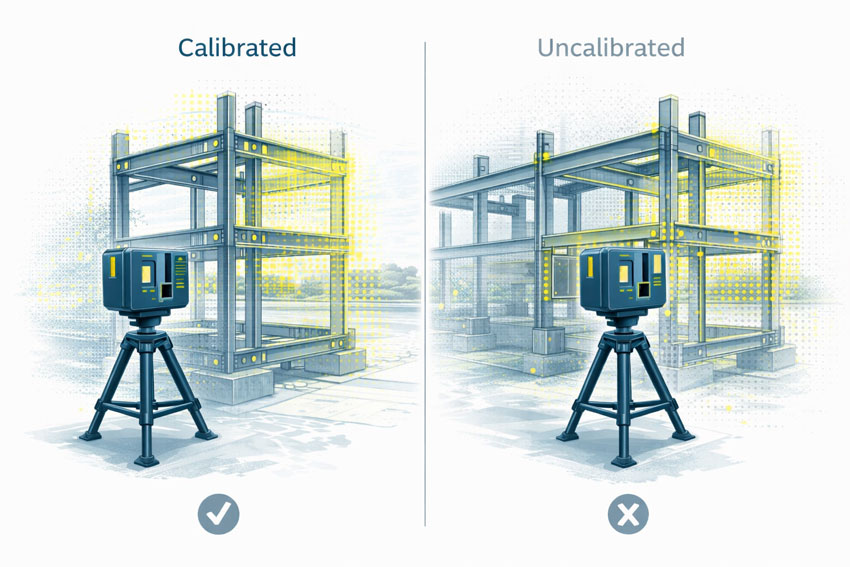


Comparison of calibrated and uncalibrated 3D LiDAR scanning, showing a calibrated scanner with aligned point cloud and steel frame geometry, and an uncalibrated scanner with visibly misaligned measurement data
3D LiDAR scanning and 3D modelling service button โ€” laser scanner capturing a point cloud for engineering and CAD modelling
Mechanical engineering services

What AS ISO 5725 Covers

AS ISO 5725 defines how measurement systems should be evaluated in terms of:

  • Accuracy
  • Precision
  • Repeatability
  • Reproducibility
  • Measurement uncertainty

These principles apply directly to 3D LiDAR scanning because a LiDAR scanner is, at its core, a measurement instrument. When scanning data is used to inform design, fabrication, or certification, the expectations set by AS ISO 5725 apply regardless of scanner brand or software.

This is why engineering-grade 3D LiDAR scanning requires more than simply capturing a dense point cloud. It requires controlled measurement, understood uncertainty, and validated outputs, as delivered through engineering-grade 3D laser scanning workflows:
https://www.hamiltonbydesign.com.au/home/engineering-services/3d-laser-scanning/


Accuracy vs Precision in LiDAR Scanning

AS ISO 5725 makes a clear distinction between accuracy and precision, a distinction that is often misunderstood in reality capture.

Accuracy describes how close a measurement is to the true value.
Precision describes how consistently the same measurement can be repeated.

A LiDAR scan can appear highly precise, with clean and consistent geometry, while still being inaccurate if the scanner is miscalibrated or poorly controlled. In engineering terms, repeatable errors are still errors.

For engineering and fabrication, both accuracy and precision are required.


The Role of Calibration

Calibration ensures that a scannerโ€™s distance and angular measurements align with known reference values. Without calibration, a LiDAR scanner may still operate normally and still produce visually impressive results, but the measurements no longer have a known or defensible level of uncertainty.

Calibration directly affects:

  • Distance measurement
  • Angular accuracy
  • Alignment between internal sensors
  • Registration between multiple scans

AS ISO 5725 does not prescribe how calibration must be performed, but it does establish the expectation that measurement uncertainty is understood and controlled.


What Happens When Scanning Is Not Calibrated

When LiDAR scanning is not properly calibrated or verified, errors propagate into every downstream deliverable.

Common outcomes include:

  • Fabricated steelwork that does not fit on site
  • Bolt holes and connection points outside tolerance
  • Frames requiring on-site modification or rework
  • Assumed clearances that do not exist in reality
  • Delays or challenges during engineering sign-off

These issues are often discovered late in a project, where the cost of correction is highest. The root cause is frequently measurement error introduced at the scanning stage, not fabrication quality.

This is particularly critical in design-for-fabrication workflows, where scanning data is used to develop fabrication-ready designs:
https://www.hamiltonbydesign.com.au/fabrication-product-design/


The Compounding Effect of Small Errors

One of the most significant risks in unverified scanning workflows is that errors are often small enough to go unnoticed early.

A few millimetres of error at the scanning stage can compound into much larger discrepancies once geometry is modelled, detailed, and fabricated. Across multiple interfaces, these small deviations can lead to misalignment, rework, or compromised installation quality.

For fit-first-time fabrication, this risk is unacceptable.
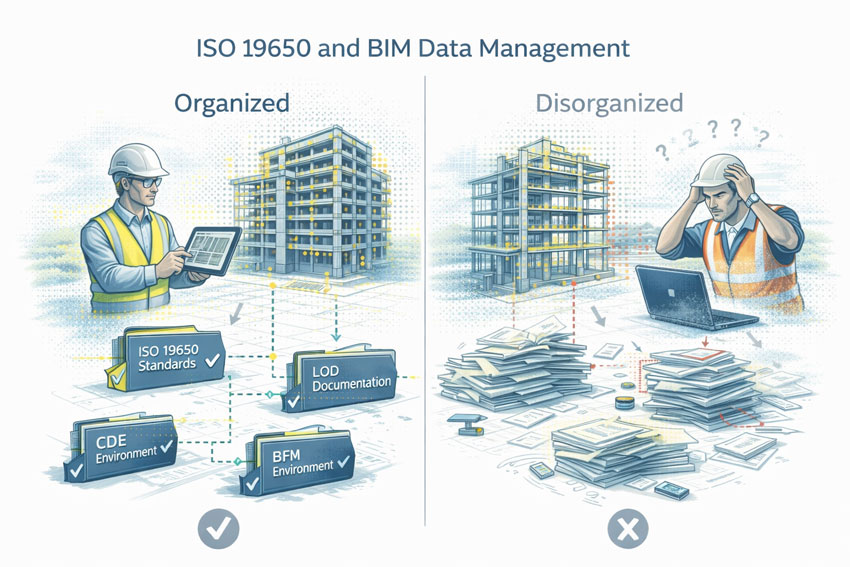

Illustrated comparison of ISO 19650 BIM information management, showing an organised digital model with structured data on one side and a disorganised model with fragmented documentation on the other.

Engineering Responsibility and Certification Risk

When LiDAR data is used to support engineering decisions, responsibility does not sit with the scanner or the software. It sits with the engineer relying on the data.

If measurements cannot be demonstrated as accurate, repeatable, and appropriately controlled, they are not suitable to support engineering sign-off. This is particularly relevant where scanning data contributes to certification outcomes, where accountability and defensibility are essential.

Engineering certification must be based on verified measurements, supported by controlled data capture and documented processes:
https://www.hamiltonbydesign.com.au/home/engineering-services/engineering-certification/


Why AS ISO 5725 Matters in Practice

AS ISO 5725 is not about paperwork or compliance for its own sake. It provides the framework that ensures measurement data used for engineering decisions is fit for purpose.

When LiDAR scanning is undertaken with accuracy, precision, and calibration treated seriously, it becomes a powerful engineering tool. When these principles are ignored, scanning becomes a source of hidden risk that only emerges when it is too late to correct cheaply.


Hamilton By Design logo displayed on a blue tilted rectangle with a grey gradient background

Final Thought

3D LiDAR scanning is only as reliable as the measurement discipline behind it.

AS ISO 5725 provides the foundation for understanding whether scanning data can be trusted. In engineering, fabrication, and certification contexts, that trust is not optional โ€” it is essential.


Structural drafting services button
Building and construction services button
Mechanical drafting services button

Our clients:

Name
Would you like us to arrange a phone consultation for you?
Address
Finite Element Analysis (FEA) engineering simulation button
Mechanical engineering services

3D Engineering in Sydney – BIM

BIM Documentation & Defensible Building Records

Sydney property and building projects live or die on what is documentedโ€”and how confidently that documentation can be relied upon. In a market defined by tight plant rooms, vertical services, constrained access, staged upgrades, and high holding costs, โ€œclose enoughโ€ drawings can become a legal, commercial, and program risk.

Hamilton By Design provides engineer-led 3D scanning and 3D engineering services in Sydney, focused on producing BIM-ready documentation and defensible building records to support:

  • Sale and purchase due diligence
  • Leasing and refurbishment planning
  • Services upgrades (HVAC, piping, mechanical plant, fire coordination interfaces)
  • Fit-first-time fabrication and constructability
  • Evidence-quality as-built records

If youโ€™re looking for a Sydney scanning service that goes beyond โ€œpretty point cloudsโ€ and delivers engineering-grade outputs, start here:
3D Scanning Sydney: https://www.hamiltonbydesign.com.au/3d-scanning-sydney/


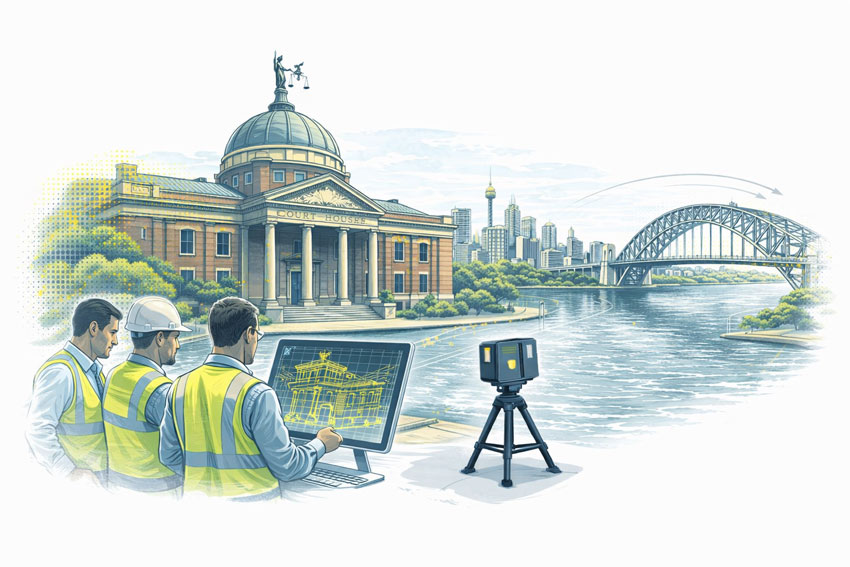
Engineers reviewing BIM documentation while a LiDAR scanner captures a Sydney courthouse with Sydney Harbour and the Harbour Bridge in the background
3D LiDAR scanning and 3D modelling service button โ€” laser scanner capturing a point cloud for engineering and CAD modelling
Mechanical engineering services

Why Documentation Matters for Property Sale in Sydney

When a commercial or industrial property changes hands, the documentation pack often becomes a key part of:

  • Pre-purchase due diligence
  • Capex forecasting
  • Compliance planning
  • Tenant fit-out feasibility
  • Valuation and defect risk assessment

In practice, the biggest issues arise when the โ€œas-builtsโ€ are:

  • Outdated (multiple refurbishments since issue)
  • Incomplete (plant rooms, risers, roof plant never updated)
  • Uncoordinated (services donโ€™t match structure or architecture)
  • Non-dimensional or ambiguous (typical details reused across floors)
  • Inconsistent with reality (especially in brownfield assets)

A reality-captured, engineering-led approach reduces uncertainty by establishing a reliable baseline: what exists, where it is, and what can fit.


BIM is not typically mandated by law for private property transactions. However, the legal and commercial requirement is not โ€œBIMโ€ โ€” it is adequate, accurate, and defensible documentation.

On modern Sydney assets, BIM-style coordination is often the most practical way to:

  • Demonstrate reasonable verification of existing conditions
  • Reduce foreseeable clashes and rework
  • Provide traceable design intent and change control
  • Support compliance pathways and certification workflows

For property sale and acquisition, BIM and 3D documentation increasingly function as risk controls. They help owners, buyers, and project teams make decisions using verifiable geometry instead of assumptions.

Note: This page is general information, not legal advice. Documentation obligations depend on building type, scope of work, and the relevant approval pathway.


What We Deliver: Documentation Packs That Stand Up to Scrutiny

Our Sydney workflow is designed to create outputs that are useful across multiple stakeholders: owners, facilities teams, designers, contractors, and project managers.

1) Reality Capture and Registered Outputs

  • Engineering-grade LiDAR / laser scanning
  • Site constraints captured in high detail (plant rooms, risers, mezzanines, service corridors)
  • Deliverables structured so they can be used for BIM modelling and coordination

2) BIM-Ready As-Built Models

We produce or support the production of:

  • Coordinated 3D models suitable for engineering design workflows
  • Mechanical service zones and clearance envelopes
  • Plant layout validation (lift paths, maintenance access, removable panels)

3) Drawing Sets for Sale, Leasing, and Upgrades

Depending on the asset and use case, documentation can include:

  • General arrangement drawings
  • Plant-room and rooftop plant layouts
  • Service routing diagrams (where required)
  • Key dimensions, levels, and coordination references

4) Evidence-Quality Record Packs

When the purpose is due diligence, risk reduction, or dispute avoidance, we can structure outputs with:

  • Traceable references back to the scan dataset
  • Clear assumptions and tolerances
  • Version control and change notes for future updates

Where This Helps Most in Sydney

Commercial Buildings and CBD Refurbishments

Sydneyโ€™s CBD and inner suburbs often involve:

  • Occupied buildings
  • After-hours access
  • Tight risers and low ceiling voids
  • Multiple generations of undocumented services

Reality capture + BIM documentation improves planning for:

  • HVAC replacement
  • Plant upgrades
  • Tenant fit-outs
  • Services reroutes
  • Staged works and shutdowns

Industrial and Processing Facilities

For industrial assets, โ€œdocument confidenceโ€ is directly tied to:

  • Fit-first-time fabrication
  • Shutdown windows
  • Safety and access planning

3D engineering outputs support:

  • Pipe spools and mechanical upgrades
  • Structural interfaces
  • Skid and equipment placement validation

Property Sale and Acquisition Due Diligence

For buyers and owners, BIM-ready records can help:

  • Confirm plant capacity and spatial constraints
  • Validate feasibility for intended refurbishments
  • Identify unknowns that should be priced into capex planning
  • Reduce โ€œlatent defectโ€ surprises caused by unknown geometry

Engineer-Led Scanning vs. Generic Capture

Not all scans are equal. The difference is not just the scanner โ€” itโ€™s the workflow and the engineering intent.

Engineer-led reality capture focuses on:

  • What must be measured for mechanical design
  • Clearances, access paths, and maintenance envelopes
  • Interfaces between structure and services
  • Deliverables that reduce fabrication and installation risk

If the goal is property documentation, the key question is:

โ€œCan this documentation be trusted to make decisions that cost money?โ€


Typical Deliverables (Choose What You Need)

A Sydney documentation package may include:

  • Point cloud dataset (registered and organised)
  • BIM-ready model (scope defined by asset type and use case)
  • Drawing set (GA layouts and key sections)
  • Plant and services spatial verification notes (where requested)
  • Asset record pack structure for ongoing lifecycle updates

Because the โ€œrightโ€ package depends on whether youโ€™re:

  • Selling / buying
  • Leasing / refurbishing
  • Upgrading services
  • Planning staged works

โ€ฆwe build the scope around what decisions the documentation must support.


Blue banner graphic displaying the text "Point Cloud to CAD - Australia" in large white lettering, representing point cloud processing, scan-to-CAD conversion and digital engineering services across Australia.
Blue banner graphic displaying the text "Scan to CAD Sydney" in large white lettering, representing engineering-led point cloud to CAD conversion, LiDAR scanning and digital engineering services in Sydney.
Blue banner graphic displaying the text "Reality Capture Sydney - CBD" in large white lettering, representing engineering-led reality capture, LiDAR scanning and digital engineering services within Sydney CBD commercial buildings and infrastructure.

Common Use Cases for Sale of Property

โ€œWeโ€™re selling a building โ€” what does the buyer actually want?โ€

Most buyers want confidence around:

  • What exists (geometry and plant placement)
  • What will fit (upgrade feasibility)
  • What risks are hidden (unknowns and clashes)
  • How much capex is coming (services condition + spatial constraint)

โ€œWeโ€™re buying โ€” can we validate the fit-out feasibility quickly?โ€

A scan-to-model workflow can quickly confirm:

  • Available plant space
  • Riser and shaft constraints
  • Ceiling space and structural conflicts
  • Staging or cranage constraints for replacement plant

โ€œWe need a defensible as-built record before we commit.โ€

If youโ€™re about to spend real money on design or refurbishment, scanning first prevents:

  • Design rework
  • Fabrication errors
  • Program delays caused by surprise constraints

How the Process Works

  1. Define the decision
    Sale pack, due diligence, upgrade design, or refurbishment planning.
  2. Site capture plan
    What areas matter most (plant rooms, risers, roof, loading dock, service corridors).
  3. LiDAR scanning and registration
    Delivered in an organised structure suitable for modelling and coordination.
  4. Model and documentation outputs
    BIM-ready models and drawings aligned to the defined purpose.
  5. Handover + future update pathway
    Documentation structured so future projects can update the baseline rather than restart.

Frequently Asked Questions

Do I legally need BIM for a property sale?

Usually, no. But you do need documentation that is accurate enough for decisions and defensible if assumptions are challenged. BIM-quality coordination often becomes the most practical method for complex assets.

Are existing drawings good enough?

Sometimes. But in many Sydney buildingsโ€”especially refurbished and service-dense assetsโ€”drawings can be incomplete or wrong. Scanning verifies the baseline.

Can you scan only the areas that matter most?

Yes. For sale and due diligence, we often focus on:

  • Roof plant
  • Main plant rooms
  • Key risers / service corridors
  • Basement services areas
  • Areas driving upgrade feasibility

Is this useful for strata or mixed-use buildings?

Yes โ€” especially where service routing and riser geometry are uncertain and upgrades need clear feasibility.


Hamilton By Design logo displayed on a blue tilted rectangle with a grey gradient background

Talk to an Engineer About Sydney Documentation

If you need 3D engineering in Sydney focused on BIM documentation and defensible records for property sale, we can help you establish a baseline that reduces commercial risk and improves decision-making.


Start with our Sydney service page:
https://www.hamiltonbydesign.com.au/3d-scanning-sydney/


Scan to CAD Sydney โ€“ converting laser scan data into accurate 3D CAD models
Building and construction services button

Our clients:

Name
Would you like us to arrange a phone consultation for you?
Address
3D Scanning Sydney banner promoting engineering-grade 3D laser scanning, LiDAR scanning, and reality capture services by Hamilton By Design.
Mechanical Engineering Sydney banner with white text on a blue background representing Hamilton By Design's mechanical engineering services in Sydney.
Mechanical Drafting and 3D Modelling Sydney banner highlighting Hamilton By Design's CAD drafting, 3D modelling, and engineering design services in Sydney.

Hamilton By Design provides engineering-led 3D scanning, LiDAR scanning, mechanical engineering and digital engineering services throughout Sydney and Greater Sydney.

Explore our related Sydney services:


  • 3D Scanning Sydney โ€“ Engineering-grade terrestrial laser scanning, as-built surveys and point cloud capture for industrial, infrastructure and commercial projects.
  • Reality Capture Sydney โ€“ High-accuracy reality capture, digital twins, asset documentation and engineering-grade site verification.
  • Scan to CAD Sydney โ€“ Convert point cloud data into AutoCAD, SolidWorks, Inventor and other engineering-ready CAD deliverables.
  • Point Cloud Modelling Sydney โ€“ Engineering-grade point cloud processing, clash detection, as-built verification and 3D modelling.
  • Mechanical Engineering Sydney โ€“ Mechanical design, plant upgrades, materials handling systems, conveyors, chutes, platforms and engineering support.
  • Structural Drafting Sydney โ€“ Structural steel drafting, fabrication drawings, GA drawings, workshop detailing and as-built documentation.

Hamilton By Design supports projects throughout Sydney CBD, Parramatta, Liverpool, Penrith, Blacktown, Chatswood, Alexandria, Mascot, Newcastle and the Central Coast.


Mechanical Engineering | Structural Engineering


3D LiDAR Scanning Darwin for engineering surveys, laser scanning, reality capture and point cloud modelling services
3D LiDAR Scanning Australia engineering services for laser scanning, reality capture, scan-to-CAD, Scan-to-BIM and as-built documentation across Australia
3D LiDAR scanning services on the Central Coast providing engineering-grade laser scanning, point cloud capture, scan-to-CAD modelling and industrial reality capture for infrastructure and industrial projects.

Machine Guarding in Australia: A Decade of Lessons for Leaders, Asset Owners, and Engineers

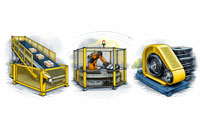
ndustrial machine guarding solutions showing a conveyor system, a robotic cell, and a belt drive with fixed guards designed to prevent access to hazardous moving parts.

Machine guarding examples showing a guarded conveyor, enclosed robotic cell, and belt drive with safety covers

3D LiDAR scanning and 3D modelling service button โ€” laser scanner capturing a point cloud for engineering and CAD modelling
Mechanical engineering services

Machine guarding remains one of the most persistent and preventable safety risks across Australian industry.
Despite improvements in automation, safety culture, and regulatory oversight, serious injuries and fatalities involving machinery continue to occur every year, particularly in manufacturing, mining, food processing, and materials handling.

Over the past decade, regulators, courts, and insurers have consistently reinforced one message:
machine guarding is not optional, not administrative, and not a โ€œfit-laterโ€ activity โ€” it is a core engineering and governance responsibility.

This article examines:

  • The international and Australian standards framework for machine guarding
  • Accident and injury trends over the past ten years
  • Legal and enforcement signals emerging from prosecutions
  • Why machine guarding must be treated as a strategic asset-risk issue, not just a safety task

The Global Framework: International Standards for Machine Guarding

Machine guarding is governed globally through standards developed by the International Organization for Standardization (ISO).


ISO standards portal
Core International Standards

ISO 12100 Risk assessment

ISO 14120 Guard design

ISO 13857 Safety distances

ISO 13849-1 Interlocks & control systems

These standards establish a risk-based engineering approach, requiring hazards to be:

  1. Identified
  2. Eliminated where possible
  3. Engineered out through guards and control systems
  4. Verified through geometry, distances, and fail-safe logic

This methodology underpins CE marking, global OEM compliance, and multinational EPC project delivery.


The Australian Context: AS 4024 and WHS Expectations

Australia adopts and localises ISO principles through AS 4024 โ€“ Safety of Machinery, referenced extensively by regulators under Work Health and Safety (WHS) legislation.

Standards Australia โ€“ AS 4024 Series
Key Australian Standards

AS 4024.1201 Risk assessment

AS 4024.1601 Guards

AS 4024.1602 Interlocks

AS 4024.1801 Safety distances

AS 4024.1501 Safety control systems

While standards themselves are not legislation, courts and regulators consistently use AS 4024 as the benchmark for determining whether risks have been managed so far as is reasonably practicable.


Australia does not publish a dedicated โ€œmachine guarding accidentโ€ metric. However, national data from Safe Work Australia clearly shows machinery remains a leading cause of serious harm.

Safe Work Australia โ€“ Key WHS statistics:
National Trends (Approximate โ€“ Last 10 Years)

MetricEvidence Source
~1,850+ traumatic work fatalitiesSafework Australia
~180โ€“200 fatalities per yearSafework Australia
Highest fatality rateMachinery operators & drivers
~130,000โ€“140,000 serious injury claims annuallyAustralian Institute of health and welfare
Common mechanismsTrapped by machinery, struck by moving objects

Machinery operators consistently record:

  • The highest fatality rates of all occupation groups
  • Disproportionate representation in serious injury claims
  • Higher exposure to entanglement, crush, shear, and impact hazards

These mechanisms are directly linked to guarding effectiveness, not worker behaviour alone.


What Hasnโ€™t Changed โ€” and Why It Matters

1. Legacy Plant Remains a Key Risk

Many incidents involve:

  • Older machinery
  • Brownfield modifications
  • Equipment altered without re-engineering guarding

Australian WHS law does not grandfather unsafe plant.


2. Guarding Is Still Added Too Late

Common failures include:

  • Guards designed post-fabrication
  • Inadequate reach distances
  • Interlocks added without validated performance levels

This often leads to bypassing, removal, or unsafe maintenance practices.


3. Lack of Engineering Documentation

Post-incident investigations frequently identify:

  • No formal risk assessment
  • No justification against AS 4024 or ISO standards
  • No evidence that guarding was engineered, tested, or validated

In legal proceedings, absence of documentation is treated as absence of control.


Australian regulators (WorkSafe NSW, WorkSafe VIC, SafeWork QLD, SafeWork SA) have consistently prosecuted machine-guarding failures, particularly where:

  • Hazards were known
  • Improvement notices were ignored
  • Guards were removed or ineffective

Regulator portals:

Courts have reinforced that:

  • Training does not replace guarding
  • PPE does not replace guarding
  • Signage does not replace guarding

Guarding as a Governance Issue

For executives and boards, machine guarding intersects with:

  • Officer due diligence obligations
  • Asset lifecycle risk
  • Insurance and liability exposure
  • Business continuity and ESG performance

Well-designed guarding:

  • Reduces downtime
  • Enables safer automation
  • Improves workforce confidence
  • Creates defensible compliance positions

The Engineering Reality: Geometry Drives Compliance

Modern compliance relies on:

  • Verified reach distances
  • Measured openings and clearances
  • Validated interlock logic

This is why accurate:

  • As-built capture
  • 3D modelling
  • Engineering-grade spatial data

are increasingly essential for brownfield and high-risk plant.


Looking Ahead: The Next Decade

Trends indicate:

  • Greater scrutiny of legacy machinery
  • Stronger linkage between standards and prosecutions
  • Higher expectations for engineering evidence
  • Increased use of digital engineering to prove compliance

Organisations that integrate guarding early into engineering workflows will be better protected legally, operationally, and reputationally.


Hamilton By Design logo displayed on a blue tilted rectangle with a grey gradient background

Final Thought

Machine guarding is not about mesh and fences.
It is about engineering intent, risk ownership, and accountability.

The last decade of Australian data, prosecutions, and standards alignment is clear:
when guarding fails, the outcomes are predictable โ€” and preventable.

Structural drafting services button
3D LiDAR scanning and 3D modelling services button
Mechanical drafting services button

Our clients:

Name
Would you like us to arrange a phone consultation for you?
Address

#Machine guarding standards Australia #Machinery safety best practices #AS/NZS 4024 machine guarding #Workplace safety machinery #Industrial safety compliance #Machine guarding lessons for engineers

Finite Element Analysis (FEA) engineering simulation button
Mechanical engineering services

Mining & Mineral Processing

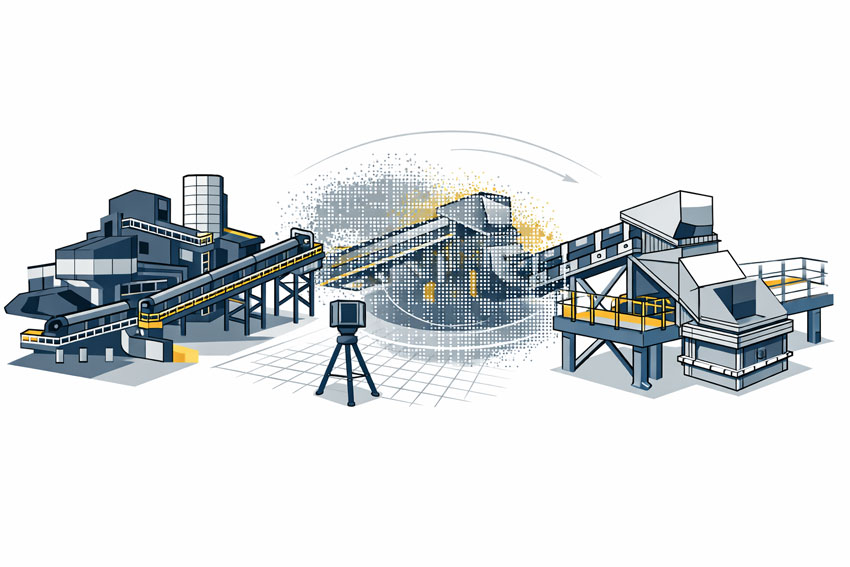
LiDAR laser scanner capturing a mining and mineral processing plant to create an accurate 3D digital model for engineering and fabrication
Blue icon of a conveyor belt carrying material into a crusher or processing unit

We support mining and mineral processing operations with engineering-grade LiDAR scanning and mechanical design for CHPPs, conveyors, transfer stations, plant upgrades, and brownfield modifications. Our experience in live operating environments helps reduce shutdown risk, rework, and costly fabrication errors.

Mining & Mineral Processing Engineering Services

Hamilton By Design supports mining and mineral processing operations with engineering-grade LiDAR scanning, mechanical engineering, and design support for complex, live operating environments.
Our work focuses on delivering accurate existing-condition data and engineering outcomes that reduce shutdown risk, minimise rework, and support safe, efficient plant upgrades.

We work across the full project lifecycle โ€” from early site capture and feasibility through to detailed design, fabrication support, and construction verification โ€” with a strong emphasis on brownfield and retrofit projects where getting the geometry right is critical.


Mining Engineering Services

Our mining engineering services are built around a clear principle: engineering decisions must be based on accurate site data. We combine reality capture with mechanical engineering to support informed design, modification, and execution of mining projects.

These services support:

  • Existing asset validation
  • Upgrade and modification planning
  • Engineering design development
  • Risk reduction in live operating plants

By integrating scanning and engineering under one workflow, we provide mining teams with confidence that designs reflect real-world conditions.


Mining & Industrial Engineering

Mining operations rely on complex industrial systems that must perform reliably under demanding conditions. Hamilton By Design works at the interface between mining infrastructure and industrial plant systems, supporting projects where mechanical, structural, and operational requirements overlap.

Our experience includes:

  • Mineral processing facilities and CHPPs
  • Materials handling systems
  • Industrial plant equipment within mining sites
  • Brownfield integration and asset upgrades

This cross-disciplinary approach allows us to support mining clients with solutions that are practical, buildable, and aligned with operational constraints.


Mining Services

Our mining services focus on practical project delivery support. We work alongside site teams, engineers, and contractors to capture existing conditions, verify designs, and support construction and shutdown activities.

Typical services include:

  • Engineering-grade LiDAR and as-built capture
  • Existing condition verification
  • Design coordination support
  • Construction and installation validation

These services help reduce uncertainty on site and provide a reliable digital foundation for engineering and fabrication activities.


Mechanical Engineering in Mining

Mechanical engineering is central to the safe and efficient operation of mining assets. Hamilton By Design provides mechanical engineering support informed directly by site-captured data, ensuring designs are suitable for real operating environments.

Our mechanical engineering capabilities support:

  • Conveyors, chutes, and transfer stations
  • Plant upgrades and modifications
  • Structural and mechanical interfaces
  • Fabrication-ready design documentation

Where required, our work can be supported by engineering verification and analysis to provide additional confidence in design outcomes.


Engineering-Led, Fit-for-Purpose Outcomes

Hamilton By Design operates with a strong focus on:

  • Accuracy over assumption
  • Engineering accountability
  • Fit-first-time outcomes
  • Reduced risk in brownfield environments

By combining reality capture with mechanical engineering, we help mining and mineral processing clients move from uncertain existing conditions to confident engineering decisions.


Hamilton By Design logo displayed on a blue tilted rectangle with a grey gradient background

If you are planning a mining or mineral processing upgrade, modification, or verification project, Hamilton By Design can support your team with engineering-grade scanning and mechanical design services tailored to live operating environments.


Structural drafting services button
3D LiDAR scanning and 3D modelling services button
Mechanical drafting services button

Our clients:

Name
Would you like us to arrange a phone consultation for you?
Address
3D LiDAR scanning and 3D modelling service button โ€” laser scanner capturing a point cloud for engineering and CAD modelling
Mechanical engineering services

3D Laser Scanning

3D LiDAR Scanning โ€“ Digital Quality Assurance

Mechanical Engineering Perth WA banner for Hamilton By Design featuring white text on a blue background.
3D Laser Scanning Perth WA banner for Hamilton By Design with white text on a blue background.
SolidWorks Perth WA banner for Hamilton By Design featuring white text on a blue background.

SolidWorks Mechanical Design Services

As-Built Drawings from a LiDAR Scanner

3D LiDAR Scanning and 3D Modelling – Hamilton By Design

https://www.hamiltonbydesign.com.au/perth-wa
3D CAD Modelling Australia service banner for Hamilton By Design
3D LiDAR scanning and 3D modelling service button โ€” laser scanner capturing a point cloud for engineering and CAD modelling
Mechanical engineering services
3D CAD Modelling Australia service banner for Hamilton By Design
Mechanical, Structural & Pipework Drafting service banner by Hamilton By Design featuring white text on a blue background.
Australian Drafting logo featuring bold white text reading "Australian Drafting" centred on a blue rounded rectangle background.
Blue banner graphic displaying the text "Point Cloud to CAD - Australia" in large white lettering, representing point cloud processing, scan-to-CAD conversion and digital engineering services across Australia.
CHPP Engineering title graphic featuring bold white text reading "CHPP Engineering" centred on a blue rounded rectangle background.
Engineering Governance title graphic featuring bold white text reading "Engineering Governance" centred on a blue rounded rectangle background.
Mechanical engineering services
Australian Drafting logo featuring bold white text reading "Australian Drafting" centred on a blue rounded rectangle background.
https://www.hamiltonbydesign.com.au/lidar-scanning-brisbane-2
3D LiDAR Scanning Hunter & Newcastle banner with white text on a blue background promoting engineering-grade laser scanning services for industrial, mining and infrastructure projects across the Hunter Valley and Newcastle region.
Mechanical Engineering Hunter & Newcastle banner promoting mechanical engineering services for mining, industrial plants, power generation, manufacturing and heavy industry throughout the Hunter Valley and Newcastle region.
Structural Drafting Hunter & Newcastle banner promoting structural drafting services for mining, industrial plants, power generation, manufacturing and infrastructure projects across the Hunter Valley and Newcastle region.
Mechanical Engineering Perth WA banner for Hamilton By Design featuring white text on a blue background.
3D Laser Scanning Perth WA banner for Hamilton By Design with white text on a blue background.
SolidWorks Perth WA banner for Hamilton By Design featuring white text on a blue background.
Fabrication and product design services
Finite Element Analysis (FEA) engineering simulation button
3D LiDAR scanning and 3D modelling service button โ€” laser scanner capturing a point cloud for engineering and CAD modelling
Blue rounded button with the text โ€œSolidWorks Designโ€ in white.
Mechanical drafting services button
Structural drafting services button

Mechanical Engineering | Structural Engineering


3D Scanning Brisbane

Engineer completing structural drafting while a LiDAR scanner captures as-built data along the Brisbane River with the Story Bridge in view

3D Scanning Brisbane | Engineering-Led LiDAR & Risk Management


We are engineers. Let us manage your risk.

3D scanning is often treated as a visual exercise. In engineering, it is a measurement task. The difference matters.

At Hamilton By Design, 3D scanning in Brisbane is approached as an engineering activity, not just data capture. Our role is to ensure the information collected on site can be safely relied upon for design, fabrication, and installation โ€” without rework, uncertainty, or guesswork.


What People Mean When They Say โ€œ3D Scanningโ€

When someone searches for 3D scanning Brisbane, they are usually trying to answer one question:

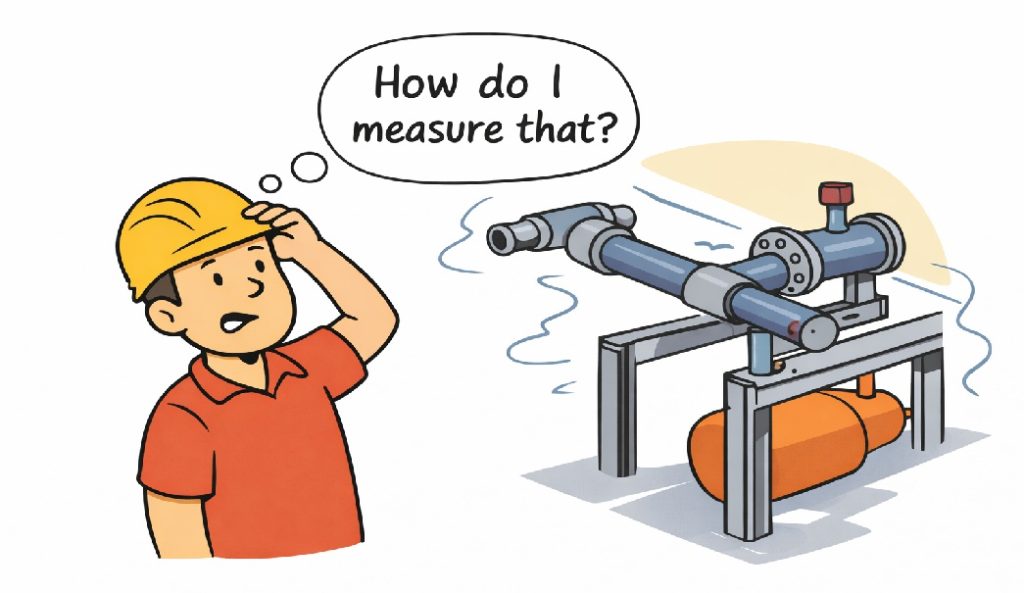
โ€œHow do I measure what already exists?โ€

That might be to:

  • Capture existing site conditions
  • Reduce uncertainty before fabrication
  • Avoid clashes or rework on site

The challenge is that not all scanning methods actually measure geometry.


Cartoon showing a worker asking โ€œHow do I measure that?โ€ while looking at complex pipework, illustrating the need for accurate engineering-grade 3D scanning.

3D Scanning in Brisbane โ€“ Typical Use Cases

Across Brisbane and South-East Queensland, 3D scanning is commonly used for:

  • Industrial plant upgrades and brownfield sites
  • As-built capture of steel, services, and structures
  • Fabrication completed off-site
  • Retrofit works with limited access
  • Shutdown and tie-in planning

For projects like these, scanning is typically carried out using engineering-grade laser scanning, not visual or consumer-grade tools.
3D Laser Scanning


Scanning Is Not the Same as Measuring

(Simple cartoon here: character looking at an object asking โ€œHow do I measure that?โ€)

Scanning is not the same as measuring.
In fabrication, we measure twice and cut once.
With the right scanner, you only need to scan once.

Many scanning tools create models that look right but are based on inferred or smoothed geometry. For engineering, appearance is not enough โ€” the data must be measurable and accurate.


Not All 3D Scanning Is the Same

There are different ways to โ€œscanโ€ a site, each producing very different outcomes:

  • Phone and visual scans
    Useful for reference and visualisation, but not suitable for engineering.
  • Photogrammetry
    Good for context and large areas, but geometry is inferred rather than directly measured.
  • Engineering-grade LiDAR scanning
    Uses direct distance measurement to generate a true 3D point cloud.

Measured scan data can then be converted into usable engineering information through point cloud modelling workflows.
3D Point Cloud Modelling Brisbane


When Engineering-Grade Scanning Is Required

Engineering-grade scanning is required when:

  • Steelwork must fit first time
  • Pipework or spools are fabricated off-site
  • Structural members must be verified
  • Clearances and clashes carry cost or safety risk
  • There is only one opportunity to access the site

In these cases, scan data is typically followed by a Scan-to-CAD process, where point clouds are converted into accurate 3D models and drawings.
Scan to CAD Brisbane


Our Approach to 3D Scanning

Hamilton By Design treats scanning as part of a complete engineering workflow, not a standalone service.

Our approach includes:

  • Engineer-led scanning
  • Measurement-first mindset
  • Engineering-grade LiDAR equipment
  • Clear understanding of downstream use

By integrating scanning with mechanical engineering services, we maintain single-source accountability from site capture through to fabrication-ready deliverables.
Mechanical Engineering Services


What Happens After the Scan

3D scanning is the starting point, not the end.

Accurate scan data supports:

  • 3D CAD modelling
  • Fabrication and shop drawings
  • Structural verification
  • Clash detection and layout validation

Every downstream decision depends on the quality of the measurement captured at the start.


Talk to an Engineer Before You Scan

Many project issues begin with the wrong question:

โ€œCan you scan this?โ€

The better question is:

โ€œHow do I measure this so it can be engineered?โ€

If you need 3D scanning in Brisbane that can safely support engineering and fabrication decisions, Hamilton By Design can help you get it right the first time.


We are engineers. Let us manage your risk.


Hamilton By Design logo displayed on a blue tilted rectangle with a grey gradient background

Our clients:
Name
Would you like us to arrange a phone consultation for you?
Address
3D LiDAR scanning and 3D modelling service button โ€” laser scanner capturing a point cloud for engineering and CAD modelling
Mechanical engineering services
Finite Element Analysis (FEA) engineering simulation button
Mechanical engineering services

You wouldnโ€™t expect plasticine to hold up a roof

So why expect precision measurement from a low-grade scanner?

You would never expect plasticine to hold up a roof.

It is simply not designed for that purpose.

So why would you expect precision, fabrication-grade measurements from a low-grade scanner that was never intended for engineering, structural verification, or load-critical decision-making?

At Hamilton By Design, this distinction matters โ€” because the consequences of poor data do not appear on a screen.
They appear later, on site, in steel, time, cost, and risk.


The problem with โ€œone-size-fits-allโ€ scanning

The term โ€œ3D scanningโ€ is often used to describe vastly different technologies with vastly different outcomes.

A phone-based scan, poly scan, or real-estate laser capture tool is designed to:

  • Look good
  • Be fast
  • Be easy to use
  • Support visualisation and marketing

An engineering-grade laser scanner is designed to:

  • Capture true geometry
  • Provide repeatable, verifiable measurements
  • Support CAD modelling, fabrication drawings, and structural assessment

These tools are not interchangeable, even if the outputs look similar at first glance.

Visual accuracy is not structural accuracy.


When โ€œclose enoughโ€ becomes very expensive

Low-grade scanners may produce models that appear accurate, but engineering does not work on appearances.

When steel is being fabricated, installed, or retrofitted, millimetres matter.

Errors in geometry can lead to:

  • Beams that are too short to achieve adequate bearing
  • Misaligned columns or plates
  • Clashes with existing services or structure
  • Forced site modifications and rework
  • Extended shutdowns and access costs

This is why Hamilton By Design approaches scanning as an engineering input, not a visual product.

๐Ÿ‘‰ Related service: 3D Laser Scanning Services


You cannot engineer what you cannot see

Phone scans and visual capture methods only record what is visible.

They cannot:

  • Establish footing depth
  • Confirm foundation geometry
  • Identify slab thickening or edge beams
  • Verify load paths below ground

If you cannot see or verify how loads are transferred into the ground, you cannot responsibly design the structure above it.

Hamilton By Design addresses this gap through an engineering-led approach that combines:

  • Measured geometry
  • Subsurface investigation (where appropriate)
  • Structural logic and interpretation

๐Ÿ‘‰ Related service: Ground Penetrating Radar (GPR) Services
๐Ÿ‘‰ Related service: As-Built Documentation


Beam length, bearing, and support are not optional details

A structural beam does not just need to โ€œfit in the spaceโ€.

It must:

  • Span between actual supports
  • Achieve sufficient bearing length
  • Align with load-bearing elements
  • Transfer load safely and compliantly

Low-grade scanning tools often:

  • Smooth over out-of-square conditions
  • Hide offsets and construction tolerances
  • Mask inadequate support conditions

Engineering-grade scanning reveals what really exists, not what drawings or assumptions suggest.

๐Ÿ‘‰ Related service: Scan-to-CAD Modelling
๐Ÿ‘‰ Related service: Structural Drafting


Why engineering-grade scanners exist

Industrial laser scanners are not expensive or complex by accident.

They exist because engineering requires:

  • Known accuracy performance
  • Repeatable measurement results
  • Controlled registration and QA
  • Traceable geometry suitable for design and fabrication

Just as structural steel exists because plasticine cannot carry load, engineering scanners exist because consumer tools cannot provide engineering certainty.

Hamilton By Design uses engineering-grade scanners because the outcomes demand it.

๐Ÿ‘‰ Learn more: Reality Capture for Engineering


Scanning is not the outcome โ€” engineering is

At Hamilton By Design, scanning is never delivered in isolation.

It is part of a single-source engineering workflow that connects:

  • Reality capture
  • Subsurface understanding
  • CAD modelling
  • Fabrication-ready documentation

This reduces:

  • Misinterpretation of raw data
  • Risk transfer between consultants
  • Late design changes
  • Site improvisation

๐Ÿ‘‰ Related service: Mechanical Engineering Services
๐Ÿ‘‰ Related service: Fabrication Drawings


Where low-grade scanning does make sense

This is not about dismissing phone scans entirely.

They are suitable when:

  • The outcome is visualisation
  • Measurements are indicative only
  • No structural or fabrication decisions depend on the data

They are not suitable when:

  • Steel is being fabricated
  • Loads are being introduced or modified
  • Compliance and safety are required
  • Errors would surface on site

You match the tool to the consequence.


The Hamilton By Design position

Hamilton By Design exists to support projects where:

  • Accuracy matters
  • Geometry drives cost
  • Fabrication must fit first time
  • Engineering accountability is required

We do not promise โ€œquick scansโ€.
We deliver engineering confidence.

๐Ÿ‘‰ Explore projects by region:


The simple truth

You would not trust plasticine to hold up a roof.

And you should not trust a low-grade scanner to deliver precision geometry for structural or mechanical engineering.

If the outcome needs to be safe, compliant, and fit-first-time, the data must be engineered โ€” not approximated.


Next steps

If you are planning:

  • Structural modifications
  • Beam or column installation
  • Retrofit or upgrade works
  • Fabrication based on existing geometry

Talk to Hamilton By Design about engineering-grade reality capture and a workflow designed for real-world outcomes.

Hamilton By Design logo displayed on a blue tilted rectangle with a grey gradient background
3D LiDAR scanning and 3D modelling service button โ€” laser scanner capturing a point cloud for engineering and CAD modelling
Mechanical engineering services

Our clients:
Name
Would you like us to arrange a phone consultation for you?
Address
Mechanical Engineering Perth WA banner for Hamilton By Design featuring white text on a blue background.
3D Laser Scanning Perth WA banner for Hamilton By Design with white text on a blue background.
SolidWorks Perth WA banner for Hamilton By Design featuring white text on a blue background.
https://www.hamiltonbydesign.com.au/perth-wa
3D CAD Modelling Australia service banner for Hamilton By Design
3D LiDAR scanning and 3D modelling service button โ€” laser scanner capturing a point cloud for engineering and CAD modelling
Mechanical engineering services
3D CAD Modelling Australia service banner for Hamilton By Design
Mechanical, Structural & Pipework Drafting service banner by Hamilton By Design featuring white text on a blue background.
Australian Drafting logo featuring bold white text reading "Australian Drafting" centred on a blue rounded rectangle background.
Blue banner graphic displaying the text "Point Cloud to CAD - Australia" in large white lettering, representing point cloud processing, scan-to-CAD conversion and digital engineering services across Australia.
CHPP Engineering title graphic featuring bold white text reading "CHPP Engineering" centred on a blue rounded rectangle background.
Engineering Governance title graphic featuring bold white text reading "Engineering Governance" centred on a blue rounded rectangle background.
Mechanical engineering services
Australian Drafting logo featuring bold white text reading "Australian Drafting" centred on a blue rounded rectangle background.
3D LiDAR Scanning Hunter & Newcastle banner with white text on a blue background promoting engineering-grade laser scanning services for industrial, mining and infrastructure projects across the Hunter Valley and Newcastle region.
Mechanical Engineering Hunter & Newcastle banner promoting mechanical engineering services for mining, industrial plants, power generation, manufacturing and heavy industry throughout the Hunter Valley and Newcastle region.
Structural Drafting Hunter & Newcastle banner promoting structural drafting services for mining, industrial plants, power generation, manufacturing and infrastructure projects across the Hunter Valley and Newcastle region.
Mechanical Engineering Perth WA banner for Hamilton By Design featuring white text on a blue background.
3D Laser Scanning Perth WA banner for Hamilton By Design with white text on a blue background.
SolidWorks Perth WA banner for Hamilton By Design featuring white text on a blue background.
Fabrication and product design services
Finite Element Analysis (FEA) engineering simulation button
3D LiDAR scanning and 3D modelling service button โ€” laser scanner capturing a point cloud for engineering and CAD modelling
Blue rounded button with the text โ€œSolidWorks Designโ€ in white.
Mechanical drafting services button
Structural drafting services button

Mechanical Engineering | Structural Engineering