LiDAR Scanning vs Handheld Scanning for Engineering Projects | Hamilton By Design

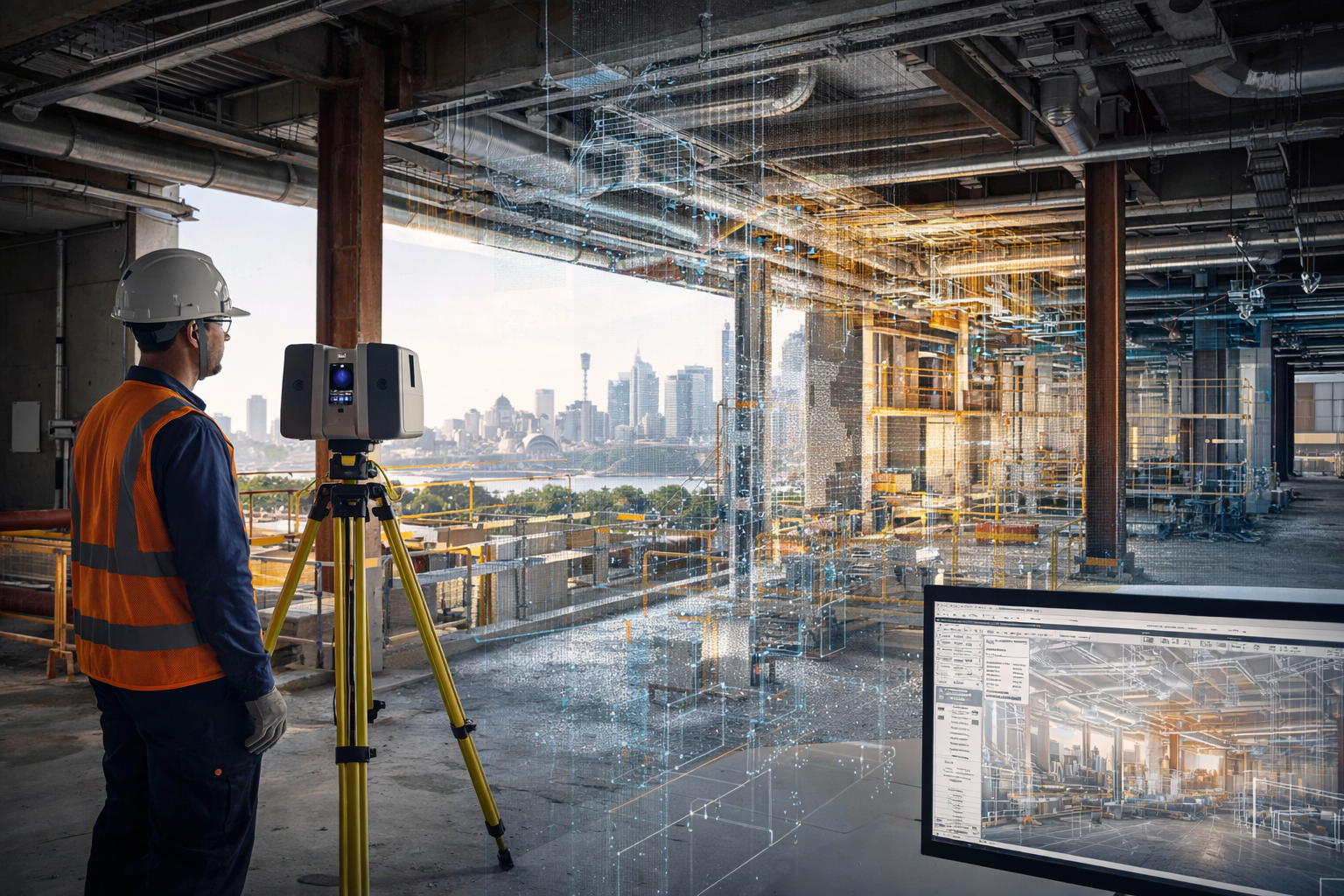
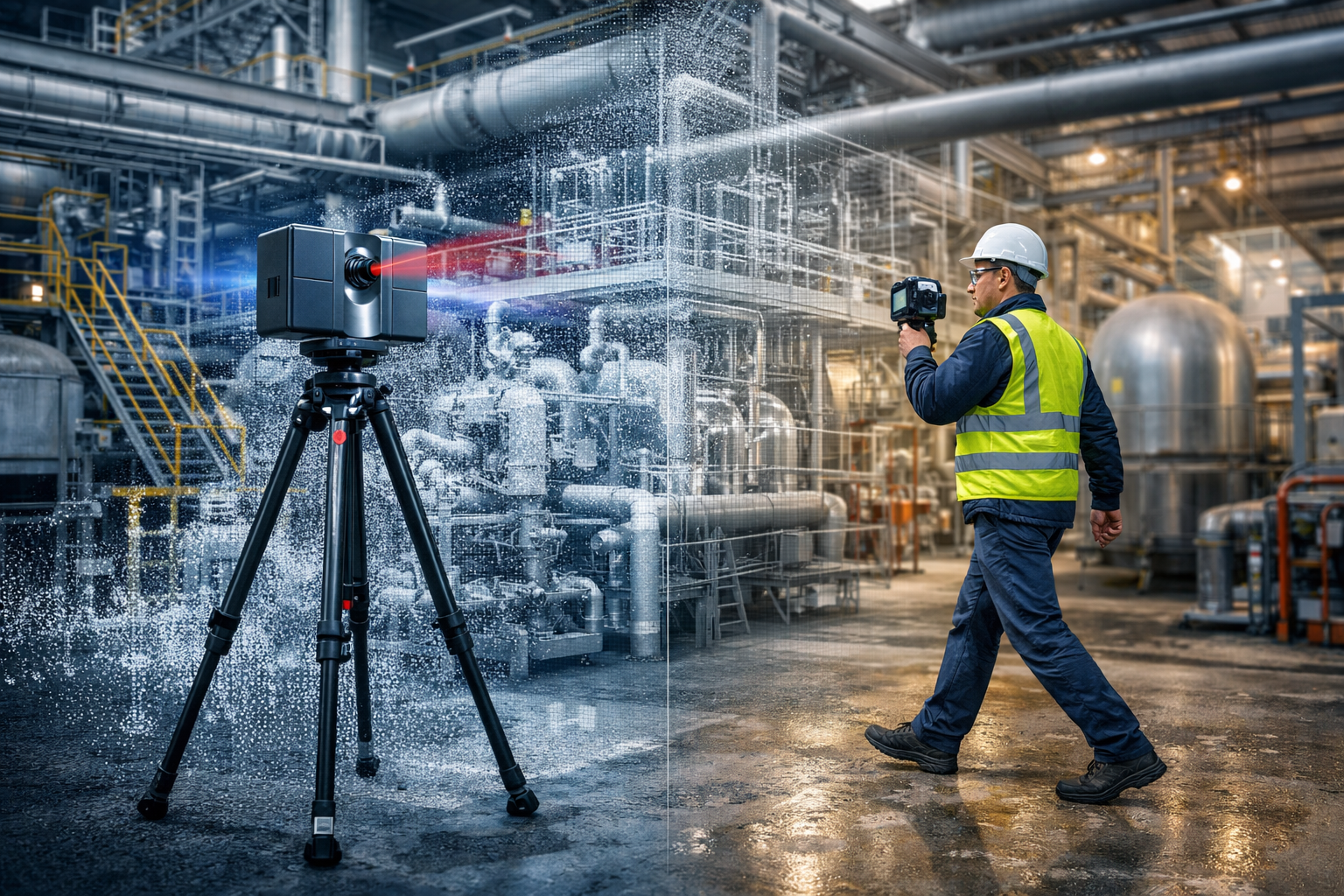
Tripod LiDAR scanner and handheld 3D scanner capturing an industrial plant with point cloud overlay for engineering design

LiDAR Scanning vs Handheld Scanning for Engineering Projects

When clients first look at 3D scanning solutions, one of the most common questions is whether they need a tripod-based LiDAR scanner or a handheld scanner. Both technologies have a place, but the right choice depends on the outcome required.

At Hamilton By Design, we focus on engineering-led reality capture. That means selecting the scanning method that best supports accurate design, fabrication, brownfield upgrades, and reliable project delivery.


3D LiDAR scanning and 3D modelling service button โ€” laser scanner capturing a point cloud for engineering and CAD modelling
Mechanical engineering services

What is the difference?

A tripod-based LiDAR scanner captures highly accurate point cloud data from fixed scan positions. This method is ideal when projects require dependable geometry, repeatable measurements, and engineering-grade outputs.

A handheld scanner is typically used to move quickly through a space and capture data on the go. It can be useful for general visualisation, rapid site understanding, and concept-level work, but it is not always the best fit where tight tolerances or fabrication-ready information is required.

Benefits of tripod-based LiDAR scanning

Higher accuracy

Tripod-based LiDAR scanning is better suited to projects where dimensional accuracy matters. This is particularly important for:

  • plant upgrades
  • tie-in design
  • structural modifications
  • pipework alterations
  • reverse engineering
  • fabrication support

Reliable fixed-position data

Because scans are captured from known stationary positions, the data can be registered into a stable point cloud. This gives engineers, designers, and project teams greater confidence in the model and the measurements taken from it.

Better for engineering and design

Where a project needs scan-to-CAD modelling, design development, clash checking, or digital twin support, tripod LiDAR scanning generally provides the more dependable base dataset.

Stronger project governance

Engineering projects need traceable and reviewable information. LiDAR scanning supports this by providing a robust record of existing conditions that can be referenced throughout the project lifecycle.

Benefits of handheld scanning

Faster capture over large areas

Handheld scanning can be useful where speed is more important than precision, or where the objective is to quickly understand a space.

Flexible for walkthrough-style capture

These systems can help capture general layouts, access routes, and broader site context in areas where rapid movement is an advantage.

Useful for concept and visualisation work

For early-stage planning or non-critical site representation, handheld scanning can sometimes provide a suitable outcome.

Which one is right for your project?

If your project involves fabrication, engineering design, plant modification, shutdown planning, or accurate as-built records, tripod-based LiDAR scanning is usually the better choice.

If your priority is speed, general layout capture, or conceptual understanding, handheld scanning may have a role.

In many cases, the best result comes from an engineering-led approach, where the required deliverables drive the capture method.

Why Hamilton By Design?

Hamilton By Design provides engineering-grade 3D laser scanning and reality capture services for industrial, mining, mechanical, and brownfield environments. Our focus is not just on collecting data, but on delivering data that supports real engineering outcomes.

We understand that a point cloud is only valuable if it helps reduce uncertainty, improve design confidence, and support practical decision-making.

Learn more

To explore our broader scanning and engineering services, visit:

Talk to Hamilton By Design

If you need accurate site data for design, drafting, reverse engineering, or plant upgrades, Hamilton By Design can help you choose the right scanning approach for your project.

Contact us to discuss your site, deliverables, and required level of detail.


Name
Would you like us to arrange a phone consultation for you?
Address


3D CAD Modelling Australia service banner for Hamilton By Design
Reality Capture Brisbane title graphic with white text on a blue background promoting reality capture, LiDAR scanning and digital engineering services in Brisbane, Queensland.
3D Scanning Brisbane text graphic on a blue background promoting engineering-led laser scanning and reality capture services in Brisbane.

LiDAR Scanning Brisbane title graphic with white text on a blue background promoting terrestrial LiDAR scanning, point cloud capture and reality capture services in Brisbane, Queensland.
SolidWorks Brisbane title graphic with white text on a blue background promoting SolidWorks mechanical design, 3D CAD modelling and engineering drafting services in Brisbane, Queensland.


Mechanical Engineering | Structural Engineering


How 3D Laser Scanning is Used in Sydney Projects

Technician using a tripod-mounted 3D laser scanner inside a Sydney building project with digital scan data visible.
Blue 3D LiDAR scanner icon on a tripod with scanning waves

3D laser scanning is being used across Sydney projects to capture accurate existing conditions before design, construction, upgrades, and maintenance work begins. In construction and industrial environments, this technology helps reduce guesswork by providing a reliable digital record of what is actually on site.

For project teams working in live buildings, industrial plants, infrastructure corridors, and brownfield environments, 3D laser scanning can support safer planning, faster design development, and more accurate engineering decisions.

Why 3D Laser Scanning Matters

Many Sydney projects take place in environments where existing information is incomplete, outdated, or missing altogether. Legacy drawings may not reflect years of modifications, and manual site measurements often miss the detail needed for confident design and drafting.

3D laser scanning helps solve that problem by capturing large areas quickly and turning real site conditions into digital information that can be reviewed, measured, modelled, and referenced during project delivery.

This is especially useful where:

  • access is difficult
  • shutdown windows are short
  • geometry is complex
  • services are congested
  • existing drawings are unreliable
  • rework risk needs to be reduced

How 3D Laser Scanning is Used in Sydney Construction Projects

In construction, 3D laser scanning is commonly used to capture existing buildings, structures, and services before new work begins. This helps design teams understand the actual site condition rather than relying only on old plans or assumptions.

Typical construction uses include:

  • existing building surveys
  • faรงade and structural capture
  • service coordination
  • refurbishment and fitout planning
  • steelwork measurement
  • as-built verification
  • clash checking before installation
  • scanning of plant rooms, roof spaces, basements, and service risers

For Sydney construction projects, this can be particularly valuable in older buildings, confined plant areas, and staged redevelopment works where accuracy matters.

How 3D Laser Scanning is Used in Industrial Projects

3D laser scanning is also widely used in industrial and engineering projects across Sydney. This includes manufacturing facilities, processing plants, utilities infrastructure, materials handling systems, and brownfield upgrade works.

Common industrial applications include:

  • capturing conveyors, chutes, tanks, pipework, and steel structures
  • documenting existing plant before modifications
  • scan-to-CAD modelling
  • drafting support for upgrades and shutdowns
  • tie-in planning for new equipment
  • layout verification before fabrication
  • structural and mechanical design support
  • point cloud capture for engineering review

For industrial sites, one of the biggest advantages is being able to capture the true geometry of operating plant areas before mechanical or structural work begins.

Use in Brownfield and Upgrade Projects

Brownfield projects often involve uncertainty. Existing assets may have changed over time, undocumented modifications may exist, and available drawings may not reflect current conditions.

In these cases, 3D laser scanning helps teams capture a reliable baseline before design starts. That information can then be used for:

  • design development
  • as-built documentation
  • drafting updates
  • interference checks
  • equipment replacement planning
  • shutdown preparation
  • fabrication support

This is one of the main reasons laser scanning continues to grow as a practical tool across Sydney engineering and construction work.

Supporting Better Design and Drafting

Laser scanning does not replace engineering or drafting, but it gives those services a much stronger starting point.

Once the site is scanned, the information can be used to support:

  • 2D drafting
  • 3D CAD modelling
  • engineering layouts
  • concept development
  • fabrication drawings
  • plant modification design
  • digital coordination between disciplines

This improves confidence in the next stage of the project and can reduce costly errors caused by poor site information.

Industries Using 3D Laser Scanning in Sydney

3D laser scanning is now used across a wide range of Sydney industries, including:

  • construction
  • commercial buildings
  • manufacturing
  • utilities
  • mining support facilities
  • ports and bulk materials handling
  • infrastructure
  • industrial processing
  • plant maintenance and shutdown work

The value is not limited to one sector. Wherever site accuracy is important, scanning can improve project visibility and reduce risk.

Why Sydney Projects Benefit from 3D Laser Scanning

Sydney projects often involve busy sites, limited access, complex existing infrastructure, and tight project windows. In these conditions, accurate site capture can save time and improve decision-making across the full project lifecycle.

Benefits can include:

  • better visibility of existing conditions
  • reduced reliance on outdated drawings
  • improved coordination between disciplines
  • fewer surprises during fabrication or installation
  • stronger support for engineering and drafting workflows
  • better preparation for upgrades and shutdowns

From Site Capture to Engineering Use

The real value of 3D laser scanning is not just in collecting data. It is in how that data is used.

When integrated into drafting, modelling, and engineering workflows, scanning becomes a practical project tool. It helps bridge the gap between what is on site and what needs to be designed, checked, fabricated, or installed.

For businesses working on Sydney-based construction and industrial projects, this can support better outcomes from the earliest planning stages through to delivery.

To learn more about engineering-grade scanning support, visit our pillar page:

Conclusion

3D laser scanning is being used across Sydney projects to improve accuracy, support better planning, and reduce project risk. From construction and building upgrades to industrial plant modifications and engineering design, it provides a reliable way to capture real site conditions before important decisions are made.

As more projects move toward digital engineering and better site verification, 3D laser scanning is becoming an increasingly valuable part of the workflow.

Hamilton By Design logo displayed on a blue tilted rectangle with a grey gradient background

Hamilton By Design provides engineering-led 3D scanning, LiDAR scanning, mechanical engineering and digital engineering services throughout Sydney and Greater Sydney.

Explore our related Sydney services:


  • 3D Scanning Sydney โ€“ Engineering-grade terrestrial laser scanning, as-built surveys and point cloud capture for industrial, infrastructure and commercial projects.
  • Reality Capture Sydney โ€“ High-accuracy reality capture, digital twins, asset documentation and engineering-grade site verification.
  • Scan to CAD Sydney โ€“ Convert point cloud data into AutoCAD, SolidWorks, Inventor and other engineering-ready CAD deliverables.
  • Point Cloud Modelling Sydney โ€“ Engineering-grade point cloud processing, clash detection, as-built verification and 3D modelling.
  • Mechanical Engineering Sydney โ€“ Mechanical design, plant upgrades, materials handling systems, conveyors, chutes, platforms and engineering support.
  • Structural Drafting Sydney โ€“ Structural steel drafting, fabrication drawings, GA drawings, workshop detailing and as-built documentation.

Hamilton By Design supports projects throughout Sydney CBD, Parramatta, Liverpool, Penrith, Blacktown, Chatswood, Alexandria, Mascot, Newcastle and the Central Coast.


3D LiDAR scanning and 3D modelling service button โ€” laser scanner capturing a point cloud for engineering and CAD modelling
Mechanical engineering services

Name
Would you like us to arrange a phone consultation for you?
Address
3D Scanning Sydney banner promoting engineering-grade 3D laser scanning, LiDAR scanning, and reality capture services by Hamilton By Design.
Mechanical Engineering Sydney banner with white text on a blue background representing Hamilton By Design's mechanical engineering services in Sydney.
Mechanical Drafting and 3D Modelling Sydney banner highlighting Hamilton By Design's CAD drafting, 3D modelling, and engineering design services in Sydney.

Mechanical Engineering | Structural Engineering


3D CAD Modelling Australia service banner for Hamilton By Design
3D LiDAR Scanning Darwin for engineering surveys, laser scanning, reality capture and point cloud modelling services
3D LiDAR Scanning Australia engineering services for laser scanning, reality capture, scan-to-CAD, Scan-to-BIM and as-built documentation across Australia
3D LiDAR scanning services on the Central Coast providing engineering-grade laser scanning, point cloud capture, scan-to-CAD modelling and industrial reality capture for infrastructure and industrial projects.

Point Cloud to CAD Services Sydney

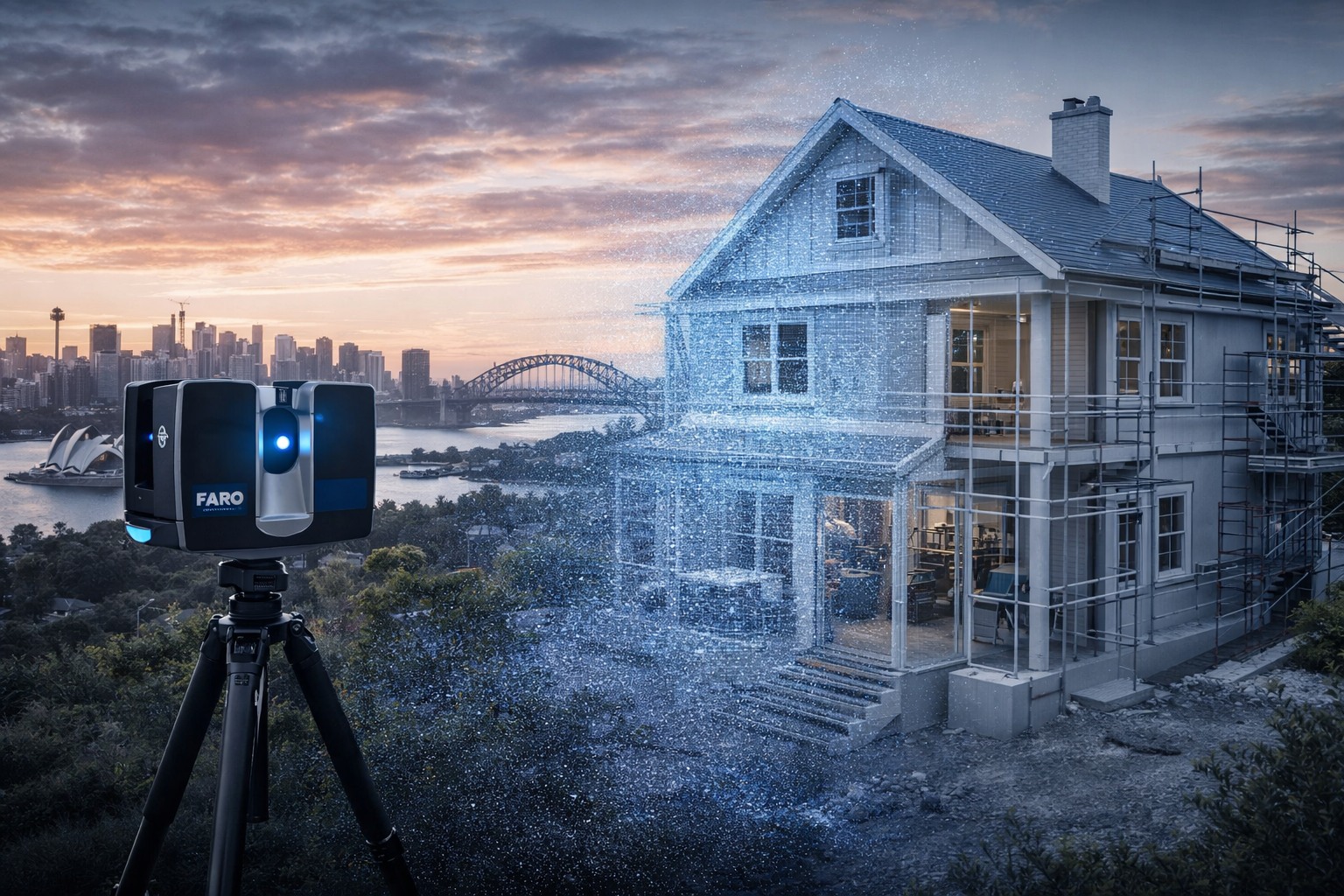
Point cloud to CAD Sydney showing laser scanning of a house with Sydney Harbour Bridge and Opera House in background

Convert 3D Scans into Accurate Engineering Models

Point cloud to CAD services in Sydney are essential for turning raw scan data into usable engineering deliverables.

At Hamilton By Design, we convert 3D laser scans and LiDAR data into accurate AutoCAD and 3D models, enabling engineering design, plant upgrades, and construction planning.

If you already have scan data โ€” or need scanning completed โ€” we provide a complete workflow from site capture through to fabrication-ready models.

๐Ÿ‘‰ Learn more about our scanning services here:


What is Point Cloud to CAD?

Point cloud to CAD is the process of converting laser scan data into structured, accurate engineering drawings and 3D models.

This includes:

  • 2D AutoCAD drawings (plans, sections, elevations)
  • 3D CAD models
  • BIM-ready models
  • As-built documentation

The result is a model that engineers, designers and fabricators can use with confidence.


Our Point Cloud to CAD Services in Sydney

We deliver modelling services across a wide range of applications:

Industrial & Plant Modelling

  • Conveyor systems
  • Transfer chutes
  • Pipework and services
  • Structural steel

Construction & Building Modelling

  • Existing building layouts
  • Fit-out documentation
  • Services coordination

Infrastructure Projects

  • Bridges and structural elements
  • Road and rail interfaces
  • Asset capture and upgrades

Our focus is not just on modelling โ€” but on delivering engineering-ready outputs.


From Scan Data to Engineering Deliverables

Our workflow ensures accuracy at every stage:

  1. Point Cloud Import & Registration
    Clean, verified scan data aligned to project coordinates
  2. Model Development
    Accurate modelling in AutoCAD or 3D platforms
  3. Detailing & Verification
    Ensuring geometry matches real-world conditions
  4. Deliverables Issued
    Drawings and models ready for design, fabrication or construction

Why Accurate Modelling Matters

Poor modelling from point cloud data can lead to:

  • Misalignment during installation
  • Fabrication errors
  • Costly rework
  • Project delays

Our engineering-led approach ensures models are:

  • Fit-for-purpose
  • Accurate to required tolerances
  • Suitable for real-world application

Deliverables We Provide

Depending on your project requirements, we can deliver:

  • 2D AutoCAD drawings
  • 3D CAD models
  • Structural steel models
  • Plant layouts and equipment models
  • As-built documentation
  • BIM-compatible outputs

We tailor deliverables to suit your engineering and project needs.


Applications Across Sydney Projects

Point cloud to CAD is widely used in:

  • Industrial plant upgrades
  • Structural steel design and verification
  • Construction planning and coordination
  • Refurbishments and fit-outs
  • Infrastructure projects

For complex environments, accurate modelling reduces risk and improves project outcomes.


Why Choose Hamilton By Design

We are not just modellers โ€” we are engineers.

โœ” Engineering-led modelling approach
โœ” Experience in industrial and construction environments
โœ” Focus on accuracy and real-world application
โœ” Understanding of fabrication and installation requirements

We deliver models that work in the field โ€” not just on screen.


Point Cloud to CAD Sydney โ€” Get Started

If you have scan data and need accurate models โ€” or require a full scan-to-model service โ€” we can help.

๐Ÿ‘‰ Contact Hamilton By Design to discuss your project and modelling requirements.

Or learn more about how we capture data through
Reality Capture Sydney:


3D LiDAR scanning and 3D modelling service button โ€” laser scanner capturing a point cloud for engineering and CAD modelling
Mechanical engineering services
Name
Would you like us to arrange a phone consultation for you?
Address

3D Scanning Sydney banner promoting engineering-grade 3D laser scanning, LiDAR scanning, and reality capture services by Hamilton By Design.
Mechanical Engineering Sydney banner with white text on a blue background representing Hamilton By Design's mechanical engineering services in Sydney.
Mechanical Drafting and 3D Modelling Sydney banner highlighting Hamilton By Design's CAD drafting, 3D modelling, and engineering design services in Sydney.

Mechanical Engineering | Structural Engineering


Our clients


Hamilton By Design provides engineering-led 3D scanning, LiDAR scanning, mechanical engineering and digital engineering services throughout Sydney and Greater Sydney.

Explore our related Sydney services:


  • 3D Scanning Sydney โ€“ Engineering-grade terrestrial laser scanning, as-built surveys and point cloud capture for industrial, infrastructure and commercial projects.
  • Reality Capture Sydney โ€“ High-accuracy reality capture, digital twins, asset documentation and engineering-grade site verification.
  • Scan to CAD Sydney โ€“ Convert point cloud data into AutoCAD, SolidWorks, Inventor and other engineering-ready CAD deliverables.
  • Point Cloud Modelling Sydney โ€“ Engineering-grade point cloud processing, clash detection, as-built verification and 3D modelling.
  • Mechanical Engineering Sydney โ€“ Mechanical design, plant upgrades, materials handling systems, conveyors, chutes, platforms and engineering support.
  • Structural Drafting Sydney โ€“ Structural steel drafting, fabrication drawings, GA drawings, workshop detailing and as-built documentation.

Hamilton By Design supports projects throughout Sydney CBD, Parramatta, Liverpool, Penrith, Blacktown, Chatswood, Alexandria, Mascot, Newcastle and the Central Coast.


3D CAD Modelling Australia service banner for Hamilton By Design
3D LiDAR Scanning Darwin for engineering surveys, laser scanning, reality capture and point cloud modelling services
3D LiDAR Scanning Australia engineering services for laser scanning, reality capture, scan-to-CAD, Scan-to-BIM and as-built documentation across Australia
3D LiDAR scanning services on the Central Coast providing engineering-grade laser scanning, point cloud capture, scan-to-CAD modelling and industrial reality capture for infrastructure and industrial projects.

Point Cloud to Engineering Model for Mining Infrastructure

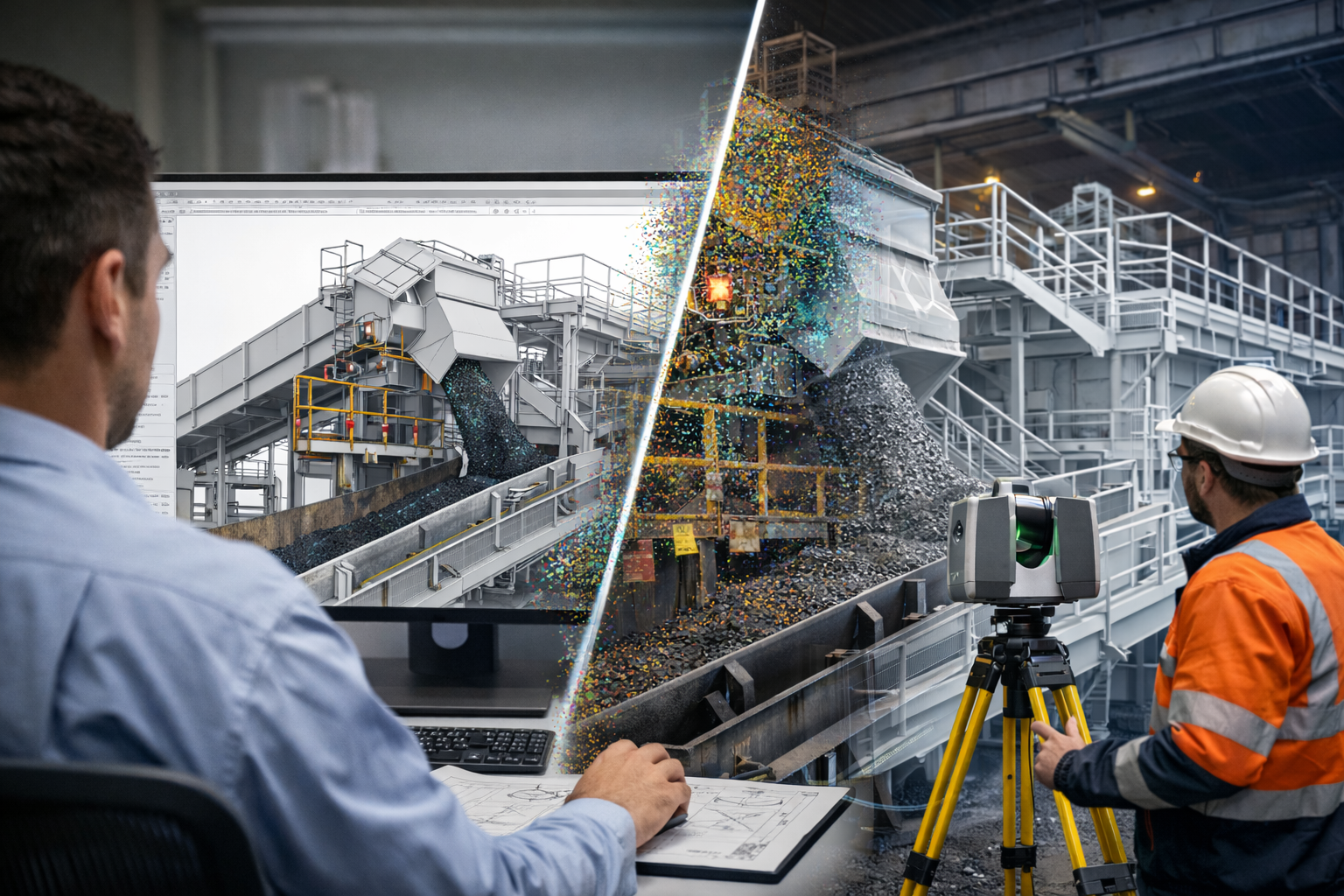
Point cloud mining infrastructure scanning connected to a 3D engineering model of a conveyor transfer chute.

Point Cloud to Engineering Model for Mining Infrastructure

Modern mining infrastructure is complex, constantly evolving, and rarely matches the original construction drawings. Over decades of plant upgrades, maintenance work, and operational modifications, the physical layout of conveyors, chutes, platforms, and structural steel often diverges significantly from historical design documentation.

For engineering teams planning plant upgrades or shutdown work, accurate site information is essential. One of the most effective ways to capture this information is through laser scanning and point cloud modelling, which allows engineers to convert real-world infrastructure into detailed digital engineering models.

The process of converting point cloud mining infrastructure data into engineering models is now widely used across the mining and bulk materials handling industries.


What Is a Point Cloud in Mining Infrastructure?

A point cloud is a dense collection of spatial measurements captured using 3D laser scanning equipment. Each point represents a precise location in space, allowing engineers to reconstruct the geometry of plant infrastructure with extremely high accuracy.

When scanning a mining facility, the point cloud may capture:

  • Conveyors and transfer stations
  • Structural steel platforms and walkways
  • Crushers, screens and processing equipment
  • Stockpile reclaim systems
  • Pipework and mechanical installations
  • Port and ship loading infrastructure

These datasets can contain millions or even billions of measurement points, forming a highly accurate digital representation of the plant environment.


Converting Point Clouds into Engineering Models

While point clouds provide valuable measurement data, they are not directly usable for engineering design. Engineers must convert the scan data into structured mechanical and structural models that can be used for analysis, fabrication and construction planning.

The typical engineering workflow includes:

1. Site Laser Scanning

The plant is scanned using high-accuracy laser scanning equipment to capture the geometry of existing infrastructure.

2. Point Cloud Processing

The raw scan data is registered and combined to form a unified point cloud representing the entire plant area.

3. Engineering Modelling

Engineers interpret the point cloud and convert key infrastructure elements into CAD models including:

  • Structural steel frameworks
  • Conveyor structures and galleries
  • Transfer chutes
  • Access platforms and walkways
  • Mechanical equipment interfaces

4. Engineering Design and Upgrades

The resulting model allows engineers to design plant modifications with confidence, ensuring equipment fits correctly within the existing infrastructure.

This workflow significantly reduces installation risk during shutdowns and upgrade projects.

For further information on mechanical engineering services for mining plants see:


Supporting Shutdown Planning and Plant Upgrades

Mining plants frequently undergo upgrades to improve reliability, throughput and maintenance access. Many of these upgrades are installed during planned shutdowns where downtime must be carefully controlled.

By developing accurate engineering models from point cloud data, engineers can:

  • Confirm clearances for new equipment
  • Identify potential clashes before fabrication
  • Design replacement transfer chutes and conveyors
  • Validate structural modifications
  • Improve maintenance access systems

These digital engineering models are particularly valuable for shutdown preparation.

More information about this process can be found here:


Transfer Chutes and Materials Handling Infrastructure

Transfer chutes are one of the most common areas requiring modification in coal handling plants and mining infrastructure. Poorly designed chutes can lead to excessive belt wear, blockages, dust generation and maintenance challenges.

Using point cloud models, engineers can analyse the surrounding infrastructure and design improved chute geometries that integrate correctly with existing conveyors and structures.

Learn more about chute engineering and materials handling design here:
โžก https://www.hamiltonbydesign.com.au/coal-chute-design/

Additional engineering insight is available in this technical article:
โžก https://chutesandtransferstations.blogspot.com/2025/07/designing-for-durability-chutes.html

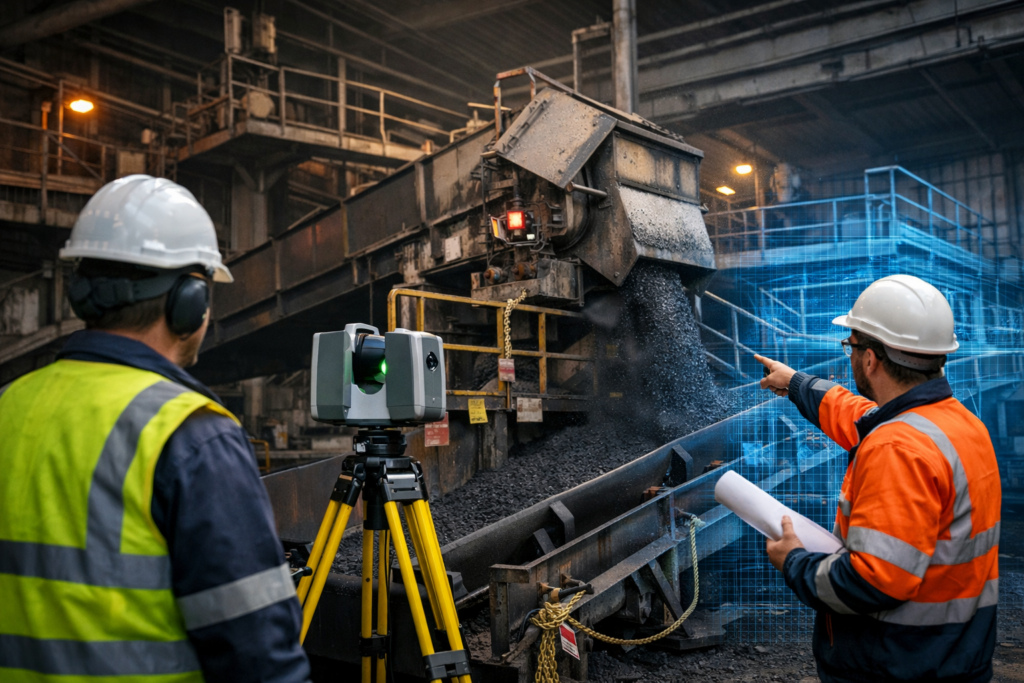
Coal plant shutdown engineering using a 3D laser scanner to capture conveyor and transfer chute infrastructure.

Engineering Applications Across Mining Infrastructure

The conversion of point clouds into engineering models is now widely used across many mining environments.

Common applications include:

  • Coal handling plants
  • Bulk materials handling infrastructure
  • Processing plants and concentrators
  • Port loading facilities
  • Conveyor systems and transfer stations
  • Industrial processing plants

By capturing existing infrastructure digitally, engineers can develop highly accurate models that support plant upgrades, shutdown planning and long-term asset management.


The Future of Digital Engineering in Mining

As scanning technology continues to improve, point cloud modelling is becoming a core component of modern mining engineering workflows.

The ability to convert real-world infrastructure into precise digital models allows engineers to design upgrades more efficiently, reduce installation risk and improve plant reliability.

For mining operators and engineering teams planning infrastructure upgrades, the integration of laser scanning, point clouds and engineering modelling is transforming how projects are designed and delivered.


Hamilton By Design logo displayed on a blue tilted rectangle with a grey gradient background

3D LiDAR scanning and 3D modelling service button โ€” laser scanner capturing a point cloud for engineering and CAD modelling
Mechanical engineering services
Name
Would you like us to arrange a phone consultation for you?
Address

CHPP Engineering title graphic featuring bold white text reading "CHPP Engineering" centred on a blue rounded rectangle background.
Pipework Drafting title graphic featuring bold white text reading "Pipework Drafting" centred on a blue rounded rectangle background.
3D LiDAR Scanning for Engineering Projects title graphic featuring bold white text on a blue rounded rectangle background.

3D CAD Modelling Australia service banner for Hamilton By Design

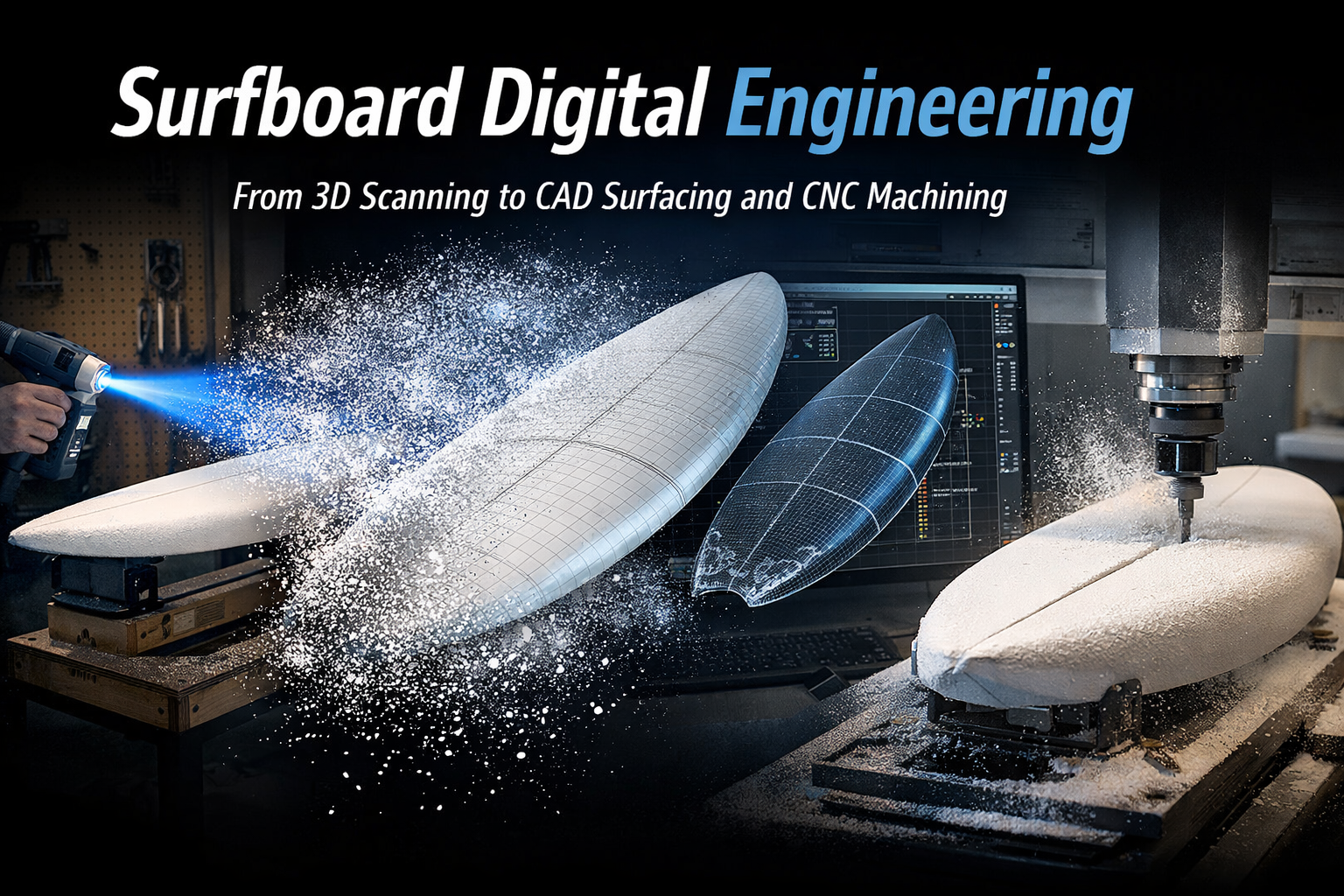
Surfboard Digital Engineering

surfboard digital engineering workflow showing 3D scanning CAD modelling and CNC machining

From Surfboard Scan to CNC Manufacturing

Surfboard performance is defined by geometry. Small variations in rocker, rail profile, deck shape and bottom contours can significantly influence how a board performs in the water.

Hamilton By Design provides digital engineering services for surfboard design and manufacturing, helping convert physical surfboards into precise digital models suitable for analysis, modification and CNC machining.

Our team combines high-accuracy 3D scanning, advanced CAD surfacing and CNC programming expertise to support the complete workflow from physical surfboard to manufacturable digital model.

This integrated capability allows shapers, designers and manufacturers to move confidently from existing board โ†’ digital design โ†’ CNC machined blank.


A Complete Digital Workflow for Surfboard Manufacturing

Hamilton By Design provides a complete workflow that connects scanning, modelling and manufacturing preparation.

Typical projects move through the following stages.

surfboard digital engineering workflow showing 3D scanning CAD modelling and CNC machining

1. Surfboard Geometry Capture

Using high-resolution scanning technology, the physical surfboard geometry is captured to create a digital representation of the board.

This process records the complete board shape including:

  • rocker profile
  • deck contours
  • bottom contours
  • rail transitions
  • nose and tail geometry
  • fin placement and alignment

Related page: 3D Scanning of Surfboards


2. Point Cloud Processing

The raw scan data is processed and aligned to produce a clean digital representation of the surfboard.

This step ensures that the geometry can be used reliably for modelling, comparison and design development.

Processed data may be delivered as:

  • point clouds
  • mesh models
  • reference geometry for CAD modelling

3. Surfboard Surface Development

Surfboards are complex shapes that rely on smooth continuous surfaces.

Our team specialises in 3D CAD surfacing, allowing the scanned geometry to be converted into smooth, manufacturable surfaces suitable for design development or machining.

This stage may include:

  • surface reconstruction
  • symmetry correction
  • rocker curve analysis
  • rail profile development
  • design adjustments

Related page: Surfboard 3D Modelling and Surface Development


4. CNC Programming and Manufacturing Preparation

Once the surfboard model has been developed, CNC machining programs can be created for foam blank machining.

Our qualified CNC programmers prepare machining strategies including:

  • toolpath generation
  • cutter selection
  • machining strategies for foam blanks
  • blank positioning and setup
  • CNC code preparation

Related page: CNC Programming for Surfboard Manufacturing


Our Integrated Engineering Capability

Hamilton By Design provides a one-stop digital engineering workflow for surfboard manufacturing.

Our team includes:

3D Scanning Specialists

Capturing accurate geometry of existing surfboards using professional scanning technology.

Advanced 3D Modelling and Surfacing

Developing precise surfboard geometry using professional CAD modelling tools capable of producing smooth, hydrodynamically fair surfaces.

Qualified CNC Programmers

Preparing machining programs and strategies suitable for CNC shaping of surfboard blanks.

Manufacturing Workflow Support

Helping surfboard manufacturers move from physical board โ†’ digital model โ†’ CNC machining with confidence.

This integrated capability ensures that the digital data produced is not only accurate, but also suitable for downstream manufacturing processes.


Applications of Surfboard Digital Engineering

Our services can support a wide range of surfboard design and manufacturing applications.

Reverse Engineering Successful Boards

High-performing surfboards can be digitally captured and recreated for further development or reproduction.

Surfboard Design Development

Digital models allow designers to refine rocker curves, rails and bottom contours before machining.

CNC Manufacturing Preparation

Accurate digital models allow CNC machines to cut surfboard blanks with greater confidence and repeatability.

Archiving Surfboard Designs

Surfboard designs can be digitally preserved for future manufacturing or development.

Design Comparison

Digital models allow comparison between different board designs to better understand performance differences.


Why Digital Engineering Matters in Surfboard Design

Traditionally, surfboards have been shaped by hand using a combination of experience and intuition.

While this approach continues to play an important role in shaping culture, modern surfboard manufacturing increasingly relies on digital tools.

Digital workflows provide several advantages:

  • repeatable board production
  • accurate reproduction of successful designs
  • improved design development
  • better collaboration between designer and manufacturer
  • reduced manufacturing variation

Hamilton By Design helps bridge the gap between traditional shaping knowledge and modern digital manufacturing tools.


Scan to CNC Workflow

Existing Surfboard
โ†“
3D Scanning
โ†“
Point Cloud Processing
โ†“
CAD Surface Development
โ†“
CNC Programming
โ†“
Machined Surfboard Blank


Related Services

Hamilton By Design provides a range of related services that support digital engineering and manufacturing workflows.

These include:

  • 3D laser scanning services
  • scan-to-CAD modelling
  • reverse engineering
  • advanced surface modelling
  • CNC programming
  • manufacturing preparation

Hamilton By Design logo displayed on a blue tilted rectangle with a grey gradient background

3D LiDAR scanning and 3D modelling service button โ€” laser scanner capturing a point cloud for engineering and CAD modelling
Mechanical engineering services

Talk With Hamilton By Design

If you are looking to digitise a surfboard design, reverse engineer an existing board, or prepare a surfboard model for CNC machining, Hamilton By Design can assist.

Our team combines engineering-grade scanning, advanced CAD surfacing and practical CNC programming expertise to support the full digital workflow.

Contact Hamilton By Design to discuss your project.

Name
Would you like us to arrange a phone consultation for you?
Address
3D CAD Modelling Australia service banner for Hamilton By Design
Finite Element Analysis (FEA) engineering simulation button
Mechanical engineering services

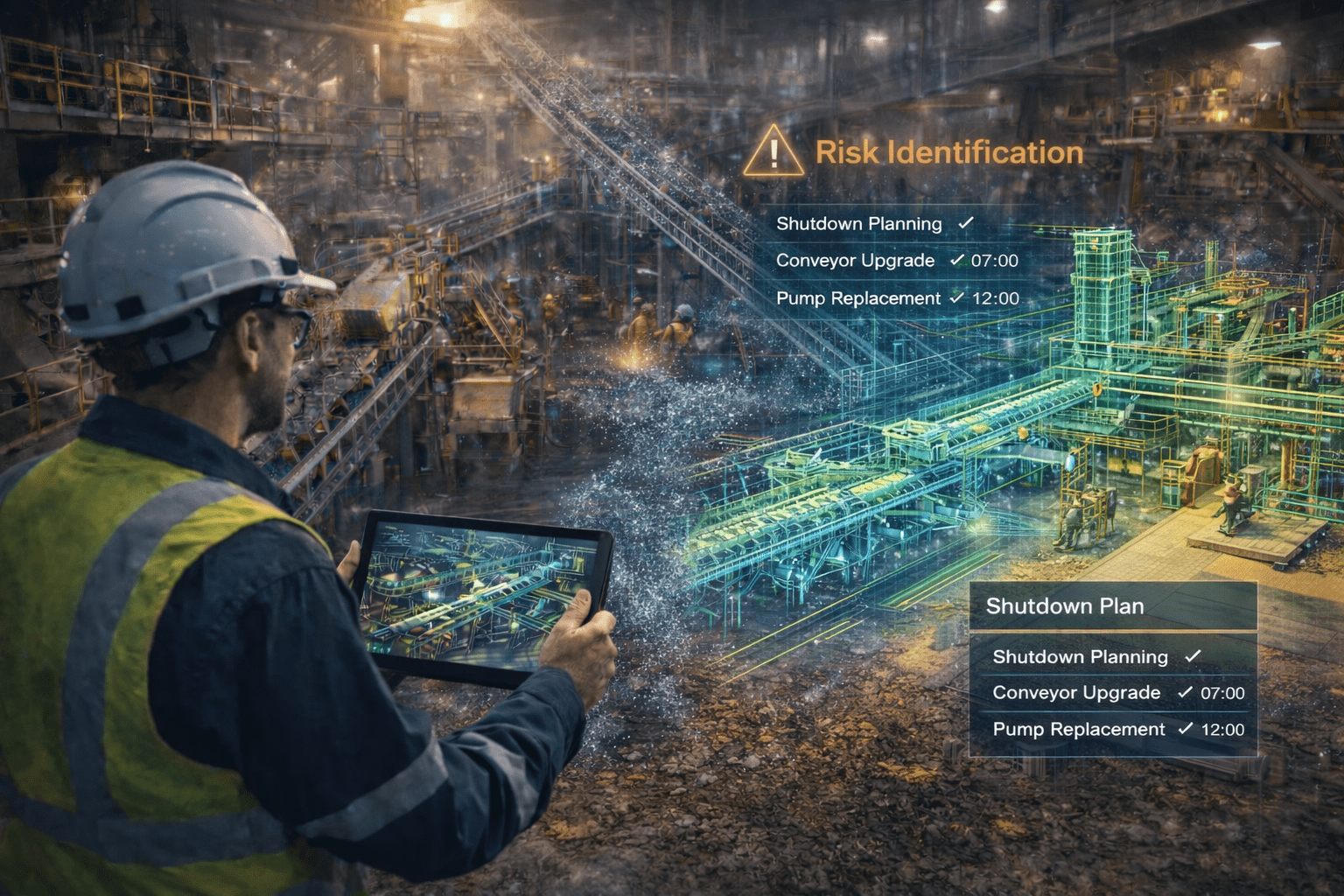
Reducing Shutdown Risk Using Digital Engineering Models

Mining shutdown planning using digital engineering models and plant layout visualisation.

How Digital Engineering Improves Shutdown Planning

Shutdown projects are among the most critical operational events in mining and industrial facilities. During these planned outages, maintenance work, equipment upgrades, inspections, and infrastructure modifications must all be completed within a limited timeframe.

Because production is halted during these periods, even small delays can significantly affect operations.

This is why shutdown planning engineering plays such an important role in reducing risk and improving shutdown performance.

Digital engineering models allow engineering teams to visualise the plant environment before shutdown work begins. By using accurate digital representations of existing infrastructure, engineers can identify potential issues early and ensure shutdown work is properly planned.

At Hamilton By Design, digital modelling is frequently used to support shutdown planning, helping operations teams reduce uncertainty and improve execution of shutdown projects.


Why Shutdown Projects Carry Significant Risk

Shutdown projects typically involve multiple teams performing complex work within a restricted time window.

Common shutdown risks include:

โ€ข equipment installation clashes
โ€ข inaccurate plant drawings
โ€ข limited access to equipment
โ€ข unexpected infrastructure conflicts
โ€ข delays caused by redesign during shutdown

When engineering teams rely solely on outdated drawings or manual measurements, these risks increase significantly.

Digital engineering models provide a way to analyse plant geometry and equipment layout before shutdown work begins.


What Are Digital Engineering Models?

Digital engineering models are accurate three-dimensional representations of plant infrastructure created using engineering data and site measurements.

These models are typically developed using technologies such as:

โ€ข 3D laser scanning
โ€ข point cloud modelling
โ€ข CAD engineering models
โ€ข plant layout modelling

By combining these technologies, engineers can create digital models that represent the current condition of plant infrastructure.

This approach allows engineers to perform planning and design work using reliable data before shutdown activities begin.


Using 3D Scanning to Capture Existing Infrastructure

One of the most effective ways to build digital engineering models is through 3D laser scanning.

Laser scanning captures millions of measurement points across plant infrastructure, producing a point cloud dataset that accurately represents the geometry of the facility.

Engineers can then use this data to develop digital models used for shutdown planning and equipment design.

Learn more about engineering-grade scanning services here:


From Scan Data to Engineering Models

Once scan data has been captured, engineers convert the point cloud data into engineering models used for design and planning.

This process typically includes:

  1. Processing scan data into a unified point cloud
  2. Creating engineering CAD models of equipment and structures
  3. Analysing plant layout and installation requirements
  4. Preparing fabrication drawings for shutdown work

This digital workflow allows engineers to evaluate installation scenarios before work begins.

You can read more about this process here:


Identifying Risks Before Shutdown Begins

Digital engineering models allow engineers to identify potential issues before shutdown activities begin.

Examples include:

โ€ข pipework clashes with structural steel
โ€ข insufficient installation clearance
โ€ข access restrictions for lifting equipment
โ€ข equipment alignment problems
โ€ข interference with existing infrastructure

By resolving these issues during the planning stage, engineering teams can significantly reduce the likelihood of delays during shutdown execution.


Supporting Safer Shutdown Operations

In addition to improving planning efficiency, digital engineering models also support safer shutdown operations.

Engineering teams can use digital plant models to:

โ€ข evaluate safe access routes
โ€ข plan equipment removal procedures
โ€ข coordinate multiple work crews
โ€ข verify installation tolerances

This helps ensure shutdown work is performed safely and according to engineering specifications.


Integrating Digital Engineering into Shutdown Planning

Digital engineering models are most effective when integrated into the broader shutdown planning process.

Shutdown planning typically involves:

โ€ข engineering design preparation
โ€ข plant scanning and documentation
โ€ข fabrication of new equipment
โ€ข contractor coordination
โ€ข installation planning

Digital models allow these activities to be coordinated more effectively.

You can read more about engineering planning for shutdown projects here:


Hamilton By Design logo displayed on a blue tilted rectangle with a grey gradient background

Conclusion

Shutdown projects represent critical operational windows for mining and industrial facilities.

Through the use of shutdown planning engineering and digital engineering models, organisations can significantly reduce risk and improve the efficiency of shutdown work.

By capturing accurate plant data and developing digital engineering models before shutdown begins, engineers can identify potential conflicts, improve installation planning, and ensure shutdown activities proceed as efficiently as possible.

Hamilton By Design supports mining and industrial operations by providing engineering services that assist with shutdown planning, digital modelling, and plant upgrade projects.

3D LiDAR scanning and 3D modelling service button โ€” laser scanner capturing a point cloud for engineering and CAD modelling
Mechanical engineering services
Name
Would you like us to arrange a phone consultation for you?
Address

Our Clients

3D CAD Modelling Australia service banner for Hamilton By Design
Australian Drafting logo featuring bold white text reading "Australian Drafting" centred on a blue rounded rectangle background.
Engineering Governance title graphic featuring bold white text reading "Engineering Governance" centred on a blue rounded rectangle background.
Mechanical, Structural & Pipework Drafting service banner by Hamilton By Design featuring white text on a blue background.
Mechanical engineering services
Blue rounded button with the text โ€œSolidWorks Designโ€ in white.
Finite Element Analysis (FEA) engineering simulation button
3D LiDAR Scanning Darwin for engineering surveys, laser scanning, reality capture and point cloud modelling services
3D LiDAR Scanning Australia engineering services for laser scanning, reality capture, scan-to-CAD, Scan-to-BIM and as-built documentation across Australia
3D LiDAR scanning services on the Central Coast providing engineering-grade laser scanning, point cloud capture, scan-to-CAD modelling and industrial reality capture for infrastructure and industrial projects.
3D LiDAR Scanning Perth for engineering surveys, laser scanning, reality capture and point cloud modelling services
3D LiDAR Scanning Sydney for engineering surveys, laser scanning, reality capture and point cloud modelling services
3D LiDAR Scanning Brisbane for engineering surveys, laser scanning, reality capture and point cloud modelling services
3D LiDAR Scanning Canberra for engineering surveys, laser scanning, reality capture and point cloud modelling services
3D LiDAR Scanning Newcastle for engineering surveys, laser scanning, reality capture and point cloud modelling services
3D LiDAR Scanning Adelaide for engineering surveys, laser scanning, reality capture and point cloud modelling services