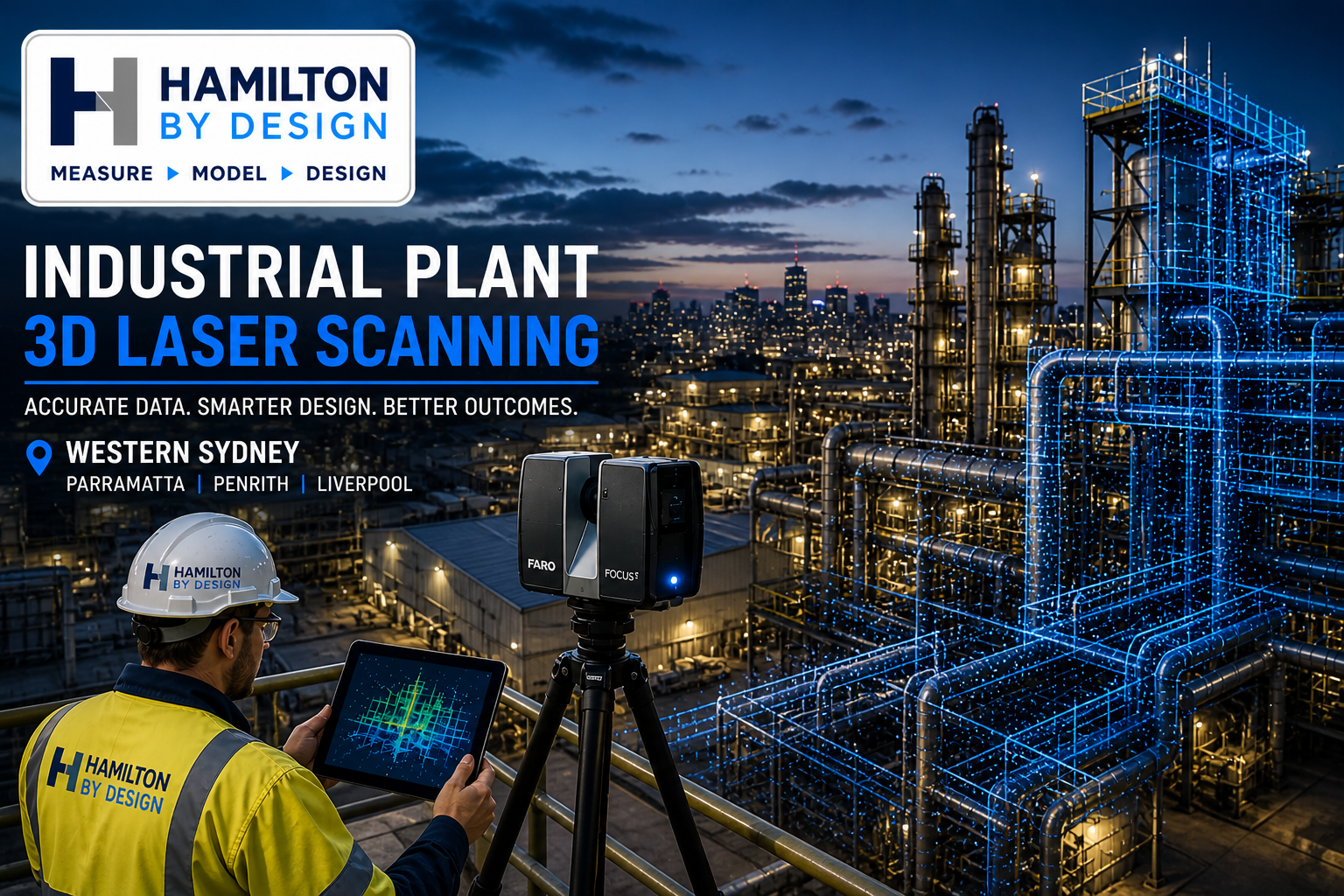
Industrial Plant 3D Laser Scanning Across Western Sydney

Industrial plant at night with engineer using a FARO 3D laser scanner and tablet, capturing a digital point cloud of pipework in Western Sydney.

Parramatta | Penrith | Liverpool | Greater Western Sydney

At Hamilton By Design, we provide engineering-grade 3D laser scanning services across Western Sydneyโ€™s key industrial regions. Our focus is not just on capturing data, but on delivering accurate, usable models that support real-world engineering outcomes.

Western Sydney continues to grow as one of Australiaโ€™s most important industrial corridors. From high-rise developments in Parramatta to manufacturing hubs in Penrith and processing facilities in Liverpool, each region presents unique challenges that require a tailored approach to reality capture and engineering design.

Our services combine LiDAR scanning, point cloud processing, and mechanical engineering expertise to support industrial plants, infrastructure upgrades, and brownfield modifications. Learn more about our core service here:
๐Ÿ‘‰ https://www.hamiltonbydesign.com.au/3d-laser-scanning-for-industrial-plants-in-sydney/


Parramatta โ€“ Commercial Infrastructure & Building Services

Parramatta has evolved into Sydneyโ€™s second CBD, with a strong concentration of commercial buildings, government facilities, and infrastructure projects. Industrial plant work in this region is typically focused on building services, plant rooms, and refurbishment projects rather than heavy industry.

We support Parramatta-based projects involving:

  • Commercial towers and mixed-use developments
  • Government and institutional facilities
  • Building services and mechanical plant rooms
  • Construction and refurbishment works

3D scanning in Parramatta is commonly used to capture existing conditions for upgrades, ensuring accurate integration of new systems within constrained environments. Our scan-to-BIM and point cloud modelling workflows allow engineers and contractors to reduce risk, avoid clashes, and improve coordination across disciplines.
3D CAD Modelling Australia service banner for Hamilton By Design

Penrith โ€“ Manufacturing & Industrial Operations

Penrith represents one of Western Sydneyโ€™s key manufacturing and logistics corridors. The region is home to a wide range of industrial facilities, including production plants, warehouses, and distribution centres.

We work with Penrith-based industries such as:

  • Manufacturing facilities and production lines
  • Warehousing and logistics operations
  • Packaging and processing plants
  • Light industrial workshops

In these environments, 3D laser scanning is essential for capturing existing layouts before equipment upgrades or expansions. Whether integrating new machinery or optimising production flow, accurate point cloud data ensures that modifications are designed to fit first time.

Our point cloud to CAD services convert scan data into engineering-ready models, allowing for detailed design, fabrication, and installation planning.
๐Ÿ‘‰ https://www.hamiltonbydesign.com.au/point-cloud-to-cad


Liverpool โ€“ Processing Plants & Mixed Industrial Facilities

Liverpool supports a diverse mix of industries, including food processing, light manufacturing, healthcare infrastructure, and commercial facilities. This creates a demand for flexible engineering solutions that can adapt to different operational environments.

Typical industries we support in Liverpool include:

  • Food and beverage processing plants
  • Mechanical and fabrication workshops
  • Healthcare and large-scale facilities
  • Mixed-use industrial sites

3D scanning in Liverpool is often used to model complex pipework systems, process equipment, and building layouts. These models form the basis for plant upgrades, maintenance planning, and engineering design.

By combining scanning with mechanical engineering expertise, we ensure that all outputs are not only accurate but also aligned with Australian Standards and operational requirements.


Western Sydney โ€“ Heavy Industry & Infrastructure Growth

Across Greater Western Sydney, large-scale infrastructure and industrial developments continue to expand. This includes utilities, transport hubs, bulk handling facilities, and heavy industrial operations.

We support projects across Western Sydney involving:

  • Industrial plants and processing facilities
  • Infrastructure and utilities
  • Transport and logistics hubs
  • Bulk materials handling systems

In these environments, 3D laser scanning plays a critical role in supporting shutdown planning, structural upgrades, and mechanical modifications. High-accuracy data capture allows for better decision-making, reduced downtime, and improved project outcomes.


From Scanning to Engineering Outcomes

What sets Hamilton By Design apart is our ability to take projects beyond scanning.

Many providers deliver point clouds or visual models. We deliver:

  • Engineering-grade CAD models
  • Fabrication-ready drawings
  • Mechanical design solutions
  • Fit-for-purpose plant upgrades

Our workflow is simple and effective:

Scan โ†’ Model โ†’ Design โ†’ Deliver

This integrated approach ensures that clients receive not just data, but a complete engineering solution.


Supporting Industry Across Western Sydney

Across Parramatta, Penrith, Liverpool, and Greater Western Sydney, we support a wide range of industries including:

Commercial Infrastructure
Manufacturing
Processing Plants
Heavy Industry

Our services are designed to reduce risk, improve accuracy, and deliver reliable engineering outcomes for industrial projects of all sizes.


Hamilton By Design logo displayed on a blue tilted rectangle with a grey gradient background

Get Started

If you are planning an industrial project in Western Sydney and need accurate site data, modelling, or engineering support, we can help.

Explore our services or get in touch:
Contact Us – Talk to Us

Name
Would you like us to arrange a phone consultation for you?
Address

Related Sydney Services

Hamilton By Design provides engineering-led 3D scanning, LiDAR scanning, mechanical engineering and digital engineering services throughout Sydney and Greater Sydney.

Explore our related Sydney services:


  • 3D Scanning Sydney โ€“ Engineering-grade terrestrial laser scanning, as-built surveys and point cloud capture for industrial, infrastructure and commercial projects.
  • Reality Capture Sydney โ€“ High-accuracy reality capture, digital twins, asset documentation and engineering-grade site verification.
  • Scan to CAD Sydney โ€“ Convert point cloud data into AutoCAD, SolidWorks, Inventor and other engineering-ready CAD deliverables.
  • Point Cloud Modelling Sydney โ€“ Engineering-grade point cloud processing, clash detection, as-built verification and 3D modelling.
  • Mechanical Engineering Sydney โ€“ Mechanical design, plant upgrades, materials handling systems, conveyors, chutes, platforms and engineering support.
  • Structural Drafting Sydney โ€“ Structural steel drafting, fabrication drawings, GA drawings, workshop detailing and as-built documentation.

Hamilton By Design supports projects throughout Sydney CBD, Parramatta, Liverpool, Penrith, Blacktown, Chatswood, Alexandria, Mascot, Newcastle and the Central Coast.


Blue banner graphic displaying the text "Point Cloud to CAD - Australia" in large white lettering, representing point cloud processing, scan-to-CAD conversion and digital engineering services across Australia.
Blue banner graphic displaying the text "Scan to CAD Sydney" in large white lettering, representing engineering-led point cloud to CAD conversion, LiDAR scanning and digital engineering services in Sydney.
Blue banner graphic displaying the text "Reality Capture Sydney - CBD" in large white lettering, representing engineering-led reality capture, LiDAR scanning and digital engineering services within Sydney CBD commercial buildings and infrastructure.

Why Engineer-Led 3D Scanning Is Critical for Accurate Design and Project Success

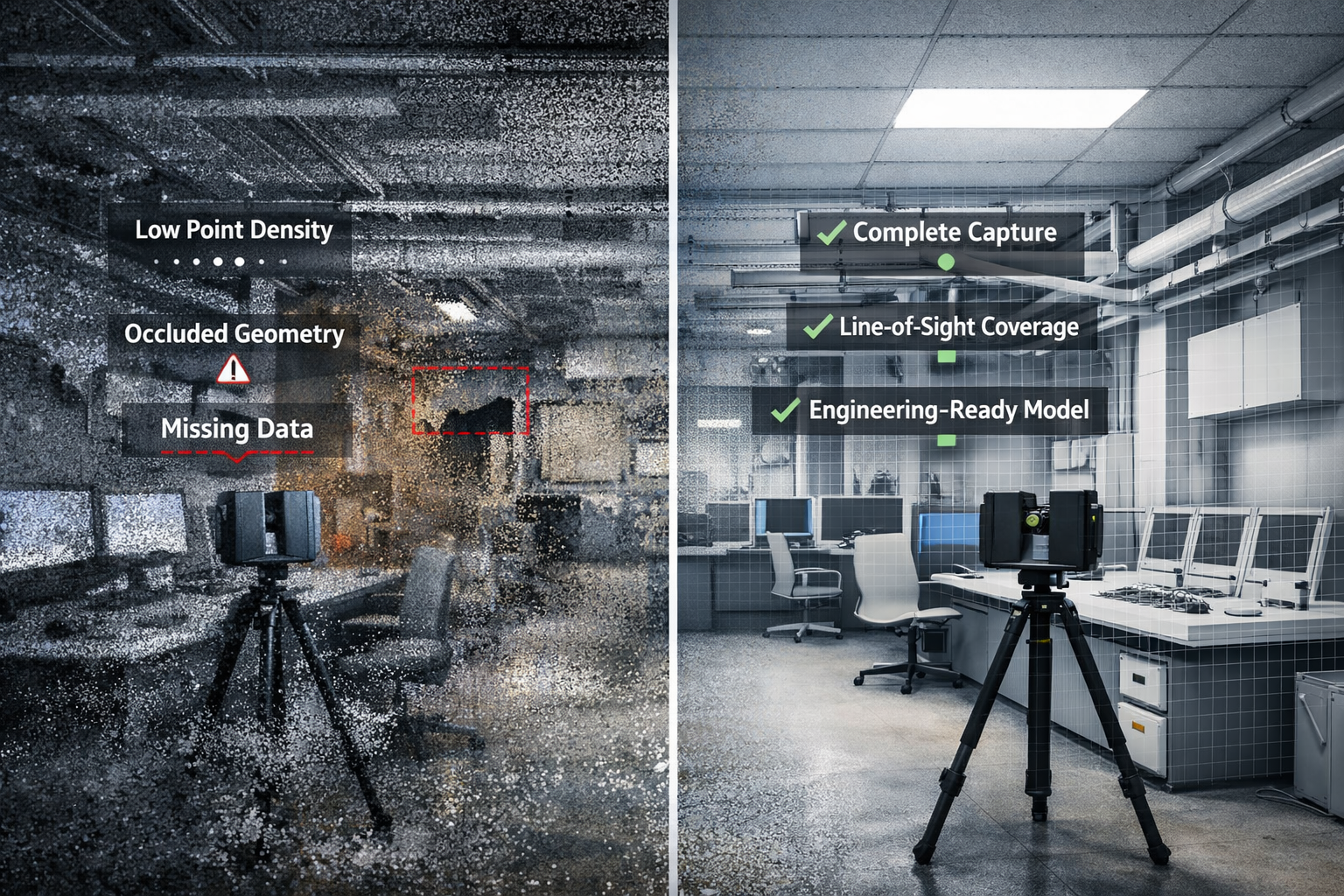
Comparison of poor vs high-quality 3D laser scanning showing missing geometry and complete point cloud data in an industrial workspace

Not All Point Clouds Are Created Equal

3D laser scanning is now widely used across construction, mining, and industrial projects.

But thereโ€™s a major issue we see repeatedly:

The scan is completed โ€” but itโ€™s not usable for engineering.

At first glance, a point cloud can look impressive. Millions of points, full colour, seemingly detailed.

But when it comes time to actually use that data for designโ€ฆ

๐Ÿ‘‰ The gaps start to show.


โš ๏ธ The Problem: Low-Quality Scanning

Many scans are undertaken:

  • Without understanding how the data will be used
  • Using lower-grade equipment
  • With insufficient scan positions
  • Without capturing critical working areas

The result:

  • Missing geometry
  • Low point density
  • Occluded or hidden areas
  • Incomplete or distorted surfaces

In one recent project, we identified areas where:

  • The geometry was not fully captured
  • Point density was low or non-existent
  • Line-of-sight constraints prevented full coverage

๐Ÿ” Why This Matters

A point cloud is not the final deliverable โ€” it is the foundation.

And if that foundation is wrong:

  • CAD models become inaccurate
  • Engineering decisions are based on assumptions
  • Design risks increase
  • Rework becomes likely

You canโ€™t build a reliable design on incomplete data.


๐Ÿ’ก The Difference: Engineer-Led Scanning

At Hamilton By Design, scanning is not just data capture.

It is:
๐Ÿ‘‰ An engineering process

We approach every scan with the end use in mind.


๐Ÿ—๏ธ What Engineer-Led Scanning Looks Like

1. Understanding the End Goal

Before scanning begins, we define:

  • What the model will be used for
  • Required level of detail
  • Critical areas that must be captured

2. Planning Scan Positions

We ensure:

  • Full coverage of all key geometry
  • Minimal occlusions
  • Adequate point density for modelling

3. Capturing Complete Geometry

We focus on:

  • Line-of-sight access between scanner and surfaces
  • Eliminating blind spots
  • Capturing real working areas โ€” not just open space

4. Validating the Data

Before modelling begins, we:

  • Review scan coverage
  • Identify missing or weak areas
  • Confirm the dataset is fit for purpose

โš™๏ธ Why This Matters for Downstream Design

Engineering workflows rely on accurate geometry.

For example, in lighting design using AGi32:

  • Walls influence light reflection
  • Equipment creates shadowing
  • Layout impacts visibility

If these elements are missing or incorrect:

๐Ÿ‘‰ The design outcome will be wrong.


๐Ÿ”„ The True Cost of Poor Scanning

Low-quality scanning often leads to:

  • Time lost rebuilding missing geometry
  • Engineering assumptions instead of real data
  • Incorrect design decisions
  • Additional site visits
  • Project delays and rework

What appears cheaper upfront often becomes significantly more expensive later.


โœ… The Value of Getting It Right the First Time

Engineer-led scanning delivers:

  • Accurate, complete datasets
  • Faster modelling workflows
  • Reliable design outcomes
  • Reduced project risk

It ensures the data is not just captured โ€” but usable.


๐Ÿš€ Where Hamilton By Design Adds Value

We bridge the gap between:
๐Ÿ‘‰ Reality (scan data)
๐Ÿ‘‰ Engineering (CAD models)
๐Ÿ‘‰ Design outcomes

Our capability includes:

  • Engineering-grade 3D laser scanning
  • Point cloud to CAD modelling
  • Scan-to-design workflows
  • Support for industrial, infrastructure, and plant projects

3D LiDAR scanning and 3D modelling service button โ€” laser scanner capturing a point cloud for engineering and CAD modelling
Mechanical engineering services

๐Ÿ“Œ Final Thought

3D scanning is only valuable if it supports accurate engineering decisions.

A scan is not just data โ€” itโ€™s the foundation of your entire project.

And that foundation needs to be right.


Hamilton By Design logo displayed on a blue tilted rectangle with a grey gradient background

๐Ÿ“ž Need Reliable Scan Data?

If youโ€™re:

  • Planning a project
  • Working with poor-quality point clouds
  • Or want to avoid costly rework

We can help ensure your data โ€” and your design โ€” are right from the start.

๐Ÿ‘‰ https://www.hamiltonbydesign.com.au
๐Ÿ‘‰ Get in touch to discuss your project

Name
Would you like us to arrange a phone consultation for you?
Address
3D CAD Modelling Australia service banner for Hamilton By Design

Reality Capture Sydney

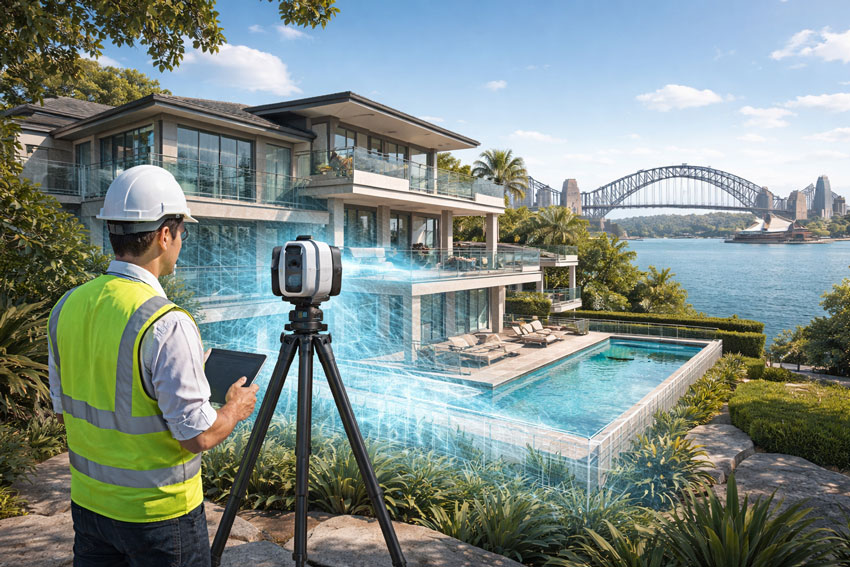
Engineer using a LiDAR scanner to capture a Sydney harbour-front residential property with Sydney Harbour Bridge in the background

Reality Capture Sydney | Property & Real Estate Services

Engineering-Grade LiDAR & Digital Reality Capture for the Built Environment

As Sydneyโ€™s construction, infrastructure, and industrial assets become more complex, traditional measurement methods are no longer sufficient. Reality capture has become a critical enabler for accurate planning, risk reduction, and confident project delivery across the built environment in Sydney.

Hamilton By Design provides engineering-grade reality capture services in Sydney, combining high-accuracy LiDAR laser scanning with practical engineering workflows to deliver reliable as-built data, digital twins, and construction-ready models.

Digital Twin Development

Reality capture is often the first step in creating a digital twin of an existing asset, facility or infrastructure network.

Using engineering-grade terrestrial LiDAR scanning, Hamilton By Design captures highly detailed existing-condition data that can be used to develop accurate digital representations of buildings, industrial facilities and infrastructure assets throughout Sydney.

Digital twins provide a valuable foundation for planning upgrades, maintenance activities, asset management programs and future engineering projects by ensuring decision-makers have access to accurate and current information.


Asset Documentation & Existing Conditions

Many facilities operate with incomplete, outdated or missing drawings. Reality capture provides a reliable method of documenting existing conditions and creating an accurate record of an asset at a specific point in time.

Hamilton By Design supports asset owners, engineers and project teams by delivering comprehensive documentation of industrial facilities, manufacturing plants, infrastructure assets and commercial buildings throughout Sydney.

This information can be used for engineering design, maintenance planning, compliance assessments and future capital works projects.


Heritage & Existing Condition Surveys

Reality capture technology provides a non-invasive method of documenting heritage structures, existing buildings and architecturally significant assets.

High-density LiDAR scanning can capture detailed geometric information without disturbing the asset, creating an accurate digital record suitable for preservation, restoration and future reference.

This approach is particularly valuable where traditional measurement methods are impractical or where maintaining a permanent digital archive is important.


Infrastructure Corridor Capture

Reality capture is widely used to document transport corridors, utility networks and linear infrastructure projects.

Hamilton By Design can capture roads, rail corridors, processing facilities, pipelines and utility infrastructure to provide accurate spatial information for planning, design and asset management purposes.

The resulting datasets assist engineering teams in identifying constraints, verifying existing conditions and reducing uncertainty during project development.


Construction Verification & Progress Monitoring

Reality capture can be used throughout construction projects to verify installed works and monitor project progress.

By comparing captured data against design models, project teams can identify deviations, verify installation accuracy and document construction milestones.

This process helps reduce rework, improve project certainty and provide objective records of completed work.


Building Envelope Surveys

Reality capture provides an efficient method of documenting building facades, roof structures and external architectural features.

The resulting data can be used for refurbishment projects, faรงade upgrades, structural assessments and redevelopment planning.

Building envelope surveys provide accurate measurements and spatial information without requiring extensive manual site measurement activities.


Facility Management & Asset Registers

Reality capture data can support facility management programs by providing accurate information about buildings, equipment and infrastructure assets.

Digital asset records allow facility owners to improve maintenance planning, track asset changes and maintain up-to-date documentation throughout the asset lifecycle.

For many organisations, reality capture forms an important component of broader digital engineering and asset management strategies.

What Is Reality Capture?

Reality capture is the process of digitally recording real-world assets using technologies such as:

  • LiDAR laser scanning
  • High-resolution spatial data capture
  • Registered point clouds
  • 3D models aligned to real geometry

The result is an accurate digital representation of existing conditions โ€” enabling engineers, designers, and constructors to work from a single source of truth rather than assumptions or outdated drawings.


Reality capture of a Sydney waterfront residential property using LiDAR scanning with harbour and bridge context

Why Reality Capture Matters in Sydney

Sydney projects frequently involve:

  • Live operational assets
  • Brownfield construction and upgrades
  • Tight construction tolerances
  • Complex interfaces between structural, mechanical, and architectural systems

Reality capture enables project teams to:

โœ” Verify existing conditions before design
โœ” Reduce rework and construction clashes
โœ” Improve coordination across disciplines
โœ” Accelerate approvals and decision-making
โœ” Improve safety by minimising site re-visits

This is particularly valuable across commercial buildings, transport infrastructure, industrial facilities, utilities, and large refurbishment projects.


Engineering-Led Reality Capture โ€” The Hamilton By Design Difference

At Hamilton By Design, reality capture is not treated as a standalone surveying task. Our services are engineer-led, ensuring the data captured is fit for downstream use in:

  • Mechanical and structural design
  • Construction coordination
  • Retrofit and upgrade works
  • Fabrication and installation planning

Our Sydney reality capture services integrate directly with CAD, BIM, and engineering documentation workflows โ€” ensuring accountability from scan through to design and delivery.


Typical Reality Capture Applications in Sydney

As-Built Documentation

Capture accurate as-built conditions for compliance, certification, handover, or future upgrades.

Construction & Refurbishment Projects

Scan existing buildings and structures prior to modifications, extensions, or adaptive reuse.

Industrial & Infrastructure Assets

Capture complex geometry such as plant rooms, pipework, platforms, and structural steel.

Digital Twins & Asset Records

Create reliable digital records that support ongoing asset management and lifecycle planning.


Deliverables Tailored to Project Needs

Depending on your scope, Hamilton By Design can provide:

  • Registered LiDAR point clouds
  • CAD-ready geometry
  • BIM-compatible models
  • Section views and reference drawings
  • Engineering drawings derived from scan data

All deliverables are issued to suit engineers, builders, asset owners, and project managers working across Sydney.


Hamilton By Design logo displayed on a blue tilted rectangle with a grey gradient background

3D LiDAR scanning and 3D modelling service button โ€” laser scanner capturing a point cloud for engineering and CAD modelling
Mechanical engineering services

Reality Capture Applications Across Sydney Industries

Reality capture provides value wherever accurate existing-condition information is required before design, construction or asset management decisions are made.

Commercial Buildings

Reality capture assists building owners, consultants and contractors by documenting existing conditions before refurbishment, fit-outs, services upgrades and redevelopment projects.

Industrial Facilities

Manufacturing plants, processing facilities and operational sites often contain undocumented modifications accumulated over many years. Reality capture provides an accurate digital record that supports future upgrades and maintenance planning.

Transport Infrastructure

Rail facilities, stations, maintenance depots, tunnels and transport corridors can be accurately captured to support planning, coordination and construction activities while minimising disruption to operations.

Utilities & Water Infrastructure

Reality capture supports pump stations, treatment plants, pipelines and utility infrastructure where accurate spatial information is required for maintenance, expansion and compliance projects.

Construction & Refurbishment

Capturing existing site conditions before construction begins reduces uncertainty, improves coordination and helps identify potential clashes before work reaches site.

Asset Management

Reality capture provides a reliable foundation for digital asset registers, facility management programs and long-term lifecycle planning.


Reality Capture Sydney โ€” Build with Confidence

Reality capture removes uncertainty from complex projects. By accurately capturing what exists today, project teams can design, coordinate, and construct with confidence tomorrow.

Hamilton By Design supports Sydney-based projects with engineering-grade reality capture, practical deliverables, and a deep understanding of how digital data is used in real construction and industrial environments.


Industries We Support

Hamilton By Design provides reality capture services throughout Sydney for manufacturing facilities, rail infrastructure, water treatment plants, commercial buildings, hospitals, data centres and industrial facilities.

Using engineering-grade LiDAR scanning and digital reality capture workflows, we help project teams accurately document existing assets, improve project planning and reduce risk during design, construction and asset management activities.

Contact Hamilton By Design to discuss your Sydney reality capture requirements or arrange a site scan.

Name
Would you like us to arrange a phone consultation for you?
Address


Related Sydney Digital Engineering Services
Reality capture is often the first step in a broader digital engineering workflow. Hamilton By Design supports Sydney projects from initial site capture through to engineering design, drafting and fabrication documentation.

Our related Sydney services include:


  • 3D Scanning Sydney โ€“ Engineering-grade terrestrial laser scanning, as-built surveys and point cloud capture for industrial, infrastructure and commercial projects.
  • Reality Capture Sydney โ€“ High-accuracy reality capture, digital twins, asset documentation and engineering-grade site verification.
  • Scan to CAD Sydney โ€“ Convert point cloud data into AutoCAD, SolidWorks, Inventor and other engineering-ready CAD deliverables.
  • Point Cloud Modelling Sydney โ€“ Engineering-grade point cloud processing, clash detection, as-built verification and 3D modelling.
  • Mechanical Engineering Sydney โ€“ Mechanical design, plant upgrades, materials handling systems, conveyors, chutes, platforms and engineering support.
  • Structural Drafting Sydney โ€“ Structural steel drafting, fabrication drawings, GA drawings, workshop detailing and as-built documentation.

By combining reality capture, LiDAR scanning, engineering design and drafting under one team, Hamilton By Design helps Sydney projects move from existing conditions to construction-ready deliverables with confidence.

Hamilton By Design provides reality capture services throughout Sydney CBD, Parramatta, Liverpool, Penrith, Chatswood, Alexandria, Mascot, Newcastle and the Central Coast. Our engineering-led approach helps project teams accurately capture existing conditions, create digital asset records and support design, construction and asset management activities.


Learn more about our Sydney scanning capability:
https://www.hamiltonbydesign.com.au/home/engineering-services/3d-scanning-sydney/3d-scanning-services-in-sydney/


Blue banner graphic displaying the text "Point Cloud to CAD - Australia" in large white lettering, representing point cloud processing, scan-to-CAD conversion and digital engineering services across Australia.
Blue banner graphic displaying the text "Scan to CAD Sydney" in large white lettering, representing engineering-led point cloud to CAD conversion, LiDAR scanning and digital engineering services in Sydney.
Blue banner graphic displaying the text "Reality Capture Sydney - CBD" in large white lettering, representing engineering-led reality capture, LiDAR scanning and digital engineering services within Sydney CBD commercial buildings and infrastructure.
Finite Element Analysis (FEA) engineering simulation button
Mechanical engineering services

3D Scanning Engineering in Broken Hill
3D Scanning Engineering in Broken Hill
Broken Hill is unlike any other engineering environment in Australia. Shaped by one of the worldโ€™s most significant ore bodies, the cityโ€™s infrastructure has evolved over more than a century of continuous mining. Much of what exists today is layered, modified, and adapted over time, creating complex brownfield conditions where original drawings are often incomplete or no longer reflect reality.
Engineering in Broken Hill is therefore highly practical, conservative, and focused on working with what already exists. This is where accurate site data and engineer-led digital workflows become essential.
Hamilton By Design supports projects in Broken Hill by combining 3D LiDAR laser scanning, mechanical and structural engineering, 3D CAD modelling, FEA, and fabrication-ready draftingโ€”helping asset owners and project teams design upgrades that fit first time.

Engineering challenges unique to Broken Hill

Broken Hill engineering is dominated by:
  • Very old and continuously modified infrastructure
  • Underground and surface assets built to historic standards
  • Extreme heat, dust, and isolation
  • Limited tolerance for rework due to logistics and access

In this environment, assumptions are risky. Accurate as-built information is critical before any design, fabrication, or installation begins.

3D Laser Scanning for Broken Hill sites

Hamilton By Design uses high-accuracy 3D Laser Scanning to capture the true as-built condition of mining and industrial assets in and around Broken Hill.

3D laser scanning is particularly valuable for:

  • Brownfield mining infrastructure
  • Historic plant and structural steel
  • Underground and surface interfaces
  • Assets where drawings are outdated or missing

Scanning is completed during controlled site visits, minimising disruption while capturing comprehensive data that can be relied on throughout the project lifecycle.

Turning scan data into practical engineering models
Once scanning is complete, data is transferred off site for processing and engineering. Hamilton By Design converts point cloud data into accurate 3D CAD Modelling that reflects what actually existsโ€”not what drawings suggest should exist.

These models support:

  • Mechanical upgrades and equipment replacements
  • Structural strengthening and retrofits
  • Platforms, access ways, and support steel
  • Integration of new assets into constrained spaces

For Broken Hill projects, this scan-to-model approach significantly reduces uncertainty and design risk.

Mechanical and structural engineering built on reality
Engineering in Broken Hill often involves integrating modern systems into historic assets. Working from scan-derived models allows engineers to:
  • Understand existing load paths and constraints
  • Check clearances and access early
  • Coordinate mechanical and structural elements in one environment

This leads to designs that are practical, buildable, and aligned with site realities rather than idealised assumptions.

FEA to support safety and compliance

Where performance, safety, or compliance is critical, Hamilton By Design applies FEA Capabilities to verify designs.

Finite Element Analysis is commonly used to:

  • Check structural capacity of existing assets
  • Assess modifications to aged steel and supports
  • Review fatigue, vibration, and deflection
  • Support engineering approval and sign-off

Using FEA on scan-based geometry provides confidence that designs will perform as intended in real operating conditions.

Easy-to-build fabrication drawings with engineering approval

Clear documentation is essential for successful delivery in remote locations like Broken Hill. Hamilton By Design produces fabrication-ready Drafting directly from coordinated 3D models.

Typical deliverables include:

  • General arrangement and detail drawings
  • Fabrication and installation drawings
  • Engineering-reviewed and approval-ready documentation

This focus on clarity and constructability helps fabricators and site teams build accurately, safely, and efficientlyโ€”often with limited opportunity for rework.

Reducing site risk through digital engineering

By capturing site conditions once and completing the majority of engineering off site, projects benefit from:

  • Fewer site visits and lower travel costs
  • Reduced safety exposure
  • Better coordination before fabrication
  • Higher confidence during installation

For Broken Hill, where logistics and access matter, this approach delivers measurable value.

Engineering outcomes that respect history and reality

Broken Hill is a place where past and present engineering coexist. Hamilton By Designโ€™s integrated scanning and engineering workflow helps bridge that gapโ€”respecting historic infrastructure while delivering modern, compliant, and buildable solutions.

3D Scanning Engineering in Broken Hill is about using accurate data, sound engineering judgement, and practical documentation to deliver upgrades that work the first time.

Hamilton By Design logo displayed on a blue tilted rectangle with a grey gradient background
3D LiDAR scanning and 3D modelling service button โ€” laser scanner capturing a point cloud for engineering and CAD modelling
Mechanical engineering services

Our Clients:

Name
Would you like us to arrange a phone consultation for you?
Address

3D Laser Scanning

3D LiDAR Scanning โ€“ Digital Quality Assurance

As-Built Drawings from a LiDAR Scanner

3D LiDAR Scanning and 3D Modelling – Hamilton By Design

3D Scanning Engineering in Brisbane

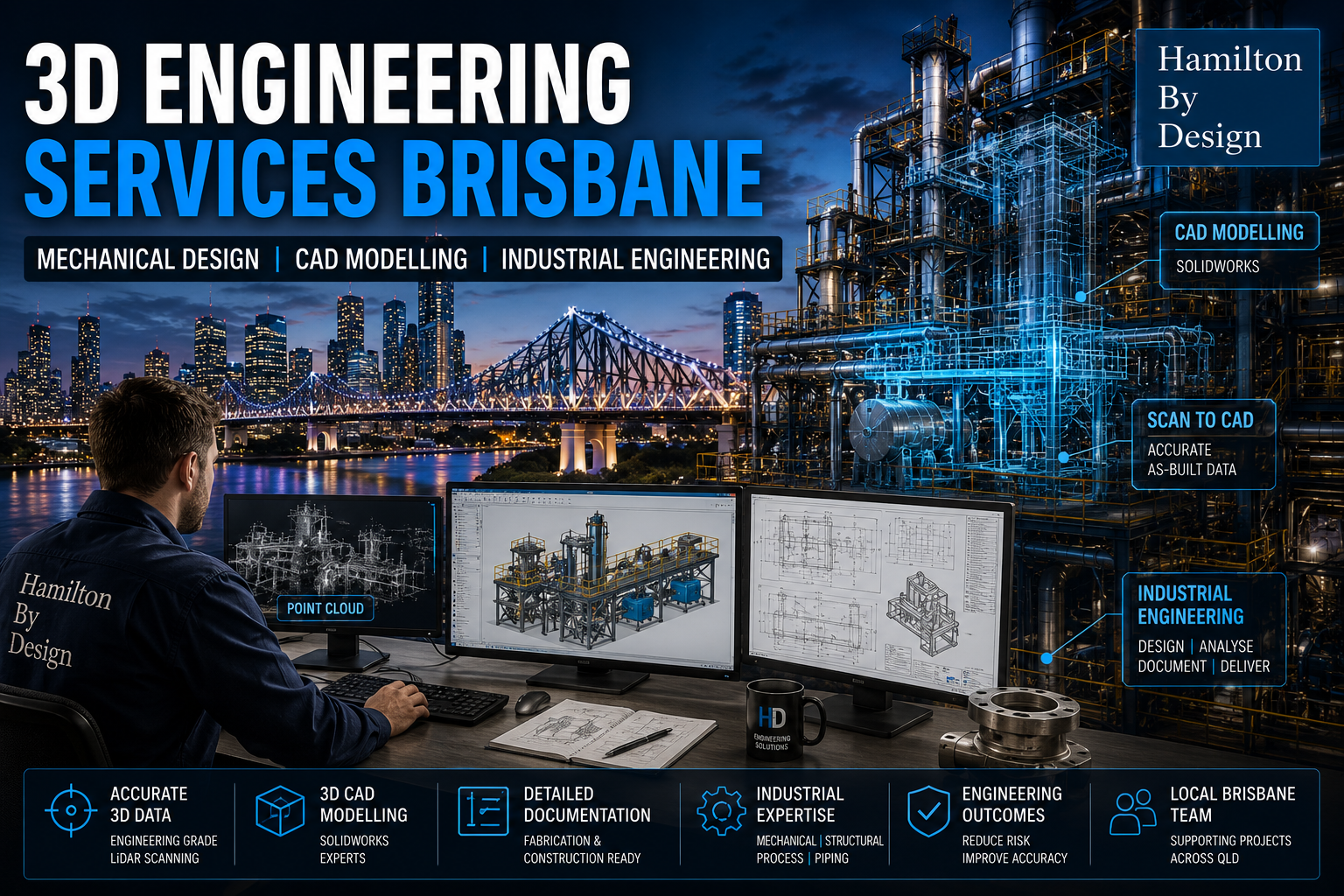
3D engineering services in Brisbane featuring industrial CAD modelling, scan-to-CAD workflows, and mechanical engineering visualisations with Brisbane skyline background.

3D Scanning Engineering in Brisbane

Blue 3D LiDAR scanner icon on a tripod with scanning waves

Brisbane has emerged as one of Australiaโ€™s most important digital engineering hubs, supporting mining, industrial, and infrastructure assets located across Queensland and remote regions of Australia. While many of these assets are far from the CBD, the engineering that supports them is increasingly delivered from Brisbane using accurate 3D site data.

Hamilton By Design specialises in engineer-led 3D scanning engineering in Brisbane, combining on-site 3D LiDAR laser scanning with Brisbane-based mechanical and structural engineering, 3D CAD modelling, FEA, and fabrication-ready drafting. This workflow allows projects to be designed, analysed, and documented with confidenceโ€”without the need for repeated site attendance.


Brisbane as a digital engineering hub for mining and industry

Brisbane engineering teams support a wide range of assets, including remote mining operations, coal handling and preparation plants (CHPPs), bulk materials handling systems, ports, and energy infrastructure. The cityโ€™s strength lies in its ability to process accurate digital site data and convert it into buildable engineering outcomes.

By capturing site conditions once and completing engineering in Brisbane, projects benefit from reduced travel, improved coordination, and lower riskโ€”particularly for brownfield and retrofit works.


3D point clouds: the foundation of remote engineering

At the core of modern digital engineering is the 3D point cloud. High-accuracy point clouds provide a true digital representation of existing assets, allowing engineers to design from reality rather than assumptions.

Our article 3D Point Clouds Are a Game-Changer for Your Projects explains how expert modelling from point-cloud data improves accuracy, coordination, and constructability.

For Brisbane-based engineers, point clouds enable:

  • Confident mechanical and structural design
  • Reduced reliance on outdated drawings
  • Early clash detection and fit-up checks
  • Fewer site changes and rework

3D laser scanning of mining and industrial sites

Hamilton By Design delivers high-accuracy 3D Scanning across mining and industrial sites throughout Queensland and Australia. Scanning is typically completed during short, controlled site visits, minimising disruption to operations.

3D laser scanning is particularly valuable for:

  • Remote or FIFO-based mining sites
  • Brownfield industrial facilities
  • Assets with incomplete or outdated documentation
  • Projects with tight shutdown windows

Once scanning is complete, all data is transferred to Brisbane for processing and engineering.


Brisbane-based experts in 3D laser scanning and mechanical design

Hamilton By Design integrates scanning and engineering as a single service, rather than treating scanning as a standalone deliverable. This approach is detailed in Your Experts in 3D Laser Scanning & Mechanical Design.

By combining scanning with mechanical and structural engineering expertise, Brisbane-based engineers can:

  • Design directly from real site geometry
  • Understand existing load paths and constraints
  • Optimise layouts for constructability and access

This is especially important for mining and heavy industry projects where fit-for-purpose design matters.


Engineering without constant site attendance

With accurate scan data and point clouds available, most engineering work can be completed remotely from Brisbane. This allows:

  • Mechanical and structural design without repeated site visits
  • Digital design reviews with stakeholders
  • Reduced FIFO travel and project costs
  • Improved safety by limiting on-site exposure

For asset owners, this approach delivers faster, more predictable outcomes.


3D CAD modelling built from real site conditions

Scan data is converted into detailed 3D CAD Modelling using SolidWorks and related platforms. Models represent what actually exists on site, forming a reliable digital baseline for future work.

These models support:

  • Mechanical upgrades and plant modifications
  • Structural additions such as platforms and walkways
  • Integration of new equipment into existing facilities
  • Long-term asset documentation and reuse

Coordinated mechanical and structural engineering

Working within a single digital environment allows Brisbane engineers to coordinate mechanical and structural design effectively. This reduces clashes, improves constructability, and limits late-stage design changesโ€”particularly in congested brownfield environments.


FEA and verification completed in Brisbane

Finite Element Analysis (FEA) is applied to scan-based models to verify performance and compliance. Brisbane-based FEA supports:

  • Structural capacity and load checks
  • Fatigue and vibration assessment
  • Verification of modified or existing assets
  • Engineering approval and sign-off

Because analysis is based on real geometry, results better reflect real-world behaviour.


Fabrication-ready drafting that fits first time

Final designs are issued as fabrication-ready drawings suitable for workshops and installation teams. Drawings are developed directly from coordinated 3D models, improving clarity and reducing errors during fabrication and installation.


Hamilton By Design logo displayed on a blue tilted rectangle with a grey gradient background
3D LiDAR scanning and 3D modelling service button โ€” laser scanner capturing a point cloud for engineering and CAD modelling
Mechanical engineering services

Brisbane delivering engineering outcomes across Queensland

Brisbaneโ€™s role as a digital engineering centre continues to grow as 3D scanning and model-based engineering become standard practice. Hamilton By Design uses this Brisbane-based workflow to support mining and industrial projects across Queensland and Australiaโ€”capturing site reality once and engineering with confidence.

Our clients

Name
Would you like us to arrange a phone consultation for you?
Address

3-D Lidar Scanning Hunter Valley: Transforming Industrial Projects with Accuracy, Safety and Engineering Confidence

The Hunter Valley is one of Australiaโ€™s most strategically important industrial regions. It supports large mining operations, CHPP facilities, fabrication workshops, energy infrastructure, civil projects and heavy manufacturing. These industries depend on precision, safety and efficient project delivery โ€” yet most operate in aging brownfield environments where original drawings are outdated, equipment has shifted over time, and modifications have occurred for decades without accurate documentation.

In environments like these, traditional measuring methods often fail to provide the precision required for confident engineering and fabrication. This is why 3-D Lidar scanning in the Hunter Valley has become a critical tool for engineers, supervisors, fabricators and project managers. It captures the real-world site conditions with millimetre accuracy, creating a digital foundation for smarter, safer and more efficient project execution.

This article explores the benefits, pros and cons of 3-D Lidar scanning, and explains why the Hunter Valley is uniquely positioned to gain massive value from this technology.


Understanding 3-D Lidar Scanning

3-D Lidar (Light Detection and Ranging) scanning is a non-contact measurement technology that uses lasers to capture millions of points in seconds. The scanner emits laser pulses and measures the return time to determine distances, building a dense โ€œpoint cloudโ€ of the environment.

This point cloud is a precise 3-D representation of:

  • Structural steel
  • Conveyors and transfer towers
  • Chutes, bins and hoppers
  • Tanks, pipework and mechanical equipment
  • Platforms, walkways and buildings
  • Industrial plant rooms and process areas

Once captured, this digital data becomes the foundation for engineering models, fabrication drawings, digital fit checks and project planning.


Why 3-D Lidar Scanning Matters in the Hunter Valley

The Hunter Valley contains some of the most complex and heavily used industrial assets in Australia. Many facilities have been in operation for decades, and almost all have undergone modifications, expansions and repairs. Over time, the real-world geometry diverges significantly from the old drawings stored on paper or outdated CAD files.

This creates major challenges:

  • Measurements taken by hand are inaccurate or unsafe
  • Shutdown windows are extremely tight
  • Fabricators rely on precise data to avoid costly rework
  • Engineers require true geometry for load calculations and interface design
  • Supervisors need reliable information to scope replacement work

3-D Lidar scanning provides a millimetre-accurate representation of what exists onsite, removing guesswork and supporting engineering best practice.


The Benefits of 3-D Lidar Scanning in the Hunter Valley

1. Millimetre Accuracy Improves Engineering Outcomes

In heavy industrial environments, small measurement errors can create large, expensive problems. Structural misalignment, worn steel, bent frames, sagging conveyors and distorted chutes are all common in brownfield plants.

3-D Lidar scanning captures:

  • True dimensions
  • Variations from design
  • Deformation and misalignment
  • Complex curved surfaces
  • Differences caused by wear and tear

Engineers design with confidence because the digital model reflects actual site conditions โ€” not assumptions.


2. Huge Reduction in Rework and Fabrication Errors

Fabricators in Singleton, Muswellbrook, Rutherford, Tomago and throughout the Hunter region rely on accurate measurements to ensure steel and mechanical components fit the first time.

Without accurate data, common fabrication issues include:

  • Bolt holes misaligned
  • Steel members too short or too long
  • Chutes or hoppers not matching openings
  • Pipe spools missing clearances
  • Platforms not sitting square

These problems lead to:

  • Onsite cutting and welding
  • Delayed installations
  • Extended shutdown time
  • Additional crane costs
  • Extra labour expenses

3-D Lidar scanning eliminates these risks, ensuring every component is manufactured to match the as-built site geometry.


3. Improved Shutdown Planning and Faster Execution

Mining and CHPP shutdowns in the Hunter Valley operate under strict time constraints. Any unexpected measurement issue can cause delays affecting production and safety.

With 3-D Lidar scanning:

  • Scope is defined accurately before shutdown
  • Fabrication is completed correctly the first time
  • Digital fit checks identify problems early
  • Installation is faster and safer

Shutdowns become more predictable and efficient.


4. Massive Safety Improvements

Manual measurement often requires workers to:

  • Enter confined spaces
  • Access heights
  • Work around operating equipment
  • Lean over conveyors
  • Navigate dirty, uneven or hazardous areas

3-D Lidar scanning minimises physical access requirements. Technicians can scan large areas from safe positions, reducing:

  • Fall risks
  • Pinch-point exposure
  • Hot-work hazards
  • Time on elevated structures

This is a major benefit for HSE and maintenance teams across the Hunter Valley.


5. Better Communication, Collaboration and Visualisation

Point clouds and 3-D models make it easier for teams to understand the project environment, especially when stakeholders are spread across:

  • Mine sites
  • Fabrication workshops
  • Design offices
  • Engineering consultancies
  • Projects teams and OEM vendors

Digital data allows remote review, reducing the need for repeated site visits and improving decision-making.


6. Ideal for Brownfield Upgrades and Congested Areas

Many Hunter Valley facilities are decades old, with layers of modifications. Clearances are tight, geometry is irregular, and equipment alignment has changed over the years.

3-D Lidar scanning is perfect for:

  • Transfer towers with layered steel
  • Congested plant rooms
  • Pipe networks
  • Stockpile conveyors
  • Old building footprints
  • Complex structural junctions

The scanner captures the complexity instantly and precisely.

Hamilton By Design logo displayed on a blue tilted rectangle with a grey gradient background

Pros and Cons of 3-D Lidar Scanning

While 3-D Lidar scanning is a game-changing tool, it is important to understand both the advantages and limitations.

3D Scanning in The Hunter Valley

3D Laser Scanning

Hunter Valley Laser Scanning: Transforming Engineering Accuracy Across Mining, Manufacturing and Infrastructure

3D Laser Scanning in Singleton and the Hunter: Delivering Accuracy for Mining, Manufacturing and Industrial Projects

Laser Scanning Hunter Valley: Delivering Engineering-Grade Accuracy for Mining, Manufacturing and Industrial Projects

Name
Address
You would like to:
Mechanical engineering services
Australian Drafting logo featuring bold white text reading "Australian Drafting" centred on a blue rounded rectangle background.
Finite Element Analysis (FEA) engineering simulation button
Mechanical engineering services