Why FARO Laser Scanners Deliver the Best Outcomes for Mining and Manufacturing Sites

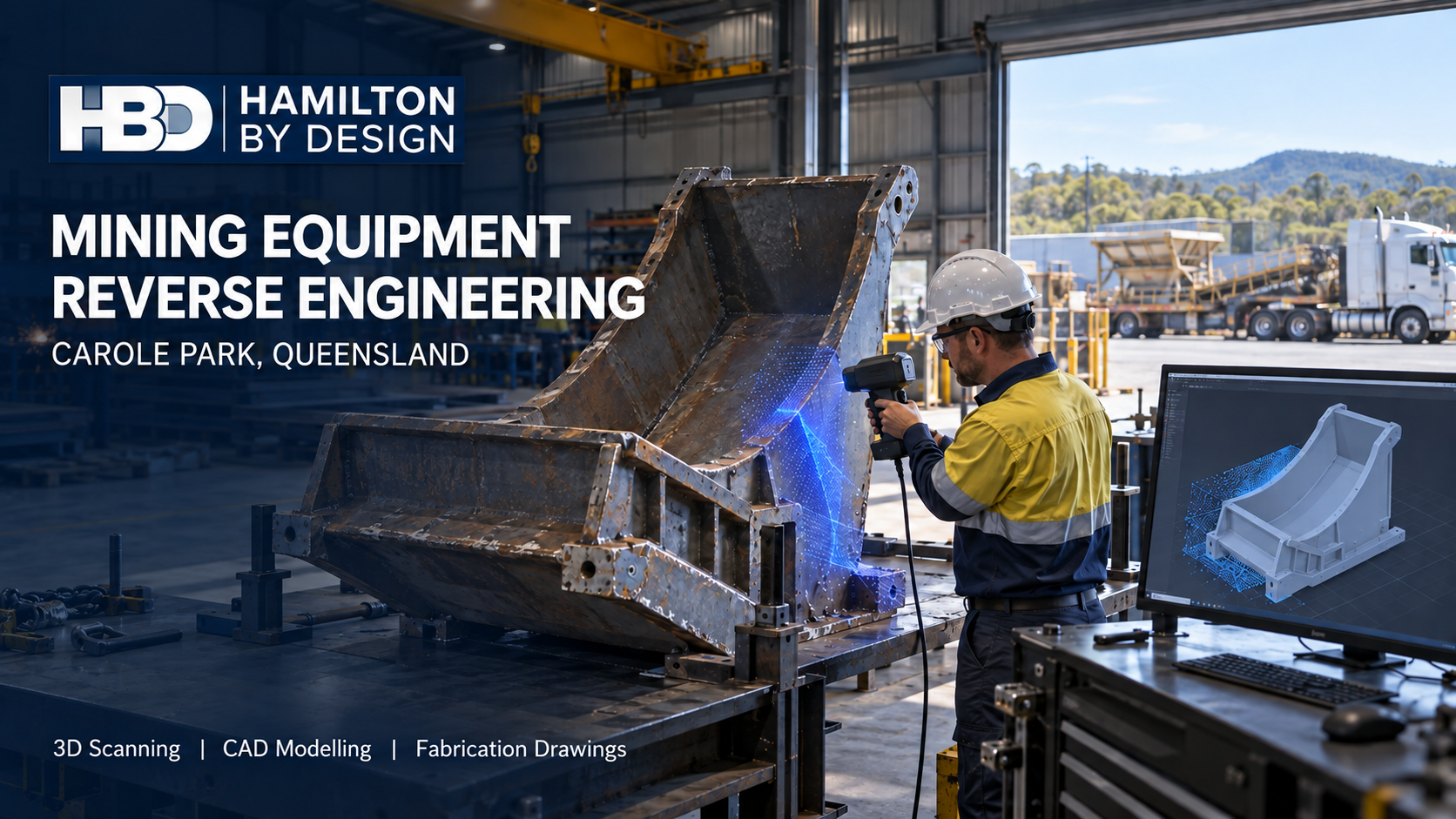
ARO laser scanning workflow showing point cloud processing, SOLIDWORKS modelling, and fabrication drawings for a mining and manufacturing plant

In mining and manufacturing, the difference between success and rework comes down to one thing:

The quality of your dataโ€”and how you use it.

While many providers can โ€œcapture a scan,โ€ not all can deliver usable engineering outcomes. This is where FARO laser scanners and the FARO software ecosystem stand apart.


Engineer-Led Scanning vs Generic Data Capture

Most scanning providers deliver:

  • Raw point clouds
  • Mesh files (STL, OBJ)
  • Limited usability for engineering

At Hamilton By Design, we take a different approach:

Engineering-led scanning using FARO tools, built for design, modelling, and fabrication.

The real advantage of FARO is not just the hardwareโ€”itโ€™s the software ecosystem that turns scan data into engineering decisions.


The Real Advantage: FARO SCENE Software

At the core of the FARO workflow is FARO SCENE, purpose-built for point cloud processing, registration, and validation.

Unlike generic tools, SCENE allows:

1. Hybrid Registration (Accuracy You Can Trust)

  • Combine cloud-to-cloud, targets, and survey control
  • Validate alignment visually and numerically
  • Eliminate stitching errors before they reach design

โžก๏ธ This ensures engineering-grade accuracy, not just visual alignment

FARO SCENE enables flexible registration workflows that combine multiple methods for precise alignment of complex sites


2. On-Site Registration (No Return Visits)

  • Register scans in the field
  • Identify gaps immediately
  • Confirm coverage before leaving site

โžก๏ธ Critical for:

  • Shutdowns
  • Remote mine sites
  • High-cost mobilisation environments

SCENE supports real-time, on-site registration and validation, allowing immediate data verification and reducing the need for rework


3. Clean, Usable Point Clouds (Not Just Raw Data)

  • Automatic filtering of noise
  • Colour balancing
  • Duplicate point removal
  • Density optimisation

โžก๏ธ Result:
Clean datasets ready for CAD, not bloated unusable files

SCENE includes filtering, validation, and optimisation tools to improve data quality and usability for downstream workflows


4. Full Workflow Integration (Scan โ†’ CAD โ†’ Engineering)

FARO integrates directly into engineering workflows:

  • Export to CAD and BIM platforms
  • Compatible with tools like:
    • SOLIDWORKS
    • Revit
    • Navisworks

โžก๏ธ This is the key difference:

FARO data is built to be engineered, not just viewed

SCENE enables export into multiple CAD and point cloud formats for modelling and engineering applications


5. Visual Validation (What You See Is What You Build)

  • 3D visualisation
  • VR inspection
  • Flythrough and walkthrough capability

โžก๏ธ Engineers and stakeholders can:

  • Verify design intent
  • Identify clashes early
  • Reduce construction risk

SCENE supports immersive 2D, 3D, and VR visualisation for detailed project evaluation


6. Scalable for Large Industrial Sites

Mining and manufacturing sites are:

  • Large
  • Complex
  • Often poorly documented

FARO SCENE allows:

  • Management of thousands of scans
  • Structured project organisation
  • Fast visualisation of large datasets

โžก๏ธ This is critical for:

  • CHPP plants
  • Smelters
  • Conveyor systems
  • Brownfield upgrades

Why This Matters for Mining & Manufacturing

Reduce Rework

Accurate, validated data reduces:

  • Site clashes
  • Fabrication errors
  • Installation delays

Improve Shutdown Efficiency

  • Capture once
  • Model correctly
  • Execute without surprises

Enable Brownfield Engineering

Most sites are not โ€œgreenfieldโ€:

  • Legacy assets
  • Unknown geometry
  • Modifications over time

โžก๏ธ FARO enables:
True as-built modelling, not assumptions


Support Fabrication-Level Detail

With the right workflow (FARO + engineering):

  • Steel detailing
  • Mechanical integration
  • Conveyor and chute design
  • Retrofit design

โžก๏ธ Deliverables become:
Fabrication-readyโ€”not conceptual


FARO vs โ€œOther Scanning Solutionsโ€

Many alternatives focus on:

  • Speed over accuracy
  • Visual outputs over engineering use
  • Meshes instead of parametric models

FARO, combined with SCENE, delivers:

  • Controlled accuracy
  • Transparent registration
  • Engineering-ready outputs

The Hamilton By Design Approach

We donโ€™t just use FARO toolsโ€”we use them properly.

  • Engineer-led scanning
  • Structured workflows
  • Point cloud to CAD conversion
  • SOLIDWORKS-based modelling
  • Fabrication-ready deliverables

Our focus is on outcomesโ€”not just data.


Anyone can scan.

Very few can:

  • Validate the data
  • Convert it into engineering models
  • Deliver drawings that can be built

Thatโ€™s why FARO, when used correctly, is not just a scanning toolโ€”

Itโ€™s a complete engineering data solution for mining and manufacturing.


3D LiDAR scanning and 3D modelling service button โ€” laser scanner capturing a point cloud for engineering and CAD modelling
Mechanical engineering services

Our Clients


Name
Would you like us to arrange a phone consultation for you?
Address
3D CAD Modelling Australia service banner for Hamilton By Design

LiDAR Scanning vs Handheld Scanning for Engineering Projects | Hamilton By Design

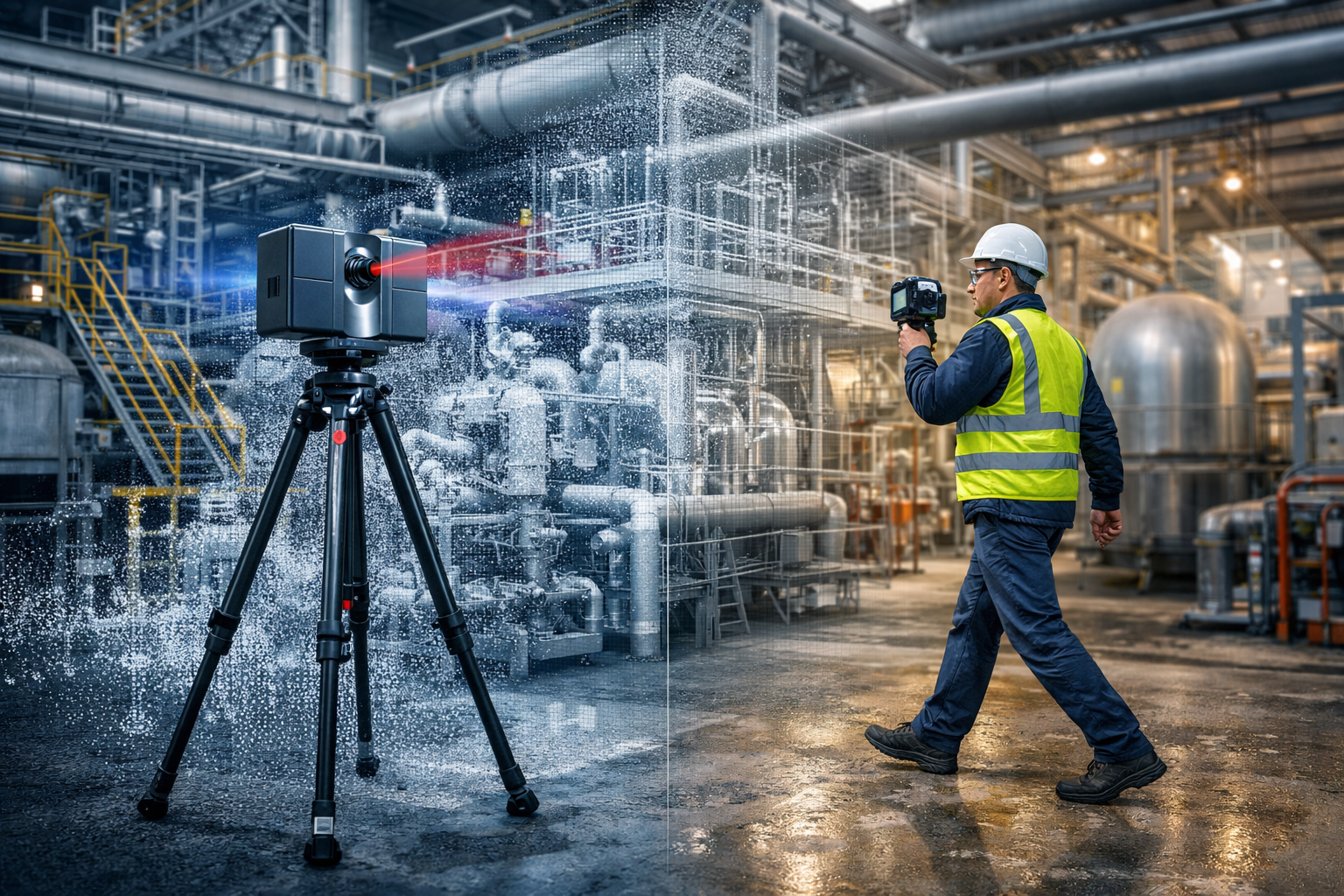
Tripod LiDAR scanner and handheld 3D scanner capturing an industrial plant with point cloud overlay for engineering design

LiDAR Scanning vs Handheld Scanning for Engineering Projects

When clients first look at 3D scanning solutions, one of the most common questions is whether they need a tripod-based LiDAR scanner or a handheld scanner. Both technologies have a place, but the right choice depends on the outcome required.

At Hamilton By Design, we focus on engineering-led reality capture. That means selecting the scanning method that best supports accurate design, fabrication, brownfield upgrades, and reliable project delivery.

3D LiDAR scanning and 3D modelling service button โ€” laser scanner capturing a point cloud for engineering and CAD modelling
Mechanical engineering services

What is the difference?

A tripod-based LiDAR scanner captures highly accurate point cloud data from fixed scan positions. This method is ideal when projects require dependable geometry, repeatable measurements, and engineering-grade outputs.

A handheld scanner is typically used to move quickly through a space and capture data on the go. It can be useful for general visualisation, rapid site understanding, and concept-level work, but it is not always the best fit where tight tolerances or fabrication-ready information is required.

Benefits of tripod-based LiDAR scanning

Higher accuracy

Tripod-based LiDAR scanning is better suited to projects where dimensional accuracy matters. This is particularly important for:

  • plant upgrades
  • tie-in design
  • structural modifications
  • pipework alterations
  • reverse engineering
  • fabrication support

Reliable fixed-position data

Because scans are captured from known stationary positions, the data can be registered into a stable point cloud. This gives engineers, designers, and project teams greater confidence in the model and the measurements taken from it.

Better for engineering and design

Where a project needs scan-to-CAD modelling, design development, clash checking, or digital twin support, tripod LiDAR scanning generally provides the more dependable base dataset.

Stronger project governance

Engineering projects need traceable and reviewable information. LiDAR scanning supports this by providing a robust record of existing conditions that can be referenced throughout the project lifecycle.

Benefits of handheld scanning

Faster capture over large areas

Handheld scanning can be useful where speed is more important than precision, or where the objective is to quickly understand a space.

Flexible for walkthrough-style capture

These systems can help capture general layouts, access routes, and broader site context in areas where rapid movement is an advantage.

Useful for concept and visualisation work

For early-stage planning or non-critical site representation, handheld scanning can sometimes provide a suitable outcome.

Which one is right for your project?

If your project involves fabrication, engineering design, plant modification, shutdown planning, or accurate as-built records, tripod-based LiDAR scanning is usually the better choice.

If your priority is speed, general layout capture, or conceptual understanding, handheld scanning may have a role.

In many cases, the best result comes from an engineering-led approach, where the required deliverables drive the capture method.

Why Hamilton By Design?

Hamilton By Design provides engineering-grade 3D laser scanning and reality capture services for industrial, mining, mechanical, and brownfield environments. Our focus is not just on collecting data, but on delivering data that supports real engineering outcomes.

We understand that a point cloud is only valuable if it helps reduce uncertainty, improve design confidence, and support practical decision-making.

Learn more

To explore our broader scanning and engineering services, visit:

Talk to Hamilton By Design

If you need accurate site data for design, drafting, reverse engineering, or plant upgrades, Hamilton By Design can help you choose the right scanning approach for your project.

Contact us to discuss your site, deliverables, and required level of detail.


Name
Would you like us to arrange a phone consultation for you?
Address


3D CAD Modelling Australia service banner for Hamilton By Design

Surfboard Digital Engineering

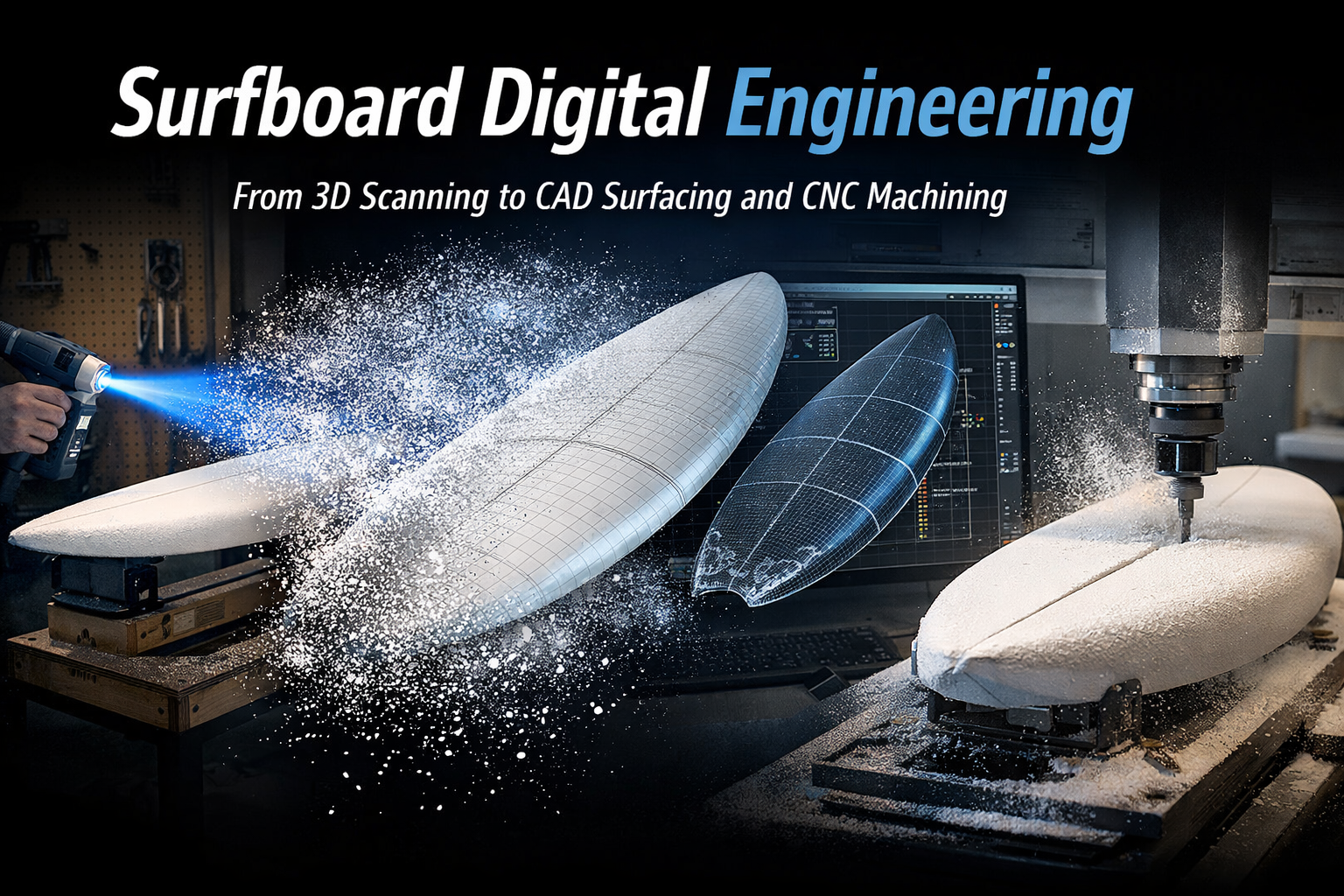
surfboard digital engineering workflow showing 3D scanning CAD modelling and CNC machining

From Surfboard Scan to CNC Manufacturing

Surfboard performance is defined by geometry. Small variations in rocker, rail profile, deck shape and bottom contours can significantly influence how a board performs in the water.

Hamilton By Design provides digital engineering services for surfboard design and manufacturing, helping convert physical surfboards into precise digital models suitable for analysis, modification and CNC machining.

Our team combines high-accuracy 3D scanning, advanced CAD surfacing and CNC programming expertise to support the complete workflow from physical surfboard to manufacturable digital model.

This integrated capability allows shapers, designers and manufacturers to move confidently from existing board โ†’ digital design โ†’ CNC machined blank.


A Complete Digital Workflow for Surfboard Manufacturing

Hamilton By Design provides a complete workflow that connects scanning, modelling and manufacturing preparation.

Typical projects move through the following stages.

surfboard digital engineering workflow showing 3D scanning CAD modelling and CNC machining

1. Surfboard Geometry Capture

Using high-resolution scanning technology, the physical surfboard geometry is captured to create a digital representation of the board.

This process records the complete board shape including:

  • rocker profile
  • deck contours
  • bottom contours
  • rail transitions
  • nose and tail geometry
  • fin placement and alignment

Related page: 3D Scanning of Surfboards


2. Point Cloud Processing

The raw scan data is processed and aligned to produce a clean digital representation of the surfboard.

This step ensures that the geometry can be used reliably for modelling, comparison and design development.

Processed data may be delivered as:

  • point clouds
  • mesh models
  • reference geometry for CAD modelling

3. Surfboard Surface Development

Surfboards are complex shapes that rely on smooth continuous surfaces.

Our team specialises in 3D CAD surfacing, allowing the scanned geometry to be converted into smooth, manufacturable surfaces suitable for design development or machining.

This stage may include:

  • surface reconstruction
  • symmetry correction
  • rocker curve analysis
  • rail profile development
  • design adjustments

Related page: Surfboard 3D Modelling and Surface Development


4. CNC Programming and Manufacturing Preparation

Once the surfboard model has been developed, CNC machining programs can be created for foam blank machining.

Our qualified CNC programmers prepare machining strategies including:

  • toolpath generation
  • cutter selection
  • machining strategies for foam blanks
  • blank positioning and setup
  • CNC code preparation

Related page: CNC Programming for Surfboard Manufacturing


Our Integrated Engineering Capability

Hamilton By Design provides a one-stop digital engineering workflow for surfboard manufacturing.

Our team includes:

3D Scanning Specialists

Capturing accurate geometry of existing surfboards using professional scanning technology.

Advanced 3D Modelling and Surfacing

Developing precise surfboard geometry using professional CAD modelling tools capable of producing smooth, hydrodynamically fair surfaces.

Qualified CNC Programmers

Preparing machining programs and strategies suitable for CNC shaping of surfboard blanks.

Manufacturing Workflow Support

Helping surfboard manufacturers move from physical board โ†’ digital model โ†’ CNC machining with confidence.

This integrated capability ensures that the digital data produced is not only accurate, but also suitable for downstream manufacturing processes.


Applications of Surfboard Digital Engineering

Our services can support a wide range of surfboard design and manufacturing applications.

Reverse Engineering Successful Boards

High-performing surfboards can be digitally captured and recreated for further development or reproduction.

Surfboard Design Development

Digital models allow designers to refine rocker curves, rails and bottom contours before machining.

CNC Manufacturing Preparation

Accurate digital models allow CNC machines to cut surfboard blanks with greater confidence and repeatability.

Archiving Surfboard Designs

Surfboard designs can be digitally preserved for future manufacturing or development.

Design Comparison

Digital models allow comparison between different board designs to better understand performance differences.


Why Digital Engineering Matters in Surfboard Design

Traditionally, surfboards have been shaped by hand using a combination of experience and intuition.

While this approach continues to play an important role in shaping culture, modern surfboard manufacturing increasingly relies on digital tools.

Digital workflows provide several advantages:

  • repeatable board production
  • accurate reproduction of successful designs
  • improved design development
  • better collaboration between designer and manufacturer
  • reduced manufacturing variation

Hamilton By Design helps bridge the gap between traditional shaping knowledge and modern digital manufacturing tools.


Scan to CNC Workflow

Existing Surfboard
โ†“
3D Scanning
โ†“
Point Cloud Processing
โ†“
CAD Surface Development
โ†“
CNC Programming
โ†“
Machined Surfboard Blank


Related Services

Hamilton By Design provides a range of related services that support digital engineering and manufacturing workflows.

These include:

  • 3D laser scanning services
  • scan-to-CAD modelling
  • reverse engineering
  • advanced surface modelling
  • CNC programming
  • manufacturing preparation

Hamilton By Design logo displayed on a blue tilted rectangle with a grey gradient background

3D LiDAR scanning and 3D modelling service button โ€” laser scanner capturing a point cloud for engineering and CAD modelling
Mechanical engineering services

Talk With Hamilton By Design

If you are looking to digitise a surfboard design, reverse engineer an existing board, or prepare a surfboard model for CNC machining, Hamilton By Design can assist.

Our team combines engineering-grade scanning, advanced CAD surfacing and practical CNC programming expertise to support the full digital workflow.

Contact Hamilton By Design to discuss your project.

Name
Would you like us to arrange a phone consultation for you?
Address
3D CAD Modelling Australia service banner for Hamilton By Design
Finite Element Analysis (FEA) engineering simulation button
Mechanical engineering services

Reverse Engineering 3D Scanning Melbourne

Engineer-Led Reverse Engineering from Scan to Fabrication โ€” Supporting Victoria & Remote Sites

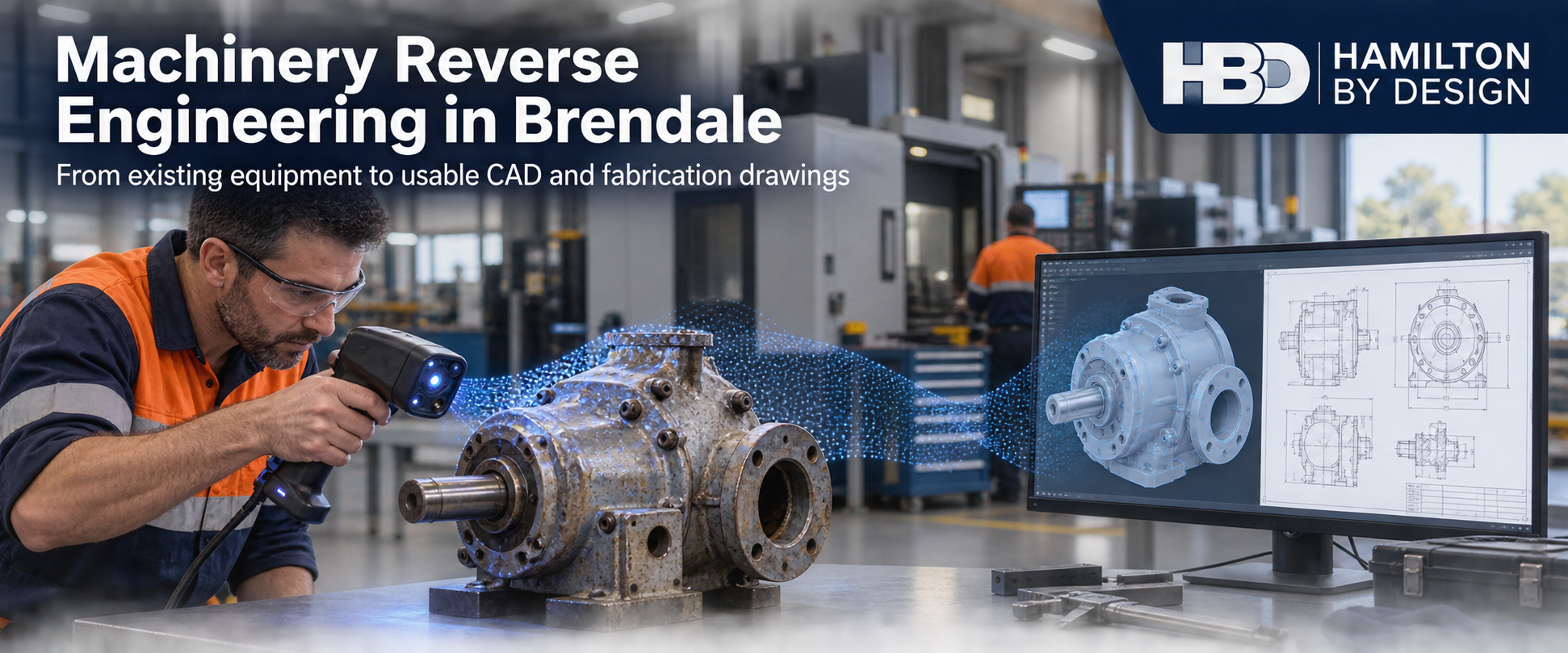
At Hamilton By Design, we provide reverse engineering supported by engineering-grade 3D LiDAR scanning from our Melbourne engineering hub, helping maintenance teams, project engineers, and manufacturers replace, reproduce, or validate critical components when drawings are missing, obsolete, or no longer reflect site reality.

We specialise in like-for-like replacement and fit-for-purpose engineering, particularly for manufacturing facilities, bulk materials handling, brownfield infrastructure, and industrial plant, where shutdown windows are tight and first-time fit-up is critical.


Reverse Engineering Built on Real Site Data

Reverse engineering only works when it starts with what actually exists on site.

We use engineering-grade 3D LiDAR scanning to capture accurate geometry from worn, modified, or undocumented assets, then apply engineering judgement to develop engineered models and drawings suitable for fabrication and installation.

This removes reliance on:

  • Missing, outdated, or incomplete drawings
  • OEM data that no longer matches the asset
  • Manual measurements in live or congested environments
  • Assumptions that lead to rework during shutdowns

Managing Director Insight

โ€œReverse engineering isnโ€™t about copying geometry โ€” itโ€™s about understanding wear, interfaces, and how an asset needs to function once itโ€™s reinstalled. We use 3D scanning to capture reality, but itโ€™s engineering judgement that ensures replacement components fit and perform as intended.โ€

โ€” Anthony Hamilton, Managing Director, Hamilton By Design


What We Reverse Engineer

From our Melbourne base, we support Victorian and remote operations with reverse engineering of:

  • Conveyor components (pulleys, frames, guards, transfer assemblies)
  • Bulk materials handling equipment (chutes, hoppers, bins, screens)
  • Worn or damaged components requiring like-for-like replacement
  • Obsolete or unsupported OEM parts
  • Structural steel components and assemblies
  • Machined components, housings, and brackets

These assets are often located in brownfield, live, or space-constrained environments, where accurate capture and engineering ownership are essential.


Engineering-Grade Accuracy for Shutdown-Critical Fit-Up

Our reverse engineering approach is designed for shutdown-critical replacement work, not visual modelling.

We emphasise:

  • Engineering-grade LiDAR scanning suitable for fit-for-purpose replacement parts
  • Accuracy verified through engineering judgement, not point clouds alone
  • Manual verification of critical interfaces where required
  • Deliverables suitable for fabrication, installation, and inspection

Our work is engineering-grade and defensibleโ€”appropriate for mechanical and structural replacement in operating industrial environments.


Reverse Engineering as an Engineering Process

Reverse engineering is treated as a complete engineering process, with 3D scanning as one input.

Our typical workflow includes:

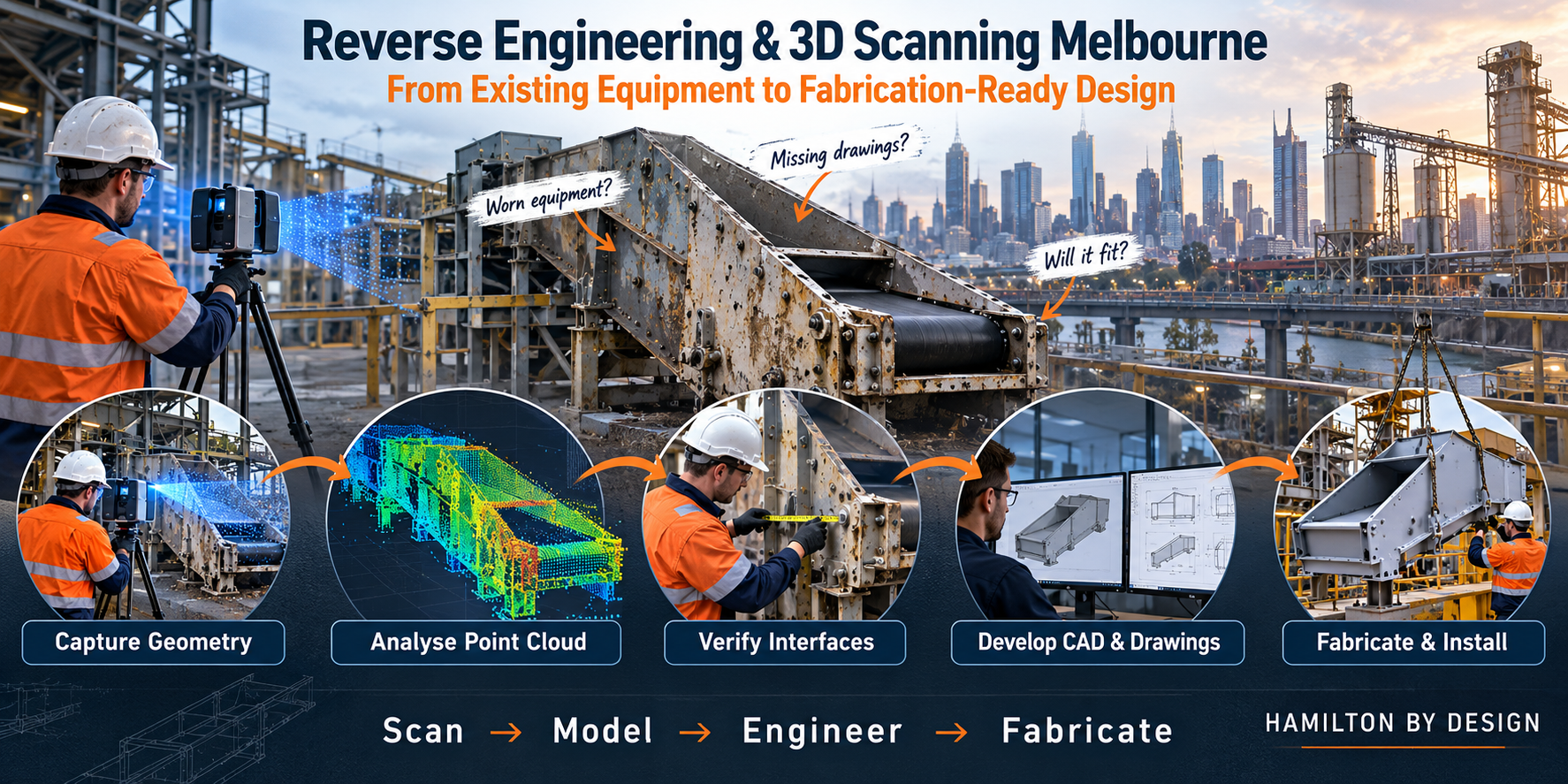
3D LiDAR scanning โ†’ point-cloud analysis โ†’ engineered 3D modelling โ†’ design intent definition โ†’ fabrication and installation drawings

Where required, this process may also include:

  • Mechanical or structural checks
  • Review of wear patterns and failure modes
  • Fit-for-purpose assessment against operational requirements

This ensures replacement components are engineered to work, not blindly replicated.


Engineering Ownership, Accountability & Risk Management

Reverse engineering carries real technical and commercial risk.

Our approach includes:

  • Engineering sign-off and accountability
  • Clear documentation of assumptions and limitations
  • Fit-for-purpose design intent aligned with operational reality
  • Engineering judgement consistent with Australian Standards
  • Lessons learned from real shutdowns, upgrades, and replacements

Deliverables are suitable for engineering review, audits, and compliance requirements.


Melbourne Engineering Hub Supporting Victoria & Remote Sites

We operate with Melbourne as our engineering base, supporting:

  • Manufacturing and industrial facilities across Victoria
  • Bulk materials handling and processing plants
  • Infrastructure and brownfield assets
  • Remote sites supported from Victoria
  • Fabricators and machine shops requiring accurate reverse-engineered data

This model provides local engineering accountability with the flexibility to support geographically dispersed assets.


Designed for Maintenance, Reliability & Project Engineers

This service is well suited to:

  • Maintenance and reliability engineers managing ageing assets
  • Project engineers planning shutdown replacements and upgrades
  • Manufacturers reproducing legacy or unsupported components
  • Asset owners dealing with undocumented modifications
  • Fabricators requiring accurate, fabrication-ready documentation

We work collaboratively with your teams, focusing on fit-first-time outcomes.


Hamilton By Design logo displayed on a blue tilted rectangle with a grey gradient background
3D LiDAR scanning and 3D modelling service button โ€” laser scanner capturing a point cloud for engineering and CAD modelling
Mechanical engineering services

Talk to Us About Reverse Engineering 3D Scanning in Melbourne

If youโ€™re dealing with missing drawings, obsolete components, or shutdown-critical replacements, weโ€™d welcome the opportunity to help.

Submit an enquiry via our contact form


Name
Would you like us to arrange a phone consultation for you?
Address


3D CAD Modelling Australia service banner for Hamilton By Design


CHPP Engineering title graphic featuring bold white text reading "CHPP Engineering" centred on a blue rounded rectangle background.
Pipework Drafting title graphic featuring bold white text reading "Pipework Drafting" centred on a blue rounded rectangle background.
3D LiDAR Scanning for Engineering Projects title graphic featuring bold white text on a blue rounded rectangle background.


Finite Element Analysis (FEA) engineering simulation button
Structural drafting services button
Mechanical drafting services button


Australian Drafting logo featuring bold white text reading "Australian Drafting" centred on a blue rounded rectangle background.
Engineering Governance title graphic featuring bold white text reading "Engineering Governance" centred on a blue rounded rectangle background.
Engineering-Grade LiDAR Scanning title graphic featuring bold white text on a blue rounded rectangle background.


Mechanical drafting services button
Structural drafting services button


Fabrication and product design services
3D CAD Modelling Australia service banner for Hamilton By Design
Mechanical, Structural & Pipework Drafting service banner by Hamilton By Design featuring white text on a blue background.


3D LiDAR scanning and 3D modelling service button โ€” laser scanner capturing a point cloud for engineering and CAD modelling
Mechanical engineering services

Scan to CAD Sydney

Engineering-Grade LiDAR to CAD Workflows for the Sydney CBD

Blue 3D LiDAR scanner icon on a tripod with scanning waves

In the Sydney CBD, engineering and construction projects rarely start with clean drawings. Buildings are dense, services are congested, and many assets have undergone decades of undocumented upgrades. For mechanical engineers, designers, and builders, relying on legacy drawings or assumptions can quickly lead to clashes, rework, and costly delays. This is where Scan to CAD Sydney workflows provide measurable value.

At Hamilton By Design, Scan to CAD is not just about capturing a point cloud. It is an engineering-led process that converts high-accuracy FARO Focus S70 LiDAR scanning into usable, fabrication-ready CAD models that support real-world decisions across design, retrofit, and construction.


What โ€œScan to CADโ€ Means in the Sydney CBD

Scan to CAD is the process of:

  1. Capturing existing site conditions using terrestrial LiDAR
  2. Registering and validating the point cloud
  3. Converting the scan data into structured CAD models and drawings

In the Sydney CBD, this workflow is commonly used for:

  • Commercial building refurbishments
  • Mechanical and services upgrades
  • Heritage and faรงade works
  • Plant room replacements
  • Fit-out coordination in live buildings

Unlike visual-only scanning, Scan to CAD focuses on engineering accuracy, not just appearance.


Why the FARO Focus S70 Is Used for Scan to CAD Projects

Hamilton By Design uses the FARO Focus S70 for Sydney CBD projects because it is purpose-built for high-accuracy, tripod-based terrestrial scanning in complex environments.

Key advantages include:

  • Millimetre-level local accuracy
  • Reliable geometry capture in tight interiors
  • Excellent colour data for identifying materials and services
  • Stable scanning in occupied and operational buildings

This makes the S70 ideal for office towers, retail spaces, basements, plant rooms, risers, and congested ceiling voids, where handheld or mobile scanners often lack the precision required for engineering design.


Typical Scan to CAD Applications in Sydney

Commercial Building As-Builts

Office buildings in the CBD often require accurate as-built documentation before refurbishment or tenant upgrades. FARO S70 scanning captures:

  • Structural grids and columns
  • Walls, slabs, stairs, and cores
  • Ceiling heights and penetrations

These are converted into CAD models and drawings that architects and engineers can trust.

MEP and Services Coordination

One of the most common Scan to CAD uses in Sydney is services coordination. LiDAR scanning accurately captures:

  • HVAC ductwork
  • Pipework and valves
  • Cable trays and electrical services
  • Fire systems and hydraulics

Hamilton By Design models these services in SolidWorks, enabling clash detection, retrofit design, and fabrication-ready outputs.

Plant Rooms and Building Services Spaces

CBD plant rooms are often space-constrained and undocumented. Scan to CAD workflows support:

  • Equipment replacement
  • Skid and frame design
  • Pipe rerouting and upgrades

Accurate models allow new equipment to be designed to fit first time, reducing shutdown risk.

Construction Verification and Digital QA

Scan to CAD is increasingly used for:

  • Installed vs design verification
  • Fit-up checks before fabrication
  • Quality assurance and compliance reporting

This provides a defensible digital record of what has actually been built.


From Point Cloud to CAD: An Engineer-Led Process

At Hamilton By Design, Scan to CAD does not stop at data capture.

Our workflow includes:

  • Engineer-supervised scanning
  • Controlled point cloud registration
  • Interpretation of scan data by mechanical engineers
  • CAD modelling aligned to fabrication and FEA requirements

The result is not just a model, but engineering intent embedded in the CAD, suitable for downstream use in:

  • Fabrication drawings
  • Structural checks
  • Installation planning
  • Asset documentation

Why Scan to CAD Matters in the Sydney CBD

Sydney CBD projects are defined by:

  • Limited access
  • Tight construction tolerances
  • High labour and downtime costs
  • Zero tolerance for rework

Scan to CAD reduces risk by:

  • Eliminating assumptions
  • Providing accurate geometry
  • Supporting better design decisions early
  • Reducing clashes and site modifications

For builders, consultants, and asset owners, this translates directly into time and cost savings.


Industries We Support

Hamilton By Design delivers Scan to CAD services for manufacturing facilities, industrial plants, commercial buildings, rail infrastructure, water treatment facilities and mining-related infrastructure throughout Sydney.

Our team converts point cloud data into AutoCAD, SolidWorks, Inventor and engineering-ready deliverables to support design development, asset management and project execution.


Scan to CAD Sydney with Hamilton By Design

Hamilton By Design specialises in engineering-grade Scan to CAD services in Sydney, combining:

  • FARO Focus S70 LiDAR scanning
  • SolidWorks CAD modelling
  • Mechanical engineering expertise
  • Fabrication-ready documentation

Our approach is deliberately practical. Every scan is captured with a clear understanding of how the data will be used, whether for retrofit design, services coordination, or construction verification.

If your Sydney CBD project requires accurate as-built data you can actually design from, Scan to CAD Sydney provides a proven pathway from reality to reliable CAD.

Hamilton By Design logo displayed on a blue tilted rectangle with a grey gradient background
3D LiDAR scanning and 3D modelling service button โ€” laser scanner capturing a point cloud for engineering and CAD modelling
Mechanical engineering services

Our clients:

Name
Would you like us to arrange a phone consultation for you?
Address

Related Sydney Services

Hamilton By Design provides engineering-led 3D scanning, LiDAR scanning, mechanical engineering and digital engineering services throughout Sydney and Greater Sydney.

Explore our related Sydney services:


  • 3D Scanning Sydney โ€“ Engineering-grade terrestrial laser scanning, as-built surveys and point cloud capture for industrial, infrastructure and commercial projects.
  • Reality Capture Sydney โ€“ High-accuracy reality capture, digital twins, asset documentation and engineering-grade site verification.
  • Scan to CAD Sydney โ€“ Convert point cloud data into AutoCAD, SolidWorks, Inventor and other engineering-ready CAD deliverables.
  • Point Cloud Modelling Sydney โ€“ Engineering-grade point cloud processing, clash detection, as-built verification and 3D modelling.
  • Mechanical Engineering Sydney โ€“ Mechanical design, plant upgrades, materials handling systems, conveyors, chutes, platforms and engineering support.
  • Structural Drafting Sydney โ€“ Structural steel drafting, fabrication drawings, GA drawings, workshop detailing and as-built documentation.

Hamilton By Design delivers Scan to CAD services throughout Sydney CBD, Parramatta, Liverpool, Penrith, Chatswood, Alexandria, Mascot, Newcastle and the Central Coast. Our team converts point cloud data into AutoCAD, SolidWorks and Inventor deliverables suitable for engineering, drafting and fabrication applications.


Scan to CAD Sydney

3D LiDAR Laser Scanning & Drafting Services in Chatswood & Greater Sydney

Mechanical Engineers in Sydney โ€“ Hamilton By Design

Blue banner graphic displaying the text "Point Cloud to CAD - Australia" in large white lettering, representing point cloud processing, scan-to-CAD conversion and digital engineering services across Australia.
Blue banner graphic displaying the text "Scan to CAD Sydney" in large white lettering, representing engineering-led point cloud to CAD conversion, LiDAR scanning and digital engineering services in Sydney.
Blue banner graphic displaying the text "Reality Capture Sydney - CBD" in large white lettering, representing engineering-led reality capture, LiDAR scanning and digital engineering services within Sydney CBD commercial buildings and infrastructure.

SolidWorks โ€“ Sydney