Engineering Resources for Mining, Mechanical and Industrial Design

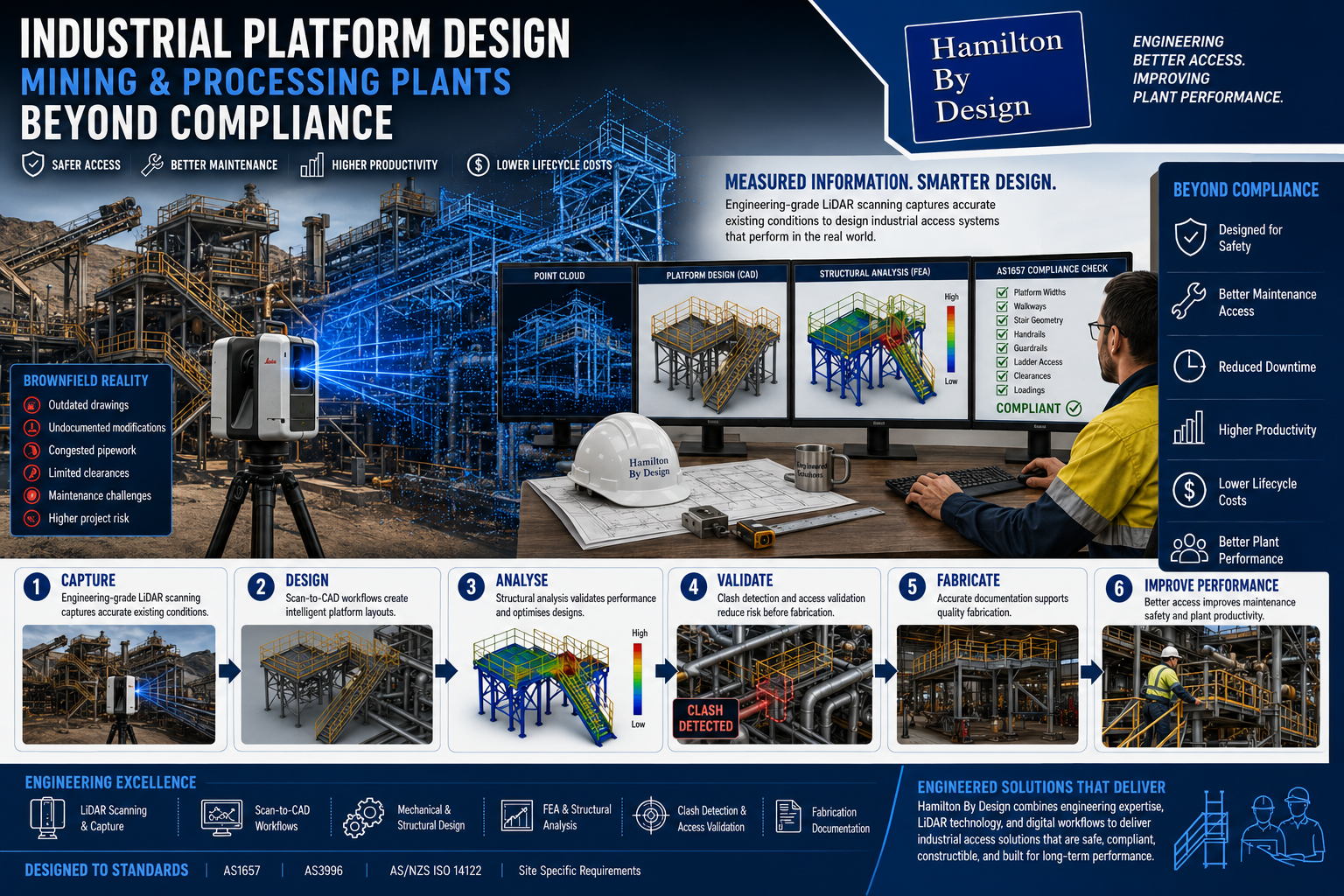
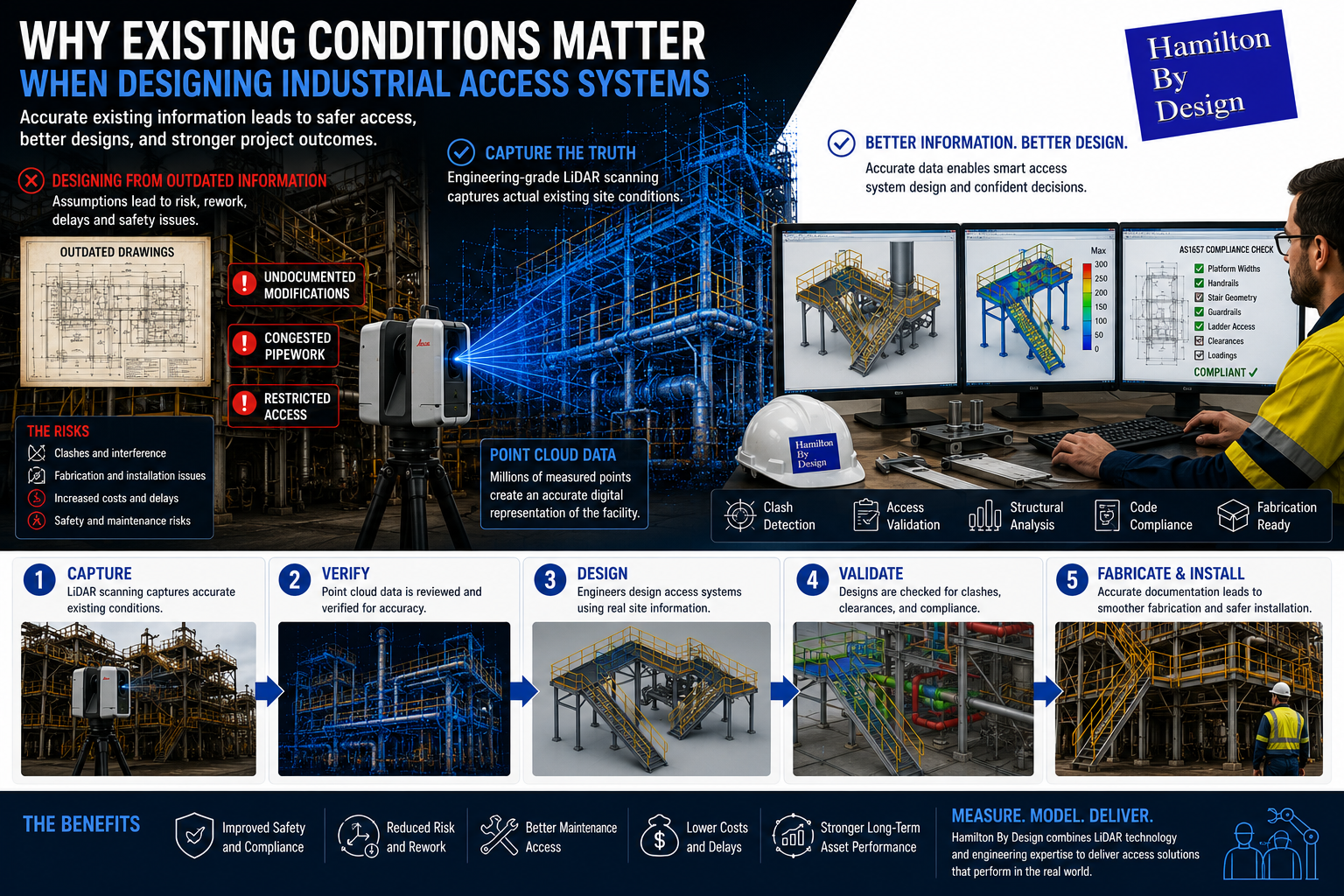
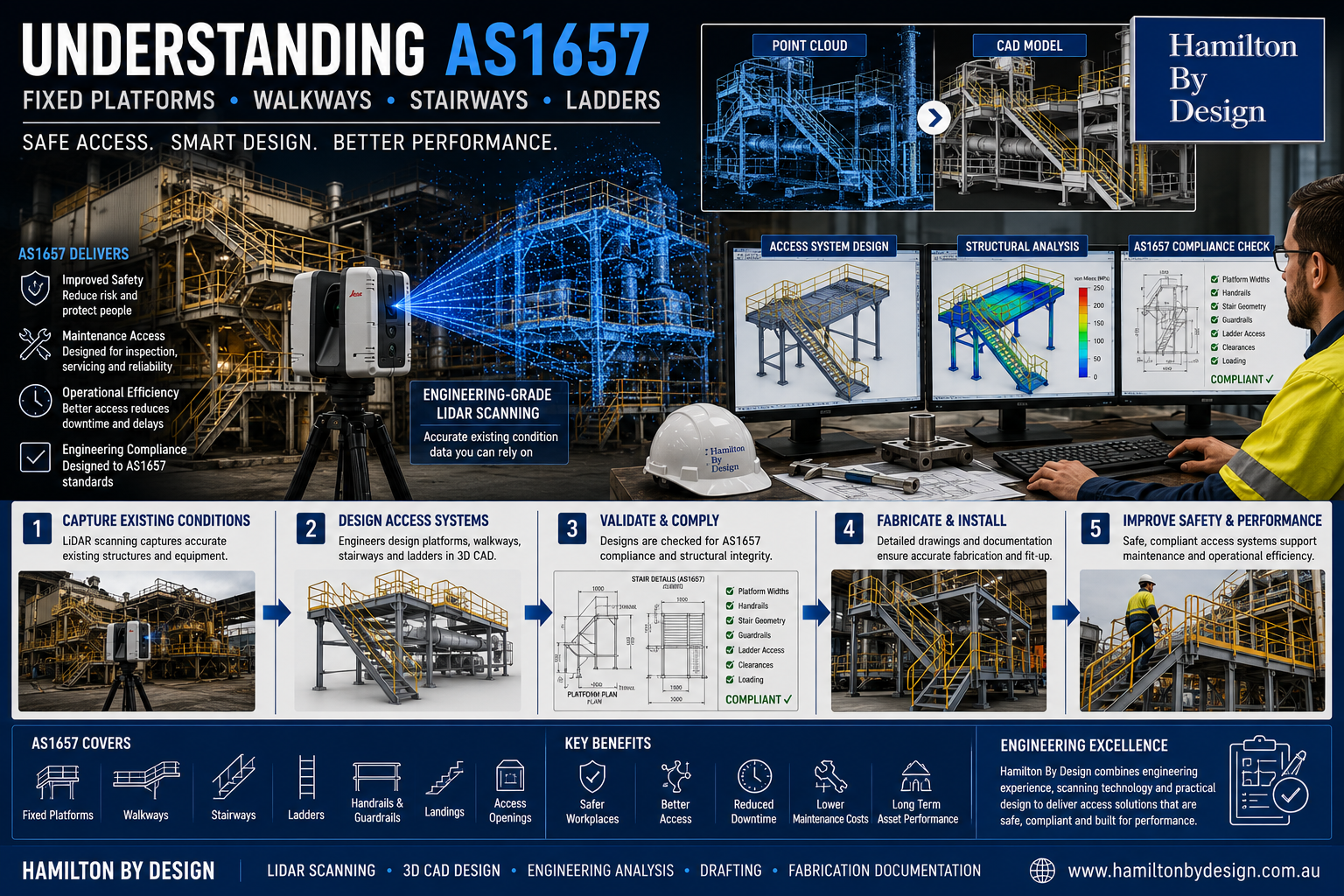
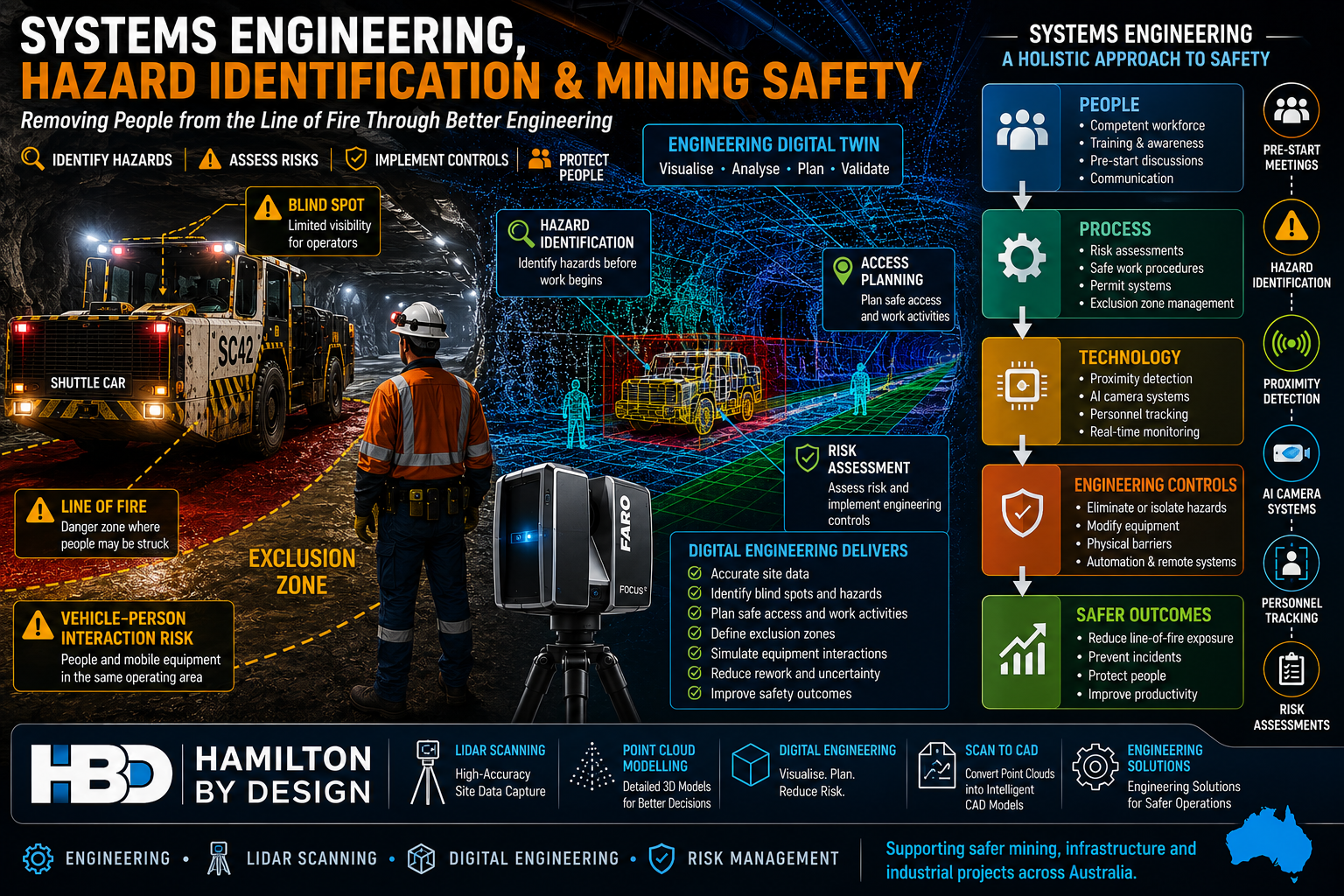
Mining and industrial engineering design montage showing conveyors, pipework systems, structural steel platforms and a mechanical assembly CAD model.

Supporting Engineering Knowledge Across Multiple Industry Blogs

At Hamilton By Design Co., we regularly publish engineering insights, technical discussions, and project examples across a number of specialist industry blogs.

These resources support engineers, plant operators, maintenance managers, and project teams working across mining, manufacturing, industrial infrastructure and structural design.

Many of these posts explore the practical engineering challenges encountered when designing, upgrading, or reverse engineering industrial equipment and facilities.

Topics include:

  • Mining plant design
  • Conveyor transfer systems
  • Structural steel detailing
  • Mechanical drafting
  • SolidWorks engineering design
  • Point cloud modelling and laser scanning
  • Design for manufacturing
  • Industrial plant upgrades

These blogs form part of the broader Hamilton By Design engineering knowledge network, providing practical insight into the real-world challenges of industrial design and engineering projects.


Hamilton By Design Engineering Blog Network

Hamilton By Design Engineering Blog

https://hamiltonbydesign.blogspot.com

This blog focuses on engineering services delivered by Hamilton By Design, including:

  • 3D laser scanning for engineering projects
  • Reverse engineering workflows
  • Industrial plant modelling
  • Engineering design case studies

It provides insights into how scanning and modelling technologies are applied to real engineering projects across Australia.


Mining Infrastructure and SolidWorks Design

https://mininginfrastructuresolidworksdesign.blogspot.com

This engineering blog focuses on the design and modelling of mining infrastructure, including:

  • Conveyor systems
  • Transfer chutes
  • Structural supports
  • Plant layout modelling

Articles often explore how SolidWorks and engineering modelling tools are used to develop reliable infrastructure for mining and bulk material handling.


Chutes and Transfer Stations

https://chutesandtransferstations.blogspot.com

Transfer chutes are one of the most critical components in bulk material handling systems.

This blog discusses:

  • Common chute failures in mining plants
  • Conveyor loading problems
  • Transfer point design
  • Bulk material handling improvements

Engineering design decisions made at transfer stations can significantly impact conveyor reliability, maintenance costs, and plant performance.


Design for Manufacturing

https://design-for-manufacturing.blogspot.com

The Design for Manufacturing (DFM) blog focuses on improving product and equipment designs to simplify fabrication and assembly.

Topics include:

  • Fabrication-friendly engineering design
  • Cost reduction through smarter design
  • Manufacturing workflow improvements
  • Practical mechanical engineering tips

Industrial Design Australia

https://industrialdesignaustralia.blogspot.com

This blog discusses engineering and industrial design challenges across Australian industries including:

  • Mining infrastructure
  • Industrial plants
  • Equipment upgrades
  • Plant shutdown planning

It highlights the engineering considerations required when working within complex operating facilities.


Mechanical Drafting Sydney

https://mechanical-drafting-sydney.blogspot.com

This blog focuses on professional drafting services including:

  • Mechanical design documentation
  • Engineering drawings
  • Industrial layout modelling
  • Detailed fabrication drawings

It provides insights into the role of drafting in delivering successful engineering projects.


Pipework Detailing

https://pipeworkdetailing.blogspot.com

Industrial pipe systems are critical infrastructure within processing plants.

This blog covers:

  • Pipe routing design
  • Pipe spool drawings
  • Scan-to-model workflows
  • Pipework engineering documentation

The content is particularly relevant to projects where laser scanning is used to capture existing plant geometry before upgrades.


SolidWorks Designer

https://solidworksdesigner.blogspot.com

This blog focuses on 3D mechanical design using SolidWorks, including:

  • Industrial equipment design
  • Mechanical assemblies
  • Engineering modelling workflows
  • Reverse engineering projects

SolidWorks Sydney

https://solidworkssydney.blogspot.com

This site focuses on SolidWorks engineering services in Australia, including:

  • Mechanical design
  • Industrial equipment modelling
  • Manufacturing design support

Structural Detailing

https://structural-detailing.blogspot.com

Structural detailing plays an important role in industrial plant upgrades and infrastructure projects.

This blog discusses:

  • Structural steel detailing
  • Engineering drawings for fabrication
  • Industrial infrastructure design

Structural Drafting

https://structural-drafting.blogspot.com

This blog focuses on structural drafting services including:

  • Steel framing drawings
  • Fabrication documentation
  • Structural engineering support for industrial facilities.

Structural Steel Drafting

https://structural-steel-drafting.blogspot.com

This blog focuses specifically on steel structures used in industrial plants and mining facilities, including:

  • Conveyor structures
  • Plant platforms
  • Maintenance walkways
  • Equipment support frames

Supporting Industrial Engineering Projects Across Australia

These blogs collectively explore the practical engineering knowledge required to support industrial facilities across Australia.

Many of the engineering topics discussed across these blogs are connected to services provided by Hamilton By Design, including:

  • Engineering grade 3D laser scanning
  • Point cloud to engineering model workflows
  • Mechanical and structural engineering design
  • Reverse engineering of industrial equipment
  • Plant upgrades and shutdown preparation

These resources help engineers and plant operators better understand how modern digital engineering tools can support safer, more efficient industrial infrastructure projects.

Hamilton By Design logo displayed on a blue tilted rectangle with a grey gradient background

3D LiDAR scanning and 3D modelling service button โ€” laser scanner capturing a point cloud for engineering and CAD modelling
Mechanical engineering services
Name
Would you like us to arrange a phone consultation for you?
Address


3D CAD Modelling Australia service banner for Hamilton By Design

Why Pump Skids Are Important in Mining Plants

3D engineering model of a mining pump skid with motor, centrifugal pump, piping and structural skid frame

Pump systems are critical components in many mining operations. They are used to move slurry, process water, tailings, and chemicals throughout the plant.

To simplify installation and maintenance, engineers often package pumps and associated equipment into pump skids. A pump skid is a modular assembly that integrates the pump, motor, pipework, valves, instrumentation, and structural base into a single engineered unit.

Effective pump skid design in mining helps operations achieve:

  • faster installation
  • improved equipment reliability
  • easier maintenance access
  • reduced shutdown time

Because mining plants operate continuously, properly engineered pump skids are essential for maintaining plant reliability and operational efficiency.


What Is a Pump Skid?

A pump skid is a pre-engineered mechanical system mounted on a structural steel frame.

Typical components of a mining pump skid include:

  • centrifugal or slurry pump
  • electric motor or drive system
  • suction and discharge pipework
  • isolation and control valves
  • instrumentation and pressure gauges
  • base frame or skid structure

The entire assembly can be transported and installed as a single module, reducing site installation work.


Key Engineering Considerations in Pump Skid Design

Designing pump skids for mining environments requires careful attention to mechanical engineering principles, maintenance access, and operating conditions.

1. Structural Base Frame Design

The base frame must support the pump, motor, and piping loads while maintaining alignment.

Engineers design the skid structure to:

  • support dynamic loads from rotating equipment
  • minimise vibration
  • provide lifting points for transport and installation
  • ensure structural stability during operation

Structural stiffness is particularly important to maintain pump and motor alignment, which directly affects equipment life.


2. Pump and Motor Alignment

Misalignment between the pump and motor can cause:

  • excessive bearing wear
  • vibration issues
  • premature mechanical seal failure

During pump skid design, engineers consider:

  • mounting plate stiffness
  • adjustable motor bases
  • alignment tolerances
  • coupling selection

Accurate alignment is essential for ensuring long-term reliability of rotating equipment.


3. Pipework and Hydraulic Design

The suction and discharge pipework must be carefully designed to avoid performance issues.

Poor pipework design can lead to:

  • cavitation
  • pressure losses
  • vibration
  • premature pump wear

Engineering considerations include:

  • correct pipe sizing
  • smooth flow transitions
  • proper valve selection
  • adequate support for pipework loads

In slurry applications, pipe materials must also be selected to handle abrasive materials common in mining operations.


4. Maintenance Accessibility

Mining maintenance teams must be able to service pumps quickly, particularly during plant shutdowns.

Pump skid layouts should allow:

  • easy removal of pump components
  • access to motors and couplings
  • safe valve operation
  • space for lifting equipment

Maintenance accessibility is a major factor in reducing downtime during shutdown maintenance.


5. Integration With Existing Plant Infrastructure

In many mining facilities, new pump skids must be installed within existing processing plants.

Engineers often use 3D laser scanning and digital plant models to capture the existing environment and ensure the skid fits correctly within available space.

This digital approach helps engineers:

  • identify structural clashes
  • confirm installation clearances
  • verify pipe routing
  • reduce installation risk

More information about mining mechanical engineering design services can be found here:


Designing Pump Skids for Shutdown Installations

Many pump replacements or upgrades occur during planned shutdowns where installation time is limited.

Proper engineering preparation allows pump skid systems to be:

  • fabricated off-site
  • delivered as complete assemblies
  • installed quickly during shutdown windows

This approach significantly reduces the risk of delays during plant maintenance activities.

Learn more about engineering preparation for mining shutdowns here:


Using Digital Engineering to Reduce Installation Risk

Modern mining engineering increasingly relies on digital engineering models.

Using digital plant models allows engineers to:

  • position pump skids accurately within existing infrastructure
  • plan lifting and installation activities
  • verify piping connections before fabrication
  • minimise site modifications

This reduces uncertainty and ensures that equipment fits correctly during installation.

You can read more about this approach here:


Improving Reliability Through Good Equipment Design

Well-designed pump skids improve both equipment performance and plant maintainability.

By integrating mechanical, structural, and piping design into a single engineered assembly, mining operations benefit from:

  • faster equipment installation
  • simplified maintenance procedures
  • improved operational reliability

For mining operations seeking to upgrade plant equipment or install new pumping systems, engineered pump skid design provides a practical and reliable solution for modern processing plants.

Name
Would you like us to arrange a phone consultation for you?
Address
3D CAD Modelling Australia service banner for Hamilton By Design
CHPP Engineering title graphic featuring bold white text reading "CHPP Engineering" centred on a blue rounded rectangle background.
Pipework Drafting title graphic featuring bold white text reading "Pipework Drafting" centred on a blue rounded rectangle background.
3D LiDAR Scanning for Engineering Projects title graphic featuring bold white text on a blue rounded rectangle background.
Finite Element Analysis (FEA) engineering simulation button
Mechanical engineering services

Why Conveyor Reliability Matters in Mining

Conveyor system failure in a mining processing plant with spillage and damaged rollers.

Conveyor systems are the backbone of most mining operations. They move thousands of tonnes of ore every hour between crushers, processing plants, stockpiles, and load-out facilities.

When a conveyor fails, the impact can be immediate and costly. Production stops, plant operators must respond quickly, and maintenance teams are forced to work under pressure to restore operations.

Understanding the common causes of conveyor failures in mining plants is essential for improving plant reliability and reducing unplanned downtime.


1. Conveyor Belt Damage

One of the most frequent conveyor failures in mining is damage to the conveyor belt itself.

Typical causes include:

  • impact from large rocks at transfer points
  • sharp materials cutting the belt
  • misaligned loading onto the receiving belt
  • worn or damaged idlers

When belts become damaged, operations may experience:

  • belt tears
  • belt mistracking
  • material spillage

Over time this leads to reduced production efficiency and increased maintenance costs.

Proper chute design and impact control can significantly reduce belt damage.


2. Transfer Chute Blockages

Transfer chutes are often the most problematic areas in materials handling systems.

Poorly designed transfer chutes can cause:

  • material build-up
  • flow restrictions
  • complete blockages

These problems are especially common when handling:

  • wet ore
  • sticky materials
  • fine particles

When chutes block, the upstream conveyors continue feeding material until the system trips or operators intervene.

This can quickly escalate into major plant disruptions.


3. Conveyor Misalignment

Another common maintenance issue is belt misalignment.

Misalignment occurs when the belt does not track correctly along the conveyor structure.

Common causes include:

  • uneven loading at transfer points
  • worn idlers
  • structural movement or damage
  • incorrect installation

When conveyors run out of alignment they can cause:

  • edge damage to belts
  • excessive wear on idlers
  • safety hazards from material spillage

Regular inspection and proper transfer design can reduce this risk.


4. Structural Fatigue and Failure

Mining conveyors operate in harsh environments and are subjected to constant vibration and loading.

Over time this can lead to structural issues such as:

  • cracked steel structures
  • damaged conveyor supports
  • fatigue in transfer chute frames

These failures may not be immediately visible but can develop gradually over years of operation.

Engineering inspections and accurate plant modelling can help identify these risks before they become critical failures.


5. Wear in Materials Handling Equipment

Mining materials are often highly abrasive.

Components that commonly experience heavy wear include:

  • chute liners
  • skirt plates
  • idlers
  • pulley lagging

If these parts are not replaced in time, they can lead to larger system failures.

Preventative maintenance programs help ensure that wear components are replaced before reliability issues develop.


Improving Plant Reliability Through Engineering

Reducing conveyor failures in mining plants requires a combination of:

  • good engineering design
  • proper maintenance practices
  • accurate understanding of existing plant infrastructure

Modern engineering techniques such as 3D laser scanning and digital modelling allow engineers to capture the true geometry of operating plants.

This helps identify problems such as:

  • poor transfer geometry
  • structural clashes
  • restricted maintenance access

These issues can then be addressed before they lead to operational failures.

You can learn more about mining mechanical engineering design services here:


Preparing Conveyor Upgrades During Shutdowns

Many conveyor upgrades and maintenance projects are performed during planned plant shutdowns.

Because shutdown windows are limited, careful preparation is essential.

Engineering preparation may include:

  • capturing existing plant conditions
  • producing detailed engineering models
  • planning structural modifications
  • preparing fabrication drawings

Proper shutdown planning reduces the risk of installation delays and ensures that maintenance work is completed safely.

Learn more about shutdown preparation here:


Using Digital Engineering to Reduce Risk

Digital engineering tools now allow mining operations to develop accurate digital models of their processing plants.

These models help engineers:

  • analyse conveyor systems
  • redesign transfer chutes
  • identify potential failure points
  • plan upgrades with confidence

By using digital engineering models, mining companies can significantly reduce the risk of plant downtime and improve overall reliability.

More information on this approach can be found here:


Final Thoughts

Conveyor systems are critical to the performance of mining plants, but they are also one of the most common sources of operational failure.

By understanding the causes of conveyor failures in mining, operations teams can focus on improving:

  • transfer chute design
  • maintenance practices
  • plant engineering preparation

Through proper engineering and planning, mining companies can improve reliability, reduce downtime, and ensure that their materials handling systems continue to operate safely and efficiently.

3D LiDAR scanning and 3D modelling service button โ€” laser scanner capturing a point cloud for engineering and CAD modelling
Mechanical engineering services
Name
Would you like us to arrange a phone consultation for you?
Address
CHPP Engineering title graphic featuring bold white text reading "CHPP Engineering" centred on a blue rounded rectangle background.
Pipework Drafting title graphic featuring bold white text reading "Pipework Drafting" centred on a blue rounded rectangle background.
3D LiDAR Scanning for Engineering Projects title graphic featuring bold white text on a blue rounded rectangle background.
3D CAD Modelling Australia service banner for Hamilton By Design

Mechanical Engineering in Mining Infrastructure

Mining processing plant infrastructure with conveyors and transfer towers illustrating mechanical engineering design for mining operations.

Mining mechanical engineering covers the design, integration, and optimisation of equipment used in extraction, processing, and materials handling.

Typical systems include:

  • Conveyor systems and transfer stations
  • Crushing and screening equipment
  • Pumping systems and slurry transport
  • Structural mechanical equipment supports
  • Chutes, bins, and materials handling systems
  • Mechanical plant upgrades and retrofits

Each of these systems must be designed to handle high loads, abrasive materials, and continuous operation while integrating into existing plant layouts.

For projects involving plant upgrades or shutdown work, it is critical to capture existing plant conditions accurately before design begins.

Learn more about this process here:


Engineering Design for Existing Mining Plants

Many mining projects involve modifying existing infrastructure rather than building new facilities. This presents several engineering challenges:

  • Limited installation space
  • Legacy equipment and undocumented plant layouts
  • Structural constraints
  • Integration with operating equipment

Hamilton By Design addresses these challenges by using engineering-grade 3D laser scanning to capture precise plant geometry before design work begins.

This approach allows engineers to work with accurate digital models of operating plants, reducing risk during installation and shutdown work.

Learn more about our scanning services:


From Point Cloud to Mechanical Engineering Model

Once a plant has been scanned, the collected data is converted into a point cloud model that represents the existing infrastructure.

From this data we can produce:

  • Mechanical equipment layouts
  • Pipe routing designs
  • Structural steel interfaces
  • Conveyor and chute designs
  • Equipment modification models

The process ensures new engineering designs fit within the true geometry of the plant, avoiding clashes and installation problems.

Read more about the workflow here:


Mechanical Design for Mining Shutdown Projects

Shutdowns are one of the most critical periods in mining operations. Mechanical engineering designs prepared for shutdown installation must be accurate, buildable, and delivered on tight timelines.

Typical shutdown design work includes:

  • Conveyor upgrades and chute modifications
  • Pump station upgrades
  • Structural steel modifications
  • Pipework rerouting
  • Equipment replacement projects

With accurate plant models and detailed mechanical drafting, shutdown installations can proceed with minimal disruption to production.

Learn more about shutdown engineering support:


Materials Handling System Design

A large portion of mining mechanical engineering focuses on bulk materials handling systems.

These systems include:

  • Conveyors and drive systems
  • Transfer chutes and loading points
  • Storage bins and hoppers
  • Feeders and discharge systems

Engineering design must consider:

  • Flow characteristics of the material
  • Wear and abrasion resistance
  • Maintenance access
  • Structural loads and equipment interfaces

When properly designed, materials handling systems improve plant reliability and reduce maintenance costs.


Structural Integration in Mechanical Design

Mechanical equipment rarely operates independently. It must integrate with structural steel, concrete foundations, and existing infrastructure.

This requires coordination between:

  • Mechanical engineers
  • Structural engineers
  • drafting and modelling teams
  • site installation teams

At Hamilton By Design we integrate these disciplines within our modelling workflows to ensure mechanical systems are fully coordinated with plant infrastructure.


Engineering Services for Mining Operations

Hamilton By Design supports mining operations with a range of mechanical engineering services, including:

  • Mechanical equipment design
  • Conveyor and chute design
  • Pump system engineering
  • Structural steel interface design
  • Plant modification modelling
  • Engineering drafting and documentation
  • 3D laser scanning of existing infrastructure

Our engineering services are commonly used during:

  • plant upgrades
  • shutdown preparation
  • brownfield expansions
  • maintenance planning
  • infrastructure upgrades

Why Accurate Engineering Design Matters in Mining

Mining infrastructure operates under demanding conditions. Poor engineering design can lead to:

  • installation delays
  • shutdown overruns
  • equipment failures
  • safety risks

By combining accurate site capture, engineering modelling, and practical design experience, mechanical engineering teams can reduce project risk and deliver reliable infrastructure upgrades.


Mechanical Engineering Support for Mining Projects

Hamilton By Design works with mining companies, engineering contractors, and maintenance teams to deliver practical mechanical engineering solutions for mining infrastructure.

Our services combine:

  • site knowledge
  • engineering modelling
  • practical fabrication awareness
  • plant upgrade experience

To learn more about our mining engineering services visit:


Related Mechanical Engineering Articles

Further reading:

CHPP Engineering title graphic featuring bold white text reading "CHPP Engineering" centred on a blue rounded rectangle background.
Pipework Drafting title graphic featuring bold white text reading "Pipework Drafting" centred on a blue rounded rectangle background.
3D LiDAR Scanning for Engineering Projects title graphic featuring bold white text on a blue rounded rectangle background.
3D LiDAR scanning and 3D modelling service button โ€” laser scanner capturing a point cloud for engineering and CAD modelling
Mechanical engineering services

Name
Would you like us to arrange a phone consultation for you?
Address

Our clients

3D CAD Modelling Australia service banner for Hamilton By Design

Structural Steel Engineering for Mining Plants

Engineers using 3D laser scanning and digital modeling to upgrade structural steel in a mining plant.

Structural Steel Design in Mining Infrastructure

Mining plants rely heavily on structural steel infrastructure to support processing equipment, conveyors, walkways, platforms, and maintenance access systems. From crushing circuits to materials handling systems, structural steel plays a critical role in maintaining safe and efficient plant operations.

Because mining environments are complex and often evolve through multiple upgrades over time, structural steel mining design requires careful engineering analysis to ensure that new infrastructure integrates properly with existing plant systems.

At Hamilton By Design, structural steel engineering is commonly used to support plant upgrades, equipment installations, and infrastructure modifications across mining and industrial facilities.


The Role of Structural Steel in Mining Plants

Mining processing plants contain large volumes of structural steel used to support equipment and provide safe access for operations and maintenance teams.

Typical structural steel infrastructure in mining plants includes:

โ€ข conveyor support structures
โ€ข transfer tower frameworks
โ€ข equipment support platforms
โ€ข access walkways and handrails
โ€ข maintenance platforms
โ€ข pipe and services supports

These structures must be designed to support heavy equipment loads while also allowing safe access for plant personnel.

Structural steel systems must also account for vibration, dynamic loads from conveyors, and environmental conditions such as dust, moisture, and corrosion.


Engineering Challenges in Structural Steel Mining Design

Mining plants present unique challenges for structural engineers. Unlike greenfield projects, many mining facilities have evolved through decades of maintenance and upgrades.

Common engineering challenges include:

โ€ข integrating new structures with existing infrastructure
โ€ข limited space around operating equipment
โ€ข unknown loads from legacy plant equipment
โ€ข structural modifications during shutdown periods
โ€ข coordinating mechanical and structural design

Because of these challenges, structural engineers must often analyse existing plant conditions before designing modifications or upgrades.


Capturing Existing Infrastructure Before Design

Before structural steel upgrades or modifications are designed, engineers often capture the existing plant infrastructure to ensure accurate integration.

Many engineering teams now use 3D laser scanning to capture detailed measurements of plant structures.

Laser scanning records millions of measurement points and creates point cloud datasets representing the geometry of conveyors, structures, platforms, and equipment.

These datasets allow engineers to understand the real plant layout before designing new structures.

Learn more about capturing existing conditions here:


Structural Steel Modelling and Engineering Design

Once accurate plant data has been captured, engineers develop structural models used to design new steelwork.

Structural steel mining design often includes:

โ€ข support frames for new equipment
โ€ข conveyor support modifications
โ€ข access platform design
โ€ข structural reinforcements
โ€ข installation support structures

These models allow engineers to evaluate loads, verify clearances, and coordinate structural work with mechanical equipment and plant infrastructure.

Engineering modelling workflows can also support fabrication by providing accurate drawings and installation details.

More information about converting scan data into engineering models can be found here:

CHPP Engineering title graphic featuring bold white text reading "CHPP Engineering" centred on a blue rounded rectangle background.
Pipework Drafting title graphic featuring bold white text reading "Pipework Drafting" centred on a blue rounded rectangle background.
3D LiDAR Scanning for Engineering Projects title graphic featuring bold white text on a blue rounded rectangle background.

Structural Engineering for Plant Upgrades

Structural steel engineering is often required when mining plants undergo upgrades or modifications.

Typical projects may include:

โ€ข installation of new conveyors
โ€ข replacement of processing equipment
โ€ข upgrades to materials handling systems
โ€ข reinforcement of aging infrastructure
โ€ข modifications to transfer towers and chutes

Because much of this work occurs during scheduled shutdowns, structural engineering preparation must often be completed before the shutdown window begins.


Structural Steel and Infrastructure Design Integration

Structural steel engineering rarely occurs in isolation. It must be coordinated with other engineering disciplines including mechanical systems, materials handling equipment, and plant infrastructure.

Successful mining infrastructure design requires collaboration between engineers responsible for:

โ€ข mechanical systems
โ€ข materials handling equipment
โ€ข plant layout
โ€ข maintenance access systems
โ€ข structural support frameworks

Digital plant models and accurate engineering documentation allow these disciplines to work together more effectively.


Hamilton By Design logo displayed on a blue tilted rectangle with a grey gradient background

Conclusion

Structural steel plays a vital role in supporting equipment and infrastructure within mining plants. Through careful structural steel mining design, engineers ensure that plant structures can support operational loads while providing safe access for maintenance and operations teams.

By combining accurate plant data, digital engineering models, and coordinated infrastructure design, engineering teams can develop structural steel solutions that integrate effectively within existing mining plants.

Hamilton By Design provides engineering services to support mining infrastructure design, plant upgrades, and structural steel engineering projects across industrial facilities.

3D LiDAR scanning and 3D modelling service button โ€” laser scanner capturing a point cloud for engineering and CAD modelling
Mechanical engineering services
Name
Would you like us to arrange a phone consultation for you?
Address

Our clients

3D CAD Modelling Australia service banner for Hamilton By Design

Engineering Preparation for Mining Shutdowns

Mining shutdown planning using digital engineering models and installation schedules.

Why Engineering Preparation Is Essential for Mining Shutdown Projects

Mining shutdowns are critical operational events where maintenance, upgrades, inspections, and infrastructure modifications must all be completed within a limited timeframe.

During a shutdown window, production equipment is taken offline so that engineering teams and contractors can carry out essential work. Because production stops during this period, delays can quickly impact operations and project costs.

This is why shutdown engineering planning is a critical part of successful mining shutdown projects.

Effective engineering preparation ensures that plant upgrades, equipment replacements, and infrastructure modifications are designed, documented, and coordinated before shutdown work begins.

At Hamilton By Design, engineering preparation plays a key role in helping mining operations plan shutdown activities and reduce operational risk.


The Complexity of Mining Shutdown Projects

Mining plants contain complex infrastructure including conveyors, structural steel, pipework systems, processing equipment, and access platforms.

Shutdown projects often involve:

โ€ข multiple work crews operating simultaneously
โ€ข equipment removal and installation
โ€ข infrastructure modifications
โ€ข maintenance work across multiple plant areas
โ€ข coordination between engineering teams and contractors

Without proper engineering preparation, shutdown work can encounter unexpected issues such as installation clashes, access restrictions, or equipment alignment problems.

Shutdown engineering planning helps reduce these risks by ensuring that engineering documentation and plant data are prepared in advance.


Capturing Accurate Plant Data Before Shutdown

One of the most important parts of shutdown preparation is understanding the existing plant layout.

Many mining facilities have evolved over decades of maintenance and upgrades, meaning the current plant configuration may differ from original drawings.

To reduce uncertainty, engineers often capture existing infrastructure using engineering-grade 3D laser scanning.

Laser scanning records millions of measurement points across plant infrastructure, producing accurate point cloud models that represent the real geometry of the facility.

These models allow engineers to analyse plant layout and design equipment modifications with confidence.

Learn more about capturing existing conditions here:

Developing Engineering Models for Shutdown Work

Once plant data has been captured, engineers convert the information into digital engineering models.

These models are used to plan and design shutdown work including:

โ€ข equipment replacements
โ€ข conveyor upgrades
โ€ข pipework modifications
โ€ข structural upgrades
โ€ข installation of new plant equipment

Engineering models allow designers to evaluate installation scenarios and verify that new components will integrate with existing infrastructure.

More information on this modelling workflow can be found here:

Preparing Fabrication Documentation

Shutdown projects often require new equipment or fabricated components to be manufactured before installation.

Engineering preparation typically includes developing documentation such as:

โ€ข fabrication drawings
โ€ข equipment layouts
โ€ข installation details
โ€ข structural modifications
โ€ข pipework design

By preparing these documents before shutdown begins, engineering teams can ensure that fabrication work is completed in advance and installation activities proceed smoothly.


Coordinating Engineering Activities During Shutdown Planning

Shutdown engineering planning also involves coordinating multiple engineering disciplines.

Mechanical, structural, and infrastructure engineers must work together to ensure that plant upgrades integrate properly with existing systems.

Digital engineering models make this coordination easier by providing a shared visual representation of the plant environment.

Engineering teams can use these models to identify potential clashes and resolve design issues before shutdown work begins.

You can read more about engineering support during shutdown projects here:


Reducing Risk Through Engineering Preparation

Effective engineering preparation helps mining operations reduce risk during shutdown projects.

Key benefits include:

โ€ข reduced installation conflicts
โ€ข improved equipment fitment
โ€ข shorter shutdown durations
โ€ข improved contractor coordination
โ€ข reduced rework during installation

For mining operations where shutdown windows are tightly scheduled, these benefits can significantly improve project outcomes.


Hamilton By Design logo displayed on a blue tilted rectangle with a grey gradient background

Conclusion

Mining shutdowns require careful coordination between engineering teams, maintenance crews, and contractors.

Through effective shutdown engineering planning, mining operations can prepare equipment upgrades, infrastructure modifications, and maintenance activities well before the shutdown window begins.

By capturing accurate plant data, developing engineering models, and preparing fabrication documentation in advance, engineering teams can reduce operational risk and ensure shutdown projects are completed safely and efficiently.

Hamilton By Design supports mining operations with engineering services that assist with shutdown preparation, plant upgrades, and infrastructure modifications.

3D LiDAR scanning and 3D modelling service button โ€” laser scanner capturing a point cloud for engineering and CAD modelling
Mechanical engineering services
Name
Would you like us to arrange a phone consultation for you?
Address

Our clients

3D CAD Modelling Australia service banner for Hamilton By Design