Engineering-Led LiDAR & Mechanical Design for Mining & Heavy Industry โ€“ Cobar NSW

Engineer-led LiDAR scanning at a mining heavy-industry site with point cloud overlay used for mechanical design and brownfield engineering.

Engineering-Led LiDAR & Mechanical Design for Mining | Cobar NSW

Hamilton By Design provides engineering-led LiDAR scanning and mechanical design services to support mining and heavy-industry projects in Cobar and Western New South Wales. Our work focuses on brownfield assets, live operating plant, and shutdown-driven projects where accuracy, constructability, and risk control are critical.

This is not survey-only scanning. We integrate engineering judgement with high-accuracy reality capture to deliver fabrication-ready, fit-first-time outcomes for base-metals operations, processing facilities, and heavy industrial infrastructure in remote and legacy environments.


Engineering-Led LiDAR for Western NSW Mining

Mining operations in and around Cobar operate within established districts where assets have evolved over decades. Common challenges include:

  • Legacy infrastructure with incomplete or outdated as-built documentation
  • Multiple generations of plant modifications
  • Restricted access and ageing structures
  • High consequence of rework during shutdowns
  • Remote logistics that penalise design errors

Our engineering-led LiDAR approach is designed for operating mine sites and processing facilities where assumptions create safety, cost, and schedule risk.
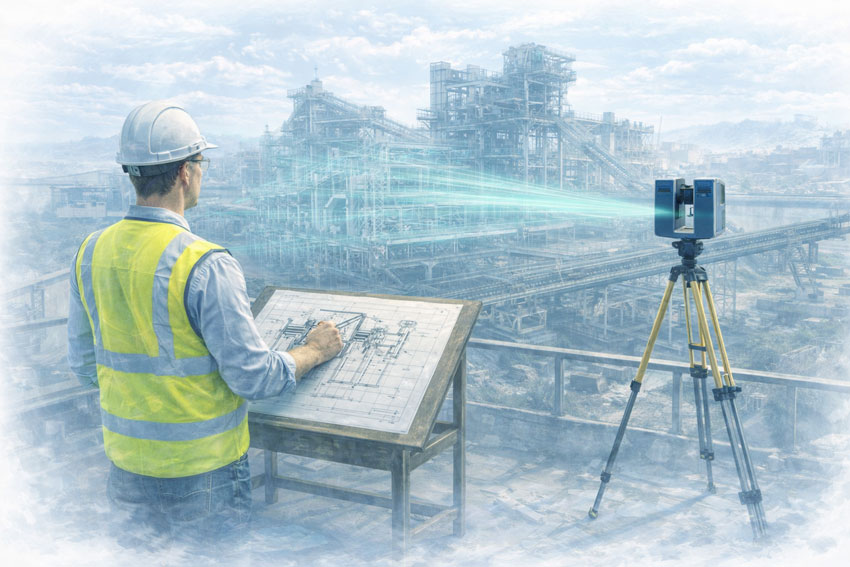

Mechanical engineer capturing a mining plant with LiDAR scanning, showing point cloud data integrated into engineering design workflows.

Integrated Scan-to-Engineering Workflow

We deliver a single, accountable workflow suited to remote and brownfield mining operations:

  1. On-site LiDAR scanning undertaken by engineers familiar with mining safety, access, and constructability constraints
  2. Engineering-grade point-cloud processing aligned to modelling tolerances and fabrication requirements
  3. Mechanical and structural CAD modelling developed directly from scan data
  4. Fabrication-ready drawings suitable for workshop manufacture and site installation
  5. Engineering support through fabrication, installation, and commissioning

This workflow reduces interface risk between scanning, design, fabrication, and construction โ€” particularly important where site access and logistics are constrained.


Mining & Heavy Industry Applications in Cobar

Brownfield Engineering & Existing Assets

Cobar-region operations rely heavily on long-life assets that have been modified through decades of maintenance and shutdown work. We support brownfield engineering where:

  • Original drawings are unavailable or unreliable
  • Equipment interfaces are complex or undocumented
  • Clearance, access, and compliance are critical

LiDAR provides accurate existing-condition data, while engineering oversight ensures the information is applied correctly during design and verification.


Shutdown-Driven Projects

Shutdown windows in remote mining regions are tightly planned and high consequence.

Our work supports shutdown success by:

  • Capturing existing conditions before outages
  • Eliminating site measurement during shutdowns
  • Verifying interfaces, access, and constructability
  • Reducing fabrication and installation risk

Pre-validated designs improve safety, execution quality, and schedule certainty.


Processing Plants & Materials Handling

Mining operations in Western NSW include complex processing and materials-handling infrastructure.

Our engineering-led LiDAR services support:

  • Conveyors and transfer stations
  • Hoppers, bins, and chutes
  • Crushers, screens, and feeders
  • Walkways, platforms, and guarding upgrades

Accurate scan-to-CAD workflows enable confident redesign, replacement, and compliance upgrades in operating plants.


Heavy Plant & Industrial Equipment

We support projects involving large and complex equipment where traditional measurement methods are unsafe or impractical, including:

  • Fixed and mobile processing plant
  • Structural steelwork and access systems
  • Maintenance platforms and guarding systems

Engineering-led scanning ensures interfaces, envelopes, and installation constraints are understood before fabrication begins.


Risk Management for Remote & Legacy Mining Assets

In established mining districts like Cobar, risk is driven by unknown conditions, ageing infrastructure, and interface complexity.

Our approach reduces risk by:

  • Removing reliance on outdated drawings and assumptions
  • Capturing accurate existing conditions prior to design
    n- Identifying clashes and access constraints early
  • Reducing site rework and hot works
  • Supporting safer shutdown execution

Risk is managed upstream, where it is cheapest and safest to control.
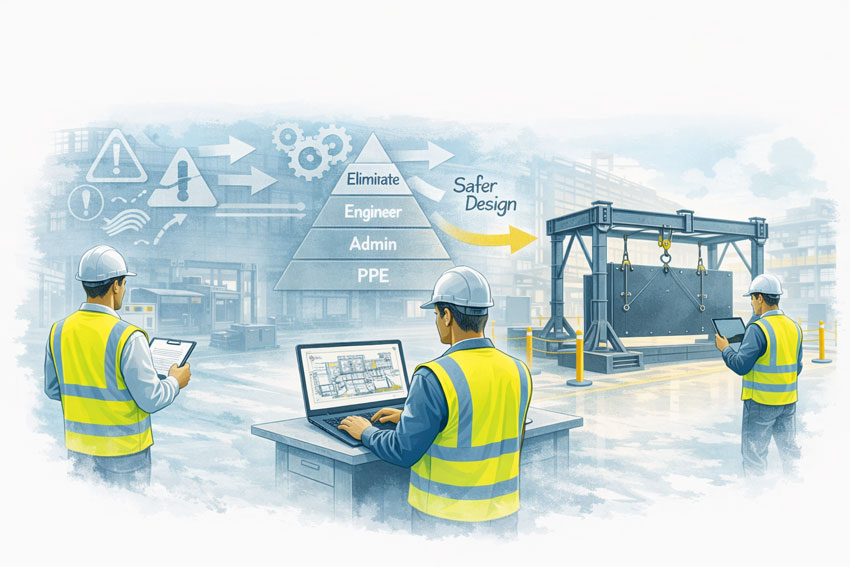

Mining engineers applying design-for-safety principles to improve material handling systems in an industrial workshop

What Makes Our Approach Different

  • Engineer-led LiDAR scanning, not technician-only capture
  • Mechanical and structural engineering capability in-house
  • Mining and heavy-industry focus
  • Brownfield and shutdown experience
  • Single point of responsibility from scan through to design output

Typical Deliverables

Depending on project scope, deliverables may include:

  • Registered point-cloud datasets
  • Engineering-grade 3D CAD models
  • Mechanical and structural drawings
  • Interface and clearance verification
  • Fabrication and installation documentation

All deliverables are developed with fabrication, installation, and operational use in mind.


Who We Support

Our services support:

  • Base-metals mining asset owners
  • Processing plant operators
  • Maintenance and shutdown teams
  • Project engineers and managers
  • Fabricators and constructors operating in Western NSW

We work directly with asset owners or as part of multi-disciplinary project teams.


Hamilton By Design logo displayed on a blue tilted rectangle with a grey gradient background
3D LiDAR scanning and 3D modelling service button โ€” laser scanner capturing a point cloud for engineering and CAD modelling
Mechanical engineering services

Talk to an Engineer

If you are planning:

  • A brownfield upgrade
  • A shutdown-driven project
  • Processing plant modifications
  • Materials-handling or heavy plant upgrades

Hamilton By Design can support your project in Cobar and Western NSW with engineering-led LiDAR scanning and mechanical design.

Contact us to discuss your site, constraints, and project objectives.

Name
Would you like us to arrange a phone consultation for you?
Address

Our clients:


Mechanical Engineering | Structural Engineering


Engineering-Led 3D Laser Scanning in Bathurst

3D laser scanner capturing an industrial structure for engineering-grade digital modelling and verification

3D Scanning Bathurst | Engineering-Grade LiDAR & Scan-to-CAD

Bathurst and the Central West region support a diverse mix of manufacturing facilities, mining operations, quarries, infrastructure assets, utilities, and heritage structures. These environments demand more than survey-grade outputs.

Hamilton By Design combines LiDAR scanning with mechanical engineering expertise, ensuring that:

  • Scan coverage targets critical interfaces and load paths
  • Accuracy supports fabrication-ready design
  • Models reflect real-world constraints, not assumptions

This significantly reduces rework, clashes, and site uncertainty during upgrades or expansions.


Mechanical engineering services by Hamilton By Design, featuring industrial machinery, conveyors, and maintenance engineering.

Our 3D Scanning Services in Bathurst

We provide a complete scan-to-engineering workflow, including:

  • High-resolution terrestrial LiDAR scanning
  • Registered point clouds (colourised and structured)
  • Scan-to-CAD modelling (SolidWorks & engineering CAD)
  • As-built documentation for existing assets
  • Clash detection & design validation
  • Support for mechanical, structural, and fabrication design

All deliverables are tailored to your project scope โ€” from concept planning through to construction and installation.


Typical Bathurst Applications

Our 3D scanning services are commonly used for:

  • Industrial plant upgrades and brownfield modifications
  • Mining and quarry infrastructure
  • Conveyors, chutes, hoppers, and bulk materials handling systems
  • Mechanical equipment replacement and tie-ins
  • Structural steel verification and retrofits
  • Asset documentation and digital twins
  • Risk reduction for shutdown and live-site works

Where required, scanning data is integrated directly into engineering calculations, FEA models, and fabrication drawings.


Hamilton By Design logo displayed on a blue tilted rectangle with a grey gradient background
3D LiDAR scanning and 3D modelling service button โ€” laser scanner capturing a point cloud for engineering and CAD modelling
Mechanical engineering services

Why Hamilton By Design

Engineer-Led Scanning

Your scan is planned and executed by engineers who understand loads, tolerances, constructability, and compliance, not just data capture.

Fit-for-Purpose Accuracy

We capture only the data that matters โ€” at the accuracy required for design, fabrication, and installation.

Single-Source Accountability

One team responsible for scanning, modelling, and engineering, eliminating scope gaps between consultants.

Regional & Mobile Delivery

We regularly support projects across Bathurst, Orange, Lithgow, Dubbo, Mudgee, and the broader Central West NSW, mobilising to site as required.


Deliverables You Can Build From

Depending on your project, we can supply:

  • Registered point clouds (E57 / RCP / compatible formats)
  • 3D CAD models aligned to engineering workflows
  • GA drawings and interface layouts
  • Fabrication-ready references
  • Digital records for asset management and future upgrades

Our clients:
3D Scanning Bathurst โ€“ Get Started

If you are planning a retrofit, upgrade, or new installation in Bathurst or Central West NSW, early 3D scanning can significantly reduce risk and cost.

Talk to an engineer about your site
Request a Bathurst 3D scanning proposal
On-site scanning available across the Central West

Name
Would you like us to arrange a phone consultation for you?
Address
Finite Element Analysis (FEA) engineering simulation button
Mechanical engineering services

Reality Capture in the Hunter Valley

The Hunter Valley is one of Australiaโ€™s most technically complex industrial regions, combining power generation, mining, bulk materials handling, manufacturing, and logistics infrastructure within a tightly interconnected operational landscape. Projects in this environment frequently involve legacy assets, constrained access, and high consequences for design or construction error.

Reality capture in the Hunter Valley provides a structured, engineering-led method for documenting existing conditions using measured data rather than assumption-based interpretation. At Hamilton By Design, reality capture is applied as part of a broader engineering workflowโ€”ensuring captured information directly supports design development, upgrade planning, fabrication coordination, and risk management.


Defining reality capture in an industrial context

Reality capture is the process of recording physical site conditions using spatially accurate technologies and converting that information into usable engineering references. In practical terms, this includes:

  • Engineering-grade laser scanning and LiDAR acquisition
  • Spatial data registration and validation
  • Interpretation of existing geometry in the context of mechanical and structural systems
  • Translation of measured data into drawings, models, and coordination outputs

The objective is not simply to visualise a site, but to create a reliable, defensible representation of existing conditions that can be used throughout the project lifecycle.

For projects where laser scanning forms the core capture method, refer to:
3D Laser Scanning
https://www.hamiltonbydesign.com.au/home/3d-lidar-scanning-digital-quality-assurance/3d-laser-scanning/


Why reality capture is critical in the Hunter Valley

Industrial facilities across the Hunter Valley often operate continuously while upgrades, modifications, and expansions are undertaken. Common project challenges include:

  • Brownfield environments with incomplete or outdated documentation
  • Complex interfaces between mechanical, structural, and civil systems
  • Fabrication occurring off-site with limited tolerance for dimensional error
  • Restricted access windows and safety-critical operating conditions

In these scenarios, traditional measurement approaches are often insufficient. Reality capture reduces uncertainty by establishing a single source of measured truth, enabling informed decisions before fabrication or installation begins.

For an overview of how scanning is applied to regional industry, see:
3D Scanning for Industrial Projects in Newcastle and the Hunter Valley
https://www.hamiltonbydesign.com.au/3d-scanning-for-industrial-projects-in-newcastle-and-the-hunter-valley/


Typical Hunter Valley applications

Existing-condition baselining

Reality capture provides accurate documentation where legacy drawings no longer reflect actual site conditions. This baseline supports engineering assessments, upgrade feasibility studies, and staged project planning.

Plant upgrades and retrofit works

Measured spatial data allows new systems to be designed around existing plant, services, and structures, reducing clash risk and rework during installation.

Fabrication and construction coordination

Accurate capture of interfaces, clearances, and connection points improves alignment between design intent and fabricated componentsโ€”particularly where fabrication is completed remotely.

Risk reduction and decision support

From an engineering governance perspective, reality capture improves information quality, reduces assumptions, and supports more defensible technical decisions.


Engineering-led reality capture methodology

Hamilton By Design approaches reality capture as a project-specific engineering activity, not a generic surveying exercise.

1. Scope definition aligned to outcomes

Capture scope is defined based on how the data will be usedโ€”design development, drafting, verification, or coordinationโ€”ensuring the level of detail and accuracy is appropriate.

2. Structured site data acquisition

Capture activities are planned to manage occlusion, access limitations, and operational constraints commonly encountered on Hunter Valley industrial sites.

3. Data validation and preparation

Captured datasets are reviewed, registered, and structured so they can be confidently used for engineering interpretation rather than remaining as raw data.

4. Engineering-ready deliverables

Where required, reality capture outputs are converted into:

  • As-built drawings
  • General arrangement layouts
  • Reference models for coordination
  • Documentation suitable for engineering review and approvals

Relationship between reality capture and laser scanning

While laser scanning and LiDAR are commonly used tools within reality capture, the distinction lies in how the data is applied. Laser scanning provides the measurements; reality capture ensures those measurements are contextualised, validated, and integrated into engineering workflows.

This distinction is particularly important in industrial regions such as the Hunter Valley, where inaccurate interpretation of spatial data can have significant cost and safety implications.


Value for Hunter Valley stakeholders

Reality capture supports multiple stakeholder groups:

  • Asset owners and operators gain confidence in upgrade planning
  • Engineers work from verified existing-condition data
  • Fabricators receive clearer interface definitions
  • Project teams reduce site disruption and variation risk

From a systems engineering perspective, this represents an improvement in information reliability and traceabilityโ€”both key drivers of project performance.


Regional capability and service coverage

Hamilton By Design services the Hunter Valley as part of its broader NSW engineering and reality capture capability, supporting projects across industrial, energy, and infrastructure sectors.

Service coverage includes Newcastle and the wider Hunter region, as outlined in:
Frequently Asked Questions โ€“ Service Areas
https://www.hamiltonbydesign.com.au/frequently-asked-questions/


Next steps

For Hunter Valley projects, effective reality capture begins by clearly defining:

  1. Which areas and interfaces require measurement
  2. What engineering decisions the data must support
  3. The required accuracy for design, fabrication, or verification

Once these parameters are established, reality capture can be aligned to project risk, schedule, and delivery requirements.

For scanning-focused services, return to:
3D Laser Scanning
https://www.hamiltonbydesign.com.au/home/3d-lidar-scanning-digital-quality-assurance/3d-laser-scanning/

For industrial scanning examples in the region, see:
3D Scanning for Industrial Projects in Newcastle and the Hunter Valley
https://www.hamiltonbydesign.com.au/3d-scanning-for-industrial-projects-in-newcastle-and-the-hunter-valley/

3D LiDAR scanning and 3D modelling service button โ€” laser scanner capturing a point cloud for engineering and CAD modelling
Mechanical engineering services

Our clients:
Name
Would you like us to arrange a phone consultation for you?
Address
https://www.hamiltonbydesign.com.au/mechanical-engineering
3D CAD Modelling Australia service banner for Hamilton By Design
Australian Drafting logo featuring bold white text reading "Australian Drafting" centred on a blue rounded rectangle background.
Engineering Governance title graphic featuring bold white text reading "Engineering Governance" centred on a blue rounded rectangle background.
Mechanical, Structural & Pipework Drafting service banner by Hamilton By Design featuring white text on a blue background.
Mechanical engineering services
Blue rounded button with the text โ€œSolidWorks Designโ€ in white.
Finite Element Analysis (FEA) engineering simulation button
3D LiDAR Scanning Darwin for engineering surveys, laser scanning, reality capture and point cloud modelling services
3D LiDAR Scanning Australia engineering services for laser scanning, reality capture, scan-to-CAD, Scan-to-BIM and as-built documentation across Australia
3D LiDAR scanning services on the Central Coast providing engineering-grade laser scanning, point cloud capture, scan-to-CAD modelling and industrial reality capture for infrastructure and industrial projects.
3D LiDAR Scanning Perth for engineering surveys, laser scanning, reality capture and point cloud modelling services
3D LiDAR Scanning Sydney for engineering surveys, laser scanning, reality capture and point cloud modelling services
3D LiDAR Scanning Brisbane for engineering surveys, laser scanning, reality capture and point cloud modelling services
3D LiDAR Scanning Canberra for engineering surveys, laser scanning, reality capture and point cloud modelling services
3D LiDAR Scanning Newcastle for engineering surveys, laser scanning, reality capture and point cloud modelling services
3D LiDAR Scanning Adelaide for engineering surveys, laser scanning, reality capture and point cloud modelling services

Reality Capture in Wyong

Wyong sits at the centre of the NSW Central Coastโ€™s industrial, infrastructure, and manufacturing activity. With a mix of legacy assets, live industrial facilities, and expanding development corridors, projects in the region often require accurate, defensible knowledge of existing site conditions before design, fabrication, or construction can proceed.

Reality capture in Wyong provides a structured approach to documenting real-world conditions using measured data rather than assumptions. At Hamilton By Design, reality capture is integrated into an engineering-led workflowโ€”ensuring the information collected on site can be reliably used for design coordination, retrofit planning, and downstream documentation.


What reality capture means for Wyong projects

Reality capture refers to the process of recording existing conditions using spatially accurate methods and translating that data into engineering-usable outputs. In practice, this includes:

  • Engineering-grade laser scanning and LiDAR capture
  • Controlled registration and validation of spatial data
  • Interpretation of site geometry in the context of mechanical and structural design
  • Conversion of captured data into drawings, models, and reference documents

Rather than treating capture as a visual exercise, the emphasis is on measured accuracy, traceability, and fitness for purpose.

For an overview of regional engineering capability, see:
Mechanical Engineers in Wyong
https://www.hamiltonbydesign.com.au/mechanical-engineers-in-wyong/


Why reality capture is critical in Wyong and the Central Coast

Projects across Wyong and the broader Central Coast commonly involve:

  • Brownfield industrial upgrades
  • Plant modifications within operational facilities
  • Interface works between new and existing infrastructure
  • Fabrication occurring off-site with limited tolerance for error
  • Incomplete or outdated as-built documentation

In these environments, traditional measurement methods often fail to provide sufficient confidence. Reality capture reduces this risk by creating a single, verifiable representation of site conditions that can be referenced throughout the project lifecycle.


Typical reality capture applications in Wyong

1. Existing-condition documentation

Reality capture establishes a measured baseline where drawings are missing, inconsistent, or no longer representative of site conditions. This is particularly valuable for long-standing industrial facilities across Wyong and the surrounding region.

2. Retrofit and upgrade planning

Captured data supports the design of upgrades that must integrate precisely with existing structures, equipment, and servicesโ€”reducing the likelihood of clashes or rework.

3. Fabrication and installation coordination

When fabrication is undertaken away from site, accurate geometry is essential. Reality capture helps ensure fabricated components align correctly once delivered and installed.

4. Risk reduction and project certainty

By replacing assumptions with measured data, reality capture improves decision-making, reduces uncertainty, and supports more reliable cost and schedule outcomes.

For a broader discussion of engineering activity on the Central Coast, see:
Mechanical Engineering at the Heart of Mining on the Central Coast
https://www.hamiltonbydesign.com.au/mechanical-engineering-at-heart-of/


3D LiDAR scanning services on the Central Coast providing engineering-grade laser scanning, point cloud capture, scan-to-CAD modelling and industrial reality capture for infrastructure and industrial projects.
Drafting services on the Central Coast providing engineering drawings, fabrication detailing, as-built documentation, reverse engineering and CAD drafting for industrial and infrastructure projects.
Mechanical engineering services on the Central Coast providing industrial design, plant inspections, pump calculations, reverse engineering and engineering support for manufacturing, infrastructure and heavy industry projects.

How Hamilton By Design approaches reality capture

Hamilton By Design applies reality capture as part of an integrated engineering process rather than a standalone service.

Project-led scoping

Each capture scope is defined by how the data will be usedโ€”whether for design, drafting, verification, or coordination. Accuracy requirements, areas of interest, and deliverables are established upfront.

Field data acquisition

Capture activities are planned to minimise occlusions, maintain consistency, and achieve the level of detail required for engineering interpretation.

Validation and preparation

Spatial datasets are reviewed and structured to ensure they are suitable for downstream use, avoiding the common issue of high-volume data with limited engineering value.

Engineering-ready outputs

Where required, captured data is translated into:

  • As-built drawings
  • General arrangement layouts
  • Reference models for coordination
  • Documentation suitable for design development and approvals

This approach aligns reality capture outputs with real project decisions rather than producing isolated datasets.


Relationship to laser scanning services

Reality capture in Wyong often incorporates laser scanning and LiDAR technologies; however, the distinction lies in how the data is applied. Laser scanning is the toolโ€”reality capture is the methodology that ensures the data is usable, traceable, and relevant to engineering outcomes.

For dedicated scanning capability, see:
3D Laser Scanning
https://www.hamiltonbydesign.com.au/home/3d-lidar-scanning-digital-quality-assurance/3d-laser-scanning/


Value for Wyong-based stakeholders

Reality capture delivers value across multiple stakeholder groups:

  • Owners and operators gain confidence in upgrade feasibility
  • Engineers work from reliable existing-condition data
  • Fabricators receive clearer interfaces and reduced rework risk
  • Project teams benefit from fewer site disruptions and variations

From an academic perspective, this represents an improvement in information quality and decision reliabilityโ€”both critical contributors to successful project delivery.


Reality capture as part of regional engineering capability

Wyongโ€™s role as a Central Coast engineering hub makes it an ideal location for engineering-led reality capture services. The ability to capture, interpret, and apply site data locally supports faster turnaround and better alignment between site conditions and engineering intent.

For a broader overview of Hamilton By Designโ€™s presence and services in the region, return to:
Mechanical Engineers in Wyong
https://www.hamiltonbydesign.com.au/mechanical-engineers-in-wyong/


Next steps

If you are planning a project in Wyong or the wider Central Coast and require reliable existing-condition information, the first step is defining:

  1. The areas and interfaces that must be captured
  2. The decisions the data needs to support
  3. The level of accuracy required for design or fabrication

From there, reality capture can be aligned to your project objectives, risk profile, and delivery programme.

Our clients

3D LiDAR scanning and 3D modelling service button โ€” laser scanner capturing a point cloud for engineering and CAD modelling
Mechanical engineering services
Name
Would you like us to arrange a phone consultation for you?
Address

3D Laser Scanning & Mechanical Engineering in Wyong, NSW

Hamilton By Design provides engineering-grade 3D LiDAR laser scanning, mechanical engineering, and fabrication-ready design services in Wyong and across the Central Coast of New South Wales.

Wyong sits at the intersection of regional industrial activity, infrastructure growth, and Sydneyโ€“Newcastle logistics, making accurate as-built data and efficient engineering delivery essential for plant upgrades, brownfield modifications, and asset lifecycle management. Hamilton By Design supports local industry by combining engineer-led site scanning with SolidWorks modelling, FEA verification, and constructible documentation.


Engineering-Led 3D Laser Scanning in Wyong

Unlike traditional survey-only scanning services, Hamilton By Design delivers engineer-led 3D laser scanning. This means the engineer responsible for the design is directly involved in how the site is captured, registered, and modelled.

Our FARO LiDAR scanning systems are used to capture:

  • Industrial facilities and plant rooms
  • Mechanical services and pipework
  • Structural steel and platforms
  • Brownfield and legacy assets
  • Confined and operational environments

The result is a design-ready point cloud, not just raw scan data โ€” reducing rework, site revisits, and RFIs.

Learn more about our scanning approach here:
3D Laser Scanning Services
https://www.hamiltonbydesign.com.au/home/3d-lidar-scanning-digital-quality-assurance/3d-laser-scanning/


3D LiDAR scanning services on the Central Coast providing engineering-grade laser scanning, point cloud capture, scan-to-CAD modelling and industrial reality capture for infrastructure and industrial projects.
Drafting services on the Central Coast providing engineering drawings, fabrication detailing, as-built documentation, reverse engineering and CAD drafting for industrial and infrastructure projects.
Mechanical engineering services on the Central Coast providing industrial design, plant inspections, pump calculations, reverse engineering and engineering support for manufacturing, infrastructure and heavy industry projects.

Scan-to-CAD & As-Built Modelling for Central Coast Projects

Hamilton By Design specialises in Scan-to-CAD workflows, converting Wyong site scans into accurate SolidWorks 3D models aligned to Australian engineering standards.

Our as-built models support:

  • Mechanical plant upgrades
  • Pipework replacement and rerouting
  • Structural modifications
  • Equipment installation planning
  • Digital QA and clash detection

By working directly from real-world geometry, clients can confidently proceed to fabrication and installation with reduced risk.

View our 3D CAD modelling capability:
3D CAD Modelling Australia
https://www.hamiltonbydesign.com.au/engineering-services/3d-cad-modelling-australia/


Mechanical Engineering for Brownfield & Industrial Assets

Wyong and the broader Central Coast region host a wide range of brownfield industrial assets, where incomplete drawings and undocumented modifications are common.

Hamilton By Design provides mechanical engineering services tailored to these environments, including:

  • Mechanical design and retrofit engineering
  • Load assessments and structural verification
  • Design reviews for constructability
  • Compliance with Australian Standards
  • Engineering sign-off for fabrication and installation

Our engineering-first approach ensures design intent, site conditions, and fabrication realities are aligned from the outset.


Finite Element Analysis (FEA) & Engineering Verification

Where required, Hamilton By Design integrates Finite Element Analysis (FEA) into Wyong projects to verify structural performance, fatigue risk, and load paths.

FEA is commonly used to support:

  • Modified steel structures
  • Platforms, walkways, and access systems
  • Equipment supports and frames
  • Brownfield load changes

Learn more about our FEA capability:
FEA Capabilities
https://www.hamiltonbydesign.com.au/engineering-services/fea-capabilities/


Fabrication-Ready Drawings & Digital QA

In a skills-constrained construction environment, fabrication errors are costly. Hamilton By Design delivers fabrication-ready drawings developed directly from scanned geometry and verified models.

Our drafting services include:

  • General arrangement drawings
  • Fabrication and assembly drawings
  • BOMs and part schedules
  • Digital QA against point-cloud data

View drafting and documentation services:
Drafting Services
https://www.hamiltonbydesign.com.au/engineering-services/services-drafting-lidar-scanning


Supporting Wyong Projects in a Skilled-Labour-Constrained Market

Across NSW, skilled engineering and construction resources are increasingly limited. Hamilton By Design helps Wyong-based clients do more with fewer people by reducing site time, design iterations, and rework.

Our integrated scan-to-engineering workflow:

  • Minimises site access requirements
  • Reduces reliance on undocumented drawings
  • Accelerates design-to-fabrication timelines
  • Supports EPCs, asset owners, and fabricators

Industries We Support in Wyong & the Central Coast

  • Industrial manufacturing
  • Utilities and infrastructure
  • Mining support services
  • Warehousing and logistics facilities
  • Power and energy assets
  • Local councils and public infrastructure

Local, NSW-Focused Engineering Support

Hamilton By Design works across Wyong, the Central Coast, Hunter Valley, Sydney, and regional NSW, providing responsive, engineer-led services suited to both shutdown work and live operational sites.

Hamilton By Design logo displayed on a blue tilted rectangle with a grey gradient background
3D LiDAR scanning and 3D modelling service button โ€” laser scanner capturing a point cloud for engineering and CAD modelling
Mechanical engineering services

Speak With an Engineer

If youโ€™re planning an upgrade, modification, or verification project in Wyong, speak directly with an engineer โ€” not a call centre.

Contact Hamilton By Design:
https://www.hamiltonbydesign.com.au/contact/

Our clients:

3D Scanning Sydney banner promoting engineering-grade 3D laser scanning, LiDAR scanning, and reality capture services by Hamilton By Design.
Mechanical Engineering Sydney banner with white text on a blue background representing Hamilton By Design's mechanical engineering services in Sydney.
Mechanical Drafting and 3D Modelling Sydney banner highlighting Hamilton By Design's CAD drafting, 3D modelling, and engineering design services in Sydney.

Mechanical Engineering | Structural Engineering


3D CAD in Sydney

Engineering-Led 3D CAD Modelling for Real-World Projects

Blue mechanical engineering icon with gear and wrench

Across Sydney and the wider metropolitan region, engineering and construction projects increasingly rely on accurate, intelligent 3D CAD models to reduce risk, improve coordination, and deliver build-ready outcomes. In dense urban environments, outdated drawings, undocumented modifications, and tight spatial constraints can quickly lead to clashes, rework, and cost overruns.

3D CAD in Sydney, delivered by Hamilton By Design, provides engineering-grade 3D modelling services that transform real-world conditions and design intent into accurate, usable CAD models that support design, fabrication, construction, and asset management.


What Is 3D CAD Modelling?

3D CAD (Computer-Aided Design) modelling is the process of creating precise three-dimensional digital representations of physical assets, systems, or structures. In an engineering context, 3D CAD is not just visual โ€” it defines geometry, relationships, tolerances, and interfaces that directly affect how something is built.

Hamilton By Design delivers 3D CAD models that are:

  • Dimensionally accurate
  • Engineering-driven
  • Suitable for fabrication and construction
  • Aligned with downstream analysis such as FEA

Why 3D CAD Is Critical in Sydney Projects

Sydney projects present specific challenges:

  • High-density commercial and industrial buildings
  • Congested mechanical and electrical services
  • Brownfield and retrofit-driven work
  • Limited access and minimal tolerance for error

In these environments, 2D drawings alone are often insufficient. 3D CAD provides a single, coordinated digital reference that allows teams to visualise, interrogate, and validate designs before anything is fabricated or installed.


Engineering-Led 3D CAD at Hamilton By Design

At Hamilton By Design, 3D CAD is delivered by mechanical engineers, not just draftspeople. This distinction matters.

Our approach typically includes:

  • Understanding the engineering intent behind the model
  • Designing with fabrication, installation, and maintenance in mind
  • Integrating real-world constraints captured from site data
  • Structuring models for analysis, documentation, and change control

This ensures CAD models are practical, buildable, and defensible.


Common Applications of 3D CAD in Sydney

Mechanical and Structural Design

Hamilton By Design provides 3D CAD modelling for:

  • Mechanical equipment and assemblies
  • Structural frames, platforms, and supports
  • Skids, chutes, conveyors, and custom plant

Models are developed to support both design validation and fabrication documentation.

Services and Plant Room Modelling

In Sydney CBD and industrial sites, 3D CAD is widely used for:

  • HVAC ductwork layouts
  • Pipework and valve arrangements
  • Equipment upgrades in confined plant rooms

Accurate models reduce clashes and enable fit-first-time installation.

Scan to CAD and As-Built Modelling

Where existing conditions are complex or undocumented, 3D CAD models are often generated from LiDAR scan data. This allows:

  • Accurate representation of existing assets
  • Confident retrofit and upgrade design
  • Reliable as-built documentation

This Scan to CAD workflow is particularly valuable for brownfield projects.

Fabrication-Ready Documentation

3D CAD models form the foundation for:

  • General arrangement drawings
  • Detailed fabrication drawings
  • Bills of materials
  • Installation layouts

By modelling correctly upfront, downstream documentation becomes faster and more reliable.


CAD Platforms and Deliverables

Hamilton By Design primarily delivers 3D CAD using SolidWorks, ensuring compatibility with:

  • Mechanical fabrication workflows
  • FEA and structural analysis
  • Industry-standard file exchange formats

Typical deliverables include:

  • Fully detailed 3D CAD assemblies
  • Fabrication-ready drawings
  • STEP, IFC, or native CAD files
  • Models structured for ongoing use and revision

Benefits of Professional 3D CAD Modelling

For Sydney-based projects, the benefits are tangible:

  • Reduced design ambiguity
  • Improved coordination between disciplines
  • Fewer site clashes and rework
  • Faster design-to-fabrication cycles
  • Greater confidence in complex and constrained environments

3D CAD allows teams to resolve problems digitally, where changes are cheap, rather than on site, where they are not.


Why Choose Hamilton By Design for 3D CAD in Sydney

Hamilton By Design offers a single source engineering workflow, combining:

  • Mechanical engineering expertise
  • High-quality 3D CAD modelling
  • Scan-derived modelling where required
  • Fabrication-ready documentation
  • Optional FEA and verification

This integrated approach ensures CAD models are not just accurate, but fit for purpose across design, construction, and operation.


Hamilton By Design logo displayed on a blue tilted rectangle with a grey gradient background
3D LiDAR scanning and 3D modelling service button โ€” laser scanner capturing a point cloud for engineering and CAD modelling
Mechanical engineering services

3D CAD in Sydney

Whether supporting a new mechanical design, a retrofit in a congested CBD building, or a fabrication-driven project, 3D CAD in Sydney provides the digital foundation for confident engineering decisions.

Hamilton By Design delivers 3D CAD models built on engineering judgment, real-world constraints, and practical constructability โ€” helping projects move from concept to completion with clarity.

Our Clients:

Name
Would you like us to arrange a phone consultation for you?
Address
3D Scanning Sydney banner promoting engineering-grade 3D laser scanning, LiDAR scanning, and reality capture services by Hamilton By Design.
Mechanical Engineering Sydney banner with white text on a blue background representing Hamilton By Design's mechanical engineering services in Sydney.
Mechanical Drafting and 3D Modelling Sydney banner highlighting Hamilton By Design's CAD drafting, 3D modelling, and engineering design services in Sydney.

Hamilton By Design provides engineering-led 3D scanning, LiDAR scanning, mechanical engineering and digital engineering services throughout Sydney and Greater Sydney.

Explore our related Sydney services:

  • 3D Scanning Sydney โ€“ Engineering-grade terrestrial laser scanning, as-built surveys and point cloud capture for industrial, infrastructure and commercial projects.
  • Reality Capture Sydney โ€“ High-accuracy reality capture, digital twins, asset documentation and engineering-grade site verification.
  • Scan to CAD Sydney โ€“ Convert point cloud data into AutoCAD, SolidWorks, Inventor and other engineering-ready CAD deliverables.
  • Point Cloud Modelling Sydney โ€“ Engineering-grade point cloud processing, clash detection, as-built verification and 3D modelling.
  • Mechanical Engineering Sydney โ€“ Mechanical design, plant upgrades, materials handling systems, conveyors, chutes, platforms and engineering support.
  • Structural Drafting Sydney โ€“ Structural steel drafting, fabrication drawings, GA drawings, workshop detailing and as-built documentation.

Hamilton By Design supports projects throughout Sydney CBD, Parramatta, Liverpool, Penrith, Blacktown, Chatswood, Alexandria, Mascot, Newcastle and the Central Coast.


Mechanical Engineers in Sydney โ€“ Hamilton By Design

Blue banner graphic displaying the text "Point Cloud to CAD - Australia" in large white lettering, representing point cloud processing, scan-to-CAD conversion and digital engineering services across Australia.
Blue banner graphic displaying the text "Scan to CAD Sydney" in large white lettering, representing engineering-led point cloud to CAD conversion, LiDAR scanning and digital engineering services in Sydney.
Blue banner graphic displaying the text "Reality Capture Sydney - CBD" in large white lettering, representing engineering-led reality capture, LiDAR scanning and digital engineering services within Sydney CBD commercial buildings and infrastructure.
3D LiDAR Scanning Darwin for engineering surveys, laser scanning, reality capture and point cloud modelling services
3D LiDAR Scanning Australia engineering services for laser scanning, reality capture, scan-to-CAD, Scan-to-BIM and as-built documentation across Australia
3D LiDAR scanning services on the Central Coast providing engineering-grade laser scanning, point cloud capture, scan-to-CAD modelling and industrial reality capture for infrastructure and industrial projects.