Mechanical Engineering | 3D Scanning | 3D Modelling
Tag: LiDAR
Posts covering engineering-grade LiDAR scanning and point cloud workflows used to capture accurate site conditions for design, retrofit and fabrication in industrial and infrastructure environments.
Wall Crack Monitoring & Structural Movement Baseline Scans | NSW
Know When Cracks Are Cosmetic — and When They’re Not
Cracks in walls are common, but not all cracks are harmless. The real risk isn’t just that a crack exists — it’s how fast it’s changing. Without a baseline, there’s no reliable way to tell whether your property is stable or slowly moving toward serious structural damage.
That’s where our Property Wall Movement Baseline Scan comes in.
What Is a Baseline Scan?
A baseline scan is a high‑accuracy digital survey of your property taken at the moment cracking is first observed. Using precision scanning technology, we capture:
Wall alignment and deflection
Crack location, length, and width
Floor and ceiling reference planes
Structural reference points across the building
This scan becomes your time‑zero reference point — a measurable snapshot of your building’s condition today.
Why a Baseline Matters
Without a baseline:
Cracks are judged visually (subjective and unreliable)
Engineers lack historical movement data
Insurance claims become harder to substantiate
Small issues can quietly become major repairs
With a baseline:
Movement can be quantified in millimetres
Crack growth rates can be tracked over time
Engineers can make confident, data‑driven decisions
You gain early warning before damage becomes critical
How the Process Works
1. Initial Scan
We perform a non‑invasive scan of affected areas and key structural zones to establish your baseline condition.
2. Data Archiving
All scan data is securely stored and referenced to fixed control points within your property.
3. Follow‑Up Scans
Repeat scans (3, 6, or 12 months later) are compared against the baseline to calculate:
Crack propagation rate
Wall movement direction
Structural settlement or heave
4. Clear Reporting
You receive a clear, easy‑to‑understand report showing:
Measured movement (if any)
Rate of change over time
Professional recommendations
Ideal For
Homeowners noticing new or worsening cracks
Properties affected by reactive soils or subsidence
Buildings near excavation or construction activity
Insurance documentation and dispute resolution
Engineers requiring long‑term movement data
Early Data Saves Money
Monitoring movement early often means minor intervention instead of major reconstruction. A baseline scan gives you certainty, evidence, and peace of mind.
If nothing is moving — you’ll know. If something is — you’ll know before it’s too late.
Book a Baseline Scan
If you’ve noticed cracking, now is the right time to act.
Contact us today to establish your property’s movement baseline and protect its long‑term structural integrity.
Engineering-Led 3D Scanning for Brownfield Industrial Upgrades
Safer Shutdowns, Smarter Design, and More Done With Fewer Resources
Brownfield industrial upgrades are some of the highest-risk engineering activities in mining and heavy industry. Existing assets, live plant interfaces, limited access, and tight shutdown windows leave little room for error.
At Hamilton By Design, we deliver engineering-led 3D LiDAR scanning to support brownfield upgrades—providing accurate site data that enables safer design, efficient shutdown execution, and reliable outcomes when upgrading critical assets such as hoppers, chutes, pump boxes, conveyor transfers, and vertical shaft units.
Why Brownfield Upgrades Fail Without Accurate Site Data
Many brownfield failures trace back to the same root cause:
Design decisions made on assumptions, not reality.
Common issues include:
Outdated or incomplete drawings
Hidden interferences and undocumented modifications
Restricted access for survey and measurement
Time pressure during shutdowns
Engineering-led reality capture removes uncertainty before fabrication and installation begin.
Safety Starts Before the Shutdown
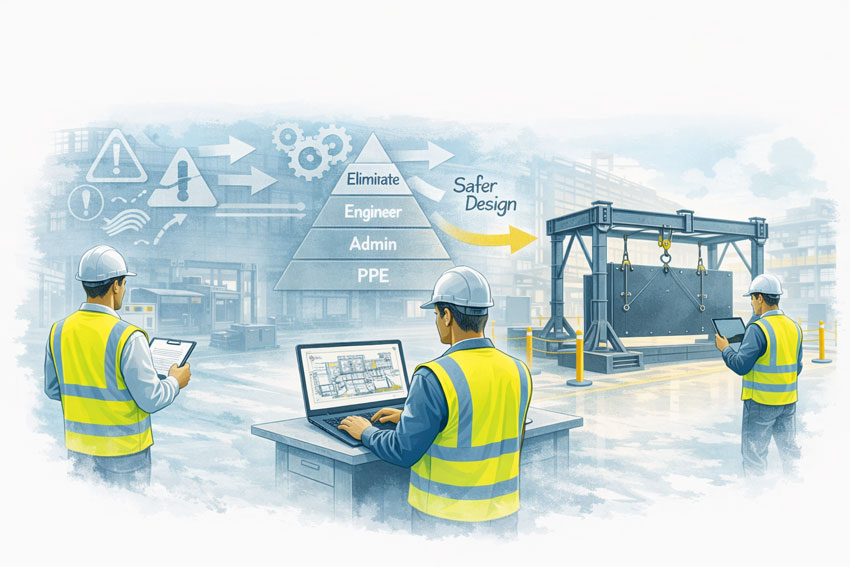
Safety in brownfield environments is largely determined during the design phase, not on site.
3D LiDAR scanning allows engineers to:
Design modifications without repeated site access
Reduce manual measurements in live plant areas
Identify clashes and pinch points early
Improve access, guarding, and maintainability outcomes
By reducing exposure hours and unplanned rework, scanning directly supports safer shutdown execution.
Typical Assets Upgraded in Brownfield Environments
Hamilton By Design supports upgrades to a wide range of industrial assets, including:
Hoppers & Chutes
ROM hoppers
Transfer chutes
Surge bins
Wear-prone interfaces
Conveyors & Transfer Stations
Conveyor head and tail stations
Transfer points
Discharge transitions
Supporting steelwork
Pump Boxes & Process Interfaces
Pump boxes and sumps
Pipework interfaces
Structural supports
Access platforms
Vertical Shaft & Drop Structures
Vertical shaft hoppers
Ore passes
Gravity-fed transfer systems
These assets are often deeply integrated into existing plant, making accurate as-built data critical.
Engineering-Led Scan-to-CAD for Upgrade Design
Our scan-to-CAD workflows are built around engineering outcomes, not just visual models.
This includes:
High-accuracy LiDAR capture of existing conditions
Engineering-intent CAD modelling
Design for fabrication and installation
Clash reduction across mechanical and structural scopes
The result is buildable design that aligns with real-world constraints.
Reliable Support for Shutdown-Driven Projects
Shutdowns demand precision. There is no time for re-measurements or redesign on site.
Engineering-led 3D scanning supports shutdown success by:
Allowing design to be completed well before shutdown
Supporting pre-fabrication of steelwork and chutes
Reducing RFIs and site queries
Increasing the amount of work completed per shutdown
When time and labour are limited, better information delivers better outcomes.
Getting More Done With Fewer Resources
In today’s industrial environment, engineering teams are under pressure to:
Do more with fewer people
Reduce shutdown durations
Control capital and maintenance costs
Accurate digital site data allows teams to:
Minimise engineering rework
Reduce site-based labour
Improve coordination between disciplines
Make confident decisions faster
Reality capture becomes a force multiplier, not just a documentation tool.
Australian Engineering Quality You Can Rely On
Hamilton By Design’s approach reflects Australian engineering standards and site experience.
We don’t just scan — we:
Understand how plant is built and maintained
Design with fabrication and installation in mind
Take responsibility for engineering outcomes
This sets our work apart from low-cost capture services that leave risk unresolved.
Speak With an Engineer
If you’re planning a brownfield upgrade involving:
Hoppers or chutes
Conveyor transfers
Pump boxes or sumps
Vertical shaft or drop structures
Shutdown-critical works
Hamilton By Design provides engineering-led 3D LiDAR scanning to support safer, more reliable brownfield upgrades.
Engineering-Led LiDAR & Mechanical Design for Mining & Heavy Industry – Singleton NSW
Hamilton By Design provides engineering-led LiDAR scanning and mechanical design services to support mining and heavy-industry projects in Singleton and the Upper Hunter Valley, NSW. Our work focuses on brownfield assets, live operating plant, and shutdown-driven projects where accuracy, constructability, and risk control are critical.
This is not survey-only scanning. We integrate engineering judgement with high-accuracy reality capture to deliver fabrication-ready, fit-first-time outcomes for coal operations, CHPPs, and associated mining infrastructure across the Hunter Valley.
Engineering-Led LiDAR for the Hunter Valley Mining Region
Mining operations around Singleton operate in one of Australia’s most established coal regions, characterised by:
Long-life assets with decades of incremental modification
Incomplete or outdated as-built documentation
Tight shutdown windows aligned to production constraints
High consequence of rework in live operating environments
Our engineering-led LiDAR approach is designed for operating mine sites and processing facilities where assumptions introduce safety, cost, and schedule risk.
Integrated Scan-to-Engineering Workflow
We deliver a single, accountable workflow tailored to Hunter Valley mining operations:
On-site LiDAR scanning undertaken by engineers familiar with coal operations, access constraints, and site safety requirements
Engineering-grade point-cloud processing aligned to modelling tolerances and fabrication requirements
Mechanical and structural CAD modelling developed directly from scan data
Fabrication-ready drawings suitable for workshop manufacture and site installation
Engineering support through fabrication, installation, and shutdown execution
This workflow reduces interface risk between scanning, design, fabrication, and construction — a key issue on shutdown-critical coal sites.
Mining & Heavy Industry Applications in Singleton
Brownfield Engineering & Existing Assets
Singleton-region operations rely heavily on brownfield plant and infrastructure that has evolved over decades. We support brownfield engineering where:
Original drawings are unreliable or unavailable
Multiple generations of modifications exist
Interface accuracy and access are critical
LiDAR provides accurate existing-condition data, while engineering oversight ensures the information is applied correctly during design and verification.
Shutdown-Driven Projects
Shutdowns in the Hunter Valley are tightly planned and production-critical.
Our work supports shutdown success by:
Capturing existing conditions prior to outages
Eliminating site measurement during shutdowns
Verifying interfaces, access, and constructability
Reducing fabrication and installation risk
Pre-validated designs improve safety, execution quality, and schedule certainty.
CHPP & Bulk Materials Handling
Coal Handling and Preparation Plants dominate the Upper Hunter Valley.
Our engineering-led LiDAR services support:
Conveyors and transfer stations
Hoppers, bins, and chutes
Crushers, screens, and feeders
Walkways, platforms, and guarding upgrades
Accurate scan-to-CAD workflows enable confident redesign, replacement, and compliance upgrades in operating CHPP environments.
Heavy Plant & Mining Equipment
We support projects involving large and complex coal-handling plant where traditional measurement methods are unsafe or impractical, including:
Stackers and reclaimers
Large conveyor systems
Structural steelwork and access platforms
Engineering-led scanning ensures interfaces, envelopes, and installation constraints are understood before fabrication begins.
Risk Management for Hunter Valley Mining Projects
In mature coal regions like Singleton, risk is driven by unknown conditions, interface complexity, and limited tolerance for shutdown overruns.
Our approach reduces risk by:
Removing reliance on outdated drawings and assumptions
Capturing accurate existing conditions prior to design
Identifying clashes and access constraints early
Reducing site rework and hot works
Supporting safer shutdown execution
Risk is managed upstream, where it is cheapest and safest to control.
What Makes Our Approach Different
Engineer-led LiDAR scanning, not technician-only capture
Mechanical and structural engineering capability in-house
Coal and heavy-industry focus
Brownfield and shutdown experience
Single point of responsibility from scan through to design output
Typical Deliverables
Depending on project scope, deliverables may include:
Registered point-cloud datasets
Engineering-grade 3D CAD models
Mechanical and structural drawings
Interface and clearance verification
Fabrication and installation documentation
All deliverables are developed with fabrication, installation, and operational use in mind.
Who We Support
Our services support:
Coal mine asset owners and operators
CHPP operators
Maintenance and shutdown teams
Project engineers and managers
Fabricators and constructors operating in the Upper Hunter Valley
We work directly with asset owners or as part of multi-disciplinary project teams.
Talk to an Engineer
If you are planning:
A brownfield upgrade
A shutdown-driven project
CHPP modifications or replacements
Conveyor or heavy plant upgrades
Hamilton By Design can support your project in Singleton and the Upper Hunter Valley with engineering-led LiDAR scanning and mechanical design.
Contact us to discuss your site, constraints, and project objectives.
Engineering-Led LiDAR & Mechanical Design for Mining | Hamilton By Design
Hamilton By Design provides engineer‑led LiDAR scanning and mechanical design services purpose‑built for mining and heavy industrial environments. Our work focuses on brownfield assets, live plant conditions, and shutdown‑driven projects where accuracy, constructability, and risk reduction matter.
This is not survey‑only scanning. We integrate reality capture with mechanical and structural engineering to deliver fabrication‑ready, fit‑first‑time outcomes for asset owners, operators, and project teams.
Why Engineering‑Led LiDAR Matters in Mining
Mining and heavy industry sites present challenges that generic scanning services are not designed to handle:
Incomplete or outdated drawings
Multiple generations of modifications
Restricted access and safety constraints
Tight shutdown windows
Zero tolerance for fabrication errors
Our approach combines engineering judgement with high‑accuracy LiDAR scanning, ensuring captured data is suitable for design verification, retrofit engineering, and construction planning — not just visualisation.
Integrated Scan‑to‑Engineering Workflow
We deliver a single, accountable workflow:
Site‑based LiDAR scanning by engineers who understand plant layouts, equipment function, and constructability constraints
Point‑cloud processing aligned to engineering tolerances and modelling intent
Mechanical and structural CAD modelling (SolidWorks‑based) built directly from scan data
Fabrication‑ready drawings and documentation suitable for workshop use
Engineering support through fabrication, installation, and shutdown execution
This workflow reduces interface risk between surveyors, designers, fabricators, and constructors.
Mining & Heavy Industry Experience Areas
Brownfield Engineering & Existing Assets
Most mining projects are not greenfield. We specialise in brownfield environments where:
As‑built information is unreliable or missing
Legacy equipment has been modified over decades
Clearances, access, and interfaces are critical
LiDAR allows existing conditions to be captured accurately, while engineering oversight ensures the data is applied correctly during design.
Shutdown‑Driven Projects
Shutdowns demand certainty.
We support shutdown planning by providing:
Pre‑shutdown scanning to eliminate site measurement during outages
Clash‑free models for new steelwork, platforms, and equipment
Verified interfaces for conveyors, chutes, and plant modifications
This approach reduces rework, site delays, and safety exposure during critical windows.
CHPP & Bulk Materials Handling
Coal Handling and Preparation Plants present some of the most complex brownfield conditions in mining.
Our work commonly supports:
Conveyors and transfer stations
Hoppers, chutes, and bins
Crushers and screens
Walkways, access platforms, and guarding
LiDAR combined with mechanical engineering enables accurate redesign, compliance upgrades, and replacement works without relying on assumptions.
Heavy Plant & Large Equipment
We support projects involving large, complex plant where traditional measurement methods are impractical:
Stackers and reclaimers
Bucket‑wheel and continuous handling equipment
Large rotating and structural assemblies
Engineering‑led scanning ensures critical interfaces, envelopes, and movement zones are properly understood before design decisions are made.
Risk Management in Mining & Brownfield Engineering
Risk management is central to every mining and heavy-industry project. In brownfield and shutdown environments, the greatest risks are rarely theoretical — they are unknown conditions, missing information, and incorrect assumptions.
Engineering-led LiDAR scanning is a risk control measure.
Our approach reduces project risk by:
Eliminating reliance on outdated or incomplete drawings
Capturing existing conditions before design decisions are made
Identifying clashes, access issues, and constructability constraints early
Reducing site rework, hot works, and last-minute field modifications
Supporting safer shutdown execution through pre-validated designs
By combining accurate reality capture with mechanical engineering judgement, risks are addressed upstream, where they are cheapest and safest to control.
This approach supports:
Better cost certainty
Reduced shutdown overruns
Improved fabrication accuracy
Safer site execution
What Makes Our Approach Different
Engineer‑led scanning — not technician‑only data capture
Mechanical and structural design capability in‑house
Mining and heavy industry focus, not generic building surveys
Fit‑first‑time philosophy aligned to shutdown and brownfield risk
Single point of responsibility from scan through to design output
Typical Deliverables
Depending on project scope, deliverables may include:
Registered point‑cloud datasets
Engineering‑grade 3D CAD models
Mechanical and structural drawings
Interface and clearance verification
Fabrication and installation documentation
All deliverables are developed with downstream use — fabrication, installation, and operation — in mind.
Who We Work With
Our services support:
Mining asset owners
Operations and maintenance teams
Project engineers and managers
Fabricators and constructors
Engineering consultancies requiring specialist support
We work either directly with asset owners or as part of multi‑disciplinary project teams.
Talk to an Engineer
If you are planning:
A brownfield modification
A shutdown‑driven upgrade
A CHPP or bulk materials project
Heavy plant replacement or retrofit
We can support your project with engineering‑led LiDAR scanning and mechanical design.
Contact Hamilton By Design to discuss your site, constraints, and project objectives.
Mechanical Engineering Services Adelaide | Engineer-Led Industrial Support
Engineer-Led Mechanical Engineering for Adelaide & South Australian Projects
Mechanical engineering projects across Adelaide and South Australia are often driven by manufacturing, defence, infrastructure, and brownfield industrial assets. Many involve existing plant, legacy equipment, limited documentation, and tight construction or shutdown windows where rework quickly becomes expensive.
Hamilton By Design provides engineer-led mechanical engineering services in Adelaide, supporting industrial operators, manufacturers, and fabricators where accuracy, accountability, and constructability are critical.
This is mechanical engineering for projects where engineering judgement and fit-up certainty matter.
Who This Service Is For
Our Adelaide mechanical engineering services are commonly engaged by:
Manufacturing and industrial operators across South Australia
Steel fabricators and mechanical contractors supporting complex builds
Project teams delivering brownfield upgrades and plant modifications
Clients working with missing, outdated, or unreliable drawings
Contractors who require engineering accountability, not drafting-only services
If your project involves existing assets, tight tolerances, or no margin for fabrication error, this service is designed for you.
Common Problems We Help Adelaide Clients Solve
We are often brought in when projects encounter issues such as:
Fabricated components that do not align with existing plant
Installation delays caused by unverified site conditions
Designs developed without understanding fabrication or installation constraints
Engineering scopes that stop at drawings, with no one owning the outcome
These challenges reflect the same systemic failures discussed in our published case studies, including the Kew Swimming Pool structural collapse and the sporting ground awning installation failure, which highlight the consequences of poor engineering judgement and lack of accountability.
What “Engineer-Led” Means in South Australia
For Adelaide projects, engineer-led means:
A qualified mechanical engineer is directly involved from early assessment through to fabrication-ready documentation
Engineering judgement is applied — not blind replication of legacy drawings or unverified data
Designs are developed with fabrication, installation, and access constraints in mind
Fit-up risk is actively managed before fabrication begins
Documentation is defensible, sign-off-ready, and aligned with applicable Australian Standards
This approach is particularly valuable for Adelaide’s manufacturing and infrastructure sectors, where precision and accountability are essential.
Mechanical Engineering Services We Provide in Adelaide
Our services are focused on industrial, manufacturing, and fabrication-driven outcomes, including:
Brownfield mechanical upgrades and plant modifications
Tender-stage engineering support for fabricators and contractors
Equipment replacement where original drawings are missing or unreliable
Shutdown-critical mechanical works planning
Fabrication-ready mechanical design and detailing
Engineering verification and certification where required
We specialise in bridging the gap between site reality, engineering intent, and fabrication execution.
Why Adelaide Fabricators Engage Us at Tender Stage
Many Adelaide fabricators engage us before fabrication starts.
Early engineering involvement allows clients to:
Reduce pricing risk from unknown or poorly documented site conditions
Identify tolerance, access, and fit-up issues early
Avoid costly rework and schedule impacts
Submit tenders backed by engineering accountability, not assumptions
This early involvement consistently improves delivery outcomes and client confidence.
Our clients:
How We Differ from Large Consultancies
Adelaide clients engage Hamilton By Design because we offer:
Clear engineering ownership with minimal hand-offs
Direct access to the engineer doing the work
Practical, fabrication-aware engineering
Targeted scopes aligned to real construction and shutdown risk
Accountability through to fabrication and installation readiness
This is particularly valuable in South Australia, where manufacturing and infrastructure projects demand experience-based engineering judgement.
Request a Tender-Stage Engineering Review
If you’re preparing a tender, planning a shutdown, or dealing with uncertain site information, early engineering involvement can significantly reduce risk.
Request a tender-stage engineering review to discuss your Adelaide project with a mechanical engineer who understands fabrication, installation, and real-world industrial constraints.
For Mechanical Engineering Services Adelaide
Use the contact form below to start the conversation.
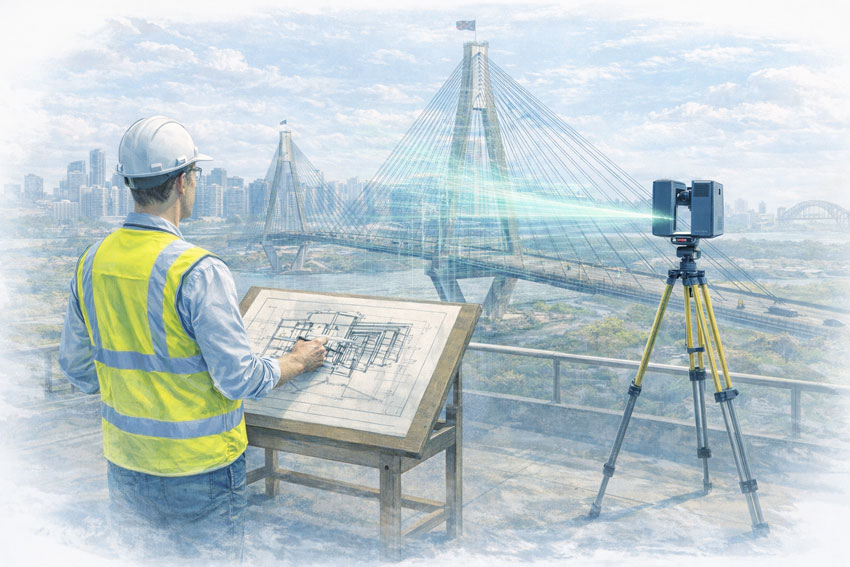
Large-Scale LiDAR Scanning Across Sydney’s Built Environment
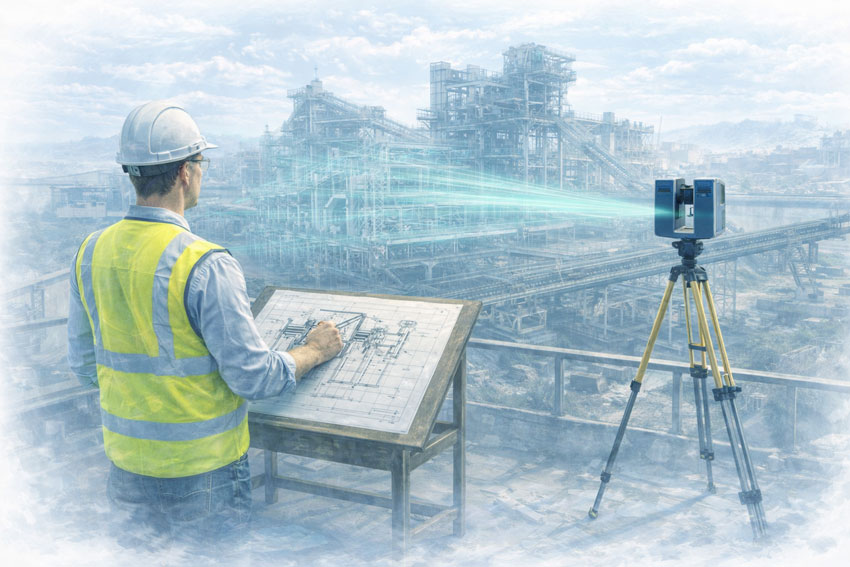
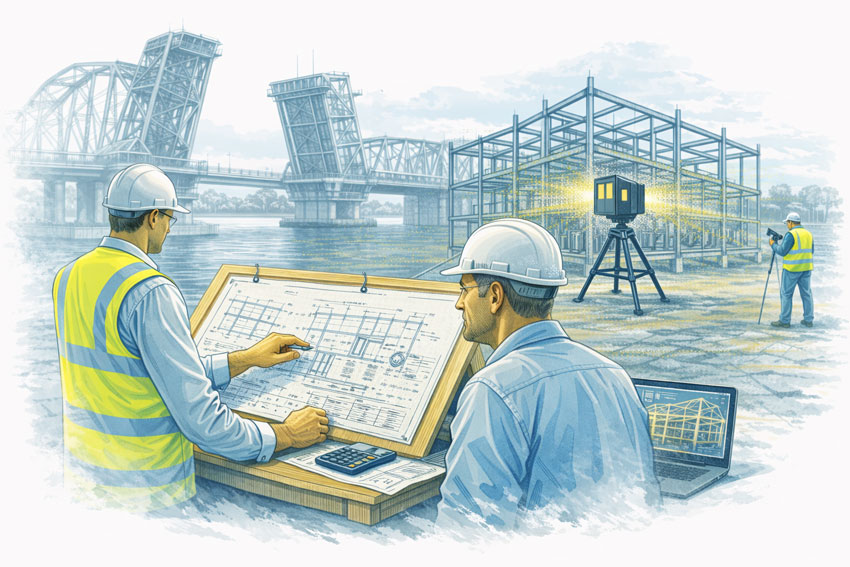
Sydney 3D LiDAR scanning is increasingly used to understand, document, and manage complex, large-scale assets where traditional surveying or manual measurement is impractical, unsafe, or incomplete.
Across Sydney, LiDAR scanning supports infrastructure owners, asset managers, engineers, and project teams who need accurate spatial data of buildings, structures, corridors, and public assets — often while those assets remain operational.
At Hamilton By Design, we use LiDAR as a reality capture tool for understanding scale, geometry, and condition, not just producing drawings.
What Makes LiDAR Scanning Different at City Scale
Unlike small-area scanning for fabrication, urban LiDAR scanning is about:
Capturing entire structures, not just components
Understanding geometry across long distances and height
Recording spatial relationships between assets
Creating a permanent digital record of existing conditions
This makes LiDAR particularly effective for:
Bridges and transport infrastructure
Towers and vertical structures
Campuses, precincts, and CBD assets
Waterfront and port facilities
Public and private buildings with restricted access
Common Uses of Sydney 3D LiDAR Scanning
LiDAR scanning in Sydney is frequently used for:
As-built condition documentation
Asset verification prior to upgrade or refurbishment
Structural geometry validation
Clearance and envelope studies
Planning and constructability assessments
Long-term asset management records
In many cases, LiDAR replaces assumptions, outdated drawings, or partial surveys with defensible spatial data.
Working in Live, Operational Environments
Sydney assets are rarely isolated or shutdown-friendly.
LiDAR scanning allows data capture:
Without disrupting operations
Without physical contact with structures
From safe stand-off locations
With repeatable, measurable accuracy
This is particularly valuable for:
Transport corridors
Public infrastructure
High-traffic urban locations
Heritage or difficult-access assets
Deliverables from a Sydney LiDAR Scan
Depending on project needs, deliverables may include:
Registered point clouds (E57 / RCP / RCS)
Plan, elevation, and section views
Reference geometry for engineering studies
Context models for planning and approvals
Baseline datasets for future comparison
LiDAR data can stand alone as a digital record, or be used to inform later engineering and design work.
LiDAR as a Risk-Reduction Tool
For many Sydney projects, LiDAR scanning is commissioned before design decisions are locked in.
Typical drivers include:
Uncertainty in existing documentation
Risk of clashes or spatial conflicts
Asset modifications in constrained environments
High cost of access or rework
By capturing reality early, project teams reduce:
Unknowns
Re-measurement
Design assumptions
Late-stage surprises
Our clients:
Sydney Experience with National Reach
While our scanning work spans Australia, Sydney projects benefit from experience gained on:
Large industrial sites
Infrastructure upgrades
Brownfield environments
High-risk, high-consequence assets
This ensures LiDAR data is captured with engineering awareness, even when the immediate output is not a fabrication model.
When Sydney 3D LiDAR Scanning Makes Sense
LiDAR scanning is worth considering when:
Assets are large, tall, or complex
Access is limited or unsafe
Existing drawings are incomplete
Geometry matters more than aesthetics
You need a defensible digital baseline
Start with Reality, Then Decide the Path Forward
Sydney 3D LiDAR scanning provides clarity before decisions are made — not after problems appear.
If you need reliable spatial data to support planning, verification, or future engineering work, we can help.
Connect with us by filling out the form below to discuss your Sydney LiDAR scanning requirements.
Hamilton By Design provides engineering-led 3D scanning, LiDAR scanning, mechanical engineering and digital engineering services throughout Sydney and Greater Sydney.
Explore our related Sydney services:
3D Scanning Sydney – Engineering-grade terrestrial laser scanning, as-built surveys and point cloud capture for industrial, infrastructure and commercial projects.
Reality Capture Sydney – High-accuracy reality capture, digital twins, asset documentation and engineering-grade site verification.
Scan to CAD Sydney – Convert point cloud data into AutoCAD, SolidWorks, Inventor and other engineering-ready CAD deliverables.
Point Cloud Modelling Sydney– Engineering-grade point cloud processing, clash detection, as-built verification and 3D modelling.
Mechanical Engineering Sydney – Mechanical design, plant upgrades, materials handling systems, conveyors, chutes, platforms and engineering support.
Structural Drafting Sydney– Structural steel drafting, fabrication drawings, GA drawings, workshop detailing and as-built documentation.
Hamilton By Design supports projects throughout Sydney CBD, Parramatta, Liverpool, Penrith, Blacktown, Chatswood, Alexandria, Mascot, Newcastle and the Central Coast.
Hamilton By Design delivers engineering-grade LiDAR scanning services throughout Sydney CBD, Parramatta, Liverpool, Penrith, Chatswood, Alexandria, Mascot, Newcastle and the Central Coast. Accurate point cloud data supports industrial upgrades, infrastructure projects, as-built documentation and engineering design activities.
To provide the best experiences, we use technologies like cookies to store and/or access device information. Consenting to these technologies will allow us to process data such as browsing behaviour or unique IDs on this site. Not consenting or withdrawing consent, may adversely affect certain features and functions.
Functional
Always active
The technical storage or access is strictly necessary for the legitimate purpose of enabling the use of a specific service explicitly requested by the subscriber or user, or for the sole purpose of carrying out the transmission of a communication over an electronic communications network.
Preferences
The technical storage or access is necessary for the legitimate purpose of storing preferences that are not requested by the subscriber or user.
Statistics
The technical storage or access that is used exclusively for statistical purposes.The technical storage or access that is used exclusively for anonymous statistical purposes. Without a subpoena, voluntary compliance on the part of your Internet Service Provider, or additional records from a third party, information stored or retrieved for this purpose alone cannot usually be used to identify you.
Marketing
The technical storage or access is required to create user profiles to send advertising, or to track the user on a website or across several websites for similar marketing purposes.