Hunter Valley Mining Engineering & 3D Laser Scanning Services | Hamilton By Design

Hunter Valley + Mining + Mechanical Engineering + Conveyor Systems + Industrial Design + 3D Lidar Laser Scanning Services = Hamilton By Design

Supporting Hunter Valley Mining Infrastructure, CHPP Facilities & Materials Handling Systems

The Hunter Valley is one of Australia’s most significant mining and industrial regions. Home to major coal mining operations, Coal Handling and Preparation Plants (CHPP), rail infrastructure, export facilities and bulk materials handling systems, the region continues to support large-scale engineering, maintenance and infrastructure projects.

At Hamilton By Design, we provide engineering-grade 3D laser scanning, reverse engineering, mechanical engineering and drafting services supporting mining infrastructure throughout the Hunter Valley.

Our team understands mining environments because we come from industry. Our experience spans materials handling systems, conveyor infrastructure, CHPP facilities, structural steelwork, shutdown engineering and brownfield plant modifications.

Supporting the Hunter Valley Coal Industry

The Hunter Valley Coal Chain is one of the largest integrated coal export systems in the world, linking mining operations throughout the Hunter Region with rail infrastructure and the Port of Newcastle export terminals.

Mining operations throughout the region rely on extensive infrastructure including:

  • Conveyor systems
  • CHPP facilities
  • Rail loading systems
  • Bulk materials handling equipment
  • Transfer stations
  • Stackers and reclaimers
  • Structural steel infrastructure
  • Pumping systems
  • Water management assets

Hamilton By Design provides engineering support services helping operators, contractors and project teams better understand existing site conditions before design, fabrication and installation activities commence.

3D LiDAR Scanning Hunter & Newcastle banner with white text on a blue background promoting engineering-grade laser scanning services for industrial, mining and infrastructure projects across the Hunter Valley and Newcastle region.
Mechanical Engineering Hunter & Newcastle banner promoting mechanical engineering services for mining, industrial plants, power generation, manufacturing and heavy industry throughout the Hunter Valley and Newcastle region.
Structural Drafting Hunter & Newcastle banner promoting structural drafting services for mining, industrial plants, power generation, manufacturing and infrastructure projects across the Hunter Valley and Newcastle region.

Engineering-Grade 3D Laser Scanning

Not all scans are equal.

At Hamilton By Design, we specialise in engineering-grade terrestrial LiDAR scanning designed to support practical engineering outcomes.

Our scanning services support:

  • Conveyor upgrades
  • Transfer station modifications
  • Shutdown planning
  • Existing condition surveys
  • Structural steel verification
  • Pipework modifications
  • Equipment replacement projects
  • Brownfield engineering
  • Asset capture programs
  • As-built verification

We provide registered point cloud data suitable for:

  • SolidWorks
  • Autodesk Revit
  • AutoCAD
  • Navisworks
  • Inventor
  • Recap
  • Digital engineering workflows

Accurate site information helps reduce project risk, improve constructability and minimise installation issues during shutdown activities.

Conveyor Systems & Materials Handling Engineering

Conveyor systems form the backbone of Hunter Valley mining operations.

Hamilton By Design supports projects involving:

  • Overland conveyors
  • Transfer stations
  • Conveyor gantries
  • Belt feeder systems
  • Chute upgrades
  • Structural modifications
  • Maintenance access improvements
  • Conveyor replacement projects

Working within existing operating facilities often requires accurate existing condition information before fabrication begins.

Our laser scanning and engineering services help ensure designs reflect real-world site conditions.

CHPP Upgrades & Plant Modifications

Coal Handling and Preparation Plants continue to evolve as production requirements change and ageing infrastructure requires replacement or modification.

We support projects involving:

  • Structural steel modifications
  • Conveyor upgrades
  • Pipework systems
  • Access platform improvements
  • Transfer chute modifications
  • Equipment replacement projects
  • Existing condition verification
  • Brownfield expansion works

Engineering-grade scanning provides a reliable foundation for design development and project planning.

Shutdown Engineering Support

Mining shutdowns are often where accurate engineering information delivers the greatest value.

Every hour of shutdown downtime can have significant production implications.

Hamilton By Design assists shutdown projects with:

  • Existing condition capture
  • Laser scanning surveys
  • Installation planning
  • Fabrication verification
  • Clash detection
  • Asset documentation
  • As-built verification

Accurate scan data helps reduce rework, improve fitment outcomes and minimise project risk during shutdown execution.

Reverse Engineering Services

Many mining facilities continue operating equipment where original drawings are incomplete, unavailable or no longer represent the installed asset.

Our reverse engineering services support:

  • Conveyor components
  • Chutes and transfer systems
  • Pump assemblies
  • Wear liners
  • Castings
  • Structural assemblies
  • Legacy plant equipment
  • Fabricated mining infrastructure

Using engineering-grade scanning and practical manufacturing experience, we develop models and fabrication drawings suitable for refurbishment, replacement or modification.

Mining Infrastructure Engineering

Mining infrastructure must operate in demanding environments while remaining maintainable and practical to construct.

Hamilton By Design supports projects involving:

  • Materials handling systems
  • Conveyor structures
  • Access platforms
  • Maintenance walkways
  • Pipework systems
  • Structural steel modifications
  • Brownfield upgrades
  • Industrial plant infrastructure

Our engineering approach focuses on constructability, maintainability and long-term asset performance.

Why Hamilton By Design?

Hamilton By Design combines practical trade experience with engineering capability.

Our experience includes:

  • Mechanical engineering
  • Fitting and machining
  • Industrial drafting
  • Mining operations
  • Materials handling systems
  • Smelting and processing facilities
  • Site-based engineering
  • Industrial maintenance

We understand that successful engineering projects require more than accurate models. They require solutions that can be fabricated, installed and maintained within real operating mining environments.

Servicing the Hunter Valley Mining Region

Hamilton By Design supports projects throughout:

  • Cessnock
  • Singleton
  • Muswellbrook
  • Mount Thorley
  • Ravensworth
  • Warkworth
  • Branxton
  • Rutherford
  • Beresfield
  • Tomago
  • Newcastle
  • Hunter Valley mining operations

Whether you require engineering-grade laser scanning, reverse engineering, conveyor design support or shutdown engineering services, our team is available to assist.

3D LiDAR scanning and 3D modelling service button โ€” laser scanner capturing a point cloud for engineering and CAD modelling
Mechanical engineering services

Engineering Support for Hunter Valley Mining Operations

Hamilton By Design provides engineering-grade 3D laser scanning, mechanical engineering, drafting and reverse engineering services supporting Hunter Valley mining infrastructure, CHPP facilities, conveyor systems and materials handling operations.

Contact Us – Talk to Us

Contact our team to discuss your next mining project and discover how accurate site data and practical engineering experience can improve project outcomes, reduce shutdown risk and support long-term asset performance.

Name
Would you like us to arrange a phone consultation for you?
Address
CHPP Engineering title graphic featuring bold white text reading "CHPP Engineering" centred on a blue rounded rectangle background.
Pipework Drafting title graphic featuring bold white text reading "Pipework Drafting" centred on a blue rounded rectangle background.
3D LiDAR Scanning for Engineering Projects title graphic featuring bold white text on a blue rounded rectangle background.

Our Clients:

Mechanical engineering services
Australian Drafting logo featuring bold white text reading "Australian Drafting" centred on a blue rounded rectangle background.
3D CAD Modelling Australia service banner for Hamilton By Design

Yeppoon Mining Engineering & 3D Laser Scanning Services | Hamilton By Design

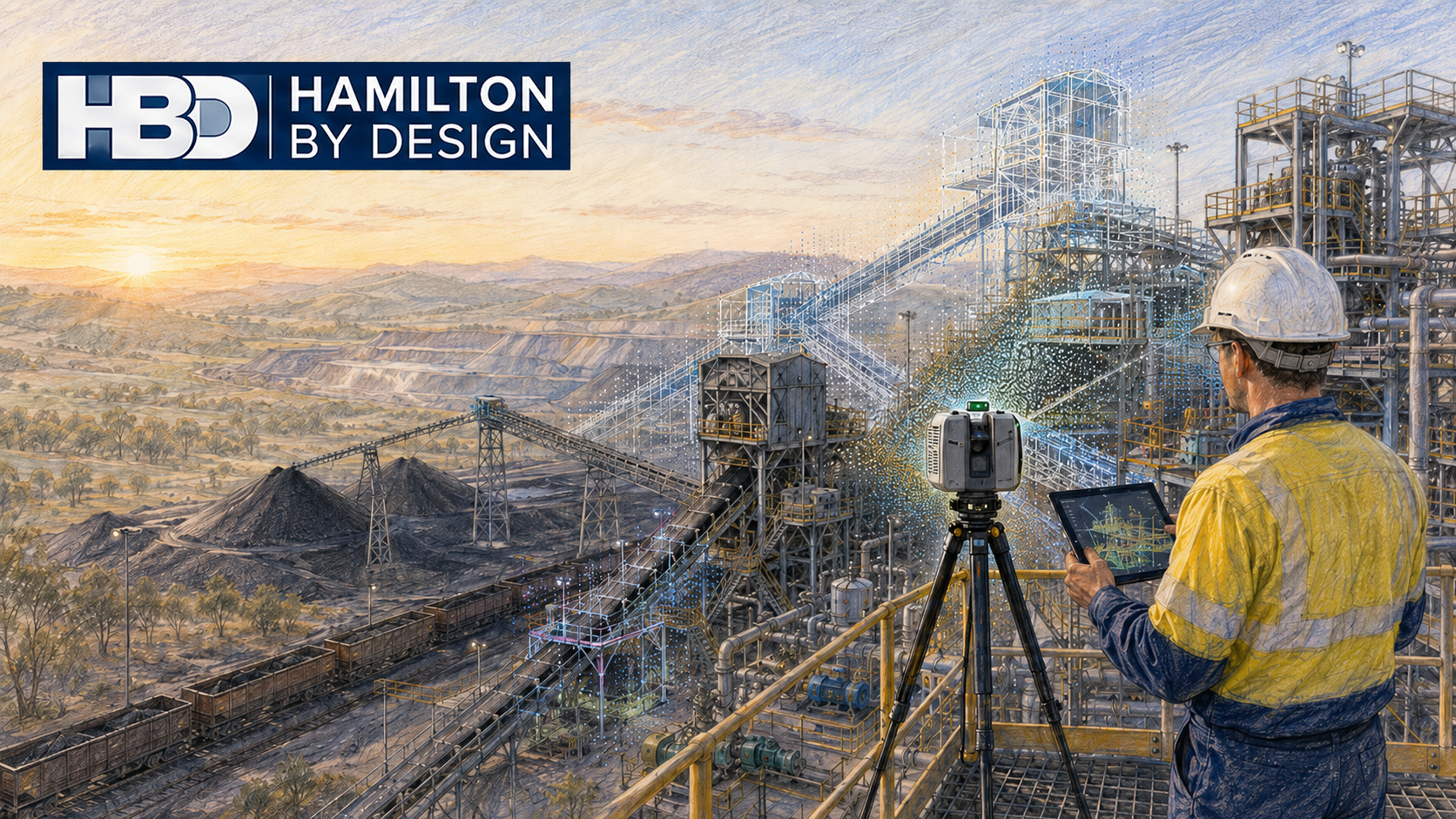
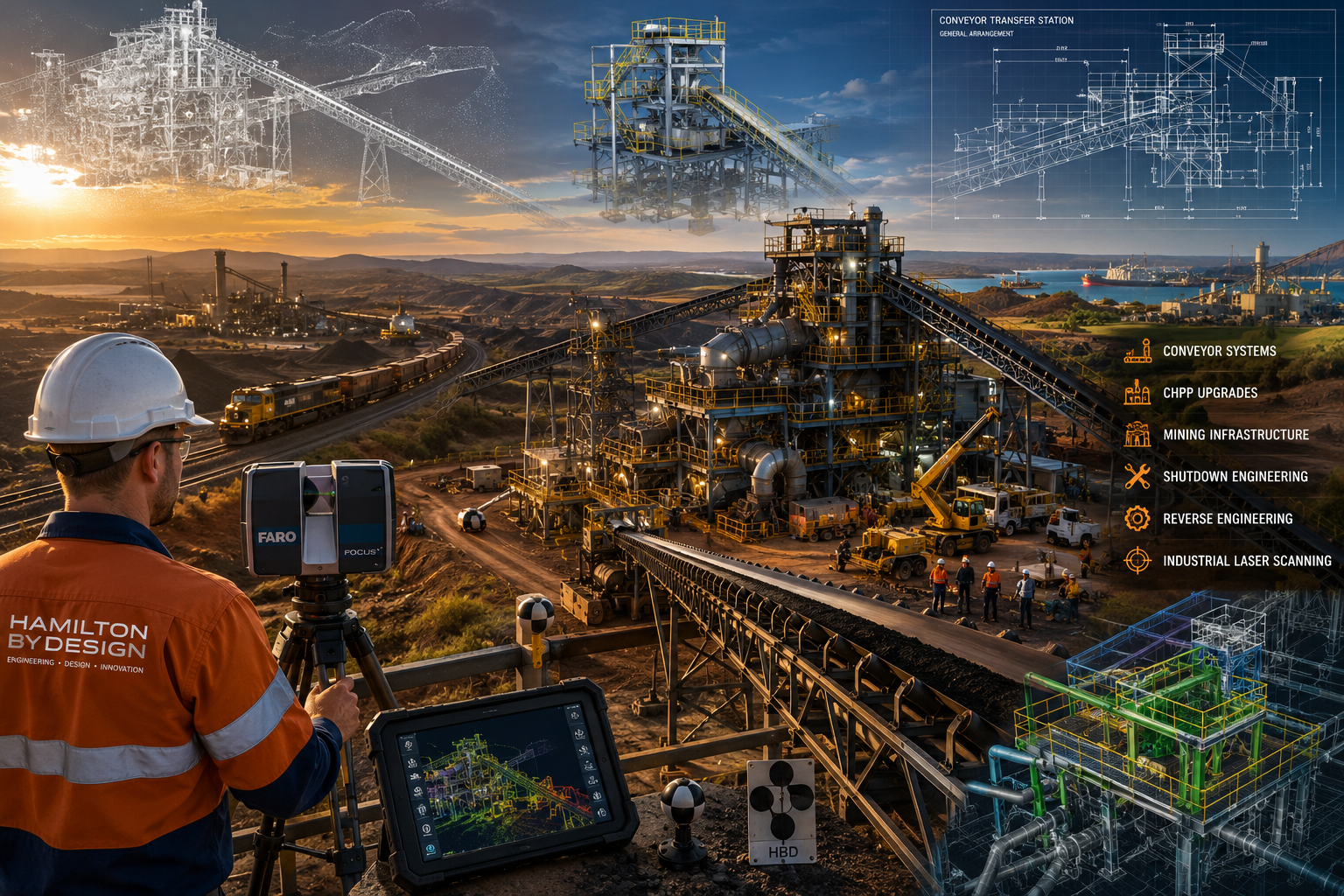
Engineering-grade 3D laser scanning and mining infrastructure project in Central Queensland, showing a conveyor transfer station, CHPP facility, coal train, industrial laser scanner, point cloud modelling and reverse engineering workflows supporting shutdown engineering and mining operations.

Yeppoon + Mechanical Engineering +Industrial Laser Scanning + Mining Infrastructure Services = Hamilton By Design

Supporting Central Queensland Mining, CHPP & Materials Handling Projects

Yeppoon sits at the gateway to Central Queensland’s mining and industrial sectors. While the Capricorn Coast is well known for tourism and marine industries, the region also supports major coal mining operations, coal handling and preparation plants (CHPP), bulk materials handling facilities, industrial infrastructure and shutdown maintenance projects throughout the Bowen Basin and Central Queensland.

At Hamilton By Design, we provide engineering-grade 3D laser scanning, mechanical engineering, reverse engineering and drafting services supporting mining, processing and materials handling facilities throughout Yeppoon, Rockhampton and the wider Central Queensland region.

Our team understands industrial facilities because we come from industry. Our experience includes mining operations, CHPP facilities, smelting plants, conveyor systems, materials handling infrastructure and brownfield plant modifications.


Why Yeppoon?

Yeppoon provides strategic access to some of Australia’s most significant mining and industrial operations.

The region supports:

  • Bowen Basin coal mines
  • Coal handling and preparation plants (CHPP)
  • Bulk materials handling systems
  • Port infrastructure
  • Industrial processing facilities
  • Heavy engineering workshops
  • Mining maintenance contractors
  • Marine and coastal infrastructure
  • Transport and logistics operations

For engineering companies supporting mining infrastructure, Yeppoon offers direct access to clients operating throughout Central Queensland.


Engineering-Grade 3D Laser Scanning

Not all scans are equal.

At Hamilton By Design, we specialise in engineering-grade terrestrial LiDAR scanning designed to support practical engineering outcomes.

Our scanning services assist with:

  • Conveyor upgrades
  • CHPP modifications
  • Shutdown planning
  • Structural steel verification
  • Pipework design
  • Access platform design
  • Brownfield plant upgrades
  • Equipment replacement projects
  • Existing condition surveys
  • Industrial asset capture

We deliver registered point cloud data suitable for:

  • SolidWorks
  • Autodesk Revit
  • AutoCAD
  • Navisworks
  • Inventor
  • Recap
  • Digital engineering workflows

Whether capturing an entire processing plant or a critical conveyor transfer station, our team provides accurate engineering-grade information for design, fabrication and construction.


Conveyor Systems & Materials Handling

Conveyors are the backbone of many mining and processing operations throughout Central Queensland.

Hamilton By Design supports projects involving:

  • Conveyor upgrades
  • Transfer station modifications
  • Conveyor gantries
  • Belt feeder systems
  • Chute design
  • Structural modifications
  • Maintenance access improvements
  • Conveyor replacement projects

Accurate site information is critical when working within operating facilities where shutdown durations are limited and installation tolerances are tight.

Our laser scanning and engineering services help reduce risk by ensuring designs are based on real-world site conditions.


CHPP Upgrades & Brownfield Modifications

Coal Handling and Preparation Plants continue to evolve as production requirements change and equipment reaches the end of its service life.

Hamilton By Design supports CHPP projects including:

  • Structural modifications
  • Conveyor upgrades
  • Pipework design
  • Access system improvements
  • Transfer chute modifications
  • Equipment replacements
  • Existing condition verification
  • Shutdown planning support

Using engineering-grade scan data, we help project teams understand existing site conditions before fabrication and installation begin.


Shutdown Engineering Support

Shutdowns are often where accurate engineering information provides the greatest value.

Every hour of downtime carries significant cost.

Our services assist shutdown teams with:

  • Existing condition capture
  • Site verification
  • Fabrication support
  • Installation planning
  • Clash detection
  • As-built verification
  • Asset documentation

Laser scanning prior to shutdown activities can significantly reduce rework, site fitment issues and project delays.


Reverse Engineering Services

Many mining and processing facilities continue to operate equipment where original drawings are incomplete, unavailable or no longer represent the asset currently installed.

Hamilton By Design provides reverse engineering services for:

  • Conveyor components
  • Chutes and transfer systems
  • Pump components
  • Castings
  • Wear liners
  • Structural assemblies
  • Fabricated equipment
  • Legacy plant infrastructure

Our team combines practical manufacturing knowledge with modern scanning technologies to develop detailed models and fabrication drawings suitable for refurbishment or replacement.


Mining Infrastructure Engineering

Mining infrastructure requires practical engineering solutions capable of operating in demanding environments.

We support projects involving:

  • Materials handling systems
  • Conveyor structures
  • Access platforms
  • Maintenance walkways
  • Structural steelwork
  • Pipework systems
  • Plant modifications
  • Asset upgrades

Our engineering approach focuses on constructability, maintainability and long-term asset performance.


Why Hamilton By Design?

Hamilton By Design combines practical trade experience with engineering capability.

Our background includes:

  • Mechanical engineering
  • Fitting and machining
  • Industrial drafting
  • Mining operations
  • Smelting facilities
  • Materials handling systems
  • Site-based engineering
  • Industrial maintenance

We understand that successful projects require more than accurate models. They require engineering solutions that can be fabricated, installed and maintained within real operating environments.


3D LiDAR scanning and 3D modelling service button โ€” laser scanner capturing a point cloud for engineering and CAD modelling
Mechanical engineering services

Servicing Yeppoon & Central Queensland

Hamilton By Design supports projects throughout:

  • Yeppoon
  • Rockhampton
  • Gladstone
  • Emerald
  • Blackwater
  • Moranbah
  • Dysart
  • Mackay
  • Bowen Basin
  • Central Queensland

Whether you require engineering-grade laser scanning, reverse engineering, conveyor design support or detailed drafting services, our team is available to assist.


Engineering Support for Central Queensland Industry

Hamilton By Design provides engineering-grade 3D laser scanning, mechanical engineering, drafting and reverse engineering services supporting mining infrastructure, CHPP facilities, conveyor systems and industrial processing plants throughout Yeppoon and Central Queensland.

Contact Us – Talk to Us

Contact our team to discuss your next project and discover how accurate site data and practical engineering experience can improve project outcomes, reduce shutdown risk and support long-term asset performance.

Name
Would you like us to arrange a phone consultation for you?
Address
CHPP Engineering title graphic featuring bold white text reading "CHPP Engineering" centred on a blue rounded rectangle background.
Pipework Drafting title graphic featuring bold white text reading "Pipework Drafting" centred on a blue rounded rectangle background.
3D LiDAR Scanning for Engineering Projects title graphic featuring bold white text on a blue rounded rectangle background.

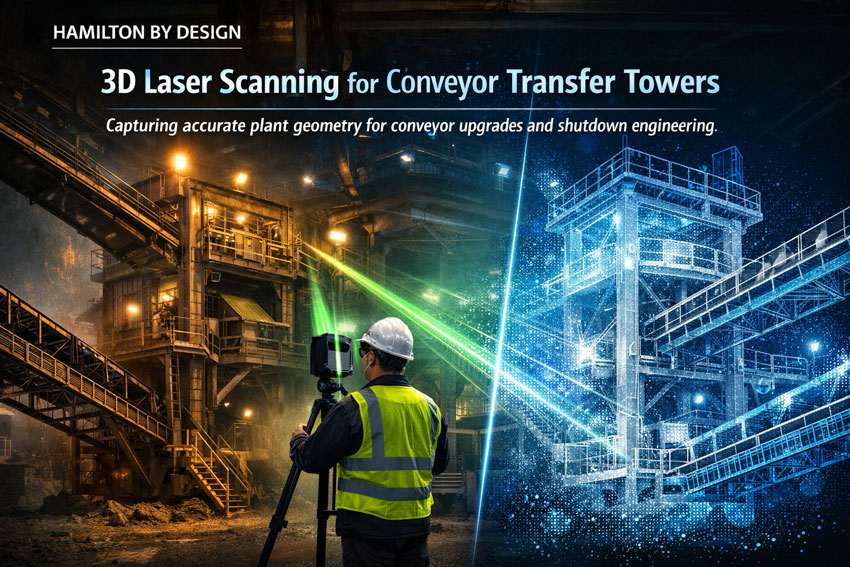
3D Laser Scanning for Conveyor Transfer Towers

3D laser scanning of a mining conveyor transfer tower capturing point cloud data for engineering modelling.

Conveyor transfer towers are critical components within mining and bulk material handling operations. These structures control the movement of material between conveyors and often contain complex arrangements of chutes, structural steel, maintenance platforms, and access walkways.

Over time, many transfer towers are modified as production requirements change. Equipment upgrades, chute redesigns, and maintenance improvements can result in plant infrastructure that no longer matches the original engineering drawings.

For engineers planning upgrades or maintenance projects, accurate existing condition data is essential. One of the most effective ways to capture this information is through 3D laser scanning.

At Hamilton By Design, engineering-grade scanning is used to capture precise geometry of conveyor transfer towers and surrounding plant infrastructure. This data can then be converted into accurate digital models used for mechanical design, plant upgrades, and engineering analysis.

Engineer performing LiDAR scanning of a conveyor transfer tower in a mining processing plant.

Learn more about our engineering scanning capabilities here:
๐Ÿ‘‰ https://www.hamiltonbydesign.com.au/home/engineering-services/3d-laser-scanning/


Why Conveyor Transfer Towers Are Difficult to Measure

Transfer towers are often some of the most complex areas within a processing plant. They typically contain multiple systems operating within a confined structure including conveyors, transfer chutes, structural supports, and maintenance platforms.

These environments can include:

โ€ข multiple conveyors entering and exiting the structure
โ€ข chute systems with wear liners
โ€ข structural steel frames and supports
โ€ข maintenance walkways and access platforms
โ€ข dust control and service equipment

Because of the tight layout and elevation changes within these structures, traditional measurement methods can be slow and prone to error.

In many facilities, the original engineering drawings may also be outdated due to years of plant modifications.

Accurate measurement is therefore essential when designing upgrades or modifications to conveyor transfer systems.


Using 3D Laser Scanning to Capture Transfer Tower Geometry

Engineering-grade 3D laser scanning uses LiDAR technology to capture millions of spatial measurements of plant infrastructure.

The resulting dataset forms a point cloud model representing the exact geometry of conveyors, structural steel, chutes, and surrounding plant equipment.

This digital model allows engineers to analyse plant layouts and develop accurate engineering designs before physical work begins.

Laser scanning provides several advantages when working in conveyor transfer towers.

Accurate Existing Conditions

Scanning captures the true geometry of plant infrastructure, allowing engineers to design modifications based on reliable data rather than outdated drawings.

Improved Design Planning

Digital models generated from scan data allow engineers to verify clearances and identify potential clashes before installation.

Reduced Shutdown Risk

Engineering teams can plan installation work more effectively using digital models created from scan data.

Faster Data Capture

Laser scanning can capture complex structures quickly compared with traditional measurement methods.


3D Scanning for Mining Shutdown Projects

Many conveyor transfer tower upgrades are performed during planned mining shutdowns, where engineering teams must complete inspections, modifications, and installations within tight timeframes.

Laser scanning provides a fast and reliable way to capture accurate plant geometry before shutdown work begins. Engineers can then analyse the digital model and develop upgrade designs in advance.

This approach reduces the risk of unexpected installation issues during shutdown periods.

You can learn more about scanning applications during plant shutdowns here:

๐Ÿ‘‰ https://www.hamiltonbydesign.com.au/home/engineering-grade-3d-laser-scanning-mining-industrial/3d-scanning-mining-shutdown-projects/


From Laser Scan to Engineering Model

The laser scanning workflow for conveyor transfer towers typically follows a structured process.

  1. Planning scan locations within the transfer tower
  2. Capturing plant geometry using LiDAR scanners
  3. Registering scan positions to create a unified point cloud
  4. Extracting geometry from the point cloud dataset
  5. Creating engineering CAD models for design analysis

These models allow engineers to analyse plant infrastructure and design upgrade solutions with greater confidence.


Reverse Engineering Conveyor Infrastructure

In many mining plants, original equipment drawings are missing or no longer reflect the current infrastructure. In these cases, laser scanning can be used to reverse engineer existing equipment and structures.

By capturing the geometry of conveyors, chutes, and supporting structures, engineers can recreate accurate CAD models used for redesign, replacement components, or plant upgrades.

Hamilton By Design provides reverse engineering services using high-accuracy scanning technology.

Learn more about this process here:

๐Ÿ‘‰ https://www.hamiltonbydesign.com.au/reverse-engineer-3d-scanning/


Digital Engineering for Conveyor Transfer Towers

Digital models created from laser scanning allow engineers to analyse plant infrastructure in a controlled environment before work begins on site.

These models support engineering tasks such as:

โ€ข chute design and optimisation
โ€ข conveyor upgrade planning
โ€ข structural modifications
โ€ข clash detection and layout verification
โ€ข maintenance planning and documentation

For mining operations, this approach improves the reliability of plant upgrade projects and reduces engineering risk.


Engineering Support from Hamilton By Design

Hamilton By Design provides engineering-led 3D laser scanning and mechanical design services supporting mining and industrial infrastructure projects across Australia.

Our services include:

โ€ข conveyor transfer tower scanning
โ€ข plant upgrade engineering
โ€ข mechanical design and modelling
โ€ข reverse engineering of plant infrastructure
โ€ข digital engineering models and inspections

By combining scanning technology with engineering expertise, we help mining and industrial clients capture accurate plant geometry and convert it into practical engineering solutions.


Hamilton By Design logo displayed on a blue tilted rectangle with a grey gradient background

Learn More About Engineering-Grade Laser Scanning

For a full overview of engineering-grade laser scanning and its applications in mining and industrial plants, visit:

๐Ÿ‘‰ https://www.hamiltonbydesign.com.au/home/engineering-grade-3d-laser-scanning-mining-industrial/


Anthony Hamilton
Principal Engineer
Hamilton By Design


Name
Would you like us to arrange a phone consultation for you?
Address

3D CAD Modelling Australia service banner for Hamilton By Design

Designing Bucket Elevators vs Pan Conveyors in Industrial Material Handling

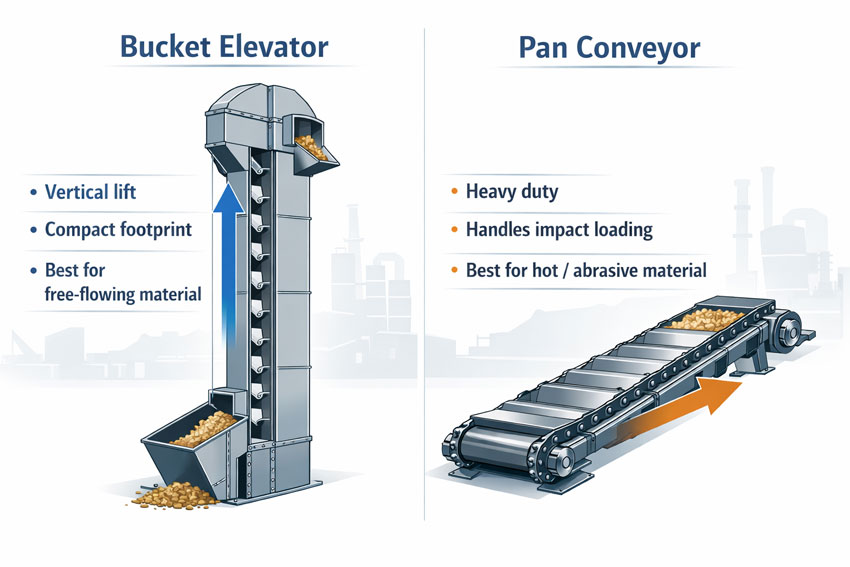
Engineering comparison diagram showing a bucket elevator lifting bulk material vertically and a pan conveyor transporting material horizontally.

Bucket Elevator vs Pan Conveyor Design | Industrial Material Handling Engineering

In bulk material handling industries such as mining, cement production, grain processing, and industrial manufacturing, selecting the right conveying system is critical to reliability, maintenance efficiency, and operating cost. Two commonly used systems are bucket elevators and pan conveyors. While both systems move bulk material efficiently, they are designed for very different operating conditions and material characteristics.

Understanding the difference between the two systems helps engineers select the correct solution for the application.


Bucket elevator vs pan conveyor industrial material handling comparison infographic.

What is a Bucket Elevator?

A bucket elevator is a vertical conveying system designed to lift bulk materials using a series of buckets attached to either a belt or chain. The buckets scoop material from the boot section and carry it upward to the discharge point.

Bucket elevators are widely used where material must be lifted vertically in a compact footprint.

Key Components

Buckets (steel, nylon, or HDPE)
Belt or chain drive
Boot section (material inlet)
Head section with drive and discharge
Casing or elevator trunking

Typical Applications

Grain handling
Fertiliser plants
Cement and lime processing
Mining concentrate handling
Sand, ash, or powder transport

Advantages

Efficient vertical lifting
Small plant footprint
High throughput capacity
Energy efficient for vertical transport

Limitations

Not ideal for very abrasive or large lump materials
Sensitive to overloading and blockages
Requires careful alignment and maintenance


What is a Pan Conveyor?

A pan conveyor, often called an apron conveyor, transports material horizontally or on shallow inclines using overlapping steel pans attached to heavy-duty chains.

The pans form a continuous moving surface that carries material along the conveyor frame.

Pan conveyors are commonly used in harsh industrial environments where materials are heavy, hot, or abrasive.

Key Components

Steel pans or plates
Heavy-duty conveyor chains
Sprockets and drive system
Conveyor frame
Impact loading zone

Typical Applications

Clinker transport in cement plants
Mining ore handling
Hot ash handling
Crusher discharge conveyors
Furnace feed systems

Advantages

Handles very heavy and abrasive materials
Suitable for impact loading
Reliable in harsh environments
Can operate at slow controlled speeds

Limitations

Larger footprint
Higher capital cost
More power consumption than bucket elevators


Key Differences Between Bucket Elevators and Pan Conveyors

Bucket Elevator
Vertical conveying system
Best for fine to medium bulk materials
Compact footprint
High energy efficiency for vertical transport
Requires controlled loading

Pan Conveyor
Horizontal or inclined conveying system
Handles heavy, abrasive or hot materials
Larger footprint
More robust construction
Handles high impact loading


When to Choose a Bucket Elevator

A bucket elevator is typically the preferred solution when:

Material must be lifted vertically
Plant space is limited
The material is free-flowing
Throughput is high but impact loading is low

Examples include grain silos, cement plants, fertiliser plants, and powder handling systems.

In these situations, bucket elevators provide a compact and energy-efficient solution.


When to Choose a Pan Conveyor

A pan conveyor is the better choice when:

Material is coarse, hot, or abrasive
There is high impact loading
The conveyor must operate continuously in harsh conditions
Reliability is more important than plant footprint

Examples include crusher discharge conveyors, furnace feed systems, clinker transport, and mining ore handling.

Pan conveyors are designed to survive the harshest bulk material handling environments.


Engineering Design Considerations

When designing either system, engineers must consider the following:

Bulk material characteristics
Lump size distribution
Abrasiveness
Moisture content
Throughput requirements
Loading conditions
Maintenance access
Structural support

Modern projects often integrate 3D laser scanning and point cloud modelling to ensure conveyors fit within existing plants and connect correctly to existing infrastructure. This approach reduces installation risk and helps engineers verify clearances, structural loads, and maintenance access before fabrication.

3D LiDAR scanning and 3D modelling service button โ€” laser scanner capturing a point cloud for engineering and CAD modelling
Mechanical engineering services

Hamilton By Design logo displayed on a blue tilted rectangle with a grey gradient background

Engineering Support for Conveyor Design

Hamilton By Design supports industrial projects with:

Mechanical conveyor design
3D laser scanning of existing plants
Conveyor chute and transfer design
Structural steel and support frames
Inspection and maintenance optimisation

Whether designing a bucket elevator for vertical material handling or a heavy-duty pan conveyor for mining operations, selecting the correct system is critical to long-term reliability and operational efficiency.


Name
Would you like us to arrange a phone consultation for you?
Address
3D CAD Modelling Australia service banner for Hamilton By Design

AS 4324.1 Brownfield Bulk Handling Assets: Engineering Mobile Equipment for Todayโ€™s Mine Sites

AS 4324.1 Bulk Handling Equipment | Brownfield Stacker & Reclaimer Engineering

Mobile equipment for the continuous handling of bulk materialsโ€”such as stackers, reclaimers, and ship loadersโ€”forms the backbone of Australiaโ€™s mining and export infrastructure. Many of these assets operate continuously in demanding environments, often well beyond their original design life.

Australian Standard AS 4324.1 provides essential guidance for the design and safe operation of this class of equipment. However, on many Australian mine sites, the practical application of the standard is misunderstood or only partially implemented, particularly when dealing with legacy machines and brownfield upgrades.

For asset owners and engineering managers, the challenge is rarely about greenfield compliance. It is about managing risk, extending asset life, and implementing upgrades without unplanned downtime.


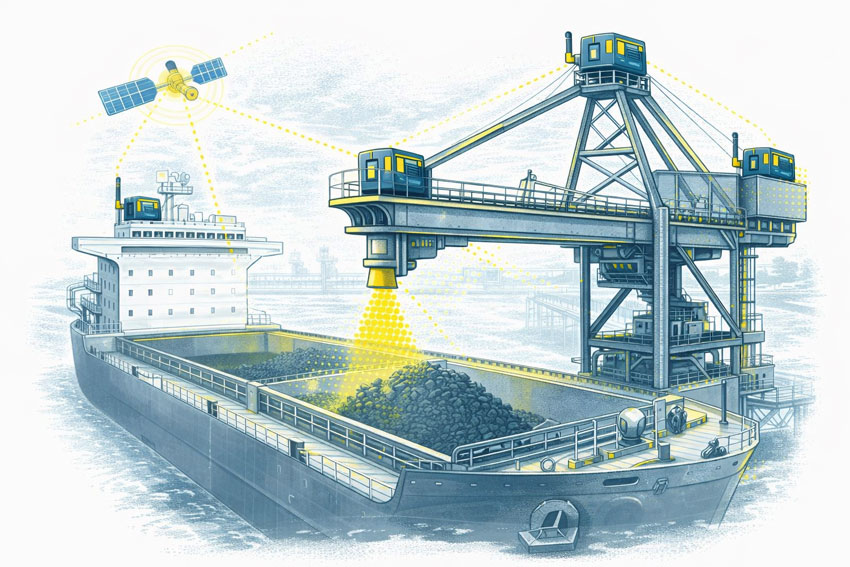
Ship loader and bulk cargo vessel with GPS monitoring units and sensor overlays illustrating controlled loading zones and engineering oversight under AS 4324.1

Understanding AS 4324.1 in a Brownfield Context

AS 4324.1 addresses mobile equipment used for continuous bulk handling, including:

  • Yard stackers and reclaimers
  • Bucket wheel reclaimers
  • Slewing and travelling machines
  • Ship loaders at export terminals

While the standard establishes a strong baseline for design and safety, many operating machines:

  • Pre-date the current revision of the standard
  • Have undergone multiple undocumented modifications
  • Operate under loading conditions that differ from original assumptions

In these situations, engineering judgement is required. Compliance becomes less about box-ticking and more about demonstrating that risks are understood, controlled, and managed over the asset lifecycle.


Common Challenges on Operating Mine Sites

Across coal handling plants, iron ore operations, and port facilities, several recurring issues emerge:

1. Incomplete or Outdated As-Built Information

Accurate geometry, slew limits, clearances, and structural interfaces are often unknown. This creates risk during upgrades and maintenance planning.

2. Fatigue and Structural Degradation

Large mobile machines experience cyclic loading across slewing, luffing, and travel motions. Fatigue cracking and unexpected failures require ongoing monitoring, not one-off assessments.

3. Access, Guarding, and Maintenance Compliance

Requirements evolve over time. Older machines may not meet current expectations for access systems, guarding, or safe maintenance practices.

4. Downtime Sensitivity

Stackers, reclaimers, and ship loaders are often production-critical assets. Upgrade windows are limited, and poor fit-up or rework can have significant commercial consequences.


Technology Supporting Modern Risk Management

While AS 4324.1 remains the foundation, modern technology allows asset owners to manage risk more effectivelyโ€”particularly on brownfield equipment.

GPS Positioning and Controlled Operating Zones

Where GPS positioning is enabled, defined operating zones can be established to:

  • Prevent interaction with stockpiles during rapid translation
  • Automatically reduce slew or travel speed in high-risk zones
  • Limit impact loads on critical components such as slew rings and fluffing gears

These systems are primarily productivity-driven, but they also reduce the likelihood of high-energy impacts that contribute to mechanical damage.


LiDAR Scanning as an Emerging Risk Layer

LiDAR scanning is not a replacement for traditional controls, and it is still evolving in this application. However, it can provide:

  • Accurate spatial awareness of surrounding structures
  • Verification of clearances and exclusion envelopes
  • A secondary risk-management layer supporting operator decision-making

When combined with engineering-led interpretation, LiDAR contributes to a layered risk approach rather than acting as a standalone safety system.


Condition Monitoring and Real Load Understanding

Accelerometers installed across a range of frequencies can deliver valuable insight into:

  • Actual operating loads
  • Dynamic response during slewing, reclaiming, and travel
  • Early indicators of fatigue-related issues

This data supports more informed maintenance decisions and provides evidence of how a machine is truly being usedโ€”often revealing load cases not considered in original designs.


Engineering-Led Compliance and Asset Life Extension

For brownfield assets, compliance with AS 4324.1 is best approached as a continuous engineering process, not a single milestone. This includes:

  • Accurate reality capture and digital models
  • Verification of clearances, interfaces, and structural geometry
  • Informed upgrade design that fits the first time
  • Risk-based decision-making supported by real operating data

This approach helps asset owners extend the life of critical machines while managing risk, performance, and availability.


How Hamilton By Design Supports Bulk Handling Assets

Hamilton By Design works with asset owners and engineering teams to support:

  • Brownfield upgrades of stackers, reclaimers, and ship loaders
  • Engineering-grade LiDAR scanning and as-built documentation
  • Fit-for-purpose mechanical design for modifications and life-extension
  • Independent engineering insight across OEM and site interfaces

Our focus is on engineering clarity, practical risk reduction, and minimising disruption to operations.


Talk to an Engineer About Your Asset

If you are planning a brownfield upgrade, life-extension, or risk review of mobile bulk-handling equipment, talk to an engineer at Hamilton By Design about how accurate data and practical engineering can support your next decision.

Hamilton By Design logo displayed on a blue tilted rectangle with a grey gradient background
3D LiDAR scanning and 3D modelling service button โ€” laser scanner capturing a point cloud for engineering and CAD modelling
Mechanical engineering services

Our clients:
Name
Would you like us to arrange a phone consultation for you?
Address
Finite Element Analysis (FEA) engineering simulation button
Mechanical engineering services