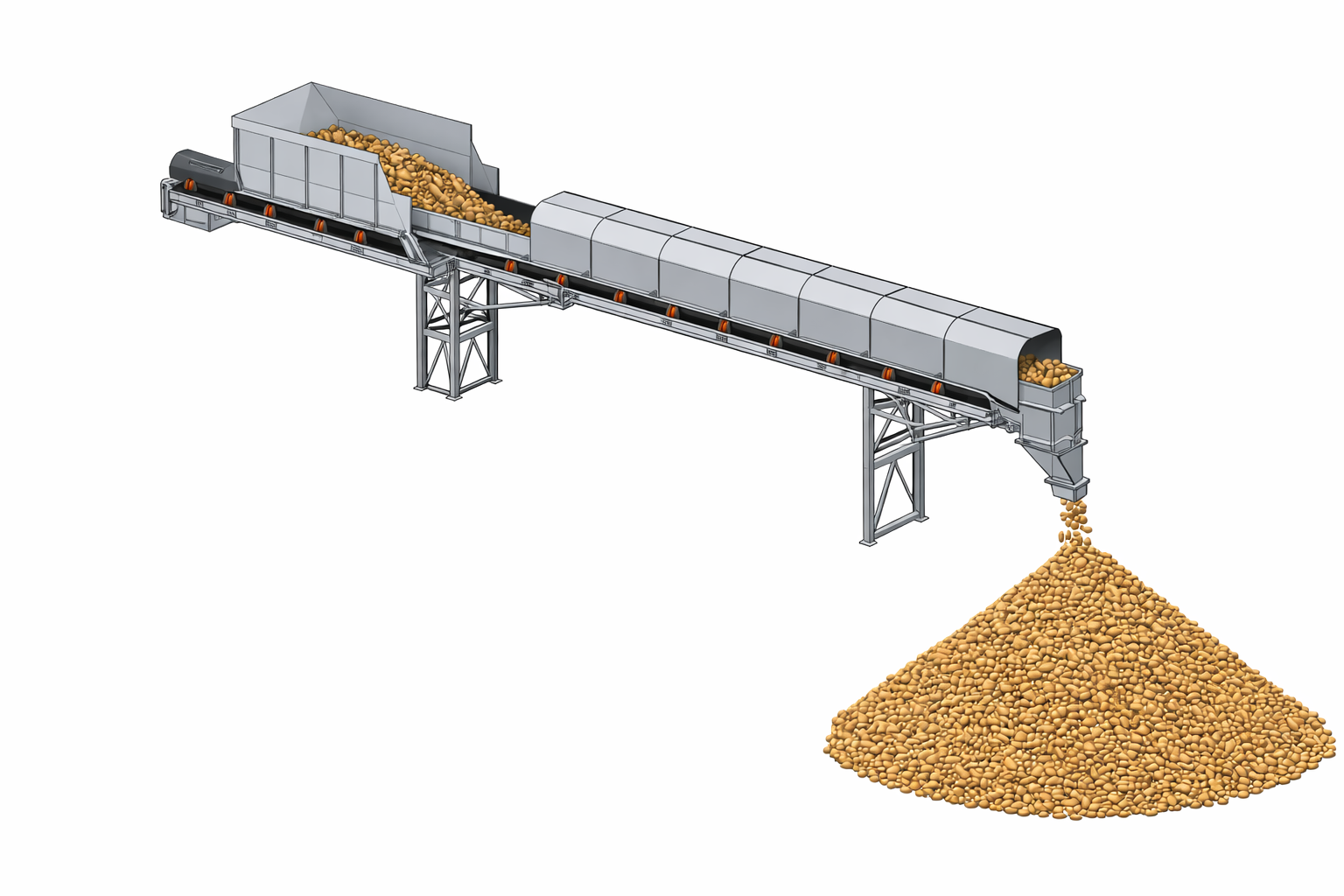
In mining plants, conveyor transfer chutes are often the most overlooked component in the materials handling system. Yet they are frequently responsible for the largest operational disruptions.
Poor chute design can result in:
- Material blockages
- Conveyor belt damage
- Excessive wear on liners
- Dust generation
- Product spillage
- Reduced plant throughput
For mining operations running 24/7 production, even minor transfer issues can escalate into significant downtime during shutdowns.
Effective conveyor transfer chute design is therefore not just a drafting exercise—it is a critical engineering task that directly impacts plant reliability, maintenance costs, and safety.
Common Problems in Mining Transfer Chutes
Across many mining and processing plants, similar issues appear repeatedly in poorly designed transfer points.
Typical operational problems include:
1. Blockages and Build-Up
Moist ores, fine materials, and poorly directed material streams often lead to material accumulation. Over time this causes:
- chute choking
- restricted flow paths
- emergency shutdowns
2. High Impact Loading
If the chute does not properly control the material trajectory, large rocks can strike belts or liners at high velocity, resulting in:
- conveyor belt damage
- excessive wear on liners
- structural fatigue
3. Material Spillage
Incorrect chute geometry can cause material to miss the receiving belt entirely. Spillage creates:
- safety hazards
- housekeeping issues
- unnecessary cleanup labour
4. Dust and Environmental Issues
High drop heights and uncontrolled material flow generate dust clouds that affect:
- operator safety
- equipment life
- compliance with environmental requirements
Engineering Principles Behind Reliable Chute Design
Reliable conveyor transfer chute design requires understanding both material behaviour and mechanical systems.
Some key design considerations include:

Controlled Material Flow
The goal of a well-designed chute is to control the material stream, ensuring that the ore flows smoothly onto the receiving conveyor at the correct velocity and direction.
Design considerations include:
- trajectory modelling
- flow velocity management
- impact angle control
Wear Management
Mining materials are extremely abrasive. Chute design must incorporate wear protection strategies such as:
- replaceable liner systems
- ceramic or chromium carbide plates
- sacrificial wear zones
A well-designed chute allows liners to be replaced quickly during shutdowns.
Belt Protection
Poorly designed transfers can dramatically reduce conveyor belt life.
Engineering improvements often include:
- impact beds
- loading skirts
- properly aligned material streams
Reducing belt damage significantly lowers maintenance costs.
Maintenance Accessibility
A transfer chute should be designed with maintainability in mind.
This includes:
- safe inspection access
- removable panels
- maintenance platforms
- quick liner replacement systems
These features become particularly important during tight shutdown windows.
Using Digital Engineering to Improve Chute Performance
Modern mining operations increasingly rely on digital engineering tools to improve the reliability of transfer points.
Technologies such as 3D laser scanning and digital plant models allow engineers to:
- capture the exact geometry of existing plant infrastructure
- analyse transfer trajectories
- redesign chutes within existing plant constraints
- reduce risk during shutdown installations
This approach is particularly useful when retrofitting new chutes into older mining infrastructure where original drawings are often incomplete or inaccurate.
More information on this workflow can be found in:
Designing Transfer Chutes for Shutdown Installations
In many cases, chute upgrades are installed during planned mining shutdowns, where time is extremely limited.
Engineering preparation is essential to ensure the work can be completed within the shutdown window.
Typical preparation includes:
- capturing existing plant conditions
- producing accurate engineering models
- clash detection with existing structures
- fabrication-ready drawings
A well-prepared digital model significantly reduces the risk of installation delays.
Further discussion on shutdown engineering preparation can be found here:
Mechanical Engineering Support for Mining Infrastructure
Reliable transfer chute systems require collaboration between:
- mechanical engineers
- plant operators
- maintenance teams
- fabrication workshops
By combining operational experience with digital engineering tools, mining companies can significantly improve the reliability of their materials handling systems.
Hamilton By Design provides mechanical engineering design services for mining infrastructure, including:
- conveyor transfer chute design
- materials handling upgrades
- plant modification design
- digital engineering models for shutdown work
Learn more about these services here:

Final Thoughts
Transfer chutes may appear to be a simple part of a conveyor system, but their impact on mining operations is significant.
Poorly designed chutes lead to:
- downtime
- safety risks
- excessive maintenance costs
With careful engineering design, digital modelling, and proper shutdown preparation, transfer points can become reliable components of a high-performance mining plant.
For operations seeking to reduce downtime and improve plant reliability, conveyor transfer chute design is one of the most valuable engineering improvements available.