From Reality to Design: How 3D Scanning Powers Engineering Outcomes in Sydney

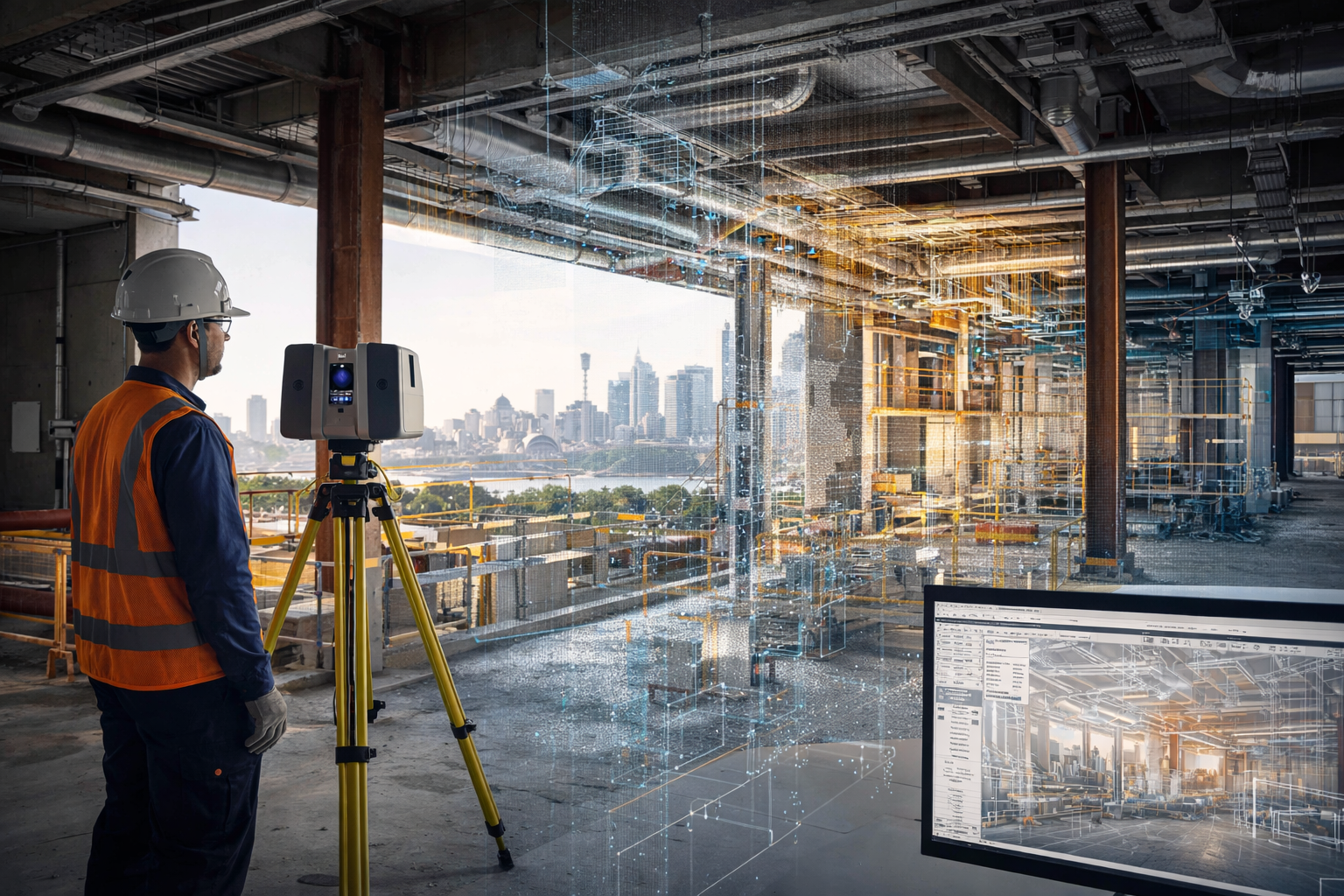
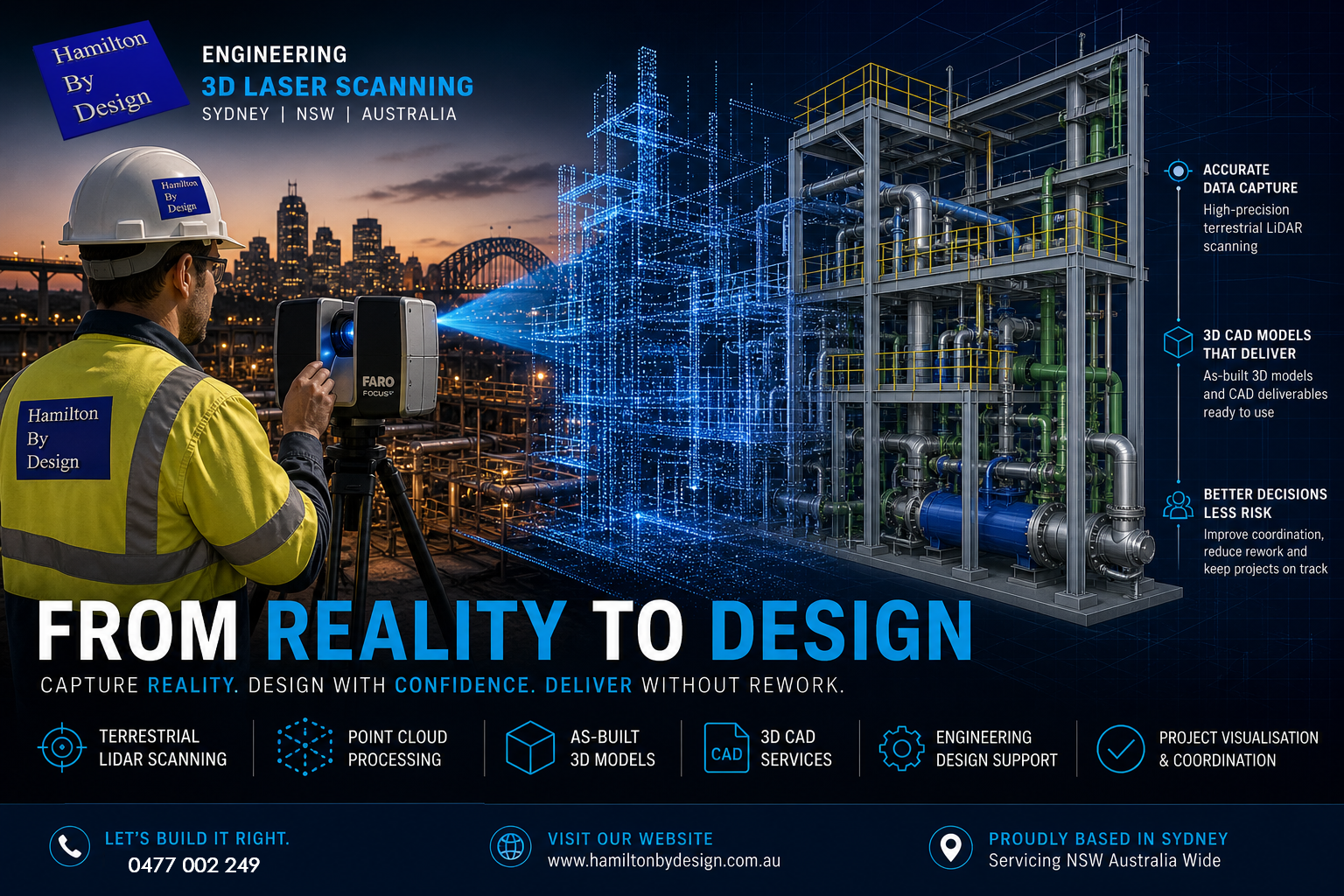
Engineer performing terrestrial LiDAR scanning on a Sydney construction site with point cloud transitioning into 3D CAD model

In todayโ€™s construction and industrial environment, the gap between what was designed and what actually exists on site is where most project risk lives.

Blue 3D LiDAR scanner icon on a tripod with scanning waves

Steel doesnโ€™t sit where drawings say it should. Pipework clashes with new installs. Structural tolerances stack up. And when projects move fast, those risks become expensive.

This is where engineering-led 3D scanning and design changes everything.

At Hamilton By Design, we donโ€™t just capture data โ€” we convert reality into accurate, buildable engineering outcomes.


The Shift from Measuring to Reality Capture

Traditional site measurement methods rely on tape measures, total stations, and assumptions. They work โ€” but they introduce risk.

Modern projects are moving toward terrestrial LiDAR scanning, using high-accuracy laser-based systems to capture millions of data points across a site.

A terrestrial LiDAR scanner works by emitting laser pulses and measuring the return time to build a precise 3D representation of the environment โ€” known as a point cloud.

This process, often referred to as a terrestrial scan, creates a true digital record of:

  • Structural steel
  • Pipework systems
  • Equipment layouts
  • Buildings and facades
  • Complex plant geometry

The result is not an interpretation โ€” it is reality.


From Point Cloud to As-Built 3D Model

Capturing data is only the first step.

The real value comes from converting that scan into an as-built 3D model that engineers, designers, and fabricators can actually use.

This is where many providers fall short.

At Hamilton By Design, we deliver:

  • Engineering-grade 3D CAD services
  • Parametric models (not mesh files)
  • Fabrication-ready geometry
  • Drawings aligned to Australian standards

We donโ€™t produce STL or OBJ files that sit unused.
We produce editable 3D engineering design models that integrate directly into your workflow.

Because ultimately โ€” scanning is not the deliverable.

Design is.


3D Scanning on Construction Sites

The use of 3D scanning on construction sites is growing rapidly โ€” and for good reason.

Projects across Sydney are using LiDAR to:

  • Verify structural installation before fit-up
  • Coordinate mechanical and piping systems
  • Reduce rework during shutdowns
  • Validate contractor work against design intent
  • Capture existing conditions for upgrades

Whether itโ€™s a building scan, plant upgrade, or infrastructure project, the ability to see the full site in 3D changes how teams make decisions.

Instead of relying on drawings โ€” teams work from reality.


Top 3D Scanning Platforms for Project Coordination

Not all scanning workflows are equal.

The top 3D scanning platforms for construction site visualisation and project coordination combine accurate capture with accessible data environments.

Typical platforms include:

  • FARO SCENE for registration and processing
  • Autodesk ReCap for cloud-based coordination
  • 3DEXPERIENCE for engineering governance and collaboration

However, the platform is only part of the equation.

Without engineering understanding, even the best software becomes a viewer โ€” not a solution.

Thatโ€™s why our workflow is built around:

Scan โ†’ Model โ†’ Design โ†’ Deliver


Engineering-Led 3D Design

What sets Hamilton By Design apart is simple:

We are a mechanical engineering business first โ€” not a scanning company.

Our team uses LiDAR to support:

  • 3D design engineering
  • Structural modifications
  • Conveyor and chute design
  • Pipework upgrades
  • Equipment integration

We scan with the intent of answering one question:

๐Ÿ‘‰ Will it fit?

Because in engineering โ€” thatโ€™s what matters.


Why โ€œ3D Scanner Service Near Meโ€ Isnโ€™t Enough

Many clients search for a โ€œ3D scanner service near meโ€ or look at 3D scanner hire as a cost-saving measure.

But scanning hardware alone does not solve engineering problems.

Without:

  • Proper scan planning (line of sight, density, coverage)
  • Registration accuracy
  • Engineering interpretation
  • CAD modelling capability

โ€ฆthe result is just raw data.

We often see projects where scanning was completed โ€” but nothing usable was produced.

Thatโ€™s why we offer both:

  • Full 3D scan services
  • 3D scanner hire (with guidance)
  • End-to-end modelling and design support

Applications Across Buildings and Industry

Our 3D scanning building services and industrial workflows support a wide range of sectors across Sydney and NSW:

Construction & Buildings

  • As-built verification
  • Facade capture
  • Structural coordination
  • Scan-to-BIM workflows

Industrial Plants

  • Brownfield upgrades
  • Shutdown planning
  • Equipment replacement
  • Pipe routing and clash detection

Infrastructure

  • Rail and transport assets
  • Utilities and pump stations
  • Structural assessments

Whether itโ€™s a commercial building or a complex processing plant, the principle is the same:

Capture reality. Design with confidence. Deliver without rework.


The Future: Digital Engineering Driven by LiDAR

LiDAR is not just a tool โ€” it is the foundation of modern digital engineering design.

As projects become more complex, the ability to:

  • Capture accurate site data
  • Build reliable 3D models
  • Coordinate across teams
  • Maintain a single source of truth

โ€ฆwill define successful delivery.

At Hamilton By Design, we combine:

  • Terrestrial LiDAR scanning
  • 3D CAD services
  • Engineering design expertise

to ensure that what gets built โ€” matches what was intended.


3D LiDAR scanning and 3D modelling service button โ€” laser scanner capturing a point cloud for engineering and CAD modelling
Mechanical engineering services

Work With an Engineer-Led 3D Scanning Team

If youโ€™re planning a project in Sydney or across NSW and need:

  • A 3D scan service
  • An as-built 3D model
  • 3D engineering design support

weโ€™re ready to help.

Because the difference between scanning and engineering is simple:

๐Ÿ‘‰ One captures data.
๐Ÿ‘‰ The other delivers outcomes.

Hamilton By Design logo displayed on a blue tilted rectangle with a grey gradient background

Related Sydney Services

Hamilton By Design provides engineering-led 3D scanning, LiDAR scanning, mechanical engineering and digital engineering services throughout Sydney and Greater Sydney.

Explore our related Sydney services:


  • 3D Scanning Sydney โ€“ Engineering-grade terrestrial laser scanning, as-built surveys and point cloud capture for industrial, infrastructure and commercial projects.
  • Reality Capture Sydney โ€“ High-accuracy reality capture, digital twins, asset documentation and engineering-grade site verification.
  • Scan to CAD Sydney โ€“ Convert point cloud data into AutoCAD, SolidWorks, Inventor and other engineering-ready CAD deliverables.
  • Point Cloud Modelling Sydney โ€“ Engineering-grade point cloud processing, clash detection, as-built verification and 3D modelling.
  • Mechanical Engineering Sydney โ€“ Mechanical design, plant upgrades, materials handling systems, conveyors, chutes, platforms and engineering support.
  • Structural Drafting Sydney โ€“ Structural steel drafting, fabrication drawings, GA drawings, workshop detailing and as-built documentation.

Hamilton By Design supports projects throughout Sydney CBD, Parramatta, Liverpool, Penrith, Blacktown, Chatswood, Alexandria, Mascot, Newcastle and the Central Coast.


Our Clients

Contact Us – Talk to Us – Work with Us
Name
Would you like us to arrange a phone consultation for you?
Address

How 3D Laser Scanning is Used in Sydney Projects

Technician using a tripod-mounted 3D laser scanner inside a Sydney building project with digital scan data visible.
Blue 3D LiDAR scanner icon on a tripod with scanning waves

3D laser scanning is being used across Sydney projects to capture accurate existing conditions before design, construction, upgrades, and maintenance work begins. In construction and industrial environments, this technology helps reduce guesswork by providing a reliable digital record of what is actually on site.

For project teams working in live buildings, industrial plants, infrastructure corridors, and brownfield environments, 3D laser scanning can support safer planning, faster design development, and more accurate engineering decisions.

Why 3D Laser Scanning Matters

Many Sydney projects take place in environments where existing information is incomplete, outdated, or missing altogether. Legacy drawings may not reflect years of modifications, and manual site measurements often miss the detail needed for confident design and drafting.

3D laser scanning helps solve that problem by capturing large areas quickly and turning real site conditions into digital information that can be reviewed, measured, modelled, and referenced during project delivery.

This is especially useful where:

  • access is difficult
  • shutdown windows are short
  • geometry is complex
  • services are congested
  • existing drawings are unreliable
  • rework risk needs to be reduced

How 3D Laser Scanning is Used in Sydney Construction Projects

In construction, 3D laser scanning is commonly used to capture existing buildings, structures, and services before new work begins. This helps design teams understand the actual site condition rather than relying only on old plans or assumptions.

Typical construction uses include:

  • existing building surveys
  • faรงade and structural capture
  • service coordination
  • refurbishment and fitout planning
  • steelwork measurement
  • as-built verification
  • clash checking before installation
  • scanning of plant rooms, roof spaces, basements, and service risers

For Sydney construction projects, this can be particularly valuable in older buildings, confined plant areas, and staged redevelopment works where accuracy matters.

How 3D Laser Scanning is Used in Industrial Projects

3D laser scanning is also widely used in industrial and engineering projects across Sydney. This includes manufacturing facilities, processing plants, utilities infrastructure, materials handling systems, and brownfield upgrade works.

Common industrial applications include:

  • capturing conveyors, chutes, tanks, pipework, and steel structures
  • documenting existing plant before modifications
  • scan-to-CAD modelling
  • drafting support for upgrades and shutdowns
  • tie-in planning for new equipment
  • layout verification before fabrication
  • structural and mechanical design support
  • point cloud capture for engineering review

For industrial sites, one of the biggest advantages is being able to capture the true geometry of operating plant areas before mechanical or structural work begins.

Use in Brownfield and Upgrade Projects

Brownfield projects often involve uncertainty. Existing assets may have changed over time, undocumented modifications may exist, and available drawings may not reflect current conditions.

In these cases, 3D laser scanning helps teams capture a reliable baseline before design starts. That information can then be used for:

  • design development
  • as-built documentation
  • drafting updates
  • interference checks
  • equipment replacement planning
  • shutdown preparation
  • fabrication support

This is one of the main reasons laser scanning continues to grow as a practical tool across Sydney engineering and construction work.

Supporting Better Design and Drafting

Laser scanning does not replace engineering or drafting, but it gives those services a much stronger starting point.

Once the site is scanned, the information can be used to support:

  • 2D drafting
  • 3D CAD modelling
  • engineering layouts
  • concept development
  • fabrication drawings
  • plant modification design
  • digital coordination between disciplines

This improves confidence in the next stage of the project and can reduce costly errors caused by poor site information.

Industries Using 3D Laser Scanning in Sydney

3D laser scanning is now used across a wide range of Sydney industries, including:

  • construction
  • commercial buildings
  • manufacturing
  • utilities
  • mining support facilities
  • ports and bulk materials handling
  • infrastructure
  • industrial processing
  • plant maintenance and shutdown work

The value is not limited to one sector. Wherever site accuracy is important, scanning can improve project visibility and reduce risk.

Why Sydney Projects Benefit from 3D Laser Scanning

Sydney projects often involve busy sites, limited access, complex existing infrastructure, and tight project windows. In these conditions, accurate site capture can save time and improve decision-making across the full project lifecycle.

Benefits can include:

  • better visibility of existing conditions
  • reduced reliance on outdated drawings
  • improved coordination between disciplines
  • fewer surprises during fabrication or installation
  • stronger support for engineering and drafting workflows
  • better preparation for upgrades and shutdowns

From Site Capture to Engineering Use

The real value of 3D laser scanning is not just in collecting data. It is in how that data is used.

When integrated into drafting, modelling, and engineering workflows, scanning becomes a practical project tool. It helps bridge the gap between what is on site and what needs to be designed, checked, fabricated, or installed.

For businesses working on Sydney-based construction and industrial projects, this can support better outcomes from the earliest planning stages through to delivery.

Related Service

To learn more about engineering-grade scanning support, visit our pillar page:

Conclusion

3D laser scanning is being used across Sydney projects to improve accuracy, support better planning, and reduce project risk. From construction and building upgrades to industrial plant modifications and engineering design, it provides a reliable way to capture real site conditions before important decisions are made.

As more projects move toward digital engineering and better site verification, 3D laser scanning is becoming an increasingly valuable part of the workflow.

Hamilton By Design logo displayed on a blue tilted rectangle with a grey gradient background

Related Sydney Services

Hamilton By Design provides engineering-led 3D scanning, LiDAR scanning, mechanical engineering and digital engineering services throughout Sydney and Greater Sydney.

Explore our related Sydney services:


  • 3D Scanning Sydney โ€“ Engineering-grade terrestrial laser scanning, as-built surveys and point cloud capture for industrial, infrastructure and commercial projects.
  • Reality Capture Sydney โ€“ High-accuracy reality capture, digital twins, asset documentation and engineering-grade site verification.
  • Scan to CAD Sydney โ€“ Convert point cloud data into AutoCAD, SolidWorks, Inventor and other engineering-ready CAD deliverables.
  • Point Cloud Modelling Sydney โ€“ Engineering-grade point cloud processing, clash detection, as-built verification and 3D modelling.
  • Mechanical Engineering Sydney โ€“ Mechanical design, plant upgrades, materials handling systems, conveyors, chutes, platforms and engineering support.
  • Structural Drafting Sydney โ€“ Structural steel drafting, fabrication drawings, GA drawings, workshop detailing and as-built documentation.

Hamilton By Design supports projects throughout Sydney CBD, Parramatta, Liverpool, Penrith, Blacktown, Chatswood, Alexandria, Mascot, Newcastle and the Central Coast.


3D LiDAR scanning and 3D modelling service button โ€” laser scanner capturing a point cloud for engineering and CAD modelling
Mechanical engineering services
Name
Would you like us to arrange a phone consultation for you?
Address

3D CAD Modelling Australia service banner for Hamilton By Design

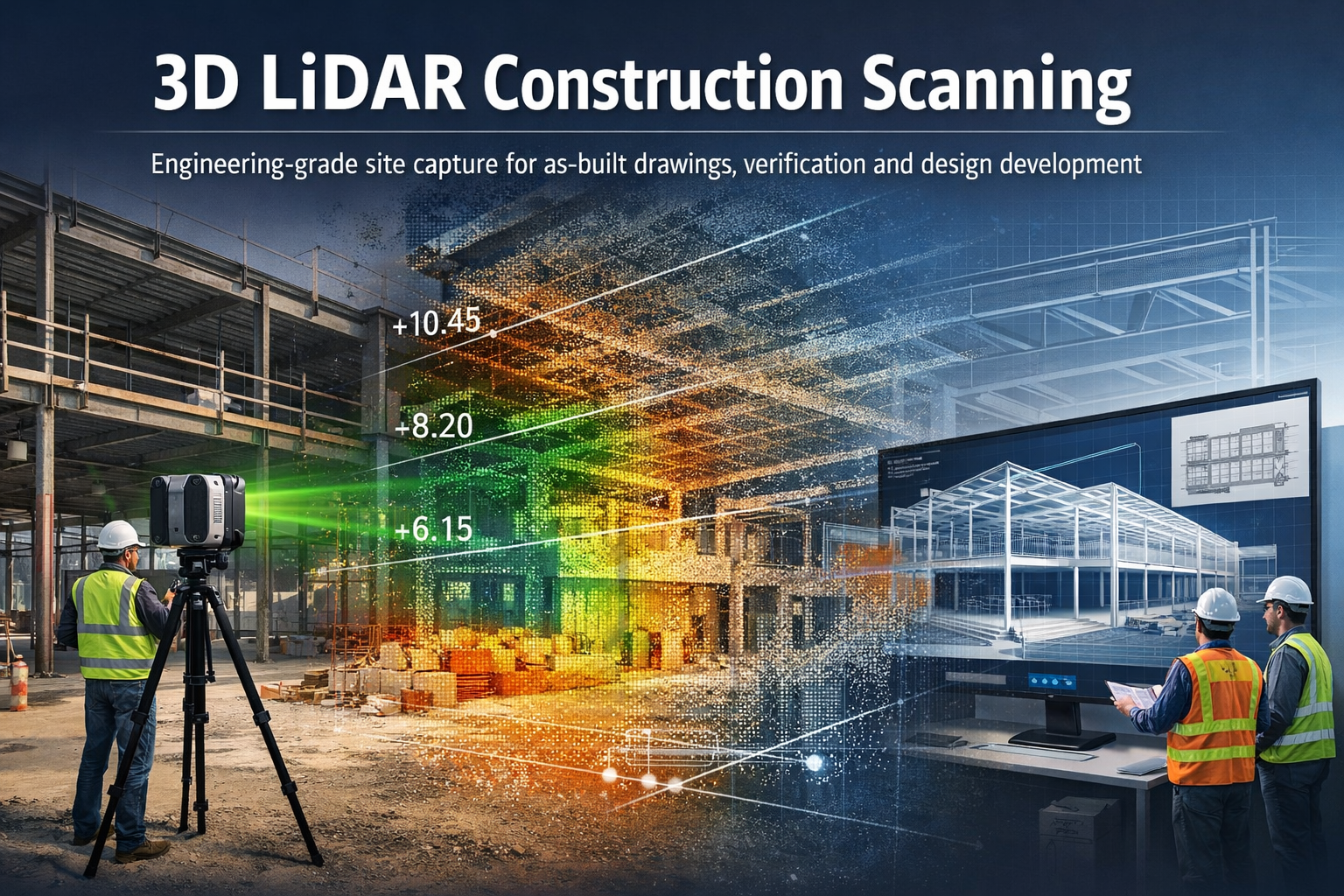
3D LiDAR Construction Scanning

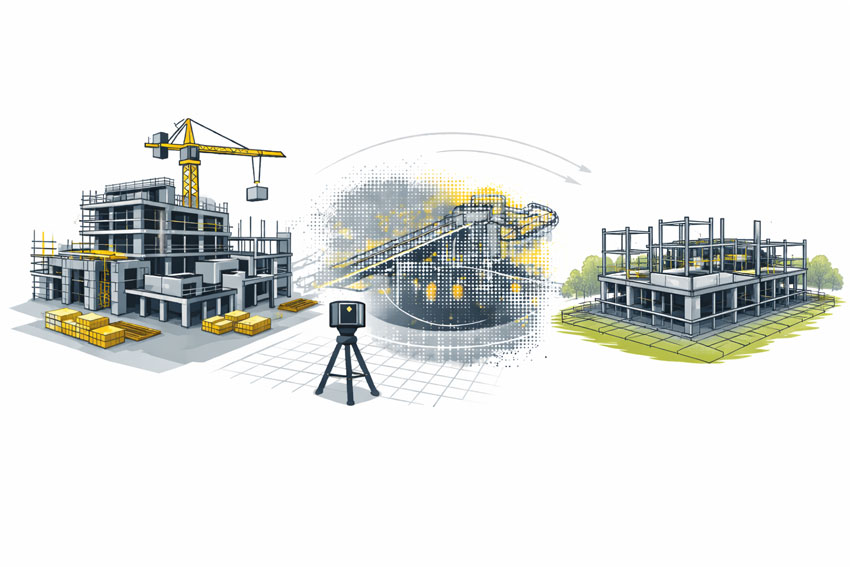
3D LiDAR construction scanning capturing a building site and converting it into a point cloud and engineering model

Engineering-Grade Reality Capture for Construction Projects

3D LiDAR construction scanning is transforming how engineers, builders, and project teams capture and understand existing site conditions.

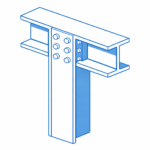
Structural steel I-beam bolted connection with column in isometric view.

Hamilton By Design provides engineering-grade 3D LiDAR scanning services for construction projects, helping capture accurate digital models of buildings, structures, and construction sites before, during, and after construction works. Using advanced laser scanning technology, millions of precise measurements can be captured within minutes to produce detailed 3D point clouds and digital models of real-world structures. These models provide reliable information for planning, design, verification and as-built documentation.

Our scanning workflows allow project teams to move from existing construction conditions to accurate engineering models, helping reduce uncertainty and improve project outcomes.


What is 3D LiDAR Construction Scanning?

3D LiDAR scanning uses laser-based sensors to measure distances between the scanner and surrounding surfaces. The system records millions of measurements which form a point cloud representing the exact geometry of the construction environment.

These point clouds create highly detailed digital representations of buildings, infrastructure and construction sites that can be measured, analysed and modelled in engineering software.

For construction projects this provides a powerful way to:

  • capture existing building geometry
  • verify construction progress
  • generate accurate as-built drawings
  • support design coordination
  • analyse levels, clearances and spatial constraints

Modern LiDAR scanning allows engineers to capture entire buildings and construction sites quickly and accurately, creating reliable digital data for planning and engineering workflows.


Applications of LiDAR Scanning in Construction

3D LiDAR scanning supports a wide range of construction and engineering tasks.

As-Built Documentation

Construction drawings often become outdated as projects evolve. LiDAR scanning provides accurate as-built documentation of structures, capturing the exact conditions present on site.

These datasets can be used to generate:

  • floor plans
  • elevations
  • cross sections
  • building models
  • digital twins of facilities

Learn more:


Construction Verification and Quality Control

Scanning can be used during construction to verify that structures match the design intent.

Point cloud data can be compared against design models to identify:

  • structural deviations
  • alignment issues
  • level variations
  • installation conflicts

This helps project teams identify problems early before they become costly construction errors.


Renovation and Refurbishment Projects

Older buildings often have incomplete or inaccurate drawings.

3D LiDAR scanning provides a reliable way to capture existing conditions before renovation works begin. Engineers and designers can then develop new designs directly from the scanned data.

This reduces risk and ensures that new components fit correctly within existing structures.

Related page:


Structural and Architectural Analysis

Construction scanning can also be used to analyse structural geometry and building profiles, including:

  • roof profiles and screed levels
  • slab levels and floor flatness
  • faรงade alignment
  • structural steel positioning
  • drainage and fall verification

These measurements allow engineers to identify geometry problems early and support accurate construction planning.


The Scan to Engineering Model Workflow

Hamilton By Design integrates LiDAR scanning with engineering modelling workflows.

Typical project workflow:

Existing Construction Site
โ†“
3D LiDAR Scanning
โ†“
Point Cloud Processing
โ†“
Scan-to-CAD Modelling
โ†“
Engineering Analysis and Design

This workflow allows engineers to work from accurate digital representations of real-world conditions, reducing the need for repeated site visits and manual measurements.


Benefits of LiDAR Scanning for Construction Projects

3D LiDAR scanning provides several advantages compared with traditional measurement methods.

Accurate Site Data

Laser scanners capture millions of measurements quickly, producing detailed datasets that accurately represent site conditions.

Reduced Project Risk

Accurate site data reduces the risk of design errors, construction conflicts and unexpected site conditions.

Faster Site Surveys

Entire buildings and construction areas can be captured in a short time, reducing the need for multiple survey visits.

Improved Project Coordination

Point cloud data can be shared between architects, engineers and contractors, ensuring everyone works from the same information.

Support for Digital Engineering Workflows

LiDAR scanning supports modern design processes such as:

  • scan-to-CAD modelling
  • digital twins
  • BIM coordination
  • construction verification

Engineering-Grade 3D Laser Scanning

Blue 3D LiDAR scanner icon on a tripod with scanning waves

Hamilton By Design provides professional scanning services focused on engineering and industrial applications, not just visualisation.

Our scanning workflows support projects across:

  • industrial facilities
  • infrastructure projects
  • buildings and structures
  • construction sites
  • mechanical and structural engineering projects

Learn more about our scanning capabilities:


When is LiDAR Construction Scanning Most Valuable?

3D scanning is particularly useful in situations where accurate geometry is critical.

Examples include:

  • building renovations
  • structural modifications
  • plant installations within buildings
  • roof level and drainage analysis
  • verifying construction tolerances
  • documenting existing conditions before construction

In many cases the cost of scanning is small compared with the potential cost of construction errors.


Hamilton By Design logo displayed on a blue tilted rectangle with a grey gradient background
3D LiDAR scanning and 3D modelling service button โ€” laser scanner capturing a point cloud for engineering and CAD modelling
Mechanical engineering services

Talk With Hamilton By Design

If you require 3D LiDAR construction scanning for engineering or building projects, Hamilton By Design can help capture accurate digital models of your site.

Our team specialises in scanning workflows that support engineering analysis, design development and construction planning.

Contact Hamilton By Design to discuss your project requirements.

Name
Would you like us to arrange a phone consultation for you?
Address
3D CAD Modelling Australia service banner for Hamilton By Design

3D Scanning Services in Melbourne

3D Scanning Services Melbourne | Engineering-Grade LiDAR for Construction & Manufacturing

Hamilton By Design provides engineering-grade 3D scanning services in Melbourne and Victoria, supporting local construction projects, manufacturing facilities, and industrial environments where accurate spatial data and engineering confidence are essential. Our services deliver reliable, measurable 3D data that feeds directly into design, coordination, fabrication, and compliance workflows, reducing risk and improving outcomes on complex projects.

Melbourneโ€™s diverse built environment includes major infrastructure, commercial and residential development, advanced manufacturing hubs, and precision fabrication facilities. These industries demand precise as-built documentation, engineering-ready models, spatial verification, and detailed capture workflows that support multi-discipline coordination and installation planning.


Why Melbourne Projects Benefit from Engineering-Grade 3D Scanning

3D scanning in Melbourne is not just about capture โ€” itโ€™s about delivering usable, accurate data that supports real engineering outcomes.

Construction Coordination & Verification
Melbourneโ€™s construction landscape involves high-density urban sites, retrofits, complex faรงade integration, and multi-trade coordination. High-accuracy 3D scan data supports clash detection, installation planning, and design validation.

Advanced Manufacturing & Fabrication
Manufacturing facilities โ€” from precision machine shops to large-scale fabrication plants โ€” rely on verified spatial information for layout verification, retrofit of plant and equipment, and precision assembly. Scan-to-CAD workflows ensure manufacturing outputs integrate correctly with existing infrastructure.

Brownfield & Retrofit Environments
Existing facilities and older infrastructure often lack reliable drawings. Engineering-grade scanning captures current conditions with measurable accuracy, allowing design and construction teams to work from a verified baseline.

Compliance & Documentation
As-built documentation is increasingly required for approvals, audits, regulatory compliance, and handover deliverables. Professional scanning workflows ensure outputs are traceable, measurable, and suitable for technical review.


Our 3D Scanning Services in Melbourne

We provide a comprehensive suite of engineering-focused 3D scanning services tailored to construction and manufacturing environments:

  • Engineering-Grade LiDAR & 3D Laser Scanning
    High-precision capture of buildings, structures, plant, and manufacturing assets.
  • Construction Verification & Clash Detection
    Spatial datasets aligned to design models to support coordination and sequencing.
  • Manufacturing Facility Scanning
    Accurate capture of machine centres, conveyors, jigs, fixtures, and factory layouts.
  • Brownfield & Retrofit Scanning
    Measurable site data for expansion, upgrade, and renovation projects.
  • Scan-to-CAD Modelling
    Transforming point clouds into usable 3D CAD models for engineering, fabrication, and drafting.
  • Verified Geometry for Compliance & Installation
    Deliverables suitable for engineering checks, compliance documentation, and construction execution.

Each scan is performed with the downstream use in mind โ€” data engineered for reliable decision-making, not just visual reference.


Our clients:

Typical Melbourne Project Applications

Our Melbourne 3D scanning services are frequently applied to:

  • High-density urban construction coordination
  • Structural and faรงade verification
  • Manufacturing plant layout and retrofit capture
  • Shop floor as-built documentation
  • Mechanical and ductwork coordination
  • Building systems integration and clash avoidance
  • Technical compliance and regulatory documentation

These use cases reflect real engineering and construction needs where traditional measurement methods fall short.


Supporting Engineering Services for Melbourne Projects

3D scanning is often integrated with broader engineering and documentation deliverables. Hamilton By Design provides:

  • 3D CAD Modelling (Scan-to-CAD)
    Delivering engineering-ready models from site capture data.
  • As-Built Drawings for Compliance & Procedural Use
    Documentation suitable for approvals, audits, and asset handover.
  • Emergency Exit & Egress Drawing Development
    Safety planning and compliance documentation based on verified geometry.
  • Finite Element Analysis (FEA)
    Engineering evaluation of load, deflection, or modification impacts.
  • 3D Rendering & Visual Models
    Supporting stakeholder reviews, approvals, and presentations.
  • Precision Scanning for Fabrication & Installation Planning
    Reducing onsite uncertainty and supporting fit-first-time outcomes.

Hamilton By Design logo displayed on a blue tilted rectangle with a grey gradient background
3D LiDAR scanning and 3D modelling service button โ€” laser scanner capturing a point cloud for engineering and CAD modelling
Mechanical engineering services

Engineering-Led 3D Scanning You Can Rely On

Hamilton By Designโ€™s 3D scanning services in Melbourne are deeply grounded in engineering practice, not just visual capture. We understand how scan data is used โ€” from initial design review through to fabrication and construction โ€” and we deliver 3D point clouds and models that integrate smoothly into engineering workflows. This ensures accuracy, confidence, and better project outcomes across the full lifecycle of your project.


Contact Us About a Melbourne 3D Scanning Project

If you are planning a construction project, manufacturing facility upgrade, or complex retrofit in Melbourne or regional Victoria and need engineering-grade 3D scanning, contact Hamilton By Design to discuss your requirements and ensure your data capture supports your engineering and project delivery objectives.

Name
Would you like us to arrange a phone consultation for you?
Address
3D LiDAR scanning and 3D modelling service button โ€” laser scanner capturing a point cloud for engineering and CAD modelling
Mechanical engineering services
Finite Element Analysis (FEA) engineering simulation button
Mechanical engineering services

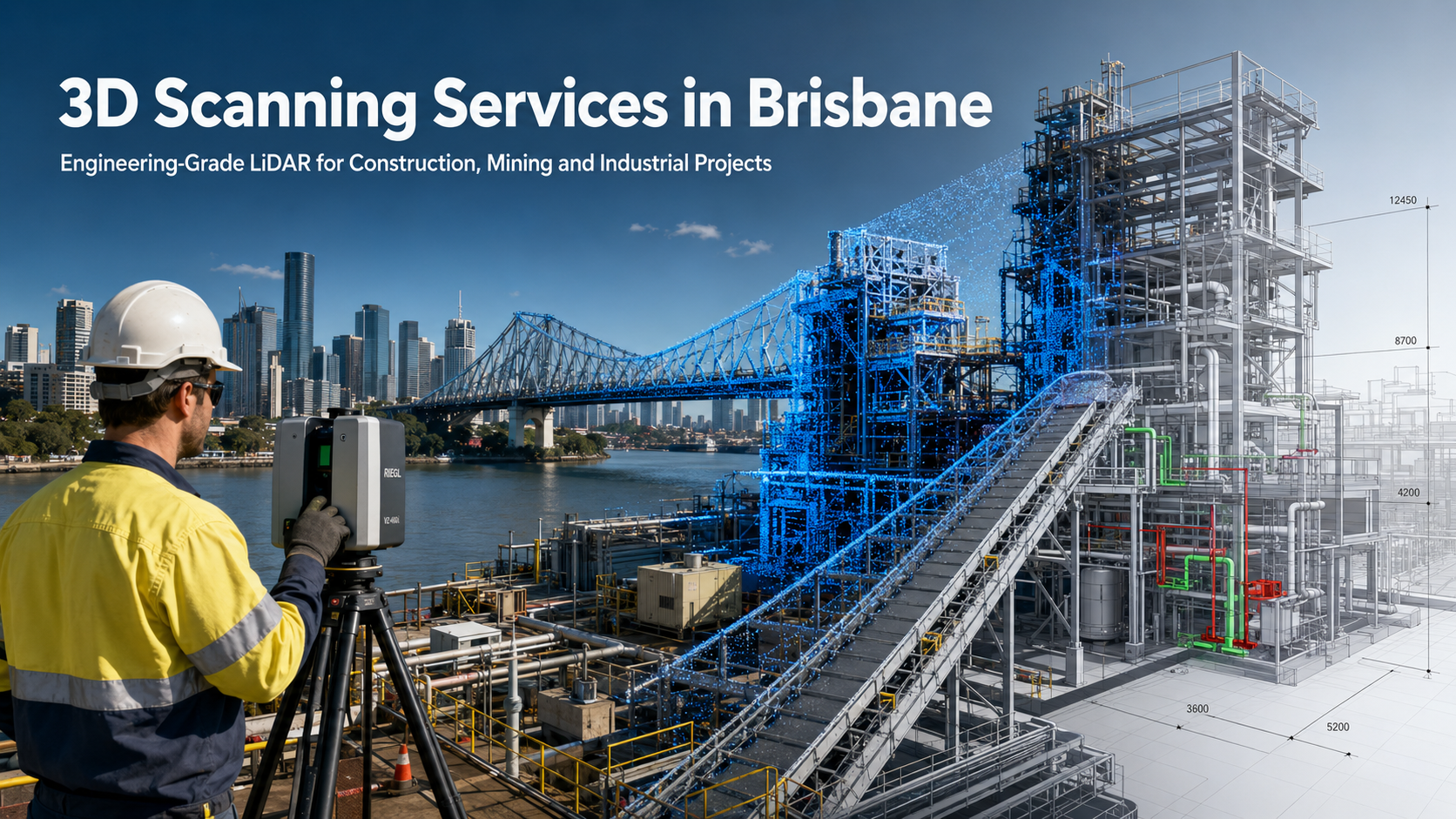
3D Scanning Services in Brisbane

3D Scanning Services Brisbane | Engineering-Grade LiDAR for Construction & Mining

Hamilton By Design delivers engineering-grade 3D scanning services in Brisbane and throughout Queensland, supporting local construction developments, major infrastructure projects, and heavy industry โ€” including remote mining facilities and regional assets. Our services combine high-precision data capture with engineering insight to provide actionable deliverables that drive planning, design, construction, verification, and fabrication outcomes.

As Brisbane prepares for major international events such as the Olympics, infrastructure delivery, asset upgrades, and construction coordination will require data accuracy, risk reduction, and tightly integrated engineering workflows. 3D scanning plays a critical role in enabling these outcomes by providing reliable, measurable site data that informs decision-making across complex projects.


Why Brisbane Projects Need Engineering-Grade 3D Scanning

Brisbane and Queensland host a dynamic mix of construction, industrial assets, and regional resource operations where documented reality often differs from legacy drawings and assumptions.

Local Construction & Infrastructure
With significant urban development in Brisbane โ€” including transport infrastructure, public buildings, and precinct upgrades โ€” accurate spatial data is essential for clash detection, installation planning, and verifying existing conditions before works begin.

Remote Mining & Heavy Industrial Facilities
Queenslandโ€™s mining and resources sector spans regional and remote locations, with processing plants, conveyor systems, structural steelwork, and mechanical installations. Engineering-grade scanning supports retrofit verification, asset condition assessment, and design coordination on projects where precision reduces risk and cost.

Event-Driven Infrastructure Delivery
Brisbaneโ€™s upcoming global events are accelerating infrastructure delivery. High-resolution, engineering-ready scan data mitigates uncertainty on tight programs by providing objective measurements that feed directly into engineering models and construction coordination.

Regulatory & Compliance Requirements
Builders, engineers, and asset owners increasingly demand as-built documentation that is defensible, traceable, and usable for approvals, audits, and certification. Our scanning workflows are designed with these practical requirements in mind.


Our 3D Scanning Services in Brisbane

We deliver a full range of engineering-focused 3D scanning services that integrate with real project workflows:

  • Engineering-Grade LiDAR & 3D Laser Scanning
    High-accuracy capture of buildings, plant, structures, and industrial assets tailored to engineering and design needs.
  • Construction Verification & Clash Avoidance
    Spatial data that supports coordination, sequencing, and verification against design models.
  • Remote Mining Facility Scanning
    Accurate capture of processing plants, conveyors, structural systems, and equipment layouts at regional mining sites.
  • Brownfield & Retrofit Scanning
    Quantifiable site data for asset upgrades, expansions, and revision projects.
  • Scan-to-CAD Modelling
    Translating point cloud data into usable 3D CAD models for mechanical, structural, and fabrication workflows.
  • Verified Geometry & Engineering Deliverables
    Outputs suitable for engineering analysis, compliance documentation, and construction execution.

Each capture is executed with the downstream user in mind โ€” not simply a visual data set but engineered, measurable digital information that supports technical decision-making.


Our clients:

Typical Brisbane & Regional Project Applications

Our Brisbane 3D scanning services are widely used across heavy industry and complex construction environments, including:

  • Urban construction and infrastructure verification
  • High-rise faรงade and structural coordination
  • Precinct upgrades and multi-discipline installation planning
  • Regional mining plant and processing infrastructure capture
  • Conveyor systems and structural steelwork layouts
  • Compliance and regulatory as-built documentation

These applications are common where traditional measurement methods are inadequate or risk rework and delays.


Supporting Engineering Services for Brisbane Projects

In most projects, 3D scanning is just the start. Hamilton By Design frequently partners with clients to deliver the following integrated engineering services:

  • 3D CAD Modelling (Scan-to-CAD)
    Engineering-ready models derived from verified site data.
  • As-Built Drawings for Compliance & Procedural Use
    Documentation suitable for approvals, audits, and asset handover.
  • Emergency Exit & Egress Drawing Development
    Safety documentation based on verified geometry.
  • Finite Element Analysis (FEA)
    Engineering assessment where load-bearing performance or modification impact must be confirmed.
  • 3D Rendering & Virtual Models
    Visualisation that supports stakeholder reviews, approvals, and presentations.
  • Precision Scanning for Fabrication & Installation Planning
    Reducing onsite uncertainty and supporting fit-first-time outcomes.

Hamilton By Design logo displayed on a blue tilted rectangle with a grey gradient background
3D LiDAR scanning and 3D modelling service button โ€” laser scanner capturing a point cloud for engineering and CAD modelling
Mechanical engineering services

Engineering-Led 3D Scanning You Can Rely On

Hamilton By Designโ€™s 3D scanning services in Brisbane are grounded in engineering practice, not just capture. We understand how scan data will be used โ€” from design and coordination through to fabrication and installation โ€” and we deliver 3D point clouds and models that integrate seamlessly into engineering workflows. This ensures accuracy, improves insight, and supports confident decision-making across complex projects.


Contact Us About a Brisbane 3D Scanning Project

If you are planning a construction project, infrastructure upgrade, or regional mining facility work that requires precise, engineering-grade 3D scanning, contact Hamilton By Design to discuss your requirements and ensure the right data capture approach for your project.

Name
Would you like us to arrange a phone consultation for you?
Address
Finite Element Analysis (FEA) engineering simulation button
Mechanical engineering services

3D Construction Scan in Brisbane

Engineering-Grade Reality Capture for Live Construction Environments

Construction projects in Brisbane operate under conditions that place unique pressure on engineers, builders, and asset owners. Subtropical climate, flood-affected sites, reactive soils, dense CBD logistics, and a strong reliance on brownfield upgrades all increase one fundamental risk: designing and constructing from incorrect or outdated site information.

A 3D construction scan in Brisbane provides engineering-grade certainty by capturing what actually exists on site, enabling informed decisions during live construction, refurbishment, and staged delivery projects.


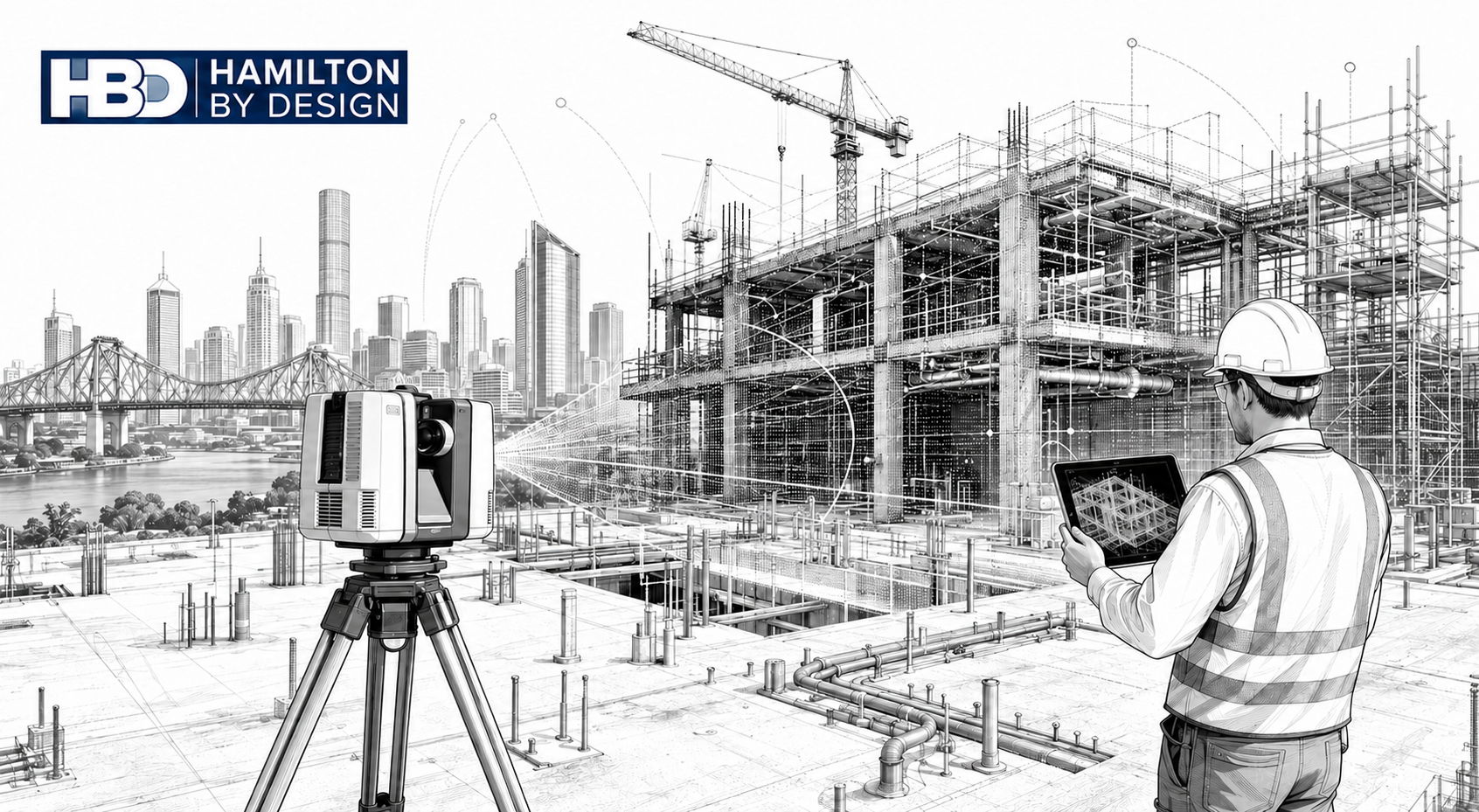
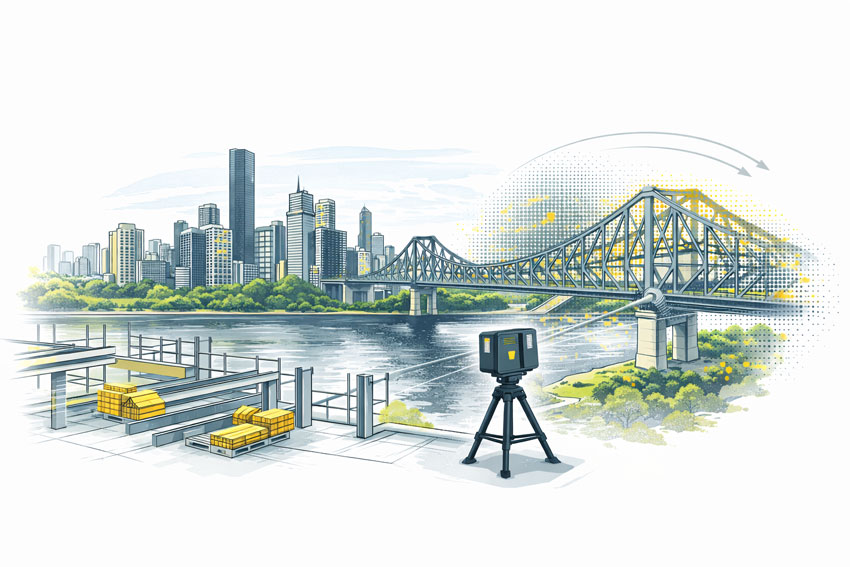
3D construction scanning in Brisbane using a FARO laser scanner at a building site overlooking the Story Bridge and Brisbane River

3D LiDAR scanning and 3D modelling service button โ€” laser scanner capturing a point cloud for engineering and CAD modelling
Mechanical engineering services

What Is a 3D Construction Scan?

A 3D construction scan uses high-accuracy LiDAR laser scanning to capture the true as-built condition of a site at a specific point in time. Unlike visual scans or phone-based capture, engineering-grade scanning produces registered point clouds that can be trusted for:

  • Construction coordination
  • Design verification
  • Clash detection
  • Fabrication-ready modelling
  • As-built documentation

Hamilton By Design delivers these outcomes through its engineering-led laser scanning services, where accuracy, downstream use, and construction risk are defined before scanning begins.


https://www.hamiltonbydesign.com.au/laser-scanning-engineering-brisbane-cbd/3d-scanning-brisbane/


Why Brisbane Construction Projects Require a Different Approach

Subtropical Climate & Structural Movement

Brisbaneโ€™s humidity and temperature cycles contribute to thermal expansion, contraction, and cumulative movement across steelwork, pipe runs, conveyors, faรงades, and plant installations.

When construction decisions rely on assumed geometry or legacy drawings, even small movements can result in:

  • Misaligned interfaces
  • Fabrication clashes
  • Installation delays

A 3D construction scan captures the current, in-situ geometry, allowing engineers to design and coordinate based on reality โ€” not historical intent.

Flood-Affected & Modified Assets

Many Brisbane sites โ€” particularly river-adjacent commercial and industrial facilities โ€” have undergone multiple flood recovery and modification cycles. Over time, this results in:

  • Changed floor levels
  • Unrecorded ramps and bunds
  • Altered drainage and gravity-dependent systems

Construction scanning establishes a true datum and elevation baseline, supporting engineering verification of falls, access clearances, and tie-in points.

This capability aligns directly with Hamilton By Designโ€™s broader reality capture and as-built verification workflows.


https://www.hamiltonbydesign.com.au/reality-capture-services/


Brownfield Construction Is the Norm

A significant proportion of Brisbane construction work occurs in live, operational environments, including:

  • Commercial refurbishments
  • Industrial plant upgrades
  • Infrastructure modifications
  • Asset life-extension projects

These sites often contain undocumented steelwork, legacy penetrations, and accumulated modifications. A 3D construction scan enables non-intrusive capture of this complexity, supporting engineering coordination without disrupting operations.

Tight CBD Logistics & Vertical Construction

Brisbaneโ€™s CBD presents unique logistical challenges:

  • Limited laydown space
  • Vertical risers and congested services zones
  • Restricted crane and hoist access
  • Staged installation sequencing

In these environments, components must fit first time. Construction scanning supports:

  • Early clash detection
  • Verification before fabrication
  • Confident off-site prefabrication

This process integrates directly with Hamilton By Designโ€™s 3D point cloud modelling and coordination services.

https://www.hamiltonbydesign.com.au/3d-point-cloud-modelling/

Reactive Soils & Differential Settlement

Reactive clay soils common throughout South-East Queensland contribute to long-term differential settlement, particularly where new construction interfaces with older structures. Over time, this can lead to:

  • Misaligned columns and beams
  • Drift in conveyors and pipe racks
  • Geometry that no longer matches design intent

A construction scan captures current condition, enabling engineers to design extensions and upgrades that reflect actual site geometry.


Construction Scanning vs Generic 3D Scanning

Not all scanning is suitable for construction engineering.

AspectGeneric ScanEngineering-Led Construction Scan
AccuracyVisual or indicativeMillimetre-grade
OutputMeshes or imagesRegistered point clouds
Engineering UseLimitedDesign & fabrication
Risk ReductionLowHigh
Construction ReadyNoYes

Hamilton By Design positions construction scanning as part of an integrated engineering workflow, not a standalone data capture exercise.


https://www.hamiltonbydesign.com.au/3d-engineering-services/


How 3D Construction Scans Are Used on Brisbane Projects

Engineering-grade construction scans are routinely used to support:

  • Clash detection across structure and services
  • Verification scans prior to fabrication
  • Construction sequencing and staging
  • As-built documentation for handover
  • Reduced RFIs, rework, and site delays

These outcomes are particularly valuable on commercial and construction projects where access, timing, and accuracy are critical.


https://www.hamiltonbydesign.com.au/commercial-construction-engineering/


3D laser scanning of a commercial building under construction showing as-built capture and coordination before wall closure

The Hamilton By Design Difference

Hamilton By Design delivers engineering-grade 3D construction scanning with a clear focus on constructability and downstream use.

Our approach combines:

  • Engineer-led scanning strategies
  • Defined accuracy requirements
  • Integration with mechanical and structural design
  • Outputs suitable for fabrication and installation

This approach ensures construction teams can rely on scan data with confidence โ€” especially on complex Brisbane projects.


When should a 3D Construction Scan Be Used?

A 3D construction scan in Brisbane is most valuable when:

  • Working in brownfield or live environments
  • Verifying conditions before fabrication
  • Coordinating multiple trades in tight spaces
  • Managing staged refurbishments
  • Reducing construction risk and uncertainty

Hamilton By Design logo displayed on a blue tilted rectangle with a grey gradient background

In Brisbane, construction risk is rarely driven by poor engineering.
It is driven by decisions made using incorrect or outdated information.

A 3D Construction Scan in Brisbane provides one critical advantage:
certainty about what actually exists on site, at the moment decisions are made.

Finite Element Analysis (FEA) engineering simulation button
3D LiDAR scanning and 3D modelling services button
Building and construction services button

Our clients:

Name
Would you like us to arrange a phone consultation for you?
Address
Finite Element Analysis (FEA) engineering simulation button
Mechanical engineering services