Reality Capture Sydney – CBD

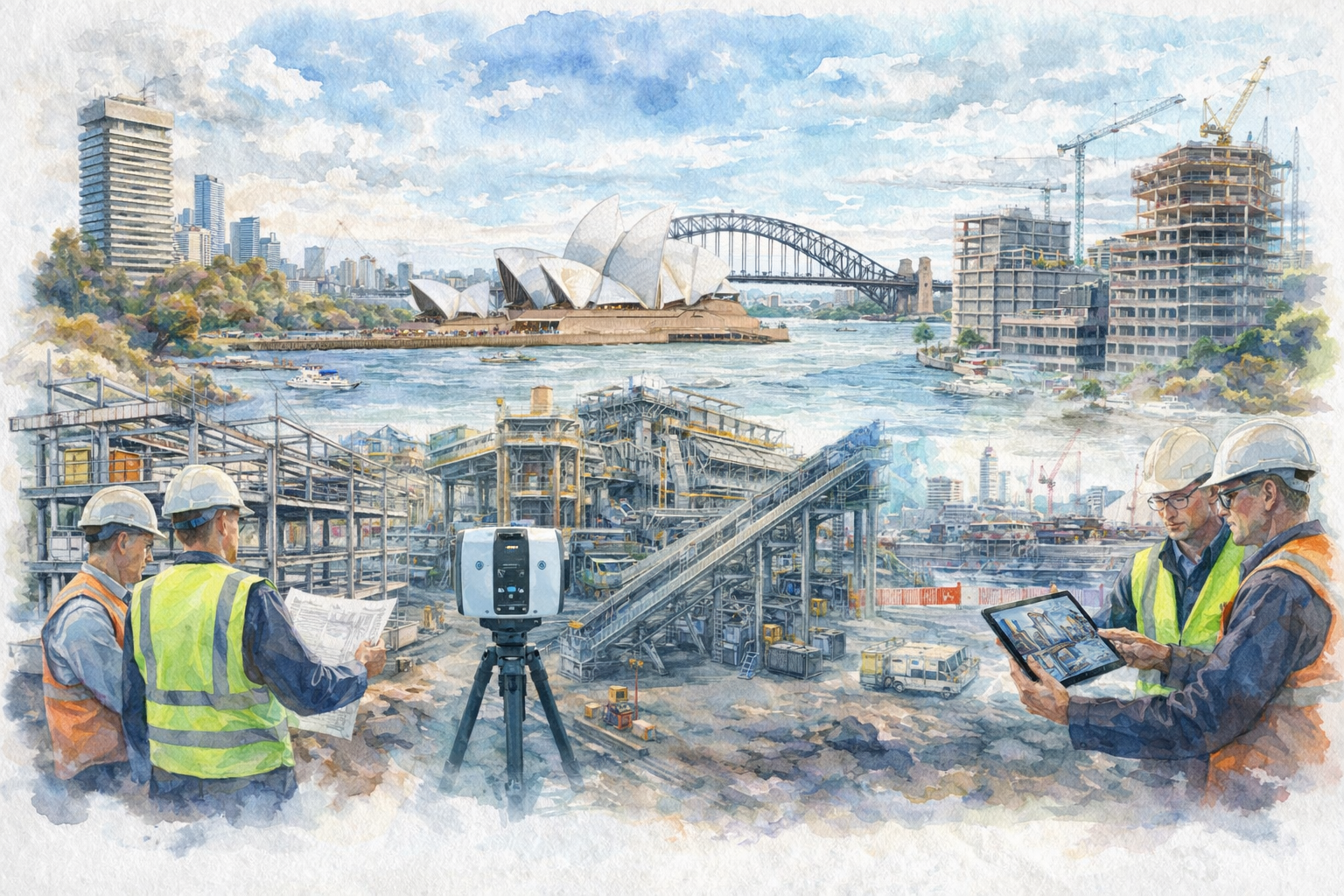
Reality capture Sydney showing LiDAR scanning across industrial, construction and infrastructure environments

Reality Capture for Sydney CBD Commercial Buildings


Reality Capture Sydney CBD

Sydney CBD contains some of Australia’s most complex commercial buildings, infrastructure assets and operational facilities. From high-rise office towers and hotels to hospitals, transport infrastructure and critical building services, accurate existing-condition information is essential for successful project delivery.

Hamilton By Design provides engineering-led reality capture services throughout Sydney CBD, combining terrestrial LiDAR scanning, digital engineering and practical industry experience to create accurate digital representations of existing environments.

Reality capture enables project teams to document buildings, plant rooms, building services, infrastructure and operational facilities with a level of detail that traditional measurement methods cannot achieve efficiently. The resulting data can support refurbishment projects, services upgrades, asset management programs, digital twin development, engineering design and construction planning.

By capturing measured reality rather than relying on outdated drawings or assumptions, project teams can reduce risk, improve coordination and make better-informed decisions throughout the project lifecycle.

Reality Capture for Sydney CBD Plant Rooms

Plant rooms within Sydney CBD buildings often contain decades of modifications, undocumented services and limited access for traditional measurement methods.

Reality capture provides a fast and accurate method of documenting mechanical services, pipework, structural steel, cable trays and equipment layouts before engineering design begins.

The resulting point cloud allows project teams to work from measured site conditions, reducing uncertainty and improving coordination throughout the design and construction process.

Many Sydney CBD projects involve HVAC upgrades, chiller replacements, pump room modifications, fire service upgrades and electrical infrastructure improvements where accurate existing-condition information is critical. Engineering-grade reality capture provides a reliable foundation for these projects while minimising the need for repeated site visits.
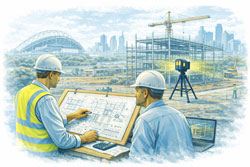
Mechanical engineer and client reviewing construction drawings beside a LiDAR scanner at a Western Sydney construction site with Sydney Olympic Park and Parramatta skyline in the background

Plant Rooms, Building Services & Infrastructure

Many Sydney CBD buildings contain complex mechanical, hydraulic, electrical and fire services installed over decades of operation.

Reality capture allows these environments to be documented quickly and accurately, providing engineers and contractors with reliable information for future modifications, equipment replacements and capacity upgrades.

Applications include:

  • HVAC plant rooms
  • Chiller installations
  • Pump rooms
  • Fire services
  • Electrical services
  • Building services coordination
  • Vertical risers
  • Roof plant installations

Existing Conditions for Refurbishment Projects

Accurate existing-condition information is critical when undertaking refurbishment projects within occupied commercial buildings.

Reality capture allows consultants and contractors to understand structural constraints, service routes, equipment locations and access requirements before design begins.

This reduces project risk, improves coordination and helps minimise costly site modifications during construction.


Heritage & Existing Building Documentation

Sydney CBD contains many historically significant buildings and structures that require accurate documentation before modification or restoration works can proceed.

Reality capture provides a non-invasive method of recording existing conditions while preserving important architectural and structural details.

The resulting datasets can support heritage studies, refurbishment planning, restoration projects and long-term asset management.


Digital Twins for Building Owners

Reality capture forms the foundation of many digital twin initiatives by providing an accurate digital representation of an existing building or facility.

For Sydney CBD asset owners, digital twins can assist with:

  • Facility management
  • Future upgrades
  • Asset lifecycle planning
  • Space management
  • Maintenance planning
  • Building information management

A well-developed digital twin provides a single source of truth for future engineering, maintenance and operational decision-making.


Reality Capture Applications Across Sydney CBD

Reality capture provides value wherever accurate existing-condition information is required before design, construction or asset management decisions are made.

Commercial Office Towers

Sydney CBD contains a large concentration of commercial office buildings that undergo continual refurbishment, tenancy fit-outs and building services upgrades.

Reality capture provides accurate existing-condition information that allows project teams to understand available space, identify constraints and develop coordinated engineering solutions before work reaches site.

Building Services Upgrades

Mechanical, hydraulic, fire and electrical services within operational buildings often evolve over many years, resulting in undocumented modifications and incomplete records.

Reality capture enables engineers and contractors to accurately document existing services and develop upgrade solutions with confidence.

Hotels, Hospitals and Critical Facilities

Hotels, hospitals and critical facilities require detailed planning before modifications can be undertaken.

Reality capture provides a comprehensive digital record of existing conditions, reducing uncertainty and helping project teams minimise disruption to operations during construction activities.

Data Centres and Technology Infrastructure

Sydney CBD continues to experience significant growth in data centre and technology infrastructure projects.

Reality capture supports equipment upgrades, cable routing studies, cooling system modifications and future expansion planning by providing accurate spatial information for engineering and construction teams.

Asset Management and Facility Operations

Accurate digital records support long-term asset management strategies by providing building owners with reliable information about equipment, infrastructure and building services.

Reality capture forms the foundation for future maintenance planning, facility upgrades and digital engineering initiatives throughout the asset lifecycle.

Engineering-Led Reality Capture

Hamilton By Design combines practical engineering experience with advanced reality capture technologies to deliver information that is suitable for engineering, design and construction applications.

Unlike many scanning providers, our team understands how captured data will ultimately be used for mechanical design, structural modifications, services coordination, drafting and project delivery.

This engineering-led approach ensures reality capture data becomes a practical project tool rather than simply a collection of scan files.
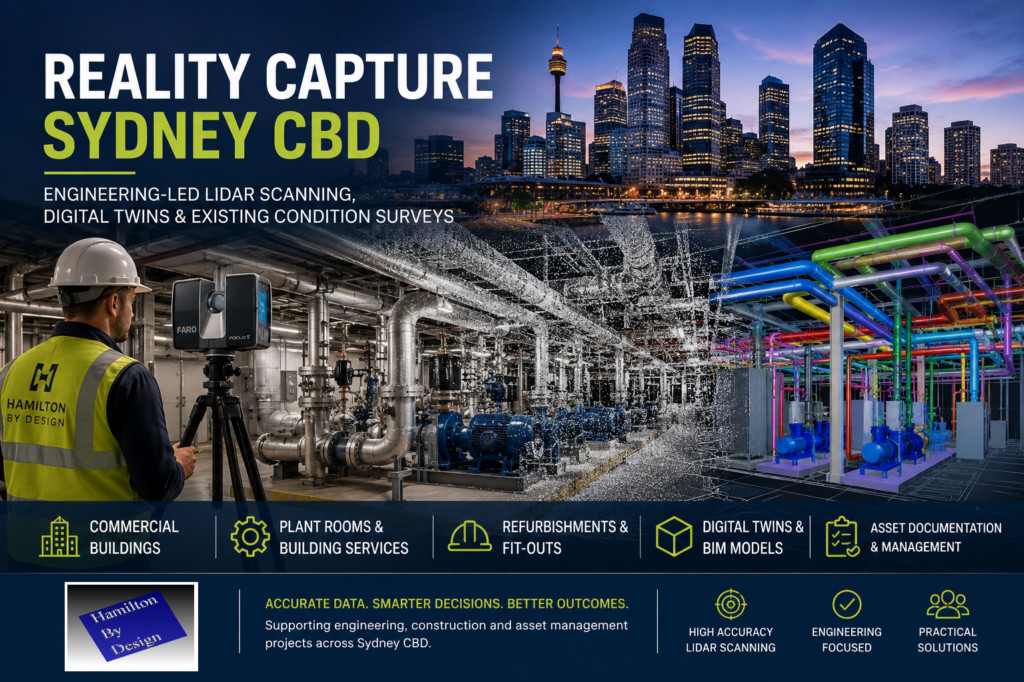
Reality Capture Sydney CBD hero image showing an engineer performing LiDAR scanning in a commercial building plant room, with a Sydney CBD skyline, point cloud data and digital twin model overlays representing engineering-led reality capture, asset documentation and existing-condition surveys.

Deliverables

Depending on project requirements, deliverables may include:

  • Registered point clouds (E57, RCP, RCS and LAS)
  • AutoCAD drawings
  • Existing-condition plans, sections and elevations
  • Mechanical CAD models
  • Structural models and drafting
  • Building services layouts
  • General Arrangement drawings
  • Asset documentation
  • Digital engineering models
  • Construction support information

3D LiDAR scanning and 3D modelling service button โ€” laser scanner capturing a point cloud for engineering and CAD modelling
Mechanical engineering services

Hamilton By Design also provides:

  • 3D Scanning Sydney
  • Sydney 3D LiDAR Scanning
  • Scan to CAD Sydney
  • Point Cloud Modelling Sydney
  • Mechanical Drafting Sydney
  • Structural Drafting Sydney
  • Reverse Engineering Sydney

Reality Capture Sydney CBD

Whether your project involves a commercial office tower, hotel, hospital, plant room, data centre or critical infrastructure facility, Hamilton By Design provides engineering-led reality capture services throughout Sydney CBD.

Our combination of terrestrial LiDAR scanning, digital engineering and practical project experience delivers accurate information that supports better engineering, construction and asset management outcomes.



Hamilton By Design logo displayed on a blue tilted rectangle with a grey gradient background

Contact Us – Talk to Us

Name
Would you like us to arrange a phone consultation for you?
Address
3D Scanning Sydney banner promoting engineering-grade 3D laser scanning, LiDAR scanning, and reality capture services by Hamilton By Design.
Mechanical Engineering Sydney banner with white text on a blue background representing Hamilton By Design's mechanical engineering services in Sydney.
Mechanical Drafting and 3D Modelling Sydney banner highlighting Hamilton By Design's CAD drafting, 3D modelling, and engineering design services in Sydney.

Mechanical Engineering | Structural Engineering


Our Clients


Hamilton By Design provides engineering-led 3D scanning, LiDAR scanning, mechanical engineering and digital engineering services throughout Sydney and Greater Sydney.

Explore our related Sydney services:


  • 3D Scanning Sydney โ€“ Engineering-grade terrestrial laser scanning, as-built surveys and point cloud capture for industrial, infrastructure and commercial projects.
  • Reality Capture Sydney โ€“ High-accuracy reality capture, digital twins, asset documentation and engineering-grade site verification.
  • Scan to CAD Sydney โ€“ Convert point cloud data into AutoCAD, SolidWorks, Inventor and other engineering-ready CAD deliverables.
  • Point Cloud Modelling Sydney โ€“ Engineering-grade point cloud processing, clash detection, as-built verification and 3D modelling.
  • Mechanical Engineering Sydney โ€“ Mechanical design, plant upgrades, materials handling systems, conveyors, chutes, platforms and engineering support.
  • Structural Drafting Sydney โ€“ Structural steel drafting, fabrication drawings, GA drawings, workshop detailing and as-built documentation.

Hamilton By Design supports projects throughout Sydney CBD, Parramatta, Liverpool, Penrith, Blacktown, Chatswood, Alexandria, Mascot, Newcastle and the Central Coast.


Blue banner graphic displaying the text "Point Cloud to CAD - Australia" in large white lettering, representing point cloud processing, scan-to-CAD conversion and digital engineering services across Australia.
Blue banner graphic displaying the text "Scan to CAD Sydney" in large white lettering, representing engineering-led point cloud to CAD conversion, LiDAR scanning and digital engineering services in Sydney.
Blue banner graphic displaying the text "Reality Capture Sydney - CBD" in large white lettering, representing engineering-led reality capture, LiDAR scanning and digital engineering services within Sydney CBD commercial buildings and infrastructure.
3D CAD Modelling Australia service banner for Hamilton By Design
3D LiDAR Scanning Darwin for engineering surveys, laser scanning, reality capture and point cloud modelling services
3D LiDAR Scanning Australia engineering services for laser scanning, reality capture, scan-to-CAD, Scan-to-BIM and as-built documentation across Australia
3D LiDAR scanning services on the Central Coast providing engineering-grade laser scanning, point cloud capture, scan-to-CAD modelling and industrial reality capture for infrastructure and industrial projects.

Digital Engineering for Conveyor and Materials Handling Systems

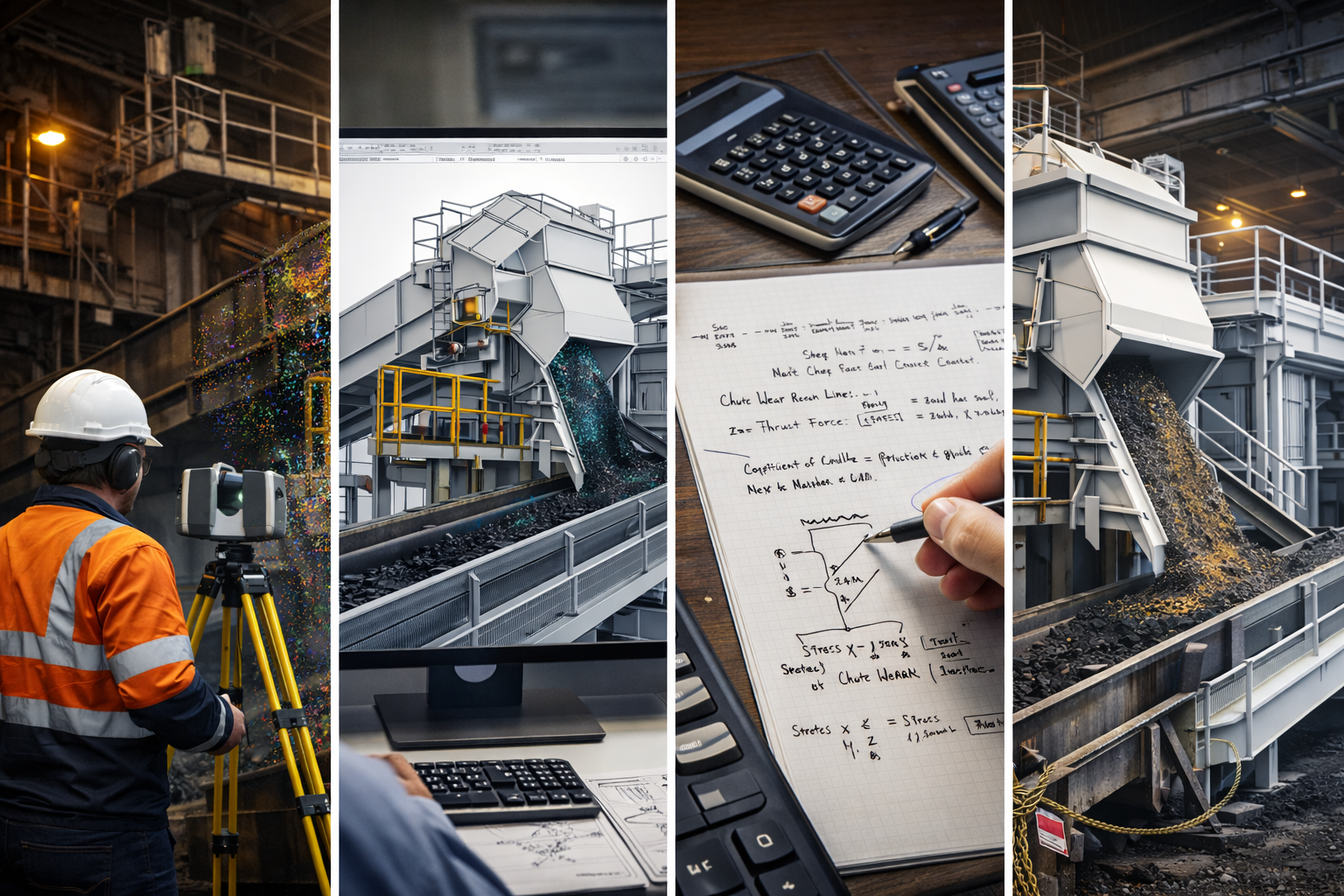
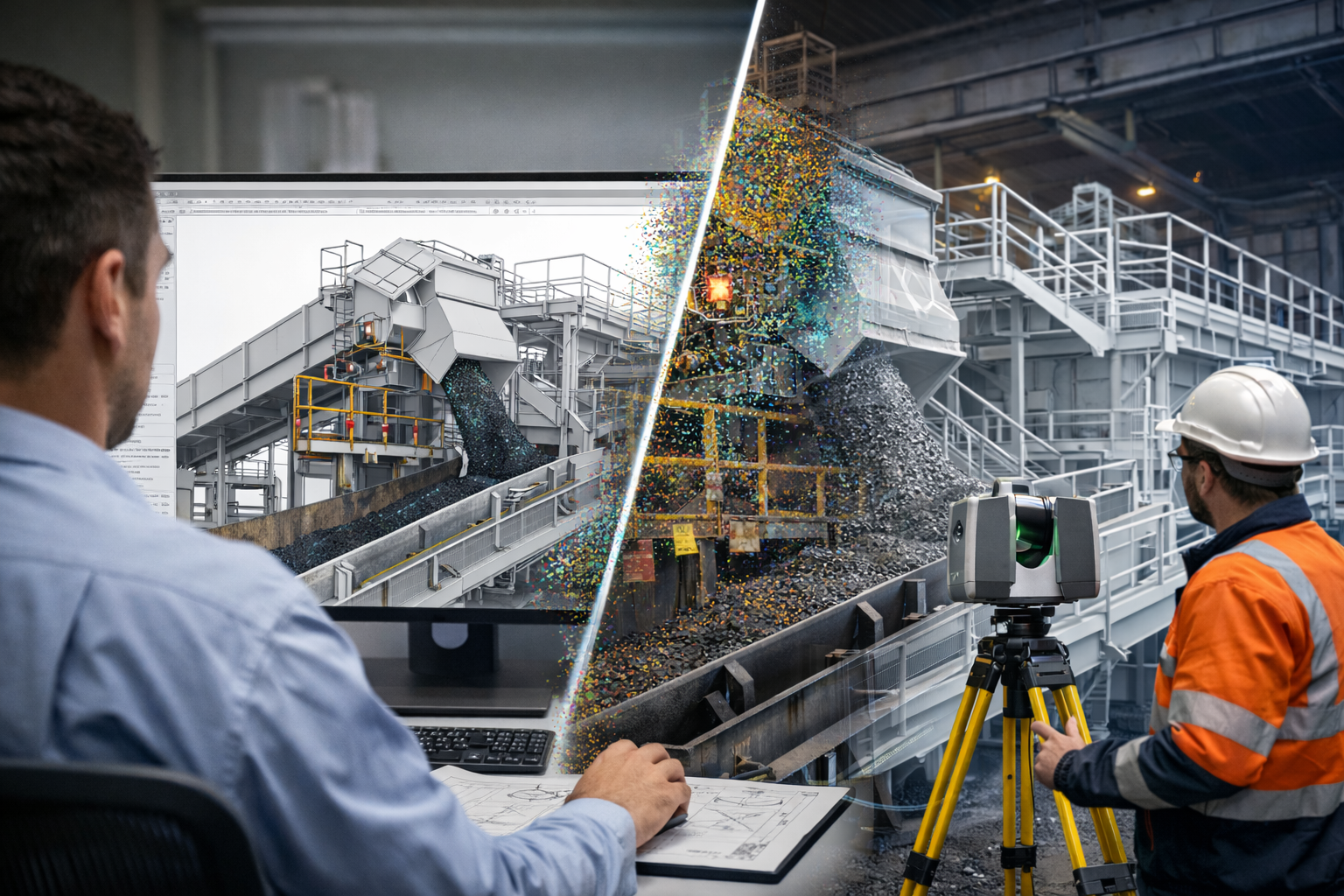
Mining conveyor engineering workflow showing laser scanning, 3D modelling, engineering calculations and installation of a transfer chute.

Mining Conveyor Engineering Design | Digital Engineering for Materials Handling Systems

Conveyor systems form the backbone of many mining and industrial processing operations. From coal handling plants and mineral processing facilities to port loading infrastructure, conveyors and transfer systems move large volumes of material continuously throughout the plant.

As mining infrastructure becomes more complex, engineering teams increasingly rely on digital engineering workflows to design, upgrade and maintain conveyor systems. These workflows combine laser scanning, point cloud modelling and 3D engineering design to improve accuracy and reduce project risk.

Digital engineering allows engineers to capture existing plant conditions, develop accurate engineering models, and design modifications with confidence before construction or shutdown activities begin.


The Role of Conveyor Engineering in Mining Operations

Conveyors transport bulk materials between key processing areas such as crushers, screens, stockpiles and ship loading systems. Because these systems operate continuously, even small design issues can cause major operational problems.

Common engineering challenges include:

  • transfer point blockages
  • excessive belt wear
  • material spillage and dust generation
  • structural fatigue in conveyor galleries
  • poor maintenance access

Effective mining conveyor engineering design focuses on improving reliability, safety and maintainability while ensuring the system integrates correctly with the surrounding plant infrastructure.

For further information on mechanical engineering services supporting mining operations see:
โžก Hamilton By Design Co. โ€“


Using Digital Models to Improve Conveyor Design

Traditional conveyor design often relied on outdated plant drawings or manual site measurements. However, many mining facilities have undergone decades of modifications, meaning the original design documentation no longer reflects the actual plant layout.

Modern engineering teams now use laser scanning and point cloud modelling to capture accurate representations of plant infrastructure.

These digital datasets allow engineers to develop detailed models of:

  • conveyor structures and galleries
  • transfer chutes and material flow points
  • structural steel platforms and walkways
  • access ladders and maintenance areas
  • surrounding plant equipment

By converting scan data into engineering models, designers can evaluate system upgrades with far greater accuracy.

Learn more about how scan data is converted into engineering models here:


Engineering Conveyor Upgrades During Shutdowns

Many conveyor upgrades are implemented during planned shutdowns where plant equipment must be isolated for maintenance or replacement.

During these shutdown windows engineers may install:

  • replacement transfer chutes
  • new conveyor sections
  • structural modifications
  • upgraded dust control systems
  • improved maintenance access platforms

Because shutdown windows are often limited to a few days, engineering design must be completed and validated before work begins.

Digital plant models allow engineers to confirm equipment clearances, identify potential clashes and develop fabrication drawings prior to the shutdown period.

More information on shutdown engineering preparation can be found here:


Transfer Chute Design in Materials Handling Systems

Transfer chutes are critical components in conveyor systems because they control the flow of material between conveyors or processing equipment.

Poor chute design can lead to:

  • material buildup and blockages
  • uneven belt loading
  • excessive dust generation
  • increased wear on belts and liners

Using digital plant models, engineers can analyse the surrounding infrastructure and design chute geometries that improve material flow and reduce maintenance issues.

Further insights into chute engineering design are available here:
โžก https://chutesandtransferstations.blogspot.com/2025/07/designing-for-durability-chutes.html


Hamilton By Design logo displayed on a blue tilted rectangle with a grey gradient background

3D LiDAR scanning and 3D modelling service button โ€” laser scanner capturing a point cloud for engineering and CAD modelling
Mechanical engineering services

Benefits of Digital Engineering for Materials Handling Systems

Digital engineering workflows provide several key advantages for mining infrastructure projects:

Improved design accuracy
Accurate plant models reduce errors caused by outdated drawings or incomplete measurements.

Reduced installation risk
Engineering models allow equipment fit-up to be verified before fabrication and installation.

Faster project delivery
Engineering teams can plan upgrades more efficiently using digital plant models.

Improved maintenance planning
Digital models support better access design and long-term asset management.


The Future of Conveyor Engineering

As mining operations continue to adopt digital engineering technologies, the design and maintenance of conveyor systems is becoming increasingly data-driven.

Technologies such as:

  • 3D laser scanning
  • point cloud modelling
  • digital twins
  • engineering simulation

are helping engineers develop more reliable materials handling systems and reduce operational downtime.

For mining operators planning plant upgrades or shutdown maintenance, integrating digital engineering into conveyor design workflows is becoming an essential part of modern infrastructure planning.

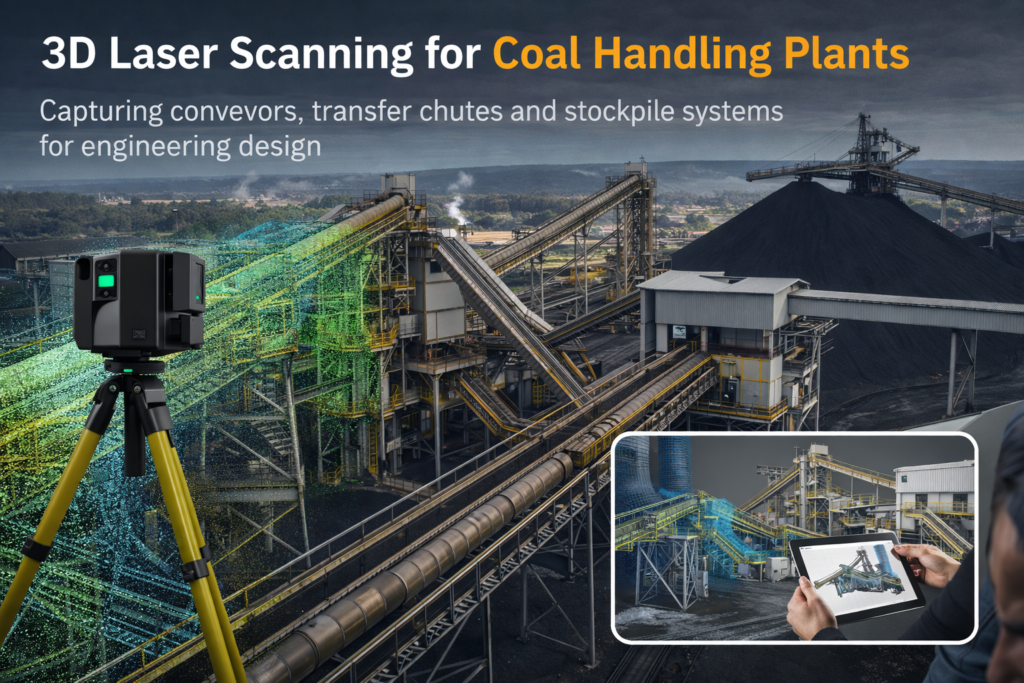
3D laser scanning of coal handling plant conveyors transfer chutes and stockpile systems for engineering design

Name
Would you like us to arrange a phone consultation for you?
Address
3D CAD Modelling Australia service banner for Hamilton By Design
Australian Drafting logo featuring bold white text reading "Australian Drafting" centred on a blue rounded rectangle background.
Engineering Governance title graphic featuring bold white text reading "Engineering Governance" centred on a blue rounded rectangle background.
Mechanical, Structural & Pipework Drafting service banner by Hamilton By Design featuring white text on a blue background.
Mechanical engineering services
Blue rounded button with the text โ€œSolidWorks Designโ€ in white.
Finite Element Analysis (FEA) engineering simulation button
3D LiDAR Scanning Darwin for engineering surveys, laser scanning, reality capture and point cloud modelling services
3D LiDAR Scanning Australia engineering services for laser scanning, reality capture, scan-to-CAD, Scan-to-BIM and as-built documentation across Australia
3D LiDAR scanning services on the Central Coast providing engineering-grade laser scanning, point cloud capture, scan-to-CAD modelling and industrial reality capture for infrastructure and industrial projects.
3D LiDAR Scanning Perth for engineering surveys, laser scanning, reality capture and point cloud modelling services
3D LiDAR Scanning Sydney for engineering surveys, laser scanning, reality capture and point cloud modelling services
3D LiDAR Scanning Brisbane for engineering surveys, laser scanning, reality capture and point cloud modelling services
3D LiDAR Scanning Canberra for engineering surveys, laser scanning, reality capture and point cloud modelling services
3D LiDAR Scanning Newcastle for engineering surveys, laser scanning, reality capture and point cloud modelling services
3D LiDAR Scanning Adelaide for engineering surveys, laser scanning, reality capture and point cloud modelling services

Point Cloud to Engineering Model for Mining Infrastructure

Point cloud mining infrastructure scanning connected to a 3D engineering model of a conveyor transfer chute.

Point Cloud to Engineering Model for Mining Infrastructure

Modern mining infrastructure is complex, constantly evolving, and rarely matches the original construction drawings. Over decades of plant upgrades, maintenance work, and operational modifications, the physical layout of conveyors, chutes, platforms, and structural steel often diverges significantly from historical design documentation.

For engineering teams planning plant upgrades or shutdown work, accurate site information is essential. One of the most effective ways to capture this information is through laser scanning and point cloud modelling, which allows engineers to convert real-world infrastructure into detailed digital engineering models.

The process of converting point cloud mining infrastructure data into engineering models is now widely used across the mining and bulk materials handling industries.


What Is a Point Cloud in Mining Infrastructure?

A point cloud is a dense collection of spatial measurements captured using 3D laser scanning equipment. Each point represents a precise location in space, allowing engineers to reconstruct the geometry of plant infrastructure with extremely high accuracy.

When scanning a mining facility, the point cloud may capture:

  • Conveyors and transfer stations
  • Structural steel platforms and walkways
  • Crushers, screens and processing equipment
  • Stockpile reclaim systems
  • Pipework and mechanical installations
  • Port and ship loading infrastructure

These datasets can contain millions or even billions of measurement points, forming a highly accurate digital representation of the plant environment.


Converting Point Clouds into Engineering Models

While point clouds provide valuable measurement data, they are not directly usable for engineering design. Engineers must convert the scan data into structured mechanical and structural models that can be used for analysis, fabrication and construction planning.

The typical engineering workflow includes:

1. Site Laser Scanning

The plant is scanned using high-accuracy laser scanning equipment to capture the geometry of existing infrastructure.

2. Point Cloud Processing

The raw scan data is registered and combined to form a unified point cloud representing the entire plant area.

3. Engineering Modelling

Engineers interpret the point cloud and convert key infrastructure elements into CAD models including:

  • Structural steel frameworks
  • Conveyor structures and galleries
  • Transfer chutes
  • Access platforms and walkways
  • Mechanical equipment interfaces

4. Engineering Design and Upgrades

The resulting model allows engineers to design plant modifications with confidence, ensuring equipment fits correctly within the existing infrastructure.

This workflow significantly reduces installation risk during shutdowns and upgrade projects.

For further information on mechanical engineering services for mining plants see:


Supporting Shutdown Planning and Plant Upgrades

Mining plants frequently undergo upgrades to improve reliability, throughput and maintenance access. Many of these upgrades are installed during planned shutdowns where downtime must be carefully controlled.

By developing accurate engineering models from point cloud data, engineers can:

  • Confirm clearances for new equipment
  • Identify potential clashes before fabrication
  • Design replacement transfer chutes and conveyors
  • Validate structural modifications
  • Improve maintenance access systems

These digital engineering models are particularly valuable for shutdown preparation.

More information about this process can be found here:


Transfer Chutes and Materials Handling Infrastructure

Transfer chutes are one of the most common areas requiring modification in coal handling plants and mining infrastructure. Poorly designed chutes can lead to excessive belt wear, blockages, dust generation and maintenance challenges.

Using point cloud models, engineers can analyse the surrounding infrastructure and design improved chute geometries that integrate correctly with existing conveyors and structures.

Learn more about chute engineering and materials handling design here:
โžก https://www.hamiltonbydesign.com.au/coal-chute-design/

Additional engineering insight is available in this technical article:
โžก https://chutesandtransferstations.blogspot.com/2025/07/designing-for-durability-chutes.html

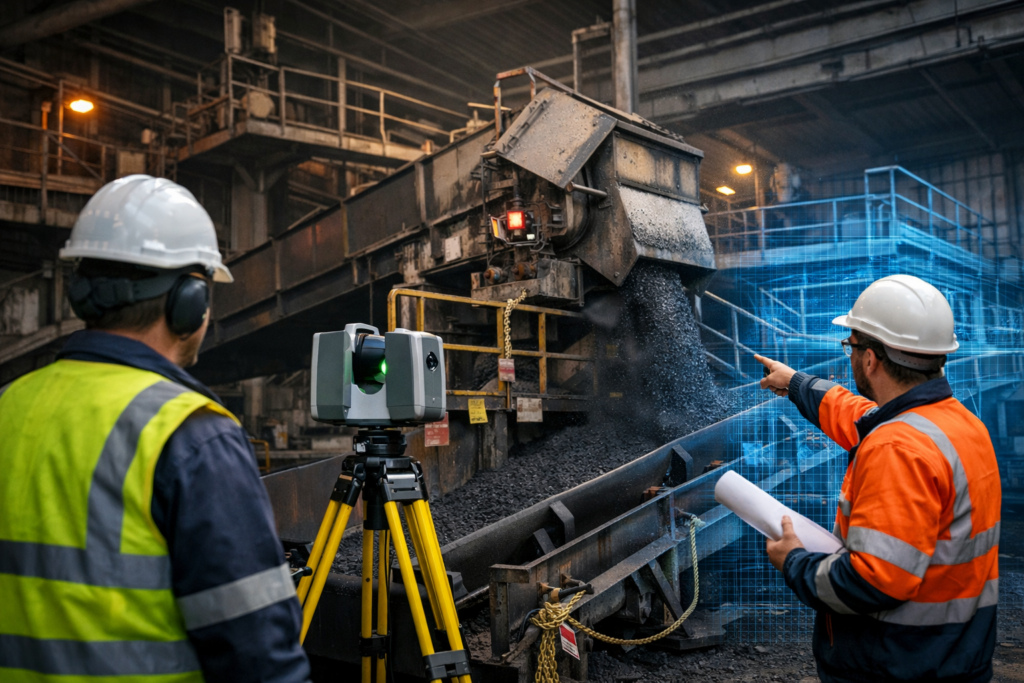
Coal plant shutdown engineering using a 3D laser scanner to capture conveyor and transfer chute infrastructure.

Engineering Applications Across Mining Infrastructure

The conversion of point clouds into engineering models is now widely used across many mining environments.

Common applications include:

  • Coal handling plants
  • Bulk materials handling infrastructure
  • Processing plants and concentrators
  • Port loading facilities
  • Conveyor systems and transfer stations
  • Industrial processing plants

By capturing existing infrastructure digitally, engineers can develop highly accurate models that support plant upgrades, shutdown planning and long-term asset management.


The Future of Digital Engineering in Mining

As scanning technology continues to improve, point cloud modelling is becoming a core component of modern mining engineering workflows.

The ability to convert real-world infrastructure into precise digital models allows engineers to design upgrades more efficiently, reduce installation risk and improve plant reliability.

For mining operators and engineering teams planning infrastructure upgrades, the integration of laser scanning, point clouds and engineering modelling is transforming how projects are designed and delivered.


Hamilton By Design logo displayed on a blue tilted rectangle with a grey gradient background

3D LiDAR scanning and 3D modelling service button โ€” laser scanner capturing a point cloud for engineering and CAD modelling
Mechanical engineering services
Name
Would you like us to arrange a phone consultation for you?
Address

CHPP Engineering title graphic featuring bold white text reading "CHPP Engineering" centred on a blue rounded rectangle background.
Pipework Drafting title graphic featuring bold white text reading "Pipework Drafting" centred on a blue rounded rectangle background.
3D LiDAR Scanning for Engineering Projects title graphic featuring bold white text on a blue rounded rectangle background.

3D CAD Modelling Australia service banner for Hamilton By Design

Engineering Preparation for Coal Plant Shutdowns

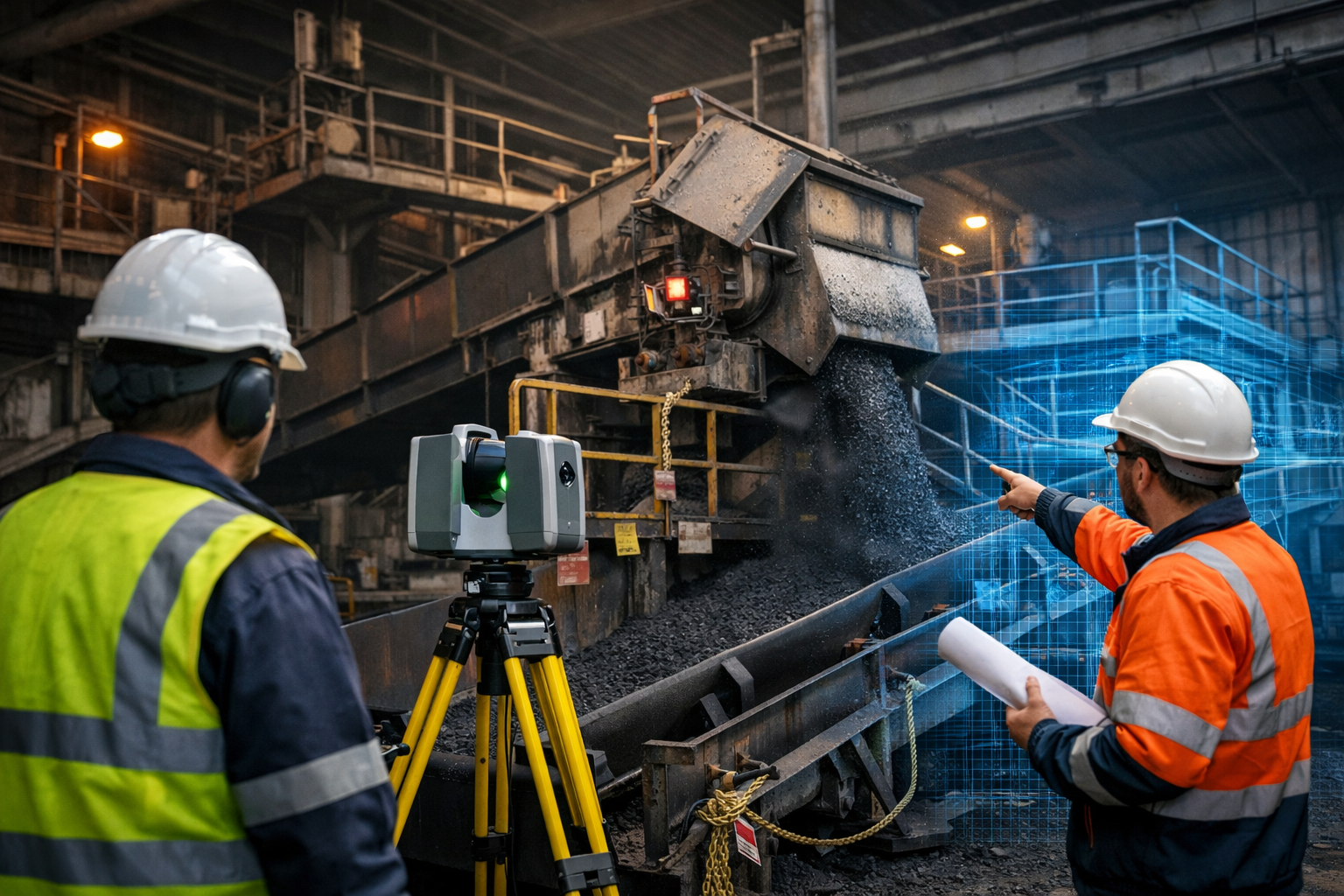
Coal plant shutdown engineering using a 3D laser scanner to capture conveyor and transfer chute infrastructure.

Coal Plant Shutdown Engineering | Preparation for Mining & Industrial Shutdowns

Planned shutdowns are a critical part of maintaining reliability in coal handling plants, port infrastructure, and large industrial facilities. During these scheduled outages, engineers must inspect, upgrade, or replace equipment across complex mechanical systems including conveyors, transfer chutes, crushers, and structural infrastructure.

Effective coal plant shutdown engineering focuses on preparation before the shutdown begins. Accurate plant data, detailed engineering models, and well-planned maintenance activities allow shutdown teams to complete work safely and within tight time windows.

Shutdown planning is essential because many maintenance activities must be performed while equipment is offline, often under strict time constraints with multiple trades working simultaneously. Without careful planning, shutdowns can quickly become unsafe, inefficient, or costly.


Why Engineering Preparation Matters

Coal processing plants operate continuously for long periods. Over time equipment is modified, upgraded, or repaired during multiple shutdown cycles. As a result, the original plant drawings often no longer represent the true layout of the facility.

Before a shutdown begins, engineering teams must confirm:

  • Existing conveyor alignments
  • Transfer chute geometry
  • Structural steel clearances
  • Access platforms and walkways
  • Equipment interfaces and installation areas

Modern engineering teams increasingly rely on laser scanning and digital modelling to capture the exact geometry of existing infrastructure. This produces a high-resolution point cloud of the plant that can be used to develop accurate engineering models before modifications begin.

These models allow engineers to validate equipment installations and reduce risk during the shutdown window.


The Role of Engineering Scanning Services

Engineering scanning services are now widely used across mining and industrial sectors to support shutdown planning.

Laser scanning technology can capture millions of measurement points across a facility, creating a detailed digital model of conveyors, chutes, structural steel and equipment installations.

Typical shutdown engineering scanning applications include:

  • Coal handling plant conveyors and transfer stations
  • Ship loader infrastructure at export terminals
  • Port stockpile systems and stacker reclaimers
  • Manufacturing production lines
  • Industrial processing plants

These digital datasets can then be converted into engineering-grade CAD models, enabling detailed design work to be completed before the shutdown occurs.

This approach significantly reduces installation risk and allows fabrication work to begin before the plant outage.

For a deeper explanation of shutdown preparation workflows see:


Coal Handling Plant Infrastructure Challenges

Coal plants contain some of the most complex materials handling systems in heavy industry. Conveyors move thousands of tonnes of material per hour through crushers, screens, transfer chutes, and stockpiles.

Common shutdown engineering tasks include:

  • Transfer chute redesign
  • Conveyor upgrades
  • Structural steel modifications
  • Dust control improvements
  • Maintenance access upgrades

These areas are typically congested with equipment and structural supports. Engineering teams must therefore confirm clearances and installation access before shutdown work begins.

Laser scanning and digital modelling allow engineers to identify clashes and installation constraints early in the design phase.

Learn more about mechanical engineering support for these systems:


Transfer Chute Design During Shutdowns

Transfer chutes are often a major focus of shutdown engineering work. Poorly designed chutes can cause:

  • Conveyor belt wear
  • Blockages and carryback
  • Excessive dust generation
  • Reduced throughput

Because chutes are located at conveyor transfer points, modifications must often be installed during shutdown windows when conveyors are offline.

Engineering models developed from site scans allow designers to develop improved chute geometries that optimise material flow and reduce maintenance issues.

Further design guidance can be found here:
https://www.hamiltonbydesign.com.au/coal-chute-design/

You may also find additional engineering insights in this technical article:
https://chutesandtransferstations.blogspot.com/2025/07/designing-for-durability-chutes.html


Shutdown Engineering Across Industrial Facilities

Although coal handling plants are a major focus, the same engineering preparation methods apply across many industries.

Shutdown engineering scanning is increasingly used in:

  • Mining processing plants
  • Bulk material handling facilities
  • Manufacturing plants
  • Power stations
  • Port infrastructure
  • Industrial processing facilities

By developing accurate digital models before shutdowns occur, engineering teams can plan work packages, confirm installation sequences, and minimise delays during the outage period.

Proper shutdown planning improves safety, reduces downtime, and helps ensure maintenance projects are completed efficiently.


The Future of Shutdown Engineering

As mining and industrial infrastructure becomes more complex, shutdown preparation is increasingly relying on digital engineering workflows.

Technologies such as:

  • 3D laser scanning
  • point cloud modelling
  • digital twins
  • engineering simulation

are transforming the way shutdowns are planned and executed.

For operators of coal plants, ports, and manufacturing facilities, investing in accurate engineering data before a shutdown begins is one of the most effective ways to reduce project risk and improve plant reliability.

Hamilton By Design logo displayed on a blue tilted rectangle with a grey gradient background

3D LiDAR scanning and 3D modelling service button โ€” laser scanner capturing a point cloud for engineering and CAD modelling
Mechanical engineering services
Name
Would you like us to arrange a phone consultation for you?
Address
CHPP Engineering title graphic featuring bold white text reading "CHPP Engineering" centred on a blue rounded rectangle background.
Pipework Drafting title graphic featuring bold white text reading "Pipework Drafting" centred on a blue rounded rectangle background.
3D LiDAR Scanning for Engineering Projects title graphic featuring bold white text on a blue rounded rectangle background.

3D CAD Modelling Australia service banner for Hamilton By Design

3D LiDAR Construction Scanning

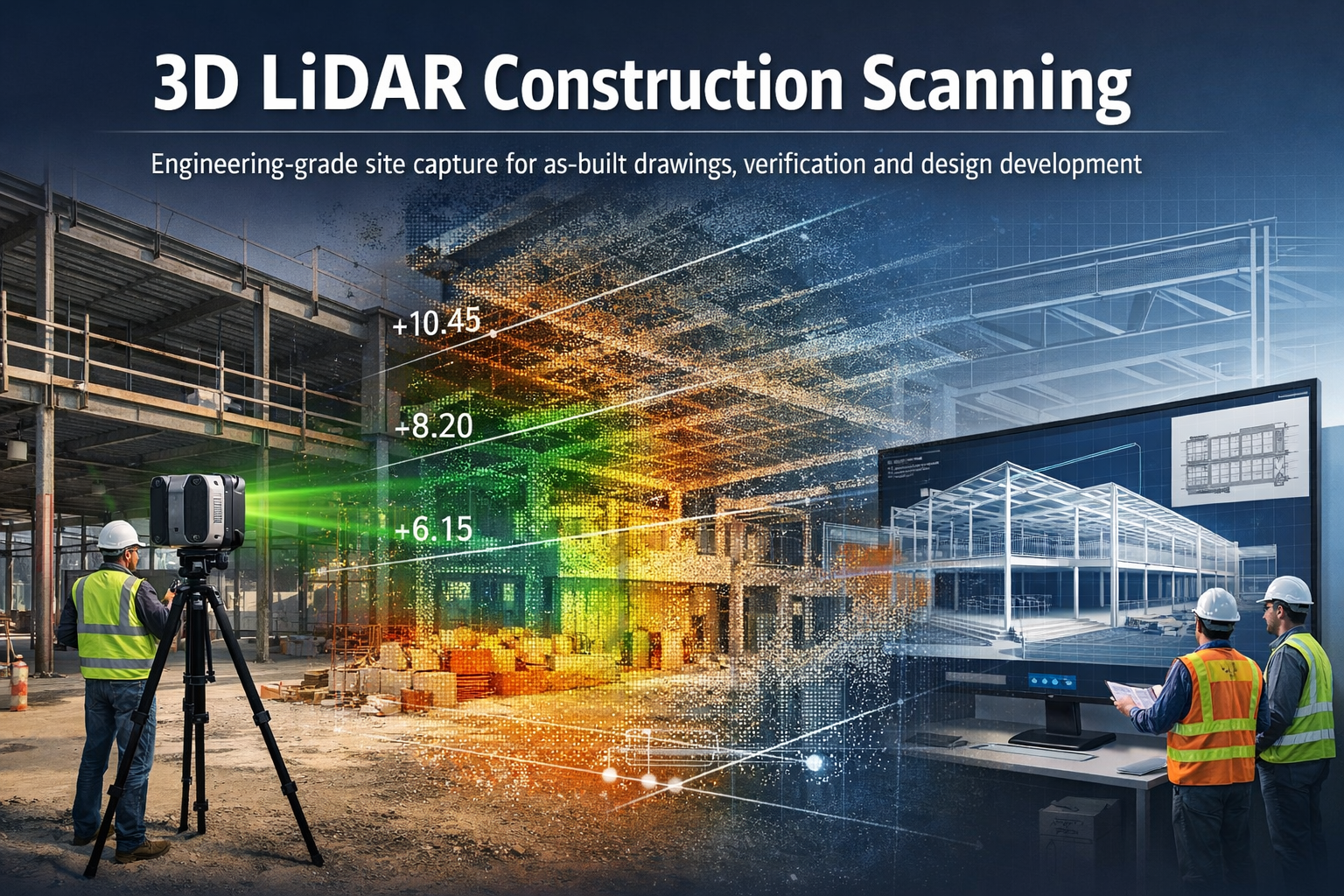
3D LiDAR construction scanning capturing a building site and converting it into a point cloud and engineering model

Engineering-Grade Reality Capture for Construction Projects

3D LiDAR construction scanning is transforming how engineers, builders, and project teams capture and understand existing site conditions.

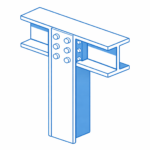
Structural steel I-beam bolted connection with column in isometric view.

Hamilton By Design provides engineering-grade 3D LiDAR scanning services for construction projects, helping capture accurate digital models of buildings, structures, and construction sites before, during, and after construction works. Using advanced laser scanning technology, millions of precise measurements can be captured within minutes to produce detailed 3D point clouds and digital models of real-world structures. These models provide reliable information for planning, design, verification and as-built documentation.

Our scanning workflows allow project teams to move from existing construction conditions to accurate engineering models, helping reduce uncertainty and improve project outcomes.


What is 3D LiDAR Construction Scanning?

3D LiDAR scanning uses laser-based sensors to measure distances between the scanner and surrounding surfaces. The system records millions of measurements which form a point cloud representing the exact geometry of the construction environment.

These point clouds create highly detailed digital representations of buildings, infrastructure and construction sites that can be measured, analysed and modelled in engineering software.

For construction projects this provides a powerful way to:

  • capture existing building geometry
  • verify construction progress
  • generate accurate as-built drawings
  • support design coordination
  • analyse levels, clearances and spatial constraints

Modern LiDAR scanning allows engineers to capture entire buildings and construction sites quickly and accurately, creating reliable digital data for planning and engineering workflows.


Applications of LiDAR Scanning in Construction

3D LiDAR scanning supports a wide range of construction and engineering tasks.

As-Built Documentation

Construction drawings often become outdated as projects evolve. LiDAR scanning provides accurate as-built documentation of structures, capturing the exact conditions present on site.

These datasets can be used to generate:

  • floor plans
  • elevations
  • cross sections
  • building models
  • digital twins of facilities

Learn more:


Construction Verification and Quality Control

Scanning can be used during construction to verify that structures match the design intent.

Point cloud data can be compared against design models to identify:

  • structural deviations
  • alignment issues
  • level variations
  • installation conflicts

This helps project teams identify problems early before they become costly construction errors.


Renovation and Refurbishment Projects

Older buildings often have incomplete or inaccurate drawings.

3D LiDAR scanning provides a reliable way to capture existing conditions before renovation works begin. Engineers and designers can then develop new designs directly from the scanned data.

This reduces risk and ensures that new components fit correctly within existing structures.

Related page:


Structural and Architectural Analysis

Construction scanning can also be used to analyse structural geometry and building profiles, including:

  • roof profiles and screed levels
  • slab levels and floor flatness
  • faรงade alignment
  • structural steel positioning
  • drainage and fall verification

These measurements allow engineers to identify geometry problems early and support accurate construction planning.


The Scan to Engineering Model Workflow

Hamilton By Design integrates LiDAR scanning with engineering modelling workflows.

Typical project workflow:

Existing Construction Site
โ†“
3D LiDAR Scanning
โ†“
Point Cloud Processing
โ†“
Scan-to-CAD Modelling
โ†“
Engineering Analysis and Design

This workflow allows engineers to work from accurate digital representations of real-world conditions, reducing the need for repeated site visits and manual measurements.


Benefits of LiDAR Scanning for Construction Projects

3D LiDAR scanning provides several advantages compared with traditional measurement methods.

Accurate Site Data

Laser scanners capture millions of measurements quickly, producing detailed datasets that accurately represent site conditions.

Reduced Project Risk

Accurate site data reduces the risk of design errors, construction conflicts and unexpected site conditions.

Faster Site Surveys

Entire buildings and construction areas can be captured in a short time, reducing the need for multiple survey visits.

Improved Project Coordination

Point cloud data can be shared between architects, engineers and contractors, ensuring everyone works from the same information.

Support for Digital Engineering Workflows

LiDAR scanning supports modern design processes such as:

  • scan-to-CAD modelling
  • digital twins
  • BIM coordination
  • construction verification

Engineering-Grade 3D Laser Scanning

Blue 3D LiDAR scanner icon on a tripod with scanning waves

Hamilton By Design provides professional scanning services focused on engineering and industrial applications, not just visualisation.

Our scanning workflows support projects across:

  • industrial facilities
  • infrastructure projects
  • buildings and structures
  • construction sites
  • mechanical and structural engineering projects

Learn more about our scanning capabilities:


When is LiDAR Construction Scanning Most Valuable?

3D scanning is particularly useful in situations where accurate geometry is critical.

Examples include:

  • building renovations
  • structural modifications
  • plant installations within buildings
  • roof level and drainage analysis
  • verifying construction tolerances
  • documenting existing conditions before construction

In many cases the cost of scanning is small compared with the potential cost of construction errors.


Hamilton By Design logo displayed on a blue tilted rectangle with a grey gradient background
3D LiDAR scanning and 3D modelling service button โ€” laser scanner capturing a point cloud for engineering and CAD modelling
Mechanical engineering services

Talk With Hamilton By Design

If you require 3D LiDAR construction scanning for engineering or building projects, Hamilton By Design can help capture accurate digital models of your site.

Our team specialises in scanning workflows that support engineering analysis, design development and construction planning.

Contact Hamilton By Design to discuss your project requirements.

Name
Would you like us to arrange a phone consultation for you?
Address
3D CAD Modelling Australia service banner for Hamilton By Design

Mechanical Engineering | Structural Engineering


Surfboard Digital Engineering

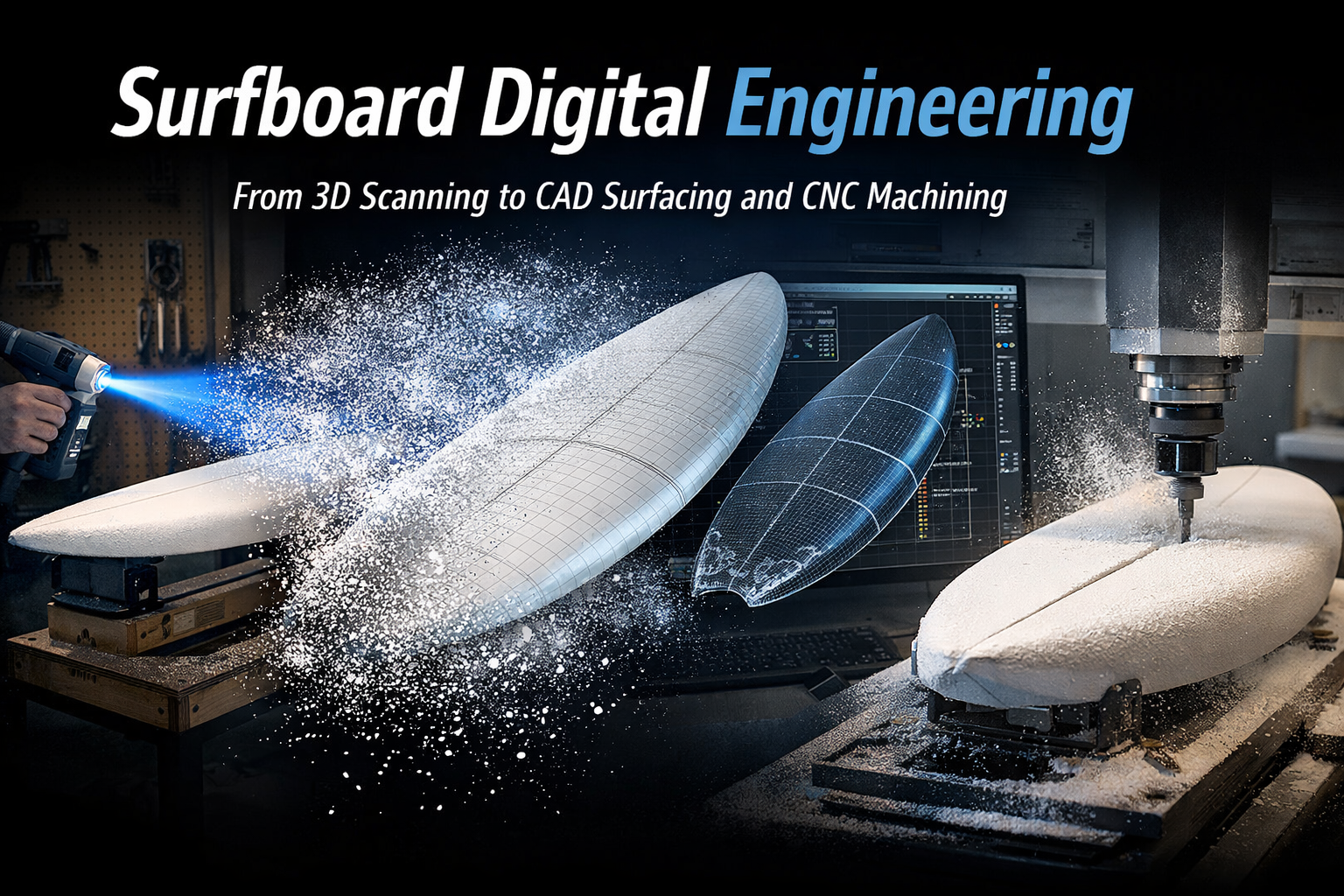
surfboard digital engineering workflow showing 3D scanning CAD modelling and CNC machining

From Surfboard Scan to CNC Manufacturing

Surfboard performance is defined by geometry. Small variations in rocker, rail profile, deck shape and bottom contours can significantly influence how a board performs in the water.

Hamilton By Design provides digital engineering services for surfboard design and manufacturing, helping convert physical surfboards into precise digital models suitable for analysis, modification and CNC machining.

Our team combines high-accuracy 3D scanning, advanced CAD surfacing and CNC programming expertise to support the complete workflow from physical surfboard to manufacturable digital model.

This integrated capability allows shapers, designers and manufacturers to move confidently from existing board โ†’ digital design โ†’ CNC machined blank.


A Complete Digital Workflow for Surfboard Manufacturing

Hamilton By Design provides a complete workflow that connects scanning, modelling and manufacturing preparation.

Typical projects move through the following stages.

surfboard digital engineering workflow showing 3D scanning CAD modelling and CNC machining

1. Surfboard Geometry Capture

Using high-resolution scanning technology, the physical surfboard geometry is captured to create a digital representation of the board.

This process records the complete board shape including:

  • rocker profile
  • deck contours
  • bottom contours
  • rail transitions
  • nose and tail geometry
  • fin placement and alignment

Related page: 3D Scanning of Surfboards


2. Point Cloud Processing

The raw scan data is processed and aligned to produce a clean digital representation of the surfboard.

This step ensures that the geometry can be used reliably for modelling, comparison and design development.

Processed data may be delivered as:

  • point clouds
  • mesh models
  • reference geometry for CAD modelling

3. Surfboard Surface Development

Surfboards are complex shapes that rely on smooth continuous surfaces.

Our team specialises in 3D CAD surfacing, allowing the scanned geometry to be converted into smooth, manufacturable surfaces suitable for design development or machining.

This stage may include:

  • surface reconstruction
  • symmetry correction
  • rocker curve analysis
  • rail profile development
  • design adjustments

Related page: Surfboard 3D Modelling and Surface Development


4. CNC Programming and Manufacturing Preparation

Once the surfboard model has been developed, CNC machining programs can be created for foam blank machining.

Our qualified CNC programmers prepare machining strategies including:

  • toolpath generation
  • cutter selection
  • machining strategies for foam blanks
  • blank positioning and setup
  • CNC code preparation

Related page: CNC Programming for Surfboard Manufacturing


Our Integrated Engineering Capability

Hamilton By Design provides a one-stop digital engineering workflow for surfboard manufacturing.

Our team includes:

3D Scanning Specialists

Capturing accurate geometry of existing surfboards using professional scanning technology.

Advanced 3D Modelling and Surfacing

Developing precise surfboard geometry using professional CAD modelling tools capable of producing smooth, hydrodynamically fair surfaces.

Qualified CNC Programmers

Preparing machining programs and strategies suitable for CNC shaping of surfboard blanks.

Manufacturing Workflow Support

Helping surfboard manufacturers move from physical board โ†’ digital model โ†’ CNC machining with confidence.

This integrated capability ensures that the digital data produced is not only accurate, but also suitable for downstream manufacturing processes.


Applications of Surfboard Digital Engineering

Our services can support a wide range of surfboard design and manufacturing applications.

Reverse Engineering Successful Boards

High-performing surfboards can be digitally captured and recreated for further development or reproduction.

Surfboard Design Development

Digital models allow designers to refine rocker curves, rails and bottom contours before machining.

CNC Manufacturing Preparation

Accurate digital models allow CNC machines to cut surfboard blanks with greater confidence and repeatability.

Archiving Surfboard Designs

Surfboard designs can be digitally preserved for future manufacturing or development.

Design Comparison

Digital models allow comparison between different board designs to better understand performance differences.


Why Digital Engineering Matters in Surfboard Design

Traditionally, surfboards have been shaped by hand using a combination of experience and intuition.

While this approach continues to play an important role in shaping culture, modern surfboard manufacturing increasingly relies on digital tools.

Digital workflows provide several advantages:

  • repeatable board production
  • accurate reproduction of successful designs
  • improved design development
  • better collaboration between designer and manufacturer
  • reduced manufacturing variation

Hamilton By Design helps bridge the gap between traditional shaping knowledge and modern digital manufacturing tools.


Scan to CNC Workflow

Existing Surfboard
โ†“
3D Scanning
โ†“
Point Cloud Processing
โ†“
CAD Surface Development
โ†“
CNC Programming
โ†“
Machined Surfboard Blank


Related Services

Hamilton By Design provides a range of related services that support digital engineering and manufacturing workflows.

These include:

  • 3D laser scanning services
  • scan-to-CAD modelling
  • reverse engineering
  • advanced surface modelling
  • CNC programming
  • manufacturing preparation

Hamilton By Design logo displayed on a blue tilted rectangle with a grey gradient background

3D LiDAR scanning and 3D modelling service button โ€” laser scanner capturing a point cloud for engineering and CAD modelling
Mechanical engineering services

Talk With Hamilton By Design

If you are looking to digitise a surfboard design, reverse engineer an existing board, or prepare a surfboard model for CNC machining, Hamilton By Design can assist.

Our team combines engineering-grade scanning, advanced CAD surfacing and practical CNC programming expertise to support the full digital workflow.

Contact Hamilton By Design to discuss your project.

Name
Would you like us to arrange a phone consultation for you?
Address
3D CAD Modelling Australia service banner for Hamilton By Design
Finite Element Analysis (FEA) engineering simulation button
Mechanical engineering services