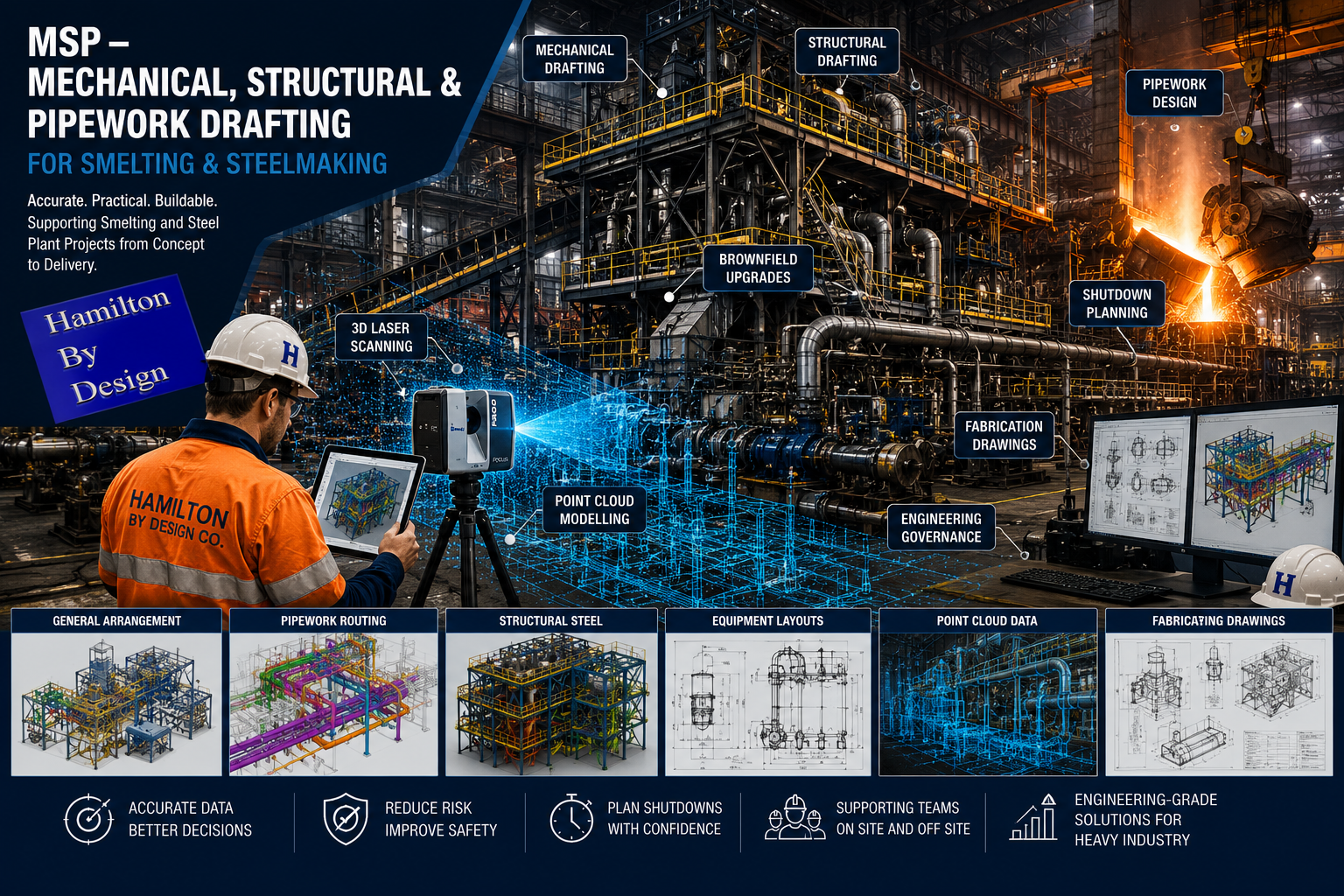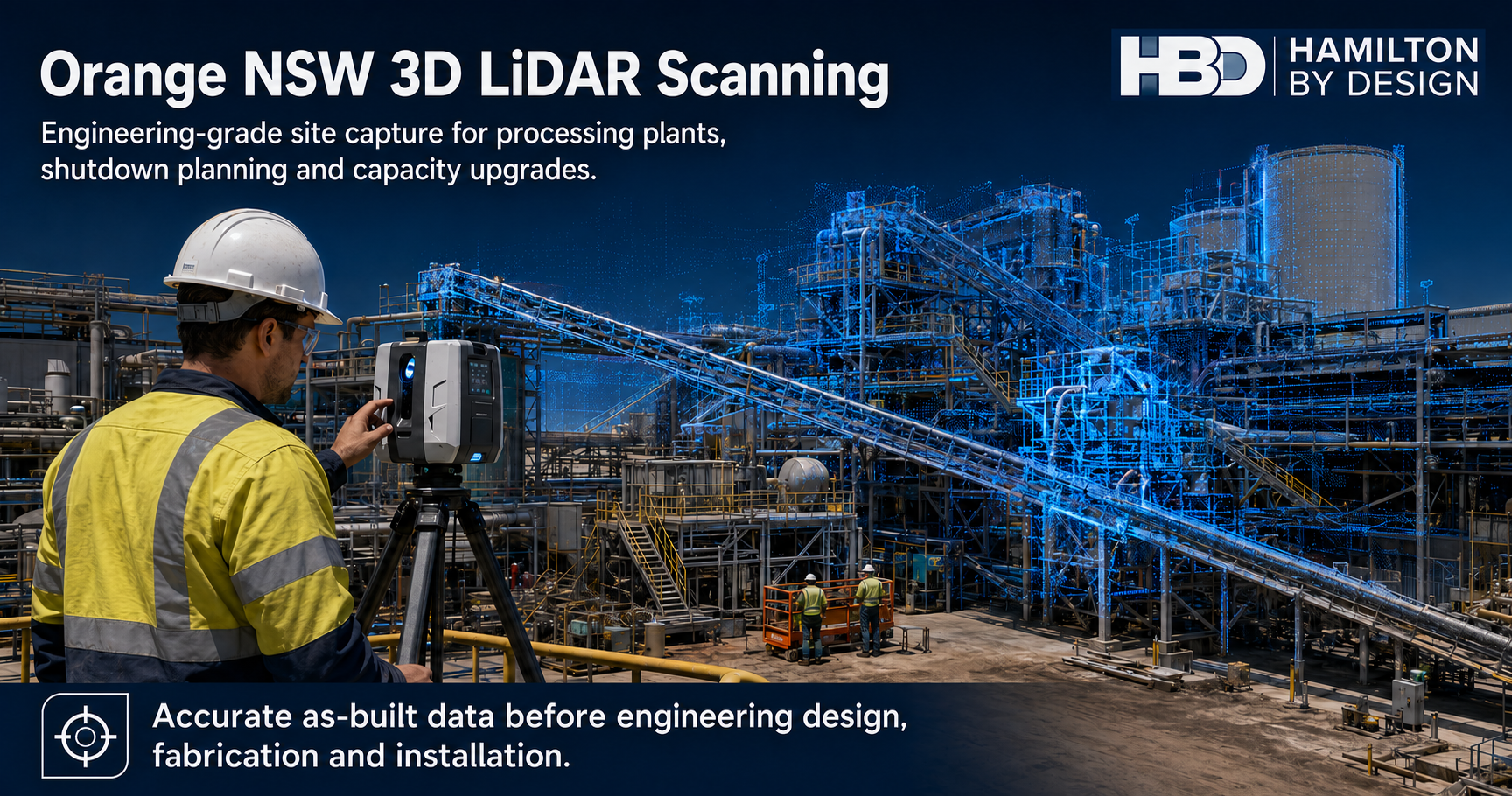
MSP โ€“ Mechanical, Structural & Pipework Drafting for Smelting and Steel Making

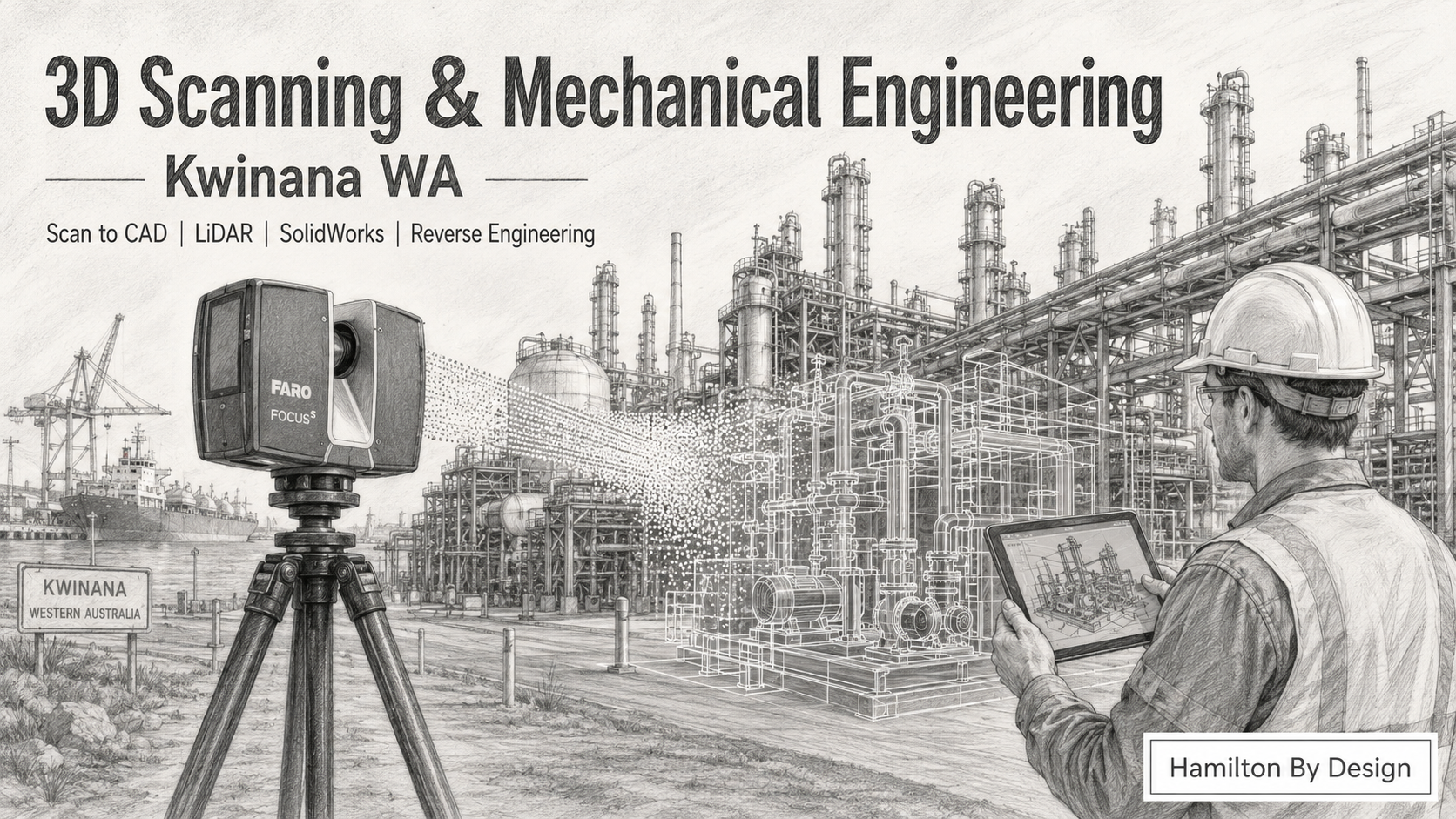
Engineering-grade MSP drafting for smelting and steel making facilities showing structural steel, pipework systems, 3D laser scanning and industrial plant design.

Professional Drafting Support for Heavy Industrial Plant Environments

Hamilton By Design Co. provides mechanical, structural and pipework drafting services for smelting, steel making and heavy industrial plant environments.

Smelters and steel plants operate in complex, high-temperature, high-risk environments where accurate drawings, clear documentation and practical design understanding are critical. Our MSP drafting support helps maintenance teams, project engineers and site contractors develop usable engineering information for upgrades, shutdowns, fabrication and installation works.


Mechanical Drafting

We support mechanical drafting for plant equipment, access systems, materials handling and maintenance-driven upgrades.

Our mechanical drafting services include:

  • General arrangement drawings
  • Equipment layouts
  • Chutes, hoppers and transfer points
  • Conveyor and materials handling details
  • Platforms, guards and access modifications
  • Pump skids and mechanical assemblies
  • Fabrication and installation drawings
  • As-built drawing updates

Structural Drafting

Heavy industrial sites require structural drawings that are practical, buildable and suitable for site conditions.

Our structural drafting services include:

  • Structural steel layouts
  • Access platforms and walkways
  • Support frames and equipment structures
  • Maintenance access structures
  • Brackets, mounts and secondary steelwork
  • Site measure and as-built updates
  • Fabrication drawing support

Pipework Drafting

Pipework in smelting and steel making facilities often requires careful coordination around existing plant, access restrictions and shutdown windows.

Our pipework drafting services include:

  • Pipe routing layouts
  • Pipe supports and brackets
  • Pump and valve arrangements
  • Service pipework modifications
  • General arrangement pipework drawings
  • Spool drawing support
  • Existing pipework documentation
  • Brownfield pipework upgrade drafting

Supporting Smelting and Steel Making Projects

We understand that smelting and steel making environments often involve:

  • Brownfield plant constraints
  • High-temperature operating areas
  • Dust, heat and access limitations
  • Congested existing services
  • Shutdown-driven project timelines
  • Fabrication fit-up risk
  • Outdated or incomplete drawings
  • The need for clear engineering governance

Our drafting approach focuses on producing drawings that are practical for fabrication, installation and maintenance teams.


3D Laser Scanning and As-Built Support

Where existing drawings are missing, incomplete or unreliable, Hamilton By Design Co. can support MSP drafting with engineering-grade 3D laser scanning.

Point cloud data can be used to capture existing site conditions and assist with:

  • Brownfield layouts
  • Clash checking
  • Pipe routing
  • Structural steel positioning
  • Equipment access reviews
  • As-built verification
  • Shutdown planning
  • Fabrication fit-up reduction

Engineering Governance and Drawing Control

We also support engineering governance through controlled access to drawings, models and design information. Using platforms such as 3DEXPERIENCE, project stakeholders can access current models and drawings with improved revision control and traceability.

This helps reduce confusion caused by outdated drawings and supports better decision-making across maintenance, engineering and project teams.


Why Hamilton By Design Co.

Hamilton By Design Co. combines engineering knowledge, industrial drafting capability and reality capture technology to support complex heavy industrial projects.

We provide:

  • Mechanical, structural and pipework drafting
  • SolidWorks and AutoCAD drafting support
  • 3D modelling and fabrication drawing support
  • Engineering-grade LiDAR scanning
  • Brownfield as-built documentation
  • Practical site-focused drafting outcomes
  • Drawing governance and revision control support

3D CAD Modelling Australia service banner for Hamilton By Design

Typical Deliverables

Depending on project requirements, deliverables may include:

  • PDF drawings
  • DWG drawings
  • 3D CAD models
  • STEP or SAT files
  • General arrangement drawings
  • Fabrication drawings
  • As-built drawings
  • Point cloud files
  • Registration reports
  • Review models for project teams

MSP Drafting for Heavy Industry

For smelting, steel making and heavy industrial facilities, accurate MSP drafting is not just documentation. It is a key part of reducing project risk, improving fabrication accuracy and supporting safe installation planning.

Hamilton By Design Co. provides practical drafting and engineering support for projects where existing plant conditions, shutdown timing and drawing accuracy matter.

Hamilton By Design logo displayed on a blue tilted rectangle with a grey gradient background
3D LiDAR scanning and 3D modelling service button โ€” laser scanner capturing a point cloud for engineering and CAD modelling
Mechanical engineering services

Contact us – Talk to Us

Name
Would you like us to arrange a phone consultation for you?
Address

Our Clients

Finite Element Analysis (FEA) engineering simulation button
Mechanical engineering services

Why Up-to-Date Engineering Drawings Matter: Reducing Risk Through Digital Engineering

Engineering-grade LiDAR scanning and digital engineering workflow showing how updated engineering drawings reduce project risk and improve asset management.

Industrial facilities rarely remain unchanged throughout their operating life. Equipment is upgraded, structural modifications occur, pipework is rerouted, platforms are added, and maintenance-driven changes become part of everyday operations.

Over time, these modifications can create a disconnect between what exists on site and what engineering documentation says exists.

When engineering drawings no longer accurately represent site conditions, the consequences can extend beyond inconvenience. Outdated information can introduce operational risk, safety concerns, project delays, and increased costs.

At Hamilton By Design, we believe engineering decisions should be based on accurate, measured information rather than assumptions.

Digital engineering workflows help transform existing assets into reliable engineering information that supports safer and more efficient project outcomes.

Why Engineering Drawings Matter

Engineering drawings provide more than dimensions and layouts.

They support:

  • Equipment maintenance
  • Plant upgrades
  • Shutdown activities
  • Fabrication works
  • Safety planning
  • Operational decisions
  • Future modifications

Drawings often become the primary source of information used by:

  • Engineers
  • Maintenance personnel
  • Project teams
  • Contractors
  • Fabricators
  • Operations personnel

If the information is incorrect, downstream decisions may also become incorrect.

3D CAD Modelling Australia service banner for Hamilton By Design

Risks Created by Outdated Drawings

Even relatively small discrepancies between site conditions and engineering documentation can create significant problems.

Potential risks include:

Safety Risks

Outdated information may create:

  • Restricted access areas
  • Unidentified hazards
  • Clearance issues
  • Manual handling challenges
  • Unsafe work conditions

Operational Risks

Incorrect information can contribute to:

  • Equipment interference
  • Unexpected shutdown activities
  • Reduced productivity
  • Increased maintenance complexity

Project Risks

Engineering teams may encounter:

  • Fabrication errors
  • Installation clashes
  • Rework requirements
  • Increased labour costs
  • Schedule delays

Financial Risks

Minor inaccuracies can result in:

  • Increased project costs
  • Extended downtime
  • Material waste
  • Reduced project efficiency

Drawing Revisions and Version Control

Many industrial facilities operate using drawings developed over long periods of time.

Common challenges include:

  • Multiple drawing versions
  • Uncontrolled mark-ups
  • Missing revisions
  • Historical modifications
  • Inconsistent document management

Without effective version control, personnel may unknowingly use outdated information.

Digital engineering workflows support:

  • Revision tracking
  • Controlled updates
  • Centralised documentation
  • Improved information accessibility
  • Better engineering governance

Maintaining a controlled environment for engineering information helps reduce risk.

Existing Condition Capture

One of the most effective methods of maintaining drawing accuracy is capturing what physically exists on site.

Hamilton By Design supports projects through engineering-grade 3D LiDAR scanning to capture:

  • Structural steel
  • Pipework
  • Platforms
  • Mechanical equipment
  • Buildings
  • Existing plant layouts
  • Access systems

Existing condition capture allows engineering teams to work with measured information rather than assumptions.

Brownfield Projects Create Additional Challenges

Brownfield environments commonly include:

  • Historical modifications
  • Legacy equipment
  • Congested layouts
  • Existing structures
  • Limited access areas
  • Undocumented changes

Original documentation often no longer reflects actual site conditions.

Using inaccurate information during brownfield projects can increase:

  • Design uncertainty
  • Installation difficulties
  • Rework
  • Shutdown impacts
  • Fabrication risk

Engineering Governance and Digital Engineering

Digital engineering supports a structured approach to managing engineering information.

Engineering governance may include:

  • Revision control systems
  • Centralised documentation
  • Scan-to-CAD workflows
  • Digital asset information
  • Controlled engineering updates
  • Long-term information management

The objective is creating a digital source of truth where project teams can access reliable information.

Supporting Shutdown Planning

Shutdown periods are often constrained by:

  • Time limitations
  • Labour availability
  • Production requirements
  • Safety considerations

Incorrect engineering information during shutdowns can create:

  • Unexpected site modifications
  • Delays
  • Increased labour requirements
  • Reduced productivity

Accurate digital engineering information supports:

  • Improved planning
  • Better coordination
  • Reduced uncertainty
  • Reduced downtime

Reducing Site Rework

Site rework often results from discovering problems after fabrication or installation begins.

Typical causes include:

  • Missing dimensions
  • Existing condition inaccuracies
  • Equipment clashes
  • Incorrect assumptions
  • Documentation errors

Digital workflows including:

  • Existing condition capture
  • Point cloud modelling
  • Scan-to-CAD processes
  • Clash detection

can help identify issues before they become site problems.

How Hamilton By Design Supports Digital Engineering

Hamilton By Design combines engineering experience with digital workflows including:

  • Engineering-grade 3D LiDAR scanning
  • Existing condition capture
  • Scan-to-CAD workflows
  • CAD modelling
  • Engineering documentation
  • Engineering governance
  • Fabrication-ready deliverables

The goal is not simply creating drawings.

The goal is creating reliable engineering information that supports better operational decisions.

3D LiDAR scanning and 3D modelling service button โ€” laser scanner capturing a point cloud for engineering and CAD modelling
Mechanical engineering services

Better Information Creates Better Outcomes

Drawings influence every stage of an asset lifecycle.

When information becomes outdated, risk increases.

Maintaining accurate engineering documentation supports:

  • Safety improvements
  • Reduced project risk
  • Better shutdown outcomes
  • Reduced rework
  • Improved operational performance

Up-to-date engineering drawings create confidence across engineering, maintenance, and project delivery activities.

Hamilton By Design logo displayed on a blue tilted rectangle with a grey gradient background

Our Clients:
Name
Would you like us to arrange a phone consultation for you?
Address
Finite Element Analysis (FEA) engineering simulation button
Mechanical engineering services

Why Existing Conditions Matter When Designing Industrial Access Systems

Engineering-grade LiDAR scanning and CAD workflow showing existing condition capture for industrial access system design.

Industrial access systems are often viewed as secondary structures within a facility. Platforms, walkways, stairways, and ladders are frequently designed around existing equipment after primary process systems have already been established.

However, in industrial environments, access systems directly influence:

  • Worker safety
  • Maintenance efficiency
  • Equipment accessibility
  • Shutdown activities
  • Project cost
  • Long-term operational performance

When new access systems are designed using assumptions or outdated information, project teams can unknowingly introduce significant risk.

At Hamilton By Design, engineering decisions begin with understanding one important factor:

What actually exists on site today?

Existing condition capture provides measured information that supports safer, more efficient access system design.

Why Existing Conditions Matter

Industrial facilities rarely remain unchanged over their operational life.

Over time sites commonly experience:

  • Equipment upgrades
  • Structural modifications
  • Additional pipework
  • Maintenance repairs
  • Temporary installations becoming permanent
  • New process equipment
  • Historical undocumented changes

As facilities evolve, original engineering documentation can gradually become disconnected from actual site conditions.

This creates challenges when developing:

  • New platforms
  • Walkways
  • Stairways
  • Ladders
  • Handrails
  • Maintenance access systems

Designing around incorrect information can create downstream issues during fabrication and installation.

Risks of Designing Around Assumptions

Even relatively small dimensional differences can create larger problems during construction activities.

Potential issues may include:

Restricted Maintenance Access

Poorly positioned access systems can create:

  • Congested work areas
  • Difficult equipment access
  • Manual handling risks
  • Longer maintenance durations

Structural Interference

Undocumented changes can result in:

  • Platform clashes
  • Pipework conflicts
  • Equipment interference
  • Structural rework

Installation Difficulties

Fabricated structures designed from inaccurate information may require:

  • Site modification
  • Additional labour
  • Rework
  • Schedule changes

Safety Risks

Poor access layouts can increase:

  • Working at height exposure
  • Congested access routes
  • Maintenance hazards
  • Human factors risks
3D CAD Modelling Australia service banner for Hamilton By Design

Brownfield Facilities Create Additional Challenges

Brownfield environments are often significantly different from greenfield projects.

Typical challenges include:

  • Congested plant layouts
  • Existing structures
  • Legacy equipment
  • Historical modifications
  • Limited clearances
  • Restricted access areas

In many facilities, existing drawings may not accurately represent the current operating environment.

Designing access systems without verified information increases project uncertainty.

Existing Condition Capture Through Engineering-Grade LiDAR Scanning

Hamilton By Design supports industrial projects using engineering-grade 3D LiDAR scanning to capture actual site geometry.

Scanning may capture:

  • Structural steel
  • Existing platforms
  • Walkways
  • Pipework
  • Equipment
  • Access systems
  • Buildings
  • Operating environments

Rather than relying solely on manual measurements, engineers gain measurable spatial information.

Benefits can include:

  • Existing condition verification
  • Improved accuracy
  • Reduced assumptions
  • Reduced installation risk
  • Improved project confidence

From Point Clouds to Access System Design

Once site information is captured, scan data can be converted into engineering information through Scan-to-CAD workflows.

This allows development of:

  • Existing condition models
  • Platform layouts
  • Access systems
  • Stairways
  • Structural designs
  • Fabrication drawings

Potential issues can be identified digitally before fabrication begins.

Improving Maintenance Access

Access systems should support how equipment is maintained, not simply how equipment is installed.

Maintenance activities commonly require:

  • Equipment removal space
  • Inspection access
  • Safe movement paths
  • Tool handling areas
  • Shutdown activities

Considering these requirements early can improve:

  • Safety performance
  • Maintenance efficiency
  • Downtime reduction
  • Long-term asset performance

Supporting Engineering Compliance

Access system design frequently involves consideration of standards including:

  • AS1657 โ€“ Fixed Platforms, Walkways, Stairways and Ladders
  • AS3996 โ€“ Access Covers and Grates
  • Structural loading requirements
  • Site-specific standards

Compliance becomes more effective when based on accurate existing information.

How Hamilton By Design Supports Industrial Access Projects

Hamilton By Design supports industrial access projects through:

  • Engineering-grade 3D LiDAR scanning
  • Existing condition capture
  • Scan-to-CAD workflows
  • Mechanical and structural design
  • Engineering analysis and simulation
  • CAD modelling
  • Fabrication documentation

The objective is not simply designing platforms.

The objective is creating access systems that support safety, maintenance activities, and operational performance.

3D LiDAR scanning and 3D modelling service button โ€” laser scanner capturing a point cloud for engineering and CAD modelling
Mechanical engineering services

Moving Beyond Assumptions

Industrial facilities evolve over time.

Successful access systems should be designed around what exists today rather than what historical drawings suggest exists.

Better existing condition information supports better engineering decisions.

Hamilton By Design logo displayed on a blue tilted rectangle with a grey gradient background

Name
Would you like us to arrange a phone consultation for you?
Address
Finite Element Analysis (FEA) engineering simulation button
Mechanical engineering services

Understanding AS1657: Fixed Platforms, Walkways, Stairways and Ladders

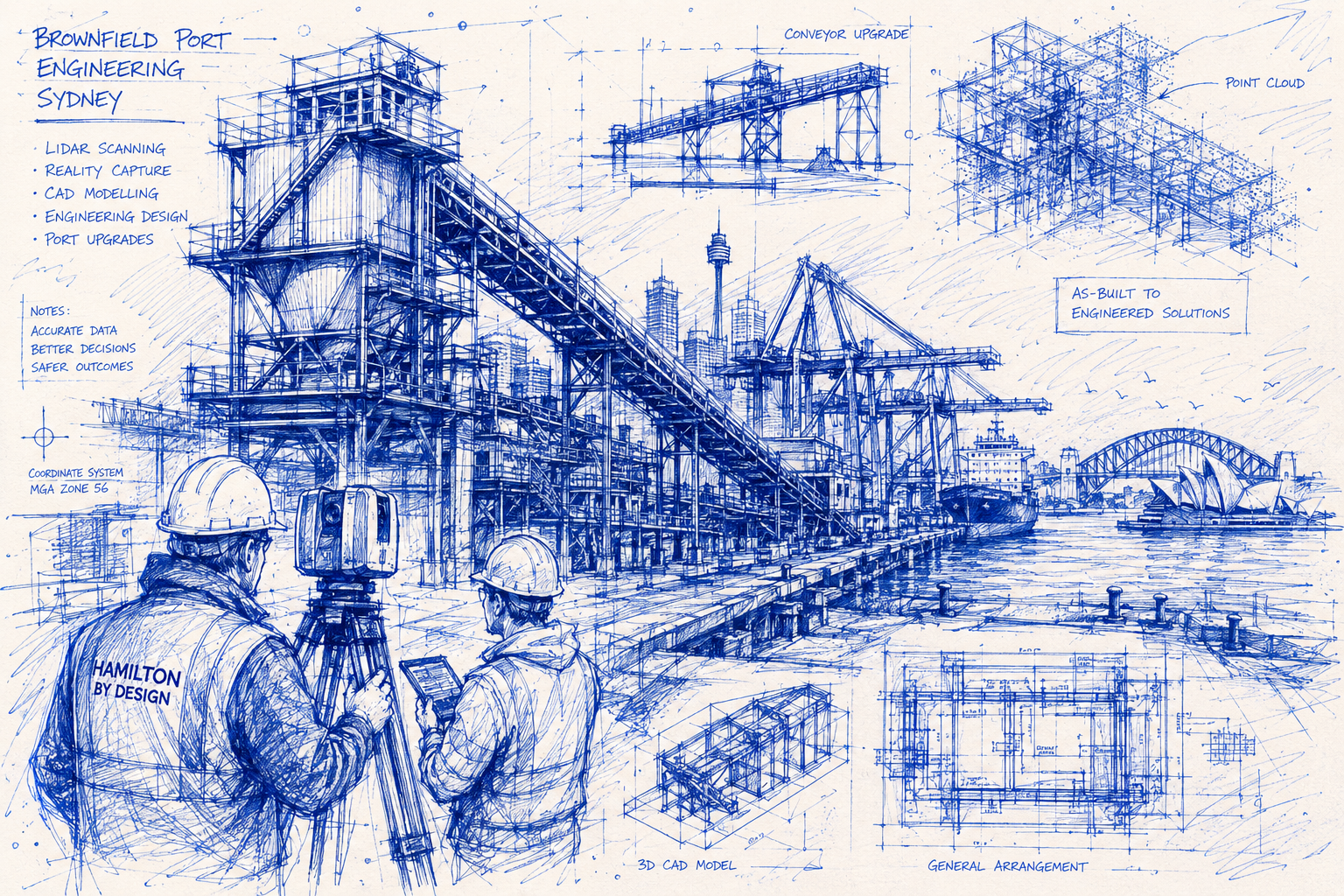
Engineering-grade LiDAR scanning and CAD modelling workflow for AS1657 industrial access systems including platforms, walkways, stairways, and ladders.

Industrial facilities are built around more than machinery and production systems. Personnel require safe and reliable access to equipment, maintenance areas, inspection locations, and operational assets. Whether within mining operations, manufacturing facilities, timber processing plants, or industrial processing environments, access systems play an important role in both safety and productivity.

Poorly designed access systems can create operational inefficiencies, increase maintenance time, and introduce unnecessary risk. Access systems designed around practical engineering requirements can improve not only safety outcomes but also long-term operational performance.

In Australia, one of the key standards governing these systems is AS1657 โ€“ Fixed Platforms, Walkways, Stairways and Ladders โ€“ Design, Construction and Installation.

Understanding the purpose of AS1657 helps organisations design access systems that support safer operations, maintenance efficiency, and engineering compliance.

What is AS1657?

AS1657 establishes requirements and guidance for the design, construction, and installation of fixed access systems within industrial facilities.

The standard applies to systems including:

  • Fixed platforms
  • Walkways
  • Stairways
  • Fixed ladders
  • Handrails
  • Guardrails
  • Landings
  • Access openings

The objective of the standard is providing safe and practical access throughout industrial facilities while reducing hazards associated with working at heights and movement around equipment.

AS1657 is commonly applied across:

  • Mining operations
  • Processing plants
  • Manufacturing facilities
  • Bulk materials handling facilities
  • Timber processing operations
  • Infrastructure projects
  • Industrial processing sites
3D CAD Modelling Australia service banner for Hamilton By Design

Why Proper Access Design Matters

Access systems are often viewed as secondary structures supporting primary equipment.

In practice, access systems influence:

  • Worker safety
  • Equipment accessibility
  • Maintenance efficiency
  • Shutdown performance
  • Operational productivity
  • Long-term operating costs

Poor access design can create:

  • Restricted access zones
  • Congestion around equipment
  • Increased manual handling risks
  • Longer shutdown activities
  • Reduced maintenance efficiency
  • Higher maintenance costs

Well-designed systems can improve operational performance while supporting safer working conditions.

Fixed Platforms and Walkways

Fixed platforms and walkways provide safe movement and work areas around equipment and operational assets.

Typical design considerations include:

  • Platform dimensions
  • Walkway widths
  • Surface materials
  • Guardrail systems
  • Toe plates
  • Access clearances
  • Slip resistance requirements
  • Structural loading considerations

Effective access design supports maintenance teams by improving movement around equipment and reducing access difficulties.

Stairways and Ladder Requirements

Stairways and ladders require practical engineering consideration beyond simply connecting two elevations.

Important design factors may include:

Stairways

  • Rise and going dimensions
  • Stair angles
  • Handrail requirements
  • Intermediate landings
  • Head clearances
  • User movement requirements

Ladders

  • Ladder height limitations
  • Cage requirements
  • Fall protection systems
  • Landing arrangements
  • Access openings

The frequency of use and maintenance requirements often influence whether ladders or stairways provide the most suitable solution.

Maintenance Access Considerations

Maintenance activities often represent one of the most frequent interactions personnel have with industrial assets.

Access systems should support:

  • Inspection activities
  • Equipment removal
  • Maintenance tasks
  • Shutdown work
  • Routine servicing

Poor maintenance access can lead to:

  • Extended downtime
  • Increased labour requirements
  • Manual handling issues
  • Higher operational costs

Designing around maintenance requirements during early project stages can reduce ongoing operational challenges.

Brownfield Applications Create Additional Challenges

Brownfield facilities rarely reflect original design documentation.

Industrial sites commonly contain:

  • Historical modifications
  • Existing structural steel
  • Congested layouts
  • Pipework interferences
  • Equipment additions
  • Legacy infrastructure

Designing new access systems in these environments can become challenging without accurate existing information.

Hamilton By Design supports brownfield projects using engineering-grade 3D LiDAR scanning to capture:

  • Existing structures
  • Platforms
  • Walkways
  • Equipment
  • Pipework
  • Access systems

Existing condition capture allows engineering decisions to be based on measured information rather than assumptions.

Supporting Engineering Compliance

Engineering compliance extends beyond simply meeting dimensional requirements.

Good engineering practice should also consider:

  • Safety outcomes
  • Practical useability
  • Constructability
  • Maintenance efficiency
  • Future modifications
  • Long-term operational performance

Compliance should support functionality rather than becoming a checklist exercise.

How Hamilton By Design Supports Industrial Access Projects

Hamilton By Design combines practical engineering experience with digital engineering workflows to support industrial access projects through:

  • Engineering-grade 3D LiDAR scanning
  • Existing condition capture
  • Scan-to-CAD workflows
  • Mechanical design
  • Structural assessment
  • Engineering analysis and simulation
  • CAD modelling
  • Fabrication documentation

Our approach supports projects from initial site capture through to fabrication-ready deliverables.

3D LiDAR scanning and 3D modelling service button โ€” laser scanner capturing a point cloud for engineering and CAD modelling
Mechanical engineering services

Moving Beyond Minimum Compliance

AS1657 exists to support safer and more effective industrial access systems.

However, successful access systems do more than satisfy compliance requirements.

They improve:

  • Safety performance
  • Maintenance efficiency
  • Operational productivity
  • Long-term asset performance

Well-designed access systems help people interact safely and effectively with industrial assets every day.

Better access systems support better operational outcomes.

Hamilton By Design logo displayed on a blue tilted rectangle with a grey gradient background
Name
Would you like us to arrange a phone consultation for you?
Address

Our Clients:
https://www.hamiltonbydesign.com.au/understanding-as1657-fixed-platforms-walkways-stairways-ladders
Finite Element Analysis (FEA) engineering simulation button
Mechanical engineering services

Why Existing Conditions Matter: Reducing Safety Risks with Engineering-Grade LiDAR Scanning

Engineering-grade LiDAR scanning workflow showing how existing condition capture reduces safety risks through clash detection, scan-to-CAD modelling, engineering analysis, and improved shutdown planning in industrial facilities.

Industrial projects are often built around a simple assumption:

“The existing drawings are correct.”

Unfortunately, in many industrial facilities that assumption can introduce significant risk.

Mining plants, processing facilities, manufacturing sites, and timber processing operations commonly undergo years or decades of modifications. Equipment changes, structural additions, maintenance alterations, temporary fixes, and undocumented upgrades can gradually move facilities away from their original engineering documentation.

When engineering decisions are based on outdated drawings or manual measurements, project teams may unknowingly introduce safety risks that affect shutdown activities, maintenance work, and plant upgrades.

At Hamilton By Design, engineering-grade LiDAR scanning supports safer project outcomes by replacing assumptions with measurable site information.

Why Existing Conditions Matter

Existing conditions represent the actual site environment rather than what historical drawings suggest exists.

In industrial environments, discrepancies can develop through:

  • Historical modifications
  • Unrecorded changes
  • Structural alterations
  • Equipment replacements
  • Temporary repairs becoming permanent solutions
  • Missing documentation
  • Inaccurate field measurements

A few centimetres of difference can appear minor on a drawing but become significant when:

  • Installing new equipment
  • Modifying conveyor systems
  • Designing platforms
  • Routing pipework
  • Planning shutdown activities
  • Fabricating structural steel

Small errors can create larger project impacts.

Safety Risks Created by Inaccurate Information

Assumptions can introduce several operational and safety challenges.

3D CAD Modelling Australia service banner for Hamilton By Design

Examples include:

Restricted Access Areas

Access routes may differ from original layouts, creating:

  • Maintenance access issues
  • Congestion
  • restricted clearances
  • Manual handling risks

Equipment Clashes

New designs based on incorrect information may result in:

  • Structural clashes
  • Pipework interferences
  • Equipment conflicts
  • Installation delays

Increased Exposure During Shutdown Activities

Shutdown periods often involve:

  • Tight schedules
  • Multiple work groups
  • Limited access windows
  • High activity levels

Unexpected site conditions discovered during shutdowns can increase:

  • Time pressure
  • Additional field modifications
  • Safety exposure
  • Project costs

Brownfield Projects Present Additional Challenges

Brownfield environments rarely match original design documentation.

Common challenges include:

  • Congested plant layouts
  • Existing services
  • Structural interferences
  • Legacy equipment
  • Multiple generations of modifications

Designing around assumptions in these environments increases uncertainty.

Existing Condition Capture Using Engineering-Grade LiDAR

Engineering-grade LiDAR scanning captures existing conditions by collecting highly accurate site geometry and generating point cloud data.

Capture can include:

  • Structural steel
  • Platforms
  • Conveyors
  • Pipework
  • Equipment
  • Buildings
  • Access systems
  • Existing plant layouts

Rather than relying solely on manual measurements, project teams gain access to measurable site information.

Benefits can include:

  • Improved accuracy
  • Existing condition verification
  • Better planning
  • Reduced uncertainty
  • Reduced installation risk

Clash Detection Before Construction

Once captured, point cloud information can be integrated into engineering workflows.

Scan-to-CAD processes allow:

  • Existing condition modelling
  • Design development
  • Clash detection
  • Constructability reviews
  • Layout optimisation

Potential problems can be identified before fabrication and site installation begin.

Finding issues digitally generally costs less than discovering them during construction activities.

Supporting Shutdown Planning

Shutdown windows are often measured in hours or days rather than weeks.

Unexpected field discoveries can quickly affect:

  • Production schedules
  • Labour requirements
  • Equipment availability
  • Project budgets

LiDAR scanning can support shutdown planning by:

  • Capturing actual site conditions
  • Identifying access restrictions
  • Verifying equipment locations
  • Improving work sequencing
  • Supporting prefabrication

Better information often leads to more predictable project execution.

Reducing Site Rework

Rework commonly results from:

  • Inaccurate dimensions
  • Design clashes
  • Existing condition errors
  • Fabrication mismatches

Reducing rework can improve:

  • Safety performance
  • Project schedules
  • Labour efficiency
  • Installation outcomes
  • Overall project cost

How Hamilton By Design Supports Safer Industrial Projects

Hamilton By Design combines practical engineering experience with digital engineering workflows to support safer project delivery.

Services can include:

Engineering-Grade LiDAR Scanning

Capture accurate site geometry and existing conditions.

Scan-to-CAD Workflows

Convert point cloud information into:

  • Editable CAD models
  • Engineering drawings
  • Existing condition layouts

Engineering Analysis

Support project decisions through:

  • Design validation
  • Engineering reviews
  • Structural assessment
  • Simulation and analysis
3D LiDAR scanning and 3D modelling service button โ€” laser scanner capturing a point cloud for engineering and CAD modelling
Mechanical engineering services

Engineering Documentation

Deliver:

  • General arrangement drawings
  • Fabrication drawings
  • Engineering models
  • Project information

Moving Beyond Assumptions

Existing conditions influence safety, constructability, and project outcomes.

When projects rely on assumptions rather than measurable information, risks can increase.

Engineering-grade LiDAR scanning helps organisations move from:

Estimated conditions โ†’ Verified conditions

The result is improved confidence, reduced risk, safer project execution, and better engineering decisions.

Finite Element Analysis (FEA) engineering simulation button
Mechanical engineering services

Engineer-Led Scan to CAD Services in Singleton NSW

Engineer-led scan to CAD services in Singleton NSW using industrial LiDAR scanning, point cloud modelling and brownfield engineering workflows for Hunter Valley mining infrastructure.

Engineer-Led Scan to CAD Services Singleton NSW | Industrial LiDAR Engineering

Blue 3D LiDAR scanner icon on a tripod with scanning waves

Mining and industrial facilities across Singleton and the wider Hunter Valley continue to operate within complex brownfield environments. Many plants have evolved over decades through shutdown upgrades, emergency modifications, structural alterations and conveyor system changes. In many cases, original drawings no longer reflect actual site conditions.

Hamilton By Design provides engineer-led scan-to-CAD services in Singleton NSW, helping mining and industrial operations convert real-world site conditions into practical engineering deliverables using engineering-grade LiDAR scanning and CAD modelling workflows.

Unlike general scanning providers that focus only on collecting point cloud data, our workflows are built around mechanical engineering, structural drafting and industrial plant modification projects.

Engineering-Grade LiDAR Scanning for Industrial Environments

Industrial plants present unique challenges that require more than basic reality capture.

Conveyor systems, transfer towers, maintenance platforms, pump skids, structural steel, pipework and access systems all require accurate understanding of existing geometry before fabrication or installation begins.

Hamilton By Design uses engineering-grade terrestrial LiDAR systems including the FARO Focus S70 to capture accurate site conditions within mining and industrial environments across Singleton and the Hunter Valley.

3D CAD Modelling Australia service banner for Hamilton By Design

Our services support:

  • Coal Handling Preparation Plants (CHPP)
  • Conveyor systems and transfer stations
  • Structural steel modifications
  • Mining workshops
  • Maintenance access platforms
  • Pipework upgrades
  • Brownfield plant expansions
  • Shutdown engineering projects
  • Mechanical equipment layouts
  • Industrial drafting and modelling workflows

Why Scan to CAD Matters in Brownfield Mining Environments

Many industrial projects fail due to inaccurate site information.

Legacy drawings may not reflect years of plant modifications, undocumented steelwork changes or conveyor alterations completed during shutdown periods. Small discrepancies in field measurements can result in fabrication errors, installation clashes and costly project delays.

Engineer-led scan-to-CAD workflows help reduce these risks by providing accurate as-built information before design and fabrication begins.

Accurate point cloud data allows engineering teams to:

  • Verify existing plant geometry
  • Identify clashes before fabrication
  • Reduce rework during shutdowns
  • Improve fit-up accuracy
  • Validate structural interfaces
  • Improve safety planning
  • Coordinate multiple contractors
  • Support fabrication-ready drafting

For mining and industrial facilities operating under tight shutdown windows, accurate site data can significantly improve planning confidence and reduce construction risk.

Engineer-Led Workflows โ€” Not Just Point Clouds

Hamilton By Design operates as an engineer-led organisation.

This means the scanning process is aligned with downstream engineering outcomes rather than simply delivering large volumes of unmanaged scan data.

Our workflows are designed to support:

  • Mechanical engineering
  • Structural engineering
  • Fabrication detailing
  • General arrangement drafting
  • Engineering governance
  • Revision-controlled documentation
  • Brownfield plant integration

We understand that industrial projects require practical deliverables that can move into fabrication, procurement and construction workflows.

3D LiDAR Scanning Hunter & Newcastle banner with white text on a blue background promoting engineering-grade laser scanning services for industrial, mining and infrastructure projects across the Hunter Valley and Newcastle region.
Mechanical Engineering Hunter & Newcastle banner promoting mechanical engineering services for mining, industrial plants, power generation, manufacturing and heavy industry throughout the Hunter Valley and Newcastle region.
Structural Drafting Hunter & Newcastle banner promoting structural drafting services for mining, industrial plants, power generation, manufacturing and infrastructure projects across the Hunter Valley and Newcastle region.

Typical Scan to CAD Workflow

1. Site LiDAR Scanning

Engineering-grade LiDAR scanners are used to capture existing site conditions across the required plant area.

Typical environments include:

  • Conveyors
  • Transfer towers
  • Access platforms
  • Pipework systems
  • Structural steel
  • Mechanical equipment
  • Processing infrastructure

2. Point Cloud Registration

Scan data is processed and registered using industrial workflows to align scans into a coordinated point cloud environment.

Deliverables may include:

  • Registered point clouds
  • Scan location plans
  • Registration reports
  • .E57 exports
  • .RCP exports
  • .LAS exports

3. Scan to CAD Modelling

Point cloud data is converted into practical engineering models and drafting outputs using platforms such as:
  • SolidWorks
  • AutoCAD
  • 3DEXPERIENCE Platform

4. Engineering Deliverables

Final deliverables may include:
  • General arrangement drawings
  • Structural layouts
  • Mechanical drafting
  • Conveyor layouts
  • Fabrication-ready models
  • Revision-controlled PDF issue packs

Supporting Singleton and Hunter Valley Industry

Singleton remains one of Australiaโ€™s most significant mining and industrial regions, supporting coal operations, bulk materials handling infrastructure and heavy industrial maintenance activities throughout the Hunter Valley.

Hamilton By Design supports companies operating across Singleton and surrounding regions by providing practical engineering-focused scanning and modelling workflows designed specifically for industrial environments.

Our focus is not on marketing-driven promises or unrealistic scanning claims.

Our focus is on delivering practical engineering outcomes that support real-world industrial projects.

3D LiDAR scanning and 3D modelling service button โ€” laser scanner capturing a point cloud for engineering and CAD modelling
Mechanical engineering services

Engineering Governance and Drawing Control

Industrial projects require more than accurate geometry.

Engineering governance, revision control and drawing lifecycle management remain critical for long-term project success.

Hamilton By Design can support structured engineering workflows through controlled drafting environments and the 3DEXPERIENCE platform, helping maintain:

  • Revision history
  • Controlled approvals
  • Issue status management
  • Audit traceability
  • Single source of truth documentation

This becomes increasingly important on large industrial and shutdown projects involving multiple stakeholders and contractors.

Hamilton By Design logo displayed on a blue tilted rectangle with a grey gradient background

Planning a Brownfield Upgrade in Singleton?

If your operation is planning a conveyor upgrade, plant modification, shutdown project or industrial expansion in Singleton NSW, Hamilton By Design can assist with engineer-led scan-to-CAD and industrial LiDAR workflows tailored to mining and heavy industrial environments.

For more information, lets connect

Name
Would you like us to arrange a phone consultation for you?
Address

Our clients

3D CAD Modelling Australia service banner for Hamilton By Design
CHPP Engineering title graphic featuring bold white text reading "CHPP Engineering" centred on a blue rounded rectangle background.
Pipework Drafting title graphic featuring bold white text reading "Pipework Drafting" centred on a blue rounded rectangle background.
3D LiDAR Scanning for Engineering Projects title graphic featuring bold white text on a blue rounded rectangle background.
Finite Element Analysis (FEA) engineering simulation button
Structural drafting services button
Mechanical drafting services button
Mechanical engineering services
Australian Drafting logo featuring bold white text reading "Australian Drafting" centred on a blue rounded rectangle background.