Mechanical Engineering | 3D Scanning | 3D Modelling
Tag: Terrestrial
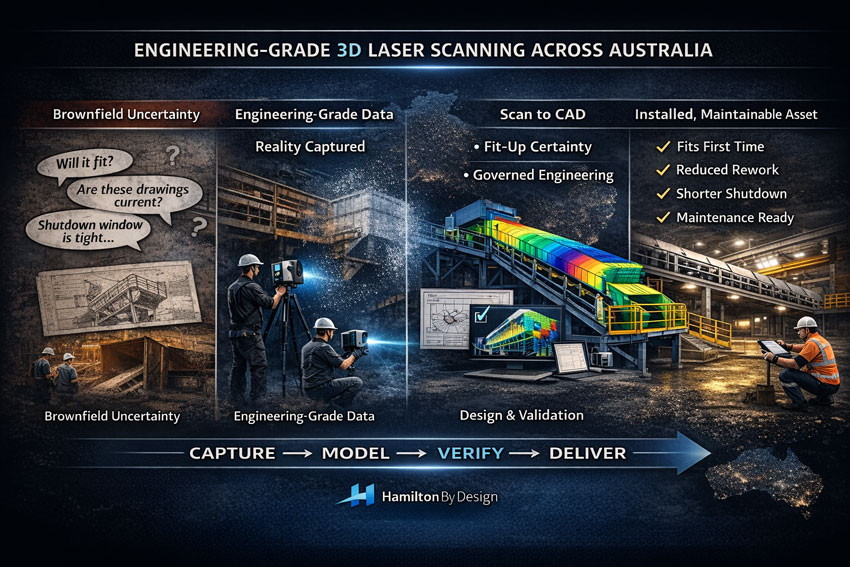
Terrestrial scanning and reality capture services using engineering-grade ground-based LiDAR systems to collect accurate point cloud data for industrial facilities, plant upgrades, as-built documentation, and engineering projects.
Terrestrial LiDAR Scanner Price โ Buy or Hire Options
When organisations first explore terrestrial LiDAR scanning, the biggest question is usually not technical โ itโs commercial: should we buy a scanner or hire one for the project?
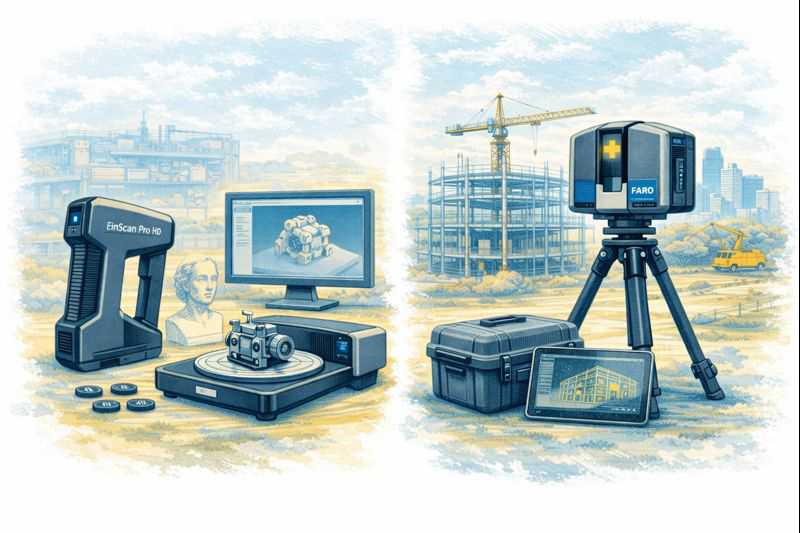
Terrestrial LiDAR scanners such as FARO and Leica systems are powerful tools for capturing accurate point clouds of buildings, industrial facilities, infrastructure and construction sites. They support as-built documentation, clash detection, shutdown planning and digital twin workflows. However, the right decision between purchase and hire depends on how often the equipment will be used and the level of in-house expertise available.
Buying a LiDAR Scanner
Purchasing a scanner can make sense for businesses that:
undertake regular surveying or as-built capture
need immediate access on multiple sites
want to build internal reality-capture capability
plan to integrate point clouds into ongoing design workflows
Ownership provides flexibility and control, but also involves training, software, calibration and maintenance considerations.
Hiring a LiDAR Scanner
Hiring is often the smarter option when:
the requirement is project-specific
workloads are seasonal or occasional
specialist software and support are needed
you want to trial the technology before committing
Hire packages can include advice on setup, data management and export formats so the results integrate smoothly with CAD and BIM platforms.
We Support Both Options
Hamilton By Design offers terrestrial LiDAR scanners for both hire and sale, backed by engineering support to ensure the data delivers real value on your project. Whether you need equipment for a short shutdown, a construction survey, or you are considering building your own scanning capability, our team can guide you through the most practical pathway.
Rather than publishing generic prices, we prefer to understand:
the type of site you need to capture
required accuracy and deliverables
software and CAD integration
duration and level of support
This allows us to recommend the right scanner package and commercial model for your specific needs.
Please contact our team for a price and availability. Weโll help you decide whether buy or hire is the best approach for your project.
Reality capture that stands up to design, fabrication and installation in remote industrial environments
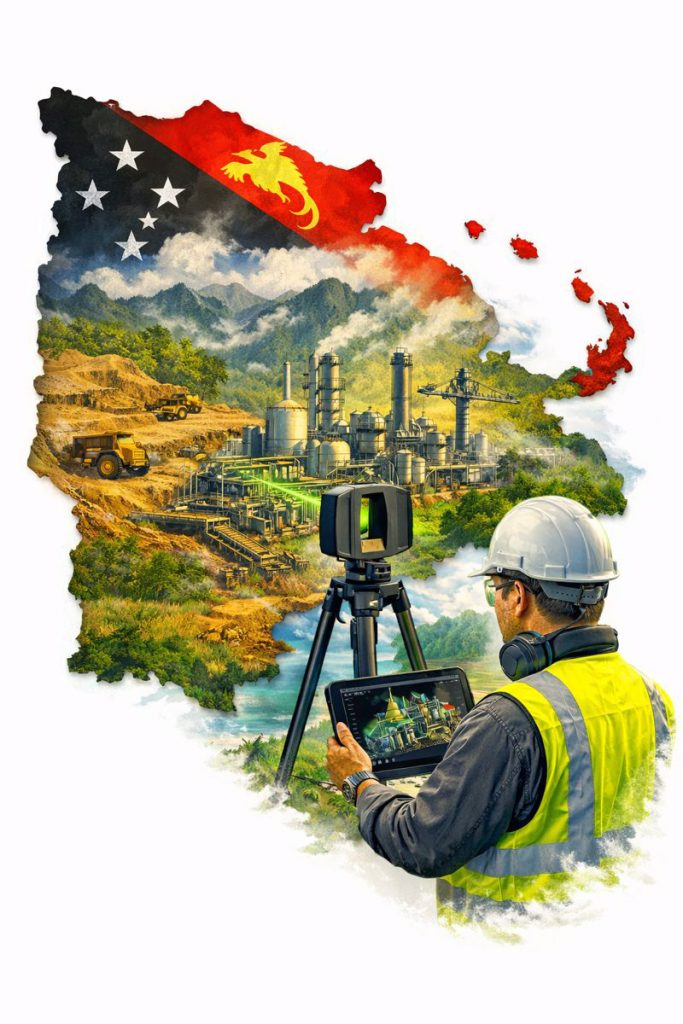
Papua New Guinea (PNG) is home to complex, high-value industrial assets โ from mining and mineral processing plants through to ports, power generation and remote infrastructure. These projects are often delivered under tight shutdown windows, difficult logistics and challenging environmental conditions.
In these environments, engineering-quality 3D scanning is not a โnice to haveโ โ itโs a practical tool that reduces risk by capturing accurate as-built conditions and converting them into deliverables engineers can trust.
Hamilton By Design provides engineering-led LiDAR scanning and scan-to-CAD modelling workflows designed for real project outcomes: upgrades that fit, installations that align, and drawings that reflect reality.
Why โEngineering Qualityโ Matters in PNG
Remote projects canโt afford rework.
When access is limited and mobilisation costs are high, even a small design error can cause major delays:
fabricated components donโt fit
tie-ins clash with existing pipework
platforms and handrails foul equipment clearances
shutdown windows blow out due to unexpected constraints
Engineering-quality reality capture reduces these risks by ensuring design starts from verified geometry โ not assumptions or outdated drawings.
What Engineering-Quality 3D Scanning Includes
Not all scanning services deliver engineering-grade outcomes. โEngineering qualityโ means the capture and deliverables are suitable for mechanical and structural decisions, including fabrication and installation.
Key elements include:
Survey control and consistent site referencing (where required)
Defined accuracy targets aligned to project tolerances
Model verification against point cloud prior to issue
The goal is simple: data you can design from.
Typical PNG Use Cases
1) Plant Upgrades and Brownfield Modifications
For conveyors, chutes, pipework, pump skids, structural platforms and access upgrades, scanning provides accurate spatial context for clash-free design.
2) Shutdown Planning and Constructability Reviews
Point clouds help teams plan:
access routes and lifting paths
installation sequencing
workpack scoping and constraints
This is especially valuable when shutdown windows are short and remote support is required.
3) Scan-to-CAD for Fabrication and Fit-Up
When components must be fabricated off-site and installed first time, engineering-grade LiDAR scanning provides the geometry needed for:
interface modelling
connection detailing
fabrication drawings
4) As-Built Documentation and Asset Records
Many sites have incomplete legacy drawings. A scanned dataset can become the โsingle source of truthโ for future upgrades and maintenance planning.
Choosing the Right Scanning Tool for PNG Conditions
PNG sites often include large structures, dense plant, tight access and harsh environmental conditions. In these cases, engineering-grade LiDAR is typically required because it provides:
long-range capture across large facilities
reliable geometry in low-light / indoor areas
accuracy suitable for engineering design decisions
Other capture methods (visual scanning or photogrammetry) can be useful for context and surfaces, but if fabrication, tie-ins, and fit-up matter, LiDAR is usually the right choice.
Deliverables That Engineers Actually Use
Engineering-quality reality capture is only valuable if it becomes practical outputs.
Common deliverables include:
Registered point clouds (E57 / RCP / RCS)
2D layouts, sections and elevations extracted from scans
Model extraction and verification against point cloud
Issue deliverables in formats aligned to the project team
This approach reduces site revisits and ensures the data is fit for purpose.
Why Engineering-Led Reality Capture Matters
3D scanning becomes far more valuable when itโs integrated with mechanical and structural engineering โ because the deliverables are designed to support:
design decisions
fabrication requirements
installation sequencing
long-term asset management
Engineering-led reality capture means scanning is not the end product โ it is the foundation for a better engineering outcome.
Final Thoughts
For industrial projects in Papua New Guinea, engineering-quality 3D scanning helps teams deliver upgrades with confidence โ particularly where logistics are difficult, shutdown time is limited, and โmeasure twiceโ is expensive.
If the project depends on fit-up, constructability and accurate as-built conditions, start with reality capture that is designed for engineering โ not just visualisation.
Large-Scale LiDAR Scanning Across Sydneyโs Built Environment
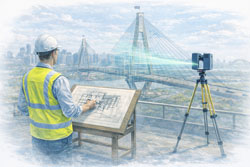
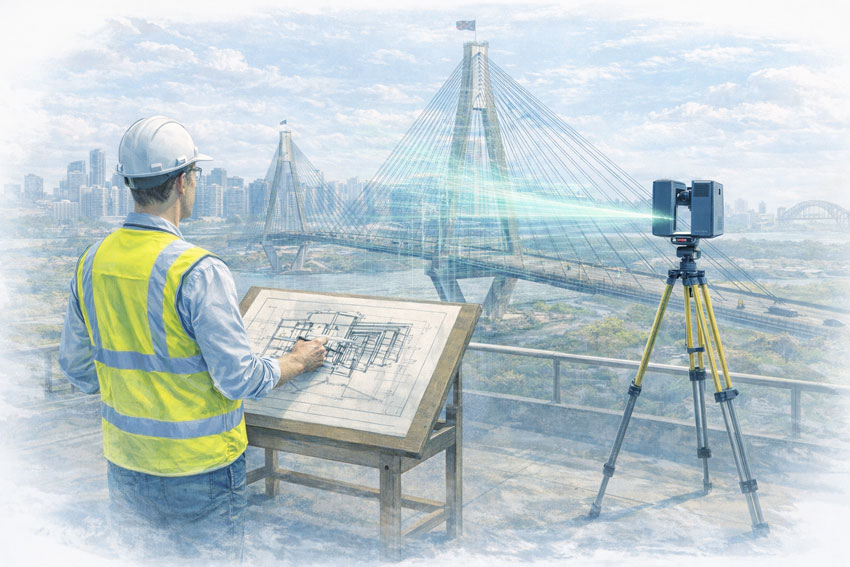
Sydney 3D LiDAR scanning is increasingly used to understand, document, and manage complex, large-scale assets where traditional surveying or manual measurement is impractical, unsafe, or incomplete.
Across Sydney, LiDAR scanning supports infrastructure owners, asset managers, engineers, and project teams who need accurate spatial data of buildings, structures, corridors, and public assets โ often while those assets remain operational.
At Hamilton By Design, we use LiDAR as a reality capture tool for understanding scale, geometry, and condition, not just producing drawings.
What Makes LiDAR Scanning Different at City Scale
Unlike small-area scanning for fabrication, urban LiDAR scanning is about:
Capturing entire structures, not just components
Understanding geometry across long distances and height
Recording spatial relationships between assets
Creating a permanent digital record of existing conditions
This makes LiDAR particularly effective for:
Bridges and transport infrastructure
Towers and vertical structures
Campuses, precincts, and CBD assets
Waterfront and port facilities
Public and private buildings with restricted access
Common Uses of Sydney 3D LiDAR Scanning
LiDAR scanning in Sydney is frequently used for:
As-built condition documentation
Asset verification prior to upgrade or refurbishment
Structural geometry validation
Clearance and envelope studies
Planning and constructability assessments
Long-term asset management records
In many cases, LiDAR replaces assumptions, outdated drawings, or partial surveys with defensible spatial data.
Working in Live, Operational Environments
Sydney assets are rarely isolated or shutdown-friendly.
LiDAR scanning allows data capture:
Without disrupting operations
Without physical contact with structures
From safe stand-off locations
With repeatable, measurable accuracy
This is particularly valuable for:
Transport corridors
Public infrastructure
High-traffic urban locations
Heritage or difficult-access assets
Deliverables from a Sydney LiDAR Scan
Depending on project needs, deliverables may include:
Registered point clouds (E57 / RCP / RCS)
Plan, elevation, and section views
Reference geometry for engineering studies
Context models for planning and approvals
Baseline datasets for future comparison
LiDAR data can stand alone as a digital record, or be used to inform later engineering and design work.
LiDAR as a Risk-Reduction Tool
For many Sydney projects, LiDAR scanning is commissioned before design decisions are locked in.
Typical drivers include:
Uncertainty in existing documentation
Risk of clashes or spatial conflicts
Asset modifications in constrained environments
High cost of access or rework
By capturing reality early, project teams reduce:
Unknowns
Re-measurement
Design assumptions
Late-stage surprises
Our clients:
Sydney Experience with National Reach
While our scanning work spans Australia, Sydney projects benefit from experience gained on:
Large industrial sites
Infrastructure upgrades
Brownfield environments
High-risk, high-consequence assets
This ensures LiDAR data is captured with engineering awareness, even when the immediate output is not a fabrication model.
When Sydney 3D LiDAR Scanning Makes Sense
LiDAR scanning is worth considering when:
Assets are large, tall, or complex
Access is limited or unsafe
Existing drawings are incomplete
Geometry matters more than aesthetics
You need a defensible digital baseline
Start with Reality, Then Decide the Path Forward
Sydney 3D LiDAR scanning provides clarity before decisions are made โ not after problems appear.
If you need reliable spatial data to support planning, verification, or future engineering work, we can help.
Connect with us by filling out the form below to discuss your Sydney LiDAR scanning requirements.
Related Sydney Services
Hamilton By Design provides engineering-led 3D scanning, LiDAR scanning, mechanical engineering and digital engineering services throughout Sydney and Greater Sydney.
Explore our related Sydney services:
3D Scanning Sydney โ Engineering-grade terrestrial laser scanning, as-built surveys and point cloud capture for industrial, infrastructure and commercial projects.
Reality Capture Sydney โ High-accuracy reality capture, digital twins, asset documentation and engineering-grade site verification.
Scan to CAD Sydney โ Convert point cloud data into AutoCAD, SolidWorks, Inventor and other engineering-ready CAD deliverables.
Point Cloud Modelling Sydneyโ Engineering-grade point cloud processing, clash detection, as-built verification and 3D modelling.
Mechanical Engineering Sydney โ Mechanical design, plant upgrades, materials handling systems, conveyors, chutes, platforms and engineering support.
Structural Drafting Sydneyโ Structural steel drafting, fabrication drawings, GA drawings, workshop detailing and as-built documentation.
Hamilton By Design supports projects throughout Sydney CBD, Parramatta, Liverpool, Penrith, Blacktown, Chatswood, Alexandria, Mascot, Newcastle and the Central Coast.
Hamilton By Design delivers engineering-grade LiDAR scanning services throughout Sydney CBD, Parramatta, Liverpool, Penrith, Chatswood, Alexandria, Mascot, Newcastle and the Central Coast. Accurate point cloud data supports industrial upgrades, infrastructure projects, as-built documentation and engineering design activities.
3D Scanning for Structural Drafting Darwin | Engineer-Led
Accurate As-Built Data for Structural Drafting in the Northern Territory โ No Guesswork
At Hamilton By Design, we provide 3D LiDAR scanning for structural drafting in Darwin and across the Northern Territory, supporting projects in construction, ports, defence, energy, mining, and government infrastructure.
In Darwin and remote NT environments, inaccurate or missing as-built documentation creates significant riskโparticularly where access is limited, shutdown windows are short, and compliance requirements are high. Our approach removes uncertainty by capturing real site conditions and converting them into engineering-ready structural drafting.
Why 3D Scanning Matters for Structural Drafting in Darwin
Projects in Darwin and the NT often involve:
Remote or regionally supported assets
Live operational facilities with limited access
Defence, port, and government infrastructure
Harsh environmental conditions
Tight construction and maintenance schedules
High compliance and audit requirements
Relying on manual measurements or legacy drawings introduces risk. Engineering-grade 3D scanning provides a reliable foundation for structural drafting, ensuring new works integrate accurately with existing structures.
3D Scanning as the Foundation for Structural Drafting
We use 3D scanning as a data capture tool that enables better structural drafting.
Our integrated workflow includes:
3D LiDAR scanning โ 3D modelling โ structural engineering โ FEA (where required) โ structural drafting
This ensures:
Structural drawings are based on verified site geometry
Clash risk for fabricated steel is reduced
Engineering decisions are supported by accurate data
Drafting reflects constructability and installation reality
One Accountable Engineering Partner
Rather than separating scanning, modelling, and drafting across multiple vendors, we deliver the complete service:
3D LiDAR scanning in Darwin and regional NT
3D as-built model development
Structural engineering input
Finite Element Analysis (FEA), where required
Structural drafting and fabrication documentation
One contact. One accountable team. One integrated workflow.
This approach is particularly valuable for remote and regionally supported projects where coordination and communication are critical.
Supporting Darwin, Regional NT & Remote Sites
We support projects across:
Darwin and surrounding industrial areas
Ports and marine infrastructure
Defence facilities and government assets
Energy and utilities infrastructure
Remote and regionally supported NT sites
Operating in these environments requires careful planning, accurate data capture, and documentation that can be relied upon without repeated site visits.
All structural drafting is developed in accordance with:
The National Construction Code (NCC)
Relevant Australian Standards
Client-specific, defence, and government requirements
Our deliverables provide defensible, data-backed documentation suitable for engineering review, fabrication, and construction in regulated environments.
Designed for Engineers, Contractors & Asset Owners
This service is suited to:
Project engineers managing Darwin and NT works
Contractors and fabricators requiring accurate drawings
Consulting engineers supporting upgrades
Government and defence asset owners
Organisations operating remote or hard-to-access sites
We work collaboratively with existing project teams, fitting into established delivery models rather than forcing new ones.
Talk to Us About 3D Scanning for Structural Drafting in Darwin
If youโre working on a Darwin-based or NT project and need accurate as-built data to support structural drafting, weโd welcome the opportunity to help.
3D Scanning for Structural Drafting Sydney | Engineer-Led
Accurate As-Built Data for Structural Drafting โ No Guesswork
At Hamilton By Design, we provide 3D LiDAR scanning for structural drafting across Sydney, delivering accurate as-built data for project engineers, fabricators, councils, and asset owners working in live and brownfield environments.
In Sydneyโs complex construction and infrastructure landscape, inaccurate or missing as-built drawings create riskโrisk of clashes, compliance issues, rework, and costly delays. Our approach removes that uncertainty by capturing real site conditions and converting them into engineering-ready structural drafting.
Why 3D Scanning Matters for Structural Drafting in Sydney
Sydney projects often involve:
Existing structures with incomplete documentation
Live sites that canโt be shut down for manual measurement
Tight timeframes and multiple stakeholders
High compliance expectations under the NCC and Australian Standards
Traditional tape-measure surveys and assumptions introduce error. Engineering-grade 3D scanning provides a reliable foundation for structural drafting, ensuring new steel integrates with whatโs actually on siteโnot what drawings suggest might be there.
3D Scanning as the Foundation for Structural Drafting
We treat 3D scanning as a data capture tool that enables better structural drafting.
Our workflow is fully integrated:
3D LiDAR scanning โ 3D modelling โ structural engineering โ FEA (where required) โ structural drafting
This ensures:
Structural drawings are based on verified geometry
Clash risk for fabricated steel is significantly reduced
Engineering decisions are supported by real data
Drafting aligns with constructability and installation constraints
One Local Team. One Responsibility.
Unlike standalone scanning providers or fragmented workflows, we deliver the complete service:
3D LiDAR scanning
3D modelling and as-built development
Structural engineering input
Finite Element Analysis (FEA), where required
Structural drafting and fabrication documentation
One contact. One accountable team. One job to do.
This integrated approach improves communication, reduces handover errors, and keeps responsibility clear throughout the project lifecycle.
Sydney-Based, Fast Turnaround
We are local to Sydney and regularly work across:
Greater Sydney and Sydney Metro
Western Sydney, Inner West, and South Sydney industrial areas
Ports, wharves, shipyards, and marine infrastructure
Councils and public assets
Live and brownfield industrial sites
Being Sydney-based allows us to mobilise quickly, respond to site constraints, and support projects with fast turnaround when time matters.
Typical Sydney Applications
Our 3D scanning for structural drafting services support:
Each project is approached with an understanding of live operations, access constraints, and compliance requirements.
Compliance You Can Rely On
All structural drafting is developed in accordance with:
The National Construction Code (NCC)
Relevant Australian Standards
Client and asset-specific engineering requirements
We understand that compliance risk often sits with the project engineer. Our role is to support you with defensible, data-backed documentation that stands up to review.
Designed to Support Project Engineers
This service is built for project engineers who need:
Confidence in existing conditions
Reduced fabrication and installation risk
Clear, accurate structural documentation
A local engineering partner who takes responsibility
We work collaboratively with consultants, fabricators, and construction teamsโfitting into your delivery model rather than forcing you into ours.
Talk to Us About 3D Scanning for Structural Drafting in Sydney
If youโre managing a Sydney-based project and need accurate as-built data to support structural drafting, weโd welcome the opportunity to help.
Submit an enquiry via our contact form
Related Sydney Services
Hamilton By Design provides engineering-led 3D scanning, LiDAR scanning, mechanical engineering and digital engineering services throughout Sydney and Greater Sydney.
Explore our related Sydney services:
3D Scanning Sydney โ Engineering-grade terrestrial laser scanning, as-built surveys and point cloud capture for industrial, infrastructure and commercial projects.
Reality Capture Sydney โ High-accuracy reality capture, digital twins, asset documentation and engineering-grade site verification.
Scan to CAD Sydney โ Convert point cloud data into AutoCAD, SolidWorks, Inventor and other engineering-ready CAD deliverables.
Point Cloud Modelling Sydneyโ Engineering-grade point cloud processing, clash detection, as-built verification and 3D modelling.
Mechanical Engineering Sydney โ Mechanical design, plant upgrades, materials handling systems, conveyors, chutes, platforms and engineering support.
Structural Drafting Sydneyโ Structural steel drafting, fabrication drawings, GA drawings, workshop detailing and as-built documentation.
Hamilton By Design supports projects throughout Sydney CBD, Parramatta, Liverpool, Penrith, Blacktown, Chatswood, Alexandria, Mascot, Newcastle and the Central Coast.
3D LiDAR Scanning Wyong | Engineering-Grade & Standards-Compliant
Hamilton By Design provides engineering-grade 3D LiDAR scanning in Wyong, delivering accurate as-built data that supports Australian Standardsโcompliant design, documentation, and construction.
In power, manufacturing, and building & construction environments, the quality of scan data directly affects whether designs are buildable, compliant, and installable. Our approach focuses on engineering accuracy, control, and verification, not just visual capture.
Why engineering-grade LiDAR scanning matters
Not all 3D scanning is equal.
Low-grade or survey-only scans may look impressive but often lack:
Reliable control and datums
Verified accuracy suitable for engineering tolerances
Context around structural, mechanical, and access systems
Confidence that derived drawings will meet Australian Standards
Engineering-grade LiDAR scanning ensures the captured data is suitable for:
Mechanical and structural design
Fabrication and installation
Compliance assessment and upgrade works
This is especially important in Wyong, where many assets are live, brownfield, or undergoing staged upgrades.
Supporting Australian Standards through accurate as-built data
3D LiDAR scanning is not a standard on its own โ it is an enabling technology that supports compliance with Australian Standards by providing accurate geometry for engineering decisions.
Our scanning services directly support design and documentation aligned with:
AS 1100 โ Technical Drawing Ensuring scan-derived drawings use correct datums, dimensions, and tolerances.
AS 1657 โ Access Systems Verifying existing platforms, handrails, head heights, and clearances for upgrades and compliance.
AS 3990 โ Mechanical Equipment Steelwork Capturing existing steelwork geometry to support loads, interfaces, and fabrication fit-up.
AS 4100 โ Steel Structures Supporting structural verification, strengthening, and modification works.
AS 3774 โ Bulk Solids Containers Providing accurate hopper, bin, and chute geometry for load calculations and design checks.
NCC โ National Construction Code Supporting building upgrades, refurbishments, and as-built documentation.
Engineering-grade scanning ensures that models and drawings derived from the scan can be relied upon during compliance reviews and construction.
Power, manufacturing & construction scanning in Wyong
Wyong and the northern Central Coast support a mix of energy infrastructure, manufacturing facilities, and construction activity, where accurate as-built data reduces risk.
We support scanning for:
Power stations, substations, and electrical infrastructure
Manufacturing plants, workshops, and industrial facilities
Structural steel, platforms, walkways, and access systems
Plant rooms, services corridors, and retrofit works
Brownfield construction and staged upgrades
LiDAR scanning allows engineering and construction teams to design off-site with confidence, reducing shutdown risk and site rework.
Our Clients:
What makes our scanning engineering-grade
Our approach goes beyond data capture:
Scan planning based on engineering intent
Controlled datums and registration suitable for CAD and fabrication
Accuracy aligned with mechanical and structural tolerances
Interpretation by engineers who understand compliance requirements
Deliverables designed to integrate into engineering workflows
This ensures scan data is fit for purpose, not just visually accurate.
3D CAD models suitable for engineering and fabrication
Interface and clash reviews
Fabrication-ready dimensions and datum strategies
Digital QA documentation supporting compliance and installation
Wyong & Central Coast coverage
We service Wyong and surrounding areas including Tuggerah, Warnervale, Ourimbah, Somersby, Lake Haven, Gosford, Erina, and across the Central Coast.
We also support projects extending into Newcastle, the Hunter Valley, and Greater Sydney, providing consistent engineering-grade scanning across multiple sites.
Get started
If you require 3D LiDAR scanning in Wyong that supports Australian Standardsโcompliant engineering and construction, Hamilton By Design can help.
Request a quote or book a site scan to discuss an engineering-grade scanning solution tailored to your project.
To provide the best experiences, we use technologies like cookies to store and/or access device information. Consenting to these technologies will allow us to process data such as browsing behaviour or unique IDs on this site. Not consenting or withdrawing consent, may adversely affect certain features and functions.
Functional
Always active
The technical storage or access is strictly necessary for the legitimate purpose of enabling the use of a specific service explicitly requested by the subscriber or user, or for the sole purpose of carrying out the transmission of a communication over an electronic communications network.
Preferences
The technical storage or access is necessary for the legitimate purpose of storing preferences that are not requested by the subscriber or user.
Statistics
The technical storage or access that is used exclusively for statistical purposes.The technical storage or access that is used exclusively for anonymous statistical purposes. Without a subpoena, voluntary compliance on the part of your Internet Service Provider, or additional records from a third party, information stored or retrieved for this purpose alone cannot usually be used to identify you.
Marketing
The technical storage or access is required to create user profiles to send advertising, or to track the user on a website or across several websites for similar marketing purposes.