3D Scanning

How 3D Laser Scanning is Redefining Reality for Design, Construction & Heritage

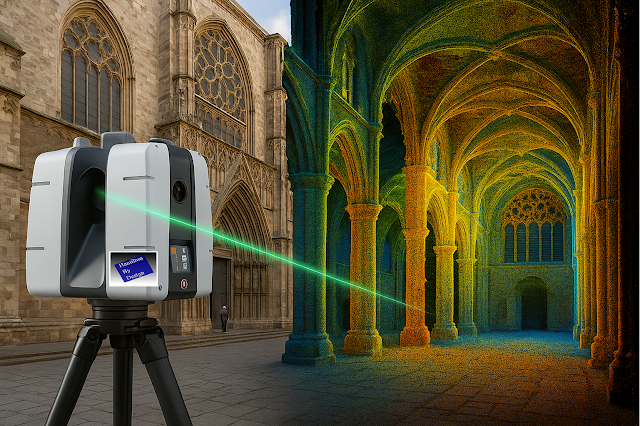
Imagine standing before a centuries-old cathedral, where every carved arch, every stained-glass pane, every weathered stone holds centuries of stories. Capturing its true form and condition with tape measure and camera? Tedious and prone to errors. But with 3D laser scanning, you can digitally freeze every detailโ€”down to the imperfectionsโ€”turning reality into an exact, manipulable model.

In an age where precision, speed, and data-driven decisions are non-negotiable, 3D laser scanning is no longer โ€œnice to haveโ€โ€”itโ€™s essential. Letโ€™s explore what it is, why itโ€™s transformative, where itโ€™s being used most powerfully, and how you can harness its potential.

What Is 3D Laser Scanning?

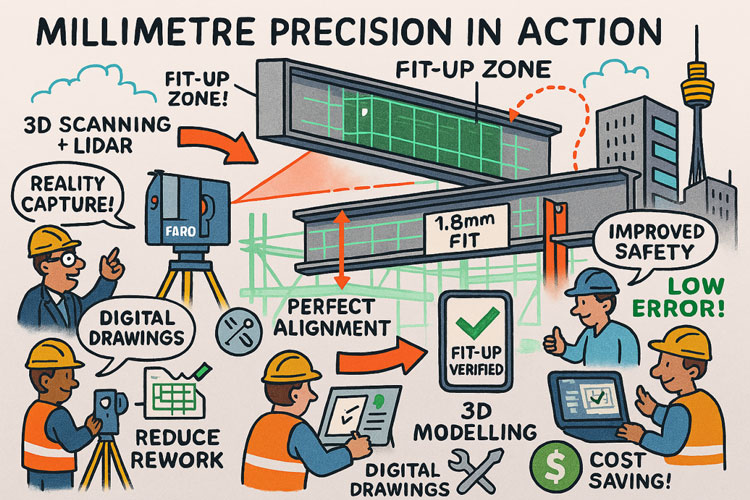
At its core, 3D laser scanning sometimes called terrestrial laser scanning, (TLS) is the emission of laser pulses toward surfaces, recording the time it takes for those pulses to bounce back. From that comes a dense โ€œpoint cloudโ€ โ€” billions of precise data points mapping shape, texture, orientation, and distance.

These point clouds become high-fidelity models, maps, meshes, or BIM ready files. Whether youโ€™re scanning building exteriors, interiors, or industrial components, the result is more than just imageryโ€”itโ€™s measurable, analyzable geometry.

How It Works โ€” The Process

  1. Preparation & Planning

    Define what you need: the level of detail (LOD), resolution, range, and whether external conditions (light, weather) will interfere.

  2. Data Capture

    Position the scanner at multiple stations to cover all surfaces. Use targets or reference markers for alignment and capture with overlapping scans.

  3. Processing & Registration

    Merge scans to align them properly, clean noise, filter out irrelevant data (like people, moving objects), calibrate.

  4. Post-processing & Deliverables

    Convert point clouds into usable outputsโ€”floorplans, sections, elevations, 3D meshes, BIM models, virtual walkthroughs. Run analyses (clash detection, deformation etc.).

  5. Integration & Use

    Use the data in design, restoration, facility management, or documentation. The quality of integration (into BIM, GIS, CAD) is key to unlocking value.

ย 

Key Benefits

Benefit What It Means in Practice Real-World Impact
Extreme Precision Sub-millimetre to millimetre accuracy depending on the scanner and conditions. Less rework. Better fit for retrofit, renovation, or mechanical systems in tight tolerances.
Speed + Efficiency Collect large amounts of spatial data in far less time than traditional measurement. Faster project turnaround. Reduced site time costs.
Non-Contact / Low Disruption Good for fragile structures, hazardous or difficult-to-access places. Preserves integrity of heritage buildings; safer for workers.
Comprehensive Documentation Full visual & geometric context. Informs future maintenance. Acts as an archival record.
Better Decision Making & Conflict Detection Early clash detection; scenario simulation; what-if modelling. Avoids costly mistakes; helps build consensus among stakeholders.
Enhanced Visualisation & Communication Stakeholders can see exactly what exists vs. whatโ€™s being proposed. Improves client buy-in, regulatory approvals, fundraising.

ย 

Applications: Where It Shines

  • Architecture & Renovation: As-built models, restoration of heritage sites.

  • Infrastructure & Civil Engineering: Bridges, tunnels, rail track alignments.

  • Industrial & Manufacturing: Machine part audits, reverse-engineering, plant layout.

  • Heritage & Preservation: Documenting fragile monuments, archaeological sites.

  • Facility Management: Digital twins, maintenance, asset tracking.

  • Environment & Surveying: Terrain mapping, forestry, flood risk mapping (especially when combined with aerial systems or mobile scanning).

Challenges & Best Practices

Nothing is perfect. To get the most out of 3D laser scanning, anticipate and mitigate:

  • Environmental factors: Light, dust, rain, reflective surfaces can introduce noise.

  • Data overload: Massive point clouds are large; need strong hardware & efficient workflows.

  • Alignment & registration errors: Overlaps, control points, and calibration are vital.

  • Skill & Planning: Good operators + good planning = much better outcomes.

Key best practices:

  • Use reference targets for precise registration.

  • Capture overlap of 30-50% between scan positions.

  • Break project into manageable segments.

  • Clean noise early.

  • Think ahead about deliverables and how clients will use the data (design, BIM, VR etc.).

Case Studies & Stories

  • Heritage in Danger: A cathedral in Europe threatened by pollution and structural decay was laser scanned. The point cloud revealed minute deformations, enabling an accurate restoration planโ€”saving costs and preserving history.

  • Infrastructure Efficiency: A civil engineering firm reduced design clashes by 80% on a complex highway project by integrating scans with their BIM workflow.

  • Industrial Switch-Over: Manufacturing plant layout was reconfigured using scan data; downtime reduced because the virtual model matched reality better than the old blueprints.

Software, Tools & Ecosystem

While scanners are vital, the software ecosystem is what unlocks value. Tools that turn raw data into actionable insights include:

  • Reality capture tools (processing point clouds).

  • BIM / CAD integration (e.g. Revit, AutoCAD).

  • Visualization tools (VR, AR, walkthrough).

  • Data sharing & collaboration platforms.

  • Cloud storage / processing if large point clouds.

SaaS/cloud-based workflows are increasingly important to share among remote teams, facilitate stakeholder review, and ensure data is accessible beyond just technical users.

Why It Matters Now

  • Global pressures (heritage, sustainability, faster build cycles, remote work) are raising the bar.

  • Clients expect transparency, accuracy, minimized risk.

  • Regulatory compliance and โ€œas-builtโ€ requirements are stricter.

  • Digital twins & smart infrastructure demand high fidelity data.

3D laser scanning acts as a bridge: between physical world and digital twin; between heritage past and future; between design promise and build reality. Ifย you have a survey scan and want to make sense of point cloud data, contact Hamilton By Design

ย 
ย 
ย 
ย 

Our clients:

Name
Would you like us to arrange a phone consultation for you?
Address
Finite Element Analysis (FEA) engineering simulation button
Mechanical engineering services

Hamilton by Design: Your Experts in 3D Laser Scanning & Mechanical Design

Engineer-led 3D laser scanning of an industrial plant transitioning into mechanical engineering design and steel fabrication.

When it comes to precision engineering, structural drafting, and mechanical design services, Hamilton by Design leads the way. We provide advanced 3D laser scanning solutions across Perth, Sydney, Brisbane, Melbourne, and the Hunter Valley โ€” giving clients accurate data for smarter decisions and efficient project delivery.

Hamilton by Design services diagram showing four key areas: 3D Laser Scanning, Mechanical Design and Engineering, Structural Drafting and Design, and Industries Served. The chart lists services such as 3D point cloud scanning, as-built documentation, reverse engineering, mechanical product development, conveyor drive systems for mining, factory design consulting, FEA, structural steel detailing, and design for construction, manufacturing and industrial sectors. Industries served include construction and infrastructure, and residential and renovations. A footer reads โ€˜3D Laser Scanning and Mechanical Design Australia
3D LiDAR scanning and 3D modelling service button โ€” laser scanner capturing a point cloud for engineering and CAD modelling
Mechanical engineering services

3D Laser Scanning Across Australia

Our 3D laser scanning services capture exact measurements of your site, plant, or equipment to create detailed 3D point clouds and as-built documentation. This reduces rework, saves time, and improves project planning.

We offer:

  • 3D Laser Scanning Perth & Fremantle โ€“ Industrial plant surveys, mining site scanning, and reverse engineering.
  • 3D Laser Scanning Sydney & Melbourne โ€“ Building surveys, renovation planning, and structural inspections.
  • 3D Laser Scanning Brisbane & Hunter Valley โ€“ Factory layouts, conveyor drive design, and structural scanning.
  • 3D Laser Scanning for Engineering & Mining โ€“ Point cloud scanning, clash detection, and 3D modelling.

Our team uses the latest 3D scanning and LiDAR technology to produce millimetre-accurate results that engineers, architects, and builders can trust.

Structural Drafting & Design Services

Hamilton by Design provides structural drafting services across Australia, including:

  • Structural Design and Drafting โ€“ For residential, commercial, and industrial projects.
  • Steel Detailing & Shop Drawings โ€“ Produced to Australian drafting standards.
  • Structural Scanning Services Brisbane & Sydney โ€“ Helping engineers assess existing structures for upgrades or repairs.

Our experienced structural design engineers work closely with builders, architects, and civil engineers in Hamilton and beyond to deliver reliable, build-ready plans.

Engineer using 3D LiDAR scanning to capture an industrial facility, followed by CAD modelling and fabrication-ready steelwork.

See Structural Engineering for more info

Mechanical Design & Engineering Solutions

We are a full-service mechanical design consultancy offering:

  • Mechanical Product Design & Development
  • Factory & Plant Layout Design
  • Conveyor Belt Drive Systems & Mining Equipment Design
  • Finite Element Analysis (FEA) and performance validation
  • Reverse Engineering Services Perth for spare parts and retrofits

Our team of mechanical engineers, drafters, and CAD designers ensures every project is efficient, safe, and cost-effective.

see Mechanical Engineering for more info

Industries We Serve

Hamilton by Design supports clients across:

  • Mining & Resources โ€“ Coal conveyors, feed thickeners, and vibrating equipment in Kalgoorlie and Mount Isa.
  • Construction & Infrastructure โ€“ As-built scanning and 3D modelling for building projects.
  • Manufacturing โ€“ Factory optimization and equipment design.
  • Residential Projects โ€“ Drafting services for home renovations and new builds in Hamilton and surrounding areas.

Why Partner with Hamilton by Design?

Choosing Hamilton by Design means working with mechanical design experts and structural drafters who are committed to accuracy, speed, and innovation.

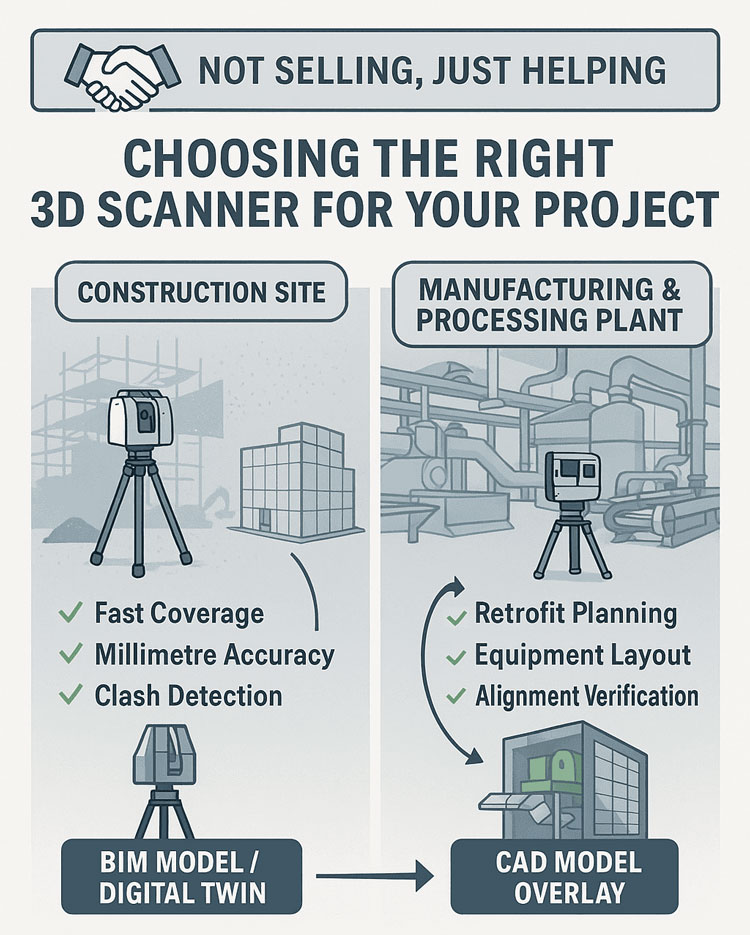
Infographic showing 3D laser scanning capturing industrial equipment to identify challenges such as vibration, movement, and fluid leaks, feeding into a 3D model that improves planning, reduces rework, and supports safer maintenance

Australia-Wide Coverage โ€“ Perth, Sydney, Melbourne, Brisbane, Hunter Valley
Cutting-Edge Technology โ€“ Laser scanning, CAD modelling, and 3D visualization
Expert Team โ€“ Experienced mechanical engineers and design consultants
Cost-Effective Solutions โ€“ Saving time, reducing errors, and minimizing rework


Get Started Today

Ready to transform your next project with 3D laser scanning, structural drafting, or mechanical design services?

Contact Hamilton by Design for a consultation and see how our team can deliver precise, efficient, and innovative solutions for your business.


Hamilton By Design logo displayed on a blue tilted rectangle with a grey gradient background

Name
Would you like us to arrange a phone consultation for you?
Address

Hamilton By Design โ€“ Blog

Consulting Engineers

About Us โ€“ Hamilton By Design

Contact us

Finite Element Analysis (FEA) engineering simulation button
Mechanical engineering services

Are You Getting the Full Value from Your Point Cloud Data?

3D Scanning

The world of manufacturing and fabrication is moving faster than ever. Point cloud scanning and 3D modeling have made it easier to capture reality with incredible accuracy โ€” but simply collecting data isnโ€™t enough.

Without the right expertise, point clouds often sit unused, underutilized, or worse โ€” lead to costly mistakes when converted into incomplete or inaccurate drawings.

3D Scanning

Thatโ€™s why mechanical engineering consultants are becoming essential partners for forward-thinking businesses. They donโ€™t just process point clouds โ€” they turn them into:

  • High-precision 3D models that match real-world conditions

  • Fabrication-ready drawings that reduce errors and rework

  • Actionable insights that save time, money, and frustration

This is no longer just about technology โ€” itโ€™s about strategy and execution.

Read our full article to discover why now is the perfect time to engage consultants who can unlock the power of your point cloud data:


Itโ€™s Time to Level Up: Why Mechanical Engineering Consultants Are Key to Unlocking the Power of Point Cloud to 3D Modeling

ย 
3D LiDAR scanning and 3D modelling service button โ€” laser scanner capturing a point cloud for engineering and CAD modelling
Mechanical engineering services

Hamilton By Design logo displayed on a blue tilted rectangle with a grey gradient background

Our clients:

Name
Would you like us to arrange a phone consultation for you?
Address
3D LiDAR scanning and 3D modelling service button โ€” laser scanner capturing a point cloud for engineering and CAD modelling
Mechanical engineering services
Finite Element Analysis (FEA) engineering simulation button
Mechanical engineering services

3D Laser Scanning and CAD Modelling Services | Hamilton By Design


There are two things weโ€™ve always believed at Hamilton By Design:

  1. Accuracy matters.
  2. If you can model it before you make it, do it.

Thatโ€™s why when the FARO Focus S70 hit the scene in 2017, we were early to the party โ€” not just because it was shiny and new (though it was), but because we knew it would change how we support our clients in mining, processing, and manufacturing environments.

The S70 didnโ€™t just give us a tool โ€” it gave us a superpower: the ability to see an entire site, down to the bolt heads and pipe supports, in full 3D before anyone picked up a wrench. Dust, heat, poor lighting โ€” no problem. With its IP54 rating and extended temperature range, this scanner thrives where other tools tap out.

And weโ€™ve been putting it to work ever since.

3D laser scan of mechanical plant

โ€œMeasure Twice, Cut Onceโ€ Just Got a Whole Lot More Real

Laser scanning means we no longer rely on outdated drawings, forgotten markups, or that sketch someone did on the back of a clipboard in 2004.

Weโ€™re capturing site geometry down to millimetres, mapping full plant rooms, structural steel, conveyors, tanks, ducts โ€” you name it. And the moment we leave site, weโ€™ve already got the data we need, registered and ready to drop into SolidWorks.

Which, by the way, weโ€™ve been using since 2001.

Yes โ€” long before CAD was cool, we were deep into SolidWorks building models, simulating loads, tweaking fit-ups, and designing smarter mechanical solutions for complex environments. Itโ€™s the other half of the story โ€” scan it, then model it, all in-house, all under one roof.

Safety by Design โ€“ Literally

Hereโ€™s the part people often overlook: 3D laser scanning isnโ€™t just about accuracy โ€” itโ€™s about safety.

Weโ€™ve worked across enough plants and mine sites to know that the real hazards are often the things you donโ€™t see in a drawing. Tight access ways. Awkward pipe routing. Obstructions waiting to drop something nasty when a shutdown rolls around.

By scanning and reviewing environments virtually, we can spot those risks early โ€” hazard identification before boots are even on the ground. We help clients:

  • Reduce time-on-site
  • Limit the number of field visits
  • Minimise exposure to high-risk zones
  • Plan safer shutdowns and installations

Thatโ€™s a big win in any plant or processing facility โ€” not just for compliance, but for peace of mind.

SolidWorks 3D Modelling
CAD model from site scan

From Point Cloud to Problem Solved

Since 2017, our scanning and modelling workflows have supported:

  • Brownfield upgrade projects
  • Reverse engineering of legacy components
  • Fabrication and installation validation
  • Creation of digital twins
  • Asset audits and documentation updates

And when you pair that with 24 years of SolidWorks expertise, you get more than just a pretty point cloud โ€” you get practical, buildable, fit-for-purpose engineering solutions backed by deep industry knowledge.


Thinking about your next project? Letโ€™s make it smarter from the start.

Weโ€™ll scan it, model it, and engineer it as we have been doing for decades โ€” with zero guesswork and full confidence.

Hamilton By Design logo displayed on a blue tilted rectangle with a grey gradient background

www.hamiltonbydesign.com.au

3D LiDAR scanning and 3D modelling service button โ€” laser scanner capturing a point cloud for engineering and CAD modelling
Mechanical engineering services

Mechanical Engineering | Structural Engineering

Mechanical Drafting | Structural Drafting

3D CAD Modelling | 3D Scanning

Our clients:

Name
Would you like us to arrange a phone consultation for you?
Address

Mechanical Engineering at the Heart of Mining on the Central Coast

ย  ๐Ÿ› ๏ธ

1. Setting the Scene: The Central Coast & Its Industrial Backbone

Home to nearly 350,000 people across Gosford, Wyong, Terrigal, and beyond, the Central Coast is well-known for its beaches and bushlandโ€”yet it also supports a robust industrial and miningโ€‘services sector (Jora, Wikipedia). With growing infrastructure demands and proximity to resource projects like the Wallarahโ€ฏ2 coal proposal near Wyong (Wikipedia), mechanical engineers play a pivotal role behind the scenes.

2. What Do Mechanical Engineers Do in Mining on the Coast?

Mechanical engineers in mining and related heavy industries are responsible for:

  • Design & Maintenance: Planning, designing, and overseeing maintenance of critical mineral processing plants, machinery, conveyors, trucks and drilling rigs (Jobsora).

  • Automation Integration: Implementing robotics, programmable logic controllers (PLCs), remote operation systems, and predictive maintenance tools .

  • Health & Safety Compliance: Ensuring mechanical systems meet stringent safety regulations and operator protection standards (Jora).

  • Environmental Efficiency: Optimising equipment to reduce energy use, emissions, and noiseโ€”all while supporting mine rehabilitation efforts .


3. Job Opportunities in the Region

Recent job listings highlight robust opportunities for mechanical engineers across the Coast:

  • Mining Mechanical Engineer roles are regularly advertised in Gosford/Lisarow, appearing in SEEK and Jora job postings (SEEK).

  • Roles span senior design positions to handsโ€‘on maintenance engineeringโ€”offering full-time opportunities with firms like Wabtec, Hyundaiโ€ฏRotem, Boral, and Coffey (SEEK).

  • Entry-level and graduate engineering roles are also available through pathways like Central Coast Council traineeships and TAFE NSW programs (Central Coast Council).


4. Industry Trends and What Youโ€™ll Need

As described by Titan Recruitment, the mining sector is embracing several transformative trends (Titan Recruitment):

  1. Automation & Robotics: Engineers are tasked with integrating autonomous machinery and control systems.

  2. Digital & Data Analytics: Skills in condition monitoring, sensors, and predictive analytics are in demand.

  3. Sustainability Focus: Thereโ€™s emphasis on clean, efficient systems that reduce environmental footprint.

  4. Complex Machine Design: As equipment sophistication grows, so does the need for mechanical expertise.

  5. Asset Reliability & Safety: Mechanical engineers must ensure zero-fault operation in harsh mining environments.

  6. Site-to-System Integration: Engineers coordinate across disciplinesโ€”mechanical, electrical, structuralโ€”to optimise operations.

  7. Continuous Upskilling: Ongoing educationโ€”through TAFE NSW, professional certifications, and in-house trainingโ€”is critical.


5. Training & Career Pathways on the Central Coast

๐ŸŽ“ Education & Apprenticeships

  • TAFE NSW (Hunter & Central Coast) offers mechanical and engineering trade training, forming a strong foundation for local roles (Wikipedia).

  • Central Coast Council provides apprenticeships and traineeships in mechanical fieldsโ€”ideal stepping stones into industry .

๐Ÿข Local Industry Experience

  • Firms like Wabtec, Hyundaiโ€ฏRotem, Boral, Coffey, and Wright Engineering in Somersby/Gosford offer vital on-the-job training and progression (SEEK).

  • Mining-support businesses across the Central Coast employ engineers to design, maintain, and improve heavy-duty plant and machinery.


6. Why the Central Coast Is a Great Base for Mining Engineers

  • Proximity to Projects: Infrastructure supporting coal drilling and mineral processing connects easily with local towns via major transport routes in and out of Gosford (Jobsora, Wikipedia).

  • Balanced Lifestyle: Work-life harmony blends regional industry jobs with coastal living and access to national parks (Indeed).

  • Clear Career Pathways: Education, apprenticeships, and employers form a supportive ecosystemโ€”from bedrock training to senior site leadership.


Final Takeaway

Mechanical engineers are essential to mining operations on the Central Coastโ€”ensuring machinery runs efficiently, safely, and sustainably. With strong local education pathways, active job markets, and growing tech trends, the region offers rewarding careers tied to both industrial innovation and community lifestyle.

Ready to design, maintain, and optimise the backbone of mining? The Central Coast has the foundationโ€”and the opportunityโ€”awaiting mechanical engineers eager to build the future.

Hamilton By Designย |ย Mechanical Draftingย |ย Structural Draftingย |ย 3-D Lidar Scanning

Central Coast | Mount Isa | Brisbane | Cairns | Darwin


Published on Hamiltonโ€ฏbyโ€ฏDesign โ€” shaping engineering futures in NSWโ€™s Central Coast

Hamilton By Design logo displayed on a blue tilted rectangle with a grey gradient background
3D LiDAR scanning and 3D modelling service button โ€” laser scanner capturing a point cloud for engineering and CAD modelling
Mechanical engineering services

Our clients:

Name
Would you like us to arrange a phone consultation for you?
Address
Finite Element Analysis (FEA) engineering simulation button
Mechanical engineering services

Maximizing Equipment Efficiency with ISO 18436.2 Maintenance Strategies

At Hamilton By Design, we know that keeping your equipment running efficiently isnโ€™t just about quick fixes; itโ€™s about adopting the right maintenance strategies to ensure long-term reliability and performance. With advancements in condition monitoring and diagnostic techniques, the ISO 18436.2 standard has become a cornerstone for effective maintenance practicesโ€”and itโ€™s at the heart of how we help our clients optimize their operations.

In this blog post, weโ€™ll explore the major maintenance strategies aligned with ISO 18436.2 and how they can transform your plantโ€™s productivity.


What is ISO 18436.2?

ISO 18436.2 is an internationally recognized standard that defines the competencies required for personnel performing condition monitoring and diagnostics. It focuses on advanced tools like vibration analysis, helping engineers identify equipment issues before they lead to costly downtime.

At Hamilton By Design, our team is ISO 18436.2-certified, meaning we bring the highest level of expertise to your maintenance needs.


Maintenance Strategies That Deliver Results

ISO 18436.2 aligns with several key maintenance strategies designed to improve reliability, minimize downtime, and optimize equipment performance. Hereโ€™s how they work:

1. Reactive Maintenance

Reactive maintenance is the traditional โ€œrun-to-failureโ€ approach where repairs are made after a breakdown. While not ideal for critical assets, tools like vibration analysis can still play a role by identifying root causes post-failure. This can help inform more proactive strategies in the future.

2. Preventive Maintenance (PM)

Preventive maintenance involves scheduling regular maintenance tasks to prevent failures. While effective to some extent, PM can lead to over-maintenance. By incorporating vibration analysis and other condition monitoring techniques, preventive measures can be more precisely targeted, reducing unnecessary downtime.

3. Condition-Based Maintenance (CBM)

Condition-Based Maintenance uses real-time equipment data to identify issues as they arise. This strategy is central to ISO 18436.2 and includes tools like vibration analysis, thermography, and ultrasonic testing. CBM ensures that maintenance is performed only when necessary, saving time and money.

Benefits:

  • Reduces unplanned downtime.
  • Optimizes maintenance schedules.
  • Extends equipment lifespan.

4. Predictive Maintenance (PdM)

Predictive Maintenance takes CBM a step further, using data trends and analytics to predict when failures are likely to occur. With the expertise of ISO 18436.2-certified personnel, PdM uses advanced tools to detect subtle signs of wear or stress, allowing for intervention before a problem becomes critical.

Key Tools:

  • Vibration analysis for early detection of imbalance or misalignment.
  • Infrared thermography to spot heat anomalies.
  • Ultrasonic testing to identify leaks and material defects.

5. Reliability-Centered Maintenance (RCM)

RCM focuses on understanding the specific failure modes of critical assets and tailoring maintenance strategies accordingly. This approach integrates condition monitoring insights to prioritize tasks that align with operational goals.

Benefits:

  • Aligns maintenance efforts with production priorities.
  • Reduces the risk of unexpected equipment failures.

6. Proactive Maintenance

Proactive maintenance identifies and addresses root causes of recurring issues. By analyzing data from vibration and other diagnostic tools, engineers can resolve underlying problems like misalignment, improper lubrication, or material fatigue.

Impact:

  • Prevents repetitive failures.
  • Improves long-term equipment reliability.

7. Total Productive Maintenance (TPM)

TPM involves a plant-wide effort, from operators to management, to ensure optimal equipment effectiveness. ISO 18436.2-certified personnel can support TPM by providing actionable condition monitoring insights and training operators in basic diagnostic techniques.


How Hamilton By Design Helps

At Hamilton By Design, we bring these strategies to life through tailored maintenance solutions that align with your plantโ€™s needs. Hereโ€™s how we can help:

1. Advanced Condition Monitoring:
Our team uses state-of-the-art tools to monitor equipment health, including vibration analysis, thermography, and ultrasonic testing.

2. Tailored Maintenance Plans:
Every plant is unique. We develop maintenance strategies based on your specific equipment, production goals, and operational priorities.

3. Expert Training and Certification:
We empower your team by offering ISO 18436.2 training, giving them the skills to sustain and enhance maintenance programs.

4. Ongoing Support:
Maintenance is a journey, not a destination. We provide continuous support to refine and optimize your practices as your operations evolve.


The Hamilton By Design Advantage

Adopting advanced maintenance strategies aligned with ISO 18436.2 isnโ€™t just about improving equipment reliabilityโ€”itโ€™s about unlocking greater productivity and profitability for your business.

With our expertise, you can transition from reactive to predictive maintenance, reduce unplanned downtime, and extend the lifespan of your critical assets.

Ready to take your plantโ€™s maintenance strategy to the next level? Contact Hamilton By Design today to find out how we can help.

3D LiDAR scanning and 3D modelling service button โ€” laser scanner capturing a point cloud for engineering and CAD modelling
Mechanical engineering services

Visit us at: www.hamiltonbydesign.com.au
Email us: sales@hamiltonbydesign.com.au
Call us: +61 0477 002 249


Hamilton By Design | Transforming Maintenance | Elevating Performance | Mechanical Engineering

Name
Would you like us to arrange a phone consultation for you?
Address