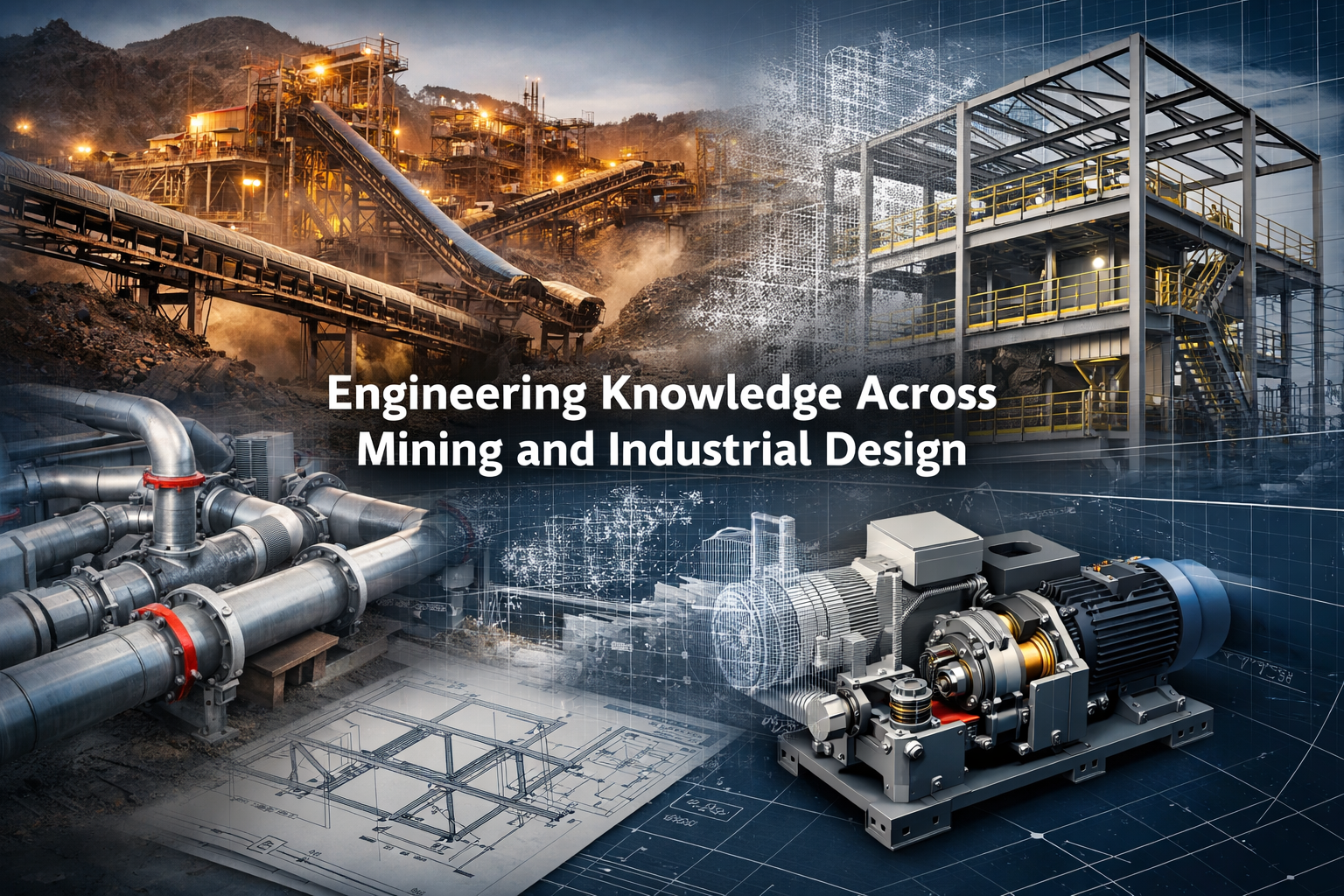
3D Scanning & BIM Across Greater Sydney

Preserving Today’s Information for Tomorrow’s Engineering Decisions

Buildings are long-life assets, but the information describing how they were actually built is often short-lived. Drawings become outdated, undocumented changes accumulate, and critical details disappear once concrete is poured or walls are closed.

Hamilton By Design provides engineering-grade 3D scanning and as-built BIM documentation across Greater Sydney, capturing what actually exists on site and converting it into reliable, decision-ready information that supports maintenance, compliance, refurbishment, sustainability upgrades, and long-term asset planning.

The data we collect today supports the engineering choices of tomorrow.


Engineer using a 3D laser scanner to document an ancient pyramid, illustrating the importance of capturing as-built information for future engineering decisions
3D LiDAR scanning and 3D modelling service button — laser scanner capturing a point cloud for engineering and CAD modelling
Mechanical engineering services

BIM Is Not a Concept Model — BIM Is As-Built Truth

BIM is often misunderstood as a design or visualisation tool. In practice, BIM only becomes valuable when it documents what was actually built, not what was originally intended.

At Hamilton By Design, BIM is treated as engineering evidence, not a marketing model. Our Sydney capability is grounded in reality capture and engineering oversight, as detailed on our 3D Engineering in Sydney service page:
https://www.hamiltonbydesign.com.au/home/engineering-services/3d-scanning-sydney/3d-engineering-in-sydney/

This approach ensures that BIM outputs reflect real geometry, tolerances, and interfaces, remain useful years after construction, and support future engineering decisions.


Why Preserving As-Built Information Matters

Once a building enters service, change is constant. Services are rerouted during refurbishments and fit-outs, structural elements are modified, penetrations are added, and access conditions evolve.

Without a verified baseline, future engineers are forced to rely on assumptions.

By combining engineering-grade 3D laser scanning in Sydney with fit-for-purpose BIM documentation, we create a defensible digital record of the asset at a known point in time:
https://www.hamiltonbydesign.com.au/3d-scanning-sydney/

This record becomes a reference that can be trusted long after drawings, photos, and site knowledge have disappeared.


Capturing Information Before It Becomes Hidden

Timing is critical.

3D scanning delivers the greatest long-term value when undertaken before concrete is poured, before walls or gyprock are fixed, before ceilings are closed, or before major refurbishments begin.

Once these elements are concealed, understanding what exists becomes invasive, interpretive, and costly. Early-stage reality capture creates a permanent digital record of conditions that would otherwise be lost forever.


Engineering-Led Scan-to-BIM

Accurate BIM requires more than software. Our workflows are grounded in engineering-led decision making and documentation, ensuring models are aligned with how assets actually perform and are modified over time:
https://www.hamiltonbydesign.com.au/mechanical-engineering-services/

This approach ensures BIM outputs are fit for real engineering use, suitable for upgrades and modification, defensible for compliance and due diligence, and useful for fabrication, coordination, and access planning.


Supporting Commercial Buildings Across Sydney

Greater Sydney contains some of the most complex built environments in Australia, including high-density CBD assets, mixed-use developments, healthcare facilities, campuses, and strata buildings with shared services.

For commercial and construction projects across Sydney, scan-backed BIM supports refurbishments, staged upgrades, fit-outs in occupied buildings, services coordination in tight spaces, and compliance documentation:
https://www.hamiltonbydesign.com.au/commercial-and-construction-projects/

Preserved as-built information reduces uncertainty and allows design teams to plan works with confidence rather than assumptions.


Supporting Long-Life Industrial and Production Assets

Industrial and production facilities demand a higher level of certainty. Equipment upgrades, maintenance access, and future expansion depend on knowing exactly what exists.

For long-life industrial assets and upgrade planning, scan-derived BIM supports plant upgrades, retrofits, maintainability reviews, reliability improvements, and lifecycle planning over decades:
https://www.hamiltonbydesign.com.au/industrial-production-projects/

In these environments, preserved information is a core risk-management tool.


Defects Investigations in 5–10 Years’ Time

Many building defects do not appear immediately. Water ingress, façade issues, slab movement, services failures, and vibration complaints often emerge years after construction.

A verified as-built scan and BIM baseline allows future engineers to compare conditions over time, identify hidden interfaces and penetrations, reduce destructive investigation, and diagnose issues more efficiently.

Without preserved data, defect investigations often start with uncertainty.


Post-Event Documentation

When an event occurs, whether seismic movement, impact damage, fire, or storm, rapid and accurate documentation becomes critical.

3D scanning after an event can capture a defensible condition record, support engineering assessment and triage, inform reinstatement scope, and assist insurers, owners, and regulators.

When paired with earlier scans, change becomes measurable rather than speculative.


Designing for Sustainability and User Experience Over the Next 10 Years

Sustainability upgrades fail when as-built reality is wrong.

Over the next decade, many Sydney assets will pursue energy upgrades, electrification pathways, improved HVAC performance, and better occupant comfort.

Scan-backed BIM supports these outcomes by ensuring plant rooms and services routes are understood, space constraints are known early, upgrades are coordinated before trades mobilise, and disruption is minimised.

Better information leads to better engineering choices and better outcomes for building users.


Engineering Decisions That Stand the Test of Time

The long-term consequences of poor documentation are well understood in engineering. Decisions made today echo years later.

Preserving reality through 3D scanning and BIM aligns with engineering decisions that stand up over time, where evidence rather than assumptions underpins safety, performance, and compliance:
https://www.hamiltonbydesign.com.au/machine-guarding-in-australia-a-decade-of-lessons-for-leaders-asset-owners-and-engineers/


Standards & Compliance Context

Accurate as-built information underpins compliance, safety, and long-term asset performance. While 3D scanning and BIM are not mandated by a single Australian regulation, the intent of Australia’s building codes, standards, and information-management frameworks relies on reliable, traceable documentation of what has actually been constructed.

National Construction Code (NCC)

National Construction Code

The National Construction Code establishes performance requirements for structure, fire safety, access, health, amenity, and services. Although the NCC does not prescribe BIM or laser scanning, it assumes building work is supported by accurate and verifiable documentation. Scan-derived as-built BIM supports this intent by reducing reliance on assumptions during refurbishment, compliance reviews, and future upgrades.

ISO 19650 – Information Management Using BIM

ISO 19650

ISO 19650 defines best practice for managing information throughout the lifecycle of a built asset. Preserving today’s information for tomorrow’s engineering decisions aligns directly with this standard, particularly where as-built BIM is informed by reality capture and maintained as a lifecycle information resource.

Relevant Australian Standards

AS 1100
AS 3600
AS/NZS 3000
AS/NZS 3500
ISO 55000

These standards rely on accurate representation of geometry, services, and constructed conditions. Reality capture and as-built BIM support their intent by improving clarity, traceability, and long-term usability of engineering information.

Hamilton By Design does not claim that BIM itself guarantees compliance. Instead, our workflows support the intent of the NCC, ISO 19650, and relevant Australian Standards by improving the quality and reliability of building information used for engineering decisions.


Coverage Across Greater Sydney

Hamilton By Design provides 3D scanning and BIM documentation across Greater Sydney, including Sydney CBD, North Sydney, Chatswood, Parramatta, Macquarie Park, Ryde, Homebush, Alexandria, Mascot, Botany, Bankstown, Liverpool, Blacktown, Penrith, Castle Hill, Bella Vista, Brookvale, Manly, Hurstville, Sutherland, Cronulla, and surrounding precincts.


The Data We Collect Today Supports the Engineering Choices of Tomorrow

3D scanning and as-built BIM are not about creating a digital model for today’s project alone. They are about preserving truth before it disappears, reducing uncertainty years later, enabling sustainable upgrades, and supporting safer, smarter engineering decisions across the life of an asset.

That is the real value of BIM.

Our clients

Name
Would you like us to arrange a phone consultation for you?
Address

Related Sydney Services

Hamilton By Design provides engineering-led 3D scanning, LiDAR scanning, mechanical engineering and digital engineering services throughout Sydney and Greater Sydney.

Explore our related Sydney services:


  • 3D Scanning Sydney – Engineering-grade terrestrial laser scanning, as-built surveys and point cloud capture for industrial, infrastructure and commercial projects.
  • Reality Capture Sydney – High-accuracy reality capture, digital twins, asset documentation and engineering-grade site verification.
  • Scan to CAD Sydney – Convert point cloud data into AutoCAD, SolidWorks, Inventor and other engineering-ready CAD deliverables.
  • Point Cloud Modelling Sydney – Engineering-grade point cloud processing, clash detection, as-built verification and 3D modelling.
  • Mechanical Engineering Sydney – Mechanical design, plant upgrades, materials handling systems, conveyors, chutes, platforms and engineering support.
  • Structural Drafting Sydney – Structural steel drafting, fabrication drawings, GA drawings, workshop detailing and as-built documentation.

Hamilton By Design supports projects throughout Sydney CBD, Parramatta, Liverpool, Penrith, Blacktown, Chatswood, Alexandria, Mascot, Newcastle and the Central Coast.
Mechanical Engineering Perth WA banner for Hamilton By Design featuring white text on a blue background.
3D Laser Scanning Perth WA banner for Hamilton By Design with white text on a blue background.
SolidWorks Perth WA banner for Hamilton By Design featuring white text on a blue background.
Blue banner graphic displaying the text "Point Cloud to CAD - Australia" in large white lettering, representing point cloud processing, scan-to-CAD conversion and digital engineering services across Australia.
Blue banner graphic displaying the text "Scan to CAD Sydney" in large white lettering, representing engineering-led point cloud to CAD conversion, LiDAR scanning and digital engineering services in Sydney.
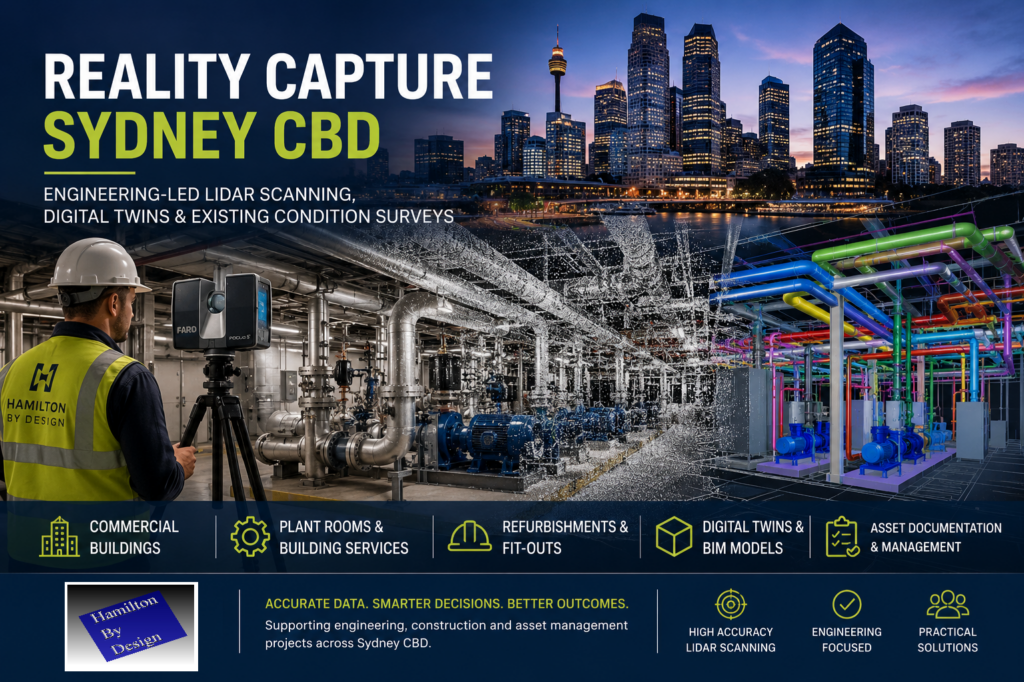
Blue banner graphic displaying the text "Reality Capture Sydney - CBD" in large white lettering, representing engineering-led reality capture, LiDAR scanning and digital engineering services within Sydney CBD commercial buildings and infrastructure.
3D CAD Modelling Australia service banner for Hamilton By Design
3D LiDAR scanning and 3D modelling service button — laser scanner capturing a point cloud for engineering and CAD modelling
Mechanical engineering services
3D CAD Modelling Australia service banner for Hamilton By Design
Mechanical, Structural & Pipework Drafting service banner by Hamilton By Design featuring white text on a blue background.
Australian Drafting logo featuring bold white text reading "Australian Drafting" centred on a blue rounded rectangle background.
Blue banner graphic displaying the text "Point Cloud to CAD - Australia" in large white lettering, representing point cloud processing, scan-to-CAD conversion and digital engineering services across Australia.
CHPP Engineering title graphic featuring bold white text reading "CHPP Engineering" centred on a blue rounded rectangle background.
Engineering Governance title graphic featuring bold white text reading "Engineering Governance" centred on a blue rounded rectangle background.
Mechanical engineering services
Australian Drafting logo featuring bold white text reading "Australian Drafting" centred on a blue rounded rectangle background.
3D LiDAR Scanning Hunter & Newcastle banner with white text on a blue background promoting engineering-grade laser scanning services for industrial, mining and infrastructure projects across the Hunter Valley and Newcastle region.
Mechanical Engineering Hunter & Newcastle banner promoting mechanical engineering services for mining, industrial plants, power generation, manufacturing and heavy industry throughout the Hunter Valley and Newcastle region.
Structural Drafting Hunter & Newcastle banner promoting structural drafting services for mining, industrial plants, power generation, manufacturing and infrastructure projects across the Hunter Valley and Newcastle region.
Mechanical Engineering Perth WA banner for Hamilton By Design featuring white text on a blue background.
3D Laser Scanning Perth WA banner for Hamilton By Design with white text on a blue background.
SolidWorks Perth WA banner for Hamilton By Design featuring white text on a blue background.
Fabrication and product design services
Finite Element Analysis (FEA) engineering simulation button
3D LiDAR scanning and 3D modelling service button — laser scanner capturing a point cloud for engineering and CAD modelling
Blue rounded button with the text “SolidWorks Design” in white.
Mechanical drafting services button
Structural drafting services button

3D Engineering in Sydney – BIM

BIM Documentation & Defensible Building Records

Sydney property and building projects live or die on what is documented—and how confidently that documentation can be relied upon. In a market defined by tight plant rooms, vertical services, constrained access, staged upgrades, and high holding costs, “close enough” drawings can become a legal, commercial, and program risk.

Hamilton By Design provides engineer-led 3D scanning and 3D engineering services in Sydney, focused on producing BIM-ready documentation and defensible building records to support:

  • Sale and purchase due diligence
  • Leasing and refurbishment planning
  • Services upgrades (HVAC, piping, mechanical plant, fire coordination interfaces)
  • Fit-first-time fabrication and constructability
  • Evidence-quality as-built records

If you’re looking for a Sydney scanning service that goes beyond “pretty point clouds” and delivers engineering-grade outputs, start here:
3D Scanning Sydney: https://www.hamiltonbydesign.com.au/3d-scanning-sydney/


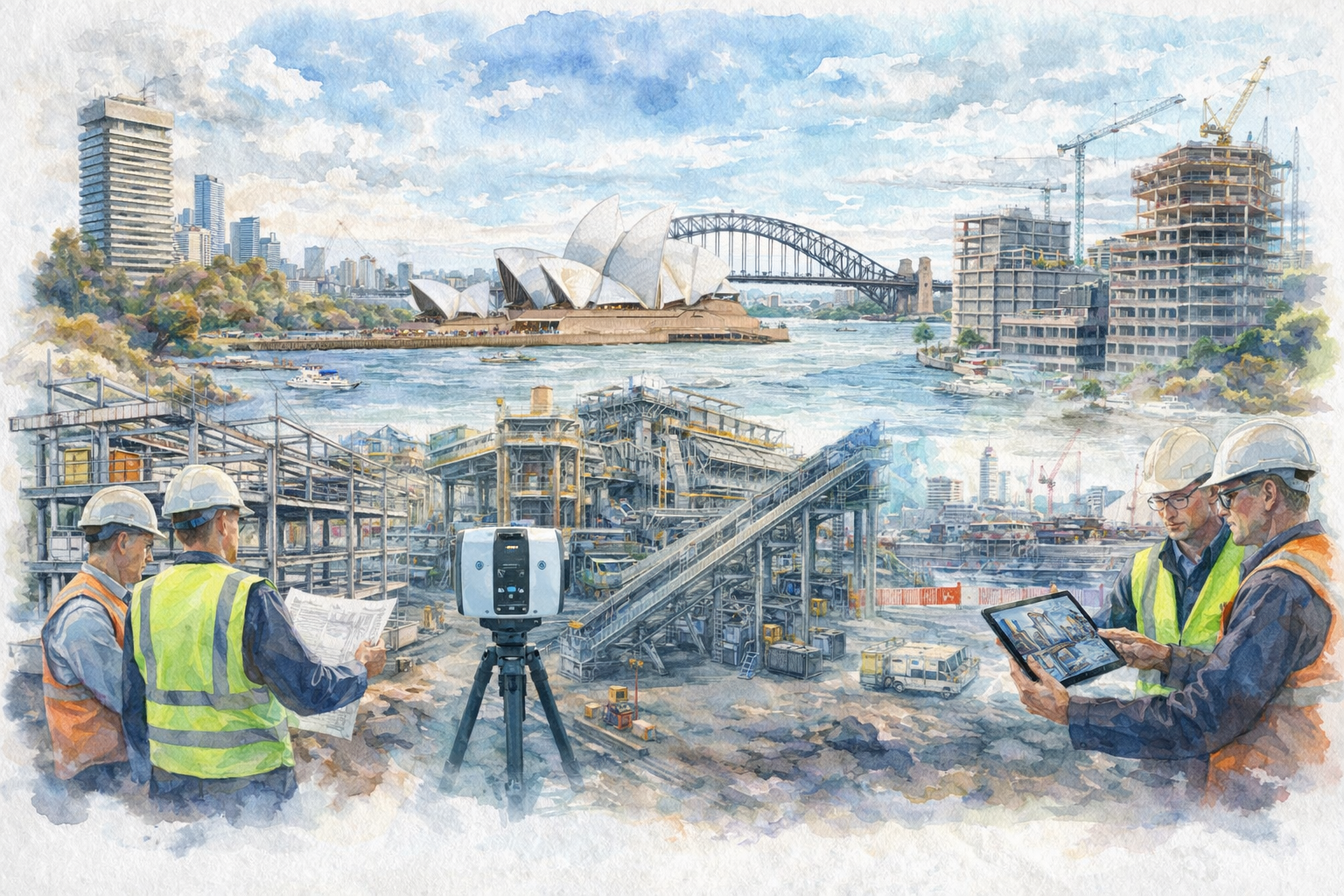
Engineers reviewing BIM documentation while a LiDAR scanner captures a Sydney courthouse with Sydney Harbour and the Harbour Bridge in the background
3D LiDAR scanning and 3D modelling service button — laser scanner capturing a point cloud for engineering and CAD modelling
Mechanical engineering services

Why Documentation Matters for Property Sale in Sydney

When a commercial or industrial property changes hands, the documentation pack often becomes a key part of:

  • Pre-purchase due diligence
  • Capex forecasting
  • Compliance planning
  • Tenant fit-out feasibility
  • Valuation and defect risk assessment

In practice, the biggest issues arise when the “as-builts” are:

  • Outdated (multiple refurbishments since issue)
  • Incomplete (plant rooms, risers, roof plant never updated)
  • Uncoordinated (services don’t match structure or architecture)
  • Non-dimensional or ambiguous (typical details reused across floors)
  • Inconsistent with reality (especially in brownfield assets)

A reality-captured, engineering-led approach reduces uncertainty by establishing a reliable baseline: what exists, where it is, and what can fit.


Is BIM a Legal Requirement — or a “Nice to Have”?

BIM is not typically mandated by law for private property transactions. However, the legal and commercial requirement is not “BIM” — it is adequate, accurate, and defensible documentation.

On modern Sydney assets, BIM-style coordination is often the most practical way to:

  • Demonstrate reasonable verification of existing conditions
  • Reduce foreseeable clashes and rework
  • Provide traceable design intent and change control
  • Support compliance pathways and certification workflows

For property sale and acquisition, BIM and 3D documentation increasingly function as risk controls. They help owners, buyers, and project teams make decisions using verifiable geometry instead of assumptions.

Note: This page is general information, not legal advice. Documentation obligations depend on building type, scope of work, and the relevant approval pathway.


What We Deliver: Documentation Packs That Stand Up to Scrutiny

Our Sydney workflow is designed to create outputs that are useful across multiple stakeholders: owners, facilities teams, designers, contractors, and project managers.

1) Reality Capture and Registered Outputs

  • Engineering-grade LiDAR / laser scanning
  • Site constraints captured in high detail (plant rooms, risers, mezzanines, service corridors)
  • Deliverables structured so they can be used for BIM modelling and coordination

2) BIM-Ready As-Built Models

We produce or support the production of:

  • Coordinated 3D models suitable for engineering design workflows
  • Mechanical service zones and clearance envelopes
  • Plant layout validation (lift paths, maintenance access, removable panels)

3) Drawing Sets for Sale, Leasing, and Upgrades

Depending on the asset and use case, documentation can include:

  • General arrangement drawings
  • Plant-room and rooftop plant layouts
  • Service routing diagrams (where required)
  • Key dimensions, levels, and coordination references

4) Evidence-Quality Record Packs

When the purpose is due diligence, risk reduction, or dispute avoidance, we can structure outputs with:

  • Traceable references back to the scan dataset
  • Clear assumptions and tolerances
  • Version control and change notes for future updates

Where This Helps Most in Sydney

Commercial Buildings and CBD Refurbishments

Sydney’s CBD and inner suburbs often involve:

  • Occupied buildings
  • After-hours access
  • Tight risers and low ceiling voids
  • Multiple generations of undocumented services

Reality capture + BIM documentation improves planning for:

  • HVAC replacement
  • Plant upgrades
  • Tenant fit-outs
  • Services reroutes
  • Staged works and shutdowns

Industrial and Processing Facilities

For industrial assets, “document confidence” is directly tied to:

  • Fit-first-time fabrication
  • Shutdown windows
  • Safety and access planning

3D engineering outputs support:

  • Pipe spools and mechanical upgrades
  • Structural interfaces
  • Skid and equipment placement validation

Property Sale and Acquisition Due Diligence

For buyers and owners, BIM-ready records can help:

  • Confirm plant capacity and spatial constraints
  • Validate feasibility for intended refurbishments
  • Identify unknowns that should be priced into capex planning
  • Reduce “latent defect” surprises caused by unknown geometry

Engineer-Led Scanning vs. Generic Capture

Not all scans are equal. The difference is not just the scanner — it’s the workflow and the engineering intent.

Engineer-led reality capture focuses on:

  • What must be measured for mechanical design
  • Clearances, access paths, and maintenance envelopes
  • Interfaces between structure and services
  • Deliverables that reduce fabrication and installation risk

If the goal is property documentation, the key question is:

“Can this documentation be trusted to make decisions that cost money?”


Typical Deliverables (Choose What You Need)

A Sydney documentation package may include:

  • Point cloud dataset (registered and organised)
  • BIM-ready model (scope defined by asset type and use case)
  • Drawing set (GA layouts and key sections)
  • Plant and services spatial verification notes (where requested)
  • Asset record pack structure for ongoing lifecycle updates

Because the “right” package depends on whether you’re:

  • Selling / buying
  • Leasing / refurbishing
  • Upgrading services
  • Planning staged works

…we build the scope around what decisions the documentation must support.


Blue banner graphic displaying the text "Point Cloud to CAD - Australia" in large white lettering, representing point cloud processing, scan-to-CAD conversion and digital engineering services across Australia.
Blue banner graphic displaying the text "Scan to CAD Sydney" in large white lettering, representing engineering-led point cloud to CAD conversion, LiDAR scanning and digital engineering services in Sydney.
Blue banner graphic displaying the text "Reality Capture Sydney - CBD" in large white lettering, representing engineering-led reality capture, LiDAR scanning and digital engineering services within Sydney CBD commercial buildings and infrastructure.

Common Use Cases for Sale of Property

“We’re selling a building — what does the buyer actually want?”

Most buyers want confidence around:

  • What exists (geometry and plant placement)
  • What will fit (upgrade feasibility)
  • What risks are hidden (unknowns and clashes)
  • How much capex is coming (services condition + spatial constraint)

“We’re buying — can we validate the fit-out feasibility quickly?”

A scan-to-model workflow can quickly confirm:

  • Available plant space
  • Riser and shaft constraints
  • Ceiling space and structural conflicts
  • Staging or cranage constraints for replacement plant

“We need a defensible as-built record before we commit.”

If you’re about to spend real money on design or refurbishment, scanning first prevents:

  • Design rework
  • Fabrication errors
  • Program delays caused by surprise constraints

How the Process Works

  1. Define the decision
    Sale pack, due diligence, upgrade design, or refurbishment planning.
  2. Site capture plan
    What areas matter most (plant rooms, risers, roof, loading dock, service corridors).
  3. LiDAR scanning and registration
    Delivered in an organised structure suitable for modelling and coordination.
  4. Model and documentation outputs
    BIM-ready models and drawings aligned to the defined purpose.
  5. Handover + future update pathway
    Documentation structured so future projects can update the baseline rather than restart.

Frequently Asked Questions

Do I legally need BIM for a property sale?

Usually, no. But you do need documentation that is accurate enough for decisions and defensible if assumptions are challenged. BIM-quality coordination often becomes the most practical method for complex assets.

Are existing drawings good enough?

Sometimes. But in many Sydney buildings—especially refurbished and service-dense assets—drawings can be incomplete or wrong. Scanning verifies the baseline.

Can you scan only the areas that matter most?

Yes. For sale and due diligence, we often focus on:

  • Roof plant
  • Main plant rooms
  • Key risers / service corridors
  • Basement services areas
  • Areas driving upgrade feasibility

Is this useful for strata or mixed-use buildings?

Yes — especially where service routing and riser geometry are uncertain and upgrades need clear feasibility.


Hamilton By Design logo displayed on a blue tilted rectangle with a grey gradient background

Talk to an Engineer About Sydney Documentation

If you need 3D engineering in Sydney focused on BIM documentation and defensible records for property sale, we can help you establish a baseline that reduces commercial risk and improves decision-making.


Start with our Sydney service page:
https://www.hamiltonbydesign.com.au/3d-scanning-sydney/


Scan to CAD Sydney – converting laser scan data into accurate 3D CAD models
Building and construction services button

Our clients:

Name
Would you like us to arrange a phone consultation for you?
Address

Related Sydney Services

Hamilton By Design provides engineering-led 3D scanning, LiDAR scanning, mechanical engineering and digital engineering services throughout Sydney and Greater Sydney.

Explore our related Sydney services:


  • 3D Scanning Sydney – Engineering-grade terrestrial laser scanning, as-built surveys and point cloud capture for industrial, infrastructure and commercial projects.
  • Reality Capture Sydney – High-accuracy reality capture, digital twins, asset documentation and engineering-grade site verification.
  • Scan to CAD Sydney – Convert point cloud data into AutoCAD, SolidWorks, Inventor and other engineering-ready CAD deliverables.
  • Point Cloud Modelling Sydney – Engineering-grade point cloud processing, clash detection, as-built verification and 3D modelling.
  • Mechanical Engineering Sydney – Mechanical design, plant upgrades, materials handling systems, conveyors, chutes, platforms and engineering support.
  • Structural Drafting Sydney – Structural steel drafting, fabrication drawings, GA drawings, workshop detailing and as-built documentation.

Hamilton By Design supports projects throughout Sydney CBD, Parramatta, Liverpool, Penrith, Blacktown, Chatswood, Alexandria, Mascot, Newcastle and the Central Coast.

3D Construction Scan in Brisbane

Engineering-Grade Reality Capture for Live Construction Environments

Construction projects in Brisbane operate under conditions that place unique pressure on engineers, builders, and asset owners. Subtropical climate, flood-affected sites, reactive soils, dense CBD logistics, and a strong reliance on brownfield upgrades all increase one fundamental risk: designing and constructing from incorrect or outdated site information.

A 3D construction scan in Brisbane provides engineering-grade certainty by capturing what actually exists on site, enabling informed decisions during live construction, refurbishment, and staged delivery projects.


3D construction scanning in Brisbane using a FARO laser scanner at a building site overlooking the Story Bridge and Brisbane River

3D LiDAR scanning and 3D modelling service button — laser scanner capturing a point cloud for engineering and CAD modelling
Mechanical engineering services

What Is a 3D Construction Scan?

A 3D construction scan uses high-accuracy LiDAR laser scanning to capture the true as-built condition of a site at a specific point in time. Unlike visual scans or phone-based capture, engineering-grade scanning produces registered point clouds that can be trusted for:

  • Construction coordination
  • Design verification
  • Clash detection
  • Fabrication-ready modelling
  • As-built documentation

Hamilton By Design delivers these outcomes through its engineering-led laser scanning services, where accuracy, downstream use, and construction risk are defined before scanning begins.


https://www.hamiltonbydesign.com.au/laser-scanning-engineering-brisbane-cbd/3d-scanning-brisbane/


Why Brisbane Construction Projects Require a Different Approach

Subtropical Climate & Structural Movement

Brisbane’s humidity and temperature cycles contribute to thermal expansion, contraction, and cumulative movement across steelwork, pipe runs, conveyors, façades, and plant installations.

When construction decisions rely on assumed geometry or legacy drawings, even small movements can result in:

  • Misaligned interfaces
  • Fabrication clashes
  • Installation delays

A 3D construction scan captures the current, in-situ geometry, allowing engineers to design and coordinate based on reality — not historical intent.

Flood-Affected & Modified Assets

Many Brisbane sites — particularly river-adjacent commercial and industrial facilities — have undergone multiple flood recovery and modification cycles. Over time, this results in:

  • Changed floor levels
  • Unrecorded ramps and bunds
  • Altered drainage and gravity-dependent systems

Construction scanning establishes a true datum and elevation baseline, supporting engineering verification of falls, access clearances, and tie-in points.

This capability aligns directly with Hamilton By Design’s broader reality capture and as-built verification workflows.


https://www.hamiltonbydesign.com.au/reality-capture-services/


Brownfield Construction Is the Norm

A significant proportion of Brisbane construction work occurs in live, operational environments, including:

  • Commercial refurbishments
  • Industrial plant upgrades
  • Infrastructure modifications
  • Asset life-extension projects

These sites often contain undocumented steelwork, legacy penetrations, and accumulated modifications. A 3D construction scan enables non-intrusive capture of this complexity, supporting engineering coordination without disrupting operations.

Tight CBD Logistics & Vertical Construction

Brisbane’s CBD presents unique logistical challenges:

  • Limited laydown space
  • Vertical risers and congested services zones
  • Restricted crane and hoist access
  • Staged installation sequencing

In these environments, components must fit first time. Construction scanning supports:

  • Early clash detection
  • Verification before fabrication
  • Confident off-site prefabrication

This process integrates directly with Hamilton By Design’s 3D point cloud modelling and coordination services.

https://www.hamiltonbydesign.com.au/3d-point-cloud-modelling/

Reactive Soils & Differential Settlement

Reactive clay soils common throughout South-East Queensland contribute to long-term differential settlement, particularly where new construction interfaces with older structures. Over time, this can lead to:

  • Misaligned columns and beams
  • Drift in conveyors and pipe racks
  • Geometry that no longer matches design intent

A construction scan captures current condition, enabling engineers to design extensions and upgrades that reflect actual site geometry.


Construction Scanning vs Generic 3D Scanning

Not all scanning is suitable for construction engineering.

AspectGeneric ScanEngineering-Led Construction Scan
AccuracyVisual or indicativeMillimetre-grade
OutputMeshes or imagesRegistered point clouds
Engineering UseLimitedDesign & fabrication
Risk ReductionLowHigh
Construction ReadyNoYes

Hamilton By Design positions construction scanning as part of an integrated engineering workflow, not a standalone data capture exercise.


https://www.hamiltonbydesign.com.au/3d-engineering-services/


How 3D Construction Scans Are Used on Brisbane Projects

Engineering-grade construction scans are routinely used to support:

  • Clash detection across structure and services
  • Verification scans prior to fabrication
  • Construction sequencing and staging
  • As-built documentation for handover
  • Reduced RFIs, rework, and site delays

These outcomes are particularly valuable on commercial and construction projects where access, timing, and accuracy are critical.


https://www.hamiltonbydesign.com.au/commercial-construction-engineering/


3D laser scanning of a commercial building under construction showing as-built capture and coordination before wall closure

The Hamilton By Design Difference

Hamilton By Design delivers engineering-grade 3D construction scanning with a clear focus on constructability and downstream use.

Our approach combines:

  • Engineer-led scanning strategies
  • Defined accuracy requirements
  • Integration with mechanical and structural design
  • Outputs suitable for fabrication and installation

This approach ensures construction teams can rely on scan data with confidence — especially on complex Brisbane projects.


When should a 3D Construction Scan Be Used?

A 3D construction scan in Brisbane is most valuable when:

  • Working in brownfield or live environments
  • Verifying conditions before fabrication
  • Coordinating multiple trades in tight spaces
  • Managing staged refurbishments
  • Reducing construction risk and uncertainty

Hamilton By Design logo displayed on a blue tilted rectangle with a grey gradient background

In Brisbane, construction risk is rarely driven by poor engineering.
It is driven by decisions made using incorrect or outdated information.

A 3D Construction Scan in Brisbane provides one critical advantage:
certainty about what actually exists on site, at the moment decisions are made.

Finite Element Analysis (FEA) engineering simulation button
3D LiDAR scanning and 3D modelling services button
Building and construction services button

Our clients:

Name
Would you like us to arrange a phone consultation for you?
Address
Finite Element Analysis (FEA) engineering simulation button
Mechanical engineering services
Reality Capture Brisbane title graphic with white text on a blue background promoting reality capture, LiDAR scanning and digital engineering services in Brisbane, Queensland.
3D Scanning Brisbane text graphic on a blue background promoting engineering-led laser scanning and reality capture services in Brisbane.

LiDAR Scanning Brisbane title graphic with white text on a blue background promoting terrestrial LiDAR scanning, point cloud capture and reality capture services in Brisbane, Queensland.
SolidWorks Brisbane title graphic with white text on a blue background promoting SolidWorks mechanical design, 3D CAD modelling and engineering drafting services in Brisbane, Queensland.


Machine Guarding in Australia: A Decade of Lessons for Leaders, Asset Owners, and Engineers

ndustrial machine guarding solutions showing a conveyor system, a robotic cell, and a belt drive with fixed guards designed to prevent access to hazardous moving parts.

Machine guarding examples showing a guarded conveyor, enclosed robotic cell, and belt drive with safety covers

3D LiDAR scanning and 3D modelling service button — laser scanner capturing a point cloud for engineering and CAD modelling
Mechanical engineering services

Machine guarding remains one of the most persistent and preventable safety risks across Australian industry.
Despite improvements in automation, safety culture, and regulatory oversight, serious injuries and fatalities involving machinery continue to occur every year, particularly in manufacturing, mining, food processing, and materials handling.

Over the past decade, regulators, courts, and insurers have consistently reinforced one message:
machine guarding is not optional, not administrative, and not a “fit-later” activity — it is a core engineering and governance responsibility.

This article examines:

  • The international and Australian standards framework for machine guarding
  • Accident and injury trends over the past ten years
  • Legal and enforcement signals emerging from prosecutions
  • Why machine guarding must be treated as a strategic asset-risk issue, not just a safety task

The Global Framework: International Standards for Machine Guarding

Machine guarding is governed globally through standards developed by the International Organization for Standardization (ISO).


ISO standards portal
Core International Standards

ISO 12100 Risk assessment

ISO 14120 Guard design

ISO 13857 Safety distances

ISO 13849-1 Interlocks & control systems

These standards establish a risk-based engineering approach, requiring hazards to be:

  1. Identified
  2. Eliminated where possible
  3. Engineered out through guards and control systems
  4. Verified through geometry, distances, and fail-safe logic

This methodology underpins CE marking, global OEM compliance, and multinational EPC project delivery.


The Australian Context: AS 4024 and WHS Expectations

Australia adopts and localises ISO principles through AS 4024 – Safety of Machinery, referenced extensively by regulators under Work Health and Safety (WHS) legislation.

Standards Australia – AS 4024 Series
Key Australian Standards

AS 4024.1201 Risk assessment

AS 4024.1601 Guards

AS 4024.1602 Interlocks

AS 4024.1801 Safety distances

AS 4024.1501 Safety control systems

While standards themselves are not legislation, courts and regulators consistently use AS 4024 as the benchmark for determining whether risks have been managed so far as is reasonably practicable.


A Decade of Data: What the Accident Trends Tell Us

Australia does not publish a dedicated “machine guarding accident” metric. However, national data from Safe Work Australia clearly shows machinery remains a leading cause of serious harm.

Safe Work Australia – Key WHS statistics:
National Trends (Approximate – Last 10 Years)

MetricEvidence Source
~1,850+ traumatic work fatalitiesSafework Australia
~180–200 fatalities per yearSafework Australia
Highest fatality rateMachinery operators & drivers
~130,000–140,000 serious injury claims annuallyAustralian Institute of health and welfare
Common mechanismsTrapped by machinery, struck by moving objects

Machinery operators consistently record:

  • The highest fatality rates of all occupation groups
  • Disproportionate representation in serious injury claims
  • Higher exposure to entanglement, crush, shear, and impact hazards

These mechanisms are directly linked to guarding effectiveness, not worker behaviour alone.


What Hasn’t Changed — and Why It Matters

1. Legacy Plant Remains a Key Risk

Many incidents involve:

  • Older machinery
  • Brownfield modifications
  • Equipment altered without re-engineering guarding

Australian WHS law does not grandfather unsafe plant.


2. Guarding Is Still Added Too Late

Common failures include:

  • Guards designed post-fabrication
  • Inadequate reach distances
  • Interlocks added without validated performance levels

This often leads to bypassing, removal, or unsafe maintenance practices.


3. Lack of Engineering Documentation

Post-incident investigations frequently identify:

  • No formal risk assessment
  • No justification against AS 4024 or ISO standards
  • No evidence that guarding was engineered, tested, or validated

In legal proceedings, absence of documentation is treated as absence of control.


Legal and Enforcement Signals

Australian regulators (WorkSafe NSW, WorkSafe VIC, SafeWork QLD, SafeWork SA) have consistently prosecuted machine-guarding failures, particularly where:

  • Hazards were known
  • Improvement notices were ignored
  • Guards were removed or ineffective

Regulator portals:

Courts have reinforced that:

  • Training does not replace guarding
  • PPE does not replace guarding
  • Signage does not replace guarding

Guarding as a Governance Issue

For executives and boards, machine guarding intersects with:

  • Officer due diligence obligations
  • Asset lifecycle risk
  • Insurance and liability exposure
  • Business continuity and ESG performance

Well-designed guarding:

  • Reduces downtime
  • Enables safer automation
  • Improves workforce confidence
  • Creates defensible compliance positions

The Engineering Reality: Geometry Drives Compliance

Modern compliance relies on:

  • Verified reach distances
  • Measured openings and clearances
  • Validated interlock logic

This is why accurate:

  • As-built capture
  • 3D modelling
  • Engineering-grade spatial data

are increasingly essential for brownfield and high-risk plant.


Looking Ahead: The Next Decade

Trends indicate:

  • Greater scrutiny of legacy machinery
  • Stronger linkage between standards and prosecutions
  • Higher expectations for engineering evidence
  • Increased use of digital engineering to prove compliance

Organisations that integrate guarding early into engineering workflows will be better protected legally, operationally, and reputationally.


Hamilton By Design logo displayed on a blue tilted rectangle with a grey gradient background

Final Thought

Machine guarding is not about mesh and fences.
It is about engineering intent, risk ownership, and accountability.

The last decade of Australian data, prosecutions, and standards alignment is clear:
when guarding fails, the outcomes are predictable — and preventable.

Structural drafting services button
3D LiDAR scanning and 3D modelling services button
Mechanical drafting services button

Our clients:

Name
Would you like us to arrange a phone consultation for you?
Address

#Machine guarding standards Australia #Machinery safety best practices #AS/NZS 4024 machine guarding #Workplace safety machinery #Industrial safety compliance #Machine guarding lessons for engineers

Finite Element Analysis (FEA) engineering simulation button
Mechanical engineering services

Fabrication & Product Design

Light Fabrication for Residential and Commercial Applications

Hamilton By Design provides product design and fabrication development for light steel fabrication used in residential and commercial environments. This service is focused on bespoke steel products that require accurate design, clear fabrication documentation, and reliable installation outcomes.

Our work sits between concept and fabrication. We develop fabrication-ready designs that integrate with existing buildings, services, and site conditions, supporting builders, fabricators, and property owners who require confidence that components will fit first time.

This service complements our mechanical engineering, 3D scanning, and CAD capabilities and is typically engaged where off-the-shelf products are unsuitable or where site-specific conditions must be addressed early.


Engineer reviewing fabrication drawings beside a steel truck tray frame on trestles, with a fabricator working on the frame, a light commercial truck chassis waiting for installation, and a LiDAR scanner in the foreground.
3D LiDAR scanning and 3D modelling service button — laser scanner capturing a point cloud for engineering and CAD modelling
Mechanical engineering services

Design-for-Fabrication Approach

All products within this category are developed using design-for-fabrication principles. This means geometry, tolerances, fixing methods, and installation constraints are considered during design, not left to be resolved on site.

Where required, designs are informed by existing-condition data captured through our 3D scanning services:
https://www.hamiltonbydesign.com.au/home/engineering-services/3d-laser-scanning/

Design development and detailing are carried out using SolidWorks-based 3D CAD workflows to produce fabrication-ready outputs:
https://www.hamiltonbydesign.com.au/home/engineering-services/3d-cad/


Gates & Access Steel

We design bespoke gates and access steel for residential and commercial properties, tailored to site geometry, fixing conditions, and operational requirements.

Typical applications include sliding gates, swing gates, cantilever gates, pedestrian access gates, and commercial entry gates. Designs consider post fixings, ground interfaces, clearances, and integration with surrounding structures.

Related engineering capability:
https://www.hamiltonbydesign.com.au/home/engineering-services/mechanical-engineering/


Door & Window Grills

Door and window grills are often required to balance security, ventilation, and architectural intent. We develop opening-specific grill designs that suit residential retrofits and commercial refurbishments.

Products may include security door grills, window grills, decorative architectural grills, and removable systems where access or maintenance is required. Geometry and fixing are resolved during design to support clean fabrication and installation.

Supporting drafting capability:
https://www.hamiltonbydesign.com.au/home/engineering-services/structural-drafting/


Balustrades, Handrails & Guarding

Balustrades, handrails, and guarding systems are safety-critical elements commonly introduced during upgrades and renovations. We provide fabrication-ready designs for residential and commercial settings where existing conditions vary and standard systems are unsuitable.

Designs consider fixing interfaces, load paths, and integration with existing slabs, stairs, or structures.

Engineering certification can be provided where required:
https://www.hamiltonbydesign.com.au/home/engineering-services/engineering-certification/


Screens & Architectural Steel

Steel screens and feature panels are used for privacy, shading, boundary definition, and architectural expression. We design lightweight fabricated steel screens suited to balconies, courtyards, façades, and internal spaces.

Design development includes panelisation, fixing strategy, finishes, and installation sequencing to ensure the product can be fabricated and installed efficiently.

Related CAD and documentation services:
https://www.hamiltonbydesign.com.au/home/engineering-services/3d-cad-drawings/


Stairs, Ladders & Access Systems

We design light-duty stairs, ladders, and access systems for residential and commercial environments where space constraints or existing geometry require a bespoke solution.

Applications include compact staircases, mezzanine access stairs, fixed ladders, and maintenance access systems. Accurate geometry is critical, and designs are developed to suit fabrication and on-site installation.

Mechanical engineering support:
https://www.hamiltonbydesign.com.au/home/engineering-services/mechanical-engineering/


Bollards, Barriers & Protective Steel

Protective steel elements such as bollards and barriers are commonly introduced to manage vehicle movement, protect assets, and improve pedestrian safety.

We design light fabricated protective steel for car parks, commercial sites, and mixed-use developments, resolving fixing, spacing, and integration with existing pavements or structures.


Custom Frames, Brackets & Light Steel Assemblies

Many light fabrication projects involve custom brackets, frames, or small assemblies to support equipment, services, or architectural elements.

We develop fabrication-ready designs for mounting frames, brackets, skids, and small steel assemblies, ensuring interfaces with client equipment and existing buildings are clearly defined.

Supporting CAD workflows:
https://www.hamiltonbydesign.com.au/home/engineering-services/3d-cad/


Ute Trays & Light Commercial Vehicle Trays

For residential and commercial trade use, we design custom ute trays and light commercial vehicle trays where off-the-shelf solutions do not meet operational requirements.

Designs consider vehicle mounting, load distribution, accessory integration, and fabrication practicality. This service is limited to light commercial use and does not extend to heavy vehicle manufacturing.


Van & Light Commercial Vehicle Fit-Outs

We provide design support for internal van fit-outs involving light steel fabrication only. Typical applications include shelving systems, equipment mounting frames, internal partitions, and support structures.

Designs are vehicle-specific and focused on safe mounting, durability, and ease of installation.

Engineering certification can be provided where required:
https://www.hamiltonbydesign.com.au/home/engineering-services/engineering-certification/


Engineering Certification

All products within this category can be mechanically engineered and certified where required. Certification scope is defined on a project-by-project basis and may support approvals, compliance requirements, or handover documentation.

Certification services are delivered in conjunction with documented design and fabrication information.


Hamilton By Design logo displayed on a blue tilted rectangle with a grey gradient background

Scope Clarification

This service category is limited to light steel fabrication for residential and commercial applications. It does not include heavy industrial fabrication, structural building frames, or large infrastructure works.

This clear scope ensures consistent quality, reliable delivery, and alignment with fabrication-ready outcomes.


Our clients

Name
Would you like us to arrange a phone consultation for you?
Address
3D LiDAR scanning and 3D modelling service button — laser scanner capturing a point cloud for engineering and CAD modelling
Mechanical engineering services
Finite Element Analysis (FEA) engineering simulation button
Mechanical engineering services

Mining & Mineral Processing

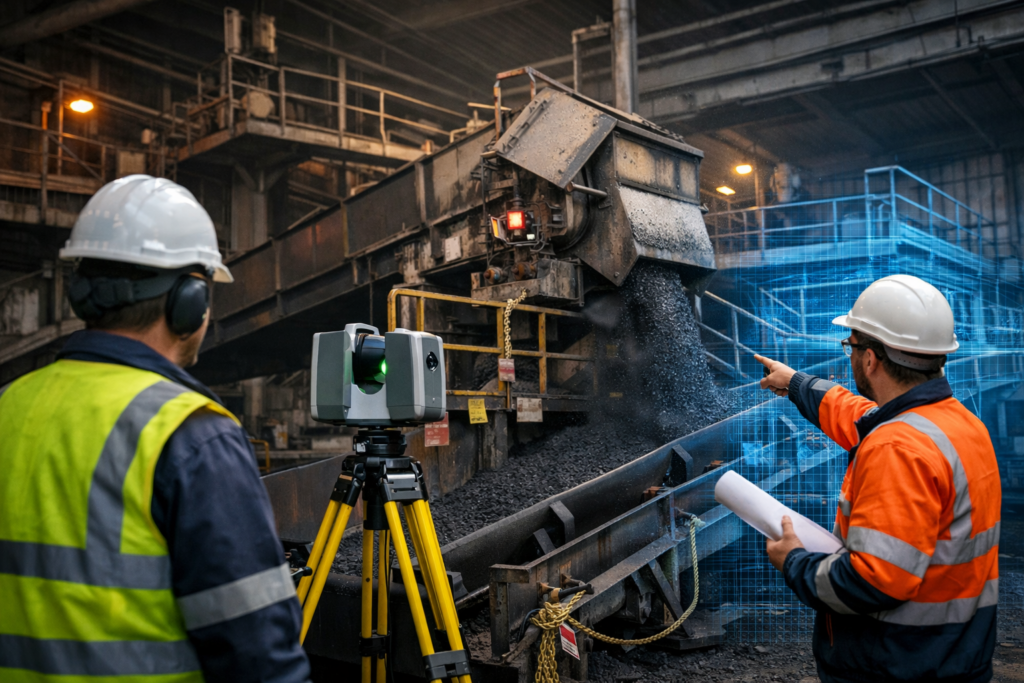
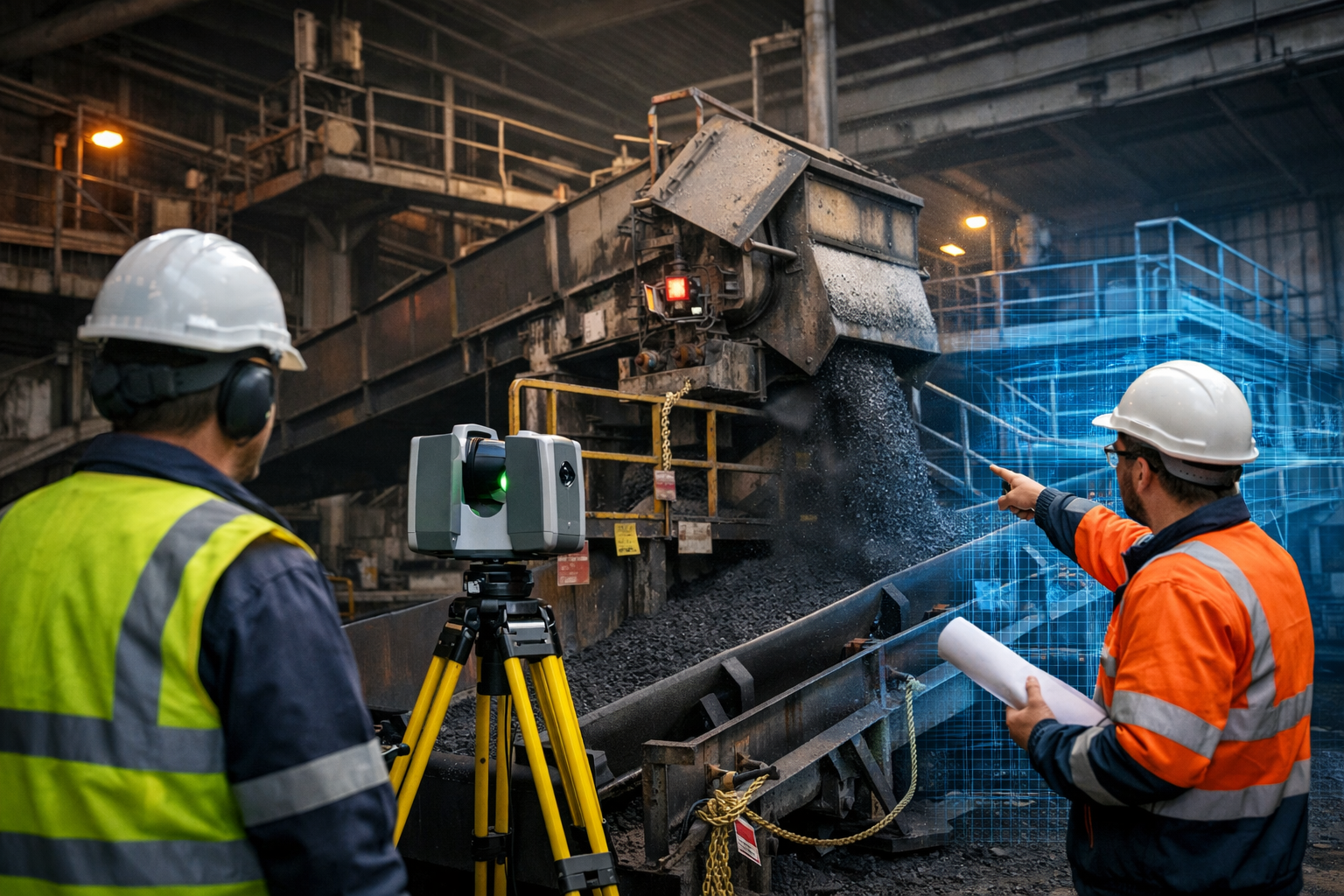
LiDAR laser scanner capturing a mining and mineral processing plant to create an accurate 3D digital model for engineering and fabrication
Blue icon of a conveyor belt carrying material into a crusher or processing unit

We support mining and mineral processing operations with engineering-grade LiDAR scanning and mechanical design for CHPPs, conveyors, transfer stations, plant upgrades, and brownfield modifications. Our experience in live operating environments helps reduce shutdown risk, rework, and costly fabrication errors.

Mining & Mineral Processing Engineering Services

Hamilton By Design supports mining and mineral processing operations with engineering-grade LiDAR scanning, mechanical engineering, and design support for complex, live operating environments.
Our work focuses on delivering accurate existing-condition data and engineering outcomes that reduce shutdown risk, minimise rework, and support safe, efficient plant upgrades.

We work across the full project lifecycle — from early site capture and feasibility through to detailed design, fabrication support, and construction verification — with a strong emphasis on brownfield and retrofit projects where getting the geometry right is critical.


Mining Engineering Services

Our mining engineering services are built around a clear principle: engineering decisions must be based on accurate site data. We combine reality capture with mechanical engineering to support informed design, modification, and execution of mining projects.

These services support:

  • Existing asset validation
  • Upgrade and modification planning
  • Engineering design development
  • Risk reduction in live operating plants

By integrating scanning and engineering under one workflow, we provide mining teams with confidence that designs reflect real-world conditions.


Mining & Industrial Engineering

Mining operations rely on complex industrial systems that must perform reliably under demanding conditions. Hamilton By Design works at the interface between mining infrastructure and industrial plant systems, supporting projects where mechanical, structural, and operational requirements overlap.

Our experience includes:

  • Mineral processing facilities and CHPPs
  • Materials handling systems
  • Industrial plant equipment within mining sites
  • Brownfield integration and asset upgrades

This cross-disciplinary approach allows us to support mining clients with solutions that are practical, buildable, and aligned with operational constraints.


Mining Services

Our mining services focus on practical project delivery support. We work alongside site teams, engineers, and contractors to capture existing conditions, verify designs, and support construction and shutdown activities.

Typical services include:

  • Engineering-grade LiDAR and as-built capture
  • Existing condition verification
  • Design coordination support
  • Construction and installation validation

These services help reduce uncertainty on site and provide a reliable digital foundation for engineering and fabrication activities.


Mechanical Engineering in Mining

Mechanical engineering is central to the safe and efficient operation of mining assets. Hamilton By Design provides mechanical engineering support informed directly by site-captured data, ensuring designs are suitable for real operating environments.

Our mechanical engineering capabilities support:

  • Conveyors, chutes, and transfer stations
  • Plant upgrades and modifications
  • Structural and mechanical interfaces
  • Fabrication-ready design documentation

Where required, our work can be supported by engineering verification and analysis to provide additional confidence in design outcomes.


Engineering-Led, Fit-for-Purpose Outcomes

Hamilton By Design operates with a strong focus on:

  • Accuracy over assumption
  • Engineering accountability
  • Fit-first-time outcomes
  • Reduced risk in brownfield environments

By combining reality capture with mechanical engineering, we help mining and mineral processing clients move from uncertain existing conditions to confident engineering decisions.


Hamilton By Design logo displayed on a blue tilted rectangle with a grey gradient background

If you are planning a mining or mineral processing upgrade, modification, or verification project, Hamilton By Design can support your team with engineering-grade scanning and mechanical design services tailored to live operating environments.


Structural drafting services button
3D LiDAR scanning and 3D modelling services button
Mechanical drafting services button

Our clients:

Name
Would you like us to arrange a phone consultation for you?
Address
3D LiDAR scanning and 3D modelling service button — laser scanner capturing a point cloud for engineering and CAD modelling
Mechanical engineering services

3D Laser Scanning

3D LiDAR Scanning – Digital Quality Assurance

Mechanical Engineering Perth WA banner for Hamilton By Design featuring white text on a blue background.
3D Laser Scanning Perth WA banner for Hamilton By Design with white text on a blue background.
SolidWorks Perth WA banner for Hamilton By Design featuring white text on a blue background.

SolidWorks Mechanical Design Services

As-Built Drawings from a LiDAR Scanner

3D LiDAR Scanning and 3D Modelling – Hamilton By Design

3D CAD Modelling Australia service banner for Hamilton By Design
3D LiDAR scanning and 3D modelling service button — laser scanner capturing a point cloud for engineering and CAD modelling
Mechanical engineering services
3D CAD Modelling Australia service banner for Hamilton By Design
Mechanical, Structural & Pipework Drafting service banner by Hamilton By Design featuring white text on a blue background.
Australian Drafting logo featuring bold white text reading "Australian Drafting" centred on a blue rounded rectangle background.
Blue banner graphic displaying the text "Point Cloud to CAD - Australia" in large white lettering, representing point cloud processing, scan-to-CAD conversion and digital engineering services across Australia.
CHPP Engineering title graphic featuring bold white text reading "CHPP Engineering" centred on a blue rounded rectangle background.
Engineering Governance title graphic featuring bold white text reading "Engineering Governance" centred on a blue rounded rectangle background.
Mechanical engineering services
Australian Drafting logo featuring bold white text reading "Australian Drafting" centred on a blue rounded rectangle background.
3D LiDAR Scanning Hunter & Newcastle banner with white text on a blue background promoting engineering-grade laser scanning services for industrial, mining and infrastructure projects across the Hunter Valley and Newcastle region.
Mechanical Engineering Hunter & Newcastle banner promoting mechanical engineering services for mining, industrial plants, power generation, manufacturing and heavy industry throughout the Hunter Valley and Newcastle region.
Structural Drafting Hunter & Newcastle banner promoting structural drafting services for mining, industrial plants, power generation, manufacturing and infrastructure projects across the Hunter Valley and Newcastle region.
Mechanical Engineering Perth WA banner for Hamilton By Design featuring white text on a blue background.
3D Laser Scanning Perth WA banner for Hamilton By Design with white text on a blue background.
SolidWorks Perth WA banner for Hamilton By Design featuring white text on a blue background.
Fabrication and product design services
Finite Element Analysis (FEA) engineering simulation button
3D LiDAR scanning and 3D modelling service button — laser scanner capturing a point cloud for engineering and CAD modelling
Blue rounded button with the text “SolidWorks Design” in white.
Mechanical drafting services button
Structural drafting services button