3D Engineering Services in Brisbane

Engineering-led reality capture, CAD modelling, and fabrication-ready design for Queensland industry

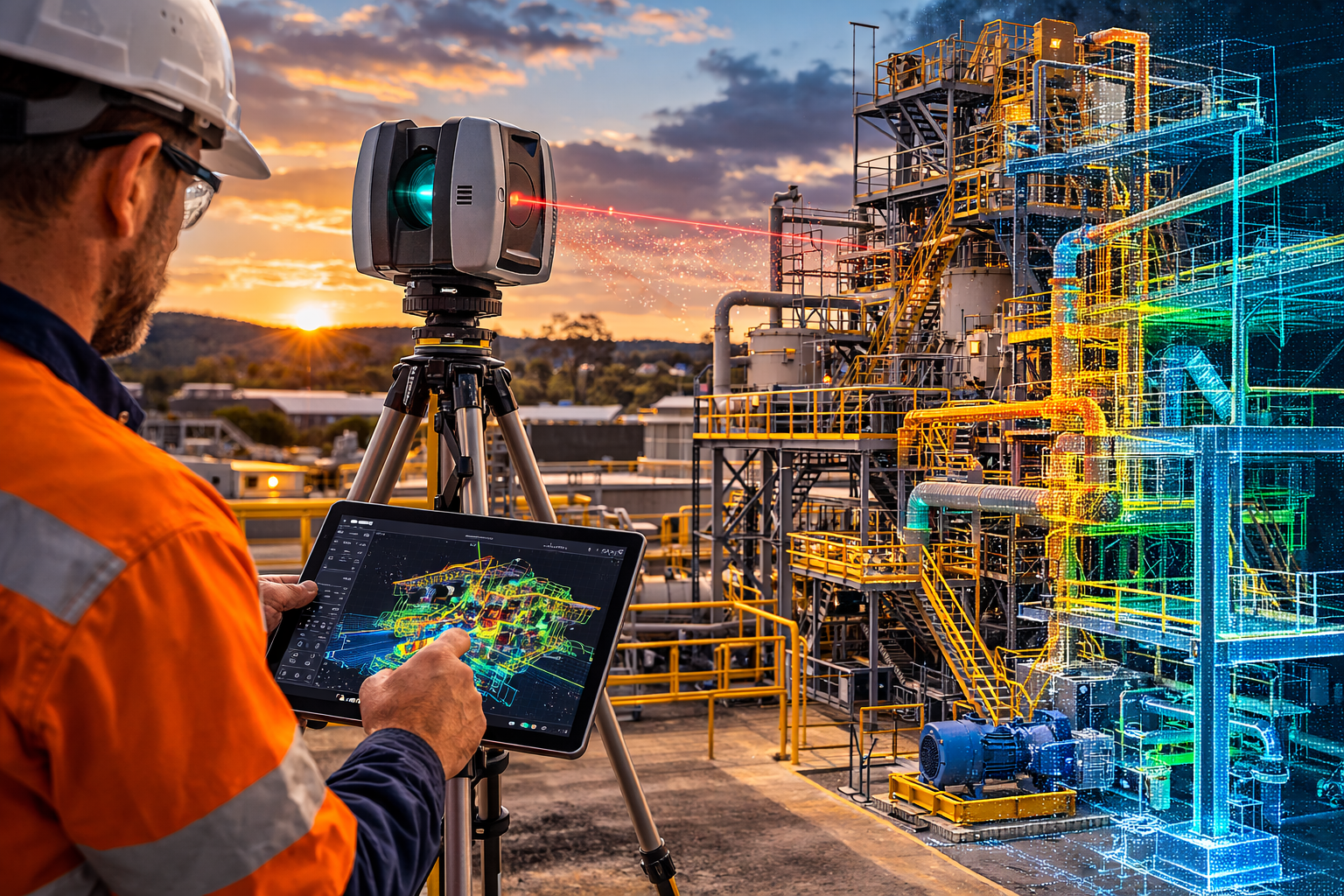
Hamilton By Design provides 3D Engineering Services in Brisbane by integrating engineering-grade reality capture, mechanical engineering, and fabrication-ready documentation into a single accountable workflow.

Our approach builds on proven internal capabilities in Reality Capture and Mechanical Engineering Services ensuring site conditions are accurately understood before design decisions are finalised and steel is cut.


Cartoon illustration showing an engineering-led 3D workflow in Brisbane, from laser scanning and point cloud data to CAD modelling, engineering checks, and fabrication-ready steel.

Why 3D engineering services are critical for Brisbane-managed projects

Many industrial and infrastructure projects managed from Brisbane involve brownfield assets, constrained access, and remote delivery locations. In these environments, incomplete information quickly leads to design risk.

Common challenges include:

  • Outdated or missing as-built documentation
  • Unknown interfaces between new and existing assets
  • Limited opportunities for repeat site access
  • Fabrication errors identified during installation
  • High rework and logistics costs for regional Queensland projects

While services such as

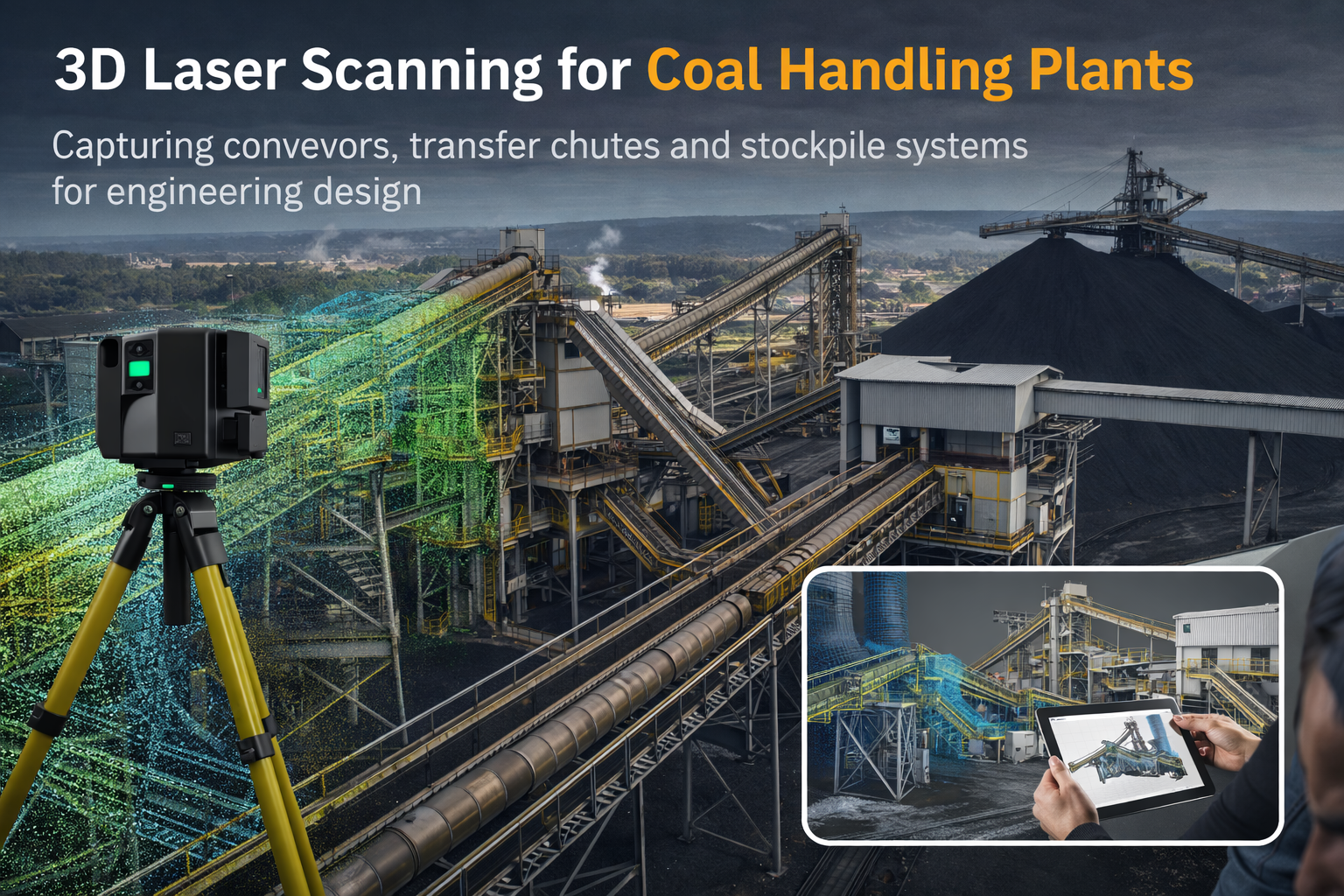
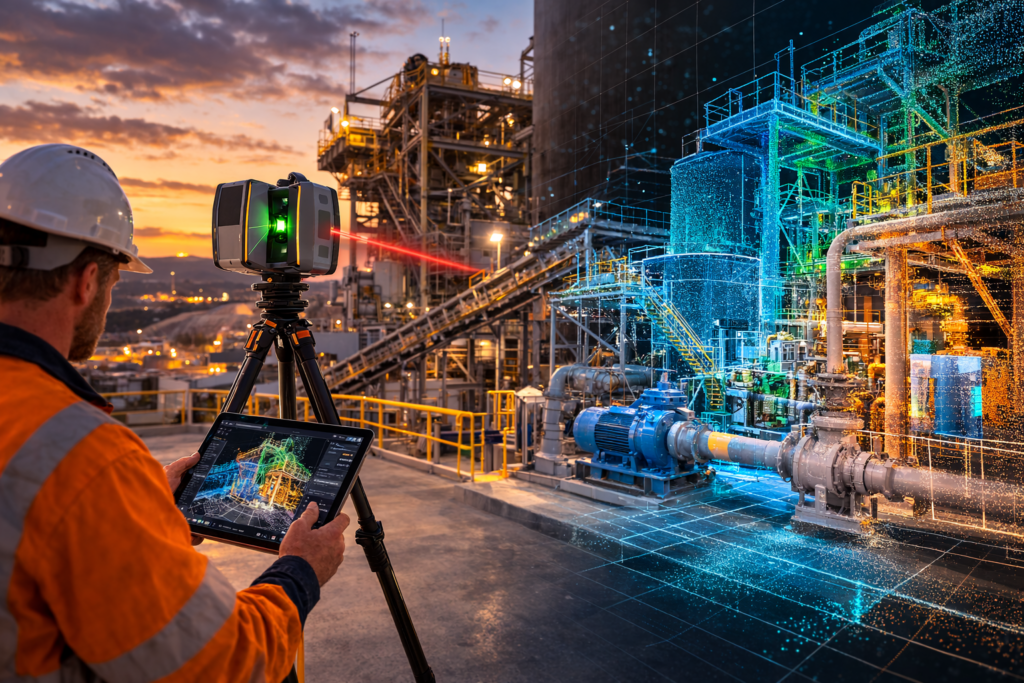
3D laser scanning in Brisbane

can accurately capture site geometry, true risk reduction only occurs when this data is interpreted through an engineering-led process. This is why Hamilton By Design focuses on
Engineering-Grade Laser Scanning rather than survey-only or visual-only capture.


What we mean by “3D Engineering Services”

At Hamilton By Design, 3D Engineering Services represent the integration of:

  1. Verified site reality
  2. Mechanical engineering judgement
  3. Fabrication-driven design intent

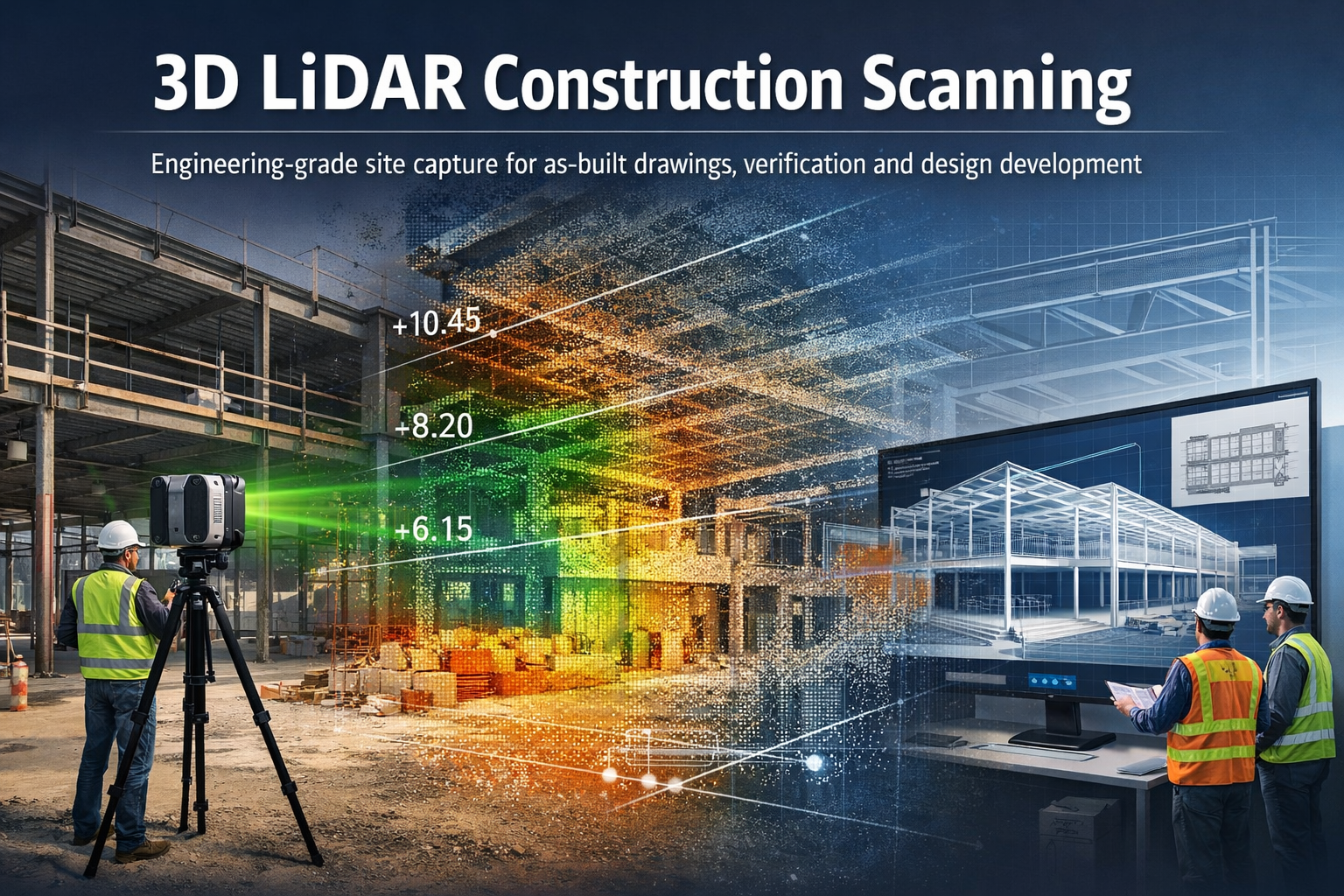
Point clouds are not treated as visual references. Instead, they are converted into engineering-grade CAD through our Point cloud to CAD modelling process using Solidworks CAD Modelling that reflect true as-built conditions, tolerances, and identifying interfaces.

This approach differentiates our services from marketing scans, survey deliverables without engineering accountability, and drafting workflows disconnected from site reality.


The Hamilton By Design 3D engineering workflow

Our Brisbane-based services follow a structured workflow designed to protect downstream fabrication and installation.

Engineering-grade site capture

We deploy an Engineering Grade LiDAR and Laser Scanning methods matched to the accuracy, environment, and engineering purpose of the project.

Point cloud verification and QA

Captured data is reviewed and validated to ensure it is suitable for engineering interpretation rather than visualisation alone.

Point cloud to SolidWorks CAD modelling

Verified site data is translated into SolidWorks CAD models representing real-world geometry and constraints.

Engineering interpretation and validation

Models are assessed with consideration of load paths, tolerances, clearances, and installation constraints.

Fabrication-ready deliverables

Design outputs are prepared for shop-floor use via our fabrication support services</a>,
including general arrangement drawings, detailed fabrication drawings, bills of materials, and digital QA models.


Core 3D engineering services delivered in Brisbane

Hamilton By Design provides:

  • Engineering-grade LiDAR and laser scanning
  • Point cloud to CAD modelling
  • Mechanical design and brownfield plant upgrades
  • Structural steel modelling and verification
  • Interface and clearance checks
  • Fabrication drawings and BOMs
  • Digital QA and clash detection
  • As-built documentation

Each service is delivered as part of an integrated engineering workflow designed to eliminate ambiguity before fabrication begins.


Brisbane as an engineering coordination hub for Queensland

Brisbane serves as a central coordination hub for industrial projects delivered across Queensland, including mining, energy, port, and regional processing facilities.

Hamilton By Design supports Brisbane-managed projects across:

  • Bowen Basin
  • Surat Basin
  • Gladstone
  • Townsville
  • Mount Isa

For resource-sector projects, our experience in mechanical engineering for the mining industry ensures designs remain practical, buildable, and aligned with site conditions.


Industries and assets supported

Industries

  • Mining and mineral processing
  • CHPP and bulk materials handling
  • Energy and utilities
  • Ports and logistics
  • Industrial manufacturing

Asset types

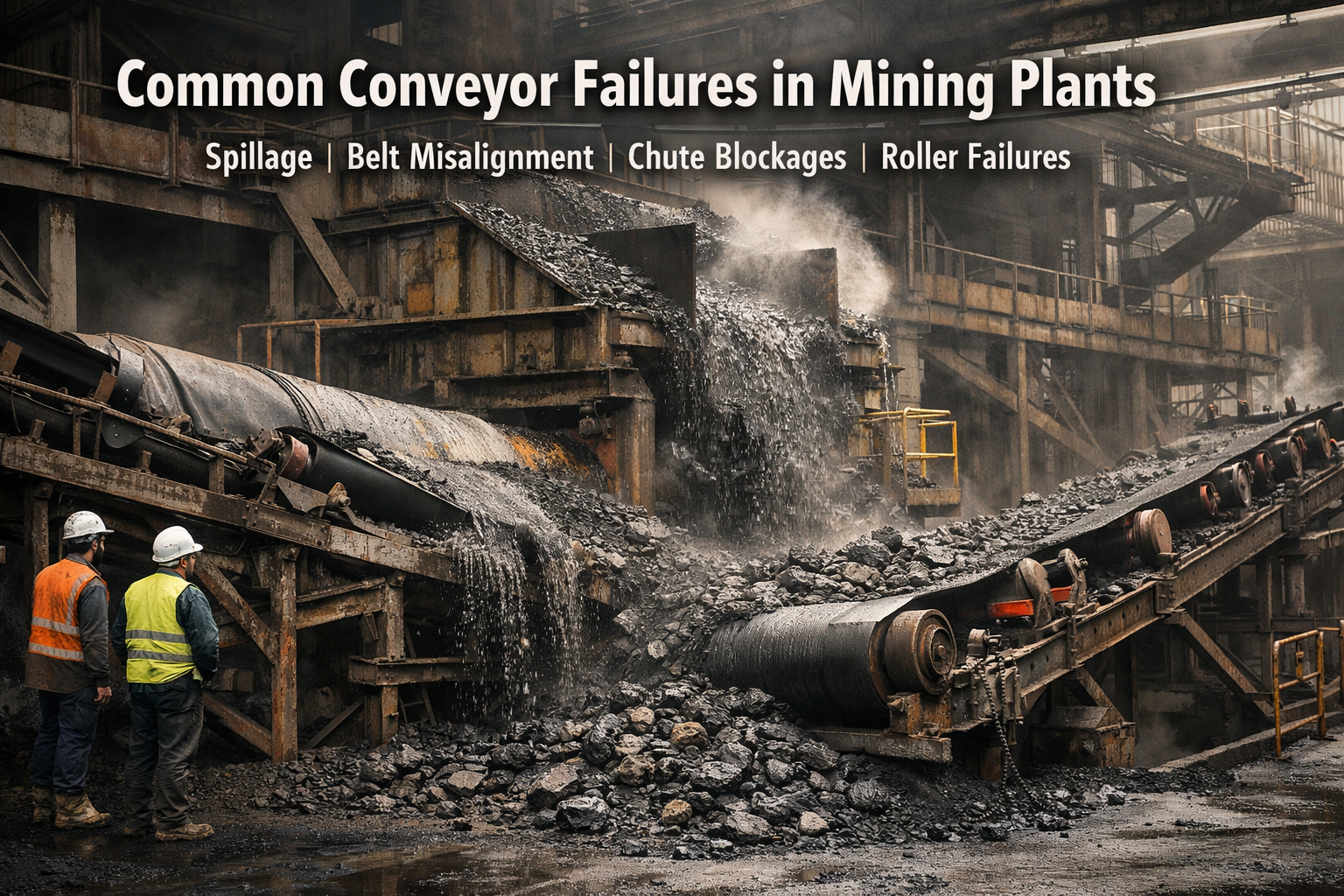
  • Conveyor systems and transfer chutes
  • Structural steel platforms and walkways
  • Pipework and mechanical assemblies
  • Brownfield plant upgrades
  • Temporary and permanent industrial structures

Our capability in structural engineering supports projects where compliance, load paths, and interfaces must be verified before fabrication.


Why Hamilton By Design

Clients engage Hamilton By Design for engineering accountability, not just technology.

Our key points of difference include:

  • Engineer-led scanning workflows
  • Single point of responsibility from scan to drawings
  • Mechanical-engineering-driven modelling
  • Fabrication-first mindset
  • Alignment with Australian engineering standards
  • Practical understanding of site and installation constraints

Our broader engineering services are designed to reduce rework, improve confidence, and protect project budgets.


Hamilton By Design logo displayed on a blue tilted rectangle with a grey gradient background
3D LiDAR scanning and 3D modelling service button — laser scanner capturing a point cloud for engineering and CAD modelling
Mechanical engineering services

Discuss a Brisbane-managed project

If you are managing an industrial or infrastructure project from Brisbane and require engineering-grade 3D data to support design, fabrication, or upgrade works, Hamilton By Design can assist.

Early engagement ensures site reality is embedded into the engineering process—reducing risk and improving project certainty.

Contact Hamilton By Design

Our clients:

Name
Would you like us to arrange a phone consultation for you?
Address
Reality Capture Brisbane title graphic with white text on a blue background promoting reality capture, LiDAR scanning and digital engineering services in Brisbane, Queensland.
3D Scanning Brisbane text graphic on a blue background promoting engineering-led laser scanning and reality capture services in Brisbane.

LiDAR Scanning Brisbane title graphic with white text on a blue background promoting terrestrial LiDAR scanning, point cloud capture and reality capture services in Brisbane, Queensland.
SolidWorks Brisbane title graphic with white text on a blue background promoting SolidWorks mechanical design, 3D CAD modelling and engineering drafting services in Brisbane, Queensland.


3D Scanning Brisbane

Engineer completing structural drafting while a LiDAR scanner captures as-built data along the Brisbane River with the Story Bridge in view

3D Scanning Brisbane | Engineering-Led LiDAR & Risk Management


We are engineers. Let us manage your risk.

3D scanning is often treated as a visual exercise. In engineering, it is a measurement task. The difference matters.

At Hamilton By Design, 3D scanning in Brisbane is approached as an engineering activity, not just data capture. Our role is to ensure the information collected on site can be safely relied upon for design, fabrication, and installation — without rework, uncertainty, or guesswork.


What People Mean When They Say “3D Scanning”

When someone searches for 3D scanning Brisbane, they are usually trying to answer one question:

“How do I measure what already exists?”

That might be to:

  • Capture existing site conditions
  • Reduce uncertainty before fabrication
  • Avoid clashes or rework on site

The challenge is that not all scanning methods actually measure geometry.


Cartoon showing a worker asking “How do I measure that?” while looking at complex pipework, illustrating the need for accurate engineering-grade 3D scanning.

3D Scanning in Brisbane – Typical Use Cases

Across Brisbane and South-East Queensland, 3D scanning is commonly used for:

  • Industrial plant upgrades and brownfield sites
  • As-built capture of steel, services, and structures
  • Fabrication completed off-site
  • Retrofit works with limited access
  • Shutdown and tie-in planning

For projects like these, scanning is typically carried out using engineering-grade laser scanning, not visual or consumer-grade tools.
3D Laser Scanning


Scanning Is Not the Same as Measuring

(Simple cartoon here: character looking at an object asking “How do I measure that?”)

Scanning is not the same as measuring.
In fabrication, we measure twice and cut once.
With the right scanner, you only need to scan once.

Many scanning tools create models that look right but are based on inferred or smoothed geometry. For engineering, appearance is not enough — the data must be measurable and accurate.


Not All 3D Scanning Is the Same

There are different ways to “scan” a site, each producing very different outcomes:

  • Phone and visual scans
    Useful for reference and visualisation, but not suitable for engineering.
  • Photogrammetry
    Good for context and large areas, but geometry is inferred rather than directly measured.
  • Engineering-grade LiDAR scanning
    Uses direct distance measurement to generate a true 3D point cloud.

Measured scan data can then be converted into usable engineering information through point cloud modelling workflows.
3D Point Cloud Modelling Brisbane


When Engineering-Grade Scanning Is Required

Engineering-grade scanning is required when:

  • Steelwork must fit first time
  • Pipework or spools are fabricated off-site
  • Structural members must be verified
  • Clearances and clashes carry cost or safety risk
  • There is only one opportunity to access the site

In these cases, scan data is typically followed by a Scan-to-CAD process, where point clouds are converted into accurate 3D models and drawings.
Scan to CAD Brisbane


Our Approach to 3D Scanning

Hamilton By Design treats scanning as part of a complete engineering workflow, not a standalone service.

Our approach includes:

  • Engineer-led scanning
  • Measurement-first mindset
  • Engineering-grade LiDAR equipment
  • Clear understanding of downstream use

By integrating scanning with mechanical engineering services, we maintain single-source accountability from site capture through to fabrication-ready deliverables.
Mechanical Engineering Services


What Happens After the Scan

3D scanning is the starting point, not the end.

Accurate scan data supports:

  • 3D CAD modelling
  • Fabrication and shop drawings
  • Structural verification
  • Clash detection and layout validation

Every downstream decision depends on the quality of the measurement captured at the start.


Talk to an Engineer Before You Scan

Many project issues begin with the wrong question:

“Can you scan this?”

The better question is:

“How do I measure this so it can be engineered?”

If you need 3D scanning in Brisbane that can safely support engineering and fabrication decisions, Hamilton By Design can help you get it right the first time.


We are engineers. Let us manage your risk.


Hamilton By Design logo displayed on a blue tilted rectangle with a grey gradient background

Our clients:

Name
Would you like us to arrange a phone consultation for you?
Address
3D LiDAR scanning and 3D modelling service button — laser scanner capturing a point cloud for engineering and CAD modelling
Mechanical engineering services
Finite Element Analysis (FEA) engineering simulation button
Mechanical engineering services

3D Point Cloud Modelling in Brisbane

Getting the Data Right First

Modern engineering, fabrication, and asset upgrades increasingly rely on 3D point cloud data as the foundation for design decisions. However, not all “3D scans” produce data that is suitable for engineering-grade modelling.

At Hamilton By Design, we regularly encounter projects where scanning has already been undertaken, yet the data cannot be safely relied upon for structural checks, fabrication drawings, or fit-first-time installation. The reason is simple: many common scanning technologies do not generate a true, measurable 3D point cloud.


Cartoon illustrating the difference between visual scanning and engineering-grade 3D point cloud scanning, showing how accurate scan data enables fit-first-time fabrication.

What Is a True Engineering 3D Point Cloud?

A true 3D point cloud consists of millions of directly measured XYZ coordinates, captured using survey-grade LiDAR technology. Each point represents a real, measured position in space, with known accuracy and traceable error.

This level of data is essential when:

  • Steelwork must fit without site modification
  • Pipe spools are fabricated off-site
  • Structural members must be verified
  • Clearances and clashes carry cost or safety risk

Visual models, meshes, or approximated surfaces may look correct, but without direct distance measurement and accuracy control, they cannot be relied upon for engineering.


Not All “3D Scans” Produce a Usable Point Cloud

The table below compares common capture methods against engineering-grade LiDAR scanning.

Engineering Data Comparison – 3D Capture Technologies

CriteriaPhone / App ScanPhoto-grammetryReal-Estate / Visual ScannersEngineering LiDAR (Hamilton By Design)
Direct distance measurement❌ No❌ No⚠️ Limited✅ Yes (time-of-flight)
True 3D point cloud output⚠️ Low-density❌ No (mesh only)⚠️ Filtered✅ Raw XYZ data
Global accuracy control❌ None❌ None❌ None✅ Survey-controlled
Typical usable accuracy±20–50 mm±10–30 mm±10–20 mm±1–2 mm
Consistent point density❌ No❌ No❌ No✅ Yes
Steel & reflective surfaces❌ Poor❌ Poor⚠️ Limited✅ Yes
Pipework & beam definition❌ No⚠️ Limited❌ No✅ Yes
Large industrial site capture❌ No⚠️ Limited❌ No✅ Yes
Registration error reporting❌ No❌ No❌ No✅ Yes
Suitable for fabrication drawings❌ No❌ No❌ No✅ Yes
Suitable for structural checks / FEA❌ No❌ No❌ No✅ Yes
Fit-first-time confidence❌ No❌ No❌ No✅ Yes

Why This Matters for Brisbane Projects

In Brisbane and across South-East Queensland, many projects involve:

  • Industrial plant upgrades
  • Infrastructure retrofits
  • Fabrication undertaken off-site
  • Tight shutdown windows

In these environments, millimetres matter. If a beam, pipe, or support cannot be accurately defined in the model, the risk of rework, delays, and site modification increases significantly.

Put simply:

If the data cannot reliably tell you whether something fits, clears, or carries load, it is not suitable for engineering.


Engineer-Led Point Cloud Modelling

Hamilton By Design uses engineering-grade terrestrial LiDAR scanners and an engineer-led workflow to ensure point cloud data is suitable for:

  • SolidWorks 3D modelling
  • Fabrication-ready drawings
  • Structural verification
  • Clash detection and layout validation

By controlling both data capture and modelling, we maintain single-source accountability — reducing risk and ensuring the model reflects reality.


Hamilton By Design logo displayed on a blue tilted rectangle with a grey gradient background
3D LiDAR scanning and 3D modelling service button — laser scanner capturing a point cloud for engineering and CAD modelling
Mechanical engineering services

From Scan to Shop Floor — Done Right

3D point cloud modelling is not about creating a visually impressive model. It is about creating a reliable digital representation of reality that engineers, fabricators, and contractors can trust.

If you are planning a project in Brisbane and need point cloud data that supports real engineering decisions, speak with Hamilton By Design before relying on consumer or visual-only scanning methods.

Our clients:

Name
Would you like us to arrange a phone consultation for you?
Address

3D Scanning Brisbane CBD

Finite Element Analysis (FEA) engineering simulation button
Mechanical engineering services
Reality Capture Brisbane title graphic with white text on a blue background promoting reality capture, LiDAR scanning and digital engineering services in Brisbane, Queensland.
3D Scanning Brisbane text graphic on a blue background promoting engineering-led laser scanning and reality capture services in Brisbane.

LiDAR Scanning Brisbane title graphic with white text on a blue background promoting terrestrial LiDAR scanning, point cloud capture and reality capture services in Brisbane, Queensland.
SolidWorks Brisbane title graphic with white text on a blue background promoting SolidWorks mechanical design, 3D CAD modelling and engineering drafting services in Brisbane, Queensland.


You wouldn’t expect plasticine to hold up a roof

So why expect precision measurement from a low-grade scanner?

You would never expect plasticine to hold up a roof.

It is simply not designed for that purpose.

So why would you expect precision, fabrication-grade measurements from a low-grade scanner that was never intended for engineering, structural verification, or load-critical decision-making?

At Hamilton By Design, this distinction matters — because the consequences of poor data do not appear on a screen.
They appear later, on site, in steel, time, cost, and risk.


The problem with “one-size-fits-all” scanning

The term “3D scanning” is often used to describe vastly different technologies with vastly different outcomes.

A phone-based scan, poly scan, or real-estate laser capture tool is designed to:

  • Look good
  • Be fast
  • Be easy to use
  • Support visualisation and marketing

An engineering-grade laser scanner is designed to:

  • Capture true geometry
  • Provide repeatable, verifiable measurements
  • Support CAD modelling, fabrication drawings, and structural assessment

These tools are not interchangeable, even if the outputs look similar at first glance.

Visual accuracy is not structural accuracy.


When “close enough” becomes very expensive

Low-grade scanners may produce models that appear accurate, but engineering does not work on appearances.

When steel is being fabricated, installed, or retrofitted, millimetres matter.

Errors in geometry can lead to:

  • Beams that are too short to achieve adequate bearing
  • Misaligned columns or plates
  • Clashes with existing services or structure
  • Forced site modifications and rework
  • Extended shutdowns and access costs

This is why Hamilton By Design approaches scanning as an engineering input, not a visual product.

👉 Related service: 3D Laser Scanning Services


You cannot engineer what you cannot see

Phone scans and visual capture methods only record what is visible.

They cannot:

  • Establish footing depth
  • Confirm foundation geometry
  • Identify slab thickening or edge beams
  • Verify load paths below ground

If you cannot see or verify how loads are transferred into the ground, you cannot responsibly design the structure above it.

Hamilton By Design addresses this gap through an engineering-led approach that combines:

  • Measured geometry
  • Subsurface investigation (where appropriate)
  • Structural logic and interpretation

👉 Related service: Ground Penetrating Radar (GPR) Services
👉 Related service: As-Built Documentation


Beam length, bearing, and support are not optional details

A structural beam does not just need to “fit in the space”.

It must:

  • Span between actual supports
  • Achieve sufficient bearing length
  • Align with load-bearing elements
  • Transfer load safely and compliantly

Low-grade scanning tools often:

  • Smooth over out-of-square conditions
  • Hide offsets and construction tolerances
  • Mask inadequate support conditions

Engineering-grade scanning reveals what really exists, not what drawings or assumptions suggest.

👉 Related service: Scan-to-CAD Modelling
👉 Related service: Structural Drafting


Why engineering-grade scanners exist

Industrial laser scanners are not expensive or complex by accident.

They exist because engineering requires:

  • Known accuracy performance
  • Repeatable measurement results
  • Controlled registration and QA
  • Traceable geometry suitable for design and fabrication

Just as structural steel exists because plasticine cannot carry load, engineering scanners exist because consumer tools cannot provide engineering certainty.

Hamilton By Design uses engineering-grade scanners because the outcomes demand it.

👉 Learn more: Reality Capture for Engineering


Scanning is not the outcome — engineering is

At Hamilton By Design, scanning is never delivered in isolation.

It is part of a single-source engineering workflow that connects:

  • Reality capture
  • Subsurface understanding
  • CAD modelling
  • Fabrication-ready documentation

This reduces:

  • Misinterpretation of raw data
  • Risk transfer between consultants
  • Late design changes
  • Site improvisation

👉 Related service: Mechanical Engineering Services
👉 Related service: Fabrication Drawings


Where low-grade scanning does make sense

This is not about dismissing phone scans entirely.

They are suitable when:

  • The outcome is visualisation
  • Measurements are indicative only
  • No structural or fabrication decisions depend on the data

They are not suitable when:

  • Steel is being fabricated
  • Loads are being introduced or modified
  • Compliance and safety are required
  • Errors would surface on site

You match the tool to the consequence.


The Hamilton By Design position

Hamilton By Design exists to support projects where:

  • Accuracy matters
  • Geometry drives cost
  • Fabrication must fit first time
  • Engineering accountability is required

We do not promise “quick scans”.
We deliver engineering confidence.

👉 Explore projects by region:


The simple truth

You would not trust plasticine to hold up a roof.

And you should not trust a low-grade scanner to deliver precision geometry for structural or mechanical engineering.

If the outcome needs to be safe, compliant, and fit-first-time, the data must be engineered — not approximated.


Next steps

If you are planning:

  • Structural modifications
  • Beam or column installation
  • Retrofit or upgrade works
  • Fabrication based on existing geometry

Talk to Hamilton By Design about engineering-grade reality capture and a workflow designed for real-world outcomes.

Hamilton By Design logo displayed on a blue tilted rectangle with a grey gradient background
3D LiDAR scanning and 3D modelling service button — laser scanner capturing a point cloud for engineering and CAD modelling
Mechanical engineering services

Our clients:

Name
Would you like us to arrange a phone consultation for you?
Address
Mechanical Engineering Perth WA banner for Hamilton By Design featuring white text on a blue background.
3D Laser Scanning Perth WA banner for Hamilton By Design with white text on a blue background.
SolidWorks Perth WA banner for Hamilton By Design featuring white text on a blue background.
3D CAD Modelling Australia service banner for Hamilton By Design
3D LiDAR scanning and 3D modelling service button — laser scanner capturing a point cloud for engineering and CAD modelling
Mechanical engineering services
3D CAD Modelling Australia service banner for Hamilton By Design
Mechanical, Structural & Pipework Drafting service banner by Hamilton By Design featuring white text on a blue background.
Australian Drafting logo featuring bold white text reading "Australian Drafting" centred on a blue rounded rectangle background.
Blue banner graphic displaying the text "Point Cloud to CAD - Australia" in large white lettering, representing point cloud processing, scan-to-CAD conversion and digital engineering services across Australia.
CHPP Engineering title graphic featuring bold white text reading "CHPP Engineering" centred on a blue rounded rectangle background.
Engineering Governance title graphic featuring bold white text reading "Engineering Governance" centred on a blue rounded rectangle background.
Mechanical engineering services
Australian Drafting logo featuring bold white text reading "Australian Drafting" centred on a blue rounded rectangle background.
3D LiDAR Scanning Hunter & Newcastle banner with white text on a blue background promoting engineering-grade laser scanning services for industrial, mining and infrastructure projects across the Hunter Valley and Newcastle region.
Mechanical Engineering Hunter & Newcastle banner promoting mechanical engineering services for mining, industrial plants, power generation, manufacturing and heavy industry throughout the Hunter Valley and Newcastle region.
Structural Drafting Hunter & Newcastle banner promoting structural drafting services for mining, industrial plants, power generation, manufacturing and infrastructure projects across the Hunter Valley and Newcastle region.
Mechanical Engineering Perth WA banner for Hamilton By Design featuring white text on a blue background.
3D Laser Scanning Perth WA banner for Hamilton By Design with white text on a blue background.
SolidWorks Perth WA banner for Hamilton By Design featuring white text on a blue background.
Fabrication and product design services
Finite Element Analysis (FEA) engineering simulation button
3D LiDAR scanning and 3D modelling service button — laser scanner capturing a point cloud for engineering and CAD modelling
Blue rounded button with the text “SolidWorks Design” in white.
Mechanical drafting services button
Structural drafting services button

Reality Capture in the Hunter Valley

The Hunter Valley is one of Australia’s most technically complex industrial regions, combining power generation, mining, bulk materials handling, manufacturing, and logistics infrastructure within a tightly interconnected operational landscape. Projects in this environment frequently involve legacy assets, constrained access, and high consequences for design or construction error.

Reality capture in the Hunter Valley provides a structured, engineering-led method for documenting existing conditions using measured data rather than assumption-based interpretation. At Hamilton By Design, reality capture is applied as part of a broader engineering workflow—ensuring captured information directly supports design development, upgrade planning, fabrication coordination, and risk management.


Defining reality capture in an industrial context

Reality capture is the process of recording physical site conditions using spatially accurate technologies and converting that information into usable engineering references. In practical terms, this includes:

  • Engineering-grade laser scanning and LiDAR acquisition
  • Spatial data registration and validation
  • Interpretation of existing geometry in the context of mechanical and structural systems
  • Translation of measured data into drawings, models, and coordination outputs

The objective is not simply to visualise a site, but to create a reliable, defensible representation of existing conditions that can be used throughout the project lifecycle.

For projects where laser scanning forms the core capture method, refer to:
3D Laser Scanning
https://www.hamiltonbydesign.com.au/home/3d-lidar-scanning-digital-quality-assurance/3d-laser-scanning/


Why reality capture is critical in the Hunter Valley

Industrial facilities across the Hunter Valley often operate continuously while upgrades, modifications, and expansions are undertaken. Common project challenges include:

  • Brownfield environments with incomplete or outdated documentation
  • Complex interfaces between mechanical, structural, and civil systems
  • Fabrication occurring off-site with limited tolerance for dimensional error
  • Restricted access windows and safety-critical operating conditions

In these scenarios, traditional measurement approaches are often insufficient. Reality capture reduces uncertainty by establishing a single source of measured truth, enabling informed decisions before fabrication or installation begins.

For an overview of how scanning is applied to regional industry, see:
3D Scanning for Industrial Projects in Newcastle and the Hunter Valley
https://www.hamiltonbydesign.com.au/3d-scanning-for-industrial-projects-in-newcastle-and-the-hunter-valley/


Typical Hunter Valley applications

Existing-condition baselining

Reality capture provides accurate documentation where legacy drawings no longer reflect actual site conditions. This baseline supports engineering assessments, upgrade feasibility studies, and staged project planning.

Plant upgrades and retrofit works

Measured spatial data allows new systems to be designed around existing plant, services, and structures, reducing clash risk and rework during installation.

Fabrication and construction coordination

Accurate capture of interfaces, clearances, and connection points improves alignment between design intent and fabricated components—particularly where fabrication is completed remotely.

Risk reduction and decision support

From an engineering governance perspective, reality capture improves information quality, reduces assumptions, and supports more defensible technical decisions.


Engineering-led reality capture methodology

Hamilton By Design approaches reality capture as a project-specific engineering activity, not a generic surveying exercise.

1. Scope definition aligned to outcomes

Capture scope is defined based on how the data will be used—design development, drafting, verification, or coordination—ensuring the level of detail and accuracy is appropriate.

2. Structured site data acquisition

Capture activities are planned to manage occlusion, access limitations, and operational constraints commonly encountered on Hunter Valley industrial sites.

3. Data validation and preparation

Captured datasets are reviewed, registered, and structured so they can be confidently used for engineering interpretation rather than remaining as raw data.

4. Engineering-ready deliverables

Where required, reality capture outputs are converted into:

  • As-built drawings
  • General arrangement layouts
  • Reference models for coordination
  • Documentation suitable for engineering review and approvals

Relationship between reality capture and laser scanning

While laser scanning and LiDAR are commonly used tools within reality capture, the distinction lies in how the data is applied. Laser scanning provides the measurements; reality capture ensures those measurements are contextualised, validated, and integrated into engineering workflows.

This distinction is particularly important in industrial regions such as the Hunter Valley, where inaccurate interpretation of spatial data can have significant cost and safety implications.


Value for Hunter Valley stakeholders

Reality capture supports multiple stakeholder groups:

  • Asset owners and operators gain confidence in upgrade planning
  • Engineers work from verified existing-condition data
  • Fabricators receive clearer interface definitions
  • Project teams reduce site disruption and variation risk

From a systems engineering perspective, this represents an improvement in information reliability and traceability—both key drivers of project performance.


Regional capability and service coverage

Hamilton By Design services the Hunter Valley as part of its broader NSW engineering and reality capture capability, supporting projects across industrial, energy, and infrastructure sectors.

Service coverage includes Newcastle and the wider Hunter region, as outlined in:
Frequently Asked Questions – Service Areas
https://www.hamiltonbydesign.com.au/frequently-asked-questions/


Next steps

For Hunter Valley projects, effective reality capture begins by clearly defining:

  1. Which areas and interfaces require measurement
  2. What engineering decisions the data must support
  3. The required accuracy for design, fabrication, or verification

Once these parameters are established, reality capture can be aligned to project risk, schedule, and delivery requirements.

For scanning-focused services, return to:
3D Laser Scanning
https://www.hamiltonbydesign.com.au/home/3d-lidar-scanning-digital-quality-assurance/3d-laser-scanning/

For industrial scanning examples in the region, see:
3D Scanning for Industrial Projects in Newcastle and the Hunter Valley
https://www.hamiltonbydesign.com.au/3d-scanning-for-industrial-projects-in-newcastle-and-the-hunter-valley/

3D LiDAR scanning and 3D modelling service button — laser scanner capturing a point cloud for engineering and CAD modelling
Mechanical engineering services

Our clients:

Name
Would you like us to arrange a phone consultation for you?
Address

Reality Capture in Wyong

Wyong sits at the centre of the NSW Central Coast’s industrial, infrastructure, and manufacturing activity. With a mix of legacy assets, live industrial facilities, and expanding development corridors, projects in the region often require accurate, defensible knowledge of existing site conditions before design, fabrication, or construction can proceed.

Reality capture in Wyong provides a structured approach to documenting real-world conditions using measured data rather than assumptions. At Hamilton By Design, reality capture is integrated into an engineering-led workflow—ensuring the information collected on site can be reliably used for design coordination, retrofit planning, and downstream documentation.


What reality capture means for Wyong projects

Reality capture refers to the process of recording existing conditions using spatially accurate methods and translating that data into engineering-usable outputs. In practice, this includes:

  • Engineering-grade laser scanning and LiDAR capture
  • Controlled registration and validation of spatial data
  • Interpretation of site geometry in the context of mechanical and structural design
  • Conversion of captured data into drawings, models, and reference documents

Rather than treating capture as a visual exercise, the emphasis is on measured accuracy, traceability, and fitness for purpose.

For an overview of regional engineering capability, see:
Mechanical Engineers in Wyong
https://www.hamiltonbydesign.com.au/mechanical-engineers-in-wyong/


Why reality capture is critical in Wyong and the Central Coast

Projects across Wyong and the broader Central Coast commonly involve:

  • Brownfield industrial upgrades
  • Plant modifications within operational facilities
  • Interface works between new and existing infrastructure
  • Fabrication occurring off-site with limited tolerance for error
  • Incomplete or outdated as-built documentation

In these environments, traditional measurement methods often fail to provide sufficient confidence. Reality capture reduces this risk by creating a single, verifiable representation of site conditions that can be referenced throughout the project lifecycle.


Typical reality capture applications in Wyong

1. Existing-condition documentation

Reality capture establishes a measured baseline where drawings are missing, inconsistent, or no longer representative of site conditions. This is particularly valuable for long-standing industrial facilities across Wyong and the surrounding region.

2. Retrofit and upgrade planning

Captured data supports the design of upgrades that must integrate precisely with existing structures, equipment, and services—reducing the likelihood of clashes or rework.

3. Fabrication and installation coordination

When fabrication is undertaken away from site, accurate geometry is essential. Reality capture helps ensure fabricated components align correctly once delivered and installed.

4. Risk reduction and project certainty

By replacing assumptions with measured data, reality capture improves decision-making, reduces uncertainty, and supports more reliable cost and schedule outcomes.

For a broader discussion of engineering activity on the Central Coast, see:
Mechanical Engineering at the Heart of Mining on the Central Coast
https://www.hamiltonbydesign.com.au/mechanical-engineering-at-heart-of/


3D LiDAR scanning services on the Central Coast providing engineering-grade laser scanning, point cloud capture, scan-to-CAD modelling and industrial reality capture for infrastructure and industrial projects.
Drafting services on the Central Coast providing engineering drawings, fabrication detailing, as-built documentation, reverse engineering and CAD drafting for industrial and infrastructure projects.
Mechanical engineering services on the Central Coast providing industrial design, plant inspections, pump calculations, reverse engineering and engineering support for manufacturing, infrastructure and heavy industry projects.

How Hamilton By Design approaches reality capture

Hamilton By Design applies reality capture as part of an integrated engineering process rather than a standalone service.

Project-led scoping

Each capture scope is defined by how the data will be used—whether for design, drafting, verification, or coordination. Accuracy requirements, areas of interest, and deliverables are established upfront.

Field data acquisition

Capture activities are planned to minimise occlusions, maintain consistency, and achieve the level of detail required for engineering interpretation.

Validation and preparation

Spatial datasets are reviewed and structured to ensure they are suitable for downstream use, avoiding the common issue of high-volume data with limited engineering value.

Engineering-ready outputs

Where required, captured data is translated into:

  • As-built drawings
  • General arrangement layouts
  • Reference models for coordination
  • Documentation suitable for design development and approvals

This approach aligns reality capture outputs with real project decisions rather than producing isolated datasets.


Relationship to laser scanning services

Reality capture in Wyong often incorporates laser scanning and LiDAR technologies; however, the distinction lies in how the data is applied. Laser scanning is the tool—reality capture is the methodology that ensures the data is usable, traceable, and relevant to engineering outcomes.

For dedicated scanning capability, see:
3D Laser Scanning
https://www.hamiltonbydesign.com.au/home/3d-lidar-scanning-digital-quality-assurance/3d-laser-scanning/


Value for Wyong-based stakeholders

Reality capture delivers value across multiple stakeholder groups:

  • Owners and operators gain confidence in upgrade feasibility
  • Engineers work from reliable existing-condition data
  • Fabricators receive clearer interfaces and reduced rework risk
  • Project teams benefit from fewer site disruptions and variations

From an academic perspective, this represents an improvement in information quality and decision reliability—both critical contributors to successful project delivery.


Reality capture as part of regional engineering capability

Wyong’s role as a Central Coast engineering hub makes it an ideal location for engineering-led reality capture services. The ability to capture, interpret, and apply site data locally supports faster turnaround and better alignment between site conditions and engineering intent.

For a broader overview of Hamilton By Design’s presence and services in the region, return to:
Mechanical Engineers in Wyong
https://www.hamiltonbydesign.com.au/mechanical-engineers-in-wyong/


Next steps

If you are planning a project in Wyong or the wider Central Coast and require reliable existing-condition information, the first step is defining:

  1. The areas and interfaces that must be captured
  2. The decisions the data needs to support
  3. The level of accuracy required for design or fabrication

From there, reality capture can be aligned to your project objectives, risk profile, and delivery programme.

Our clients

3D LiDAR scanning and 3D modelling service button — laser scanner capturing a point cloud for engineering and CAD modelling
Mechanical engineering services
Name
Would you like us to arrange a phone consultation for you?
Address