3D Construction Scanning Darwin

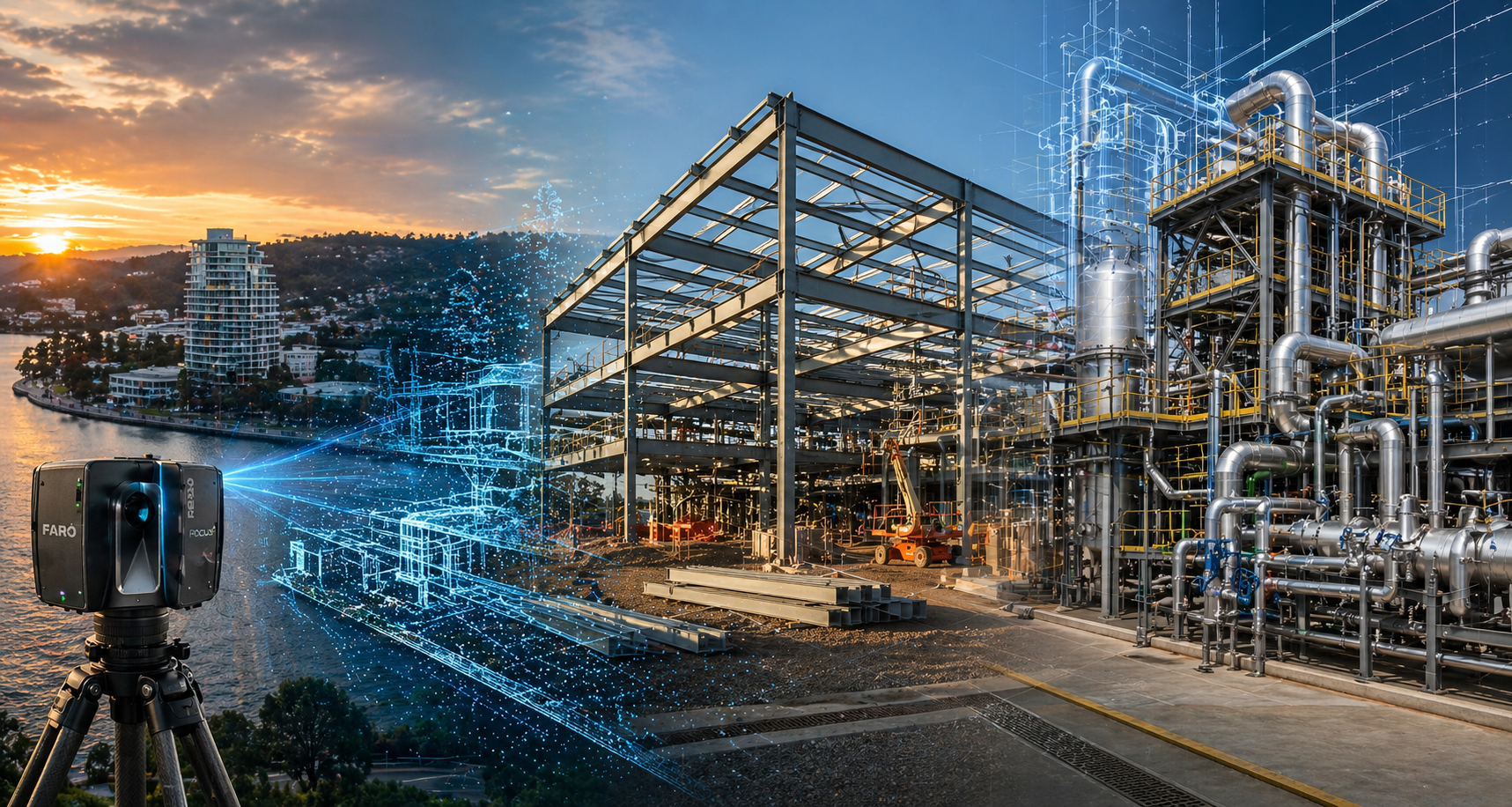
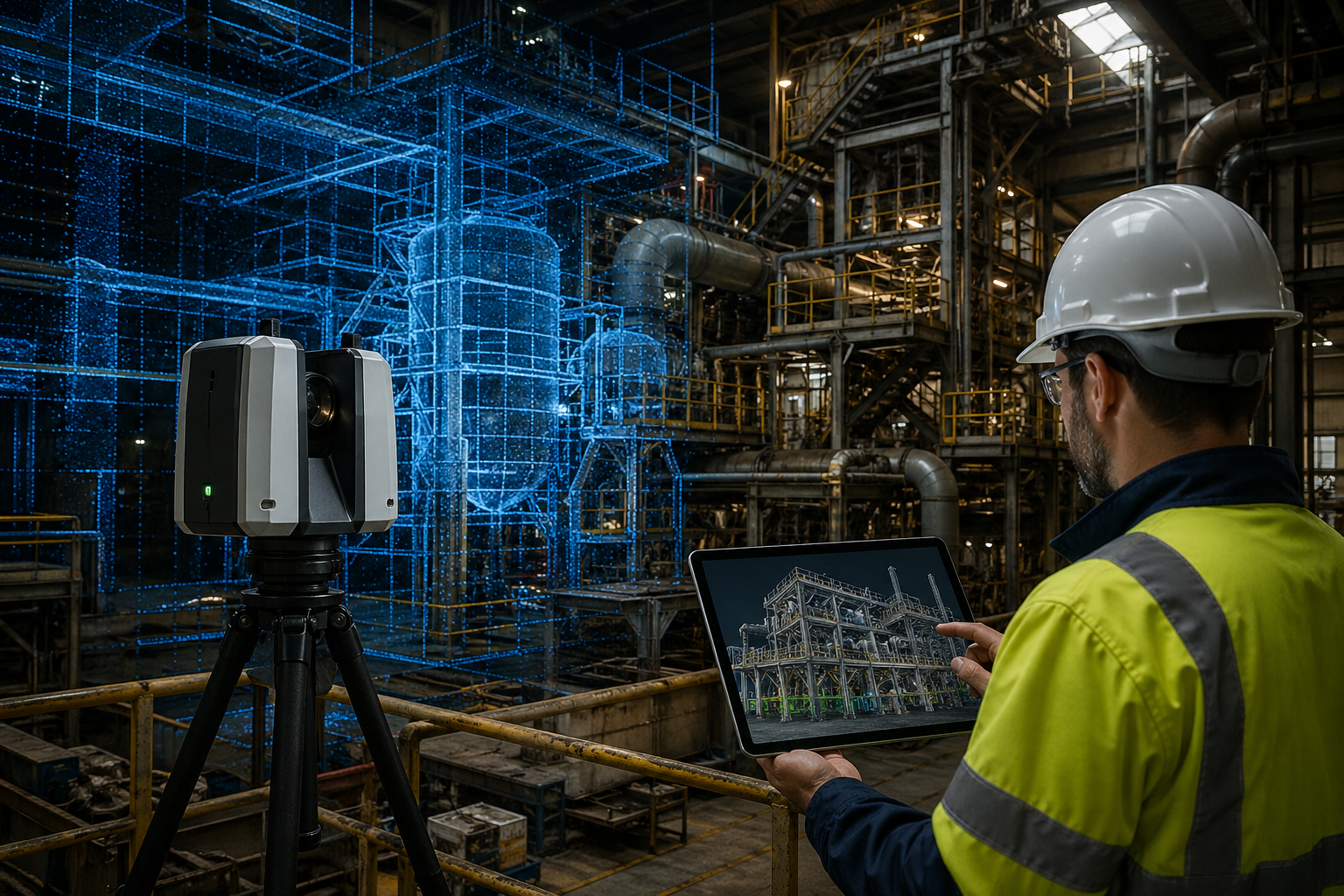
Engineering-grade 3D laser scanner capturing Darwin port infrastructure, harbour assets, and urban skyline

Engineering-Grade LiDAR for Accurate As-Built & Construction Delivery

Construction projects in Darwin operate in a demanding environment — tropical weather, remote logistics, accelerated schedules, and complex interfaces between structural, mechanical, and architectural elements. 3D construction scanning provides a reliable digital foundation to reduce risk, eliminate rework, and support confident decision-making throughout the project lifecycle.

Hamilton By Design delivers engineering-grade 3D construction scanning in Darwin, supporting contractors, engineers, builders, and asset owners with accurate spatial data, as-built models, and construction-ready documentation.

👉 Learn more about our Darwin scanning capability:
https://www.hamiltonbydesign.com.au/3d-scanning-in-darwin/
https://www.hamiltonbydesign.com.au/home/engineering-services/3d-scanning-darwin/darwin-lidar-laser-scanning-services/


What Is 3D Construction Scanning?

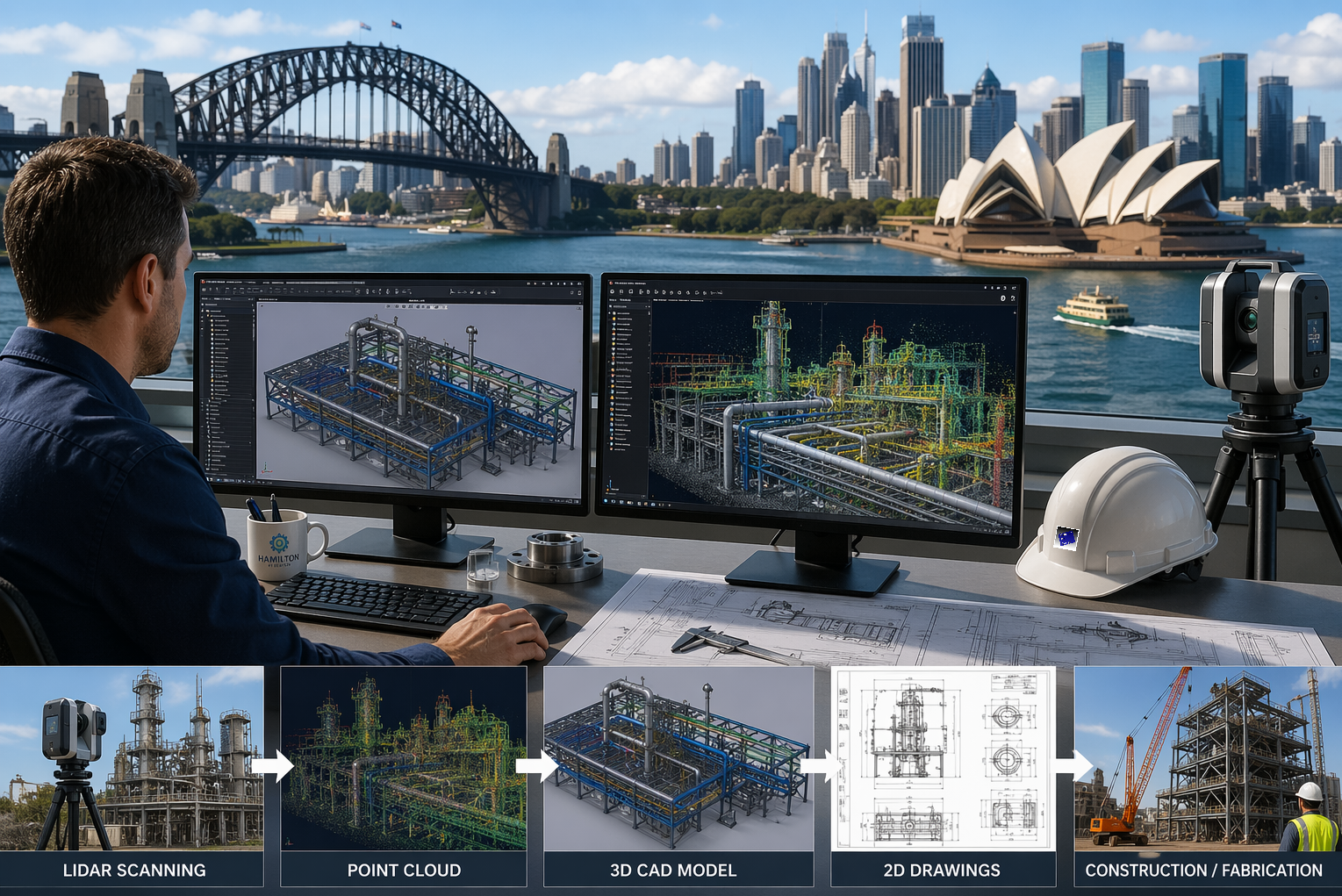
3D construction scanning uses high-accuracy LiDAR laser scanners to capture the real-world geometry of construction sites, partially completed works, and existing assets. The output is a dense, survey-grade point cloud that can be used to create:

  • Accurate as-built drawings
  • BIM and digital twin models
  • Clash detection and coordination models
  • Verification of construction tolerances
  • Retrofit and upgrade designs

Unlike traditional tape or total-station methods, LiDAR captures millions of points per second, ensuring complex geometry is recorded correctly the first time.


Engineering-grade 3D laser scanner capturing Darwin port infrastructure, harbour assets, and urban skyline

Why 3D Construction Scanning Matters in Darwin

Construction in Darwin often involves:

  • Live brownfield sites
  • Remote or logistically constrained projects
  • Tight shutdown or installation windows
  • High consequences of dimensional errors

3D construction scanning enables:

✔ Reduced rework and RFIs
✔ Improved trade coordination
✔ Accurate verification before fabrication
✔ Faster design and approval cycles
✔ Safer site data capture with minimal disruption

This is particularly valuable for industrial buildings, ports, power generation facilities, defence infrastructure, and commercial developments across the Northern Territory.


Typical Construction Applications

As-Built Verification

Confirm what has actually been built — not what was assumed — before handover, certification, or the next construction stage.

Construction Progress Capture

Document progress at key milestones to support planning, claims, and coordination.

Retrofit & Upgrade Projects

Capture existing structures accurately before mechanical, electrical, or structural upgrades commence.

Clash Detection & Coordination

Overlay scanned data with design models to identify clashes early and avoid costly site changes.


Hamilton By Design logo displayed on a blue tilted rectangle with a grey gradient background
3D LiDAR scanning and 3D modelling service button — laser scanner capturing a point cloud for engineering and CAD modelling
Mechanical engineering services

Engineering-Led Scanning — Not Just Data Capture

At Hamilton By Design, 3D construction scanning is delivered by engineers, not just scanning technicians. This means:

  • Scan strategies aligned to engineering outcomes
  • Data captured at appropriate accuracy for construction tolerances
  • Deliverables tailored for CAD, BIM, and fabrication workflows
  • Clear accountability from scan to design to documentation

Our scanning integrates directly with mechanical design, structural analysis, and construction documentation services — providing a single source of truth for your project.


Deliverables to Suit Construction Teams

Depending on your requirements, we can provide:

  • Registered point clouds
  • CAD-ready models
  • Revit / BIM outputs
  • Section views and construction references
  • Engineering drawings derived from scan data

All deliverables are tailored to suit builders, engineers, subcontractors, and asset owners.


Our clients:


3D Construction Scanning Darwin — Partner with Confidence

Whether you are delivering a new build, managing a complex refurbishment, or upgrading an existing facility, 3D construction scanning in Darwin provides the clarity and accuracy needed to build with confidence.

Hamilton By Design supports construction projects across Darwin and the Northern Territory with engineering-grade LiDAR scanning, practical deliverables, and real-world construction experience.

Let Connect us to discuss your project requirements or arrange a site scan.

Name
Would you like us to arrange a phone consultation for you?
Address
3D CAD Modelling Australia service banner for Hamilton By Design
3D LiDAR scanning and 3D modelling service button — laser scanner capturing a point cloud for engineering and CAD modelling
Mechanical engineering services
Mechanical drafting services button
Blue rounded button with the text “SolidWorks Design” in white.
Blue banner graphic displaying the text "Point Cloud to CAD - Australia" in large white lettering, representing point cloud processing, scan-to-CAD conversion and digital engineering services across Australia.
Mechanical, Structural & Pipework Drafting service banner by Hamilton By Design featuring white text on a blue background.
Engineering Governance title graphic featuring bold white text reading "Engineering Governance" centred on a blue rounded rectangle background.
Mining Plant Upgrades promotional graphic with bold white text on a blue background representing mining infrastructure, plant improvement, and engineering upgrade projects.
3D Pipework promotional graphic with bold white text on a blue background representing pipework design, modelling, drafting, and engineering services.
Australian Drafting logo featuring bold white text reading "Australian Drafting" centred on a blue rounded rectangle background.
3D Pipework promotional graphic with bold white text on a blue background representing pipework design, modelling, drafting, and engineering services.
Mining Plant Upgrades promotional graphic with bold white text on a blue background representing mining infrastructure, plant improvement, and engineering upgrade projects.
3D LiDAR Scanning for Engineering Projects title graphic featuring bold white text on a blue rounded rectangle background.
Australian Drafting logo featuring bold white text reading "Australian Drafting" centred on a blue rounded rectangle background.
Engineering Governance title graphic featuring bold white text reading "Engineering Governance" centred on a blue rounded rectangle background.
Mechanical, Structural & Pipework Drafting service banner by Hamilton By Design featuring white text on a blue background.
Mechanical engineering services
Blue rounded button with the text “SolidWorks Design” in white.
Finite Element Analysis (FEA) engineering simulation button

3D LiDAR Scanning Wyong

3D LiDAR Scanning Wyong | Engineering-Grade & Standards-Compliant

Hamilton By Design provides engineering-grade 3D LiDAR scanning in Wyong, delivering accurate as-built data that supports Australian Standards–compliant design, documentation, and construction.

In power, manufacturing, and building & construction environments, the quality of scan data directly affects whether designs are buildable, compliant, and installable. Our approach focuses on engineering accuracy, control, and verification, not just visual capture.


Why engineering-grade LiDAR scanning matters

Not all 3D scanning is equal.

Low-grade or survey-only scans may look impressive but often lack:

  • Reliable control and datums
  • Verified accuracy suitable for engineering tolerances
  • Context around structural, mechanical, and access systems
  • Confidence that derived drawings will meet Australian Standards

Engineering-grade LiDAR scanning ensures the captured data is suitable for:

  • Mechanical and structural design
  • Fabrication and installation
  • Compliance assessment and upgrade works

This is especially important in Wyong, where many assets are live, brownfield, or undergoing staged upgrades.


3D LiDAR scanning services on the Central Coast providing engineering-grade laser scanning, point cloud capture, scan-to-CAD modelling and industrial reality capture for infrastructure and industrial projects.
Drafting services on the Central Coast providing engineering drawings, fabrication detailing, as-built documentation, reverse engineering and CAD drafting for industrial and infrastructure projects.
Mechanical engineering services on the Central Coast providing industrial design, plant inspections, pump calculations, reverse engineering and engineering support for manufacturing, infrastructure and heavy industry projects.

Supporting Australian Standards through accurate as-built data

3D LiDAR scanning is not a standard on its own — it is an enabling technology that supports compliance with Australian Standards by providing accurate geometry for engineering decisions.

Our scanning services directly support design and documentation aligned with:

  • AS 1100 – Technical Drawing
    Ensuring scan-derived drawings use correct datums, dimensions, and tolerances.
  • AS 1657 – Access Systems
    Verifying existing platforms, handrails, head heights, and clearances for upgrades and compliance.
  • AS 3990 – Mechanical Equipment Steelwork
    Capturing existing steelwork geometry to support loads, interfaces, and fabrication fit-up.
  • AS 4100 – Steel Structures
    Supporting structural verification, strengthening, and modification works.
  • AS 3774 – Bulk Solids Containers
    Providing accurate hopper, bin, and chute geometry for load calculations and design checks.
  • NCC – National Construction Code
    Supporting building upgrades, refurbishments, and as-built documentation.

Engineering-grade scanning ensures that models and drawings derived from the scan can be relied upon during compliance reviews and construction.


Power, manufacturing & construction scanning in Wyong

Wyong and the northern Central Coast support a mix of energy infrastructure, manufacturing facilities, and construction activity, where accurate as-built data reduces risk.

We support scanning for:

  • Power stations, substations, and electrical infrastructure
  • Manufacturing plants, workshops, and industrial facilities
  • Structural steel, platforms, walkways, and access systems
  • Plant rooms, services corridors, and retrofit works
  • Brownfield construction and staged upgrades

LiDAR scanning allows engineering and construction teams to design off-site with confidence, reducing shutdown risk and site rework.


Our Clients:


What makes our scanning engineering-grade

Our approach goes beyond data capture:

  • Scan planning based on engineering intent
  • Controlled datums and registration suitable for CAD and fabrication
  • Accuracy aligned with mechanical and structural tolerances
  • Interpretation by engineers who understand compliance requirements
  • Deliverables designed to integrate into engineering workflows

This ensures scan data is fit for purpose, not just visually accurate.


SolidWorks Certified

SOLIDWORKS Professional Design certification badge by Dassault Systèmes
SOLIDWORKS Professional Drawing Tools certification badge by Dassault Systèmes

Deliverables

Depending on project needs, we provide:

  • Registered point clouds (E57 / RCP / LAS)
  • 2D as-built drawings (plans, sections, elevations)
  • 3D CAD models suitable for engineering and fabrication
  • Interface and clash reviews
  • Fabrication-ready dimensions and datum strategies
  • Digital QA documentation supporting compliance and installation

Hamilton By Design logo displayed on a blue tilted rectangle with a grey gradient background
3D LiDAR scanning and 3D modelling service button — laser scanner capturing a point cloud for engineering and CAD modelling
Mechanical engineering services

Wyong & Central Coast coverage

We service Wyong and surrounding areas including Tuggerah, Warnervale, Ourimbah, Somersby, Lake Haven, Gosford, Erina, and across the Central Coast.

We also support projects extending into Newcastle, the Hunter Valley, and Greater Sydney, providing consistent engineering-grade scanning across multiple sites.


Get started

If you require 3D LiDAR scanning in Wyong that supports Australian Standards–compliant engineering and construction, Hamilton By Design can help.

Request a quote or book a site scan to discuss an engineering-grade scanning solution tailored to your project.

Name
Would you like us to arrange a phone consultation for you?
Address

Our clients

3D Engineering Scanning Wyong

3D Engineering Scanning Wyong | Power, Manufacturing & Construction

Hamilton By Design provides 3D engineering scanning services in Wyong, delivering engineering-grade LiDAR scanning for power and electricity infrastructure, manufacturing facilities, and building & construction projects across the northern Central Coast.

We specialise in capturing accurate as-built conditions and converting them into design-ready engineering information, supporting upgrades, refurbishments, brownfield works, and construction coordination with reduced risk and rework.


3D LiDAR scanning services on the Central Coast providing engineering-grade laser scanning, point cloud capture, scan-to-CAD modelling and industrial reality capture for infrastructure and industrial projects.
Drafting services on the Central Coast providing engineering drawings, fabrication detailing, as-built documentation, reverse engineering and CAD drafting for industrial and infrastructure projects.
Mechanical engineering services on the Central Coast providing industrial design, plant inspections, pump calculations, reverse engineering and engineering support for manufacturing, infrastructure and heavy industry projects.

Power & electricity infrastructure

Wyong and the surrounding Central Coast region support a range of energy, utilities, and electrical infrastructure, where reliable as-built data is critical.

We provide 3D engineering scanning for:

  • Power stations, substations, and electrical compounds
  • Switchrooms, cable routes, and services corridors
  • Turbine halls, generator rooms, and balance-of-plant areas
  • Structural steel, platforms, walkways, and access systems
  • Brownfield upgrades and retrofit works

LiDAR scanning allows engineering and construction teams to design off-site with confidence, reducing shutdown durations and installation risk.


Manufacturing & industrial facilities

Wyong is a key industrial hub on the Central Coast, with active manufacturing and logistics facilities that benefit from accurate digital capture.

We support:

  • Equipment upgrades and machinery replacement
  • Production line modifications and layout changes
  • Structural steel additions and mezzanines
  • Pipework, conveyors, ducting, and services coordination
  • Engineering records for maintenance and asset planning

Our engineer-led approach ensures scanning outputs are suitable for CAD modelling, fabrication drawings, and installation planning.


Building & construction projects

For builders, contractors, and consultants in Wyong, 3D engineering scanning supports:

  • Existing building documentation and verification
  • As-built capture for refurbishments and extensions
  • Clash detection between structure, services, and new works
  • Plant rooms, roof spaces, risers, and tight access zones
  • Construction QA and record documentation

Scanning removes assumptions early and improves coordination across disciplines.


Engineering-grade deliverables

Depending on project requirements, we provide:

  • Registered point clouds (E57 / RCP / LAS)
  • 2D as-built drawings (plans, sections, elevations)
  • 3D CAD models suitable for design and fabrication
  • Clash detection and interface reviews
  • Fabrication-ready dimensions and datum strategies
  • Digital QA documentation supporting installation and sign-off

Why engineer-led scanning matters

In power, manufacturing, and construction environments, poor as-built data leads to:

  • Rework during installation
  • Delays during shutdown windows
  • Increased safety and coordination risks

By integrating 3D scanning with mechanical engineering and CAD expertise, Hamilton By Design delivers outputs that are accurate, usable, and construction-ready.


Wyong & Central Coast coverage

We service Wyong and surrounding Central Coast locations including:
Tuggerah, Warnervale, Ourimbah, Somersby, Lake Haven, Erina, Gosford, Woy Woy, Umina, and Terrigal.

We also support projects extending into Newcastle, the Hunter Valley, and Greater Sydney, enabling consistent delivery across multiple sites.


Typical workflow

  1. Engineering-led scoping discussion
  2. On-site LiDAR scanning planned around live operations
  3. Registration and verification of scan data
  4. CAD, drawing, and QA deliverables issued
  5. Ongoing engineering and fabrication support if required

Hamilton By Design logo displayed on a blue tilted rectangle with a grey gradient background
3D LiDAR scanning and 3D modelling service button — laser scanner capturing a point cloud for engineering and CAD modelling
Mechanical engineering services

Get started

If you’re planning power, manufacturing, or construction works in Wyong and need accurate as-built engineering data, we can help.

Request a quote or book a site scan to discuss the right 3D engineering scanning solution for your project.

Contact us – Talk to Us
Name
Would you like us to arrange a phone consultation for you?
Address

3D Scanning Services Central Coast

LiDAR 3D scanning services in Gosford Central Coast NSW showing stadium, waterfront and FARO laser scanner with point cloud overlay

3D Scanning Services Central Coast | Power, Manufacturing & Construction

Hamilton By Design provides engineering-grade 3D laser scanning (LiDAR) across the Central Coast NSW, supporting power and electricity generation, manufacturing, and building & construction projects that require accurate, reliable as-built data.

We combine site scanning, CAD modelling, and engineering insight to convert real-world conditions into design-ready information that supports upgrades, refurbishments, expansions, and brownfield works with reduced risk and rework.


3D LiDAR scanning services on the Central Coast providing engineering-grade laser scanning, point cloud capture, scan-to-CAD modelling and industrial reality capture for infrastructure and industrial projects.
Drafting services on the Central Coast providing engineering drawings, fabrication detailing, as-built documentation, reverse engineering and CAD drafting for industrial and infrastructure projects.
Mechanical engineering services on the Central Coast providing industrial design, plant inspections, pump calculations, reverse engineering and engineering support for manufacturing, infrastructure and heavy industry projects.

Power & electricity generation

We support scanning works in and around operating energy and utility assets, where accuracy, access planning, and engineering judgement are critical.

Typical applications include:

  • Power stations and substations
  • Turbine halls, generator rooms, and balance-of-plant areas
  • Switchyards, cable routes, and services corridors
  • Structural steel, platforms, walkways, and access systems
  • Brownfield upgrades and retrofit works

LiDAR scanning allows upgrades to be designed off-site with confidence, reducing shutdown risk and improving constructability.


Manufacturing & industrial facilities

For Central Coast manufacturing and industrial sites, we provide accurate as-built capture to support:

  • Equipment upgrades and machinery replacement
  • Production line modifications and layout changes
  • Structural steel additions and mezzanines
  • Pipework, ducting, conveyors, and services coordination
  • Digital records for ongoing asset management

Our engineer-led scanning ensures data is suitable for CAD modelling, fabrication drawings, and installation planning.


Building & construction

We support builders, contractors, and consultants with 3D scanning for:

  • Existing building documentation and verification
  • As-built capture for refurbishments and extensions
  • Clash detection between structure, services, and new works
  • Interface checks for plant rooms, risers, and roof spaces
  • Construction QA and record models

Scanning eliminates assumptions early and supports confident coordination on active sites.


Deliverables

Depending on project requirements, deliverables may include:

  • Registered point clouds (E57 / RCP / LAS)
  • 2D as-built drawings (plans, sections, elevations)
  • 3D CAD models suitable for design and fabrication
  • Clash detection and interface reviews
  • Fabrication-ready dimensions and datum strategies
  • Digital QA documentation supporting installation

Our clients


Why engineer-led scanning matters

In power, manufacturing, and construction environments, poor as-built data leads to rework, delays, and safety risks.

By integrating scanning with mechanical engineering and CAD expertise, Hamilton By Design ensures scanning outputs are usable, accurate, and construction-ready.


Hamilton By Design logo displayed on a blue tilted rectangle with a grey gradient background
3D LiDAR scanning and 3D modelling service button — laser scanner capturing a point cloud for engineering and CAD modelling
Mechanical engineering services

Central Coast coverage

We service projects across the Central Coast, including:
Gosford, Tuggerah, Wyong, Ourimbah, Somersby, Erina, Lake Haven, Woy Woy, Umina, Terrigal, and surrounding industrial precincts.

We also support projects extending into Newcastle, the Hunter Valley, and Greater Sydney.


Typical workflow

  1. Engineering-led scoping discussion
  2. On-site LiDAR scanning planned around live operations
  3. Registration and verification of point cloud data
  4. CAD, drawing, and QA deliverables issued
  5. Ongoing engineering and fabrication support if required

SolidWorks Certified – Designers

SOLIDWORKS Professional Drawing Tools certification badge by Dassault Systèmes
SOLIDWORKS Professional Design certification badge by Dassault Systèmes

Get started

If you’re planning upgrades, refurbishments, or construction works on the Central Coast and need accurate as-built data, we can help.

Request a quote or book a site scan to discuss the right scanning and deliverable package for your project.

Name
Would you like us to arrange a phone consultation for you?
Address

Our clients

AS 3774 Loads in Hopper Design – Enabling Steady-State Production in Bulk Solids Handling

Cutaway view of an industrial mining hopper showing bulk material flow with AS 3774 load paths and FEA stress distribution on hopper walls.

AS 3774 Hopper Design Loads – Bulk Solids Handling Engineering

In bulk materials handling, the ultimate operational goal is steady-state production — consistent throughput, predictable equipment loading, and minimal process disruption.

Hoppers play a critical role in achieving this outcome. However, the benefits they provide come with structural and load complexities that must be correctly understood and engineered. This is where AS 3774 – Loads on Bulk Solids Containers becomes essential.


Mining hopper in a transfer station shown in cutaway, illustrating steady-state material flow, structural load distribution, and engineered hopper design.

Why Do You Want a Hopper in Your Process?

In simple terms, having a hopper in your system allows you to maintain constant production.

Most industrial plants aim to operate in a steady-state condition, where material flow remains as uniform as possible. In reality, upstream and downstream equipment rarely operate at the same rate, and bulk materials themselves are inherently variable.

A hopper acts as a buffer.

By decoupling one part of the process from another, a hopper allows fluctuations in feed rate, equipment performance, or material behaviour to be absorbed without immediately impacting the rest of the plant.

As a general principle:

The more hoppers you have in the right locations, the more steady-state your operation becomes.


Buffering Variability and Increasing Capacity

Hoppers contribute to steady-state operation in two key ways:

1. Stabilising Flow

Hoppers smooth out:

  • Surging feed rates
  • Short interruptions upstream
  • Variations in material size and moisture

This allows downstream equipment—such as feeders, conveyors, screens, and mills—to operate closer to their design point.

2. Providing Extra Capacity

Hoppers also introduce process capacitance.

This additional capacity:

  • Buys time during plant upsets
  • Reduces nuisance trips and shutdowns
  • Improves overall plant availability

From a production perspective, hoppers are one of the most effective tools available for improving consistency and utilisation.


The Engineering Reality: Hoppers Are Load-Critical Structures

While hoppers improve process stability, they also introduce complex structural load cases.

Bulk solids do not behave like liquids or static dead loads. As material is filled, stored, and discharged, the loads acting on hopper walls and supporting steelwork change significantly.

AS 3774 exists to address this exact problem.

The standard defines load cases associated with:

  • Filling conditions
  • Static storage
  • Flow and discharge
  • Eccentric and asymmetric draw-down

These load cases are often higher and more uneven than designers expect, particularly during discharge.


What Happens When AS 3774 Is Not Properly Applied?

When hopper loads are underestimated or simplified, common outcomes include:

  • Buckled or permanently deformed hopper walls
  • Cracking at welds and transitions
  • Fatigue issues in supporting structures
  • Excessive vibration during operation
  • Premature failure during throughput increases

Ironically, the very hoppers intended to stabilise production can become the source of downtime if not correctly designed or assessed.


Geometry Matters: Why As-Built Conditions Are Critical

AS 3774 calculations are highly sensitive to geometry.

In brownfield plants, hopper drawings are often:

  • Out of date
  • Incomplete
  • No longer representative of site conditions

Modifications, liner additions, repairs, and wear can all change how loads are transferred into the structure.

This is why engineering-grade as-built data is critical when assessing existing hoppers.


  • SolidWorks Simulation von Mises stress plot of an internally pressurised pressure vessel, viewed from above, showing colour-mapped stress distribution from low (blue) to high (red) with pressure arrows applied to the internal surfaces and deformation exaggerated for visualisation

Engineering-Led AS 3774 Assessment

At Hamilton By Design, hopper assessments are approached as a combined process and structural problem, not just a compliance exercise.

Our workflow typically integrates:

  • High-accuracy 3D LiDAR scanning to capture true geometry
  • SolidWorks 3D modelling of hoppers and support steelwork
  • Structural FEA with AS 3774 load cases applied
  • Targeted strengthening or upgrade design where required

This allows clients to:

  • Increase throughput with confidence
  • Extend asset life
  • Avoid unnecessary replacement
  • Maintain steady-state operation safely

Hamilton By Design logo displayed on a blue tilted rectangle with a grey gradient background
3D LiDAR scanning and 3D modelling service button — laser scanner capturing a point cloud for engineering and CAD modelling
Mechanical engineering services

Bringing It All Together

Hoppers are fundamental to stable, high-availability bulk materials processing.

They:

  • Enable steady-state production
  • Buffer variability
  • Provide valuable process capacity

But they also:

  • Introduce complex, non-intuitive loads
  • Demand careful application of AS 3774
  • Require accurate geometry and engineering verification

When hopper design and assessment are done correctly, they support production.
When they are not, they quietly become one of the highest structural risks in the plant.


Name
Would you like us to arrange a phone consultation for you?
Address

Our clients:


3D CAD Modelling Australia service banner for Hamilton By Design


CHPP Engineering title graphic featuring bold white text reading "CHPP Engineering" centred on a blue rounded rectangle background.
Pipework Drafting title graphic featuring bold white text reading "Pipework Drafting" centred on a blue rounded rectangle background.
3D LiDAR Scanning for Engineering Projects title graphic featuring bold white text on a blue rounded rectangle background.


Finite Element Analysis (FEA) engineering simulation button
Structural drafting services button
Mechanical drafting services button


Australian Drafting logo featuring bold white text reading "Australian Drafting" centred on a blue rounded rectangle background.
Engineering Governance title graphic featuring bold white text reading "Engineering Governance" centred on a blue rounded rectangle background.
Engineering-Grade LiDAR Scanning title graphic featuring bold white text on a blue rounded rectangle background.


Mechanical drafting services button
Structural drafting services button


Fabrication and product design services
3D CAD Modelling Australia service banner for Hamilton By Design
Mechanical, Structural & Pipework Drafting service banner by Hamilton By Design featuring white text on a blue background.


3D LiDAR scanning and 3D modelling service button — laser scanner capturing a point cloud for engineering and CAD modelling
Mechanical engineering services

3D Scanning Services in Melbourne

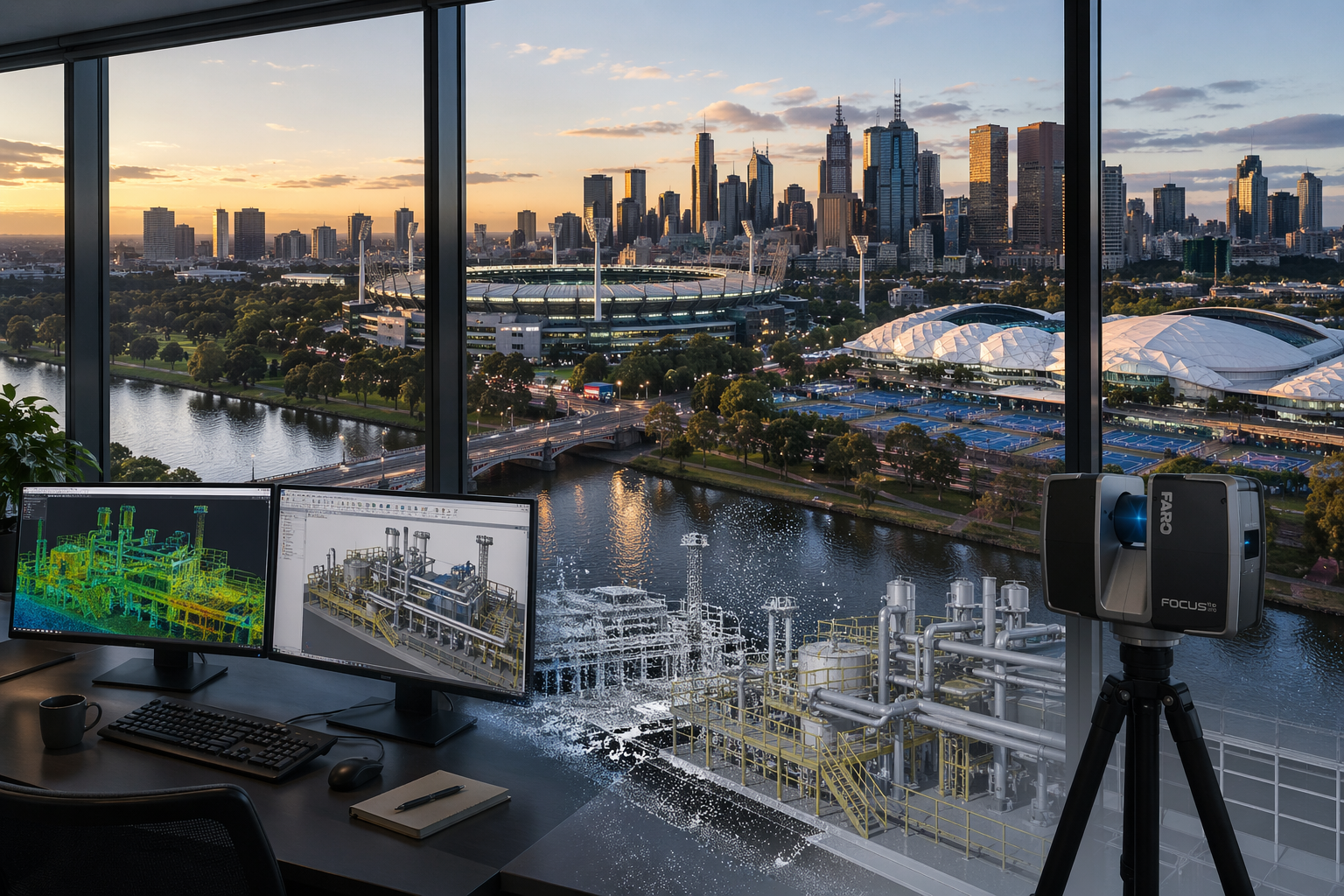
3D Scanning Services Melbourne | Engineering-Grade LiDAR for Construction & Manufacturing

Hamilton By Design provides engineering-grade 3D scanning services in Melbourne and Victoria, supporting local construction projects, manufacturing facilities, and industrial environments where accurate spatial data and engineering confidence are essential. Our services deliver reliable, measurable 3D data that feeds directly into design, coordination, fabrication, and compliance workflows, reducing risk and improving outcomes on complex projects.

Melbourne’s diverse built environment includes major infrastructure, commercial and residential development, advanced manufacturing hubs, and precision fabrication facilities. These industries demand precise as-built documentation, engineering-ready models, spatial verification, and detailed capture workflows that support multi-discipline coordination and installation planning.


Why Melbourne Projects Benefit from Engineering-Grade 3D Scanning

3D scanning in Melbourne is not just about capture — it’s about delivering usable, accurate data that supports real engineering outcomes.

Construction Coordination & Verification
Melbourne’s construction landscape involves high-density urban sites, retrofits, complex façade integration, and multi-trade coordination. High-accuracy 3D scan data supports clash detection, installation planning, and design validation.

Advanced Manufacturing & Fabrication
Manufacturing facilities — from precision machine shops to large-scale fabrication plants — rely on verified spatial information for layout verification, retrofit of plant and equipment, and precision assembly. Scan-to-CAD workflows ensure manufacturing outputs integrate correctly with existing infrastructure.

Brownfield & Retrofit Environments
Existing facilities and older infrastructure often lack reliable drawings. Engineering-grade scanning captures current conditions with measurable accuracy, allowing design and construction teams to work from a verified baseline.

Compliance & Documentation
As-built documentation is increasingly required for approvals, audits, regulatory compliance, and handover deliverables. Professional scanning workflows ensure outputs are traceable, measurable, and suitable for technical review.


Our 3D Scanning Services in Melbourne

We provide a comprehensive suite of engineering-focused 3D scanning services tailored to construction and manufacturing environments:

  • Engineering-Grade LiDAR & 3D Laser Scanning
    High-precision capture of buildings, structures, plant, and manufacturing assets.
  • Construction Verification & Clash Detection
    Spatial datasets aligned to design models to support coordination and sequencing.
  • Manufacturing Facility Scanning
    Accurate capture of machine centres, conveyors, jigs, fixtures, and factory layouts.
  • Brownfield & Retrofit Scanning
    Measurable site data for expansion, upgrade, and renovation projects.
  • Scan-to-CAD Modelling
    Transforming point clouds into usable 3D CAD models for engineering, fabrication, and drafting.
  • Verified Geometry for Compliance & Installation
    Deliverables suitable for engineering checks, compliance documentation, and construction execution.

Each scan is performed with the downstream use in mind — data engineered for reliable decision-making, not just visual reference.


Our clients:

Typical Melbourne Project Applications

Our Melbourne 3D scanning services are frequently applied to:

  • High-density urban construction coordination
  • Structural and façade verification
  • Manufacturing plant layout and retrofit capture
  • Shop floor as-built documentation
  • Mechanical and ductwork coordination
  • Building systems integration and clash avoidance
  • Technical compliance and regulatory documentation

These use cases reflect real engineering and construction needs where traditional measurement methods fall short.


Supporting Engineering Services for Melbourne Projects

3D scanning is often integrated with broader engineering and documentation deliverables. Hamilton By Design provides:

  • 3D CAD Modelling (Scan-to-CAD)
    Delivering engineering-ready models from site capture data.
  • As-Built Drawings for Compliance & Procedural Use
    Documentation suitable for approvals, audits, and asset handover.
  • Emergency Exit & Egress Drawing Development
    Safety planning and compliance documentation based on verified geometry.
  • Finite Element Analysis (FEA)
    Engineering evaluation of load, deflection, or modification impacts.
  • 3D Rendering & Visual Models
    Supporting stakeholder reviews, approvals, and presentations.
  • Precision Scanning for Fabrication & Installation Planning
    Reducing onsite uncertainty and supporting fit-first-time outcomes.

Hamilton By Design logo displayed on a blue tilted rectangle with a grey gradient background
3D LiDAR scanning and 3D modelling service button — laser scanner capturing a point cloud for engineering and CAD modelling
Mechanical engineering services

Engineering-Led 3D Scanning You Can Rely On

Hamilton By Design’s 3D scanning services in Melbourne are deeply grounded in engineering practice, not just visual capture. We understand how scan data is used — from initial design review through to fabrication and construction — and we deliver 3D point clouds and models that integrate smoothly into engineering workflows. This ensures accuracy, confidence, and better project outcomes across the full lifecycle of your project.


Contact Us About a Melbourne 3D Scanning Project

If you are planning a construction project, manufacturing facility upgrade, or complex retrofit in Melbourne or regional Victoria and need engineering-grade 3D scanning, contact Hamilton By Design to discuss your requirements and ensure your data capture supports your engineering and project delivery objectives.
Name
Would you like us to arrange a phone consultation for you?
Address
3D LiDAR scanning and 3D modelling service button — laser scanner capturing a point cloud for engineering and CAD modelling
Mechanical engineering services
Finite Element Analysis (FEA) engineering simulation button
Mechanical engineering services