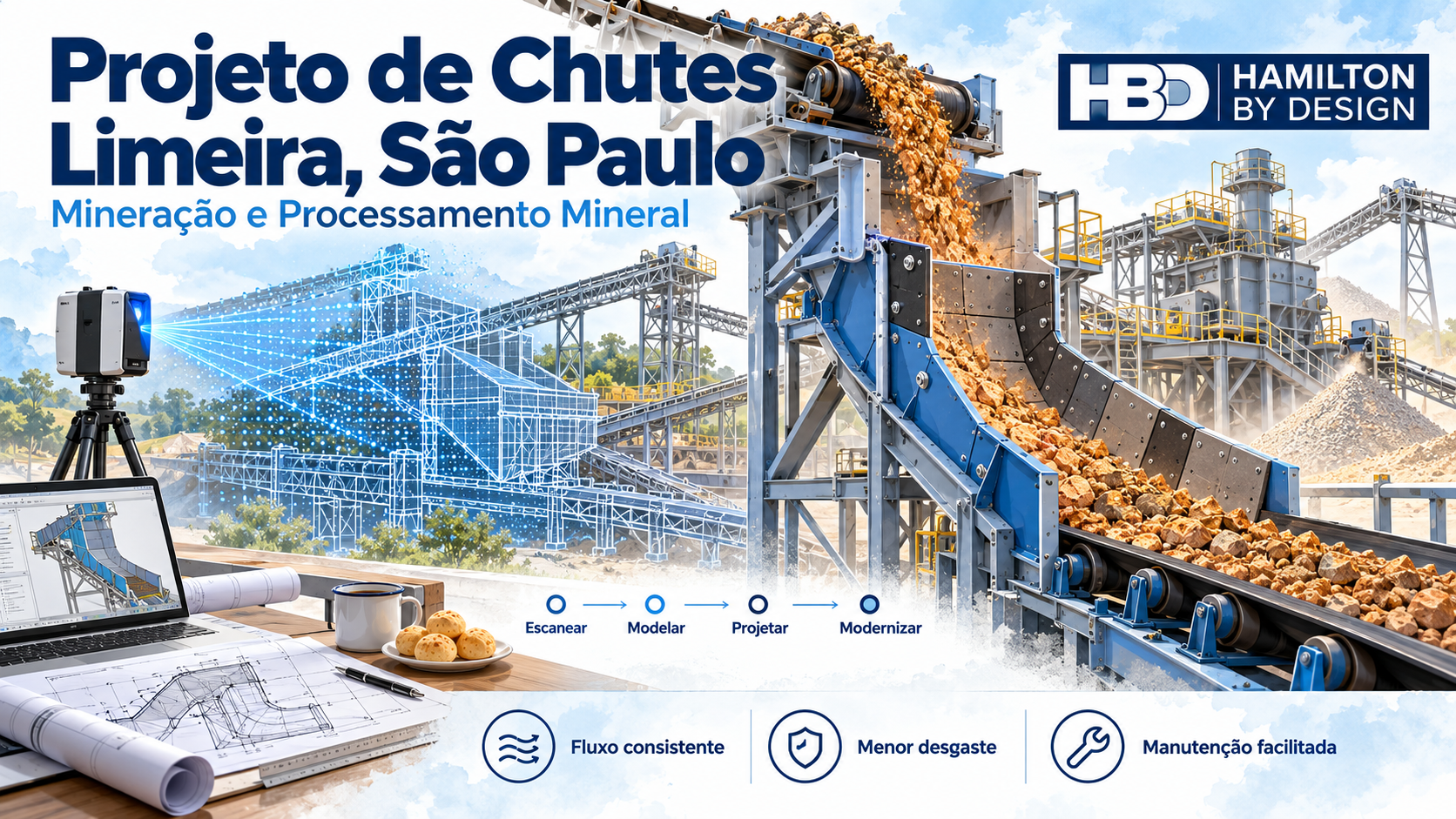
Consistent material flow, reduced wear and practical maintenance
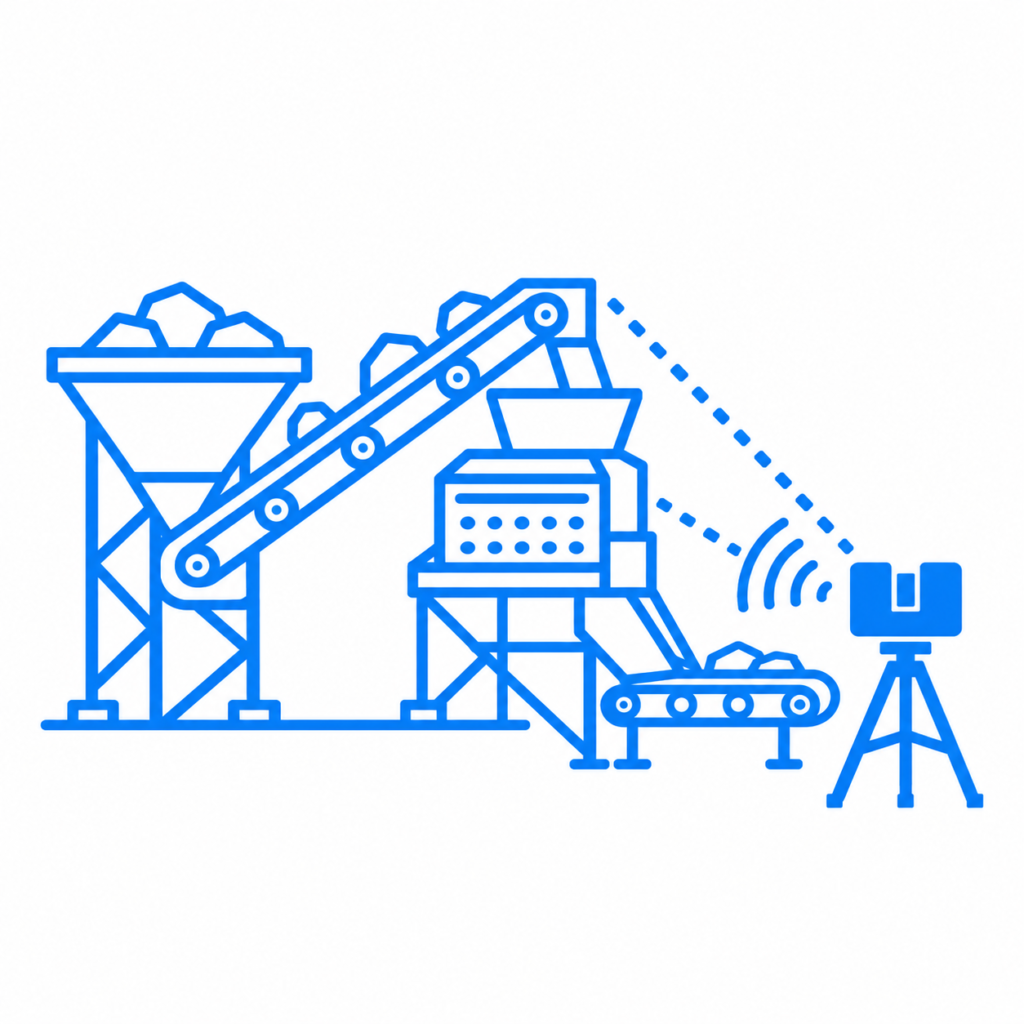
Transfer chutes connect critical stages of a mineral processing plant. From crusher discharge to screen feed and conveyor transfers, their design influences how reliably material moves through the operation.
Poorly matched chute geometry can contribute to blockages, spillage, uneven equipment loading and premature liner wear. These problems can increase maintenance demands and interrupt production.
Hamilton By Design offers mechanical design support for mineral processing equipment manufacturers, mining suppliers, fabrication workshops and plant operators in Limeira, São Paulo, and businesses serving mining projects throughout Brazil.
Drawing on Australian mining and materials handling experience, we develop chute designs that bring together material flow, wear protection, equipment interfaces and fabrication requirements.
Planning a new transfer chute or upgrading an existing installation? Discuss your project with Hamilton By Design.
Chute design for mineral processing applications
Each transfer point has a specific purpose within the processing circuit. A chute feeding a screen requires a different approach from one receiving coarse material discharged by a crusher.
Our design support can cover:
- Conveyor-to-conveyor transfer chutes.
- Crusher feed and discharge chutes.
- Screen feed, discharge and product collection chutes.
- Transfer arrangements for ore, crushed rock and mineral products.
- Chute modifications associated with plant upgrades.
- Replacement chute bodies and wear liner systems.
We consider how the chute receives material, controls its path and delivers it to the next item of equipment.
The objective is reliable transfer across the agreed operating range, with a design that fits the plant and supports practical maintenance.
Understand the material before developing the geometry
Mineral processing chutes must accommodate the characteristics of the material passing through them.
Coarse particles, abrasive rock, wet fines and variable feed conditions can create different flow and wear challenges. Understanding these conditions helps establish suitable chute geometry and wear protection.
Our design process considers:
- Material type, bulk density and particle size distribution.
- Maximum lump size and the proportion of fines.
- Moisture content and potential for adhesion or build-up.
- Normal, peak and variable throughput.
- Conveyor speed and material discharge trajectory.
- Transfer height and changes in flow direction.
- Receiving belt, crusher or screen requirements.
- Existing blockages, wear patterns and maintenance records.
Where necessary, material testing or additional operating data can be included in the scope to resolve uncertainties before detailed design.
Control the flow and reduce concentrated wear
Wear protection begins with understanding how material moves through the chute.
Impact at entry points, abrupt changes in direction and concentrated sliding contact can place heavy demands on chute surfaces. We review these areas alongside the liner arrangement.
Depending on the application, the design may incorporate:
- Geometry that guides the material through the transfer.
- Replaceable liners selected for the expected abrasion and impact.
- Localised protection at high-wear areas.
- Material-retaining features where suitable for the feed conditions.
- Modular liner sections for practical replacement.
Wear-resistant steel, rubber, polyurethane and ceramic systems each have different application requirements. Selection should reflect the material, impact conditions, attachment method and maintenance strategy.
Our aim is to reduce avoidable wear and improve serviceability. Expected liner life depends on the operating conditions and selected system.
Assess proposed designs with particle-flow simulation
For complex transfers or recurring flow problems, Discrete Element Method—DEM—analysis can be included in the project scope.
DEM can help assess material trajectories, accumulation, discharge behaviour and interaction with chute surfaces. It can also support comparison of alternative geometries before fabrication.
Representative material properties and appropriate calibration are essential to obtaining useful results. Simulation findings should be assessed alongside site observations, engineering judgement and operating data.
From existing plant to fabrication-ready documentation
Plant upgrades often require new equipment to fit within existing steelwork, conveyors and restricted installation spaces.
Hamilton By Design can work from drawings, photographs, verified measurements and suitable point cloud data to develop the chute and its interfaces.
Where 3D scanning is required, capture arrangements and responsibilities can be agreed as part of the scope.
Deliverables can include:
- Existing equipment and interface models.
- Concept designs and option reviews.
- Detailed 3D chute models.
- General arrangement drawings.
- Fabrication drawings and component details.
- Wear liner layouts and replacement details.
- Coordination with client engineers and fabrication teams.
The agreed documentation supports manufacture, installation and future maintenance.
Design for inspection and liner replacement
A chute should be accessible to the people responsible for keeping it operational.
We consider inspection openings, liner handling, fastener access, lifting provisions and installation clearances. Where applicable, the scope can also address guarding and isolation interfaces with surrounding equipment.
Maintenance requirements should be established early so that access and replacement tasks are considered alongside material flow.
For Brazilian projects, applicable local requirements and approval responsibilities are agreed with the client and their local engineering team.
Australian mining experience, working with Limeira’s industry
Hamilton By Design welcomes opportunities to collaborate with equipment manufacturers, engineering teams and fabrication businesses in Limeira.
We bring Australian mining and materials handling experience, supported by mechanical design, 3D modelling and scan-to-CAD capabilities. Local partners bring knowledge of their equipment, operating conditions and manufacturing requirements.
Our Portuguese is still a work in progress, so we place particular importance on clear drawings, agreed terminology and documented design reviews.
And we already appreciate a good Brazilian start to the morning: pão de queijo and café.
Frequently asked questions
Can you redesign a chute that repeatedly blocks?
Yes. We can assess the existing geometry, material characteristics and operating conditions to develop improvement options. Details of when blockages occur—including changes in moisture or throughput—help identify the likely causes.
Can you design chutes for abrasive ore and crushed rock?
Yes. The scope can address chute geometry, impact zones, liner selection and replacement arrangements. Material characteristics and operating data are needed to develop a suitable design.
Can you use an existing plant scan?
Yes. Suitable point cloud data can help establish equipment interfaces and available space. Critical dimensions and areas obscured during scanning may require additional verification.
Can you guarantee a specific liner life?
A liner-life commitment requires supporting evidence about the material, throughput and operating conditions. We can develop a wear strategy and document the design assumptions for comparison with operating performance.
Can you work remotely with a manufacturer in Limeira?
Yes. Remote design support can be arranged using agreed drawings, measurements, scan data and review meetings. Site verification, fabrication responsibilities and local approvals are defined within the project scope.
Discuss your mineral processing chute project
Send Hamilton By Design your existing drawings, photographs, material details, throughput requirements and a description of the transfer problem.
Whether you are developing new mineral processing equipment or upgrading a mining installation, we can help establish a practical design scope.
Contact Hamilton By Design to discuss chute design for mineral processing and mining projects in Limeira, São Paulo.

Contact Us – Talk To Us
Our clients: