Elevating Engineering Precision with 3D CAD, Laser Scanning & Simulation

Elevating Engineering Precision: 3D CAD Design, Laser Scanning, and Simulation for Custom Steel Fabrication


In modern engineering, accuracy, efficiency, and adaptability are not just desiredโ€”they are essential. At Hamilton By Design, we combine cutting-edge tools like 3D CAD design, 3D laser scanning, and SolidWorks FEA Simulation with practical expertise in custom steel fabrication to deliver intelligent, end-to-end solutions for complex engineering projects.

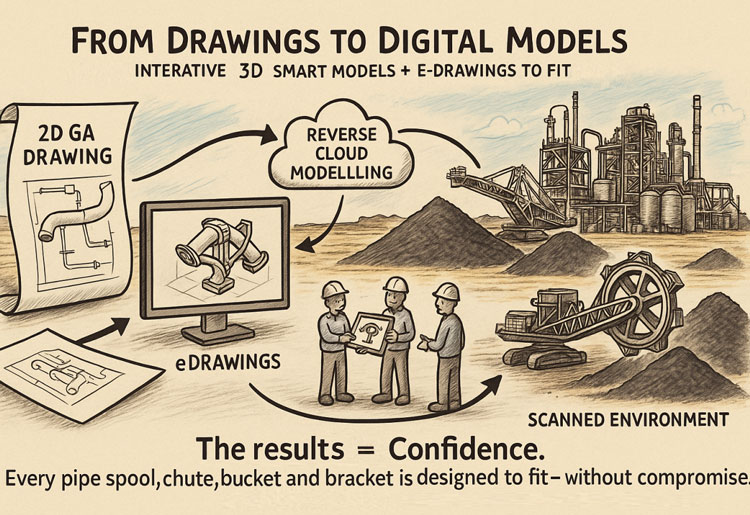
From detailed CAD Modelling to field-accurate Faro Scanning, our consultancy supports Australian industries with precise, timely, and cost-effective design solutions.

The Role of 3D CAD Design in Modern Engineering

3D CAD design (Computer-Aided Design) forms the foundation of most modern engineering workflows. It transforms initial concepts into detailed digital models, enabling design validation, collaboration, and modification long before anything is physically built.

Using tools like SolidWorks, our experienced 3D CAD designers create accurate representations of components, assemblies, and entire systems. This not only reduces costly errors during fabrication but also allows clients to visualise and interact with their product in a virtual environment.

With 3D CAD design at the core, we help clients navigate engineering challengesโ€”from product development to mechanical infrastructureโ€”faster and with greater confidence.


3D Modelling: Bridging Concept and Construction

Closely integrated with CAD design is 3D modelling, which allows designers to create digital prototypes of physical objects. At Hamilton By Design, 3D modelling is used not just for form but also for function. Our models include precise dimensions, material properties, tolerances, and interaction points.

Whether itโ€™s reverse engineering an existing plant structure or designing custom brackets for a conveyor system, our 3D modelling ensures high fidelity and interoperability across platforms.


The Power of 3D Laser Scanning for Engineering Accuracy

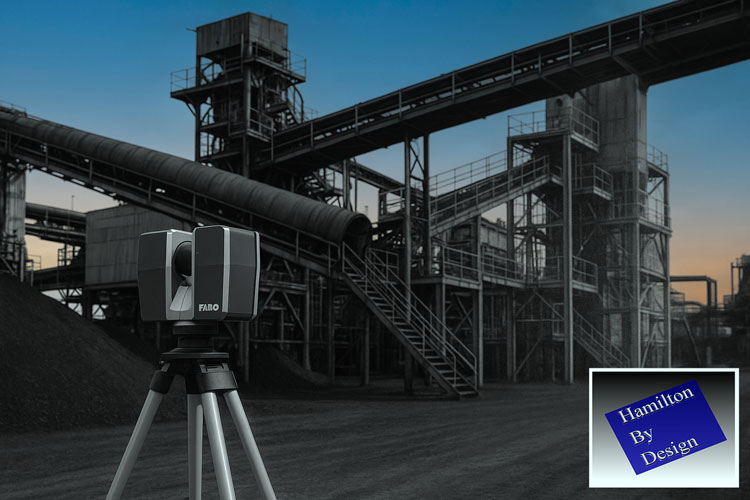
To capture as-built environments with unmatched accuracy, we use 3D laser scan for engineering projects of all sizes. Leveraging Faro scanning technology, we generate detailed point clouds that map real-world environments down to millimetre accuracy.

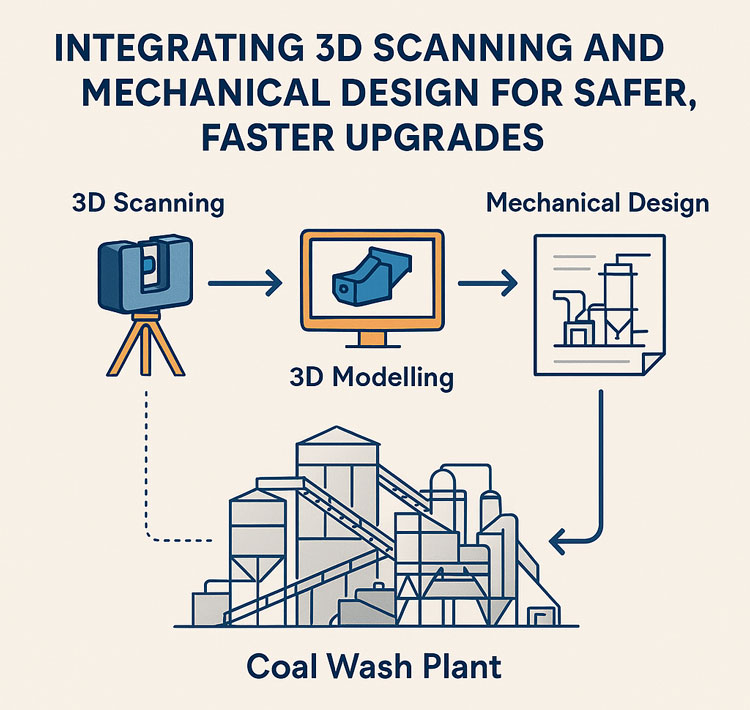
This Faro scan data is then converted into actionable geometry for further CAD modelling or simulation. Itโ€™s particularly valuable in retrofit, maintenance, or upgrade projects, where existing site data is often incomplete or outdated.

Whether youโ€™re updating mechanical systems in a processing plant or ensuring compliance in a structural audit, 3D laser scanning delivers the reliable data you need for precise engineering decisions.


From Scan to Simulation: Enhancing Designs with SolidWorks FEA

After creating a digital model, itโ€™s crucial to understand how it will perform under real-world conditions. Thatโ€™s where SolidWorks FEA simulation comes in.

SolidWorks Simulation allows our team to perform finite element analysis (FEA) on assemblies, evaluating factors such as stress, strain, fatigue, and thermal distribution. By integrating FEA into the design process, we validate designs before they are fabricatedโ€”saving both time and material costs.

This proactive approach is particularly useful in custom steel fabrication, where load-bearing components must meet stringent safety and performance criteria.


CAD Modelling in Custom Steel Fabrication

Custom steel fabrication is both an art and a science. It requires a deep understanding of materials, tolerances, and manufacturing techniques. At Hamilton By Design, we combine advanced CAD modelling with practical fabrication experience to create components that meet your exact requirements.

Whether you need custom brackets, enclosures, chutes, or full-scale structural assemblies, our models are production-ready and tailored to your fabrication process. We provide DXFs, laser-cutting files, and BOMs that integrate seamlessly with your shop floor operations.


Why Choose a 3D CAD Designer?

A skilled 3D CAD designer does more than just draw. They anticipate fitment issues, consider manufacturing constraints, and collaborate across disciplines to create practical, buildable designs.

At Hamilton By Design, our team brings over a decade of experience across heavy industry, defence, mining, and manufacturing. We understand the nuances of real-world engineering and tailor our CAD services to each project’s unique needs.


Integrating Faro Scanning with SolidWorks

One of our key differentiators is the seamless integration of Faro scan data into SolidWorks. This workflow allows us to:

  • Overlay scanned data onto CAD designs

  • Identify deviations between as-built and as-designed models

  • Rapidly develop retrofit solutions with accurate field measurements

  • Conduct clash detection and ensure proper clearances

This end-to-end capability reduces rework, shortens project timelines, and increases overall design quality.


Applications Across Industry

Our services benefit a broad range of industries, including:

  • Mining & Processing โ€“ Reverse engineering plant infrastructure, scanning for shutdown planning, custom chute design

  • Manufacturing โ€“ Tooling, jigs, and production line modifications

  • Defence โ€“ CAD design and simulation for retrofit and upgrade works

  • Construction โ€“ Structural steel design and site validation

Whether you’re fabricating a single part or overseeing a multi-million-dollar infrastructure upgrade, our tools and experience help you deliver with confidence.


The Difference

At Hamilton By Design, we donโ€™t just deliver drawingsโ€”we provide engineering certainty. By combining the precision of 3D CAD, the power of SolidWorks simulation, and the real-world accuracy of Faro scanning, we help clients design, assess, and fabricate with confidence.

If you’re looking for an Australian mechanical engineering consultancy that delivers intelligent design, detailed modelling, and practical support for custom steel fabrication projects, we’re ready to help.


Letโ€™s Work Together

Visit www.hamiltonbydesign.com.au to learn more or contact us to discuss how we can support your next engineering challenge.

3D LiDAR scanning and 3D modelling service button โ€” laser scanner capturing a point cloud for engineering and CAD modelling
Mechanical engineering services

Our Clients:

Name
Would you like us to arrange a phone consultation for you?
Address
Finite Element Analysis (FEA) engineering simulation button
Mechanical engineering services

Unlocking Engineering Potential with the 3DEXPERIENCE Platform

Unlocking Engineering Potential with the 3DEXPERIENCE Platform

ย 

ย 

ย 

At Hamilton By Design, we are committed to pushing the boundaries of innovation and efficiency in industrial design and engineering. One of the most powerful tools enabling this shift is the 3DEXPERIENCE platform by Dassault Systรจmes โ€” a cloud-based, integrated environment that transforms how engineering, design, and manufacturing teams collaborate and operate.

But what makes this platform such a game-changer, particularly in heavy industrial environments?

A Unified Digital Ecosystem

Traditional design and engineering workflows often involve disjointed software systems, siloed communication, and a lack of visibility across teams. The 3DEXPERIENCE platform solves these challenges by offering a centralised digital workspace. It unifies CAD, simulation, data management, and project collaboration under one roof.

At Hamilton By Design, this means we can collaborate with clients, suppliers, and internal teams in real time โ€” reducing delays, increasing transparency, and ensuring version control is never an issue.

Smarter Collaboration and Real-Time Decision-Making

For industrial clients, time is money. Delays caused by miscommunication or outdated files can cost thousands in downtime. With the 3DEXPERIENCE platform, all stakeholders โ€” from engineers and designers to procurement and management โ€” can access a single source of truth, anytime, anywhere.

Changes to 3D models, drawings, or requirements are reflected instantly across the platform. That kind of visibility ensures weโ€™re always aligned with the project vision, improving decision-making speed and accuracy.

Advanced 3D Modelling and Simulation

Designing for complex environments โ€” such as processing plants, mines, or heavy machinery installations โ€” requires robust tools. The 3DEXPERIENCE platform delivers powerful 3D modelling and simulation capabilities through applications like CATIA, SIMULIA, and ENOVIA.

Whether weโ€™re reverse engineering existing assets from LIDAR scans or developing new plant layouts, the platform helps us validate designs early through simulation and stress testing. This leads to fewer surprises during fabrication or installation, and stronger, safer designs.

Hamilton By Design Point Cloud

Integration with LIDAR Scanning and Point Cloud Data

At Hamilton By Design, we often start projects using high-resolution LIDAR scans, capturing real-world conditions with millimetre precision. The 3DEXPERIENCE platform allows seamless integration of point cloud data, enabling our team to design directly within real-world geometry โ€” reducing fitment issues and rework.

This integration ensures we donโ€™t just create models โ€” we create smart, context-aware models that interact meaningfully with the physical world.

Scalability and Security

As a cloud-based system, the 3DEXPERIENCE platform is scalable and secure. Whether weโ€™re working on a small component upgrade or a large-scale plant overhaul, we can expand our toolset, users, and data storage with ease โ€” all while maintaining enterprise-level data protection.

Conclusion

The 3DEXPERIENCE platform empowers Hamilton By Design to deliver faster, smarter, and more integrated engineering solutions. For clients in the heavy industrial space, it means fewer risks, better collaboration, and a clear digital path from concept to completion.

Want to know how the 3DEXPERIENCE platform can help your next project?
Get in touch today at sales@hmailtonbydesign.com.au

Engineering Consultants | Mechanical Drafting | Structural Drafting | 3-D Scanning | 3-D Modelling

www.hamiltonbydesign.com.au

3D LiDAR scanning and 3D modelling service button โ€” laser scanner capturing a point cloud for engineering and CAD modelling
Mechanical engineering services

Scan to CAD Sydney

3D LiDAR Laser Scanning & Drafting Services in Chatswood & Greater Sydney

Mechanical Engineers in Sydney โ€“ Hamilton By Design

SolidWorks โ€“ Sydney

Our Clients:

Name
Would you like us to arrange a phone consultation for you?
Address
Finite Element Analysis (FEA) engineering simulation button
Mechanical engineering services

The Importance of AS 3990 in Mechanical Equipment Steelwork

In the world of engineering, adhering to standards is more than just a formality; itโ€™s a fundamental aspect of ensuring safety, reliability, and efficiency. One such critical standard is AS 3990, “Mechanical Equipment โ€“ Steelwork.” This guideline plays a vital role in the design and construction of steel structures for mechanical systems, providing the framework for materials selection, construction practices, and stress analysis. Ignoring AS 3990 can lead to a host of issues, from structural failures to safety hazards, yet itโ€™s a challenge that some organizations still face. By contrast, companies like Hamilton By Design have built a reputation for excellence by consistently applying these standards in their projects, ensuring optimal outcomes for their clients.

The Risks of Ignoring AS 3990

One of the most alarming consequences of bypassing AS 3990 is the heightened risk of structural failure. Mechanical equipment steelwork is often subjected to extreme stresses and environmental conditions, and without proper design parameters, the results can be catastrophic. Whether itโ€™s the collapse of a support structure or the malfunction of a mechanical component, the costโ€”both human and financialโ€”is often irreparable.

In addition to physical failures, neglecting AS 3990 invites a host of compliance and legal issues. Regulatory bodies across industries mandate adherence to such standards to protect workers and ensure operational safety. Non-compliance can lead to fines, project delays, or even legal action, tarnishing the reputation of those involved.ย 

The impact doesnโ€™t stop there. Poorly designed steelwork can suffer from premature wear and fatigue, significantly reducing the lifespan of the equipment. This leads to frequent maintenance, unplanned downtime, and increased costsโ€”a scenario no company wants to face. Moreover, these recurring issues not only affect the bottom line but also compromise the safety of workers, posing risks of injury or fatality. Finally, the reputational damage from delivering substandard systems can be devastating, as it erodes client trust and tarnishes an organizationโ€™s standing in the industry.

Hamilton By Design: A Commitment to Excellence

Faced with these potential pitfalls, an engineering company like Hamilton By Design offers a reassuring solution. With extensive experience in mechanical design and steelwork, they prioritize adherence to AS 3990 in every project. This commitment translates into tangible benefits for their clients and sets them apart in the industry.

Hamilton By Design approaches every project with structural integrity at the forefront. By leveraging advanced modeling tools and stress analysis techniques, they ensure that every design adheres to the stringent guidelines of AS 3990. Their expertise spans diverse industries, enabling them to tailor solutions that are both robust and reliable.

Compliance is another area where Hamilton By Design excels. The team stays up-to-date with the latest iterations of AS 3990, incorporating these requirements seamlessly into their work. This not only streamlines the approval process but also gives clients the confidence that their projects meet all necessary regulatory standards.

Material selection and durability are cornerstones of the companyโ€™s design philosophy. By carefully analyzing the operational stresses and environmental factors that each structure will face, Hamilton By Design creates systems that are built to last. This focus on longevity reduces the need for maintenance and ensures uninterrupted performance, saving clients time and money.

Safety is non-negotiable for Hamilton By Design. Every project undergoes rigorous risk assessments to identify and mitigate potential hazards. By adhering to AS 3990โ€™s safety protocols, the company not only protects workers but also fosters a culture of trust and reliability.

The Advantages of AS 3990 Compliance

The advantages of working with engineers who consult AS 3990 are clear. First and foremost, it ensures structural reliability. Steelwork designed under this standard can handle expected loads and stresses with ease, delivering dependable performance across a range of applications. For Hamilton By Design, this translates into designs that consistently exceed client expectations.

Regulatory compliance is another significant benefit. Projects that adhere to AS 3990 face fewer hurdles during inspections, avoiding costly delays and potential penalties. Hamilton By Designโ€™s meticulous approach to compliance ensures smooth project execution, freeing clients to focus on their core objectives.

Optimized design is yet another hallmark of AS 3990. By balancing safety, functionality, and cost-efficiency, the standard empowers engineers to deliver solutions that are both practical and innovative. Hamilton By Design takes this a step further by using advanced tools and methodologies to craft designs that align perfectly with their clientsโ€™ operational goals.

Safety, of course, remains a top priority. AS 3990 includes comprehensive guidelines for risk minimization, creating a safer environment for workers and operators. Hamilton By Designโ€™s adherence to these principles underscores their commitment to safeguarding everyone involved in their projects.

Cost savings and increased equipment lifespan are additional advantages of compliance. Properly designed steelwork not only reduces maintenance needs but also enhances durability, maximizing the return on investment for clients. For Hamilton By Design, these outcomes are the natural result of their dedication to quality and precision.

Real-World Applications

Hamilton By Designโ€™s expertise in applying AS 3990 is evident in their extensive portfolio. For instance, in a mining project involving heavy conveyor systems, the company used AS 3990 to identify critical stress points and optimize the design for dynamic loads. The result was a durable support structure that minimized maintenance and exceeded client expectations.

Similarly, in an industrial manufacturing facility, Hamilton By Design tackled the challenge of custom steelwork for robotic assembly lines. By adhering to AS 3990, they ensured that the structures could withstand repetitive stresses and environmental factors, enhancing both safety and efficiency.

Their experience extends to renewable energy projects as well. In designing steel frameworks for wind turbine foundations, Hamilton By Design accounted for wind loads, fatigue stresses, and environmental conditions, delivering solutions that met stringent safety and performance requirements.

Conclusion

Ignoring AS 3990 is a risk no company should take. The challengesโ€”from structural failures and compliance issues to safety hazards and reputational damageโ€”are simply too great. By contrast, working with experienced engineers who prioritize this standard offers a host of benefits, from enhanced reliability and safety to cost savings and competitive advantage.

Hamilton By Design exemplifies the best practices in applying AS 3990, turning potential challenges into opportunities for innovation and excellence. Their commitment to quality, compliance, and client satisfaction ensures that every project not only meets but exceeds industry standards. For organizations seeking dependable, high-performing mechanical equipment steelwork, Hamilton By Design is the partner of choice.

For More information contact Hamilton By Design – Email info@hamiltonbydesign.com.au

3D LiDAR scanning and 3D modelling service button โ€” laser scanner capturing a point cloud for engineering and CAD modelling
Mechanical engineering services

Our Clients:

Name
Would you like us to arrange a phone consultation for you?
Address

3D CAD in Sydney

3D Construction Scan in Sydney

https://www.hamiltonbydesign.com.au/home/engineering-services/3d-laser-scanning/3d-scanning-sydney/3d-point-cloud-modelling-in-sydney/

3D LiDAR Laser Scanning & Drafting Services in Chatswood & Greater Sydney

Finite Element Analysis (FEA) engineering simulation button
Mechanical engineering services

Challenges of Not Consulting AS 3990 Mechanical Equipment Steelwork

Engineering comparison showing AS 3990-compliant steelwork versus unverified mechanical equipment steelwork, assessed using LiDAR scanning and digital engineering

The Australian Standard AS 3990, “Mechanical Equipment โ€“ Steelwork,” is critical for ensuring the design and construction of safe, reliable, and durable steel structures in mechanical systems. It establishes guidelines for materials, construction practices, and stress analysis to meet the demanding requirements of industrial and mechanical applications. Failing to consult AS 3990 can lead to significant challenges for companies and individuals involved in engineering projects. Additionally, an engineering company like Hamilton By Design, with extensive experience in mechanical design and steelwork, can address these challenges effectively by leveraging its expertise and adherence to industry standards.

Our clients:

1. Structural Failures

One of the most severe consequences of not consulting AS 3990 is the risk of structural failures. Steelwork used in mechanical equipment must withstand specific stresses, loads, and environmental conditions. If these factors are not carefully calculated according to the standard, the structure may fail under operational stress, leading to catastrophic consequences.

Hamilton By Designโ€™s Approach:
Hamilton By Design ensures structural integrity through rigorous design analysis, leveraging advanced modeling tools and AS 3990 guidelines to predict and mitigate potential failure points. Their experience in various industries allows them to create robust steelwork designs that perform reliably under operational conditions.

2. Compliance and Legal Issues

Regulatory compliance is a cornerstone of modern engineering practices. Many industries, including mining, manufacturing, and construction, mandate adherence to AS 3990 for safety and operational approvals. Ignoring the standard can result in penalties, project delays, or even legal liabilities due to non-compliance.

Hamilton By Designโ€™s Approach:
The company prioritizes compliance by integrating AS 3990 requirements into every stage of the project. Their team stays updated with the latest revisions of the standard and ensures all designs meet regulatory expectations, providing clients with peace of mind and streamlined approval processes.

3. Reduced Equipment Longevity

Steel structures that do not conform to AS 3990 may suffer from premature wear, fatigue, or failure. This can lead to frequent repairs, replacements, or unplanned downtime, significantly reducing the lifespan of mechanical equipment.

Hamilton By Designโ€™s Approach:
Hamilton By Design employs precise material selection and stress analysis techniques, as prescribed by AS 3990, to optimize the durability and performance of their designs. Their focus on quality engineering ensures long-lasting equipment that minimizes maintenance requirements.

4. Safety Hazards

Non-compliance with AS 3990 poses serious safety risks. Equipment that fails unexpectedly can cause injuries or fatalities, creating an unsafe work environment and potential legal repercussions.

Hamilton By Designโ€™s Approach:
Safety is a core value for Hamilton By Design. The company conducts thorough risk assessments and designs steelwork that adheres to AS 3990โ€™s stringent safety standards. Their commitment to safety reduces risks to operators and protects the overall workforce.

5. Increased Maintenance Costs

Improperly designed steelwork often requires frequent maintenance due to unforeseen stress points, material fatigue, or environmental damage. This not only increases operational costs but also disrupts productivity.

Hamilton By Designโ€™s Approach:
Hamilton By Designโ€™s adherence to AS 3990 minimizes maintenance needs by delivering designs that perform reliably over extended periods. Their proactive approach to material selection and stress management ensures reduced long-term operational costs for their clients.

6. Loss of Reputation

Companies delivering substandard designs risk damaging their reputation and losing client trust. Poor performance or failure of mechanical equipment reflects negatively on both the engineers and the organization.

Hamilton By Designโ€™s Approach:
Hamilton By Design has built a solid reputation by consistently delivering high-quality, compliant designs. Their focus on excellence and attention to detail ensures that their clients receive reliable solutions, strengthening relationships and fostering repeat business.

Engineers using LiDAR scanning and digital models to address challenges caused by not consulting AS 3990 mechanical equipment steelwork standards

Advantages of Working with Engineers Who Refer to AS 3990

1. Enhanced Structural Reliability

Engineers who follow AS 3990 guidelines ensure that steel structures are designed to handle expected loads and stresses safely. This enhances the overall reliability and performance of mechanical equipment.

Hamilton By Designโ€™s Advantage:
Hamilton By Designโ€™s expertise in applying AS 3990 results in robust designs that exceed client expectations. Their thorough understanding of structural dynamics ensures optimal performance and safety.

2. Regulatory Compliance

Adhering to AS 3990 simplifies the process of meeting industry regulations, reducing risks of audits, fines, or project delays.

Hamilton By Designโ€™s Advantage:
Hamilton By Designโ€™s commitment to compliance ensures that their projects pass inspections and meet all regulatory requirements, helping clients avoid costly delays and legal issues.

3. Optimized Design

Following AS 3990 enables engineers to create designs that balance safety, functionality, and cost-efficiency.

Hamilton By Designโ€™s Advantage:
The company uses advanced engineering tools and methodologies to develop optimized designs that align with clientsโ€™ operational goals while maintaining compliance with AS 3990.

4. Improved Safety

AS 3990 includes comprehensive guidelines for minimizing risks, ensuring a safer working environment.

Hamilton By Designโ€™s Advantage:
Hamilton By Designโ€™s safety-first approach incorporates AS 3990โ€™s recommendations to deliver solutions that prioritize the well-being of workers and operators.

5. Cost Savings

Properly designed steelwork reduces maintenance, repair, and replacement costs over the equipmentโ€™s lifecycle.

Hamilton By Designโ€™s Advantage:
By adhering to AS 3990, Hamilton By Design delivers cost-effective solutions that reduce long-term expenses, helping clients maximize their return on investment.

6. Increased Equipment Lifespan

AS 3990-compliant designs are engineered to withstand operational stresses, enhancing the durability of mechanical systems.

Hamilton By Designโ€™s Advantage:
Hamilton By Designโ€™s focus on durability and reliability ensures that their designs deliver long-term performance, minimizing disruptions and extending equipment lifespan.

7. Competitive Advantage

Delivering high-quality, compliant systems provides a competitive edge, improving marketability and client trust.

Hamilton By Designโ€™s Advantage:
Hamilton By Designโ€™s track record of excellence and adherence to AS 3990 positions them as a trusted partner for engineering projects, helping clients achieve their goals efficiently and effectively.

8. Risk Mitigation

Following AS 3990 minimizes the risk of unexpected failures, accidents, or operational delays.

Hamilton By Designโ€™s Advantage:
The companyโ€™s comprehensive approach to risk management ensures that their designs perform reliably under real-world conditions, reducing risks for their clients.

Hamilton By Design: Addressing Challenges with Expertise

Hamilton By Design is an engineering firm renowned for its dedication to excellence and adherence to industry standards. Their extensive experience in mechanical equipment and steelwork enables them to address the challenges of non-compliance with AS 3990 effectively. Here are some examples of how Hamilton By Design applies its expertise to deliver superior outcomes:

Case Study 1: Mining Equipment Steelwork

In a project involving heavy mining equipment, Hamilton By Design was tasked with designing a support structure for a conveyor system. By consulting AS 3990, they identified critical stress points and optimized the design to handle dynamic loads. The result was a durable and reliable structure that exceeded client expectations and minimized maintenance costs.

Case Study 2: Industrial Manufacturing Facility

Hamilton By Design worked on a manufacturing facility requiring custom steelwork for robotic assembly lines. By adhering to AS 3990, they ensured the steel structures could withstand repetitive stress and environmental factors, enhancing the safety and efficiency of the facility.

Case Study 3: Renewable Energy Project

In a renewable energy project, Hamilton By Design designed steel frameworks for wind turbine foundations. By following AS 3990, they accounted for wind loads, fatigue stresses, and environmental conditions, delivering a solution that met stringent safety and performance requirements.

Conclusion

Failing to consult AS 3990 can lead to significant challenges, including structural failures, compliance issues, reduced equipment lifespan, safety hazards, increased maintenance costs, and reputational damage. However, working with experienced engineers who prioritize adherence to AS 3990, such as those at Hamilton By Design, provides numerous advantages, including enhanced reliability, regulatory compliance, optimized design, improved safety, cost savings, increased equipment lifespan, and risk mitigation.

Hamilton By Designโ€™s proven track record demonstrates their ability to navigate these challenges effectively, leveraging their expertise and commitment to quality to deliver exceptional results for their clients. By choosing Hamilton By Design, companies can ensure that their mechanical equipment steelwork projects are completed to the highest standards of safety, reliability, and performance.

Hamilton By Design logo displayed on a blue tilted rectangle with a grey gradient background

For more information on the Hamilton By Design Consulting approach, feel free to email info@hamiltonbydesign.com.au

Name
Would you like us to arrange a phone consultation for you?
Address
3D LiDAR scanning and 3D modelling service button โ€” laser scanner capturing a point cloud for engineering and CAD modelling
Mechanical engineering services
Finite Element Analysis (FEA) engineering simulation button
Mechanical engineering services
Finite Element Analysis (FEA) engineering simulation button
Mechanical engineering services

Maximizing Equipment Efficiency with ISO 18436.2 Maintenance Strategies

At Hamilton By Design, we know that keeping your equipment running efficiently isnโ€™t just about quick fixes; itโ€™s about adopting the right maintenance strategies to ensure long-term reliability and performance. With advancements in condition monitoring and diagnostic techniques, the ISO 18436.2 standard has become a cornerstone for effective maintenance practicesโ€”and itโ€™s at the heart of how we help our clients optimize their operations.

In this blog post, weโ€™ll explore the major maintenance strategies aligned with ISO 18436.2 and how they can transform your plantโ€™s productivity.


What is ISO 18436.2?

ISO 18436.2 is an internationally recognized standard that defines the competencies required for personnel performing condition monitoring and diagnostics. It focuses on advanced tools like vibration analysis, helping engineers identify equipment issues before they lead to costly downtime.

At Hamilton By Design, our team is ISO 18436.2-certified, meaning we bring the highest level of expertise to your maintenance needs.


Maintenance Strategies That Deliver Results

ISO 18436.2 aligns with several key maintenance strategies designed to improve reliability, minimize downtime, and optimize equipment performance. Hereโ€™s how they work:

1. Reactive Maintenance

Reactive maintenance is the traditional โ€œrun-to-failureโ€ approach where repairs are made after a breakdown. While not ideal for critical assets, tools like vibration analysis can still play a role by identifying root causes post-failure. This can help inform more proactive strategies in the future.

2. Preventive Maintenance (PM)

Preventive maintenance involves scheduling regular maintenance tasks to prevent failures. While effective to some extent, PM can lead to over-maintenance. By incorporating vibration analysis and other condition monitoring techniques, preventive measures can be more precisely targeted, reducing unnecessary downtime.

3. Condition-Based Maintenance (CBM)

Condition-Based Maintenance uses real-time equipment data to identify issues as they arise. This strategy is central to ISO 18436.2 and includes tools like vibration analysis, thermography, and ultrasonic testing. CBM ensures that maintenance is performed only when necessary, saving time and money.

Benefits:

  • Reduces unplanned downtime.
  • Optimizes maintenance schedules.
  • Extends equipment lifespan.

4. Predictive Maintenance (PdM)

Predictive Maintenance takes CBM a step further, using data trends and analytics to predict when failures are likely to occur. With the expertise of ISO 18436.2-certified personnel, PdM uses advanced tools to detect subtle signs of wear or stress, allowing for intervention before a problem becomes critical.

Key Tools:

  • Vibration analysis for early detection of imbalance or misalignment.
  • Infrared thermography to spot heat anomalies.
  • Ultrasonic testing to identify leaks and material defects.

5. Reliability-Centered Maintenance (RCM)

RCM focuses on understanding the specific failure modes of critical assets and tailoring maintenance strategies accordingly. This approach integrates condition monitoring insights to prioritize tasks that align with operational goals.

Benefits:

  • Aligns maintenance efforts with production priorities.
  • Reduces the risk of unexpected equipment failures.

6. Proactive Maintenance

Proactive maintenance identifies and addresses root causes of recurring issues. By analyzing data from vibration and other diagnostic tools, engineers can resolve underlying problems like misalignment, improper lubrication, or material fatigue.

Impact:

  • Prevents repetitive failures.
  • Improves long-term equipment reliability.

7. Total Productive Maintenance (TPM)

TPM involves a plant-wide effort, from operators to management, to ensure optimal equipment effectiveness. ISO 18436.2-certified personnel can support TPM by providing actionable condition monitoring insights and training operators in basic diagnostic techniques.


How Hamilton By Design Helps

At Hamilton By Design, we bring these strategies to life through tailored maintenance solutions that align with your plantโ€™s needs. Hereโ€™s how we can help:

1. Advanced Condition Monitoring:
Our team uses state-of-the-art tools to monitor equipment health, including vibration analysis, thermography, and ultrasonic testing.

2. Tailored Maintenance Plans:
Every plant is unique. We develop maintenance strategies based on your specific equipment, production goals, and operational priorities.

3. Expert Training and Certification:
We empower your team by offering ISO 18436.2 training, giving them the skills to sustain and enhance maintenance programs.

4. Ongoing Support:
Maintenance is a journey, not a destination. We provide continuous support to refine and optimize your practices as your operations evolve.


The Hamilton By Design Advantage

Adopting advanced maintenance strategies aligned with ISO 18436.2 isnโ€™t just about improving equipment reliabilityโ€”itโ€™s about unlocking greater productivity and profitability for your business.

With our expertise, you can transition from reactive to predictive maintenance, reduce unplanned downtime, and extend the lifespan of your critical assets.

Ready to take your plantโ€™s maintenance strategy to the next level? Contact Hamilton By Design today to find out how we can help.

3D LiDAR scanning and 3D modelling service button โ€” laser scanner capturing a point cloud for engineering and CAD modelling
Mechanical engineering services

Visit us at: www.hamiltonbydesign.com.au
Email us: sales@hamiltonbydesign.com.au
Call us: +61 0477 002 249


Hamilton By Design | Transforming Maintenance | Elevating Performance | Mechanical Engineering

Name
Would you like us to arrange a phone consultation for you?
Address

Enhancing Plant Efficiency with Best Maintenance Practices: A White Paper by Hamilton By Design

Hand-drawn infographic titled โ€œPlant Efficiency & Uptime,โ€ showing the key elements that enhance plant performance. Surrounding the central circle are categories including maintenance strategies (PM, PDM, CBM, RCM), people and skills (engineers, technicians, planners, operators), processes and planning (inspections, failure mode analysis, root-cause investigations), and technology and tools (vibration sensors, LiDAR/3D scanning, IoT, training). Benefits highlighted include reduced downtime, lower maintenance costs, extended equipment life, and higher safety and compliance.

ย 

In todayโ€™s competitive industrial landscape, maintaining high levels of Overall Equipment Effectiveness (OEE) is a cornerstone of operational success. Achieving this requires adopting advanced maintenance practices that minimize downtime, reduce operational costs, and extend the lifecycle of critical assets.

This white paper outlines best maintenance practices aligned with the ISO 18436.2 standard and highlights how Hamilton By Design’s team of mechanical engineers can partner with your organization to enhance your plantโ€™s OEE. By leveraging our expertise in condition-based and predictive maintenance, we can optimize equipment performance and drive measurable improvements in productivity and reliability.

The Role of Maintenance in Maximizing OEE

OEE is a comprehensive measure of manufacturing productivity, defined by three critical components:

  1. Availability: Minimizing downtime to maximize operational hours.
  2. Performance: Ensuring equipment runs at optimal speeds.
  3. Quality: Reducing defects and waste during production.

Maintenance strategies are key to influencing these factors. Moving beyond reactive approaches to predictive and condition-based maintenance can significantly enhance equipment reliability and efficiency, ensuring better alignment with OEE goals.


Adopting Best Maintenance Practices

Condition-Based Maintenance (CBM)

CBM involves monitoring the real-time condition of equipment to predict and prevent failures. At Hamilton By Design, we integrate cutting-edge technologies like vibration analysis, thermography, and ultrasonic testing to enable proactive interventions before problems escalate.

How CBM Enhances OEE:
  • Reduces unplanned downtime (Availability).
  • Maintains consistent performance by addressing issues early (Performance).
  • Prevents production disruptions that cause defects (Quality).

Predictive Maintenance (PdM)

Predictive maintenance leverages data analytics to anticipate potential failures. By applying ISO 18436.2-certified practices, we implement advanced diagnostic tools and algorithms to forecast maintenance needs with precision.

Our Approach:
  • Deploy vibration analysis tools managed by certified Level II and III analysts.
  • Use infrared thermography to detect heat anomalies in electrical and mechanical systems.
  • Employ ultrasonic testing to identify leaks and structural weaknesses.
Benefits for OEE:
  • Prolonged equipment lifespan by addressing issues at their inception.
  • Higher productivity with fewer interruptions.
  • Reduced maintenance costs through targeted interventions.

Reliability-Centered Maintenance (RCM)

RCM focuses on optimizing maintenance strategies for each asset, emphasizing a deep understanding of failure modes and effects. Our engineers employ RCM to prioritize maintenance tasks that align with your plant’s specific OEE goals.

Steps We Implement:
  1. Asset Function Analysis: Understanding the purpose and criticality of each asset.
  2. Failure Mode and Effects Analysis (FMEA): Identifying risks and developing mitigation strategies.
  3. Data-Driven Decision Making: Using condition monitoring data to guide maintenance schedules.
Impact on OEE:
  • Ensures maintenance is aligned with production priorities.
  • Reduces waste and rework caused by unexpected equipment malfunctions.

Leveraging ISO 18436.2 Standards

ISO 18436.2 defines the competencies required for condition monitoring personnel, ensuring a standardized approach to predictive maintenance. Hamilton By Designโ€™s mechanical engineers are certified under this standard, offering expertise in:

  • Vibration analysis for detecting unbalance, misalignment, and bearing faults.
  • Developing and managing comprehensive condition monitoring programs.
  • Interpreting and analyzing complex diagnostic data for actionable insights.

How Hamilton By Design Can Assist

Customized Maintenance Solutions

We recognize that every plant has unique operational challenges. Hamilton By Design tailors maintenance strategies to your specific needs, focusing on:

  • Asset Criticality Assessment: Identifying and prioritizing key equipment for monitoring and intervention.
  • Technology Integration: Implementing IoT-enabled sensors, data platforms, and diagnostic tools.
  • Program Development: Designing maintenance schedules aligned with production cycles and OEE targets.

Expert Training and Certification

Our team provides in-depth training for your personnel, ensuring they gain ISO 18436.2 certification and the skills to sustain advanced maintenance programs.

Ongoing Support and Continuous Improvement

Maintenance isnโ€™t static. Hamilton By Design offers ongoing support to refine your maintenance practices, ensuring your plant stays ahead of evolving operational demands.


Case Study: Improving OEE with Hamilton By Design

Challenge: A manufacturing plant experienced frequent equipment failures, leading to a 15% drop in OEE.

Solution: Hamilton By Design implemented a tailored predictive maintenance program:

  • Installed vibration sensors on critical rotating machinery.
  • Trained plant engineers to monitor and analyze data using ISO 18436.2 standards.
  • Provided ongoing diagnostics and recommendations.

Outcome:

  • Downtime was reduced by 40%, significantly improving availability.
  • Equipment performance stabilized, enhancing productivity.
  • Defects decreased by 25%, improving product quality.

Maximizing OEE requires a strategic approach to maintenance that integrates advanced tools, skilled personnel, and data-driven insights. Hamilton By Design’s mechanical engineers, certified under ISO 18436.2, are uniquely equipped to help your plant achieve these goals.

By partnering with us, you can transform your maintenance practices, boost operational efficiency, and secure a competitive edge in your industry. Let Hamilton By Design help you take the first step toward a more reliable and productive future.

WorkTrek โ€“ 8 Ways to Improve Your Plant Maintenance
Practical tips for improving maintenance processes, reducing downtime, and boosting productivity.
https://worktrek.com/blog/how-to-improve-plant-maintenance/

Petrochem Expert โ€“ Best Practices for Plant Maintenance
Explores how proper maintenance planning ensures efficiency, reliability, and safety in plant operations.
https://petrochemexpert.com/best-practices-for-plant-maintenance-ensuring-operational-efficiency-and-safety/

MaintBoard โ€“ Maintenance Planning Strategies
Highlights how scheduling, IoT tools, and predictive approaches improve plant reliability and uptime.
https://maintboard.com/maintenance-planning-strategies

Hamilton By Design โ€“ Mechanical Engineering for Mining & Industry
Showcases engineering solutions designed to reduce downtime, improve reliability, and optimize plant performance.
https://www.hamiltonbydesign.com.au/mechanical-engineering-mining-industry-australia/

Hamilton By Design โ€“ Drafting & LiDAR / Scanning Services
Describes how accurate scanning and drafting streamline retrofits, reducing errors and saving time during plant upgrades.
https://www.hamiltonbydesign.com.au/services-drafting-lidar-scanning/

Hamilton By Design โ€“ Blog: Maximising Uptime at Transfer Points
Focuses on optimising chutes, hoppers, and conveyors to minimise stoppages and keep production flowing.
https://www.hamiltonbydesign.com.au/blog-engineering-insights/

3D LiDAR scanning and 3D modelling service button โ€” laser scanner capturing a point cloud for engineering and CAD modelling
Mechanical engineering services

Mechanical Designers

Mechanical Engineers Design

3D Mechanical Engineering

Mechanical Engineering Consultants

3D Laser Scanning