The Hidden Problem in Most Workshops

Illustration showing CAD models automatically generating manufacturing orders in a digital factory workflow.

Many manufacturers invest heavily in CAD modelling, yet the moment a drawing is finished someone still has to manually re-enter the same information into purchasing, inventory, or scheduling systems.

That means:

  • Part numbers typed again
  • Quantities re-counted
  • Materials guessed or re-checked
  • Work orders manually created

Every manual step introduces delay and risk.
The drawing may be correct โ€” but the data isnโ€™t trusted.

At Hamilton By Design, we specialise in converting engineering design information into operational manufacturing data so your workshop runs from a single source of truth.


Engineering workflow transforming design drawings into live MRP production data.

What We Mean by โ€œRaw CAD Dataโ€

Raw CAD data typically contains far more intelligence than most businesses actually use:

  • Assembly structures
  • Component relationships
  • Material specifications
  • Mass & geometry
  • Fasteners & hardware
  • Configuration variations

Yet in many businesses, this intelligence is flattened into a PDF before production ever sees it.

The result?
Your ERP/MRP system becomes an administrative burden rather than an automation tool.


Turning CAD into Live MRP

We implement a workflow where the model drives the factory โ€” not paperwork.

Step 1 โ€” Data Structuring

We prepare your CAD models so every component carries meaningful manufacturing information:

  • Standardised naming conventions
  • Manufacturing classifications
  • Purchasing categories
  • Stock vs made items

Step 2 โ€” Bill of Materials Extraction

Instead of manually writing BOMs, they are generated directly from the model.

No re-typing.
No missed fasteners.
No version confusion.

Step 3 โ€” Live MRP Integration

The structured data feeds directly into your MRP system to automatically create:

  • Work orders
  • Material requirements

  • Purchase orders
  • Scheduling demand
  • Inventory reservations

Now your planning team works with live engineering data โ€” not interpreted drawings.


What This Changes Inside Your Business

Once CAD and MRP talk to each other, the workflow shifts dramatically.

Traditional WorkflowIntegrated Workflow
Draw โ†’ Print โ†’ Interpret โ†’ Re-enterModel โ†’ Validate โ†’ Manufacture
Planner guesses requirementsSystem calculates requirements
Revisions cause chaosRevisions update automatically
Production waits on adminProduction follows live data

The Real Value โ€” Engineering Becomes Operational

Your CAD system stops being a documentation tool and becomes the control system of the workshop.

This delivers measurable outcomes:

  • Reduced purchasing mistakes
  • Faster quoting
  • Accurate scheduling
  • Live material forecasting
  • Reliable cost tracking
  • Scalable production

Most importantly โ€” your team stops double handling information.


How Hamilton By Design Helps

We donโ€™t sell software โ€” we implement workflows.

Our team works between engineering and operations to:

  • Audit your current drawing workflow
  • Structure your CAD standards
  • Build automated BOM generation
  • Integrate with your MRP platform
  • Train staff in daily use
  • Support ongoing improvements

The goal is simple:
Design once. Manufacture confidently.


Hamilton By Design logo displayed on a blue tilted rectangle with a grey gradient background

3D LiDAR scanning and 3D modelling service button โ€” laser scanner capturing a point cloud for engineering and CAD modelling
Mechanical engineering services

Ready to Turn Drawings into Production?

If your workshop is still manually converting drawings into orders, the problem isnโ€™t your people โ€” itโ€™s the data flow.

Hamilton By Design helps manufacturers move from documents to systems.

Contact us to discuss turning your raw CAD data into live MRP data.

Name
Would you like us to arrange a phone consultation for you?
Address

3D LiDAR scanning and 3D modelling service button โ€” laser scanner capturing a point cloud for engineering and CAD modelling
Mechanical engineering services
Finite Element Analysis (FEA) engineering simulation button
Mechanical engineering services

Why Projects Fail Before Construction Starts

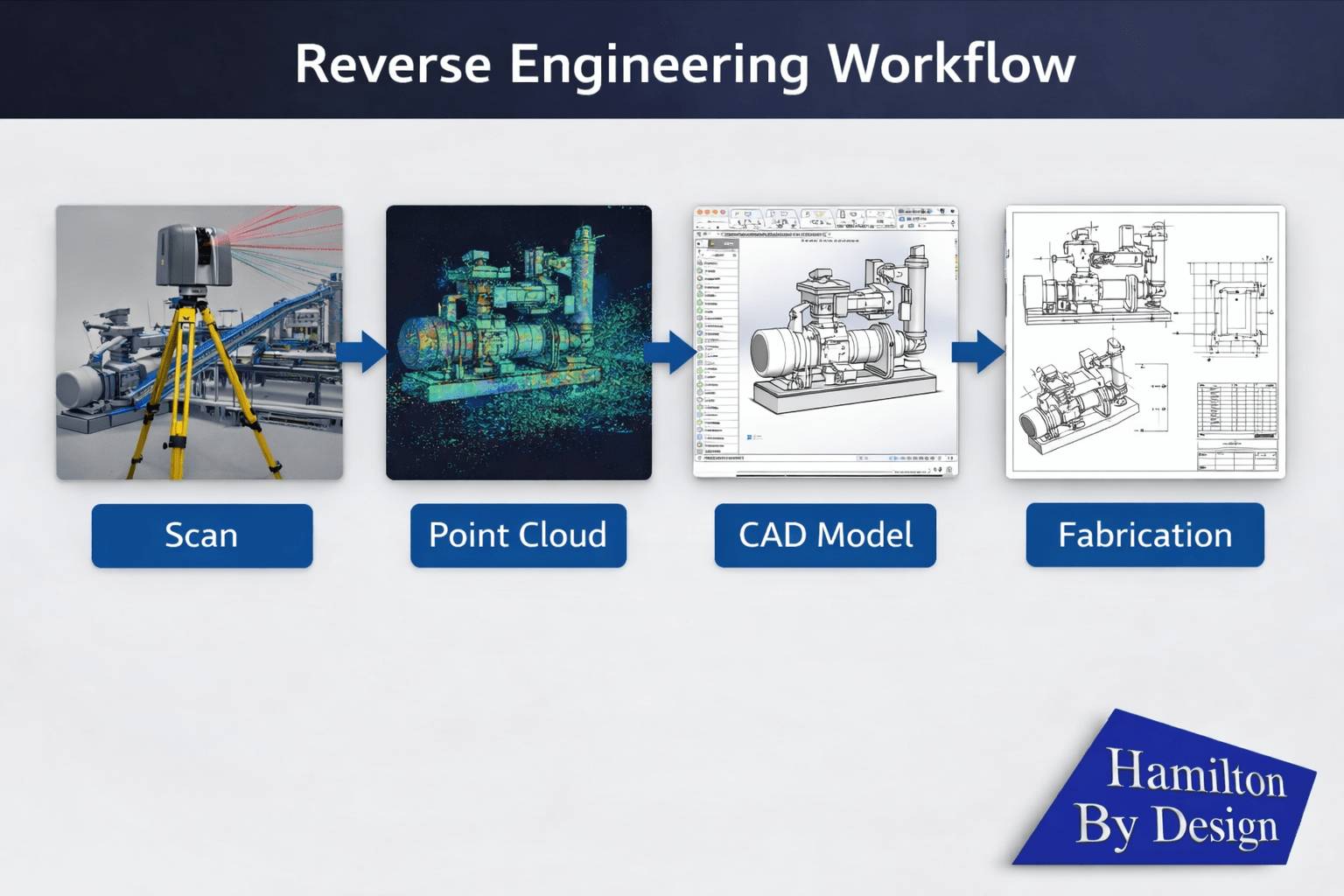
3D scanning reality capture workflow converting legacy drawings into a verified site model for construction planning.

The missing step between site reality and project planning

Most project delays donโ€™t begin during construction.

They begin months earlier โ€” at the planning stage.

Not because engineers lack skill.
Not because contractors lack experience.

But because decisions are made using incomplete or assumed information.


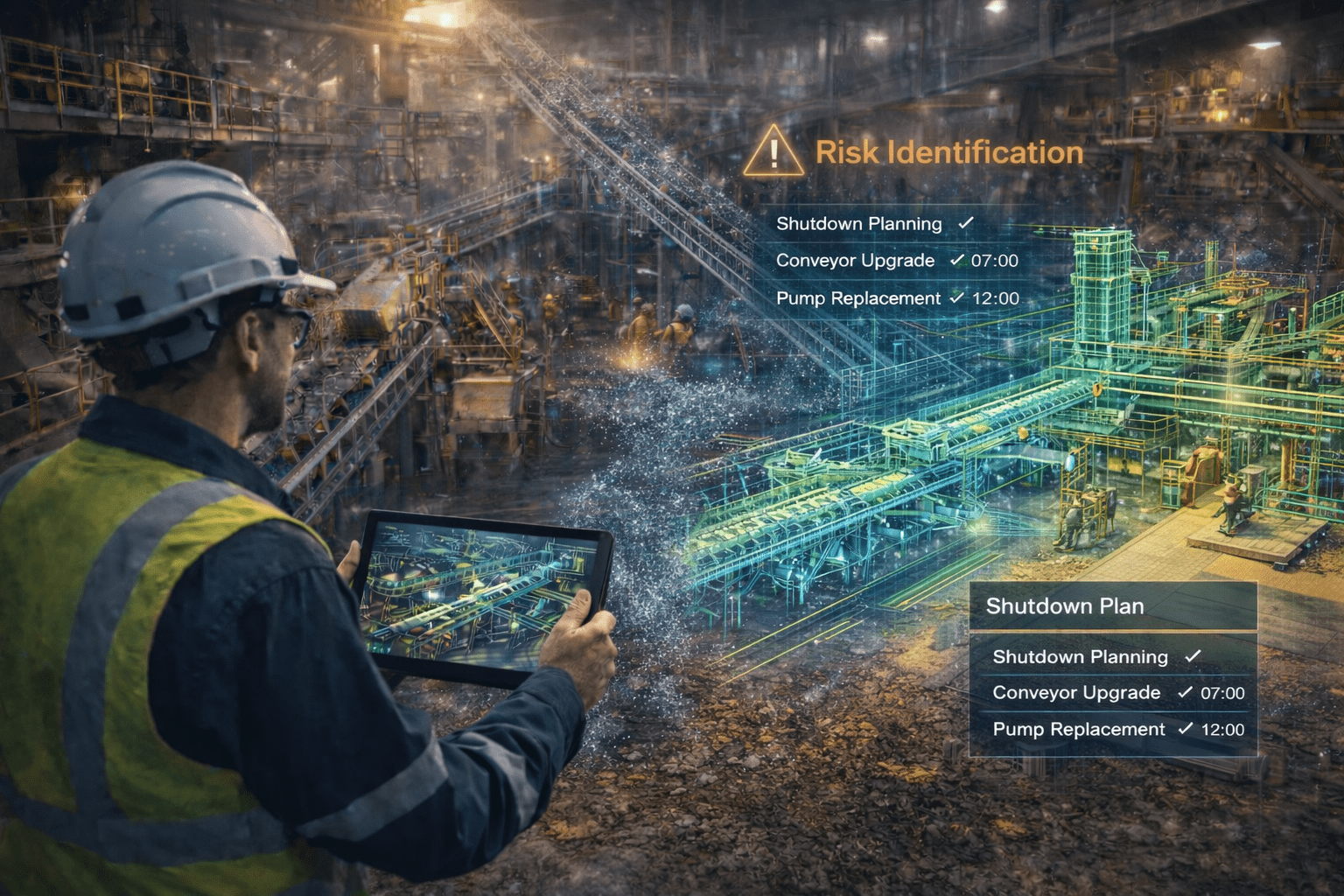
Construction planning comparison between assumed data and verified point-cloud model using laser scanning.

The hidden gap in almost every project

In industrial and brownfield environments, teams typically work from:

  • legacy drawings
  • outdated models
  • partial surveys
  • contractor interpretation
  • verbal site knowledge

Each group fills in the missing details differently.

The result is predictable:

  • clashes discovered during installation
  • materials ordered incorrectly
  • redesign during construction
  • variations and disputes
  • safety risks

The project didnโ€™t fail during construction.
It failed when planning began without verified reality.


Planning systems only work if the starting data is correct

Modern project environments rely heavily on structured planning:

  • scheduling
  • procurement
  • prefabrication
  • shutdown coordination
  • multi-contractor installation

But structured planning requires structured information.

If the starting information is uncertain, the entire workflow becomes an organised way of distributing errors.


The role of a reality-based dataset

Before a project can be planned properly, one thing must exist:

A trusted digital representation of the physical asset

This is not a drawing.
This is not a sketch.
This is not a collection of markups.

It is a measurable, verifiable record of what physically exists.

Once this exists:

  • engineers design accurately
  • planners sequence correctly
  • contractors install confidently
  • procurement orders correctly
  • changes are controlled

What our consultancy provides

Hamilton By Design acts as the bridge between site conditions and project planning.

We provide a structured workflow:

  1. Capture the physical environment using high-accuracy laser scanning
  2. Create a controlled digital model of the asset
  3. Make the data accessible to all project stakeholders
  4. Lock the dataset during design and upgrade phases
  5. Update the dataset following modifications

This creates a single project reference โ€” removing interpretation between disciplines.


The outcome for projects

Instead of discovering problems during installation, they are resolved during planning.

Instead of managing variations, teams manage decisions.

Instead of reacting to site conditions, teams design around verified reality.


The value of independent verification

Our role is not to design the system or build the works.

Our role is to ensure every party begins with the same trusted information.

When reality is agreed, coordination becomes straightforward.


Before planning, establish certainty

Projects do not fail because teams are incapable.
They fail because teams start from different assumptions.

Providing a verified digital record of the site removes those assumptions.

And once assumptions disappear โ€” so do most surprises.


Hamilton By Design
Creating trusted project reality before planning begins.

Name
Would you like us to arrange a phone consultation for you?
Address


3D LiDAR scanning and 3D modelling service button โ€” laser scanner capturing a point cloud for engineering and CAD modelling
Mechanical engineering services
Finite Element Analysis (FEA) engineering simulation button
Mechanical engineering services

Builder Next Door Starting Piling?

Construction piling next door causing ground vibration towards a residential house with monitoring equipment installed.

Read This Before Cracks Appear

Construction in Australia is getting closer to existing homes than ever before. Subdivisions, duplex developments, basement garages and boundary wall construction now routinely occur only metres from established houses.

One of the most misunderstood risks during nearby construction is ground vibration โ€” particularly from piling, sheet piling, rock breaking and compaction equipment.

Most homeowners only notice the issue once cracks appear.

By that point, proving the cause becomes significantly harder.


House at risk of cracks from nearby piling works with independent vibration monitoring device measuring movement.

What Is Actually Happening During Piling?

When a neighbouring builder installs piles, the ground does not simply โ€œshakeโ€ โ€” it transmits energy waves through the soil.
These waves travel through the foundation system of your home and can interact with the structure in very specific ways.

Depending on soil type and building construction, vibration can:

  • Amplify inside brick veneer cavities
  • Transfer through footings into slab edges
  • Excite steel lintels above windows
  • Cause differential movement between materials
  • Open previously dormant shrinkage cracks
  • Break brittle materials like grout and plasterboard joints

Many owners describe it as feeling like a truck hitting the house repeatedly โ€” and structurally, that is not far from reality.


The Critical Problem โ€” Evidence

Here is the reality:

If you do not measure vibration before damage occurs, proving responsibility later becomes extremely difficult.

Once construction finishes:

  • The vibration source is gone
  • Monitoring cannot be retroactively installed
  • Engineers must rely on assumptions
  • Insurance claims are often rejected
  • Builders argue pre-existing damage

This is why most vibration disputes fail โ€” not because damage didnโ€™t happen, but because it wasnโ€™t recorded at the time.


Why Cracks Appear Days or Weeks Later

Damage does not always occur instantly.

Vibration commonly causes:

  • Micro-movement in mortar joints
  • Loosening of interfaces between materials
  • Progressive settlement in reactive soils

Then later:

  • A hot day
  • Rain event
  • Door closing
  • Minor thermal expansion

โ€ฆand the crack becomes visible.

The construction activity triggered the mechanism โ€” but the visible damage appears later.

Without monitoring, causation becomes nearly impossible to demonstrate.


Australian Standards โ€” The Legal Threshold

Australian and international building damage criteria are based on Peak Particle Velocity (PPV), not how strong vibration feels.

Typical residential guidance limits:

FrequencyCosmetic Damage Threshold
< 10 Hz~5 mm/s
10โ€“50 Hz5โ€“15 mm/s
> 50 Hzup to 20 mm/s

Important:

Human perception is NOT a reliable indicator of structural damage risk.

Some damaging vibrations feel mild.
Some strong sensations cause no damage.

Only instrumentation determines the difference.


What You Should Do โ€” Before Work Starts

If you have received a notice of:

  • Piling
  • Rock breaking
  • Basement excavation
  • Sheet piling
  • Compaction works
  • Demolition close to boundary

You should arrange:

1. Pre-Construction Condition Survey

Photographic and measured documentation of existing condition.

2. Vibration Monitoring Installation

Sensors installed before the first machine arrives.

3. Continuous Logging During Construction

Provides legal evidence if thresholds are exceeded.


Why Timing Matters

The most valuable data occurs during the first day of piling.

After that:

  • Cracks may already initiate
  • You have no baseline
  • Arguments become opinion-based

Early measurement protects everyone โ€” homeowner and builder alike.


Who Is Responsible?

In Australia, responsibility is generally determined by measurable physical impact, not perception.

Courts consistently require:

  • Recorded vibration data
  • Engineering interpretation
  • Demonstrated building response

Without measurement, claims rely on visual opinion โ€” which rarely succeeds.


Peace of Mind Is the Real Outcome

Many monitored projects show vibration stays within acceptable limits.
In those cases, owners gain certainty their home is safe.

Monitoring is not about creating conflict โ€” it is about removing uncertainty.


We Travel Australia-Wide

Hamilton By Design provides independent vibration recording across Australia, including regional and remote locations.

We install monitoring equipment prior to construction and provide documented records suitable for engineering or legal use if required.


If Construction Is About To Start Next Door

Do not wait for cracks.

Once visible damage appears, the opportunity to capture critical evidence has often already passed.


๐Ÿ‘‰ Arrange vibration monitoring before works commence:
https://www.hamiltonbydesign.com.au/construction-vibration-monitoring-home-australia/


Final Thought

You insure your house against fire and storm โ€” events that may never happen.

Nearby construction is different.
It will happen, and it will introduce measurable forces into your home.

The question is not whether vibration occurs.

The question is whether it will be recorded.


3D LiDAR scanning and 3D modelling service button โ€” laser scanner capturing a point cloud for engineering and CAD modelling
Mechanical engineering services

Hamilton By Design
Engineering Measurement & 3D Spatial Documentation
Australia Wide

Name
Would you like us to arrange a phone consultation for you?
Address

3D CAD Modelling Australia service banner for Hamilton By Design
Finite Element Analysis (FEA) engineering simulation button
Mechanical engineering services

Experiencing vibration at your home from nearby construction?

Residential home beside construction works with vibration monitor and recorded vibration graph

Construction activities such as piling, compaction, rock breaking, excavation and heavy vehicle movements can transmit ground vibration well beyond the worksite boundary.
Occupants commonly report rattling windows, shaking floors, or movement felt through walls and ceilings.

This understandably raises a serious concern:

Will this cause damage to my property โ€” and if it does, how will it be proven?

In practice, many property damage disputes are not determined by what occupants experienced, but by what can be objectively demonstrated.
Without measurements taken during the works, it becomes extremely difficult to establish causation later.

Once the construction activity ceases, the opportunity to capture evidence is often permanently lost.


Construction piling rig near a house with cracks and a vibration monitoring device recording ground movement

Why early measurement matters

Vibration is temporary. Structural cracking is permanent.

If vibration is not recorded while it is occurring, later assessments rely heavily on assumption rather than data. In the absence of measured information, the following questions become difficult to answer:

  • Was vibration present at the property?
  • How intense was it?
  • How frequently did it occur?
  • Was it within accepted engineering criteria?
  • Could it reasonably have contributed to observed damage?

By contrast, monitoring performed during the works provides an independent record of actual site conditions at the time events occurred.


Perception vs structural risk

Human perception of vibration does not necessarily correlate with structural damage.

People can feel vibration levels well below those typically associated with building harm.
However, structural response depends on multiple variables:

  • soil type and ground transmission characteristics
  • distance to the works
  • construction methodology and equipment energy
  • building age and condition
  • prior movement or existing cracking
  • structural configuration and materials

Because of these factors, determining risk cannot be based on sensation alone.
It requires measurement and engineering interpretation.


Protecting your position

In many cases, concerns are only raised after visible cracking appears or after works have finished. At that stage, establishing responsibility becomes significantly more complex.

The practical question becomes:

If you do not document the conditions affecting your property while they are occurring โ€” who will?

Contractors monitor works to manage their risk.
Property owners must also protect theirs.

Independent documentation obtained during construction provides a factual reference point for:

  • communication with neighbours or builders
  • engineering review
  • insurance discussion
  • legal or expert assessment if required

Hamilton By Design โ€“ independent vibration monitoring

Hamilton By Design provides independent vibration measurement and documentation for residential and commercial properties affected by nearby construction.

We travel across Australia to install monitoring equipment and record site conditions while works are underway.

Services may include:

  • installation of calibrated vibration monitoring equipment
  • event logging and trend review
  • engineering-grade documentation
  • guidance on next steps based on measured data
  • optional crack mapping or 3D capture where appropriate

Act while the works are active

The reliability of any later assessment depends on evidence captured during the period of activity.

Monitoring after the machinery leaves site cannot reconstruct past conditions โ€” it can only speculate about them.

If construction is occurring near your property and you are concerned about potential damage, early documentation is the most effective way to protect your position.


Contact Hamilton By Design

If your home is experiencing vibration from nearby building activity, contact Hamilton By Design to record site conditions before the construction stops.

3D LiDAR scanning and 3D modelling service button โ€” laser scanner capturing a point cloud for engineering and CAD modelling
Mechanical engineering services

Hamilton By Design Co.
Engineering โ€ข Measurement โ€ข Documentation
Australia-wide service

Name
Would you like us to arrange a phone consultation for you?
Address
3D CAD Modelling Australia service banner for Hamilton By Design
Finite Element Analysis (FEA) engineering simulation button
Mechanical engineering services

Identifying Fastener Threads in the Field

Metric vs American vs British Threads โ€” and the Australian Standards That Govern Them

In maintenance workshops and brownfield sites, one of the most common hidden problems is not bolt strength โ€” it is thread identification.

Equipment imported from the USA, Europe and the UK often ends up assembled together on Australian sites.
The bolts may look identical.
They may even screw together.

But they are not interchangeable.

Incorrect thread matching damages load capacity, prevents correct preload, and leads to loosening, fatigue cracking and eventual failure.

This guide explains the major fastening thread systems encountered in Australia (excluding pipe threads), how to recognise them, and the Australian Standards that apply.


1. The Three Fastener Thread Systems

There are three main fastening thread families encountered in mechanical and structural equipment:

SystemOriginThread AngleTypical Location
Metric ISOAustralia / Europe / modern equipment60ยฐMost modern machinery
Unified (UNC/UNF)USA60ยฐMining & imported plant
Whitworth (BSW/BSF/BA)UK / older Commonwealth55ยฐOlder equipment & legacy machinery

Even though UNC and Metric share a 60ยฐ angle, the pitch is different โ€” therefore they are not compatible.

Whitworth threads are particularly problematic because they will partially screw into metric or UNC holes before binding.


2. Metric Threads (ISO Metric โ€” Australian Standard Fasteners)

These are the primary fastening threads used in Australia.

(Coarse pitch series)

SizeMajor DiameterPitchMinor Diameter (approx)
M66.0 mm1.04.8 mm
M88.0 mm1.256.5 mm
M1010.0 mm1.58.2 mm
M1212.0 mm1.759.9 mm
M1616.0 mm2.013.8 mm
M2020.0 mm2.517.3 mm
M2424.0 mm3.020.8 mm

Fine pitch versions also exist for vibration and adjustment applications.

Typical Uses

  • Structural steel connections
  • Machinery assembly
  • Guards and access platforms
  • General engineering

3. Unified American Threads (UNC / UNF)

Common on imported mining and mobile equipment.

UNC โ€“ Coarse

SizeMajor DiameterPitch
1/4-206.35 mm1.27 mm
3/8-169.53 mm1.59 mm
1/2-1312.70 mm1.95 mm
3/4-1019.05 mm2.54 mm
1-825.40 mm3.18 mm

UNF โ€“ Fine

Used where vibration resistance is required.

Key Characteristic
UNC bolts will often start threading into metric holes but will not achieve correct preload.


4. British Threads (Whitworth Form)

Recognised by their 55ยฐ thread angle.

BSW โ€“ Coarse

SizeMajor DiameterPitch
1/4 BSW6.35 mm1.34 mm
3/8 BSW9.53 mm1.59 mm
1/2 BSW12.70 mm2.12 mm
3/4 BSW19.05 mm2.54 mm

BSF โ€“ Fine

Used historically in machinery.

BA Threads

Small instrumentation and electrical fasteners.

Typical Location

  • Pre-1980 plant
  • UK imported machinery
  • Electrical equipment

Why Incorrect Thread Matching Causes Failures

Threads do not primarily carry shear load โ€” they generate preload.

If pitch or angle differs:

  • preload is reduced
  • flank contact is uneven
  • joint loosens under vibration
  • fatigue cracking begins

Many failures blamed on vibration are actually incorrect thread engagement.


Field Identification Tips

ObservationLikely Thread
Marked M12Metric
Fraction size (1/2, 3/4)UNC/UNF or Whitworth
Smooth but tight engagementWrong pitch
Binds after 2 turnsWhitworth vs Metric

Thread gauge confirmation is always recommended.


Australian Standards Relating to Fastener Threads

Metric Thread Geometry

AS 1721 โ€” General purpose metric screw threads
AS 1275 โ€” Metric screw threads for fasteners

Fastener Product Standards

AS 1110 โ€” Metric hex bolts and screws
AS 1111 โ€” Commercial hex bolts and screws
AS 1112 โ€” Hexagon nuts
AS 1420 โ€” Socket head cap screws

Mechanical Properties

AS/NZS 4291.1 โ€” Mechanical properties of bolts, screws and studs
AS/NZS 4291.2 โ€” Mechanical properties of nuts
ISO 898-1 / ISO 898-2 โ€” Adopted strength properties
ISO 3506 โ€” Stainless steel fasteners

Structural Bolting

AS/NZS 1252 โ€” High strength structural bolting assemblies
AS 4100 โ€” Steel structures design
AS/NZS 5131 โ€” Fabrication and erection of structural steel

Coatings and Fit Allowances

AS/NZS 1214 โ€” Galvanised coatings on threaded fasteners
AS/NZS 4680 โ€” Hot dip galvanising
AS 2312.2 โ€” Corrosion protection guide
AS 1897 โ€” Electroplated coatings

3D LiDAR scanning and 3D modelling service button โ€” laser scanner capturing a point cloud for engineering and CAD modelling
Mechanical engineering services
Name
Would you like us to arrange a phone consultation for you?
Address

3D CAD Modelling Australia service banner for Hamilton By Design

Bolts, Grades, Materials and Standards

A Practical Engineering Guide to Correct Fastener Selection in Australia

Bolts are one of the most common engineered components on any project โ€” and also one of the most misunderstood.

In drawings they appear as a simple note:
M16 โ€“ 8.8 โ€“ GALV

Yet behind that small call-out sits structural capacity, fatigue life, corrosion resistance, inspection compliance, and legal responsibility.

Many engineering failures do not occur because a beam was undersized or a calculation was incorrect.
They occur because the wrong fastener type was selected for the application.

This article explains:

  • Bolt and nut property classes
  • Where each class should be used
  • Carbon steel vs stainless steel
  • Coatings and environment suitability
  • Structural vs mechanical bolting
  • Australian Standards governing fasteners
  • How to review and challenge incorrect selections โ€” especially when mentoring graduate engineers

1. The Three Different Worlds of Bolting

Most confusion exists because people think a bolt is simply a stronger or weaker version of the same item.

In reality, bolts exist in three different engineering systems:

SystemPurposeGoverning Standards
General Mechanical FasteningHolding components togetherISO / AS 1110 / AS 4291
Structural BoltingLoad transfer between steel membersAS/NZS 1252 / AS 4100
Corrosion Resistant FasteningSurvive environmentStainless / coatings standards

Using a bolt from the wrong system often creates hidden failures.


2. Bolt Property Classes (Metric)

Metric bolts are marked with numbers such as 4.6, 8.8, 10.9, 12.9

These numbers define material strength.

What the Numbers Mean

First number โ†’ Ultimate tensile strength (ร—100 MPa)
Second number โ†’ Yield ratio

Example:

8.8 bolt
800 MPa tensile strength
Yields at 80% = 640 MPa


Typical Bolt Classes and Their Uses

ClassStrength LevelTypical Applications
4.6LowLight brackets, sheet metal
4.8Lowโ€“mediumGeneral hardware
5.8MediumAutomotive covers
6.8MediumMachinery guards
8.8High tensileGeneral engineering & structural connections
9.8Higher tensileAutomotive mechanical
10.9Very high tensileMining equipment, heavy plant
12.9Ultra high tensileTooling, precision machinery

Important Engineering Concept

A stronger bolt is not always better.

Higher strength bolts:

  • are less ductile
  • tolerate less misalignment
  • fatigue faster in bending

Many failures occur when 12.9 bolts are used where 8.8 bolts were intended.


3. Nut Property Classes

Nuts are graded differently.
They must match the bolt strength.

Nut ClassSuitable Bolt
44.6
55.8
66.8
88.8
99.8
1010.9
1212.9

Critical Rule

Nut class must be equal or higher than bolt class first number

If not, the joint will strip before correct preload is reached.


4. Carbon Steel vs Stainless Steel

Many installations choose stainless assuming it is โ€œbetterโ€.

It is not stronger โ€” it is more corrosion resistant.


Mechanical Comparison

PropertyHigh Tensile Carbon SteelStainless Steel
StrengthHighMedium
Fatigue resistanceGoodLower
Vibration resistanceGoodPoorer
Corrosion resistanceDepends on coatingExcellent
Galling riskVery lowHigh
Torque capacityHighLimited

Stainless Grades

GradeEquivalent StrengthTypical Use
A2-50~5.8General hardware
A2-70~7.0Outdoor equipment
A4-80~8.8 tensileMarine / chemical

Important

Stainless steel often fails in structural joints due to:

  • lower yield strength
  • thread galling
  • relaxation under load

5. Coatings and Environment Suitability

Carbon steel requires corrosion protection.

CoatingEnvironment
Black oxideIndoor machinery
Zinc platedIndoor dry
Zinc passivateWorkshop conditions
Hot dip galvanisedOutdoor structural
Mechanical galvanisedStructural bolting
Dacromet / GeometMining & heavy corrosion

Engineering Impact of Coatings

Coatings change friction.

Friction changes preload.

Therefore torque charts must match coating type.

Incorrect torque values are one of the most common installation errors.


6. Structural Bolting vs Mechanical Bolting

These must never be confused.

Mechanical Bolting

Purpose: hold parts together

Failure mode: loosening

Structural Bolting

Purpose: transfer load through friction or bearing

Failure mode: structural collapse

Structural bolts require:

  • certified assemblies
  • controlled tightening method
  • inspection records

General hardware bolts must never be substituted.


7. Storage and Handling Requirements

Fasteners can degrade before use.

Problems Caused by Poor Storage

  • Coating breakdown
  • Hydrogen embrittlement risk
  • Rust under galvanising
  • Lost certification traceability
  • Incorrect torque performance

Recommended Storage Practices

Environment

Dry
Covered
Off concrete
Stable temperature

Handling

Keep manufacturer packaging
Do not mix batches
Record heat numbers

Stainless Steel

Must be isolated from carbon steel contamination.

Carbon particles embed โ†’ rust later appears


8. Australian Standards for Fasteners

Below is a consolidated list relevant to Australian engineering practice.


Mechanical Properties

AS/NZS 4291.1 โ€” Mechanical properties of bolts, screws and studs
AS/NZS 4291.2 โ€” Mechanical properties of nuts
ISO 898-1 / ISO 898-2 โ€” Referenced strength properties
ISO 3506 โ€” Stainless steel fasteners


Dimensions & Threads

AS 1110 โ€” Metric hex bolts & screws
AS 1111 โ€” Metric fasteners
AS 1112 โ€” Hexagon nuts
AS 1275 โ€” Metric screw threads
AS 1721 โ€” General purpose metric threads


Structural Bolting

AS/NZS 1252 โ€” High strength structural bolting assemblies
AS 4100 โ€” Steel structures design
AS/NZS 5131 โ€” Structural steel fabrication & erection


3D LiDAR scanning and 3D modelling service button โ€” laser scanner capturing a point cloud for engineering and CAD modelling
Mechanical engineering services

Corrosion Protection

AS/NZS 1214 โ€” Galvanised coatings on threaded fasteners
AS/NZS 4680 โ€” Hot dip galvanising
AS 2312.2 โ€” Corrosion protection guide
AS 1897 โ€” Electroplated coatings


Locking and Reliability

AS 4145.2 โ€” Locking devices for fasteners


9. Mentoring the Graduate Engineer

What To Do When the Selection Is Wrong

One of the responsibilities of senior engineers is not just checking work โ€” but teaching judgement.

A graduate will often select bolts by:

  • copying an old drawing
  • choosing stainless for safety
  • choosing highest strength available
  • assuming galvanised means structural

Rather than correcting immediately, guide the reasoning.


Questions That Help Them Learn

Instead of saying โ€œthat is wrongโ€, ask:

What load path is the bolt carrying?
Is it clamping, locating, or supporting?

What failure mode are we preventing?
Slip, fatigue, shear, corrosion, loosening?

Is the environment or the force governing selection?

Does the standard require a certified assembly?

What inspection method applies?


The Goal

Teach that engineering is not selecting a stronger component โ€”
it is selecting the correct component for the failure mode.


Hamilton By Design logo displayed on a blue tilted rectangle with a grey gradient background

Conclusion

Fasteners are engineered components.

Correct selection depends on understanding:

  • strength class
  • application type
  • environment
  • installation method
  • applicable standards

Most bolted joint failures occur not from calculation error, but from incorrect assumptions about what the bolt is meant to do.

Engineering quality is achieved when design intent matches real behaviour.

Name
Would you like us to arrange a phone consultation for you?
Address
3D CAD Modelling Australia service banner for Hamilton By Design
Finite Element Analysis (FEA) engineering simulation button
Mechanical engineering services