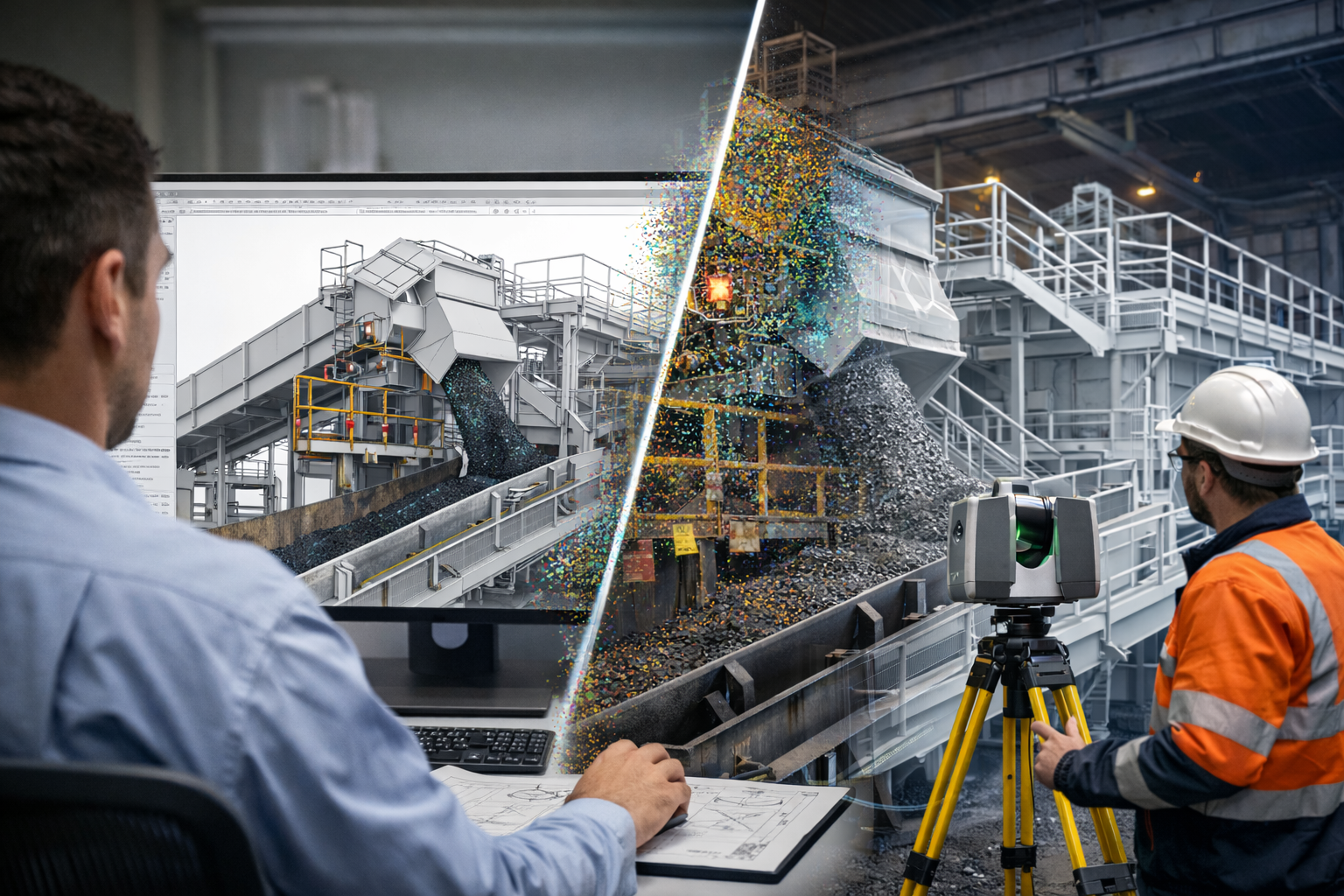
From Point Cloud to Engineering Model Workflow

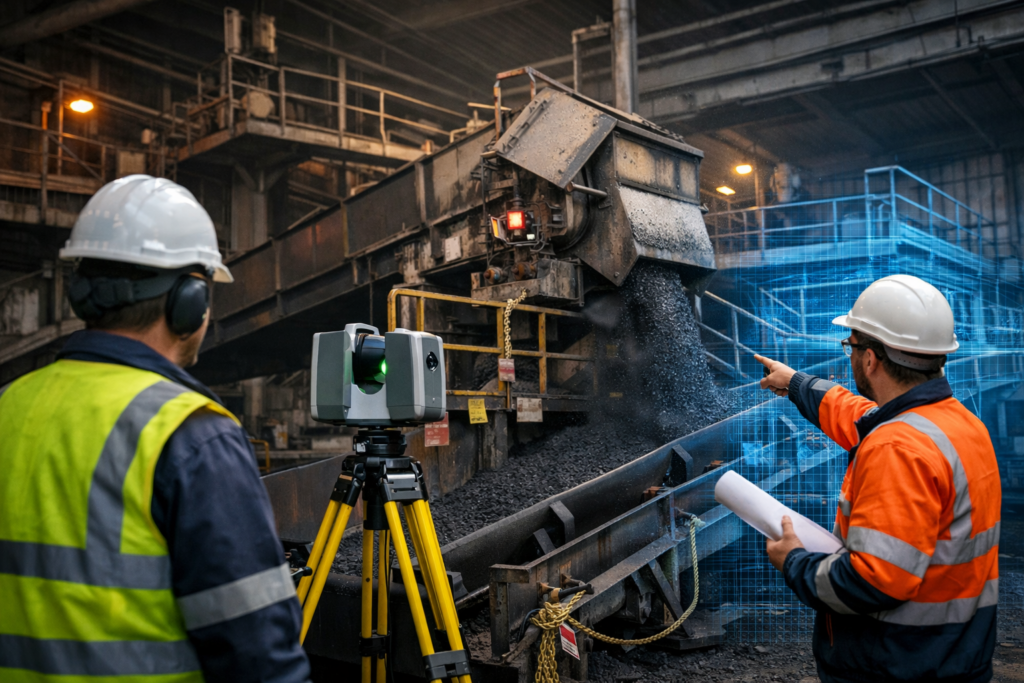
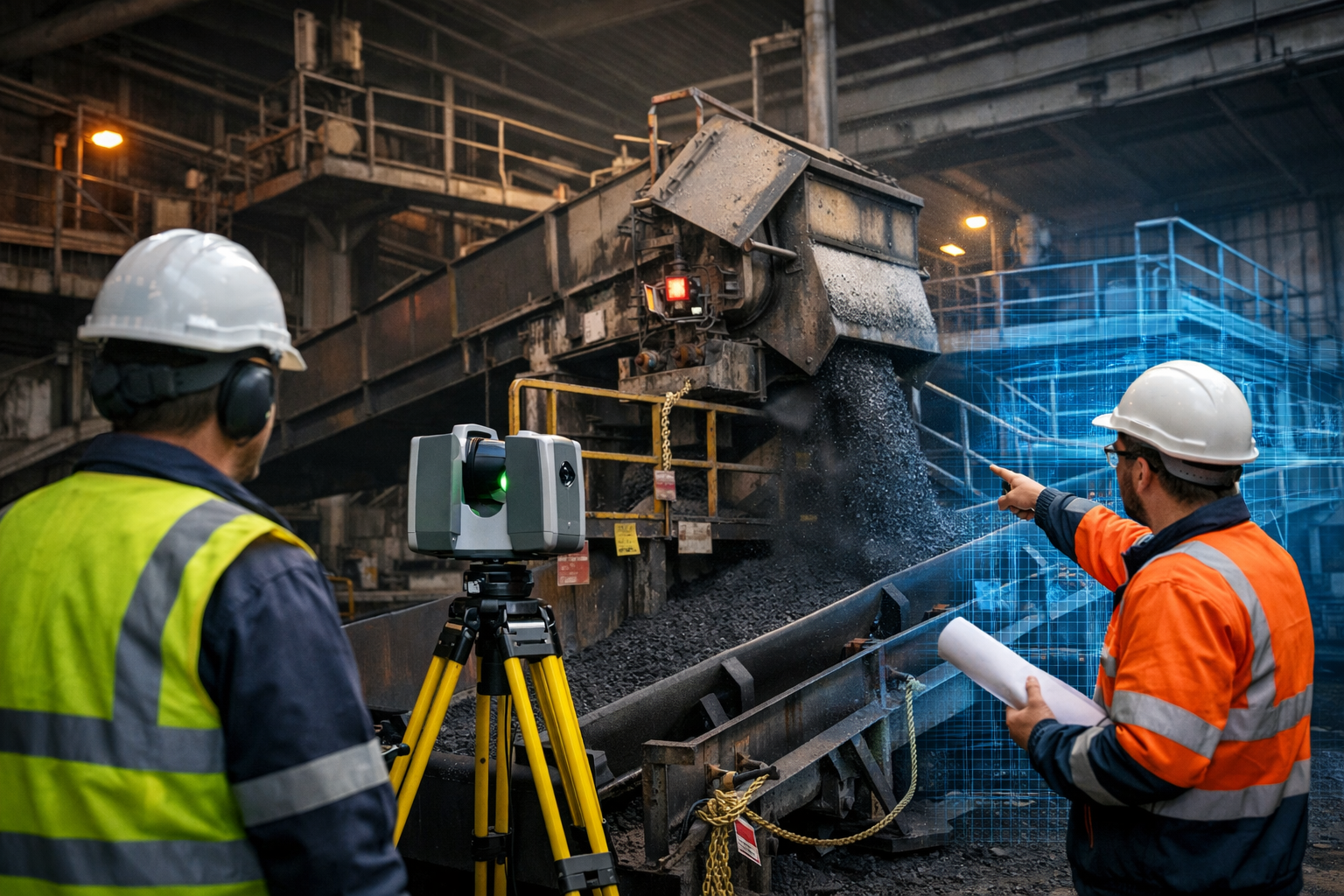
Engineering workflow showing industrial laser scanning, point cloud data, and a CAD model used for plant upgrade design.

Modern industrial facilitiesโ€”especially in mining, processing plants, and heavy infrastructureโ€”are complex environments where accurate site information is essential. Before engineers can design upgrades, modifications, or shutdown works, they must understand exactly what exists in the field today.

This is where the point cloud to engineering model workflow becomes critical.

Using engineering-grade 3D laser scanning, engineers can capture millions of spatial measurements in minutes, creating a highly accurate digital representation of existing plant conditions. These measurements form what is known as a point cloud, which becomes the foundation for accurate CAD models, engineering design, and upgrade planning.

Hamilton By Design specialises in this process through engineering-grade reality capture and modelling services across mining and industrial facilities.

Learn more about our scanning services here:
https://www.hamiltonbydesign.com.au/home/engineering-grade-3d-laser-scanning-mining-industrial/


Engineer using a laser scanner capturing an industrial facility, converting scan data into a point cloud and engineering CAD model.

What is a Point Cloud?

A point cloud is a dense collection of spatial coordinates captured by a 3D laser scanner. Each point represents a precise location on a surface such as steelwork, piping, equipment, or structures.

Modern scanners can capture millions of points per second, creating a digital snapshot of the real environment with millimetre-level accuracy.

Once captured, the point cloud becomes the digital foundation used by engineers to reconstruct existing plant geometry.

3D LiDAR scanning and 3D modelling service button โ€” laser scanner capturing a point cloud for engineering and CAD modelling
Mechanical engineering services

Hamilton By Design logo displayed on a blue tilted rectangle with a grey gradient background

The Point Cloud to Engineering Model Workflow

Turning raw scan data into usable engineering information involves several structured steps.

1. Project Planning and Site Preparation

Before scanning begins, engineers define:

  • Required accuracy
  • Project scope
  • Areas to be captured
  • Level of modelling detail required

This ensures the captured data supports downstream engineering tasks such as pipe routing, structural modifications, or equipment installations.

If you are planning a plant modification or shutdown project, capturing accurate field conditions early is essential.

Related article:
https://www.hamiltonbydesign.com.au/capture-existing-conditions-before-plant-upgrades/


2. Laser Scanning and Data Capture

During the field phase, laser scanners are positioned throughout the facility to capture overlapping scans of the plant.

Typical captured elements include:

  • Structural steel
  • Pipework
  • Mechanical equipment
  • Cable trays
  • Platforms and access ways
  • Tanks and vessels

Each scan records millions of measurements to create a complete 3D dataset of the site.


3. Scan Registration and Point Cloud Processing

After scanning, the raw scans must be processed. This includes:

  • Aligning multiple scans together (registration)
  • Removing noise or unwanted points
  • Optimising the dataset for modelling

This processing stage converts raw scan files into a coherent, usable point cloud model ready for engineering analysis.


4. Importing the Point Cloud into CAD Software

Once processed, the point cloud is imported into engineering software such as:

  • SolidWorks
  • AutoCAD
  • Revit
  • Plant design platforms

Within the design environment, the point cloud becomes a reference model that accurately represents real-world conditions. Engineers can rotate, section, and inspect the data to understand plant geometry before any design begins.


5. Engineering Model Creation

Using the point cloud as a guide, engineers begin creating intelligent CAD models of plant assets.

Typical modelling tasks include:

  • Pipe routing and spool modelling
  • Structural steel modelling
  • Equipment placement
  • Conveyor and mechanical system modelling
  • Access platforms and maintenance areas

The result is a clean engineering model derived directly from the scanned environment.

This process converts raw spatial data into parametric engineering objects, enabling design teams to work with accurate plant geometry.


6. Design Coordination and Clash Detection

Once the engineering model exists, it becomes a powerful tool for project planning.

Engineers can:

  • Test upgrade concepts
  • Perform clash detection
  • Evaluate maintenance access
  • Design shutdown modifications
  • Prepare fabrication drawings

Because the model reflects real site conditions, design errors and rework can be significantly reduced.


Why This Workflow Matters in Mining and Industrial Projects

Mining plants and processing facilities often evolve over decades. Drawings may be outdated, incomplete, or inaccurate.

Laser scanning solves this problem by capturing what actually exists today, not what legacy drawings suggest.

Benefits include:

  • Reduced design risk
  • Accurate retrofit engineering
  • Faster shutdown planning
  • Better contractor coordination
  • Improved safety planning

Point cloud modelling also allows engineers to handle complex plant geometries that would be difficult to measure manually.


3D Laser Scanning Across Australia

Hamilton By Design provides engineering-grade 3D laser scanning services across Australia, supporting mining operations, processing plants, and industrial facilities.

Our workflow focuses on delivering engineering-ready models, not just scan data.

Learn more here:
https://www.hamiltonbydesign.com.au/home/engineering-services/3d-laser-scanning/3d-laser-scanning-across-australia/


From Reality Capture to Engineering Insight

The transition from point cloud to engineering model is more than a technical workflowโ€”it is the bridge between physical infrastructure and digital engineering design.

By combining precise laser scanning with engineering modelling expertise, projects can move forward with confidence, knowing that designs are based on accurate site conditions.

At Hamilton By Design, we specialise in helping industrial operators convert reality capture into practical engineering outcomes for plant upgrades, shutdowns, and infrastructure projects.


If you would like to discuss how point cloud modelling can support your next project, explore our engineering scanning services here:

Name
Would you like us to arrange a phone consultation for you?
Address
3D CAD Modelling Australia service banner for Hamilton By Design
Australian Drafting logo featuring bold white text reading "Australian Drafting" centred on a blue rounded rectangle background.
Engineering Governance title graphic featuring bold white text reading "Engineering Governance" centred on a blue rounded rectangle background.
Mechanical, Structural & Pipework Drafting service banner by Hamilton By Design featuring white text on a blue background.
Mechanical engineering services
Blue rounded button with the text โ€œSolidWorks Designโ€ in white.
Finite Element Analysis (FEA) engineering simulation button
3D LiDAR Scanning Darwin for engineering surveys, laser scanning, reality capture and point cloud modelling services
3D LiDAR Scanning Australia engineering services for laser scanning, reality capture, scan-to-CAD, Scan-to-BIM and as-built documentation across Australia
3D LiDAR scanning services on the Central Coast providing engineering-grade laser scanning, point cloud capture, scan-to-CAD modelling and industrial reality capture for infrastructure and industrial projects.
3D LiDAR Scanning Perth for engineering surveys, laser scanning, reality capture and point cloud modelling services
3D LiDAR Scanning Sydney for engineering surveys, laser scanning, reality capture and point cloud modelling services
3D LiDAR Scanning Brisbane for engineering surveys, laser scanning, reality capture and point cloud modelling services
3D LiDAR Scanning Canberra for engineering surveys, laser scanning, reality capture and point cloud modelling services
3D LiDAR Scanning Newcastle for engineering surveys, laser scanning, reality capture and point cloud modelling services
3D LiDAR Scanning Adelaide for engineering surveys, laser scanning, reality capture and point cloud modelling services

Capture Existing Conditions

Engineer using a 3D laser scanner to capture existing conditions inside an industrial processing plant before engineering upgrades.

Industrial facilities rarely stay the same for long. As plants evolve through expansions, equipment upgrades, shutdown projects, and process improvements, engineers must first answer a critical question:

What does the plant actually look like today?

Capturing accurate existing conditions is the first step in any successful engineering upgrade. Without reliable information about current structures, pipework, equipment, and clearances, even the best engineering design can result in costly clashes, rework, and project delays.

Modern engineering teams increasingly rely on engineering-grade 3D laser scanning to document industrial facilities before modifications begin.

๐Ÿ‘‰ Learn more about our scanning services here:
https://www.hamiltonbydesign.com.au/home/engineering-grade-3d-laser-scanning-mining-industrial/


Industrial plant being captured with engineering 3D laser scanning technology showing point cloud data of pipes and structures.

Why Existing Conditions Matter in Industrial Engineering

Many mining plants, process plants, and industrial facilities have evolved over decades. Equipment may have been modified multiple times, undocumented changes may exist, and original drawings often no longer reflect the actual plant configuration.

Traditional measurement methods such as tape measures, sketches, or manual surveys can introduce errors and often miss important details. Laser scanning provides a more reliable solution by capturing millions of accurate spatial measurements of the facility.

By documenting the true โ€œas-builtโ€ condition of the plant, engineers can confidently plan upgrades, tie-ins, or equipment replacements.


How 3D Laser Scanning Captures Industrial Facilities

3D laser scanning uses LiDAR technology to measure distances using laser pulses. Each pulse reflects off surfaces such as pipework, structures, conveyors, and equipment, generating millions of spatial data points known as a point cloud.

This point cloud forms a highly accurate digital representation of the plant that engineers can use for design, modelling, and analysis.

Typical workflow:

  1. Site Planning
    Engineers identify critical areas that require scanning such as process lines, structural steel, equipment interfaces, or congested pipework zones.
  2. Laser Scanning on Site
    Laser scanners capture millions of measurements from multiple positions around the facility.
  3. Point Cloud Registration
    Individual scans are aligned to create a unified 3D dataset representing the entire plant area.
  4. Engineering Modelling
    Engineers convert the point cloud into CAD models, layouts, or detailed equipment geometry.
  5. Design Integration
    The captured plant geometry is used as the foundation for upgrades, modifications, or shutdown planning.

Reducing Risk During Plant Upgrades

One of the biggest risks in industrial projects is unknown site conditions. Pipe clashes, structural conflicts, and spatial constraints often appear only after fabrication begins.

Laser scanning dramatically reduces these risks by providing accurate geometry for the design team.

Benefits include:

โ€ข Accurate equipment placement and tie-in design
โ€ข Clash detection before fabrication
โ€ข Reduced site measurement time
โ€ข Improved shutdown planning
โ€ข Better communication between engineers and site teams

Accurate scan data also allows engineers to validate clearances and design solutions before installation, improving the chances of first-time fit during shutdown work.


Supporting Mining Shutdown Projects

Shutdowns are often the only window available to upgrade equipment in operating plants. Engineering teams must complete installation work quickly, leaving little tolerance for design errors.

By scanning plant areas prior to the shutdown, engineers can:

โ€ข Pre-design structural modifications
โ€ข Confirm pipe routing and tie-in locations
โ€ข Validate equipment installation clearances
โ€ข Improve fabrication accuracy

Hamilton By Design supports shutdown preparation through detailed scanning and modelling workflows.

๐Ÿ‘‰ Learn more about our shutdown support here:
https://www.hamiltonbydesign.com.au/3d-laser-scanning-mining-shutdowns/


Engineering Applications of Laser Scanning

3D laser scanning supports a wide range of engineering activities including:

โ€ข Mechanical design upgrades
โ€ข Pipework rerouting and modifications
โ€ข Structural steel alterations
โ€ข Conveyor upgrades
โ€ข Equipment replacements
โ€ข Plant expansion projects

The resulting digital models also contribute to digital twins, asset management, and long-term maintenance planning within industrial facilities.


Laser Scanning Services Across Australia

Hamilton By Design provides engineering-grade laser scanning services across Australia, supporting mining, heavy industry, infrastructure, and process plants.

Our approach combines:

โ€ข High-accuracy scanning technology
โ€ข Mechanical engineering expertise
โ€ข CAD modelling and design integration
โ€ข Engineering-ready documentation

3D LiDAR scanning and 3D modelling service button โ€” laser scanner capturing a point cloud for engineering and CAD modelling
Mechanical engineering services

๐Ÿ‘‰ Explore our Australia-wide scanning capability:
https://www.hamiltonbydesign.com.au/home/engineering-services/3d-laser-scanning/3d-laser-scanning-across-australia/


Hamilton By Design logo displayed on a blue tilted rectangle with a grey gradient background

The Future of Engineering Site Capture

As industrial facilities become more complex, accurate digital capture of existing conditions is becoming a standard engineering requirement.

Laser scanning allows engineers to move beyond incomplete drawings and manual measurements toward data-driven plant design. By combining scan data with engineering modelling, teams can design upgrades faster, reduce risk, and deliver projects with greater confidence.

For organisations planning plant upgrades, shutdowns, or infrastructure improvements, capturing existing conditions with engineering-grade scanning is no longer optional โ€” it is a critical step toward successful project delivery.


Name
Would you like us to arrange a phone consultation for you?
Address

3D CAD Modelling Australia service banner for Hamilton By Design
Australian Drafting logo featuring bold white text reading "Australian Drafting" centred on a blue rounded rectangle background.
Engineering Governance title graphic featuring bold white text reading "Engineering Governance" centred on a blue rounded rectangle background.
Mechanical, Structural & Pipework Drafting service banner by Hamilton By Design featuring white text on a blue background.
Mechanical engineering services
Blue rounded button with the text โ€œSolidWorks Designโ€ in white.
Finite Element Analysis (FEA) engineering simulation button
3D LiDAR Scanning Darwin for engineering surveys, laser scanning, reality capture and point cloud modelling services
3D LiDAR Scanning Australia engineering services for laser scanning, reality capture, scan-to-CAD, Scan-to-BIM and as-built documentation across Australia
3D LiDAR scanning services on the Central Coast providing engineering-grade laser scanning, point cloud capture, scan-to-CAD modelling and industrial reality capture for infrastructure and industrial projects.
3D LiDAR Scanning Perth for engineering surveys, laser scanning, reality capture and point cloud modelling services
3D LiDAR Scanning Sydney for engineering surveys, laser scanning, reality capture and point cloud modelling services
3D LiDAR Scanning Brisbane for engineering surveys, laser scanning, reality capture and point cloud modelling services
3D LiDAR Scanning Canberra for engineering surveys, laser scanning, reality capture and point cloud modelling services
3D LiDAR Scanning Newcastle for engineering surveys, laser scanning, reality capture and point cloud modelling services
3D LiDAR Scanning Adelaide for engineering surveys, laser scanning, reality capture and point cloud modelling services

Why 3D Laser Scanning is Critical During Mining Shutdowns

Engineer performing 3D laser scanning of a mining processing plant during a shutdown to capture accurate site conditions.

Mining shutdowns are among the most complex and high-pressure events in heavy industry. Whether the shutdown is scheduled for a processing plant, conveyor system, pump station, or structural upgrade, every hour of downtime carries significant cost.

Engineering teams must inspect, measure, design, fabricate, and install upgrades within an extremely tight timeframe. Any unexpected interference, misalignment, or dimensional error can delay commissioning and extend the shutdown.

This is why 3D laser scanning has become a critical technology for mining shutdown planning and execution.

By capturing millions of accurate measurement points in a matter of minutes, laser scanning provides engineers with a complete digital representation of existing plant conditions. These highly detailed point cloud models allow engineers to design upgrades with confidence before the shutdown even begins.

For mining operations across Australia, this approach significantly reduces risk, improves installation accuracy, and shortens shutdown durations.


3D laser scanner capturing point cloud data across a mining facility during shutdown maintenance.

The Challenge of Mining Shutdown Engineering

Mining infrastructure evolves continuously. Over decades of modifications, maintenance work, and operational changes, the as-built condition of a plant rarely matches the original drawings.

Typical shutdown upgrade projects may involve:

  • Conveyor realignments
  • Chute redesigns
  • Pump station upgrades
  • Structural steel modifications
  • Platform and access upgrades
  • Pipework tie-ins and maintenance replacements

If the design team relies on outdated drawings or manual measurements, there is a significant risk that fabricated components will not fit during installation.

In a shutdown environment, discovering a fit-up issue onsite can quickly escalate into costly delays.

Accurate site data is therefore the foundation of effective shutdown planning.


What is 3D Laser Scanning?

3D laser scanning is a reality-capture technology that records the physical environment using millions of laser measurements per second.

The result is a high-resolution point cloud representing the exact geometry of the plant, equipment, and surrounding structures.

Engineers can then convert this data into detailed 3D models used for:

  • Engineering design
  • Clash detection
  • Fabrication drawings
  • Layout verification
  • Maintenance planning

The technology allows engineers to capture large industrial facilities quickly and accurately while minimizing disruption to site operations.

Learn more about the technology here:


How 3D Scanning Improves Shutdown Planning

Accurate As-Built Plant Models

One of the biggest advantages of laser scanning is the ability to capture the true geometry of an operating plant.

Instead of relying on assumptions, engineers can design within a precise digital twin of the facility, ensuring that new equipment or structures will fit exactly as intended.

This eliminates many of the dimensional errors that traditionally occur during shutdown installations.


Faster Site Data Capture

Traditional surveying methods can take days to measure complex industrial plants.

Laser scanning dramatically accelerates this process by capturing millions of measurements in minutes.

This speed is particularly valuable during shutdown preparation because it allows engineering teams to collect comprehensive data without extended site access requirements.


Clash Detection Before Fabrication

A common shutdown problem occurs when newly fabricated equipment clashes with existing infrastructure such as pipes, structural steel, cable trays, or maintenance access routes.

By designing directly inside the scanned model, engineers can perform clash detection and clearance analysis before fabrication begins.

This ensures that components will install smoothly during the shutdown window.


Reduced Rework and Installation Delays

When plant modifications are designed using precise scan data, installation crews spend less time cutting, grinding, or modifying fabricated components onsite.

This leads to:

  • Faster installations
  • Lower shutdown risk
  • Improved safety outcomes
  • Reduced hot work and manual handling

The result is a more predictable shutdown schedule and fewer unexpected delays.


Supporting Mining Plant Upgrades

3D scanning plays a major role in engineering upgrades across mining processing plants.

Typical projects supported by scanning include:

  • CHPP chute redesign and transfer upgrades
  • Conveyor realignment and structural modifications
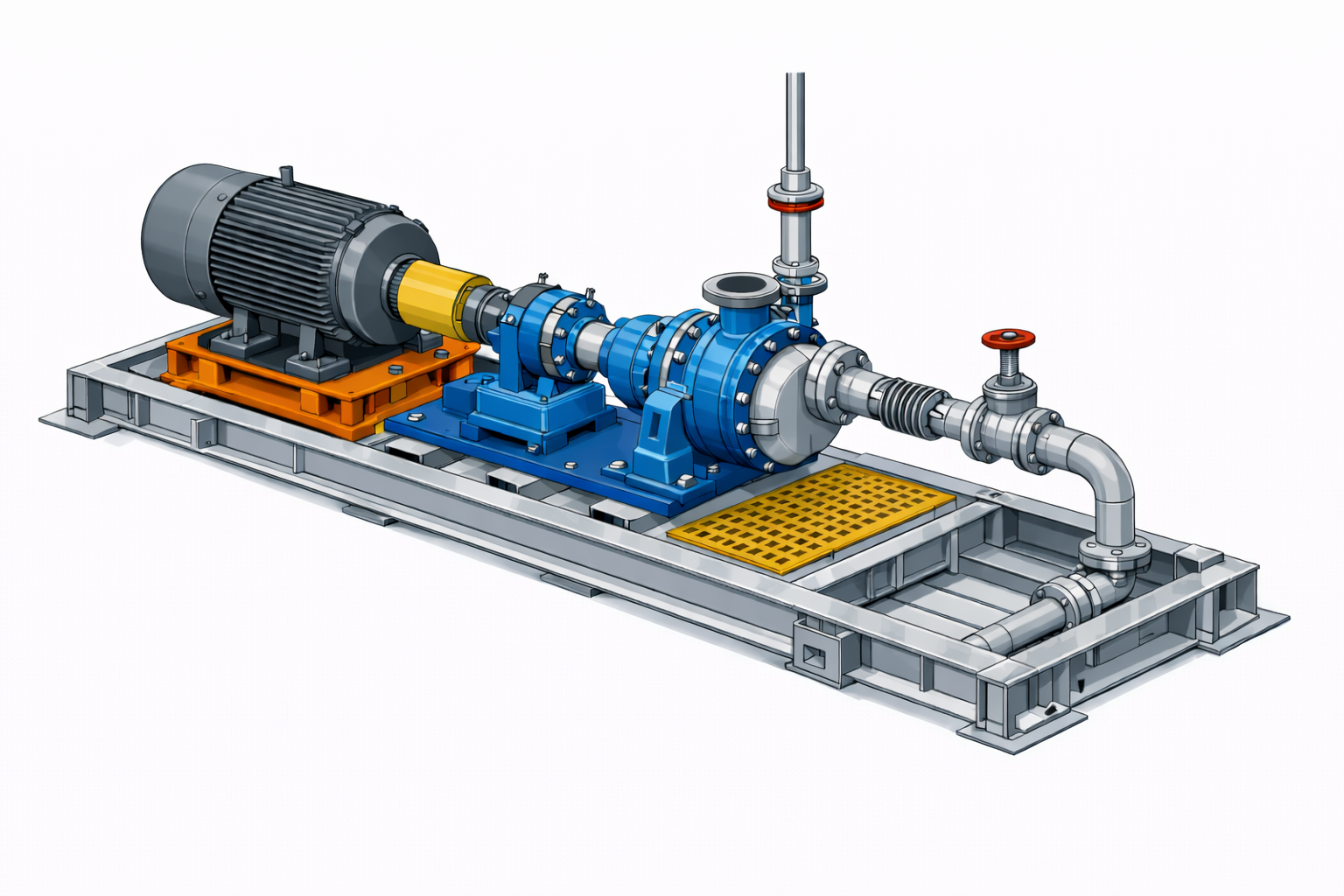
  • Pump and piping system upgrades
  • Walkway and platform installation
  • Structural inspections and reinforcement

Hamilton By Design regularly applies this workflow to plant upgrade projects where accurate site information is critical.

You can learn more about this process here:


Engineering-Grade Scanning Across Australia

Mining operations across Australia are increasingly adopting 3D scanning because it enables faster engineering decisions and more reliable shutdown execution.

By combining laser scanning with engineering modelling tools such as SolidWorks and advanced analysis workflows, project teams can move from site capture to fabrication-ready designs much faster than traditional survey methods allow.

Hamilton By Design provides engineering-grade scanning services for industrial facilities across the country.

Explore the national service offering here:


The Future of Digital Mining Shutdowns

The mining industry is rapidly adopting digital engineering tools to reduce operational risk and improve plant reliability.

Technologies such as:

  • 3D laser scanning
  • Digital twins
  • LiDAR modelling
  • Reality capture workflows

are transforming how shutdown projects are planned and delivered.
Instead of reacting to problems during installation, engineers can now identify risks months before the shutdown begins.

For operations where downtime can cost hundreds of thousands of dollars per hour, this shift toward data-driven engineering is a major competitive advantage.

3D LiDAR scanning and 3D modelling service button โ€” laser scanner capturing a point cloud for engineering and CAD modelling
Mechanical engineering services

Hamilton By Design logo displayed on a blue tilted rectangle with a grey gradient background

Final Thoughts

Mining shutdowns demand precision, speed, and certainty.

3D laser scanning provides engineers with the accurate site data needed to design plant upgrades that fit the first time.

By capturing existing conditions with millimetre-level accuracy, engineers can eliminate guesswork, reduce installation risks, and ensure shutdown projects are delivered safely and efficiently.

For modern mining operations, 3D laser scanning is no longer optional โ€” it is a critical tool for successful shutdown execution.


Name
Would you like us to arrange a phone consultation for you?
Address

3D CAD Modelling Australia service banner for Hamilton By Design
Australian Drafting logo featuring bold white text reading "Australian Drafting" centred on a blue rounded rectangle background.
Engineering Governance title graphic featuring bold white text reading "Engineering Governance" centred on a blue rounded rectangle background.
Mechanical, Structural & Pipework Drafting service banner by Hamilton By Design featuring white text on a blue background.
Mechanical engineering services
Blue rounded button with the text โ€œSolidWorks Designโ€ in white.
Finite Element Analysis (FEA) engineering simulation button
3D LiDAR Scanning Darwin for engineering surveys, laser scanning, reality capture and point cloud modelling services
3D LiDAR Scanning Australia engineering services for laser scanning, reality capture, scan-to-CAD, Scan-to-BIM and as-built documentation across Australia
3D LiDAR scanning services on the Central Coast providing engineering-grade laser scanning, point cloud capture, scan-to-CAD modelling and industrial reality capture for infrastructure and industrial projects.
3D LiDAR Scanning Perth for engineering surveys, laser scanning, reality capture and point cloud modelling services
3D LiDAR Scanning Sydney for engineering surveys, laser scanning, reality capture and point cloud modelling services
3D LiDAR Scanning Brisbane for engineering surveys, laser scanning, reality capture and point cloud modelling services
3D LiDAR Scanning Canberra for engineering surveys, laser scanning, reality capture and point cloud modelling services
3D LiDAR Scanning Newcastle for engineering surveys, laser scanning, reality capture and point cloud modelling services
3D LiDAR Scanning Adelaide for engineering surveys, laser scanning, reality capture and point cloud modelling services

3D Scanning for Mining Shutdown Projects

3D Scanning for Mining Shutdown Projects | Engineering Laser Scanning

Mining shutdowns are critical windows where maintenance, upgrades, and engineering improvements must be completed quickly and safely. These shutdown periods often involve complex work scopes such as equipment replacements, structural upgrades, conveyor modifications, and new process installations.

One of the most effective technologies supporting shutdown planning today is engineering-grade 3D laser scanning. By capturing highly accurate spatial data of existing infrastructure, engineers can design and verify upgrades before the shutdown begins, reducing risk, rework, and costly delays.

At Hamilton By Design, 3D laser scanning plays a key role in helping mining operations capture accurate plant conditions and convert them into usable engineering data.


Why Mining Shutdowns Require Accurate Site Data

Mining plants evolve over decades. Equipment is modified, conveyors are relocated, structural steel is reinforced, and piping systems are extended or replaced. Unfortunately, plant drawings often do not reflect these changes.

During shutdown projects this creates significant risk, including:

  • Interference between new equipment and existing structures
  • Unexpected clashes with pipework or cable trays
  • Incorrect equipment fitment
  • Delays caused by rework or site modifications

3D laser scanning eliminates these uncertainties by capturing the true as-built condition of the plant.

Millions of spatial measurements are collected in minutes, producing a detailed point cloud model of the plant that engineers can use during design and planning.


How 3D Laser Scanning Supports Shutdown Planning

Engineering scanning provides accurate digital data that allows engineers to prepare shutdown work well before crews arrive onsite.

Capture Existing Plant Geometry

Scanning records the exact positions of key plant infrastructure including:

  • Conveyor structures
  • Transfer chutes
  • Structural steel
  • Pump skids
  • Pipework and services
  • Access platforms and walkways

This data forms a digital model of the plant that engineers can use during design.


Scan-to-CAD Engineering Models

Once scanning is complete, the point cloud data can be converted into CAD models. These models allow engineers to:

  • Design new components around existing infrastructure
  • Develop fabrication drawings
  • Plan shutdown installation sequences
  • Verify spatial clearances

This process is commonly known as Scan-to-CAD engineering modelling.


Clash Detection Before the Shutdown

One of the biggest advantages of scanning is the ability to identify problems before the shutdown begins.

Engineers can compare the scanned plant with proposed designs and identify potential clashes between:

  • Existing structures
  • Pipework and services
  • New equipment
  • Structural modifications

This ensures equipment will fit correctly when installation begins.


Typical Shutdown Projects That Benefit from 3D Scanning

Many mining upgrade projects benefit from scanning before shutdown work begins.

Conveyor and Transfer Upgrades

Mining conveyors are frequently modified during shutdowns. Engineers may need to:

  • Redesign transfer chutes
  • Install new belt cleaners
  • Upgrade pulley assemblies
  • Replace conveyor structures

Scanning ensures new equipment integrates correctly with existing infrastructure.


Pump and Process Equipment Replacement

Pump skids and process equipment often require precise alignment with existing pipework and foundations.

3D scanning allows engineers to verify:

  • Pipe flange locations
  • Equipment clearances
  • Structural support requirements

This reduces installation issues during shutdown.


Structural Steel Modifications

Structural upgrades are common in older processing plants. Scanning helps engineers assess:

  • Beam locations
  • Column spacing
  • Structural clearances
  • Equipment support interfaces

Accurate geometry reduces fabrication errors.


Brownfield Plant Expansions

Shutdowns are often used to integrate new plant sections into existing infrastructure.

Scanning allows engineers to design upgrades within tight spatial constraints, particularly in brownfield mining environments where space is limited.


Engineering-Grade Scanning vs Survey Scanning

Not all scanning services are the same.

Engineering-grade scanning focuses on design and fabrication accuracy, rather than simply generating visual models.

Hamilton By Design scanning workflows typically combine:

  • Engineering LiDAR scanners
  • Handheld metrology scanners where required
  • SolidWorks modelling
  • Engineering interpretation of point cloud data

This ensures the data supports real engineering decisions, not just visualisation.


Benefits for Mining Operations

Using 3D scanning during shutdown planning delivers several key advantages.

Reduced shutdown risk through accurate site data.

Faster engineering design using precise plant geometry.

Improved fabrication accuracy for shutdown components.

Reduced rework caused by installation clashes.

Improved safety through better shutdown planning.


Supporting Mining Shutdown Projects with Engineering 3D Scanning

Hamilton By Design provides engineering-led 3D laser scanning services for mining and industrial projects across Australia.

Our scanning workflows support:

  • Shutdown planning
  • Mechanical design upgrades
  • Scan-to-CAD modelling
  • Structural verification
  • Plant layout assessments
3D LiDAR scanning and 3D modelling service button โ€” laser scanner capturing a point cloud for engineering and CAD modelling
Mechanical engineering services

By combining advanced scanning technology with mechanical engineering expertise, we help mining companies reduce risk and deliver successful shutdown projects.


Name
Would you like us to arrange a phone consultation for you?
Address

3D CAD Modelling Australia service banner for Hamilton By Design
Australian Drafting logo featuring bold white text reading "Australian Drafting" centred on a blue rounded rectangle background.
Engineering Governance title graphic featuring bold white text reading "Engineering Governance" centred on a blue rounded rectangle background.
Mechanical, Structural & Pipework Drafting service banner by Hamilton By Design featuring white text on a blue background.
Mechanical engineering services
Blue rounded button with the text โ€œSolidWorks Designโ€ in white.
Finite Element Analysis (FEA) engineering simulation button
3D LiDAR Scanning Darwin for engineering surveys, laser scanning, reality capture and point cloud modelling services
3D LiDAR Scanning Australia engineering services for laser scanning, reality capture, scan-to-CAD, Scan-to-BIM and as-built documentation across Australia
3D LiDAR scanning services on the Central Coast providing engineering-grade laser scanning, point cloud capture, scan-to-CAD modelling and industrial reality capture for infrastructure and industrial projects.
3D LiDAR Scanning Perth for engineering surveys, laser scanning, reality capture and point cloud modelling services
3D LiDAR Scanning Sydney for engineering surveys, laser scanning, reality capture and point cloud modelling services
3D LiDAR Scanning Brisbane for engineering surveys, laser scanning, reality capture and point cloud modelling services
3D LiDAR Scanning Canberra for engineering surveys, laser scanning, reality capture and point cloud modelling services
3D LiDAR Scanning Newcastle for engineering surveys, laser scanning, reality capture and point cloud modelling services
3D LiDAR Scanning Adelaide for engineering surveys, laser scanning, reality capture and point cloud modelling services

Designing Bucket Elevators vs Pan Conveyors in Industrial Material Handling

Engineering comparison diagram showing a bucket elevator lifting bulk material vertically and a pan conveyor transporting material horizontally.

Bucket Elevator vs Pan Conveyor Design | Industrial Material Handling Engineering

In bulk material handling industries such as mining, cement production, grain processing, and industrial manufacturing, selecting the right conveying system is critical to reliability, maintenance efficiency, and operating cost. Two commonly used systems are bucket elevators and pan conveyors. While both systems move bulk material efficiently, they are designed for very different operating conditions and material characteristics.

Understanding the difference between the two systems helps engineers select the correct solution for the application.


Bucket elevator vs pan conveyor industrial material handling comparison infographic.

What is a Bucket Elevator?

A bucket elevator is a vertical conveying system designed to lift bulk materials using a series of buckets attached to either a belt or chain. The buckets scoop material from the boot section and carry it upward to the discharge point.

Bucket elevators are widely used where material must be lifted vertically in a compact footprint.

Key Components

Buckets (steel, nylon, or HDPE)
Belt or chain drive
Boot section (material inlet)
Head section with drive and discharge
Casing or elevator trunking

Typical Applications

Grain handling
Fertiliser plants
Cement and lime processing
Mining concentrate handling
Sand, ash, or powder transport

Advantages

Efficient vertical lifting
Small plant footprint
High throughput capacity
Energy efficient for vertical transport

Limitations

Not ideal for very abrasive or large lump materials
Sensitive to overloading and blockages
Requires careful alignment and maintenance


What is a Pan Conveyor?

A pan conveyor, often called an apron conveyor, transports material horizontally or on shallow inclines using overlapping steel pans attached to heavy-duty chains.

The pans form a continuous moving surface that carries material along the conveyor frame.

Pan conveyors are commonly used in harsh industrial environments where materials are heavy, hot, or abrasive.

Key Components

Steel pans or plates
Heavy-duty conveyor chains
Sprockets and drive system
Conveyor frame
Impact loading zone

Typical Applications

Clinker transport in cement plants
Mining ore handling
Hot ash handling
Crusher discharge conveyors
Furnace feed systems

Advantages

Handles very heavy and abrasive materials
Suitable for impact loading
Reliable in harsh environments
Can operate at slow controlled speeds

Limitations

Larger footprint
Higher capital cost
More power consumption than bucket elevators


Key Differences Between Bucket Elevators and Pan Conveyors

Bucket Elevator
Vertical conveying system
Best for fine to medium bulk materials
Compact footprint
High energy efficiency for vertical transport
Requires controlled loading

Pan Conveyor
Horizontal or inclined conveying system
Handles heavy, abrasive or hot materials
Larger footprint
More robust construction
Handles high impact loading


When to Choose a Bucket Elevator

A bucket elevator is typically the preferred solution when:

Material must be lifted vertically
Plant space is limited
The material is free-flowing
Throughput is high but impact loading is low

Examples include grain silos, cement plants, fertiliser plants, and powder handling systems.

In these situations, bucket elevators provide a compact and energy-efficient solution.


When to Choose a Pan Conveyor

A pan conveyor is the better choice when:

Material is coarse, hot, or abrasive
There is high impact loading
The conveyor must operate continuously in harsh conditions
Reliability is more important than plant footprint

Examples include crusher discharge conveyors, furnace feed systems, clinker transport, and mining ore handling.

Pan conveyors are designed to survive the harshest bulk material handling environments.


Engineering Design Considerations

When designing either system, engineers must consider the following:

Bulk material characteristics
Lump size distribution
Abrasiveness
Moisture content
Throughput requirements
Loading conditions
Maintenance access
Structural support

Modern projects often integrate 3D laser scanning and point cloud modelling to ensure conveyors fit within existing plants and connect correctly to existing infrastructure. This approach reduces installation risk and helps engineers verify clearances, structural loads, and maintenance access before fabrication.

3D LiDAR scanning and 3D modelling service button โ€” laser scanner capturing a point cloud for engineering and CAD modelling
Mechanical engineering services

Hamilton By Design logo displayed on a blue tilted rectangle with a grey gradient background

Engineering Support for Conveyor Design

Hamilton By Design supports industrial projects with:

Mechanical conveyor design
3D laser scanning of existing plants
Conveyor chute and transfer design
Structural steel and support frames
Inspection and maintenance optimisation

Whether designing a bucket elevator for vertical material handling or a heavy-duty pan conveyor for mining operations, selecting the correct system is critical to long-term reliability and operational efficiency.


Name
Would you like us to arrange a phone consultation for you?
Address
3D CAD Modelling Australia service banner for Hamilton By Design
Australian Drafting logo featuring bold white text reading "Australian Drafting" centred on a blue rounded rectangle background.
Engineering Governance title graphic featuring bold white text reading "Engineering Governance" centred on a blue rounded rectangle background.
Mechanical, Structural & Pipework Drafting service banner by Hamilton By Design featuring white text on a blue background.
Mechanical engineering services
Blue rounded button with the text โ€œSolidWorks Designโ€ in white.
Finite Element Analysis (FEA) engineering simulation button
3D LiDAR Scanning Darwin for engineering surveys, laser scanning, reality capture and point cloud modelling services
3D LiDAR Scanning Australia engineering services for laser scanning, reality capture, scan-to-CAD, Scan-to-BIM and as-built documentation across Australia
3D LiDAR scanning services on the Central Coast providing engineering-grade laser scanning, point cloud capture, scan-to-CAD modelling and industrial reality capture for infrastructure and industrial projects.
3D LiDAR Scanning Perth for engineering surveys, laser scanning, reality capture and point cloud modelling services
3D LiDAR Scanning Sydney for engineering surveys, laser scanning, reality capture and point cloud modelling services
3D LiDAR Scanning Brisbane for engineering surveys, laser scanning, reality capture and point cloud modelling services
3D LiDAR Scanning Canberra for engineering surveys, laser scanning, reality capture and point cloud modelling services
3D LiDAR Scanning Newcastle for engineering surveys, laser scanning, reality capture and point cloud modelling services
3D LiDAR Scanning Adelaide for engineering surveys, laser scanning, reality capture and point cloud modelling services

Mechanical Engineering Design Companies on the Central Coast

Mechanical engineer reviewing 3D CAD model beside industrial steel platform and 3D laser scanner on the Central Coast NSW

Mechanical Engineering Design Companies | Central Coast | Hamilton By Design

Engineering-led design. Practical outcomes. Built for industry.

If youโ€™re searching for mechanical engineering design companies on the Central Coast, youโ€™re likely trying to solve a real operational problem โ€” upgrading equipment, replacing worn assets, improving maintainability, or getting compliant documentation for a project that needs to move.

Hamilton By Design provides mechanical engineering design services for industrial and mining-linked businesses across the Central Coast and NSW, delivering practical, buildable solutions backed by strong engineering governance.


Mechanical engineering design company on the Central Coast developing industrial steel structures using 3D modelling

What a Mechanical Engineering Design Company Should Deliver

A capable mechanical design partner doesnโ€™t just โ€œdraw it up.โ€ They help you reduce risk and get outcomes that work in the field. That includes:

  • Engineering-grade design documentation (GA drawings, fabrication details, BOMs)
  • Site verification and measurement to confirm real-world geometry and constraints
  • Fit-for-purpose design focused on access, maintenance, and safe operation
  • Design verification aligned to the relevant Australian Standards (as required)
  • Revision control and traceability so your team always works from the correct set

Mechanical Design Services We Provide

Hamilton By Design supports projects from concept through to issued-for-fabrication documentation, including:

1) Industrial Mechanical Design & Drafting

  • Steelwork and platforms
  • Guards, access ways, and maintenance improvements
  • Equipment supports, skids, frames, and brackets
  • Conveyor and transfer component detailing (where required)

2) Site Verification and โ€œAs-Builtโ€ Engineering Support

For many Central Coast sites, legacy assets exist with limited documentation. We help establish the current geometry and constraints so design decisions are based on facts, not assumptions.

3) 3D Laser Scanning and Digital Capture

Where access is difficult or accuracy matters, 3D scanning helps reduce rework and speed up design development.

Learn more:

4) Mining and Heavy Industry Experience

Even if youโ€™re based on the Central Coast, your systems and standards may be โ€œmining-grade.โ€ Weโ€™re used to high-consequence environments where design clarity, traceability, and constructability matter.

Explore our engineering services:


3D LiDAR scanning services on the Central Coast providing engineering-grade laser scanning, point cloud capture, scan-to-CAD modelling and industrial reality capture for infrastructure and industrial projects.
Drafting services on the Central Coast providing engineering drawings, fabrication detailing, as-built documentation, reverse engineering and CAD drafting for industrial and infrastructure projects.
Mechanical engineering services on the Central Coast providing industrial design, plant inspections, pump calculations, reverse engineering and engineering support for manufacturing, infrastructure and heavy industry projects.

Why Central Coast Businesses Choose Hamilton By Design

When youโ€™re comparing mechanical engineering design companies, consider what you really need: speed, accuracy, practicality, and confidence the design will work once itโ€™s built.

Our approach is:

  • Engineering-first: design decisions supported by solid reasoning and verification
  • Practical deliverables: drawings and models that fabricators and maintainers can use
  • Responsive communication: clear scope, staged delivery, and predictable outputs
  • Governance: revision control, structured documentation, and quality-focused process

Common Project Types We Support

If youโ€™re on the Central Coast and need mechanical design, we commonly assist with:

  • Plant upgrades and maintenance projects
  • Replacement design for worn components
  • Access and maintainability improvements
  • Structural/mechanical support design for equipment changes
  • Documentation upgrades for compliance and operations

Hamilton By Design logo displayed on a blue tilted rectangle with a grey gradient background

3D LiDAR scanning and 3D modelling service button โ€” laser scanner capturing a point cloud for engineering and CAD modelling
Mechanical engineering services

Talk to a Mechanical Engineering Design Team on the Central Coast

If you need an engineering partner who can verify conditions, develop practical mechanical designs, and issue clear fabrication-ready documentation, we can help.

Visit our Mechanical Engineering services page:

Or contact Hamilton By Design to discuss your scope and timing.


Name
Would you like us to arrange a phone consultation for you?
Address
3D CAD Modelling Australia service banner for Hamilton By Design
Finite Element Analysis (FEA) engineering simulation button
Mechanical engineering services