Mechanical Engineers in Wyong

Innovative Design and Engineering Solutions

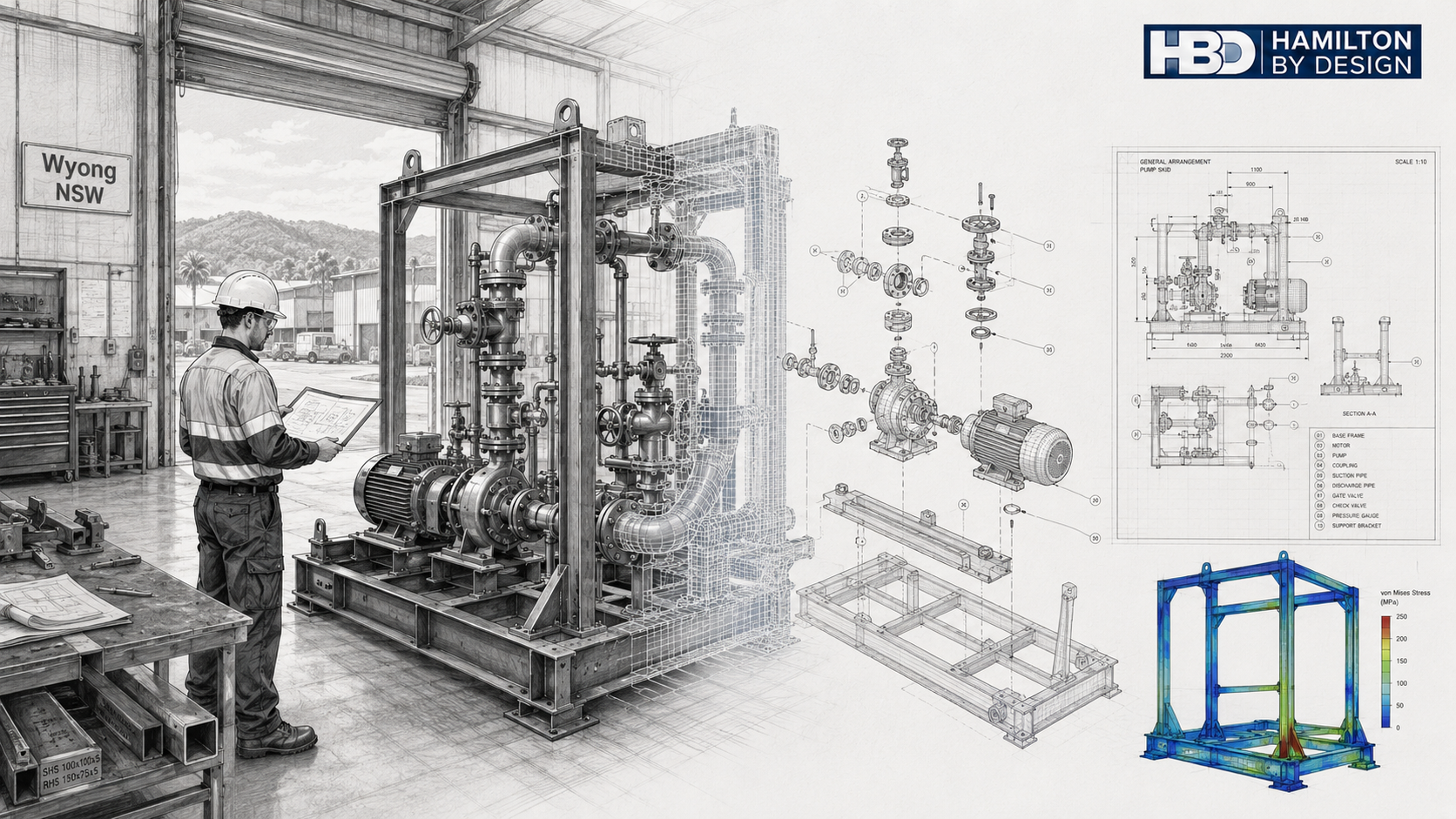
At Hamilton By Design, we are a team of degree-qualified mechanical engineers in Wyong, providing expert design, analysis, and build services for mechanical systems across the Central Coast and Hunter regions. We specialise in engineering design, mechanical systems integration, and prototype development โ€” not car repair or automotive servicing.

Our goal is simple: to design and deliver engineered systems that perform efficiently, safely, and reliably under real operating conditions.


Your Local Mechanical Engineering Specialists

Being locally based in Wyong allows us to deliver responsive, practical engineering solutions that suit regional industries. We understand the Central Coastโ€™s industrial landscape โ€” from manufacturing to infrastructure โ€” and provide mechanical engineering support tailored to each clientโ€™s specific operational and compliance needs.

Our services include:

  • Mechanical design and system modelling
  • 3D CAD drafting, assemblies, and technical documentation
  • Finite Element Analysis (FEA) and performance simulation
  • Prototype design, testing, and system optimisation
  • Fabrication support and workshop documentation
  • Process improvement and energy efficiency solutions
  • Structural-mechanical integration for equipment and machinery

Whether itโ€™s a custom mechanical assembly, plant upgrade, or new industrial installation, our engineers combine practical trade awareness with solid analytical expertise to ensure every solution works in the real world.


Why Businesses in Wyong Choose Us

Choosing a local mechanical engineering company in Wyong means partnering with professionals who know local suppliers, fabrication standards, and site conditions. We bring the precision of professional engineering to projects of all sizes while remaining approachable and cost-effective.

Our approach ensures each design is:

  • Safe: Compliant with Australian Standards and industry codes
  • Efficient: Engineered for performance and energy conservation
  • Maintainable: Designed with accessibility and lifecycle costs in mind
  • Economical: Delivering long-term value for the client

From the first sketch to the final bolt, our work reflects engineering discipline, accuracy, and accountability.


Our Engineering Process

Every project follows a structured, documented workflow that ensures consistency and quality:

  1. Concept and Feasibility โ€“ We define project scope, functional requirements, and design objectives through collaboration with clients and stakeholders.
  2. Design and Simulation โ€“ Using modern CAD platforms and FEA tools, we model real-world forces, stresses, and flows to optimise performance and safety.
  3. Verification and Prototyping โ€“ Our team validates designs with prototypes, testing, or detailed fabrication drawings.
  4. Implementation Support โ€“ We assist with workshop drawings, fabrication coordination, and commissioning.
  5. Lifecycle and Maintenance Review โ€“ Our post-installation support ensures long-term reliability and efficiency.

This process ensures traceability, compliance, and confidence at every stage of delivery.


Snapshot: Local Industries and Organisations We Support

Our experience extends across a wide range of local companies, manufacturers, and government organisations throughout Wyong and the Central Coast.

Here are some examples of the types of organisations we work with and the engineering value we bring:

Industrial and Manufacturing Clients

  • Donaldson Australasia (North Wyong) โ€“ A leading industrial filtration manufacturer. Our expertise supports the design and integration of mechanical handling, test rigs, and equipment frames for production systems.
  • Plateau Food Distributors (Wyong) โ€“ Food processing and cold storage facilities often rely on mechanical systems for refrigeration, materials handling, and ventilation. We assist with system design, structural support frames, and energy optimisation.
  • Fabrication and Alloy Manufacturers such as Manufactured Alloy Xtras โ€“ We provide structural design, stress analysis, and welding procedure documentation for aluminium and steel assemblies.
  • General Manufacturers and Industrial Workshops in the Wyongโ€“Tuggerah area โ€“ We support local businesses with prototype development, mechanical jigs, and tooling systems designed to Australian Standards.

Government and Public Infrastructure

  • Central Coast Council (formerly Wyong Shire Council) โ€“ Responsible for infrastructure, public buildings, and community assets. Our services include mechanical design for pumping stations, HVAC systems, and public facility upgrades.
  • NSW Infrastructure Projects (e.g. Pacific Highway Upgrade) โ€“ Large-scale transport and civil projects often require custom mechanical and structural integration. We assist contractors and consultants with system modelling and compliance documentation.
  • TAFE NSW โ€“ Wyong Campus โ€“ Facilities such as laboratories, animal care centres, and trade workshops require mechanical system design for ventilation, process equipment, and utilities.
  • Water and Wastewater Services โ€“ We provide engineering input on pumping systems, pipework layouts, and mechanical components for water infrastructure projects.

These partnerships reflect our capability to operate across both private and public sectors, supporting projects that range from individual components to fully integrated mechanical systems.


Our Capabilities and Technologies

Our engineers use industry-leading tools and software to ensure precision and compliance:

  • 3D CAD Modelling (SolidWorks, Autodesk Inventor, Fusion 360)
  • Finite Element Analysis (FEA) for stress and load validation
  • Computational Fluid Dynamics (CFD) for flow and heat transfer
  • P&ID and Mechanical Schematics for complex systems
  • Project Documentation including Bill of Materials (BOMs) and fabrication drawings

By combining digital design with engineering expertise, we can quickly move from concept to prototype, minimising rework and ensuring the design meets its operational goals.


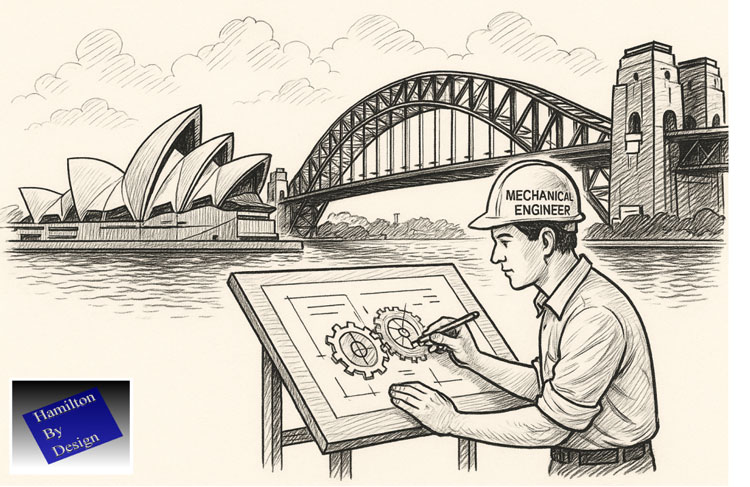
Illustrated mechanical engineer drafting technical gear drawings at a workstation with the Sydney Opera House and Harbour Bridge in the background, alongside the Hamilton By Design logo

Commitment to Engineering Excellence

Every project we deliver reflects our core principles:

  • Technical Integrity โ€“ Our engineers work to the highest professional standards.
  • Innovation โ€“ We continuously refine designs using simulation, prototyping, and feedback.
  • Safety and Compliance โ€“ We align with AS/NZS codes and WHS regulations in every design.
  • Sustainability โ€“ We promote energy-efficient design and reduced material waste through smart engineering.

Our clients appreciate that we think like engineers and communicate like partners. We bring clarity, technical rigour, and creativity to every project.


Contact Your Local Mechanical Engineers in Wyong

If youโ€™re searching for mechanical engineers in Wyong who can design, analyse, and build high-performance mechanical systems, Hamilton By Design is your trusted local partner.

We are not automotive mechanics โ€” we are qualified mechanical engineers who design and deliver engineered solutions that move industries forward.

Hamilton By Design logo displayed on a blue tilted rectangle with a grey gradient background

Phone: 047 700 2249
Email: info@hamiltonbydesign.com.au
Location: Wyong, NSW

Letโ€™s talk about your next project and discover how professional mechanical design can improve reliability, efficiency, and safety in your operations.

Mechanical Engineering | Structural Engineering

3D LiDAR scanning services on the Central Coast providing engineering-grade laser scanning, point cloud capture, scan-to-CAD modelling and industrial reality capture for infrastructure and industrial projects.
Drafting services on the Central Coast providing engineering drawings, fabrication detailing, as-built documentation, reverse engineering and CAD drafting for industrial and infrastructure projects.
Mechanical engineering services on the Central Coast providing industrial design, plant inspections, pump calculations, reverse engineering and engineering support for manufacturing, infrastructure and heavy industry projects.

Mechanical Drafting | Structural Drafting

3D CAD Modelling | 3D Scanning

Chute Design

SolidWorks Contractors in Australia

Hamilton By Design โ€“ Blog

Custom Designed – Shipping Containers

Coal Chute Design

Mechanical Engineers in Sydney

Engineering Design & Build Services | Hamilton By Design

Our clients:


Designing for Developing Hazards: Lessons from the Derrimut Crane Collapse

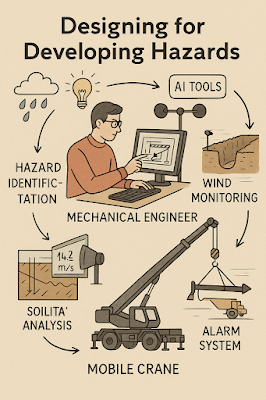
Designing for Developing Hazards

Crane accidents are among the most visible reminders of the risks inherent in construction. The collapse of a crane at a data centre site in Derrimut, Melbourne, brought attention once again to the vulnerability of temporary lifting structures. While formal investigations are still underway, and no conclusions should be drawn prematurely, the event provides a valuable opportunity for reflection within the engineering community.

This article considers the collapse not as an isolated failure but as a case study in hazard identification. In particular, it highlights how mechanical engineers must adapt from a static, design-phase view of risk to a dynamic, real-time approach to hazard monitoring. Wind, soil stability, and load conditions are well-known hazards. But with modern tools โ€” including LiDAR scanning for obstacle detection โ€” engineers can move toward a future where developing hazards are continuously tracked, anticipated, and controlled.

From Hazard Identification to Live Hazard Monitoring

Hazard identification has traditionally been a design-phase process: engineers anticipate risks, apply safety factors, and create conservative margins. This remains essential. Yet the Derrimut collapse illustrates the limits of a static model in a dynamic environment.

Cranes are exposed to evolving hazards:

  • Wind gusts that change minute by minute.
  • Soil stability that shifts with rainfall, excavation, or groundwater.
  • Obstacles such as power lines or nearby structures, which can create cascading risks if struck.
  • Load dynamics, including swinging or sudden movement.

What is needed is a transition from hazard identification to hazard monitoring: a continuous loop where design assumptions are validated against real-time data, and where developing risks are detected before they become failures.

Wind Hazards: Predicting the Unpredictable

Wind is a leading cause of crane collapses. Engineers know the mathematics: pressure rises with the square of velocity. A 50 km/h gust exerts twice the force of a 35 km/h breeze.

Most cranes today are fitted with anemometers and alarms, but these are often basic: a single reading at a single point, with alarms sounding when preset thresholds are exceeded. This approach can miss:

  • Local gust variability along a long jib.
  • Interaction with crane orientation (wind hitting the broadside is more critical than aligned wind).
  • Forecasted conditions that could deteriorate within minutes.

Next-generation wind monitoring could include:

  • Multi-point sensor arrays on cranes.
  • Integration with Bureau of Meteorology gust forecasts.
  • AI models predicting when risk thresholds will be exceeded, not just reporting when they are crossed.
  • Automatic crane repositioning to minimise wind exposure.

This transforms alarms from reactive to predictive โ€” the difference between warning after a hazard is present and anticipating before it materialises.


Soil Hazards: Stability Under Load

Ground conditions are another silent but critical hazard. Outriggers may impose hundreds of kilonewtons on pads, meaning even small soil weaknesses can lead to tilting or overturning.

Engineering practice already includes soil investigations: boreholes, CPT, SPT, and FEA models. But these tests capture conditions before installation, not necessarily during operation. Soil strength can change due to rainfall, groundwater shifts, or nearby excavation.

Live soil monitoring can be achieved with:

  • Load cells under mats to track ground reactions.
  • Settlement gauges to detect tilt.
  • Piezometers for pore pressure during rain events.
  • Integrated warnings when ground resistance trends downward.

This approach acknowledges soil as a living hazard that changes daily.

LiDAR and Obstacle Detection: Power Lines and Proximity Hazards

One striking feature of the Derrimut collapse was the craneโ€™s boom striking power lines. Contact with utilities is a recurrent hazard in crane operations worldwide. While operators are trained to maintain exclusion zones, in practice visibility, fatigue, or unexpected boom movement can still lead to contact.

LiDAR scanning offers a solution.

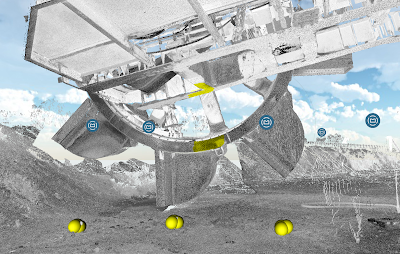
  • How it works: LiDAR (Light Detection and Ranging) emits laser pulses to map surroundings in 3D with centimetre accuracy. Mounted on a crane, it can create a live digital map of nearby obstacles.
  • Application in cranes:
    • Detecting and mapping power lines, buildings, or scaffolding in the lift path.
    • Setting proximity alarms when a boom, hook, or load approaches a defined clearance.
    • Combining with wind data to predict if gusts could push the load into restricted zones.

In aviation, LiDAR and radar-based systems are standard for obstacle detection. In construction, adoption is patchy. Yet the technology exists, is cost-effective, and could dramatically reduce risks of contact with hazards like live power lines.

LiDARโ€™s strength lies not only in static mapping but in detecting movement โ€” for example, when a suspended load begins to swing toward a power line due to a gust. This is a quintessential developing hazard, one that static design could never fully capture.

Integrated Hazard Dashboards

Wind, soil, and LiDAR obstacle detection all provide valuable data. But their true power lies in integration. Imagine a crane operatorโ€™s cabin equipped with a single dashboard displaying:

  • Wind speeds and gust forecasts, colour-coded for risk.
  • Soil reaction forces under each outrigger, with alerts if settlement is trending.
  • LiDAR mapping of nearby structures and power lines, with real-time clearance zones.
  • Predictive risk models showing probability of instability or contact over the next 30 minutes.

This integration mirrors aviationโ€™s cockpit: multiple inputs fused into actionable guidance. For cranes, such systems could shift the operatorโ€™s role from reactive decision-maker to proactive risk manager.


AI as a Predictive Partner

Artificial Intelligence has a natural role in hazard monitoring:

  • Sensor fusion: combining wind, soil, and LiDAR inputs into coherent risk profiles.
  • Prediction: learning from past crane incidents to forecast when risks are likely to escalate.
  • Decision support: providing operators with clear options (โ€œsafe to continue lift for 20 minutesโ€ / โ€œhalt operations โ€” clearance margin < 1mโ€).

The challenge is balance. AI should not replace human oversight, but augment it. Over-reliance could create new vulnerabilities if operators become complacent. The design challenge is to build AI into systems that support human judgment rather than substitute for it.


Ethics and Engineering Responsibility

The Derrimut collapse underscores the ethical responsibility of mechanical engineers. Hazard identification is not just a design requirement; it is a matter of public safety. The profession has a duty to anticipate, detect, and control risks wherever possible.

The tools now exist to monitor developing hazards โ€” wind sensors, soil gauges, LiDAR scanners, and AI dashboards. If lives and infrastructure can be protected through wider adoption of these tools, then the question becomes one of responsibility: should they be optional, or mandatory?

Open Questions for the Future

  1. Would integrated live monitoring have reduced the risks at Derrimut?
  2. Should all cranes be fitted with LiDAR obstacle detection as standard?
  3. Do we already have enough technology, but lack regulation and enforcement?
  4. What role should AI play in balancing predictive insight with operator autonomy?

The Derrimut incident remains under investigation. No conclusions can be drawn about its specific cause until findings are published. Yet as a case study, it illustrates the broader point that hazards in crane operations are dynamic. Wind, soil, obstacles, and loads evolve minute by minute.

Mechanical engineers have the tools โ€” wind sensors, soil monitors, LiDAR scanners, integrated dashboards, and AI โ€” to detect these developing hazards. The challenge is to move from a culture of static design assumptions to one of continuous hazard monitoring.

The ultimate professional question is this: If aviation can integrate multiple systems to monitor and predict hazards, why canโ€™t construction do the same for cranes? And if we can, how soon will we accept the ethical responsibility to make it standard?

References and Further Reading

  • ISO 4301 / AS 1418 โ€” Crane standards covering stability and wind.
  • ISO 12480-1:2003 โ€” Safe use of cranes; includes environmental hazard monitoring.
  • WorkSafe Victoria Guidance Notes โ€” Crane safety management.
  • Holickรฝ & Retief (2017) โ€” Probabilistic treatment of wind action in structural design.
  • Nguyen et al. (2020) โ€” Real-time monitoring of crane foundation response under variable soil conditions.
  • Liebherr LICCON โ€” Example of integrated load and geometry monitoring.
  • FAA LLWAS โ€” Aviationโ€™s real-time wind shear alert system, model for construction.
  • Recent research in LiDAR obstacle detection (e.g., IEEE Transactions on Intelligent Transportation Systems) โ€” showing LiDARโ€™s potential in complex environments.
Hamilton By Design logo displayed on a blue tilted rectangle with a grey gradient background
3D LiDAR scanning and 3D modelling service button โ€” laser scanner capturing a point cloud for engineering and CAD modelling
Mechanical engineering services

Our clients:

Name
Would you like us to arrange a phone consultation for you?
Address

Structural Drafting

Mechanical Drafting

3D Laser Scanning

Mechanical Engineering

Consulting Engineers

How Mechanical Engineering and Technology Are Shaping the Future of Mining in Australia

Discover how mechanical engineering, government funding, and digital innovation are driving the future of mining in Australia. Learn how Hamilton By Design leads the change.

Australiaโ€™s mining industry is undergoing one of its most significant transformations in decades. At the heart of this change lies the convergence of mechanical engineering innovation, government-backed funding, and cutting-edge technology.

With over $750 million in federal support for metals manufacturing and state-based funding for METS innovation, mechanical engineers are now in a position to redefine how mining operations are designed, maintained, and optimised.

At Hamilton By Design, we are helping clients across the country harness these changesโ€”offering smart mechanical solutions that are efficient, resilient, and future-ready.


Key Opportunities: How Technology is Reshaping Mechanical Engineering in Mining

1. Government Funding is Fueling Innovation

In March 2025, the Australian Government announced a $750 million investment to boost advanced manufacturing and metals production in Australia.

๐Ÿ”— Backing Our Metals Manufacturers โ€“ Federal Government

This funding opens doors for:

  • Prototyping new mechanical assemblies

  • Automation upgrades for existing mining plants

  • Local manufacturing partnerships to reduce supply chain risk

At Hamilton By Design, we are already supporting mining clients to align their capital projects with these funding pathways.


2. Digital Tools Enhance Mechanical Performance

According to the CSIRO METS Roadmap, digitalisation and automation are critical for the next phase of mining growth.

We implement:

  • LiDAR scanning for as-built plant modelling

  • Finite Element Analysis (FEA) for structural design optimisation

  • Predictive maintenance planning using real-time sensor data

These tools not only extend the life of critical components but also enhance safety, reduce downtime, and support remote operations.


3. WA and NSW Governments Are Supporting METS Innovation

The Western Australian government continues to support Mining Equipment, Technology and Services (METS) innovation and commercialisation through its METS Innovation Grants.

๐Ÿ”— WA METS Innovation Funding

This creates opportunities for mechanical engineering firms to:

  • Collaborate with OEMs and fabricators

  • Introduce novel materials and designs for harsh mining environments

  • Lead the push toward zero-emissions equipment and sustainable design

Hamilton By Designโ€™s agile project delivery and deep mechanical experience allow us to integrate seamlessly with these innovation pipelines.


The Challenges: Bridging the Gap Between Legacy and Future

Despite the exciting momentum, the sector also faces critical challenges:

  • Skills Gaps: Many engineers are not yet equipped with digital or automation skills.

  • System Complexity: Mechanical systems are increasingly integrated with electrical and digital subsystems, requiring multidisciplinary design thinking.

  • Capital Risk: Large investments in automation must deliver measurable value, which requires robust mechanical frameworks.

Hamilton By Design addresses these risks by offering not only high-quality design services, but also strategy, planning, and training support to ensure seamless project delivery.


Why Hamilton By Design is Your Engineering Partner of the Future

We donโ€™t just design partsโ€”we engineer solutions.

Our core services include:

  • Mining mechanical design (transfer chutes, diverter systems, sheet metal)

  • Structural and stress analysis (using FEA and vibration simulation)

  • LiDAR-enabled plant scanning for reverse engineering and documentation

  • Sustainable, future-ready mechanical engineering consultancy

We work with clients across NSW, WA, QLD, and SA, offering nationwide support for design, development, and delivery.


Letโ€™s Engineer the Future Together

Mechanical engineering is no longer just about functionโ€”itโ€™s about intelligence, adaptability, and sustainability.

At Hamilton By Design, we help mining companies, fabricators, and OEMs thrive in this new landscape. Whether youโ€™re applying for funding, upgrading equipment, or redesigning your processing infrastructure, we have the tools, experience, and innovation to lead you forward.

ย 
ย 
Hamilton By Design logo displayed on a blue tilted rectangle with a grey gradient background
3D LiDAR scanning and 3D modelling service button โ€” laser scanner capturing a point cloud for engineering and CAD modelling
Mechanical engineering services

Contact us at

Email โ€“ info@hamiltonbydesign.com.au

Phone โ€“ (+61) 0477 002 249

Our clients:

Name
Would you like us to arrange a phone consultation for you?
Address

Hamilton By Design | Mechanical Drafting | Structural Drafting | 3-D Lidar Scanning

Finite Element Analysis (FEA) engineering simulation button
Mechanical engineering services

How Mechanical Engineers Are Powering Mining on the Central Coast

Mechanical Engineers Are Powering Mining

The Central Coast of New South Wales is more than just pristine beaches and a relaxed lifestyle. Beneath its surface lies a strong industrial and mining support sector where mechanical engineers are playing a vital role in modernising, maintaining, and innovating heavy machinery and infrastructure.

At Hamilton By Design, we specialise in mechanical engineering consulting services across Australiaโ€”including support for clients right here on the Central Coast. Visit us at ๐Ÿ‘‰ www.hamiltonbydesign.com.au to explore our services.


๐Ÿ‘ท Why Mechanical Engineering Matters in Mining

Mechanical engineers are the invisible backbone of mining operations. In Central Coast-based support industries and nearby projects like Wallarah 2, mechanical engineers handle:
  • Design & Drafting of Mining Infrastructure

  • Maintenance Systems for Plant and Equipment

  • Automation, Robotics, and Sensor Integration

  • Environmental Engineering for Emission Reduction

  • Reliability and Safety Auditing

Whether it’s conveyor systems, processing plants, underground ventilation, or mobile plant maintenance, mechanical engineers ensure it all runs smoothly, safely, and efficiently.


๐Ÿ“ Mechanical Engineering Jobs on the Central Coast

The Central Coast is home to a growing number of engineering-based businesses and industrial hubs:

  • Somersby, Tuggerah, and Lisarow host major mechanical and fabrication workshops.

  • Companies like Wabtec, Coffey, and Boral regularly seek mechanical engineers.

  • The region supports jobs ranging from drafting and design to hands-on site-based maintenance.

At Hamilton By Design, we provide the expertise and consulting support these businesses needโ€”structural drafting, 3D laser scanning, plant design, and more.

๐Ÿ‘‰ Want to collaborate? Visit us at www.hamiltonbydesign.com.au


๐Ÿ”ง Trends Shaping Mechanical Engineering in Mining

If you’re working in, or supplying to, the mining industry, here are five key trends affecting mechanical engineers today:

  1. Automation & Remote Control Systems

  2. Data-Driven Predictive Maintenance

  3. Sustainable Design and Energy Efficiency

  4. Digitisation via Lidar & 3D Scan Models

  5. Multi-disciplinary Integration (Mech + Elec + Struct)

Hamilton By Design helps clients stay ahead of these trends with cutting-edge tools, qualified engineering support, and experienced consultants.


๐Ÿง‘โ€๐Ÿญ Training Pathways for Engineers on the Coast

  • TAFE NSW offers mechanical engineering and drafting training.
  • Central Coast Council and local employers provide apprenticeships and work experience.

  • Many local high schools and programs now promote STEM and engineering career pathways.

Are you a contractor, project manager, or engineering lead on the Coast looking for expert support? We’re ready to help.

๐Ÿ‘‰ Contact us at www.hamiltonbydesign.com.au


๐ŸŒŠ Why Base Yourself on the Central Coast?

  • Easy access to Newcastle and Sydney mining regions

  • Affordable living and coastal lifestyle

  • Thriving local industry with national project links

Whether youโ€™re managing a plant upgrade or need detailed mechanical drawings for a site modification, Hamilton By Design has the skills and tools to support your project.


Letโ€™s Talk Engineering

Hamilton By Design is a trusted name in mechanical and structural design, offering:

Mechanical design & consulting
Structural drafting
Lidar scanning & 3D modelling
Australia-wide service reach

Visit: www.hamiltonbydesign.com.au
Email: info@hamiltonbydesign.com.au


Your Central Coast Engineering Partner โ€“ Hamilton By Design
Supporting Australian mining and industry with precision and experience.


#CentralCoast #MechanicalEngineering #MiningSupport #HamiltonByDesign #EngineeringConsultants #MiningInnovation #NSWIndustry #LidarScanning #PlantDesign


ย 
ย 
ย 
Hamilton By Design logo displayed on a blue tilted rectangle with a grey gradient background
3D LiDAR scanning and 3D modelling service button โ€” laser scanner capturing a point cloud for engineering and CAD modelling
Mechanical engineering services

Our cliest:

Name
Would you like us to arrange a phone consultation for you?
Address
3D LiDAR scanning services on the Central Coast providing engineering-grade laser scanning, point cloud capture, scan-to-CAD modelling and industrial reality capture for infrastructure and industrial projects.
Drafting services on the Central Coast providing engineering drawings, fabrication detailing, as-built documentation, reverse engineering and CAD drafting for industrial and infrastructure projects.
Mechanical engineering services on the Central Coast providing industrial design, plant inspections, pump calculations, reverse engineering and engineering support for manufacturing, infrastructure and heavy industry projects.
Finite Element Analysis (FEA) engineering simulation button
Mechanical engineering services

Elevating Engineering Precision with 3D CAD, Laser Scanning & Simulation

Elevating Engineering Precision: 3D CAD Design, Laser Scanning, and Simulation for Custom Steel Fabrication


In modern engineering, accuracy, efficiency, and adaptability are not just desiredโ€”they are essential. At Hamilton By Design, we combine cutting-edge tools like 3D CAD design, 3D laser scanning, and SolidWorks FEA Simulation with practical expertise in custom steel fabrication to deliver intelligent, end-to-end solutions for complex engineering projects.

From detailed CAD Modelling to field-accurate Faro Scanning, our consultancy supports Australian industries with precise, timely, and cost-effective design solutions.

The Role of 3D CAD Design in Modern Engineering

3D CAD design (Computer-Aided Design) forms the foundation of most modern engineering workflows. It transforms initial concepts into detailed digital models, enabling design validation, collaboration, and modification long before anything is physically built.

Using tools like SolidWorks, our experienced 3D CAD designers create accurate representations of components, assemblies, and entire systems. This not only reduces costly errors during fabrication but also allows clients to visualise and interact with their product in a virtual environment.

With 3D CAD design at the core, we help clients navigate engineering challengesโ€”from product development to mechanical infrastructureโ€”faster and with greater confidence.


3D Modelling: Bridging Concept and Construction

Closely integrated with CAD design is 3D modelling, which allows designers to create digital prototypes of physical objects. At Hamilton By Design, 3D modelling is used not just for form but also for function. Our models include precise dimensions, material properties, tolerances, and interaction points.

Whether itโ€™s reverse engineering an existing plant structure or designing custom brackets for a conveyor system, our 3D modelling ensures high fidelity and interoperability across platforms.


The Power of 3D Laser Scanning for Engineering Accuracy

To capture as-built environments with unmatched accuracy, we use 3D laser scan for engineering projects of all sizes. Leveraging Faro scanning technology, we generate detailed point clouds that map real-world environments down to millimetre accuracy.

This Faro scan data is then converted into actionable geometry for further CAD modelling or simulation. Itโ€™s particularly valuable in retrofit, maintenance, or upgrade projects, where existing site data is often incomplete or outdated.

Whether youโ€™re updating mechanical systems in a processing plant or ensuring compliance in a structural audit, 3D laser scanning delivers the reliable data you need for precise engineering decisions.


From Scan to Simulation: Enhancing Designs with SolidWorks FEA

After creating a digital model, itโ€™s crucial to understand how it will perform under real-world conditions. Thatโ€™s where SolidWorks FEA simulation comes in.

SolidWorks Simulation allows our team to perform finite element analysis (FEA) on assemblies, evaluating factors such as stress, strain, fatigue, and thermal distribution. By integrating FEA into the design process, we validate designs before they are fabricatedโ€”saving both time and material costs.

This proactive approach is particularly useful in custom steel fabrication, where load-bearing components must meet stringent safety and performance criteria.


CAD Modelling in Custom Steel Fabrication

Custom steel fabrication is both an art and a science. It requires a deep understanding of materials, tolerances, and manufacturing techniques. At Hamilton By Design, we combine advanced CAD modelling with practical fabrication experience to create components that meet your exact requirements.

Whether you need custom brackets, enclosures, chutes, or full-scale structural assemblies, our models are production-ready and tailored to your fabrication process. We provide DXFs, laser-cutting files, and BOMs that integrate seamlessly with your shop floor operations.


Why Choose a 3D CAD Designer?

A skilled 3D CAD designer does more than just draw. They anticipate fitment issues, consider manufacturing constraints, and collaborate across disciplines to create practical, buildable designs.

At Hamilton By Design, our team brings over a decade of experience across heavy industry, defence, mining, and manufacturing. We understand the nuances of real-world engineering and tailor our CAD services to each project’s unique needs.


Integrating Faro Scanning with SolidWorks

One of our key differentiators is the seamless integration of Faro scan data into SolidWorks. This workflow allows us to:

  • Overlay scanned data onto CAD designs

  • Identify deviations between as-built and as-designed models

  • Rapidly develop retrofit solutions with accurate field measurements

  • Conduct clash detection and ensure proper clearances

This end-to-end capability reduces rework, shortens project timelines, and increases overall design quality.


Applications Across Industry

Our services benefit a broad range of industries, including:

  • Mining & Processing โ€“ Reverse engineering plant infrastructure, scanning for shutdown planning, custom chute design

  • Manufacturing โ€“ Tooling, jigs, and production line modifications

  • Defence โ€“ CAD design and simulation for retrofit and upgrade works

  • Construction โ€“ Structural steel design and site validation

Whether you’re fabricating a single part or overseeing a multi-million-dollar infrastructure upgrade, our tools and experience help you deliver with confidence.


The Difference

At Hamilton By Design, we donโ€™t just deliver drawingsโ€”we provide engineering certainty. By combining the precision of 3D CAD, the power of SolidWorks simulation, and the real-world accuracy of Faro scanning, we help clients design, assess, and fabricate with confidence.

If you’re looking for an Australian mechanical engineering consultancy that delivers intelligent design, detailed modelling, and practical support for custom steel fabrication projects, we’re ready to help.


Letโ€™s Work Together

Visit www.hamiltonbydesign.com.au to learn more or contact us to discuss how we can support your next engineering challenge.

3D LiDAR scanning and 3D modelling service button โ€” laser scanner capturing a point cloud for engineering and CAD modelling
Mechanical engineering services

Our Clients:

Name
Would you like us to arrange a phone consultation for you?
Address
Finite Element Analysis (FEA) engineering simulation button
Mechanical engineering services

Challenges of Not Consulting AS 3990 Mechanical Equipment Steelwork

Engineering comparison showing AS 3990-compliant steelwork versus unverified mechanical equipment steelwork, assessed using LiDAR scanning and digital engineering

The Australian Standard AS 3990, “Mechanical Equipment โ€“ Steelwork,” is critical for ensuring the design and construction of safe, reliable, and durable steel structures in mechanical systems. It establishes guidelines for materials, construction practices, and stress analysis to meet the demanding requirements of industrial and mechanical applications. Failing to consult AS 3990 can lead to significant challenges for companies and individuals involved in engineering projects. Additionally, an engineering company like Hamilton By Design, with extensive experience in mechanical design and steelwork, can address these challenges effectively by leveraging its expertise and adherence to industry standards.

Our clients:

1. Structural Failures

One of the most severe consequences of not consulting AS 3990 is the risk of structural failures. Steelwork used in mechanical equipment must withstand specific stresses, loads, and environmental conditions. If these factors are not carefully calculated according to the standard, the structure may fail under operational stress, leading to catastrophic consequences.

Hamilton By Designโ€™s Approach:
Hamilton By Design ensures structural integrity through rigorous design analysis, leveraging advanced modeling tools and AS 3990 guidelines to predict and mitigate potential failure points. Their experience in various industries allows them to create robust steelwork designs that perform reliably under operational conditions.

2. Compliance and Legal Issues

Regulatory compliance is a cornerstone of modern engineering practices. Many industries, including mining, manufacturing, and construction, mandate adherence to AS 3990 for safety and operational approvals. Ignoring the standard can result in penalties, project delays, or even legal liabilities due to non-compliance.

Hamilton By Designโ€™s Approach:
The company prioritizes compliance by integrating AS 3990 requirements into every stage of the project. Their team stays updated with the latest revisions of the standard and ensures all designs meet regulatory expectations, providing clients with peace of mind and streamlined approval processes.

3. Reduced Equipment Longevity

Steel structures that do not conform to AS 3990 may suffer from premature wear, fatigue, or failure. This can lead to frequent repairs, replacements, or unplanned downtime, significantly reducing the lifespan of mechanical equipment.

Hamilton By Designโ€™s Approach:
Hamilton By Design employs precise material selection and stress analysis techniques, as prescribed by AS 3990, to optimize the durability and performance of their designs. Their focus on quality engineering ensures long-lasting equipment that minimizes maintenance requirements.

4. Safety Hazards

Non-compliance with AS 3990 poses serious safety risks. Equipment that fails unexpectedly can cause injuries or fatalities, creating an unsafe work environment and potential legal repercussions.

Hamilton By Designโ€™s Approach:
Safety is a core value for Hamilton By Design. The company conducts thorough risk assessments and designs steelwork that adheres to AS 3990โ€™s stringent safety standards. Their commitment to safety reduces risks to operators and protects the overall workforce.

5. Increased Maintenance Costs

Improperly designed steelwork often requires frequent maintenance due to unforeseen stress points, material fatigue, or environmental damage. This not only increases operational costs but also disrupts productivity.

Hamilton By Designโ€™s Approach:
Hamilton By Designโ€™s adherence to AS 3990 minimizes maintenance needs by delivering designs that perform reliably over extended periods. Their proactive approach to material selection and stress management ensures reduced long-term operational costs for their clients.

6. Loss of Reputation

Companies delivering substandard designs risk damaging their reputation and losing client trust. Poor performance or failure of mechanical equipment reflects negatively on both the engineers and the organization.

Hamilton By Designโ€™s Approach:
Hamilton By Design has built a solid reputation by consistently delivering high-quality, compliant designs. Their focus on excellence and attention to detail ensures that their clients receive reliable solutions, strengthening relationships and fostering repeat business.

Engineers using LiDAR scanning and digital models to address challenges caused by not consulting AS 3990 mechanical equipment steelwork standards

Advantages of Working with Engineers Who Refer to AS 3990

1. Enhanced Structural Reliability

Engineers who follow AS 3990 guidelines ensure that steel structures are designed to handle expected loads and stresses safely. This enhances the overall reliability and performance of mechanical equipment.

Hamilton By Designโ€™s Advantage:
Hamilton By Designโ€™s expertise in applying AS 3990 results in robust designs that exceed client expectations. Their thorough understanding of structural dynamics ensures optimal performance and safety.

2. Regulatory Compliance

Adhering to AS 3990 simplifies the process of meeting industry regulations, reducing risks of audits, fines, or project delays.

Hamilton By Designโ€™s Advantage:
Hamilton By Designโ€™s commitment to compliance ensures that their projects pass inspections and meet all regulatory requirements, helping clients avoid costly delays and legal issues.

3. Optimized Design

Following AS 3990 enables engineers to create designs that balance safety, functionality, and cost-efficiency.

Hamilton By Designโ€™s Advantage:
The company uses advanced engineering tools and methodologies to develop optimized designs that align with clientsโ€™ operational goals while maintaining compliance with AS 3990.

4. Improved Safety

AS 3990 includes comprehensive guidelines for minimizing risks, ensuring a safer working environment.

Hamilton By Designโ€™s Advantage:
Hamilton By Designโ€™s safety-first approach incorporates AS 3990โ€™s recommendations to deliver solutions that prioritize the well-being of workers and operators.

5. Cost Savings

Properly designed steelwork reduces maintenance, repair, and replacement costs over the equipmentโ€™s lifecycle.

Hamilton By Designโ€™s Advantage:
By adhering to AS 3990, Hamilton By Design delivers cost-effective solutions that reduce long-term expenses, helping clients maximize their return on investment.

6. Increased Equipment Lifespan

AS 3990-compliant designs are engineered to withstand operational stresses, enhancing the durability of mechanical systems.

Hamilton By Designโ€™s Advantage:
Hamilton By Designโ€™s focus on durability and reliability ensures that their designs deliver long-term performance, minimizing disruptions and extending equipment lifespan.

7. Competitive Advantage

Delivering high-quality, compliant systems provides a competitive edge, improving marketability and client trust.

Hamilton By Designโ€™s Advantage:
Hamilton By Designโ€™s track record of excellence and adherence to AS 3990 positions them as a trusted partner for engineering projects, helping clients achieve their goals efficiently and effectively.

8. Risk Mitigation

Following AS 3990 minimizes the risk of unexpected failures, accidents, or operational delays.

Hamilton By Designโ€™s Advantage:
The companyโ€™s comprehensive approach to risk management ensures that their designs perform reliably under real-world conditions, reducing risks for their clients.

Hamilton By Design: Addressing Challenges with Expertise

Hamilton By Design is an engineering firm renowned for its dedication to excellence and adherence to industry standards. Their extensive experience in mechanical equipment and steelwork enables them to address the challenges of non-compliance with AS 3990 effectively. Here are some examples of how Hamilton By Design applies its expertise to deliver superior outcomes:

Case Study 1: Mining Equipment Steelwork

In a project involving heavy mining equipment, Hamilton By Design was tasked with designing a support structure for a conveyor system. By consulting AS 3990, they identified critical stress points and optimized the design to handle dynamic loads. The result was a durable and reliable structure that exceeded client expectations and minimized maintenance costs.

Case Study 2: Industrial Manufacturing Facility

Hamilton By Design worked on a manufacturing facility requiring custom steelwork for robotic assembly lines. By adhering to AS 3990, they ensured the steel structures could withstand repetitive stress and environmental factors, enhancing the safety and efficiency of the facility.

Case Study 3: Renewable Energy Project

In a renewable energy project, Hamilton By Design designed steel frameworks for wind turbine foundations. By following AS 3990, they accounted for wind loads, fatigue stresses, and environmental conditions, delivering a solution that met stringent safety and performance requirements.

Conclusion

Failing to consult AS 3990 can lead to significant challenges, including structural failures, compliance issues, reduced equipment lifespan, safety hazards, increased maintenance costs, and reputational damage. However, working with experienced engineers who prioritize adherence to AS 3990, such as those at Hamilton By Design, provides numerous advantages, including enhanced reliability, regulatory compliance, optimized design, improved safety, cost savings, increased equipment lifespan, and risk mitigation.

Hamilton By Designโ€™s proven track record demonstrates their ability to navigate these challenges effectively, leveraging their expertise and commitment to quality to deliver exceptional results for their clients. By choosing Hamilton By Design, companies can ensure that their mechanical equipment steelwork projects are completed to the highest standards of safety, reliability, and performance.

Hamilton By Design logo displayed on a blue tilted rectangle with a grey gradient background

For more information on the Hamilton By Design Consulting approach, feel free to email info@hamiltonbydesign.com.au

Name
Would you like us to arrange a phone consultation for you?
Address
3D LiDAR scanning and 3D modelling service button โ€” laser scanner capturing a point cloud for engineering and CAD modelling
Mechanical engineering services
Finite Element Analysis (FEA) engineering simulation button
Mechanical engineering services
Finite Element Analysis (FEA) engineering simulation button
Mechanical engineering services