Mechanical Engineering Services for Plant and Production Problems โ€” Sydney

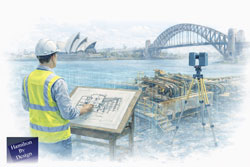
Engineer-led reverse engineering with 3D scanning and drafting overlooking Sydney Harbour and the Harbour Bridge

Mechanical Engineering Services for Plant and Production Issues | Sydney

Practical engineering solutions when production issues, equipment failures, and compliance risks are impacting your business.

When production stops, costs rise quickly. Many operational problems arenโ€™t caused by staff or maintenance โ€” theyโ€™re caused by systems that are no longer fit for purpose. Whether your plant has grown, equipment has changed, or suppliers are no longer available, mechanical engineering support can help restore performance and reduce ongoing risk.

We provide engineering-led problem solving for operating facilities, focused on practical, buildable solutions that keep your business moving.
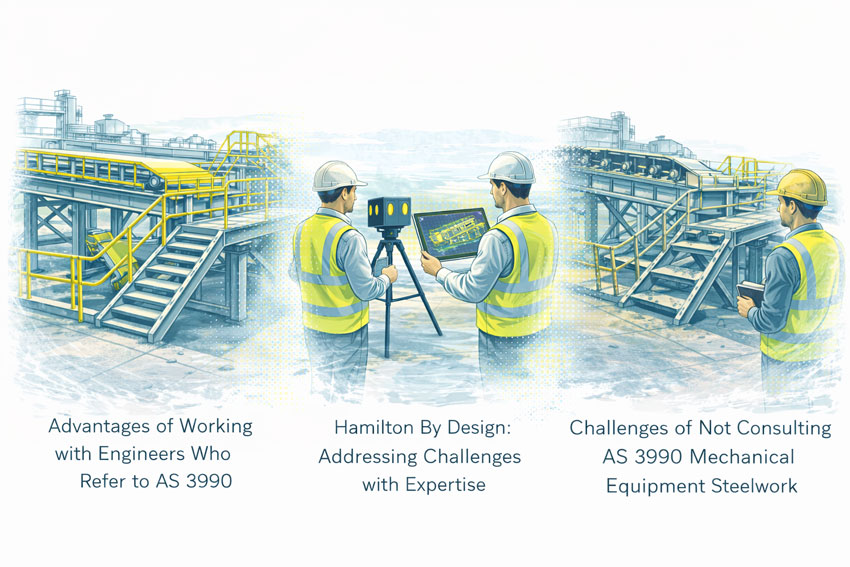

Engineers using LiDAR scanning and digital models to address challenges caused by not consulting AS 3990 mechanical equipment steelwork standards

When Businesses Typically Call a Mechanical Engineer

Most clients contact us when something critical is no longer working as it should โ€” not when everything is running smoothly.

Common triggers include:

  • Production line keeps jamming or backing up
  • Conveyor upgrades are needed to increase throughput
  • Plant layout no longer supports current operations
  • Original equipment supplier is no longer available
  • Compliance issues have been identified during audits or inspections

In these situations, quick fixes often fail because the underlying system was never designed for todayโ€™s operating conditions.


Production Line Keeps Jamming

If bottlenecks, product damage, or stoppages are becoming routine, the problem is often mechanical and systemic โ€” not operator error.

Engineering support can help by:

  • Identifying root causes of flow restrictions
  • Redesigning transfer points and interfaces
  • Improving guarding, access and maintenance zones
  • Reconfiguring equipment layout for smoother material movement

The goal is to improve reliability, not just reset alarms.


Conveyor Upgrade or Replacement Required

Conveyors are often the backbone of production and logistics systems. When capacity increases or materials change, existing conveyors may no longer perform as required.

Mechanical engineering services can support:

  • Conveyor capacity upgrades
  • Drive and structural modifications
  • Transfer chute redesign
  • Integration of new equipment into existing lines

Upgrades can often be achieved without full system replacement when engineered correctly.


Plant Layout No Longer Works

As facilities expand and processes change, original layouts can become inefficient or unsafe.

Engineering reviews can identify opportunities to:

  • Improve workflow and access
  • Reduce unnecessary material handling
  • Improve maintenance clearances
  • Support future equipment additions

Well-planned layout changes reduce downtime, improve safety, and increase operational flexibility.


Equipment Supplier Is No Longer Available

When OEMs stop supporting equipment or close operations, businesses are often left with:

  • No spare parts supply
  • No engineering documentation
  • No upgrade pathway

Mechanical engineers can reverse-engineer components, redesign systems, and develop replacement solutions that integrate with existing plant โ€” often improving performance at the same time.


Compliance Issues Raised

Compliance notices, insurance requirements, or safety audits can quickly become business-critical.

Engineering services can support:

  • Mechanical and structural assessments
  • Design of compliant modifications
  • Certification documentation where required
  • Implementation planning to minimise downtime

Addressing compliance early reduces operational and legal risk.


What We Provide

Our mechanical engineering services typically include:

  • Site assessments and problem diagnosis
  • Concept and detailed design solutions
  • Engineering drawings and documentation
  • Support for fabrication and installation
  • Design verification and compliance support

Where required, engineering services can be supported by 3D laser scanning and as-built modelling to ensure new designs fit accurately into existing facilities.


Why Use an Engineering Consultant Instead of Labour Hire

Labour hire provides people. Engineering consultants provide solutions and accountability.

Using an engineering service means:

  • Problems are diagnosed, not just worked around
  • Designs are developed and documented
  • Risk is managed through professional responsibility
  • Solutions are built to last, not patched temporarily

This approach reduces repeat failures and long-term maintenance costs.


Hamilton By Design logo displayed on a blue tilted rectangle with a grey gradient background

3D LiDAR scanning and 3D modelling service button โ€” laser scanner capturing a point cloud for engineering and CAD modelling
Mechanical engineering services

Supporting Businesses Across Sydney

We support manufacturing, processing, logistics, and industrial facilities across Sydney and surrounding regions, providing responsive engineering services for operating environments where downtime and rework are costly.

Whether the issue is urgent or part of a planned upgrade, engineering support can help stabilise operations and support future growth.


Talk to an Engineer About Your Plant Issues

If production problems, equipment limitations, or compliance risks are affecting your operation, early engineering input can prevent escalation into major shutdowns or capital replacements.

Contact us to discuss your facility and weโ€™ll help identify practical next steps.


Name
Would you like us to arrange a phone consultation for you?
Address

Mechanical Engineering | Structural Engineering


Hamilton By Design provides engineering-led 3D scanning, LiDAR scanning, mechanical engineering and digital engineering services throughout Sydney and Greater Sydney.

Explore our related Sydney services:


  • 3D Scanning Sydney โ€“ Engineering-grade terrestrial laser scanning, as-built surveys and point cloud capture for industrial, infrastructure and commercial projects.
  • Reality Capture Sydney โ€“ High-accuracy reality capture, digital twins, asset documentation and engineering-grade site verification.
  • Scan to CAD Sydney โ€“ Convert point cloud data into AutoCAD, SolidWorks, Inventor and other engineering-ready CAD deliverables.
  • Point Cloud Modelling Sydney โ€“ Engineering-grade point cloud processing, clash detection, as-built verification and 3D modelling.
  • Mechanical Engineering Sydney โ€“ Mechanical design, plant upgrades, materials handling systems, conveyors, chutes, platforms and engineering support.
  • Structural Drafting Sydney โ€“ Structural steel drafting, fabrication drawings, GA drawings, workshop detailing and as-built documentation.

Hamilton By Design supports projects throughout Sydney CBD, Parramatta, Liverpool, Penrith, Blacktown, Chatswood, Alexandria, Mascot, Newcastle and the Central Coast.


Blue banner graphic displaying the text "Point Cloud to CAD - Australia" in large white lettering, representing point cloud processing, scan-to-CAD conversion and digital engineering services across Australia.
Blue banner graphic displaying the text "Scan to CAD Sydney" in large white lettering, representing engineering-led point cloud to CAD conversion, LiDAR scanning and digital engineering services in Sydney.
Blue banner graphic displaying the text "Reality Capture Sydney - CBD" in large white lettering, representing engineering-led reality capture, LiDAR scanning and digital engineering services within Sydney CBD commercial buildings and infrastructure.
3D LiDAR Scanning Darwin for engineering surveys, laser scanning, reality capture and point cloud modelling services
3D LiDAR Scanning Australia engineering services for laser scanning, reality capture, scan-to-CAD, Scan-to-BIM and as-built documentation across Australia
3D LiDAR scanning services on the Central Coast providing engineering-grade laser scanning, point cloud capture, scan-to-CAD modelling and industrial reality capture for infrastructure and industrial projects.

Engineering-Led 3D Scanning for Brownfield Industrial Upgrades

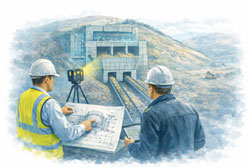
Mechanical engineer and client reviewing a ROM hopper with two discharge conveyors using LiDAR scanning at a mining bulk material handling facility

Engineering-Led 3D Scanning for Brownfield Industrial Upgrades

Safer Shutdowns, Smarter Design, and More Done With Fewer Resources

Brownfield industrial upgrades are some of the highest-risk engineering activities in mining and heavy industry. Existing assets, live plant interfaces, limited access, and tight shutdown windows leave little room for error.

At Hamilton By Design, we deliver engineering-led 3D LiDAR scanning to support brownfield upgradesโ€”providing accurate site data that enables safer design, efficient shutdown execution, and reliable outcomes when upgrading critical assets such as hoppers, chutes, pump boxes, conveyor transfers, and vertical shaft units.


Why Brownfield Upgrades Fail Without Accurate Site Data

Many brownfield failures trace back to the same root cause:

Design decisions made on assumptions, not reality.

Common issues include:

  • Outdated or incomplete drawings
  • Hidden interferences and undocumented modifications
  • Restricted access for survey and measurement
  • Time pressure during shutdowns

Engineering-led reality capture removes uncertainty before fabrication and installation begin.


Safety Starts Before the Shutdown

Safety in brownfield environments is largely determined during the design phase, not on site.

3D LiDAR scanning allows engineers to:

  • Design modifications without repeated site access
  • Reduce manual measurements in live plant areas
  • Identify clashes and pinch points early
  • Improve access, guarding, and maintainability outcomes

By reducing exposure hours and unplanned rework, scanning directly supports safer shutdown execution.


Typical Assets Upgraded in Brownfield Environments

Hamilton By Design supports upgrades to a wide range of industrial assets, including:

Hoppers & Chutes

  • ROM hoppers
  • Transfer chutes
  • Surge bins
  • Wear-prone interfaces

Conveyors & Transfer Stations

  • Conveyor head and tail stations
  • Transfer points
  • Discharge transitions
  • Supporting steelwork

Pump Boxes & Process Interfaces

  • Pump boxes and sumps
  • Pipework interfaces
  • Structural supports
  • Access platforms

Vertical Shaft & Drop Structures

  • Vertical shaft hoppers
  • Ore passes
  • Gravity-fed transfer systems

These assets are often deeply integrated into existing plant, making accurate as-built data critical.


Engineering-Led Scan-to-CAD for Upgrade Design

Our scan-to-CAD workflows are built around engineering outcomes, not just visual models.

This includes:

  • High-accuracy LiDAR capture of existing conditions
  • Engineering-intent CAD modelling
  • Design for fabrication and installation
  • Clash reduction across mechanical and structural scopes

The result is buildable design that aligns with real-world constraints.


Reliable Support for Shutdown-Driven Projects

Shutdowns demand precision. There is no time for re-measurements or redesign on site.

Engineering-led 3D scanning supports shutdown success by:

  • Allowing design to be completed well before shutdown
  • Supporting pre-fabrication of steelwork and chutes
  • Reducing RFIs and site queries
  • Increasing the amount of work completed per shutdown

When time and labour are limited, better information delivers better outcomes.


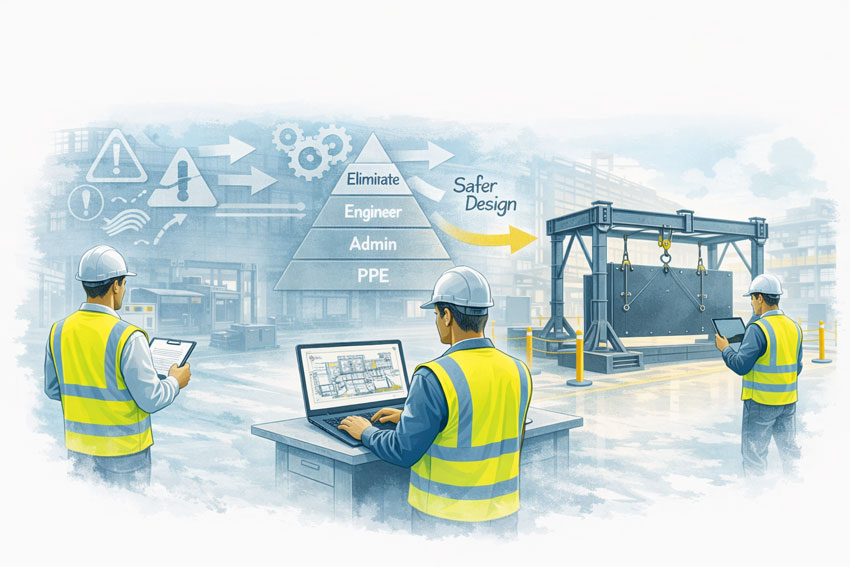
Mining engineers applying design-for-safety principles to improve material handling systems in an industrial workshop

Getting More Done With Fewer Resources

In todayโ€™s industrial environment, engineering teams are under pressure to:

  • Do more with fewer people
  • Reduce shutdown durations
  • Control capital and maintenance costs

Accurate digital site data allows teams to:

  • Minimise engineering rework
  • Reduce site-based labour
  • Improve coordination between disciplines
  • Make confident decisions faster

Reality capture becomes a force multiplier, not just a documentation tool.


Australian Engineering Quality You Can Rely On

Hamilton By Designโ€™s approach reflects Australian engineering standards and site experience.

We donโ€™t just scan โ€” we:

  • Understand how plant is built and maintained
  • Design with fabrication and installation in mind
  • Take responsibility for engineering outcomes

This sets our work apart from low-cost capture services that leave risk unresolved.


Hamilton By Design logo displayed on a blue tilted rectangle with a grey gradient background


3D LiDAR scanning and 3D modelling service button โ€” laser scanner capturing a point cloud for engineering and CAD modelling
Mechanical engineering services

Speak With an Engineer

If youโ€™re planning a brownfield upgrade involving:

  • Hoppers or chutes
  • Conveyor transfers
  • Pump boxes or sumps
  • Vertical shaft or drop structures
  • Shutdown-critical works

Hamilton By Design provides engineering-led 3D LiDAR scanning to support safer, more reliable brownfield upgrades.

Name
Would you like us to arrange a phone consultation for you?
Address

Our clients:


Finite Element Analysis (FEA) engineering simulation button
Mechanical engineering services

Mechanical Engineering | Structural Engineering


SolidWorks Drafting Services | Australia

Engineering-led SolidWorks drafting in Australia with 25 years of Hamilton By Design experience

SolidWorks Drafting Services | Engineering-Led CAD Support Australia

SolidWorks Drafting Services That Go Beyond โ€œJust Drawingsโ€

SolidWorks drafting is often treated as a drafting-only task โ€” but in real industrial, manufacturing, and construction environments, poorly governed CAD drawings are one of the leading causes of fit-up issues, rework, and shutdown delays.

Hamilton By Design provides SolidWorks drafting services in Australia that are engineer-led, fabrication-aware, and accountable. Our drafting support is delivered with the same mindset used on live industrial projects: drawings must reflect site reality, manufacturing constraints, and installation tolerances โ€” not just software capability.


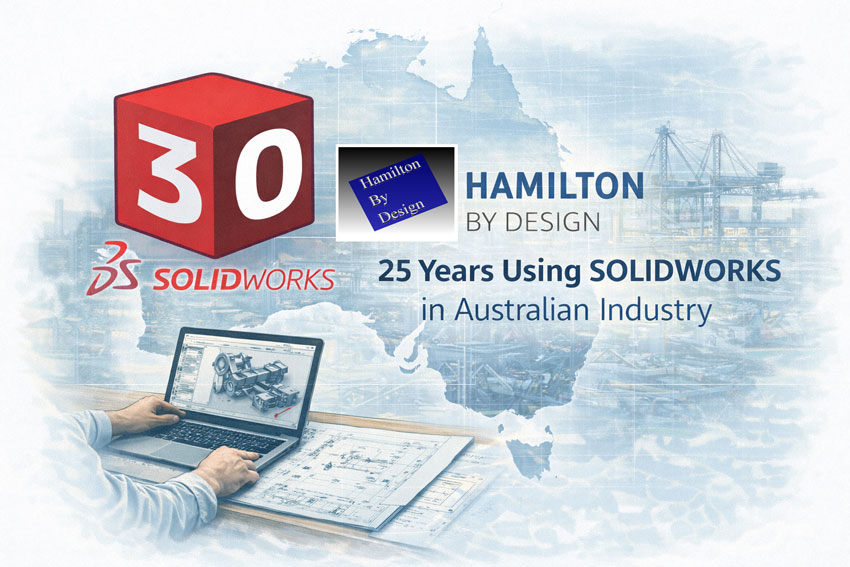
SolidWorks 30 years cube with Hamilton By Design branding showing 25 years of SolidWorks use across Australian industry

When Clients Engage Our SolidWorks Drafting Services

Clients typically contact us when they need to:

  • Outsource SolidWorks drafting for mechanical or structural components
  • Support fabrication or construction teams with clear, buildable drawings
  • Replace or update missing, outdated, or unreliable drawings
  • Add short-term drafting capacity without compromising engineering quality
  • Reduce fit-up risk on brownfield or shutdown-critical projects

In many cases, clients initially search to โ€œhire a SolidWorks drafterโ€ โ€” but quickly realise they also need engineering oversight to ensure drawings are fit-for-purpose.


What Makes Our SolidWorks Drafting Different

Hamilton By Designโ€™s SolidWorks drafting services are distinguished by:

  • Engineer-led drafting (not drafting in isolation)
  • Strong understanding of fabrication, machining, and installation
  • Drawings developed for real-world tolerances, not idealised geometry
  • Clear assumptions, interfaces, and construction intent
  • Drafting aligned with applicable Australian Standards where required

This approach significantly reduces downstream issues compared to drafting-only services.


SolidWorks Drafting Services We Provide

Our SolidWorks drafting support includes:

  • Mechanical part and assembly drafting
  • Fabrication-ready workshop drawings
  • Structural and support steel detailing
  • Equipment modification and upgrade drawings
  • Reverse-engineered component drawings
  • As-built and redline documentation
  • Drawing updates based on site verification or 3D scanning

All drafting is developed with manufacturing and installation in mind, not just screen accuracy.


Our clients:


Drafting Support or Embedded Secondment?

Depending on your project needs, SolidWorks drafting can be delivered in two ways:

1. Project-Based SolidWorks Drafting Services

We deliver defined drafting packages under our engineering systems, managing quality, coordination, and outputs end-to-end.

2. Embedded Drafting Support (Secondment)

For clients who need additional drafting capacity within their own team, we also offer engineering-led secondment services.

Learn more about our Secondment Services here:
https://www.hamiltonbydesign.com.au/home/secondment-services/


Hamilton By Design logo displayed on a blue tilted rectangle with a grey gradient background

If you are looking for 3D scanning Services

Or have a conversation connect on the form below:

Name
Would you like us to arrange a phone consultation for you?
Address
Finite Element Analysis (FEA) engineering simulation button
Mechanical engineering services

Machine Guarding for Ship Loaders, Stackers & Reclaimers in Bulk Materials Handling

Machine Guarding for Ship Loaders, Stackers & Reclaimers | Bulk Materials Safety

Why guarding matters on large bulk material machines

Ship loaders, stackers and reclaimers combine elements of mobile plant, fixed plant and continuous conveying systems. Their scale, movement and operating envelopes introduce hazards that cannot be managed with ad-hoc or legacy guarding.

Most guarding failures are not caused by a single missing guard, but by brownfield modifications, undocumented changes, and loss of original design intent. This makes engineering-led guarding essential for safety, compliance and uptime.


Australian Standards framework for guarding

AS 4024 โ€“ Safety of Machinery

The AS 4024 series provides the primary principles for machine guarding, including hazard identification, risk assessment, guarding selection, and safe distances. For bulk materials handling equipment, it must be applied in context rather than as a checklist.

AS 1755 โ€“ Conveyors: Safety requirements

AS 1755 governs conveyor-specific hazards common to ship loaders, stackers and reclaimers, including:

  • Nip points and pulleys
  • Transfer and chute interfaces
  • Emergency stop systems
  • Access for inspection and maintenance

Most real-world non-conformances occur at head/tail pulleys, transitions, take-ups and return belts beneath walkways.

AS 1657 โ€“ Fixed access systems

Guarding must coexist with compliant access. AS 1657 covers walkways, stairs, ladders, handrails and edge protection. Poor integration often leads to guards being removed to regain access โ€” undermining safety intent.

AS 4324.1 โ€“ Mobile bulk materials handling equipment

AS 4324.1 recognises ship loaders, stackers and reclaimers as integrated machines, where guarding, access, structure and maintainability must be considered together.


Guarding challenges unique to ship loaders & reclaimers

Scale and movement
These machines include slew, luff and travel motions, requiring guarding to remain effective across all operating positions.

Brownfield evolution
Temporary or reactive guarding solutions often become permanent without verification against standards.

Shutdown constraints
Guarding changes made under shutdown pressure frequently prioritise constructability over defensible engineering.


Engineering-led guarding approach

Effective guarding is based on:

  • Engineering-grade spatial understanding of reach, envelopes and access paths
  • Risk-based selection of fixed, interlocked or removable guarding in line with AS 4024
  • Integration with maintenance and operations, avoiding unsafe workarounds

On large machines, guarding that cannot be safely removed, reinstated or inspected will not survive long-term operation.


Common high-risk interfaces

Guarding assessment typically focuses on:

  • Conveyor head, tail and bend pulleys
  • Transfer points and chutes
  • Slew, luff and drive mechanisms
  • Gearboxes, brakes and take-ups
  • Return belt zones beneath accessways

Each interface must be checked against AS 4024, AS 1755, AS 1657 and AS 4324.1 as a combined framework.


Our clients:


Building toward a bulk materials handling safety framework

This post forms part of a broader technical narrative around safe, maintainable bulk materials handling systems.
Future companion topics may include:

  • Conveyor transfer point guarding
  • Brownfield guarding upgrades during life-extension works
  • Balancing guarding and access on reclaimers
  • Using validated 3D data to de-risk shutdown modifications

Together, these posts naturally support a future Bulk Materials Handling / Stacker & Reclaimer Engineering landing page without forcing a sales message.


Hamilton By Design logo displayed on a blue tilted rectangle with a grey gradient background
3D LiDAR scanning and 3D modelling service button โ€” laser scanner capturing a point cloud for engineering and CAD modelling
Mechanical engineering services

Key takeaway

On ship loaders, stackers and reclaimers, guarding must be engineered, spatially validated and operationally practical. When aligned with Australian Standards, guarding becomes an enabler of safe production โ€” not a liability.

Discuss machine safety and guarding for bulk materials handling equipment

If you are reviewing or upgrading ship loaders, stackers, reclaimers or conveyor systems, early engineering input can reduce safety risk, rework and shutdown pressure.

For discussions relating to:

  • Machine guarding and conveyor safety
  • Brownfield compliance with Australian Standards
  • Engineering-led reviews for bulk materials handling equipment

Please connect with us by filling out the form below.

Name
Would you like us to arrange a phone consultation for you?
Address
3D LiDAR scanning and 3D modelling service button โ€” laser scanner capturing a point cloud for engineering and CAD modelling
Mechanical engineering services
Finite Element Analysis (FEA) engineering simulation button
Mechanical engineering services

AS 4324.1 Brownfield Bulk Handling Assets: Engineering Mobile Equipment for Todayโ€™s Mine Sites

AS 4324.1 Bulk Handling Equipment | Brownfield Stacker & Reclaimer Engineering

Mobile equipment for the continuous handling of bulk materialsโ€”such as stackers, reclaimers, and ship loadersโ€”forms the backbone of Australiaโ€™s mining and export infrastructure. Many of these assets operate continuously in demanding environments, often well beyond their original design life.

Australian Standard AS 4324.1 provides essential guidance for the design and safe operation of this class of equipment. However, on many Australian mine sites, the practical application of the standard is misunderstood or only partially implemented, particularly when dealing with legacy machines and brownfield upgrades.

For asset owners and engineering managers, the challenge is rarely about greenfield compliance. It is about managing risk, extending asset life, and implementing upgrades without unplanned downtime.


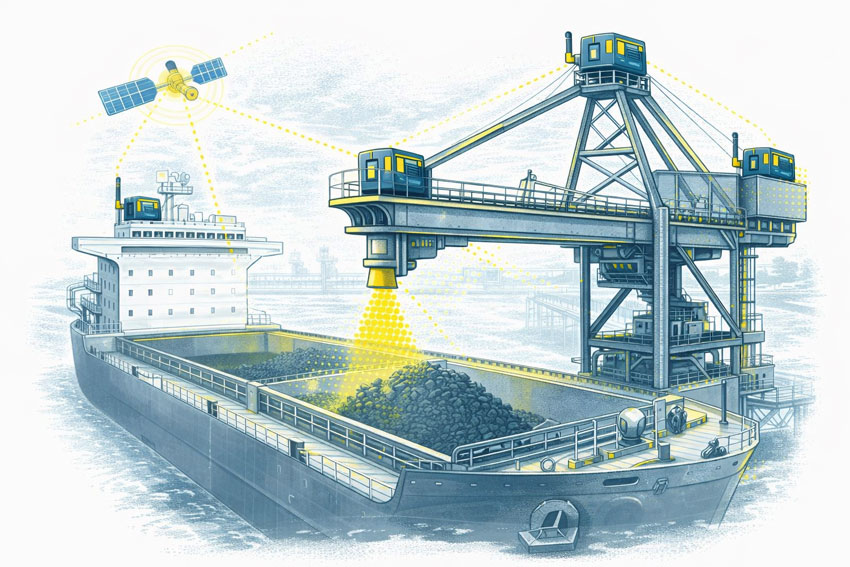
Ship loader and bulk cargo vessel with GPS monitoring units and sensor overlays illustrating controlled loading zones and engineering oversight under AS 4324.1

Understanding AS 4324.1 in a Brownfield Context

AS 4324.1 addresses mobile equipment used for continuous bulk handling, including:

  • Yard stackers and reclaimers
  • Bucket wheel reclaimers
  • Slewing and travelling machines
  • Ship loaders at export terminals

While the standard establishes a strong baseline for design and safety, many operating machines:

  • Pre-date the current revision of the standard
  • Have undergone multiple undocumented modifications
  • Operate under loading conditions that differ from original assumptions

In these situations, engineering judgement is required. Compliance becomes less about box-ticking and more about demonstrating that risks are understood, controlled, and managed over the asset lifecycle.


Common Challenges on Operating Mine Sites

Across coal handling plants, iron ore operations, and port facilities, several recurring issues emerge:

1. Incomplete or Outdated As-Built Information

Accurate geometry, slew limits, clearances, and structural interfaces are often unknown. This creates risk during upgrades and maintenance planning.

2. Fatigue and Structural Degradation

Large mobile machines experience cyclic loading across slewing, luffing, and travel motions. Fatigue cracking and unexpected failures require ongoing monitoring, not one-off assessments.

3. Access, Guarding, and Maintenance Compliance

Requirements evolve over time. Older machines may not meet current expectations for access systems, guarding, or safe maintenance practices.

4. Downtime Sensitivity

Stackers, reclaimers, and ship loaders are often production-critical assets. Upgrade windows are limited, and poor fit-up or rework can have significant commercial consequences.


Technology Supporting Modern Risk Management

While AS 4324.1 remains the foundation, modern technology allows asset owners to manage risk more effectivelyโ€”particularly on brownfield equipment.

GPS Positioning and Controlled Operating Zones

Where GPS positioning is enabled, defined operating zones can be established to:

  • Prevent interaction with stockpiles during rapid translation
  • Automatically reduce slew or travel speed in high-risk zones
  • Limit impact loads on critical components such as slew rings and fluffing gears

These systems are primarily productivity-driven, but they also reduce the likelihood of high-energy impacts that contribute to mechanical damage.


LiDAR Scanning as an Emerging Risk Layer

LiDAR scanning is not a replacement for traditional controls, and it is still evolving in this application. However, it can provide:

  • Accurate spatial awareness of surrounding structures
  • Verification of clearances and exclusion envelopes
  • A secondary risk-management layer supporting operator decision-making

When combined with engineering-led interpretation, LiDAR contributes to a layered risk approach rather than acting as a standalone safety system.


Condition Monitoring and Real Load Understanding

Accelerometers installed across a range of frequencies can deliver valuable insight into:

  • Actual operating loads
  • Dynamic response during slewing, reclaiming, and travel
  • Early indicators of fatigue-related issues

This data supports more informed maintenance decisions and provides evidence of how a machine is truly being usedโ€”often revealing load cases not considered in original designs.


Engineering-Led Compliance and Asset Life Extension

For brownfield assets, compliance with AS 4324.1 is best approached as a continuous engineering process, not a single milestone. This includes:

  • Accurate reality capture and digital models
  • Verification of clearances, interfaces, and structural geometry
  • Informed upgrade design that fits the first time
  • Risk-based decision-making supported by real operating data

This approach helps asset owners extend the life of critical machines while managing risk, performance, and availability.


How Hamilton By Design Supports Bulk Handling Assets

Hamilton By Design works with asset owners and engineering teams to support:

  • Brownfield upgrades of stackers, reclaimers, and ship loaders
  • Engineering-grade LiDAR scanning and as-built documentation
  • Fit-for-purpose mechanical design for modifications and life-extension
  • Independent engineering insight across OEM and site interfaces

Our focus is on engineering clarity, practical risk reduction, and minimising disruption to operations.


Talk to an Engineer About Your Asset

If you are planning a brownfield upgrade, life-extension, or risk review of mobile bulk-handling equipment, talk to an engineer at Hamilton By Design about how accurate data and practical engineering can support your next decision.

Hamilton By Design logo displayed on a blue tilted rectangle with a grey gradient background
3D LiDAR scanning and 3D modelling service button โ€” laser scanner capturing a point cloud for engineering and CAD modelling
Mechanical engineering services

Our clients:

Name
Would you like us to arrange a phone consultation for you?
Address
Finite Element Analysis (FEA) engineering simulation button
Mechanical engineering services

3D Point Cloud Modelling in Sydney

Engineer-led reverse engineering with 3D scanning and drafting overlooking Sydney Harbour and the Harbour Bridge

Engineering-Grade Digital Models Built from Reality

Across Sydney and the wider metropolitan region, engineering and construction projects increasingly depend on accurate digital representations of existing assets. As buildings become more complex and retrofit-driven, the gap between outdated drawings and on-site reality continues to widen. 3D Point Cloud Modelling in Sydney bridges this gap by transforming high-accuracy laser scan data into usable, engineering-ready digital models.

Hamilton By Design provides engineering-led 3D point cloud modelling services, converting LiDAR scan data into structured CAD models that support design, fabrication, verification, and asset management.


What Is 3D Point Cloud Modelling?

A point cloud is a dense collection of millions of spatially accurate points captured using terrestrial LiDAR laser scanning. Each point contains X, Y, Z coordinates and, where required, colour information.

3D point cloud modelling is the process of:

  • Interpreting scan data
  • Extracting relevant geometry
  • Converting raw points into structured 3D CAD models and drawings

Unlike visual-only models, engineering-grade point cloud modelling focuses on accuracy, constructability, and downstream usability.


3D laser scanning in Sydney with an engineer capturing as-built conditions using LiDAR technology.

3D LiDAR scanning and 3D modelling service button โ€” laser scanner capturing a point cloud for engineering and CAD modelling
Mechanical engineering services

Why 3D Point Cloud Modelling Is Critical in Sydney

Sydneyโ€™s built environment presents unique challenges:

  • High-density commercial buildings
  • Congested mechanical and electrical services
  • Limited access and live operational sites
  • A significant volume of ageing and undocumented assets

Traditional surveying and legacy drawings often fail to capture the true complexity of these environments. Point cloud modelling provides a single source of spatial truth, enabling engineers and designers to work with confidence.


Engineering-Led Point Cloud Modelling at Hamilton By Design

At Hamilton By Design, point cloud modelling is not treated as a drafting exercise. It is an engineering process.

Our workflow typically includes:

  • Engineer-supervised LiDAR scanning using high-accuracy terrestrial scanners
  • Controlled point cloud registration and validation
  • Interpretation of scan data by mechanical engineers
  • CAD modelling aligned with design, fabrication, and FEA requirements

This ensures the final model reflects engineering intent, not just geometry.


Typical Applications of 3D Point Cloud Modelling in Sydney

Mechanical and Services Modelling

One of the most common applications in Sydney is modelling of:

  • HVAC ductwork
  • Pipework and valves
  • Fire and hydraulic services
  • Electrical and cable tray systems

Accurate service models allow for:

  • Retrofit and upgrade design
  • Clash detection and coordination
  • Prefabrication planning

Plant Rooms and Industrial Spaces

Point cloud modelling is widely used for:

  • Basement and rooftop plant rooms
  • Mechanical equipment upgrades
  • Structural frames and access platforms

Models generated from scan data support fit-first-time design, reducing site rework and downtime.

Commercial Building As-Builts

For refurbishment and asset documentation, point cloud modelling delivers:

  • Accurate floor layouts
  • Structural elements
  • Ceiling and penetration data

These models form the foundation for architectural, structural, and mechanical design.

Construction Verification and Digital QA

Point cloud models are increasingly used for:

  • Installed versus design comparisons
  • Fit-up verification before fabrication
  • Quality assurance reporting

This provides a defensible digital record of site conditions at a specific point in time.


CAD Platforms and Deliverables

Hamilton By Design produces point cloud models and outputs suitable for:

  • SolidWorks-based mechanical design
  • Fabrication drawings and BOMs
  • FEA and structural assessments
  • IFC and exchange formats for multidisciplinary coordination

Deliverables can include:

  • Registered point cloud files
  • Fully modelled 3D CAD assemblies
  • GA drawings, sections, and details
  • Measurement and verification reports

Benefits of 3D Point Cloud Modelling

For Sydney projects, the benefits are tangible:

  • Reduced clashes and design uncertainty
  • Improved coordination across disciplines
  • Fewer site variations and rework
  • Faster design-to-fabrication cycles
  • Greater confidence in retrofit and brownfield projects

By working from reality rather than assumptions, teams make better decisions earlier.


Why Choose Hamilton By Design in Sydney

Hamilton By Design offers a single-source workflow that combines:

  • High-accuracy LiDAR scanning
  • Expert point cloud interpretation
  • Mechanical engineering design
  • Fabrication-ready documentation

This integrated approach ensures point cloud models are practical, accurate, and fit for purpose, not just visually impressive.


Hamilton By Design logo displayed on a blue tilted rectangle with a grey gradient background
3D Scanning Sydney banner promoting engineering-grade 3D laser scanning, LiDAR scanning, and reality capture services by Hamilton By Design.
Mechanical Engineering Sydney banner with white text on a blue background representing Hamilton By Design's mechanical engineering services in Sydney.
Mechanical Drafting and 3D Modelling Sydney banner highlighting Hamilton By Design's CAD drafting, 3D modelling, and engineering design services in Sydney.

3D Point Cloud Modelling in Sydney

Whether supporting a CBD refurbishment, a plant room upgrade, or a complex services retrofit, 3D Point Cloud Modelling in Sydney provides a reliable foundation for engineering design.

Hamilton By Design delivers models that engineers, builders, and fabricators can trust โ€” because they are built from reality, with engineering intent embedded from the start.


Industries We Support

Point cloud modelling services are regularly used across manufacturing facilities, industrial plants, commercial buildings, hospitals, rail infrastructure and data centres throughout Sydney.

Hamilton By Design transforms registered point cloud data into accurate 3D models that support engineering design, clash detection, as-built verification and digital asset management.


Blue banner graphic displaying the text "Point Cloud to CAD - Australia" in large white lettering, representing point cloud processing, scan-to-CAD conversion and digital engineering services across Australia.
Blue banner graphic displaying the text "Scan to CAD Sydney" in large white lettering, representing engineering-led point cloud to CAD conversion, LiDAR scanning and digital engineering services in Sydney.
Blue banner graphic displaying the text "Reality Capture Sydney - CBD" in large white lettering, representing engineering-led reality capture, LiDAR scanning and digital engineering services within Sydney CBD commercial buildings and infrastructure.

Hamilton By Design provides engineering-led 3D scanning, LiDAR scanning, mechanical engineering and digital engineering services throughout Sydney and Greater Sydney.

Explore our related Sydney services:


  • 3D Scanning Sydney โ€“ Engineering-grade terrestrial laser scanning, as-built surveys and point cloud capture for industrial, infrastructure and commercial projects.
  • Reality Capture Sydney โ€“ High-accuracy reality capture, digital twins, asset documentation and engineering-grade site verification.
  • Scan to CAD Sydney โ€“ Convert point cloud data into AutoCAD, SolidWorks, Inventor and other engineering-ready CAD deliverables.
  • Point Cloud Modelling Sydney โ€“ Engineering-grade point cloud processing, clash detection, as-built verification and 3D modelling.
  • Mechanical Engineering Sydney โ€“ Mechanical design, plant upgrades, materials handling systems, conveyors, chutes, platforms and engineering support.
  • Structural Drafting Sydney โ€“ Structural steel drafting, fabrication drawings, GA drawings, workshop detailing and as-built documentation.

Hamilton By Design supports projects throughout Sydney CBD, Parramatta, Liverpool, Penrith, Blacktown, Chatswood, Alexandria, Mascot, Newcastle and the Central Coast.
Hamilton By Design provides point cloud modelling services throughout Sydney CBD, Parramatta, Liverpool, Penrith, Chatswood, Alexandria, Mascot, Newcastle and the Central Coast. We transform LiDAR scan data into accurate 3D models that support engineering design, clash detection, asset verification and project delivery.
Our Clients

Name
Would you like us to arrange a phone consultation for you?
Address

Blue banner graphic displaying the text "Point Cloud to CAD - Australia" in large white lettering, representing point cloud processing, scan-to-CAD conversion and digital engineering services across Australia.
Blue banner graphic displaying the text "Scan to CAD Sydney" in large white lettering, representing engineering-led point cloud to CAD conversion, LiDAR scanning and digital engineering services in Sydney.
Blue banner graphic displaying the text "Reality Capture Sydney - CBD" in large white lettering, representing engineering-led reality capture, LiDAR scanning and digital engineering services within Sydney CBD commercial buildings and infrastructure.

3D CAD Modelling Australia service banner for Hamilton By Design


CHPP Engineering title graphic featuring bold white text reading "CHPP Engineering" centred on a blue rounded rectangle background.
Pipework Drafting title graphic featuring bold white text reading "Pipework Drafting" centred on a blue rounded rectangle background.
3D LiDAR Scanning for Engineering Projects title graphic featuring bold white text on a blue rounded rectangle background.


Finite Element Analysis (FEA) engineering simulation button
Structural drafting services button
Mechanical drafting services button


Australian Drafting logo featuring bold white text reading "Australian Drafting" centred on a blue rounded rectangle background.
Engineering Governance title graphic featuring bold white text reading "Engineering Governance" centred on a blue rounded rectangle background.
Engineering-Grade LiDAR Scanning title graphic featuring bold white text on a blue rounded rectangle background.


Mechanical drafting services button
Structural drafting services button


Fabrication and product design services
3D CAD Modelling Australia service banner for Hamilton By Design
Mechanical, Structural & Pipework Drafting service banner by Hamilton By Design featuring white text on a blue background.


3D LiDAR scanning and 3D modelling service button โ€” laser scanner capturing a point cloud for engineering and CAD modelling
Mechanical engineering services