3D Scanning

How 3D Laser Scanning is Redefining Reality for Design, Construction & Heritage

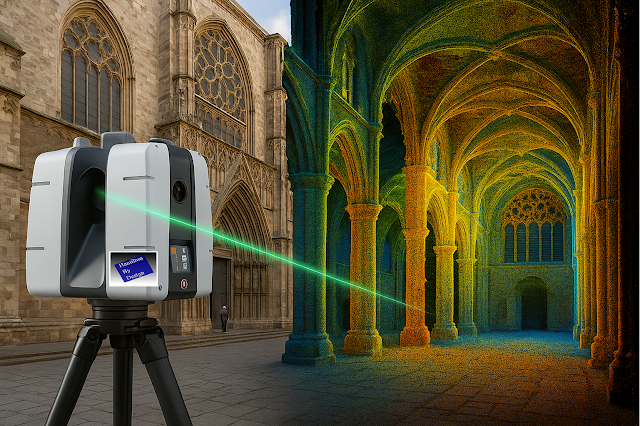
Imagine standing before a centuries-old cathedral, where every carved arch, every stained-glass pane, every weathered stone holds centuries of stories. Capturing its true form and condition with tape measure and camera? Tedious and prone to errors. But with 3D laser scanning, you can digitally freeze every detailโ€”down to the imperfectionsโ€”turning reality into an exact, manipulable model.

In an age where precision, speed, and data-driven decisions are non-negotiable, 3D laser scanning is no longer โ€œnice to haveโ€โ€”itโ€™s essential. Letโ€™s explore what it is, why itโ€™s transformative, where itโ€™s being used most powerfully, and how you can harness its potential.

What Is 3D Laser Scanning?

At its core, 3D laser scanning sometimes called terrestrial laser scanning, (TLS) is the emission of laser pulses toward surfaces, recording the time it takes for those pulses to bounce back. From that comes a dense โ€œpoint cloudโ€ โ€” billions of precise data points mapping shape, texture, orientation, and distance.

These point clouds become high-fidelity models, maps, meshes, or BIM ready files. Whether youโ€™re scanning building exteriors, interiors, or industrial components, the result is more than just imageryโ€”itโ€™s measurable, analyzable geometry.

How It Works โ€” The Process

  1. Preparation & Planning

    Define what you need: the level of detail (LOD), resolution, range, and whether external conditions (light, weather) will interfere.

  2. Data Capture

    Position the scanner at multiple stations to cover all surfaces. Use targets or reference markers for alignment and capture with overlapping scans.

  3. Processing & Registration

    Merge scans to align them properly, clean noise, filter out irrelevant data (like people, moving objects), calibrate.

  4. Post-processing & Deliverables

    Convert point clouds into usable outputsโ€”floorplans, sections, elevations, 3D meshes, BIM models, virtual walkthroughs. Run analyses (clash detection, deformation etc.).

  5. Integration & Use

    Use the data in design, restoration, facility management, or documentation. The quality of integration (into BIM, GIS, CAD) is key to unlocking value.

ย 

Key Benefits

Benefit What It Means in Practice Real-World Impact
Extreme Precision Sub-millimetre to millimetre accuracy depending on the scanner and conditions. Less rework. Better fit for retrofit, renovation, or mechanical systems in tight tolerances.
Speed + Efficiency Collect large amounts of spatial data in far less time than traditional measurement. Faster project turnaround. Reduced site time costs.
Non-Contact / Low Disruption Good for fragile structures, hazardous or difficult-to-access places. Preserves integrity of heritage buildings; safer for workers.
Comprehensive Documentation Full visual & geometric context. Informs future maintenance. Acts as an archival record.
Better Decision Making & Conflict Detection Early clash detection; scenario simulation; what-if modelling. Avoids costly mistakes; helps build consensus among stakeholders.
Enhanced Visualisation & Communication Stakeholders can see exactly what exists vs. whatโ€™s being proposed. Improves client buy-in, regulatory approvals, fundraising.

ย 

Applications: Where It Shines

  • Architecture & Renovation: As-built models, restoration of heritage sites.

  • Infrastructure & Civil Engineering: Bridges, tunnels, rail track alignments.

  • Industrial & Manufacturing: Machine part audits, reverse-engineering, plant layout.

  • Heritage & Preservation: Documenting fragile monuments, archaeological sites.

  • Facility Management: Digital twins, maintenance, asset tracking.

  • Environment & Surveying: Terrain mapping, forestry, flood risk mapping (especially when combined with aerial systems or mobile scanning).

Challenges & Best Practices

Nothing is perfect. To get the most out of 3D laser scanning, anticipate and mitigate:

  • Environmental factors: Light, dust, rain, reflective surfaces can introduce noise.

  • Data overload: Massive point clouds are large; need strong hardware & efficient workflows.

  • Alignment & registration errors: Overlaps, control points, and calibration are vital.

  • Skill & Planning: Good operators + good planning = much better outcomes.

Key best practices:

  • Use reference targets for precise registration.

  • Capture overlap of 30-50% between scan positions.

  • Break project into manageable segments.

  • Clean noise early.

  • Think ahead about deliverables and how clients will use the data (design, BIM, VR etc.).

Case Studies & Stories

  • Heritage in Danger: A cathedral in Europe threatened by pollution and structural decay was laser scanned. The point cloud revealed minute deformations, enabling an accurate restoration planโ€”saving costs and preserving history.

  • Infrastructure Efficiency: A civil engineering firm reduced design clashes by 80% on a complex highway project by integrating scans with their BIM workflow.

  • Industrial Switch-Over: Manufacturing plant layout was reconfigured using scan data; downtime reduced because the virtual model matched reality better than the old blueprints.

Software, Tools & Ecosystem

While scanners are vital, the software ecosystem is what unlocks value. Tools that turn raw data into actionable insights include:

  • Reality capture tools (processing point clouds).

  • BIM / CAD integration (e.g. Revit, AutoCAD).

  • Visualization tools (VR, AR, walkthrough).

  • Data sharing & collaboration platforms.

  • Cloud storage / processing if large point clouds.

SaaS/cloud-based workflows are increasingly important to share among remote teams, facilitate stakeholder review, and ensure data is accessible beyond just technical users.

Why It Matters Now

  • Global pressures (heritage, sustainability, faster build cycles, remote work) are raising the bar.

  • Clients expect transparency, accuracy, minimized risk.

  • Regulatory compliance and โ€œas-builtโ€ requirements are stricter.

  • Digital twins & smart infrastructure demand high fidelity data.

3D laser scanning acts as a bridge: between physical world and digital twin; between heritage past and future; between design promise and build reality. Ifย you have a survey scan and want to make sense of point cloud data, contact Hamilton By Design
ย 
ย 
ย 
ย 

Our clients:

Name
Would you like us to arrange a phone consultation for you?
Address
Finite Element Analysis (FEA) engineering simulation button
Mechanical engineering services

Hamilton by Design: Your Experts in 3D Laser Scanning & Mechanical Design

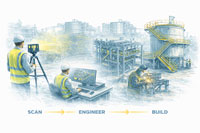
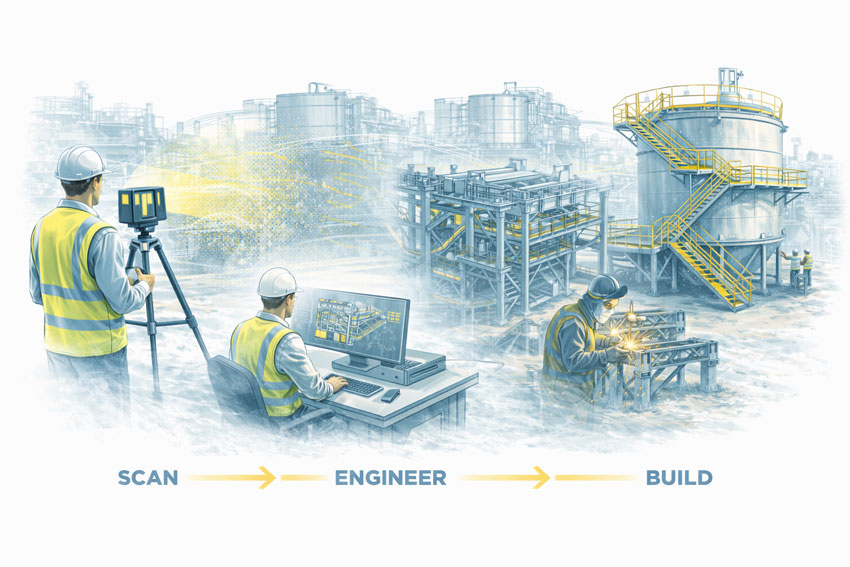
Engineer-led 3D laser scanning of an industrial plant transitioning into mechanical engineering design and steel fabrication.

When it comes to precision engineering, structural drafting, and mechanical design services, Hamilton by Design leads the way. We provide advanced 3D laser scanning solutions across Perth, Sydney, Brisbane, Melbourne, and the Hunter Valley โ€” giving clients accurate data for smarter decisions and efficient project delivery.

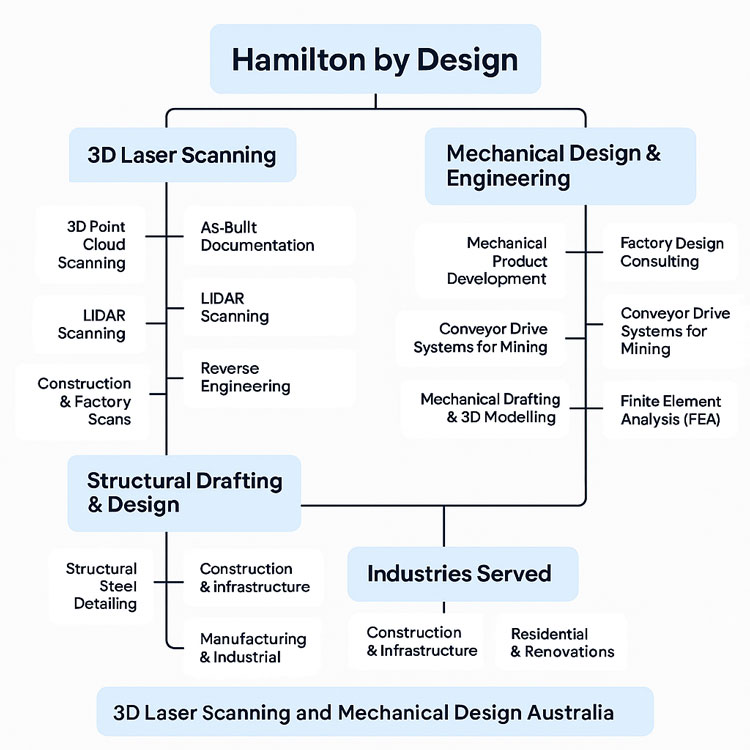
Hamilton by Design services diagram showing four key areas: 3D Laser Scanning, Mechanical Design and Engineering, Structural Drafting and Design, and Industries Served. The chart lists services such as 3D point cloud scanning, as-built documentation, reverse engineering, mechanical product development, conveyor drive systems for mining, factory design consulting, FEA, structural steel detailing, and design for construction, manufacturing and industrial sectors. Industries served include construction and infrastructure, and residential and renovations. A footer reads โ€˜3D Laser Scanning and Mechanical Design Australia
3D LiDAR scanning and 3D modelling service button โ€” laser scanner capturing a point cloud for engineering and CAD modelling
Mechanical engineering services

3D Laser Scanning Across Australia

Our 3D laser scanning services capture exact measurements of your site, plant, or equipment to create detailed 3D point clouds and as-built documentation. This reduces rework, saves time, and improves project planning.

We offer:

  • 3D Laser Scanning Perth & Fremantle โ€“ Industrial plant surveys, mining site scanning, and reverse engineering.
  • 3D Laser Scanning Sydney & Melbourne โ€“ Building surveys, renovation planning, and structural inspections.
  • 3D Laser Scanning Brisbane & Hunter Valley โ€“ Factory layouts, conveyor drive design, and structural scanning.
  • 3D Laser Scanning for Engineering & Mining โ€“ Point cloud scanning, clash detection, and 3D modelling.

Our team uses the latest 3D scanning and LiDAR technology to produce millimetre-accurate results that engineers, architects, and builders can trust.

Structural Drafting & Design Services

Hamilton by Design provides structural drafting services across Australia, including:

  • Structural Design and Drafting โ€“ For residential, commercial, and industrial projects.
  • Steel Detailing & Shop Drawings โ€“ Produced to Australian drafting standards.
  • Structural Scanning Services Brisbane & Sydney โ€“ Helping engineers assess existing structures for upgrades or repairs.

Our experienced structural design engineers work closely with builders, architects, and civil engineers in Hamilton and beyond to deliver reliable, build-ready plans.

Engineer using 3D LiDAR scanning to capture an industrial facility, followed by CAD modelling and fabrication-ready steelwork.

See Structural Engineering for more info

Mechanical Design & Engineering Solutions

We are a full-service mechanical design consultancy offering:

  • Mechanical Product Design & Development
  • Factory & Plant Layout Design
  • Conveyor Belt Drive Systems & Mining Equipment Design
  • Finite Element Analysis (FEA) and performance validation
  • Reverse Engineering Services Perth for spare parts and retrofits

Our team of mechanical engineers, drafters, and CAD designers ensures every project is efficient, safe, and cost-effective.

see Mechanical Engineering for more info

Industries We Serve

Hamilton by Design supports clients across:

  • Mining & Resources โ€“ Coal conveyors, feed thickeners, and vibrating equipment in Kalgoorlie and Mount Isa.
  • Construction & Infrastructure โ€“ As-built scanning and 3D modelling for building projects.
  • Manufacturing โ€“ Factory optimization and equipment design.
  • Residential Projects โ€“ Drafting services for home renovations and new builds in Hamilton and surrounding areas.

Why Partner with Hamilton by Design?

Choosing Hamilton by Design means working with mechanical design experts and structural drafters who are committed to accuracy, speed, and innovation.

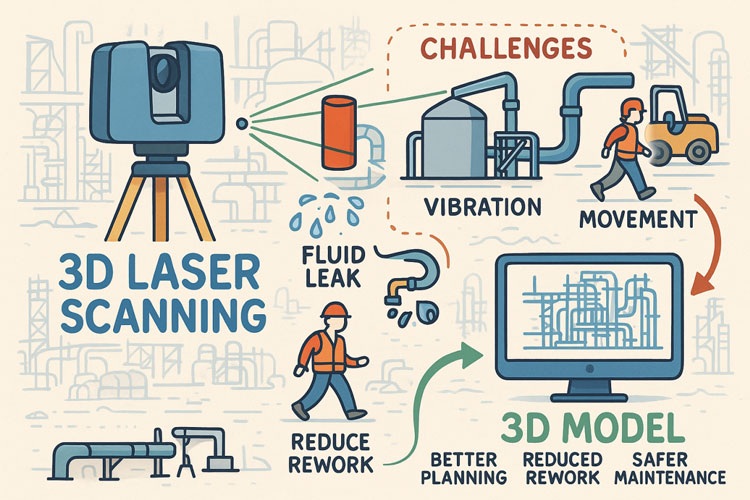
Infographic showing 3D laser scanning capturing industrial equipment to identify challenges such as vibration, movement, and fluid leaks, feeding into a 3D model that improves planning, reduces rework, and supports safer maintenance

Australia-Wide Coverage โ€“ Perth, Sydney, Melbourne, Brisbane, Hunter Valley
Cutting-Edge Technology โ€“ Laser scanning, CAD modelling, and 3D visualization
Expert Team โ€“ Experienced mechanical engineers and design consultants
Cost-Effective Solutions โ€“ Saving time, reducing errors, and minimizing rework


Get Started Today

Ready to transform your next project with 3D laser scanning, structural drafting, or mechanical design services?

Contact Hamilton by Design for a consultation and see how our team can deliver precise, efficient, and innovative solutions for your business.


Hamilton By Design logo displayed on a blue tilted rectangle with a grey gradient background

Name
Would you like us to arrange a phone consultation for you?
Address

Hamilton By Design โ€“ Blog

Consulting Engineers

About Us โ€“ Hamilton By Design

Contact us

Finite Element Analysis (FEA) engineering simulation button
Mechanical engineering services

Maximising Uptime at Transfer Points: How Hamilton By Design Optimises Chutes, Hoppers, and Conveyors for the Mining Industry

In the mining industry, system uptime isnโ€™t just a goalโ€”itโ€™s a necessity. Transfer points such as chutes, hoppers, and conveyors are often the most failure-prone components in processing plants, especially in high-wear environments like HPGR (High Pressure Grinding Rolls) circuits. Abrasive ores, heavy impact, fines accumulation, and moisture can all combine to reduce flow efficiency, damage components, and drive up maintenance costs.
At Hamilton By Design, we help mining clients minimise downtime and extend the life of their material handling systems by applying advanced 3D scanning, DEM simulation, smart material selection, and modular design strategies. This ensures that transfer points operate at peak efficiencyโ€”day in, day out.

Hereโ€™s how we do it:

Optimised Flow with DEM-Based Chute & Hopper Design

Flow blockages and misaligned velocities are among the biggest contributors to transfer point failure in the mining industry. Thatโ€™s why we use Discrete Element Method (DEM) simulations to model bulk material flow through chutes, hoppers, and transfer transitions.

Through DEM, we can simulate how different oresโ€”ranging from dry coarse rock to sticky finesโ€”move, compact, and impact structures. This allows us to tailor chute geometry, outlet angles, and flow paths in advance, helping:

  • Prevent material buildup or arching inside hoppers and chutes
  • Align material velocity with the conveyor belt speed using hood & spoon or trumpet-shaped designs
  • Reduce wear by managing trajectory and impact points

Optimised flow equals fewer shutdowns, longer equipment life, and better plant throughput.

Wear-Resistant Liners & Material Engineering

Not all wear is the sameโ€”and neither are the materials we use to combat it. By studying the abrasion and impact zones in your chute and hopper systems, we strategically apply wear liners suited to each application.

Our engineering team selects from:

  • AR (Abrasion-Resistant) steels for high-wear areas
  • Ceramic liners in fines-rich or ultra-abrasive streams
  • Rubber liners to absorb shock and reduce noise

This approach reduces liner replacement frequency, improves operational safety, and lowers the risk of unplanned shutdowns at key transfer points.

Dust and Spillage Control: Cleaner, Safer Operation

Dust and spillage around conveyors and transfer chutes can lead to extensive cleanup time, increased maintenance, and health hazards. At Hamilton By Design, we treat this as a core design challenge.

We design chutes and hoppers with:

  • Tight flange seals at interface points
  • Enclosed transitions that contain dust at the source
  • Controlled discharge points to reduce turbulent material drops

This reduces environmental risk and contributes to more consistent plant performanceโ€”especially in confined or enclosed processing facilities in the mining industry.

Modular & Accessible Designs for Faster Maintenance

When liners or components need replacement, every minute counts. That’s why our chute and hopper systems are built with modular sectionsโ€”each engineered for fast removal and reinstallation.

Key maintenance-driven design features include:

  • Bolt-on panels or slide-in liner segments
  • Accessible inspection doors for safe visual checks
  • Lightweight modular components for easy handling

These details reduce labour time, enhance safety, and keep your plant online longerโ€”especially critical in HPGR zones where throughput is non-stop.

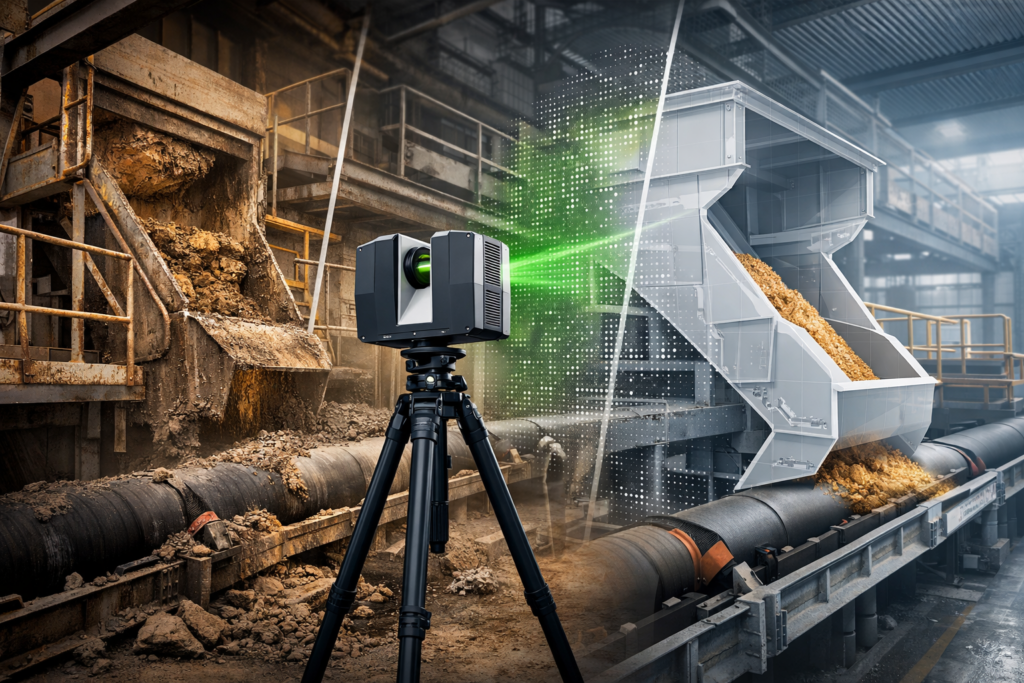
3D laser scanner capturing a blocked mining transfer chute with a digital redesign overlay above a conveyor.
3D LiDAR scanning and 3D modelling service button โ€” laser scanner capturing a point cloud for engineering and CAD modelling
Mechanical engineering services

Precision 3D Scanning & 3D Modelling for Retrofit Accuracy

One of the most powerful tools we use is 3D scanning. In retrofit or brownfield projects, physical measurements can be inaccurate or outdated. We solve this by conducting detailed laser scans that generate accurate point cloud dataโ€”a precise digital twin of your plant environment.

That data is then transformed into clean 3D CAD models, which we use to:

  • Design retrofits that precisely match existing structure
  • Identify interferences or fit-up clashes before fabrication
  • Reduce install time by ensuring right-first-time fits

This scan-to-CAD workflow dramatically reduces rework and error margins during installation, saving time and cost during shutdown windows.

Real-World Application: HPGR & Minerals Transfer Systems

In HPGR-based circuits, transfer points between crushers, screens, and conveyors experience high rates of wear, dust generation, and blockagesโ€”particularly where moisture-rich fines are present.

Hereโ€™s how Hamilton By Designโ€™s methodology addresses these pain points:

  • DEM-based flow modelling ensures the HPGR discharge flows cleanly into chutes and onto conveyors without buildup.
  • Hood/spoon geometries help track material to belt velocityโ€”minimising belt wear and reducing misalignment.
  • Strategic liner selection extends life in critical wear zones under extreme abrasion.
  • Modular chute designs allow for fast liner swap-outs without major disassembly.
  • 3D scanning & CAD design ensures new chute sections fit seamlessly into existing HPGR and conveyor frameworks.

By designing smarter transfer systems with these technologies, we enable operators to reduce downtime, increase liner life, and protect critical assets in high-throughput mining applications.

Uptime Benefits at a Glance

Performance AreaImpact on Mining Operations
Smooth bulk material flowFewer clogs, improved throughput, longer operating cycles
Velocity-matched dischargeLower conveyor belt wear and downtime
Robust wear protectionLonger life, fewer liner replacements
Modular designFaster maintenance turnarounds during scheduled shutdowns
3D scanning & CAD integrationPrecise fit, reduced installation time, fewer errors during retrofit

Final Word: Engineering That Keeps the Mining Industry Moving

At Hamilton By Design, we combine mechanical engineering expertise with 3D modelling, material flow simulation, and smart fabrication practices to deliver high-performance chute, hopper, and transfer point systems tailored for the mining industry.

Whether youโ€™re dealing with a problematic HPGR discharge, spillage issues, or planning a brownfield upgrade, our integrated design process delivers results that improve reliability, extend service life, and protect uptime where it matters most.

Looking to retrofit or upgrade transfer systems at your site?
Letโ€™s talk. We bring together 3D scanning, DEM modelling, practical engineering, and proven reliability to deliver systems that workโ€”from concept through to install.

Our clients

Reach out

Name
Would you like us to arrange a phone consultation for you?
Address
Hamilton By Design logo displayed on a blue tilted rectangle with a grey gradient background

#3DScanning #MiningIndustry #Chutes #Hoppers #TransferPoints #3DModelling #MechanicalEngineering #HPGR #PlantUptime #HamiltonByDesign

Structural Drafting | Mechanical Drafting | 3D Laser Scanning

Mechanical Engineering

Why Engineers, Designers & Project Managers Are Turning to 3D Scanning & CAD Modelling

Why Engineers, Designers & Project Managers Are Turning to 3D Scanning & CAD Modelling

Why Engineers, Designers & Project Managers Are Turning to 3D Scanning and CAD Modelling

In engineering and fabrication, the margin for error is razor-thin. A few millimetres off can mean costly rework, delays, or worse โ€” safety issues. At Hamilton By Design, we believe the future of precision engineering lies in combining smart data capture with expert design workflows. Thatโ€™s why more businesses are moving away from guesswork and toward 3D laser scanning and CAD modelling as standard practice.

Weโ€™ve put together a detailed overview of our services and methods in a recent blog post that explains how we help industry clients across Australia deliver with confidence.

๐Ÿ“Œ Read the full post here:
๐Ÿ‘‰ 3D Scanning & CAD Modelling Services

๐Ÿ” Whatโ€™s the Big Deal About 3D Scanning?

Traditional site measurements and hand-drawn markups are time-consuming, error-prone, and hard to communicate between disciplines. With 3D laser scanning, we can capture complex geometry quickly and accurately โ€” from plant layouts and piping to structural steel and mobile machinery.

Using FARO laser scanning technology, we generate high-resolution point clouds that form the foundation for everything that follows โ€” whether thatโ€™s clash detection, fabrication detailing, or a full digital twin.

Itโ€™s fast, accurate, and incredibly efficient โ€” especially on live sites where access is limited and downtime is costly.

๐Ÿงฉ CAD Modelling That Fits โ€” Literally and Logically

Once the scan is complete, our team of experienced mechanical designers converts that data into solid CAD models, tailored to your workflow.

Whether you need:

  • Accurate as-built documentation

  • Reverse-engineered mechanical components

  • Custom fabrication-ready drawings

  • Plant modification layouts

We deliver models that integrate seamlessly with your existing systems โ€” whether you use SolidWorks, Inventor, Revit, or MicroStation.

Our CAD modelling isnโ€™t just visual. Itโ€™s functional. Itโ€™s engineered for fit, fabrication, and future upgrades.

ย 

ย 

๐Ÿ‘ทโ€โ™‚๏ธ Real-World Applications Across Industry

Our clients range from mining operations and water utilities to fabrication shops and site-based engineering firms. In all cases, the common problem is the same: they need to understand whatโ€™s really there before they design what comes next.

Some recent use cases include:

  • Replacing worn mechanical components with no existing drawings

  • Planning plant upgrades where outdated PDFs werenโ€™t reliable

  • Creating fabrication models from legacy assets

  • Capturing geometry for safety reviews and clearances

If your team still relies on measurements taken with a tape measure or outdated hand sketches, thereโ€™s a better way.

Donโ€™t Guess. Scan. Model. Deliver.

At Hamilton By Design, weโ€™ve been providing CAD modelling since 2001, and offering 3D scanning since 2017. Weโ€™ve built our reputation on doing it right the first time โ€” with engineering logic, practical experience, and technology that works.

If you want to understand how 3D laser scanning and CAD modelling can reduce risk and deliver better results, we invite you to read our full blog post:

3D Scanning & CAD Modelling Services

Letโ€™s take the guesswork out of your next project.

Mechanical Engineeringย |ย Structural Engineering

Mechanical Draftingย |ย Structural Drafting

3D CAD Modellingย |ย 3D Scanning

www.hamiltonbydesign.com.au

3D LiDAR scanning and 3D modelling service button โ€” laser scanner capturing a point cloud for engineering and CAD modelling
Mechanical engineering services

Our clients:

Name
Would you like us to arrange a phone consultation for you?
Address

3D Laser Scanning and CAD Modelling Services | Hamilton By Design


There are two things weโ€™ve always believed at Hamilton By Design:

  1. Accuracy matters.
  2. If you can model it before you make it, do it.

Thatโ€™s why when the FARO Focus S70 hit the scene in 2017, we were early to the party โ€” not just because it was shiny and new (though it was), but because we knew it would change how we support our clients in mining, processing, and manufacturing environments.

The S70 didnโ€™t just give us a tool โ€” it gave us a superpower: the ability to see an entire site, down to the bolt heads and pipe supports, in full 3D before anyone picked up a wrench. Dust, heat, poor lighting โ€” no problem. With its IP54 rating and extended temperature range, this scanner thrives where other tools tap out.

And weโ€™ve been putting it to work ever since.

3D laser scan of mechanical plant

โ€œMeasure Twice, Cut Onceโ€ Just Got a Whole Lot More Real

Laser scanning means we no longer rely on outdated drawings, forgotten markups, or that sketch someone did on the back of a clipboard in 2004.

Weโ€™re capturing site geometry down to millimetres, mapping full plant rooms, structural steel, conveyors, tanks, ducts โ€” you name it. And the moment we leave site, weโ€™ve already got the data we need, registered and ready to drop into SolidWorks.

Which, by the way, weโ€™ve been using since 2001.

Yes โ€” long before CAD was cool, we were deep into SolidWorks building models, simulating loads, tweaking fit-ups, and designing smarter mechanical solutions for complex environments. Itโ€™s the other half of the story โ€” scan it, then model it, all in-house, all under one roof.

Safety by Design โ€“ Literally

Hereโ€™s the part people often overlook: 3D laser scanning isnโ€™t just about accuracy โ€” itโ€™s about safety.
Weโ€™ve worked across enough plants and mine sites to know that the real hazards are often the things you donโ€™t see in a drawing. Tight access ways. Awkward pipe routing. Obstructions waiting to drop something nasty when a shutdown rolls around.

By scanning and reviewing environments virtually, we can spot those risks early โ€” hazard identification before boots are even on the ground. We help clients:

  • Reduce time-on-site
  • Limit the number of field visits
  • Minimise exposure to high-risk zones
  • Plan safer shutdowns and installations

Thatโ€™s a big win in any plant or processing facility โ€” not just for compliance, but for peace of mind.

SolidWorks 3D Modelling
CAD model from site scan

From Point Cloud to Problem Solved

Since 2017, our scanning and modelling workflows have supported:

  • Brownfield upgrade projects
  • Reverse engineering of legacy components
  • Fabrication and installation validation
  • Creation of digital twins
  • Asset audits and documentation updates

And when you pair that with 24 years of SolidWorks expertise, you get more than just a pretty point cloud โ€” you get practical, buildable, fit-for-purpose engineering solutions backed by deep industry knowledge.


Thinking about your next project? Letโ€™s make it smarter from the start.

Weโ€™ll scan it, model it, and engineer it as we have been doing for decades โ€” with zero guesswork and full confidence.

Hamilton By Design logo displayed on a blue tilted rectangle with a grey gradient background

www.hamiltonbydesign.com.au

3D LiDAR scanning and 3D modelling service button โ€” laser scanner capturing a point cloud for engineering and CAD modelling
Mechanical engineering services

Mechanical Engineering | Structural Engineering

Mechanical Drafting | Structural Drafting

3D CAD Modelling | 3D Scanning

Our clients:

Name
Would you like us to arrange a phone consultation for you?
Address

Mechanical Engineering at the Heart of Mining on the Central Coast

ย  ๐Ÿ› ๏ธ

1. Setting the Scene: The Central Coast & Its Industrial Backbone

Home to nearly 350,000 people across Gosford, Wyong, Terrigal, and beyond, the Central Coast is well-known for its beaches and bushlandโ€”yet it also supports a robust industrial and miningโ€‘services sector (Jora, Wikipedia). With growing infrastructure demands and proximity to resource projects like the Wallarahโ€ฏ2 coal proposal near Wyong (Wikipedia), mechanical engineers play a pivotal role behind the scenes.

2. What Do Mechanical Engineers Do in Mining on the Coast?

Mechanical engineers in mining and related heavy industries are responsible for:

  • Design & Maintenance: Planning, designing, and overseeing maintenance of critical mineral processing plants, machinery, conveyors, trucks and drilling rigs (Jobsora).

  • Automation Integration: Implementing robotics, programmable logic controllers (PLCs), remote operation systems, and predictive maintenance tools .

  • Health & Safety Compliance: Ensuring mechanical systems meet stringent safety regulations and operator protection standards (Jora).

  • Environmental Efficiency: Optimising equipment to reduce energy use, emissions, and noiseโ€”all while supporting mine rehabilitation efforts .


3. Job Opportunities in the Region

Recent job listings highlight robust opportunities for mechanical engineers across the Coast:

  • Mining Mechanical Engineer roles are regularly advertised in Gosford/Lisarow, appearing in SEEK and Jora job postings (SEEK).

  • Roles span senior design positions to handsโ€‘on maintenance engineeringโ€”offering full-time opportunities with firms like Wabtec, Hyundaiโ€ฏRotem, Boral, and Coffey (SEEK).

  • Entry-level and graduate engineering roles are also available through pathways like Central Coast Council traineeships and TAFE NSW programs (Central Coast Council).


4. Industry Trends and What Youโ€™ll Need

As described by Titan Recruitment, the mining sector is embracing several transformative trends (Titan Recruitment):

  1. Automation & Robotics: Engineers are tasked with integrating autonomous machinery and control systems.

  2. Digital & Data Analytics: Skills in condition monitoring, sensors, and predictive analytics are in demand.

  3. Sustainability Focus: Thereโ€™s emphasis on clean, efficient systems that reduce environmental footprint.

  4. Complex Machine Design: As equipment sophistication grows, so does the need for mechanical expertise.

  5. Asset Reliability & Safety: Mechanical engineers must ensure zero-fault operation in harsh mining environments.

  6. Site-to-System Integration: Engineers coordinate across disciplinesโ€”mechanical, electrical, structuralโ€”to optimise operations.

  7. Continuous Upskilling: Ongoing educationโ€”through TAFE NSW, professional certifications, and in-house trainingโ€”is critical.


5. Training & Career Pathways on the Central Coast

๐ŸŽ“ Education & Apprenticeships

  • TAFE NSW (Hunter & Central Coast) offers mechanical and engineering trade training, forming a strong foundation for local roles (Wikipedia).

  • Central Coast Council provides apprenticeships and traineeships in mechanical fieldsโ€”ideal stepping stones into industry .

๐Ÿข Local Industry Experience

  • Firms like Wabtec, Hyundaiโ€ฏRotem, Boral, Coffey, and Wright Engineering in Somersby/Gosford offer vital on-the-job training and progression (SEEK).

  • Mining-support businesses across the Central Coast employ engineers to design, maintain, and improve heavy-duty plant and machinery.

6. Why the Central Coast Is a Great Base for Mining Engineers
  • Proximity to Projects: Infrastructure supporting coal drilling and mineral processing connects easily with local towns via major transport routes in and out of Gosford (Jobsora, Wikipedia).

  • Balanced Lifestyle: Work-life harmony blends regional industry jobs with coastal living and access to national parks (Indeed).

  • Clear Career Pathways: Education, apprenticeships, and employers form a supportive ecosystemโ€”from bedrock training to senior site leadership.


Final Takeaway

Mechanical engineers are essential to mining operations on the Central Coastโ€”ensuring machinery runs efficiently, safely, and sustainably. With strong local education pathways, active job markets, and growing tech trends, the region offers rewarding careers tied to both industrial innovation and community lifestyle.

Ready to design, maintain, and optimise the backbone of mining? The Central Coast has the foundationโ€”and the opportunityโ€”awaiting mechanical engineers eager to build the future.

Hamilton By Designย |ย Mechanical Draftingย |ย Structural Draftingย |ย 3-D Lidar Scanning

Central Coast | Mount Isa | Brisbane | Cairns | Darwin


Published on Hamiltonโ€ฏbyโ€ฏDesign โ€” shaping engineering futures in NSWโ€™s Central Coast

Hamilton By Design logo displayed on a blue tilted rectangle with a grey gradient background
3D LiDAR scanning and 3D modelling service button โ€” laser scanner capturing a point cloud for engineering and CAD modelling
Mechanical engineering services

Our clients:

Name
Would you like us to arrange a phone consultation for you?
Address
Finite Element Analysis (FEA) engineering simulation button
Mechanical engineering services