Why Coal Handling Plants Require Accurate Engineering Data

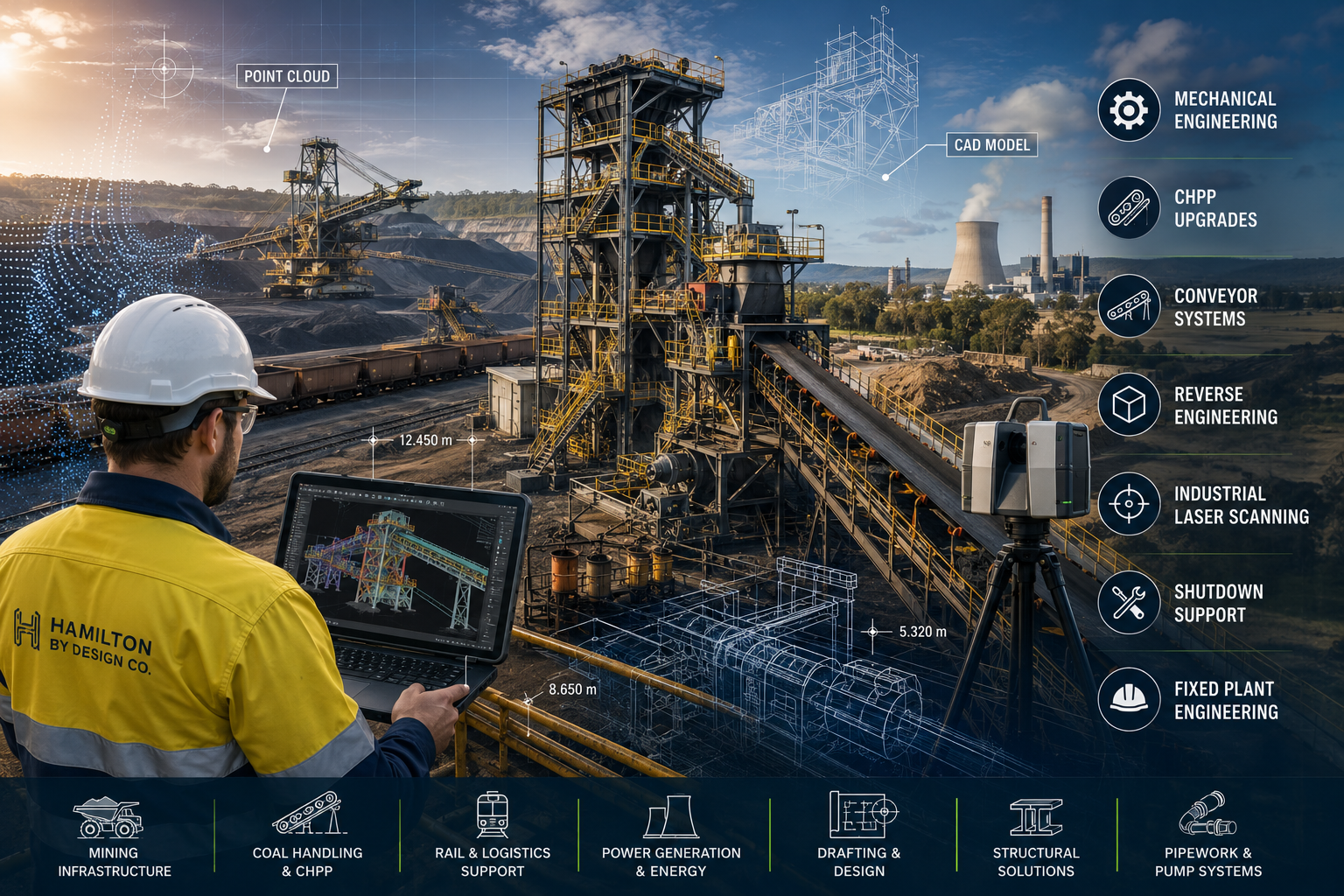
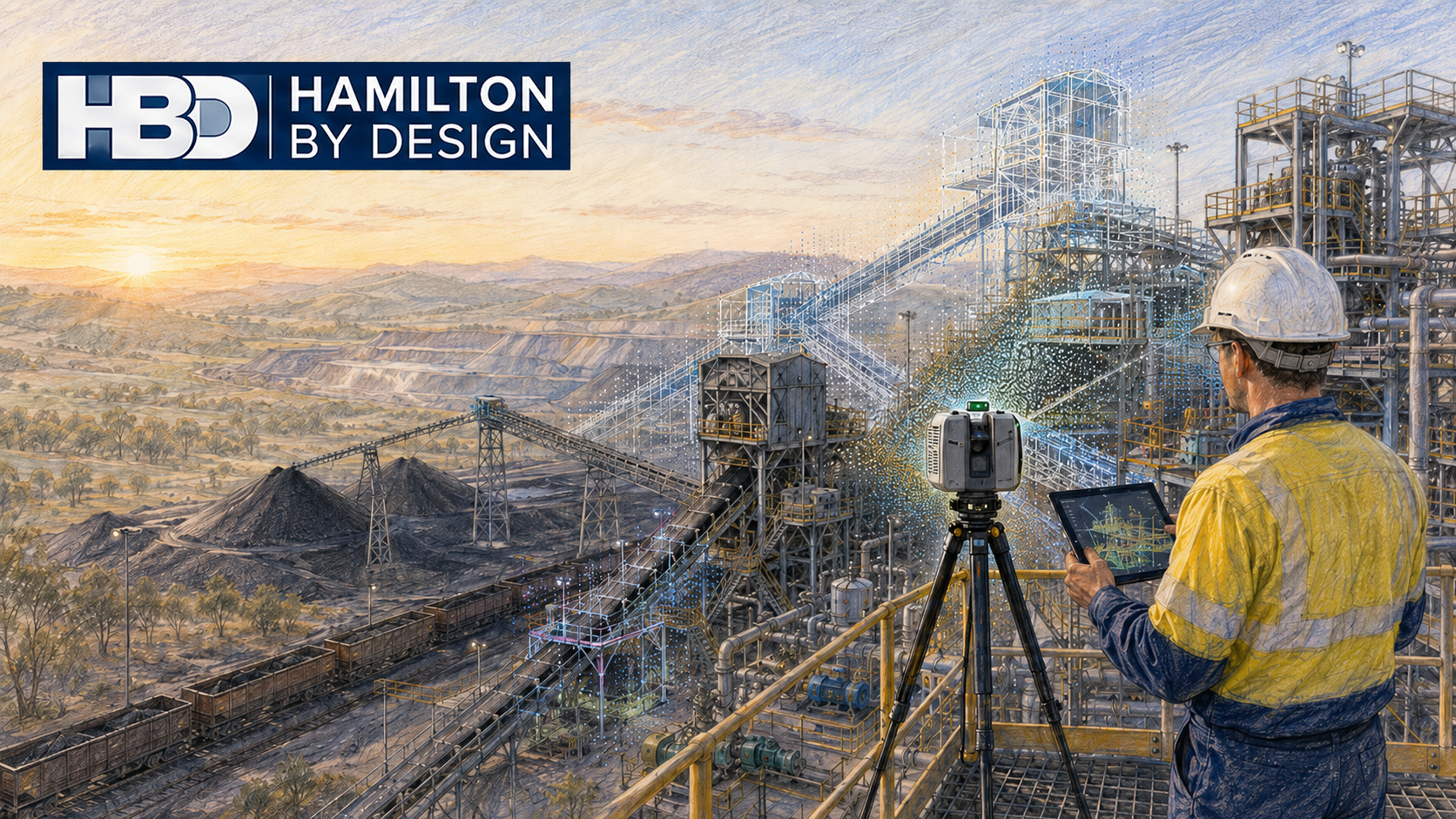
3D laser scanning of coal handling plant conveyors transfer chutes and stockpile systems for engineering design

Coal handling plants are complex facilities designed to move, process, and store large volumes of bulk material. These systems often include:

  • conveyor networks
  • transfer chutes
  • crushers and screens
  • stacker and reclaim systems
  • stockpile infrastructure

Over time, these plants evolve as equipment is upgraded or modified during shutdowns. As a result, original drawings can become outdated or incomplete.

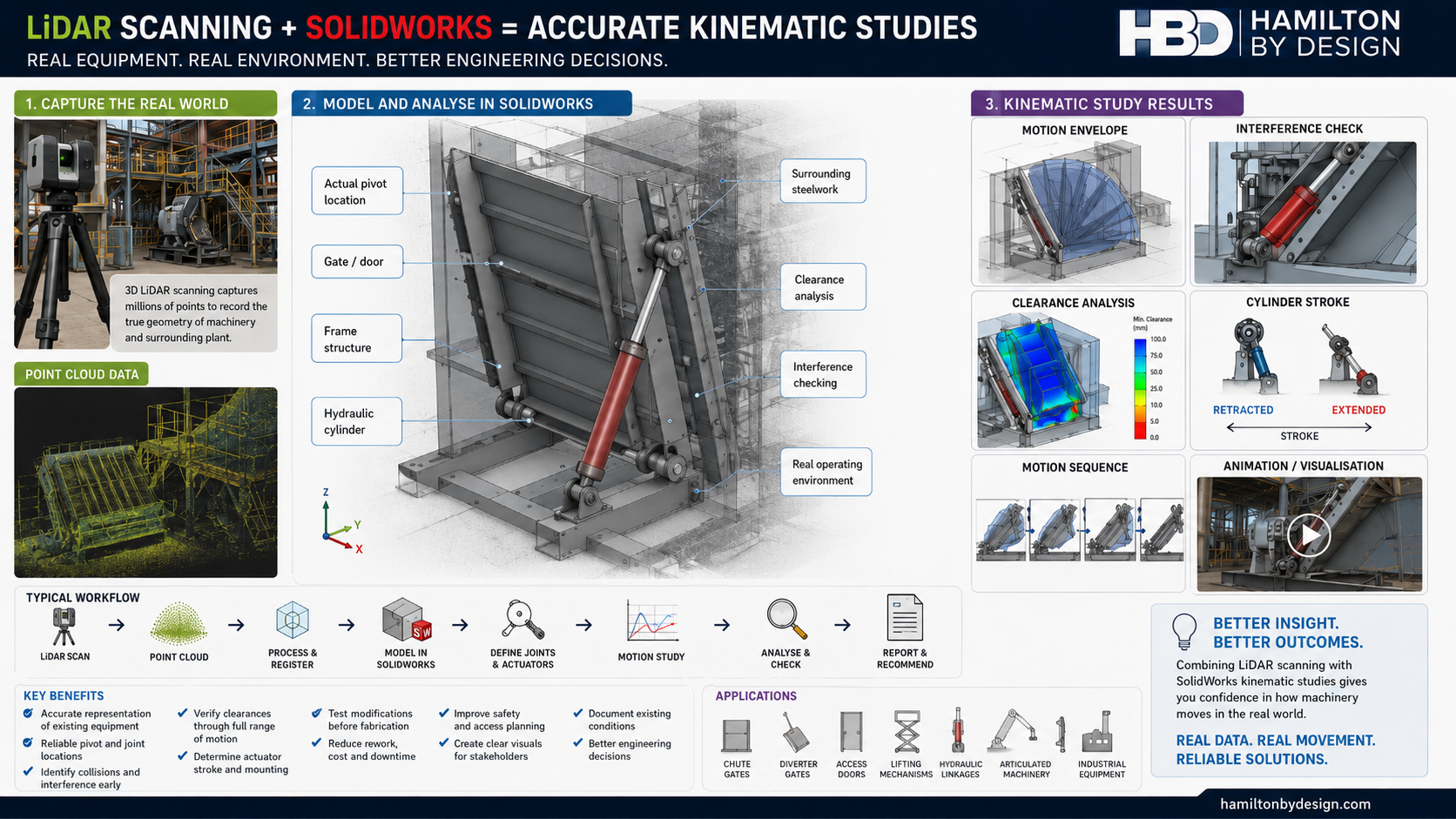
This is where coal handling plant laser scanning becomes an essential engineering tool. By capturing the exact geometry of existing infrastructure, engineers can develop accurate models of the plant before designing modifications or upgrades.


Capturing Existing Plant Infrastructure

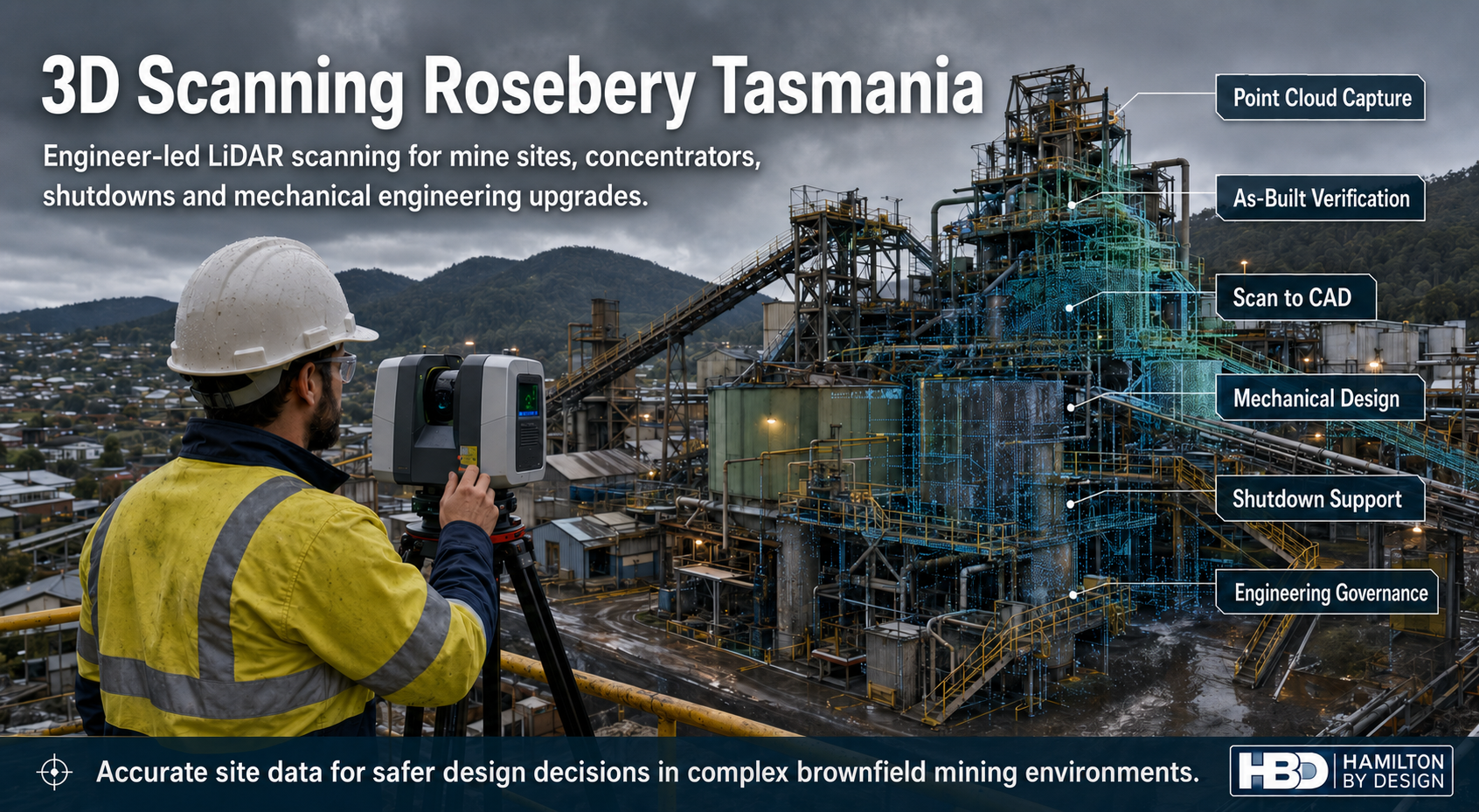
3D laser scanning allows engineers to capture millions of measurement points across a facility, creating a highly detailed digital representation of the plant environment.

In coal preparation plants, this technology is particularly valuable for capturing:

  • conveyor structures
  • transfer chute geometry
  • stockpile conveyor systems
  • structural steel frameworks
  • access platforms and walkways

The resulting point cloud provides a precise reference for engineering teams working on plant upgrades, equipment replacements, or shutdown planning.


Scanning Conveyor Systems and Transfer Points

Conveyors are the backbone of most coal handling facilities. They transport coal between crushers, screening plants, stockpiles, and load-out systems.

Transfer points between conveyors are often some of the most complex areas of the plant. Engineers must understand:

  • material flow paths
  • chute geometry
  • clearances around structures
  • maintenance access areas

Using coal handling plant laser scanning, engineers can accurately capture the existing transfer arrangements. This allows them to analyse the system and develop improved designs for:

  • transfer chutes
  • conveyor upgrades
  • dust control systems
  • maintenance access improvements

Accurate digital data significantly reduces the risk of errors when modifying these critical systems.


Capturing Stockpile and Stacker Systems

Coal handling plants typically include large stockpile areas where material is stored before transport or processing.

These systems may include:

  • stacker conveyors
  • reclaim tunnels
  • feeder systems
  • radial stackers

Laser scanning can capture the entire geometry of these systems, including the surrounding structural infrastructure. Engineers can then model the stockpile equipment and evaluate:

  • conveyor alignment
  • discharge geometry
  • reclaim system layout
  • structural clearances

This information is essential when planning equipment upgrades or improving plant reliability.


Creating Digital Engineering Models

Once scanning is complete, the point cloud data can be converted into a digital engineering model of the plant.

These models allow engineers to:

  • design new equipment within existing infrastructure
  • identify clashes before fabrication
  • plan structural modifications
  • improve materials handling systems

Digital plant models are particularly valuable in large facilities where physical measurement would otherwise be difficult or unsafe.

For more information on this approach, see:


Supporting Shutdown Engineering Projects

Many upgrades in coal handling plants occur during planned shutdowns where installation time is limited.

Accurate digital models allow engineering teams to prepare in advance by:

  • confirming equipment fits within existing structures
  • planning installation sequences
  • producing fabrication drawings based on real plant geometry

This preparation helps reduce risk during shutdowns and ensures that new equipment can be installed efficiently.


Improving Reliability in Coal Handling Infrastructure

Coal handling plants rely on complex mechanical systems that must operate continuously to support mining operations.

Using coal handling plant laser scanning provides engineers with a reliable foundation for improving these systems. With accurate digital information, engineering teams can design upgrades that improve:

  • conveyor reliability
  • transfer chute performance
  • maintenance access
  • overall plant efficiency

As mining operations continue to modernise their infrastructure, laser scanning is becoming a key tool for engineers working on bulk materials handling systems.

Name
Would you like us to arrange a phone consultation for you?
Address
CHPP Engineering title graphic featuring bold white text reading "CHPP Engineering" centred on a blue rounded rectangle background.
Pipework Drafting title graphic featuring bold white text reading "Pipework Drafting" centred on a blue rounded rectangle background.
3D LiDAR Scanning for Engineering Projects title graphic featuring bold white text on a blue rounded rectangle background.
3D CAD Modelling Australia service banner for Hamilton By Design
Finite Element Analysis (FEA) engineering simulation button
Mechanical engineering services

Why Conveyor Transfer Chute Design Matters

3D CAD model of a conveyor transfer chute with a feed conveyor at 90 degrees stacking ore into a conical stockpile

In mining plants, conveyor transfer chutes are often the most overlooked component in the materials handling system. Yet they are frequently responsible for the largest operational disruptions.

Poor chute design can result in:

  • Material blockages
  • Conveyor belt damage
  • Excessive wear on liners
  • Dust generation
  • Product spillage
  • Reduced plant throughput

For mining operations running 24/7 production, even minor transfer issues can escalate into significant downtime during shutdowns.

Effective conveyor transfer chute design is therefore not just a drafting exerciseโ€”it is a critical engineering task that directly impacts plant reliability, maintenance costs, and safety.


Common Problems in Mining Transfer Chutes

Across many mining and processing plants, similar issues appear repeatedly in poorly designed transfer points.

Typical operational problems include:

1. Blockages and Build-Up

Moist ores, fine materials, and poorly directed material streams often lead to material accumulation. Over time this causes:
  • chute choking
  • restricted flow paths
  • emergency shutdowns

2. High Impact Loading

If the chute does not properly control the material trajectory, large rocks can strike belts or liners at high velocity, resulting in:
  • conveyor belt damage
  • excessive wear on liners
  • structural fatigue

3. Material Spillage

Incorrect chute geometry can cause material to miss the receiving belt entirely. Spillage creates:

  • safety hazards
  • housekeeping issues
  • unnecessary cleanup labour

4. Dust and Environmental Issues

High drop heights and uncontrolled material flow generate dust clouds that affect:

  • operator safety
  • equipment life
  • compliance with environmental requirements

Engineering Principles Behind Reliable Chute Design

Reliable conveyor transfer chute design requires understanding both material behaviour and mechanical systems.

Some key design considerations include:

Controlled Material Flow

The goal of a well-designed chute is to control the material stream, ensuring that the ore flows smoothly onto the receiving conveyor at the correct velocity and direction.

Design considerations include:

  • trajectory modelling
  • flow velocity management
  • impact angle control

Wear Management

Mining materials are extremely abrasive. Chute design must incorporate wear protection strategies such as:

  • replaceable liner systems
  • ceramic or chromium carbide plates
  • sacrificial wear zones

A well-designed chute allows liners to be replaced quickly during shutdowns.


Belt Protection

Poorly designed transfers can dramatically reduce conveyor belt life.

Engineering improvements often include:

  • impact beds
  • loading skirts
  • properly aligned material streams

Reducing belt damage significantly lowers maintenance costs.


Maintenance Accessibility

A transfer chute should be designed with maintainability in mind.

This includes:

  • safe inspection access
  • removable panels
  • maintenance platforms
  • quick liner replacement systems

These features become particularly important during tight shutdown windows.


Using Digital Engineering to Improve Chute Performance

Modern mining operations increasingly rely on digital engineering tools to improve the reliability of transfer points.

Technologies such as 3D laser scanning and digital plant models allow engineers to:

  • capture the exact geometry of existing plant infrastructure
  • analyse transfer trajectories
  • redesign chutes within existing plant constraints
  • reduce risk during shutdown installations

This approach is particularly useful when retrofitting new chutes into older mining infrastructure where original drawings are often incomplete or inaccurate.

More information on this workflow can be found in:


Designing Transfer Chutes for Shutdown Installations

In many cases, chute upgrades are installed during planned mining shutdowns, where time is extremely limited.

Engineering preparation is essential to ensure the work can be completed within the shutdown window.

Typical preparation includes:

  • capturing existing plant conditions
  • producing accurate engineering models
  • clash detection with existing structures
  • fabrication-ready drawings

A well-prepared digital model significantly reduces the risk of installation delays.

Further discussion on shutdown engineering preparation can be found here:


Mechanical Engineering Support for Mining Infrastructure

Reliable transfer chute systems require collaboration between:

  • mechanical engineers
  • plant operators
  • maintenance teams
  • fabrication workshops

By combining operational experience with digital engineering tools, mining companies can significantly improve the reliability of their materials handling systems.

Hamilton By Design provides mechanical engineering design services for mining infrastructure, including:

  • conveyor transfer chute design
  • materials handling upgrades
  • plant modification design
  • digital engineering models for shutdown work

Learn more about these services here:


Hamilton By Design logo displayed on a blue tilted rectangle with a grey gradient background

Final Thoughts

Transfer chutes may appear to be a simple part of a conveyor system, but their impact on mining operations is significant.

Poorly designed chutes lead to:

  • downtime
  • safety risks
  • excessive maintenance costs

With careful engineering design, digital modelling, and proper shutdown preparation, transfer points can become reliable components of a high-performance mining plant.

For operations seeking to reduce downtime and improve plant reliability, conveyor transfer chute design is one of the most valuable engineering improvements available.

3D LiDAR scanning and 3D modelling service button โ€” laser scanner capturing a point cloud for engineering and CAD modelling
Mechanical engineering services
Name
Would you like us to arrange a phone consultation for you?
Address
CHPP Engineering title graphic featuring bold white text reading "CHPP Engineering" centred on a blue rounded rectangle background.
Pipework Drafting title graphic featuring bold white text reading "Pipework Drafting" centred on a blue rounded rectangle background.
3D LiDAR Scanning for Engineering Projects title graphic featuring bold white text on a blue rounded rectangle background.
Finite Element Analysis (FEA) engineering simulation button
Mechanical engineering services

Designing Bucket Elevators vs Pan Conveyors in Industrial Material Handling

Engineering comparison diagram showing a bucket elevator lifting bulk material vertically and a pan conveyor transporting material horizontally.

Bucket Elevator vs Pan Conveyor Design | Industrial Material Handling Engineering

In bulk material handling industries such as mining, cement production, grain processing, and industrial manufacturing, selecting the right conveying system is critical to reliability, maintenance efficiency, and operating cost. Two commonly used systems are bucket elevators and pan conveyors. While both systems move bulk material efficiently, they are designed for very different operating conditions and material characteristics.

Understanding the difference between the two systems helps engineers select the correct solution for the application.


Bucket elevator vs pan conveyor industrial material handling comparison infographic.

What is a Bucket Elevator?

A bucket elevator is a vertical conveying system designed to lift bulk materials using a series of buckets attached to either a belt or chain. The buckets scoop material from the boot section and carry it upward to the discharge point.

Bucket elevators are widely used where material must be lifted vertically in a compact footprint.

Key Components

Buckets (steel, nylon, or HDPE)
Belt or chain drive
Boot section (material inlet)
Head section with drive and discharge
Casing or elevator trunking

Typical Applications

Grain handling
Fertiliser plants
Cement and lime processing
Mining concentrate handling
Sand, ash, or powder transport

Advantages

Efficient vertical lifting
Small plant footprint
High throughput capacity
Energy efficient for vertical transport

Limitations

Not ideal for very abrasive or large lump materials
Sensitive to overloading and blockages
Requires careful alignment and maintenance


What is a Pan Conveyor?

A pan conveyor, often called an apron conveyor, transports material horizontally or on shallow inclines using overlapping steel pans attached to heavy-duty chains.

The pans form a continuous moving surface that carries material along the conveyor frame.

Pan conveyors are commonly used in harsh industrial environments where materials are heavy, hot, or abrasive.

Key Components

Steel pans or plates
Heavy-duty conveyor chains
Sprockets and drive system
Conveyor frame
Impact loading zone

Typical Applications

Clinker transport in cement plants
Mining ore handling
Hot ash handling
Crusher discharge conveyors
Furnace feed systems

Advantages

Handles very heavy and abrasive materials
Suitable for impact loading
Reliable in harsh environments
Can operate at slow controlled speeds

Limitations

Larger footprint
Higher capital cost
More power consumption than bucket elevators


Key Differences Between Bucket Elevators and Pan Conveyors

Bucket Elevator
Vertical conveying system
Best for fine to medium bulk materials
Compact footprint
High energy efficiency for vertical transport
Requires controlled loading

Pan Conveyor
Horizontal or inclined conveying system
Handles heavy, abrasive or hot materials
Larger footprint
More robust construction
Handles high impact loading


When to Choose a Bucket Elevator

A bucket elevator is typically the preferred solution when:

Material must be lifted vertically
Plant space is limited
The material is free-flowing
Throughput is high but impact loading is low

Examples include grain silos, cement plants, fertiliser plants, and powder handling systems.

In these situations, bucket elevators provide a compact and energy-efficient solution.


When to Choose a Pan Conveyor

A pan conveyor is the better choice when:

Material is coarse, hot, or abrasive
There is high impact loading
The conveyor must operate continuously in harsh conditions
Reliability is more important than plant footprint

Examples include crusher discharge conveyors, furnace feed systems, clinker transport, and mining ore handling.

Pan conveyors are designed to survive the harshest bulk material handling environments.


Engineering Design Considerations

When designing either system, engineers must consider the following:

Bulk material characteristics
Lump size distribution
Abrasiveness
Moisture content
Throughput requirements
Loading conditions
Maintenance access
Structural support

Modern projects often integrate 3D laser scanning and point cloud modelling to ensure conveyors fit within existing plants and connect correctly to existing infrastructure. This approach reduces installation risk and helps engineers verify clearances, structural loads, and maintenance access before fabrication.

3D LiDAR scanning and 3D modelling service button โ€” laser scanner capturing a point cloud for engineering and CAD modelling
Mechanical engineering services

Hamilton By Design logo displayed on a blue tilted rectangle with a grey gradient background

Engineering Support for Conveyor Design

Hamilton By Design supports industrial projects with:

Mechanical conveyor design
3D laser scanning of existing plants
Conveyor chute and transfer design
Structural steel and support frames
Inspection and maintenance optimisation

Whether designing a bucket elevator for vertical material handling or a heavy-duty pan conveyor for mining operations, selecting the correct system is critical to long-term reliability and operational efficiency.


Name
Would you like us to arrange a phone consultation for you?
Address
3D CAD Modelling Australia service banner for Hamilton By Design

Mechanical Design Consultants Broken Hill โ€“ Engineering for Mining, Materials Handling and Industrial Durability

Mechanical Design Consultants Broken Hill banner featuring mining conveyor system, chute transfers and governed engineering workflow.

Mechanical Design Consultants Broken Hill | Mining & Industrial Engineering

Broken Hill is more than an iconic Australian mining town โ€” itโ€™s a living industrial environment where mechanical design means engineering solutions that withstand harsh climate, challenging site conditions and highly specialised plant requirements.

At Hamilton By Design, we provide Mechanical Design Consultants Broken Hill services that go beyond drafting. We deliver practical engineering, fabrication-ready documentation and on-site validation for projects tied to mining, materials handling, industrial process systems and structural upgrades throughout the region.


Broken Hill mining mechanical engineering visual with site verification, conveyors, pump skids and steelwork design.

Why Mechanical Design in Broken Hill Is Unique

Broken Hillโ€™s heritage and industrial character make it unlike typical metropolitan engineering contexts. Key factors influencing mechanical design here include:

Mining Legacy and Heavy Industry
Broken Hillโ€™s economy is centred on mining โ€” zinc, lead, silver and associated concentrates. Mechanical design solutions must integrate with existing plant infrastructure, high wear environments and heavy materials handling.

Harsh Climate Conditions
Extreme summer heat, dusty conditions and significant thermal expansion cycles impact equipment life and material performance. Engineering design must account for thermal stresses, corrosion resistance and maintainability over extended asset life.

Remote Logistics and Cost Sensitivity
Because Broken Hill is distant from major fabrication centres, rework and revision errors are expensive in both time and cost. Mechanical design must be right the first time with robust documentation and controlled revision systems.


Mechanical Design Services Tailored to Broken Hill Industry

Hamilton By Design provides a range of mechanical design consulting services that support Broken Hillโ€™s key industrial and mining projects.


Chute Design & Transfer Systems

Material flow equipment such as chutes and transfer points are critical in mining operations. We design and optimise:

  • Rock and ore chutes
  • Dust-controlโ€‰feed transfers
  • Wear-liner selection and replaceable panels
  • Structural support interfaces

Our designs minimise plugging, reduce abrasion wear and improve operational reliability within dusty and high-impact environments.


Conveyor Systems

Conveyors move heavy materials across site, often over extended distances and challenging terrain. Design considerations we incorporate include:

  • Conveyor frame layout and structural routing
  • Loading and take-up systems
  • Belt alignment and tensioning
  • Access platforms and maintenance walkways
  • Integration with processing plant interfaces

Our designs are 3D modelled, clash-checked and documented for first-time fabrication and installation.


Pump Skids and Process Mechanical

Hydraulic systems and processing modules require precise mechanical design, especially in mobile or modular mining applications:

  • Pump skid engineering
  • Piping layout and support design
  • Equipment anchoring and vibration isolation
  • Corrosion protection in abrasive or corrosive environments

We produce fabrication-ready documentation and coordinated layouts that fit site constraints and satisfy engineering governance.


Steelwork, Cranes and Structural Interfaces

Heavy steelwork and lifting systems are common in Broken Hill facilities. Our services include:

  • Structural support and lifting frame design
  • Workshop steel detailing
  • Light crane and jib crane integration
  • Lift points, access platforms and walkways
  • Compliance with Australian steelwork and crane standards

Whether upgrading existing infrastructure or designing new installations, our mechanical design integrates structure and mechanical integrity.


Brownfield Engineering and On-Site Validation

Many Broken Hill projects occur in live facilities with legacy equipment and tight access constraints. Hamilton By Design uses verification methods such as laser scanning and measured site capture to reduce design assumptions and ensure fit-for-site outcomes.

By combining 3D modelling with real-world site conditions, we eliminate costly guesswork and minimise installation revisions.


Governance and Documentation that Reduces Risk

High freight costs, remote fabrication and limited on-site rework options mean that mechanical design documentation must be perfectly controlled. We deliver:

  • Revision-controlled issue states (Concept โ†’ Design โ†’ Review โ†’ IFC)
  • Clear markups and revision histories
  • Digital engineering workflows
  • Maintainability-centred design

This structured approach improves contractor alignment, reduces RFIs and lowers risk across the project lifecycle.


Supporting Mining and Industrial Clients in Broken Hill

From conveyor upgrades to chute optimisation, pump skid engineering to structural crane work, Hamilton By Design applies disciplined mechanical design that solves real Broken Hill problems.

We work with:

  • Mining operations and concentrator plants
  • Materials handling facilities
  • Industrial process upgrades
  • Remote site mechanical installations

Our designs are engineered for durability, constructability and long-term performance.


Hamilton By Design logo displayed on a blue tilted rectangle with a grey gradient background
3D LiDAR scanning and 3D modelling service button โ€” laser scanner capturing a point cloud for engineering and CAD modelling
Mechanical engineering services

Mechanical Design Consultants Broken Hill โ€“ Letโ€™s Talk

If your project in Broken Hill or regional NSW requires experienced mechanical design consulting โ€” whether itโ€™s conveyors, chutes, steelwork, process modules or structural interfaces โ€” Hamilton By Design is ready to support you with practical engineering that works on site.

Contact us today to discuss your mechanical design needs and get solutions that are precise, controlled and ready to build.

Name
Would you like us to arrange a phone consultation for you?
Address

3D CAD Modelling Australia service banner for Hamilton By Design

Mechanical Design Consultants Hobart โ€“ Engineering for Tasmaniaโ€™s Unique Conditions

Hobart mechanical engineering consultancy highlighting fabrication-ready design and controlled revision workflow.

Mechanical Design Consultants Hobart | Tasmania Engineering Experts

Hobart is unlike mainland capital cities. Its maritime environment, cooler climate and geographic isolation create unique engineering challenges. Mechanical design in Hobart requires practical thinking, accurate documentation and a strong understanding of local conditions.

Hamilton By Design provides mechanical design consulting services to Hobart and broader Tasmania. We deliver governed, fabrication-ready engineering solutions built for real site conditions.

What Makes Mechanical Design in Hobart Unique

Maritime Environment
Hobartโ€™s proximity to the Southern Ocean and the Port creates exposure to salt-laden air and high corrosion environments. Mechanical systems must consider material selection, protective coatings, long-term durability and maintainability in marine conditions.

Cool Climate and Variable Weather
Tasmaniaโ€™s cooler temperatures and moisture exposure affect thermal expansion, outdoor equipment performance and environmental protection requirements. Mechanical design must account for weather sealing, drainage and long-term asset performance.

Geographic Isolation
Tasmaniaโ€™s separation from the mainland increases freight costs and lead times. Rework is expensive and delays are amplified. Mechanical design must be correct the first time, with controlled revisions and clear fabrication documentation.

Unique Mechanical Design Projects in Hobart

Food and Beverage Processing
Tasmaniaโ€™s premium produce industry requires hygienic mechanical systems, stainless fabrication, conveyor design and washdown-compatible plant layouts.

Aquaculture and Marine Infrastructure
Mechanical systems must withstand marine exposure while integrating with wharf structures, pumps, processing systems and coastal facilities.

Renewable and Energy Infrastructure
Tasmaniaโ€™s hydro and renewable energy assets require mechanical upgrades, maintenance platforms and brownfield integration within existing operational environments.

Industrial and Port Upgrades
Materials handling systems, structural interfaces and mechanical modifications must work within live facilities while minimising disruption.

Tasmanian mechanical design services with 3D scanning verification and marine industrial backdrop in Hobart.

Our Mechanical Design Approach

Hamilton By Design integrates practical engineering with structured governance. We deliver:

Mechanical 2D and 3D modelling
Brownfield site verification and measurement
Fabrication-ready workshop drawings
Revision-controlled issue states
Clear approval pathways
Maintainability-focused design

Mechanical design is not just geometry. It is accountability, constructability and lifecycle thinking.

Brownfield Engineering in Hobart

Many Hobart facilities operate within existing structures. Upgrades must work within tight spatial constraints and operational environments.

Mechanical design must consider:

Installation sequencing
Maintenance access
Load paths and structural interfaces
Compliance documentation
Minimal operational disruption

Clear documentation reduces risk and protects project budgets.

Why Engineering Governance Matters in Tasmania

When freight and remanufacture costs are high, mistakes become expensive quickly. Controlled documentation and disciplined revision management are essential.

Governed mechanical design ensures:

Correct drawing revision at fabrication
Traceable design decisions
Structured document control
Reduced rework risk
Clear communication between stakeholders

Supporting Hobart Industry

Hobartโ€™s industrial sector is innovative and export-focused. From marine and aquaculture to food production and renewable infrastructure, mechanical design must reflect Tasmaniaโ€™s environment and long-term asset strategy.

Hamilton By Design supports Hobart projects from concept through to detailed design and fabrication documentation, delivering practical engineering solutions built for site reality.

Mechanical Design Consultants Hobart โ€“ Letโ€™s Discuss Your Project

If your Hobart-based project requires structured mechanical design support and disciplined documentation control, Hamilton By Design is ready to assist.

We provide engineering clarity, reduced risk and fabrication-ready outcomes for Tasmania industry.


Name
Would you like us to arrange a phone consultation for you?
Address

3D CAD Modelling Australia service banner for Hamilton By Design
Finite Element Analysis (FEA) engineering simulation button
Mechanical engineering services

Designing Chutes for Easy Maintenance: The Hamilton by Design Approach

Engineering infographic explaining chute design challenges for coal, iron ore, hard rock, grains, and powders.

In high-wear environments such as mining, minerals processing and bulk material handling, chutes are constantly subject to abrasion, material impact and scraper wear. But too often, chute design prioritises material flow while overlooking how maintenance crews will access, replace, or adjust wear components and scrapers safely and efficiently.

At Hamilton by Design Co., we engineer chutes not only for performanceโ€”but for maintainability. Because downtime, difficult access and costly labour arenโ€™t just inconvenientโ€”they cut straight into your production goals.


Why Maintenance-Friendly Chute Design Matters

Traditional chutes often have one thing in common: theyโ€™re hard to service. Common pain points include:

  • Poor access to internal wear liners
  • Limited clearance for scraper removal/replacement
  • Unsafe confined spaces for maintenance crews
  • Complex disassembly for simple tasks

When maintenance teams struggle to reach components, the outcome is predictable: reduced uptime, increased safety risk and higher long-term operating costs.

A better design not only minimises wearโ€”it facilitates wear replacement.


Infographic titled โ€œHamilton By Design โ€“ Solving Particle Physics Problems One at a Timeโ€ showing material types like coal, hard rock, iron ore, grains, and fine powders with chute design considerations.

Key Principles in Maintainable Chute Design

1. Access Firstโ€”Flow Second

At Hamilton by Design we always ask:
Can a technician reach the wear components safely and efficiently?

Practical solutions we use include:

  • Strategic access doors positioned adjacent to high-wear zones
  • Removable panels with quick-release fasteners
  • Tool-less entry where safe to do so

Simple changes like these reduce maintenance time dramatically.


2. Clearance and Space for Wear Component Removal

Every chute design should consider how a liner panel, scraper blade or skirting board will be removed and replaced. That means:

  • Adequate clearance for lifting gear
  • Doors that open wide enough for component extraction
  • Recessed bolt access to avoid removal obstacles

This forward planning translates directly to lower labor hours and fewer workarounds.


3. Modular Wear Components

Instead of large, welded-in liners that require cut-out replacement, we prefer:

  • Modular liner segments
  • Bolted scraper shoes
  • Replaceable wear strips

Modularity means teams can replace only whatโ€™s wornโ€”without disassembling the whole chute.


4. Scrapers Designed for Easy Swap-Out

Scraper blades are one of the most frequently replaced items in feed and transfer chutes. Good design ensures:

โœ” blades are accessible
โœ” blades can be removed with minimal tools
โœ” adjustment points are visible and reachable

Hamilton by Design uses engineered scraper blocks and mounting systems that:

  • protect the blade from downstream impacts
  • allow quick blade indexing or change-out
  • can be serviced from outside the chute where possible

5. Safety and Compliance Built In

Maintenance isnโ€™t just easierโ€”it must also be safer. Thatโ€™s why our designs include:

๐Ÿ”น lockable access panels
๐Ÿ”น clear entry/egress paths
๐Ÿ”น adequate lighting and fall protection points
๐Ÿ”น confined-space considerations where relevant

Taking safety off the critical path keeps your team productive and compliant.


Mining hopper in a transfer station shown in cutaway, illustrating steady-state material flow, structural load distribution, and engineered hopper design.

Putting It All Together: Benefits You Can Measure

When chute design accommodates maintenance needs, the benefits are real:

OutcomeBenefit
Shorter maintenance windowsMore uptime
Easier scraper changesLower labour cost
Modular wear partsReduced inventory waste
Lower safety riskFewer incidents and stoppages
Better flow + maintainabilityHigher throughput

Hamilton by Design: Chutes Built for the People Who Maintain Them

At Hamilton by Design Co., we recognise that chutes donโ€™t just sit thereโ€”they work hard, and your team works hard to keep them running.

Thatโ€™s why our engineers consider:

โœ… material properties
โœ… wear patterns
โœ… maintenance access
โœ… scraper replacement
โœ… safety & ergonomics

all from the earliest design stage.

If your operation is battling hard-to-maintain chutes, or you want chutes that perform and serve your maintenance crews well, weโ€™d love to help.

Contact Hamilton by Design today for a design review or quote.


3D LiDAR scanning and 3D modelling service button โ€” laser scanner capturing a point cloud for engineering and CAD modelling
Mechanical engineering services
Name
Would you like us to arrange a phone consultation for you?
Address


3D LiDAR scanning and 3D modelling service button โ€” laser scanner capturing a point cloud for engineering and CAD modelling
Mechanical engineering services
Finite Element Analysis (FEA) engineering simulation button
Mechanical engineering services
3D LiDAR scanning and 3D modelling service button โ€” laser scanner capturing a point cloud for engineering and CAD modelling
Mechanical engineering services
Finite Element Analysis (FEA) engineering simulation button
Mechanical engineering services