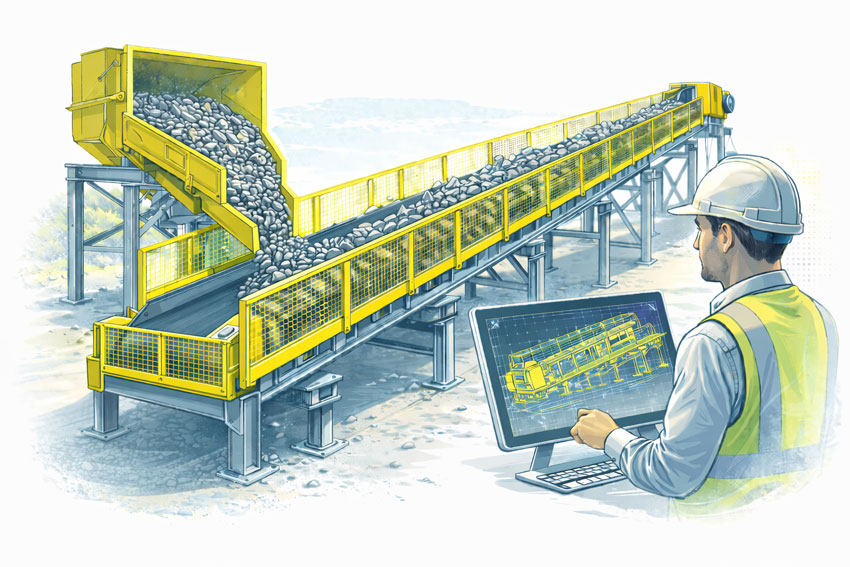
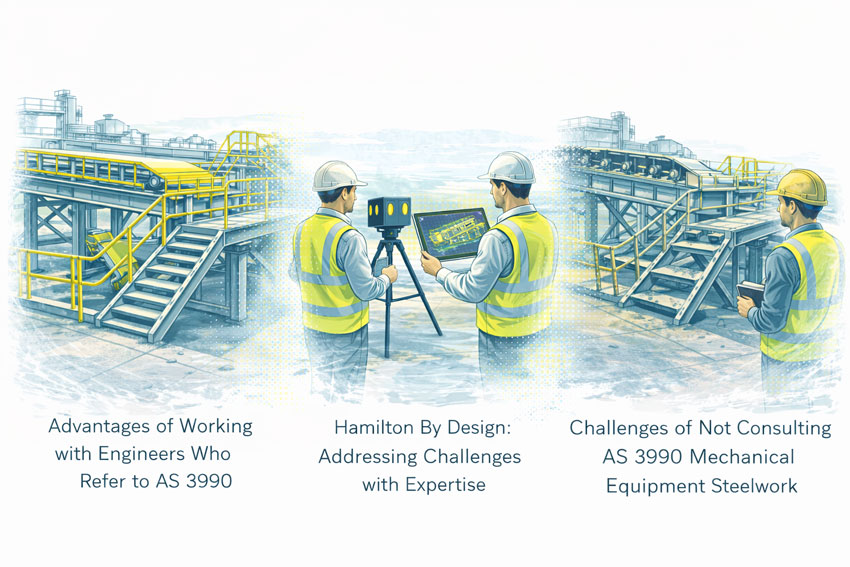
Mechanical Engineering | 3D Scanning | 3D Modelling
Tag: plant-upgrades
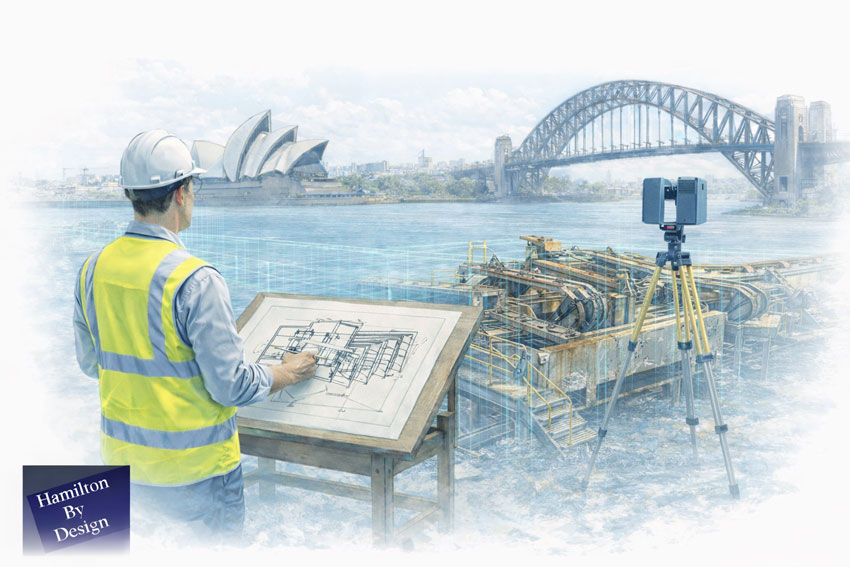
Hamilton By Design provides mechanical engineering, 3D LiDAR scanning and CAD support for industrial plant upgrades and brownfield modifications.
Plant upgrades often require new equipment, pipework, conveyors, chutes, platforms or supporting components to fit within an existing operational facility. Original drawings may be incomplete or may no longer represent the installed plant, increasing the risk of clashes, rework and installation delays.
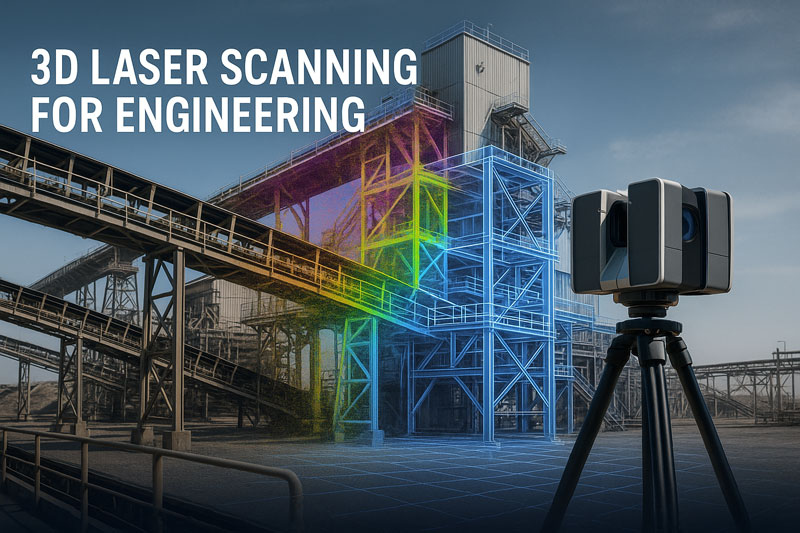
Our services can include existing-condition scanning, point-cloud registration, 3D CAD modelling, mechanical design, equipment layouts, clash detection, fabrication drawings and installation verification. LiDAR scanning captures the surrounding plant, connection points and available clearances before detailed design begins.
The resulting point clouds and CAD models can support equipment replacement, capacity improvements, safety upgrades, maintenance access and shutdown planning. Proposed designs can be reviewed against existing site geometry to identify potential conflicts before components are fabricated or mobilised to site.
Deliverables may include registered point clouds, SolidWorks models, STEP or Parasolid files, general arrangement drawings, fabrication drawings and data suitable for AutoCAD, Inventor, ReCap and Navisworks workflows.
Services are available throughout Sydney, Newcastle, the Hunter Valley, regional NSW and industrial and mining locations across Australia.
Engineering Lessons from Recent Media: Foundations & Process First
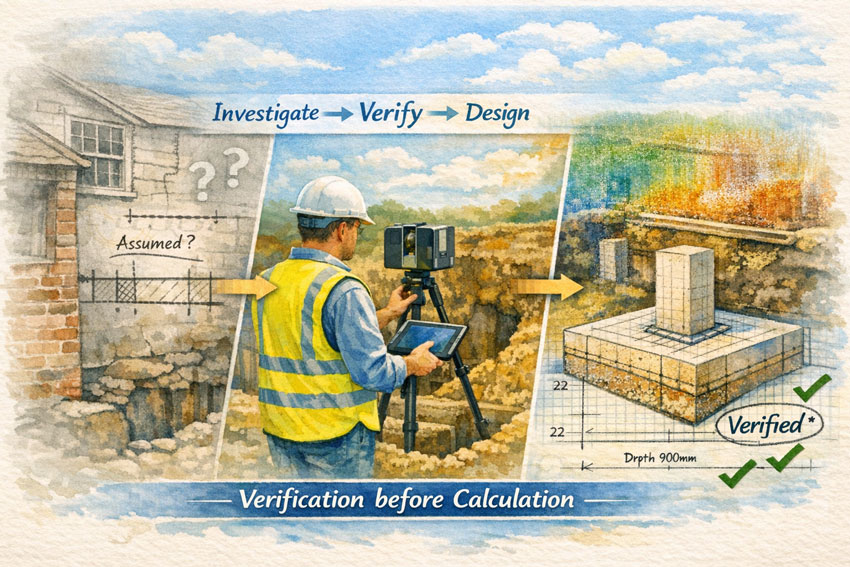
A recent Tasmanian news story reported on a homeowner receiving a substantial payout after major renovations led to cracking in their house. The coverage in The Mercury described how the problems were linked to inadequate consideration of existing footings and ground conditions during the design of a second-storey extension:
Rather than revisiting who was right or wrong, the reporting offers a constructive opportunity to reflect on how everyday engineering processes can be improved—especially on renovation and brownfield projects where information is incomplete.
1. Investigation Is Part of Design
The media narrative highlights a simple truth: when we work with existing structures, the ground and foundations are not background details—they are primary design inputs.
Good practice means:
Treating site verification as a formal stage of the project
Making recommendations for geotechnical or structural checks early
Being clear about what is known and what is assumed
A design based only on drawings is never as reliable as one based on verified conditions.
2. Make Assumptions Visible
News coverage often shows that problems grow in the grey space between architect, engineer, and builder.
Helpful habits include:
Keeping an assumptions register shared by the whole team
Noting on drawings what has been confirmed on site
Setting clear triggers for further investigation
When assumptions have owners, risks have boundaries.
3. Communication Is a Structural Element
Many reported disputes stem less from technical ability and more from gaps in communication.
Engineers can lead by:
Discussing uncertainties openly at the start
Confirming decisions in writing after meetings
Encouraging contractors to report unexpected conditions
Good communication is often cheaper than remediation.
4. Scope Changes = Risk Changes
Renovations rarely stay the same as the first sketch. Media accounts of failures frequently involve projects that grew beyond the original intent.
Better process includes:
Re-checking engineering scope whenever the design evolves
Linking approvals to stages of investigation
Pricing verification as a real deliverable, not an afterthought
Clarity of scope is a form of structural strength.
5. Document the Story of the Project
Journalists and lawyers both rely on records to understand what happened.
For engineers, simple steps make a big difference:
Photos tied to inspection notes
Short design basis statements
Emails confirming client instructions
Sketches of as-found conditions
Documentation is not defensive—it is professional memory.
6. Respect the Interface Between Old and New
The media coverage repeatedly points to the moment where new work met an older structure. That interface is where uncertainty lives.
Practical responses:
Specific checks on existing footings before adding load
Independent review for heritage or unknown construction
Monitoring after completion to confirm behaviour
The junction between old and new deserves the most attention.
7. The Courage to Pause
Perhaps the most human lesson from the reports is that engineers sometimes need to slow a project down.
Saying:
“We need more information before proceeding”
is not obstruction—it is professionalism.
Organisations that support this courage protect clients and engineers alike.
Turning Headlines into Better Practice
The story covered by The Mercury and the subsequent industry commentary do not need to be read as cautionary tales. They can be read as learning opportunities:
Investigate before you calculate
Make assumptions visible
Communicate uncertainty early
Document decisions clearly
Treat existing conditions with respect
These are the foundations of good engineering, long before concrete is poured.
Final Thought
Risk will always exist in renovation and brownfield work. What we control is the process we wrap around that risk.
When engineers focus on verification, transparency, and collaboration, projects become safer, clients are better served, and the profession grows stronger.
Good engineering is not only about correct numbers— it is about asking the right questions at the right time.
References
“Woodbridge homeowner wins huge payout after home cracked following two-storey extension” — The Mercury (Tasmania) 🔗 https://www.themercury.com.au/truecrimeaustralia/police-courts-tasmania/woodbridge-homeowner-wins-huge-payout-after-home-cracked-following-twostorey-extension/news-story/32fe411a57c2471be44962cba86100bd
Terrestrial LiDAR Scanner Price – Buy or Hire Options
When organisations first explore terrestrial LiDAR scanning, the biggest question is usually not technical — it’s commercial: should we buy a scanner or hire one for the project?
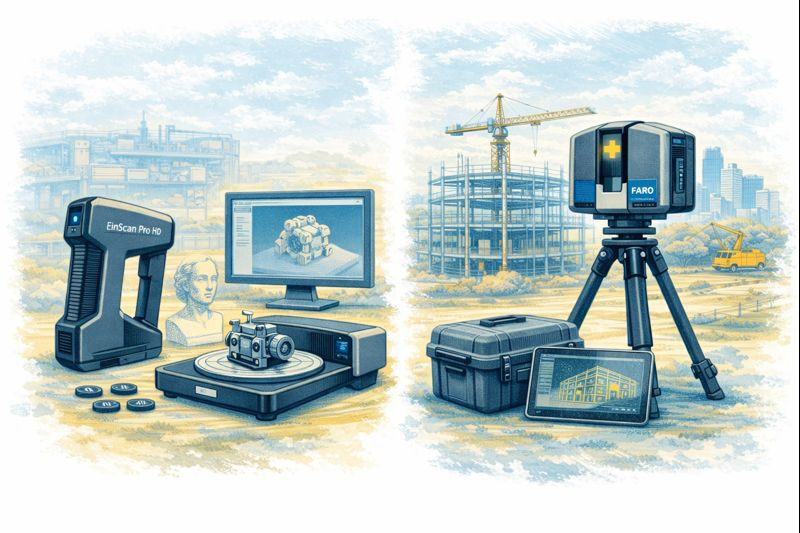
Terrestrial LiDAR scanners such as FARO and Leica systems are powerful tools for capturing accurate point clouds of buildings, industrial facilities, infrastructure and construction sites. They support as-built documentation, clash detection, shutdown planning and digital twin workflows. However, the right decision between purchase and hire depends on how often the equipment will be used and the level of in-house expertise available.
Buying a LiDAR Scanner
Purchasing a scanner can make sense for businesses that:
undertake regular surveying or as-built capture
need immediate access on multiple sites
want to build internal reality-capture capability
plan to integrate point clouds into ongoing design workflows
Ownership provides flexibility and control, but also involves training, software, calibration and maintenance considerations.
Hiring a LiDAR Scanner
Hiring is often the smarter option when:
the requirement is project-specific
workloads are seasonal or occasional
specialist software and support are needed
you want to trial the technology before committing
Hire packages can include advice on setup, data management and export formats so the results integrate smoothly with CAD and BIM platforms.
We Support Both Options
Hamilton By Design offers terrestrial LiDAR scanners for both hire and sale, backed by engineering support to ensure the data delivers real value on your project. Whether you need equipment for a short shutdown, a construction survey, or you are considering building your own scanning capability, our team can guide you through the most practical pathway.
Rather than publishing generic prices, we prefer to understand:
the type of site you need to capture
required accuracy and deliverables
software and CAD integration
duration and level of support
This allows us to recommend the right scanner package and commercial model for your specific needs.
Please contact our team for a price and availability. We’ll help you decide whether buy or hire is the best approach for your project.
Fabrication Integrated Modelling (FIM): Why It’s the Future for Local Fabricators
Why It Is the Future for Local Fabricators
The fabrication industry is undergoing a fundamental transformation. Increasing project complexity, tighter tolerances, compressed schedules, labour shortages, and rising material costs are placing unprecedented pressure on fabricators — particularly local workshops operating in competitive markets. At the same time, clients are demanding greater certainty: certainty of fit, certainty of schedule, and certainty of cost.
Traditional fabrication workflows, built around 2D drawings and manual interpretation, are no longer sufficient to meet these expectations. They rely heavily on experience, assumptions, and rework — all of which introduce risk. In this environment, Fabrication Integrated Modelling (FIM) is emerging not as a luxury, but as a necessity.
FIM represents a shift from drawing-based fabrication to model-driven fabrication, where a single, coordinated digital model governs design intent, fabrication detailing, procurement, machining, assembly, and installation. For local fabricators, this shift offers a path to higher productivity, improved margins, and long-term relevance in an evolving industry.
What Is Fabrication Integrated Modelling (FIM)?
Fabrication Integrated Modelling is a methodology where the fabrication model becomes the primary source of truth across the entire project lifecycle. Instead of treating design, drafting, fabrication, and installation as disconnected stages, FIM integrates them into a continuous digital workflow.
In an FIM environment:
Engineering intent is embedded directly into the model
Fabrication constraints are considered from the outset
Quantities, tolerances, and interfaces are defined digitally
Fabrication data flows directly to machines and shop documentation
Installation sequencing is validated before material is cut
The model is not merely a visual aid — it is a fully informed digital prototype of the fabricated asset.
From Drawings to Data: A Fundamental Shift
Historically, fabrication has relied on 2D drawings as the primary communication tool. These drawings require interpretation by drafters, trades, and supervisors, each introducing assumptions based on experience and context. While this approach has worked for decades, it becomes increasingly fragile as projects grow more complex.
Fabrication Integrated Modelling replaces interpretation with explicit data. Hole locations, weld preparations, connection details, clearances, and tolerances are all defined within the model. This reduces ambiguity and ensures that everyone — from estimator to machine operator — is working from the same information.
The result is a dramatic reduction in errors, clarifications, and rework.
Why FIM Is Gaining Momentum Now
Several industry pressures are accelerating the adoption of FIM:
Increasing complexity of industrial and infrastructure projects
Reduced tolerance for errors during shutdowns and brownfield upgrades
Labour shortages and loss of experienced trades
Higher expectations for schedule and cost certainty
Growing integration of CNC and automated fabrication equipment
FIM addresses these challenges by improving coordination, predictability, and efficiency at the source — before fabrication begins.
Key Benefits of Fabrication Integrated Modelling
Reduced Errors and Rework
Rework is one of the most significant drains on fabrication profitability. Errors discovered on the workshop floor or during installation often result in cascading impacts: delays, additional labour, material waste, and strained relationships with clients.
By resolving interfaces, clashes, and tolerances digitally, FIM enables fabricators to identify and eliminate issues before steel is cut. Assemblies are tested virtually, connections are validated, and fit-up risks are significantly reduced.
This proactive approach shifts problem-solving upstream, where changes are faster, cheaper, and less disruptive.
Improved Fabrication Efficiency and Throughput
Fabrication speed is not achieved by rushing work — it is achieved by removing uncertainty. FIM provides clarity on what needs to be fabricated, in what order, and to what tolerance.
Benefits include:
Clear fabrication sequencing
Reduced downtime waiting for clarifications
Better planning of labour and machine utilisation
More predictable workshop flow
Local fabricators using FIM often report smoother operations, fewer interruptions, and a higher percentage of “right-first-time” components.
Better Use of Skilled Labour
Skilled trades are becoming harder to find and retain. Fabrication Integrated Modelling helps maximise the value of skilled workers by giving them better information, not more guesswork.
Fitters receive assemblies that align as expected. Welders focus on quality rather than correcting geometry. Supervisors make decisions based on accurate model data rather than assumptions. Apprentices gain clarity and confidence by working from model-based instructions.
Rather than replacing experience, FIM captures and amplifies it.
Seamless Integration with CNC and Fabrication Equipment
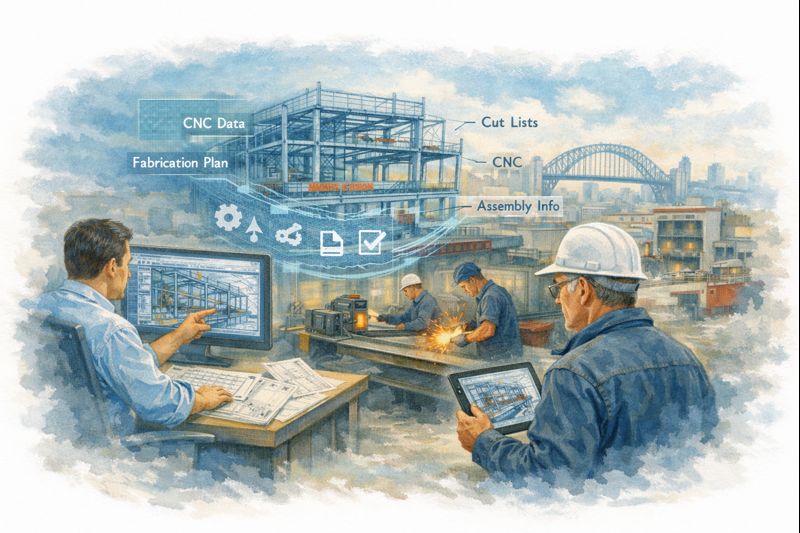
One of the strongest advantages of FIM is its ability to connect directly with modern fabrication equipment. The same model used for coordination and verification can generate machine-ready data, including:
NC files for beam lines and plate processors
Cut lists and nesting data
Part numbers and assembly marks
Machining references
This eliminates duplication of effort and reduces the risk of transcription errors. It also shortens the time between design approval and fabrication start, improving responsiveness to project changes.
Competitive Advantage for Local Fabricators
Local fabricators often compete with offshore suppliers on price alone — a contest that is difficult to win. FIM allows local workshops to compete on value rather than cost.
Key differentiators enabled by FIM include:
Faster response to changes
Higher confidence in fit-up for complex or brownfield sites
Reduced installation risk
Stronger collaboration with engineers and constructors
When site conditions change — as they inevitably do — local fabricators using FIM can adapt quickly, update models, and deliver revised components without significant disruption. This agility is a powerful advantage over remote fabrication alternatives.
FIM in Brownfield and Upgrade Projects
Brownfield projects present some of the greatest challenges in fabrication. Existing assets rarely match legacy drawings, and tolerances are often tight. Discovering misalignment during installation can result in costly delays and extended shutdowns.
Fabrication Integrated Modelling, often combined with accurate site capture, allows fabricators to design and fabricate components that align with actual site conditions rather than assumptions.
This approach reduces:
On-site modifications
Temporary works
Installation delays
Safety risks associated with forced fit-ups
For local fabricators servicing industrial plants and operational facilities, FIM is rapidly becoming an expected capability.
Financial Benefits: Protecting Margins, Not Just Schedules
While FIM is often associated with speed and accuracy, its most important benefit may be margin protection.
Model-based workflows enable:
More accurate pricing through reliable quantities
Reduced contingency allowances
Predictable labour and machine hours
Lower material waste
Fewer disputes and variations
By increasing certainty, FIM allows fabricators to price work confidently rather than defensively. Over time, this leads to healthier margins and more sustainable operations.
Earlier Engagement and Better Project Outcomes
Fabricators who adopt FIM often find themselves involved earlier in projects. Engineers and asset owners increasingly recognise the value of fabrication input during design development.
Early collaboration enables:
Design for manufacture and assembly
Smarter connection strategies
Reduced installation complexity
Improved safety outcomes
This shifts the fabricator’s role from reactive supplier to active project partner, strengthening relationships and improving project outcomes for all parties.
Overcoming Barriers to Adoption
Adopting Fabrication Integrated Modelling requires investment — not only in software and systems, but in people and processes. Common challenges include:
Training requirements
Changes to established workflows
Initial productivity adjustments
Cultural resistance to new methods
Successful fabricators address these challenges incrementally. They start with pilot projects, focus on repeatable wins, and work closely with engineering and modelling partners to build capability over time.
The risk of maintaining outdated workflows is increasingly greater than the risk of change.
The Future of Fabrication: Integrated Digital Ecosystems
FIM is not the final destination — it is the foundation for a more connected fabrication industry. As digital maturity increases, fabrication models will increasingly link to:
Digital twins
Quality assurance records
Traceability and compliance systems
Asset management platforms
Automated inspection and verification
In this future, the fabrication model becomes a long-term asset, supporting not only construction but operation and maintenance.
Why Fabrication Integrated Modelling Is the Future for Local Fabricators
Local fabrication is not disappearing — it is evolving. Workshops that continue to rely solely on 2D drawings and manual processes will face increasing pressure from cost, risk, and competition. Those that embrace Fabrication Integrated Modelling will position themselves for long-term success.
By adopting FIM, local fabricators can:
Deliver higher quality with greater confidence
Reduce rework and wasted effort
Protect margins in competitive markets
Strengthen relationships with engineers and clients
Build resilient, future-ready businesses
Fabrication Integrated Modelling is not about replacing trades or experience. It is about supporting them with better information, clearer intent, and integrated workflows.
For local fabricators willing to invest in capability and collaboration, FIM is not just the future — it is the pathway to remaining relevant, competitive, and profitable in an increasingly digital industry.
Engineering-Led 3D Laser Scanning for Industrial Facilities in Sydney
In complex industrial environments, accurate site data is critical — but point clouds alone do not solve engineering problems.
At Hamilton By Design, we provide engineering-led 3D laser scanning services across Sydney’s industrial precincts, delivering not just accurate capture, but build-ready CAD models, verified layouts, and engineering support for plant upgrades, shutdown works, and fabrication projects.
From manufacturing facilities and bulk materials handling plants to port infrastructure and brownfield industrial sites, our scanning workflows are designed to reduce rework, improve constructability, and support safe, compliant engineering outcomes.
Why Engineering-Led Scanning Matters in Industrial Environments
Industrial facilities are rarely documented accurately. Over years of modifications, shutdown changes, and emergency repairs, original drawings quickly become unreliable.
Common issues we see on Sydney industrial sites include:
undocumented structural changes
misaligned conveyors and transfer points
access platforms not matching compliance drawings
equipment upgrades that don’t fit as expected
safety risks during shutdown installation
Traditional survey-only scanning provides geometry — but without engineering interpretation, design risk remains high.
Hamilton By Design integrates engineering verification directly into the scanning and modelling workflow, ensuring captured data supports:
mechanical design
structural verification
fabrication detailing
construction planning
This approach is critical for brownfield upgrades and safety-critical installations.
From Point Cloud to Build-Ready CAD — Not Just Visual Models
Our Sydney scanning projects are delivered as part of a complete scan-to-engineering workflow, including:
high-accuracy terrestrial LiDAR scanning
registered point cloud datasets
engineering-grade CAD and BIM modelling
mechanical and structural integration
fabrication and construction-ready outputs
This allows project teams to move directly from:
Site capture → engineering design → fabrication → installation
without the delays and risks associated with re-measuring or redesigning due to site conflicts.
For shutdown and live-plant environments, this dramatically reduces:
installation clashes
hot-work exposure
crane and access planning errors
schedule overruns
Industrial Facilities We Support Across Sydney
Hamilton By Design provides industrial scanning and engineering support across:
manufacturing plants
materials handling facilities
recycling and processing plants
port and logistics infrastructure
food and beverage production
utilities and treatment facilities
Our team understands the constraints of:
live plant operations
confined access
safety compliance requirements
short shutdown windows
Scanning is planned to integrate with plant operations and maintenance teams, not disrupt them.
Sydney Industrial Precincts We Regularly Support
We provide 3D laser scanning and engineering modelling across key industrial areas including:
Alexandria and Inner South industrial zones
Port Botany and logistics precincts
Western Sydney manufacturing corridors
North Shore infrastructure and access-restricted sites
Regional NSW industrial and mining-linked facilities
Each location presents different engineering challenges — from heavy materials handling to structural access compliance — which is why engineering involvement during scanning is critical.
Supporting Engineering, Fabrication and Compliance
Unlike scanning companies that deliver only spatial data, Hamilton By Design integrates scanning into broader project delivery, supporting:
mechanical upgrades and replacements
structural strengthening and access platforms
conveyor and chute modifications
guardrail and walkway compliance upgrades
fabrication shop detailing
as-built documentation for asset registers
This ensures scanning outputs are aligned with:
Australian Standards
engineering design requirements
construction tolerances
Not just visual representation.
Why Industrial Clients Choose Hamilton By Design
Industrial clients across Sydney engage Hamilton By Design because we offer:
✔ engineer-led scanning and modelling workflows
✔ mechanical and structural design capability in-house
✔ fabrication-aware CAD modelling
✔ experience in mining and heavy industry environments
✔ practical understanding of shutdown and brownfield projects
This allows us to support projects from initial site verification through to construction and commissioning.
When to Use Engineering-Led 3D Scanning
Our Sydney industrial scanning services are particularly valuable for:
brownfield plant upgrades
conveyor and materials handling modifications
access and safety compliance projects
clash detection before fabrication
replacement of undocumented equipment
retrofit installations in congested areas
If the project requires accurate geometry and engineering accountability, scanning must be part of the engineering workflow — not separate from it.
Talk to an Engineering-Led Scanning Team in Sydney
If you are planning an industrial upgrade, shutdown modification, or facility redevelopment in Sydney, Hamilton By Design can provide:
engineering-led LiDAR scanning
point cloud to CAD modelling
mechanical and structural design support
fabrication-ready documentation
Contact our team to discuss how engineering-driven site capture can reduce project risk and improve construction outcomes.
Hamilton By Design provides engineering-led 3D scanning, LiDAR scanning, mechanical engineering and digital engineering services throughout Sydney and Greater Sydney.
Explore our related Sydney services:
3D Scanning Sydney – Engineering-grade terrestrial laser scanning, as-built surveys and point cloud capture for industrial, infrastructure and commercial projects.
Reality Capture Sydney – High-accuracy reality capture, digital twins, asset documentation and engineering-grade site verification.
Scan to CAD Sydney – Convert point cloud data into AutoCAD, SolidWorks, Inventor and other engineering-ready CAD deliverables.
Point Cloud Modelling Sydney– Engineering-grade point cloud processing, clash detection, as-built verification and 3D modelling.
Mechanical Engineering Sydney – Mechanical design, plant upgrades, materials handling systems, conveyors, chutes, platforms and engineering support.
Structural Drafting Sydney– Structural steel drafting, fabrication drawings, GA drawings, workshop detailing and as-built documentation.
Hamilton By Design supports projects throughout Sydney CBD, Parramatta, Liverpool, Penrith, Blacktown, Chatswood, Alexandria, Mascot, Newcastle and the Central Coast.
Brownfield Industrial Upgrades & Shutdown Engineering | Engineering-Led 3D Scanning
Engineering-Led Design, Reality Capture, and Scan-to-CAD for Existing Assets
Brownfield industrial upgrades are where engineering risk is highest — and where assumptions cost the most.
Existing plant, undocumented modifications, restricted access, and shutdown-driven timeframes demand accurate site data, practical engineering judgement, and build-ready design. At Hamilton By Design, we support brownfield upgrades through an engineering-led digital workflow that connects reality capture, scan-to-CAD, and mechanical design to deliver safer, more reliable shutdown outcomes.
What Defines a Brownfield Upgrade?
A brownfield upgrade involves modifying, extending, or replacing existing operational assets, often under live plant or shutdown constraints.
Typical challenges include:
Incomplete or outdated drawings
Limited physical access for verification
Interfaces with existing structures and services
Shutdown windows measured in days, not weeks
These conditions make engineering-led verification essential before design and fabrication begin.
Engineering-Led Reality Capture for Existing Plant
Hamilton By Design uses engineering-grade 3D LiDAR scanning to capture existing conditions accurately, even in complex and congested environments.
This approach allows engineering teams to:
Verify as-built conditions without repeated site access
Identify clashes and interferences early
Design upgrades that fit first time
Reduce exposure hours in live plant environments
Reality capture becomes a risk-reduction tool, not just a documentation exercise.
Typical Brownfield Assets We Support
Brownfield upgrades frequently focus on high-wear, high-risk interfaces within industrial and mining facilities.
Hoppers & Chutes
ROM hoppers and surge bins
Transfer chutes and discharge transitions
Wear-prone interfaces and liners
Conveyors & Transfer Stations
Conveyor head and tail stations
Transfer points and discharge zones
Supporting steelwork and access structures
Pump Boxes & Process Interfaces
Pump boxes, sumps, and pipe interfaces
Structural supports and maintenance access
Integration with existing plant services
Vertical Shaft & Drop Structures
Vertical shaft hoppers
Ore passes and gravity-fed transfers
Confined and difficult-to-access assets
These assets are rarely isolated — they sit within tightly constrained systems where accuracy matters.
Scan-to-CAD: Turning Reality Into Buildable Design
Point clouds alone don’t deliver projects — engineering-intent models do.
Our scan-to-CAD workflows are developed specifically for:
Mechanical and structural design
Fabrication-ready detailing
Brownfield integration and installation sequencing
By aligning LiDAR data directly with CAD and engineering workflows, we eliminate guesswork and support fit-first-time fabrication.
Reliable Support for Shutdown-Driven Projects
Shutdowns compress months of work into days. There is no tolerance for redesign on site.
Mechanical Engineering Services for Plant and Production Issues | Sydney
Practical engineering solutions when production issues, equipment failures, and compliance risks are impacting your business.
When production stops, costs rise quickly. Many operational problems aren’t caused by staff or maintenance — they’re caused by systems that are no longer fit for purpose. Whether your plant has grown, equipment has changed, or suppliers are no longer available, mechanical engineering support can help restore performance and reduce ongoing risk.
We provide engineering-led problem solving for operating facilities, focused on practical, buildable solutions that keep your business moving.
When Businesses Typically Call a Mechanical Engineer
Most clients contact us when something critical is no longer working as it should — not when everything is running smoothly.
Common triggers include:
Production line keeps jamming or backing up
Conveyor upgrades are needed to increase throughput
Plant layout no longer supports current operations
Original equipment supplier is no longer available
Compliance issues have been identified during audits or inspections
In these situations, quick fixes often fail because the underlying system was never designed for today’s operating conditions.
Production Line Keeps Jamming
If bottlenecks, product damage, or stoppages are becoming routine, the problem is often mechanical and systemic — not operator error.
Engineering support can help by:
Identifying root causes of flow restrictions
Redesigning transfer points and interfaces
Improving guarding, access and maintenance zones
Reconfiguring equipment layout for smoother material movement
The goal is to improve reliability, not just reset alarms.
Conveyor Upgrade or Replacement Required
Conveyors are often the backbone of production and logistics systems. When capacity increases or materials change, existing conveyors may no longer perform as required.
Mechanical engineering services can support:
Conveyor capacity upgrades
Drive and structural modifications
Transfer chute redesign
Integration of new equipment into existing lines
Upgrades can often be achieved without full system replacement when engineered correctly.
Plant Layout No Longer Works
As facilities expand and processes change, original layouts can become inefficient or unsafe.
Engineering reviews can identify opportunities to:
When OEMs stop supporting equipment or close operations, businesses are often left with:
No spare parts supply
No engineering documentation
No upgrade pathway
Mechanical engineers can reverse-engineer components, redesign systems, and develop replacement solutions that integrate with existing plant — often improving performance at the same time.
Compliance Issues Raised
Compliance notices, insurance requirements, or safety audits can quickly become business-critical.
Engineering services can support:
Mechanical and structural assessments
Design of compliant modifications
Certification documentation where required
Implementation planning to minimise downtime
Addressing compliance early reduces operational and legal risk.
What We Provide
Our mechanical engineering services typically include:
Site assessments and problem diagnosis
Concept and detailed design solutions
Engineering drawings and documentation
Support for fabrication and installation
Design verification and compliance support
Where required, engineering services can be supported by 3D laser scanning and as-built modelling to ensure new designs fit accurately into existing facilities.
Why Use an Engineering Consultant Instead of Labour Hire
Labour hire provides people. Engineering consultants provide solutions and accountability.
Using an engineering service means:
Problems are diagnosed, not just worked around
Designs are developed and documented
Risk is managed through professional responsibility
Solutions are built to last, not patched temporarily
This approach reduces repeat failures and long-term maintenance costs.
Supporting Businesses Across Sydney
We support manufacturing, processing, logistics, and industrial facilities across Sydney and surrounding regions, providing responsive engineering services for operating environments where downtime and rework are costly.
Whether the issue is urgent or part of a planned upgrade, engineering support can help stabilise operations and support future growth.
Talk to an Engineer About Your Plant Issues
If production problems, equipment limitations, or compliance risks are affecting your operation, early engineering input can prevent escalation into major shutdowns or capital replacements.
Contact us to discuss your facility and we’ll help identify practical next steps.
Hamilton By Design provides engineering-led 3D scanning, LiDAR scanning, mechanical engineering and digital engineering services throughout Sydney and Greater Sydney.
Explore our related Sydney services:
3D Scanning Sydney – Engineering-grade terrestrial laser scanning, as-built surveys and point cloud capture for industrial, infrastructure and commercial projects.
Reality Capture Sydney – High-accuracy reality capture, digital twins, asset documentation and engineering-grade site verification.
Scan to CAD Sydney – Convert point cloud data into AutoCAD, SolidWorks, Inventor and other engineering-ready CAD deliverables.
Point Cloud Modelling Sydney– Engineering-grade point cloud processing, clash detection, as-built verification and 3D modelling.
Mechanical Engineering Sydney – Mechanical design, plant upgrades, materials handling systems, conveyors, chutes, platforms and engineering support.
Structural Drafting Sydney– Structural steel drafting, fabrication drawings, GA drawings, workshop detailing and as-built documentation.
Hamilton By Design supports projects throughout Sydney CBD, Parramatta, Liverpool, Penrith, Blacktown, Chatswood, Alexandria, Mascot, Newcastle and the Central Coast.
To provide the best experiences, we use technologies like cookies to store and/or access device information. Consenting to these technologies will allow us to process data such as browsing behaviour or unique IDs on this site. Not consenting or withdrawing consent, may adversely affect certain features and functions.
Functional
Always active
The technical storage or access is strictly necessary for the legitimate purpose of enabling the use of a specific service explicitly requested by the subscriber or user, or for the sole purpose of carrying out the transmission of a communication over an electronic communications network.
Preferences
The technical storage or access is necessary for the legitimate purpose of storing preferences that are not requested by the subscriber or user.
Statistics
The technical storage or access that is used exclusively for statistical purposes.The technical storage or access that is used exclusively for anonymous statistical purposes. Without a subpoena, voluntary compliance on the part of your Internet Service Provider, or additional records from a third party, information stored or retrieved for this purpose alone cannot usually be used to identify you.
Marketing
The technical storage or access is required to create user profiles to send advertising, or to track the user on a website or across several websites for similar marketing purposes.