Mechanical Engineering | 3D Scanning | 3D Modelling
Tag: plant upgrade engineering
Explore articles and resources on plant upgrade engineering, including brownfield modifications, equipment replacement, process improvements, shutdown planning, mechanical design, and engineering workflows used to improve plant performance, safety, and reliability.
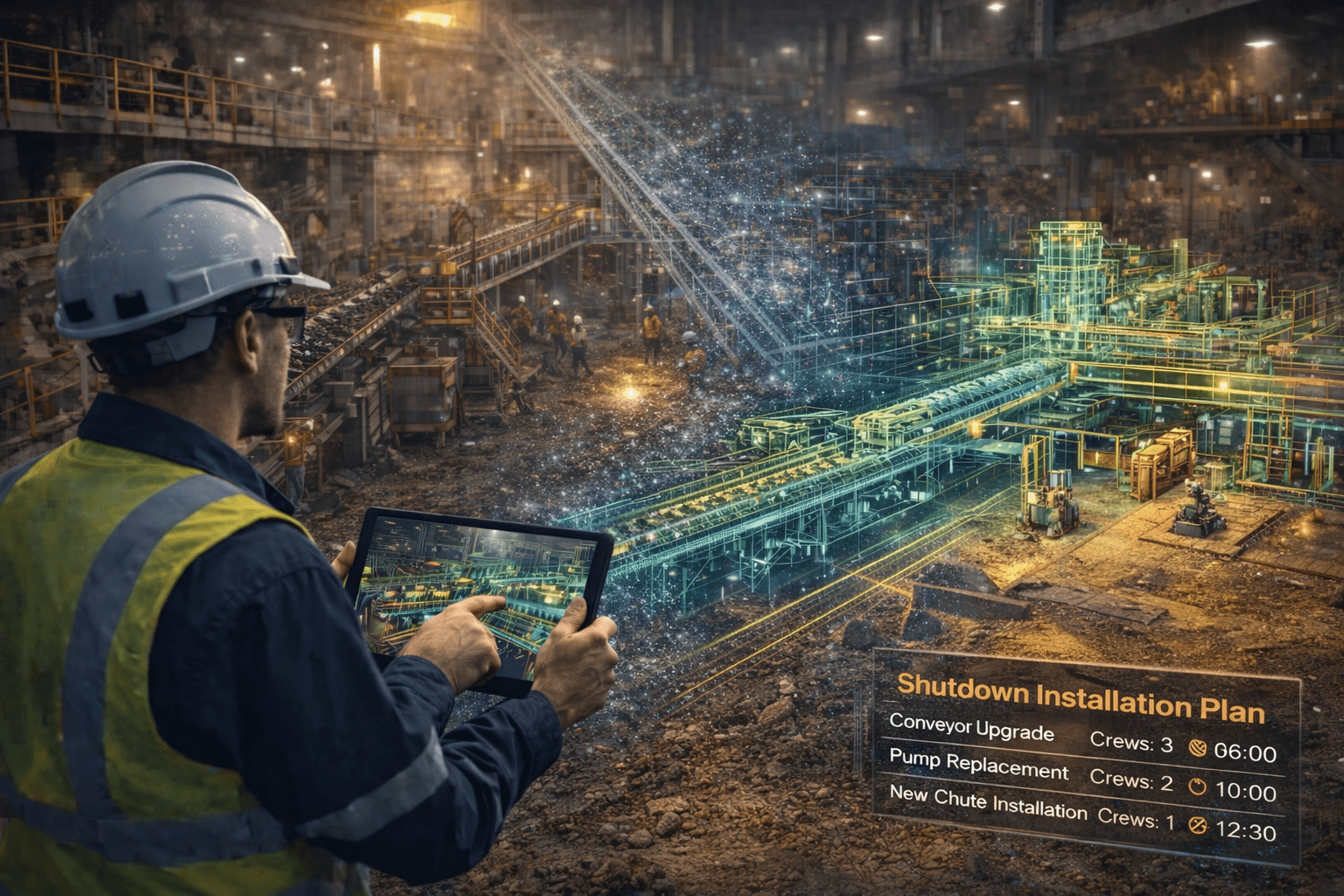
Why Engineering Preparation Is Essential for Mining Shutdown Projects
Mining shutdowns are critical operational events where maintenance, upgrades, inspections, and infrastructure modifications must all be completed within a limited timeframe.
During a shutdown window, production equipment is taken offline so that engineering teams and contractors can carry out essential work. Because production stops during this period, delays can quickly impact operations and project costs.
This is why shutdown engineering planning is a critical part of successful mining shutdown projects.
Effective engineering preparation ensures that plant upgrades, equipment replacements, and infrastructure modifications are designed, documented, and coordinated before shutdown work begins.
At Hamilton By Design, engineering preparation plays a key role in helping mining operations plan shutdown activities and reduce operational risk.
The Complexity of Mining Shutdown Projects
Mining plants contain complex infrastructure including conveyors, structural steel, pipework systems, processing equipment, and access platforms.
Shutdown projects often involve:
• multiple work crews operating simultaneously • equipment removal and installation • infrastructure modifications • maintenance work across multiple plant areas • coordination between engineering teams and contractors
Without proper engineering preparation, shutdown work can encounter unexpected issues such as installation clashes, access restrictions, or equipment alignment problems.
Shutdown engineering planning helps reduce these risks by ensuring that engineering documentation and plant data are prepared in advance.
Capturing Accurate Plant Data Before Shutdown
One of the most important parts of shutdown preparation is understanding the existing plant layout.
Many mining facilities have evolved over decades of maintenance and upgrades, meaning the current plant configuration may differ from original drawings.
To reduce uncertainty, engineers often capture existing infrastructure using engineering-grade 3D laser scanning.
Laser scanning records millions of measurement points across plant infrastructure, producing accurate point cloud models that represent the real geometry of the facility.
These models allow engineers to analyse plant layout and design equipment modifications with confidence.
Learn more about capturing existing conditions here:
By preparing these documents before shutdown begins, engineering teams can ensure that fabrication work is completed in advance and installation activities proceed smoothly.
Coordinating Engineering Activities During Shutdown Planning
Shutdown engineering planning also involves coordinating multiple engineering disciplines.
Mechanical, structural, and infrastructure engineers must work together to ensure that plant upgrades integrate properly with existing systems.
Digital engineering models make this coordination easier by providing a shared visual representation of the plant environment.
Engineering teams can use these models to identify potential clashes and resolve design issues before shutdown work begins.
You can read more about engineering support during shutdown projects here:
For mining operations where shutdown windows are tightly scheduled, these benefits can significantly improve project outcomes.
Conclusion
Mining shutdowns require careful coordination between engineering teams, maintenance crews, and contractors.
Through effective shutdown engineering planning, mining operations can prepare equipment upgrades, infrastructure modifications, and maintenance activities well before the shutdown window begins.
By capturing accurate plant data, developing engineering models, and preparing fabrication documentation in advance, engineering teams can reduce operational risk and ensure shutdown projects are completed safely and efficiently.
Hamilton By Design supports mining operations with engineering services that assist with shutdown preparation, plant upgrades, and infrastructure modifications.
Fly-In Data Capture → Australian Analysis → Capacity Outcomes
Engineer-Led. Practical. Here to Support You.
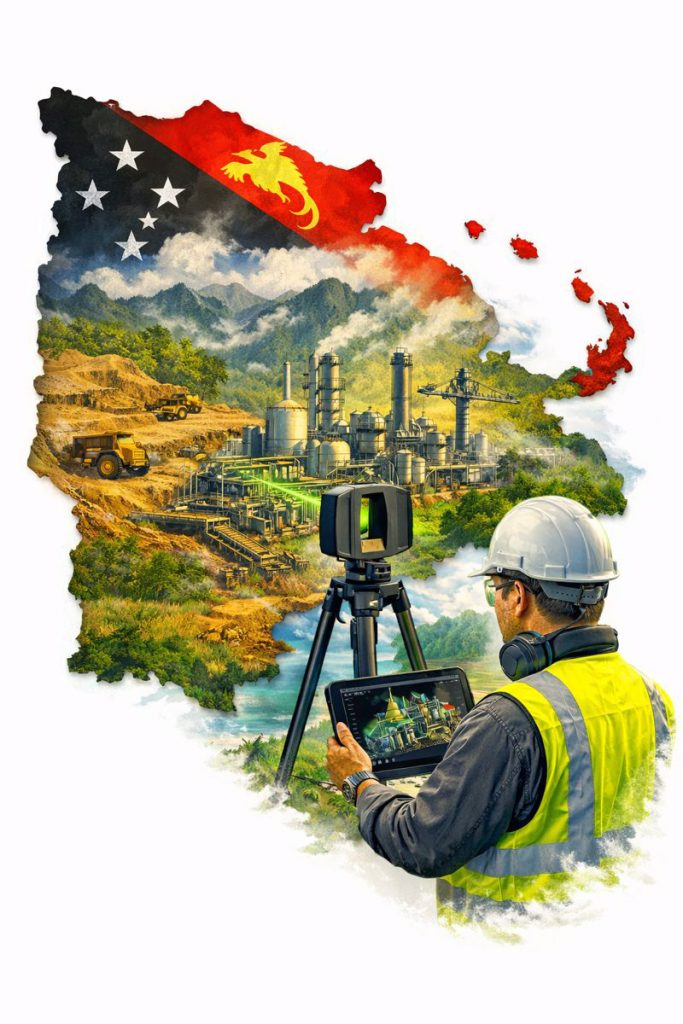
Hamilton By Design Co. is an engineer-led team that wants to support you. We connect Papua New Guinea mine sites with experienced Australian engineers and designers—flying in to collect your engineering data, then analysing it in Australia to develop upgrades that help you extract the most from your opportunity.
Don’t feel isolated because of your remoteness—we’re here to help. Our role is to stand beside your site teams, capture what really exists, and convert that into practical actions that increase capacity, reliability, and safety.
We adapt our systems to fit yours. Whatever platforms, standards, and workflows your operation already uses, we structure our deliverables to integrate seamlessly with your established processes.
To Mine Management – This Is About Value
You are responsible for getting maximum performance from existing assets while controlling risk and downtime. Hamilton By Design works directly with management to:
Identify constraints limiting throughput
Reduce uncertainty before capital decisions
Turn real conditions into structured engineering plans
Deliver upgrades that increase production, not just paperwork
Our focus is outcomes: Accurate site capture → Australian engineering analysis → measurable capacity improvement.
How We Support Your Operation
1. Fly-In Engineering Data Collection
We mobilise to your PNG site to:
Capture accurate engineering information across plants, structures, conveyors, tanks, and services
Verify tie-ins, access constraints, and maintenance issues
Validate legacy drawings against reality
Engage with operators to understand bottlenecks and operating challenges
2. Australian Engineering & Design
Back in Australia our team will:
Structure the site data into design-ready formats that suit your systems
Analyse structural and mechanical limits
Develop options to increase process capacity
Produce constructable drawings and work packs for shutdown execution
Coordinate with your project teams, fabricators, and contractors
3. Capacity & Reliability Outcomes
Everything is aimed at real improvement:
Debottlenecking of chutes and conveyors
Structural upgrades for higher loads
Safer access and maintenance routes
Brownfields tie-ins with minimal downtime
Reduced rework through accurate as-builts
Practical staging to suit your shutdown strategy
PNG Mines We Can Support
Hamilton By Design can service major operations including:
Porgera Gold Mine – restart and upgrade documentation
Ok Tedi – remote infrastructure and processing areas
Hidden Valley – mountainous brownfields upgrades
Simberi – ROM and conveyor systems
Kainantu – surface/underground interface zones
Why Work With Us
Engineer-led team focused on supporting you
We come to site—no desk assumptions
Australian engineers with mining exposure
Deliverables aimed at throughput and reliability
Understanding of PNG logistics and shutdown pressures
Independent, practical, constructable solutions
Flexible approach that adapts to your existing systems
Typical Deliverables
Registered site data and as-built information
General arrangement and interface drawings
Capacity upgrade concepts
Brownfields modification packages
Photo-annotated engineering reports
Shutdown execution and staging plans
Remote Site? You’re Not Alone.
No matter how remote your operation, you don’t have to tackle engineering challenges on your own. Hamilton By Design can be on the ground capturing your plant conditions and in Australia turning that data into actions that increase production.
Let’s Talk About Your Opportunity
If you are responsible for getting more from your mine, we can help you:
Mechanical Plant Optimisation: Boosting Throughput, Reliability and Safety Across Australia
Industrial plants are under more pressure than ever to deliver higher output, reduce downtime and operate safely. Ageing equipment, inconsistent maintenance, and brownfield constraints often limit performance — but with the right engineering approach, even long-running plants can achieve major efficiency gains.
At Hamilton By Design, we specialise in mechanical plant optimisation using a powerful combination of engineering expertise, high-accuracy LiDAR scanning, precise 3D modelling, and practical redesign strategies that deliver measurable improvements.
If your goal is higher throughput, fewer breakdowns and safer shutdowns, this guide explains how mechanical optimisation transforms plant performance.
Why Mechanical Plant Optimisation Is Essential
Most processing plants — from CHPPs and quarries to manufacturing and power stations — suffer from the same long-term issues:
Reduced throughput
Conveyor misalignment
Flow bottlenecks in chutes and transfer points
Vibration, cracking and structural fatigue
Outdated drawings and unknown modifications
Premature wear and high maintenance costs
Shutdown overruns due to poor fit-up
Optimisation tackles these issues using real engineering data, not assumptions.
Step 1: LiDAR Scanning to Capture True As-Built Conditions
As equipment ages, it moves, twists and wears in ways that drawings rarely capture. Our FARO laser scanners map a complete digital twin of your plant with ±1–2 mm accuracy, giving engineers:
Full geometry of structural frames
Wear patterns inside chutes
Deflection in platforms, conveyor trusses and supports
Misalignment in pipes, pulleys and mechanical drives
Clash risks for future upgrades
This becomes the foundation of all optimisation work — ensuring upgrades fit first time.
Step 2: 3D Modelling & Engineering Redesign
Hamilton By Design converts point-cloud data into SolidWorks models to identify optimisation opportunities such as:
Reprofiling chutes for smoother flow
Strengthening or realigning structural members
Repositioning pumps or motors
Correcting conveyor and drive alignment
Redesigning access platforms for maintenance
Improving liner selection and service life
Every model is fabrication-ready, eliminating costly rework during shutdowns.
Step 3: Material Flow & Conveyor Performance Improvement
Flow constraints are one of the biggest sources of lost production. Through engineering review, modelling and experience, we address:
Impact zones causing excessive wear
Restrictive chute geometry
Poorly performing transfer points
Belt-tracking issues
Flow blockages
Inefficient material transitions
These improvements often deliver immediate gains in throughput and reliability.
We also perform condition assessments to understand the root causes of downtime:
Vibration analysis
Cracking and corrosion detection
Bearing, gearbox and pulley assessment
Thermal/overload risks
Misalignment and load distribution issues
This supports predictive maintenance and informed upgrade planning.
Step 5: Shutdown Planning & Upgrade Execution
By combining scanning, modelling and mechanical design, we ensure that every upgrade:
Fits perfectly into existing brownfield spaces
Reduces time on tools
Eliminates site modifications
Improves safety during installation
Delivers predictable shutdown timelines
Clients commonly see ROI within the first shutdown cycle.
Benefits of Mechanical Plant Optimisation
When optimisation is done properly, plants experience:
✔ Measurable throughput increases
✔ Longer equipment life
✔ Reduced wear and maintenance costs
✔ Safer operation and shutdown execution
✔ Accurate documentation for future projects
✔ Extended reliability of mechanical systems
With the right engineering support, even ageing plants can operate like new.
Serving Clients Across Australia
Hamilton By Design supports mechanical plant optimisation projects across: Sydney, Newcastle, Hunter Valley, Central Coast, Bowen Basin, Surat Basin, Pilbara, Perth, Adelaide, Melbourne and regional Australia.
We work across mining, CHPPs, quarries, ports, power stations, manufacturing and heavy industrial sites.
Ready to Optimise Your Plant?
If you want higher throughput, better reliability and safer operation, mechanical plant optimisation is the smartest investment you can make.
Or reach out directly for a project discussion.
Hamilton By Design — Engineering Certainty for Complex Plants.
Mining is no longer just about moving tonnes — it’s about precision, predictability, and performance. Across Australia’s mining sector, the most forward-looking operators are adopting 3D scanning to transform the way they maintain and optimise chutes, hoppers, and material-handling systems.
At Hamilton By Design, we’ve been applying advanced scanning technology to reduce downtime, improve plant design accuracy, and extend asset life. You can read our detailed technical overview here: 👉 3D Scanning Chutes, Hoppers & Mining
But here’s the bigger picture — why this shift matters for the future of mining.
From Manual Inspection to Measured Insight
Traditional inspections rely on tape measures, hand sketches, and assumptions. 3D laser scanning replaces that guesswork with millimetre-accurate data captured safely, often without shutting down production.
Reduced risk: Personnel spend less time inside confined spaces.
Shorter shutdowns: Entire structures can be captured in minutes.
Design-ready models: Engineers receive CAD-compatible data for modification or replacement.
This means decisions are made on facts, not estimates.
Integrating Data into the Design Cycle
The true value of scanning is unlocked when the data feeds directly into design and maintenance workflows. Once a chute or hopper is scanned, engineers can:
Compare actual geometry to design intent.
Detect deformation, wear patterns, and misalignment early.
Pre-fit replacement liners or components in CAD — reducing on-site rework.
This seamless link between field reality and digital design enables data-driven engineering, saving both time and capital.
A New Standard for Asset Reliability
3D scanning creates a living record of your assets. Each scan becomes a baseline for future condition monitoring, allowing for proactive maintenance scheduling.
When combined with finite-element analysis (FEA) or wear modelling, site managers can predict failures before they happen. That means safer plants, lower maintenance costs, and fewer unplanned stoppages.
Part of a Larger Digital Ecosystem
The rise of digital twins and predictive analytics in mining depends on accurate base geometry — and that’s where scanning fits in. By capturing exact dimensions, operators can:
Link asset data into their digital twin models.
Simulate flow behaviour and wear progression.
Train AI models using accurate 3D data.
3D scanning isn’t just a tool — it’s the foundation of intelligent mining operations.
Why Hamilton By Design?
Our engineering approach combines field experience with digital precision. We integrate scanning, modelling, and mechanical design into a single workflow — from problem definition to implementable solutions.
Whether you’re replacing a worn-out chute, upgrading a hopper, or building a new transfer station, our 3D scanning process gives you clarity, accuracy, and confidence.
The mining industry, particularly in resource-rich countries like Australia, is a cornerstone of economic activity and development. However, it faces an array of complex challenges including technological advancements, process optimization, and regulatory compliance. Mechanical engineering consultants play a crucial role in helping mining companies navigate these challenges, leveraging their expertise to enhance efficiency, sustainability, and profitability. This essay explores the various ways in which mechanical engineering consultants contribute to the mining sector by providing specialized knowledge and solutions in technology, process optimization, and regulatory compliance.
Technological Advancements
Equipment Design and Selection
One of the primary contributions of mechanical engineering consultants to the mining industry is in the area of equipment design and selection. Mining operations rely heavily on specialized machinery, from excavators and drilling rigs to conveyor systems and crushers. Consultants possess the technical knowledge to design custom equipment tailored to specific mining environments and operational requirements.
For instance, in deep mining operations, consultants can design robust and durable machinery capable of withstanding extreme conditions such as high pressure and temperature. They can also recommend the most suitable equipment based on factors like ore type, mining method, and production capacity. This ensures that mining companies invest in machinery that maximizes productivity while minimizing operational costs.
Automation and Robotics
The integration of automation and robotics in mining operations is another area where mechanical engineering consultants add significant value. Automation technologies, such as autonomous haul trucks and robotic drilling systems, can greatly enhance efficiency and safety in mining operations. Consultants help mining companies implement these technologies by designing and programming automated systems, selecting appropriate sensors and control units, and ensuring seamless integration with existing operations.
For example, autonomous vehicles can operate continuously without the need for breaks, significantly increasing productivity. Additionally, automation reduces the risk of accidents and injuries by removing human workers from hazardous environments. Consultants also provide training and support to ensure that mine operators can effectively manage and maintain these advanced systems.
Digitalization and IoT
The adoption of digital technologies and the Internet of Things (IoT) is transforming the mining industry. Mechanical engineering consultants play a pivotal role in this digital transformation by developing and implementing IoT solutions that provide real-time data and analytics. These technologies enable mining companies to monitor equipment performance, track production metrics, and optimize maintenance schedules.
Consultants can design IoT systems that collect data from various sensors installed on mining equipment. This data is then analyzed to identify patterns and predict potential equipment failures before they occur, allowing for proactive maintenance. This approach not only reduces downtime but also extends the lifespan of mining machinery. Furthermore, real-time data analytics enable better decision-making, as managers have access to up-to-date information on all aspects of mining operations.
Process Optimization
Lean Manufacturing Principles
Process optimization is critical for enhancing efficiency and reducing costs in mining operations. Mechanical engineering consultants bring expertise in lean manufacturing principles, which focus on eliminating waste, improving workflow, and maximizing value. By applying these principles, consultants help mining companies streamline their processes and improve overall productivity.
For instance, consultants can conduct value stream mapping to identify bottlenecks and inefficiencies in mining processes. They can then develop strategies to eliminate these bottlenecks, such as reconfiguring workflows, optimizing material handling systems, and improving communication and coordination among different departments. Lean manufacturing techniques also promote continuous improvement, ensuring that mining operations remain efficient and competitive over time.
Energy Efficiency
Energy consumption is a significant cost driver in mining operations. Mechanical engineering consultants can help mining companies improve energy efficiency by conducting energy audits and identifying opportunities for energy savings. This can involve optimizing the operation of energy-intensive equipment, such as grinding mills and pumps, or implementing energy-efficient technologies, such as variable frequency drives and high-efficiency motors.
For example, consultants can recommend the installation of advanced control systems that optimize the operation of grinding mills based on real-time ore characteristics. This ensures that the mills operate at their most efficient point, reducing energy consumption and operating costs. Additionally, consultants can design heat recovery systems that capture and reuse waste heat from mining processes, further enhancing energy efficiency.
Maintenance Optimization
Effective maintenance strategies are essential for ensuring the reliability and longevity of mining equipment. Mechanical engineering consultants can help mining companies develop and implement maintenance optimization programs that maximize equipment availability and minimize downtime. This includes predictive maintenance, which uses data analytics to predict equipment failures before they occur, and preventive maintenance, which involves regularly scheduled maintenance tasks to prevent unexpected breakdowns.
Consultants can design and implement condition monitoring systems that continuously monitor the health of mining equipment. These systems use sensors to collect data on parameters such as vibration, temperature, and pressure, which are then analyzed to detect early signs of wear and tear. By addressing potential issues before they lead to equipment failure, mining companies can avoid costly downtime and extend the lifespan of their machinery.
Regulatory Compliance
Environmental Regulations
Compliance with environmental regulations is a major challenge for mining companies. Mechanical engineering consultants play a crucial role in helping companies meet these requirements by designing and implementing systems that minimize environmental impact. This includes pollution control technologies, waste management systems, and sustainable mining practices.
For example, consultants can design dust control systems that reduce the amount of airborne particulate matter generated by mining operations. These systems can include water sprays, dust suppression chemicals, and ventilation systems that capture and filter dust particles. Consultants can also develop waste management plans that ensure the safe disposal and recycling of mining by-products, such as tailings and slag.
Furthermore, consultants can assist in the design and implementation of sustainable mining practices, such as water conservation and land reclamation. By helping mining companies minimize their environmental footprint, consultants ensure that operations remain compliant with environmental regulations and contribute to sustainable development.
Safety Regulations
Ensuring the safety of workers is paramount in the mining industry, which is subject to strict safety regulations. Mechanical engineering consultants can help mining companies comply with these regulations by designing and implementing safety systems and protocols. This includes the development of risk assessments, safety audits, and emergency response plans.
Consultants can design safety systems that protect workers from hazards such as falling rocks, equipment failures, and exposure to harmful substances. For example, they can design and implement rock fall protection systems, such as mesh nets and rock bolts, that prevent loose rocks from falling in underground mines. They can also develop equipment maintenance protocols that ensure machinery is regularly inspected and maintained to prevent accidents.
In addition to physical safety systems, consultants can provide training and support to ensure that workers are aware of safety protocols and know how to respond in emergency situations. By enhancing safety measures, consultants help mining companies protect their workforce and comply with safety regulations.
Reporting and Documentation
Regulatory compliance requires comprehensive reporting and documentation. Mechanical engineering consultants can assist mining companies in developing and maintaining the necessary records and reports to demonstrate compliance with environmental, safety, and other regulations. This includes the preparation of environmental impact assessments, safety audits, and compliance reports.
Consultants can also implement data management systems that streamline the collection, storage, and retrieval of compliance-related data. These systems ensure that mining companies have access to accurate and up-to-date information needed for regulatory reporting. By managing regulatory documentation, consultants help companies avoid fines and penalties associated with non-compliance.
Case Studies
Automation and Robotics in Mining
One notable example of mechanical engineering consultants aiding mining companies is the implementation of autonomous haul trucks in large mining operations. These trucks, guided by advanced GPS and sensor technologies, operate without human drivers. Mechanical engineering consultants played a pivotal role in designing the automation systems, selecting the appropriate hardware and software, and integrating these technologies with existing mining operations.
The result was a significant increase in productivity and a reduction in operating costs. The autonomous trucks could operate 24/7, without the need for breaks, leading to higher throughput. Additionally, the removal of human drivers from hazardous environments reduced the risk of accidents and injuries, enhancing overall safety.
Energy Efficiency in Grinding Operations
Another case where mechanical engineering consultants made a substantial impact was in improving energy efficiency in grinding operations at a major Australian mining company. Grinding mills are among the most energy-intensive equipment in mining operations. Consultants conducted a comprehensive energy audit and identified opportunities to optimize mill operations.
They recommended the installation of variable frequency drives on the mill motors, which allowed for better control of the grinding process. They also designed an advanced control system that adjusted the mill operation based on real-time ore characteristics. These improvements resulted in a significant reduction in energy consumption, lowering operating costs and reducing the environmental footprint of the mining operation.
Environmental Compliance in Tailings Management
Tailings, the waste materials left after the extraction of valuable minerals, pose significant environmental challenges. A mining company faced regulatory pressure to improve its tailings management practices to prevent environmental contamination. Mechanical engineering consultants were brought in to design a comprehensive tailings management system.
The consultants developed a plan that included the construction of tailings storage facilities with advanced liner systems to prevent leachate contamination. They also designed a water treatment system to treat any water that came into contact with the tailings, ensuring that it met environmental discharge standards. Additionally, the consultants implemented a monitoring system to continuously track the condition of the tailings storage facilities and detect any potential issues.
As a result, the mining company was able to meet regulatory requirements and significantly reduce the environmental impact of its tailings management practices. The comprehensive approach ensured that the company could continue its operations without facing regulatory penalties or damaging its reputation.
Future Trends and Challenges
Advanced Materials and Nanotechnology
As the mining industry continues to evolve, new challenges and opportunities will arise. Advanced materials and nanotechnology are poised to revolutionize mining equipment and processes. Mechanical engineering consultants will play a crucial role in integrating these technologies into mining operations, enhancing efficiency and sustainability.
For instance, nanotechnology can be used to develop stronger and lighter materials for mining equipment, reducing wear and tear and extending the lifespan of machinery. Consultants will need to stay abreast of these technological advancements and provide expertise in selecting and implementing the most promising innovations.
Cybersecurity in Mining
With the increasing reliance on digital technologies and IoT, cybersecurity is becoming a critical concern for the mining industry. Mechanical engineering consultants will need to work closely with cybersecurity experts to ensure that automated and digital systems are protected from cyber threats. This includes designing secure.
To Get in contact with Mechanical Engineering Consultants
To provide the best experiences, we use technologies like cookies to store and/or access device information. Consenting to these technologies will allow us to process data such as browsing behaviour or unique IDs on this site. Not consenting or withdrawing consent, may adversely affect certain features and functions.
Functional
Always active
The technical storage or access is strictly necessary for the legitimate purpose of enabling the use of a specific service explicitly requested by the subscriber or user, or for the sole purpose of carrying out the transmission of a communication over an electronic communications network.
Preferences
The technical storage or access is necessary for the legitimate purpose of storing preferences that are not requested by the subscriber or user.
Statistics
The technical storage or access that is used exclusively for statistical purposes.The technical storage or access that is used exclusively for anonymous statistical purposes. Without a subpoena, voluntary compliance on the part of your Internet Service Provider, or additional records from a third party, information stored or retrieved for this purpose alone cannot usually be used to identify you.
Marketing
The technical storage or access is required to create user profiles to send advertising, or to track the user on a website or across several websites for similar marketing purposes.