Mechanical Engineering | 3D Scanning | 3D Modelling
Tag: maintenance-and-parts-manuals
Hamilton By Design prepares maintenance and parts manuals for industrial machinery, mechanical equipment and custom-fabricated assemblies.
Clear equipment documentation helps maintenance personnel identify components, understand assembly arrangements and plan servicing or replacement work. Manuals can be developed for new equipment or existing machinery where the original documentation is incomplete, outdated or unavailable.
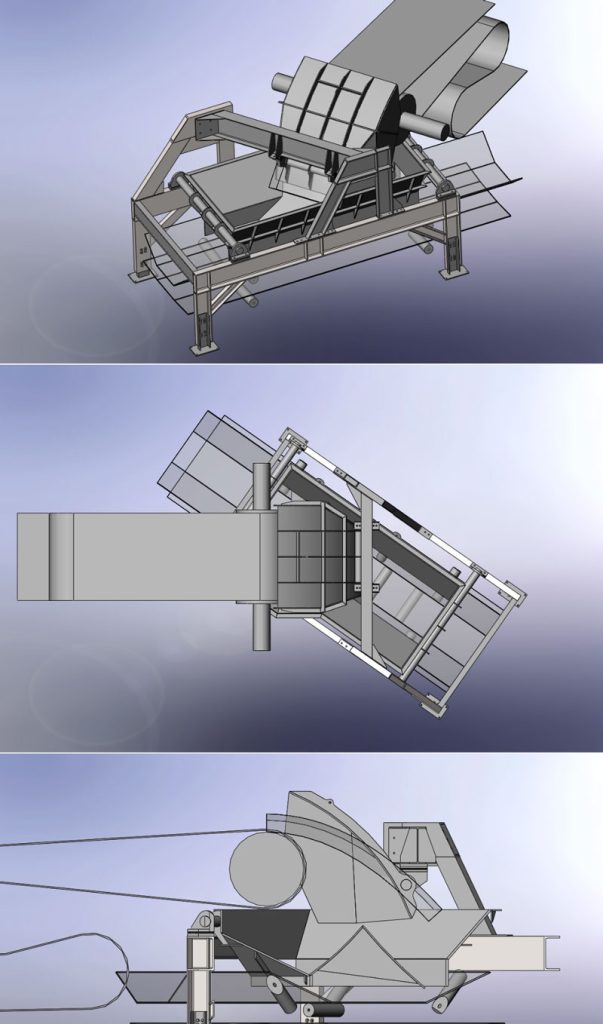
Our services can include equipment inspection, 3D scanning, reverse engineering, CAD modelling and the preparation of technical illustrations. Existing assemblies can be converted into coordinated 3D models from which exploded views, component details and parts lists can be developed.
Depending on the agreed scope, manuals may include equipment descriptions, exploded assembly views, item numbers, bills of materials, recommended inspection points, maintenance schedules, replacement-part information and references to relevant drawings.
Deliverables can be provided as controlled PDF manuals with supporting SolidWorks, STEP, Parasolid or DXF files where required. Document numbers, revision status and approval records can be incorporated into the client’s existing document-control system.
Operating limits, maintenance intervals, isolation requirements and safety procedures must be confirmed using reliable manufacturer, engineering and site information before the manual is approved for use.
Mechanical Plant Optimisation: Boosting Throughput, Reliability and Safety Across Australia
Industrial plants are under more pressure than ever to deliver higher output, reduce downtime and operate safely. Ageing equipment, inconsistent maintenance, and brownfield constraints often limit performance — but with the right engineering approach, even long-running plants can achieve major efficiency gains.
At Hamilton By Design, we specialise in mechanical plant optimisation using a powerful combination of engineering expertise, high-accuracy LiDAR scanning, precise 3D modelling, and practical redesign strategies that deliver measurable improvements.
If your goal is higher throughput, fewer breakdowns and safer shutdowns, this guide explains how mechanical optimisation transforms plant performance.
Why Mechanical Plant Optimisation Is Essential
Most processing plants — from CHPPs and quarries to manufacturing and power stations — suffer from the same long-term issues:
Reduced throughput
Conveyor misalignment
Flow bottlenecks in chutes and transfer points
Vibration, cracking and structural fatigue
Outdated drawings and unknown modifications
Premature wear and high maintenance costs
Shutdown overruns due to poor fit-up
Optimisation tackles these issues using real engineering data, not assumptions.
Step 1: LiDAR Scanning to Capture True As-Built Conditions
As equipment ages, it moves, twists and wears in ways that drawings rarely capture. Our FARO laser scanners map a complete digital twin of your plant with ±1–2 mm accuracy, giving engineers:
Full geometry of structural frames
Wear patterns inside chutes
Deflection in platforms, conveyor trusses and supports
Misalignment in pipes, pulleys and mechanical drives
Clash risks for future upgrades
This becomes the foundation of all optimisation work — ensuring upgrades fit first time.
Step 2: 3D Modelling & Engineering Redesign
Hamilton By Design converts point-cloud data into SolidWorks models to identify optimisation opportunities such as:
Reprofiling chutes for smoother flow
Strengthening or realigning structural members
Repositioning pumps or motors
Correcting conveyor and drive alignment
Redesigning access platforms for maintenance
Improving liner selection and service life
Every model is fabrication-ready, eliminating costly rework during shutdowns.
Step 3: Material Flow & Conveyor Performance Improvement
Flow constraints are one of the biggest sources of lost production. Through engineering review, modelling and experience, we address:
Impact zones causing excessive wear
Restrictive chute geometry
Poorly performing transfer points
Belt-tracking issues
Flow blockages
Inefficient material transitions
These improvements often deliver immediate gains in throughput and reliability.
We also perform condition assessments to understand the root causes of downtime:
Vibration analysis
Cracking and corrosion detection
Bearing, gearbox and pulley assessment
Thermal/overload risks
Misalignment and load distribution issues
This supports predictive maintenance and informed upgrade planning.
Step 5: Shutdown Planning & Upgrade Execution
By combining scanning, modelling and mechanical design, we ensure that every upgrade:
Fits perfectly into existing brownfield spaces
Reduces time on tools
Eliminates site modifications
Improves safety during installation
Delivers predictable shutdown timelines
Clients commonly see ROI within the first shutdown cycle.
Benefits of Mechanical Plant Optimisation
When optimisation is done properly, plants experience:
✔ Measurable throughput increases
✔ Longer equipment life
✔ Reduced wear and maintenance costs
✔ Safer operation and shutdown execution
✔ Accurate documentation for future projects
✔ Extended reliability of mechanical systems
With the right engineering support, even ageing plants can operate like new.
Serving Clients Across Australia
Hamilton By Design supports mechanical plant optimisation projects across: Sydney, Newcastle, Hunter Valley, Central Coast, Bowen Basin, Surat Basin, Pilbara, Perth, Adelaide, Melbourne and regional Australia.
We work across mining, CHPPs, quarries, ports, power stations, manufacturing and heavy industrial sites.
Ready to Optimise Your Plant?
If you want higher throughput, better reliability and safer operation, mechanical plant optimisation is the smartest investment you can make.
Or reach out directly for a project discussion.
Hamilton By Design — Engineering Certainty for Complex Plants.
Operation, Design Challenges, and the Role of Direct Drive Units In the highly demanding and regulated world of underground coal mining, the reliable and efficient transport of coal from the mining face to the surface is critical. Among the many systems involved in this process, conveyor drives play a pivotal role. These systems are tasked with powering conveyor belts that haul coal over long distances through often confined and hazardous environments. A vital part of this setup includes the use of direct drive units (DDUs), particularly in low-profile applications such as underground operations.
This document explores the functionality of conveyor drives in underground coal mines, the unique challenges faced in their operation, the complexities design engineers encounter in their development, and the concept of the phase “outbye”—a term widely used in underground mining to describe the direction and location of operations.
Conveyor Drives in Underground Coal Mining
A conveyor drive is a mechanical system that powers conveyor belts used to transport materials, in this case, coal. In underground mines, these conveyor belts often run for several kilometers, extending from the coal face (the area where coal is actively being cut and mined) to the shaft or drift that brings the coal to the surface.
The drive systems can be located at several points along the belt:
Head drive: Located at the discharge end of the conveyor.
Tail drive: Located at the loading end.
Mid-belt drives: Installed partway along long conveyors to help manage torque and reduce belt tension.
In the context of underground coal mines, the term “conveyor drive” is generally associated with the head or tail drive unit, which powers the movement of the belt.
Role of Direct Drive Units (DDUs)
Direct Drive Units are electric motors directly coupled to the drive shaft of the conveyor pulley, eliminating the need for intermediary gearboxes or belt drives. These units are especially advantageous in underground mining due to their compact design, reliability, and reduced maintenance.
Benefits of DDUs in Underground Coal Mines
Compact Size: Ideal for low-profile mining applications where vertical space is restricted.
Energy Efficiency: With fewer mechanical components, DDUs offer less friction and mechanical losses.
Lower Maintenance: No gearboxes or belt couplings to service.
Increased Reliability: Fewer parts mean fewer failure points.
Improved Safety: The enclosed design minimizes exposure to moving parts and flammable materials.
Operational Challenges of Conveyor Drives Underground
Underground coal mining presents a set of challenges not commonly encountered in surface operations. Conveyor drives, as the lifeblood of coal transportation, are central to these operational difficulties.
1. Space Constraints
Underground roadways are typically narrow and low, especially in coal seams with minimal thickness. This limitation forces the use of low-profile conveyor systems, which in turn limits the size and configuration of the drive units.
2. Dust and Moisture Exposure
Coal dust is highly abrasive and, in certain concentrations, explosive. Moisture from groundwater or the mining process further complicates the reliability of drive components. Ensuring DDUs are properly sealed and rated for these harsh conditions is critical.
3. Heat and Ventilation
Electric motors generate heat, which must be dissipated. However, underground mines have limited ventilation. Overheating can be a major issue, requiring cooling systems or specialized motor enclosures.
4. Explosion-Proof Requirements
Due to the potential presence of methane gas and coal dust, all electrical equipment, including conveyor drives, must comply with stringent explosion-proof standards (e.g., IECEx or ATEX ratings).
5. Long Haul Distances
Modern coal faces can be several kilometers from the shaft bottom. Transporting coal over long distances places mechanical stress on conveyor belts and drive units, increasing the risk of failure if not properly engineered.
6. Maintenance Access
Accessing conveyor drives for inspection or maintenance can be difficult in tight underground environments. Failures that require replacement or repair can cause significant production delays.
7. Load Variability
The volume of coal being hauled can vary significantly during a shift, which places variable demands on the drive system. The control systems must be able to accommodate fluctuating loads without mechanical strain.
Engineering and Design Challenges
Design engineers are tasked with creating conveyor drive systems that are not only robust and efficient but also compact and compliant with mining regulations. Some of the key design challenges include:
1. System Integration in Confined Spaces
Engineering a system that fits into limited space while delivering the necessary power is a fundamental challenge. Direct drive units help address this by eliminating gearboxes, but the motor itself must still be sized correctly.
2. Material Selection
Materials used must be corrosion-resistant, non-sparking, and capable of withstanding vibration, dust ingress, and moisture. This often limits design options and increases costs.
3. Thermal Management
Ensuring that the drive units do not overheat requires careful thermal modeling and the use of heat-resistant components. In some cases, passive or active cooling systems are integrated.
4. Compliance with Standards
Designs must adhere to a host of mining and electrical standards for flameproof and intrinsically safe equipment. Certification processes can be lengthy and expensive.
5. Modularity and Transportability
Since access to underground sites is limited, equipment must be modular or transportable in pieces small enough to be moved through shafts or drifts. Assembling and commissioning underground adds another layer of complexity.
6. System Control and Monitoring
Advanced drives require smart control systems that can adjust to load demands, monitor for faults, and integrate with mine-wide automation systems. Designing these systems requires interdisciplinary expertise.
7. Redundancy and Reliability Engineering
System failure underground can halt production and pose safety risks. Engineers must design for redundancy and easy switch-over between drive systems when necessary.
Understanding the Term “Outbye”
In underground mining terminology, directionality is essential for communication and logistics. The terms “inbye” and “outbye” are commonly used to describe relative directions underground.
What Does “Outbye” Mean?
Outbye refers to the direction away from the coal face and toward the surface or the mine entrance.
Conversely, inbye means toward the coal face.
For example:
If a miner is walking from the coal face toward the conveyor belt transfer station, they are walking outbye.
If a service vehicle is heading toward the longwall face, it is moving inbye.
Relevance of “Outbye” in Conveyor Systems
In conveyor operations:
The coal face is the inbye starting point.
The belt head drive and transfer points to the main conveyor system are located outbye.
Maintenance and service activities often take place outbye to avoid interfering with production at the face.
Understanding this term is critical for coordinating activities underground, as directions are often communicated using inbye and outbye references rather than compass points or distances.
Innovations and Future Trends
The mining industry continues to evolve, and conveyor drive systems are no exception. Some of the emerging trends and technologies include:
1. Variable Speed Drives (VSDs)
VSDs allow precise control over motor speed and torque, improving efficiency and reducing mechanical stress. They are increasingly paired with direct drive units to optimize performance.
2. Condition Monitoring
Sensors embedded in motors and drive systems can provide real-time feedback on vibration, temperature, and load. Predictive maintenance models reduce downtime.
3. Permanent Magnet Motors
These motors offer higher efficiency and torque density compared to traditional induction motors, making them well-suited for space-constrained environments.
4. Automation and Remote Control
Fully integrated systems that allow operators to monitor and control conveyor drives from surface control rooms are becoming standard.
5. Modular, Plug-and-Play Designs
Future drive units are being designed with ease of installation and replacement in mind, enabling faster deployment and lower maintenance impact.
Conclusion
Conveyor drive systems in underground coal mining are vital to the continuous flow of material and, by extension, the productivity of the entire mining operation. The adoption of direct drive units is helping to meet the unique demands of underground environments by providing compact, reliable, and efficient power transmission solutions.
However, these systems are not without their challenges. From the operational constraints of underground environments to the rigorous demands placed on design engineers, the development and maintenance of these systems require specialized knowledge, innovative thinking, and strict adherence to safety standards.
Moreover, understanding mining-specific terminology such as “outbye” provides important context for the deployment and maintenance of conveyor systems. As technology continues to advance, we can expect to see more intelligent, adaptive, and efficient conveyor drive systems that are better suited to the evolving demands of underground coal mining.
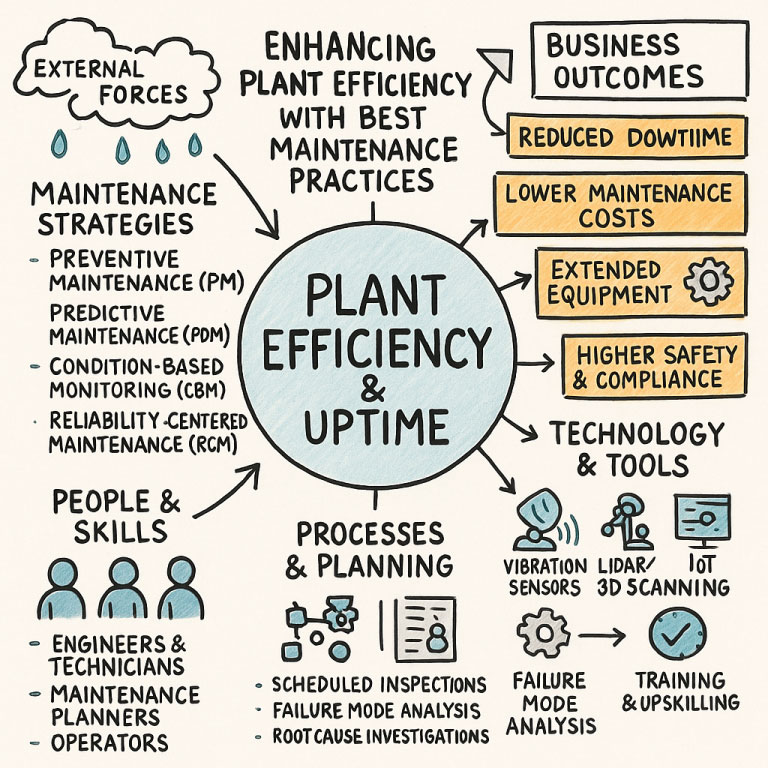
At Hamilton By Design, we know that keeping your equipment running efficiently isn’t just about quick fixes; it’s about adopting the right maintenance strategies to ensure long-term reliability and performance. With advancements in condition monitoring and diagnostic techniques, the ISO 18436.2 standard has become a cornerstone for effective maintenance practices—and it’s at the heart of how we help our clients optimize their operations.
In this blog post, we’ll explore the major maintenance strategies aligned with ISO 18436.2 and how they can transform your plant’s productivity.
What is ISO 18436.2?
ISO 18436.2 is an internationally recognized standard that defines the competencies required for personnel performing condition monitoring and diagnostics. It focuses on advanced tools like vibration analysis, helping engineers identify equipment issues before they lead to costly downtime.
At Hamilton By Design, our team is ISO 18436.2-certified, meaning we bring the highest level of expertise to your maintenance needs.
Maintenance Strategies That Deliver Results
ISO 18436.2 aligns with several key maintenance strategies designed to improve reliability, minimize downtime, and optimize equipment performance. Here’s how they work:
1. Reactive Maintenance
Reactive maintenance is the traditional “run-to-failure” approach where repairs are made after a breakdown. While not ideal for critical assets, tools like vibration analysis can still play a role by identifying root causes post-failure. This can help inform more proactive strategies in the future.
2. Preventive Maintenance (PM)
Preventive maintenance involves scheduling regular maintenance tasks to prevent failures. While effective to some extent, PM can lead to over-maintenance. By incorporating vibration analysis and other condition monitoring techniques, preventive measures can be more precisely targeted, reducing unnecessary downtime.
3. Condition-Based Maintenance (CBM)
Condition-Based Maintenance uses real-time equipment data to identify issues as they arise. This strategy is central to ISO 18436.2 and includes tools like vibration analysis, thermography, and ultrasonic testing. CBM ensures that maintenance is performed only when necessary, saving time and money.
Benefits:
Reduces unplanned downtime.
Optimizes maintenance schedules.
Extends equipment lifespan.
4. Predictive Maintenance (PdM)
Predictive Maintenance takes CBM a step further, using data trends and analytics to predict when failures are likely to occur. With the expertise of ISO 18436.2-certified personnel, PdM uses advanced tools to detect subtle signs of wear or stress, allowing for intervention before a problem becomes critical.
Key Tools:
Vibration analysis for early detection of imbalance or misalignment.
Infrared thermography to spot heat anomalies.
Ultrasonic testing to identify leaks and material defects.
5. Reliability-Centered Maintenance (RCM)
RCM focuses on understanding the specific failure modes of critical assets and tailoring maintenance strategies accordingly. This approach integrates condition monitoring insights to prioritize tasks that align with operational goals.
Benefits:
Aligns maintenance efforts with production priorities.
Reduces the risk of unexpected equipment failures.
6. Proactive Maintenance
Proactive maintenance identifies and addresses root causes of recurring issues. By analyzing data from vibration and other diagnostic tools, engineers can resolve underlying problems like misalignment, improper lubrication, or material fatigue.
Impact:
Prevents repetitive failures.
Improves long-term equipment reliability.
7. Total Productive Maintenance (TPM)
TPM involves a plant-wide effort, from operators to management, to ensure optimal equipment effectiveness. ISO 18436.2-certified personnel can support TPM by providing actionable condition monitoring insights and training operators in basic diagnostic techniques.
How Hamilton By Design Helps
At Hamilton By Design, we bring these strategies to life through tailored maintenance solutions that align with your plant’s needs. Here’s how we can help:
1. Advanced Condition Monitoring: Our team uses state-of-the-art tools to monitor equipment health, including vibration analysis, thermography, and ultrasonic testing.
2. Tailored Maintenance Plans: Every plant is unique. We develop maintenance strategies based on your specific equipment, production goals, and operational priorities.
3. Expert Training and Certification: We empower your team by offering ISO 18436.2 training, giving them the skills to sustain and enhance maintenance programs.
4. Ongoing Support: Maintenance is a journey, not a destination. We provide continuous support to refine and optimize your practices as your operations evolve.
The Hamilton By Design Advantage
Adopting advanced maintenance strategies aligned with ISO 18436.2 isn’t just about improving equipment reliability—it’s about unlocking greater productivity and profitability for your business.
With our expertise, you can transition from reactive to predictive maintenance, reduce unplanned downtime, and extend the lifespan of your critical assets.
Ready to take your plant’s maintenance strategy to the next level? Contact Hamilton By Design today to find out how we can help.
In today’s competitive industrial landscape, maintaining high levels of Overall Equipment Effectiveness (OEE) is a cornerstone of operational success. Achieving this requires adopting advanced maintenance practices that minimize downtime, reduce operational costs, and extend the lifecycle of critical assets.
This white paper outlines best maintenance practices aligned with the ISO 18436.2 standard and highlights how Hamilton By Design’s team of mechanical engineers can partner with your organization to enhance your plant’s OEE. By leveraging our expertise in condition-based and predictive maintenance, we can optimize equipment performance and drive measurable improvements in productivity and reliability.
The Role of Maintenance in Maximizing OEE
OEE is a comprehensive measure of manufacturing productivity, defined by three critical components:
Availability: Minimizing downtime to maximize operational hours.
Performance: Ensuring equipment runs at optimal speeds.
Quality: Reducing defects and waste during production.
Maintenance strategies are key to influencing these factors. Moving beyond reactive approaches to predictive and condition-based maintenance can significantly enhance equipment reliability and efficiency, ensuring better alignment with OEE goals.
Adopting Best Maintenance Practices
Condition-Based Maintenance (CBM)
CBM involves monitoring the real-time condition of equipment to predict and prevent failures. At Hamilton By Design, we integrate cutting-edge technologies like vibration analysis, thermography, and ultrasonic testing to enable proactive interventions before problems escalate.
How CBM Enhances OEE:
Reduces unplanned downtime (Availability).
Maintains consistent performance by addressing issues early (Performance).
Prevents production disruptions that cause defects (Quality).
Predictive Maintenance (PdM)
Predictive maintenance leverages data analytics to anticipate potential failures. By applying ISO 18436.2-certified practices, we implement advanced diagnostic tools and algorithms to forecast maintenance needs with precision.
Our Approach:
Deploy vibration analysis tools managed by certified Level II and III analysts.
Use infrared thermography to detect heat anomalies in electrical and mechanical systems.
Employ ultrasonic testing to identify leaks and structural weaknesses.
Benefits for OEE:
Prolonged equipment lifespan by addressing issues at their inception.
Higher productivity with fewer interruptions.
Reduced maintenance costs through targeted interventions.
Reliability-Centered Maintenance (RCM)
RCM focuses on optimizing maintenance strategies for each asset, emphasizing a deep understanding of failure modes and effects. Our engineers employ RCM to prioritize maintenance tasks that align with your plant’s specific OEE goals.
Steps We Implement:
Asset Function Analysis: Understanding the purpose and criticality of each asset.
Failure Mode and Effects Analysis (FMEA): Identifying risks and developing mitigation strategies.
Data-Driven Decision Making: Using condition monitoring data to guide maintenance schedules.
Impact on OEE:
Ensures maintenance is aligned with production priorities.
Reduces waste and rework caused by unexpected equipment malfunctions.
Leveraging ISO 18436.2 Standards
ISO 18436.2 defines the competencies required for condition monitoring personnel, ensuring a standardized approach to predictive maintenance. Hamilton By Design’s mechanical engineers are certified under this standard, offering expertise in:
Vibration analysis for detecting unbalance, misalignment, and bearing faults.
Developing and managing comprehensive condition monitoring programs.
Interpreting and analyzing complex diagnostic data for actionable insights.
How Hamilton By Design Can Assist
Customized Maintenance Solutions
We recognize that every plant has unique operational challenges. Hamilton By Design tailors maintenance strategies to your specific needs, focusing on:
Asset Criticality Assessment: Identifying and prioritizing key equipment for monitoring and intervention.
Technology Integration: Implementing IoT-enabled sensors, data platforms, and diagnostic tools.
Program Development: Designing maintenance schedules aligned with production cycles and OEE targets.
Expert Training and Certification
Our team provides in-depth training for your personnel, ensuring they gain ISO 18436.2 certification and the skills to sustain advanced maintenance programs.
Ongoing Support and Continuous Improvement
Maintenance isn’t static. Hamilton By Design offers ongoing support to refine your maintenance practices, ensuring your plant stays ahead of evolving operational demands.
Case Study: Improving OEE with Hamilton By Design
Challenge: A manufacturing plant experienced frequent equipment failures, leading to a 15% drop in OEE.
Solution: Hamilton By Design implemented a tailored predictive maintenance program:
Installed vibration sensors on critical rotating machinery.
Trained plant engineers to monitor and analyze data using ISO 18436.2 standards.
Provided ongoing diagnostics and recommendations.
Outcome:
Downtime was reduced by 40%, significantly improving availability.
Defects decreased by 25%, improving product quality.
Maximizing OEE requires a strategic approach to maintenance that integrates advanced tools, skilled personnel, and data-driven insights. Hamilton By Design’s mechanical engineers, certified under ISO 18436.2, are uniquely equipped to help your plant achieve these goals.
By partnering with us, you can transform your maintenance practices, boost operational efficiency, and secure a competitive edge in your industry. Let Hamilton By Design help you take the first step toward a more reliable and productive future.
Petrochem Expert – Best Practices for Plant Maintenance Explores how proper maintenance planning ensures efficiency, reliability, and safety in plant operations. https://petrochemexpert.com/best-practices-for-plant-maintenance-ensuring-operational-efficiency-and-safety/
Keeping machinery running isn’t just about fixing things when they break — it’s about preventing problems before they stop production, cause delays, or create safety risks. In today’s competitive industrial world, companies are using smarter strategies, better data, and more skilled people to make maintenance a strategic advantage rather than just an expense.
This shift is supported by new research, industry reports, and technology innovations that are changing the way maintenance is done. Let’s explore these best practices, the trends driving them, and how businesses are putting them into action.
Why Smarter Maintenance Matters
Every time a machine unexpectedly breaks down, it costs money — sometimes thousands of dollars per hour — not to mention the lost production and safety risks. This is why businesses are turning to condition monitoring — the practice of keeping an eye on equipment health through vibration data, temperature readings, and other signals.
According to SNS Insider, the market for vibration sensors alone is set to exceed USD 8.19 billion by 2032, driven by demand for predictive maintenance and automation. In other words, smart maintenance is no longer a nice-to-have — it’s becoming the industry standard.
Building a Proactive Maintenance Approach
Continuous Equipment Monitoring
Rather than waiting for something to fail, companies now collect data from equipment in real time. This data reveals whether something is running smoothly or starting to show early signs of trouble — like excessive vibration, heat, or noise.
Recent Cerexio research shows that condition-based maintenance is now a top trend in manufacturing, reducing unnecessary downtime and maintenance costs by focusing resources where they are actually needed.
Smarter Decision-Making
Not every machine needs the same treatment. Reliability-focused strategies look at each asset individually:
What is its purpose?
How likely is it to fail?
What would it cost if it did fail?
This allows businesses to focus on the machines that matter most to production, safety, and quality, instead of spreading resources too thinly across every piece of equipment.
Predicting Failures Before They Happen
Predictive maintenance is the next evolution — using tools like vibration analysis, thermal imaging, and ultrasonic testing to spot problems weeks or months in advance.
Cutting-edge research is making this even more powerful. A 2025 arXiv study proposed robust methods for fault detection and severity estimation, allowing teams to find issues earlier and with greater accuracy. Another study showed how advanced neural networks can run these diagnostics on low-power edge devices, making predictive monitoring cheaper, faster, and more energy-efficient.
People at the Center of Maintenance Success
Even with advanced sensors, AI, and cloud software, the human factor is crucial. Skilled technicians and analysts know how to interpret data, identify root causes, and make the right call on whether to intervene now or keep watching.
The industry faces a global skills gap, with a shortage of qualified maintenance professionals. As WorkTrek’s 2025 trends report points out, investing in training is now one of the most important things companies can do. Well-trained teams ensure that technology investments deliver real-world results.
Common Hurdles and How to Overcome Them
Skill Shortage: Close the gap by training your workforce, hiring certified professionals, and encouraging knowledge sharing inside the organization.
High Upfront Costs: Sensors, training, and software can be expensive, but companies often recover the cost quickly through fewer breakdowns and lower downtime.
Data Overload: More data isn’t always better — use good analytics tools and qualified staff to filter out noise and focus on what matters most.
Where Maintenance Is Headed
The future of maintenance is smarter, faster, and more connected than ever before. MaintWorld forecasts that AI-powered predictive maintenance will grow into a $1.69 billion global market by 2030, and f7i.ai notes that wireless sensors and cloud platforms are rapidly becoming the standard way of doing vibration monitoring.
This means we’ll see:
Always-on monitoring: Equipment continuously “talking” to maintenance teams
Fewer surprises: Early warnings will prevent expensive emergency shutdowns
Energy-efficient solutions: Low-power devices will make monitoring cheaper and greener
Smarter plants: Integrated systems will combine vibration data with temperature, pressure, and production data to make better decisions automatically
Final Thoughts
The way we maintain equipment is evolving fast. Instead of waiting for machines to break, businesses are using technology, data, and skilled people to stay ahead of problems. The result? Safer operations, fewer unexpected stoppages, and a stronger bottom line.
Maintenance is no longer just a cost — it’s a competitive advantage. Companies that invest in smarter practices today are setting themselves up for a more reliable, efficient future.
The challenges Mechanical Engineers have when it comes to maintaining the reliability of conveyor systems for transporting bulk materials, particularly particles ranging from 1mm to 100mm, presents mechanical engineers with a host of challenges. Reliability maintenance aims to ensure that these systems operate consistently and efficiently over their operational lifespan, minimizing downtime and optimizing productivity. Here are some key challenges faced by mechanical engineers in this regard:
1. Component Wear and Failure: The continuous operation of conveyor systems subjects various components such as belts, rollers, bearings, and drive mechanisms to wear and potential failure. The abrasive nature of bulk materials can accelerate this process, leading to shortened component lifespan and increased risk of unexpected breakdowns. Mechanical engineers must implement proactive maintenance strategies, including regular inspections, lubrication, and component replacement, to mitigate wear-related issues and enhance system reliability.
2. Material Contamination and Blockages: Bulk materials containing particles of diverse sizes can lead to material contamination and blockages within conveyor systems if not properly managed. Fine particles may accumulate in chutes, transfer points, or on conveyor surfaces, causing flow disruptions and increased friction. Engineers need to design systems with effective cleaning mechanisms, such as scrapers, brushes, and air blowers, to prevent material buildup and maintain uninterrupted material flow.
3. Misalignment and Tracking Issues: Misalignment of conveyor belts and tracking problems can result in uneven material distribution, increased friction, and premature wear on system components. Mechanical engineers must ensure proper belt tensioning and alignment during installation and implement monitoring systems to detect and correct any deviations from the desired trajectory. Advanced tracking technologies, such as automated belt positioners and laser alignment tools, can aid in maintaining optimal conveyor performance.
4. Environmental Factors: Harsh environmental conditions, including temperature variations, moisture, dust, and corrosive substances, pose significant challenges to conveyor system reliability. Exposure to such elements can accelerate component degradation and compromise system integrity. Engineers must select durable materials, coatings, and sealing solutions resistant to environmental hazards and implement preventive measures, such as regular cleaning and protective enclosures, to safeguard conveyor systems from adverse effects.
5. Safety and Regulatory Compliance: Compliance with safety regulations and industry standards is essential for ensuring the reliability and safe operation of conveyor systems. Mechanical engineers must stay abreast of regulatory requirements and design systems that meet or exceed applicable standards for material handling equipment. Regular safety inspections, training programs for personnel, and implementation of safety protocols are crucial aspects of reliability maintenance in conveyor systems.
At Hamilton By Design, our team have the experience in addressing these challenges requires a comprehensive approach that combines sound engineering principles, advanced technologies, and proactive maintenance practices. By implementing robust reliability maintenance programs, mechanical engineers can maximize the uptime and longevity of conveyor systems for transporting bulk materials, thereby optimizing operational efficiency and minimizing costly disruptions.
To provide the best experiences, we use technologies like cookies to store and/or access device information. Consenting to these technologies will allow us to process data such as browsing behaviour or unique IDs on this site. Not consenting or withdrawing consent, may adversely affect certain features and functions.
Functional
Always active
The technical storage or access is strictly necessary for the legitimate purpose of enabling the use of a specific service explicitly requested by the subscriber or user, or for the sole purpose of carrying out the transmission of a communication over an electronic communications network.
Preferences
The technical storage or access is necessary for the legitimate purpose of storing preferences that are not requested by the subscriber or user.
Statistics
The technical storage or access that is used exclusively for statistical purposes.The technical storage or access that is used exclusively for anonymous statistical purposes. Without a subpoena, voluntary compliance on the part of your Internet Service Provider, or additional records from a third party, information stored or retrieved for this purpose alone cannot usually be used to identify you.
Marketing
The technical storage or access is required to create user profiles to send advertising, or to track the user on a website or across several websites for similar marketing purposes.