Chute Design in the Mining Industry

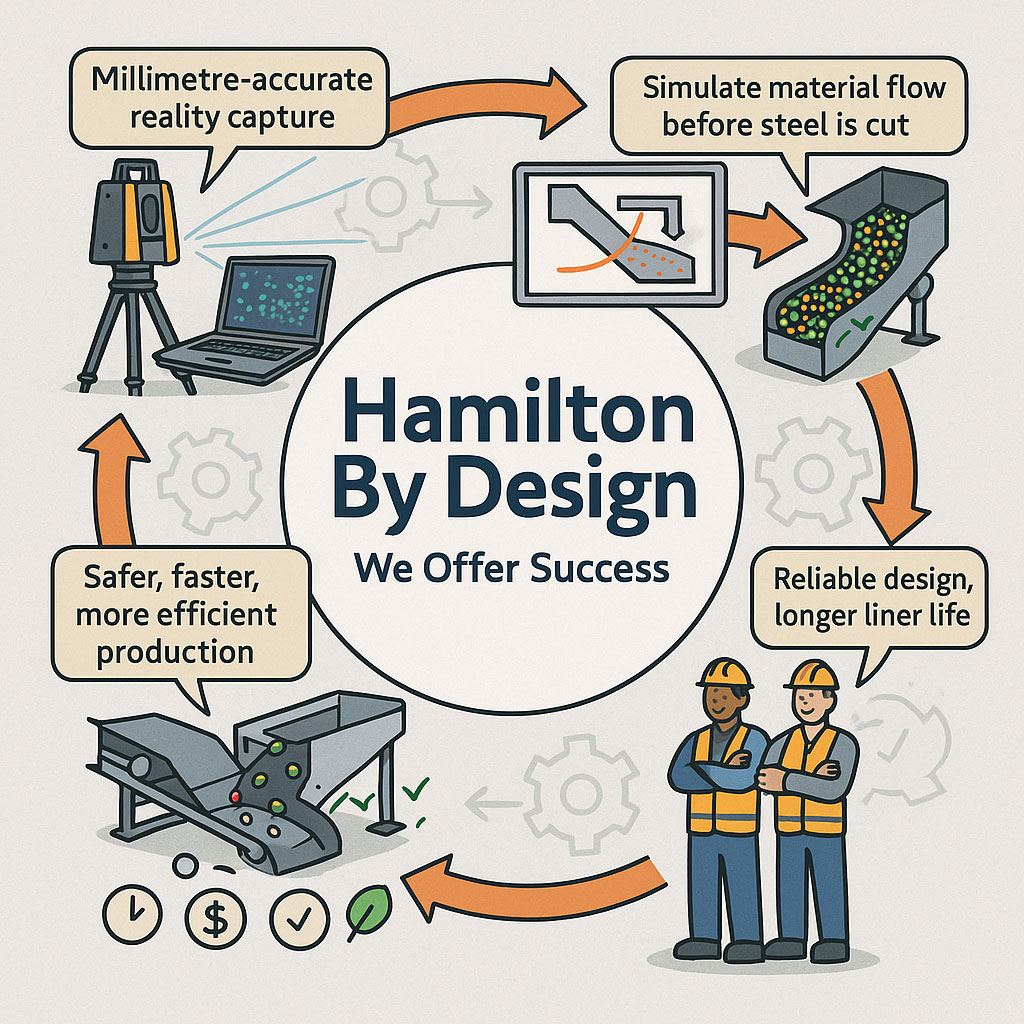
Infographic showing Hamilton By Design’s engineering workflow, including millimetre-accurate LiDAR reality capture, material-flow simulation, optimised chute designs, and safer, more efficient production outcomes. Two workers in PPE highlight reliable design and longer liner life, with icons representing time, cost and quality benefits.

Getting Coal, Hard Rock, and ROM Material Flow Right

Chute design is one of the most critical yet challenging aspects of mining and mineral processing. Whether you are handling coal, hard rock ore, or raw ROM material, chutes and transfer stations are the unsung workhorses of every operation. When designed well, they guide material smoothly, minimise wear, and keep conveyors running. When designed poorly, they cause blockages, spillage, excessive dust, and expensive downtime.

Modern chute design has moved far beyond rules of thumb and back-of-the-envelope sketches. Today, successful projects rely on accurate as-built data, particle trajectory analysis, and advanced Discrete Element Method (DEM) simulation to predict, visualise, and optimise material flow before steel is cut. In this article, we explore why these tools have become essential, how they work together, and where software can — and cannot — replace engineering judgement.
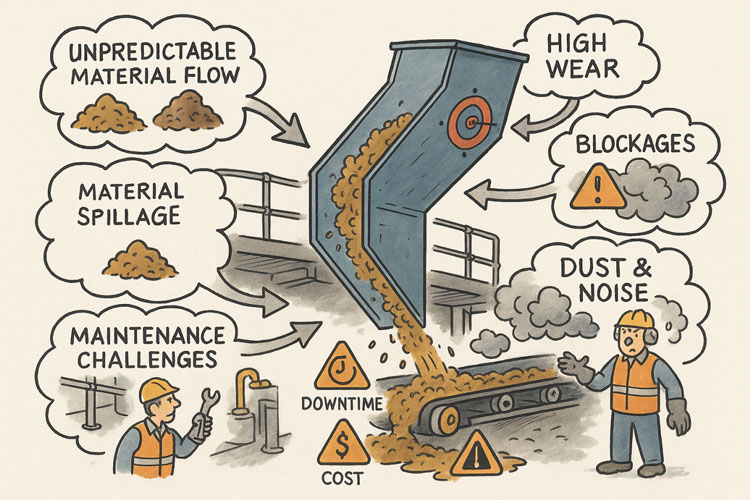

Illustration showing common problems with poorly designed material-handling chutes. A chute discharges material onto a conveyor while issues are highlighted around it: unpredictable material flow, material spillage, maintenance challenges, high wear, blockages, and dust and noise. Warning icons for downtime and cost appear on the conveyor, and workers are shown dealing with the resulting hazards and maintenance tasks.

The Challenge of Chute Design

Coal and hard rock have very different flow behaviours. Coal tends to be softer, generate more dust, and be prone to degradation, while hard rock is more abrasive and can damage chutes if impact angles are not controlled. ROM material adds another level of complexity — oversize lumps, fines, and moisture variation can cause hang-ups or uneven flow.

Chute design must balance several competing objectives:

  • Control the trajectory of incoming material to reduce impact and wear
  • Prevent blockages by maintaining flowability, even with wet or sticky ore
  • Manage dust and noise to meet environmental and workplace health requirements
  • Fit within existing plant space with minimal modification to conveyors and structures
  • Be maintainable — liners must be accessible and replaceable without excessive downtime

Meeting all these goals without accurate data and simulation is like trying to design in the dark.


Illustrated graphic showing a tripod-mounted 3D laser scanner capturing millimetre-accurate as-built data in an industrial plant with conveyors and walkways. Speech bubbles highlight issues such as “Outdated drawings don’t tell the full story” and “Modifications rarely get documented.” The scan data is shown being visualised on a laptop, with notes describing full coverage of conveyors, walkways, and services. Benefits listed along the bottom include faster data collection, fewer site revisits, safer shutdowns, accurate starting point for design simulation, and safer outcomes that ensure designs fit first time.

Capturing the Truth with 3D Scanning

The first step in any successful chute project is to understand the as-built environment. In many operations, drawings are outdated, modifications have been made over the years, and the real plant geometry may differ from what is on paper. Manual measurement is slow, risky, and often incomplete.

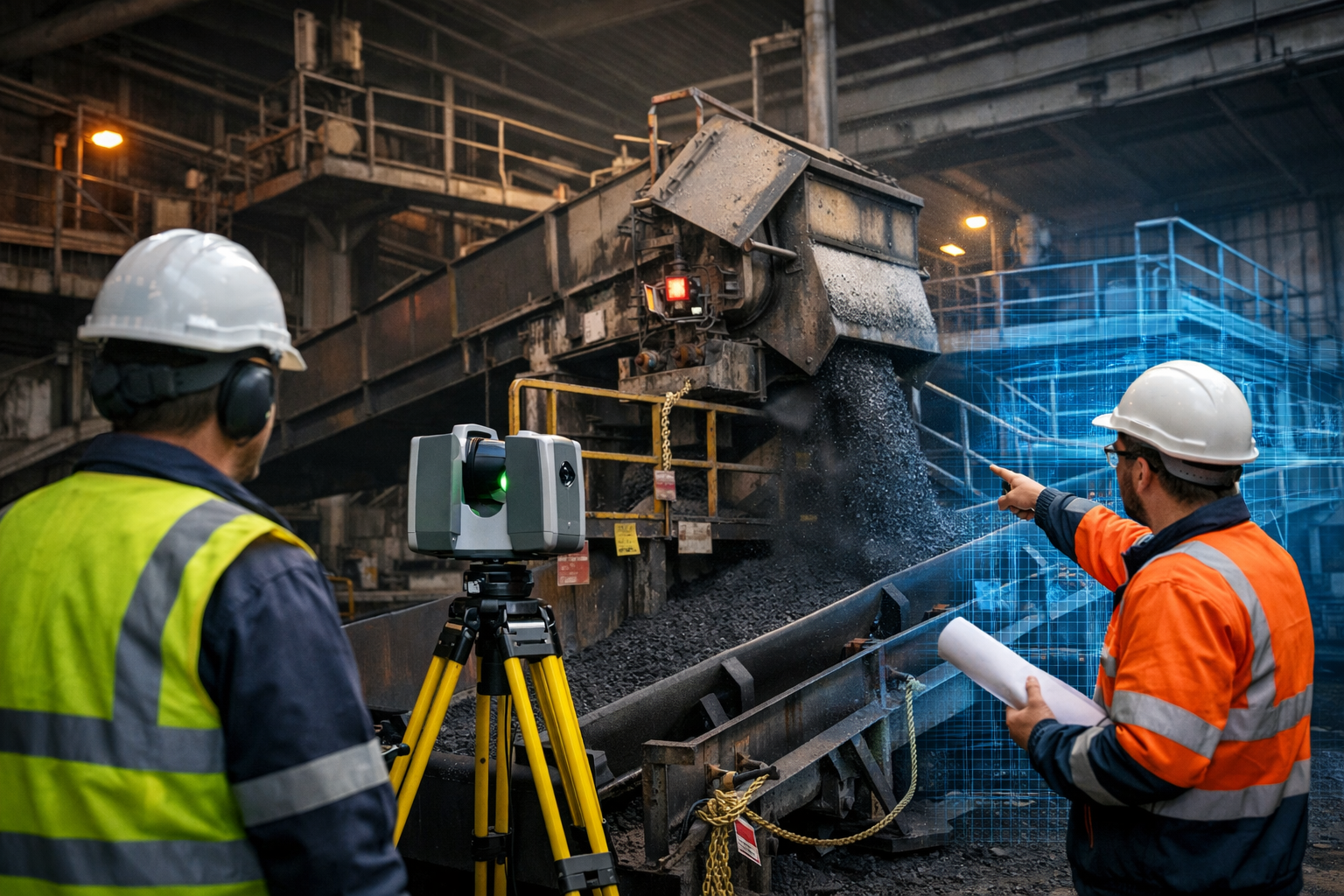
This is where 3D laser scanning changes the game. Using tripod-mounted or mobile LiDAR scanners, engineers can capture the entire transfer station, conveyors, surrounding steelwork, and services in a matter of hours. The result is a dense point cloud with millimetre accuracy that reflects the true state of the plant.

From here, the point cloud is cleaned and converted into a 3D model. This ensures the new chute design will not clash with existing structures, and that all clearances are known. It also allows maintenance teams to plan safe access for liner change-outs and other work, as the scanned model can be navigated virtually to check reach and access envelopes.


Understanding Particle Trajectory

Once the physical environment is known, the next challenge is to understand the particle trajectory — the path that material takes as it leaves the head pulley or previous transfer point.

Trajectory depends on belt speed, material characteristics, and discharge angle. For coal, fine particles may spread wider than the coarse fraction, while for ROM ore, large lumps may follow a ballistic path that needs to be controlled to prevent impact damage.

Accurately modelling trajectory ensures that the material enters the chute in the right location and direction. This minimises impact forces, reducing wear on liners and avoiding the “splash” that creates spillage and dust. It also prevents the material from hitting obstructions or dead zones that could lead to build-up and blockages.

Modern software can plot the trajectory curve for different loading conditions, providing a starting point for chute geometry. This is a critical step — if the trajectory is wrong, the chute design will be fighting against the natural path of the material.


The Power of DEM Simulation

While trajectory gives a first approximation, real-world flow is far more complex. This is where Discrete Element Method (DEM) simulation comes into play. DEM models represent bulk material as thousands (or millions) of individual particles, each following the laws of motion and interacting with one another.

When a DEM simulation is run on a chute design:

  • You can visualise material flow in 3D, watching how particles accelerate, collide, and settle
  • Impact zones become clear, showing where liners will wear fastest
  • Areas of turbulence, dust generation, or segregation are identified
  • Build-up points and potential blockages are predicted

This allows engineers to experiment with chute geometry before fabrication. Angles can be changed, ledges removed, and flow-aiding features like hood and spoon profiles or rock-boxes optimised to achieve smooth, controlled flow.

For coal, DEM can help ensure material lands gently on the receiving belt, reducing degradation and dust. For hard rock, it can ensure that the energy of impact is directed onto replaceable wear liners rather than structural plate. For ROM ore, it can help prevent oversize lumps from wedging in critical locations.
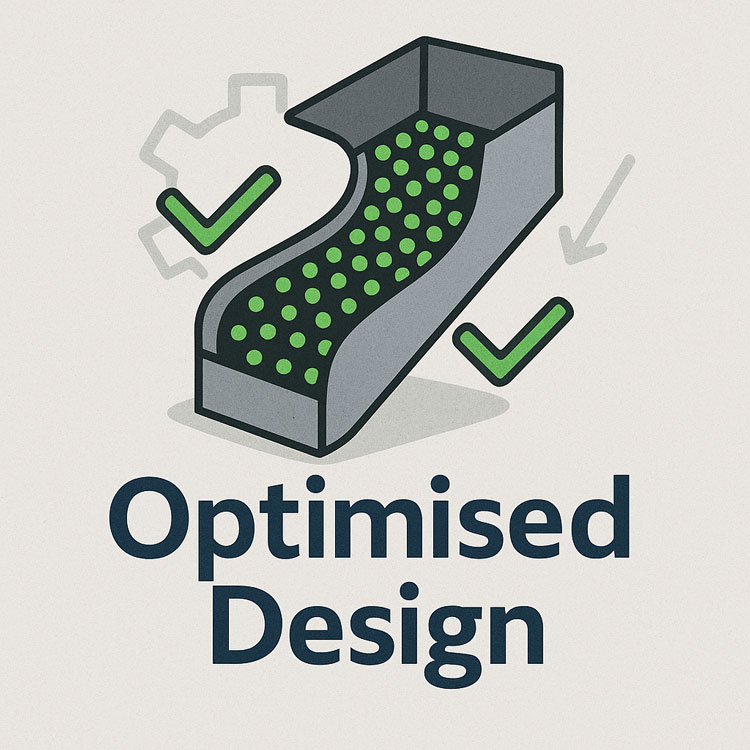

Illustration of an optimised chute design showing material flow represented by green particles, with check marks and gear icons indicating improved efficiency and engineered performance.

🖥 Strengths and Limitations of Software

Modern DEM packages are powerful, but they are not magic. Software such as EDEM, Rocky DEM, or Altair’s tools can simulate a wide range of materials and geometries, but they rely on good input data and skilled interpretation.

Key strengths include:

  • Ability to model complex, 3D geometries and particle interactions
  • High visualisation power for communicating designs to stakeholders
  • Capability to run multiple scenarios (different feed rates, moisture contents, ore types) quickly

However, there are limitations:

  • Material calibration is critical. If the particle shape, friction, and cohesion parameters are wrong, the results will not match reality.
  • Computational cost can be high — detailed simulations of large chutes with millions of particles may take hours or days to run.
  • Engineering judgement is still needed. Software will not tell you the “best” design — it will only show how a proposed design behaves under given conditions.

That’s why DEM is best used as part of a holistic workflow that includes field data, trajectory analysis, and experienced design review.


From Model to Real-World Results

When the simulation results are validated and optimised, the design can be finalised. The point cloud model ensures the chute will fit in the available space, and the DEM results give confidence that it will perform as intended.

This means fabrication can proceed with fewer changes and less risk. During shutdown, installation goes smoothly, because clashes have already been resolved in the digital model. Once commissioned, the chute delivers predictable flow, less spillage, and longer liner life.


Why It Matters More Than Ever

Today’s mining operations face tighter production schedules, stricter environmental compliance, and increasing cost pressures. Downtime is expensive, and the margin for error is shrinking.

By combining 3D scanning, trajectory modelling, and DEM simulation, operations can move from reactive problem-solving to proactive improvement. Instead of waiting for blockages or failures, they can design out the problems before they occur, saving both time and money.


Partnering for Success

At Hamilton by Design, we specialise in turning raw site data into actionable insights. Our team uses advanced 3D scanning to capture your transfer stations with precision, builds accurate point clouds and CAD models, and runs calibrated DEM simulations to ensure your new chute design performs from day one.

Whether you’re working with coal, hard rock, or ROM ore, we help you deliver designs that fit first time, reduce maintenance headaches, and keep production running.

Contact us today to see how our integrated scanning and simulation workflow can make your next chute project safer, faster, and more reliable.

Mechanical Engineering | Structural Engineering

Mechanical Drafting | Structural Drafting

3D Laser Scanning | 3D CAD Modelling | 3D Scanning

Chute Design

SolidWorks Contractors in Australia
Hamilton By Design – Blog

Consulting Engineers

About Us – Hamilton By Design

Hamilton By Design | 3D Scanning | Sydney | Perth | Brisbane | Mount Isa | Lidar Scanning

Contact us

Chute Design at Hamilton By Design

Chute Design at Hamilton By Design

At Hamilton by Design, we see ourselves as more than engineers — we are problem-solvers who bring both science and experience to the table. Every bulk material transfer is unique, and each one carries its own challenges. By combining the principles of particle physics with decades of hands-on site experience, we design chutes and transfer points that perform in the real world, not just on a computer screen.

We are a small, specialised company, not a large corporate machine. That means you deal directly with the people who understand your operation, your materials, and your challenges. We take pride in our ability to stand on-site, watch the flow of material, and recognise behaviours that only years of experience can teach. This gives us the clarity to engineer practical solutions that keep your plant running reliably.

For us, your success is our success. We measure our achievement not by the number of projects we complete, but by the value we add to your operation — less dust, less wear, fewer stoppages, more tonnes moved.

Learn more about our approach and solutions Hamilton By Design – Chute Design


Our clients:

Name
Would you like us to arrange a phone consultation for you?
Address

Mechanical
Engineering
| Structural
Engineering

3D LiDAR scanning and 3D modelling service button — laser scanner capturing a point cloud for engineering and CAD modelling
Mechanical engineering services

Mechanical
Drafting
| Structural
Drafting

3D
Laser Scanning
| 3D
CAD Modelling
| 3D
Scanning

SolidWorks
Contractors in Australia

Hamilton By Design – Blog

Consulting Engineers

About Us –
Hamilton By Design

Chute Design At Hamilton By Design

Coal plant shutdown engineering using a 3D laser scanner to capture conveyor and transfer chute infrastructure.

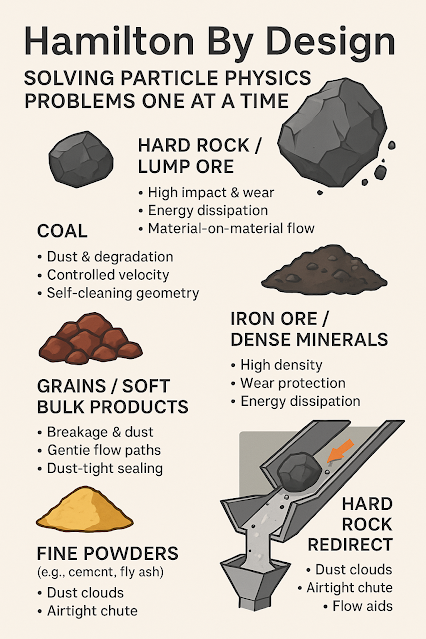
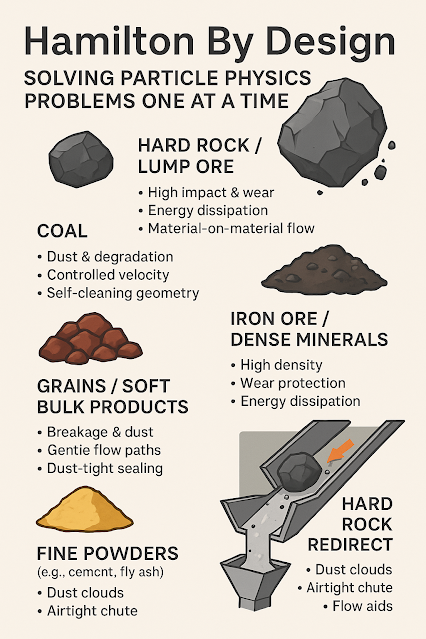
At Hamilton by Design, we believe that every bulk material transfer is an opportunity for improvement. What appears to be a simple flow of rock, coal, grain, or powder is, in reality, a particle physics problem waiting to be solved. By approaching these challenges with precision, creativity, and hands-on knowledge, we deliver chute designs that do more than move material — they protect assets, enhance performance, and improve the bottom line.

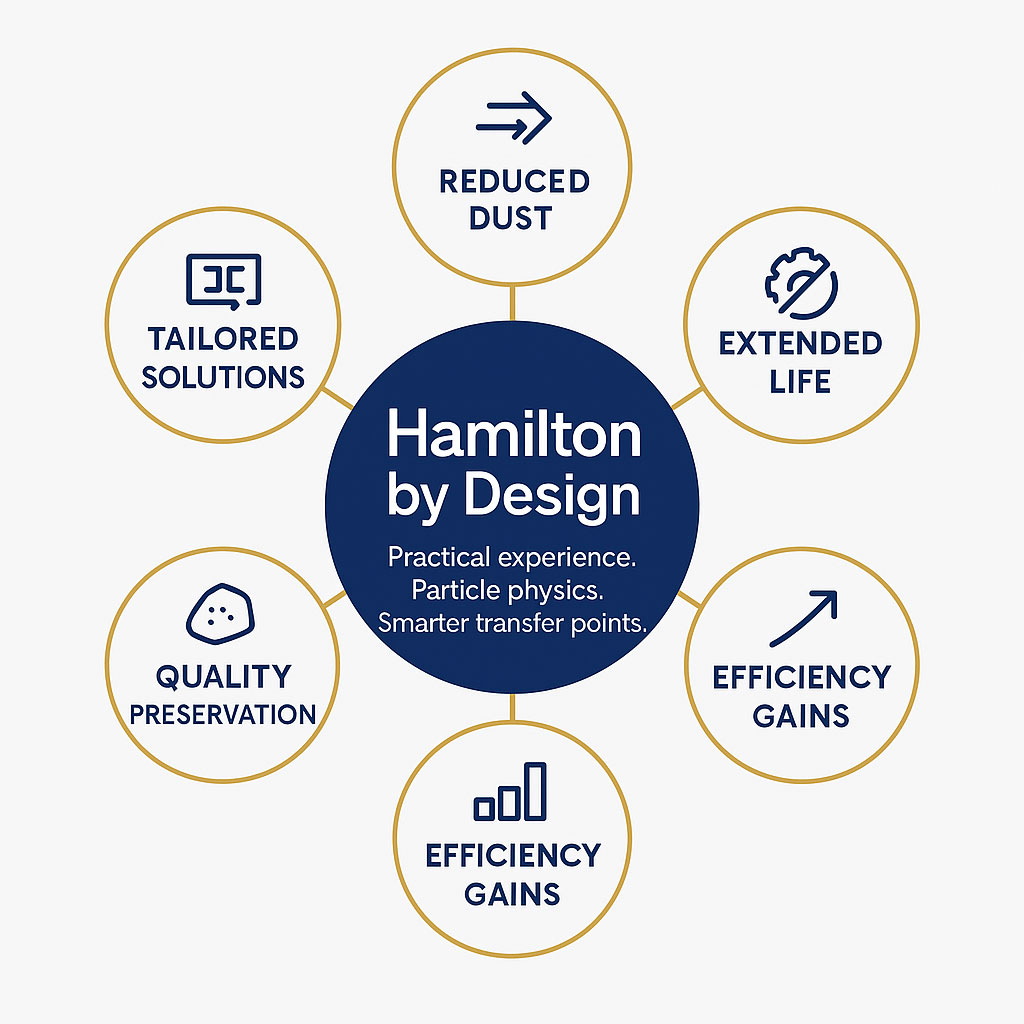
Infographic showing Hamilton By Design in a central blue circle with the text ‘Practical experience. Particle physics. Smarter transfer points.’ Surrounding circles highlight benefits: reduced dust, extended life, efficiency gains, quality preservation, and tailored solutions.
3D LiDAR scanning and 3D modelling service button — laser scanner capturing a point cloud for engineering and CAD modelling
Mechanical engineering services

We are a small, specialised company with a wealth of on-site experience. Our engineers have spent years in the field, watching, listening, and learning how different materials behave under real conditions. This raw experience gives us a unique advantage: we can see and understand particle flow first-hand, not just through numbers on a screen. While many large organisations rely solely on computer models, we combine advanced simulation with practical insight, ensuring solutions that work not only in theory but also in practice.

Our team thrives on solving the complex problems others overlook:

  • Redirecting hard rock at speed without spillage or damage.
  • Handling sticky coal without blockages or hang-ups.
  • Containing fine powders without dust plumes or health risks.
  • Transferring fragile grains without breakage or product loss.
  • Extending chute, liner, and belt life with robust material-on-material flow designs.

We approach every challenge with the mindset that your success is our success. When your plant runs reliably, safely, and efficiently, we succeed alongside you. That’s why we design transfer points that:

  • Absorb and dissipate energy from high-impact lumps.
  • Control dust and minimise degradation for cleaner, safer operations.
  • Extend equipment life by reducing wear and maintenance.
  • Adapt to variability in feed size, flow, and moisture.
  • Boost throughput and availability by minimising stoppages.

In a world where margins are tight and environmental responsibility is critical, Hamilton by Design offers a personal, client-focused approach that puts performance and partnership at the centre. We are not a large organisation pushing generic solutions — we are a dedicated team that listens, observes, and engineers smarter outcomes, one particle physics problem at a time.

Our clients:


For more information, Coal Chute Design

Hamilton By Design logo displayed on a blue tilted rectangle with a grey gradient background


Name
Would you like us to arrange a phone consultation for you?
Address

Bulk Materials Conveyor Transfer

Designing reliable bulk materials conveyor transfer station chutes involves a careful consideration of various principles to ensure efficient material handling, minimize maintenance, and avoid operational issues. Here are the key principles and potential pitfalls to look out for:

Key Principles

Material Flow Dynamics:

  • Controlled Flow: Ensuring that the material flow is controlled and predictable is crucial. This involves designing the chute to guide the material smoothly from one conveyor to the next without creating bottlenecks or excessive turbulence.
  • Optimal Angles: The chute’s angles should be carefully calculated. Angles that are too steep may cause material to accelerate excessively, leading to wear and impact damage, while shallow angles can cause blockages.
  • Trajectory Management: Properly managing the material’s trajectory helps in reducing spillage and wear. The trajectory should be designed to align with the receiving conveyor’s speed and direction.

Wear Resistance:

  • Material Selection: Using wear-resistant materials for the chute construction can significantly extend its lifespan. Materials like AR (abrasion-resistant) steel or liners made from ceramic or rubber are common choices.
  • Strategic Wear Points: Identifying and reinforcing areas that are prone to high wear, such as impact zones and high-friction areas, can prevent premature failure.

Dust and Spillage Control:

  • Sealing: Effective sealing around the chute is essential to prevent dust and material spillage, which can lead to environmental issues and loss of product.
  • Dust Suppression: Incorporating dust suppression systems, such as water sprays or dust extraction, can minimize airborne particles, ensuring a safer and cleaner working environment.

Maintenance and Accessibility:

  • Ease of Access: Designing the chute for easy access allows for routine maintenance and inspection without requiring extensive downtime or complex procedures.
  • Modular Components: Using modular components can simplify the replacement of worn parts, reducing maintenance time and costs.

Structural Integrity:

  • Robust Design: The chute must be structurally robust to withstand the dynamic loads of the bulk materials. This includes ensuring that the support structure is adequately reinforced.
  • Vibration and Impact Resistance: Designing to mitigate vibration and absorb impacts can reduce structural fatigue and extend the life of the chute.

Flow Rate Compatibility:

  • Capacity Matching: Ensuring the chute design matches the flow rate of the conveyor system it serves is vital. Overloading can lead to blockages and spillage, while underloading may indicate inefficient use of the system.

Pitfalls to Avoid

Incorrect Angle of Inclination:

  • Blockages and Spillage: If the chute angle is too steep or too shallow, it can lead to blockages or spillage. A steep angle might cause uncontrolled flow, while a shallow angle might lead to material build-up.

Insufficient Wear Protection:

  • Premature Wear: Failing to use appropriate wear-resistant materials or neglecting high-wear areas can result in frequent maintenance and downtime due to premature wear and tear.

Poorly Designed Transitions:

  • Material Segregation: Abrupt transitions or poorly designed junctions can cause material segregation, uneven flow, and increased wear on the chute and conveyor components.

Inadequate Dust Control:

  • Environmental and Health Issues: Neglecting dust control can lead to significant environmental and health issues, as well as potential regulatory fines and operational inefficiencies.

Maintenance Challenges:

  • Difficult Access: Designing chutes without considering maintenance access can lead to extended downtime and increased labor costs during repairs and inspections.

Ignoring Dynamic Loads:

  • Structural Failures: Not accounting for the dynamic loads and impact forces exerted by the bulk materials can lead to structural failures and hazardous conditions.

Poor Integration with Conveyor System:

  • Operational Inefficiencies: Failing to properly integrate the chute design with the conveyor system can lead to operational inefficiencies, increased wear on conveyor components, and potential system failures.

By adhering to these principles and being mindful of the potential pitfalls, the design of bulk materials conveyor transfer station chutes can be optimized for reliability, efficiency, and longevity.

Hamilton By Design logo displayed on a blue tilted rectangle with a grey gradient background
3D LiDAR scanning and 3D modelling service button — laser scanner capturing a point cloud for engineering and CAD modelling
Mechanical engineering services

For more information on Bulk Materials Conveyor Transfer please feel free to connect

Name
Would you like us to arrange a phone consultation for you?
Address


Mechanical Engineering | Structural Engineering

Mechanical Drafting | Structural Drafting

3D CAD Modelling | 3D Scanning

Hamilton By Design

Mechanical Engineering Challenges for Conveyor Reliability

Challenges for Conveyor Reliability

The challenges Mechanical Engineers have when it comes to maintaining the reliability of conveyor systems for transporting bulk materials, particularly particles ranging from 1mm to 100mm, presents mechanical engineers with a host of challenges. Reliability maintenance aims to ensure that these systems operate consistently and efficiently over their operational lifespan, minimizing downtime and optimizing productivity. Here are some key challenges faced by mechanical engineers in this regard:


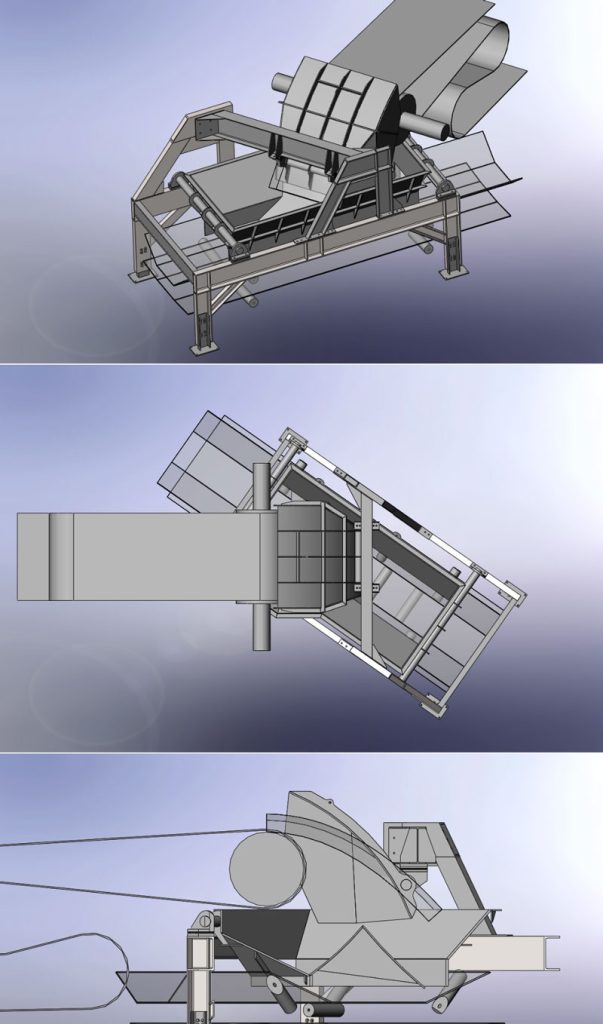
Three-view SolidWorks model of an industrial conveyor transfer system, showing an isometric view, top view, and side view. The assembly includes a transfer chute, conveyor belt sections, support frame, rollers, and structural steel components
3D LiDAR scanning and 3D modelling service button — laser scanner capturing a point cloud for engineering and CAD modelling
Mechanical engineering services

1. Component Wear and Failure: The continuous operation of conveyor systems subjects various components such as belts, rollers, bearings, and drive mechanisms to wear and potential failure. The abrasive nature of bulk materials can accelerate this process, leading to shortened component lifespan and increased risk of unexpected breakdowns. Mechanical engineers must implement proactive maintenance strategies, including regular inspections, lubrication, and component replacement, to mitigate wear-related issues and enhance system reliability.

2. Material Contamination and Blockages: Bulk materials containing particles of diverse sizes can lead to material contamination and blockages within conveyor systems if not properly managed. Fine particles may accumulate in chutes, transfer points, or on conveyor surfaces, causing flow disruptions and increased friction. Engineers need to design systems with effective cleaning mechanisms, such as scrapers, brushes, and air blowers, to prevent material buildup and maintain uninterrupted material flow.

3. Misalignment and Tracking Issues: Misalignment of conveyor belts and tracking problems can result in uneven material distribution, increased friction, and premature wear on system components. Mechanical engineers must ensure proper belt tensioning and alignment during installation and implement monitoring systems to detect and correct any deviations from the desired trajectory. Advanced tracking technologies, such as automated belt positioners and laser alignment tools, can aid in maintaining optimal conveyor performance.

4. Environmental Factors: Harsh environmental conditions, including temperature variations, moisture, dust, and corrosive substances, pose significant challenges to conveyor system reliability. Exposure to such elements can accelerate component degradation and compromise system integrity. Engineers must select durable materials, coatings, and sealing solutions resistant to environmental hazards and implement preventive measures, such as regular cleaning and protective enclosures, to safeguard conveyor systems from adverse effects.

5. Safety and Regulatory Compliance: Compliance with safety regulations and industry standards is essential for ensuring the reliability and safe operation of conveyor systems. Mechanical engineers must stay abreast of regulatory requirements and design systems that meet or exceed applicable standards for material handling equipment. Regular safety inspections, training programs for personnel, and implementation of safety protocols are crucial aspects of reliability maintenance in conveyor systems.

At Hamilton By Design, our team have the experience in addressing these challenges requires a comprehensive approach that combines sound engineering principles, advanced technologies, and proactive maintenance practices. By implementing robust reliability maintenance programs, mechanical engineers can maximize the uptime and longevity of conveyor systems for transporting bulk materials, thereby optimizing operational efficiency and minimizing costly disruptions.


Our Clients


Mechanical Engineering | Structural Engineering

Mechanical Drafting | Structural Drafting

3D CAD Modelling | 3D Scanning

Hamilton By Design

Name
Would you like us to arrange a phone consultation for you?
Address