Hard Rock Processing Plant Engineering & 3D Laser Scanning

Mechanical, Structural & Digital Engineering Support for Crushing, Milling & Conveying

Hard rock processing plants work hard โ€“ high loads, extreme abrasion, constant vibration and tight production targets. When something doesnโ€™t fit, breaks or wears out too fast, the cost in lost tonnes adds up quickly.

Hamilton By Design supports gold, copper, zinc, lead, nickel, lithium and iron ore operations with a combination of:

  • 3D laser scanning (LiDAR) & point cloud capture
  • 3D modelling & drafting (SolidWorks / CAD)
  • Mechanical & structural engineering
  • Digital QA & fit-checking before shutdowns

Our goal is simple:
Your upgrades fit first time, run reliably, and are backed by accurate data.


3D LiDAR scanning and 3D modelling service button โ€” laser scanner capturing a point cloud for engineering and CAD modelling
Mechanical engineering services

What We Do at Hard Rock Processing Plants

We support site-based engineering, maintenance and project teams with practical, fabrication-ready outcomes.

1. 3D Laser Scanning & As-Built Modelling

We use high-accuracy 3D laser scanners to capture:

  • Crusher stations (primary, secondary, tertiary)
  • SAG & ball mill areas
  • Screen decks & screen houses
  • Feed bins, hoppers & chutes
  • Conveyors, transfer towers & galleries
  • Pump skids, slurry lines & cyclones
  • Thickener tanks, drives and surrounds

Deliverables:

  • Registered point clouds
  • Clean, usable 3D models
  • Updated layouts and GA drawings
  • As-built documentation for future projects

Accurate measurement is the foundation for every successful upgrade.


2. Mechanical Engineering for Crushing & Grinding Circuits

We assist mechanical engineers and project teams with:

  • Crusher upgrades (jaw, cone, gyratory)
  • SAG and ball mill component changes
  • Feed chute redesigns and access improvements
  • Screen and feeder modifications
  • Pump and slurry pipeline changes
  • Drive, gearbox and motor layout adjustments

We turn your concepts, plant issues and improvement ideas into 3D models, drawings and engineering deliverables that fabricators and installers can rely on.


3. Structural Engineering & Access Improvements

Hard rock plants generate heavy dynamic loads and vibration. We provide:

  • Structural assessments around crushers, mills and screens
  • Strengthening and modification of support steelwork
  • New access walkways, stairs and platforms
  • Upgraded supports for new or heavier equipment
  • Verification of supports for screens, feeders and drives

Outputs include 3D models, structural drawings and engineering calculations suitable for site approval and fabrication.


4. Wear Management, Chutes & Liner Design

Wear is inevitable โ€“ but how you manage it is critical.

We help improve reliability and reduce downtime by:

  • Redesigning chutes and hoppers for smoother flow
  • Optimising liner layouts (rubber, ceramic, steel, composite)
  • Improving feed presentation to crushers and mills
  • Adjusting drop heights, impact angles and impact zones
  • Reducing spillage, build-up and blockages

All designs are created in 3D against accurate scan data, so your new liners and chutes fit first time.


5. Shutdown Planning, Digital QA & Fit-Checking

Shutdowns are expensive and stressful โ€“ especially if something doesnโ€™t fit.

Hamilton By Design supports shutdowns with:

  • Pre-shutdown 3D scanning of the work area
  • Digital fit-checks of new components against the point cloud
  • Clash detection for new chutes, structures and equipment
  • Fabrication-ready drawings with clear tolerances
  • On-call engineering support during installation
  • Updated as-built models and drawings afterwards

This approach reduces rework, cuts time on the tools and improves shutdown predictability.


6. Failure Investigation & Root Cause

When equipment fails, we help you understand why and what to change:

  • Cracked screen decks and frames
  • Broken chute structures
  • Worn-through liners and hoppers
  • Pump, gearbox and drive failures
  • Misalignment and vibration-related issues
  • Repeated seal, bearing or coupling failures

We combine site observations, 3D modelling and engineering analysis to recommend practical, long-term solutions.


7. Reliability & Continuous Improvement Support

For sites working on long-term performance and reliability, we can assist with:

  • Measurement and modelling for debottlenecking projects
  • Layout optimisation for future upgrades
  • Standardisation of chute, support and access designs
  • Better documentation for repeatable work packs and scopes
  • Digital records (models/drawings) you can reuse across multiple projects

Our role is to add engineering and digital capability to the team you already have on site.


How We Work With Your Team

Hamilton By Design is set up to support:

  • Site mechanical and structural engineers
  • Reliability engineers and planners
  • Project and shutdown managers
  • Fabrication shops and drafting teams
  • OEMs and service providers needing accurate site data

A typical engagement looks like:

  1. Define the problem or upgrade
    โ€“ e.g. new chute, mill feed change, crusher access, conveyor transfer change.
  2. Scan the area
    โ€“ capture the plant using 3D laser scanning to remove guesswork.
  3. Develop 3D models & concepts
    โ€“ mechanical/structural concepts developed directly on the point cloud.
  4. Final design, drawings & engineering
    โ€“ fully detailed fabrication drawings and engineering calculations.
  5. Digital QA & shutdown support
    โ€“ fit-check before fabrication; support installers during shutdown.
  6. As-built update
    โ€“ update models/drawings so your next project starts with accurate information.

Where We Work

Hamilton By Design supports hard rock operations and fabrication partners across Australia, including (but not limited to):

  • Queensland
  • New South Wales
  • Victoria
  • Northern Territory
  • Remote mining hubs and regional processing plants

We can work directly with site teams or through your preferred fabrication and maintenance contractors.


Hamilton By Design logo displayed on a blue tilted rectangle with a grey gradient background

Ready to Talk About Your Plant?

If youโ€™re planning:

  • A crusher, mill or screen upgrade
  • A new chute, hopper or transfer
  • Access and structural improvements
  • A shutdown that must go right the first time
  • Better, more reliable measurement and documentation

Hamilton By Design can help you measure, model and engineer the solution.

Our clients:

Name
Address
You would like to:
Finite Element Analysis (FEA) engineering simulation button
Mechanical engineering services

How 3D Laser Scanning Supports As-Built Documentation Under Australian Building Codes & Legal Requirements

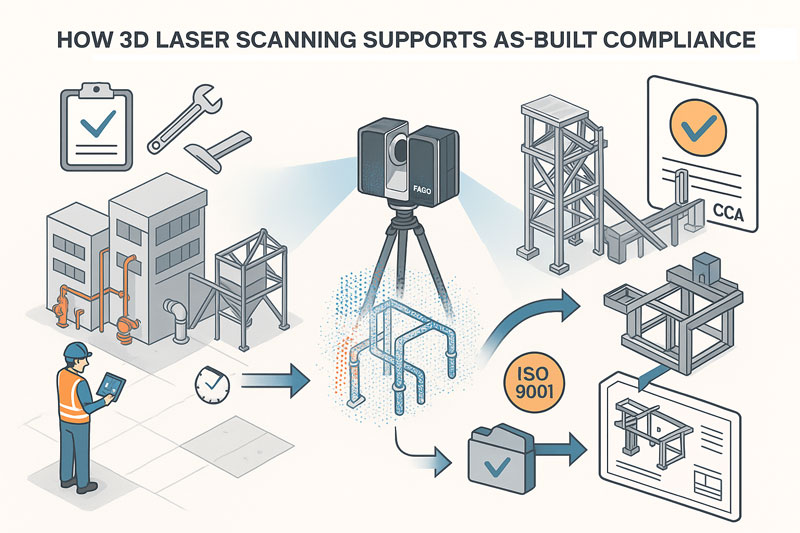
illustration of 3d scanning and building code of australia

1. What the Building Code of Australia (BCA) and Australian Standards Require

While the BCA (part of the National Construction Code โ€“ NCC) does not mandate 3D laser scanning, it does mandate that:

You must provide accurate, verifiable as-built documentation, including:

  • As-built drawings reflecting what was actually constructed
  • Evidence that construction aligns with design intent and approvals
  • Documentation for certification, compliance, commissioning and future maintenance

These requirements flow through:

  • NCC Volume 1 โ€“ Construction documentation, fire systems, mechanical services
  • AS 1100 โ€“ Technical drawing standards
  • AS 5488 โ€“ Subsurface utility information
  • AS 9001/ISO 9001 โ€“ Quality management documentation
  • State-based WHS / Plant Safety legislation
  • Engineering registration Acts (NSW, QLD, VIC)
  • Client-specific QA frameworks (e.g., TfNSW Digital Engineering, mining compliance standards, government project handover requirements)

These frameworks all emphasise accuracy, traceability, verification and record-keeping.


2. Common Problems with Traditional As-Built Documentation

Most non-compliance issues in handover packages arise because traditional methods rely on:

  • Manual tape measurements
  • Incomplete mark-ups on outdated drawings
  • Limited site access
  • Errors stacking up across multiple trades
  • No accurate record of clashes and deviations
  • No evidence trail for certifiers

This often results in:

  • Disputes between builders, certifiers and subcontractors
  • Rework costs during commissioning
  • Safety risks due to undocumented services or variations
  • Delays in obtaining Occupation Certificates (OC)

3. How 3D Laser Scanning Directly Supports Legal & BCA/NCC Compliance

โœ” 3D Scanning Provides โ€œVerified As-Constructed Evidenceโ€

Point clouds record geometry with millimetreโ€“level accuracy, giving:

  • Audit-proof evidence of what exists
  • Time-stamped scanning sessions
  • A defensible digital record for certifiers, engineers and auditors

This is extremely helpful for:

  • Compliance sign-off
  • Dispute resolution
  • Safety compliance
  • Future upgrades or modifications

โœ” Produces Accurate As-Built Drawings That Meet AS 1100 Requirements

Laser scanning allows you to generate:

  • Certified 2D as-built drawings
  • 3D models
  • Fabrication-ready details
  • Clash-free spatial coordination drawings

This ensures:

  • Dimensions are correct
  • Penetrations, fall directions, service locations and structural offsets are true to field conditions
  • All documentation aligns with NCC-required accuracy

โœ” Eliminates Measurement Errors That Could Breach Compliance

Regulators and certifiers need as-built documents to match constructed work.

Laser scanning:

  • Removes subjective tape measurements
  • Captures difficult/unsafe areas safely
  • Ensures penetrations, ductwork, pipe routes and tolerances match required clearances
  • Supports inspections under NCC (fire, structural, mechanical, accessibility, plant rooms, etc.)

โœ” Simplifies BCA Documentation for Fire, Mechanical & Structural Systems

Scanning assists with validating:

Fire Safety Systems

  • Hydrants, hose reels, fire pump rooms
  • Fire damper locations
  • Egress paths and spatial compliance
  • Service penetrations

Mechanical Systems

  • Duct routes
  • Plant room layouts
  • Fan coil units / AHU placement
  • Shaft centre-lines
  • Compliant access paths

Structural Elements

  • Columns
  • Beams
  • Brackets
  • Plant mounts
  • Retrofitted steelwork
  • Tolerance checks

The point cloud provides certifiers with confidence that what was installed does not deviate from approved plans beyond allowable tolerances.


โœ” Strengthens ISO 9001 & Government QA Requirements

Most government tenders (TfNSW, Defence, Health Infrastructure, QBuild, etc.) require:

  • Traceable QA
  • As-constructed verification
  • Digital documentation

A 3D scan becomes proof of measurement, improving your QA process by providing:

  • Verifiable dimensional control
  • Pre-fabrication QA
  • Handover packages that exceed minimum compliance

4. How Hamilton By Design Can Position This Service

3D Laser Scanning Enables:

  • NCC-compliant as-built documentation
  • Faster certifier approval
  • Fewer construction disputes
  • Reduced rework during commissioning
  • Better safety compliance
  • Accurate digital twins for maintenance and lifecycle management

You can state (truthfully):

โ€œOur 3D scans provide defensible, audit-ready as-built records that satisfy NCC, engineering, and certification requirements. Certifiers appreciate the precision because it removes ambiguity and reduces approval delays.โ€


Hamilton By Design logo displayed on a blue tilted rectangle with a grey gradient background

Why Shutdown Parts Donโ€™t Fit

Finite Element Analysis (FEA) engineering simulation button
Mechanical engineering services

Accuracy of 3D LiDAR Scanning With FARO

Mechanical Engineering | Structural Engineering

Mechanical Drafting | Structural Drafting

3D CAD Modelling | 3D Scanning

Chute Design

Bridging Reality and Design: How 3D Scanning + 3D Modelling Supercharge Mining Process Plants

In mining and mineral processing environments, small mis-fits, outdated drawings, or inaccurate assumptions can translate into shutdowns, costly rework, or worse, safety incidents. For PMs, superintendents, engineering managers and plants operating under heavy uptime and safety constraints, combining 3D scanning and 3D modelling isnโ€™t just โ€œnice to haveโ€ โ€” itโ€™s becoming essential. At Hamilton By Design, weโ€™ve leveraged this combination to deliver greater predictability, lower cost, and improved safety across multiple projects.


What are 3D Scanning and 3D Modelling?

  • 3D Scanning (via LiDAR, laser, terrestrial/mobile scanners): captures the existing geometry of structures, equipment, piping, chutes, supports, tanks, etc., as a dense point cloud. Creates a digital โ€œreality captureโ€ of the plant in its current (often messy) state.
  • 3D Modelling: turning that data (point clouds, mesh) into clean, usable engineering-geometry โ€” CAD models, as-built / retrofit layouts, clash-detection, wear mapping, digital twins, etc.

The power comes when you integrate the two โ€” when the reality captured in scan form feeds directly into your modelling/design workflows rather than being a separate survey activity thatโ€™s then โ€œinterpretedโ€ or โ€œassumed.โ€


Why Combine Scanning + Modelling? Key Benefits

Here are the main advantages you get when you deploy both in an integrated workflow:

BenefitWhat it Means for PMs / Engineering / Plant OpsExamples / Impacts
Accuracy & Reality VerificationVerify whatโ€™s actually in the plant vs what drawings say. Identify deformations, misalignments, wear, obstructions, or changes that werenโ€™t captured in paper drawings.Mill liner wear profiles; chute/hopper buildup; misaligned conveyors or supports discovered post-scan.
Reduced Risk, Safer AccessScanning can be done with limited or no shutdown, and from safer vantage points. Less need for personnel to enter hazardous or confined spaces.Scanning inside crushers, under conveyors, or at height without scaffolding.
Time & Cost SavingsFaster surveying; fewer repeat field trips; less rework; fewer surprises during shutdowns or retrofit work.Scan once, model many; clashes found in model instead of in the field; pre-fabrication of replacement parts.
Better Shutdown / Retrofit PlanningUse accurate as-built models so new equipment fits, interferences are caught, installation time is optimized.New pipelines routed without conflict; steelwork/supports prefabricated; shutdown windows shortened.
Maintenance & Asset Lifecycle ManagementScan history becomes a baseline for monitoring wear or deformation. Enables predictive maintenance rather than reactive.Comparing scans over time to track wear; scheduling relining of chutes; monitoring structural integrity.
Improved Decision Making & VisualisationEngineers, superintendents, planners can visualise the plant as it is โ€” space constraints, access routes, clearances โ€” before making decisions.Clash-detection between new and existing frames; planning maintenance access; safety audits.
Digital Twin / Integration for Future-Ready PlantOnce you have accurate geometric models you can integrate with IoT, process data, simulation tools, condition monitoring etc.Digital twins that simulate flow, energy use, wear; using scan data to feed CFD or FEA; feeding into operational dashboards.

Challenges & How to Overcome Them

Of course, there are pitfalls. Ensuring scanning + modelling delivers value requires attention to:

  • Planning the scanning campaign (scan positions, control points, resolution) to avoid shadow zones or missing data.
  • Choosing hardware and equipment that can operate under plant conditions (dust, vibration, temperature, restricted access).
  • Processing & registration of point clouds, managing the large data sets, and ensuring clean, usable models.
  • Ensuring modelling workflow aligns with engineering design tools (CAD systems, formats, tolerances) so that the scan data is usable without excessive cleanup.
  • Maintaining the model: when plant layouts or equipment change, keeping the scan or model up to date so your decisions are based on recent reality.

At Hamilton By Design we emphasise these aspects; our scan-to-CAD workflows are built to align with plant engineering needs, and we help clients plan and manage the full lifecycle.


Real World Applications in Mining & Process Plants

Hereโ€™s how combined scanning + modelling is applied (and what you might look for in your own facility):

  • Wear & Relining: scanning mill, crusher liners, chutes or hoppers to model wear profiles; predict failures; design replacement parts that fit exactly.
  • Retrofits & Expansions: mapping existing steel, pipe racks, conveyors, etc., creating accurate โ€œas builtโ€ model, checking for clashes, optimizing layouts, prefabricating supports.
  • Stockpile / Volumetric Monitoring: using scans or LiDAR to measure stockpile volumes for planning and reporting; integrating with models to monitor material movement and flow.
  • Safety & Clearance Checking: verifying that walkways, egress paths, platforms have maintained their clearances; assess structural changes; check for deformation or damage.
  • Shutdown Planning: using accurate 3D models to plan the scope, access, scaffold/frame erection, pipe removal etc., so shutdown time is minimised.

Why Choose Hamilton By Design

To get full value from the scan + model combination, you need more than just โ€œweโ€™ll scan itโ€ or โ€œweโ€™ll make a modelโ€ โ€” you need a partner who understands both the field realities and the engineering rigour. Here’s where Hamilton By Design excels:

  • Strong engineering experience in mining & processing plant settings, so we know what level of detail, what tolerances, and what access constraints matter.
  • Proven tools & workflows: from LiDAR / laser scanner work that captures site conditions even under harsh conditions, to solid CAD modelling/reporting that aligns with your fabrication/installation requirements.
  • Scan-to-CAD workflows: not just raw point clouds, but models that feed directly into design, maintenance, procurement and operations.
  • Focus on accuracy, safety, and reduced downtime: ensuring that field work, design, installation etc., are as efficient and risk-averse as possible.
  • Use of modern digital techniques (digital twins, clash detection etc.) so that data isnโ€™t just stored, but actively used to drive improvements.

Practical Steps to Get Started / Best Practice Tips

If youโ€™re managing a plant or engineering project, here are some steps to adopt scanning + modelling optimally:

  1. Define Clear Objectives: What do you want from this scan + model? Wear profiles, retrofit, layout changes, safety audit etc.
  2. Survey Planning: Decide scan positions, control points, resolution (density) based on the objectives and site constraints. Consider access, safety, shutdown windows.
  3. Use Appropriate Hardware: Choose scanners suited to environment (dust, heat), also ensure regulatory and IP protection etc.
  4. Data Processing & Modelling Tools: Have the capacity/software to register, clean, mesh or extract CAD geometry.
  5. Integrate into Existing Engineering Processes: Ensure the outputs are compatible with your CAD standards, procurement, installation etc.
  6. Iterate & Maintain: Frequent scans over time to track changes; update models when plant changes; feed maintenance, design and operations with new data.

Conclusion

In mining process plants, time, safety, and certainty matter. By combining 3D scanning with sound 3D modelling you donโ€™t just get a snapshot of your plant โ€” you gain a powerful toolset to reduce downtime, avoid rework, improve safety, and enhance decision-making.

If youโ€™re responsible for uptime, capital works, maintenance or process improvements, this integration can reshape how you plan, maintain, and operate. At Hamilton By Design, weโ€™re helping clients in Australia harness this power โ€” turning reality into design confidence, and giving stakeholders peace of mind that the layout, equipment, and safety are aligned not to yesterdayโ€™s drawings but to todayโ€™s reality.

Name
Would you like us to arrange a phone consultation for you?
Address
3D LiDAR scanning and 3D modelling service button โ€” laser scanner capturing a point cloud for engineering and CAD modelling
Mechanical engineering services
Finite Element Analysis (FEA) engineering simulation button
Mechanical engineering services
3D LiDAR Scanning Darwin for engineering surveys, laser scanning, reality capture and point cloud modelling services
3D LiDAR Scanning Australia engineering services for laser scanning, reality capture, scan-to-CAD, Scan-to-BIM and as-built documentation across Australia
3D LiDAR scanning services on the Central Coast providing engineering-grade laser scanning, point cloud capture, scan-to-CAD modelling and industrial reality capture for infrastructure and industrial projects.
3D LiDAR Scanning Perth for engineering surveys, laser scanning, reality capture and point cloud modelling services
3D LiDAR Scanning Sydney for engineering surveys, laser scanning, reality capture and point cloud modelling services
3D LiDAR Scanning Brisbane for engineering surveys, laser scanning, reality capture and point cloud modelling services
3D LiDAR Scanning Canberra for engineering surveys, laser scanning, reality capture and point cloud modelling services
3D LiDAR Scanning Newcastle for engineering surveys, laser scanning, reality capture and point cloud modelling services
3D LiDAR Scanning Adelaide for engineering surveys, laser scanning, reality capture and point cloud modelling services

Choosing the Right 3D Scanner for Construction, Manufacturing, and Mining Projects

At Hamilton By Design, we know that 3D scanning has become an essential tool for modern engineering โ€” from capturing as-built conditions on construction sites to modeling complex processing plants and validating manufacturing layouts. But not all scanners are created equal, and selecting the right technology is crucial to getting reliable data and avoiding costly surprises later in the project.

3D Scanning for Construction Sites

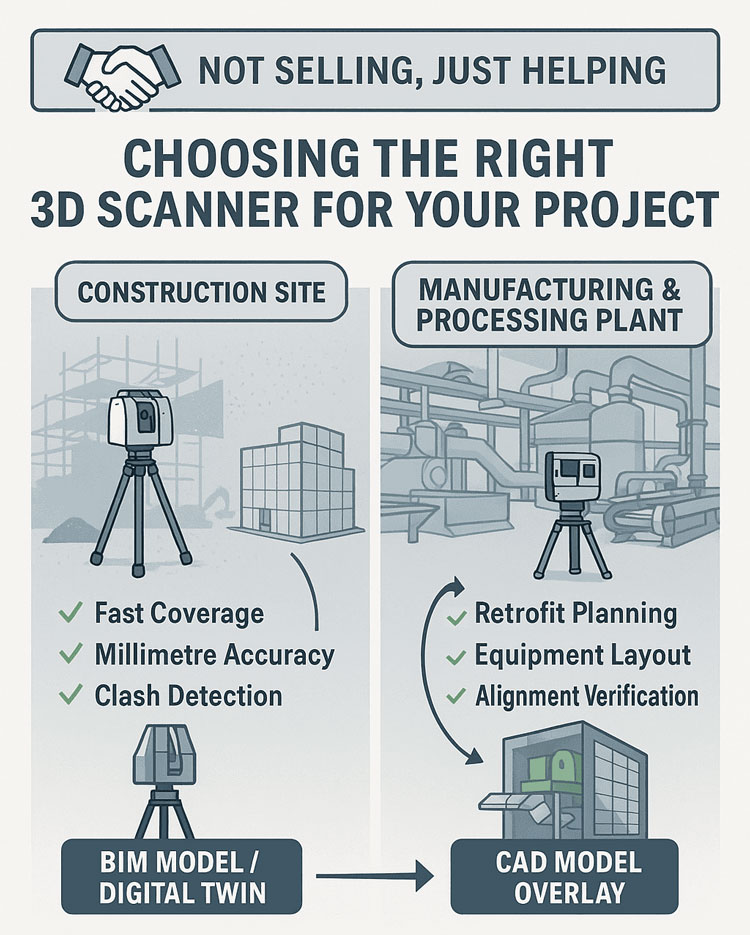
For construction and infrastructure projects, coverage and speed are the top priorities. Terrestrial Laser Scanning (TLS) and LiDAR systems like the FARO Focus S70 are ideal for quickly capturing entire job sites with millimetre-level accuracy. These scanners allow engineers and project managers to:

  • Verify as-built conditions against design models
  • Detect clashes early in the process
  • Support accurate quantity take-offs and progress documentation

TLS works well in tough environments โ€” dust, sunlight, and complex geometry โ€” making it a perfect fit for active building sites.

3D Scanning for Manufacturing & Processing Plants

When it comes to manufacturing facilities and mining processing plants, accuracy and detail matter even more. Scans are often used for:

  • Retrofit planning and clash detection in tight plant rooms
  • Structural steel and conveyor alignment checks
  • Equipment layout for expansion projects

Here, combining TLS with feature-based CAD modeling allows us to deliver data that is usable for engineering design, ensuring that new equipment fits exactly as intended.

Infographic titled โ€˜Choosing the Right 3D Scanner for Your Projectโ€™ with the tagline โ€˜Not Selling, Just Helping.โ€™ The left side shows a construction site with a tripod-mounted 3D scanner and benefits listed: fast coverage, millimetre accuracy, and clash detection, leading to BIM model or digital twin outputs. The right side shows a manufacturing and processing plant with a scanner and benefits: retrofit planning, equipment layout, and alignment verification, leading to CAD model overlay results

Weโ€™re Here to Help

Hamilton By Design doesnโ€™t sell scanners โ€” we focus on providing unbiased, engineering-driven advice. If youโ€™re unsure which scanning approach is right for your project, weโ€™re happy to share our experience and guide you toward the best solution.

Feel free to get in touch to discuss your project needs โ€” whether itโ€™s a construction site, manufacturing facility, or processing plant, we can help you turn accurate scan data into actionable engineering insights.

3D Scanning for Construction Sites |  3D Scanning for Manufacturing | 3D Scanning for Processing Plants

Mechanical Engineering | Structural Engineering

Mechanical Drafting | Structural Drafting

3D CAD Modelling | 3D Scanning

Finite Element Analysis (FEA) engineering simulation button
Mechanical engineering services

3D Scanning

How 3D Laser Scanning is Redefining Reality for Design, Construction & Heritage

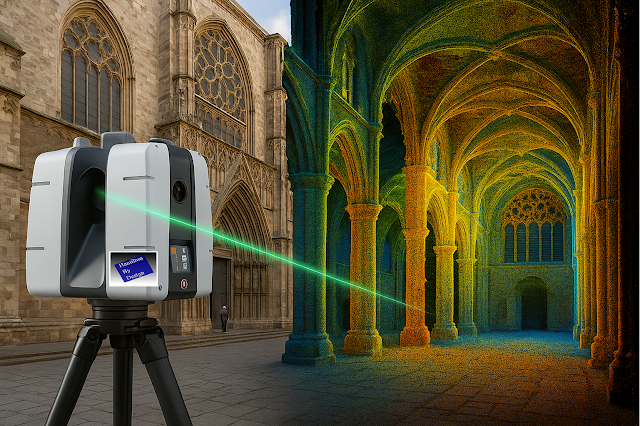
Imagine standing before a centuries-old cathedral, where every carved arch, every stained-glass pane, every weathered stone holds centuries of stories. Capturing its true form and condition with tape measure and camera? Tedious and prone to errors. But with 3D laser scanning, you can digitally freeze every detailโ€”down to the imperfectionsโ€”turning reality into an exact, manipulable model.

In an age where precision, speed, and data-driven decisions are non-negotiable, 3D laser scanning is no longer โ€œnice to haveโ€โ€”itโ€™s essential. Letโ€™s explore what it is, why itโ€™s transformative, where itโ€™s being used most powerfully, and how you can harness its potential.

What Is 3D Laser Scanning?

At its core, 3D laser scanning sometimes called terrestrial laser scanning, (TLS) is the emission of laser pulses toward surfaces, recording the time it takes for those pulses to bounce back. From that comes a dense โ€œpoint cloudโ€ โ€” billions of precise data points mapping shape, texture, orientation, and distance.

These point clouds become high-fidelity models, maps, meshes, or BIM ready files. Whether youโ€™re scanning building exteriors, interiors, or industrial components, the result is more than just imageryโ€”itโ€™s measurable, analyzable geometry.

How It Works โ€” The Process

  1. Preparation & Planning

    Define what you need: the level of detail (LOD), resolution, range, and whether external conditions (light, weather) will interfere.

  2. Data Capture

    Position the scanner at multiple stations to cover all surfaces. Use targets or reference markers for alignment and capture with overlapping scans.

  3. Processing & Registration

    Merge scans to align them properly, clean noise, filter out irrelevant data (like people, moving objects), calibrate.

  4. Post-processing & Deliverables

    Convert point clouds into usable outputsโ€”floorplans, sections, elevations, 3D meshes, BIM models, virtual walkthroughs. Run analyses (clash detection, deformation etc.).

  5. Integration & Use

    Use the data in design, restoration, facility management, or documentation. The quality of integration (into BIM, GIS, CAD) is key to unlocking value.

ย 

Key Benefits

Benefit What It Means in Practice Real-World Impact
Extreme Precision Sub-millimetre to millimetre accuracy depending on the scanner and conditions. Less rework. Better fit for retrofit, renovation, or mechanical systems in tight tolerances.
Speed + Efficiency Collect large amounts of spatial data in far less time than traditional measurement. Faster project turnaround. Reduced site time costs.
Non-Contact / Low Disruption Good for fragile structures, hazardous or difficult-to-access places. Preserves integrity of heritage buildings; safer for workers.
Comprehensive Documentation Full visual & geometric context. Informs future maintenance. Acts as an archival record.
Better Decision Making & Conflict Detection Early clash detection; scenario simulation; what-if modelling. Avoids costly mistakes; helps build consensus among stakeholders.
Enhanced Visualisation & Communication Stakeholders can see exactly what exists vs. whatโ€™s being proposed. Improves client buy-in, regulatory approvals, fundraising.

ย 

Applications: Where It Shines

  • Architecture & Renovation: As-built models, restoration of heritage sites.

  • Infrastructure & Civil Engineering: Bridges, tunnels, rail track alignments.

  • Industrial & Manufacturing: Machine part audits, reverse-engineering, plant layout.

  • Heritage & Preservation: Documenting fragile monuments, archaeological sites.

  • Facility Management: Digital twins, maintenance, asset tracking.

  • Environment & Surveying: Terrain mapping, forestry, flood risk mapping (especially when combined with aerial systems or mobile scanning).

Challenges & Best Practices

Nothing is perfect. To get the most out of 3D laser scanning, anticipate and mitigate:

  • Environmental factors: Light, dust, rain, reflective surfaces can introduce noise.

  • Data overload: Massive point clouds are large; need strong hardware & efficient workflows.

  • Alignment & registration errors: Overlaps, control points, and calibration are vital.

  • Skill & Planning: Good operators + good planning = much better outcomes.

Key best practices:

  • Use reference targets for precise registration.

  • Capture overlap of 30-50% between scan positions.

  • Break project into manageable segments.

  • Clean noise early.

  • Think ahead about deliverables and how clients will use the data (design, BIM, VR etc.).

Case Studies & Stories

  • Heritage in Danger: A cathedral in Europe threatened by pollution and structural decay was laser scanned. The point cloud revealed minute deformations, enabling an accurate restoration planโ€”saving costs and preserving history.

  • Infrastructure Efficiency: A civil engineering firm reduced design clashes by 80% on a complex highway project by integrating scans with their BIM workflow.

  • Industrial Switch-Over: Manufacturing plant layout was reconfigured using scan data; downtime reduced because the virtual model matched reality better than the old blueprints.

Software, Tools & Ecosystem

While scanners are vital, the software ecosystem is what unlocks value. Tools that turn raw data into actionable insights include:

  • Reality capture tools (processing point clouds).

  • BIM / CAD integration (e.g. Revit, AutoCAD).

  • Visualization tools (VR, AR, walkthrough).

  • Data sharing & collaboration platforms.

  • Cloud storage / processing if large point clouds.

SaaS/cloud-based workflows are increasingly important to share among remote teams, facilitate stakeholder review, and ensure data is accessible beyond just technical users.

Why It Matters Now

  • Global pressures (heritage, sustainability, faster build cycles, remote work) are raising the bar.

  • Clients expect transparency, accuracy, minimized risk.

  • Regulatory compliance and โ€œas-builtโ€ requirements are stricter.

  • Digital twins & smart infrastructure demand high fidelity data.

3D laser scanning acts as a bridge: between physical world and digital twin; between heritage past and future; between design promise and build reality. Ifย you have a survey scan and want to make sense of point cloud data, contact Hamilton By Design

ย 
ย 
ย 
ย 

Our clients:
Name
Would you like us to arrange a phone consultation for you?
Address
Finite Element Analysis (FEA) engineering simulation button
Mechanical engineering services

3D Scanning Sydney banner promoting engineering-grade 3D laser scanning, LiDAR scanning, and reality capture services by Hamilton By Design.
Mechanical Engineering Sydney banner with white text on a blue background representing Hamilton By Design's mechanical engineering services in Sydney.
Mechanical Drafting and 3D Modelling Sydney banner highlighting Hamilton By Design's CAD drafting, 3D modelling, and engineering design services in Sydney.

Mechanical Engineering | Structural Engineering


Hamilton by Design: Your Experts in 3D Laser Scanning & Mechanical Design

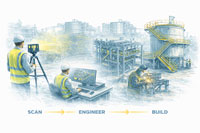
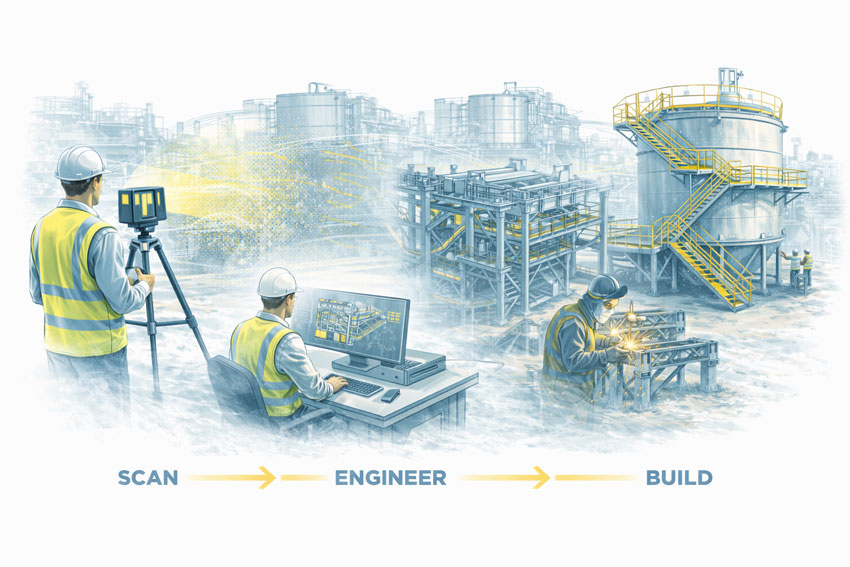
Engineer-led 3D laser scanning of an industrial plant transitioning into mechanical engineering design and steel fabrication.

When it comes to precision engineering, structural drafting, and mechanical design services, Hamilton by Design leads the way. We provide advanced 3D laser scanning solutions across Perth, Sydney, Brisbane, Melbourne, and the Hunter Valley โ€” giving clients accurate data for smarter decisions and efficient project delivery.

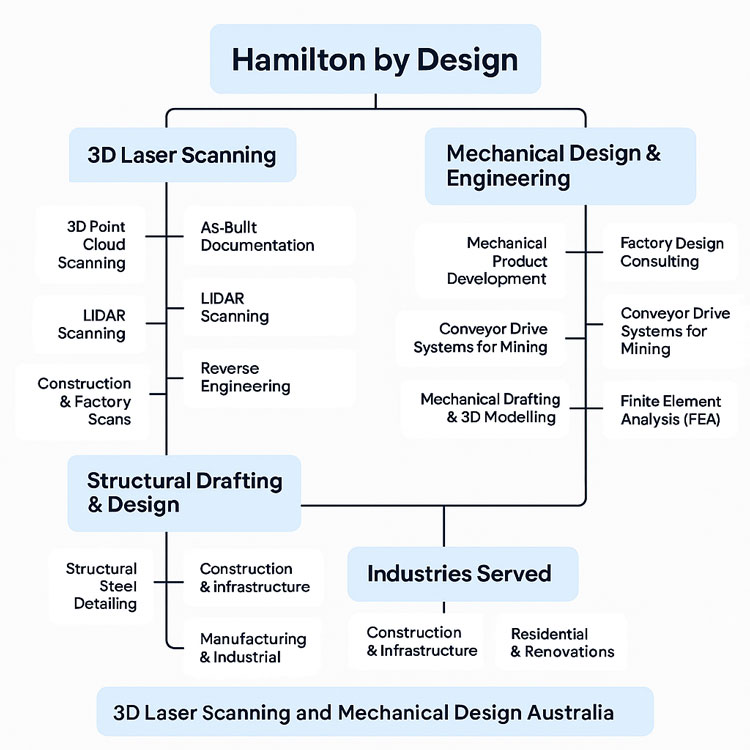
Hamilton by Design services diagram showing four key areas: 3D Laser Scanning, Mechanical Design and Engineering, Structural Drafting and Design, and Industries Served. The chart lists services such as 3D point cloud scanning, as-built documentation, reverse engineering, mechanical product development, conveyor drive systems for mining, factory design consulting, FEA, structural steel detailing, and design for construction, manufacturing and industrial sectors. Industries served include construction and infrastructure, and residential and renovations. A footer reads โ€˜3D Laser Scanning and Mechanical Design Australia
3D LiDAR scanning and 3D modelling service button โ€” laser scanner capturing a point cloud for engineering and CAD modelling
Mechanical engineering services

3D Laser Scanning Across Australia

Our 3D laser scanning services capture exact measurements of your site, plant, or equipment to create detailed 3D point clouds and as-built documentation. This reduces rework, saves time, and improves project planning.

We offer:
  • 3D Laser Scanning Perth & Fremantle โ€“ Industrial plant surveys, mining site scanning, and reverse engineering.
  • 3D Laser Scanning Sydney & Melbourne โ€“ Building surveys, renovation planning, and structural inspections.
  • 3D Laser Scanning Brisbane & Hunter Valley โ€“ Factory layouts, conveyor drive design, and structural scanning.
  • 3D Laser Scanning for Engineering & Mining โ€“ Point cloud scanning, clash detection, and 3D modelling.

Our team uses the latest 3D scanning and LiDAR technology to produce millimetre-accurate results that engineers, architects, and builders can trust.

Structural Drafting & Design Services

Hamilton by Design provides structural drafting services across Australia, including:

  • Structural Design and Drafting โ€“ For residential, commercial, and industrial projects.
  • Steel Detailing & Shop Drawings โ€“ Produced to Australian drafting standards.
  • Structural Scanning Services Brisbane & Sydney โ€“ Helping engineers assess existing structures for upgrades or repairs.

Our experienced structural design engineers work closely with builders, architects, and civil engineers in Hamilton and beyond to deliver reliable, build-ready plans.

Engineer using 3D LiDAR scanning to capture an industrial facility, followed by CAD modelling and fabrication-ready steelwork.

See Structural Engineering for more info

Mechanical Design & Engineering Solutions

We are a full-service mechanical design consultancy offering:

  • Mechanical Product Design & Development
  • Factory & Plant Layout Design
  • Conveyor Belt Drive Systems & Mining Equipment Design
  • Finite Element Analysis (FEA) and performance validation
  • Reverse Engineering Services Perth for spare parts and retrofits

Our team of mechanical engineers, drafters, and CAD designers ensures every project is efficient, safe, and cost-effective.

see Mechanical Engineering for more info

Industries We Serve

Hamilton by Design supports clients across:

  • Mining & Resources โ€“ Coal conveyors, feed thickeners, and vibrating equipment in Kalgoorlie and Mount Isa.
  • Construction & Infrastructure โ€“ As-built scanning and 3D modelling for building projects.
  • Manufacturing โ€“ Factory optimization and equipment design.
  • Residential Projects โ€“ Drafting services for home renovations and new builds in Hamilton and surrounding areas.

Why Partner with Hamilton by Design?

Choosing Hamilton by Design means working with mechanical design experts and structural drafters who are committed to accuracy, speed, and innovation.

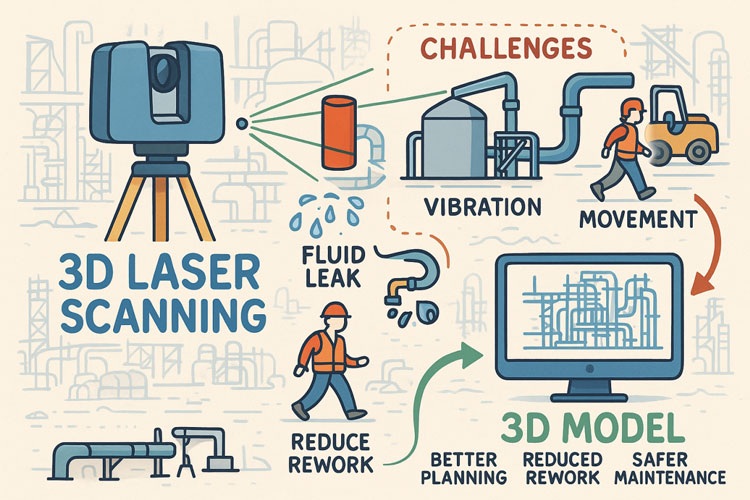
Infographic showing 3D laser scanning capturing industrial equipment to identify challenges such as vibration, movement, and fluid leaks, feeding into a 3D model that improves planning, reduces rework, and supports safer maintenance

Australia-Wide Coverage โ€“ Perth, Sydney, Melbourne, Brisbane, Hunter Valley
Cutting-Edge Technology โ€“ Laser scanning, CAD modelling, and 3D visualization
Expert Team โ€“ Experienced mechanical engineers and design consultants
Cost-Effective Solutions โ€“ Saving time, reducing errors, and minimizing rework


Get Started Today

Ready to transform your next project with 3D laser scanning, structural drafting, or mechanical design services?

Contact Hamilton by Design for a consultation and see how our team can deliver precise, efficient, and innovative solutions for your business.


Hamilton By Design logo displayed on a blue tilted rectangle with a grey gradient background

Name
Would you like us to arrange a phone consultation for you?
Address

Hamilton By Design โ€“ Blog

Consulting Engineers

About Us โ€“ Hamilton By Design

Contact us

Finite Element Analysis (FEA) engineering simulation button
Mechanical engineering services
3D CAD Modelling Australia service banner for Hamilton By Design
3D LiDAR scanning and 3D modelling service button โ€” laser scanner capturing a point cloud for engineering and CAD modelling
Mechanical engineering services
3D CAD Modelling Australia service banner for Hamilton By Design
Mechanical, Structural & Pipework Drafting service banner by Hamilton By Design featuring white text on a blue background.
Australian Drafting logo featuring bold white text reading "Australian Drafting" centred on a blue rounded rectangle background.
Blue banner graphic displaying the text "Point Cloud to CAD - Australia" in large white lettering, representing point cloud processing, scan-to-CAD conversion and digital engineering services across Australia.
CHPP Engineering title graphic featuring bold white text reading "CHPP Engineering" centred on a blue rounded rectangle background.
Engineering Governance title graphic featuring bold white text reading "Engineering Governance" centred on a blue rounded rectangle background.
Mechanical engineering services
Australian Drafting logo featuring bold white text reading "Australian Drafting" centred on a blue rounded rectangle background.
3D LiDAR Scanning Hunter & Newcastle banner with white text on a blue background promoting engineering-grade laser scanning services for industrial, mining and infrastructure projects across the Hunter Valley and Newcastle region.
Mechanical Engineering Hunter & Newcastle banner promoting mechanical engineering services for mining, industrial plants, power generation, manufacturing and heavy industry throughout the Hunter Valley and Newcastle region.
Structural Drafting Hunter & Newcastle banner promoting structural drafting services for mining, industrial plants, power generation, manufacturing and infrastructure projects across the Hunter Valley and Newcastle region.
Mechanical Engineering Perth WA banner for Hamilton By Design featuring white text on a blue background.
3D Laser Scanning Perth WA banner for Hamilton By Design with white text on a blue background.
SolidWorks Perth WA banner for Hamilton By Design featuring white text on a blue background.
Fabrication and product design services
Finite Element Analysis (FEA) engineering simulation button
3D LiDAR scanning and 3D modelling service button โ€” laser scanner capturing a point cloud for engineering and CAD modelling
Blue rounded button with the text โ€œSolidWorks Designโ€ in white.
Mechanical drafting services button
Structural drafting services button

3D Scanning Sydney banner promoting engineering-grade 3D laser scanning, LiDAR scanning, and reality capture services by Hamilton By Design.
Mechanical Engineering Sydney banner with white text on a blue background representing Hamilton By Design's mechanical engineering services in Sydney.
Mechanical Drafting and 3D Modelling Sydney banner highlighting Hamilton By Design's CAD drafting, 3D modelling, and engineering design services in Sydney.

Mechanical Engineering | Structural Engineering