3D Scanning Bathurst | Engineering-Grade LiDAR & Scan-to-CAD
Bathurst and the Central West region support a diverse mix of manufacturing facilities, mining operations, quarries, infrastructure assets, utilities, and heritage structures. These environments demand more than survey-grade outputs.
Hamilton By Design combines LiDAR scanning with mechanical engineering expertise, ensuring that:
Scan coverage targets critical interfaces and load paths
Accuracy supports fabrication-ready design
Models reflect real-world constraints, not assumptions
This significantly reduces rework, clashes, and site uncertainty during upgrades or expansions.
Our 3D Scanning Services in Bathurst
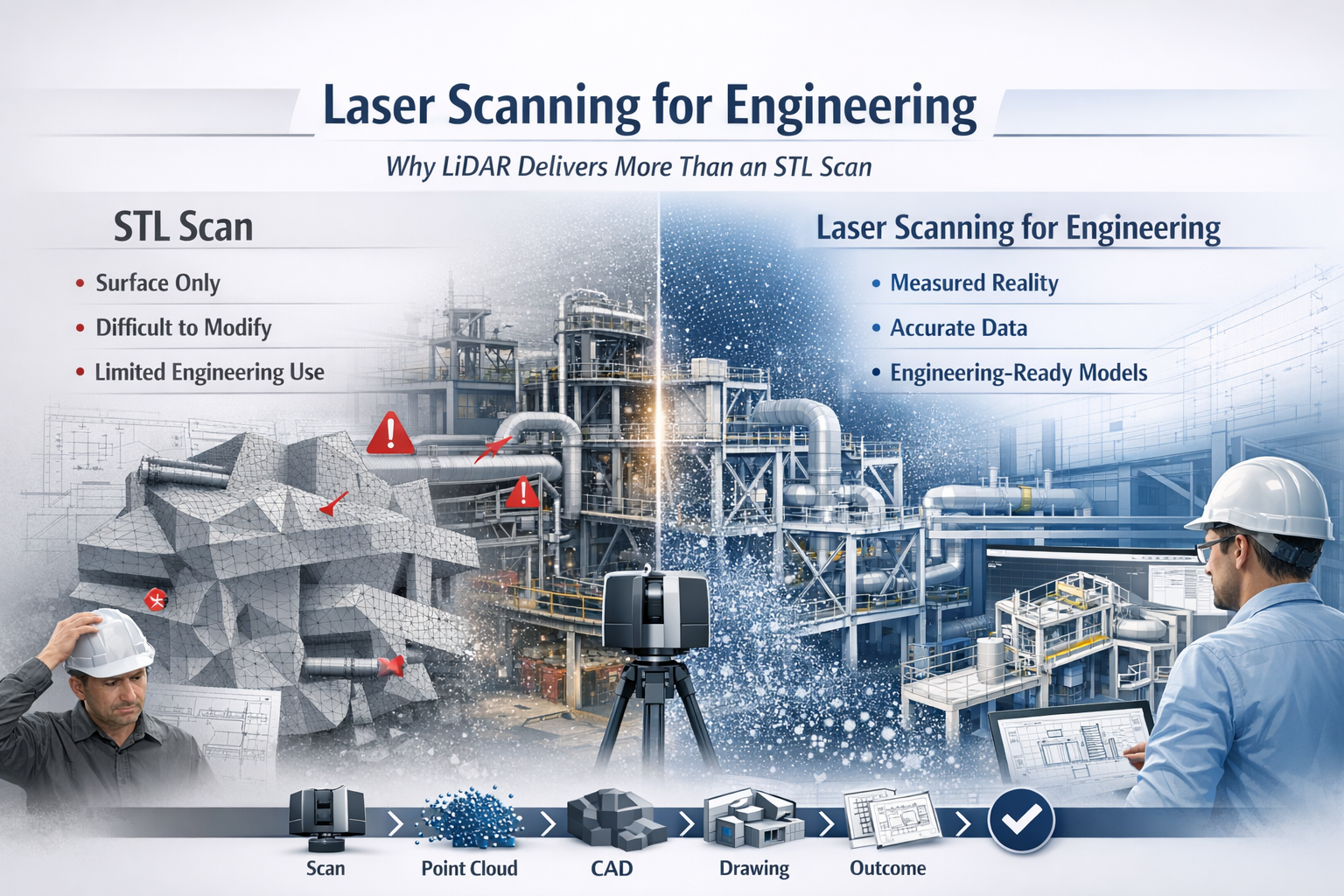
We provide a complete scan-to-engineering workflow, including:
High-resolution terrestrial LiDAR scanning
Registered point clouds (colourised and structured)
Support for mechanical, structural, and fabrication design
All deliverables are tailored to your project scope — from concept planning through to construction and installation.
Typical Bathurst Applications
Our 3D scanning services are commonly used for:
Industrial plant upgrades and brownfield modifications
Mining and quarry infrastructure
Conveyors, chutes, hoppers, and bulk materials handling systems
Mechanical equipment replacement and tie-ins
Structural steel verification and retrofits
Asset documentation and digital twins
Risk reduction for shutdown and live-site works
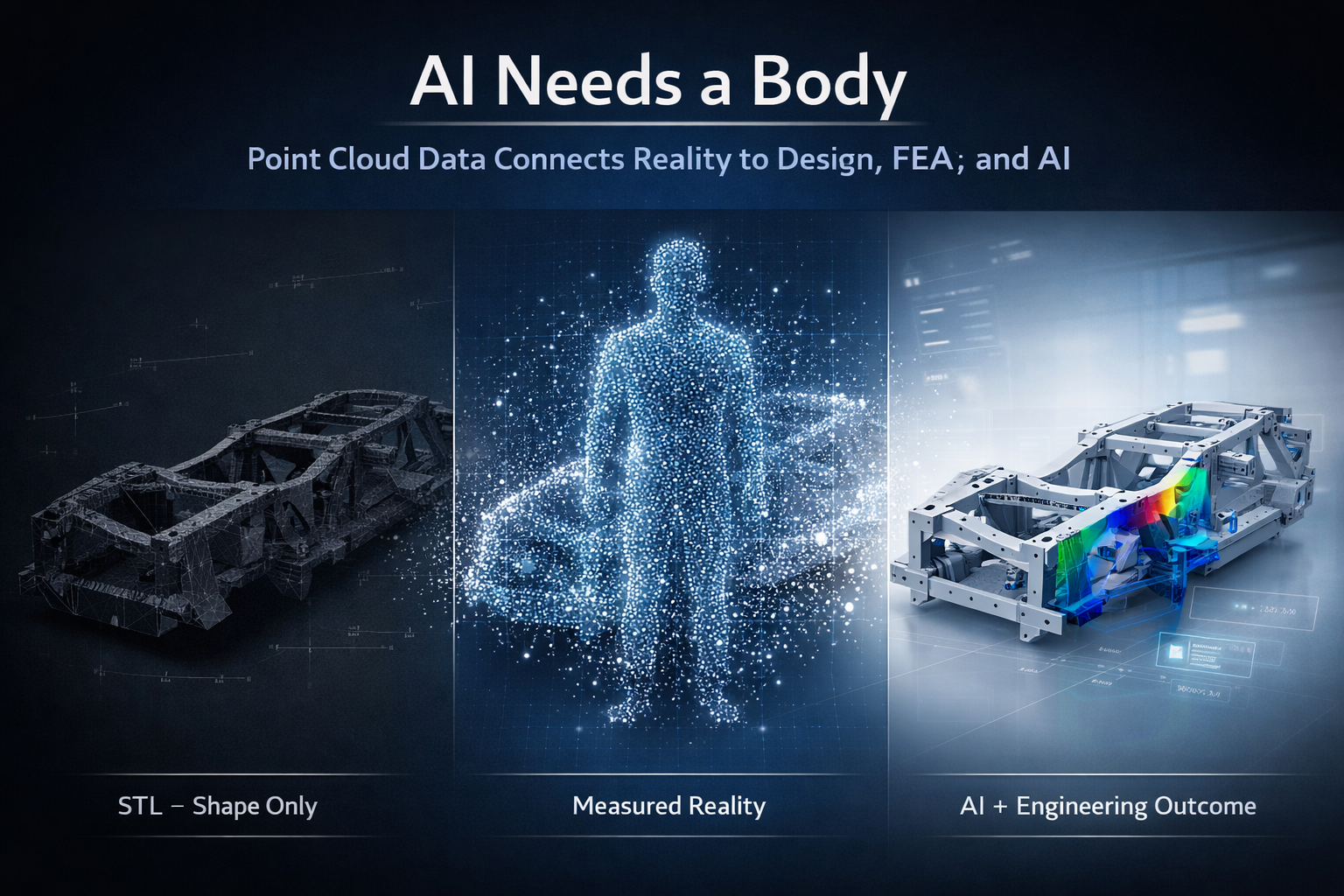
Where required, scanning data is integrated directly into engineering calculations, FEA models, and fabrication drawings.
Why Hamilton By Design
Engineer-Led Scanning
Your scan is planned and executed by engineers who understand loads, tolerances, constructability, and compliance, not just data capture.
Fit-for-Purpose Accuracy
We capture only the data that matters — at the accuracy required for design, fabrication, and installation.
Single-Source Accountability
One team responsible for scanning, modelling, and engineering, eliminating scope gaps between consultants.
Regional & Mobile Delivery
We regularly support projects across Bathurst, Orange, Lithgow, Dubbo, Mudgee, and the broader Central West NSW, mobilising to site as required.
Deliverables You Can Build From
Depending on your project, we can supply:
Registered point clouds (E57 / RCP / compatible formats)
3D CAD models aligned to engineering workflows
GA drawings and interface layouts
Fabrication-ready references
Digital records for asset management and future upgrades
Our clients:
3D Scanning Bathurst – Get Started
If you are planning a retrofit, upgrade, or new installation in Bathurst or Central West NSW, early 3D scanning can significantly reduce risk and cost.
Talk to an engineer about your site Request a Bathurst 3D scanning proposal On-site scanning available across the Central West
AS 1657 – Fixed Platforms, Walkways, Stairways & Ladders
One of the Most Enforced Standards on Mine Sites
Safe access is fundamental to operating plant. If people are required to inspect, operate, isolate, maintain, or repair equipment, they must be able to access it safely. This is why AS 1657 – Fixed platforms, walkways, stairways & ladders is one of the most actively enforced Australian Standards across mine sites, processing plants, and heavy industry.
Unlike many structural standards, AS 1657 compliance is highly visible, directly linked to injury risk, and simple for regulators to assess during inspections. As a result, access systems are often one of the first areas reviewed following incidents, audits, or site modifications.
Hamilton By Design supports asset owners by converting real as-built access steelwork into verified, engineering-grade digital records that can be assessed, upgraded, and documented with confidence.
Why AS 1657 Is Enforced So Frequently
AS 1657 governs how people physically move around plant. Regulators do not need detailed calculations to identify non-compliance — they can see it immediately.
AS 1657 enforcement is commonly driven by:
Slips, trips and falls remaining a leading cause of mine-site injuries
Direct links to working-at-heights risk
Clear dimensional and geometric requirements
Strong alignment with WHS duty-of-care obligations
In practice, AS 1657 is enforced not because it is complex, but because non-compliance is visible and consequential.
Where AS 1657 Compliance Breaks Down in Operating Plant
Most access systems are originally designed with good intent. Problems develop over time as plant is modified, upgraded, or repurposed — while access arrangements are not re-verified.
Common real-world scenarios include:
Walkways designed for inspection now used for routine maintenance
Increased personnel traffic driven by reliability or production demands
Temporary access becoming permanent
New guarding, chutes, pipework or services reducing clearances
Access steelwork modified during shutdowns with no formal review
The standard did not change — the way the plant is used did.
Common AS 1657 Non-Conformances on Mine Sites
Across brownfield assets, the same access issues appear repeatedly:
Walkways narrower than required for the task being performed
Missing, incomplete, or inconsistent handrails and toe boards
Stairways outside allowable pitch or geometry limits
Inconsistent riser heights and tread depths
Ladders used where stairs should be provided
Unsafe access around conveyors, tanks, hoppers, and transfer stations
Ad-hoc access steelwork added without drawings or verification
Individually these issues may appear minor. Collectively, they represent a significant safety, compliance, and governance risk.
“Looks Safe” Is Not the Same as Compliant
A common industry assumption is that if access appears safe, it must be compliant. In reality:
Dimensional non-compliance is often subtle
Incremental changes hide cumulative risk
Visual acceptability does not equal compliance
Documentation is frequently missing or outdated
Most access systems do not fail catastrophically. They fail audits, inspections, and incident reviews.
AS 1657 Interfaces with Other Standards
AS 1657 rarely exists in isolation on mine sites. It typically interfaces with:
AS 3990 – Mechanical equipment steelwork supporting access systems
AS 1755 – Conveyors and associated access and guarding
AS 4100 – Steel structures
WHS legislation – Enforcement and duty-holder accountability
Many compliance gaps occur at the interfaces between standards rather than within a single document.
The Documentation Gap in Access Compliance
A recurring challenge on older or modified sites is not necessarily unsafe access — it is unverified access.
Common documentation gaps include:
Missing or obsolete access drawings
Handrails, stairs, and platforms never updated in CAD
Legacy drawings that no longer reflect site conditions
Inability to demonstrate compliance during audits
If you cannot prove what exists, it becomes difficult to prove compliance, fitness-for-purpose, or due diligence.
The Role of LiDAR Scanning in AS 1657 Compliance
Engineering-grade 3D LiDAR scanning provides a practical solution to access compliance challenges by capturing accurate as-built geometry.
LiDAR scanning allows asset owners to:
Measure real walkway widths, clearances, stair geometry and ladder access
Verify existing access systems against AS 1657 requirements
Identify non-compliances before audits or incidents
Design access upgrades that fit existing plant first time
Create reliable digital records for governance and lifecycle management
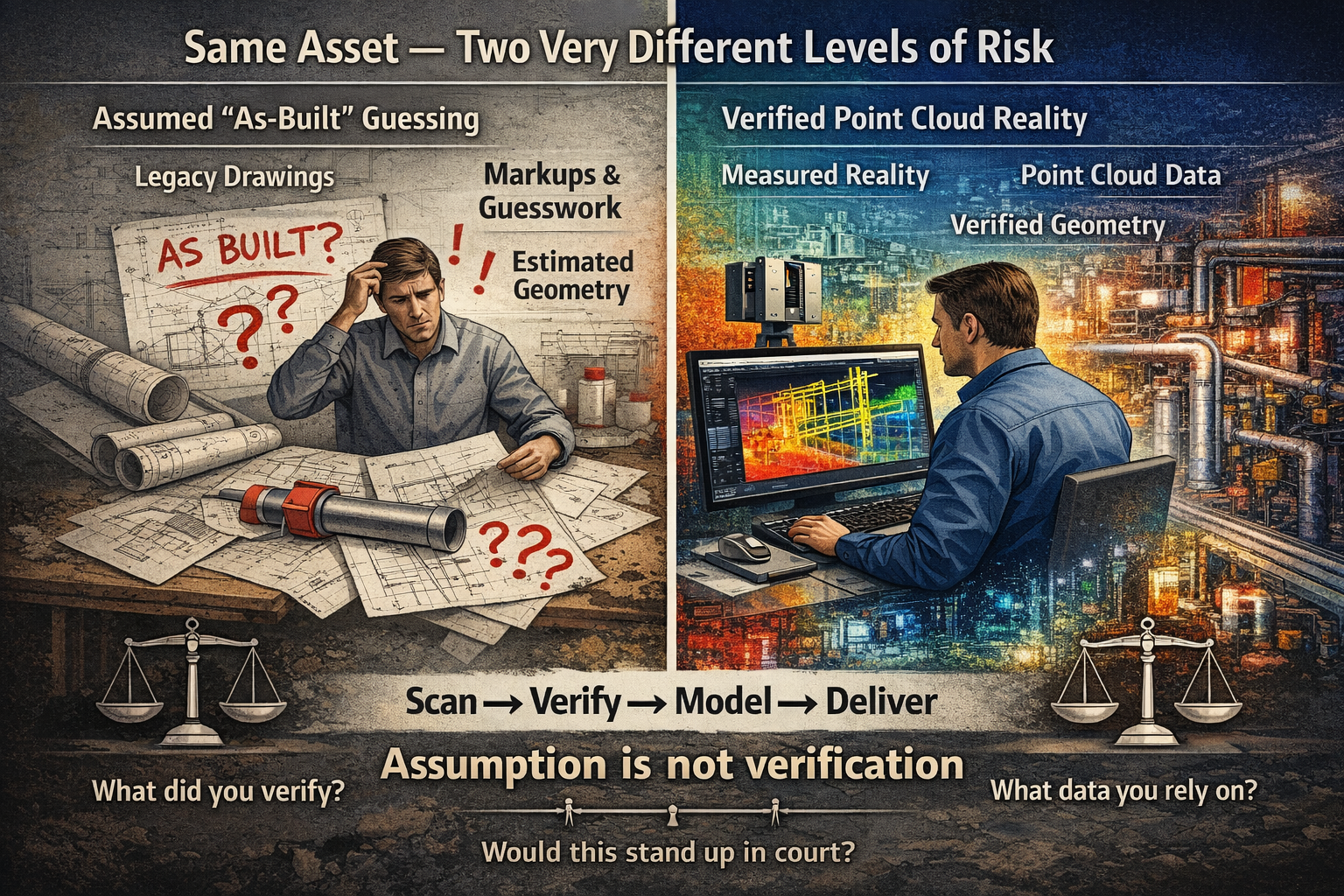
This approach replaces assumptions with measured reality.
Access compliance is most commonly compromised during:
Tight shutdown windows
Conveyor and guarding upgrades
Debottlenecking and plant modifications
“Like-for-like” replacements that repeat legacy issues
Without accurate as-built data, access upgrades risk fabrication rework, site clashes, and reinstating non-compliant geometry. Digital verification prior to fabrication significantly reduces these risks.
Our clients:
AS 1657 as a Due Diligence Issue for Asset Owners
For officers and senior leaders, AS 1657 compliance is not just an engineering detail — it is a governance and due-diligence issue.
Demonstrating due diligence increasingly requires:
Evidence-based decision making
Documented verification of access systems
Clear linkage between identified risks and controls
Audit-ready engineering records
AS 1657 compliance is often one of the most visible indicators of how seriously an organisation treats safety and asset stewardship.
Practical Triggers to Review AS 1657 Compliance
An AS 1657 review should be considered when:
A near-miss or fall incident occurs
Maintenance frequency increases
New guarding or conveyors are installed
Access is modified during shutdowns
An audit or regulator inspection is upcoming
Assets are being sold, leased, or handed over
Early verification is significantly more cost-effective than reactive remediation.
How Hamilton By Design Supports AS 1657 Compliance
Hamilton By Design supports access compliance by combining:
Engineering-grade LiDAR scanning
Accurate as-built CAD models
Practical upgrade and retrofit design
Fabrication-ready documentation
This enables asset owners to move from assumed compliance to verified compliance, with confidence in safety, constructability, and governance.
Walkways, Conveyor Structures, Platforms and Gantries
Mechanical equipment steelwork is everywhere in industrial sites — conveyor structures, access walkways, maintenance platforms, gantries and support frames. Over time, these structures are modified, loaded differently, repaired, and upgraded. That’s where AS 3990 – Mechanical equipment – Steelwork becomes critical: it provides a framework for designing and verifying steelwork that supports mechanical equipment and associated access systems.
At Hamilton By Design, we help asset owners and project teams reduce risk by converting real as-built steelwork into engineering-grade digital models that can be checked, upgraded, and documented with confidence.
When AS 3990 Steelwork Becomes a Problem in the Real World
Steelwork rarely fails because it was “obviously wrong” on day one. The most common issues develop gradually due to changes in loading, upgrades, corrosion, or incomplete documentation.
Common triggers we see on site
New conveyor drives, chutes, skirts, guards, or pull-wire systems added after commissioning
Extra services added: cable trays, hose reels, water lines, pipework, and supports
Walkway changes for access, maintenance, or guarding upgrades
Localised damage from impact, vibration, or operational fatigue
Corrosion or section loss in wash-down areas, coastal environments, or chemical exposure zones
Legacy steelwork with missing drawings or unknown load assumptions
If you can’t prove what exists (accurately), it becomes difficult to prove compliance, fitness-for-purpose, or due diligence.
Key Engineering Risks with Walkways, Platforms, Gantries and Conveyor Structures
1) Design intent vs as-built reality
Many sites have steelwork that differs from drawings due to shutdown modifications or brownfield constraints. Small deviations in member size, connection detailing, or geometry can materially change structural performance.
2) Loads have changed — but the steelwork didn’t
A “simple” modification can add significant load: added services, heavier equipment, changed maintenance practices, or multiple personnel working in the same bay. These changes can push members or connections beyond the original assumptions.
3) Conveyor vibration and dynamic effects
Conveyor structures experience cyclic loading, start/stop effects, and vibration. Even if the structure looks acceptable, fatigue and resonance can become a long-term reliability problem — particularly around drive stations, transfer points, and cantilevered platforms.
4) Connection adequacy often governs
Field-welded brackets, modified gussets, bolt slip, corroded fasteners, and non-standard connection geometry can become the weak link. Connection performance is frequently the true limiting factor in older or heavily modified steelwork.
5) Access and safety interfaces
Walkways and platforms often sit at the intersection of multiple requirements: safe access geometry, handrails, toe-boards, gates, and guarding. If access steelwork was modified without a proper verification step, the risk becomes both structural and safety-related.
What “Verification” Looks Like in Practice
AS 3990 steelwork compliance is not just a box-tick. In a practical project environment, it means you can answer:
What steelwork exists right now (as-built)?
What loads and operational conditions apply today (not ten years ago)?
Are members and connections adequate under realistic scenarios?
What upgrades are required, and can they be fabricated to fit first time?
Can the asset owner document compliance and risk controls for governance?
Hamilton By Design supports this process by bringing LiDAR scanning + mechanical engineering + fabrication-ready outputs together under one roof.
How Hamilton By Design Helps (Our Typical Deliverables)
1) Engineering-grade 3D LiDAR scanning of steelwork
We capture accurate geometry of:
Walkways and access platforms
Conveyor stringers, trestles, and transfer towers
Gantries, monorails, and maintenance frames
Supports, bracing, ladders, stairs, and access interfaces
Standards and Compliance Context (How AS 3990 Fits In)
AS 3990 typically sits alongside a broader compliance context depending on the asset and scope. In many industrial environments, it may interact with standards and guidance such as:
AS 1657 (fixed platforms, walkways, stairways and ladders)
AS 4100 (steel structures)
AS/NZS 1170 (structural actions / loading)
AS 1755 (conveyor safety and associated interfaces)
(Note: Always confirm the current revision and applicability of standards for your site, scope, and jurisdiction.)
Why Digital As-Built Matters for AS 3990 Steelwork
A verified as-built model reduces:
Upgrade risk and fabrication rework
Shutdown time lost to unexpected clashes
Safety risks from undocumented modifications
Compliance gaps during audits and governance reviews
It also supports “fit-first-time” fabrication because designers, engineers, and fabricators are working from the same geometry — not assumptions.
Talk to an Engineer About Your AS 3990 Steelwork
If you’re planning an upgrade, responding to an audit, or unsure whether existing walkways, platforms, gantries or conveyor structures still meet their intended duty, we can help you quickly establish a reliable baseline.
Start with scanning, modelling, and engineering verification — and build from facts.
AS 3774 – Loads on Bulk Solids Containers | Safety & Compliance
AS 3774 Loads on Bulk Solids Containers exists for a simple reason: bulk solids do not behave like fluids, and incorrect load assumptions can create serious structural and safety risks.
For asset owners, engineers, and project teams involved in mining, mineral processing, manufacturing, and bulk materials handling, AS 3774 provides the framework for understanding how loads actually develop in silos, bins, hoppers, chutes, transfer stations, and surge bins.
Yet despite its long-standing availability, many new installations are still being delivered without full consideration of AS 3774 load cases.
The risks created by this gap are often not immediately visible — but they are very real.
What AS 3774 Is Designed to Address
AS 3774 recognises that bulk solids behave in complex and sometimes counter-intuitive ways. Unlike liquids, bulk materials:
Develop non-uniform wall pressures
Apply eccentric and asymmetric loads
Change load paths depending on flow behaviour
Generate dynamic and cyclic forces during filling and discharge
The standard provides guidance for determining realistic design loads based on how material actually flows and interacts with container geometry.
This applies across all bulk solids containers, including:
Silos
Bins and surge bins
Hoppers
Chutes and transfer stations
Rail and ship loading structures
Feeders integrated with bins
Why Safety and Compliance Depend on AS 3774
The purpose of AS 3774 is not academic. It exists to prevent outcomes such as:
Progressive wall deformation
Fatigue cracking and bolt failure
Local buckling or plate tearing
Uncontrolled discharge or blockage release
Unexpected load transfer into supporting structures
What makes these issues particularly dangerous is that they often develop over time, not at commissioning.
A structure can appear “fine” on day one — while accumulating damage due to:
Cyclic loading
Eccentric discharge patterns
Inaccurate assumptions about material properties
Mixed construction materials behaving differently over time
Common Design Assumptions That Create Hidden Risk
In practice, many bulk solids containers are still designed using simplified or incorrect assumptions, including:
1. Treating Bulk Solids Like Fluids
Uniform hydrostatic pressure assumptions do not reflect real wall loading patterns and can significantly under-predict peak stresses.
2. Ignoring Eccentric Discharge
Off-centre outlets, partial blockages, or asymmetric flow paths can introduce large bending and torsional effects that are not obvious from geometry alone.
3. Incorrect or Assumed Material Properties
Bulk density, cohesion, moisture content, and flow behaviour are often assumed rather than verified — yet small changes can have large load implications.
4. Mixed Materials Without Long-Term Consideration
It is not uncommon to see hoppers fabricated from a combination of stainless steel and mild steel, without adequate consideration of:
Differential stiffness
Fatigue behaviour
Corrosion mechanisms
Galvanic interaction
These issues may not present as immediate failures, but they can significantly reduce structural life and reliability.
Why the Risk Is Often Not Evident Today
One of the most concerning aspects of non-compliance with AS 3774 is that failure is rarely immediate.
Instead, risk accumulates quietly through:
Repeated filling and discharge cycles
Minor operational changes
Variations in material condition
Small geometric imperfections
By the time visible cracking, deformation, or operational issues appear, the structure may already be compromised.
The Role of Modern Engineering Tools (Briefly)
While AS 3774 is fundamentally about load determination, modern engineering tools can support compliance by helping teams:
Verify as-built geometry against design assumptions
Identify eccentric discharge paths and flow constraints
Review interfaces, wall angles, and structural continuity
Support independent engineering assessment without extended shutdowns
These tools do not replace the standard — but they can help reveal whether its principles have been properly applied.
What Asset Owners and Project Managers Should Ask For
To demonstrate that AS 3774 has been adequately considered, asset owners and project managers should expect to see clear answers to questions such as:
What load cases were considered under AS 3774?
How were discharge conditions defined and assessed?
What assumptions were made about material properties?
How were eccentric and asymmetric loads addressed?
Was fatigue or cyclic loading considered?
How were mixed materials and interfaces assessed?
Has an independent engineering review been undertaken?
If this information cannot be clearly provided, compliance is difficult to demonstrate, regardless of how new the installation is.
Why This Matters for New Installations
AS 3774 compliance is not about legacy assets or historical practices. It is about ensuring that new installations are fit for purpose, safe, and defensible.
Where bulk solids containers are being delivered today without adequate consideration of realistic load behaviour, the risk is being transferred downstream — to operators, maintainers, and asset owners.
Our clients
A Practical Closing Thought
If you are unsure whether AS 3774 has been properly applied to a bulk solids container, an independent engineering review can provide clarity.
The cost of verifying load assumptions and structural adequacy is typically minor compared to the consequences of discovering load-related issues after commissioning.
Hamilton By Design supports asset owners and project teams with engineering review, verification, and redesign of bulk solids containers, helping ensure that safety and compliance are addressed before problems develop.
Hamilton By Design provides laser scanning engineering services in Hobart CBD, supporting engineering and design teams responsible for remote manufacturing, logging, mining, and processing operations across Tasmania.
Hobart functions as the engineering, design, and decision-making centre for many of Tasmania’s industrial assets, which are often located in remote, rugged, or operationally constrained environments. Accurate site information is essential when access is limited, travel is costly, and safety exposure must be minimised.
Engineering-grade 3D LiDAR scanning enables teams to safely capture reliable existing-condition data, allowing design and engineering work to be completed with confidence from Hobart — without repeated or prolonged site exposure.
Hobart as Tasmania’s Engineering & Design Hub
Across Tasmania, critical assets are often located far from population centres and include:
Manufacturing facilities
Forestry and logging infrastructure
Mining and mineral processing sites
Ports, utilities, and bulk handling facilities
Engineering teams based in Hobart rely on high-quality digital site data to design, review, and plan upgrades remotely.
3D laser scanning provides a safe, non-intrusive, and repeatable method of collecting detailed spatial information from these sites, supporting better engineering decisions without relying on assumptions or outdated drawings.
Engineering-Led Laser Scanning for Remote Tasmanian Assets
Hamilton By Design delivers engineering-led laser scanning, meaning scan capture is planned around what engineers need to design, coordinate, and verify — not just visual documentation.
For remote and operational sites, 3D LiDAR scanning is one of the safest ways to collect engineering data.
It allows teams to:
Reduce time spent in hazardous or isolated locations
Minimise working-at-heights and confined-space exposure
Capture complex facilities quickly and accurately
Avoid repeat site visits caused by missing information
This safety-first approach is particularly important for Tasmania’s dispersed industrial landscape.
From Scan Data to CAD-Ready Engineering Models
Laser scanning delivers the greatest value when scan data is converted into usable CAD and engineering models.
Hamilton By Design supports Hobart-based teams by transforming point cloud data into structured 3D CAD environments, enabling designers to develop the most appropriate solution for the defined scope of works.
When engineering decisions are made far from site, information quality becomes critical.
3D laser scanning allows Hobart-based engineers and designers to:
Design to verified site conditions
Remove assumptions early in the design phase
Test solutions digitally before committing to site works
Reduce rework and variation caused by incomplete data
This leads to safer projects, fewer site surprises, and improved delivery certainty.
Why Hamilton By Design for Hobart CBD
Engineering-led laser scanning workflows
Experience supporting remote Tasmanian assets
Strong integration of scanning, CAD, and engineering design
Focus on safety, accuracy, and decision-ready data
Deliverables suited to real engineering and construction use
We don’t just capture data — we help Hobart-based teams make better engineering decisions for remote operations.
Discuss Laser Scanning Engineering in Hobart CBD
If your Hobart-based team requires accurate, engineering-grade site data to support remote manufacturing, logging, mining, or processing projects, Hamilton By Design can assist — from scan planning through to CAD-ready deliverables.
📩 Contact us to discuss Laser Scanning Engineering – Hobart CBD and your project requirements.
Hamilton By Design provides laser scanning engineering services in Perth CBD, supporting engineering teams responsible for the design, upgrade, and ongoing management of remote mining and mineral processing assets across Western Australia.
Perth is widely recognised as the engineering, design, and project delivery hub for remote operations in the Pilbara, Goldfields, Mid West, and regional WA. Accurate existing-condition data is essential when site access is limited, shutdown windows are short, and safety risks are high.
Engineering-grade 3D LiDAR scanning enables teams to capture reliable site information without prolonged exposure to remote or hazardous environments, allowing critical engineering work to be completed safely and efficiently from Perth.
Perth as the Design Centre for Remote Assets
Many of Western Australia’s most significant mining and processing facilities are:
Hundreds or thousands of kilometres from Perth
Operational 24/7 with limited shutdown opportunities
Located in high-risk environments (heat, dust, heavy equipment)
Engineering teams based in Perth rely on accurate digital site data to make informed decisions without repeated site travel.
3D laser scanning provides a safe, non-intrusive method of capturing detailed spatial information that can be used throughout the design, review, and construction lifecycle.
Engineering-Led Laser Scanning for Remote Projects
Hamilton By Design delivers engineering-led scanning, meaning scans are planned around what engineers need to design, verify, and certify — not just what looks good visually.
Laser scanning becomes most valuable when scan data is converted into usable CAD and engineering models.
Hamilton By Design supports Perth-based teams by transforming point cloud data into structured 3D CAD environments, enabling designers to develop the most appropriate solution for the defined scope of works.
When engineering decisions are made hundreds of kilometres away from site, information quality becomes critical.
3D laser scanning enables Perth-based teams to:
Design to verified site conditions
Reduce assumptions in early design phases
Test solutions digitally before committing to site works
Minimise costly rework caused by missing or inaccurate data
This results in safer projects, fewer site surprises, and improved delivery certainty.
Why Hamilton By Design for Perth CBD
Engineering-led laser scanning workflows
Strong experience supporting remote WA assets
Integration of scanning, CAD, and engineering design
Focus on safety, accuracy, and decision-ready data
Models and deliverables suited to real engineering use
We don’t just capture data — we help Perth-based engineers make better decisions for remote operations.
Our clients
Discuss Laser Scanning Engineering in Perth CBD
If your Perth-based team requires accurate, engineering-grade site data to support remote mining or processing projects, Hamilton By Design can assist — from scan planning through to CAD-ready deliverables.
📩 Contact us to discuss Laser Scanning Engineering – Perth CBD and your project requirements.
To provide the best experiences, we use technologies like cookies to store and/or access device information. Consenting to these technologies will allow us to process data such as browsing behaviour or unique IDs on this site. Not consenting or withdrawing consent, may adversely affect certain features and functions.
Functional
Always active
The technical storage or access is strictly necessary for the legitimate purpose of enabling the use of a specific service explicitly requested by the subscriber or user, or for the sole purpose of carrying out the transmission of a communication over an electronic communications network.
Preferences
The technical storage or access is necessary for the legitimate purpose of storing preferences that are not requested by the subscriber or user.
Statistics
The technical storage or access that is used exclusively for statistical purposes.The technical storage or access that is used exclusively for anonymous statistical purposes. Without a subpoena, voluntary compliance on the part of your Internet Service Provider, or additional records from a third party, information stored or retrieved for this purpose alone cannot usually be used to identify you.
Marketing
The technical storage or access is required to create user profiles to send advertising, or to track the user on a website or across several websites for similar marketing purposes.