Why Shutdown Parts Donโ€™t Fit โ€” And How 2 mm LiDAR Scanning Stops the Rework

When Parts Donโ€™t Fit, Shutdowns Fail

Every shutdown fitter, maintenance crew member, and supervisor has lived the same nightmare:

A critical part arrives during shutdown.
The old part is removed.
Everyone gathers, ready to install the new one.
Production is waiting.
The pressure is on.

And thenโ€”
the part doesnโ€™t fit.

Not 2 mm out.
Not 10 mm out.
Sometimes 30โ€“50 mm out, wrong angle, wrong bolt pattern, wrong centreline, or wrong geometry altogether.

The job stops.
People get frustrated.
Supervisors argue.
Fitters cop the blame.
The plant misses production.
And someone eventually says the words everyone hates:

โ€œPut the old worn-out chute back on.โ€

This blog is about why shutdowns fall apart like thisโ€ฆ and how 2 mm LiDAR scanning finally gives fitters a system that gets it right the first time.


The Real Reason Parts Donโ€™t Fit

Most shutdown failures have nothing to do with the fitter, nothing to do with the workshop, and nothing to do with the installation crew.

Parts donโ€™t fit because:

  • Wrong measurements
  • Bad drawings
  • Outdated as-builts
  • Guesswork
  • Fabricators โ€œeyeballingโ€ dimensions
  • Cheap non-OEM parts purchased without geometry verification
  • Designers who have never seen the site
  • High staff turnover with no engineering history
  • Wear profiles not checked
  • Intersection points impossible to measure manually

Fitters are then expected to make magic happen with a tape measure and a grinder.

Itโ€™s not fair. Itโ€™s not professional. And itโ€™s completely avoidable.


3D LiDAR scanning and 3D modelling service button โ€” laser scanner capturing a point cloud for engineering and CAD modelling
Mechanical engineering services

Shutdown Pressures Make It Even Worse

When a part doesnโ€™t fit during a shutdown:

  • The entire job stalls
  • Crews stand around waiting
  • The supervisor gets hammered
  • The fitter gets the blame
  • Other shutdown tasks cannot start
  • The clock ticks
  • Production loses thousands per hour
  • Everyone becomes stressed and angry

And the worst part?

You were only replacing the part because the existing one was worn out.
Now youโ€™re bolting the worn-out one back on.

This isnโ€™t good enough.
Not in 2025.
Not in heavy industry.
Not when there is technology that eliminates this problem completely.


Coloured 3D LiDAR point-cloud scan of industrial CHPP machinery, including a large rotating component and surrounding structures. A worker stands beside the equipment for scale, with the Hamilton By Design logo displayed in the top-right corner.

Why Manual Measurement Fails Every Time

Fitters often get asked to measure:

  • Inside chutes
  • Wear sections
  • Pipe spools with intersection points
  • Tanks too large to measure from one position
  • Walkways too long for tape accuracy
  • Geometry with no records
  • Components 10+ metres above ground
  • Hard-to-reach bolt patterns
  • Angles and centrelines distorted by wear

But some measurements simply cannot be taken safely or accurately by hand.

You canโ€™t hang off an EWP 20 metres up measuring a worn flange angle.
You canโ€™t crawl deep inside a chute trying to measure intersecting surfaces.
You canโ€™t take a 20-metre walkway measurement with a tape measure and hope for precision.

This is not a measurement problem.
This is a method problem.

Manual measurement has hit its limit.
Shutdowns have outgrown tape measures.


This Is Where 2 mm LiDAR Scanning Changes Everything

Hamilton By Design uses 2 mm precision LiDAR scanning to capture the exact geometry of a site โ€” even in areas that are:

  • Too high
  • Too big
  • Too unsafe
  • Too worn
  • Too complex
  • Too tight
  • Too distorted to measure manually

From the ground, up to 30 metres away, we can capture:

  • Wear profiles
  • Flange positions
  • Bolt patterns
  • Pipe centrelines
  • Chute geometry
  • Conveyor interfaces
  • Complex intersections
  • Ductwork transitions
  • Mill inlet/outlet shapes
  • Tank dimensions
  • Walkway alignment
  • Structural deflection
  • Existing inaccuracies

No tape measure. No guesswork. No EWP. No risk.

The result is a perfect 3D point cloud accurate within 2 mm โ€” a digital version of real life.


2 mm Scanning + Fitter-informed Design = Parts That Fit First Time

This is where Hamilton By Design is different.

We donโ€™t just scan and hand the files to a drafter whoโ€™s never set foot on-site.

We scan and your parts are modelled by someone who:

  • Has been a fitter
  • Understands how parts are installed
  • Knows what goes wrong
  • Knows how to design parts that actually fit
  • Knows where shutdowns fail
  • Knows what to check
  • Knows what NOT to trust
  • And most importantly โ€” knows where the real-world problems are hidden

This fitter-informed engineering approach is why our parts fit the first time.

And why shutdown crews trust us.


Digital QA Ensures Fabrication Is Correct Before It Leaves the Workshop

Once the new chute, spool, or component is modelled, we run digital QA:

  • Fit-up simulation
  • Clash detection
  • Tolerance analysis
  • Wear profile compensation
  • Reverse engineering comparison
  • Bolt alignment verification
  • Centreline matching
  • Flange rotation accuracy
  • Structural interface checks

If something is out by even 2โ€“3 mm, we know.

We fix it digitally โ€” before the workshop cuts steel.

This stops rework.
This stops shutdown delays.
This stops blame.
This stops stress.

This is the future of shutdown preparation.


Accuracy of 3D LiDAR Scanning With FARO


When the Part Fits, Everything Runs Smooth

Hereโ€™s what actually happens when a chute or spool fits perfectly the first time:

  • The plant is back online faster
  • No rework
  • No reinstalling old worn-out parts
  • No arguing between fitters and supervisors
  • No unexpected surprises
  • No extra access equipment
  • No late-night stress
  • No grinding or โ€œmaking it fitโ€
  • Other shutdown tasks stay on schedule
  • Everyone looks good
  • Production trusts the maintenance team again

Shutdowns become predictable.
Fitters become heroes, not last-minute problem-solvers.


Shutdown Example (Anonymous but Real)

A major processing plant needed a large chute replaced during a short shutdown window.
Access was limited.
The geometry was distorted.
Measurements were impossible to take safely.
The workshop needed exact dimensions, fast.

Hamilton By Design scanned the entire area from the ground โ€” no EWP, no risk.

We produced:

  • Full 2 mm point cloud
  • As-built 3D model
  • New chute design
  • Digital fit-up validation
  • Workshop-ready drawings

The new chute arrived on site.
The old chute came out.
The new chute went straight in.
Zero rework.
Zero stress.
Plant online early.

The supervisor called it the smoothest shutdown theyโ€™d had in 10 years.


Why Fitters Should Reach Out Directly

Sometimes fitters know more about whatโ€™s really happening on-site than anyone in the office.

Fitters see the problems.
Fitters carry the blame.
Fitters deal with the rework.
Fitters just want parts that fit.

So weโ€™re making this simple:

If youโ€™re tired of fitting parts that donโ€™t fit โ€”
If youโ€™re tired of fixing other peopleโ€™s mistakes โ€”
If youโ€™re tired of shutdown stress โ€”

Call Hamilton By Design.

We scan it.
We model it.
We get it right.
Every time.


Services Featured

Hamilton By Design offers:

  • 3D LiDAR laser scanning (2 mm precision)
  • 3D modelling by a fitter-engineer who understands real-world installation
  • Digital QA before fabrication
  • Reverse engineering of worn components
  • Shutdown planning support
  • Fabrication-ready drawings
  • Fit-up simulation
  • Clash detection between old and new parts

This is how shutdowns run smooth.

Hamilton By Design logo displayed on a blue tilted rectangle with a grey gradient background

Call to Action

Are you a Fitter: tired of parts that donโ€™t fit?

Email or Call Hamilton By Design.

Email โ€“ info@hamiltonbydesign.com.au

Phone – 0477002249


Would you Like to Know more?

Name
Would you like us to arrange a phone consultation for you?
Address

Our clients:

Accuracy of 3D LiDAR Scanning With FARO

Why Shutdown Parts Donโ€™t Fit

Engineering Services

Coal Chute Design

Chute Design

3D CAD Modelling | 3D Scanning

Hard Rock Processing Plant Engineering & 3D Laser Scanning

Mechanical, Structural & Digital Engineering Support for Crushing, Milling & Conveying

Hard rock processing plants work hard โ€“ high loads, extreme abrasion, constant vibration and tight production targets. When something doesnโ€™t fit, breaks or wears out too fast, the cost in lost tonnes adds up quickly.

Hamilton By Design supports gold, copper, zinc, lead, nickel, lithium and iron ore operations with a combination of:

  • 3D laser scanning (LiDAR) & point cloud capture
  • 3D modelling & drafting (SolidWorks / CAD)
  • Mechanical & structural engineering
  • Digital QA & fit-checking before shutdowns

Our goal is simple:
Your upgrades fit first time, run reliably, and are backed by accurate data.


3D LiDAR scanning and 3D modelling service button โ€” laser scanner capturing a point cloud for engineering and CAD modelling
Mechanical engineering services

What We Do at Hard Rock Processing Plants

We support site-based engineering, maintenance and project teams with practical, fabrication-ready outcomes.

1. 3D Laser Scanning & As-Built Modelling

We use high-accuracy 3D laser scanners to capture:

  • Crusher stations (primary, secondary, tertiary)
  • SAG & ball mill areas
  • Screen decks & screen houses
  • Feed bins, hoppers & chutes
  • Conveyors, transfer towers & galleries
  • Pump skids, slurry lines & cyclones
  • Thickener tanks, drives and surrounds

Deliverables:

  • Registered point clouds
  • Clean, usable 3D models
  • Updated layouts and GA drawings
  • As-built documentation for future projects

Accurate measurement is the foundation for every successful upgrade.


2. Mechanical Engineering for Crushing & Grinding Circuits

We assist mechanical engineers and project teams with:

  • Crusher upgrades (jaw, cone, gyratory)
  • SAG and ball mill component changes
  • Feed chute redesigns and access improvements
  • Screen and feeder modifications
  • Pump and slurry pipeline changes
  • Drive, gearbox and motor layout adjustments

We turn your concepts, plant issues and improvement ideas into 3D models, drawings and engineering deliverables that fabricators and installers can rely on.


3. Structural Engineering & Access Improvements

Hard rock plants generate heavy dynamic loads and vibration. We provide:

  • Structural assessments around crushers, mills and screens
  • Strengthening and modification of support steelwork
  • New access walkways, stairs and platforms
  • Upgraded supports for new or heavier equipment
  • Verification of supports for screens, feeders and drives

Outputs include 3D models, structural drawings and engineering calculations suitable for site approval and fabrication.


4. Wear Management, Chutes & Liner Design

Wear is inevitable โ€“ but how you manage it is critical.

We help improve reliability and reduce downtime by:

  • Redesigning chutes and hoppers for smoother flow
  • Optimising liner layouts (rubber, ceramic, steel, composite)
  • Improving feed presentation to crushers and mills
  • Adjusting drop heights, impact angles and impact zones
  • Reducing spillage, build-up and blockages

All designs are created in 3D against accurate scan data, so your new liners and chutes fit first time.


5. Shutdown Planning, Digital QA & Fit-Checking

Shutdowns are expensive and stressful โ€“ especially if something doesnโ€™t fit.

Hamilton By Design supports shutdowns with:

  • Pre-shutdown 3D scanning of the work area
  • Digital fit-checks of new components against the point cloud
  • Clash detection for new chutes, structures and equipment
  • Fabrication-ready drawings with clear tolerances
  • On-call engineering support during installation
  • Updated as-built models and drawings afterwards

This approach reduces rework, cuts time on the tools and improves shutdown predictability.


6. Failure Investigation & Root Cause

When equipment fails, we help you understand why and what to change:

  • Cracked screen decks and frames
  • Broken chute structures
  • Worn-through liners and hoppers
  • Pump, gearbox and drive failures
  • Misalignment and vibration-related issues
  • Repeated seal, bearing or coupling failures

We combine site observations, 3D modelling and engineering analysis to recommend practical, long-term solutions.


7. Reliability & Continuous Improvement Support

For sites working on long-term performance and reliability, we can assist with:

  • Measurement and modelling for debottlenecking projects
  • Layout optimisation for future upgrades
  • Standardisation of chute, support and access designs
  • Better documentation for repeatable work packs and scopes
  • Digital records (models/drawings) you can reuse across multiple projects

Our role is to add engineering and digital capability to the team you already have on site.


How We Work With Your Team

Hamilton By Design is set up to support:

  • Site mechanical and structural engineers
  • Reliability engineers and planners
  • Project and shutdown managers
  • Fabrication shops and drafting teams
  • OEMs and service providers needing accurate site data

A typical engagement looks like:

  1. Define the problem or upgrade
    โ€“ e.g. new chute, mill feed change, crusher access, conveyor transfer change.
  2. Scan the area
    โ€“ capture the plant using 3D laser scanning to remove guesswork.
  3. Develop 3D models & concepts
    โ€“ mechanical/structural concepts developed directly on the point cloud.
  4. Final design, drawings & engineering
    โ€“ fully detailed fabrication drawings and engineering calculations.
  5. Digital QA & shutdown support
    โ€“ fit-check before fabrication; support installers during shutdown.
  6. As-built update
    โ€“ update models/drawings so your next project starts with accurate information.

Where We Work

Hamilton By Design supports hard rock operations and fabrication partners across Australia, including (but not limited to):

  • Queensland
  • New South Wales
  • Victoria
  • Northern Territory
  • Remote mining hubs and regional processing plants

We can work directly with site teams or through your preferred fabrication and maintenance contractors.


Hamilton By Design logo displayed on a blue tilted rectangle with a grey gradient background

Ready to Talk About Your Plant?

If youโ€™re planning:

  • A crusher, mill or screen upgrade
  • A new chute, hopper or transfer
  • Access and structural improvements
  • A shutdown that must go right the first time
  • Better, more reliable measurement and documentation

Hamilton By Design can help you measure, model and engineer the solution.

Our clients:

Name
Address
You would like to:
Finite Element Analysis (FEA) engineering simulation button
Mechanical engineering services

3D Laser Scanning for Hotels

Infographic showing a hotel being captured with a 3D laser scanner, producing a point cloud and an as-built model. The cutaway building reveals internal rooms, ceiling voids and services, highlighting benefits such as accuracy, renovation readiness, clash-free design and fewer variations. A technician reviews the scan data on a tablet.

Renovating or expanding a hotel is hard enough without surprises behind the walls.
With 3D laser scanning, you get a precise digital record of your existing hotel โ€“ rooms, corridors, plant rooms, faรงades, and back-of-house areas โ€“ so designers, builders, and owners can make decisions with confidence.

At Hamilton By Design, we use LiDAR and 3D laser scanners to capture millions of accurate measurement points and convert them into usable engineering and architectural information: floor plans, BIM-ready models, and fabrication drawings for services and structures.

3D LiDAR scanning and 3D modelling service button โ€” laser scanner capturing a point cloud for engineering and CAD modelling
Mechanical engineering services

Why Hotels Need 3D Laser Scanning

Hotels are complex buildings:

  • Guest rooms on multiple levels
  • Tight ceiling cavities full of services
  • Kitchens, laundry, plant rooms, and back-of-house
  • Pools, gyms, restaurants, function spaces

Over time, changes and small upgrades make original drawings out of date. 3D laser scanning gives you current, reliable as-built data before you commit to design or construction.

Common reasons hotel owners and project teams use 3D scanning:

  • Refurbishments & Fitouts โ€“ capture the exact existing conditions before redesigning rooms, bathrooms, corridors, reception, bars, and public spaces.
  • Services Upgrades โ€“ document congested ceiling voids, risers, and plant rooms before installing new HVAC, plumbing, fire, or electrical systems.
  • Extensions & Additions โ€“ scan faรงades, roof levels, and structural elements before adding new floors, balconies, lifts, or external stairs.
  • Compliance & Safety โ€“ verify clearances, escape routes, accessibility upgrades, and structural modifications.

โ€œIf you want your upgrade to fit the first time, you start with LiDAR scanning.โ€
– Anthony Hamilton


What We Scan in a Typical Hotel

We tailor each scan to the project, but a typical scope might include:

Guest Areas

  • Room layouts, doors, windows, and joinery
  • Bathrooms and service penetrations
  • Corridors, lobbies, and stairwells

Public Spaces

  • Reception and concierge areas
  • Restaurants, bars, function and conference rooms
  • Pools, gyms, and spa facilities

Back-of-House & Plant

  • Kitchens, laundries, and stores
  • Plant rooms: HVAC, boilers, pumps, switch rooms
  • Service risers, shafts, and ceiling voids

External & Site

  • Hotel faรงades and architectural features
  • Roof levels, plant decks, balustrades, and access paths
  • Driveways, porte-cochรจre, loading docks, and carparks

From Scan to Model: Our Deliverables

We donโ€™t just hand over a point cloud and walk away. Hamilton By Design specialises in turning scan data into engineering-ready deliverables for architects, builders, and hotel operators:

  • Registered Point Clouds (RCP, E57, LAS, etc.)
  • 2D Drawings โ€“ floor plans, reflected ceiling plans, sections, and elevations
  • 3D CAD / BIM Models โ€“ Revit/IFC/SolidWorks models of rooms, structure, and services
  • Clash & Coordination Models โ€“ to plan new ductwork, pipework, cabling, and structural changes
  • Fabrication-Ready Models โ€“ spools, frames, and modular components that go together first time

We can align our outputs to your preferred software platforms, layering and naming conventions, and BIM execution plans.


Benefits for Hotel Owners & Project Teams

1. Fewer Surprises, Less Rework

Accurate as-built data dramatically reduces site clashes, rework, and RFIs, especially in congested ceilings and plant rooms.

2. Faster Design & Approvals

Architects and engineers can design directly from trusted geometry, speeding up design iterations and approvals.

3. Better Cost Control

Knowing what is actually on site helps QS and project managers build more reliable budgets and programs.

4. Minimized Disruption to Guests

We can scan off-peak, overnight, or floor-by-floor to fit around hotel operations โ€“ reducing downtime and guest impact.

5. Improved Asset Management

A digital record of your hotel becomes a long-term asset for maintenance, future upgrades, and compliance.


Our 3D Scanning Process for Hotels

We follow a clear, repeatable workflow to protect your operations and deliver the data you need.

1. Project Brief & Scope

We work with owners, facility managers, architects, and builders to define:

  • Areas to be scanned
  • Required outputs (2D, 3D, BIM, clash checks)
  • Time windows to avoid guest disruption

2. On-Site 3D Laser Scanning

Our team attends site with compact, tripod-mounted LiDAR scanners and:

  • Capture high-density 3D scan data of the agreed areas
  • Record colour imagery (if required) for visual context
  • Work quickly and discreetly in live hotel environments

3. Registration & Quality Checks

Back in the office we:

  • Register and align all scans into a single, accurate point cloud
  • Check for gaps and ensure tolerances meet project requirements
  • Apply control to survey grid if required

4. Modelling & Documentation

We convert the point cloud into:

  • 2D drawings for planning and design
  • 3D models suitable for interior design, services coordination, and structural changes
  • Optional analysis (clearances, volumes, compliance checks)

5. Handover & Support

We provide all agreed files along with:

  • Viewer options for non-technical stakeholders
  • Support to integrate the data into your design/BIM workflows
  • Ongoing scanning for staged refurbishments or future works

Who We Work With in the Hotel Sector

  • Hotel owners and asset managers
  • General managers and facility managers
  • Architects and interior designers
  • Services engineers (mechanical, electrical, hydraulic, fire)
  • Builders, fitout contractors, and modular/fabrication workshops
  • Investment groups and property developers

Whether youโ€™re refreshing a single floor, rebranding an entire property, or planning a major extension, we can scale the scanning to match.


Frequently Asked Questions

Will scanning disrupt guests?

We plan scanning around your occupancy and operations โ€“ often working off-peak, out of hours, or level-by-level. The scanners are quiet, fast, and compact.

How accurate is the data?

Our hotel scans typically achieve millimetre-level accuracy suitable for detailed design, services coordination, and fabrication.

What if we donโ€™t use BIM?

No problem. We can provide 2D drawings, PDFs, and viewer files alongside BIM models so all stakeholders can benefit.

Can you scan just part of the hotel?

Yes. We can focus on specific floors, wings, plant rooms, or public areas, then expand the dataset over time as projects progress.


Hamilton By Design logo displayed on a blue tilted rectangle with a grey gradient background

Ready to Scan Your Hotel?

If youโ€™re planning a refurbishment, services upgrade, or extension, 3D laser scanning is the most reliable way to start with accurate information.

Talk to Hamilton By Design about 3D laser scanning for your hotel.
Share your plans, existing drawings, and timeframes, and weโ€™ll propose a scanning scope, deliverables, and timelines tailored to your property.

Name
You would like to:

Engineering Projects

Finite Element Analysis (FEA) engineering simulation button
Mechanical engineering services

3D Point Clouds Are a Game-Changer for Your Projects

Your Experts in 3D Laser Scanning & Mechanical Design

3D CAD Modelling | 3D Scanning

3D Experience Platform Login

3D CAD Modelling | 3D Scanning

Stop Reacting โ€” Start Engineering

Hamilton By Design logo displayed on a blue tilted rectangle with a grey gradient background

How Smart Mechanical Strategies Extend CHPP Life

Every coal wash plant in Australia tells the same story: constant throughput pressure, harsh operating conditions, and the never-ending battle against wear, corrosion, and unplanned downtime. The reality is simple โ€” if you donโ€™t engineer for reliability, youโ€™ll spend your time repairing failure.

At Hamilton By Design, we specialise in mechanical engineering, 3D scanning, and digital modelling for coal handling and preparation plants (CHPPs). Our goal is to help site teams transition from reactive maintenance to a precision, data-driven strategy that keeps production steady and predictable.

Workers guiding a crane-lifted yellow chute into position at a coal handling and preparation plant, with conveyor infrastructure and safety equipment visible on site

3D LiDAR scanning and 3D modelling service button โ€” laser scanner capturing a point cloud for engineering and CAD modelling
Mechanical engineering services

Design for Reliability โ€” Not Reaction

Reliability begins with smart mechanical design. Poor geometry, limited access, and undersized components lead to fatigue and repeated downtime. Instead, modern CHPP maintenance programs start by engineering for fit, lift, and life:

  • Fit: Design components that align with the existing structure โ€” every bolt, flange, and mating face verified digitally before fabrication.
  • Lift: Incorporate certified lifting points that comply with AS 4991 Lifting Devices, and ensure clear access paths for cranes or chain blocks.
  • Life: Select wear materials suited to the physics of the process โ€” quenched and tempered steel for impact, rubber or ceramic for abrasion, and UHMWPE for slurry lines.

Itโ€™s not just about parts; itโ€™s about engineering foresight. A well-designed plant component is safer to install, easier to inspect, and lasts longer between shutdowns.


Scan What You See โ€” Not What You Think You Have

Over time, every wash plant drifts from its original drawings. Field welds, retrofits, and corrosion mean that โ€œas-builtโ€ and โ€œas-existsโ€ are rarely the same thing.

Thatโ€™s where LiDAR scanning transforms maintenance. Using sub-millimetre accuracy, 3D laser scans capture your plant exactly as it stands โ€” every pipe spool, every chute, every bolt hole.

With this data, our engineers can:

  • Overlay new models directly into your point cloud to confirm fit-up before fabrication.
  • Identify alignment errors, corrosion zones, and clearance conflicts before shutdowns.
  • Generate true digital twins that allow for predictive maintenance and simulation.

LiDAR scanning isnโ€™t just a measurement tool; itโ€™s an insurance policy against rework and lost production.

3D LiDAR point cloud of a CHPP plant showing detailed structural geometry, equipment, platforms, and personnel captured during an industrial site scan for engineering and upgrade planning.

Corrosion: The Hidden Killer in Every CHPP

Coal and water donโ€™t just move material โ€” they create acidic environments that eat through untreated or aging steel. In sumps, launders, and under conveyors, corrosion silently compromises strength until a structure is no longer safe to walk on.

Regular inspections are the first line of defence. At Hamilton By Design, we recommend combining:

  • Daily visual checks by operators for surface rust and coating damage.
  • Thickness testing during shutdowns to track wall loss on chutes and pipes.
  • 3D scan comparisons every 6โ€“12 months to quantify deformation and corrosion in critical structures.

With modern tools, you can see corrosion coming long before it becomes a failure.


From Data to Decision: Predictive Maintenance in Action

A coal wash plant produces a river of data โ€” motor loads, vibration levels, pump pressures, liner thickness, and flow rates. The key is turning that data into insight.

By integrating scanning results, maintenance records, and sensor data, plant teams can identify trends that point to future breakdowns. For example:

  • Vibration trending can reveal bearing fatigue weeks before failure.
  • Load monitoring can detect screen blinding or misalignment.
  • Scan data overlays can show sagging supports or displaced chutes.

When you understand what your plant is telling you, you move from reacting to problems to predicting and preventing them.


Industrial shutdown scene showing workers monitoring a mobile crane lifting a large steel chute inside a coal processing plant, with safety cones and exclusion zones in place

Shutdowns: Planned, Precise, and Productive

Every shutdown costs money โ€” the real goal is to make every hour count. The best shutdowns start months ahead with validated design data and prefabrication QA.

Before you cut steel or mobilise cranes, every component should be digitally proven to fit. Trial assemblies, lifting studies, and bolt access checks prevent costly surprises once youโ€™re on the clock.

At Hamilton By Design, our process combines:

  • LiDAR scanning to confirm as-built geometry.
  • SolidWorks modelling and FEA for mechanical verification.
  • Pre-installation validation to ensure bolt holes, flanges, and lift paths align on day one.

Thatโ€™s how you replace chutes, spools, and launders in a fraction of the usual time โ€” safely, and with confidence.

Hand-drawn infographic showing the shutdown workflow from LiDAR scanning and FEA verification through SolidWorks modelling, pre-install validation, trial assembly, lift study, and execution, including ITP and QA checks, safety steps, and onsite installation activities

The Payoff: Reliability You Can Measure

The plants that invest in engineering-led maintenance see results that are tangible and repeatable:

Improvement AreaTypical Gain
Reduced unplanned downtime30โ€“40%
Increased liner lifespan25โ€“50%
Shorter shutdown duration10โ€“20%
Fewer fit-up issues and rework60โ€“80%
Improved safety performance20โ€“30%

Reliability isnโ€™t luck โ€” itโ€™s engineered.


Hamilton By Design logo displayed on a blue tilted rectangle with a grey gradient background

Your Next Step: A Confidential Mechanical Assessment

Whether your plant is in the Bowen Basin, Hunter Valley, or Central West NSW, our team can deliver a confidential mechanical and scanning assessment of your wash plant.

Weโ€™ll benchmark your current maintenance strategy, identify high-risk areas, and provide a clear roadmap toward predictive, engineered reliability.

๐Ÿ“ฉ For a confidential assessment of your current wash plant, contact:
info@hamiltonbydesign.com.au

Stop reacting. Start engineering. Build reliability that lasts.

Name
Would you like us to arrange a phone consultation for you?
Address

Our clients:

Mechanical Engineering | Structural Engineering

Mechanical Drafting | Structural Drafting

3D CAD Modelling | 3D Scanning

Chute Design

Stop Guessing, Start Scanning: How 3D Laser Scanning Prevents Costly Shutdown Delays

The Cost of Guesswork in Shutdowns

Every shutdown comes with pressure โ€” time, budget, and safety. When mechanical upgrades or maintenance are based on outdated drawings or manual measurements, the risk of error skyrockets. A misaligned chute, an incorrectly measured pipe, or a bracket that doesnโ€™t quite fit can turn a planned three-day outage into a five-day scramble.
In industries where every hour offline costs tens of thousands of dollars, guesswork is expensive.

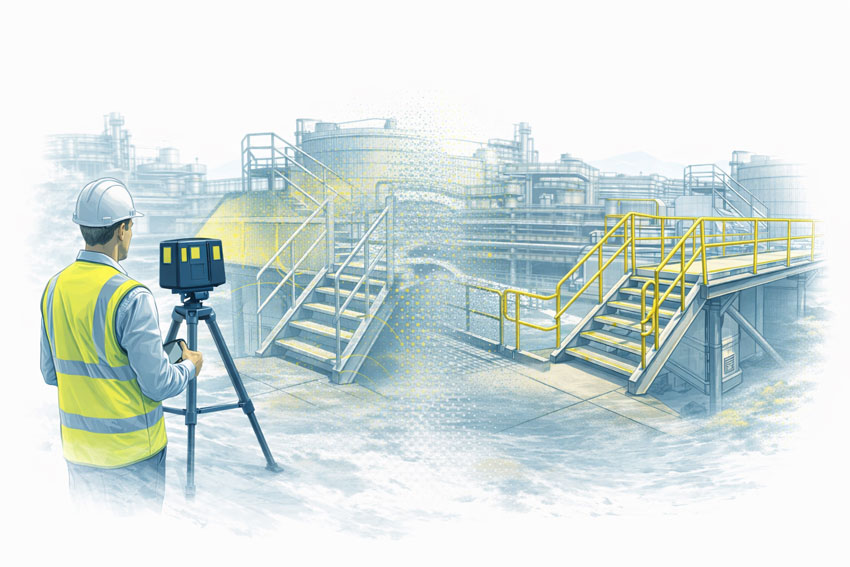
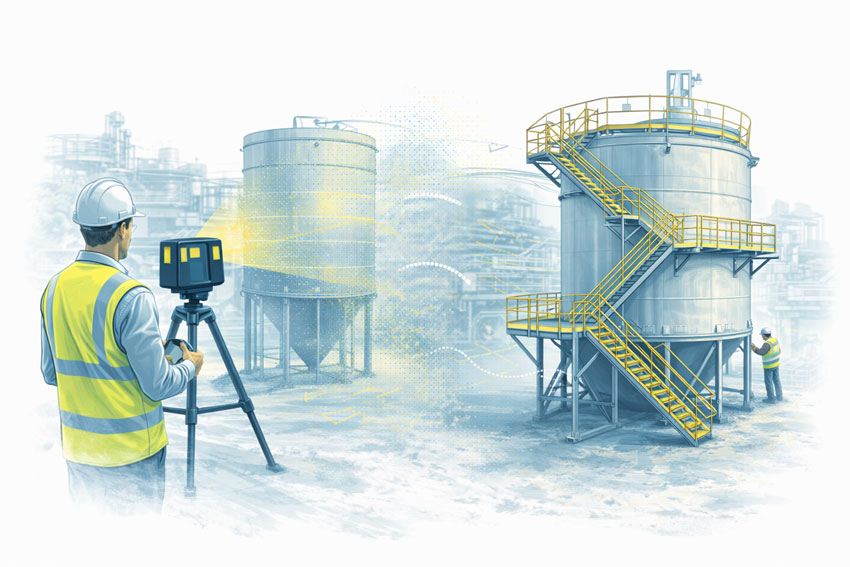
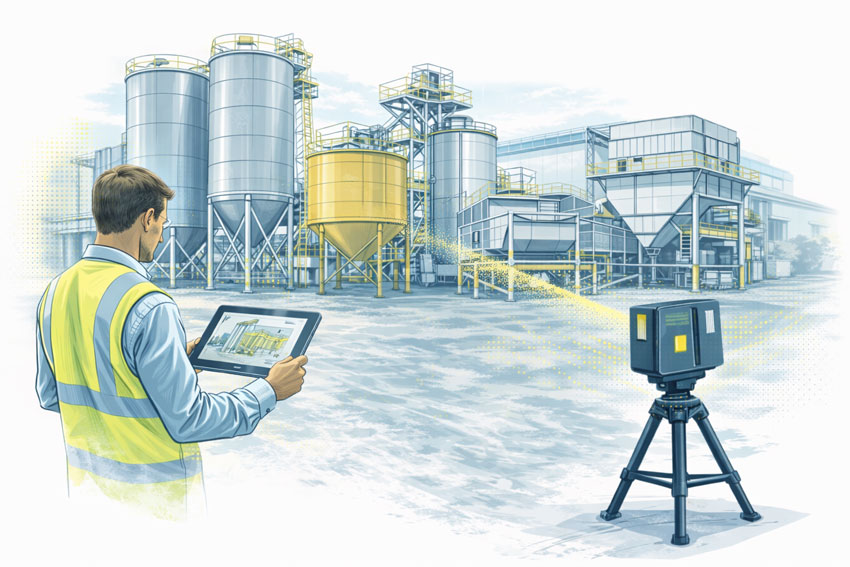
Illustrated scene showing a 3D laser scanner capturing an industrial plant while engineers observe and review data, highlighting how scanning prevents costly shutdown delays.
3D LiDAR scanning and 3D modelling service button โ€” laser scanner capturing a point cloud for engineering and CAD modelling
Mechanical engineering services

3D Laser Scanning: Seeing the Plant as It Really Is

Thatโ€™s where 3D laser scanning and LiDAR technology change the game. Using a FARO or similar high-accuracy scanner, Hamilton By Design captures millions of data points in a matter of minutes โ€” creating a precise digital replica of your plant or structure.
This point cloud model forms the foundation for all design work. Every pipe, beam, and bracket is located exactly where it exists in the real world, not where an old drawing says it should be.

From Scan to SolidWorks: Accurate Models, Confident Designs

Once the scan is complete, the data is reverse-modelled into SolidWorks or similar 3D design environments.
This means upgrades, chutes, handrails, and structural supports can be designed within the scanned environment โ€” guaranteeing they fit perfectly on installation day.
Our clients use this workflow to plan shutdowns with confidence, knowing that every fabricated part will bolt straight in.

Eliminating Fit-Up Errors and Rework

Traditional upgrade projects rely on tape measures, rough sketches, or outdated general arrangement drawings. Even a 10 mm error can cause weeks of rework once site access is restricted.
With 3D scanning, those errors disappear.
Before fabrication begins, engineers can check for:

  • Clashes and interferences between new and existing plant structures.
  • Clearances for maintenance and access.
  • Alignment with conveyors, supports, and existing chutes.

That level of insight is impossible with 2D drawings alone.

Shorter Shutdowns, Safer Teams

Fewer surprises mean faster, safer installations.
When every component is designed and verified within the scanned model, shutdown crews spend less time cutting, grinding, or reworking in the field.
Thatโ€™s not only a productivity win, itโ€™s a safety win โ€” fewer sparks, less manual handling, and minimal hot work in confined spaces.

Applications Across Mining and Processing

Hamilton By Designโ€™s scanning and modelling process is trusted across the Bowen Basin, Surat Basin, Hunter Valley, and Central West NSW.
Typical projects include:

  • CHPP upgrades โ€” chute replacements, diverter modifications, and screen structure changes.
  • Conveyor realignments โ€” ensuring belt runs are perfectly centred before shutdown.
  • Pipework and pump station retrofits โ€” avoiding rework when tie-ins occur.
  • Structural verification โ€” validating as-built conditions before new platforms or walkways are installed.
FARO 3D laser scanner set up on a tripod capturing an industrial plant for LiDAR scanning and digital modelling, with Hamilton By Design branding in the corner.

Real-World ROI

Clients routinely report saving days of downtime and thousands in rework costs by scanning before fabrication.
When you consider that a typical CHPP shutdown might cost $20,000โ€“$50,000 per hour in lost production, the return on investment is obvious.
A few hours spent scanning can mean days of avoided delay.

Stop Guessing, Start Scanning

If your next shutdown involves tight spaces, limited access, or unknown conditions โ€” donโ€™t rely on old drawings or assumptions.
Hamilton By Design provides LiDAR scanning, point-cloud modelling, and SolidWorks-based mechanical design to ensure your upgrades install exactly as intended.

๐Ÿ‘‰ Book a site scan before your next shutdown.
Visit www.hamiltonbydesign.com.au or contact us to discuss your upcoming project.

3D CAD Modelling | 3D Scanning

Hamilton By Design logo displayed on a blue tilted rectangle with a grey gradient background

Chute Design

Mechanical Engineering | Structural Engineering

Our clients

Name
Would you like us to arrange a phone consultation for you?
Address

Integrating 3D Scanning and Mechanical Design for Safer, Faster Upgrades in Coal Wash Plants

Precision Without the Guesswork

Upgrading or maintaining a coal wash plant has always been a challenge โ€” tight shutdown windows, complex layouts, and the need for perfect fit-ups between new and existing components. Traditional measurement methods, like tape measures and manual sketches, are often impossible in restricted or hazardous areas.

Thatโ€™s where 3D scanning and mechanical engineering come together. At Hamilton By Design, we combine precision laser scanning, intelligent 3D modelling, and practical mechanical design to deliver risk-free upgrades โ€” ensuring every component fits right the first time.

Infographic showing how 3D scanning and 3D modelling feed into mechanical design for safer, faster upgrades at a coal wash plant, with icons representing scanning, modelling, and engineering drawings

3D LiDAR scanning and 3D modelling service button โ€” laser scanner capturing a point cloud for engineering and CAD modelling
Mechanical engineering services

When Accuracy Matters Most

Coal wash plants are intricate systems. From cyclones, screens, and diverter chutes to pumps, piping, and structures, every part interacts under tight tolerances. A small misalignment can lead to vibration, spillage, or shutdown delays.

Our 3D scanning process captures millions of spatial data points, creating a detailed digital twin of the existing plant. This allows us to model upgrades, design replacement components, and simulate fit-up โ€” all before fabrication begins.

In many cases, scanning replaces the need to physically measure equipment. For example, in confined or high-risk spaces where a tape measure simply canโ€™t reach, scanning provides complete, line-of-sight geometry with millimetre accuracy.

Recently, our team scanned a diverter chute that had been incorrectly installed. The resulting model revealed that the chute had been fitted in the wrong orientation โ€” explaining why it wasnโ€™t sealing properly. This insight helped our client avoid further downtime and costly rework.


Combining Engineering Experience with Digital Precision

Hamilton By Design provides a full suite of mechanical engineering services tailored to the mining industry, including:

  • 3D Scanning & Point Cloud Capture โ€“ detailed mapping of existing equipment and structures
  • 3D Modelling & Reverse Engineering โ€“ accurate, editable digital models
  • Mechanical Design & Structural Replacement โ€“ like-for-like component upgrades
  • Piping Routes & Spool Fabrication โ€“ optimised pipe design and layout
  • Fabrication & Component Drawings โ€“ compliant with Australian Standards and client templates

Our engineers work across SolidWorks, AutoCAD Plant 3D, Revit, and 3D Experience platforms โ€” integrating point cloud data directly into the design workflow. This means fewer site visits, fewer surprises, and significantly less rework once fabrication begins.


From Drawings to Digital Models

Weโ€™ve evolved beyond traditional 2D general arrangement drawings. Instead, we provide interactive 3D models and e-drawings that allow clients, fabricators, and site teams to visualise how upgrades will fit within the plant.

Our reverse cloud modelling process inserts 3D designs directly into the scanned environment. This enables engineers and site teams to measure potential interferences, check clearances, and validate installation methods โ€” long before shutdowns begin.

Illustrated workflow showing how 2D GA drawings and scanned environments are turned into 3D digital models through reverse cloud modelling and eDrawings, demonstrating confidence in fabrication fit for mining and industrial equipment.

The result = Confidence.
Every pipe spool, chute, and bracket is designed to fit โ€” without compromise.


Supporting Contractors and Plant Operators

We partner with:

  • Mining companies operating coal wash plants
  • Fabricators and contractors supplying mining equipment
  • Maintenance providers planning plant shutdowns

Their biggest challenge is finding people who design for fit and function โ€” not just form. Not all CAD or point cloud software is equal, and not every designer understands the realities of on-site installation. Thatโ€™s where Hamilton By Design stands apart.

We bring hands-on mechanical trade experience, engineering design expertise, and digital technology together โ€” helping your team deliver upgrades that work, first time.


Built to Australian Standards

All design and drawing deliverables are completed in accordance with Australian Standards, ensuring compliance, safety, and interoperability with existing documentation.

We can also supply fabrication drawings on client-specific templates, maintaining intellectual property (IP) requirements and formatting standards.


Servicing Australiaโ€™s Key Mining Regions

Hamilton By Design proudly supports coal wash plant upgrades and mechanical design projects across Australiaโ€™s leading coal regions, including:

  • Bowen Basin
  • Surat Basin
  • Hunter Valley
  • Newcastle
  • Central Coast
  • Western and Central NSW coalfields

Our local experience ensures that we understand the logistical, operational, and environmental challenges unique to each region โ€” helping projects stay compliant, efficient, and on schedule.


Engineering-Grade LiDAR Scanning title graphic featuring bold white text on a blue rounded rectangle background.
Scan to CAD Sydney โ€“ converting laser scan data into accurate 3D CAD models
Mechanical engineering services

Why Choose Hamilton By Design?

  • Reduced Downtime: Accurate pre-shutdown planning through digital models.
  • Improved Safety: Less manual measuring in hazardous or confined areas.
  • Guaranteed Fit-Up: Fabrication drawings verified against real-world geometry.
  • Faster Turnaround: Streamlined scanning-to-design-to-fabrication workflow.
  • Proven Experience: Over two decades in mechanical engineering and plant design.

Our mission is simple โ€” to take the risk out of upgrades by combining engineering insight with digital accuracy.


Quote

โ€œPrecision scanning and mechanical design โ€” taking the risk out of plant upgrades.โ€


Letโ€™s Make Your Next Upgrade Risk-Free

If your next shutdown involves mechanical upgrades, pipework replacement, or structural modifications, talk to Hamilton By Design.

We can help you visualise, plan, and execute upgrades with confidence โ€” reducing downtime, eliminating measurement errors, and delivering safer outcomes for your team.

info@hamiltonbydesign.com.au
www.hamiltonbydesign.com.au

Mechanical Drafting | Structural Drafting

3D CAD Modelling | 3D Scanning

Chute Design

Our clients:

Name
Would you like us to arrange a phone consultation for you?
Address