

Mechanical Engineering Lift Sydney: Why Standards Like AS 4991 Matter

Safety and Precision in Mechanical Engineering Lifts

In the fast-paced world of Sydney construction and infrastructure, precision lifting is an everyday necessity. From hoisting prefabricated modules on high-rise towers to positioning steel frameworks and heavy plant components, each lift depends on one critical factor โ€” the integrity of the lifting device.

A mechanical engineering lift is more than just machinery; itโ€™s the result of careful design, analysis, and compliance with national safety standards. The Australian Standard AS 4991: Lifting Devices provides the engineering framework to ensure that every lifting beam, clamp, and spreader frame is designed, tested, and certified for safe performance.

In the dynamic environment of Sydneyโ€™s construction and manufacturing sectors, adhering to AS 4991 is not only a compliance issue โ€” itโ€™s essential to safety, reliability, and professional reputation.

Illustrated infographic explaining AS 4991 mechanically engineered lifting devices, showing engineering design steps, safe lifting practices, compliance outcomes, and non-compliance risks, with Sydney landmarks in the background

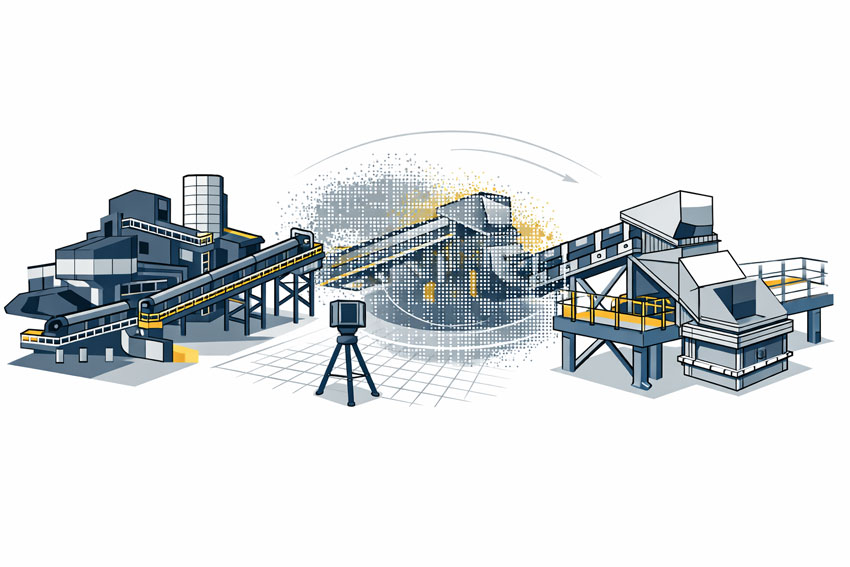
3D LiDAR scanning and 3D modelling service button โ€” laser scanner capturing a point cloud for engineering and CAD modelling
Mechanical engineering services

What AS 4991 Means for Mechanical Engineering in Sydney

AS 4991: Lifting Devices is the Australian benchmark for the design, manufacture, proof testing, and maintenance of all mechanically engineered lifting attachments used with cranes and hoists.

It covers:

  • Design verification by qualified engineers
  • Proof load testing (typically 1.5 times the Working Load Limit)
  • Identification markings such as WLL, serial number, and manufacture date
  • Regular inspection and maintenance schedules
  • Documented certification and traceability

For Sydney-based mechanical engineering projects โ€” from Parramattaโ€™s commercial developments to the infrastructure of the Eastern Suburbs โ€” these requirements ensure every lift is carried out with confidence and safety.


The Role of Mechanical Engineers in Safe Lifting

Mechanical engineers play a vital role in ensuring every lifting device performs predictably under real-world conditions. Each lifting beam, frame, or clamp must be:

  • Designed for static and dynamic loading
  • Resistant to fatigue, buckling, and corrosion
  • Built from materials tested for strength and durability
  • Verified through engineering analysis and proof testing

By applying AS 4991, mechanical engineers in Sydney create lifting devices that not only meet technical standards but also withstand the operational demands of construction, mining, and industrial settings across New South Wales.


Why Non-Compliance is Never Worth the Risk

Sydneyโ€™s worksites are under strict safety scrutiny, and incidents involving lifting equipment failures have resulted in serious injuries, fatalities, and prosecutions.

Examples from across Australia include:

  • Unmarked or uncertified lifting beams that failed under load due to poor design.
  • Vacuum lifters that detached unexpectedly after seals deteriorated from lack of inspection.
  • Improvised lifting points on machinery leading to crush injuries and WHS enforcement actions.

These events share a common cause: failure to meet the design, inspection, and documentation requirements of AS 4991.

For any mechanical engineering lift in Sydney, non-compliance risks not just equipment damage but also:

  • Work Health and Safety (WHS) prosecutions
  • Civil negligence claims
  • Loss of accreditation and contracts
  • Damage to professional reputation

Compliance as a Legal and Professional Obligation

While AS 4991 is not legislation, it defines the expected standard of care under Australiaโ€™s WHS laws. Regulators such as SafeWork NSW use compliance with standards like AS 4991 as evidence of due diligence.

For mechanical engineers, fabricators, and construction managers, compliance means:

  • Designs verified by competent engineers
  • Devices tested and certified to meet load requirements
  • Inspection records that prove ongoing safety
  • Training to ensure operators understand correct usage

In Sydneyโ€™s competitive engineering market, adherence to AS 4991 isnโ€™t just about avoiding penalties โ€” itโ€™s about demonstrating leadership in professional safety.


Building a Culture of Inspection and Traceability

A key part of AS 4991 is documentation. Each lifting device should have a design verification report, proof load certificate, and inspection record.
This traceability ensures that every lift on a Sydney site can be traced back to certified engineering.

Companies should maintain:

  • A register of lifting devices with serial numbers and inspection dates
  • Clear tagging systems for quick identification
  • Routine re-certification for high-use environments
  • Operator awareness training on compliance indicators

These processes turn safety standards into practical habits that protect workers and ensure smooth site operations.


Mechanical Engineering Lift Sydney: Innovation Meets Safety

Sydney is a hub of engineering innovation, with advanced tools like 3D scanning, LiDAR, and Finite Element Analysis (FEA) enhancing how lifting devices are designed and validated.

At Hamilton By Design, our mechanical engineers use these technologies to create custom lifting systems for complex sites across Sydney โ€” from tight urban projects in Chatswood and Parramatta to industrial installations in the Inner West.

Yet, even with the latest modelling tools, every design is checked against AS 4991 to guarantee that each lift meets both engineering and safety expectations.


Conclusion: Lifting Sydney Safely

In mechanical engineering, safety begins long before the crane hook rises. It starts with standards โ€” and in Australia, AS 4991 is the foundation.

For every mechanical engineering lift in Sydney, compliance ensures more than safety: it provides reliability, traceability, and peace of mind. By following the standard, engineers not only protect lives but also elevate the quality and professionalism of Sydneyโ€™s construction and manufacturing industries.

At Hamilton By Design, our commitment is simple: lift Sydney safely, lift with engineering excellence, and lift to the standard โ€” AS 4991.


Hamilton By Design logo displayed on a blue tilted rectangle with a grey gradient background

Related Sydney Services

Hamilton By Design provides engineering-led 3D scanning, LiDAR scanning, mechanical engineering and digital engineering services throughout Sydney and Greater Sydney.

Explore our related Sydney services:


  • 3D Scanning Sydney โ€“ Engineering-grade terrestrial laser scanning, as-built surveys and point cloud capture for industrial, infrastructure and commercial projects.
  • Reality Capture Sydney โ€“ High-accuracy reality capture, digital twins, asset documentation and engineering-grade site verification.
  • Scan to CAD Sydney โ€“ Convert point cloud data into AutoCAD, SolidWorks, Inventor and other engineering-ready CAD deliverables.
  • Point Cloud Modelling Sydney โ€“ Engineering-grade point cloud processing, clash detection, as-built verification and 3D modelling.
  • Mechanical Engineering Sydney โ€“ Mechanical design, plant upgrades, materials handling systems, conveyors, chutes, platforms and engineering support.
  • Structural Drafting Sydney โ€“ Structural steel drafting, fabrication drawings, GA drawings, workshop detailing and as-built documentation.

Hamilton By Design supports projects throughout Sydney CBD, Parramatta, Liverpool, Penrith, Blacktown, Chatswood, Alexandria, Mascot, Newcastle and the Central Coast.


Our clients:

Name
Would you like us to arrange a phone consultation for you?
Address
Blue banner graphic displaying the text "Point Cloud to CAD - Australia" in large white lettering, representing point cloud processing, scan-to-CAD conversion and digital engineering services across Australia.
Blue banner graphic displaying the text "Scan to CAD Sydney" in large white lettering, representing engineering-led point cloud to CAD conversion, LiDAR scanning and digital engineering services in Sydney.
Blue banner graphic displaying the text "Reality Capture Sydney - CBD" in large white lettering, representing engineering-led reality capture, LiDAR scanning and digital engineering services within Sydney CBD commercial buildings and infrastructure.

NSW Central Coast

The Unique Character of the NSW Central Coast

The Central Coast of New South Wales is a region defined by balance โ€” where coastal living meets industrial progress, and where families, businesses, and innovation all thrive together. Perfectly positioned between Sydney and Newcastle, the Central Coast offers the advantages of urban connectivity without sacrificing the relaxed pace and natural beauty of a regional lifestyle.


Composite image of three scenic coastal landscapes from the NSW Central Coast, with the text โ€˜NSW Central Coast โ€“ A Great Place for Businessโ€™ displayed below

A Great Place to Raise a Family

The Central Coast is widely recognised as one of Australiaโ€™s most liveable regions. With its pristine beaches, lakes, and bushland, it provides an exceptional environment for families seeking space, safety, and community.
The area features quality schools, TAFE NSW campuses, and the University of Newcastleโ€™s Ourimbah campus โ€” offering pathways from education to skilled employment close to home. Local parks, sports clubs, and community centres strengthen neighbourhood connections, while the mild coastal climate supports year-round outdoor living.

Families enjoy affordable housing, short commute times, and access to both Sydney and Newcastle via the M1 Pacific Motorway and rail network. This lifestyle balance makes the Central Coast a region where professionals can build meaningful careers while enjoying family life in a welcoming, coastal community.


3D LiDAR scanning services on the Central Coast providing engineering-grade laser scanning, point cloud capture, scan-to-CAD modelling and industrial reality capture for infrastructure and industrial projects.
Drafting services on the Central Coast providing engineering drawings, fabrication detailing, as-built documentation, reverse engineering and CAD drafting for industrial and infrastructure projects.
Mechanical engineering services on the Central Coast providing industrial design, plant inspections, pump calculations, reverse engineering and engineering support for manufacturing, infrastructure and heavy industry projects.

A Thriving Region for Business and Industry

Beyond its lifestyle appeal, the Central Coast has evolved into one of NSWโ€™s most active regional economies.
Centred around Wyong, Tuggerah, Somersby, and West Gosford, the regionโ€™s industrial estates host a diverse range of businesses in manufacturing, logistics, food processing, engineering, and advanced fabrication.

Infrastructure investment continues to strengthen the local economy, with upgrades to road, rail, and utilities improving connectivity and efficiency. This makes the region an attractive base for both established firms and growing enterprises.

For companies involved in mechanical engineering, fabrication, and industrial design, the Central Coast provides ready access to skilled tradespeople, degree-qualified engineers, and specialised suppliers. The strong network of local industries encourages collaboration, innovation, and shared growth.


Engineering and Innovation on the Central Coast

Mechanical engineering plays a vital role in the regionโ€™s industrial success.
Local firms design and build systems for manufacturing, water management, food processing, and construction โ€” translating mechanical calculations and CAD drawings into reliable, real-world solutions.

Mechanical engineers on the Central Coast contribute to:

  • The design of platforms, frames, and lifting systems.
  • Efficiency upgrades in manufacturing and packaging plants.
  • Water treatment and stormwater infrastructure.
  • Automation and materials handling systems.

These services support not only local companies but also council and state infrastructure projects, helping the region grow sustainably while maintaining technical excellence.


Strong Community, Strong Opportunity

What makes the Central Coast unique is its sense of community. Businesses here operate in a collaborative environment where partnerships often extend beyond contracts โ€” where reputation, reliability, and relationships truly matter.
The Central Coast Council, Regional Development Australia, and Central Coast Industry Connect provide active support to local enterprises, fostering innovation and sustainable development.

With an expanding population of more than 340,000 people, demand for skilled services, reliable infrastructure, and technical design continues to grow. This creates consistent opportunities for engineering firms to contribute to the regionโ€™s progress.


A Balanced Future

The Central Coast stands out as a region where family life and business success go hand in hand.
It offers the resources of a major industrial hub, the natural appeal of a coastal community, and the connectivity of a key transport corridor. For companies and professionals in mechanical engineering, it provides the ideal setting to live, work, and build for the future โ€” combining technical innovation with quality of life.

Mechanical Engineering | Structural Engineering

Hamilton By Design logo displayed on a blue tilted rectangle with a grey gradient background

Mechanical Drafting | Structural Drafting

3D CAD Modelling | 3D Scanning

3D LiDAR Scanning Hunter & Newcastle banner with white text on a blue background promoting engineering-grade laser scanning services for industrial, mining and infrastructure projects across the Hunter Valley and Newcastle region.
Mechanical Engineering Hunter & Newcastle banner promoting mechanical engineering services for mining, industrial plants, power generation, manufacturing and heavy industry throughout the Hunter Valley and Newcastle region.
Structural Drafting Hunter & Newcastle banner promoting structural drafting services for mining, industrial plants, power generation, manufacturing and infrastructure projects across the Hunter Valley and Newcastle region.

Our clients:

Name
Would you like us to arrange a phone consultation for you?
Address

Mechanical Engineers in Wyong

Innovative Design and Engineering Solutions

At Hamilton By Design, we are a team of degree-qualified mechanical engineers in Wyong, providing expert design, analysis, and build services for mechanical systems across the Central Coast and Hunter regions. We specialise in engineering design, mechanical systems integration, and prototype development โ€” not car repair or automotive servicing.

Our goal is simple: to design and deliver engineered systems that perform efficiently, safely, and reliably under real operating conditions.


Your Local Mechanical Engineering Specialists

Being locally based in Wyong allows us to deliver responsive, practical engineering solutions that suit regional industries. We understand the Central Coastโ€™s industrial landscape โ€” from manufacturing to infrastructure โ€” and provide mechanical engineering support tailored to each clientโ€™s specific operational and compliance needs.

Our services include:

  • Mechanical design and system modelling
  • 3D CAD drafting, assemblies, and technical documentation
  • Finite Element Analysis (FEA) and performance simulation
  • Prototype design, testing, and system optimisation
  • Fabrication support and workshop documentation
  • Process improvement and energy efficiency solutions
  • Structural-mechanical integration for equipment and machinery

Whether itโ€™s a custom mechanical assembly, plant upgrade, or new industrial installation, our engineers combine practical trade awareness with solid analytical expertise to ensure every solution works in the real world.


Why Businesses in Wyong Choose Us

Choosing a local mechanical engineering company in Wyong means partnering with professionals who know local suppliers, fabrication standards, and site conditions. We bring the precision of professional engineering to projects of all sizes while remaining approachable and cost-effective.

Our approach ensures each design is:

  • Safe: Compliant with Australian Standards and industry codes
  • Efficient: Engineered for performance and energy conservation
  • Maintainable: Designed with accessibility and lifecycle costs in mind
  • Economical: Delivering long-term value for the client

From the first sketch to the final bolt, our work reflects engineering discipline, accuracy, and accountability.


Our Engineering Process

Every project follows a structured, documented workflow that ensures consistency and quality:

  1. Concept and Feasibility โ€“ We define project scope, functional requirements, and design objectives through collaboration with clients and stakeholders.
  2. Design and Simulation โ€“ Using modern CAD platforms and FEA tools, we model real-world forces, stresses, and flows to optimise performance and safety.
  3. Verification and Prototyping โ€“ Our team validates designs with prototypes, testing, or detailed fabrication drawings.
  4. Implementation Support โ€“ We assist with workshop drawings, fabrication coordination, and commissioning.
  5. Lifecycle and Maintenance Review โ€“ Our post-installation support ensures long-term reliability and efficiency.

This process ensures traceability, compliance, and confidence at every stage of delivery.


Snapshot: Local Industries and Organisations We Support

Our experience extends across a wide range of local companies, manufacturers, and government organisations throughout Wyong and the Central Coast.

Here are some examples of the types of organisations we work with and the engineering value we bring:

Industrial and Manufacturing Clients

  • Donaldson Australasia (North Wyong) โ€“ A leading industrial filtration manufacturer. Our expertise supports the design and integration of mechanical handling, test rigs, and equipment frames for production systems.
  • Plateau Food Distributors (Wyong) โ€“ Food processing and cold storage facilities often rely on mechanical systems for refrigeration, materials handling, and ventilation. We assist with system design, structural support frames, and energy optimisation.
  • Fabrication and Alloy Manufacturers such as Manufactured Alloy Xtras โ€“ We provide structural design, stress analysis, and welding procedure documentation for aluminium and steel assemblies.
  • General Manufacturers and Industrial Workshops in the Wyongโ€“Tuggerah area โ€“ We support local businesses with prototype development, mechanical jigs, and tooling systems designed to Australian Standards.

Government and Public Infrastructure

  • Central Coast Council (formerly Wyong Shire Council) โ€“ Responsible for infrastructure, public buildings, and community assets. Our services include mechanical design for pumping stations, HVAC systems, and public facility upgrades.
  • NSW Infrastructure Projects (e.g. Pacific Highway Upgrade) โ€“ Large-scale transport and civil projects often require custom mechanical and structural integration. We assist contractors and consultants with system modelling and compliance documentation.
  • TAFE NSW โ€“ Wyong Campus โ€“ Facilities such as laboratories, animal care centres, and trade workshops require mechanical system design for ventilation, process equipment, and utilities.
  • Water and Wastewater Services โ€“ We provide engineering input on pumping systems, pipework layouts, and mechanical components for water infrastructure projects.

These partnerships reflect our capability to operate across both private and public sectors, supporting projects that range from individual components to fully integrated mechanical systems.


Our Capabilities and Technologies

Our engineers use industry-leading tools and software to ensure precision and compliance:
  • 3D CAD Modelling (SolidWorks, Autodesk Inventor, Fusion 360)
  • Finite Element Analysis (FEA) for stress and load validation
  • Computational Fluid Dynamics (CFD) for flow and heat transfer
  • P&ID and Mechanical Schematics for complex systems
  • Project Documentation including Bill of Materials (BOMs) and fabrication drawings

By combining digital design with engineering expertise, we can quickly move from concept to prototype, minimising rework and ensuring the design meets its operational goals.


Illustrated mechanical engineer drafting technical gear drawings at a workstation with the Sydney Opera House and Harbour Bridge in the background, alongside the Hamilton By Design logo

Commitment to Engineering Excellence

Every project we deliver reflects our core principles:

  • Technical Integrity โ€“ Our engineers work to the highest professional standards.
  • Innovation โ€“ We continuously refine designs using simulation, prototyping, and feedback.
  • Safety and Compliance โ€“ We align with AS/NZS codes and WHS regulations in every design.
  • Sustainability โ€“ We promote energy-efficient design and reduced material waste through smart engineering.

Our clients appreciate that we think like engineers and communicate like partners. We bring clarity, technical rigour, and creativity to every project.


Contact Your Local Mechanical Engineers in Wyong
If youโ€™re searching for mechanical engineers in Wyong who can design, analyse, and build high-performance mechanical systems, Hamilton By Design is your trusted local partner.

We are not automotive mechanics โ€” we are qualified mechanical engineers who design and deliver engineered solutions that move industries forward.

Hamilton By Design logo displayed on a blue tilted rectangle with a grey gradient background

Phone: 047 700 2249
Email: info@hamiltonbydesign.com.au
Location: Wyong, NSW

Letโ€™s talk about your next project and discover how professional mechanical design can improve reliability, efficiency, and safety in your operations.

Mechanical Engineering | Structural Engineering

3D LiDAR scanning services on the Central Coast providing engineering-grade laser scanning, point cloud capture, scan-to-CAD modelling and industrial reality capture for infrastructure and industrial projects.
Drafting services on the Central Coast providing engineering drawings, fabrication detailing, as-built documentation, reverse engineering and CAD drafting for industrial and infrastructure projects.
Mechanical engineering services on the Central Coast providing industrial design, plant inspections, pump calculations, reverse engineering and engineering support for manufacturing, infrastructure and heavy industry projects.

Mechanical Drafting | Structural Drafting

3D CAD Modelling | 3D Scanning

Chute Design

SolidWorks Contractors in Australia

Hamilton By Design โ€“ Blog

Custom Designed – Shipping Containers

Coal Chute Design

Mechanical Engineers in Sydney

Engineering Design & Build Services | Hamilton By Design

Our clients:


Engineering Confidence: Using FEA to Validate Real-World Designs

Mechanical engineering has always been a balance between creativity and certainty.
Every bracket, frame, chute, or structural support we design must perform under real loads, temperatures, and conditions โ€” often in environments where failure simply isnโ€™t an option.

Thatโ€™s where Finite Element Analysis (FEA) earns its place as one of the most powerful tools in modern design. It allows engineers to move from assumption to verification โ€” transforming the way we predict, test, and optimise mechanical systems.


What Is FEA โ€” and Why It Matters

FEA divides complex geometry into a network of small, interconnected elements.
By solving the physical equations that govern stress, strain, and displacement across those elements, engineers can predict how a structure behaves under load, vibration, or temperature.

Instead of relying solely on hand calculations or over-built safety factors, FEA provides quantitative insight into performance โ€” letting us see where structures flex, where stress concentrates, and how design choices affect real-world outcomes.

In mechanical engineering, that means fewer prototypes, lower material costs, and far greater design confidence.


1. Static Analysis โ€” The Foundation of Structural Validation

Static linear analysis is the foundation of most FEA work.
It evaluates how a structure responds to steady, time-independent loads such as gravity, pressure, or fixed equipment weight.

Through static analysis, engineers can:

  • Visualise stress and displacement distribution across a part or assembly.
  • Evaluate safety factors under different loading conditions.
  • Check stiffness and material utilisation before fabrication.
  • Identify weak points or stress concentrations early in design.

This baseline validation is the difference between a design that โ€œshouldโ€ work and one that will.


2. Assembly-Level Simulation โ€” Seeing the Whole System

Few machines fail because a single part breaks.
Most failures happen when components interact under load โ€” bolts shear, brackets twist, or welds experience unplanned tension.

FEA allows engineers to simulate entire assemblies, including:

  • Contact between parts (bonded, sliding, or frictional).
  • Realistic boundary conditions such as bearings, springs, or pinned joints.
  • The influence of welds, fasteners, or gaskets on overall performance.

This system-level view helps mechanical engineers design not only for strength, but also for compatibility and reliability across the full structure.


3. Mesh Control โ€” Accuracy Where It Counts

A simulation is only as good as its mesh.
By controlling element size and density, engineers can capture critical detail in stress-sensitive regions like fillets, bolt holes, and weld toes.

Modern FEA tools use adaptive meshing โ€” refining the model automatically in areas of high stress until the solution converges.
That means precise, efficient results without excessive computation time.


4. Thermal-Structural Interaction โ€” When Heat Becomes a Load

Many mechanical systems face thermal as well as mechanical challenges.
Whether itโ€™s ducting in a process plant or hoppers near heat sources, temperature gradients can cause expansion, distortion, or thermal stress.

FEA allows engineers to:

  • Model steady-state or transient heat transfer through solids.
  • Apply convection, radiation, or temperature boundary conditions.
  • Combine thermal and structural analyses to study thermal expansion and thermal fatigue.

Understanding how heat and load combine helps ensure equipment remains stable, safe, and accurate throughout its lifecycle.


5. Modal and Buckling Analysis โ€” Designing Against Instability

Some risks are invisible until theyโ€™re simulated.
Vibration and buckling are two of the most overlooked โ€” yet most common โ€” causes of structural failure.

Modal Analysis

Determines a structureโ€™s natural frequencies and mode shapes, helping designers avoid resonance with operating machinery, fans, or conveyors.

Buckling Analysis

Predicts the critical load at which slender members or thin-walled panels lose stability โ€” allowing engineers to reinforce and optimise designs early.

By identifying these limits before fabrication, engineers can prevent problems that are expensive and dangerous to discover on site.


Design Optimisation โ€” Smarter, Lighter, Stronger

Good design is rarely about adding material; itโ€™s about using it wisely.
FEA supports parametric and goal-based optimisation, enabling engineers to vary geometry, thickness, or material and automatically test multiple configurations.

You can set objectives such as:

  • Minimising weight while maintaining strength.
  • Reducing deflection under fixed loads.
  • Optimising gusset or flange size for stiffness.

This process of โ€œdigital lightweightingโ€ drives better performance and cost efficiency โ€” especially valuable in industries where both material and downtime are expensive.


7. Communication and Confidence

FEA isnโ€™t only a calculation tool โ€” itโ€™s a communication tool.
Colour-coded plots, animations, and automated reports make it easier to explain complex mechanical behaviour to project managers, clients, or certifying bodies.

Clear visuals turn stress distributions and displacement fields into a shared language โ€” helping stakeholders understand why certain design choices are made.


Real-World Applications Across Mechanical Engineering

ApplicationType of AnalysisKey Benefit
Chutes & HoppersStatic + BucklingConfirm wall thickness and frame design for structural load and vibration
Conveyor FramesModal + StaticAvoid resonance and ensure adequate stiffness
Pressure EquipmentThermal + StaticEvaluate thermal stress and hoop stress under load
Machine BracketsStatic + OptimisationReduce weight while maintaining rigidity
Platforms & GuardingBucklingValidate stability under safety loading
Welded Frames & SupportsStaticCheck deformation, stress, and weld performance

These examples show how FEA becomes an everyday design partner โ€” embedded in the workflow of mechanical engineers across manufacturing, resources, and infrastructure.


The Engineerโ€™s Advantage: Data Over Assumption

In traditional design, engineers often relied on prototypes and conservative safety factors.
Today, simulation delivers the same assurance โ€” without the waste.

By applying FEA early in the design cycle, mechanical engineers can:

  • Predict failure modes before they occur.
  • Shorten development time.
  • Reduce material usage.
  • Justify design decisions with quantitative proof.

FEA enables engineers to focus less on guesswork and more on innovation โ€” designing structures that are both efficient and dependable.


Engineering Integrity in Practice

At Hamilton By Design, we integrate FEA into every stage of mechanical design and development.
Itโ€™s how we ensure that every frame, chute, and mechanical system we deliver performs as intended โ€” safely, efficiently, and reliably.

We use FEA not just to find the limits of materials, but to push the boundaries of design quality โ€” delivering engineering solutions that last in the toughest industrial environments.

Design backed by data isnโ€™t a slogan โ€” itโ€™s how we engineer confidence.


Building a Culture of Verified Design

When FEA becomes part of everyday engineering culture, it changes how teams think.
Designers begin to see structures not just as drawings, but as living systems under real forces.

That shift builds trust โ€” between engineer and client, between concept and reality.
Itโ€™s what defines the future of mechanical design: informed, optimised, and proven before the first bolt is tightened.

3D LiDAR scanning and 3D modelling service button โ€” laser scanner capturing a point cloud for engineering and CAD modelling
Mechanical engineering services
Finite Element Analysis (FEA) engineering simulation button
Mechanical engineering services

TAFE Australia: How Owning the VET Space Could Transform Skills, GDP, and Housing

Australia is at an inflection point. For decades, weโ€™ve debated the skills shortage, the housing crisis, and the disconnect between education and industry. What if the solution wasnโ€™t three separate reforms โ€” but one bold move?

Imagine if TAFE became the sole provider of vocational education and training (VET), phasing out the patchwork of private colleges over five years. Then imagine that re-built national system being spun out as a listed or privately held company โ€” โ€œTAFE Australia Ltdโ€ โ€” with government oversight but commercial freedom.

Add one more layer: before any student (local or international) enters university, they complete a TAFE English bridging course to lift language, employability, and readiness.

It sounds ambitious. But the economic logic is powerful โ€” and the housing implications could be profound.


1. A Unified Skills Engine

Australia currently has over 4,000 registered training organisations (RTOs) โ€” most of them private. Quality varies wildly, completion rates hover around 55 %, and duplication wastes billions.

Consolidating all vocational training under a single national brand โ€” TAFE Australia โ€” would fix that fragmentation.
Over five years, TAFE would absorb or teach out private providers, modernise workshops, and scale capacity.

Once stable, corporatisation (either ASX-listing or private equity with a public charter) could inject capital for new campuses, digital delivery, and industry-specific facilities โ€” especially in construction, renewable energy, aged care, and advanced manufacturing.


2. Short-Term Pain, Long-Term Productivity

The transition wouldnโ€™t be painless. For the first two or three years:

  • Training capacity would dip as private RTOs wind down.
  • Labour shortages in construction might worsen temporarily.
  • Housing completions could fall 5โ€“10 %, keeping rents tight.

But once the new TAFE pipeline matures, the effects reverse dramatically.

By year 6 to 8, completions of apprentices and trade certificates could rise by 20โ€“30 %.
That translates into 10โ€“15 % more homes built each year โ€” roughly 30,000 extra dwellings โ€” easing vacancy rates and stabilising prices.


3. GDP: From Cost to Growth Driver

The macro picture is surprisingly strong.

HorizonEconomic effectApproximate GDP impact
Years 1โ€“3Transition costs, slower training outputโˆ’0.2 % to โˆ’0.4 % p.a.
Years 4โ€“8Faster housing build, higher productivity+0.5 % to +1.0 % by Year 8
Years 9โ€“12Mature skills base, advanced-industry output+1.5 % to +2.5 % above BAU

Public investment of A$10โ€“15 billion in the build-out is paid back through higher construction output, tax receipts, and exportable VET capacity.
Once corporatised, TAFE Australia could even return A$2โ€“4 billion annually to the budget through dividends, taxes, and reduced subsidies.


4. Housing Supply and Affordability

By the end of the decade, a steady flow of skilled tradies would lift completions from about 170,000 dwellings a year today to 200,000 plus.
More supply means:

  • Vacancies returning to ~2 % (healthy market level)
  • Rent growth slowing to CPI
  • Price-to-income ratios stabilising after years of runaway inflation

Itโ€™s the kind of structural fix that interest-rate tweaks can never deliver.


5. The English Bridging Effect

Requiring every university entrant to complete a TAFE English for Tertiary Readiness (ETR) course has two knock-on benefits:

  1. Quality & completion โ€” domestic and international students arrive better prepared, cutting first-year attrition by up to 5 percentage points.
  2. Housing stability โ€” international students spend their first months in purpose-built student housing (PBSA) or regional campuses instead of competing for scarce CBD rentals.

Itโ€™s a subtle policy lever that improves both education quality and urban housing balance.


6. Fiscal and Governance Model

After corporatisation:

  • Government retains a golden share to enforce price caps and regional-service obligations.
  • TAFE Australia Ltd operates like a regulated utility โ€” commercial, but mission-bound.
  • Public funding shifts from subsidies to outcome-based contracts and income-contingent loans.

The result: less budget drag, more private capital in education, and steady dividends from a profitable, skills-based enterprise.


7. Lessons from Abroad

  • Singaporeโ€™s ITE and Polytechnics show how centralised public training, partnered with industry, can achieve near-full employment for graduates.
  • Germany and Switzerlandโ€™s dual systems prove the value of strong employer alignment and national brand recognition.
  • New Zealandโ€™s Te Pลซkenga warns of transition risk: merging dozens of providers too quickly strains finances and morale. The key is staged rollout and clear accountability.

TAFE Australia could combine Singaporeโ€™s efficiency with Germanyโ€™s apprenticeship culture โ€” if the politics stay disciplined.


8. Risks Worth Managing

RiskMitigation
Temporary trade-skill shortageTransitional grants, accelerated trainer hiring, targeted skilled-migration visas
Fee inflation post-saleCPI-X price caps, HECS-style income-contingent loans
Regional access gapsMandatory campus coverage; cross-subsidy funding model
Bureaucratic inertiaIndependent transition authority; quarterly milestone reporting

9. Why It Matters

This reform links three national priorities:

  1. Skills sovereignty โ€” training Australians (and skilled migrants) for the industries that matter.
  2. Housing affordability โ€” fixing the bottleneck that keeps supply chronically short.
  3. Fiscal responsibility โ€” turning education from a cost centre into a productive asset.

In a single move, Australia could re-engineer its training ecosystem, supercharge GDP growth, and make housing attainable again.


10. The Bigger Picture

For fifty years, weโ€™ve talked about โ€œclosing the skills gapโ€ and โ€œfixing housing.โ€
But those arenโ€™t separate problems โ€” theyโ€™re two sides of the same system.
You canโ€™t build homes without skilled people, and you canโ€™t sustain skilled people without an education system that works.

TAFE Australia Ltd โ€” a single, world-class, commercially driven, publicly accountable provider โ€” could be the bridge between them.

And it might just be the reform that finally lets Australia build its own future again.

Mechanical Engineering | Structural Engineering

Mechanical Drafting | Structural Drafting

3D CAD Modelling | 3D Scanning

Chute Design

SolidWorks Contractors in Australia

Hamilton By Design โ€“ Blog

Custom Designed – Shipping Containers

Coal Chute Design

Mechanical Engineers in Sydney

3D LiDAR scanning and 3D modelling service button โ€” laser scanner capturing a point cloud for engineering and CAD modelling
Mechanical engineering services


Finite Element Analysis (FEA) engineering simulation button
Mechanical engineering services


3D CAD Modelling Australia service banner for Hamilton By Design


CHPP Engineering title graphic featuring bold white text reading "CHPP Engineering" centred on a blue rounded rectangle background.
Pipework Drafting title graphic featuring bold white text reading "Pipework Drafting" centred on a blue rounded rectangle background.
3D LiDAR Scanning for Engineering Projects title graphic featuring bold white text on a blue rounded rectangle background.


Finite Element Analysis (FEA) engineering simulation button
Structural drafting services button
Mechanical drafting services button


Australian Drafting logo featuring bold white text reading "Australian Drafting" centred on a blue rounded rectangle background.
Engineering Governance title graphic featuring bold white text reading "Engineering Governance" centred on a blue rounded rectangle background.
Engineering-Grade LiDAR Scanning title graphic featuring bold white text on a blue rounded rectangle background.

Opinion: What Cutting 50% of Australiaโ€™s Iron Ore Exports to China Would Really Mean


By Anthony Hamilton, Mechanical Engineer and Industry Analyst


Australiaโ€™s relationship with China has always been a balancing act between economic dependence and strategic independence. Nowhere is that tension clearer than in our trade of iron ore โ€” the mineral that built both our national budget and Chinaโ€™s skyline.

Imagine, then, a bold decision: Australia deliberately cuts its iron ore exports to China by half and pivots toward domestic manufacturing โ€” especially green steel and renewable-powered industry. What would that mean for our economy, our global influence, and our future as an industrial nation?

The answer is both disruptive and transformative.


The Shock: Short-Term Pain

Letโ€™s be clear: halving iron ore exports would jolt the economy.

Australia exported about 900 million tonnes of iron ore in 2024โ€“25, worth roughly A$160 billion, with China buying four-fifths of it. Slashing that volume by half would pull A$80โ€“90 billion out of export revenue almost overnight. Even if prices spiked 50% amid global shortages, our GDP would still take a hit of 2โ€“3% in the first years โ€” a deliberate, self-imposed economic slowdown.

Western Australia, which lives and breathes the ore trade, would feel it most: reduced royalties, idle capacity, and strained state budgets. Canberraโ€™s tax intake could drop by A$10โ€“15 billion per year in the early phase.

But these are short-term tremors โ€” not structural decline. The question is whether we can replace raw-ore exports with something better: value-added industrial activity on Australian soil.


The Transition: Turning Rocks into Revenue

If half of that diverted ore were converted into green steel, the economic story changes dramatically.
One tonne of steel is worth four to six times more than the same tonne of ore. Even modest domestic processing could create an A$100 billion green industry within a decade โ€” generating thousands of high-skill jobs across hydrogen, renewables, materials science, and engineering.

Projects in Whyalla, Gladstone, and the Pilbara already point the way. With the right investment โ€” perhaps A$60โ€“100 billion over ten years โ€” Australia could build the capacity to supply its own construction, defence, and transport sectors while exporting carbon-neutral steel to the world.

Thatโ€™s not deglobalisation. Itโ€™s smart industrialisation โ€” keeping the value chain at home instead of shipping our competitive advantage overseas.


The Payoff: Long-Term Strength

By 2035, the payoff could be substantial:

  • GDP grows larger and more balanced, driven by advanced manufacturing.
  • Australia becomes a reliable producer of green steel, battery materials, and hydrogen infrastructure.
  • Dependence on Chinese demand declines, while new trade with India, Japan, Korea, and Europe expands.

In this scenario, Australiaโ€™s GDP could be 2โ€“4% higher than the business-as-usual case โ€” smaller mining exports, but far greater industrial depth. Itโ€™s a shift from volume to value, from being the worldโ€™s quarry to being part of its workshop again.


The Risk: A Test of Political Will

Such a move isnโ€™t without risk. China would almost certainly retaliate โ€” delaying other imports, applying political pressure, and exploiting our internal divisions.
The mining lobby would fight hard to protect its margins. Politicians would face the same question every reformer does: why risk the comfortable present for an uncertain future?

Yet the uncomfortable truth is that comfort has bred complacency.
Australiaโ€™s prosperity is overly reliant on shipping low-value resources to one buyer. Thatโ€™s not economic freedom โ€” its dependency dressed as success.


The Opportunity: Building the Next Holden Moment

Half a century ago, Holden symbolised a confident, self-sufficient industrial Australia. Its closure marked the end of that era.
A green-steel renaissance could be the new Holden moment โ€” a chance to reconnect engineering, manufacturing, and national purpose. It would anchor new jobs, restore industrial pride, and ensure that Australia competes not on cost, but on competence.

Weโ€™d still dig things up โ€” but weโ€™d also make things again.


Conclusion: A Strategic Rebalance, Not an Economic Gamble

Cutting 50% of iron ore exports to China would be a strategic recalibration, not an act of economic self-harm. It would cost us in the short run, but it could redefine us in the long run โ€” from a resource economy to a resilient, innovation-driven nation.

For decades, Australiaโ€™s industrial conversation has ended with one refrain: โ€œWe canโ€™t afford to make things anymore.โ€
Perhaps the truth is the opposite.

We canโ€™t afford not to.


Mechanical Engineering | Structural Engineering

Mechanical Drafting | Structural Drafting

3D CAD Modelling | 3D Scanning

Chute Design

SolidWorks Contractors in Australia

Hamilton By Design โ€“ Blog

Custom Designed – Shipping Containers

Coal Chute Design

Mechanical Engineers in Sydney

3D LiDAR scanning and 3D modelling service button โ€” laser scanner capturing a point cloud for engineering and CAD modelling
Mechanical engineering services


Finite Element Analysis (FEA) engineering simulation button
Mechanical engineering services


3D CAD Modelling Australia service banner for Hamilton By Design


CHPP Engineering title graphic featuring bold white text reading "CHPP Engineering" centred on a blue rounded rectangle background.
Pipework Drafting title graphic featuring bold white text reading "Pipework Drafting" centred on a blue rounded rectangle background.
3D LiDAR Scanning for Engineering Projects title graphic featuring bold white text on a blue rounded rectangle background.


Finite Element Analysis (FEA) engineering simulation button
Structural drafting services button
Mechanical drafting services button


Australian Drafting logo featuring bold white text reading "Australian Drafting" centred on a blue rounded rectangle background.
Engineering Governance title graphic featuring bold white text reading "Engineering Governance" centred on a blue rounded rectangle background.
Engineering-Grade LiDAR Scanning title graphic featuring bold white text on a blue rounded rectangle background.