From Reality to Fabrication

From Reality to Fabrication: Engineering-Led 3D Modelling, Structural Verification and Build-Ready Documentation

In industrial and infrastructure projects, success is rarely determined by intent alone. It is determined by how accurately existing conditions are understood, how rigorously designs are validated, and how clearly fabrication information is communicated. At Hamilton By Design, we bridge the gap between site reality and fabrication by combining engineering-led 3D modelling, structural engineering, finite element analysis (FEA), and fabrication-ready documentation into a single, accountable workflow.

This integrated approach ensures that what is designed can be built, fits the first time, and performs as intended in service.

3D Modelling for Fabrication: Designing What Can Actually Be Built

3D modelling for fabrication is not simply about producing visually accurate geometry. It is about creating models that reflect real-world constraints, manufacturing tolerances, installation access, and structural behaviour. Hamilton By Design develops fabrication-grade 3D CAD models that are built around how components will be cut, welded, machined, lifted, and installed.

Our models are typically informed by site measurements, laser scanning, and as-built data to ensure alignment with existing structures and equipment. This is particularly critical in brownfield environments such as processing plants, material handling facilities, and industrial upgrades where assumptions based on legacy drawings are unreliable.

Each model is developed with downstream use in mind. Hole sizes, weld preparations, plate thicknesses, member sizes, and connection details are defined so fabricators can confidently transition from model to manufacture without reinterpretation or rework.

Structural Engineering Embedded in the Modelling Process

Structural engineering at Hamilton By Design is not a separate, downstream exercise. It is embedded directly within the 3D modelling process. Structural load paths, support conditions, connection behaviour, and serviceability requirements are considered as the model evolves, not after geometry is frozen.

This integrated method allows structural considerations to inform design decisions early, reducing late-stage redesigns and cost escalation. It also ensures compliance with relevant Australian Standards and industry-specific requirements, whether the project involves steel structures, plant support frames, access platforms, equipment foundations, or retrofit works.

By developing the structural model in parallel with the fabrication model, we maintain alignment between engineering intent and physical deliverables.

Finite Element Analysis: Verifying Performance, Not Guessing

Finite Element Analysis (FEA) plays a critical role in validating that a design will perform safely and efficiently under real operating conditions. Hamilton By Design applies FEA to assess stresses, deflections, load sharing, vibration response, and fatigue risk across a wide range of industrial applications.

FEA is particularly valuable where traditional hand calculations are insufficient or overly conservative. Complex geometries, dynamic loading, eccentric supports, impact forces, and non-uniform load distributions can all be assessed with greater confidence using simulation-based analysis.

Our FEA workflows are directly linked to the 3D CAD models used for fabrication. This ensures consistency between the analysed geometry and the manufactured outcome. Where analysis identifies areas of concern, design modifications are implemented directly in the model, creating a closed-loop engineering process that improves both safety and constructability.

As-Built Documentation: Capturing What Exists, Not What Was Assumed

Accurate as-built documentation is fundamental to effective engineering decision-making. In many facilities, original drawings are outdated, incomplete, or no longer representative of the installed condition. Hamilton By Design produces engineering-grade as-built documentation that reflects the true geometry and configuration of existing assets.

As-built documentation may include 3D models, general arrangement drawings, sectional views, and measured dimensions that form a reliable baseline for future upgrades, maintenance planning, and compliance assessments. This information reduces uncertainty, supports safer design decisions, and enables more efficient project planning.

For clients managing long-life assets, high-quality as-built data becomes a strategic resource rather than a one-off deliverable.

Fabrication Drawings That Reduce Risk on the Workshop Floor

Fabrication drawings are the point where engineering intent meets manufacturing reality. Poorly defined drawings lead to RFIs, delays, rework, and disputes. Hamilton By Design produces clear, unambiguous fabrication drawings that fabricators can trust.

Our drawings typically include detailed part drawings, assembly drawings, weld symbols, material specifications, tolerances, and notes aligned with the approved engineering model. Because these drawings are derived directly from fabrication-ready 3D models that have been structurally verified, inconsistencies between design and manufacture are minimised.

This approach supports faster fabrication turnaround, improved quality control, and smoother installation on site.

A Single, Accountable Engineering Workflow

One of the key advantages of Hamilton By Designโ€™s approach is single-source accountability. By delivering 3D modelling for fabrication, structural engineering, FEA, as-built documentation, and fabrication drawings within a unified workflow, we remove the handover gaps that often exist between consultants, designers, and fabricators.

Clients benefit from clearer communication, reduced coordination risk, and designs that are technically sound, buildable, and aligned with operational requirements. Fabricators benefit from models and drawings that reflect real conditions and engineering intent. Asset owners benefit from safer, more reliable outcomes delivered with fewer surprises.

Hamilton By Design logo displayed on a blue tilted rectangle with a grey gradient background
3D LiDAR scanning and 3D modelling service button โ€” laser scanner capturing a point cloud for engineering and CAD modelling
Mechanical engineering services

Engineering That Stands Up in the Real World

At Hamilton By Design, engineering is not about producing documents in isolation. It is about delivering outcomes that work in the real worldโ€”on site, in fabrication workshops, and over the life of an asset. By integrating 3D modelling for fabrication with structural engineering, finite element analysis, as-built documentation, and fabrication drawings, we provide a robust foundation for successful industrial projects.

This engineer-led, fabrication-focused approach ensures that designs are not only accurate on screen, but reliable, buildable, and fit for purpose in operation.

Our clients:


Name
Would you like us to arrange a phone consultation for you?
Address

3D CAD Modelling | 3D Scanning

Hamilton By Design

Finite Element Analysis (FEA) engineering simulation button
Mechanical engineering services

Structural Engineers

Structural Engineers for Industrial and Mining Projects

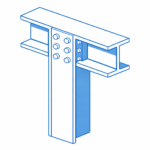
Structural steel I-beam bolted connection with column in isometric view.

Hamilton By Design provides structural engineering support for industrial facilities, mining operations, and heavy infrastructure across Australia. We work in complex, high-risk environments where accuracy matters โ€” brownfield sites, operating plants, shutdown windows, and projects that must be buildable the first time.

Our approach combines practical structural engineering with digital capture and modelling workflows to reduce uncertainty, minimise rework, and help projects move from site conditions to fabrication-ready outcomes with confidence.


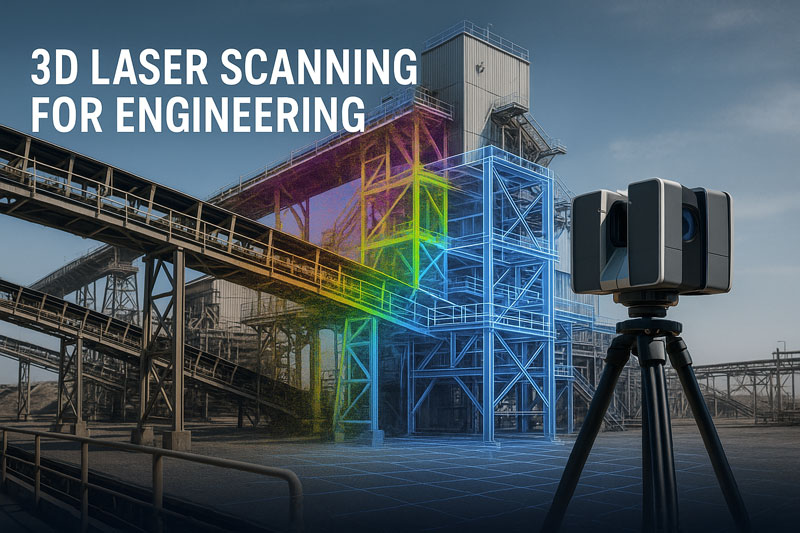
A 3D laser scanner on a tripod capturing an industrial plant structure, with a colourful point cloud and blue CAD wireframe overlay illustrating engineering-grade 3D laser scanning accuracy.

3D LiDAR scanning and 3D modelling service button โ€” laser scanner capturing a point cloud for engineering and CAD modelling
Mechanical engineering services

Structural Engineering Services

We support asset owners, EPCs, maintenance teams, and fabricators with structural engineering services including:

  • Structural design and upgrade packages for plant modifications, support steelwork, access platforms, and equipment foundations
  • Structural assessments and verification for existing assets, including fit-for-purpose checks and load capacity reviews
  • Brownfield integration and retrofit design, accounting for existing geometry, constraints, and constructability
  • Connection detailing and design intent, supporting practical fabrication and installation sequencing
  • Compliance-aligned engineering documentation, suitable for procurement, fabrication, and site installation
  • Engineering support for shutdowns, upgrades, and maintenance-driven scope where time and accuracy are critical

If you need broader capability beyond structural work, view our full service offering here:
https://www.hamiltonbydesign.com.au/engineering-services/


Where Structural Engineers Add Value in Industrial Sites

Industrial and mining environments create structural challenges that differ from greenfield construction. Common drivers include:

  • Uncertain existing conditions (missing drawings, undocumented changes, deformation over time)
  • High operational loads, vibration exposure, and fatigue risk
  • Space constraints and access limitations in operating plants
  • Safety and compliance obligations for access systems, platforms, and guarding interfaces
  • Tight installation windows during shutdowns โ€” where rework is not an option

Hamilton By Design supports these conditions with structural design methods that are grounded in constructability and site realities, not just theoretical models.


Scan-to-Engineering Workflows for Structural Accuracy

Structural engineering outcomes improve dramatically when design is based on accurate existing conditions. Where appropriate, we integrate engineering-grade 3D scanning and modelling so that structural solutions fit first time.

This workflow supports:

  • Accurate member locations and interface checks
  • Clearance verification for equipment and access structures
  • Retrofit designs that align with existing steelwork and foundations
  • Reduced site clashes and fewer fabrication changes

Learn more about our scanning capability here:
https://www.hamiltonbydesign.com.au/home/3d-lidar-scanning-digital-quality-assurance/3d-laser-scanning/


Drafting and Fabrication-Ready Documentation

Structural work only delivers value when it can be fabricated and installed cleanly. Hamilton By Design produces documentation that supports workshop and site teams, including:

  • GA drawings and layout plans
  • Fabrication drawings and installation details
  • BOM support (where required)
  • As-built updates based on verified site data

Explore drafting support here:
https://www.hamiltonbydesign.com.au/engineering-services/services-drafting-lidar-scanning/


Structural Analysis and Verification

For projects involving modification, unusual loads, vibration concerns, or uncertainty around existing asset performance, we can support analysis and verification pathways to reduce risk and improve decision-making.

Our capability includes engineering checks that align with mechanical and structural project needs. If analysis is part of your scope, you can also review our assessment services here:
https://www.hamiltonbydesign.com.au/finite-element-analysis-fea-mechanical-assessment/


Typical Structural Engineering Applications

Hamilton By Design frequently supports structural engineering across:

  • Mining and process plants (CHPPs, conveyors, transfer stations, access systems)
  • Industrial facilities and workshops (equipment supports, platforms, structural modifications)
  • Brownfield upgrades where new equipment must integrate with existing structures
  • Safety improvements such as walkways, stairs, handrails, guarding supports, and maintenance access
  • Foundation and support modifications for mechanical equipment upgrades and plant change-outs

For mining-specific engineering support, see:
https://www.hamiltonbydesign.com.au/mechanical-engineering-mining-industry-australia/


Why Work With Hamilton By Design

Clients engage Hamilton By Design when they need structural engineering that is:

  • Practical and buildable โ€” designed for fabrication and installation reality
  • Accurate โ€” supported by digital site capture where needed
  • Integrated โ€” structural work aligned with mechanical interfaces and plant constraints
  • Responsive โ€” suited to shutdown-driven and time-critical scopes
  • Single-source accountable โ€” engineering, modelling, and drafting in one workflow

See examples of outcomes delivered across real projects here:
https://www.hamiltonbydesign.com.au/case-studies-hamilton-by-design/


Talk to a Structural Engineer

If you are planning a plant upgrade, safety improvement, retrofit, or structural assessment, Hamilton By Design can support your project from site conditions through to fabrication-ready documentation.

Visit our Engineering Services hub to get started:
https://www.hamiltonbydesign.com.au/engineering-services/

Hamilton By Design logo displayed on a blue tilted rectangle with a grey gradient background

Our clients:

Name
Would you like us to arrange a phone consultation for you?
Address

Laser Scanning Hunter Valley: Delivering Engineering-Grade Accuracy for Mining, Manufacturing and Industrial Projects

Blue 3D LiDAR scanner icon on a tripod with scanning waves

The Hunter Valley remains one of Australiaโ€™s most important industrial regions. With world-class mining operations, CHPP facilities, fabrication workshops, power generation assets and major industrial precincts, the region depends on precision, reliability and efficient project planning. As plants age and infrastructure expands, the challenge of capturing accurate site information becomes increasingly critical.

This is why laser scanning in the Hunter Valley has rapidly become a foundational tool for maintenance, engineering, redesign, shutdown preparation and fabrication accuracy. Organisations across the region are turning to laser scanning because the demands of modern industrial work simply cannot be met with traditional tape measurements or outdated drawings.

Hamilton By Design is proud to deliver engineering-grade laser scanning throughout the Hunter Valley, supporting safer worksites, faster project execution and significantly improved installation outcomes. Below, we explore why laser scanning is essential, how the technology works and how it transforms operations across the region.


Why Laser Scanning Has Become Essential in the Hunter Valley

Across the Hunter, very few sites resemble their original drawings. Over decades, plants evolveโ€”structures deform, temporary fixes become permanent, equipment shifts, and countless undocumented modifications occur.

These realities create a major problem:
Projects that rely on inaccurate measurements inevitably face delays, rework and installation challenges.

The consequences of bad data include:

  • Structural steel not fitting on site
  • Conveyor alignment issues
  • Misaligned chutes or transfer points
  • Inaccurate pipe spool lengths
  • Unexpected clashes in congested areas
  • Extended shutdown duration
  • Significant cost blowouts

By contrast, laser scanning in the Hunter Valley provides a millimetre-accurate digital representation of the real site, eliminating uncertainty and enabling confident engineering decisions.

3D LiDAR Scanning Hunter & Newcastle banner with white text on a blue background promoting engineering-grade laser scanning services for industrial, mining and infrastructure projects across the Hunter Valley and Newcastle region.
Mechanical Engineering Hunter & Newcastle banner promoting mechanical engineering services for mining, industrial plants, power generation, manufacturing and heavy industry throughout the Hunter Valley and Newcastle region.
Structural Drafting Hunter & Newcastle banner promoting structural drafting services for mining, industrial plants, power generation, manufacturing and infrastructure projects across the Hunter Valley and Newcastle region.

How Laser Scanning Works

Laser scanningโ€”also known as LiDAR (Light Detection and Ranging)โ€”captures millions of precise data points across a site in seconds. These points create a โ€œpoint cloud,โ€ a detailed 3D representation of the scanned environment.

The Hamilton By Design workflow typically includes:

1. On-Site High-Accuracy Capture

We scan assets such as:

  • Structural frames
  • Conveyors, transfer towers and walkways
  • Chutes, bins, hoppers and material-handling systems
  • Tanks and pipe networks
  • Mechanical equipment
  • Buildings and platforms
  • Processing areas and plant rooms

Scanning is performed safely, quickly and with minimal disruption to operations.

2. Point Cloud Processing

Individual scans are aligned and merged into a single, unified as-built dataset.

3. CAD Modelling

From the point cloud, we create:

  • Accurate 3D models
  • General arrangement drawings
  • Fabrication details
  • DXF files for workshop use
  • Digital templates for pattern development

4. Engineering & Fabrication Support

We run digital checks for:

  • Clearances
  • Misalignments
  • Bolt pattern accuracy
  • Clash detection
  • Fit-up assurance

This ensures all new components, structures and mechanical systems integrate correctly the first time.


Industries in the Hunter Valley Using Laser Scanning

1. Mining & Coal Handling Preparation Plants (CHPPs)

The Hunter Valley is one of Australiaโ€™s largest mining hubs, and laser scanning has become indispensable for:

  • Chute redesign and optimisation
  • Conveyor alignment and pulley checks
  • Structural replacements
  • Screening and crushing system upgrades
  • Transfer tower modifications
  • Bin and hopper geometry capture
  • Shutdown planning and scope definition

In CHPP environmentsโ€”where dust, vibration, wear and deformation are constantโ€”accurate as-built data is essential for safe and efficient upgrades.


2. Local Fabrication Workshops

Fabricators across Singleton, Muswellbrook, Rutherford and Thornton rely on precise digital information to ensure their products fit perfectly in the field. Laser scanning supports:

  • Steel replacement projects
  • Pipe spool fabrication
  • Custom chutes and transfer systems
  • Platform and walkway upgrades
  • Reverse engineering worn components

By basing fabrication on exact site geometry, rework and installation delays are dramatically reduced.


3. Power Stations and Energy Infrastructure

The Hunter Valley contains major energy assets requiring constant maintenance and upgrades. These aging facilities benefit greatly from laser scanning for:

  • Structural integrity assessments
  • Boiler house modifications
  • Pipe rerouting and replacements
  • Access platform upgrades
  • Plant room modelling
  • Compliance documentation

Laser scanning supports safe access, better planning and accurate engineering.


4. Industrial, Manufacturing and Infrastructure Projects

The regionโ€™s industrial footprint is expanding, and many facilities require precise as-built data for:

  • Renovations or expansions
  • Facility mapping
  • Mechanical upgrades
  • Brownfield redevelopment
  • BIM integration

Laser scanning provides the detail needed to plan these works correctly.


Benefits of Laser Scanning in the Hunter Valley

1. Millimetre Accuracy

Unlike manual measurements, laser scanning captures true geometryโ€”not assumptions.

2. Reduced Rework

Digitally verified data ensures that fabrication is correct the first time.

3. Improved Safety

No need for workers to climb, stretch, or enter hazardous areas to measure.

4. Faster Shutdowns

Accurate pre-planning reduces onsite delays.

5. Digital Collaboration

Point clouds allow teams, contractors and engineers to review the site remotely.

6. Enhanced Engineering Confidence

Decisions are made on verified data, improving outcomes across the entire project lifecycle.


3D LiDAR scanning and 3D modelling service button โ€” laser scanner capturing a point cloud for engineering and CAD modelling
Mechanical engineering services

The Hamilton By Design Advantage

Hamilton By Design delivers more than just scanningโ€”we combine decades of engineering, drafting and fabrication experience to interpret the data with real-world understanding.

What Sets Us Apart:

Engineering-Driven Approach

We understand the mechanical and structural context behind each scan.

Full Digital Workflow

From scan โ†’ point cloud โ†’ 3D model โ†’ fabrication drawings โ†’ installation, we support your entire project.

Local Knowledge of Hunter Valley Industry

We work routinely with mines, CHPPs, fabricators and industrial facilities across the region.

Fabrication-Ready Outputs

All models and drawings are created with workshop requirements and site constraints in mind.

Confidence Before Installation

We digitally confirm fitment before steel is cutโ€”removing risk.


Applications Where Laser Scanning Delivers Immediate Value

  • Chute replacements
  • Conveyor system upgrades
  • Access platforms and walkways
  • Crusher and screen changes
  • Transfer tower redesign
  • Pipe spool fabrication
  • Structural steel alignment checks
  • Bin, tank and hopper measurement
  • Reverse engineering
  • Brownfield plant expansions

Anywhere accuracy matters, scanning is the superior choice.


Laser Scanning in the Hunter Valley: The New Standard

Across the region, laser scanning is now considered a must-have for safe, efficient and predictable project delivery. As plants age and the complexity of upgrades increases, organisations that invest in accurate data significantly outperform those relying on outdated drawings or manual measuring.

For engineering teams, maintenance planners, workshop fabricators and shutdown coordinators, laser scanning provides the certainty required to deliver work on time and on budget.


Partner with Hamilton By Design

When you choose Hamilton By Design for laser scanning in the Hunter Valley, youโ€™re choosing:

  • Accuracy
  • Safety
  • Engineering reliability
  • Better planning
  • Reduced risk
  • Efficient installation

Weโ€™re ready to support your next shutdown, upgrade, redesign or fabrication project with the digital precision it deserves.

Contact Hamilton By Design today to discuss your site and discover how laser scanning can transform your project outcomes.

Hamilton By Design logo displayed on a blue tilted rectangle with a grey gradient background
3D LiDAR scanning and 3D modelling service button โ€” laser scanner capturing a point cloud for engineering and CAD modelling
Mechanical engineering services

Hunter Valley Laser Scanning: Transforming Engineering Accuracy Across Mining, Manufacturing and Infrastructure

3D Laser Scanning in Singleton and the Hunter: Delivering Accuracy for Mining, Manufacturing and Industrial Projects

3D Laser Scanning

3D Scanning in The Hunter Valley

Name
Address
You would like to:
Finite Element Analysis (FEA) engineering simulation button
Mechanical engineering services

Designing for Developing Hazards: Lessons from the Derrimut Crane Collapse

Designing for Developing Hazards

Crane accidents are among the most visible reminders of the risks inherent in construction. The collapse of a crane at a data centre site in Derrimut, Melbourne, brought attention once again to the vulnerability of temporary lifting structures. While formal investigations are still underway, and no conclusions should be drawn prematurely, the event provides a valuable opportunity for reflection within the engineering community.

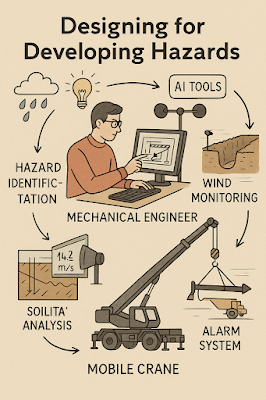
This article considers the collapse not as an isolated failure but as a case study in hazard identification. In particular, it highlights how mechanical engineers must adapt from a static, design-phase view of risk to a dynamic, real-time approach to hazard monitoring. Wind, soil stability, and load conditions are well-known hazards. But with modern tools โ€” including LiDAR scanning for obstacle detection โ€” engineers can move toward a future where developing hazards are continuously tracked, anticipated, and controlled.

From Hazard Identification to Live Hazard Monitoring

Hazard identification has traditionally been a design-phase process: engineers anticipate risks, apply safety factors, and create conservative margins. This remains essential. Yet the Derrimut collapse illustrates the limits of a static model in a dynamic environment.

Cranes are exposed to evolving hazards:

  • Wind gusts that change minute by minute.
  • Soil stability that shifts with rainfall, excavation, or groundwater.
  • Obstacles such as power lines or nearby structures, which can create cascading risks if struck.
  • Load dynamics, including swinging or sudden movement.

What is needed is a transition from hazard identification to hazard monitoring: a continuous loop where design assumptions are validated against real-time data, and where developing risks are detected before they become failures.

Wind Hazards: Predicting the Unpredictable

Wind is a leading cause of crane collapses. Engineers know the mathematics: pressure rises with the square of velocity. A 50 km/h gust exerts twice the force of a 35 km/h breeze.

Most cranes today are fitted with anemometers and alarms, but these are often basic: a single reading at a single point, with alarms sounding when preset thresholds are exceeded. This approach can miss:

  • Local gust variability along a long jib.
  • Interaction with crane orientation (wind hitting the broadside is more critical than aligned wind).
  • Forecasted conditions that could deteriorate within minutes.

Next-generation wind monitoring could include:

  • Multi-point sensor arrays on cranes.
  • Integration with Bureau of Meteorology gust forecasts.
  • AI models predicting when risk thresholds will be exceeded, not just reporting when they are crossed.
  • Automatic crane repositioning to minimise wind exposure.

This transforms alarms from reactive to predictive โ€” the difference between warning after a hazard is present and anticipating before it materialises.


Soil Hazards: Stability Under Load

Ground conditions are another silent but critical hazard. Outriggers may impose hundreds of kilonewtons on pads, meaning even small soil weaknesses can lead to tilting or overturning.

Engineering practice already includes soil investigations: boreholes, CPT, SPT, and FEA models. But these tests capture conditions before installation, not necessarily during operation. Soil strength can change due to rainfall, groundwater shifts, or nearby excavation.

Live soil monitoring can be achieved with:

  • Load cells under mats to track ground reactions.
  • Settlement gauges to detect tilt.
  • Piezometers for pore pressure during rain events.
  • Integrated warnings when ground resistance trends downward.

This approach acknowledges soil as a living hazard that changes daily.

LiDAR and Obstacle Detection: Power Lines and Proximity Hazards

One striking feature of the Derrimut collapse was the craneโ€™s boom striking power lines. Contact with utilities is a recurrent hazard in crane operations worldwide. While operators are trained to maintain exclusion zones, in practice visibility, fatigue, or unexpected boom movement can still lead to contact.

LiDAR scanning offers a solution.

  • How it works: LiDAR (Light Detection and Ranging) emits laser pulses to map surroundings in 3D with centimetre accuracy. Mounted on a crane, it can create a live digital map of nearby obstacles.
  • Application in cranes:
    • Detecting and mapping power lines, buildings, or scaffolding in the lift path.
    • Setting proximity alarms when a boom, hook, or load approaches a defined clearance.
    • Combining with wind data to predict if gusts could push the load into restricted zones.

In aviation, LiDAR and radar-based systems are standard for obstacle detection. In construction, adoption is patchy. Yet the technology exists, is cost-effective, and could dramatically reduce risks of contact with hazards like live power lines.

LiDARโ€™s strength lies not only in static mapping but in detecting movement โ€” for example, when a suspended load begins to swing toward a power line due to a gust. This is a quintessential developing hazard, one that static design could never fully capture.

Integrated Hazard Dashboards

Wind, soil, and LiDAR obstacle detection all provide valuable data. But their true power lies in integration. Imagine a crane operatorโ€™s cabin equipped with a single dashboard displaying:

  • Wind speeds and gust forecasts, colour-coded for risk.
  • Soil reaction forces under each outrigger, with alerts if settlement is trending.
  • LiDAR mapping of nearby structures and power lines, with real-time clearance zones.
  • Predictive risk models showing probability of instability or contact over the next 30 minutes.

This integration mirrors aviationโ€™s cockpit: multiple inputs fused into actionable guidance. For cranes, such systems could shift the operatorโ€™s role from reactive decision-maker to proactive risk manager.


AI as a Predictive Partner

Artificial Intelligence has a natural role in hazard monitoring:

  • Sensor fusion: combining wind, soil, and LiDAR inputs into coherent risk profiles.
  • Prediction: learning from past crane incidents to forecast when risks are likely to escalate.
  • Decision support: providing operators with clear options (โ€œsafe to continue lift for 20 minutesโ€ / โ€œhalt operations โ€” clearance margin < 1mโ€).

The challenge is balance. AI should not replace human oversight, but augment it. Over-reliance could create new vulnerabilities if operators become complacent. The design challenge is to build AI into systems that support human judgment rather than substitute for it.


Ethics and Engineering Responsibility

The Derrimut collapse underscores the ethical responsibility of mechanical engineers. Hazard identification is not just a design requirement; it is a matter of public safety. The profession has a duty to anticipate, detect, and control risks wherever possible.

The tools now exist to monitor developing hazards โ€” wind sensors, soil gauges, LiDAR scanners, and AI dashboards. If lives and infrastructure can be protected through wider adoption of these tools, then the question becomes one of responsibility: should they be optional, or mandatory?

Open Questions for the Future

  1. Would integrated live monitoring have reduced the risks at Derrimut?
  2. Should all cranes be fitted with LiDAR obstacle detection as standard?
  3. Do we already have enough technology, but lack regulation and enforcement?
  4. What role should AI play in balancing predictive insight with operator autonomy?

The Derrimut incident remains under investigation. No conclusions can be drawn about its specific cause until findings are published. Yet as a case study, it illustrates the broader point that hazards in crane operations are dynamic. Wind, soil, obstacles, and loads evolve minute by minute.

Mechanical engineers have the tools โ€” wind sensors, soil monitors, LiDAR scanners, integrated dashboards, and AI โ€” to detect these developing hazards. The challenge is to move from a culture of static design assumptions to one of continuous hazard monitoring.

The ultimate professional question is this: If aviation can integrate multiple systems to monitor and predict hazards, why canโ€™t construction do the same for cranes? And if we can, how soon will we accept the ethical responsibility to make it standard?

References and Further Reading

  • ISO 4301 / AS 1418 โ€” Crane standards covering stability and wind.
  • ISO 12480-1:2003 โ€” Safe use of cranes; includes environmental hazard monitoring.
  • WorkSafe Victoria Guidance Notes โ€” Crane safety management.
  • Holickรฝ & Retief (2017) โ€” Probabilistic treatment of wind action in structural design.
  • Nguyen et al. (2020) โ€” Real-time monitoring of crane foundation response under variable soil conditions.
  • Liebherr LICCON โ€” Example of integrated load and geometry monitoring.
  • FAA LLWAS โ€” Aviationโ€™s real-time wind shear alert system, model for construction.
  • Recent research in LiDAR obstacle detection (e.g., IEEE Transactions on Intelligent Transportation Systems) โ€” showing LiDARโ€™s potential in complex environments.
Hamilton By Design logo displayed on a blue tilted rectangle with a grey gradient background
3D LiDAR scanning and 3D modelling service button โ€” laser scanner capturing a point cloud for engineering and CAD modelling
Mechanical engineering services

Our clients:

Name
Would you like us to arrange a phone consultation for you?
Address

Structural Drafting

Mechanical Drafting

3D Laser Scanning

Mechanical Engineering

Consulting Engineers

Challenges of Not Consulting AS 3990 Mechanical Equipment Steelwork

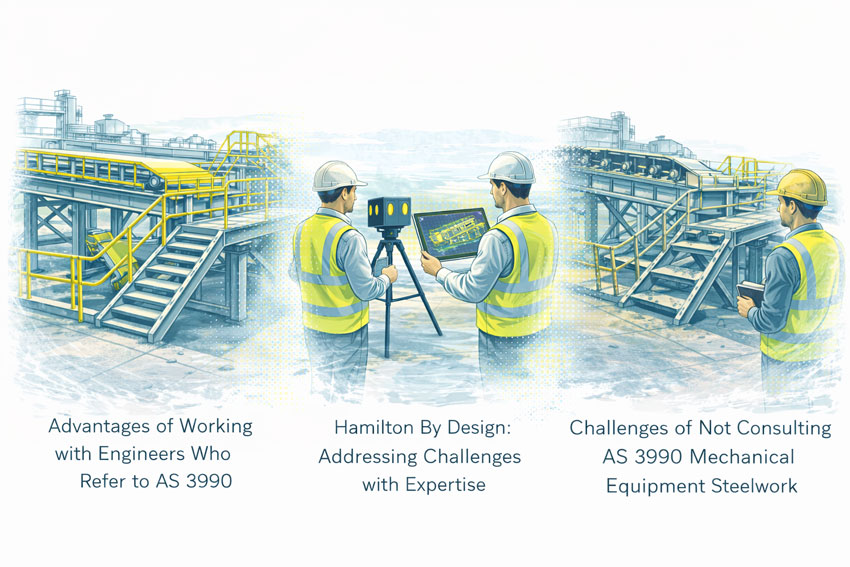
Engineering comparison showing AS 3990-compliant steelwork versus unverified mechanical equipment steelwork, assessed using LiDAR scanning and digital engineering

The Australian Standard AS 3990, “Mechanical Equipment โ€“ Steelwork,” is critical for ensuring the design and construction of safe, reliable, and durable steel structures in mechanical systems. It establishes guidelines for materials, construction practices, and stress analysis to meet the demanding requirements of industrial and mechanical applications. Failing to consult AS 3990 can lead to significant challenges for companies and individuals involved in engineering projects. Additionally, an engineering company like Hamilton By Design, with extensive experience in mechanical design and steelwork, can address these challenges effectively by leveraging its expertise and adherence to industry standards.

Our clients:

1. Structural Failures

One of the most severe consequences of not consulting AS 3990 is the risk of structural failures. Steelwork used in mechanical equipment must withstand specific stresses, loads, and environmental conditions. If these factors are not carefully calculated according to the standard, the structure may fail under operational stress, leading to catastrophic consequences.

Hamilton By Designโ€™s Approach:
Hamilton By Design ensures structural integrity through rigorous design analysis, leveraging advanced modeling tools and AS 3990 guidelines to predict and mitigate potential failure points. Their experience in various industries allows them to create robust steelwork designs that perform reliably under operational conditions.

2. Compliance and Legal Issues

Regulatory compliance is a cornerstone of modern engineering practices. Many industries, including mining, manufacturing, and construction, mandate adherence to AS 3990 for safety and operational approvals. Ignoring the standard can result in penalties, project delays, or even legal liabilities due to non-compliance.

Hamilton By Designโ€™s Approach:
The company prioritizes compliance by integrating AS 3990 requirements into every stage of the project. Their team stays updated with the latest revisions of the standard and ensures all designs meet regulatory expectations, providing clients with peace of mind and streamlined approval processes.

3. Reduced Equipment Longevity

Steel structures that do not conform to AS 3990 may suffer from premature wear, fatigue, or failure. This can lead to frequent repairs, replacements, or unplanned downtime, significantly reducing the lifespan of mechanical equipment.

Hamilton By Designโ€™s Approach:
Hamilton By Design employs precise material selection and stress analysis techniques, as prescribed by AS 3990, to optimize the durability and performance of their designs. Their focus on quality engineering ensures long-lasting equipment that minimizes maintenance requirements.

4. Safety Hazards

Non-compliance with AS 3990 poses serious safety risks. Equipment that fails unexpectedly can cause injuries or fatalities, creating an unsafe work environment and potential legal repercussions.

Hamilton By Designโ€™s Approach:
Safety is a core value for Hamilton By Design. The company conducts thorough risk assessments and designs steelwork that adheres to AS 3990โ€™s stringent safety standards. Their commitment to safety reduces risks to operators and protects the overall workforce.

5. Increased Maintenance Costs

Improperly designed steelwork often requires frequent maintenance due to unforeseen stress points, material fatigue, or environmental damage. This not only increases operational costs but also disrupts productivity.

Hamilton By Designโ€™s Approach:
Hamilton By Designโ€™s adherence to AS 3990 minimizes maintenance needs by delivering designs that perform reliably over extended periods. Their proactive approach to material selection and stress management ensures reduced long-term operational costs for their clients.

6. Loss of Reputation

Companies delivering substandard designs risk damaging their reputation and losing client trust. Poor performance or failure of mechanical equipment reflects negatively on both the engineers and the organization.

Hamilton By Designโ€™s Approach:
Hamilton By Design has built a solid reputation by consistently delivering high-quality, compliant designs. Their focus on excellence and attention to detail ensures that their clients receive reliable solutions, strengthening relationships and fostering repeat business.

Engineers using LiDAR scanning and digital models to address challenges caused by not consulting AS 3990 mechanical equipment steelwork standards

Advantages of Working with Engineers Who Refer to AS 3990

1. Enhanced Structural Reliability

Engineers who follow AS 3990 guidelines ensure that steel structures are designed to handle expected loads and stresses safely. This enhances the overall reliability and performance of mechanical equipment.

Hamilton By Designโ€™s Advantage:
Hamilton By Designโ€™s expertise in applying AS 3990 results in robust designs that exceed client expectations. Their thorough understanding of structural dynamics ensures optimal performance and safety.

2. Regulatory Compliance

Adhering to AS 3990 simplifies the process of meeting industry regulations, reducing risks of audits, fines, or project delays.

Hamilton By Designโ€™s Advantage:
Hamilton By Designโ€™s commitment to compliance ensures that their projects pass inspections and meet all regulatory requirements, helping clients avoid costly delays and legal issues.

3. Optimized Design

Following AS 3990 enables engineers to create designs that balance safety, functionality, and cost-efficiency.

Hamilton By Designโ€™s Advantage:
The company uses advanced engineering tools and methodologies to develop optimized designs that align with clientsโ€™ operational goals while maintaining compliance with AS 3990.

4. Improved Safety

AS 3990 includes comprehensive guidelines for minimizing risks, ensuring a safer working environment.

Hamilton By Designโ€™s Advantage:
Hamilton By Designโ€™s safety-first approach incorporates AS 3990โ€™s recommendations to deliver solutions that prioritize the well-being of workers and operators.

5. Cost Savings

Properly designed steelwork reduces maintenance, repair, and replacement costs over the equipmentโ€™s lifecycle.

Hamilton By Designโ€™s Advantage:
By adhering to AS 3990, Hamilton By Design delivers cost-effective solutions that reduce long-term expenses, helping clients maximize their return on investment.

6. Increased Equipment Lifespan

AS 3990-compliant designs are engineered to withstand operational stresses, enhancing the durability of mechanical systems.

Hamilton By Designโ€™s Advantage:
Hamilton By Designโ€™s focus on durability and reliability ensures that their designs deliver long-term performance, minimizing disruptions and extending equipment lifespan.

7. Competitive Advantage

Delivering high-quality, compliant systems provides a competitive edge, improving marketability and client trust.

Hamilton By Designโ€™s Advantage:
Hamilton By Designโ€™s track record of excellence and adherence to AS 3990 positions them as a trusted partner for engineering projects, helping clients achieve their goals efficiently and effectively.

8. Risk Mitigation

Following AS 3990 minimizes the risk of unexpected failures, accidents, or operational delays.

Hamilton By Designโ€™s Advantage:
The companyโ€™s comprehensive approach to risk management ensures that their designs perform reliably under real-world conditions, reducing risks for their clients.

Hamilton By Design: Addressing Challenges with Expertise

Hamilton By Design is an engineering firm renowned for its dedication to excellence and adherence to industry standards. Their extensive experience in mechanical equipment and steelwork enables them to address the challenges of non-compliance with AS 3990 effectively. Here are some examples of how Hamilton By Design applies its expertise to deliver superior outcomes:

Case Study 1: Mining Equipment Steelwork

In a project involving heavy mining equipment, Hamilton By Design was tasked with designing a support structure for a conveyor system. By consulting AS 3990, they identified critical stress points and optimized the design to handle dynamic loads. The result was a durable and reliable structure that exceeded client expectations and minimized maintenance costs.

Case Study 2: Industrial Manufacturing Facility

Hamilton By Design worked on a manufacturing facility requiring custom steelwork for robotic assembly lines. By adhering to AS 3990, they ensured the steel structures could withstand repetitive stress and environmental factors, enhancing the safety and efficiency of the facility.

Case Study 3: Renewable Energy Project

In a renewable energy project, Hamilton By Design designed steel frameworks for wind turbine foundations. By following AS 3990, they accounted for wind loads, fatigue stresses, and environmental conditions, delivering a solution that met stringent safety and performance requirements.

Conclusion

Failing to consult AS 3990 can lead to significant challenges, including structural failures, compliance issues, reduced equipment lifespan, safety hazards, increased maintenance costs, and reputational damage. However, working with experienced engineers who prioritize adherence to AS 3990, such as those at Hamilton By Design, provides numerous advantages, including enhanced reliability, regulatory compliance, optimized design, improved safety, cost savings, increased equipment lifespan, and risk mitigation.

Hamilton By Designโ€™s proven track record demonstrates their ability to navigate these challenges effectively, leveraging their expertise and commitment to quality to deliver exceptional results for their clients. By choosing Hamilton By Design, companies can ensure that their mechanical equipment steelwork projects are completed to the highest standards of safety, reliability, and performance.

Hamilton By Design logo displayed on a blue tilted rectangle with a grey gradient background

For more information on the Hamilton By Design Consulting approach, feel free to email info@hamiltonbydesign.com.au

Name
Would you like us to arrange a phone consultation for you?
Address
3D LiDAR scanning and 3D modelling service button โ€” laser scanner capturing a point cloud for engineering and CAD modelling
Mechanical engineering services
Finite Element Analysis (FEA) engineering simulation button
Mechanical engineering services
Finite Element Analysis (FEA) engineering simulation button
Mechanical engineering services

Challenges in the Australian Smelting Industry Today

Australian Smelting

The smelting industry in Australia is a cornerstone of the nationโ€™s economy, playing a crucial role in the production of essential metals such as aluminum, copper, and zinc. However, this sector faces significant challenges, ranging from stringent environmental regulations and high energy costs to supply chain disruptions and workforce shortages. Mechanical engineering consultants can offer invaluable assistance to smelting companies in navigating these challenges through their expertise in technology, process optimization, and regulatory compliance. This essay explores the biggest issues facing smelting companies in Australia today and how mechanical engineering consultants can help mitigate these challenges.

Environmental Regulations and Sustainability

Stringent Emissions Standards

One of the most pressing issues for smelting companies is complying with stringent emissions standards. The smelting process generates substantial greenhouse gases (GHGs) and other pollutants, leading to increased regulatory scrutiny. Mechanical engineering consultants can assist by designing and implementing advanced emissions control systems. These systems, such as scrubbers, filters, and catalytic converters, can significantly reduce the release of harmful pollutants.

Consultants like Hamilton By Design can also perform emissions audits to identify areas where improvements are needed and develop strategies to meet or exceed regulatory requirements. By integrating best practices in environmental engineering, consultants help smelting companies achieve compliance while minimizing operational disruptions.

Waste Management

Effective waste management is another critical challenge. The smelting process produces by-products like slag and other residues, which must be managed properly to avoid environmental harm. Mechanical engineering consultants can develop waste treatment and recycling processes that reduce waste volumes and promote the reuse of materials.

For example, consultants can design systems to process slag into valuable by-products such as construction materials. This not only helps in waste reduction but also provides an additional revenue stream for smelting companies. Moreover, consultants can help implement closed-loop systems that recycle water and other resources, further enhancing sustainability.

Energy Costs and Supply

High Energy Consumption

Smelting is an energy-intensive industry, and high energy costs can significantly impact profitability. Mechanical engineering consultants can conduct energy audits to identify inefficiencies and recommend improvements. By optimizing furnace operations, enhancing heat recovery systems, and upgrading to more energy-efficient equipment, consultants can help reduce energy consumption.

Additionally, consultants can assist in integrating renewable energy sources, such as solar or wind power, into smelting operations. This transition not only helps in reducing energy costs but also aligns with global sustainability goals. Consultants can design hybrid systems that ensure a reliable energy supply while maximizing the use of renewable sources.

Renewable Energy Integration

Transitioning to renewable energy is complex, requiring significant modifications to existing infrastructure. Mechanical engineering consultants can design and implement energy storage solutions, such as batteries or thermal storage systems, to address the intermittent nature of renewable energy sources. They can also develop grid management strategies that balance energy supply and demand, ensuring stable operations.

Consultants can evaluate the feasibility of various renewable energy projects, perform cost-benefit analyses, and assist in securing funding or incentives for these initiatives. By providing comprehensive planning and implementation support, mechanical engineering consultants enable smelting companies to successfully integrate renewable energy and reduce their carbon footprint.

Raw Material Availability and Costs

Supply Chain Disruptions

The availability and cost of raw materials are crucial factors for the smelting industry. Supply chain disruptions, caused by geopolitical tensions, natural disasters, or logistical challenges, can severely impact operations. Mechanical engineering consultants can help smelting companies build more resilient supply chains by optimizing procurement processes and developing strategic sourcing plans.

Consultants can also assist in identifying alternative raw material sources and establishing long-term contracts to ensure a stable supply. By analyzing market trends and performing risk assessments, consultants help companies anticipate potential disruptions and develop contingency plans.

Global Market Dynamics

Fluctuations in global demand and supply significantly affect raw material prices. Mechanical engineering consultants can provide market intelligence and predictive analytics to help smelting companies navigate these uncertainties. By leveraging data-driven insights, companies can make informed decisions on raw material purchases, inventory management, and production planning.

Consultants can also design flexible manufacturing systems that can quickly adapt to changes in raw material availability or cost. These systems can include modular equipment and scalable processes that allow for rapid adjustments to production volumes, helping companies remain competitive in a volatile market.

Technological Advancements

Modernization Needs

Many smelting facilities operate with aging infrastructure that is less efficient and more costly to maintain. Mechanical engineering consultants can design and implement modernization projects to upgrade equipment and improve operational efficiency. This includes adopting new technologies such as automation, robotics, and advanced control systems.

For example, consultants can develop automated systems for material handling and processing, reducing labor costs and increasing productivity. They can also implement advanced monitoring and control systems that optimize furnace operations, improve energy efficiency, and reduce emissions. By modernizing facilities, consultants help smelting companies enhance performance and competitiveness.

Innovation Investment

Continuous innovation is essential for the smelting industry to improve processes and develop new products. Mechanical engineering consultants can support research and development (R&D) efforts by providing technical expertise and project management skills. They can help design experiments, prototype new technologies, and scale up successful innovations for commercial use.

Consultants can also facilitate collaboration with academic institutions, industry consortia, and government agencies to leverage external knowledge and resources. By driving innovation, mechanical engineering consultants enable smelting companies to stay ahead of the competition and meet evolving market demands.

Workforce and Skills Shortages

Skilled Labor Deficit

The smelting industry faces a growing deficit of skilled labor, exacerbated by an aging workforce and insufficient training programs. Mechanical engineering consultants can help address this issue by developing comprehensive training and development programs. These programs can include on-the-job training, apprenticeships, and partnerships with educational institutions to build a pipeline of skilled workers.

Consultants can also design user-friendly systems and processes that reduce the reliance on highly specialized skills. For example, implementing automated systems with intuitive interfaces can simplify complex tasks, making them more accessible to less experienced workers. By enhancing workforce capabilities, consultants help smelting companies maintain productivity and operational efficiency.

Workforce Training

Continuous training is crucial to keep pace with technological advancements and regulatory changes. Mechanical engineering consultants can develop and deliver training programs that cover new technologies, safety protocols, and compliance requirements. These programs can be tailored to different levels of expertise, ensuring that all employees receive relevant and practical training.

Consultants can also implement training management systems that track employee progress, identify skill gaps, and schedule ongoing training sessions. By fostering a culture of continuous learning, consultants help smelting companies build a more adaptable and skilled workforce.

Economic and Market Pressures

Market Competition

The global smelting industry is highly competitive, with companies from countries with lower production costs posing significant challenges. Mechanical engineering consultants can help Australian smelting companies improve efficiency and reduce costs through process optimization and lean manufacturing principles. By streamlining operations and eliminating waste, companies can enhance productivity and profitability.

Consultants can also assist in developing new products and entering new markets, diversifying revenue streams and reducing dependence on traditional markets. By leveraging engineering expertise and market insights, consultants help companies navigate competitive pressures and achieve sustainable growth.

Economic Uncertainty

Economic downturns and fluctuations in demand for metals can significantly impact the smelting industry. Mechanical engineering consultants can help companies build resilience to economic uncertainty by developing flexible manufacturing systems and robust financial strategies. This includes scenario planning, stress testing, and the implementation of cost-control measures.

Consultants can also support diversification efforts by identifying new applications for smelted metals and exploring opportunities in emerging markets. By providing strategic guidance and technical solutions, consultants help smelting companies mitigate the impact of economic volatility.

Community and Social License to Operate

Community Relations

Maintaining positive relationships with local communities is essential for the smelting industry. Mechanical engineering consultants can help companies engage with communities through transparent communication and proactive initiatives. This includes designing and implementing environmental and social responsibility programs that address community concerns and contribute to local development.

For example, consultants can develop systems to monitor and reduce environmental impacts, such as air and water pollution, and provide regular updates to community stakeholders. They can also assist in developing community engagement plans that involve local residents in decision-making processes and ensure their voices are heard.

Indigenous Rights

Respecting Indigenous land rights is another critical issue for the smelting industry in Australia. Mechanical engineering consultants can support companies in engaging with Indigenous communities and ensuring their rights are respected. This involves conducting cultural heritage assessments, obtaining necessary permissions, and involving Indigenous representatives in project planning and implementation.

Consultants can also develop programs that support Indigenous employment and economic development, fostering positive relationships and building trust with Indigenous communities. By prioritizing social responsibility, consultants help smelting companies maintain their social license to operate.

Regulatory Compliance and Governance

Complex Regulatory Environment

Navigating the complex regulatory environment in Australia requires dedicated resources and expertise. Mechanical engineering consultants can help smelting companies establish robust compliance programs that ensure adherence to local, state, and federal regulations. This includes conducting regular audits, developing compliance protocols, and training employees on regulatory requirements.

Consultants can also assist in maintaining open lines of communication with regulatory bodies, ensuring that companies stay informed about regulatory changes and are prepared to respond proactively. By enhancing compliance and governance practices, consultants help companies avoid penalties and build trust with stakeholders.

Corporate Governance

High standards of corporate governance and transparency are essential for building trust with investors, customers, and communities. Mechanical engineering consultants can support companies in implementing best practices in governance, such as ensuring board diversity, developing risk management frameworks, and maintaining transparent reporting practices.

Consultants can also help companies align their operations with global standards, such as the United Nations Global Compact, demonstrating their commitment to ethical business practices and sustainability. By strengthening corporate governance, consultants help smelting companies enhance their reputation and attract investment.

The smelting industry in Australia faces a myriad of challenges, including stringent environmental regulations, high energy costs, supply chain disruptions, workforce shortages, and economic pressures. Mechanical engineering consultants play a crucial role in helping companies navigate these challenges by providing expertise in technology, process optimization, and regulatory compliance. By leveraging the skills and knowledge of mechanical engineering consultants, smelting companies can enhance efficiency, reduce costs, improve sustainability, and maintain competitiveness in a rapidly evolving

References – Recent News

Metallurgical coal rebound amid faltering green steel momentum
Metallurgical coalโ€”a key input for traditional blast-furnace steelmakingโ€”is seeing renewed interest as some green steel ambitions slow. Reuters

China to cut steel output to tackle overcapacity
Beijing has announced plans to trim crude steel production, as part of restructuring moves in its steel sector. Reuters

Steel sector lagging on green transition, coal-based capacity still growing
The Global Energy Monitor warned the sector is behind on low-carbon transition efforts, with large new coal-fired (high-emitting) blast furnace projects underway, especially in India and China. Reuters

Salzgitter delays phases of its โ€œgreen steelโ€ project
Germanyโ€™s Salzgitter is postponing later stages of its hydrogen-based โ€œSalcosโ€ program because of economic and regulatory hurdles. Reuters

EU-U.S. talks to revisit metal / steel tariffs
The EU is meeting with the U.S. to renegotiate steel and aluminium export tariffs, possibly adopting quota-based or lower duties. Reuters

BlueScopeโ€™s $1.15 billion blast furnace reline (Australia)
In Australia, BlueScope is relining a major blast furnace at Port Kembla, in what is billed as the largest steelmaking project in the country. It is part of efforts to maintain domestic capability amid transition pressures. ABC+1

NeoSmelt: low-carbon steel pilot in Australia gets funding & partners
The NeoSmelt project (direct reduced iron + electric smelting furnace pathway) has entered feasibility stage with A$19.8 million of ARENA funding, and has signed new participants. RenewEconomy+3Rio Tinto+3Australian Renewable Energy Agency+3

Metal Logic โ€œsmelting as a serviceโ€ modular, low-emission deployment
In WAโ€™s Pilbara region, Metal Logic has secured a site to roll out modular, scalable low-emission smelting infrastructure. TMCnet

High cost of natural gas threatens Australiaโ€™s steel transition
The Australian Steel Institute warns that Australiaโ€™s relatively expensive natural gas (compared to international peers) may weaken the ability of local steelmakers to transition to lower-emissions processes. Steel Australia

Consortium led by BlueScope considers takeover of Whyalla steelworks
A global consortium, including BlueScope, is eyeing a takeover of the Whyalla steelworks in South Australia. The facility is seen as pivotal for future low-emissions iron/steel making in Australia. The Guardian

Hamilton By Design logo displayed on a blue tilted rectangle with a grey gradient background

Mechanical Engineering | Structural Engineering

Mechanical Drafting | Structural Drafting

3D CAD Modelling | 3D Scanning

Hamilton By Design

Our clients:

Name
Would you like us to arrange a phone consultation for you?
Address