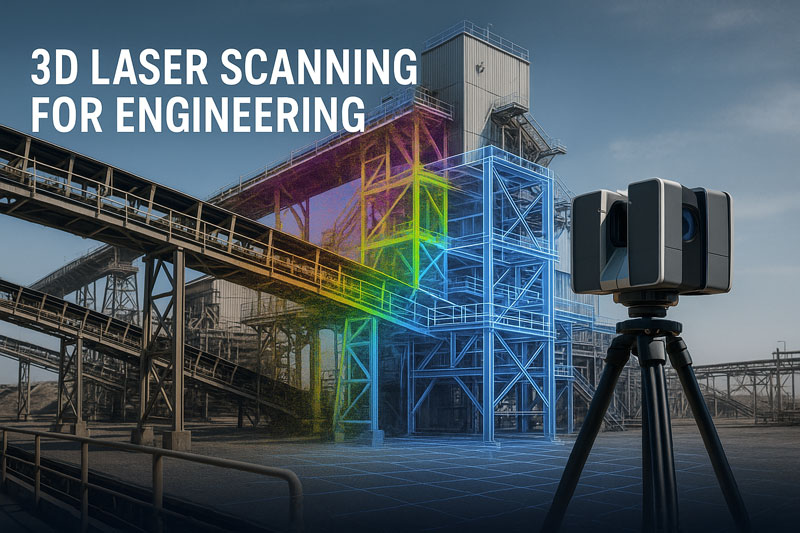
Mechanical Engineering | 3D Scanning | 3D Modelling
Tag: Structural
Posts focused on structural engineering for industrial and infrastructure projects, including frames, supports, platforms and structural modifications for plant upgrades.
Structural Engineering: Turning Structural Concepts into Buildable, Compliant Outcomes
Structural engineering plays a critical role in ensuring that structures are safe, stable, and fit for purpose—not just on paper, but in the real world.
Across industrial facilities, mining sites, power infrastructure, and building projects, structural engineering is what turns concepts into buildable, verifiable outcomes. It requires more than calculations alone; it depends on accurate information, sound judgement, and clear documentation that can be understood and constructed on site.
At Hamilton By Design, structural engineering is delivered with a strong focus on existing conditions, constructability, and compliance, particularly for brownfield and live environments.
What structural engineering actually delivers
Structural engineering involves the assessment, design, and verification of structures that support loads safely over their intended life.
Typical applications include:
Structural steelwork and framing
Platforms, walkways, stairs, and access systems
Equipment support structures and foundations
Modifications to existing buildings and industrial assets
Strengthening, repair, and upgrade works
In many projects, especially upgrades and refurbishments, the challenge is not designing something new—but understanding what already exists and how it behaves.
Our clients:
Structural engineering on existing and brownfield sites
Many industrial and construction projects rely on incomplete or outdated drawings. Over time, assets are modified, reinforced, or repaired without full documentation, increasing risk when new works are planned.
Structural engineering in these environments often involves:
Verifying existing steel sizes and connections
Assessing capacity against current load requirements
Identifying undocumented changes or deterioration
Designing upgrades that integrate with existing structures
Accurate engineering input at this stage reduces rework, improves safety, and avoids costly site changes during construction.
The role of structural drafting in successful outcomes
Even the best structural design can fail if it is not clearly documented.
Structural drafting is the critical link between engineering intent and construction reality. It translates structural engineering decisions into clear, coordinated drawings that fabricators and builders can rely on.
Well-executed structural drafting ensures:
Load paths and connections are clearly communicated
Member sizes, levels, and interfaces are unambiguous
Drawings reflect actual site conditions
Fabrication and installation can proceed with confidence
3D Scanning for Structural Drafting Darwin | Engineer-Led
Accurate As-Built Data for Structural Drafting in the Northern Territory — No Guesswork
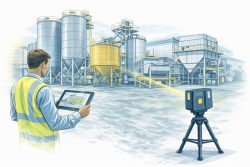
At Hamilton By Design, we provide 3D LiDAR scanning for structural drafting in Darwin and across the Northern Territory, supporting projects in construction, ports, defence, energy, mining, and government infrastructure.
In Darwin and remote NT environments, inaccurate or missing as-built documentation creates significant risk—particularly where access is limited, shutdown windows are short, and compliance requirements are high. Our approach removes uncertainty by capturing real site conditions and converting them into engineering-ready structural drafting.
Why 3D Scanning Matters for Structural Drafting in Darwin
Projects in Darwin and the NT often involve:
Remote or regionally supported assets
Live operational facilities with limited access
Defence, port, and government infrastructure
Harsh environmental conditions
Tight construction and maintenance schedules
High compliance and audit requirements
Relying on manual measurements or legacy drawings introduces risk. Engineering-grade 3D scanning provides a reliable foundation for structural drafting, ensuring new works integrate accurately with existing structures.
3D Scanning as the Foundation for Structural Drafting
We use 3D scanning as a data capture tool that enables better structural drafting.
Our integrated workflow includes:
3D LiDAR scanning → 3D modelling → structural engineering → FEA (where required) → structural drafting
This ensures:
Structural drawings are based on verified site geometry
Clash risk for fabricated steel is reduced
Engineering decisions are supported by accurate data
Drafting reflects constructability and installation reality
One Accountable Engineering Partner
Rather than separating scanning, modelling, and drafting across multiple vendors, we deliver the complete service:
3D LiDAR scanning in Darwin and regional NT
3D as-built model development
Structural engineering input
Finite Element Analysis (FEA), where required
Structural drafting and fabrication documentation
One contact. One accountable team. One integrated workflow.
This approach is particularly valuable for remote and regionally supported projects where coordination and communication are critical.
Supporting Darwin, Regional NT & Remote Sites
We support projects across:
Darwin and surrounding industrial areas
Ports and marine infrastructure
Defence facilities and government assets
Energy and utilities infrastructure
Remote and regionally supported NT sites
Operating in these environments requires careful planning, accurate data capture, and documentation that can be relied upon without repeated site visits.
All structural drafting is developed in accordance with:
The National Construction Code (NCC)
Relevant Australian Standards
Client-specific, defence, and government requirements
Our deliverables provide defensible, data-backed documentation suitable for engineering review, fabrication, and construction in regulated environments.
Designed for Engineers, Contractors & Asset Owners
This service is suited to:
Project engineers managing Darwin and NT works
Contractors and fabricators requiring accurate drawings
Consulting engineers supporting upgrades
Government and defence asset owners
Organisations operating remote or hard-to-access sites
We work collaboratively with existing project teams, fitting into established delivery models rather than forcing new ones.
Talk to Us About 3D Scanning for Structural Drafting in Darwin
If you’re working on a Darwin-based or NT project and need accurate as-built data to support structural drafting, we’d welcome the opportunity to help.
3D Scanning for Structural Drafting Perth | Engineer-Led
Accurate As-Built Data for WA Mining, Ports & Industrial Assets — No Guesswork
At Hamilton By Design, we provide 3D LiDAR scanning for structural drafting from our Perth engineering hub, supporting projects across Western Australia including remote mining sites, ports, oil & gas facilities, and brownfield industrial assets.
In WA environments, compliance risk, access constraints, and long shutdown windows mean there is little tolerance for error. Inaccurate or assumed as-built information often leads to fabrication clashes, rework, and costly delays. Our approach removes that risk by capturing real site conditions and converting them into engineering-ready structural drafting.
Why 3D Scanning Matters for Structural Drafting in Western Australia
WA projects are often characterised by:
Remote sites supported from Perth engineering offices
Complex brownfield assets with limited documentation
Long shutdown windows and restricted site access
Coordination challenges between site teams, Perth engineers, and fabricators
High compliance requirements for mining, oil & gas, and port infrastructure
Traditional manual measurement and assumed geometry introduce risk. Engineering-grade 3D scanning provides a reliable foundation for structural drafting, particularly where site access is limited and fabrication accuracy is critical.
For WA projects, we deliver 3D scanning and structural drafting as an integrated service.
Our workflow typically includes:
3D LiDAR scanning → 3D modelling → structural engineering → FEA (where required) → structural drafting
This integrated approach ensures:
Structural drawings are based on verified, real-world geometry
Compliance risks are identified early
Fabricated steel fits first time
Engineering and drafting decisions remain aligned
For many WA mining, port, and oil & gas assets, structural drafting without 3D scanning is high-risk. Scanning removes assumptions and provides defensible data for engineering and fabrication.
One Perth Engineering Hub — Supporting WA & Remote Sites
We operate with Perth as our engineering base, supporting:
Pilbara, Goldfields, Mid West, and remote mining regions
Ports, shipyards, and marine infrastructure (including Fremantle)
Oil & gas and energy facilities
Brownfield industrial plants and processing facilities
This model allows accurate site capture combined with centralised engineering, drafting, and coordination from Perth—reducing communication gaps and improving delivery certainty.
Typical WA Applications
Our 3D scanning for structural drafting services support:
Mining infrastructure and remote site upgrades
Port, shipyard, and marine structures
Oil & gas and energy facilities
Brownfield industrial plants
Heavy fabrication and workshop coordination
Government and council infrastructure assets
Each project is approached with a clear understanding of access constraints, shutdown planning, and compliance obligations.
Our clients:
Managing Compliance, Access & Shutdown Risk
We understand that WA projects often carry:
High compliance exposure
Limited access opportunities
Tight shutdown schedules
Significant cost of rework
All structural drafting is developed in accordance with:
The National Construction Code (NCC)
Relevant Australian Standards
Client, asset, and industry-specific engineering requirements
Our deliverables provide defensible, data-backed documentation that supports engineering reviews, fabrication, and installation in high-risk environments.
3D Scanning Services Darwin | Industrial LiDAR for Mining, Ports & Gas
Hamilton By Design delivers engineering-grade 3D scanning services in Darwin and the broader Northern Territory for mining operations, heavy construction projects, port facilities, and oil & gas infrastructure. Our services are engineered to support complex, high-risk environments where accuracy, reliability, and downstream usability of captured data directly influence project outcomes.
Darwin and the Northern Territory’s economy are underpinned by strategic investment in resources, energy, construction, and export infrastructure, including mineral extraction, liquefied natural gas projects, major port facilities, and associated heavy industry developments. nteconomy.nt.gov.au+1 Our 3D scanning services are tailored to meet the demands of these sectors, providing certified capture workflows that support planning, design, modification, fabrication, and compliance deliverables.
Why Darwin Projects Need an Engineering-Grade 3D Scanning Approach
Darwin projects commonly involve live industrial environments, large-scale equipment, and brownfield upgrades where assumptions cost time and money. Our engineering-led 3D scanning services provide precise digital representations of complex assets, enabling safer and faster decision-making on heavy industry projects.
Mining and resources infrastructure The Northern Territory’s mining and resources sector contributes significantly to regional economic output, with mineral extraction, petroleum and natural gas operations, and associated processing facilities forming core project drivers. nteconomy.nt.gov.au+1 High-accuracy capture of pits, processing plants, stockpiles, conveyors, and infrastructure improves planning, risk reduction, and asset management.
Heavy construction and site coordination Darwin is a hub for major construction and industrial projects, where detailed spatial knowledge is essential for avoiding clashes, verifying clearances, and supporting installation sequencing. nteconomy.nt.gov.au
Port and export infrastructure Facilities such as Darwin Port require detailed asset capture for maintenance planning, structural verification, and integration of new systems within operational environments.
Oil, gas and energy facilities Onshore and near-shore gas processing facilities, pipelines, and connected energy infrastructure demand detailed capture for retrofit, upgrade, and compliance work. The region’s ongoing energy projects, including export-oriented gas facilities, benefit from high-resolution site data for engineering assessment. Wikipedia
Our 3D Scanning Services in Darwin
We provide a comprehensive suite of industrial 3D scanning services built around engineering workflows and practical project outcomes:
Engineering-Grade LiDAR Scanning for Heavy Industry Accurate capture of plant, equipment, civil structures, stockpiles, and infrastructure.
Brownfield Retrofit & Upgrade Scanning Reliable, measurable site data to support modification, expansion, and construction.
Construction Coordination & Clash Avoidance High-precision datasets for clash detection, sequencing, and design validation.
Scan-to-CAD Modelling Converting point clouds into usable 3D CAD models for mechanical, structural, and fabrication workflows.
Verified Geometry for Compliance & Design Deliverables suitable for engineering verification, documentation, and approvals.
Precision Scanning for Fabrication & Installation Planning Supporting fit-first-time outcomes and reducing onsite rework.
Each capture is conducted with an understanding of how the data will be used by engineers, designers, and project teams — not as standalone visuals but as actionable digital deliverables.
Our clients:
Industrial Use Cases Common in Darwin
Our Darwin 3D scanning projects frequently support:
Mining processing plants and material handling infrastructure
LNG and gas processing facilities
Heavy civil works and structural upgrades
Port infrastructure modifications and maintenance planning
Mechanical plant retrofit and replacement interfaces
Construction set-out and spatial verification
This focus ensures that scan data supports real engineering workflows — from design and clash detection through to fabrication and installation.
Supporting Engineering Services for Darwin Projects
3D scanning in heavy industry rarely stands alone. Most projects require integrated engineering and documentation workflows, including:
3D CAD Modelling (Scan-to-CAD) Translating site capture into engineering models ready for analysis and design.
As-Built Drawings for Compliance and Procedural Use Detailed documentation suitable for regulatory, contractor, and stakeholder use.
Emergency Exit & Egress Drawing Development Based on reliable scan data to support safety planning and compliance documentation.
Finite Element Analysis (FEA) Engineering verification where structure or component behaviour must be assessed under load.
3D Rendering & Virtual Models Communicating complex spatial data to stakeholders during planning, approvals, or reviews.
Precision Scanning for Fabrication, Renovation & Upgrades Reducing risk and onsite uncertainty for installation and manufacturing.
Our clients
Engineering-Led 3D Scanning You Can Rely On
Hamilton By Design’s 3D scanning services in Darwin are rooted in engineering fundamentals, not just capture. We prioritise data accuracy, usability, and integration with existing workflows, ensuring that point cloud data becomes a reliable foundation for design, construction, compliance, and verification in demanding industrial environments.
Get in Touch About a Darwin 3D Scanning Project
Whether you are planning a mining plant retrofit, infrastructure upgrade, or heavy construction project in Darwin or the Northern Territory, contact Hamilton By Design to discuss your requirements and ensure your project benefits from high-precision, engineering-grade 3D scanning.
AS 3774 – Loads on Bulk Solids Containers | Safety & Compliance
AS 3774 Loads on Bulk Solids Containers exists for a simple reason: bulk solids do not behave like fluids, and incorrect load assumptions can create serious structural and safety risks.
For asset owners, engineers, and project teams involved in mining, mineral processing, manufacturing, and bulk materials handling, AS 3774 provides the framework for understanding how loads actually develop in silos, bins, hoppers, chutes, transfer stations, and surge bins.
Yet despite its long-standing availability, many new installations are still being delivered without full consideration of AS 3774 load cases.
The risks created by this gap are often not immediately visible — but they are very real.
What AS 3774 Is Designed to Address
AS 3774 recognises that bulk solids behave in complex and sometimes counter-intuitive ways. Unlike liquids, bulk materials:
Develop non-uniform wall pressures
Apply eccentric and asymmetric loads
Change load paths depending on flow behaviour
Generate dynamic and cyclic forces during filling and discharge
The standard provides guidance for determining realistic design loads based on how material actually flows and interacts with container geometry.
This applies across all bulk solids containers, including:
Silos
Bins and surge bins
Hoppers
Chutes and transfer stations
Rail and ship loading structures
Feeders integrated with bins
Why Safety and Compliance Depend on AS 3774
The purpose of AS 3774 is not academic. It exists to prevent outcomes such as:
Progressive wall deformation
Fatigue cracking and bolt failure
Local buckling or plate tearing
Uncontrolled discharge or blockage release
Unexpected load transfer into supporting structures
What makes these issues particularly dangerous is that they often develop over time, not at commissioning.
A structure can appear “fine” on day one — while accumulating damage due to:
Cyclic loading
Eccentric discharge patterns
Inaccurate assumptions about material properties
Mixed construction materials behaving differently over time
Common Design Assumptions That Create Hidden Risk
In practice, many bulk solids containers are still designed using simplified or incorrect assumptions, including:
1. Treating Bulk Solids Like Fluids
Uniform hydrostatic pressure assumptions do not reflect real wall loading patterns and can significantly under-predict peak stresses.
2. Ignoring Eccentric Discharge
Off-centre outlets, partial blockages, or asymmetric flow paths can introduce large bending and torsional effects that are not obvious from geometry alone.
3. Incorrect or Assumed Material Properties
Bulk density, cohesion, moisture content, and flow behaviour are often assumed rather than verified — yet small changes can have large load implications.
4. Mixed Materials Without Long-Term Consideration
It is not uncommon to see hoppers fabricated from a combination of stainless steel and mild steel, without adequate consideration of:
Differential stiffness
Fatigue behaviour
Corrosion mechanisms
Galvanic interaction
These issues may not present as immediate failures, but they can significantly reduce structural life and reliability.
Why the Risk Is Often Not Evident Today
One of the most concerning aspects of non-compliance with AS 3774 is that failure is rarely immediate.
Instead, risk accumulates quietly through:
Repeated filling and discharge cycles
Minor operational changes
Variations in material condition
Small geometric imperfections
By the time visible cracking, deformation, or operational issues appear, the structure may already be compromised.
The Role of Modern Engineering Tools (Briefly)
While AS 3774 is fundamentally about load determination, modern engineering tools can support compliance by helping teams:
Verify as-built geometry against design assumptions
Identify eccentric discharge paths and flow constraints
Review interfaces, wall angles, and structural continuity
Support independent engineering assessment without extended shutdowns
These tools do not replace the standard — but they can help reveal whether its principles have been properly applied.
What Asset Owners and Project Managers Should Ask For
To demonstrate that AS 3774 has been adequately considered, asset owners and project managers should expect to see clear answers to questions such as:
What load cases were considered under AS 3774?
How were discharge conditions defined and assessed?
What assumptions were made about material properties?
How were eccentric and asymmetric loads addressed?
Was fatigue or cyclic loading considered?
How were mixed materials and interfaces assessed?
Has an independent engineering review been undertaken?
If this information cannot be clearly provided, compliance is difficult to demonstrate, regardless of how new the installation is.
Why This Matters for New Installations
AS 3774 compliance is not about legacy assets or historical practices. It is about ensuring that new installations are fit for purpose, safe, and defensible.
Where bulk solids containers are being delivered today without adequate consideration of realistic load behaviour, the risk is being transferred downstream — to operators, maintainers, and asset owners.
Our clients
A Practical Closing Thought
If you are unsure whether AS 3774 has been properly applied to a bulk solids container, an independent engineering review can provide clarity.
The cost of verifying load assumptions and structural adequacy is typically minor compared to the consequences of discovering load-related issues after commissioning.
Hamilton By Design supports asset owners and project teams with engineering review, verification, and redesign of bulk solids containers, helping ensure that safety and compliance are addressed before problems develop.
Why Hamilton By Design Is the Engineering Partner of Choice in Moranbah and the Bowen Basin – Engineering where it matters most
Moranbah and the surrounding Bowen Basin sit at the centre of Australia’s coal production engine. This is not a region defined by conceptual studies or theoretical design—it is defined by tonnes per hour, shutdown windows, safety performance, and whether plant modifications fit first time.
For mining companies operating in this region—including major operators such as BHP Mitsubishi Alliance, Anglo American, Glencore, Whitehaven Coal, QCoal Group, Yancoal Australia, Coronado Global Resources, and Bowen Coking Coal—engineering success is measured by outcomes, not promises.
Hamilton By Design exists specifically for environments like Moranbah: brownfield, high-risk, shutdown-driven, and unforgiving of design errors. This article explains why our engineer-led, scan-to-fabrication workflow aligns so closely with the realities of mechanical engineering in the Bowen Basin—and how it delivers value across CHPPs, materials-handling plants, and mine infrastructure.
Moranbah: a convergence of mining, mechanics, and margin
Mechanical engineering in Moranbah is unique because it operates at the intersection of:
Live production assets
Harsh environmental conditions
Compressed shutdown schedules
Zero tolerance for rework
Almost every mine in the region is supported by a CHPP, conveyors, crushers, stackers, reclaimers, and complex transfer stations. These assets are often decades old, modified many times, and poorly documented.
For operators, this creates constant engineering risk:
Unknown as-built conditions
Dimensional uncertainty
Legacy structural fatigue
Congested plant layouts
Safety constraints during access and installation
Hamilton By Design was formed to remove this uncertainty.
The core problem: brownfield uncertainty
Most engineering failures in the Bowen Basin are not caused by poor calculations. They are caused by poor information.
Traditional workflows often rely on:
Outdated drawings
Manual tape measurements
Partial site access
Assumptions made under time pressure
In Moranbah, these assumptions are expensive.
A single clash during a CHPP shutdown can cascade into:
Lost production
Extended outages
Emergency site modifications
Safety exposure
Cost overruns
Hamilton By Design addresses this problem at its source: accurate, engineer-owned site data.
Engineer-led 3D laser scanning: data you can trust
4
Hamilton By Design delivers engineering-grade 3D LiDAR scanning, not generic survey capture. This distinction matters.
Our scans are:
Planned by mechanical engineers
Captured with fabrication tolerances in mind
Registered and verified for design use
Interpreted by the same engineers who model and draft the solution
For Bowen Basin operators, this means:
Confidence in clearances
Reliable tie-in locations
Accurate centre-lines and datum references
Reduced site revisits
Fewer RFIs during fabrication and installation
This approach underpins everything that follows.
From scan to CAD: turning reality into buildable models
Point clouds are only valuable if they are converted into usable engineering models.
Hamilton By Design specialises in:
SolidWorks-based mechanical modelling
CHPP equipment modelling
Conveyor and chute systems
Structural steel and platforms
Pipework, transfer chutes, and guards
Unlike generic drafting services, our models are:
Built for fabrication
Aligned to Australian Standards
Structured for downstream FEA where required
Designed with maintenance and installation in mind
For Moranbah projects, this means the model becomes a single source of truth—shared between engineering, fabrication, and site teams.
Shutdown-driven design: engineering to the clock
Shutdowns in the Bowen Basin are short, expensive, and unforgiving.
Hamilton By Design engineers design specifically for shutdown execution by:
Preferring modular assemblies
Designing for pre-fabrication and trial-fit
Minimising hot work on site
Reducing installation complexity
Embedding lift and access considerations early
Our experience working with fabricators and site crews ensures that drawings are not just correct—they are buildable under shutdown conditions.
Fabrication-ready drawings that reduce risk
4
In Moranbah, fabrication errors propagate directly to site risk.
Hamilton By Design produces:
Detailed fabrication drawings
Clear GA and assembly drawings
Accurate BOMs
Weld-ready detailing
Clear tolerances and notes
Fabricators value our drawings because they:
Reduce shop-floor guesswork
Minimise RFIs
Support first-time assembly
Align with real-world workshop practices
For mining companies, this translates to smoother shutdowns and fewer surprises.
Structural verification and FEA where it counts
Many Bowen Basin assets were not designed for their current duty cycles. Increased throughput, equipment upgrades, and extended asset life introduce structural risk.
Hamilton By Design integrates:
Structural checks
Load-path verification
Fatigue considerations
Finite Element Analysis (where appropriate)
FEA is applied pragmatically—not as an academic exercise, but as a decision-support tool to:
Validate modifications
Avoid over-design
Reduce unnecessary steel
Confirm safety margins
This approach supports compliance while respecting cost and schedule constraints.
Digital QA and as-built confidence
One of the most overlooked advantages of scan-based engineering is digital quality assurance.
Hamilton By Design can:
Validate fabricated components against the model
Confirm installed geometry post-shutdown
Provide updated as-built documentation
Support future modifications with confidence
For asset owners, this builds a cumulative digital asset—each project improving the next.
Why this matters to Bowen Basin operators
For companies operating multiple sites across the region, the benefits compound:
Consistency across projects and sites
Reduced engineering rework
Improved shutdown reliability
Better collaboration with fabricators
Lower total project risk
Hamilton By Design’s workflow aligns with how mining actually operates in Moranbah—not how it is described in textbooks.
A partner, not just a consultant
Hamilton By Design does not operate as a detached design office. We work alongside:
Maintenance teams
Shutdown planners
Fabricators
Site supervisors
Our value lies in understanding why a design is needed, how it will be built, and when it must be installed.
This mindset resonates strongly in the Bowen Basin, where credibility is earned through delivery.
Why Moranbah companies choose Hamilton By Design
In summary, Hamilton By Design helps mining companies in Moranbah and the Bowen Basin because we:
Specialise in brownfield mining environments
Deliver engineer-led 3D scanning
Convert data into fabrication-ready models
Design for shutdown execution
Reduce risk across engineering, fabrication, and installation
Speak the language of site, not just design offices
Engineered for Moranbah
Moranbah is not a place for generic solutions. It demands engineering that is accurate, practical, and accountable.
Hamilton By Design was built for regions like this—where engineering decisions have immediate operational consequences and where doing it right the first time matters.
For mining companies across the Bowen Basin, we provide more than drawings. We provide clarity, confidence, and constructable engineering—from scan to shut down.
To provide the best experiences, we use technologies like cookies to store and/or access device information. Consenting to these technologies will allow us to process data such as browsing behaviour or unique IDs on this site. Not consenting or withdrawing consent, may adversely affect certain features and functions.
Functional
Always active
The technical storage or access is strictly necessary for the legitimate purpose of enabling the use of a specific service explicitly requested by the subscriber or user, or for the sole purpose of carrying out the transmission of a communication over an electronic communications network.
Preferences
The technical storage or access is necessary for the legitimate purpose of storing preferences that are not requested by the subscriber or user.
Statistics
The technical storage or access that is used exclusively for statistical purposes.The technical storage or access that is used exclusively for anonymous statistical purposes. Without a subpoena, voluntary compliance on the part of your Internet Service Provider, or additional records from a third party, information stored or retrieved for this purpose alone cannot usually be used to identify you.
Marketing
The technical storage or access is required to create user profiles to send advertising, or to track the user on a website or across several websites for similar marketing purposes.