Why Shutdown Parts Donโ€™t Fit โ€” And How 2 mm LiDAR Scanning Stops the Rework

When Parts Donโ€™t Fit, Shutdowns Fail

Every shutdown fitter, maintenance crew member, and supervisor has lived the same nightmare:

A critical part arrives during shutdown.
The old part is removed.
Everyone gathers, ready to install the new one.
Production is waiting.
The pressure is on.

And thenโ€”
the part doesnโ€™t fit.

Not 2 mm out.
Not 10 mm out.
Sometimes 30โ€“50 mm out, wrong angle, wrong bolt pattern, wrong centreline, or wrong geometry altogether.

The job stops.
People get frustrated.
Supervisors argue.
Fitters cop the blame.
The plant misses production.
And someone eventually says the words everyone hates:

โ€œPut the old worn-out chute back on.โ€

This blog is about why shutdowns fall apart like thisโ€ฆ and how 2 mm LiDAR scanning finally gives fitters a system that gets it right the first time.


The Real Reason Parts Donโ€™t Fit

Most shutdown failures have nothing to do with the fitter, nothing to do with the workshop, and nothing to do with the installation crew.

Parts donโ€™t fit because:

  • Wrong measurements
  • Bad drawings
  • Outdated as-builts
  • Guesswork
  • Fabricators โ€œeyeballingโ€ dimensions
  • Cheap non-OEM parts purchased without geometry verification
  • Designers who have never seen the site
  • High staff turnover with no engineering history
  • Wear profiles not checked
  • Intersection points impossible to measure manually

Fitters are then expected to make magic happen with a tape measure and a grinder.

Itโ€™s not fair. Itโ€™s not professional. And itโ€™s completely avoidable.


3D LiDAR scanning and 3D modelling service button โ€” laser scanner capturing a point cloud for engineering and CAD modelling
Mechanical engineering services

Shutdown Pressures Make It Even Worse

When a part doesnโ€™t fit during a shutdown:

  • The entire job stalls
  • Crews stand around waiting
  • The supervisor gets hammered
  • The fitter gets the blame
  • Other shutdown tasks cannot start
  • The clock ticks
  • Production loses thousands per hour
  • Everyone becomes stressed and angry

And the worst part?

You were only replacing the part because the existing one was worn out.
Now youโ€™re bolting the worn-out one back on.

This isnโ€™t good enough.
Not in 2025.
Not in heavy industry.
Not when there is technology that eliminates this problem completely.


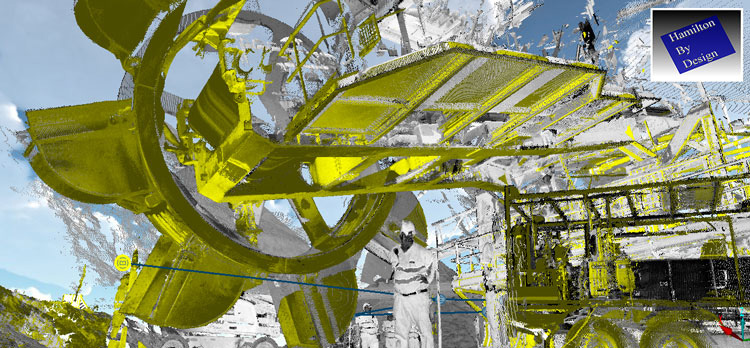
Coloured 3D LiDAR point-cloud scan of industrial CHPP machinery, including a large rotating component and surrounding structures. A worker stands beside the equipment for scale, with the Hamilton By Design logo displayed in the top-right corner.

Why Manual Measurement Fails Every Time

Fitters often get asked to measure:

  • Inside chutes
  • Wear sections
  • Pipe spools with intersection points
  • Tanks too large to measure from one position
  • Walkways too long for tape accuracy
  • Geometry with no records
  • Components 10+ metres above ground
  • Hard-to-reach bolt patterns
  • Angles and centrelines distorted by wear

But some measurements simply cannot be taken safely or accurately by hand.

You canโ€™t hang off an EWP 20 metres up measuring a worn flange angle.
You canโ€™t crawl deep inside a chute trying to measure intersecting surfaces.
You canโ€™t take a 20-metre walkway measurement with a tape measure and hope for precision.

This is not a measurement problem.
This is a method problem.

Manual measurement has hit its limit.
Shutdowns have outgrown tape measures.


This Is Where 2 mm LiDAR Scanning Changes Everything

Hamilton By Design uses 2 mm precision LiDAR scanning to capture the exact geometry of a site โ€” even in areas that are:

  • Too high
  • Too big
  • Too unsafe
  • Too worn
  • Too complex
  • Too tight
  • Too distorted to measure manually

From the ground, up to 30 metres away, we can capture:

  • Wear profiles
  • Flange positions
  • Bolt patterns
  • Pipe centrelines
  • Chute geometry
  • Conveyor interfaces
  • Complex intersections
  • Ductwork transitions
  • Mill inlet/outlet shapes
  • Tank dimensions
  • Walkway alignment
  • Structural deflection
  • Existing inaccuracies

No tape measure. No guesswork. No EWP. No risk.

The result is a perfect 3D point cloud accurate within 2 mm โ€” a digital version of real life.


2 mm Scanning + Fitter-informed Design = Parts That Fit First Time

This is where Hamilton By Design is different.

We donโ€™t just scan and hand the files to a drafter whoโ€™s never set foot on-site.

We scan and your parts are modelled by someone who:

  • Has been a fitter
  • Understands how parts are installed
  • Knows what goes wrong
  • Knows how to design parts that actually fit
  • Knows where shutdowns fail
  • Knows what to check
  • Knows what NOT to trust
  • And most importantly โ€” knows where the real-world problems are hidden

This fitter-informed engineering approach is why our parts fit the first time.

And why shutdown crews trust us.


Digital QA Ensures Fabrication Is Correct Before It Leaves the Workshop

Once the new chute, spool, or component is modelled, we run digital QA:

  • Fit-up simulation
  • Clash detection
  • Tolerance analysis
  • Wear profile compensation
  • Reverse engineering comparison
  • Bolt alignment verification
  • Centreline matching
  • Flange rotation accuracy
  • Structural interface checks

If something is out by even 2โ€“3 mm, we know.

We fix it digitally โ€” before the workshop cuts steel.

This stops rework.
This stops shutdown delays.
This stops blame.
This stops stress.

This is the future of shutdown preparation.


Accuracy of 3D LiDAR Scanning With FARO


When the Part Fits, Everything Runs Smooth

Hereโ€™s what actually happens when a chute or spool fits perfectly the first time:

  • The plant is back online faster
  • No rework
  • No reinstalling old worn-out parts
  • No arguing between fitters and supervisors
  • No unexpected surprises
  • No extra access equipment
  • No late-night stress
  • No grinding or โ€œmaking it fitโ€
  • Other shutdown tasks stay on schedule
  • Everyone looks good
  • Production trusts the maintenance team again

Shutdowns become predictable.
Fitters become heroes, not last-minute problem-solvers.


Shutdown Example (Anonymous but Real)

A major processing plant needed a large chute replaced during a short shutdown window.
Access was limited.
The geometry was distorted.
Measurements were impossible to take safely.
The workshop needed exact dimensions, fast.

Hamilton By Design scanned the entire area from the ground โ€” no EWP, no risk.

We produced:

  • Full 2 mm point cloud
  • As-built 3D model
  • New chute design
  • Digital fit-up validation
  • Workshop-ready drawings

The new chute arrived on site.
The old chute came out.
The new chute went straight in.
Zero rework.
Zero stress.
Plant online early.

The supervisor called it the smoothest shutdown theyโ€™d had in 10 years.


Why Fitters Should Reach Out Directly

Sometimes fitters know more about whatโ€™s really happening on-site than anyone in the office.

Fitters see the problems.
Fitters carry the blame.
Fitters deal with the rework.
Fitters just want parts that fit.

So weโ€™re making this simple:

If youโ€™re tired of fitting parts that donโ€™t fit โ€”
If youโ€™re tired of fixing other peopleโ€™s mistakes โ€”
If youโ€™re tired of shutdown stress โ€”

Call Hamilton By Design.

We scan it.
We model it.
We get it right.
Every time.


Services Featured

Hamilton By Design offers:

  • 3D LiDAR laser scanning (2 mm precision)
  • 3D modelling by a fitter-engineer who understands real-world installation
  • Digital QA before fabrication
  • Reverse engineering of worn components
  • Shutdown planning support
  • Fabrication-ready drawings
  • Fit-up simulation
  • Clash detection between old and new parts

This is how shutdowns run smooth.

Hamilton By Design logo displayed on a blue tilted rectangle with a grey gradient background

Call to Action

Are you a Fitter: tired of parts that donโ€™t fit?

Email or Call Hamilton By Design.

Email โ€“ info@hamiltonbydesign.com.au

Phone – 0477002249


Would you Like to Know more?

Name
Would you like us to arrange a phone consultation for you?
Address

Our clients:

Accuracy of 3D LiDAR Scanning With FARO

Why Shutdown Parts Donโ€™t Fit

Engineering Services

Coal Chute Design

Chute Design

3D CAD Modelling | 3D Scanning

Stop Guessing, Start Scanning: How 3D Laser Scanning Prevents Costly Shutdown Delays

The Cost of Guesswork in Shutdowns

Every shutdown comes with pressure โ€” time, budget, and safety. When mechanical upgrades or maintenance are based on outdated drawings or manual measurements, the risk of error skyrockets. A misaligned chute, an incorrectly measured pipe, or a bracket that doesnโ€™t quite fit can turn a planned three-day outage into a five-day scramble.

In industries where every hour offline costs tens of thousands of dollars, guesswork is expensive.

Illustrated scene showing a 3D laser scanner capturing an industrial plant while engineers observe and review data, highlighting how scanning prevents costly shutdown delays.
3D LiDAR scanning and 3D modelling service button โ€” laser scanner capturing a point cloud for engineering and CAD modelling
Mechanical engineering services

3D Laser Scanning: Seeing the Plant as It Really Is

Thatโ€™s where 3D laser scanning and LiDAR technology change the game. Using a FARO or similar high-accuracy scanner, Hamilton By Design captures millions of data points in a matter of minutes โ€” creating a precise digital replica of your plant or structure.
This point cloud model forms the foundation for all design work. Every pipe, beam, and bracket is located exactly where it exists in the real world, not where an old drawing says it should be.

From Scan to SolidWorks: Accurate Models, Confident Designs

Once the scan is complete, the data is reverse-modelled into SolidWorks or similar 3D design environments.
This means upgrades, chutes, handrails, and structural supports can be designed within the scanned environment โ€” guaranteeing they fit perfectly on installation day.
Our clients use this workflow to plan shutdowns with confidence, knowing that every fabricated part will bolt straight in.
Eliminating Fit-Up Errors and Rework

Traditional upgrade projects rely on tape measures, rough sketches, or outdated general arrangement drawings. Even a 10 mm error can cause weeks of rework once site access is restricted.
With 3D scanning, those errors disappear.
Before fabrication begins, engineers can check for:

  • Clashes and interferences between new and existing plant structures.
  • Clearances for maintenance and access.
  • Alignment with conveyors, supports, and existing chutes.

That level of insight is impossible with 2D drawings alone.

Shorter Shutdowns, Safer Teams

Fewer surprises mean faster, safer installations.
When every component is designed and verified within the scanned model, shutdown crews spend less time cutting, grinding, or reworking in the field.
Thatโ€™s not only a productivity win, itโ€™s a safety win โ€” fewer sparks, less manual handling, and minimal hot work in confined spaces.

Applications Across Mining and Processing

Hamilton By Designโ€™s scanning and modelling process is trusted across the Bowen Basin, Surat Basin, Hunter Valley, and Central West NSW.
Typical projects include:

  • CHPP upgrades โ€” chute replacements, diverter modifications, and screen structure changes.
  • Conveyor realignments โ€” ensuring belt runs are perfectly centred before shutdown.
  • Pipework and pump station retrofits โ€” avoiding rework when tie-ins occur.
  • Structural verification โ€” validating as-built conditions before new platforms or walkways are installed.
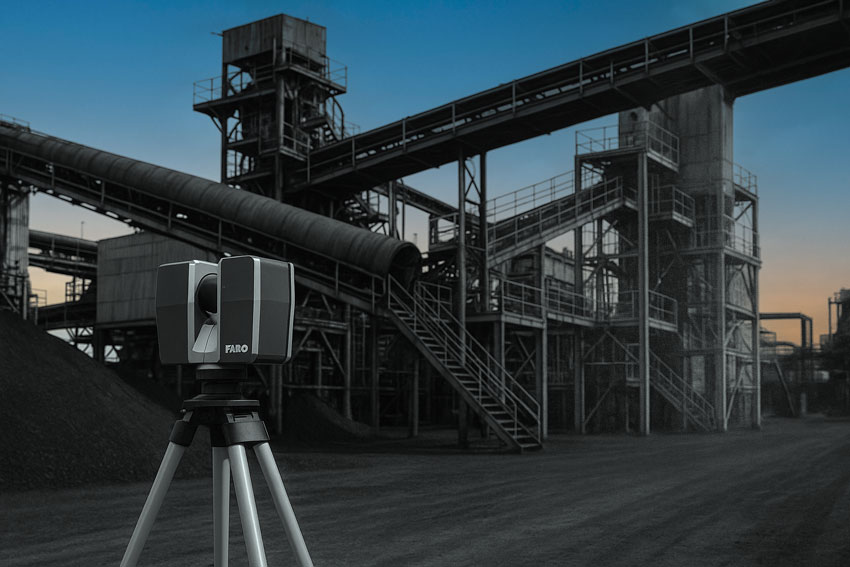
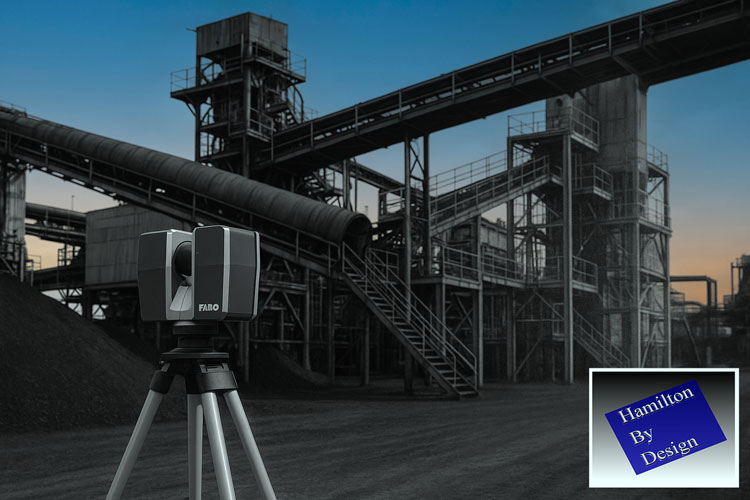
FARO 3D laser scanner set up on a tripod capturing an industrial plant for LiDAR scanning and digital modelling, with Hamilton By Design branding in the corner.

Real-World ROI

Clients routinely report saving days of downtime and thousands in rework costs by scanning before fabrication.
When you consider that a typical CHPP shutdown might cost $20,000โ€“$50,000 per hour in lost production, the return on investment is obvious.
A few hours spent scanning can mean days of avoided delay.

Stop Guessing, Start Scanning

If your next shutdown involves tight spaces, limited access, or unknown conditions โ€” donโ€™t rely on old drawings or assumptions.
Hamilton By Design provides LiDAR scanning, point-cloud modelling, and SolidWorks-based mechanical design to ensure your upgrades install exactly as intended.

๐Ÿ‘‰ Book a site scan before your next shutdown.
Visit www.hamiltonbydesign.com.au or contact us to discuss your upcoming project.

3D CAD Modelling | 3D Scanning

Hamilton By Design logo displayed on a blue tilted rectangle with a grey gradient background

Chute Design

Mechanical Engineering | Structural Engineering

Our clients

Name
Would you like us to arrange a phone consultation for you?
Address