Mechanical Engineering | 3D Scanning | 3D Modelling
Tag: mining-chpp
Hamilton By Design provides mechanical engineering, 3D LiDAR scanning and CAD support for coal handling and preparation plants throughout Australia.
CHPP projects frequently involve modifications to existing conveyors, transfer chutes, bins, screens, tanks, pumps, pipework, platforms and other fixed plant assets. Accurate as-built information is particularly important when new equipment must connect to or fit around operating plant.
Our CHPP engineering services include existing-condition scanning, point-cloud registration, mechanical design, scan-to-CAD modelling, clash detection, general arrangements and fabrication drawings. We can also assist with equipment replacement, shutdown planning, chute modifications, conveyor upgrades and installation verification.
Combining mining experience with LiDAR scanning allows surrounding plant and connection points to be captured efficiently. The resulting point clouds and 3D models can help identify clearances, access requirements, structural interfaces and potential installation conflicts before fabrication begins.
Deliverables may include registered point clouds, 3D CAD models, general arrangement drawings, fabrication gra drawings and data suitable for AutoCAD, SolidWorks, Inventor, ReCap and Navisworks workflows.
Services are available across the Hunter Valley, Central Queensland and other coal-mining regions throughout Australia.
1. Setting the Scene: The Central Coast & Its Industrial Backbone
Home to nearly 350,000 people across Gosford, Wyong, Terrigal, and beyond, the Central Coast is well-known for its beaches and bushland—yet it also supports a robust industrial and mining‑services sector (Jora, Wikipedia). With growing infrastructure demands and proximity to resource projects like the Wallarah 2 coal proposal near Wyong (Wikipedia), mechanical engineers play a pivotal role behind the scenes.
2. What Do Mechanical Engineers Do in Mining on the Coast?
Mechanical engineers in mining and related heavy industries are responsible for:
Design & Maintenance: Planning, designing, and overseeing maintenance of critical mineral processing plants, machinery, conveyors, trucks and drilling rigs (Jobsora).
Health & Safety Compliance: Ensuring mechanical systems meet stringent safety regulations and operator protection standards (Jora).
Environmental Efficiency: Optimising equipment to reduce energy use, emissions, and noise—all while supporting mine rehabilitation efforts .
3. Job Opportunities in the Region
Recent job listings highlight robust opportunities for mechanical engineers across the Coast:
Mining Mechanical Engineer roles are regularly advertised in Gosford/Lisarow, appearing in SEEK and Jora job postings (SEEK).
Roles span senior design positions to hands‑on maintenance engineering—offering full-time opportunities with firms like Wabtec, Hyundai Rotem, Boral, and Coffey (SEEK).
Entry-level and graduate engineering roles are also available through pathways like Central Coast Council traineeships and TAFE NSW programs (Central Coast Council).
4. Industry Trends and What You’ll Need
As described by Titan Recruitment, the mining sector is embracing several transformative trends (Titan Recruitment):
Automation & Robotics: Engineers are tasked with integrating autonomous machinery and control systems.
Digital & Data Analytics: Skills in condition monitoring, sensors, and predictive analytics are in demand.
Sustainability Focus: There’s emphasis on clean, efficient systems that reduce environmental footprint.
Complex Machine Design: As equipment sophistication grows, so does the need for mechanical expertise.
Asset Reliability & Safety: Mechanical engineers must ensure zero-fault operation in harsh mining environments.
Site-to-System Integration: Engineers coordinate across disciplines—mechanical, electrical, structural—to optimise operations.
Continuous Upskilling: Ongoing education—through TAFE NSW, professional certifications, and in-house training—is critical.
5. Training & Career Pathways on the Central Coast
🎓 Education & Apprenticeships
TAFE NSW (Hunter & Central Coast) offers mechanical and engineering trade training, forming a strong foundation for local roles (Wikipedia).
Central Coast Council provides apprenticeships and traineeships in mechanical fields—ideal stepping stones into industry .
🏢 Local Industry Experience
Firms like Wabtec, Hyundai Rotem, Boral, Coffey, and Wright Engineering in Somersby/Gosford offer vital on-the-job training and progression (SEEK).
Mining-support businesses across the Central Coast employ engineers to design, maintain, and improve heavy-duty plant and machinery.
6. Why the Central Coast Is a Great Base for Mining Engineers
Proximity to Projects: Infrastructure supporting coal drilling and mineral processing connects easily with local towns via major transport routes in and out of Gosford (Jobsora, Wikipedia).
Balanced Lifestyle: Work-life harmony blends regional industry jobs with coastal living and access to national parks (Indeed).
Clear Career Pathways: Education, apprenticeships, and employers form a supportive ecosystem—from bedrock training to senior site leadership.
Final Takeaway
Mechanical engineers are essential to mining operations on the Central Coast—ensuring machinery runs efficiently, safely, and sustainably. With strong local education pathways, active job markets, and growing tech trends, the region offers rewarding careers tied to both industrial innovation and community lifestyle.
Ready to design, maintain, and optimise the backbone of mining? The Central Coast has the foundation—and the opportunity—awaiting mechanical engineers eager to build the future.
Hamilton By Design acknowledges and supports Australia’s commitment to reconciliation. We recognise the importance of building meaningful and respectful relationships with Aboriginal and Torres Strait Islander peoples and communities—particularly within the regions where we operate.
As an Australian-owned business, we are committed to engaging with Indigenous communities in a way that promotes inclusion, respect, and long-term benefit. While we are a small consultancy, we take steps to support reconciliation through:
Procurement Practices: Where possible, we seek to engage Indigenous-owned suppliers and contractors, particularly for site-based services and materials.
Cultural Awareness: Our team acknowledges the Traditional Custodians of the lands on which we work and encourages cultural awareness across project engagements.
Community Engagement: On projects in regional areas, we actively support client-led initiatives aimed at community engagement, Indigenous employment, and skills development.
We are committed to growing our contribution to reconciliation efforts and aligning our operations. We welcome future opportunities to collaborate and support your engagement with Aboriginal and Torres Strait Islander communities.
Hamilton By Design is committed to ethical business practices and supports the objectives of the Modern Slavery Act 2018 (Cth). We recognise the importance of transparency and due diligence in managing the risk of modern slavery within our business operations and supply chains.
As a specialised engineering consultancy, our operations are primarily office-based and service-driven. Our internal workforce is directly employed, with all employees and contractors engaged under fair and lawful terms in accordance with Australian employment standards and awards.
In relation to our supply chain, which is largely domestic and involves procurement of software, technical equipment, and professional services, we take the following steps to minimise modern slavery risks:
Supplier Screening: We engage with reputable Australian-based suppliers who are expected to comply with all relevant workplace and human rights legislation.
Risk Awareness: We periodically review our procurement practices to identify any exposure to higher-risk sectors or regions, particularly when sourcing technical hardware or materials.
Ethical Conduct: We maintain open communication with our subcontractors and partners to promote ethical behaviour and responsible sourcing.
Continuous Improvement: As our business grows, we are committed to formalising our modern slavery policy, enhancing supplier due diligence, and aligning with best practices in social responsibility.
We remain committed to continuous improvement and support our clients in building ethical and transparent supply chains.
The mining industry, particularly in resource-rich countries like Australia, is a cornerstone of economic activity and development. However, it faces an array of complex challenges including technological advancements, process optimization, and regulatory compliance. Mechanical engineering consultants play a crucial role in helping mining companies navigate these challenges, leveraging their expertise to enhance efficiency, sustainability, and profitability. This essay explores the various ways in which mechanical engineering consultants contribute to the mining sector by providing specialized knowledge and solutions in technology, process optimization, and regulatory compliance.
Technological Advancements
Equipment Design and Selection
One of the primary contributions of mechanical engineering consultants to the mining industry is in the area of equipment design and selection. Mining operations rely heavily on specialized machinery, from excavators and drilling rigs to conveyor systems and crushers. Consultants possess the technical knowledge to design custom equipment tailored to specific mining environments and operational requirements.
For instance, in deep mining operations, consultants can design robust and durable machinery capable of withstanding extreme conditions such as high pressure and temperature. They can also recommend the most suitable equipment based on factors like ore type, mining method, and production capacity. This ensures that mining companies invest in machinery that maximizes productivity while minimizing operational costs.
Automation and Robotics
The integration of automation and robotics in mining operations is another area where mechanical engineering consultants add significant value. Automation technologies, such as autonomous haul trucks and robotic drilling systems, can greatly enhance efficiency and safety in mining operations. Consultants help mining companies implement these technologies by designing and programming automated systems, selecting appropriate sensors and control units, and ensuring seamless integration with existing operations.
For example, autonomous vehicles can operate continuously without the need for breaks, significantly increasing productivity. Additionally, automation reduces the risk of accidents and injuries by removing human workers from hazardous environments. Consultants also provide training and support to ensure that mine operators can effectively manage and maintain these advanced systems.
Digitalization and IoT
The adoption of digital technologies and the Internet of Things (IoT) is transforming the mining industry. Mechanical engineering consultants play a pivotal role in this digital transformation by developing and implementing IoT solutions that provide real-time data and analytics. These technologies enable mining companies to monitor equipment performance, track production metrics, and optimize maintenance schedules.
Consultants can design IoT systems that collect data from various sensors installed on mining equipment. This data is then analyzed to identify patterns and predict potential equipment failures before they occur, allowing for proactive maintenance. This approach not only reduces downtime but also extends the lifespan of mining machinery. Furthermore, real-time data analytics enable better decision-making, as managers have access to up-to-date information on all aspects of mining operations.
Process Optimization
Lean Manufacturing Principles
Process optimization is critical for enhancing efficiency and reducing costs in mining operations. Mechanical engineering consultants bring expertise in lean manufacturing principles, which focus on eliminating waste, improving workflow, and maximizing value. By applying these principles, consultants help mining companies streamline their processes and improve overall productivity.
For instance, consultants can conduct value stream mapping to identify bottlenecks and inefficiencies in mining processes. They can then develop strategies to eliminate these bottlenecks, such as reconfiguring workflows, optimizing material handling systems, and improving communication and coordination among different departments. Lean manufacturing techniques also promote continuous improvement, ensuring that mining operations remain efficient and competitive over time.
Energy Efficiency
Energy consumption is a significant cost driver in mining operations. Mechanical engineering consultants can help mining companies improve energy efficiency by conducting energy audits and identifying opportunities for energy savings. This can involve optimizing the operation of energy-intensive equipment, such as grinding mills and pumps, or implementing energy-efficient technologies, such as variable frequency drives and high-efficiency motors.
For example, consultants can recommend the installation of advanced control systems that optimize the operation of grinding mills based on real-time ore characteristics. This ensures that the mills operate at their most efficient point, reducing energy consumption and operating costs. Additionally, consultants can design heat recovery systems that capture and reuse waste heat from mining processes, further enhancing energy efficiency.
Maintenance Optimization
Effective maintenance strategies are essential for ensuring the reliability and longevity of mining equipment. Mechanical engineering consultants can help mining companies develop and implement maintenance optimization programs that maximize equipment availability and minimize downtime. This includes predictive maintenance, which uses data analytics to predict equipment failures before they occur, and preventive maintenance, which involves regularly scheduled maintenance tasks to prevent unexpected breakdowns.
Consultants can design and implement condition monitoring systems that continuously monitor the health of mining equipment. These systems use sensors to collect data on parameters such as vibration, temperature, and pressure, which are then analyzed to detect early signs of wear and tear. By addressing potential issues before they lead to equipment failure, mining companies can avoid costly downtime and extend the lifespan of their machinery.
Regulatory Compliance
Environmental Regulations
Compliance with environmental regulations is a major challenge for mining companies. Mechanical engineering consultants play a crucial role in helping companies meet these requirements by designing and implementing systems that minimize environmental impact. This includes pollution control technologies, waste management systems, and sustainable mining practices.
For example, consultants can design dust control systems that reduce the amount of airborne particulate matter generated by mining operations. These systems can include water sprays, dust suppression chemicals, and ventilation systems that capture and filter dust particles. Consultants can also develop waste management plans that ensure the safe disposal and recycling of mining by-products, such as tailings and slag.
Furthermore, consultants can assist in the design and implementation of sustainable mining practices, such as water conservation and land reclamation. By helping mining companies minimize their environmental footprint, consultants ensure that operations remain compliant with environmental regulations and contribute to sustainable development.
Safety Regulations
Ensuring the safety of workers is paramount in the mining industry, which is subject to strict safety regulations. Mechanical engineering consultants can help mining companies comply with these regulations by designing and implementing safety systems and protocols. This includes the development of risk assessments, safety audits, and emergency response plans.
Consultants can design safety systems that protect workers from hazards such as falling rocks, equipment failures, and exposure to harmful substances. For example, they can design and implement rock fall protection systems, such as mesh nets and rock bolts, that prevent loose rocks from falling in underground mines. They can also develop equipment maintenance protocols that ensure machinery is regularly inspected and maintained to prevent accidents.
In addition to physical safety systems, consultants can provide training and support to ensure that workers are aware of safety protocols and know how to respond in emergency situations. By enhancing safety measures, consultants help mining companies protect their workforce and comply with safety regulations.
Reporting and Documentation
Regulatory compliance requires comprehensive reporting and documentation. Mechanical engineering consultants can assist mining companies in developing and maintaining the necessary records and reports to demonstrate compliance with environmental, safety, and other regulations. This includes the preparation of environmental impact assessments, safety audits, and compliance reports.
Consultants can also implement data management systems that streamline the collection, storage, and retrieval of compliance-related data. These systems ensure that mining companies have access to accurate and up-to-date information needed for regulatory reporting. By managing regulatory documentation, consultants help companies avoid fines and penalties associated with non-compliance.
Case Studies
Automation and Robotics in Mining
One notable example of mechanical engineering consultants aiding mining companies is the implementation of autonomous haul trucks in large mining operations. These trucks, guided by advanced GPS and sensor technologies, operate without human drivers. Mechanical engineering consultants played a pivotal role in designing the automation systems, selecting the appropriate hardware and software, and integrating these technologies with existing mining operations.
The result was a significant increase in productivity and a reduction in operating costs. The autonomous trucks could operate 24/7, without the need for breaks, leading to higher throughput. Additionally, the removal of human drivers from hazardous environments reduced the risk of accidents and injuries, enhancing overall safety.
Energy Efficiency in Grinding Operations
Another case where mechanical engineering consultants made a substantial impact was in improving energy efficiency in grinding operations at a major Australian mining company. Grinding mills are among the most energy-intensive equipment in mining operations. Consultants conducted a comprehensive energy audit and identified opportunities to optimize mill operations.
They recommended the installation of variable frequency drives on the mill motors, which allowed for better control of the grinding process. They also designed an advanced control system that adjusted the mill operation based on real-time ore characteristics. These improvements resulted in a significant reduction in energy consumption, lowering operating costs and reducing the environmental footprint of the mining operation.
Environmental Compliance in Tailings Management
Tailings, the waste materials left after the extraction of valuable minerals, pose significant environmental challenges. A mining company faced regulatory pressure to improve its tailings management practices to prevent environmental contamination. Mechanical engineering consultants were brought in to design a comprehensive tailings management system.
The consultants developed a plan that included the construction of tailings storage facilities with advanced liner systems to prevent leachate contamination. They also designed a water treatment system to treat any water that came into contact with the tailings, ensuring that it met environmental discharge standards. Additionally, the consultants implemented a monitoring system to continuously track the condition of the tailings storage facilities and detect any potential issues.
As a result, the mining company was able to meet regulatory requirements and significantly reduce the environmental impact of its tailings management practices. The comprehensive approach ensured that the company could continue its operations without facing regulatory penalties or damaging its reputation.
Future Trends and Challenges
Advanced Materials and Nanotechnology
As the mining industry continues to evolve, new challenges and opportunities will arise. Advanced materials and nanotechnology are poised to revolutionize mining equipment and processes. Mechanical engineering consultants will play a crucial role in integrating these technologies into mining operations, enhancing efficiency and sustainability.
For instance, nanotechnology can be used to develop stronger and lighter materials for mining equipment, reducing wear and tear and extending the lifespan of machinery. Consultants will need to stay abreast of these technological advancements and provide expertise in selecting and implementing the most promising innovations.
Cybersecurity in Mining
With the increasing reliance on digital technologies and IoT, cybersecurity is becoming a critical concern for the mining industry. Mechanical engineering consultants will need to work closely with cybersecurity experts to ensure that automated and digital systems are protected from cyber threats. This includes designing secure.
To Get in contact with Mechanical Engineering Consultants
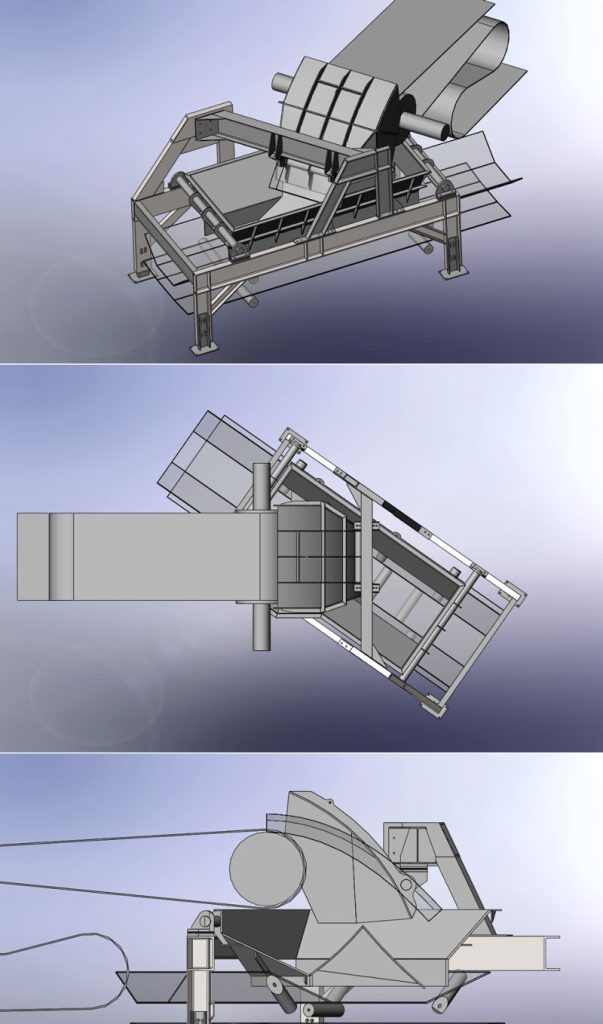
Designing reliable bulk materials conveyor transfer station chutes involves a careful consideration of various principles to ensure efficient material handling, minimize maintenance, and avoid operational issues. Here are the key principles and potential pitfalls to look out for:
Key Principles
Material Flow Dynamics:
Controlled Flow: Ensuring that the material flow is controlled and predictable is crucial. This involves designing the chute to guide the material smoothly from one conveyor to the next without creating bottlenecks or excessive turbulence.
Optimal Angles: The chute’s angles should be carefully calculated. Angles that are too steep may cause material to accelerate excessively, leading to wear and impact damage, while shallow angles can cause blockages.
Trajectory Management: Properly managing the material’s trajectory helps in reducing spillage and wear. The trajectory should be designed to align with the receiving conveyor’s speed and direction.
Wear Resistance:
Material Selection: Using wear-resistant materials for the chute construction can significantly extend its lifespan. Materials like AR (abrasion-resistant) steel or liners made from ceramic or rubber are common choices.
Strategic Wear Points: Identifying and reinforcing areas that are prone to high wear, such as impact zones and high-friction areas, can prevent premature failure.
Dust and Spillage Control:
Sealing: Effective sealing around the chute is essential to prevent dust and material spillage, which can lead to environmental issues and loss of product.
Dust Suppression: Incorporating dust suppression systems, such as water sprays or dust extraction, can minimize airborne particles, ensuring a safer and cleaner working environment.
Maintenance and Accessibility:
Ease of Access: Designing the chute for easy access allows for routine maintenance and inspection without requiring extensive downtime or complex procedures.
Modular Components: Using modular components can simplify the replacement of worn parts, reducing maintenance time and costs.
Structural Integrity:
Robust Design: The chute must be structurally robust to withstand the dynamic loads of the bulk materials. This includes ensuring that the support structure is adequately reinforced.
Vibration and Impact Resistance: Designing to mitigate vibration and absorb impacts can reduce structural fatigue and extend the life of the chute.
Flow Rate Compatibility:
Capacity Matching: Ensuring the chute design matches the flow rate of the conveyor system it serves is vital. Overloading can lead to blockages and spillage, while underloading may indicate inefficient use of the system.
Pitfalls to Avoid
Incorrect Angle of Inclination:
Blockages and Spillage: If the chute angle is too steep or too shallow, it can lead to blockages or spillage. A steep angle might cause uncontrolled flow, while a shallow angle might lead to material build-up.
Insufficient Wear Protection:
Premature Wear: Failing to use appropriate wear-resistant materials or neglecting high-wear areas can result in frequent maintenance and downtime due to premature wear and tear.
Poorly Designed Transitions:
Material Segregation: Abrupt transitions or poorly designed junctions can cause material segregation, uneven flow, and increased wear on the chute and conveyor components.
Inadequate Dust Control:
Environmental and Health Issues: Neglecting dust control can lead to significant environmental and health issues, as well as potential regulatory fines and operational inefficiencies.
Maintenance Challenges:
Difficult Access: Designing chutes without considering maintenance access can lead to extended downtime and increased labor costs during repairs and inspections.
Ignoring Dynamic Loads:
Structural Failures: Not accounting for the dynamic loads and impact forces exerted by the bulk materials can lead to structural failures and hazardous conditions.
Poor Integration with Conveyor System:
Operational Inefficiencies: Failing to properly integrate the chute design with the conveyor system can lead to operational inefficiencies, increased wear on conveyor components, and potential system failures.
By adhering to these principles and being mindful of the potential pitfalls, the design of bulk materials conveyor transfer station chutes can be optimized for reliability, efficiency, and longevity.
For more information on Bulk Materials Conveyor Transfer please feel free to connect
The challenges Mechanical Engineers have when it comes to maintaining the reliability of conveyor systems for transporting bulk materials, particularly particles ranging from 1mm to 100mm, presents mechanical engineers with a host of challenges. Reliability maintenance aims to ensure that these systems operate consistently and efficiently over their operational lifespan, minimizing downtime and optimizing productivity. Here are some key challenges faced by mechanical engineers in this regard:
1. Component Wear and Failure: The continuous operation of conveyor systems subjects various components such as belts, rollers, bearings, and drive mechanisms to wear and potential failure. The abrasive nature of bulk materials can accelerate this process, leading to shortened component lifespan and increased risk of unexpected breakdowns. Mechanical engineers must implement proactive maintenance strategies, including regular inspections, lubrication, and component replacement, to mitigate wear-related issues and enhance system reliability.
2. Material Contamination and Blockages: Bulk materials containing particles of diverse sizes can lead to material contamination and blockages within conveyor systems if not properly managed. Fine particles may accumulate in chutes, transfer points, or on conveyor surfaces, causing flow disruptions and increased friction. Engineers need to design systems with effective cleaning mechanisms, such as scrapers, brushes, and air blowers, to prevent material buildup and maintain uninterrupted material flow.
3. Misalignment and Tracking Issues: Misalignment of conveyor belts and tracking problems can result in uneven material distribution, increased friction, and premature wear on system components. Mechanical engineers must ensure proper belt tensioning and alignment during installation and implement monitoring systems to detect and correct any deviations from the desired trajectory. Advanced tracking technologies, such as automated belt positioners and laser alignment tools, can aid in maintaining optimal conveyor performance.
4. Environmental Factors: Harsh environmental conditions, including temperature variations, moisture, dust, and corrosive substances, pose significant challenges to conveyor system reliability. Exposure to such elements can accelerate component degradation and compromise system integrity. Engineers must select durable materials, coatings, and sealing solutions resistant to environmental hazards and implement preventive measures, such as regular cleaning and protective enclosures, to safeguard conveyor systems from adverse effects.
5. Safety and Regulatory Compliance: Compliance with safety regulations and industry standards is essential for ensuring the reliability and safe operation of conveyor systems. Mechanical engineers must stay abreast of regulatory requirements and design systems that meet or exceed applicable standards for material handling equipment. Regular safety inspections, training programs for personnel, and implementation of safety protocols are crucial aspects of reliability maintenance in conveyor systems.
At Hamilton By Design, our team have the experience in addressing these challenges requires a comprehensive approach that combines sound engineering principles, advanced technologies, and proactive maintenance practices. By implementing robust reliability maintenance programs, mechanical engineers can maximize the uptime and longevity of conveyor systems for transporting bulk materials, thereby optimizing operational efficiency and minimizing costly disruptions.
To provide the best experiences, we use technologies like cookies to store and/or access device information. Consenting to these technologies will allow us to process data such as browsing behaviour or unique IDs on this site. Not consenting or withdrawing consent, may adversely affect certain features and functions.
Functional
Always active
The technical storage or access is strictly necessary for the legitimate purpose of enabling the use of a specific service explicitly requested by the subscriber or user, or for the sole purpose of carrying out the transmission of a communication over an electronic communications network.
Preferences
The technical storage or access is necessary for the legitimate purpose of storing preferences that are not requested by the subscriber or user.
Statistics
The technical storage or access that is used exclusively for statistical purposes.The technical storage or access that is used exclusively for anonymous statistical purposes. Without a subpoena, voluntary compliance on the part of your Internet Service Provider, or additional records from a third party, information stored or retrieved for this purpose alone cannot usually be used to identify you.
Marketing
The technical storage or access is required to create user profiles to send advertising, or to track the user on a website or across several websites for similar marketing purposes.