3D Scanning for Gladstone

Gladstoneโ€™s Industrial Powerhouse: How 3D LiDAR Scanning, Engineering & Digital Modelling Are Transforming CQ Projects

Gladstone is unlike any other regional city in Australia. It is a true industrial powerhouse โ€” home to the countryโ€™s largest multicommodity port, three LNG mega-plants, major alumina refineries, a huge aluminium smelter, power stations, chemical facilities, cement production and a constant cycle of shutdown and maintenance projects. If you work in engineering, fabrication, construction or heavy industry, Gladstone represents one of the most complex, interesting and opportunity-rich environments in the country.

At Hamilton By Design, we bring engineering-grade 3D LiDAR laser scanning, mechanical and structural engineering, 3D modelling and fabrication-ready drafting to support the precision required in this region. With so many brownfield assets, tight shutdown windows, high-risk environments and complex layouts, Gladstoneโ€™s industrial clients rely on accurate data and robust engineering to ensure safe, efficient and reliable project outcomes.

This article explores why Gladstone is such a unique engineering ecosystem โ€” and how modern digital tools are improving plant upgrades, maintenance, fabrication, installation and long-term reliability.


Why Gladstone Is One of Australiaโ€™s Most Unique Engineering Environments

Gladstoneโ€™s industrial landscape is the result of decades of strategic investment and natural geographic advantages. No other regional city has this density of heavy processing facilities, export terminals and energy infrastructure in one place.

1. A Mega-Scale Industrial Port

The Port of Gladstone is Queenslandโ€™s largest multicommodity port, handling:

  • coal
  • LNG
  • alumina
  • aluminium
  • cement
  • bulk chemicals
  • mineral products
  • general and containerised freight

The portโ€™s footprint includes conveyors, loading towers, wharf structures, pipelines, tanks, gantries and processing equipment โ€” much of which requires ongoing scanning, modelling and engineering to maintain safe, efficient operations.

2. Three LNG Plants on Curtis Island

Gladstone is home to Australiaโ€™s only cluster of three major LNG export facilities, each containing:

  • pressure vessels
  • cryogenic tanks
  • kilometres of pipe racks
  • modularised process trains
  • large structural steel assemblies
  • jetties and marine loading arms

This creates unparalleled demand for digital engineering, scanning and verification.

3. A Complete Heavy-Industry Chain

Few cities have such an interconnected set of process plants:

  • Queensland Alumina Limited (QAL)
  • Rio Tinto Yarwun Alumina Refinery
  • Boyne Aluminium Smelter
  • NRG and other power facilities
  • Cement Australia

Each site requires constant:

  • shutdown planning
  • precise measurement
  • design modifications
  • structural integrity checks
  • digital as-builts
  • engineering documentation

This continuous workload makes Gladstone one of the biggest users of LiDAR scanning and mechanical/structural engineering in Australia.

4. The City Runs on Projects

Gladstoneโ€™s industrial sector operates year-round:

  • maintenance shutdowns
  • brownfield upgrades
  • fabrication campaigns
  • equipment replacements
  • process improvements

Accurate spatial data is not optional โ€” it is essential for avoiding clashes, rework and costly delays.


3D LiDAR Laser Scanning โ€” Reducing Risk in Gladstoneโ€™s Complex Industrial Plants

In a brownfield environment like Gladstone, complexity is the norm:

  • crowded pipe racks
  • confined spaces
  • undocumented modifications
  • ageing platforms and walkways
  • shifting alignment over time
  • corrosion and wear
  • intricate mechanical layouts

Traditional surveying simply cannot capture enough detail to support safe and efficient upgrades.

Thatโ€™s why Hamilton By Design delivers engineering-grade 3D LiDAR scanning, capturing entire facilities with millimetre-level accuracy.

Our scanning provides high-resolution digital data for:

  • refineries
  • smelters
  • LNG plants
  • conveyors and materials handling
  • marine loading facilities
  • tanks and pressure systems
  • structural steel
  • civil and terrain modelling

The result is a precise, true-to-life digital environment used for design, clash detection, structural checks, fabrication planning and QA.

Learn more about our scanning capabilities here:
3D Laser Scanning

For Gladstone, LiDAR scanning means:

  • fewer shutdown delays
  • safer engineering access
  • accurate tie-in points
  • reduced rework during installation
  • better fabrication accuracy
  • confidence in brownfield modifications

In an environment where time = money, this technology is transformative.


3D Modelling & Drafting โ€” Turning Complexity into Clarity

Once the scan data is captured, Hamilton By Design converts it into structured 3D CAD models and fabrication-ready drawings. This process is essential in Gladstoneโ€™s industrial context, where upgrades often occur inside densely packed areas with zero room for error.

We deliver:

  • SolidWorks models of equipment, structures and layouts
  • general arrangement (GA) drawings
  • detailed fabrication drawings
  • piping/isometric drawings
  • platform, handrail and structural packages
  • alignment and clearance analysis
  • digital QA documentation

For LNG, alumina, port and refinery clients, accurate 3D modelling prevents clashes, supports tender and fabrication packages, and provides a reliable digital reference long after the project is complete.


Mechanical & Structural Engineering for Gladstoneโ€™s Heavy Industry

Gladstoneโ€™s operating environment requires engineering that is:

  • robust
  • precise
  • compliant
  • optimised for reliability
  • grounded in real-world site conditions

Hamilton By Design provides mechanical and structural engineering for:

  • plant upgrades and retrofits
  • conveyor and materials handling systems
  • support structures, frames and platforms
  • tanks, piping and pressure systems
  • fatigue, stress and load assessments
  • access and maintenance design
  • lifting, mounting and replacement systems

Our engineer-led approach ensures all designs are supported by verified data from LiDAR scanning and validated using modern analysis tools.


Where We Add the Most Value in Gladstone

1. Refinery & Smelter Shutdown Engineering

Scanning + modelling reduces:

  • tie-in errors
  • mismatch in fabricated steel
  • shutdown overruns
  • safety risks

2. LNG Plant Modifications & Brownfield Upgrades

LiDAR gives accurate data for:

  • pipe rerouting
  • structural steel changes
  • equipment replacement
  • modular installation

3. Port Facilities & Marine Loading Infrastructure

We support:

  • conveyor structures
  • wharf upgrades
  • loadout systems
  • marine walkways and assets

4. Fabrication & Workshop Support

Local fabricators benefit from:

  • accurate shop drawings
  • digital QA
  • validated steel cutting
  • correct fit-up on first installation

5. Civil & Terrain Modelling

For foundations, tank pads, laydown areas and access roads.


End-to-End Accountability: Scan โ†’ Model โ†’ Engineer โ†’ Draft โ†’ Deliver

Gladstoneโ€™s project environment involves many contractors โ€” which can lead to miscommunication. Hamilton By Design solves this with a unified workflow:

  1. 3D LiDAR Scan
  2. Point Cloud Registration
  3. 3D CAD Modelling
  4. Mechanical & Structural Engineering
  5. Fabrication-Ready Drafting
  6. Digital QA & Documentation

One team. One process. One accountable source.
Minimal rework. Maximum clarity.


Hamilton By Design logo displayed on a blue tilted rectangle with a grey gradient background
3D LiDAR scanning and 3D modelling service button โ€” laser scanner capturing a point cloud for engineering and CAD modelling
Mechanical engineering services

Gladstoneโ€™s Future Is Heavy Industry + Digital Precision โ€” And Weโ€™re Ready

With rising LNG activity, alumina growth, port expansions, hydrogen projects and ongoing shutdowns, Gladstone is entering a new era of industrial development. Accurate data, digital modelling and strong engineering discipline are no longer optional โ€” they are core to safe, efficient and cost-effective project delivery.

Hamilton By Design is here to support Gladstone with:

  • precision 3D LiDAR scanning
  • mechanical & structural engineering
  • 3D modelling and CAD drafting
  • digital project documentation
  • fabrication-ready deliverables

Whether youโ€™re planning a shutdown, designing a new structure, upgrading existing systems or documenting a complex brownfield environment, we help you build with confidence.

Our Clients

Name
Would you like us to arrange a phone consultation for you?
Address
Finite Element Analysis (FEA) engineering simulation button
Mechanical engineering services

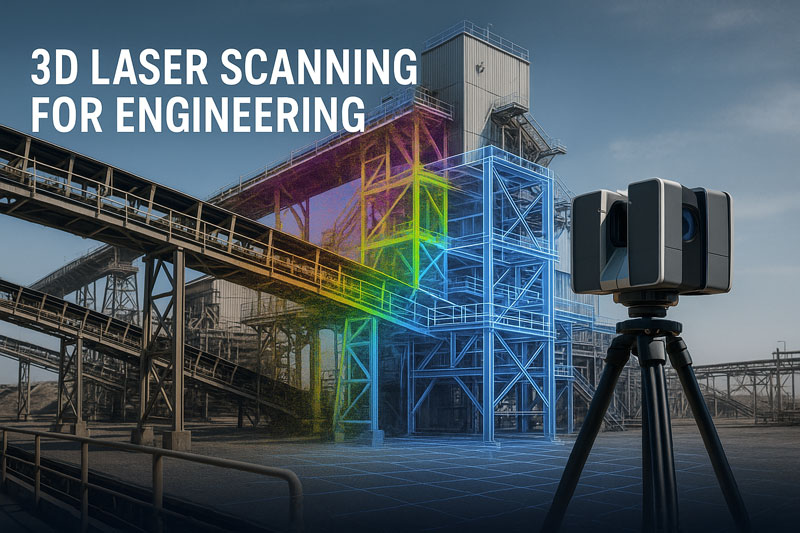
3D Laser Scanning for Engineering

A 3D laser scanner on a tripod capturing an industrial plant structure, with a colourful point cloud and blue CAD wireframe overlay illustrating engineering-grade 3D laser scanning accuracy.

3D Laser Scanning for Engineering


At Hamilton By Design, we deliver high-accuracy 3D laser scanning tailored specifically for engineering projects across mining, heavy industry, manufacturing, buildings and infrastructure.

Whether youโ€™re planning a shutdown upgrade, solving a site fit-up problem or updating critical as-built documentation, our engineering-grade scans give your team the confidence to design, fabricate and install with millimetre-level accuracy.


Choosing the Right Scanner for the Right Engineering Discipline

One of the most overlooked aspects of 3D laser scanning is scanner selection.
Different scanners are designed for different forms of engineering work:

  • Civil works / road works scanners prioritise coverage and speed
  • Structural engineering scanners require higher accuracy across steelwork and vertical alignment
  • Mechanical engineering demands the highest level of precision for equipment tie-ins, rotating machinery, platework and interfaces

While some overlap exists between these disciplines, a single scanner cannot deliver optimal accuracy across all engineering environments. Using one device for civil, structural and mechanical scopes inevitably leads to accuracy losses, which then flow into the design, fabrication and installation phases.

At Hamilton By Design, we select the scanner and workflow that best matches your engineering discipline, ensuring the data you receive aligns with the tolerances required for your projectโ€”not just a โ€œone-size-fits-allโ€ output.


Why 3D Laser Scanning for Engineering Projects?

Traditional tape-measure surveys and hand sketches simply canโ€™t keep up with the complexity of modern plants and structures.

3D laser scanning for engineering replaces guesswork with precise digital data:

  • Capture true as-built conditions โ€“ including twists, deflections, corrosion losses and historic modifications
  • Eliminate rework and site clashes โ€“ check new designs against the point cloud before fabrication
  • Speed up shutdowns โ€“ reduce on-site measuring time and keep personnel out of hazardous areas
  • Create a single source of truth โ€“ supporting design, maintenance, safety and future expansion

Our 3D Laser Scanning Services

We provide end-to-end scanning solutions, from on-site data capture through to fabrication-ready models and documentation.


1. On-Site 3D Laser Scanning

  • High-accuracy terrestrial 3D LiDAR scanners matched to engineering discipline
  • Safe data capture in operational plants and confined access locations
  • Registration aligned to site grid, survey control or local benchmarks
  • Colourised or greyscale point clouds depending on scope needs

2. Engineering-Grade 3D Modelling

Using the scan data, we develop high-fidelity models in SolidWorks and other CAD platforms:

  • Structural steel, access systems and platforms
  • Chutes, hoppers, vessels, tanks and ductwork
  • Conveyors, transfer stations and materials handling systems
  • Mechanical equipment envelopes, mounting points and tie-ins
  • Building interiors, architectural features and services layouts

3. As-Built Documentation & Drawings

We produce clear, fabrication-ready documentation, including:

  • As-built GA drawings and layout packages
  • Detailed fabrication drawings and BOMs
  • Connection and interface detailing
  • Clearance envelopes and clash-review drawings for shutdown planning

4. Digital Quality Assurance

Our scanning workflows verify installation accuracy and compliance:

  • Compare new steelwork or equipment against the design model
  • Check critical dimensions pre- and post-shutdown
  • Provide QA evidence for clients, regulators and insurers

Industries We Support

Our engineering scanning services support:

  • Mining & CHPPs โ€“ draglines, bucket-wheel reclaimers, conveyors, chutes, screen decks, process plant steelwork
  • Power stations & energy โ€“ boilers, turbine halls, pipe racks, coal handling and ash systems
  • Heavy manufacturing โ€“ workshops, cranes, production lines, process equipment
  • Buildings & infrastructure โ€“ plant rooms, services, heritage structures, refurbishment projects
  • Data centres & critical facilities โ€“ equipment layouts, cable pathways, HVAC and expansion planning

If your project demands tight interfaces, shutdown precision or difficult-to-measure geometry, 3D laser scanning provides immediate value.


Our Typical Workflow

1. Scope & Planning

We meet with engineers, supervisors and project managers to define accuracy requirements, scanning areas and deliverables.

2. On-Site Scanning

We mobilise to site, complete inductions and capture the plant with minimal disruption.

3. Registration & QA

Scans are unified into a verified point cloud referenced to known control.

4. 3D Modelling & Design Support

We create engineering-grade models that integrate seamlessly into your CAD workflow.

5. Deliverables & Review

Point clouds, models and drawings are provided in your requested formats, with remote or in-person review.

6. Ongoing Support

Need to add new platforms, chutes or modifications later? We can extend the model and reuse existing scan data.


Benefits for Engineering Teams

Partnering with Hamilton By Design delivers:

  • Reduced shutdown risk โ€“ fewer installation surprises
  • Better design decisions โ€“ engineers see the actual plant, not outdated drawings
  • Shorter site time โ€“ thousands of measurements captured in hours
  • Improved safety โ€“ less exposure to heights, confined spaces and live equipment
  • Clear communication โ€“ 3D visualisations improve stakeholder understanding

Accuracy, Equipment & Data Formats

We use engineering-grade LiDAR scanners capable of millimetre-level accuracy at typical working distancesโ€”selected specifically to match your engineering discipline.

Typical deliverables include:

  • Registered point clouds (E57, RCP/RCS, LAS)
  • SolidWorks and STEP models
  • 2D DWG/DXF drawings
  • PDF QA reports and review packs
  • Navisworks-ready models for clash detection

We tailor outputs to fit your preferred software environment.


Why Work with Hamilton By Design?

  • Mechanical and structural engineering expertise โ€“ we scan with design intent in mind
  • Extensive heavy-industry background โ€“ mining, CHPPs, power and processing plants
  • Complete end-to-end capability โ€“ scanning, modelling, engineering and drawings
  • Australia-wide service โ€“ Central Coast, Hunter Valley, Newcastle, Bowen Basin, Surat Basin, Pilbara, Perth, Adelaide, Sydney and more

When you combine accurate data with real-world engineering experience, you get designs that are safe, buildable and cost-effective.


Ready to Talk About Your Next Project?

If youโ€™re planning a shutdown, upgrade or complex retrofit, now is the perfect time to integrate 3D laser scanning for engineering into your workflow.

๐Ÿ“ž Call:
๐Ÿ“ง Email:
๐ŸŒ Website: www.hamiltonbydesign.com.au

Weโ€™re ready to review your scope, assess your drawings and help you de-risk your next project.


Hamilton By Design logo displayed on a blue tilted rectangle with a grey gradient background
3D LiDAR scanning and 3D modelling service button โ€” laser scanner capturing a point cloud for engineering and CAD modelling
Mechanical engineering services

Ready to Talk About Your Next Project?

If youโ€™re planning a shutdown, upgrade or complex retrofit, now is the perfect time to integrate 3D laser scanning for engineering into your workflow.

Weโ€™re happy to review your scope, look over existing drawings and recommend how scanning and 3D modelling can de-risk your next project.

Name
Address
You would like to:

Engineering Projects

Finite Element Analysis (FEA) engineering simulation button
Mechanical engineering services

Engineering Services

3D CAD Modelling | 3D Scanning

SolidWorks

SolidWorks

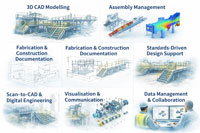
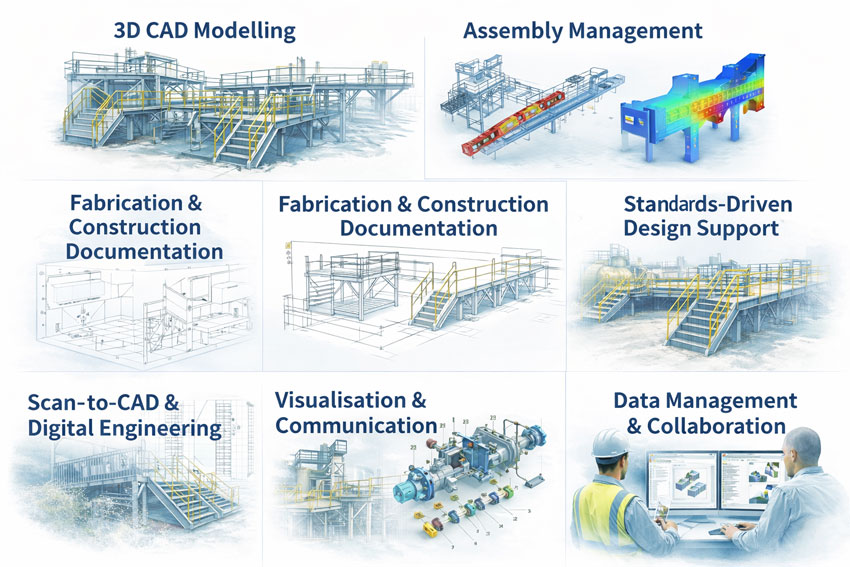
Engineering workflow illustration showing 3D CAD modelling, scan-to-CAD, fabrication drawings, FEA analysis, visualisation, and collaborative digital engineering for industrial plant infrastructure.

SolidWorks Modelling, Drafting & Engineering Services

Precision CAD for Mining, Manufacturing, Construction & Industrial Projects Across Australia


SolidWorks CAD software logo used for mechanical engineering and 3D design.

SolidWorks is at the heart of modern engineering design โ€” and at Hamilton By Design, it forms the foundation of our entire digital engineering workflow. We use SolidWorks to transform field data, LiDAR scans, sketches and engineering intent into accurate, fabrication-ready models and drawings that fit first time on site.

From mining wash plants and conveyors to custom machinery, structural steel and plant upgrades, our SolidWorks capability supports projects across heavy industry, manufacturing, power stations and construction sectors throughout Australia.


Digital engineering services diagram illustrating LiDAR scan-to-CAD, 3D modelling, assembly management, fabrication documentation, standards-driven design, and data collaboration.

Why SolidWorks?

SolidWorks is one of the worldโ€™s leading parametric 3D CAD platforms. It allows designers, drafters, engineers and fabricators to work collaboratively inside a powerful modelling environment that supports precision, automation and engineering validation.

Using SolidWorks, we can deliver:

  • Fully parametric 3D models
  • Intelligent assemblies with clear structure
  • Accurate fabrication, machining and general arrangement drawings
  • DXFs for laser/plasma cutting
  • BOMs and part numbering systems
  • Clash checking and motion studies
  • Engineering simulation (FEA) when required

Whether youโ€™re designing new equipment or upgrading existing infrastructure, SolidWorks ensures accuracy, repeatability and seamless integration with real-world fabrication workflows.


Our SolidWorks Services

Hamilton By Design offers a complete suite of SolidWorks engineering and drafting services, including:

3D Parametric Modelling

  • Mechanical components and assemblies
  • Structural steel frames, walkways and supports
  • Chutes, tanks, hoppers, piping and mechanical equipment
  • Models built from LiDAR point clouds, sketches or legacy drawings
  • Configurable models for product variations

2D Drafting & Detailed Drawing Production

  • Fabrication drawings with weld symbols, material specs and tolerances
  • Machining drawings with hole tables, GD&T and section details
  • Assembly drawings with exploded views and Bills of Materials
  • General arrangement (GA) drawings for installation and site coordination

As-Built Modelling & Revision Updates

  • Laser scanโ€“based as-built modelling for accuracy within ยฑ1โ€“3 mm
  • Updating outdated or incomplete drawing sets
  • Reverse-engineering legacy equipment and parts
  • Incorporating site mark-ups and supervisor feedback

Design for Manufacture & Installation (DFM/DFI)

  • Models and drawings structured around efficient workshop fabrication
  • Logical transport splits and lifting points (as directed by engineers)
  • Identifying potential installation conflicts before fabrication
  • Seamless coordination with boilermakers, machinists and installers

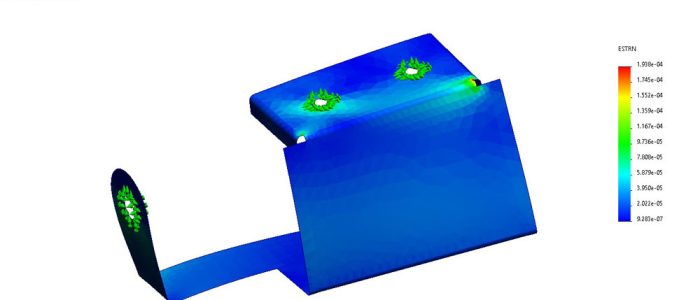
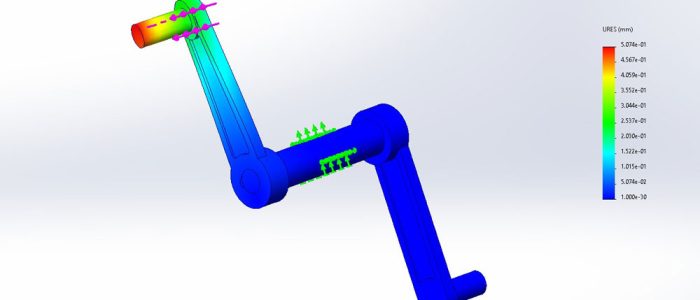
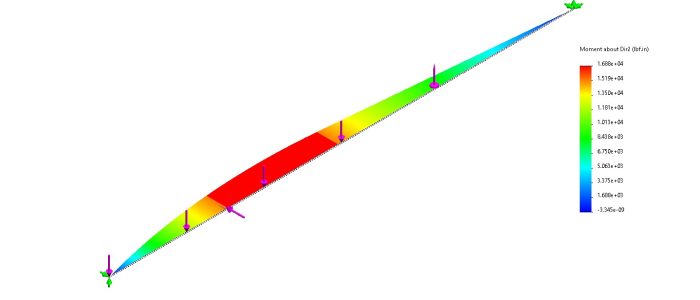
Simulation & Engineering Validation (FEA)

When required for engineering refinement, we can integrate:

  • Static FEA
  • Weld analysis
  • Deflection studies
  • Bolt and connection checks
  • Material optimisation

Industries We Support With SolidWorks

Our SolidWorks services support clients across:
  • Coal wash plants (CHPP), mining and materials handling
  • Hard rock processing plants
  • Steel fabrication and manufacturing
  • Power stations and energy infrastructure
  • Industrial construction and commercial buildings
  • Data centres and modular upgrades
  • Mechanical equipment design, jigs and fixtures

If itโ€™s made, machined, fabricated or installed โ€” SolidWorks helps bring it to life.


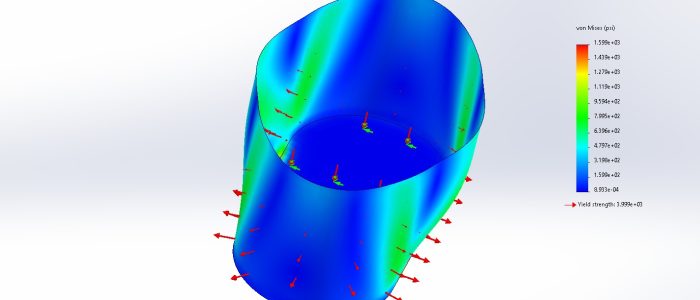
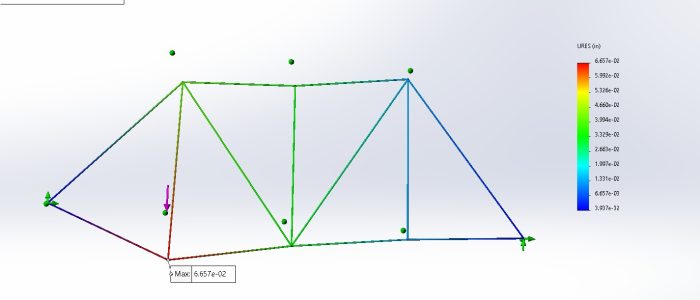
  • SolidWorks Simulation von Mises stress plot of an internally pressurised pressure vessel, viewed from above, showing colour-mapped stress distribution from low (blue) to high (red) with pressure arrows applied to the internal surfaces and deformation exaggerated for visualisation

SolidWorks + 3D Laser Scanning = Engineering-Grade Accuracy

One of Hamilton By Designโ€™s strongest capabilities is combining SolidWorks with high-accuracy LiDAR scanning.
This workflow ensures that every model and drawing is aligned with true site conditions โ€” drastically reducing rework, clashes and shutdown costs.

Our workflow:

  1. LiDAR Scan โ†’ Point cloud capture
  2. Registration & Cleanup โ†’ Precise as-built data
  3. SolidWorks Modelling โ†’ Fit-for-purpose geometry built to site reality
  4. FAB Drawings โ†’ Ready for plasma cutting, machining and workshop fabrication
  5. Installation Confidence โ†’ Fit-first-time outcomes

This workflow is ideal for brownfield upgrades, shutdown preparation, chute replacements, platforms and mechanical modifications.


SOLIDWORKS Professional Design certification badge by Dassault Systรจmes
SOLIDWORKS Professional Drawing Tools certification badge by Dassault Systรจmes

Why Choose Hamilton By Design for SolidWorks Work?

We bring the perfect blend of engineering experience, drafting expertise and practical understanding of industrial environments.

You benefit from:

  • Deep experience in mining, industrial and fabrication projects
  • Models and drawings that are clean, organised and easy for your team to work with
  • A site-aware mindset โ€” considering lifting, access, installation and maintenance
  • Fast turnaround when deadlines, shutdowns and fabrication schedules matter
  • Flexible engagement โ€” project-by-project, hourly or ongoing drafting support
  • Direct communication with a mechanical engineer, not just a CAD operator

Our aim is not just to draw โ€” but to partner with you to deliver better engineering outcomes.


Hamilton By Design logo displayed on a blue tilted rectangle with a grey gradient background
3D LiDAR scanning and 3D modelling service button โ€” laser scanner capturing a point cloud for engineering and CAD modelling
Mechanical engineering services

Engage SolidWorks Specialists Today

Whether you need additional drafting support, a full engineering drawing package, or a complete as-built model from a laser scan, Hamilton By Design can help.

Letโ€™s discuss your project requirements
Weโ€™ll tailor a SolidWorks package that matches your scope, timeline and fabrication needs.


Name
Would you like us to arrange a phone consultation for you?
Address


Our clients
As-Built Drawings from a LiDAR Scanner

As-Built Drawings from a LiDAR Scanner

Turning reality capture into reliable documentation for the building industry

Blue 3D LiDAR scanner icon on a tripod with scanning waves

In modern construction, as-built drawings are no longer a โ€œnice to haveโ€ at the end of a project. Theyโ€™re critical for compliance, future upgrades, maintenance and dispute resolution. The problem is that traditional as-built drawings often rely on red-pen markups, partial measurements and rushed updates done after practical completion.

LiDAR scanning changes this completely. By capturing millions of accurate points in a matter of minutes, a LiDAR scanner allows engineers and drafters to create as-built drawings that reflect the real, built condition โ€“ not what was on the original design.
Hamilton By Design uses 3D LiDAR scanning to generate accurate as-built drawings from a LiDAR scanner, giving builders, architects, engineers and asset owners a defensible digital record of their building or plant.


What are as-built drawings from a LiDAR scanner?

As-built drawings from a LiDAR scanner are:

  • 2D plans, sections and elevations
  • 3D models and details
  • derived directly from a registered point cloud captured on site.

Instead of manually measuring walls, slab setouts, penetrations and services, a LiDAR scanner records the whole space. The point cloud is then brought into CAD (e.g. SolidWorks, Revit or other platforms), where key elements are modelled and documented.
Typical outputs include:

  • Architectural as-builts (floor plans, elevations, reflected ceiling plans)
  • Structural as-builts (columns, beams, slabs, penetrations, bracing)
  • Services as-builts (pipework, ductwork, cable trays, equipment locations)
  • Detailed shop drawings for plant rooms and complex interfaces

How the workflow works

  1. LiDAR scanning on site
    • Rapid capture of internal and external spaces
    • Minimal disruption to trades and building users
    • Safe access to congested or hard-to-reach areas
  2. Point cloud registration and cleaning
    • Multiple scans stitched together into a single, accurate model
    • Aligned to site control or building grid where available
  3. 3D modelling and drafting
    • Critical building elements are modelled from the point cloud
    • As-built geometry is used to produce 2D drawings and 3D models
  4. Issue of as-built drawing pack
    • PDF drawings for records and certifications
    • DWG / RVT / STEP or other formats for future projects
    • Optional viewer files so non-CAD users can navigate the 3D data

Pros of as-built drawings from a LiDAR scanner

1. High accuracy and completeness

  • Millions of measurement points capture true geometry, not assumptions.
  • Complex areas โ€“ plant rooms, risers, ceiling spaces โ€“ are fully documented, not just partially measured.

2. Reduced rework and disputes

  • Clear evidence of what was built supports defect resolution and variation claims.
  • Future contractors design to real as-built conditions, reducing clashes and site modifications.

3. Faster capture on busy sites

  • Scanning is quick compared to manual measurement.
  • Ideal for constrained programmes and after-hours access windows.

4. Better coordination between disciplines

  • Structural, architectural and services teams can all reference the same point cloud and models.
  • Less โ€œfinger-pointingโ€ when drawings donโ€™t match whatโ€™s on site.

5. Stronger compliance and asset management

  • As-built drawings support building approvals, fire safety certification and ongoing maintenance planning.
  • Facility managers gain a digital baseline for future upgrades.

Cons and limitations to consider

1. Not every point needs to become a line

LiDAR creates very detailed data. If over-modelled, projects can waste time modelling elements that donโ€™t impact decisions. The key is to define what actually needs to be modelled for compliance, maintenance and future work.

2. Line-of-sight constraints

Scanners work online-of-sight. Hidden voids, behind-ceiling spaces or crowded areas may still need additional access or targeted scans.

3. File sizes and hardware requirements

Point clouds can be large and require good hardware and workflows. We manage this for you, but project teams need suitable software or viewer tools if they want to work directly with the cloud.

4. Upfront cost vs basic markups

LiDAR-based as-builts cost more than simple red-pen drawings. However, they usually save money by reducing rework, clarifying liability and avoiding surprises on the next project phase.


What LiDAR technology offers the building industry beyond as-builts

LiDAR scanning doesnโ€™t just create better as-built drawings. It unlocks a broader digital toolkit for the building and construction industry.

1. BIM and clash detection

  • Point clouds can be used to validate BIM models, ensuring they match reality.
  • New designs can be checked against the as-built point cloud to spot clashes before anything is fabricated.

2. Digital QA and dimensional control

  • Verify column locations, slab levels, penetrations and set-outs against design tolerances.
  • Check fabricated elements (stairs, walkways, modules) against the point cloud before shipping to site.

3. Refurbishment and fit-out planning

  • Ideal for refurbishing existing buildings, heritage structures and occupied spaces.
  • Designers can test options in 3D, knowing the geometry reflects the real building.

4. Facilities management and digital twins

  • As-built models become the foundation for digital twin environments.
  • Facility managers can track assets, plan maintenance and visualise future upgrades in context.

5. Heritage documentation and risk management

  • Non-intrusive capture of historic facades and interiors.
  • Provides a permanent digital record if damage, fire or future alterations occur.

6. Off-site fabrication and modular construction

  • Accurate as-built geometry allows stair cores, plant skids and faรงade elements to be prefabricated with confidence.
  • Better fit-up on site, fewer hot-work modifications and reduced time at height.

Hamilton By Design logo displayed on a blue tilted rectangle with a grey gradient background
3D LiDAR scanning and 3D modelling service button โ€” laser scanner capturing a point cloud for engineering and CAD modelling
Mechanical engineering services

Why work with Hamilton By Design

Hamilton By Design combines LiDAR scanning, 3D modelling and engineering into one integrated service:

  • We understand both building and industrial environments.
  • We work with architects, builders, engineers and asset owners.
  • We tailor the level of as-built detail to what your project actually needs.

Whether youโ€™re closing out a project with reliable as-built drawings, planning a major refurbishment, or laying the groundwork for digital twins, as-built drawings from a LiDAR scanner provide a precise, future-proof record of your building.

Our clients:

Name
Address
You would like to:

3D Laser Scanning

Transforming Projects with 3D Scanning in Sydney

3D LiDAR Scanning โ€“ Digital Quality Assurance

3D LiDAR Laser Scanning & Drafting Services in Chatswood & Greater Sydney – Hamilton By Design

3D LiDAR Scanning Hunter Valley Power Stations

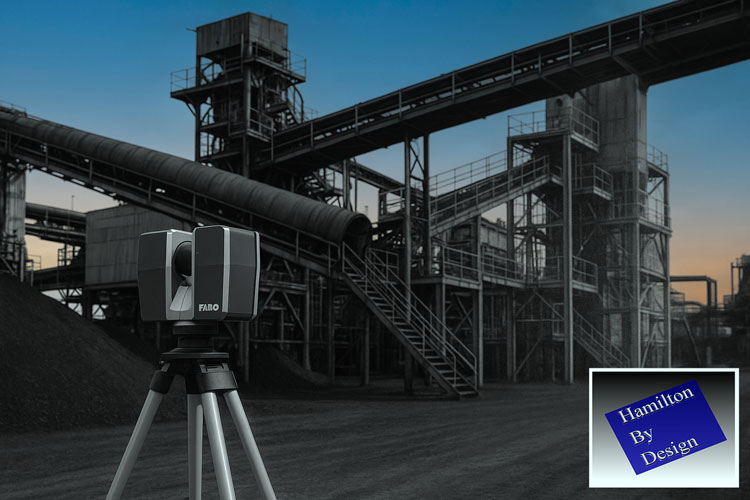
FARO 3D laser scanner set up on a tripod capturing an industrial plant for LiDAR scanning and digital modelling, with Hamilton By Design branding in the corner.

Unlocking Accuracy, Safety and Efficiency for Critical Infrastructure

The Hunter Valley is home to some of Australiaโ€™s most significant power generation assets. These power stations โ€” many of which have operated for decades โ€” supply energy to mining operations, manufacturing facilities, regional communities and industries throughout New South Wales. As these plants age and undergo continual maintenance, upgrades and redevelopment, the importance of accurate, reliable and safe measurement methods becomes increasingly critical.

Traditionally, engineers and maintenance teams have relied on manual measurements, outdated drawings or partial documentation to plan upgrades or execute shutdown work. But in complex, congested and ageing plant environments, this introduces risks, delays and expensive rework.

This is why 3D LiDAR scanning in Hunter Valley power stations has emerged as one of the most valuable tools for modern asset management, engineering and maintenance planning. LiDAR provides a millimetre-accurate digital snapshot of real-world conditions, enabling smarter, safer and more predictable project outcomes.

This article explores the benefits, applications, and pros and cons of 3D LiDAR scanning and explains why Hunter Valley power stations stand to gain significantly from adopting this technology.


Why Power Stations Need Accurate As-Built Data

Power stations are among the most complex industrial facilities in Australia. Over decades of operation, they experience:

  • Structural deformation
  • Settlement and movement
  • Corrosion and wear
  • Numerous undocumented modifications
  • Equipment realignments
  • Tight access restrictions
  • Ageing steelwork and infrastructure

In these environments, original construction drawings rarely match reality. As a result, engineers planning upgrades, shutdowns or replacements often face:

  • Inaccurate interface points
  • Misaligned structures
  • Unpredictable installation conditions
  • High rework costs
  • Safety delays
  • Poor shutdown timing

3D LiDAR scanning offers a precise, digital representation of the site, giving engineers the confidence they need to design upgrades accurately and eliminate guesswork.


The Benefits of 3D LiDAR Scanning for Hunter Valley Power Stations

1. Unmatched Measurement Accuracy for Complex Assets

A power station contains thousands of interconnected components:

  • Boilers
  • Turbines
  • Structural platforms
  • Pipe networks
  • Pressure vessels
  • Ducting systems
  • Conveyor bridges
  • Cooling towers
  • Electrical cabinets
  • Steel supports

Capturing these geometries manually is nearly impossible.

3D LiDAR scanning provides millimetre-level accuracy across enormous plant areas, allowing engineers to:

  • Create precise as-built models
  • Validate structural alignment
  • Check pipe routes and clearances
  • Identify interferences
  • Understand deformation over time
  • Design new works based on real geometry

This level of data is invaluable for maintaining safe and compliant power-generation operations.


2. Major Safety Improvements

Power stations present significant safety risks:

  • High-voltage environments
  • Confined spaces
  • Elevated platforms
  • Hot surfaces
  • Restricted access
  • Operational machinery

Manual measurement often requires workers to climb structures, enter hazardous zones or physically reach difficult areas.

3D LiDAR scanning dramatically reduces risk by:

  • Capturing data from safe distances
  • Eliminating the need for repeated access
  • Reducing time in hazardous zones
  • Minimising interaction with live equipment

For Hunter Valley power stations with strict safety requirements, this is a major benefit.


3. Reduced Shutdown Duration and Cost

Shutdowns are among the most expensive events for power-generation facilities. Every hour counts.

With 3D LiDAR scanning:

  • Engineers define accurate scopes before shutdown
  • Fabricators receive precise data and cut steel correctly
  • Digital fit checks identify issues early
  • Installation is faster and smoother
  • Delays due to bad measurements are eliminated

This leads to shorter outages, safer work and fewer unexpected problems.


4. Supports Engineering, Design and Structural Integrity Works

Power stations frequently require:

  • Boiler upgrades
  • Turbine area modifications
  • Ducting and flue replacements
  • Pipework rerouting
  • Cooling-system upgrades
  • Structural strengthening
  • Platform and walkway replacements
  • Electrical equipment relocations

All of these tasks depend on accurate geometry.

3D LiDAR scanning supports engineering teams by providing:

  • Reference geometry for load calculations
  • Verified connection points
  • True alignment data
  • Accurate slope and deflection measurements
  • High-resolution drawings and 3D models

This ensures engineering decisions are made using verified, real-world information.


5. Perfect for Brownfield and Congested Environments

Power stations are some of the most complex brownfield assets in the industrial landscape. They contain layers of modifications, years of retrofits and areas where access is extremely limited.

3D LiDAR scanning excels at capturing:

  • Tight clearances
  • Overlapping structures
  • Equipment clusters
  • Interconnected pipes
  • Hard-to-reach surfaces

This makes it ideal for planning:

  • New platforms
  • Replacement ducting
  • Pipe realignments
  • Structural upgrades
  • Asset lifecycle extensions

The result: fewer surprises during installation.


6. Better Collaboration Between Teams

Power stations typically involve:

  • Maintenance teams
  • OEMs
  • Engineering consultants
  • Fabricators
  • Shutdown managers
  • Safety personnel
  • Project delivery teams

3D LiDAR scanning enables everyone to work from the same digital truth.

Point clouds and 3D models allow:

  • Remote site understanding
  • Clear communication
  • Digital reviews instead of repeated site visits
  • Improved planning alignment

For Hunter Valley projects involving multiple contractors, this significantly boosts performance.


Pros and Cons of 3D LiDAR Scanning

Like any technology, LiDAR has strengths and limitations. Understanding both helps power station operators make informed decisions.


Pros

โœ” Extremely high accuracy

Millimetre precision for large and complex areas.

Fast data capture

Reduces time spent in hazardous areas.

Clear visibility of congested spaces

Captures geometry that traditional methods miss.

Enhances engineering confidence

Designers base work on verified conditions.

Reduces installation rework

Fabrication matches the real site exactly.

Supports digital engineering workflows

Perfect input for CAD, BIM, simulation and modelling.

Safer measurement practices

Less climbing, reaching and confined-space entry.


Cons

Requires skilled interpretation

Point cloud data must be processed by trained technicians or engineers.

Large file sizes

High-resolution scans require strong computing resources.

Reflective or transparent surfaces can create challenges

Requires technique or matte marking in some areas.

Upfront cost may seem higher

But it eliminates far greater downstream costs in rework and shutdown delays.

Despite these considerations, LiDAR scanning remains the most cost-effective measurement tool for power station environments.


Why Hunter Valley Power Stations Benefit More Than Most

The Hunter Valley industrial landscape presents unique challenges:

  • Ageing energy infrastructure
  • Multiple retrofits and undocumented modifications
  • Extremely tight maintenance windows
  • Harsh environmental conditions
  • Congested structures with difficult access
  • High safety standards
  • Heavy reliance on local fabrication accuracy

3D LiDAR scanning Hunter Valley power stations provides the one thing these facilities need most: confidence.

Confidence in measurements.
Confidence in fabrication.
Confidence during shutdowns.
Confidence in engineering decisions.
Confidence in safety performance.

Few regions stand to gain more from LiDAR than the Hunter.


Hamilton By Design: Supporting Hunter Valley Power Stations with Advanced LiDAR Solutions

Hamilton By Design brings together:

  • Engineering expertise
  • On-site scanning capability
  • CAD modelling and drafting
  • Fabrication-ready documentation
  • Digital fit-checking and clash detection
  • Mechanical and structural design experience

We understand the complex realities of power-station environments, and we deliver precise, reliable and engineering-ready digital data for:

  • Boiler upgrades
  • Turbine hall modifications
  • Structural replacements
  • Pipe rerouting
  • Platform and access upgrades
  • Ducting and flue modifications
  • Cooling tower projects
  • Balance-of-plant improvements

Every model, point cloud and drawing is produced with installation success and fabrication accuracy in mind.


Conclusion: 3D LiDAR Scanning is the New Standard for Hunter Valley Power Stations

As the Hunter Valley transitions into a future of renewable generation, asset extension and industrial redevelopment, 3D LiDAR scanning stands out as a technology that delivers real, immediate value.

It improves safety.
It increases accuracy.
It reduces rework.
It enables better engineering.
It shortens shutdowns.
It lowers project risk.

Power stations across the Hunter Valley rely on critical, ageing and highly complex infrastructure โ€” infrastructure that demands accurate, reliable digital measurement.

Hamilton By Design is proud to support the region with advanced laser scanning technologies that empower engineers, fabricators, supervisors and project managers to work smarter, safer and more efficiently.

Hamilton By Design logo displayed on a blue tilted rectangle with a grey gradient background
3D LiDAR scanning and 3D modelling service button โ€” laser scanner capturing a point cloud for engineering and CAD modelling
Mechanical engineering services

3D Laser Scanning

Hunter Valley Laser Scanning: Transforming Engineering Accuracy Across Mining, Manufacturing and Infrastructure

Finite Element Analysis (FEA) engineering simulation button
Mechanical engineering services

3D Laser Scanning in Singleton and the Hunter: Delivering Accuracy for Mining, Manufacturing and Industrial Projects

Laser Scanning Hunter Valley: Delivering Engineering-Grade Accuracy for Mining, Manufacturing and Industrial Projects

Our clients

Name
Address
You would like to:

Laser Scanning Hunter Valley: Delivering Engineering-Grade Accuracy for Mining, Manufacturing and Industrial Projects

Blue 3D LiDAR scanner icon on a tripod with scanning waves

The Hunter Valley remains one of Australiaโ€™s most important industrial regions. With world-class mining operations, CHPP facilities, fabrication workshops, power generation assets and major industrial precincts, the region depends on precision, reliability and efficient project planning. As plants age and infrastructure expands, the challenge of capturing accurate site information becomes increasingly critical.

This is why laser scanning in the Hunter Valley has rapidly become a foundational tool for maintenance, engineering, redesign, shutdown preparation and fabrication accuracy. Organisations across the region are turning to laser scanning because the demands of modern industrial work simply cannot be met with traditional tape measurements or outdated drawings.

Hamilton By Design is proud to deliver engineering-grade laser scanning throughout the Hunter Valley, supporting safer worksites, faster project execution and significantly improved installation outcomes. Below, we explore why laser scanning is essential, how the technology works and how it transforms operations across the region.


Why Laser Scanning Has Become Essential in the Hunter Valley

Across the Hunter, very few sites resemble their original drawings. Over decades, plants evolveโ€”structures deform, temporary fixes become permanent, equipment shifts, and countless undocumented modifications occur.

These realities create a major problem:
Projects that rely on inaccurate measurements inevitably face delays, rework and installation challenges.

The consequences of bad data include:

  • Structural steel not fitting on site
  • Conveyor alignment issues
  • Misaligned chutes or transfer points
  • Inaccurate pipe spool lengths
  • Unexpected clashes in congested areas
  • Extended shutdown duration
  • Significant cost blowouts

By contrast, laser scanning in the Hunter Valley provides a millimetre-accurate digital representation of the real site, eliminating uncertainty and enabling confident engineering decisions.

3D LiDAR Scanning Hunter & Newcastle banner with white text on a blue background promoting engineering-grade laser scanning services for industrial, mining and infrastructure projects across the Hunter Valley and Newcastle region.
Mechanical Engineering Hunter & Newcastle banner promoting mechanical engineering services for mining, industrial plants, power generation, manufacturing and heavy industry throughout the Hunter Valley and Newcastle region.
Structural Drafting Hunter & Newcastle banner promoting structural drafting services for mining, industrial plants, power generation, manufacturing and infrastructure projects across the Hunter Valley and Newcastle region.

How Laser Scanning Works

Laser scanningโ€”also known as LiDAR (Light Detection and Ranging)โ€”captures millions of precise data points across a site in seconds. These points create a โ€œpoint cloud,โ€ a detailed 3D representation of the scanned environment.

The Hamilton By Design workflow typically includes:

1. On-Site High-Accuracy Capture

We scan assets such as:

  • Structural frames
  • Conveyors, transfer towers and walkways
  • Chutes, bins, hoppers and material-handling systems
  • Tanks and pipe networks
  • Mechanical equipment
  • Buildings and platforms
  • Processing areas and plant rooms

Scanning is performed safely, quickly and with minimal disruption to operations.

2. Point Cloud Processing

Individual scans are aligned and merged into a single, unified as-built dataset.

3. CAD Modelling

From the point cloud, we create:

  • Accurate 3D models
  • General arrangement drawings
  • Fabrication details
  • DXF files for workshop use
  • Digital templates for pattern development

4. Engineering & Fabrication Support

We run digital checks for:

  • Clearances
  • Misalignments
  • Bolt pattern accuracy
  • Clash detection
  • Fit-up assurance

This ensures all new components, structures and mechanical systems integrate correctly the first time.


Industries in the Hunter Valley Using Laser Scanning

1. Mining & Coal Handling Preparation Plants (CHPPs)

The Hunter Valley is one of Australiaโ€™s largest mining hubs, and laser scanning has become indispensable for:

  • Chute redesign and optimisation
  • Conveyor alignment and pulley checks
  • Structural replacements
  • Screening and crushing system upgrades
  • Transfer tower modifications
  • Bin and hopper geometry capture
  • Shutdown planning and scope definition

In CHPP environmentsโ€”where dust, vibration, wear and deformation are constantโ€”accurate as-built data is essential for safe and efficient upgrades.


2. Local Fabrication Workshops

Fabricators across Singleton, Muswellbrook, Rutherford and Thornton rely on precise digital information to ensure their products fit perfectly in the field. Laser scanning supports:

  • Steel replacement projects
  • Pipe spool fabrication
  • Custom chutes and transfer systems
  • Platform and walkway upgrades
  • Reverse engineering worn components

By basing fabrication on exact site geometry, rework and installation delays are dramatically reduced.


3. Power Stations and Energy Infrastructure

The Hunter Valley contains major energy assets requiring constant maintenance and upgrades. These aging facilities benefit greatly from laser scanning for:

  • Structural integrity assessments
  • Boiler house modifications
  • Pipe rerouting and replacements
  • Access platform upgrades
  • Plant room modelling
  • Compliance documentation

Laser scanning supports safe access, better planning and accurate engineering.


4. Industrial, Manufacturing and Infrastructure Projects

The regionโ€™s industrial footprint is expanding, and many facilities require precise as-built data for:

  • Renovations or expansions
  • Facility mapping
  • Mechanical upgrades
  • Brownfield redevelopment
  • BIM integration

Laser scanning provides the detail needed to plan these works correctly.


Benefits of Laser Scanning in the Hunter Valley

1. Millimetre Accuracy

Unlike manual measurements, laser scanning captures true geometryโ€”not assumptions.

2. Reduced Rework

Digitally verified data ensures that fabrication is correct the first time.

3. Improved Safety

No need for workers to climb, stretch, or enter hazardous areas to measure.

4. Faster Shutdowns

Accurate pre-planning reduces onsite delays.

5. Digital Collaboration

Point clouds allow teams, contractors and engineers to review the site remotely.

6. Enhanced Engineering Confidence

Decisions are made on verified data, improving outcomes across the entire project lifecycle.


3D LiDAR scanning and 3D modelling service button โ€” laser scanner capturing a point cloud for engineering and CAD modelling
Mechanical engineering services

The Hamilton By Design Advantage

Hamilton By Design delivers more than just scanningโ€”we combine decades of engineering, drafting and fabrication experience to interpret the data with real-world understanding.

What Sets Us Apart:

Engineering-Driven Approach

We understand the mechanical and structural context behind each scan.

Full Digital Workflow

From scan โ†’ point cloud โ†’ 3D model โ†’ fabrication drawings โ†’ installation, we support your entire project.

Local Knowledge of Hunter Valley Industry

We work routinely with mines, CHPPs, fabricators and industrial facilities across the region.

Fabrication-Ready Outputs

All models and drawings are created with workshop requirements and site constraints in mind.

Confidence Before Installation

We digitally confirm fitment before steel is cutโ€”removing risk.


Applications Where Laser Scanning Delivers Immediate Value

  • Chute replacements
  • Conveyor system upgrades
  • Access platforms and walkways
  • Crusher and screen changes
  • Transfer tower redesign
  • Pipe spool fabrication
  • Structural steel alignment checks
  • Bin, tank and hopper measurement
  • Reverse engineering
  • Brownfield plant expansions

Anywhere accuracy matters, scanning is the superior choice.


Laser Scanning in the Hunter Valley: The New Standard

Across the region, laser scanning is now considered a must-have for safe, efficient and predictable project delivery. As plants age and the complexity of upgrades increases, organisations that invest in accurate data significantly outperform those relying on outdated drawings or manual measuring.

For engineering teams, maintenance planners, workshop fabricators and shutdown coordinators, laser scanning provides the certainty required to deliver work on time and on budget.


Partner with Hamilton By Design

When you choose Hamilton By Design for laser scanning in the Hunter Valley, youโ€™re choosing:

  • Accuracy
  • Safety
  • Engineering reliability
  • Better planning
  • Reduced risk
  • Efficient installation

Weโ€™re ready to support your next shutdown, upgrade, redesign or fabrication project with the digital precision it deserves.

Contact Hamilton By Design today to discuss your site and discover how laser scanning can transform your project outcomes.

Hamilton By Design logo displayed on a blue tilted rectangle with a grey gradient background
3D LiDAR scanning and 3D modelling service button โ€” laser scanner capturing a point cloud for engineering and CAD modelling
Mechanical engineering services

Hunter Valley Laser Scanning: Transforming Engineering Accuracy Across Mining, Manufacturing and Infrastructure

3D Laser Scanning in Singleton and the Hunter: Delivering Accuracy for Mining, Manufacturing and Industrial Projects

3D Laser Scanning

3D Scanning in The Hunter Valley

Name
Address
You would like to:
Finite Element Analysis (FEA) engineering simulation button
Mechanical engineering services