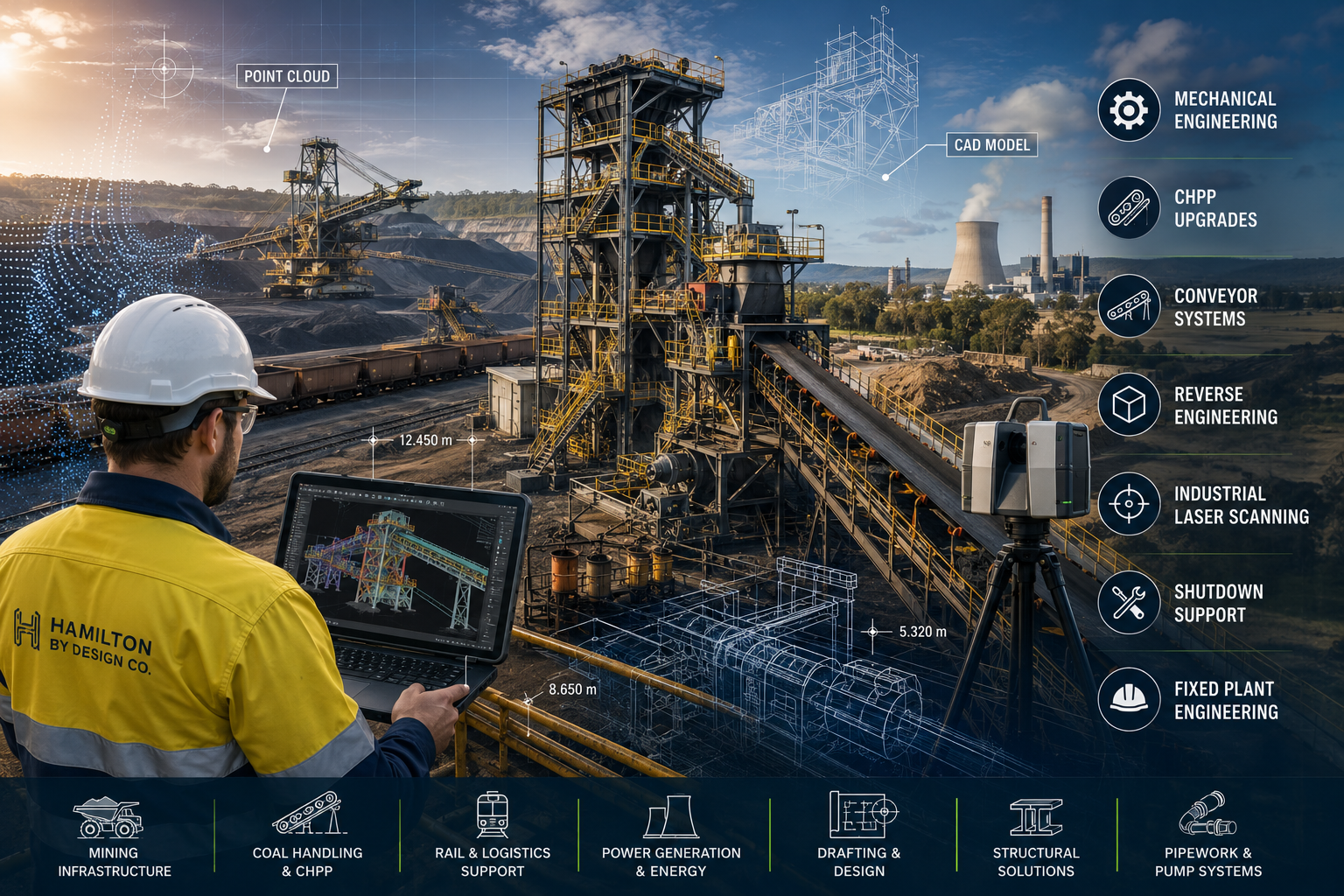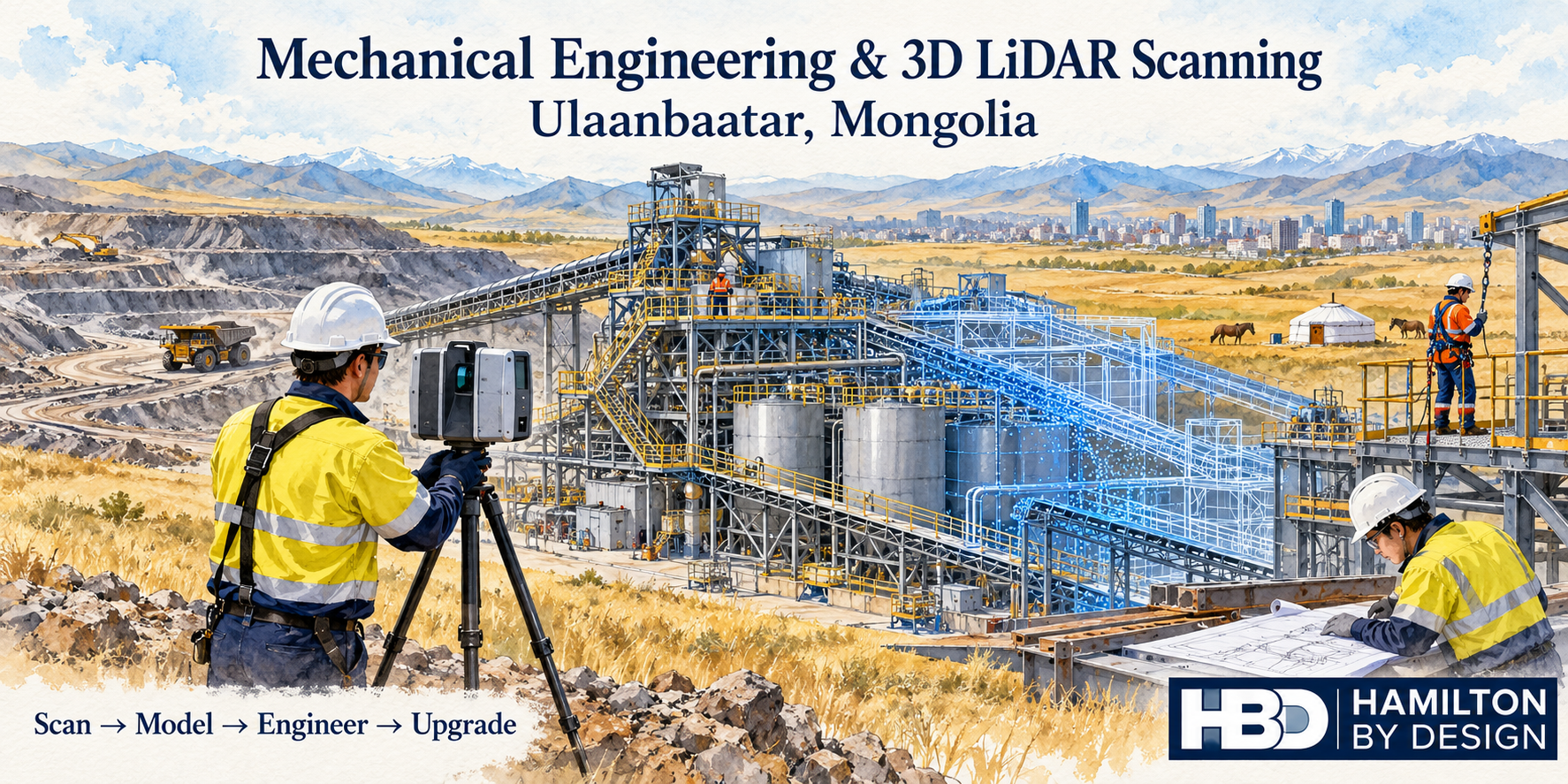
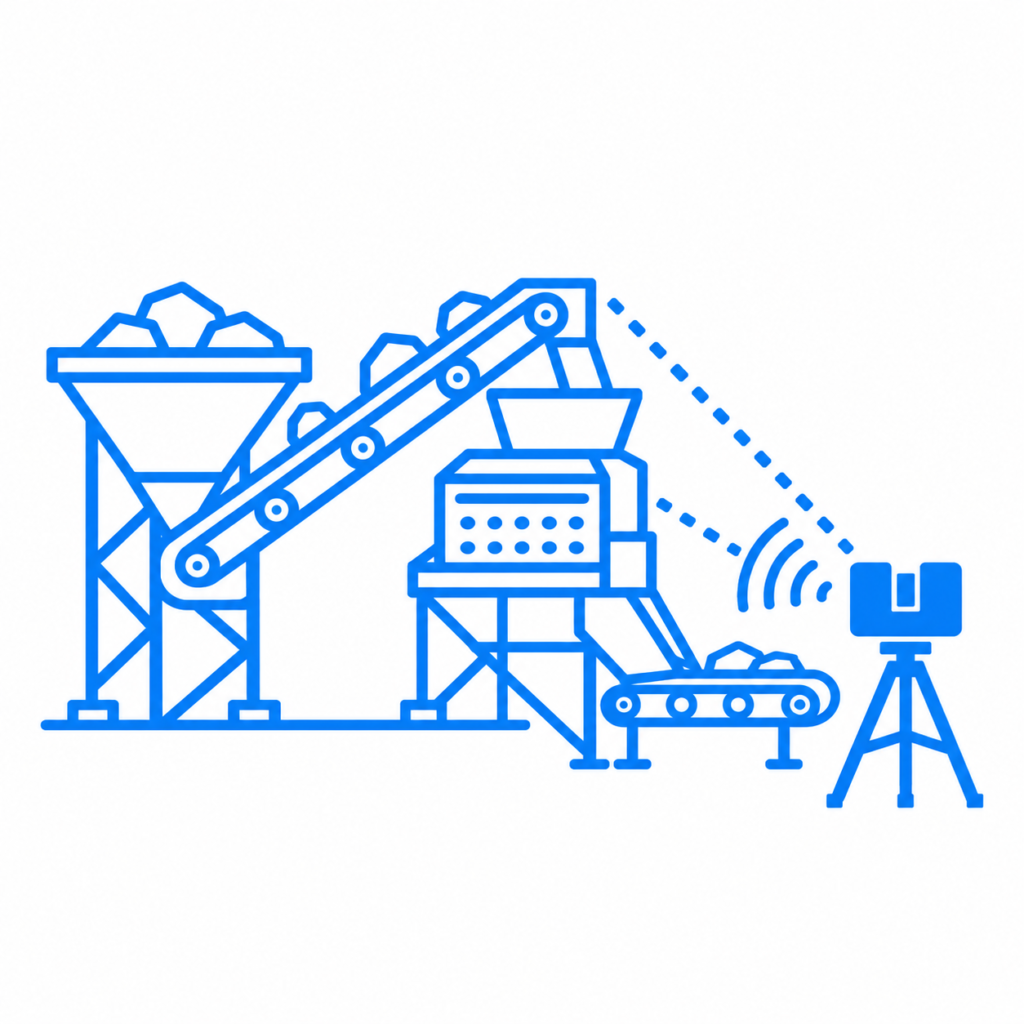
Mining plant upgrades need reliable information about existing equipment, practical maintenance access and a clear engineering scope. For project teams based in Ulaanbaatar—also known as Ulan Bator—Hamilton By Design offers mechanical engineering, 3D LiDAR scanning and design support for mining and industrial projects, with site mobilisation arranged to suit the project.
Our approach brings together existing-condition capture, CAD modelling and engineering documentation. This helps owners, maintenance teams and fabricators plan modifications around the plant that is actually installed.
From coal handling equipment at Baganuur to gold processing infrastructure in the Boroo–Ulaanbulag area, potential applications include conveyor upgrades, transfer chute modifications, maintenance platforms, walkways and working-at-height systems.
Mining Operations Around Ulaanbaatar
Ulaanbaatar provides a useful geographic focus for discussing nearby mining operations, although the mines are located in outlying districts and surrounding provinces.
Four confirmed operating mines relevant to this regional overview are:
| Mine | Location relative to Ulaanbaatar | Commodity | Potential engineering focus |
|---|---|---|---|
| Baganuur Coal Mine | Approximately 130 km east, in the outlying Baganuur district | Thermal coal / lignite | Coal handling equipment, maintenance access and plant modifications |
| Boroo Gold Mine | Approximately 140 km northwest, in Selenge Province | Gold | Processing equipment layouts, access improvements and brownfield upgrades |
| Ulaanbulag Gold Mine | Approximately 19 km southeast of Boroo | Gold | Equipment interfaces and infrastructure associated with the shared processing operation |
| Shivee-Ovoo Coal Mine | Approximately 260 km southeast, in Govisümber Province | Thermal coal / lignite | Coal handling infrastructure, maintenance facilities and access upgrades |
Baganuur and Shivee-Ovoo are operating coal mines. Boroo and Ulaanbulag are operating gold mines that share key infrastructure and processing facilities. These locations illustrate the regional mining context; they are not presented as Hamilton By Design clients.
Nalaikh is also associated with Ulaanbaatar’s mining history, but its main industrial coal mine is closed. Gatsuurt is a gold development project whose current production status has not been confirmed for this overview.
Mechanical Engineering for Mining Plant Upgrades
A successful plant modification starts with understanding the operational problem.
A conveyor transfer may need improved material flow. A pump installation may require more room for servicing. A replacement chute may need to fit between existing equipment while preserving access for liner changes.
Hamilton By Design’s mechanical engineering consulting services cover equipment design, CAD modelling, drafting and assessment for mining and industrial applications.
For projects coordinated from Ulaanbaatar, the scope can be developed around questions such as:
- What equipment is being replaced or modified?
- Which existing interfaces must be retained?
- How will components be transported, lifted and installed?
- What access will maintenance personnel need?
- Which drawings and approvals are required before fabrication?
Resolving these questions early gives the project team a clearer basis for design, procurement and shutdown planning.
3D LiDAR Scanning Before Design Begins
Existing drawings are useful, but their relationship to current site conditions needs checking before a retrofit is designed.
A pipe installed during an earlier upgrade may cross the proposed platform location. A conveyor support may occupy the space needed for a new chute. Equipment removal may be restricted by steelwork that does not appear on the available drawings.
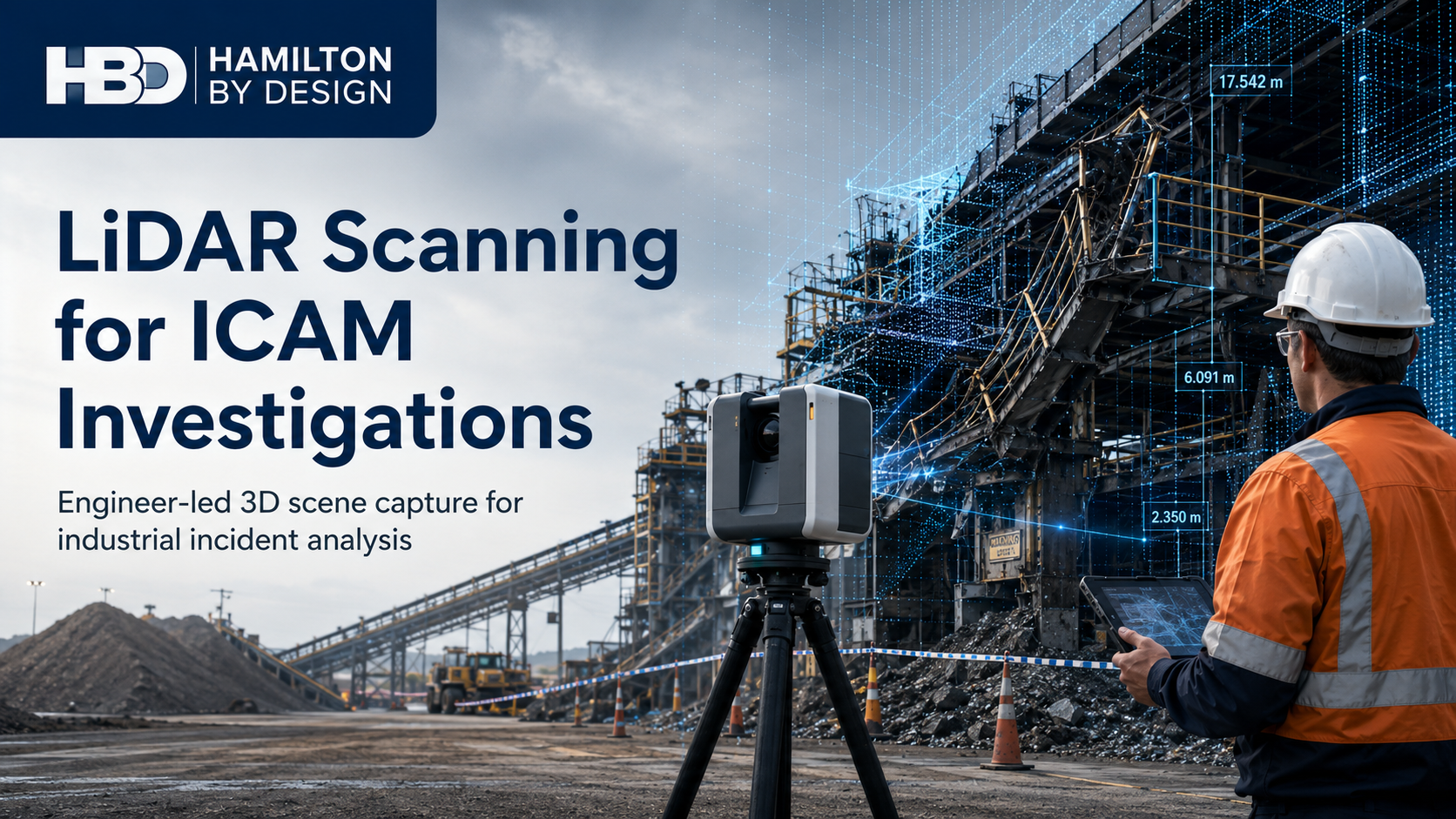
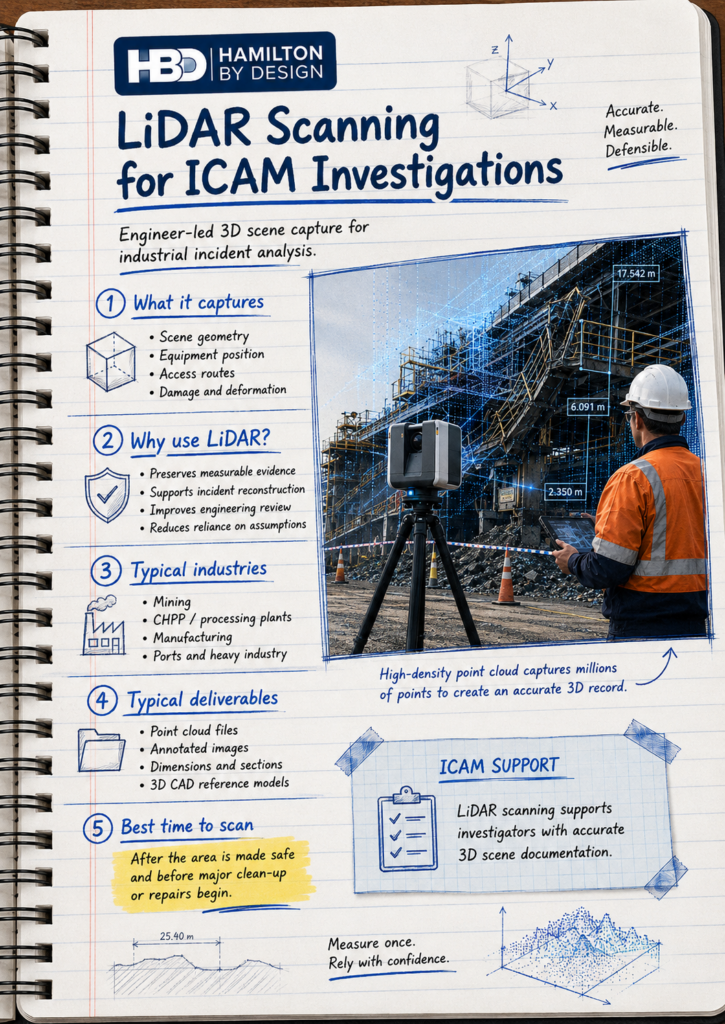
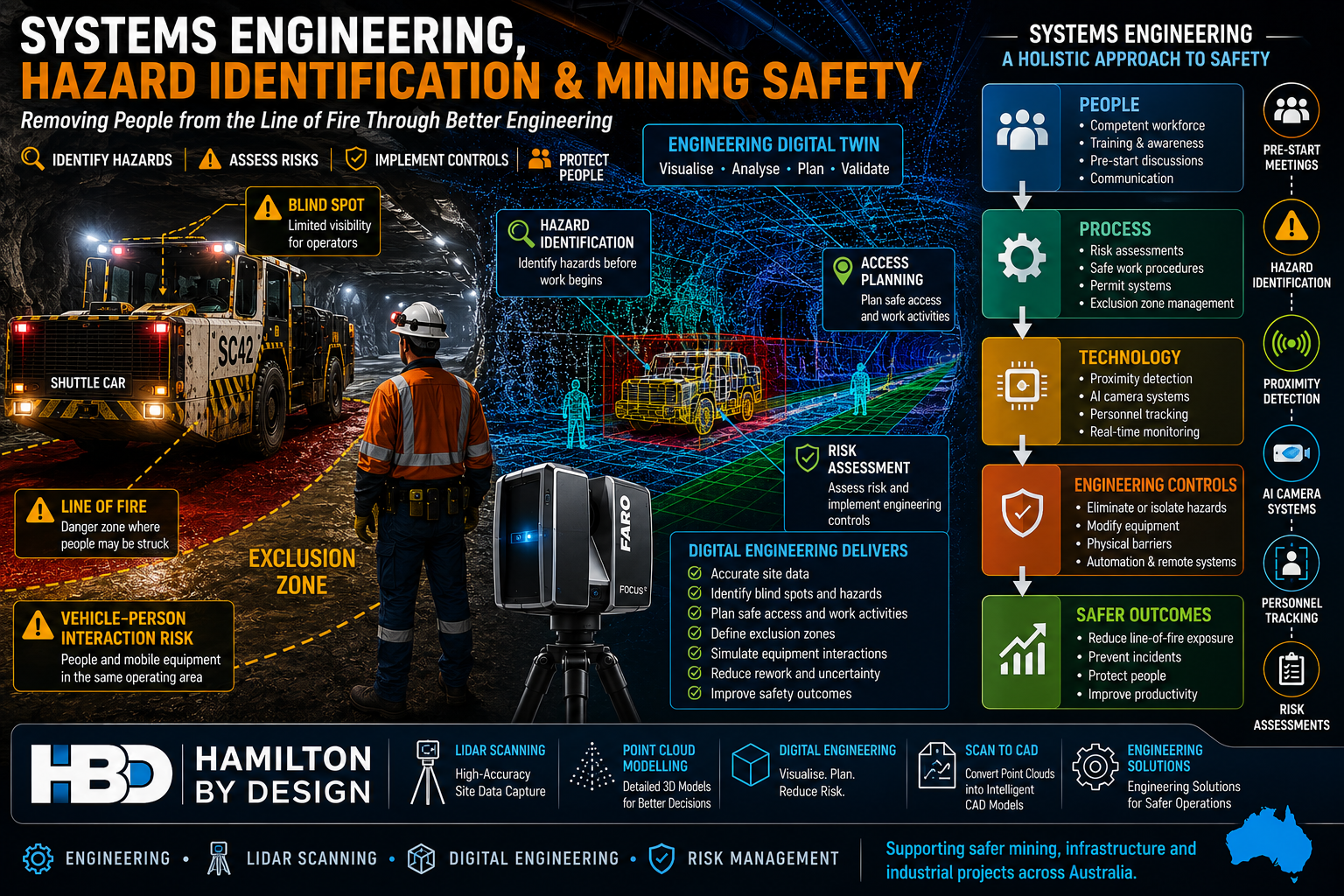
3D LiDAR scanning helps establish the spatial arrangement of visible plant and infrastructure.
The resulting point cloud can support layout development, equipment positioning and coordination between disciplines. Critical interfaces can then be selected for additional measurement or inspection where the project requires it.
Scanning is particularly useful when several modifications must fit within the same area. A shared model allows the team to review the proposed arrangement before committing to fabrication.
Hamilton By Design combines this measured information with mechanical design and scan-to-CAD workflows.
Platforms, Walkways, Stairways and Ladders
Maintenance access deserves attention at the start of a plant upgrade.
A new component may fit into the available space yet leave insufficient room for inspection, adjustment or removal. Access arrangements should therefore be developed around the tasks people will perform, rather than added after the equipment layout is complete.
For example, a chute upgrade may require a working position beside an inspection door. A conveyor drive replacement may need an access route that also accommodates handling tools and removed components.
Hamilton By Design’s guide to AS 1657 fixed platforms, walkways, stairways and ladders explains the role of this Australian standard in industrial access design.
For a Mongolian project, the design basis should identify applicable local requirements, owner specifications and any contractually adopted standards. Where AS 1657 is proposed as a reference, its suitability and acceptance should be established with the project’s responsible advisers.
The objective is a coordinated arrangement that supports the intended maintenance task and can be reviewed, fabricated and installed with clear documentation.
Static Line Systems and Working-at-Height Access
Some inspection and maintenance tasks require a dedicated working-at-height solution.
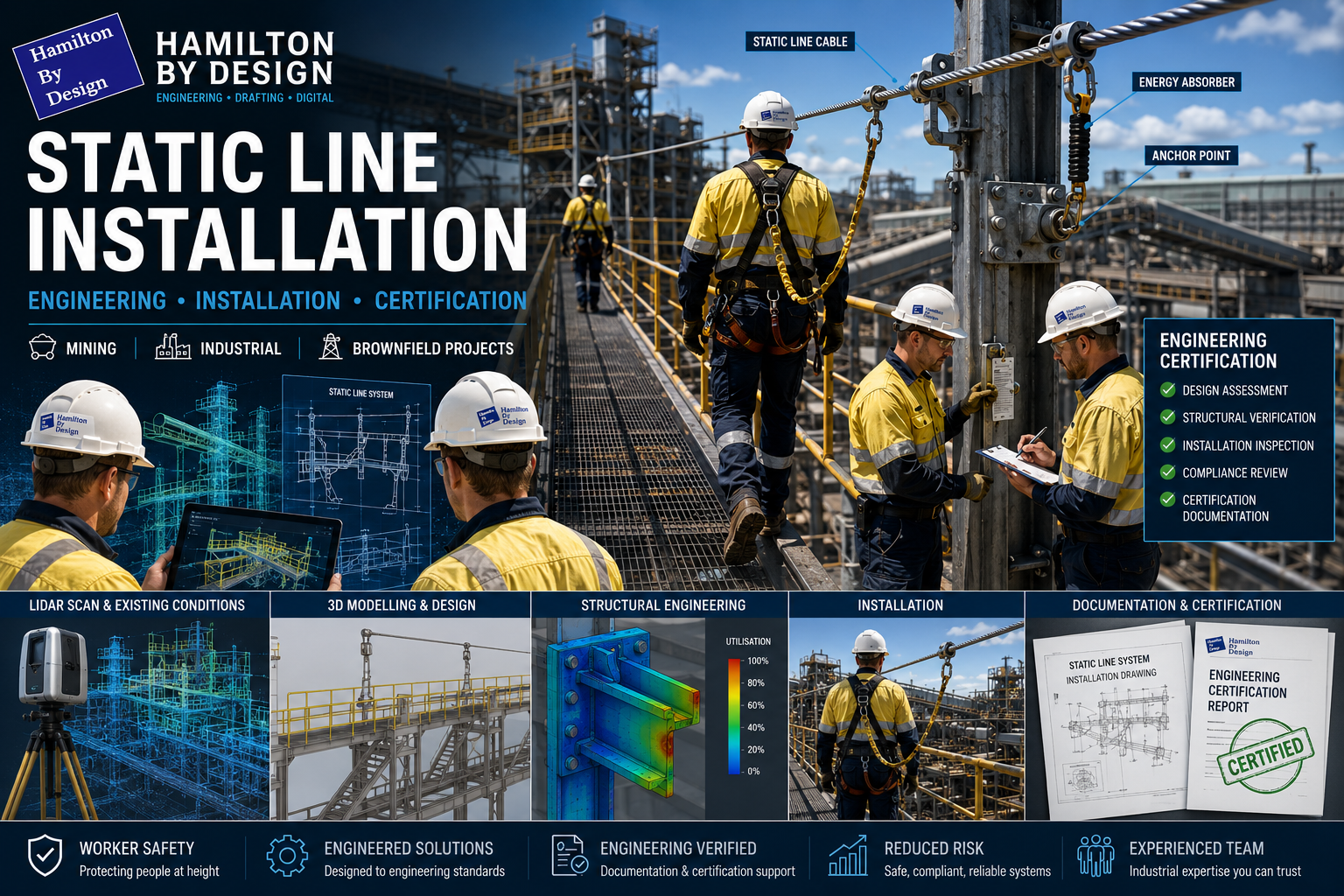
Hamilton By Design’s static line installation and engineering certification service describes support for system layouts, supporting-structure assessment, installation documentation and engineering verification.
For projects around Ulaanbaatar, this work should be coordinated with the selected system supplier, installer and appropriately qualified engineering reviewers. The scope needs to address how the system connects to the existing asset and how the completed installation will be verified and handed over.
The required certification and local acceptance pathway should be agreed before procurement. This gives each participant a clear understanding of their responsibilities and the evidence required for completion.
Connecting Access Improvements with Equipment Design
Access and mechanical design often affect the same space.
Consider a proposed coal transfer upgrade. The project may need a revised chute, removable guarding and a working position for inspections. Designing each item separately can leave conflicts between access routes, maintenance openings and installation requirements.
A coordinated model allows the team to examine the complete arrangement:
- Capture and verify the existing area.
- Define operating and maintenance requirements.
- Develop the equipment and access concepts together.
- Review interfaces with the owner and installation team.
- Prepare the agreed drawings and engineering documentation.
This approach can help identify problems while changes are still straightforward to make.
Deliverables Defined Around Your Project
A focused project may need only an equipment model and general arrangement drawing. A larger upgrade may require a coordinated package for fabrication, installation and review.
Depending on the agreed scope, deliverables may include:
- Registered point cloud data.
- Existing-condition CAD models.
- Equipment and access layouts.
- Mechanical detail drawings.
- Fabrication information and material schedules.
- Installation planning drawings.
- Engineering assessment documentation.
The proposal should identify file formats, drawing status, verification requirements and responsibilities for review and approval.
Frequently Asked Questions
Are Ulan Bator and Ulaanbaatar different locations?
No. They are names for the same city, Mongolia’s capital. This page uses Ulaanbaatar while also recognising the alternative spelling Ulan Bator.
Are all four active mines within the city?
No. Baganuur is in an outlying district administered by Ulaanbaatar. Boroo, Ulaanbulag and Shivee-Ovoo are in surrounding provinces, with Shivee-Ovoo substantially farther from the capital.
Can a project begin using existing drawings and scan data?
Yes. Available information can be reviewed first to establish its suitability and identify gaps. Site capture, inspections or additional measurements can then be included where needed.
Can platforms and walkways be included in an equipment upgrade?
Yes. Including maintenance access in the initial scope allows the proposed equipment and access arrangement to be reviewed together.
Can Australian standards be used for a Mongolian project?
They may be considered where the project adopts them, subject to applicable local requirements and acceptance. The standards and approval basis should be agreed at the start of the engagement.
How is site scanning arranged?
Mobilisation is planned around the location, access permissions, operating conditions and required deliverables. Clients can provide drawings, photographs and a scope description to begin the discussion.
Discuss Your Ulaanbaatar Mining or Industrial Project
Planning a mechanical upgrade, maintenance access improvement or static line project near Ulaanbaatar?
Contact Hamilton By Design with your site location, available drawings and project objectives. We can discuss a staged scope covering existing-condition capture, mechanical design, access layouts and engineering documentation.
Scan → Model → Engineer → Upgrade.

Contact Us – Talk To Us
Our clients:











Related Mining and Mechanical Engineering Services
Explore Hamilton By Design services and technical articles relevant to mining, mineral processing and industrial upgrades around Ulaanbaatar, Mongolia.
Mining Plant Upgrades
Capture existing equipment and plant geometry before developing conveyor modifications, access improvements and processing equipment upgrades.
Explore mining plant upgrades →As-Built and Brownfield LiDAR Scanning
Develop measured existing-condition information to support retrofit design, equipment layouts and coordination within operating industrial facilities.
Explore brownfield scanning →Chute Design for Mining
Explore transfer chute design considerations for coal and hard-rock materials, including flow behaviour, wear, blockages and maintenance requirements.
Read about mining chute design →Machine Guarding Design
Review guarding assessments, retrofit guard design and fabrication documentation for machinery, conveyors and fixed-plant equipment.
Explore machine guarding →CHPP Engineering and 3D Scanning
Explore engineering and scanning services for coal handling and preparation plant projects, supporting the development of upgrade scopes and existing-plant modifications.
Explore CHPP engineering →Mining and Industrial 3D Laser Scanning
Capture processing equipment, steelwork and surrounding infrastructure to create point-cloud datasets and models for engineering project planning.
Explore industrial laser scanning →Conveyor and Materials Handling Engineering
Connect laser scanning, digital plant models and mechanical design to support conveyor interfaces, transfer points and materials handling modifications.
Explore conveyor engineering →3D Scanning of Conveyor Transfer Towers
Capture transfer tower geometry and equipment interfaces to support chute replacement, layout review and modifications within existing infrastructure.
Explore transfer tower scanning →