Digital Engineering for Conveyor and Materials Handling Systems

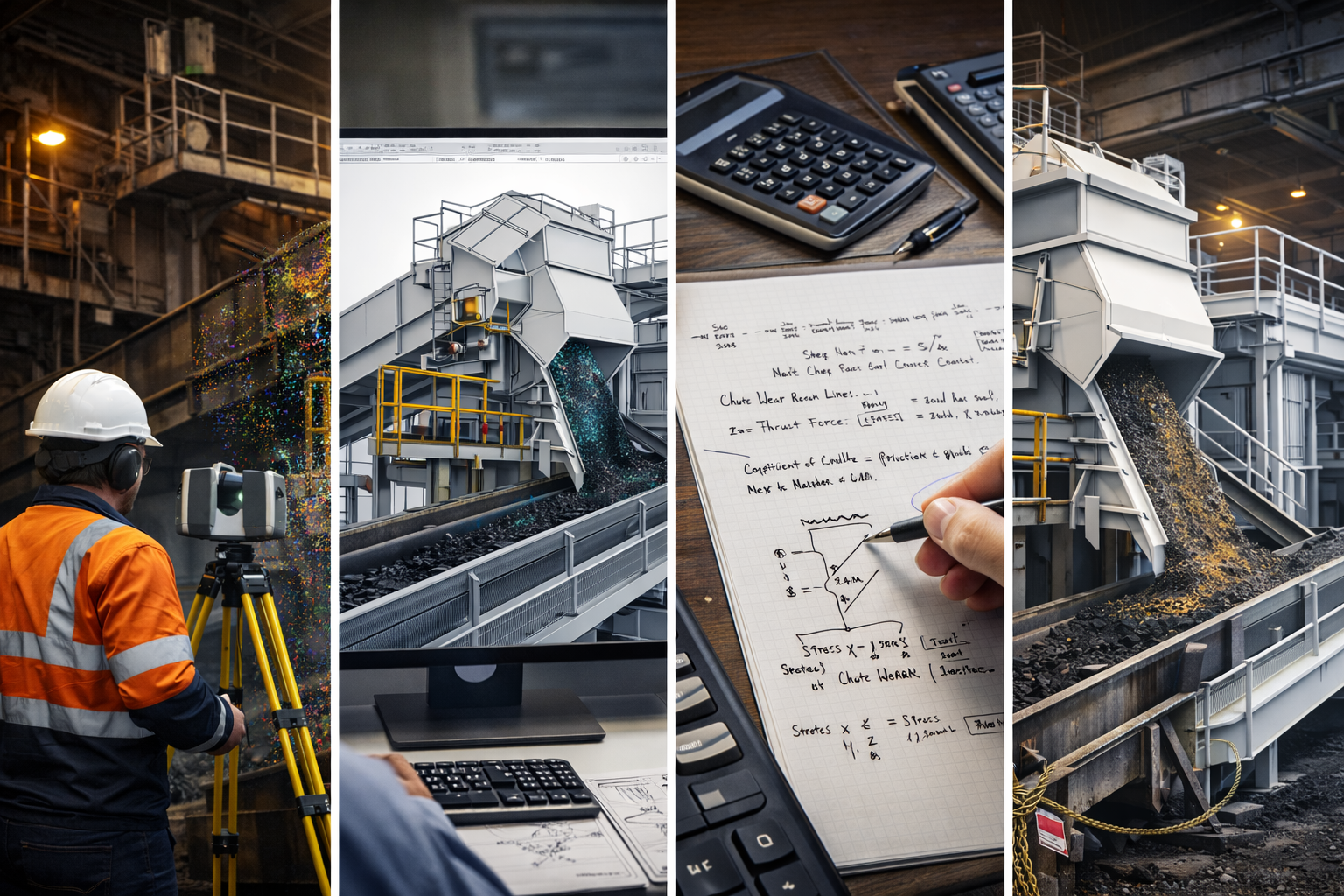
Mining conveyor engineering workflow showing laser scanning, 3D modelling, engineering calculations and installation of a transfer chute.

Mining Conveyor Engineering Design | Digital Engineering for Materials Handling Systems

Conveyor systems form the backbone of many mining and industrial processing operations. From coal handling plants and mineral processing facilities to port loading infrastructure, conveyors and transfer systems move large volumes of material continuously throughout the plant.

As mining infrastructure becomes more complex, engineering teams increasingly rely on digital engineering workflows to design, upgrade and maintain conveyor systems. These workflows combine laser scanning, point cloud modelling and 3D engineering design to improve accuracy and reduce project risk.

Digital engineering allows engineers to capture existing plant conditions, develop accurate engineering models, and design modifications with confidence before construction or shutdown activities begin.


The Role of Conveyor Engineering in Mining Operations

Conveyors transport bulk materials between key processing areas such as crushers, screens, stockpiles and ship loading systems. Because these systems operate continuously, even small design issues can cause major operational problems.

Common engineering challenges include:

  • transfer point blockages
  • excessive belt wear
  • material spillage and dust generation
  • structural fatigue in conveyor galleries
  • poor maintenance access

Effective mining conveyor engineering design focuses on improving reliability, safety and maintainability while ensuring the system integrates correctly with the surrounding plant infrastructure.

For further information on mechanical engineering services supporting mining operations see:
โžก Hamilton By Design Co. โ€“


Using Digital Models to Improve Conveyor Design

Traditional conveyor design often relied on outdated plant drawings or manual site measurements. However, many mining facilities have undergone decades of modifications, meaning the original design documentation no longer reflects the actual plant layout.

Modern engineering teams now use laser scanning and point cloud modelling to capture accurate representations of plant infrastructure.

These digital datasets allow engineers to develop detailed models of:

  • conveyor structures and galleries
  • transfer chutes and material flow points
  • structural steel platforms and walkways
  • access ladders and maintenance areas
  • surrounding plant equipment

By converting scan data into engineering models, designers can evaluate system upgrades with far greater accuracy.

Learn more about how scan data is converted into engineering models here:


Engineering Conveyor Upgrades During Shutdowns

Many conveyor upgrades are implemented during planned shutdowns where plant equipment must be isolated for maintenance or replacement.

During these shutdown windows engineers may install:

  • replacement transfer chutes
  • new conveyor sections
  • structural modifications
  • upgraded dust control systems
  • improved maintenance access platforms

Because shutdown windows are often limited to a few days, engineering design must be completed and validated before work begins.

Digital plant models allow engineers to confirm equipment clearances, identify potential clashes and develop fabrication drawings prior to the shutdown period.

More information on shutdown engineering preparation can be found here:


Transfer Chute Design in Materials Handling Systems

Transfer chutes are critical components in conveyor systems because they control the flow of material between conveyors or processing equipment.

Poor chute design can lead to:

  • material buildup and blockages
  • uneven belt loading
  • excessive dust generation
  • increased wear on belts and liners

Using digital plant models, engineers can analyse the surrounding infrastructure and design chute geometries that improve material flow and reduce maintenance issues.

Further insights into chute engineering design are available here:
โžก https://chutesandtransferstations.blogspot.com/2025/07/designing-for-durability-chutes.html


Hamilton By Design logo displayed on a blue tilted rectangle with a grey gradient background

3D LiDAR scanning and 3D modelling service button โ€” laser scanner capturing a point cloud for engineering and CAD modelling
Mechanical engineering services

Benefits of Digital Engineering for Materials Handling Systems

Digital engineering workflows provide several key advantages for mining infrastructure projects:

Improved design accuracy
Accurate plant models reduce errors caused by outdated drawings or incomplete measurements.

Reduced installation risk
Engineering models allow equipment fit-up to be verified before fabrication and installation.

Faster project delivery
Engineering teams can plan upgrades more efficiently using digital plant models.

Improved maintenance planning
Digital models support better access design and long-term asset management.


The Future of Conveyor Engineering

As mining operations continue to adopt digital engineering technologies, the design and maintenance of conveyor systems is becoming increasingly data-driven.

Technologies such as:

  • 3D laser scanning
  • point cloud modelling
  • digital twins
  • engineering simulation

are helping engineers develop more reliable materials handling systems and reduce operational downtime.

For mining operators planning plant upgrades or shutdown maintenance, integrating digital engineering into conveyor design workflows is becoming an essential part of modern infrastructure planning.
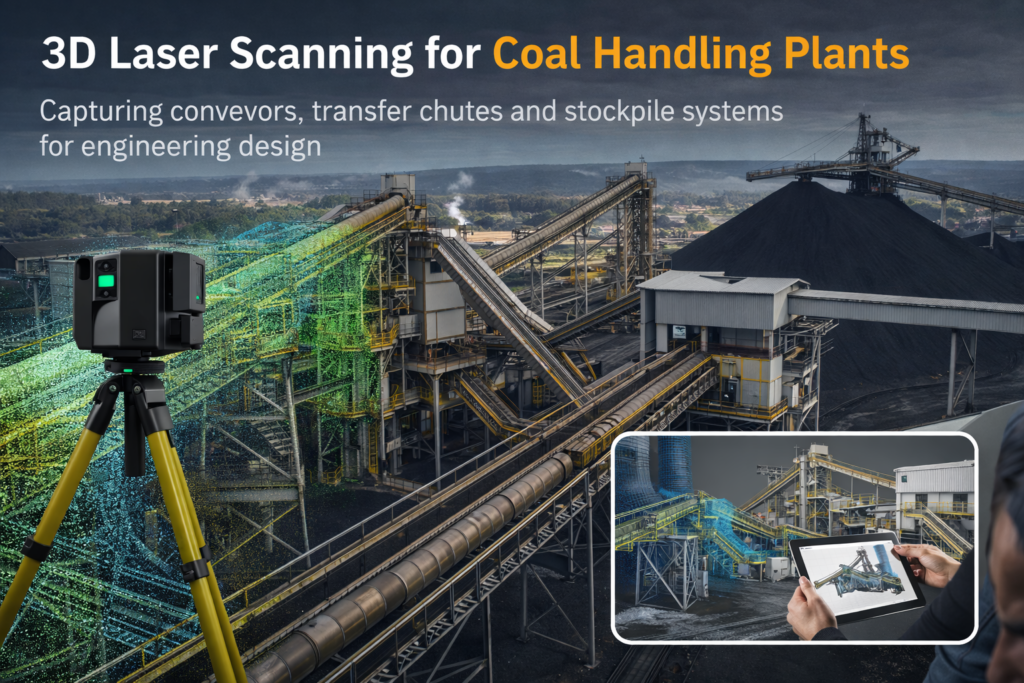
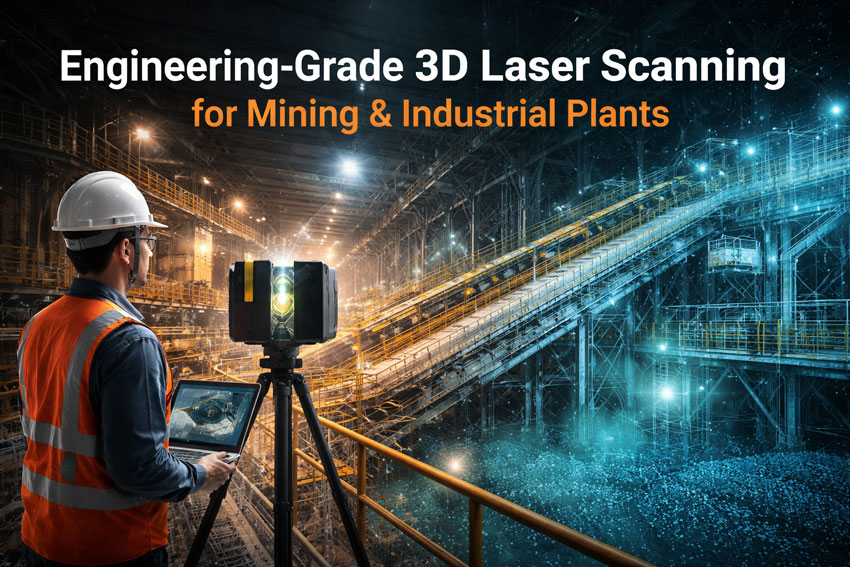
3D laser scanning of coal handling plant conveyors transfer chutes and stockpile systems for engineering design

Name
Would you like us to arrange a phone consultation for you?
Address
3D CAD Modelling Australia service banner for Hamilton By Design

Why Conveyor Transfer Chute Design Matters

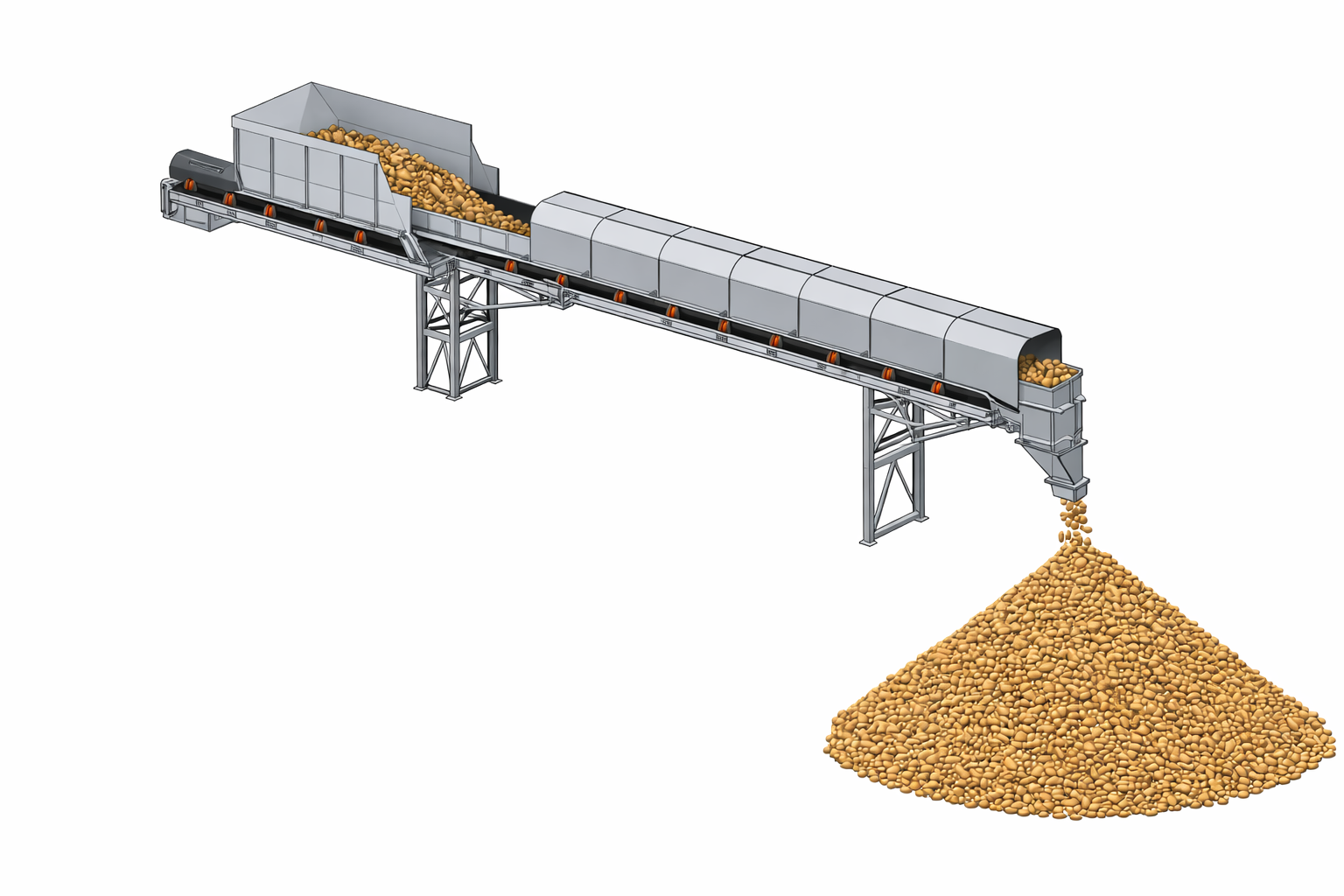
3D CAD model of a conveyor transfer chute with a feed conveyor at 90 degrees stacking ore into a conical stockpile

In mining plants, conveyor transfer chutes are often the most overlooked component in the materials handling system. Yet they are frequently responsible for the largest operational disruptions.

Poor chute design can result in:

  • Material blockages
  • Conveyor belt damage
  • Excessive wear on liners
  • Dust generation
  • Product spillage
  • Reduced plant throughput

For mining operations running 24/7 production, even minor transfer issues can escalate into significant downtime during shutdowns.

Effective conveyor transfer chute design is therefore not just a drafting exerciseโ€”it is a critical engineering task that directly impacts plant reliability, maintenance costs, and safety.


Common Problems in Mining Transfer Chutes

Across many mining and processing plants, similar issues appear repeatedly in poorly designed transfer points.

Typical operational problems include:

1. Blockages and Build-Up

Moist ores, fine materials, and poorly directed material streams often lead to material accumulation. Over time this causes:

  • chute choking
  • restricted flow paths
  • emergency shutdowns

2. High Impact Loading

If the chute does not properly control the material trajectory, large rocks can strike belts or liners at high velocity, resulting in:

  • conveyor belt damage
  • excessive wear on liners
  • structural fatigue

3. Material Spillage

Incorrect chute geometry can cause material to miss the receiving belt entirely. Spillage creates:

  • safety hazards
  • housekeeping issues
  • unnecessary cleanup labour

4. Dust and Environmental Issues

High drop heights and uncontrolled material flow generate dust clouds that affect:

  • operator safety
  • equipment life
  • compliance with environmental requirements

Engineering Principles Behind Reliable Chute Design

Reliable conveyor transfer chute design requires understanding both material behaviour and mechanical systems.

Some key design considerations include:

Controlled Material Flow

The goal of a well-designed chute is to control the material stream, ensuring that the ore flows smoothly onto the receiving conveyor at the correct velocity and direction.

Design considerations include:

  • trajectory modelling
  • flow velocity management
  • impact angle control

Wear Management

Mining materials are extremely abrasive. Chute design must incorporate wear protection strategies such as:

  • replaceable liner systems
  • ceramic or chromium carbide plates
  • sacrificial wear zones

A well-designed chute allows liners to be replaced quickly during shutdowns.


Belt Protection

Poorly designed transfers can dramatically reduce conveyor belt life.

Engineering improvements often include:

  • impact beds
  • loading skirts
  • properly aligned material streams

Reducing belt damage significantly lowers maintenance costs.


Maintenance Accessibility

A transfer chute should be designed with maintainability in mind.

This includes:

  • safe inspection access
  • removable panels
  • maintenance platforms
  • quick liner replacement systems

These features become particularly important during tight shutdown windows.


Using Digital Engineering to Improve Chute Performance

Modern mining operations increasingly rely on digital engineering tools to improve the reliability of transfer points.

Technologies such as 3D laser scanning and digital plant models allow engineers to:

  • capture the exact geometry of existing plant infrastructure
  • analyse transfer trajectories
  • redesign chutes within existing plant constraints
  • reduce risk during shutdown installations

This approach is particularly useful when retrofitting new chutes into older mining infrastructure where original drawings are often incomplete or inaccurate.

More information on this workflow can be found in:


Designing Transfer Chutes for Shutdown Installations

In many cases, chute upgrades are installed during planned mining shutdowns, where time is extremely limited.

Engineering preparation is essential to ensure the work can be completed within the shutdown window.

Typical preparation includes:

  • capturing existing plant conditions
  • producing accurate engineering models
  • clash detection with existing structures
  • fabrication-ready drawings

A well-prepared digital model significantly reduces the risk of installation delays.

Further discussion on shutdown engineering preparation can be found here:


Mechanical Engineering Support for Mining Infrastructure

Reliable transfer chute systems require collaboration between:

  • mechanical engineers
  • plant operators
  • maintenance teams
  • fabrication workshops

By combining operational experience with digital engineering tools, mining companies can significantly improve the reliability of their materials handling systems.

Hamilton By Design provides mechanical engineering design services for mining infrastructure, including:

  • conveyor transfer chute design
  • materials handling upgrades
  • plant modification design
  • digital engineering models for shutdown work

Learn more about these services here:


Hamilton By Design logo displayed on a blue tilted rectangle with a grey gradient background

Final Thoughts

Transfer chutes may appear to be a simple part of a conveyor system, but their impact on mining operations is significant.

Poorly designed chutes lead to:

  • downtime
  • safety risks
  • excessive maintenance costs

With careful engineering design, digital modelling, and proper shutdown preparation, transfer points can become reliable components of a high-performance mining plant.

For operations seeking to reduce downtime and improve plant reliability, conveyor transfer chute design is one of the most valuable engineering improvements available.

3D LiDAR scanning and 3D modelling service button โ€” laser scanner capturing a point cloud for engineering and CAD modelling
Mechanical engineering services
Name
Would you like us to arrange a phone consultation for you?
Address
CHPP Engineering title graphic featuring bold white text reading "CHPP Engineering" centred on a blue rounded rectangle background.
Pipework Drafting title graphic featuring bold white text reading "Pipework Drafting" centred on a blue rounded rectangle background.
3D LiDAR Scanning for Engineering Projects title graphic featuring bold white text on a blue rounded rectangle background.
Finite Element Analysis (FEA) engineering simulation button
Mechanical engineering services