Brownfield Upgrades & Shutdowns

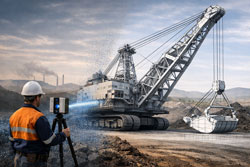
Engineering-grade LiDAR scanning of a dragline at a Hunter Valley mine producing CAD-ready data for SolidWorks and Autodesk Inventor

Brownfield Industrial Upgrades & Shutdown Engineering | Engineering-Led 3D Scanning

Engineering-Led Design, Reality Capture, and Scan-to-CAD for Existing Assets

Brownfield industrial upgrades are where engineering risk is highest โ€” and where assumptions cost the most.

Existing plant, undocumented modifications, restricted access, and shutdown-driven timeframes demand accurate site data, practical engineering judgement, and build-ready design. At Hamilton By Design, we support brownfield upgrades through an engineering-led digital workflow that connects reality capture, scan-to-CAD, and mechanical design to deliver safer, more reliable shutdown outcomes.
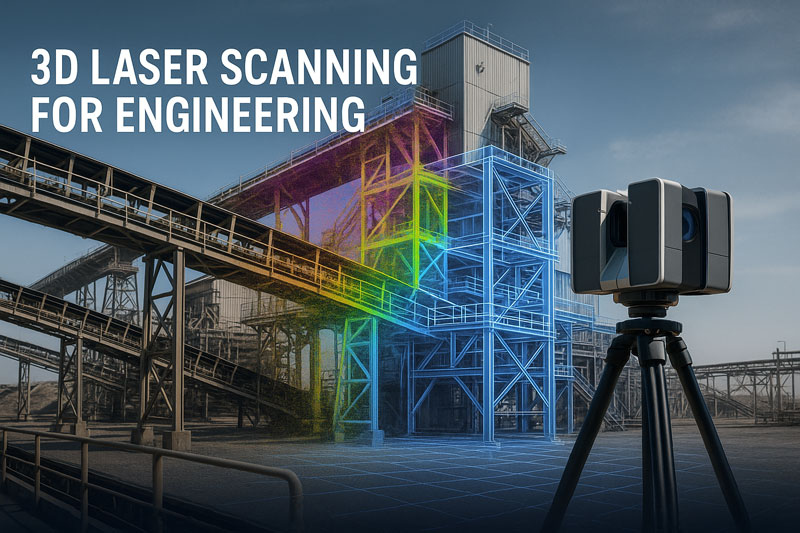

A 3D laser scanner on a tripod capturing an industrial plant structure, with a colourful point cloud and blue CAD wireframe overlay illustrating engineering-grade 3D laser scanning accuracy.

What Defines a Brownfield Upgrade?

A brownfield upgrade involves modifying, extending, or replacing existing operational assets, often under live plant or shutdown constraints.

Typical challenges include:

  • Incomplete or outdated drawings
  • Limited physical access for verification
  • Interfaces with existing structures and services
  • Shutdown windows measured in days, not weeks

These conditions make engineering-led verification essential before design and fabrication begin.


Engineering-Led Reality Capture for Existing Plant

Hamilton By Design uses engineering-grade 3D LiDAR scanning to capture existing conditions accurately, even in complex and congested environments.

This approach allows engineering teams to:

  • Verify as-built conditions without repeated site access
  • Identify clashes and interferences early
  • Design upgrades that fit first time
  • Reduce exposure hours in live plant environments

Reality capture becomes a risk-reduction tool, not just a documentation exercise.


Typical Brownfield Assets We Support

Brownfield upgrades frequently focus on high-wear, high-risk interfaces within industrial and mining facilities.

Hoppers & Chutes

  • ROM hoppers and surge bins
  • Transfer chutes and discharge transitions
  • Wear-prone interfaces and liners

Conveyors & Transfer Stations

  • Conveyor head and tail stations
  • Transfer points and discharge zones
  • Supporting steelwork and access structures

Pump Boxes & Process Interfaces

  • Pump boxes, sumps, and pipe interfaces
  • Structural supports and maintenance access
  • Integration with existing plant services

Vertical Shaft & Drop Structures

  • Vertical shaft hoppers
  • Ore passes and gravity-fed transfers
  • Confined and difficult-to-access assets

These assets are rarely isolated โ€” they sit within tightly constrained systems where accuracy matters.
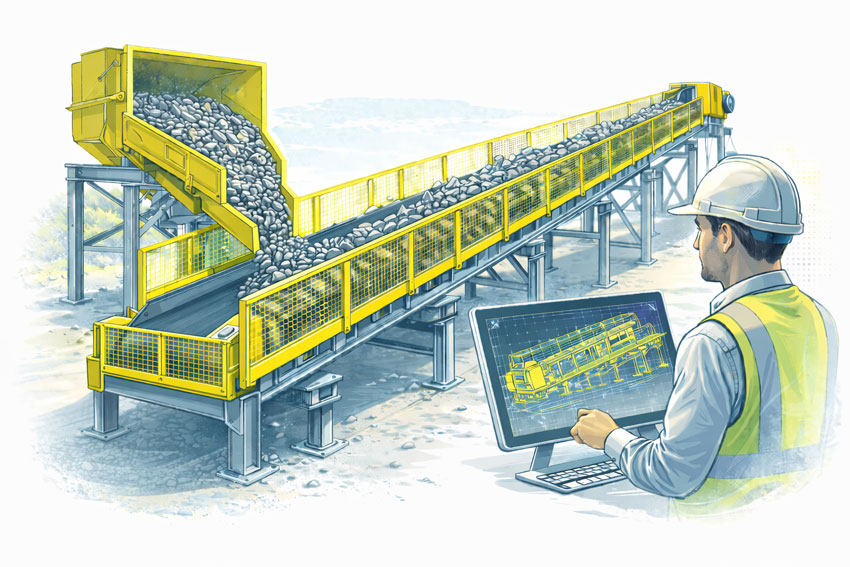

Bulk materials conveyor with compliant safety guarding at the hopper, tail end, and along the conveyor, shown with an engineer reviewing guarding design drawings.

Scan-to-CAD: Turning Reality Into Buildable Design

Point clouds alone donโ€™t deliver projects โ€” engineering-intent models do.

Our scan-to-CAD workflows are developed specifically for:

  • Mechanical and structural design
  • Fabrication-ready detailing
  • Brownfield integration and installation sequencing

By aligning LiDAR data directly with CAD and engineering workflows, we eliminate guesswork and support fit-first-time fabrication.


Reliable Support for Shutdown-Driven Projects

Shutdowns compress months of work into days. There is no tolerance for redesign on site.

Engineering-led reality capture supports shutdown success by:

  • Allowing design to be completed well in advance
  • Supporting off-site fabrication
  • Reducing RFIs and site queries
  • Increasing the amount of work completed per shutdown

Better information means more work done with fewer resources.


Safety Is an Engineering Outcome

Safety outcomes in brownfield environments are determined during planning and design, not during installation.

Accurate site data allows engineers to:

  • Design safer access and maintenance solutions
  • Reduce hot works and re-measurement on site
  • Identify hazards before shutdown execution
  • Improve compliance with Australian Standards

Engineering-led workflows reduce risk across the entire upgrade lifecycle.


Australian Engineering Quality You Can Rely On

Hamilton By Design delivers Australian engineering know-how, grounded in practical site experience.

We donโ€™t just capture data โ€” we:

  • Understand how plant is built and maintained
  • Design with fabrication and installation in mind
  • Take responsibility for engineering outcomes

This approach differentiates us from low-cost capture services that transfer risk downstream.


How This Integrates With Our Engineering Services

Brownfield upgrade support integrates directly with our broader capabilities, including:

  • Bulk material handling engineering
  • Mining and heavy-industry mechanical design
  • Engineering-led 3D scanning and scan-to-CAD workflows

This ensures continuity from site verification through to build-ready deliverables.


Hamilton By Design logo displayed on a blue tilted rectangle with a grey gradient background

3D LiDAR scanning and 3D modelling service button โ€” laser scanner capturing a point cloud for engineering and CAD modelling
Mechanical engineering services

Speak With an Engineer

If youโ€™re planning a brownfield upgrade involving:

  • Hoppers, chutes, or bins
  • Conveyor transfers
  • Pump boxes or process interfaces
  • Vertical shaft or gravity-fed systems
  • Shutdown-critical works

Early engineering-led verification can significantly reduce risk.

Speak with an engineer at Hamilton By Design to discuss your upgrade or shutdown requirements.

Name
Would you like us to arrange a phone consultation for you?
Address

Our clients:


Finite Element Analysis (FEA) engineering simulation button
Mechanical engineering services

3D Laser Scanning in Rockhampton QLD: Engineering-Grade Data for Safer Conveyor Design and Risk Management

Engineering-led SolidWorks drafting in Australia with 25 years of Hamilton By Design experience

3D Laser Scanning in Rockhampton QLD for Safer Conveyor Design & Risk Management

Rockhampton plays a critical role in Central Queenslandโ€™s heavy industry, supporting mining, bulk materials handling, agriculture, and transport infrastructure. Across these sectors, conveyor systems are essential โ€” and they are also one of the highest-risk assets on site.

As facilities age and production demands increase, many operators are upgrading or modifying conveyors within tight shutdown windows. In these environments, engineering-grade 3D laser scanning (LiDAR) is becoming a key tool for reducing design risk, improving safety outcomes, and avoiding costly site rework.

At Hamilton By Design, we use high-accuracy 3D scanning to capture existing plant conditions and convert them into reliable engineering models that support safer conveyor design and more effective risk management.

Conveyor Systems and Industry Incidents: Where Things Go Wrong
Industry incident investigations across Queensland repeatedly identify similar contributing factors in conveyor-related injuries:

  • Inadequate guarding at transfer points and pulleys
  • Restricted access forcing unsafe maintenance practices
  • Plant modifications made without updated drawings
  • Design reviews based on outdated or incomplete site data

In regional facilities around Rockhampton, conveyors are often extended, repaired, and repurposed over many years. What starts as a temporary modification can become permanent, and original drawings no longer reflect reality on the ground.

When new upgrades are designed using assumptions instead of accurate geometry, risk is built into the project from day one.


Bulk materials conveyor with compliant safety guarding at the hopper, tail end, and along the conveyor, shown with an engineer reviewing guarding design drawings.

Why Engineering-Grade Scanning Matters for Conveyor Design

Not all 3D scans are suitable for mechanical design or safety-critical decisions.

We use engineering-grade LiDAR scanning capable of delivering accuracy in the order of ยฑ2 mm over 70 metres, allowing engineers to:

  • Model conveyor structures, frames, and supports
  • Accurately locate rollers, drives, guards, and transfer chutes
  • Verify clearances for new equipment and walkways
  • Identify clashes before fabrication and installation

The resulting point clouds and CAD models form a reliable digital baseline that engineers, safety teams, and maintenance planners can all work from.

When plant modifications are driven by accurate data, both design quality and safety outcomes improve.

Safe Design Starts with Knowing What Actually Exists

Safe Design is not something that can be retrofitted easily once steel is fabricated and installed.

Scan-based models allow hazards to be assessed during the design phase, including:

  • Access and egress routes for maintenance
  • Reach distances and pinch point exposure
  • Guarding coverage around rotating equipment
  • Space constraints that may encourage unsafe shortcuts

This is particularly important in conveyor corridors where multiple services, structures, and walkways compete for limited space.

Designing from accurate site geometry allows risks to be eliminated or reduced before they reach the worksite.


Risk Management Through Reality Capture

From a risk management perspective, 3D scanning supports more than just design accuracy. It also improves:

  • Hazard identification and risk assessments
  • Method statements and installation planning
  • Shutdown coordination and contractor interfaces
  • Compliance documentation and audit trails

Point cloud data also provides a permanent record of asset condition at a point in time, which can be invaluable for:

  • Future upgrade planning
  • Incident investigations
  • Asset integrity assessments

In high-risk conveyor environments, reliable data is a control measure in its own right.

Supporting Rockhampton Industry with Integrated Engineering Services

Hamilton By Design provides on-site 3D scanning and mechanical engineering support for projects in Rockhampton and Central Queensland, including:

  • Conveyor upgrades and replacements
  • Transfer point redesigns
  • Guarding and access improvements
  • Brownfield plant modifications
  • Fabrication and installation planning

Because we are an engineering-led team, scanning is directly integrated into mechanical design, drafting, and fabrication support โ€” not treated as a standalone survey service.

This ensures models are built to suit engineering workflows and deliver practical, buildable outcomes.


Hamilton By Design logo displayed on a blue tilted rectangle with a grey gradient background

3D LiDAR scanning and 3D modelling service button โ€” laser scanner capturing a point cloud for engineering and CAD modelling
Mechanical engineering services

From Point Cloud to Practical Results

Our typical workflow includes:

  1. On-site LiDAR scanning with minimal operational disruption
  2. Registration and processing of point cloud data
  3. Conversion into CAD models suitable for mechanical design
  4. Design development, safety reviews, and shop drawings

This approach reduces shutdown risk, improves installation accuracy, and helps ensure safety improvements are achieved in practice โ€” not just on paper.

Name
Would you like us to arrange a phone consultation for you?
Address
3D LiDAR scanning and 3D modelling service button โ€” laser scanner capturing a point cloud for engineering and CAD modelling
Mechanical engineering services
Finite Element Analysis (FEA) engineering simulation button
Mechanical engineering services

Mechanical Engineering Services for Plant and Production Problems โ€” Sydney

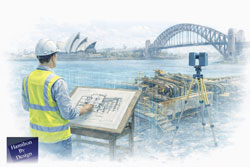
Engineer-led reverse engineering with 3D scanning and drafting overlooking Sydney Harbour and the Harbour Bridge

Mechanical Engineering Services for Plant and Production Issues | Sydney

Practical engineering solutions when production issues, equipment failures, and compliance risks are impacting your business.

When production stops, costs rise quickly. Many operational problems arenโ€™t caused by staff or maintenance โ€” theyโ€™re caused by systems that are no longer fit for purpose. Whether your plant has grown, equipment has changed, or suppliers are no longer available, mechanical engineering support can help restore performance and reduce ongoing risk.

We provide engineering-led problem solving for operating facilities, focused on practical, buildable solutions that keep your business moving.


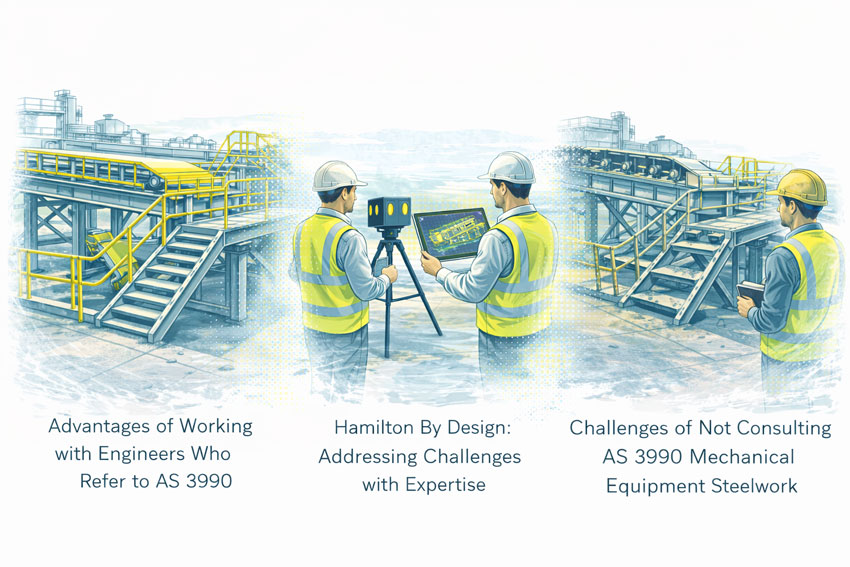
Engineers using LiDAR scanning and digital models to address challenges caused by not consulting AS 3990 mechanical equipment steelwork standards

When Businesses Typically Call a Mechanical Engineer

Most clients contact us when something critical is no longer working as it should โ€” not when everything is running smoothly.

Common triggers include:

  • Production line keeps jamming or backing up
  • Conveyor upgrades are needed to increase throughput
  • Plant layout no longer supports current operations
  • Original equipment supplier is no longer available
  • Compliance issues have been identified during audits or inspections

In these situations, quick fixes often fail because the underlying system was never designed for todayโ€™s operating conditions.


Production Line Keeps Jamming

If bottlenecks, product damage, or stoppages are becoming routine, the problem is often mechanical and systemic โ€” not operator error.

Engineering support can help by:

  • Identifying root causes of flow restrictions
  • Redesigning transfer points and interfaces
  • Improving guarding, access and maintenance zones
  • Reconfiguring equipment layout for smoother material movement

The goal is to improve reliability, not just reset alarms.


Conveyor Upgrade or Replacement Required

Conveyors are often the backbone of production and logistics systems. When capacity increases or materials change, existing conveyors may no longer perform as required.

Mechanical engineering services can support:

  • Conveyor capacity upgrades
  • Drive and structural modifications
  • Transfer chute redesign
  • Integration of new equipment into existing lines

Upgrades can often be achieved without full system replacement when engineered correctly.


Plant Layout No Longer Works

As facilities expand and processes change, original layouts can become inefficient or unsafe.

Engineering reviews can identify opportunities to:

  • Improve workflow and access
  • Reduce unnecessary material handling
  • Improve maintenance clearances
  • Support future equipment additions

Well-planned layout changes reduce downtime, improve safety, and increase operational flexibility.


Equipment Supplier Is No Longer Available

When OEMs stop supporting equipment or close operations, businesses are often left with:

  • No spare parts supply
  • No engineering documentation
  • No upgrade pathway

Mechanical engineers can reverse-engineer components, redesign systems, and develop replacement solutions that integrate with existing plant โ€” often improving performance at the same time.


Compliance Issues Raised

Compliance notices, insurance requirements, or safety audits can quickly become business-critical.

Engineering services can support:

  • Mechanical and structural assessments
  • Design of compliant modifications
  • Certification documentation where required
  • Implementation planning to minimise downtime

Addressing compliance early reduces operational and legal risk.


What We Provide

Our mechanical engineering services typically include:

  • Site assessments and problem diagnosis
  • Concept and detailed design solutions
  • Engineering drawings and documentation
  • Support for fabrication and installation
  • Design verification and compliance support

Where required, engineering services can be supported by 3D laser scanning and as-built modelling to ensure new designs fit accurately into existing facilities.


Why Use an Engineering Consultant Instead of Labour Hire

Labour hire provides people. Engineering consultants provide solutions and accountability.

Using an engineering service means:

  • Problems are diagnosed, not just worked around
  • Designs are developed and documented
  • Risk is managed through professional responsibility
  • Solutions are built to last, not patched temporarily

This approach reduces repeat failures and long-term maintenance costs.


Hamilton By Design logo displayed on a blue tilted rectangle with a grey gradient background

3D LiDAR scanning and 3D modelling service button โ€” laser scanner capturing a point cloud for engineering and CAD modelling
Mechanical engineering services

Supporting Businesses Across Sydney

We support manufacturing, processing, logistics, and industrial facilities across Sydney and surrounding regions, providing responsive engineering services for operating environments where downtime and rework are costly.

Whether the issue is urgent or part of a planned upgrade, engineering support can help stabilise operations and support future growth.


Talk to an Engineer About Your Plant Issues

If production problems, equipment limitations, or compliance risks are affecting your operation, early engineering input can prevent escalation into major shutdowns or capital replacements.

Contact us to discuss your facility and weโ€™ll help identify practical next steps.


Name
Would you like us to arrange a phone consultation for you?
Address

Mechanical Engineering | Structural Engineering


Hamilton By Design provides engineering-led 3D scanning, LiDAR scanning, mechanical engineering and digital engineering services throughout Sydney and Greater Sydney.

Explore our related Sydney services:


  • 3D Scanning Sydney โ€“ Engineering-grade terrestrial laser scanning, as-built surveys and point cloud capture for industrial, infrastructure and commercial projects.
  • Reality Capture Sydney โ€“ High-accuracy reality capture, digital twins, asset documentation and engineering-grade site verification.
  • Scan to CAD Sydney โ€“ Convert point cloud data into AutoCAD, SolidWorks, Inventor and other engineering-ready CAD deliverables.
  • Point Cloud Modelling Sydney โ€“ Engineering-grade point cloud processing, clash detection, as-built verification and 3D modelling.
  • Mechanical Engineering Sydney โ€“ Mechanical design, plant upgrades, materials handling systems, conveyors, chutes, platforms and engineering support.
  • Structural Drafting Sydney โ€“ Structural steel drafting, fabrication drawings, GA drawings, workshop detailing and as-built documentation.

Hamilton By Design supports projects throughout Sydney CBD, Parramatta, Liverpool, Penrith, Blacktown, Chatswood, Alexandria, Mascot, Newcastle and the Central Coast.


Blue banner graphic displaying the text "Point Cloud to CAD - Australia" in large white lettering, representing point cloud processing, scan-to-CAD conversion and digital engineering services across Australia.
Blue banner graphic displaying the text "Scan to CAD Sydney" in large white lettering, representing engineering-led point cloud to CAD conversion, LiDAR scanning and digital engineering services in Sydney.
Blue banner graphic displaying the text "Reality Capture Sydney - CBD" in large white lettering, representing engineering-led reality capture, LiDAR scanning and digital engineering services within Sydney CBD commercial buildings and infrastructure.
3D LiDAR Scanning Darwin for engineering surveys, laser scanning, reality capture and point cloud modelling services
3D LiDAR Scanning Australia engineering services for laser scanning, reality capture, scan-to-CAD, Scan-to-BIM and as-built documentation across Australia
3D LiDAR scanning services on the Central Coast providing engineering-grade laser scanning, point cloud capture, scan-to-CAD modelling and industrial reality capture for infrastructure and industrial projects.

Engineering 3D Scanning for Industrial and Infrastructure Projects in Thailand

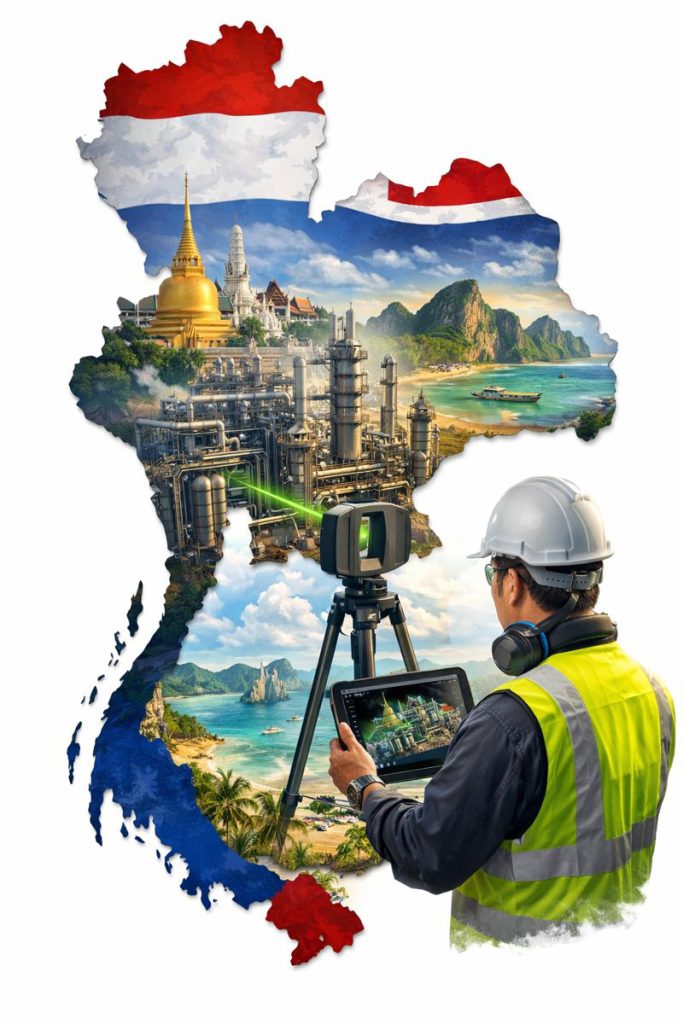
Engineer using LiDAR scanner to capture industrial plant within a map of Thailand, representing engineering 3D scanning for infrastructure and manufacturing projects.

Engineering 3D Scanning for Industrial Projects in Thailand

Supporting safer, faster and more accurate upgrades across manufacturing and processing facilities

Thailand is one of Southeast Asiaโ€™s major industrial hubs, with large manufacturing estates, petrochemical complexes, power generation facilities and transport infrastructure supporting both domestic and export markets. As these facilities continue to expand and modernise, engineering teams are increasingly relying on 3D laser scanning and reality capture to improve design accuracy and reduce construction risk in operating environments.

Engineering-grade 3D scanning is becoming a critical tool for supporting plant upgrades, retrofit projects and infrastructure works where accurate as-built information is essential.


Why As-Built Accuracy Matters in Thai Industrial Facilities

Many industrial sites in Thailand have developed over long periods, with multiple upgrades, expansions and equipment replacements. As a result, existing drawings often no longer reflect actual site conditions.

This creates challenges such as:

  • Unknown clashes with existing services
  • Limited access for installation and maintenance
  • Increased shutdown risk
  • Safety hazards during construction

Engineering-grade laser scanning captures high-density point cloud data that accurately reflects the current state of the facility, giving engineers confidence that designs will fit before work begins on site.


Key Applications of Engineering 3D Scanning in Thailand

Manufacturing Plant Upgrades

Thailandโ€™s automotive, electronics and food processing industries frequently upgrade production lines to improve throughput and automation. Laser scanning allows new machinery and conveyors to be designed directly into existing layouts, reducing installation issues and commissioning delays.


Industrial facility in Thailand being digitally captured with 3D scanning to create accurate models for engineering and upgrade planning.

Petrochemical and Process Facilities

Process plants rely on precise pipework, structural and equipment interfaces. Scanning supports:
  • Tie-in design
  • Pipe routing verification
  • Structural modification planning
  • Safety and access reviews

This is particularly valuable when modifications must be completed during short shutdown windows.

Power and Utilities Infrastructure

Power stations, substations and utility facilities benefit from accurate spatial data for:

  • Equipment replacement
  • Structural strengthening
  • Cable routing upgrades
  • Maintenance planning

3D scanning enables safer design development with fewer site visits in high-risk areas.

Transport and Civil Infrastructure

For stations, depots, bridges and industrial precincts, reality capture supports:

  • Retrofit design
  • Clearance verification
  • Construction staging and access planning

Providing reliable geometry where traditional surveys may be difficult or disruptive.


Why Engineering-Grade LiDAR Is Essential for Industrial Projects

Not all scanning systems are suitable for engineering design.

Industrial and infrastructure projects typically require:
  • Millimetre-level accuracy
  • Long-range scanning capability
  • Reliable reference for CAD and BIM modelling
  • Robust performance in harsh environments

Engineering-grade LiDAR scanners are designed to meet these requirements, making them suitable for mechanical, structural and services design where tolerances and constructability are critical.

Visual scanning platforms are valuable for documentation and communication, but fabrication and installation planning depend on higher-accuracy capture methods.


Benefits for Project Teams and Asset Owners

When integrated into engineering workflows, 3D scanning delivers clear project advantages:

  • Reduced re-measurement on site
  • Improved design confidence
  • Fewer construction clashes
  • Shorter shutdown durations
  • Safer design development
  • Better coordination between disciplines

For facilities operating at high production capacity, reducing downtime and rework has significant financial impact.


Engineering-Led Reality Capture Workflows

The true value of scanning lies not just in capturing data, but in how that data is used.

Engineering-led reality capture integrates point cloud data into:

  • Mechanical and structural design
  • Scan-to-CAD and Scan-to-BIM modelling
  • Fabrication drawing development
  • Installation planning and verification

This ensures scanning directly supports project delivery, not just documentation.


Supporting Industrial Growth Across Southeast Asia

Thailand continues to invest heavily in industrial development, automation, energy infrastructure and transport networks. Engineering-grade reality capture supports this growth by enabling:

  • Faster project start-up
  • Better design coordination
  • Reduced construction risk

As facilities become more complex, accurate digital site data becomes a critical foundation for future upgrades and long-term asset management.


Final Thoughts

For industrial and infrastructure projects in Thailand, 3D laser scanning is no longer a specialist technology โ€” it is a practical engineering tool that supports safer, more efficient and more predictable project delivery.

When combined with mechanical and structural engineering expertise, reality capture enables teams to design, coordinate and construct with greater confidence in some of the regionโ€™s most complex operating environments.

Hamilton By Design logo displayed on a blue tilted rectangle with a grey gradient background
3D LiDAR scanning and 3D modelling service button โ€” laser scanner capturing a point cloud for engineering and CAD modelling
Mechanical engineering services
Name
Would you like us to arrange a phone consultation for you?
Address
Finite Element Analysis (FEA) engineering simulation button
Mechanical engineering services

Engineering 3D Scanning for Mining Projects in Zambia

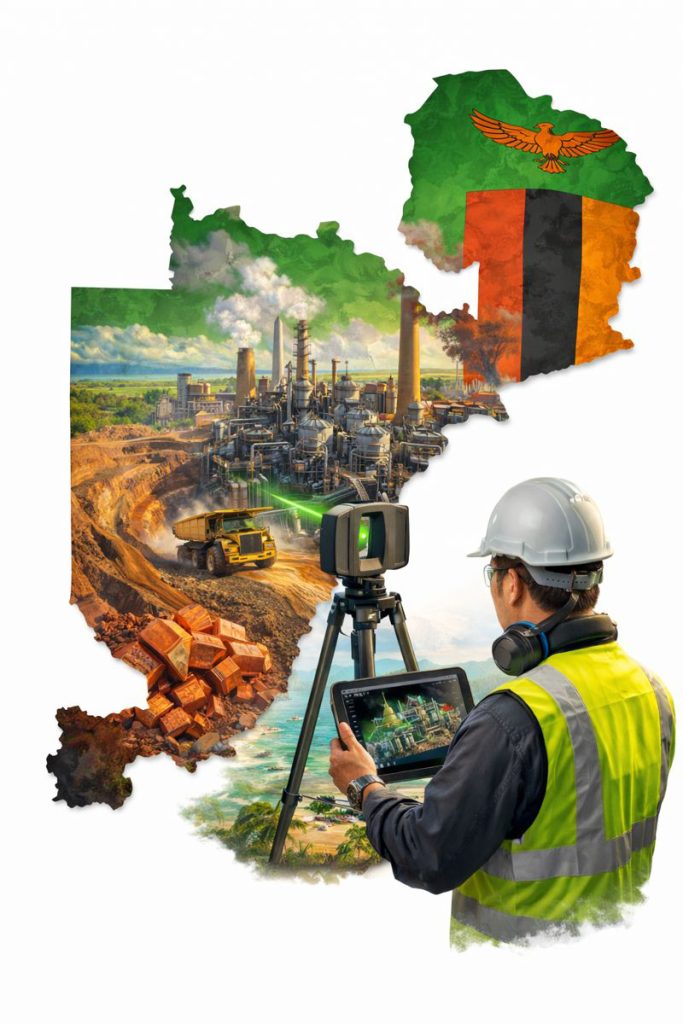
Engineer using LiDAR scanner to capture copper processing plant and open-pit mine within a map of Zambia for engineering design and upgrade planning.

Engineering 3D Scanning for Mining Projects in Zambia

Supporting safer, faster and more accurate plant upgrades across the Copperbelt

Zambia is one of Africaโ€™s most important copper-producing nations, with large-scale mining and mineral processing facilities operating across the Copperbelt region. Many of these sites are complex, brownfield environments that have evolved over decades, making accurate design and upgrade work challenging without reliable as-built information.

Engineering-grade 3D laser scanning is now playing a critical role in supporting safer, faster and more accurate mining projects by providing detailed digital representations of existing plant and infrastructure.


Zambian mining facility being digitally captured with 3D scanning to create accurate models for engineering and shutdown planning.

Why Accurate As-Built Data Matters in Mining

Mining and processing plants typically undergo continuous modification to improve capacity, efficiency and reliability. Unfortunately, legacy drawings and documentation are often incomplete or no longer reflect the current configuration of the plant.

This creates risks such as:

  • Design clashes with existing services or structures
  • Unexpected installation constraints
  • Increased shutdown durations
  • Safety risks from unverified site conditions

3D laser scanning addresses these risks by capturing high-density point cloud data that reflects the true geometry of the operating facility at the time of capture.


How Engineering-Grade Scanning Supports Mining Projects

Plant Upgrades and Expansions

When installing new crushers, mills, pumps, pipework or conveyors, accurate spatial data is essential. Laser scanning allows engineers to design new equipment layouts directly within the existing plant model, validating clearances and interfaces before construction begins.

Shutdown and Maintenance Planning

Shutdown work is high-risk and time-critical. Point cloud models enable teams to:

  • Assess access routes
  • Plan lifting and installation sequences
  • Identify congestion points

This improves safety outcomes and reduces downtime during critical maintenance windows.


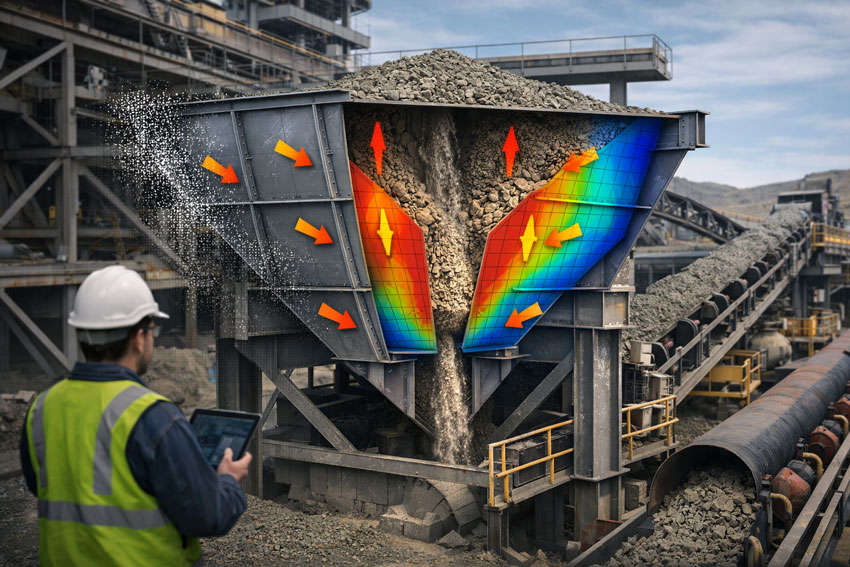
Mining hopper in a transfer station shown in cutaway, illustrating steady-state material flow, structural load distribution, and engineered hopper design.

Structural and Mechanical Retrofits

For structural strengthening, equipment replacement or capacity upgrades, scanning provides the geometry required to produce fabrication-ready drawings without relying on extensive manual site measurement in hazardous areas.

Digital Twin and Asset Management

Reality capture data can also be used to support longer-term asset management strategies, enabling:

  • Improved inspection planning
  • Better maintenance coordination
  • Faster future upgrade design

Digital plant models become a valuable operational asset, not just a project deliverable.


Why Engineering-Grade LiDAR Is Required for Industrial Sites

Not all 3D scanning technologies are suitable for mining environments.

While visual scanning systems are useful for building documentation and general layout capture, mining and processing facilities typically require:

  • Millimetre-level dimensional accuracy
  • Long-range scanning capability
  • Reliable reference data for CAD and BIM modelling

Engineering-grade LiDAR systems are designed for these conditions, making them suitable for mechanical and structural design workflows where tolerances and fit-up are critical.

For projects involving fabrication and installation, scanning must support engineering decisions โ€” not just visualisation.


Benefits for Mining Operators and Project Teams

Integrating engineering scanning into mining workflows delivers tangible benefits, including:

  • Reduced re-measurement on site
  • Fewer design clashes and construction rework
  • Improved constructability reviews
  • Safer design development off-site
  • Shorter shutdown durations
  • Higher confidence in project outcomes

In high-value mining projects, even small improvements in planning accuracy can result in significant cost and schedule savings.


Engineering-Led Reality Capture Workflows

The real value of 3D scanning is realised when it is integrated directly into engineering and design processes. At Hamilton By Design, reality capture is used to support:

  • Mechanical and structural design
  • Scan-to-CAD and Scan-to-BIM modelling
  • Fabrication drawing development
  • Installation planning and coordination

This ensures scan data is converted into practical engineering deliverables that support construction and long-term asset management.


Supporting Mining Projects Across Southern Africa

With ongoing investment in copper and critical minerals, Southern Africa continues to present strong demand for plant upgrades, expansions and reliability improvements.

Engineering-led reality capture provides a safer and more efficient way to support these projects, particularly in operating facilities where downtime and site access are highly constrained.

By combining laser scanning with mechanical and structural engineering expertise, project teams can reduce uncertainty and deliver upgrades with greater confidence.


Hamilton By Design logo displayed on a blue tilted rectangle with a grey gradient background

3D LiDAR scanning and 3D modelling service button โ€” laser scanner capturing a point cloud for engineering and CAD modelling
Mechanical engineering services

Final Thoughts

For mining operations in Zambia, 3D laser scanning is no longer a specialist add-on โ€” it is becoming a core engineering tool that supports safer and more efficient project delivery.

When paired with strong design and project management workflows, reality capture enables better planning, better coordination and better construction outcomes in some of the worldโ€™s most demanding industrial environments.

Name
Would you like us to arrange a phone consultation for you?
Address
Finite Element Analysis (FEA) engineering simulation button
Mechanical engineering services

Choosing the Right 3D Scanning Tools for Your Project

Diagram comparing visual scanning, engineering LiDAR and photogrammetry to help choose the right 3D scanning method for construction and engineering projects.

Choosing the Right 3D Scanning Tool for Engineering Projects

3D scanning is now widely used across construction, property, manufacturing, and heavy industry โ€” but not all scanning tools are designed for the same outcomes. Choosing the right technology depends less on the buzzwords and more on what you actually need to do with the data after itโ€™s captured.

This article explains the main types of 3D scanning commonly used in Australia today, what theyโ€™re best suited for, and how to choose the right approach for your project.


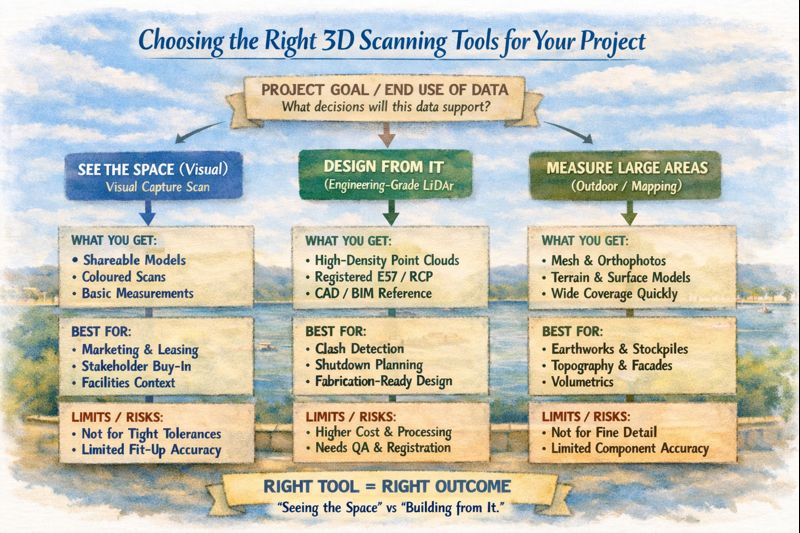
1. Visual Capture Scanning (Property, Architecture & Digital Twins)

Best for:

  • Property marketing and virtual tours
  • Design coordination
  • Facilities management
  • Heritage documentation
  • Basic Scan-to-BIM

Typical outputs:

  • Web-based walkโ€‘through models
  • Coloured point clouds
  • Floor plans and simple BIM geometry
  • OBJ / E57 exports for modelling

Strengths:

  • Fast capture
  • Lower cost
  • Easy sharing via web platforms
  • Excellent for stakeholder engagement

Limitations:

  • Lower geometric accuracy
  • Not suitable for fabrication tolerances
  • Not reliable for mechanical or structural fitโ€‘up

This type of scanning is ideal when the goal is visual context and spatial understanding, rather than precise dimensional control.


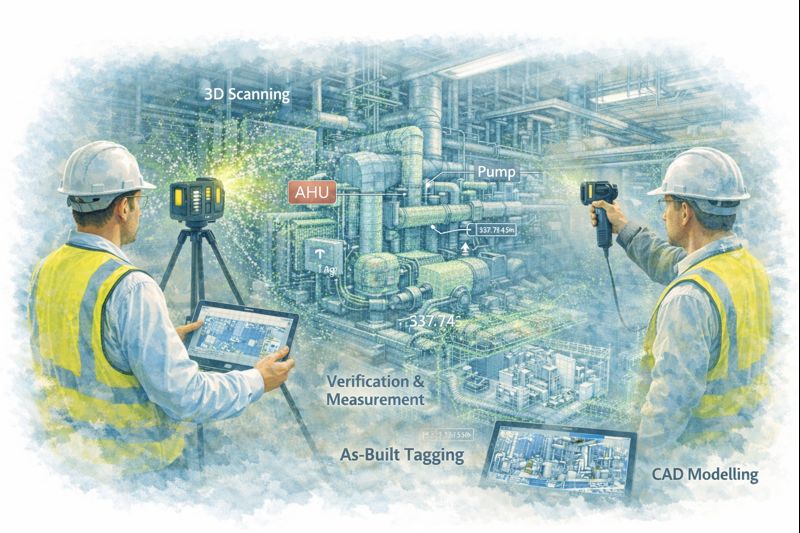
Engineers using LiDAR scanners to capture plant equipment and convert point cloud data into CAD models for verification and as-built documentation.

2. Engineeringโ€‘Grade LiDAR Scanning (Industrial & Retrofit Projects)

Best for:

  • Mechanical and structural design
  • Plant upgrades and brownfield sites
  • Clash detection
  • Fabricationโ€‘ready modelling
  • Shutdown planning

Typical outputs:

  • Highโ€‘density point clouds
  • Registered E57 / RCP datasets
  • CADโ€‘ready reference geometry
  • Scanโ€‘toโ€‘CAD and Scanโ€‘toโ€‘BIM models

Strengths:

  • Millimetreโ€‘level accuracy
  • Longโ€‘range capability
  • Reliable for engineering measurement
  • Suitable for design verification

Limitations:

  • Higher equipment and processing cost
  • Longer setup and registration time
  • Requires engineering workflows to extract value

Engineering LiDAR is used when design decisions and fabrication depend on accurate geometry, not just visual representation.


3. Photogrammetry (Large Areas & Outdoor Mapping)

Best for:

  • Stockpile measurement
  • Terrain mapping
  • Faรงade capture
  • Infrastructure corridors

Typical outputs:

  • Mesh models
  • Orthophotos
  • Surface models

Strengths:

  • Covers large areas quickly
  • Droneโ€‘based access
  • Useful for topography

Limitations:

  • Less accurate for fine detail
  • Poor performance in tight or indoor environments
  • Limited for mechanical components

Photogrammetry is excellent for scale and surface data, but not for highโ€‘precision engineering work.


4. Why the End Use of Data Matters More Than the Scanner

The most common mistake in 3D scanning projects is choosing a capture method before defining:

  • Will the data be used for design and fabrication?
  • Or mainly for visualisation and documentation?
  • Do tolerances matter?
  • Will components be manufactured from this data?

If scanning is only used for:

  • Layout confirmation
  • Space planning
  • Stakeholder communication

Then visual scanning platforms may be entirely sufficient.

If scanning is used for:

  • Equipment replacement
  • Structural modification
  • Pipework or conveyor interfaces
  • Custom fabrication

Then engineeringโ€‘grade LiDAR is essential.


5. Matching the Tool to the Job

Project TypeRecommended Technology
Real estate & virtual toursVisual capture scanning
Office and building refurbishmentsVisual capture or LiDAR depending on tolerances
Plant upgrades & shutdownsEngineeringโ€‘grade LiDAR
Mechanical retrofitsEngineeringโ€‘grade LiDAR
Large outdoor mappingPhotogrammetry or LiDAR
Fabrication from existing assetsEngineeringโ€‘grade LiDAR only

6. Scanning Is Only Step One

Regardless of the technology used, scanning only creates value when paired with:

  • Proper registration and QA
  • Engineering interpretation
  • CAD modelling and documentation
  • Design validation

Without these steps, point clouds remain large files with limited practical use.

The biggest performance gains come when scanning is directly integrated into:

  • Engineering design
  • Constructability reviews
  • Clash detection
  • Fabrication planning

Infographic explaining how to choose the right 3D scanning tool based on whether a project needs visualisation, engineering design, or large-area measurement.

Final Thoughts

3D scanning is not a single solution โ€” it is a group of technologies with very different strengths.

The right approach depends on whether your project is focused on:

  • Seeing the space, or
  • Building from the space

Understanding that difference early can save significant time, cost, and rework later in the project lifecycle.

If youโ€™re unsure which approach fits your project, start by defining what decisions and deliverables will rely on the data โ€” then choose the scanning method that supports those outcomes, not just the fastest or cheapest option.

Hamilton By Design logo displayed on a blue tilted rectangle with a grey gradient background
3D LiDAR scanning and 3D modelling service button โ€” laser scanner capturing a point cloud for engineering and CAD modelling
Mechanical engineering services
Name
Would you like us to arrange a phone consultation for you?
Address
3D LiDAR scanning and 3D modelling service button โ€” laser scanner capturing a point cloud for engineering and CAD modelling
Mechanical engineering services
Finite Element Analysis (FEA) engineering simulation button
Mechanical engineering services

Mechanical Engineering | Structural Engineering