AS 3990 Mechanical Equipment Steelwork | Walkways, Platforms & Conveyor Structures

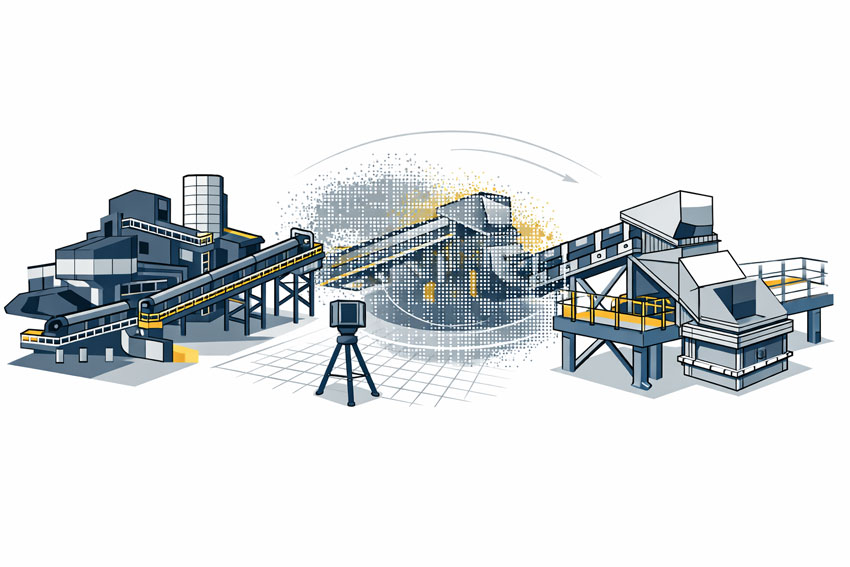
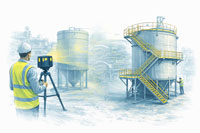
Engineer using LiDAR scanner to capture as-built tank steelwork, transitioning to compliant AS 3990 walkways and access platforms

AS 3990 โ€“ Mechanical Equipment Steelwork

Walkways, Conveyor Structures, Platforms and Gantries

Mechanical equipment steelwork is everywhere in industrial sites โ€” conveyor structures, access walkways, maintenance platforms, gantries and support frames. Over time, these structures are modified, loaded differently, repaired, and upgraded. Thatโ€™s where AS 3990 โ€“ Mechanical equipment โ€“ Steelwork becomes critical: it provides a framework for designing and verifying steelwork that supports mechanical equipment and associated access systems.

At Hamilton By Design, we help asset owners and project teams reduce risk by converting real as-built steelwork into engineering-grade digital models that can be checked, upgraded, and documented with confidence.
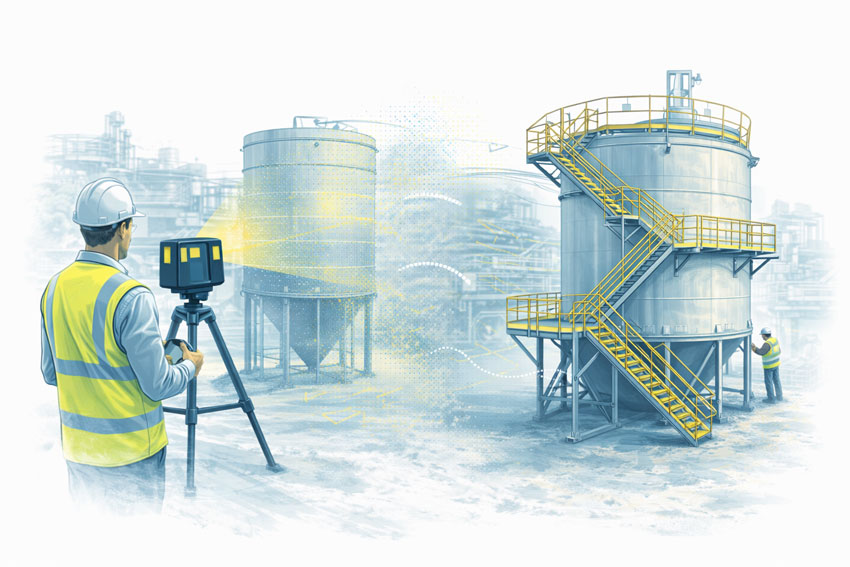

3D LiDAR scanning of industrial tank steelwork showing as-built condition and engineered walkways and stairs designed to AS 3990

When AS 3990 Steelwork Becomes a Problem in the Real World

Steelwork rarely fails because it was โ€œobviously wrongโ€ on day one. The most common issues develop gradually due to changes in loading, upgrades, corrosion, or incomplete documentation.

Common triggers we see on site

  • New conveyor drives, chutes, skirts, guards, or pull-wire systems added after commissioning
  • Extra services added: cable trays, hose reels, water lines, pipework, and supports
  • Walkway changes for access, maintenance, or guarding upgrades
  • Localised damage from impact, vibration, or operational fatigue
  • Corrosion or section loss in wash-down areas, coastal environments, or chemical exposure zones
  • Legacy steelwork with missing drawings or unknown load assumptions

If you canโ€™t prove what exists (accurately), it becomes difficult to prove compliance, fitness-for-purpose, or due diligence.


Key Engineering Risks with Walkways, Platforms, Gantries and Conveyor Structures

1) Design intent vs as-built reality

Many sites have steelwork that differs from drawings due to shutdown modifications or brownfield constraints. Small deviations in member size, connection detailing, or geometry can materially change structural performance.

2) Loads have changed โ€” but the steelwork didnโ€™t

A โ€œsimpleโ€ modification can add significant load: added services, heavier equipment, changed maintenance practices, or multiple personnel working in the same bay. These changes can push members or connections beyond the original assumptions.

3) Conveyor vibration and dynamic effects

Conveyor structures experience cyclic loading, start/stop effects, and vibration. Even if the structure looks acceptable, fatigue and resonance can become a long-term reliability problem โ€” particularly around drive stations, transfer points, and cantilevered platforms.

4) Connection adequacy often governs

Field-welded brackets, modified gussets, bolt slip, corroded fasteners, and non-standard connection geometry can become the weak link. Connection performance is frequently the true limiting factor in older or heavily modified steelwork.

5) Access and safety interfaces

Walkways and platforms often sit at the intersection of multiple requirements: safe access geometry, handrails, toe-boards, gates, and guarding. If access steelwork was modified without a proper verification step, the risk becomes both structural and safety-related.


What โ€œVerificationโ€ Looks Like in Practice

AS 3990 steelwork compliance is not just a box-tick. In a practical project environment, it means you can answer:

  • What steelwork exists right now (as-built)?
  • What loads and operational conditions apply today (not ten years ago)?
  • Are members and connections adequate under realistic scenarios?
  • What upgrades are required, and can they be fabricated to fit first time?
  • Can the asset owner document compliance and risk controls for governance?

Hamilton By Design supports this process by bringing LiDAR scanning + mechanical engineering + fabrication-ready outputs together under one roof.


How Hamilton By Design Helps (Our Typical Deliverables)

1) Engineering-grade 3D LiDAR scanning of steelwork

We capture accurate geometry of:

  • Walkways and access platforms
  • Conveyor stringers, trestles, and transfer towers
  • Gantries, monorails, and maintenance frames
  • Supports, bracing, ladders, stairs, and access interfaces

Related service:
3D Laser Scanning: https://www.hamiltonbydesign.com.au/3d-laser-scanning/

2) As-built CAD model for verification and design

We convert the scan into usable engineering outputs such as:

  • As-built 3D CAD models
  • Key dimensions, levels, and clearances
  • Interference checking and fit-up planning
  • Fabrication-ready drawings for retrofit steelwork

3) Engineering checks and upgrade design

Where required, we support structural verification and upgrade design using engineering workflows suited to brownfield assets.

Related capability:
SolidWorks FEA / simulation workflows: https://www.hamiltonbydesign.com.au/home/solidworks/solidworks-fea-simulation/


Where This Matters Most (Typical Applications)

  • Conveyor upgrades and transfer station modifications
  • Walkway widening, new stair access, and maintenance platform additions
  • Guarding upgrades, pull-wire additions, and access compliance programs
  • Corrosion repairs and local strengthening
  • Brownfield plant modifications with limited shutdown time
  • Audit readiness and engineering documentation clean-up

If youโ€™re working around conveyors, you may also find this relevant:
AS 1755 Conveyor Safety: https://www.hamiltonbydesign.com.au/as-1755-conveyor-safety/

And for safety leadership context:
Machine guarding lessons: https://www.hamiltonbydesign.com.au/machine-guarding-in-australia-a-decade-of-lessons-for-leaders-asset-owners-and-engineers/


Standards and Compliance Context (How AS 3990 Fits In)

AS 3990 typically sits alongside a broader compliance context depending on the asset and scope. In many industrial environments, it may interact with standards and guidance such as:

  • AS 1657 (fixed platforms, walkways, stairways and ladders)
  • AS 4100 (steel structures)
  • AS/NZS 1170 (structural actions / loading)
  • AS 1755 (conveyor safety and associated interfaces)

For official sources and governance context:

(Note: Always confirm the current revision and applicability of standards for your site, scope, and jurisdiction.)


Why Digital As-Built Matters for AS 3990 Steelwork

A verified as-built model reduces:

  • Upgrade risk and fabrication rework
  • Shutdown time lost to unexpected clashes
  • Safety risks from undocumented modifications
  • Compliance gaps during audits and governance reviews

It also supports โ€œfit-first-timeโ€ fabrication because designers, engineers, and fabricators are working from the same geometry โ€” not assumptions.


Talk to an Engineer About Your AS 3990 Steelwork

If youโ€™re planning an upgrade, responding to an audit, or unsure whether existing walkways, platforms, gantries or conveyor structures still meet their intended duty, we can help you quickly establish a reliable baseline.

Start with scanning, modelling, and engineering verification โ€” and build from facts.

Related service pages to explore:

Hamilton By Design logo displayed on a blue tilted rectangle with a grey gradient background
3D LiDAR scanning and 3D modelling service button โ€” laser scanner capturing a point cloud for engineering and CAD modelling
Mechanical engineering services

Our clients:

Name
Would you like us to arrange a phone consultation for you?
Address
https://youtu.be/jOGYoLL1Vro?si=vPkEAPQiFzB9fd6-

Mechanical Engineering | Structural Engineering


Fabrication & Product Design

Light Fabrication for Residential and Commercial Applications

Hamilton By Design provides product design and fabrication development for light steel fabrication used in residential and commercial environments. This service is focused on bespoke steel products that require accurate design, clear fabrication documentation, and reliable installation outcomes.

Our work sits between concept and fabrication. We develop fabrication-ready designs that integrate with existing buildings, services, and site conditions, supporting builders, fabricators, and property owners who require confidence that components will fit first time.

This service complements our mechanical engineering, 3D scanning, and CAD capabilities and is typically engaged where off-the-shelf products are unsuitable or where site-specific conditions must be addressed early.


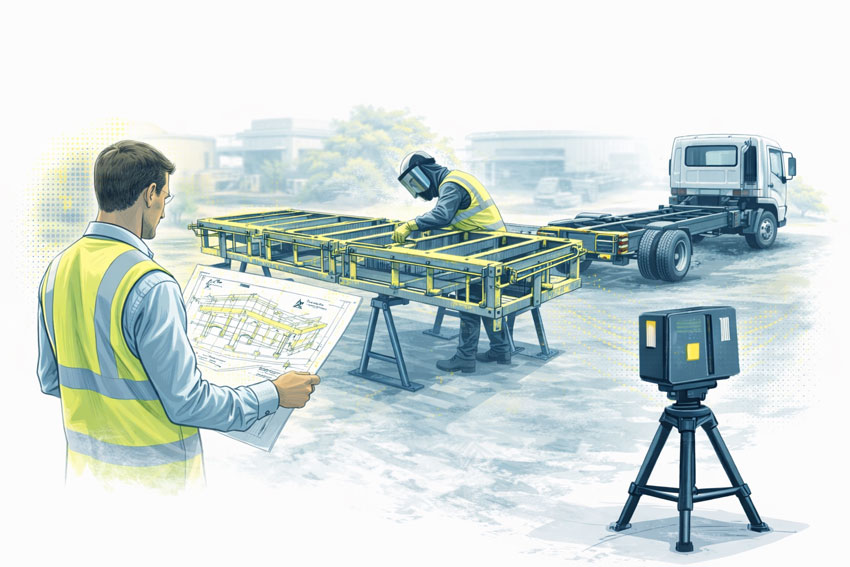
Engineer reviewing fabrication drawings beside a steel truck tray frame on trestles, with a fabricator working on the frame, a light commercial truck chassis waiting for installation, and a LiDAR scanner in the foreground.
3D LiDAR scanning and 3D modelling service button โ€” laser scanner capturing a point cloud for engineering and CAD modelling
Mechanical engineering services

Design-for-Fabrication Approach

All products within this category are developed using design-for-fabrication principles. This means geometry, tolerances, fixing methods, and installation constraints are considered during design, not left to be resolved on site.

Where required, designs are informed by existing-condition data captured through our 3D scanning services:
https://www.hamiltonbydesign.com.au/home/engineering-services/3d-laser-scanning/

Design development and detailing are carried out using SolidWorks-based 3D CAD workflows to produce fabrication-ready outputs:
https://www.hamiltonbydesign.com.au/home/engineering-services/3d-cad/


Gates & Access Steel

We design bespoke gates and access steel for residential and commercial properties, tailored to site geometry, fixing conditions, and operational requirements.

Typical applications include sliding gates, swing gates, cantilever gates, pedestrian access gates, and commercial entry gates. Designs consider post fixings, ground interfaces, clearances, and integration with surrounding structures.

Related engineering capability:
https://www.hamiltonbydesign.com.au/home/engineering-services/mechanical-engineering/


Door & Window Grills

Door and window grills are often required to balance security, ventilation, and architectural intent. We develop opening-specific grill designs that suit residential retrofits and commercial refurbishments.

Products may include security door grills, window grills, decorative architectural grills, and removable systems where access or maintenance is required. Geometry and fixing are resolved during design to support clean fabrication and installation.

Supporting drafting capability:
https://www.hamiltonbydesign.com.au/home/engineering-services/structural-drafting/


Balustrades, Handrails & Guarding

Balustrades, handrails, and guarding systems are safety-critical elements commonly introduced during upgrades and renovations. We provide fabrication-ready designs for residential and commercial settings where existing conditions vary and standard systems are unsuitable.

Designs consider fixing interfaces, load paths, and integration with existing slabs, stairs, or structures.

Engineering certification can be provided where required:
https://www.hamiltonbydesign.com.au/home/engineering-services/engineering-certification/


Screens & Architectural Steel

Steel screens and feature panels are used for privacy, shading, boundary definition, and architectural expression. We design lightweight fabricated steel screens suited to balconies, courtyards, faรงades, and internal spaces.

Design development includes panelisation, fixing strategy, finishes, and installation sequencing to ensure the product can be fabricated and installed efficiently.

Related CAD and documentation services:
https://www.hamiltonbydesign.com.au/home/engineering-services/3d-cad-drawings/


Stairs, Ladders & Access Systems

We design light-duty stairs, ladders, and access systems for residential and commercial environments where space constraints or existing geometry require a bespoke solution.

Applications include compact staircases, mezzanine access stairs, fixed ladders, and maintenance access systems. Accurate geometry is critical, and designs are developed to suit fabrication and on-site installation.

Mechanical engineering support:
https://www.hamiltonbydesign.com.au/home/engineering-services/mechanical-engineering/


Bollards, Barriers & Protective Steel

Protective steel elements such as bollards and barriers are commonly introduced to manage vehicle movement, protect assets, and improve pedestrian safety.

We design light fabricated protective steel for car parks, commercial sites, and mixed-use developments, resolving fixing, spacing, and integration with existing pavements or structures.


Custom Frames, Brackets & Light Steel Assemblies

Many light fabrication projects involve custom brackets, frames, or small assemblies to support equipment, services, or architectural elements.

We develop fabrication-ready designs for mounting frames, brackets, skids, and small steel assemblies, ensuring interfaces with client equipment and existing buildings are clearly defined.

Supporting CAD workflows:
https://www.hamiltonbydesign.com.au/home/engineering-services/3d-cad/


Ute Trays & Light Commercial Vehicle Trays

For residential and commercial trade use, we design custom ute trays and light commercial vehicle trays where off-the-shelf solutions do not meet operational requirements.

Designs consider vehicle mounting, load distribution, accessory integration, and fabrication practicality. This service is limited to light commercial use and does not extend to heavy vehicle manufacturing.


Van & Light Commercial Vehicle Fit-Outs

We provide design support for internal van fit-outs involving light steel fabrication only. Typical applications include shelving systems, equipment mounting frames, internal partitions, and support structures.

Designs are vehicle-specific and focused on safe mounting, durability, and ease of installation.

Engineering certification can be provided where required:
https://www.hamiltonbydesign.com.au/home/engineering-services/engineering-certification/


Engineering Certification

All products within this category can be mechanically engineered and certified where required. Certification scope is defined on a project-by-project basis and may support approvals, compliance requirements, or handover documentation.

Certification services are delivered in conjunction with documented design and fabrication information.


Hamilton By Design logo displayed on a blue tilted rectangle with a grey gradient background

Scope Clarification

This service category is limited to light steel fabrication for residential and commercial applications. It does not include heavy industrial fabrication, structural building frames, or large infrastructure works.

This clear scope ensures consistent quality, reliable delivery, and alignment with fabrication-ready outcomes.


Our clients

Name
Would you like us to arrange a phone consultation for you?
Address
3D LiDAR scanning and 3D modelling service button โ€” laser scanner capturing a point cloud for engineering and CAD modelling
Mechanical engineering services
Finite Element Analysis (FEA) engineering simulation button
Mechanical engineering services

Mining & Mineral Processing

LiDAR laser scanner capturing a mining and mineral processing plant to create an accurate 3D digital model for engineering and fabrication
Blue icon of a conveyor belt carrying material into a crusher or processing unit

We support mining and mineral processing operations with engineering-grade LiDAR scanning and mechanical design for CHPPs, conveyors, transfer stations, plant upgrades, and brownfield modifications. Our experience in live operating environments helps reduce shutdown risk, rework, and costly fabrication errors.

Mining & Mineral Processing Engineering Services

Hamilton By Design supports mining and mineral processing operations with engineering-grade LiDAR scanning, mechanical engineering, and design support for complex, live operating environments.
Our work focuses on delivering accurate existing-condition data and engineering outcomes that reduce shutdown risk, minimise rework, and support safe, efficient plant upgrades.

We work across the full project lifecycle โ€” from early site capture and feasibility through to detailed design, fabrication support, and construction verification โ€” with a strong emphasis on brownfield and retrofit projects where getting the geometry right is critical.


Mining Engineering Services

Our mining engineering services are built around a clear principle: engineering decisions must be based on accurate site data. We combine reality capture with mechanical engineering to support informed design, modification, and execution of mining projects.

These services support:

  • Existing asset validation
  • Upgrade and modification planning
  • Engineering design development
  • Risk reduction in live operating plants

By integrating scanning and engineering under one workflow, we provide mining teams with confidence that designs reflect real-world conditions.


Mining & Industrial Engineering

Mining operations rely on complex industrial systems that must perform reliably under demanding conditions. Hamilton By Design works at the interface between mining infrastructure and industrial plant systems, supporting projects where mechanical, structural, and operational requirements overlap.

Our experience includes:

  • Mineral processing facilities and CHPPs
  • Materials handling systems
  • Industrial plant equipment within mining sites
  • Brownfield integration and asset upgrades

This cross-disciplinary approach allows us to support mining clients with solutions that are practical, buildable, and aligned with operational constraints.


Mining Services

Our mining services focus on practical project delivery support. We work alongside site teams, engineers, and contractors to capture existing conditions, verify designs, and support construction and shutdown activities.

Typical services include:

  • Engineering-grade LiDAR and as-built capture
  • Existing condition verification
  • Design coordination support
  • Construction and installation validation

These services help reduce uncertainty on site and provide a reliable digital foundation for engineering and fabrication activities.


Mechanical Engineering in Mining

Mechanical engineering is central to the safe and efficient operation of mining assets. Hamilton By Design provides mechanical engineering support informed directly by site-captured data, ensuring designs are suitable for real operating environments.

Our mechanical engineering capabilities support:

  • Conveyors, chutes, and transfer stations
  • Plant upgrades and modifications
  • Structural and mechanical interfaces
  • Fabrication-ready design documentation

Where required, our work can be supported by engineering verification and analysis to provide additional confidence in design outcomes.


Engineering-Led, Fit-for-Purpose Outcomes

Hamilton By Design operates with a strong focus on:

  • Accuracy over assumption
  • Engineering accountability
  • Fit-first-time outcomes
  • Reduced risk in brownfield environments

By combining reality capture with mechanical engineering, we help mining and mineral processing clients move from uncertain existing conditions to confident engineering decisions.


Hamilton By Design logo displayed on a blue tilted rectangle with a grey gradient background

If you are planning a mining or mineral processing upgrade, modification, or verification project, Hamilton By Design can support your team with engineering-grade scanning and mechanical design services tailored to live operating environments.


Structural drafting services button
3D LiDAR scanning and 3D modelling services button
Mechanical drafting services button

Our clients:

Name
Would you like us to arrange a phone consultation for you?
Address
3D LiDAR scanning and 3D modelling service button โ€” laser scanner capturing a point cloud for engineering and CAD modelling
Mechanical engineering services

3D Laser Scanning

3D LiDAR Scanning โ€“ Digital Quality Assurance

Mechanical Engineering Perth WA banner for Hamilton By Design featuring white text on a blue background.
3D Laser Scanning Perth WA banner for Hamilton By Design with white text on a blue background.
SolidWorks Perth WA banner for Hamilton By Design featuring white text on a blue background.

SolidWorks Mechanical Design Services

As-Built Drawings from a LiDAR Scanner

3D LiDAR Scanning and 3D Modelling – Hamilton By Design

https://www.hamiltonbydesign.com.au/perth-wa
3D CAD Modelling Australia service banner for Hamilton By Design
3D LiDAR scanning and 3D modelling service button โ€” laser scanner capturing a point cloud for engineering and CAD modelling
Mechanical engineering services
3D CAD Modelling Australia service banner for Hamilton By Design
Mechanical, Structural & Pipework Drafting service banner by Hamilton By Design featuring white text on a blue background.
Australian Drafting logo featuring bold white text reading "Australian Drafting" centred on a blue rounded rectangle background.
Blue banner graphic displaying the text "Point Cloud to CAD - Australia" in large white lettering, representing point cloud processing, scan-to-CAD conversion and digital engineering services across Australia.
CHPP Engineering title graphic featuring bold white text reading "CHPP Engineering" centred on a blue rounded rectangle background.
Engineering Governance title graphic featuring bold white text reading "Engineering Governance" centred on a blue rounded rectangle background.
Mechanical engineering services
Australian Drafting logo featuring bold white text reading "Australian Drafting" centred on a blue rounded rectangle background.
https://www.hamiltonbydesign.com.au/lidar-scanning-brisbane-2
3D LiDAR Scanning Hunter & Newcastle banner with white text on a blue background promoting engineering-grade laser scanning services for industrial, mining and infrastructure projects across the Hunter Valley and Newcastle region.
Mechanical Engineering Hunter & Newcastle banner promoting mechanical engineering services for mining, industrial plants, power generation, manufacturing and heavy industry throughout the Hunter Valley and Newcastle region.
Structural Drafting Hunter & Newcastle banner promoting structural drafting services for mining, industrial plants, power generation, manufacturing and infrastructure projects across the Hunter Valley and Newcastle region.
Mechanical Engineering Perth WA banner for Hamilton By Design featuring white text on a blue background.
3D Laser Scanning Perth WA banner for Hamilton By Design with white text on a blue background.
SolidWorks Perth WA banner for Hamilton By Design featuring white text on a blue background.
Fabrication and product design services
Finite Element Analysis (FEA) engineering simulation button
3D LiDAR scanning and 3D modelling service button โ€” laser scanner capturing a point cloud for engineering and CAD modelling
Blue rounded button with the text โ€œSolidWorks Designโ€ in white.
Mechanical drafting services button
Structural drafting services button

Mechanical Engineering | Structural Engineering


You wouldnโ€™t expect plasticine to hold up a roof

So why expect precision measurement from a low-grade scanner?

You would never expect plasticine to hold up a roof.

It is simply not designed for that purpose.

So why would you expect precision, fabrication-grade measurements from a low-grade scanner that was never intended for engineering, structural verification, or load-critical decision-making?

At Hamilton By Design, this distinction matters โ€” because the consequences of poor data do not appear on a screen.
They appear later, on site, in steel, time, cost, and risk.


The problem with โ€œone-size-fits-allโ€ scanning

The term โ€œ3D scanningโ€ is often used to describe vastly different technologies with vastly different outcomes.

A phone-based scan, poly scan, or real-estate laser capture tool is designed to:

  • Look good
  • Be fast
  • Be easy to use
  • Support visualisation and marketing

An engineering-grade laser scanner is designed to:

  • Capture true geometry
  • Provide repeatable, verifiable measurements
  • Support CAD modelling, fabrication drawings, and structural assessment

These tools are not interchangeable, even if the outputs look similar at first glance.

Visual accuracy is not structural accuracy.


When โ€œclose enoughโ€ becomes very expensive

Low-grade scanners may produce models that appear accurate, but engineering does not work on appearances.

When steel is being fabricated, installed, or retrofitted, millimetres matter.

Errors in geometry can lead to:

  • Beams that are too short to achieve adequate bearing
  • Misaligned columns or plates
  • Clashes with existing services or structure
  • Forced site modifications and rework
  • Extended shutdowns and access costs

This is why Hamilton By Design approaches scanning as an engineering input, not a visual product.

๐Ÿ‘‰ Related service: 3D Laser Scanning Services


You cannot engineer what you cannot see

Phone scans and visual capture methods only record what is visible.

They cannot:

  • Establish footing depth
  • Confirm foundation geometry
  • Identify slab thickening or edge beams
  • Verify load paths below ground

If you cannot see or verify how loads are transferred into the ground, you cannot responsibly design the structure above it.

Hamilton By Design addresses this gap through an engineering-led approach that combines:

  • Measured geometry
  • Subsurface investigation (where appropriate)
  • Structural logic and interpretation

๐Ÿ‘‰ Related service: Ground Penetrating Radar (GPR) Services
๐Ÿ‘‰ Related service: As-Built Documentation


Beam length, bearing, and support are not optional details

A structural beam does not just need to โ€œfit in the spaceโ€.

It must:

  • Span between actual supports
  • Achieve sufficient bearing length
  • Align with load-bearing elements
  • Transfer load safely and compliantly

Low-grade scanning tools often:

  • Smooth over out-of-square conditions
  • Hide offsets and construction tolerances
  • Mask inadequate support conditions

Engineering-grade scanning reveals what really exists, not what drawings or assumptions suggest.

๐Ÿ‘‰ Related service: Scan-to-CAD Modelling
๐Ÿ‘‰ Related service: Structural Drafting


Why engineering-grade scanners exist

Industrial laser scanners are not expensive or complex by accident.

They exist because engineering requires:

  • Known accuracy performance
  • Repeatable measurement results
  • Controlled registration and QA
  • Traceable geometry suitable for design and fabrication

Just as structural steel exists because plasticine cannot carry load, engineering scanners exist because consumer tools cannot provide engineering certainty.

Hamilton By Design uses engineering-grade scanners because the outcomes demand it.

๐Ÿ‘‰ Learn more: Reality Capture for Engineering


Scanning is not the outcome โ€” engineering is

At Hamilton By Design, scanning is never delivered in isolation.

It is part of a single-source engineering workflow that connects:

  • Reality capture
  • Subsurface understanding
  • CAD modelling
  • Fabrication-ready documentation

This reduces:

  • Misinterpretation of raw data
  • Risk transfer between consultants
  • Late design changes
  • Site improvisation

๐Ÿ‘‰ Related service: Mechanical Engineering Services
๐Ÿ‘‰ Related service: Fabrication Drawings


Where low-grade scanning does make sense

This is not about dismissing phone scans entirely.

They are suitable when:

  • The outcome is visualisation
  • Measurements are indicative only
  • No structural or fabrication decisions depend on the data

They are not suitable when:

  • Steel is being fabricated
  • Loads are being introduced or modified
  • Compliance and safety are required
  • Errors would surface on site

You match the tool to the consequence.


The Hamilton By Design position

Hamilton By Design exists to support projects where:

  • Accuracy matters
  • Geometry drives cost
  • Fabrication must fit first time
  • Engineering accountability is required

We do not promise โ€œquick scansโ€.
We deliver engineering confidence.

๐Ÿ‘‰ Explore projects by region:


The simple truth

You would not trust plasticine to hold up a roof.

And you should not trust a low-grade scanner to deliver precision geometry for structural or mechanical engineering.

If the outcome needs to be safe, compliant, and fit-first-time, the data must be engineered โ€” not approximated.


Next steps

If you are planning:

  • Structural modifications
  • Beam or column installation
  • Retrofit or upgrade works
  • Fabrication based on existing geometry

Talk to Hamilton By Design about engineering-grade reality capture and a workflow designed for real-world outcomes.

Hamilton By Design logo displayed on a blue tilted rectangle with a grey gradient background
3D LiDAR scanning and 3D modelling service button โ€” laser scanner capturing a point cloud for engineering and CAD modelling
Mechanical engineering services

Our clients:

Name
Would you like us to arrange a phone consultation for you?
Address
Mechanical Engineering Perth WA banner for Hamilton By Design featuring white text on a blue background.
3D Laser Scanning Perth WA banner for Hamilton By Design with white text on a blue background.
SolidWorks Perth WA banner for Hamilton By Design featuring white text on a blue background.
https://www.hamiltonbydesign.com.au/perth-wa
3D CAD Modelling Australia service banner for Hamilton By Design
3D LiDAR scanning and 3D modelling service button โ€” laser scanner capturing a point cloud for engineering and CAD modelling
Mechanical engineering services
3D CAD Modelling Australia service banner for Hamilton By Design
Mechanical, Structural & Pipework Drafting service banner by Hamilton By Design featuring white text on a blue background.
Australian Drafting logo featuring bold white text reading "Australian Drafting" centred on a blue rounded rectangle background.
Blue banner graphic displaying the text "Point Cloud to CAD - Australia" in large white lettering, representing point cloud processing, scan-to-CAD conversion and digital engineering services across Australia.
CHPP Engineering title graphic featuring bold white text reading "CHPP Engineering" centred on a blue rounded rectangle background.
Engineering Governance title graphic featuring bold white text reading "Engineering Governance" centred on a blue rounded rectangle background.
Mechanical engineering services
Australian Drafting logo featuring bold white text reading "Australian Drafting" centred on a blue rounded rectangle background.
3D LiDAR Scanning Hunter & Newcastle banner with white text on a blue background promoting engineering-grade laser scanning services for industrial, mining and infrastructure projects across the Hunter Valley and Newcastle region.
Mechanical Engineering Hunter & Newcastle banner promoting mechanical engineering services for mining, industrial plants, power generation, manufacturing and heavy industry throughout the Hunter Valley and Newcastle region.
Structural Drafting Hunter & Newcastle banner promoting structural drafting services for mining, industrial plants, power generation, manufacturing and infrastructure projects across the Hunter Valley and Newcastle region.
Mechanical Engineering Perth WA banner for Hamilton By Design featuring white text on a blue background.
3D Laser Scanning Perth WA banner for Hamilton By Design with white text on a blue background.
SolidWorks Perth WA banner for Hamilton By Design featuring white text on a blue background.
Fabrication and product design services
Finite Element Analysis (FEA) engineering simulation button
3D LiDAR scanning and 3D modelling service button โ€” laser scanner capturing a point cloud for engineering and CAD modelling
Blue rounded button with the text โ€œSolidWorks Designโ€ in white.
Mechanical drafting services button
Structural drafting services button

Mechanical Engineering | Structural Engineering


SolidWorks FEA Simulation

SolidWorks FEA Simulation

At Hamilton By Design, we use SolidWorks Simulation FEA to help mining, manufacturing, power generation and industrial clients make better decisions before anything is cut, welded or installed.

Whether youโ€™re upgrading a chute, checking a pressure vessel, or validating a complex brownfield retrofit, our team can simulate real-world loads, temperatures and constraints so you know how your design will behave in service.


Why use SolidWorks FEA with Hamilton By Design?

  • Mechanical engineers with real site experience โ€“ CHPPs, conveyors, reclaimers, pressure vessels, structures and plant equipment.
  • Seamless link to 3D CAD โ€“ we model in SolidWorks, analyse in SolidWorks Simulation, then deliver fabrication-ready drawings.
  • Engineering-grade results โ€“ correct boundary conditions, meshing control and code-aligned assessment where required.
  • Clear reports for decision-makers โ€“ not just stress plots, but explanations, factors of safety and practical recommendations.

Our SolidWorks FEA Capabilities

We offer a broad range of analysis types, from straightforward linear static checks through to advanced contact, thermal and fatigue studies.

1. Linear Static & Structural Integrity

For components and assemblies under static loading:

  • Linear Static (parts and assemblies)
  • Linear Static โ€“ multi-body assemblies
  • Beam and Shell element models for frames, platforms, platework and tanks
  • Static Stress (parts)
  • Static Stress (assemblies)
  • Contacts and contact sets (bonded, no-penetration, friction etc.)
  • Large displacement behaviour for flexible or slender structures

Typical use cases:

  • Platforms, walkways, supports, frames
  • Brackets, bases, machine frames and guarding
  • Brownfield modifications and tie-ins

2. Modal, Frequency & Buckling Analysis

Understanding how structures respond to vibration and instability:

  • Frequency / Modal analysis
  • Modal / Frequency analysis (eigenfrequencies and mode shapes)
  • Buckling Analysis (eigenvalue / linear buckling)
  • Modal / Buckling studies for slender structures

Typical use cases:

  • Avoiding resonance in platforms, ducts, chutes and pipework
  • Screening structures against equipment running speeds
  • Checking risk of buckling under compressive loads

3. Thermal Analysis (Steady & Transient)

Thermal loading can be just as critical as mechanical loading. We perform:

  • Steady State Thermal analysis
  • Transient Thermal analysis
  • Coupled thermalโ€“stress workflows (temperature โ†’ stress)

Typical use cases:

  • Hot chutes, ducts, kilns and enclosures
  • Equipment in high-temperature environments
  • Evaluating thermal gradients prior to stress assessment

4. Fatigue & Life Estimation

Assessing how long components are likely to last under cyclic loading:

  • Fatigue analysis using Stress-Life (SN curves)
  • Fatigue Analysis / Fatigue (SN Curves)
  • Fatigue โ€“ Stress-Life (SN curves) for variable loading conditions

Typical use cases:

  • High-cycle fatigue in vibrating plant and supports
  • Welded details on chutes, frames and platforms
  • Repeated loading on mechanical components

5. Drop Test & Impact-Type Events

Where equipment may be dropped, impacted or experience short-duration loads:

  • Drop Test simulations (rigid and flexible bodies)
  • Drop Test (explicit-like method within SolidWorks Simulation)

Typical use cases:

  • Handling frames, lifting devices, skids
  • Enclosures, housings and protective covers
  • Equipment subject to accidental drop or impact

6. Pressure Vessel & Stress Linearisation

We support pressure vessels and pressurised equipment with:

  • Pressure Vessel evaluation
  • Pressure Vessel / Stress Linearization for membrane and bending stress extraction
  • Assessment against design criteria (in conjunction with relevant codes/standards as required)

Typical use cases:

  • Tanks, vessels, pipework branches and nozzles
  • Pressure retaining components in process plants

7. Topology Optimisation & Design Refinement

For weight reduction and concept development:

  • Topology Optimisation for parts and sub-assemblies
  • Using optimisation results to drive manufacturable designs in SolidWorks

Typical use cases:

  • Lightweight brackets and frames
  • Concept development where weight, stiffness or cost must be balanced

8. Motion & Load Extraction

Understanding motion and using it to drive realistic FEA loads:

  • Time-based Motion studies
  • Load extraction from motion into FEA (reaction forces, accelerations, etc.)

Typical use cases:

  • Mechanisms with moving arms, linkages or tooling
  • Equipment where dynamic loads dominate over static loads

9. Advanced Contacts, Meshing & Convergence

Robust results rely on correct discretisation and contact definition. We provide:

  • Advanced Contacts (nonlinear contact behaviour, friction, separation)
  • Advanced meshing strategies for complex geometry
  • Local mesh refinement around welds, holes, notches and stress raisers
  • Mesh convergence checks for confidence in results

Reporting & Engineering Documentation

Every simulation is backed by clear, traceable documentation, including:

  • Description of the model, loads, boundary conditions and assumptions
  • Material properties and factors of safety used
  • Key plots: stress, displacement, factor of safety, temperature, modes, buckling shapes etc.
  • Fatigue life estimates where applicable
  • Mesh screenshots and convergence discussion
  • Practical engineering recommendations (e.g. increase plate thickness, add stiffeners, adjust weld details).

These reports can be issued in PDF format for internal review, client submissions or integration into your broader design dossier.


How We Work With You

  1. Define the problem โ€“ loads, constraints, operating conditions and success criteria.
  2. Build or import the CAD model โ€“ we model in SolidWorks or clean up your existing geometry.
  3. Set up the study โ€“ select the appropriate FEA type, materials, contacts and mesh.
  4. Run and refine โ€“ iterate as needed to achieve stable, converged results.
  5. Recommend improvements โ€“ we help you interpret the results and adjust the design.
  6. Deliver documentation โ€“ final models, plots and reports ready for approval or fabrication.

Discuss Your Next SolidWorks FEA Project

If you need confidence that your design will perform as intended โ€“ whether itโ€™s a small bracket or a critical plant upgrade โ€“ our team can help.

Hamilton By Design combines SolidWorks FEA simulation with practical engineering and fabrication understanding to de-risk projects across mining, heavy industry, power generation and manufacturing.

Get in touch to discuss your next project, share a model, or explore whether FEA can help you solve a specific problem before it becomes a shutdown headache.


Hamilton By Design logo displayed on a blue tilted rectangle with a grey gradient background
3D LiDAR scanning and 3D modelling service button โ€” laser scanner capturing a point cloud for engineering and CAD modelling
Mechanical engineering services

Our clients:
Name
Would you like us to arrange a phone consultation for you?
Address

Further Reading


Finite Element Analysis (FEA) engineering simulation button
Mechanical engineering services

Structural Engineers

Structural Engineers for Industrial and Mining Projects

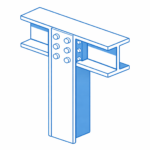
Structural steel I-beam bolted connection with column in isometric view.

Hamilton By Design provides structural engineering support for industrial facilities, mining operations, and heavy infrastructure across Australia. We work in complex, high-risk environments where accuracy matters โ€” brownfield sites, operating plants, shutdown windows, and projects that must be buildable the first time.

Our approach combines practical structural engineering with digital capture and modelling workflows to reduce uncertainty, minimise rework, and help projects move from site conditions to fabrication-ready outcomes with confidence.


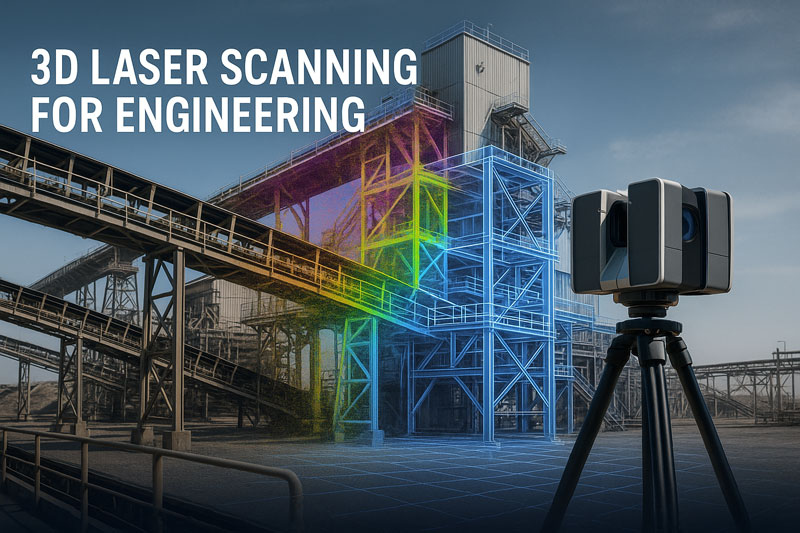
A 3D laser scanner on a tripod capturing an industrial plant structure, with a colourful point cloud and blue CAD wireframe overlay illustrating engineering-grade 3D laser scanning accuracy.

3D LiDAR scanning and 3D modelling service button โ€” laser scanner capturing a point cloud for engineering and CAD modelling
Mechanical engineering services

Structural Engineering Services

We support asset owners, EPCs, maintenance teams, and fabricators with structural engineering services including:

  • Structural design and upgrade packages for plant modifications, support steelwork, access platforms, and equipment foundations
  • Structural assessments and verification for existing assets, including fit-for-purpose checks and load capacity reviews
  • Brownfield integration and retrofit design, accounting for existing geometry, constraints, and constructability
  • Connection detailing and design intent, supporting practical fabrication and installation sequencing
  • Compliance-aligned engineering documentation, suitable for procurement, fabrication, and site installation
  • Engineering support for shutdowns, upgrades, and maintenance-driven scope where time and accuracy are critical

If you need broader capability beyond structural work, view our full service offering here:
https://www.hamiltonbydesign.com.au/engineering-services/


Where Structural Engineers Add Value in Industrial Sites

Industrial and mining environments create structural challenges that differ from greenfield construction. Common drivers include:

  • Uncertain existing conditions (missing drawings, undocumented changes, deformation over time)
  • High operational loads, vibration exposure, and fatigue risk
  • Space constraints and access limitations in operating plants
  • Safety and compliance obligations for access systems, platforms, and guarding interfaces
  • Tight installation windows during shutdowns โ€” where rework is not an option

Hamilton By Design supports these conditions with structural design methods that are grounded in constructability and site realities, not just theoretical models.


Scan-to-Engineering Workflows for Structural Accuracy

Structural engineering outcomes improve dramatically when design is based on accurate existing conditions. Where appropriate, we integrate engineering-grade 3D scanning and modelling so that structural solutions fit first time.

This workflow supports:

  • Accurate member locations and interface checks
  • Clearance verification for equipment and access structures
  • Retrofit designs that align with existing steelwork and foundations
  • Reduced site clashes and fewer fabrication changes

Learn more about our scanning capability here:
https://www.hamiltonbydesign.com.au/home/3d-lidar-scanning-digital-quality-assurance/3d-laser-scanning/


Drafting and Fabrication-Ready Documentation

Structural work only delivers value when it can be fabricated and installed cleanly. Hamilton By Design produces documentation that supports workshop and site teams, including:

  • GA drawings and layout plans
  • Fabrication drawings and installation details
  • BOM support (where required)
  • As-built updates based on verified site data

Explore drafting support here:
https://www.hamiltonbydesign.com.au/engineering-services/services-drafting-lidar-scanning/


Structural Analysis and Verification

For projects involving modification, unusual loads, vibration concerns, or uncertainty around existing asset performance, we can support analysis and verification pathways to reduce risk and improve decision-making.

Our capability includes engineering checks that align with mechanical and structural project needs. If analysis is part of your scope, you can also review our assessment services here:
https://www.hamiltonbydesign.com.au/finite-element-analysis-fea-mechanical-assessment/


Typical Structural Engineering Applications

Hamilton By Design frequently supports structural engineering across:

  • Mining and process plants (CHPPs, conveyors, transfer stations, access systems)
  • Industrial facilities and workshops (equipment supports, platforms, structural modifications)
  • Brownfield upgrades where new equipment must integrate with existing structures
  • Safety improvements such as walkways, stairs, handrails, guarding supports, and maintenance access
  • Foundation and support modifications for mechanical equipment upgrades and plant change-outs

For mining-specific engineering support, see:
https://www.hamiltonbydesign.com.au/mechanical-engineering-mining-industry-australia/


Why Work With Hamilton By Design

Clients engage Hamilton By Design when they need structural engineering that is:

  • Practical and buildable โ€” designed for fabrication and installation reality
  • Accurate โ€” supported by digital site capture where needed
  • Integrated โ€” structural work aligned with mechanical interfaces and plant constraints
  • Responsive โ€” suited to shutdown-driven and time-critical scopes
  • Single-source accountable โ€” engineering, modelling, and drafting in one workflow

See examples of outcomes delivered across real projects here:
https://www.hamiltonbydesign.com.au/case-studies-hamilton-by-design/


Talk to a Structural Engineer

If you are planning a plant upgrade, safety improvement, retrofit, or structural assessment, Hamilton By Design can support your project from site conditions through to fabrication-ready documentation.

Visit our Engineering Services hub to get started:
https://www.hamiltonbydesign.com.au/engineering-services/

Hamilton By Design logo displayed on a blue tilted rectangle with a grey gradient background

Our clients:

Name
Would you like us to arrange a phone consultation for you?
Address

3D Scanning Sydney banner promoting engineering-grade 3D laser scanning, LiDAR scanning, and reality capture services by Hamilton By Design.
Mechanical Engineering Sydney banner with white text on a blue background representing Hamilton By Design's mechanical engineering services in Sydney.
Mechanical Drafting and 3D Modelling Sydney banner highlighting Hamilton By Design's CAD drafting, 3D modelling, and engineering design services in Sydney.

Mechanical Engineering | Structural Engineering