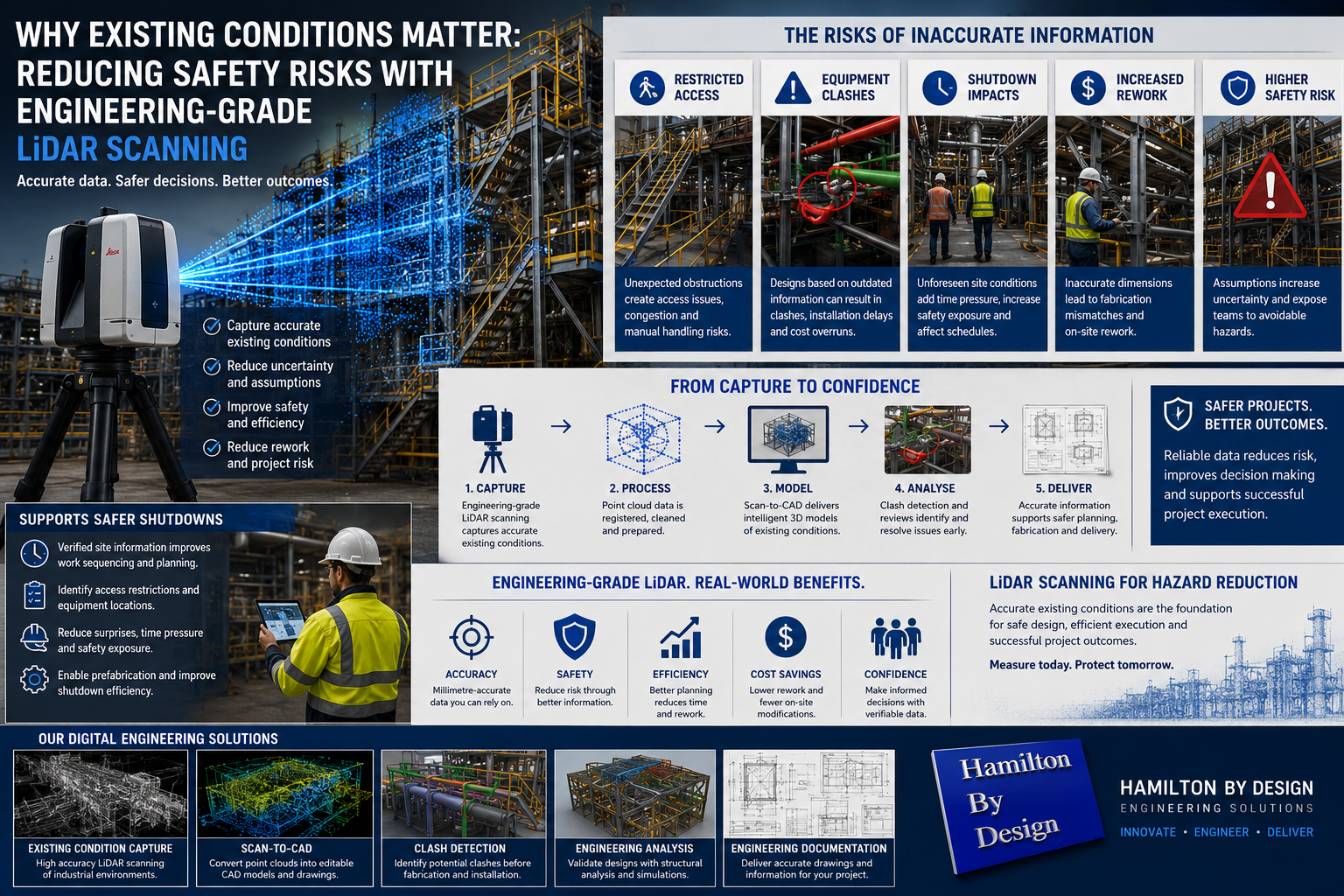
Why Existing Conditions Matter: Reducing Safety Risks with Engineering-Grade LiDAR Scanning

Engineering-grade LiDAR scanning workflow showing how existing condition capture reduces safety risks through clash detection, scan-to-CAD modelling, engineering analysis, and improved shutdown planning in industrial facilities.

Industrial projects are often built around a simple assumption:

“The existing drawings are correct.”

Unfortunately, in many industrial facilities that assumption can introduce significant risk.

Mining plants, processing facilities, manufacturing sites, and timber processing operations commonly undergo years or decades of modifications. Equipment changes, structural additions, maintenance alterations, temporary fixes, and undocumented upgrades can gradually move facilities away from their original engineering documentation.

When engineering decisions are based on outdated drawings or manual measurements, project teams may unknowingly introduce safety risks that affect shutdown activities, maintenance work, and plant upgrades.

At Hamilton By Design, engineering-grade LiDAR scanning supports safer project outcomes by replacing assumptions with measurable site information.

Why Existing Conditions Matter

Existing conditions represent the actual site environment rather than what historical drawings suggest exists.

In industrial environments, discrepancies can develop through:

  • Historical modifications
  • Unrecorded changes
  • Structural alterations
  • Equipment replacements
  • Temporary repairs becoming permanent solutions
  • Missing documentation
  • Inaccurate field measurements

A few centimetres of difference can appear minor on a drawing but become significant when:

  • Installing new equipment
  • Modifying conveyor systems
  • Designing platforms
  • Routing pipework
  • Planning shutdown activities
  • Fabricating structural steel

Small errors can create larger project impacts.

Safety Risks Created by Inaccurate Information

Assumptions can introduce several operational and safety challenges.
3D CAD Modelling Australia service banner for Hamilton By Design

Examples include:

Restricted Access Areas

Access routes may differ from original layouts, creating:

  • Maintenance access issues
  • Congestion
  • restricted clearances
  • Manual handling risks

Equipment Clashes

New designs based on incorrect information may result in:

  • Structural clashes
  • Pipework interferences
  • Equipment conflicts
  • Installation delays

Increased Exposure During Shutdown Activities

Shutdown periods often involve:

  • Tight schedules
  • Multiple work groups
  • Limited access windows
  • High activity levels

Unexpected site conditions discovered during shutdowns can increase:

  • Time pressure
  • Additional field modifications
  • Safety exposure
  • Project costs

Brownfield Projects Present Additional Challenges

Brownfield environments rarely match original design documentation.

Common challenges include:

  • Congested plant layouts
  • Existing services
  • Structural interferences
  • Legacy equipment
  • Multiple generations of modifications

Designing around assumptions in these environments increases uncertainty.

Existing Condition Capture Using Engineering-Grade LiDAR

Engineering-grade LiDAR scanning captures existing conditions by collecting highly accurate site geometry and generating point cloud data.

Capture can include:

  • Structural steel
  • Platforms
  • Conveyors
  • Pipework
  • Equipment
  • Buildings
  • Access systems
  • Existing plant layouts

Rather than relying solely on manual measurements, project teams gain access to measurable site information.

Benefits can include:

  • Improved accuracy
  • Existing condition verification
  • Better planning
  • Reduced uncertainty
  • Reduced installation risk

Clash Detection Before Construction

Once captured, point cloud information can be integrated into engineering workflows.

Scan-to-CAD processes allow:

  • Existing condition modelling
  • Design development
  • Clash detection
  • Constructability reviews
  • Layout optimisation

Potential problems can be identified before fabrication and site installation begin.

Finding issues digitally generally costs less than discovering them during construction activities.

Supporting Shutdown Planning

Shutdown windows are often measured in hours or days rather than weeks.

Unexpected field discoveries can quickly affect:

  • Production schedules
  • Labour requirements
  • Equipment availability
  • Project budgets

LiDAR scanning can support shutdown planning by:

  • Capturing actual site conditions
  • Identifying access restrictions
  • Verifying equipment locations
  • Improving work sequencing
  • Supporting prefabrication

Better information often leads to more predictable project execution.

Reducing Site Rework

Rework commonly results from:

  • Inaccurate dimensions
  • Design clashes
  • Existing condition errors
  • Fabrication mismatches

Reducing rework can improve:

  • Safety performance
  • Project schedules
  • Labour efficiency
  • Installation outcomes
  • Overall project cost

How Hamilton By Design Supports Safer Industrial Projects

Hamilton By Design combines practical engineering experience with digital engineering workflows to support safer project delivery.

Services can include:

Engineering-Grade LiDAR Scanning

Capture accurate site geometry and existing conditions.

Scan-to-CAD Workflows

Convert point cloud information into:

  • Editable CAD models
  • Engineering drawings
  • Existing condition layouts

Engineering Analysis

Support project decisions through:

  • Design validation
  • Engineering reviews
  • Structural assessment
  • Simulation and analysis
3D LiDAR scanning and 3D modelling service button โ€” laser scanner capturing a point cloud for engineering and CAD modelling
Mechanical engineering services

Engineering Documentation

Deliver:

  • General arrangement drawings
  • Fabrication drawings
  • Engineering models
  • Project information

Moving Beyond Assumptions

Existing conditions influence safety, constructability, and project outcomes.

When projects rely on assumptions rather than measurable information, risks can increase.

Engineering-grade LiDAR scanning helps organisations move from:

Estimated conditions โ†’ Verified conditions

The result is improved confidence, reduced risk, safer project execution, and better engineering decisions.
Finite Element Analysis (FEA) engineering simulation button
Mechanical engineering services

Why Engineer-Led 3D Scanning Is Critical for Accurate Design and Project Success

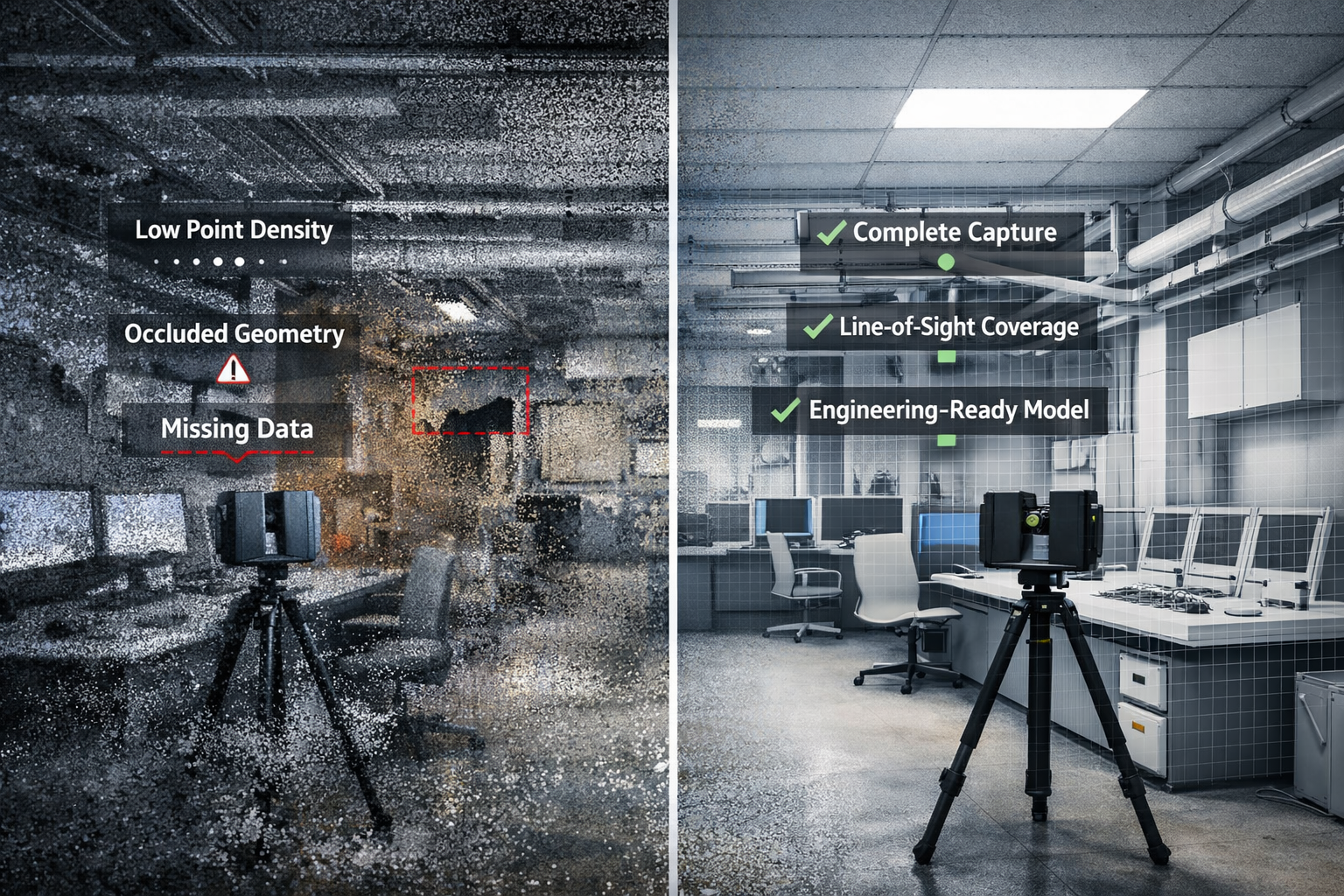
Comparison of poor vs high-quality 3D laser scanning showing missing geometry and complete point cloud data in an industrial workspace

Not All Point Clouds Are Created Equal

3D laser scanning is now widely used across construction, mining, and industrial projects.

But thereโ€™s a major issue we see repeatedly:

The scan is completed โ€” but itโ€™s not usable for engineering.

At first glance, a point cloud can look impressive. Millions of points, full colour, seemingly detailed.

But when it comes time to actually use that data for designโ€ฆ

๐Ÿ‘‰ The gaps start to show.


โš ๏ธ The Problem: Low-Quality Scanning

Many scans are undertaken:

  • Without understanding how the data will be used
  • Using lower-grade equipment
  • With insufficient scan positions
  • Without capturing critical working areas

The result:

  • Missing geometry
  • Low point density
  • Occluded or hidden areas
  • Incomplete or distorted surfaces

In one recent project, we identified areas where:

  • The geometry was not fully captured
  • Point density was low or non-existent
  • Line-of-sight constraints prevented full coverage

๐Ÿ” Why This Matters

A point cloud is not the final deliverable โ€” it is the foundation.

And if that foundation is wrong:

  • CAD models become inaccurate
  • Engineering decisions are based on assumptions
  • Design risks increase
  • Rework becomes likely

You canโ€™t build a reliable design on incomplete data.


๐Ÿ’ก The Difference: Engineer-Led Scanning

At Hamilton By Design, scanning is not just data capture.

It is:
๐Ÿ‘‰ An engineering process

We approach every scan with the end use in mind.


๐Ÿ—๏ธ What Engineer-Led Scanning Looks Like

1. Understanding the End Goal

Before scanning begins, we define:

  • What the model will be used for
  • Required level of detail
  • Critical areas that must be captured

2. Planning Scan Positions

We ensure:

  • Full coverage of all key geometry
  • Minimal occlusions
  • Adequate point density for modelling

3. Capturing Complete Geometry

We focus on:

  • Line-of-sight access between scanner and surfaces
  • Eliminating blind spots
  • Capturing real working areas โ€” not just open space

4. Validating the Data

Before modelling begins, we:

  • Review scan coverage
  • Identify missing or weak areas
  • Confirm the dataset is fit for purpose

โš™๏ธ Why This Matters for Downstream Design

Engineering workflows rely on accurate geometry.

For example, in lighting design using AGi32:

  • Walls influence light reflection
  • Equipment creates shadowing
  • Layout impacts visibility

If these elements are missing or incorrect:

๐Ÿ‘‰ The design outcome will be wrong.


๐Ÿ”„ The True Cost of Poor Scanning

Low-quality scanning often leads to:

  • Time lost rebuilding missing geometry
  • Engineering assumptions instead of real data
  • Incorrect design decisions
  • Additional site visits
  • Project delays and rework

What appears cheaper upfront often becomes significantly more expensive later.


โœ… The Value of Getting It Right the First Time

Engineer-led scanning delivers:

  • Accurate, complete datasets
  • Faster modelling workflows
  • Reliable design outcomes
  • Reduced project risk

It ensures the data is not just captured โ€” but usable.


๐Ÿš€ Where Hamilton By Design Adds Value

We bridge the gap between:
๐Ÿ‘‰ Reality (scan data)
๐Ÿ‘‰ Engineering (CAD models)
๐Ÿ‘‰ Design outcomes

Our capability includes:

  • Engineering-grade 3D laser scanning
  • Point cloud to CAD modelling
  • Scan-to-design workflows
  • Support for industrial, infrastructure, and plant projects

3D LiDAR scanning and 3D modelling service button โ€” laser scanner capturing a point cloud for engineering and CAD modelling
Mechanical engineering services

๐Ÿ“Œ Final Thought

3D scanning is only valuable if it supports accurate engineering decisions.
A scan is not just data โ€” itโ€™s the foundation of your entire project.

And that foundation needs to be right.


Hamilton By Design logo displayed on a blue tilted rectangle with a grey gradient background

๐Ÿ“ž Need Reliable Scan Data?

If youโ€™re:

  • Planning a project
  • Working with poor-quality point clouds
  • Or want to avoid costly rework

We can help ensure your data โ€” and your design โ€” are right from the start.

๐Ÿ‘‰ https://www.hamiltonbydesign.com.au
๐Ÿ‘‰ Get in touch to discuss your project

Name
Would you like us to arrange a phone consultation for you?
Address
3D CAD Modelling Australia service banner for Hamilton By Design

Why Projects Fail Before Construction Starts

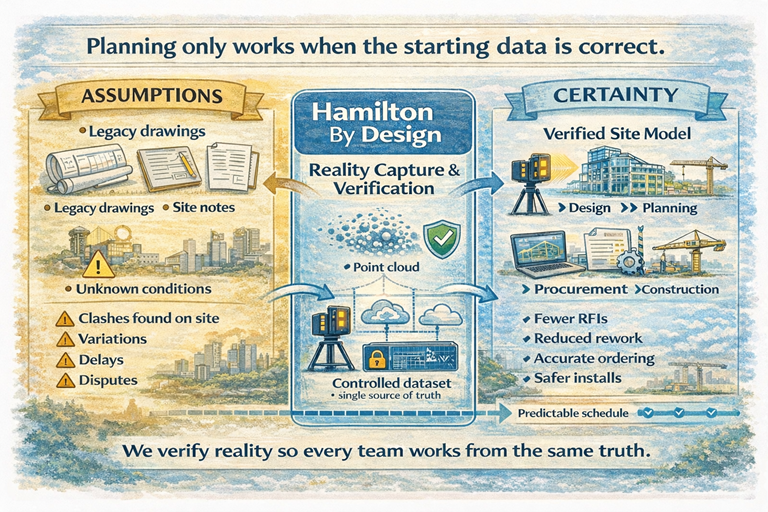
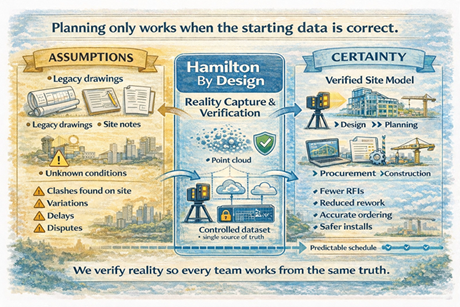
3D scanning reality capture workflow converting legacy drawings into a verified site model for construction planning.

The missing step between site reality and project planning

Most project delays donโ€™t begin during construction.

They begin months earlier โ€” at the planning stage.

Not because engineers lack skill.
Not because contractors lack experience.

But because decisions are made using incomplete or assumed information.


Construction planning comparison between assumed data and verified point-cloud model using laser scanning.

The hidden gap in almost every project

In industrial and brownfield environments, teams typically work from:

  • legacy drawings
  • outdated models
  • partial surveys
  • contractor interpretation
  • verbal site knowledge

Each group fills in the missing details differently.

The result is predictable:

  • clashes discovered during installation
  • materials ordered incorrectly
  • redesign during construction
  • variations and disputes
  • safety risks

The project didnโ€™t fail during construction.
It failed when planning began without verified reality.


Planning systems only work if the starting data is correct

Modern project environments rely heavily on structured planning:

  • scheduling
  • procurement
  • prefabrication
  • shutdown coordination
  • multi-contractor installation

But structured planning requires structured information.

If the starting information is uncertain, the entire workflow becomes an organised way of distributing errors.


The role of a reality-based dataset

Before a project can be planned properly, one thing must exist:

A trusted digital representation of the physical asset

This is not a drawing.
This is not a sketch.
This is not a collection of markups.

It is a measurable, verifiable record of what physically exists.

Once this exists:

  • engineers design accurately
  • planners sequence correctly
  • contractors install confidently
  • procurement orders correctly
  • changes are controlled

What our consultancy provides

Hamilton By Design acts as the bridge between site conditions and project planning.

We provide a structured workflow:

  1. Capture the physical environment using high-accuracy laser scanning
  2. Create a controlled digital model of the asset
  3. Make the data accessible to all project stakeholders
  4. Lock the dataset during design and upgrade phases
  5. Update the dataset following modifications

This creates a single project reference โ€” removing interpretation between disciplines.


The outcome for projects

Instead of discovering problems during installation, they are resolved during planning.

Instead of managing variations, teams manage decisions.

Instead of reacting to site conditions, teams design around verified reality.


The value of independent verification

Our role is not to design the system or build the works.

Our role is to ensure every party begins with the same trusted information.

When reality is agreed, coordination becomes straightforward.


Before planning, establish certainty

Projects do not fail because teams are incapable.
They fail because teams start from different assumptions.

Providing a verified digital record of the site removes those assumptions.
And once assumptions disappear โ€” so do most surprises.


Hamilton By Design
Creating trusted project reality before planning begins.

Name
Would you like us to arrange a phone consultation for you?
Address


3D LiDAR scanning and 3D modelling service button โ€” laser scanner capturing a point cloud for engineering and CAD modelling
Mechanical engineering services
Finite Element Analysis (FEA) engineering simulation button
Mechanical engineering services

Beyond Assumptions: Why Accurate Geometry and LiDAR Scanning are the Gold Standard for Modern Projects

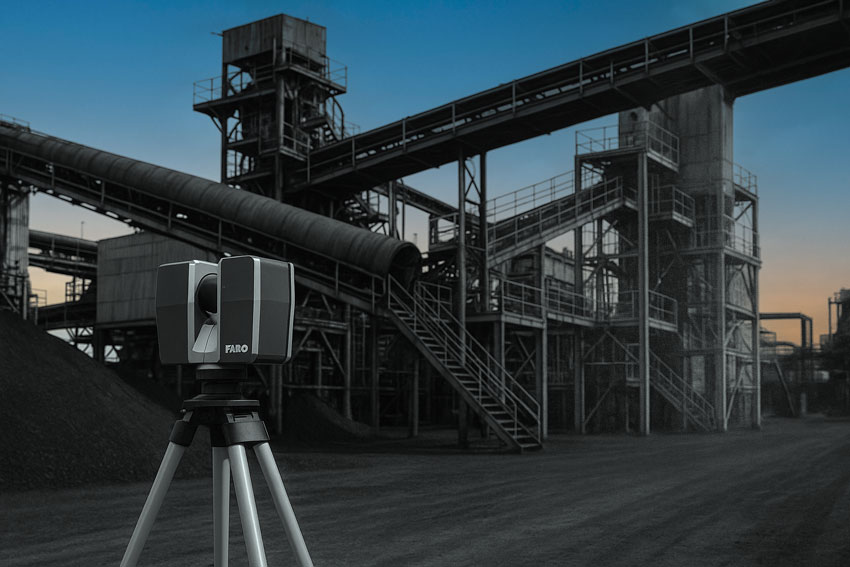
Engineering-grade LiDAR scanning infographic showing a FARO laser scanner capturing an industrial plant and converting site data into point clouds, scan-to-CAD models, and engineering-ready drawings to reduce rework and improve project outcomes.
In the world of industrial engineering and brownfield upgrades, there is a dangerous word: Assumption.
Whether you are upgrading a CHPP, modifying a conveyor system, or retrofitting a processing plant, your project is only as strong as the data itโ€™s built on. At Hamilton By Design, weโ€™ve seen how “near enough” measurements lead to costly rework, extended shutdowns, and safety risks.

The solution? Moving from manual estimation to Engineering-Led LiDAR Scanning.

The High Cost of Inaccurate Information

Traditional “manual” documentationโ€”using tape measures, spirit levels, and old 2D drawingsโ€”is prone to human error. In complex industrial environments, missing a single pipe interference or a slight structural lean by even 20mm can mean a prefabricated component wonโ€™t fit during a critical shutdown.

When site data is inaccurate:

  • Fabrication fails: Parts arrive on-site but don’t clear existing structures.
  • Costs skyrocket: Emergency “hot works” and on-site modifications blow out budgets.
  • Safety is compromised: Forced fits can create structural stress and unforeseen hazards.

Why Geometry is the Foundation of Engineering

Geometry isn’t just about shapes; it’s about the spatial relationship between every asset on your site. Accurate geometry is critical because:

  1. Clash Detection: It allows us to identify “soft” and “hard” clashes in a digital environment before a single bolt is turned.
  2. Structural Integrity: Precise angles and load-path documentation ensure that new modifications integrate safely with legacy steelwork.
  3. Efficiency: Understanding the exact volume, pitch, and clearance of a site allows for “First-Time-Fit” engineering.

LiDAR Scanning: The Simple Solution for Complex Reality

LiDAR (Light Detection and Ranging) removes the guesswork. A LiDAR scanner emits millions of laser pulses per second to create a Point Cloudโ€”a highly accurate 3D digital “twin” of your facility.

Why itโ€™s a game-changer:

  • Speed: Capture entire plant rooms or structural towers in minutes, not days.
  • Safety: We can scan hazardous or hard-to-reach areas from a safe distance, removing the need for scaffolding just to take a measurement.
  • Completeness: Unlike a manual survey that only measures what you think is important, LiDAR captures everything in its line of sight, providing context you might need later.

The “Silent Witness”: Point Clouds in Legal and Insurance Cases

Beyond design, point cloud data serves as an indisputable “source of truth” in legal and insurance contexts. Because a scan is a timestamped, millimeter-accurate record of reality, it is increasingly used in:

  • Construction Disputes: Providing evidence of “as-built” conditions vs. “as-designed” plans to settle variations or defect claims.
  • Incident Investigation: In the event of a structural failure or site accident, a pre-existing or post-incident scan provides an objective 3D map for forensic analysis.
  • Asset Accountability: Scans serve as a permanent record of site conditions before a contractor begins work, protecting owners and contractors alike from liability.

The Hamilton By Design Difference

We don’t just provide “data.” We provide engineering-led reality capture. Because we are engineers and fabricators ourselves, we know what to look for when we scan. We don’t just give you a cloud of dots; we translate that data into usable CAD models and fabrication-ready drawings that respect Australian Standards (like AS 4324.1).

Stop guessing and start building with confidence. [Contact the Hamilton By Design team today] to discuss how our LiDAR scanning services can de-risk your next project.

Hamilton By Design logo displayed on a blue tilted rectangle with a grey gradient background
3D LiDAR scanning and 3D modelling service button โ€” laser scanner capturing a point cloud for engineering and CAD modelling
Mechanical engineering services
3D LiDAR scanning and 3D modelling service button โ€” laser scanner capturing a point cloud for engineering and CAD modelling
Mechanical engineering services
Finite Element Analysis (FEA) engineering simulation button
Mechanical engineering services

As-Built Documentation

As-Built Documentation | Why Accurate Records Matter in Engineering


When drawings donโ€™t reflect what is actually installed on site, projects are exposed to design errors, safety risks, rework, and compliance issues. In industrial, mining, power, and construction environments, relying on outdated or assumed information can quickly lead to costly mistakes.

At Hamilton By Design, as-built documentation is treated as an engineering deliverable, not an administrative afterthought.


What is as-built documentation?

As-built documentation records the true, physical condition of an asset after construction, modification, or installation.

This can include:

  • As-built drawings (plans, sections, elevations)
  • As-built CAD models
  • Verified dimensions and interfaces
  • Documented deviations from original design
  • Digital records suitable for future upgrades and maintenance

Unlike โ€œdesign intentโ€ drawings, as-built documentation reflects what exists in reality, not what was originally planned.


Why poor as-built documentation causes problems

Many facilities operate with drawings that are:

  • Outdated
  • Incomplete
  • Never updated after modifications
  • Based on assumptions or manual measurements

This creates risk when:

  • Designing upgrades or tie-ins
  • Replacing equipment
  • Assessing compliance with Australian Standards
  • Planning shutdowns or maintenance works

Common outcomes include:

  • Components that donโ€™t fit
  • Unexpected clashes during installation
  • Delays during shutdown windows
  • Increased safety risk during construction and maintenance

How 3D laser scanning improves as-built accuracy

Modern as-built documentation increasingly relies on engineering-grade 3D laser scanning and LiDAR, rather than tape measures or legacy drawings.

3D scanning allows engineers to:

  • Capture accurate geometry of existing assets
  • Verify interfaces, clearances, and alignments
  • Identify undocumented changes and deviations
  • Produce reliable CAD models and drawings

When combined with engineering judgement, scanning provides defensible, fit-for-purpose as-built data suitable for design, fabrication, and compliance.


As-built documentation and Australian Standards

As-built documentation plays a critical role in supporting compliance with:

  • Australian Standards (e.g. access systems, steelwork, structures)
  • The National Construction Code (NCC)
  • Safety-in-design obligations
  • Asset integrity and maintenance requirements

Accurate as-built records enable engineers to:

  • Verify existing conditions against current standards
  • Design compliant upgrades and modifications
  • Demonstrate due diligence if designs or decisions are reviewed

Without reliable as-built data, compliance assessments are often based on assumptions โ€” increasing risk for owners and contractors alike.


Scan-to-CAD: turning reality into usable engineering information

Capturing a point cloud is only the first step.

True as-built documentation requires scan-to-CAD workflows, where scan data is converted into:

  • Structured 3D CAD models
  • Clear 2D drawings
  • Fabrication-ready geometry
  • Engineering documentation suitable for construction

This process requires:

  • Controlled datums
  • Appropriate tolerances
  • Engineering interpretation of scan data
  • Understanding of how drawings will be used on site

Poorly modelled scan data can be just as problematic as poor drawings.


Where as-built documentation adds the most value

As-built documentation is particularly valuable for:

  • Brownfield and live-site upgrades
  • Mining and industrial facilities
  • Power generation and utilities
  • Manufacturing plants
  • Existing buildings undergoing refurbishment
  • Assets with long operational life and multiple modifications

In these environments, accurate documentation reduces risk, improves safety, and enables better decision-making across the asset lifecycle.


Engineering-led as-built documentation

At Hamilton By Design, as-built documentation is delivered as part of an integrated engineering workflow, combining:

  • Engineering-grade 3D laser scanning
  • CAD modelling and drafting
  • Mechanical and structural engineering expertise
  • Standards-aware documentation

This ensures as-built records are:

  • Accurate
  • Buildable
  • Defensible
  • Suitable for future engineering use

Our clients:


Final thoughts

As-built documentation is not just about record-keeping โ€” it is about engineering confidence.

Accurate as-built information:

  • Reduces project risk
  • Improves safety
  • Supports compliance
  • Saves time and cost on future works

In complex industrial and construction environments, investing in proper as-built documentation pays for itself many times over.


Hamilton By Design logo displayed on a blue tilted rectangle with a grey gradient background
3D LiDAR scanning and 3D modelling service button โ€” laser scanner capturing a point cloud for engineering and CAD modelling
Mechanical engineering services

Need accurate as-built documentation?

If youโ€™re planning upgrades, maintenance, or new works and need engineering-grade as-built documentation, Hamilton By Design can help.

Accurate data today enables better decisions tomorrow.

Name
Would you like us to arrange a phone consultation for you?
Address
Finite Element Analysis (FEA) engineering simulation button
Mechanical engineering services

Why Shutdown Parts Donโ€™t Fit โ€” And How 2 mm LiDAR Scanning Stops the Rework

When Parts Donโ€™t Fit, Shutdowns Fail

Every shutdown fitter, maintenance crew member, and supervisor has lived the same nightmare:

A critical part arrives during shutdown.
The old part is removed.
Everyone gathers, ready to install the new one.
Production is waiting.
The pressure is on.

And thenโ€”
the part doesnโ€™t fit.

Not 2 mm out.
Not 10 mm out.
Sometimes 30โ€“50 mm out, wrong angle, wrong bolt pattern, wrong centreline, or wrong geometry altogether.

The job stops.
People get frustrated.
Supervisors argue.
Fitters cop the blame.
The plant misses production.
And someone eventually says the words everyone hates:

โ€œPut the old worn-out chute back on.โ€

This blog is about why shutdowns fall apart like thisโ€ฆ and how 2 mm LiDAR scanning finally gives fitters a system that gets it right the first time.


The Real Reason Parts Donโ€™t Fit

Most shutdown failures have nothing to do with the fitter, nothing to do with the workshop, and nothing to do with the installation crew.

Parts donโ€™t fit because:

  • Wrong measurements
  • Bad drawings
  • Outdated as-builts
  • Guesswork
  • Fabricators โ€œeyeballingโ€ dimensions
  • Cheap non-OEM parts purchased without geometry verification
  • Designers who have never seen the site
  • High staff turnover with no engineering history
  • Wear profiles not checked
  • Intersection points impossible to measure manually

Fitters are then expected to make magic happen with a tape measure and a grinder.

Itโ€™s not fair. Itโ€™s not professional. And itโ€™s completely avoidable.


3D LiDAR scanning and 3D modelling service button โ€” laser scanner capturing a point cloud for engineering and CAD modelling
Mechanical engineering services

Shutdown Pressures Make It Even Worse

When a part doesnโ€™t fit during a shutdown:

  • The entire job stalls
  • Crews stand around waiting
  • The supervisor gets hammered
  • The fitter gets the blame
  • Other shutdown tasks cannot start
  • The clock ticks
  • Production loses thousands per hour
  • Everyone becomes stressed and angry

And the worst part?

You were only replacing the part because the existing one was worn out.
Now youโ€™re bolting the worn-out one back on.

This isnโ€™t good enough.
Not in 2025.
Not in heavy industry.
Not when there is technology that eliminates this problem completely.


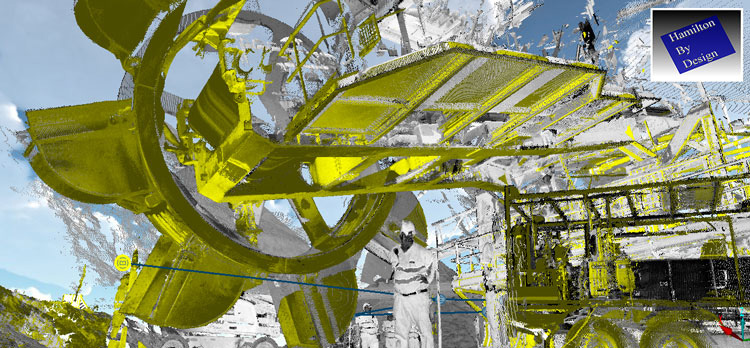
Coloured 3D LiDAR point-cloud scan of industrial CHPP machinery, including a large rotating component and surrounding structures. A worker stands beside the equipment for scale, with the Hamilton By Design logo displayed in the top-right corner.

Why Manual Measurement Fails Every Time

Fitters often get asked to measure:

  • Inside chutes
  • Wear sections
  • Pipe spools with intersection points
  • Tanks too large to measure from one position
  • Walkways too long for tape accuracy
  • Geometry with no records
  • Components 10+ metres above ground
  • Hard-to-reach bolt patterns
  • Angles and centrelines distorted by wear

But some measurements simply cannot be taken safely or accurately by hand.

You canโ€™t hang off an EWP 20 metres up measuring a worn flange angle.
You canโ€™t crawl deep inside a chute trying to measure intersecting surfaces.
You canโ€™t take a 20-metre walkway measurement with a tape measure and hope for precision.

This is not a measurement problem.
This is a method problem.

Manual measurement has hit its limit.
Shutdowns have outgrown tape measures.


This Is Where 2 mm LiDAR Scanning Changes Everything

Hamilton By Design uses 2 mm precision LiDAR scanning to capture the exact geometry of a site โ€” even in areas that are:

  • Too high
  • Too big
  • Too unsafe
  • Too worn
  • Too complex
  • Too tight
  • Too distorted to measure manually

From the ground, up to 30 metres away, we can capture:

  • Wear profiles
  • Flange positions
  • Bolt patterns
  • Pipe centrelines
  • Chute geometry
  • Conveyor interfaces
  • Complex intersections
  • Ductwork transitions
  • Mill inlet/outlet shapes
  • Tank dimensions
  • Walkway alignment
  • Structural deflection
  • Existing inaccuracies

No tape measure. No guesswork. No EWP. No risk.

The result is a perfect 3D point cloud accurate within 2 mm โ€” a digital version of real life.


2 mm Scanning + Fitter-informed Design = Parts That Fit First Time

This is where Hamilton By Design is different.

We donโ€™t just scan and hand the files to a drafter whoโ€™s never set foot on-site.

We scan and your parts are modelled by someone who:

  • Has been a fitter
  • Understands how parts are installed
  • Knows what goes wrong
  • Knows how to design parts that actually fit
  • Knows where shutdowns fail
  • Knows what to check
  • Knows what NOT to trust
  • And most importantly โ€” knows where the real-world problems are hidden

This fitter-informed engineering approach is why our parts fit the first time.

And why shutdown crews trust us.


Digital QA Ensures Fabrication Is Correct Before It Leaves the Workshop

Once the new chute, spool, or component is modelled, we run digital QA:

  • Fit-up simulation
  • Clash detection
  • Tolerance analysis
  • Wear profile compensation
  • Reverse engineering comparison
  • Bolt alignment verification
  • Centreline matching
  • Flange rotation accuracy
  • Structural interface checks

If something is out by even 2โ€“3 mm, we know.

We fix it digitally โ€” before the workshop cuts steel.

This stops rework.
This stops shutdown delays.
This stops blame.
This stops stress.

This is the future of shutdown preparation.


Accuracy of 3D LiDAR Scanning With FARO


When the Part Fits, Everything Runs Smooth

Hereโ€™s what actually happens when a chute or spool fits perfectly the first time:

  • The plant is back online faster
  • No rework
  • No reinstalling old worn-out parts
  • No arguing between fitters and supervisors
  • No unexpected surprises
  • No extra access equipment
  • No late-night stress
  • No grinding or โ€œmaking it fitโ€
  • Other shutdown tasks stay on schedule
  • Everyone looks good
  • Production trusts the maintenance team again

Shutdowns become predictable.
Fitters become heroes, not last-minute problem-solvers.


Shutdown Example (Anonymous but Real)

A major processing plant needed a large chute replaced during a short shutdown window.
Access was limited.
The geometry was distorted.
Measurements were impossible to take safely.
The workshop needed exact dimensions, fast.

Hamilton By Design scanned the entire area from the ground โ€” no EWP, no risk.

We produced:

  • Full 2 mm point cloud
  • As-built 3D model
  • New chute design
  • Digital fit-up validation
  • Workshop-ready drawings

The new chute arrived on site.
The old chute came out.
The new chute went straight in.
Zero rework.
Zero stress.
Plant online early.

The supervisor called it the smoothest shutdown theyโ€™d had in 10 years.


Why Fitters Should Reach Out Directly

Sometimes fitters know more about whatโ€™s really happening on-site than anyone in the office.

Fitters see the problems.
Fitters carry the blame.
Fitters deal with the rework.
Fitters just want parts that fit.

So weโ€™re making this simple:

If youโ€™re tired of fitting parts that donโ€™t fit โ€”
If youโ€™re tired of fixing other peopleโ€™s mistakes โ€”
If youโ€™re tired of shutdown stress โ€”

Call Hamilton By Design.

We scan it.
We model it.
We get it right.
Every time.


Services Featured

Hamilton By Design offers:

  • 3D LiDAR laser scanning (2 mm precision)
  • 3D modelling by a fitter-engineer who understands real-world installation
  • Digital QA before fabrication
  • Reverse engineering of worn components
  • Shutdown planning support
  • Fabrication-ready drawings
  • Fit-up simulation
  • Clash detection between old and new parts

This is how shutdowns run smooth.

Hamilton By Design logo displayed on a blue tilted rectangle with a grey gradient background

Call to Action

Are you a Fitter: tired of parts that donโ€™t fit?

Email or Call Hamilton By Design.

Email โ€“ info@hamiltonbydesign.com.au

Phone – 0477002249


Would you Like to Know more?

Name
Would you like us to arrange a phone consultation for you?
Address

Our clients:

Accuracy of 3D LiDAR Scanning With FARO

Why Shutdown Parts Donโ€™t Fit

Engineering Services

Coal Chute Design

Chute Design

3D CAD Modelling | 3D Scanning