Engineering Support During Mining Shutdown Projects

Engineering team reviewing plant drawings and digital models during planning for a mining shutdown maintenance project.

Why Engineering Planning Is Critical During Mining Shutdowns

Mining shutdowns are among the most complex operational events in industrial facilities. During these periods, large volumes of maintenance, upgrades, inspections, and equipment replacements must be completed within a tightly controlled timeframe.

Because production stops during shutdown work, every hour of delay can have a significant financial impact on operations.

This is where mining shutdown engineering plays a critical role. Proper engineering preparation ensures that upgrade work, equipment installation, and plant modifications can be executed safely and efficiently during the shutdown window.

Engineering support during shutdown projects often involves planning, documentation, scanning existing infrastructure, and preparing fabrication drawings before the shutdown begins.

At Hamilton By Design, engineering teams support mining shutdown work by providing accurate design data and technical documentation to ensure shutdown activities proceed as planned.


The Challenges of Mining Shutdown Projects

Mining shutdown projects involve coordinating multiple teams working across different areas of the plant simultaneously.

Common challenges include:

โ€ข limited shutdown timeframes
โ€ข complex plant infrastructure
โ€ข multiple contractors working concurrently
โ€ข incomplete or outdated plant drawings
โ€ข installation clashes between new and existing equipment

Without proper engineering preparation, shutdown work can quickly encounter unexpected obstacles that extend downtime and increase costs.

Engineering support helps minimise these risks by ensuring the plant layout, equipment geometry, and installation requirements are clearly understood before work begins.


Engineering Services That Support Shutdown Planning

Mining shutdown engineering typically involves several technical activities carried out prior to the shutdown window.

Plant Layout Verification

Before any upgrade work begins, engineers often need to verify the existing layout of equipment, pipework, and structures.

Many mining facilities have evolved over decades of maintenance work, meaning the actual plant configuration may differ from the original drawings.

Capturing accurate existing conditions ensures that shutdown installation work can proceed without unexpected clashes.

Learn more about capturing existing conditions here:


3D Laser Scanning of Existing Infrastructure

3D laser scanning is frequently used to document plant geometry before shutdown work begins.

Scanning allows engineers to capture millions of measurement points from existing infrastructure and generate accurate point cloud models of the plant environment.

These models help engineers design equipment modifications and plan installation sequences with greater confidence.

More information about engineering-grade scanning services:


Engineering Modelling and Design

Once site data has been captured, engineers can develop digital models used to design plant modifications or equipment upgrades.

These models help engineering teams:

โ€ข design new components that fit existing plant infrastructure
โ€ข identify potential clashes before installation
โ€ข improve coordination between mechanical and structural systems
โ€ข support fabrication of new equipment

The workflow of converting scan data into engineering models is explained here:


Equipment Upgrades During Shutdown Work

Shutdown windows are often used to install new equipment or upgrade existing plant systems.

Typical shutdown upgrade projects may include:

โ€ข conveyor system upgrades
โ€ข pump replacements
โ€ข pipework modifications
โ€ข structural upgrades
โ€ข installation of new process equipment

Engineering support ensures these modifications are designed to integrate with the existing plant layout while meeting operational and safety requirements.


Benefits of Engineering Preparation Before Shutdown

Engineering preparation carried out before the shutdown window helps mining operations complete work more efficiently.

Key benefits include:

โ€ข reduced installation risk
โ€ข improved equipment fitment
โ€ข shorter shutdown durations
โ€ข improved coordination between contractors
โ€ข reduced rework during installation

By preparing engineering documentation in advance, shutdown teams can focus on executing work safely and efficiently.


Supporting Safe and Efficient Shutdown Operations

Mining shutdown engineering is not only about improving efficiency โ€” it also supports safe operations.

Accurate engineering documentation helps ensure that:

โ€ข installation procedures are clearly defined
โ€ข equipment interfaces are properly designed
โ€ข access and maintenance requirements are considered
โ€ข potential safety hazards are identified early

For complex mining plants, this level of preparation significantly improves shutdown execution.


Hamilton By Design logo displayed on a blue tilted rectangle with a grey gradient background

Conclusion

Mining shutdowns are critical operational events where significant maintenance and upgrade work must be completed within a limited timeframe.

Engineering preparation plays an essential role in ensuring shutdown projects are executed safely and efficiently.

Through activities such as plant scanning, engineering modelling, and design preparation, mining shutdown engineering helps reduce operational risk and improve the success of shutdown projects.

Hamilton By Design provides engineering support services to assist mining operations with shutdown planning, plant upgrades, and infrastructure modifications.

3D LiDAR scanning and 3D modelling service button โ€” laser scanner capturing a point cloud for engineering and CAD modelling
Mechanical engineering services
Name
Would you like us to arrange a phone consultation for you?
Address

Our clients
3D CAD Modelling Australia service banner for Hamilton By Design

Reverse Engineering Industrial Equipment Using 3D Scanning

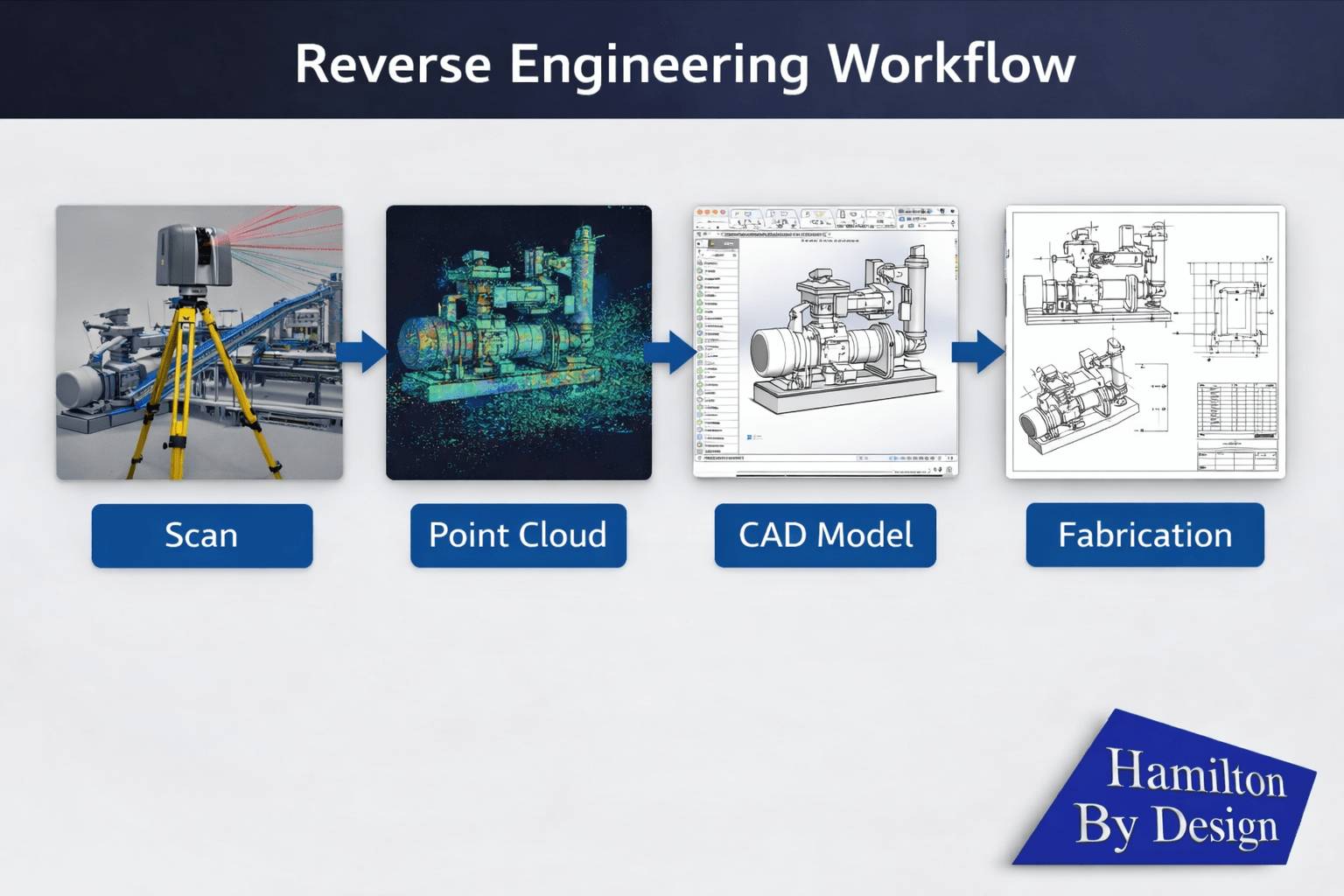
Reverse engineering workflow showing LiDAR scanning, point cloud processing, CAD modelling, and fabrication drawings for industrial equipment.

How 3D Scanning Supports Reverse Engineering in Mining and Industrial Facilities

In many mining and industrial operations, critical equipment often remains in service for decades. Over time, original design drawings may be lost, outdated, or incomplete. When upgrades, repairs, or replacements are required, engineers frequently need to recreate accurate models of existing components.

This is where reverse engineering scanning using 3D laser scanning technology has become an important engineering tool.

By capturing highly accurate measurements of existing equipment and infrastructure, engineers can develop digital models that support redesign, modification, or replication of components used in industrial operations.

At Hamilton By Design, 3D scanning is commonly used to support plant upgrades, equipment refurbishment, and engineering redesign projects across mining and industrial facilities.

Learn more about our scanning services here:


What is Reverse Engineering Using 3D Scanning?

Reverse engineering is the process of analysing an existing component or system in order to recreate its design data.

In industrial environments this often involves:

  • worn or obsolete equipment
  • legacy plant installations
  • components without available drawings
  • equipment modifications over time

Using 3D laser scanning, engineers can capture millions of measurement points across the surface of a component or installation. These measurements form a point cloud dataset, which can then be converted into a detailed CAD model.

This model can be used to redesign components, manufacture replacements, or integrate upgrades into existing plant infrastructure.


Why Reverse Engineering Is Common in Mining Operations

Mining facilities frequently operate with equipment that may have been installed many years earlier. Over time, modifications are made during shutdowns or maintenance activities, and the documentation of these changes may not always be updated.

When engineering teams plan upgrades, they often encounter situations where:

  • original drawings are unavailable
  • components have been modified in the field
  • replacement parts are no longer manufactured
  • installation geometry differs from the original design

In these cases, reverse engineering scanning allows engineers to capture the current condition of the equipment and create accurate digital models for design work.


How 3D Scanning Improves Reverse Engineering Accuracy

Traditional reverse engineering often relied on manual measurements and site sketches. While useful, these methods can introduce uncertainty when modelling complex components.

3D laser scanning improves this process by capturing a highly detailed representation of the equipment geometry.

Benefits include:

  • accurate measurement of complex shapes
  • capture of worn or distorted components
  • reduced manual measurement time
  • improved confidence in engineering models
  • better integration with existing plant infrastructure

Because scanning captures millions of points, engineers can analyse the exact condition of equipment before beginning redesign work.


Reverse Engineering Workflow Using 3D Scanning

A typical reverse engineering scanning workflow includes several steps.

1. Equipment Scanning

Engineers capture the geometry of the component or installation using a terrestrial laser scanner or handheld scanning system.

2. Point Cloud Processing

The captured scans are registered and processed to create a unified point cloud dataset representing the object.

3. CAD Model Creation

Engineers convert the scan data into engineering models using CAD software such as SolidWorks.

4. Design and Modification

The model can then be used to redesign components, analyse fitment, or prepare fabrication drawings.

You can learn more about this process here:


Applications of Reverse Engineering in Industrial Plants

Reverse engineering scanning is widely used in industrial facilities for many types of engineering work.

Common applications include:

  • reverse engineering pump components
  • redesigning worn mechanical equipment
  • recreating legacy machine parts
  • documenting existing plant installations
  • designing upgrades for conveyors and materials handling systems
  • integrating new equipment into existing plant layouts

These applications allow engineering teams to modernise infrastructure while maintaining compatibility with existing systems.


Reverse Engineering for Plant Upgrade Projects

Plant upgrades often require engineers to integrate new equipment into an existing facility that may have evolved over many years.

Using reverse engineering scanning, engineers can capture accurate geometry of the surrounding infrastructure before beginning design work.

This approach helps reduce risks such as:

  • component clashes
  • installation issues
  • inaccurate fabrication drawings
  • extended shutdown durations

Accurate digital models allow engineers to design upgrades with confidence and improve coordination between mechanical, structural, and fabrication teams.

Learn more about capturing existing conditions before plant upgrades here:


Conclusion

Reverse engineering using 3D scanning has become an essential engineering tool for mining and industrial facilities where accurate design data may not always be available.

By capturing precise measurements of existing equipment and infrastructure, engineers can recreate digital models that support repairs, upgrades, and replacement components.

For industries that rely on complex infrastructure and long operational lifecycles, reverse engineering scanning provides a reliable foundation for modern engineering design and plant upgrades.

Hamilton By Design provides engineering-grade 3D scanning services to support reverse engineering and upgrade projects across mining and industrial operations.

3D LiDAR scanning and 3D modelling service button โ€” laser scanner capturing a point cloud for engineering and CAD modelling
Mechanical engineering services
Name
Would you like us to arrange a phone consultation for you?
Address

Our Clients
3D CAD Modelling Australia service banner for Hamilton By Design
Finite Element Analysis (FEA) engineering simulation button
Mechanical engineering services

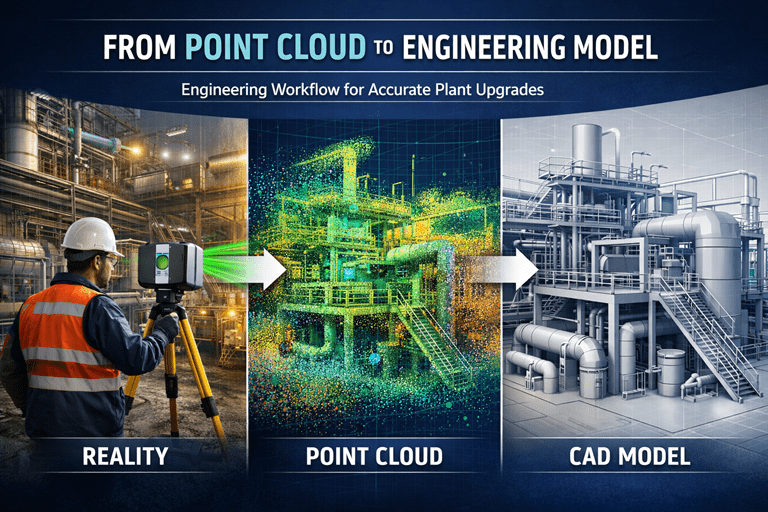
From Point Cloud to Engineering Model Workflow

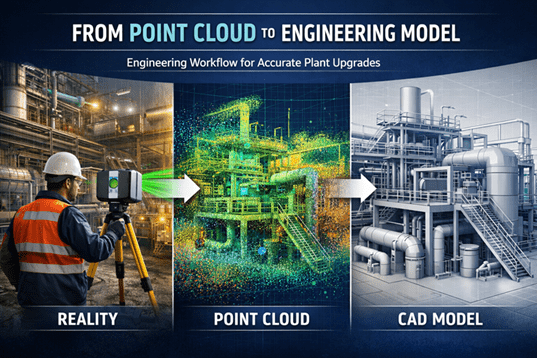
Engineering workflow showing industrial laser scanning, point cloud data, and a CAD model used for plant upgrade design.

Modern industrial facilitiesโ€”especially in mining, processing plants, and heavy infrastructureโ€”are complex environments where accurate site information is essential. Before engineers can design upgrades, modifications, or shutdown works, they must understand exactly what exists in the field today.
This is where the point cloud to engineering model workflow becomes critical.

Using engineering-grade 3D laser scanning, engineers can capture millions of spatial measurements in minutes, creating a highly accurate digital representation of existing plant conditions. These measurements form what is known as a point cloud, which becomes the foundation for accurate CAD models, engineering design, and upgrade planning.
Hamilton By Design specialises in this process through engineering-grade reality capture and modelling services across mining and industrial facilities.

Learn more about our scanning services here:
https://www.hamiltonbydesign.com.au/home/engineering-grade-3d-laser-scanning-mining-industrial/


Engineer using a laser scanner capturing an industrial facility, converting scan data into a point cloud and engineering CAD model.

What is a Point Cloud?

A point cloud is a dense collection of spatial coordinates captured by a 3D laser scanner. Each point represents a precise location on a surface such as steelwork, piping, equipment, or structures.

Modern scanners can capture millions of points per second, creating a digital snapshot of the real environment with millimetre-level accuracy.

Once captured, the point cloud becomes the digital foundation used by engineers to reconstruct existing plant geometry.

3D LiDAR scanning and 3D modelling service button โ€” laser scanner capturing a point cloud for engineering and CAD modelling
Mechanical engineering services

Hamilton By Design logo displayed on a blue tilted rectangle with a grey gradient background

The Point Cloud to Engineering Model Workflow

Turning raw scan data into usable engineering information involves several structured steps.

1. Project Planning and Site Preparation

Before scanning begins, engineers define:

  • Required accuracy
  • Project scope
  • Areas to be captured
  • Level of modelling detail required

This ensures the captured data supports downstream engineering tasks such as pipe routing, structural modifications, or equipment installations.

If you are planning a plant modification or shutdown project, capturing accurate field conditions early is essential.

Related article:
https://www.hamiltonbydesign.com.au/capture-existing-conditions-before-plant-upgrades/


2. Laser Scanning and Data Capture

During the field phase, laser scanners are positioned throughout the facility to capture overlapping scans of the plant.

Typical captured elements include:

  • Structural steel
  • Pipework
  • Mechanical equipment
  • Cable trays
  • Platforms and access ways
  • Tanks and vessels

Each scan records millions of measurements to create a complete 3D dataset of the site.


3. Scan Registration and Point Cloud Processing

After scanning, the raw scans must be processed. This includes:

  • Aligning multiple scans together (registration)
  • Removing noise or unwanted points
  • Optimising the dataset for modelling

This processing stage converts raw scan files into a coherent, usable point cloud model ready for engineering analysis.


4. Importing the Point Cloud into CAD Software

Once processed, the point cloud is imported into engineering software such as:

  • SolidWorks
  • AutoCAD
  • Revit
  • Plant design platforms

Within the design environment, the point cloud becomes a reference model that accurately represents real-world conditions. Engineers can rotate, section, and inspect the data to understand plant geometry before any design begins.


5. Engineering Model Creation

Using the point cloud as a guide, engineers begin creating intelligent CAD models of plant assets.

Typical modelling tasks include:

  • Pipe routing and spool modelling
  • Structural steel modelling
  • Equipment placement
  • Conveyor and mechanical system modelling
  • Access platforms and maintenance areas

The result is a clean engineering model derived directly from the scanned environment.

This process converts raw spatial data into parametric engineering objects, enabling design teams to work with accurate plant geometry.


6. Design Coordination and Clash Detection

Once the engineering model exists, it becomes a powerful tool for project planning.

Engineers can:

  • Test upgrade concepts
  • Perform clash detection
  • Evaluate maintenance access
  • Design shutdown modifications
  • Prepare fabrication drawings

Because the model reflects real site conditions, design errors and rework can be significantly reduced.


Why This Workflow Matters in Mining and Industrial Projects

Mining plants and processing facilities often evolve over decades. Drawings may be outdated, incomplete, or inaccurate.

Laser scanning solves this problem by capturing what actually exists today, not what legacy drawings suggest.

Benefits include:

  • Reduced design risk
  • Accurate retrofit engineering
  • Faster shutdown planning
  • Better contractor coordination
  • Improved safety planning

Point cloud modelling also allows engineers to handle complex plant geometries that would be difficult to measure manually.


3D Laser Scanning Across Australia

Hamilton By Design provides engineering-grade 3D laser scanning services across Australia, supporting mining operations, processing plants, and industrial facilities.

Our workflow focuses on delivering engineering-ready models, not just scan data.

Learn more here:
https://www.hamiltonbydesign.com.au/home/engineering-services/3d-laser-scanning/3d-laser-scanning-across-australia/


From Reality Capture to Engineering Insight

The transition from point cloud to engineering model is more than a technical workflowโ€”it is the bridge between physical infrastructure and digital engineering design.

By combining precise laser scanning with engineering modelling expertise, projects can move forward with confidence, knowing that designs are based on accurate site conditions.

At Hamilton By Design, we specialise in helping industrial operators convert reality capture into practical engineering outcomes for plant upgrades, shutdowns, and infrastructure projects.


If you would like to discuss how point cloud modelling can support your next project, explore our engineering scanning services here:

Name
Would you like us to arrange a phone consultation for you?
Address
3D CAD Modelling Australia service banner for Hamilton By Design

3D Scanning for Mining Shutdown Projects

3D Scanning for Mining Shutdown Projects | Engineering Laser Scanning

Mining shutdowns are critical windows where maintenance, upgrades, and engineering improvements must be completed quickly and safely. These shutdown periods often involve complex work scopes such as equipment replacements, structural upgrades, conveyor modifications, and new process installations.

One of the most effective technologies supporting shutdown planning today is engineering-grade 3D laser scanning. By capturing highly accurate spatial data of existing infrastructure, engineers can design and verify upgrades before the shutdown begins, reducing risk, rework, and costly delays.

At Hamilton By Design, 3D laser scanning plays a key role in helping mining operations capture accurate plant conditions and convert them into usable engineering data.


Why Mining Shutdowns Require Accurate Site Data

Mining plants evolve over decades. Equipment is modified, conveyors are relocated, structural steel is reinforced, and piping systems are extended or replaced. Unfortunately, plant drawings often do not reflect these changes.

During shutdown projects this creates significant risk, including:

  • Interference between new equipment and existing structures
  • Unexpected clashes with pipework or cable trays
  • Incorrect equipment fitment
  • Delays caused by rework or site modifications

3D laser scanning eliminates these uncertainties by capturing the true as-built condition of the plant.

Millions of spatial measurements are collected in minutes, producing a detailed point cloud model of the plant that engineers can use during design and planning.


How 3D Laser Scanning Supports Shutdown Planning

Engineering scanning provides accurate digital data that allows engineers to prepare shutdown work well before crews arrive onsite.

Capture Existing Plant Geometry

Scanning records the exact positions of key plant infrastructure including:

  • Conveyor structures
  • Transfer chutes
  • Structural steel
  • Pump skids
  • Pipework and services
  • Access platforms and walkways

This data forms a digital model of the plant that engineers can use during design.


Scan-to-CAD Engineering Models

Once scanning is complete, the point cloud data can be converted into CAD models. These models allow engineers to:

  • Design new components around existing infrastructure
  • Develop fabrication drawings
  • Plan shutdown installation sequences
  • Verify spatial clearances

This process is commonly known as Scan-to-CAD engineering modelling.


Clash Detection Before the Shutdown

One of the biggest advantages of scanning is the ability to identify problems before the shutdown begins.

Engineers can compare the scanned plant with proposed designs and identify potential clashes between:

  • Existing structures
  • Pipework and services
  • New equipment
  • Structural modifications

This ensures equipment will fit correctly when installation begins.


Typical Shutdown Projects That Benefit from 3D Scanning

Many mining upgrade projects benefit from scanning before shutdown work begins.

Conveyor and Transfer Upgrades

Mining conveyors are frequently modified during shutdowns. Engineers may need to:

  • Redesign transfer chutes
  • Install new belt cleaners
  • Upgrade pulley assemblies
  • Replace conveyor structures

Scanning ensures new equipment integrates correctly with existing infrastructure.


Pump and Process Equipment Replacement

Pump skids and process equipment often require precise alignment with existing pipework and foundations.

3D scanning allows engineers to verify:

  • Pipe flange locations
  • Equipment clearances
  • Structural support requirements

This reduces installation issues during shutdown.


Structural Steel Modifications

Structural upgrades are common in older processing plants. Scanning helps engineers assess:

  • Beam locations
  • Column spacing
  • Structural clearances
  • Equipment support interfaces

Accurate geometry reduces fabrication errors.


Brownfield Plant Expansions

Shutdowns are often used to integrate new plant sections into existing infrastructure.

Scanning allows engineers to design upgrades within tight spatial constraints, particularly in brownfield mining environments where space is limited.


Engineering-Grade Scanning vs Survey Scanning

Not all scanning services are the same.

Engineering-grade scanning focuses on design and fabrication accuracy, rather than simply generating visual models.

Hamilton By Design scanning workflows typically combine:

  • Engineering LiDAR scanners
  • Handheld metrology scanners where required
  • SolidWorks modelling
  • Engineering interpretation of point cloud data

This ensures the data supports real engineering decisions, not just visualisation.


Benefits for Mining Operations

Using 3D scanning during shutdown planning delivers several key advantages.

Reduced shutdown risk through accurate site data.

Faster engineering design using precise plant geometry.

Improved fabrication accuracy for shutdown components.

Reduced rework caused by installation clashes.

Improved safety through better shutdown planning.


Supporting Mining Shutdown Projects with Engineering 3D Scanning

Hamilton By Design provides engineering-led 3D laser scanning services for mining and industrial projects across Australia.

Our scanning workflows support:

  • Shutdown planning
  • Mechanical design upgrades
  • Scan-to-CAD modelling
  • Structural verification
  • Plant layout assessments
3D LiDAR scanning and 3D modelling service button โ€” laser scanner capturing a point cloud for engineering and CAD modelling
Mechanical engineering services

By combining advanced scanning technology with mechanical engineering expertise, we help mining companies reduce risk and deliver successful shutdown projects.


Name
Would you like us to arrange a phone consultation for you?
Address

3D CAD Modelling Australia service banner for Hamilton By Design

Mechanical Engineering and 3D Scanning Services in Darwin

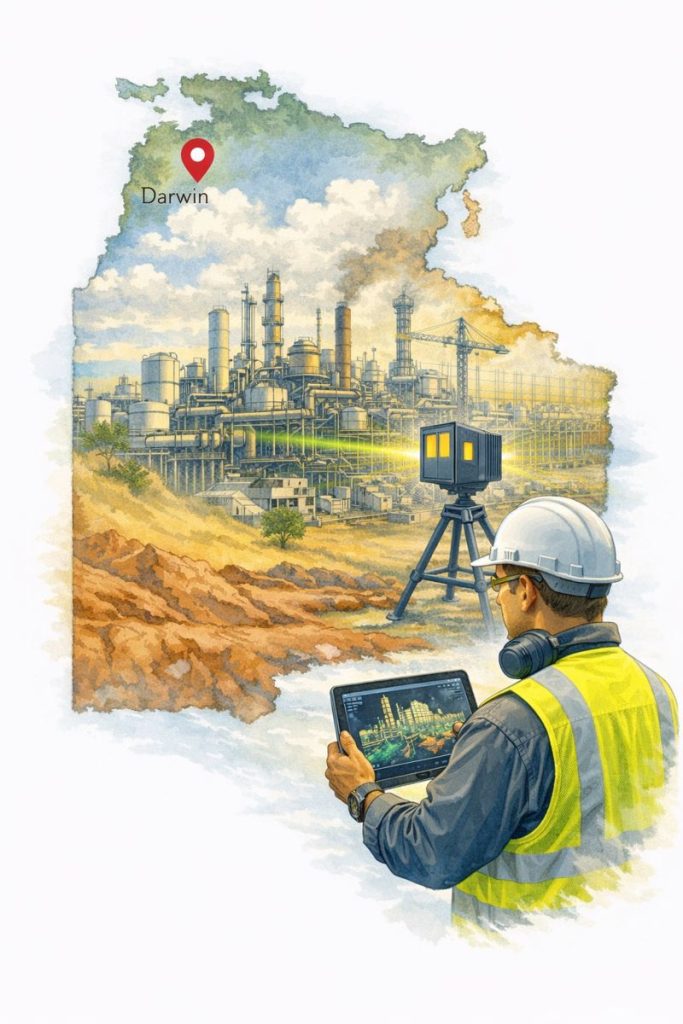
Industrial plant in Darwin being digitally captured with 3D scanning to support engineering design and upgrade planning.

Mechanical Engineering and 3D Scanning Services in Darwin

Supporting defence, industrial and infrastructure projects across Northern Australia

Darwin is a strategic industrial hub for Northern Australia, supporting defence facilities, oil and gas operations, ports, power generation and remote infrastructure servicing. Many of these assets operate in harsh environments and have been upgraded over long periods, making accurate design and modification work highly dependent on reliable as-built information.

Hamilton By Design provides engineering-led 3D laser scanning and mechanical engineering services in Darwin, supporting safer, faster and more accurate project delivery across operating facilities.


Engineer using LiDAR scanner to capture an industrial processing plant near Darwin in the Northern Territory for mechanical and structural design.

Engineering Challenges in Northern Australian Facilities

Industrial and infrastructure assets in the Top End face unique challenges, including:

  • High humidity and corrosion
  • Cyclone-rated structural requirements
  • Remote logistics and limited shutdown windows
  • Ageing infrastructure with incomplete documentation

These factors increase project risk when modifications rely on outdated drawings or manual site measurements.

Engineering-grade reality capture allows accurate design to be completed off-site, reducing rework and improving safety outcomes during installation.


How 3D Laser Scanning Supports Darwin Projects

Plant and Facility Upgrades

When upgrading mechanical systems, pipework, conveyors or process equipment, laser scanning provides accurate spatial data so new components can be designed to fit existing layouts before fabrication.

This is particularly valuable for:

  • Fuel and gas facilities
  • Power generation assets
  • Water and wastewater plants
  • Defence infrastructure

Shutdown and Maintenance Planning

Short shutdown windows are common in remote facilities. Point cloud models support:

  • Access and lifting studies
  • Installation sequencing
  • Safety and exclusion zone planning

This reduces uncertainty and improves coordination between trades during critical maintenance periods.


Structural and Mechanical Retrofits

For strengthening structures, replacing worn equipment or installing new platforms, scanning provides geometry suitable for:

  • Fabrication drawings
  • Structural connection design
  • Mechanical interface modelling

Minimising the need for repeated site visits in high-risk environments.


Mechanical Engineering Services Supported by Reality Capture

Hamilton By Design integrates 3D scanning directly into engineering workflows, including:

  • Mechanical design and drafting
  • Structural support and modification design
  • Scan-to-CAD and scan-to-BIM modelling
  • Fabrication drawing development
  • Installation and constructability reviews

This ensures reality capture delivers practical engineering outcomes, not just visual documentation.


Industries Supported in the Darwin Region

Our engineering and scanning services support a wide range of industries, including:

  • Defence and military facilities
  • Oil and gas processing and storage
  • Port infrastructure and materials handling
  • Power generation and utilities
  • Remote industrial facilities and camps
  • Food and bulk materials processing

These sectors require high levels of accuracy, safety and reliability when modifying operating assets.


Why Engineering-Grade LiDAR Matters

Not all scanning technologies are suitable for industrial engineering.

For mechanical and structural design, projects typically require:

  • Millimetre-level accuracy
  • Long-range capture across large facilities
  • Reliable reference for fabrication and installation

Engineering-grade LiDAR systems provide the precision required to support fabrication-ready design and clash-free installation.


Benefits for Project Owners and Contractors

Using engineering-led reality capture provides measurable advantages:

  • Reduced re-measurement on site
  • Fewer design clashes
  • Improved constructability
  • Safer design development
  • Shorter shutdown durations
  • Greater confidence in project outcomes

In remote locations, avoiding rework and delays has a major impact on overall project cost and schedule.


Supporting Projects Across Northern Australia

While based on the east coast, Hamilton By Design regularly supports regional and remote projects using a combination of:

  • On-site scanning campaigns
  • Remote engineering and modelling workflows
  • Digital collaboration and model review

This allows Darwin-based projects to access specialist engineering and scanning capability without requiring permanent local resourcing.


Final Thoughts

For industrial and infrastructure projects in Darwin, combining mechanical engineering with engineering-grade 3D scanning provides a safer, faster and more reliable way to deliver upgrades in challenging operating environments.

By integrating reality capture directly into design and fabrication workflows, project teams can reduce risk, improve coordination and achieve better construction outcomes across Northern Australiaโ€™s critical assets.

Hamilton By Design logo displayed on a blue tilted rectangle with a grey gradient background
3D LiDAR scanning and 3D modelling service button โ€” laser scanner capturing a point cloud for engineering and CAD modelling
Mechanical engineering services
Name
Would you like us to arrange a phone consultation for you?
Address

Engineering Drafting Services on the Central Coast

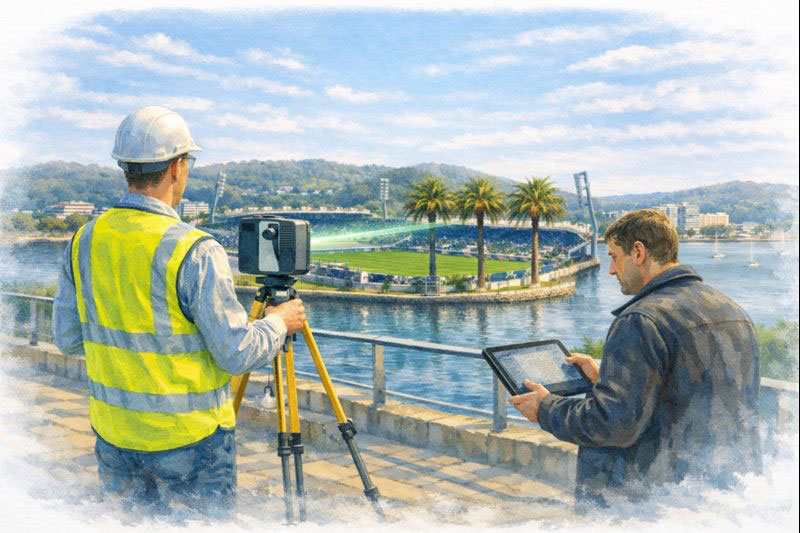
Engineer and client conducting site scanning near Central Coast Stadium in Gosford

Engineering Drafting Services Central Coast NSW | Hamilton By Design

When engineering projects move from concept to construction, clear and accurate drawings are what make the difference between smooth delivery and costly rework. For businesses on the Central Coast, having access to reliable, local engineering drafting services means faster communication, better outcomes, and drawings that actually work on site.

Hamilton By Design, based on the NSW Central Coast, provides professional engineering drafting services to support mechanical, structural, and industrial projects across the region and beyond.


Engineer using LiDAR scanner with client at Gosford Foreshore, Central Coast Stadium and Brisbane Water in background

What Are Engineering Drafting Services?

Engineering drafting is the process of converting design concepts, engineering calculations, and site requirements into detailed technical drawings. These drawings are used by fabricators, machinists, builders, and installers to manufacture and construct components correctly the first time.

Our drafting services typically include:

  • Dimensioned manufacturing drawings
  • Assembly and exploded views
  • Welded fabrication drawings
  • Structural steel and connection details
  • General arrangement (GA) drawings
  • Site and installation layouts

Clear drafting ensures everyone involved in the project is working from the same, accurate information.

Supporting Central Coast Industry & Construction

The Central Coast is home to a wide range of industries, including manufacturing, construction, infrastructure maintenance, and industrial services. We regularly support local businesses, contractors, and engineers who need drafting work completed accurately and efficiently.

Being locally based means we understand:

  • regional fabrication capabilities
  • site access and installation constraints
  • Australian Standards and compliance requirements
  • the importance of practical, buildable solutions

When needed, we can work closely with clients, fabricators, and installers to make sure drawings reflect real-world conditions.

3D LiDAR scanning services on the Central Coast providing engineering-grade laser scanning, point cloud capture, scan-to-CAD modelling and industrial reality capture for infrastructure and industrial projects.
Drafting services on the Central Coast providing engineering drawings, fabrication detailing, as-built documentation, reverse engineering and CAD drafting for industrial and infrastructure projects.
Mechanical engineering services on the Central Coast providing industrial design, plant inspections, pump calculations, reverse engineering and engineering support for manufacturing, infrastructure and heavy industry projects.

Our Engineering Drafting Capabilities

We provide engineering drafting using SolidWorks and proven industry workflows.

Mechanical Drafting

  • Machined component drawings
  • Sheet metal and folded parts
  • Assemblies with bills of materials (BOMs)
  • Practical tolerancing for manufacturing

Structural & Fabrication Drafting

  • Structural steel and fabrication drawings
  • Weld symbols and fabrication notes
  • Platforms, handrails, and access systems
  • Workshop-ready drawing packs

As-Built & Legacy Drawing Updates

  • As-built drawings for existing assets
  • Updating and converting legacy drawings
  • Reverse engineering from physical components

Who We Work With

Our Central Coast engineering drafting services support:

  • manufacturers and machine shops
  • builders and fabricators
  • mining and industrial contractors
  • engineering consultants
  • councils and asset owners

From one-off components to ongoing drafting support, we scale our services to suit your project.

Why Choose a Local Engineering Drafting Service?

Working with a Central Coastโ€“based drafting provider offers real advantages:

  • easier communication and faster turnaround
  • understanding of local suppliers and trades
  • drawings created with fabrication and installation in mind
  • long-term support for updates and modifications

At Hamilton By Design, our drafting work is backed by hands-on engineering and manufacturing experience โ€” not just CAD skills.


Hamilton By Design logo displayed on a blue tilted rectangle with a grey gradient background
3D LiDAR scanning and 3D modelling service button โ€” laser scanner capturing a point cloud for engineering and CAD modelling
Mechanical engineering services

Engineering Drafting You Can Build From

If youโ€™re looking for engineering drafting services on the Central Coast that deliver clear, practical, and construction-ready drawings, Hamilton By Design can help.

Get in touch to discuss your project or request a quote.


Name
Would you like us to arrange a phone consultation for you?
Address


Finite Element Analysis (FEA) engineering simulation button
Mechanical engineering services