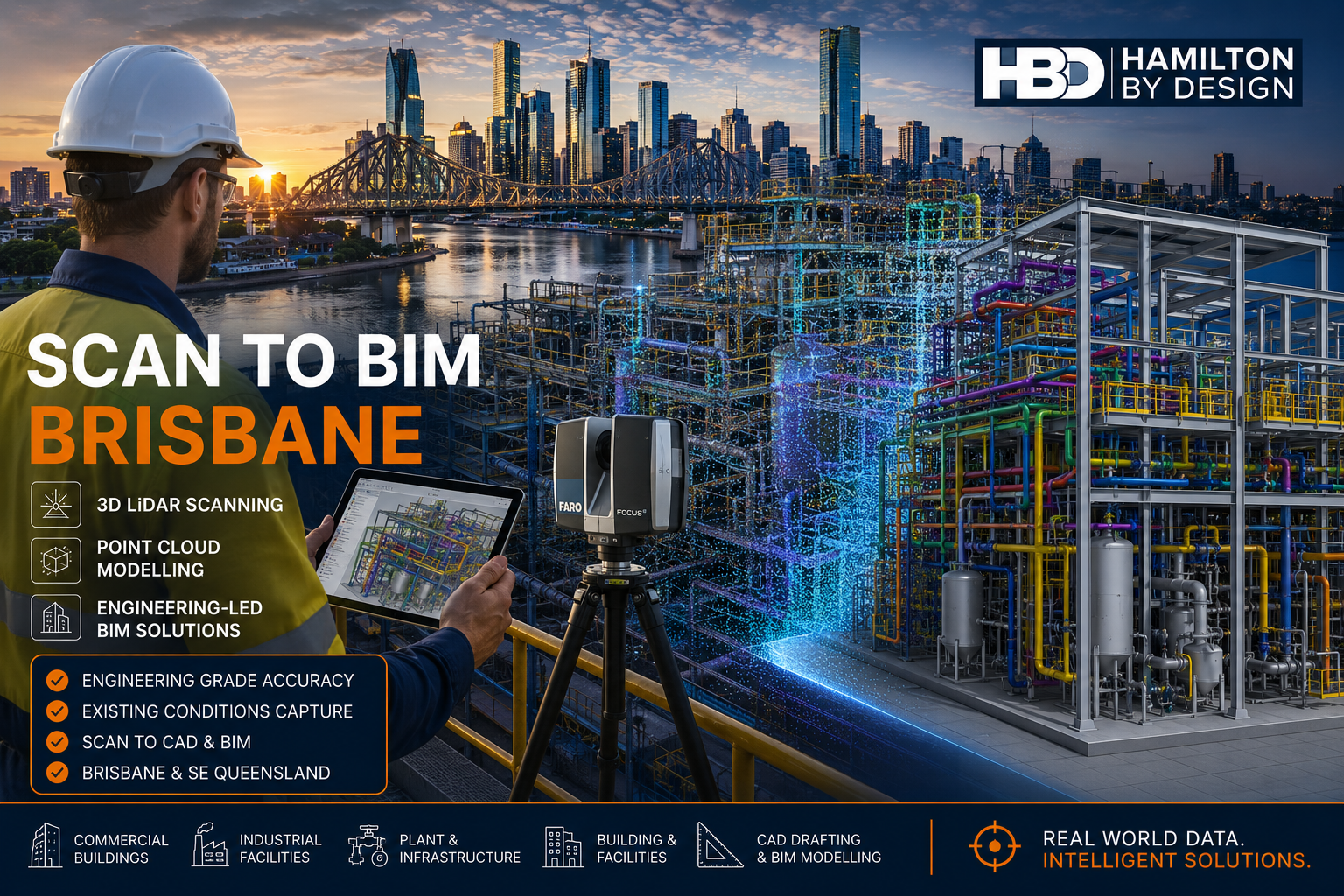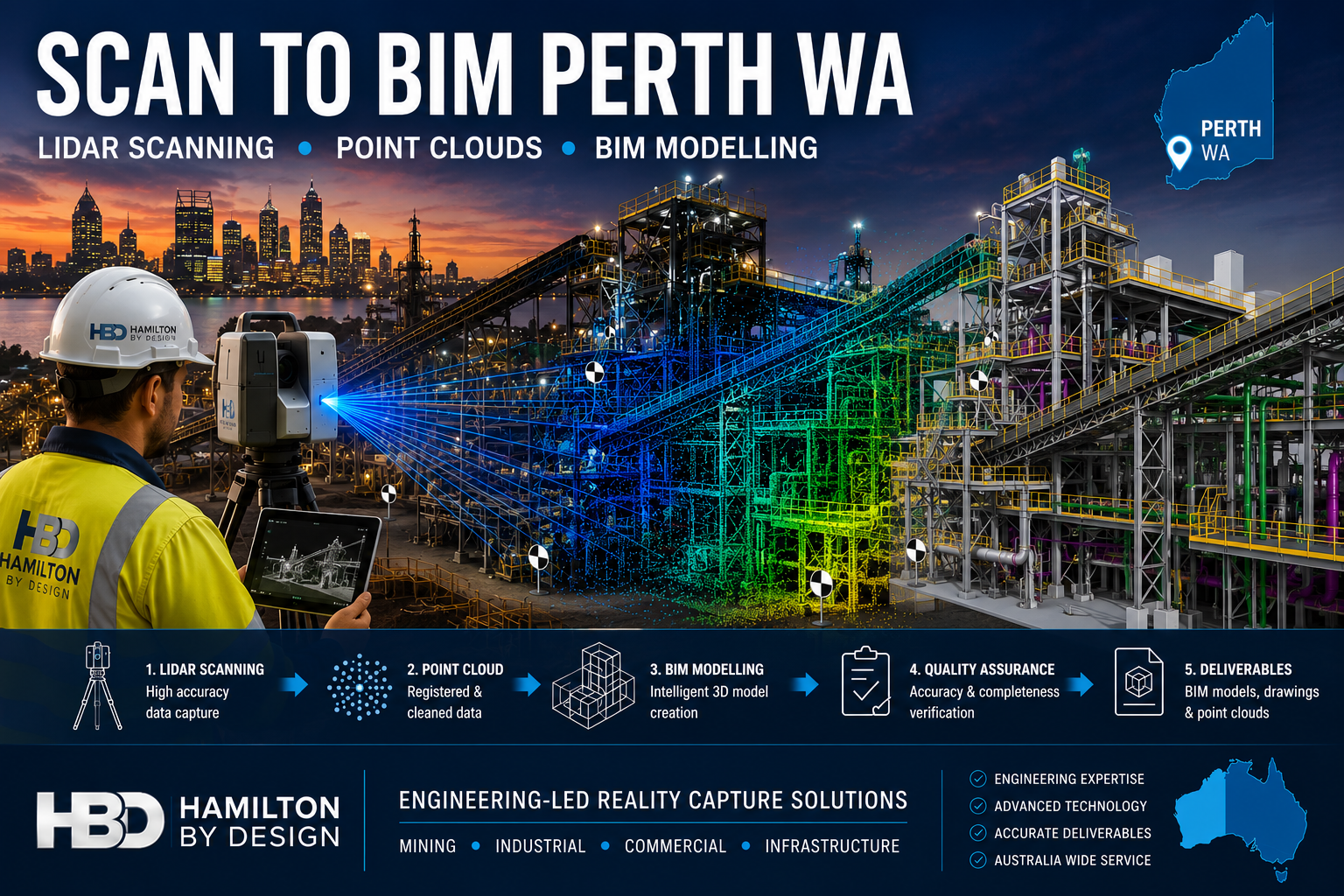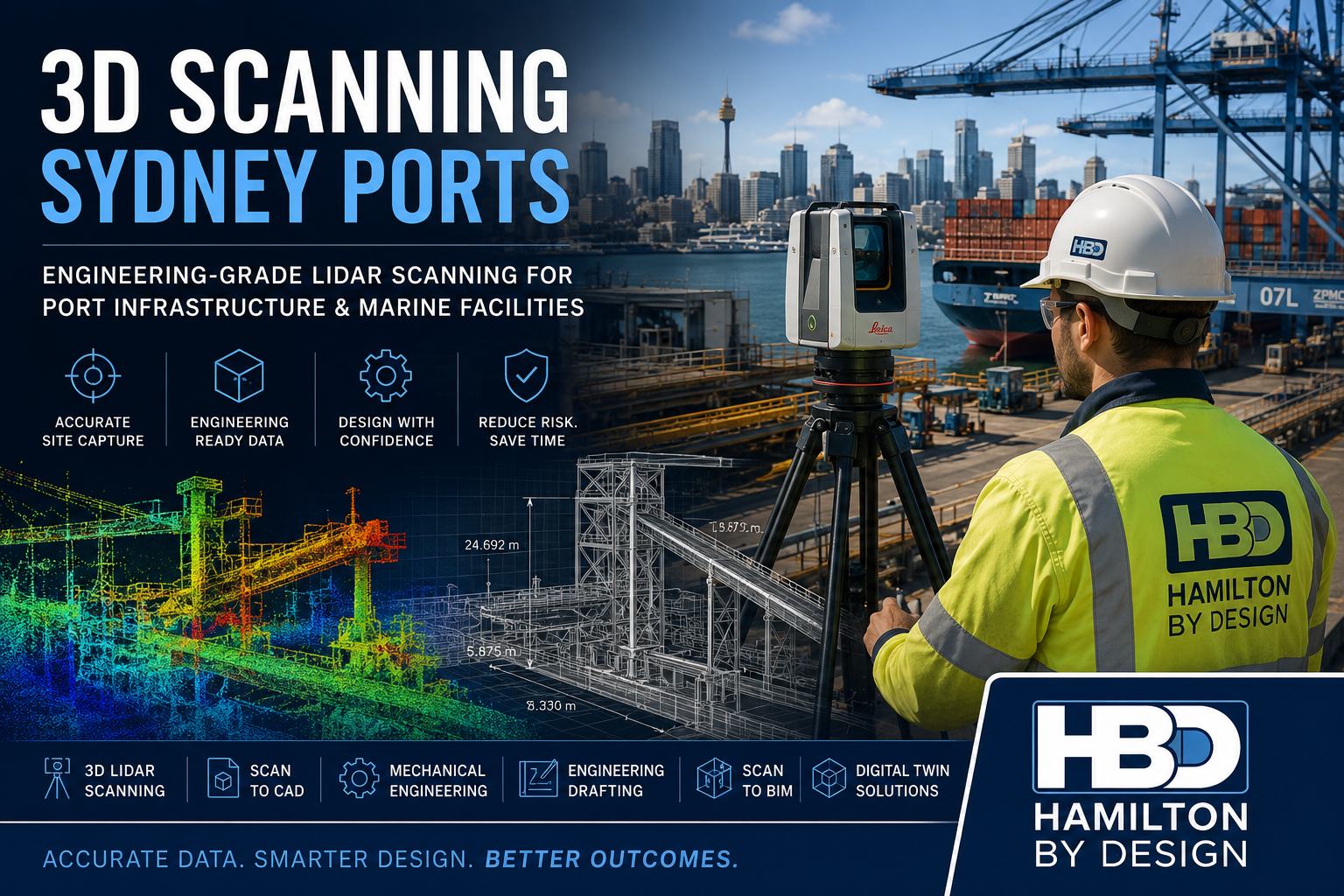
Mech Design Consultants Melbourne

Melbourne mechanical engineering consultancy showcasing governed CAD design, brownfield expertise and controlled drawing revisions.

Mechanical Design Consultants Melbourne | Hamilton By Design

Melbourne’s industrial landscape is evolving rapidly — advanced manufacturing, logistics automation, food processing, infrastructure upgrades and brownfield plant modifications are all demanding stronger mechanical design capability and tighter governance.

At Hamilton By Design, we provide mechanical design consulting services to Melbourne-based businesses that need more than drawings — they need clarity, compliance and confidence.


What We Deliver

As mechanical design consultants servicing Melbourne, our focus is practical engineering solutions that can be built, maintained and certified.

1. Mechanical Design & Drafting

  • 2D and 3D CAD modelling
  • Plant layout development
  • Conveyor and materials handling systems
  • Structural interface coordination
  • Detailed fabrication drawings

2. Brownfield & Upgrade Projects

Melbourne facilities are often live environments. We understand:

  • Working within existing constraints
  • Coordinating multi-vendor inputs
  • Managing drawing revisions (IFR / IFA / IFC)
  • Ensuring installation-ready documentation

3. Engineering Governance

High labour costs in Australia mean rework is expensive. We help you avoid:

  • Building to the wrong drawing revision
  • Supplier misalignment
  • Poor documentation control
  • Unverifiable design assumptions

Our governance approach includes:

  • Revision-controlled drawing systems
  • Structured issue states
  • Design change tracking
  • Documented decision pathways

Industrial mechanical design consultants Melbourne delivering plant modelling, site scanning and engineering governance.

Why Melbourne Clients Choose Mechanical Design Consultants Instead of “Just Drafting”

There is a significant difference between drafting and engineering design.

Drafting produces geometry.
Engineering design produces accountable outcomes.

We focus on:

  • Load paths
  • Maintainability access
  • Compliance pathways
  • Constructability
  • Lifecycle thinking

That means fewer RFIs, fewer shutdown overruns and clearer certification pathways.


Mechanical Design Consultants Melbourne – Industries We Support

We regularly assist projects in:

  • Manufacturing facilities
  • Distribution centres
  • Mining and materials handling
  • Waste and recycling infrastructure
  • Food and beverage processing
  • Energy and utilities

Whether it is a small plant modification or a staged facility upgrade, structured mechanical design reduces downstream risk.


Our Difference: Design + Governance

Many consultants provide CAD. Few provide engineering governance integrated with design delivery.

We combine:

  • 3D scanning and point cloud verification
  • Solid modelling and layout coordination
  • Revision control systems
  • ISO-aligned documentation structures
  • Digital engineering workflows

This means your mechanical design is not just created — it is controlled, traceable and defendable.


When Should You Engage a Mechanical Design Consultant?

You should consider engaging mechanical design consultants in Melbourne when:

  • You are modifying existing plant
  • Multiple vendors are contributing drawings
  • You require certification
  • You need clarity before fabrication
  • You want to reduce rework risk

The earlier structured engineering is introduced, the lower the total project cost.


Supporting Melbourne Projects from Concept to Construction

Hamilton By Design supports:

  • Concept feasibility
  • Detailed mechanical design
  • Fabrication documentation
  • Site coordination
  • As-built documentation
  • Governance setup for future upgrades

We operate with a practical, industry-informed mindset — designs must work not just in CAD, but on site.


Hamilton By Design logo displayed on a blue tilted rectangle with a grey gradient background

3D LiDAR scanning and 3D modelling service button — laser scanner capturing a point cloud for engineering and CAD modelling
Mechanical engineering services

Mechanical Design Consultants Melbourne – Let’s Talk

If your project requires structured mechanical design support with governance discipline, we welcome the opportunity to assist.

Contact Hamilton By Design to discuss your Melbourne project requirements and how we can help deliver engineering clarity, reduced risk and confident outcomes.


Name
Would you like us to arrange a phone consultation for you?
Address
3D CAD Modelling Australia service banner for Hamilton By Design
Australian Drafting logo featuring bold white text reading "Australian Drafting" centred on a blue rounded rectangle background.
Engineering Governance title graphic featuring bold white text reading "Engineering Governance" centred on a blue rounded rectangle background.
Mechanical, Structural & Pipework Drafting service banner by Hamilton By Design featuring white text on a blue background.
Mechanical engineering services
Blue rounded button with the text “SolidWorks Design” in white.
Finite Element Analysis (FEA) engineering simulation button
3D LiDAR Scanning Darwin for engineering surveys, laser scanning, reality capture and point cloud modelling services
3D LiDAR Scanning Australia engineering services for laser scanning, reality capture, scan-to-CAD, Scan-to-BIM and as-built documentation across Australia
3D LiDAR scanning services on the Central Coast providing engineering-grade laser scanning, point cloud capture, scan-to-CAD modelling and industrial reality capture for infrastructure and industrial projects.
3D LiDAR Scanning Perth for engineering surveys, laser scanning, reality capture and point cloud modelling services
3D LiDAR Scanning Sydney for engineering surveys, laser scanning, reality capture and point cloud modelling services
3D LiDAR Scanning Brisbane for engineering surveys, laser scanning, reality capture and point cloud modelling services
3D LiDAR Scanning Canberra for engineering surveys, laser scanning, reality capture and point cloud modelling services
3D LiDAR Scanning Newcastle for engineering surveys, laser scanning, reality capture and point cloud modelling services
3D LiDAR Scanning Adelaide for engineering surveys, laser scanning, reality capture and point cloud modelling services

Engineering-Grade & Metrology-Grade 3D Scanning

Engineering-grade and metrology-grade 3D scanning in an industrial plant environment.

Choosing the Right Tool for the Right Scale

At Hamilton By Design, we do not approach 3D scanning as a visual service — we approach it as an engineering measurement tool.

Different projects require different levels of accuracy, coverage and control. For this reason, we operate with two distinct scanning capabilities:

  • Engineering-Grade Terrestrial Laser Scanning
  • Metrology-Grade Handheld 3D Scanning

Each serves a specific purpose within industrial, mining and mechanical environments.


Engineering measurement workflow combining plant scanning and precision component capture.

Engineering-Grade 3D Scanning

Capturing Entire Environments with Structural Accuracy

Engineering-grade laser scanning is used when capturing:

  • Processing plants
  • Conveyor systems
  • Structural steel platforms
  • Brownfield facilities
  • Infrastructure corridors
  • Stockpiles
  • Full building interiors and exteriors

This system is tripod-based and captures large-scale environments with millimetre-level accuracy across significant distances.

Typical Performance:

  • Up to hundreds of metres scanning range
  • ~2 mm accuracy at 10 m
  • Full 360° environmental capture
  • Suitable for survey control alignment

Used For:

  • As-built plant documentation
  • Structural verification
  • Clearance assessments
  • Shutdown planning
  • Retrofit design
  • Compliance validation under AS standards

If you can walk inside it — this is the correct tool.

This system establishes the macro geometry of a site.


Metrology-Grade 3D Scanning

Capturing High-Precision Component Geometry

Metrology-grade handheld scanning is designed for detailed component-level capture.

This system is compact, highly accurate, and capable of sub-0.05 mm precision.

Typical Performance:

  • Accuracy to ~0.020 mm
  • Volume accuracy to 0.015 mm + scale factor
  • Ideal for complex surfaces and confined spaces
  • Suitable for reverse engineering

Used For:

  • Worn chute liners
  • Flanges and bolt patterns
  • Pump housings
  • Lifting lugs
  • Machined components
  • Distorted structural connections
  • Deep hole geometry
  • Fit-up verification prior to fabrication

If you can hold it — this is the correct tool.

This system establishes the micro geometry of a part.


Why Both Matter

Industrial projects often require both levels of capture.

Example: Mining Shutdown

  1. Engineering-grade scanning captures the entire transfer station.
  2. Metrology-grade scanning captures the worn liner plate.
  3. Data is combined to:
    • Verify fit
    • Model replacement components
    • Reduce fabrication risk
    • Avoid rework during shutdown

This integrated approach reduces:

  • Site time
  • Fabrication errors
  • Installation clashes
  • Cost overruns

Measurement With Engineering Intent

We do not scan for visualisation alone.

We scan to support:

  • Structural compliance
  • Mechanical design
  • FEA validation
  • Access verification
  • Brownfield modification
  • Asset documentation
  • Engineering governance

Scanning without engineering oversight introduces risk.

Scanning with engineering intent reduces it.


When To Use Each Scanner

ScenarioEngineering-Grade ScannerMetrology-Grade Scanner
Full plant capture
Structural steel verification
Conveyor alignment
Large-area as-built survey
Reverse engineering a component
Flange or bolt pattern capture
Wear measurement
Fabrication fit verification
Confined detailed geometry

Hamilton By Design logo displayed on a blue tilted rectangle with a grey gradient background
3D LiDAR scanning and 3D modelling service button — laser scanner capturing a point cloud for engineering and CAD modelling
Mechanical engineering services

National Capability

Hamilton By Design provides:

  • Engineering-grade terrestrial scanning
  • Metrology-grade handheld scanning
  • Integrated modelling and verification
  • Compliance-aligned documentation

Across mining, industrial and infrastructure environments throughout Australia.


If your project requires both macro capture and micro precision, we can deliver a structured scanning approach aligned with engineering outcomes.


3D CAD Modelling Australia service banner for Hamilton By Design
Australian Drafting logo featuring bold white text reading "Australian Drafting" centred on a blue rounded rectangle background.
Engineering Governance title graphic featuring bold white text reading "Engineering Governance" centred on a blue rounded rectangle background.
Mechanical, Structural & Pipework Drafting service banner by Hamilton By Design featuring white text on a blue background.
Mechanical engineering services
Blue rounded button with the text “SolidWorks Design” in white.
Finite Element Analysis (FEA) engineering simulation button
3D LiDAR Scanning Darwin for engineering surveys, laser scanning, reality capture and point cloud modelling services
3D LiDAR Scanning Australia engineering services for laser scanning, reality capture, scan-to-CAD, Scan-to-BIM and as-built documentation across Australia
3D LiDAR scanning services on the Central Coast providing engineering-grade laser scanning, point cloud capture, scan-to-CAD modelling and industrial reality capture for infrastructure and industrial projects.
3D LiDAR Scanning Perth for engineering surveys, laser scanning, reality capture and point cloud modelling services
3D LiDAR Scanning Sydney for engineering surveys, laser scanning, reality capture and point cloud modelling services
3D LiDAR Scanning Brisbane for engineering surveys, laser scanning, reality capture and point cloud modelling services
3D LiDAR Scanning Canberra for engineering surveys, laser scanning, reality capture and point cloud modelling services
3D LiDAR Scanning Newcastle for engineering surveys, laser scanning, reality capture and point cloud modelling services
3D LiDAR Scanning Adelaide for engineering surveys, laser scanning, reality capture and point cloud modelling services

Eng-Grade 3D Scan Australia

Engineering-grade 3D laser scanning of an Australian industrial facility, showing site capture, point-cloud data and CAD modelling.

Engineering-Grade 3D Laser Scanning Across Australia | Hamilton By Design

Precision Capture. Engineering Accuracy. National Coverage.

Hamilton By Design delivers engineering-grade 3D laser scanning and LiDAR services across Australia — supporting mining, heavy industry, infrastructure and commercial projects with accurate, design-ready data.

We don’t just capture point clouds.

We deliver engineered geometry ready for decision-making, modification, compliance and fabrication.


Why Engineering-Grade Matters

Not all 3D scanning is equal.

Survey-grade and visual scans may produce impressive imagery, but engineering projects require:

  • Measurable accuracy
  • Structured point cloud management
  • Traceable coordinate systems
  • Cleaned and classified data
  • CAD-ready deliverables
  • Integration into engineering governance workflows

Our scanning workflows are built specifically for:

  • Mechanical modifications
  • Structural upgrades
  • Lifting device verification
  • Brownfield plant upgrades
  • Shutdown planning
  • Retrofit installations


National Coverage

Hamilton By Design provides scanning services across:

  • New South Wales
  • Queensland
  • Western Australia
  • Victoria
  • South Australia
  • Northern Territory

We regularly support projects in:

Sydney • Newcastle • Central Coast • Brisbane • Mount Isa • Perth • Melbourne • Broken Hill • Darwin

Remote and regional projects are part of our operating model.


Engineering-grade 3D laser scanning workflow from site capture to CAD modelling across Australia.

Our Engineering Workflow

Site Capture

Using professional LiDAR and engineering-grade scanning equipment, we capture:

  • Existing plant layouts
  • Structural steel
  • Mechanical systems
  • Confined and complex environments
  • Large industrial footprints

Data Processing

We clean, register and align point clouds into structured datasets suitable for:

  • 3D modelling
  • Clash detection
  • FEA preparation
  • Fabrication detailing
  • Engineering verification

Engineering Integration

Unlike survey-only providers, we integrate scans into:

  • Solid models
  • Assembly models
  • 2D drawings
  • Revision-controlled documentation
  • Compliance frameworks

This ensures your scan becomes a working engineering asset — not just a visual reference.


Typical Applications

  • Mining plant modifications
  • Conveyor upgrades
  • Chute redesign
  • Lifting beam retrofits
  • Tank and vessel alterations
  • Brownfield automation projects
  • Shutdown verification and planning
  • As-built validation for compliance

LiDAR scanning survey across Australia with engineer capturing industrial site data

Accuracy & Deliverables

We provide:

  • Registered point clouds
  • Cleaned and segmented datasets
  • STEP / IGES / native CAD formats
  • 2D layouts
  • 3D assemblies
  • Structured file naming and revision control

Deliverables can align with your:

  • Engineering standards
  • ISO document control
  • Mining governance frameworks
  • AS compliance requirements

Governance & Data Security

Engineering data is intellectual property.

We integrate our scanning outputs into structured governance frameworks and can support secure data management workflows using enterprise-level platforms.

This means:

  • Controlled access
  • Version traceability
  • Secure archiving
  • 24/7 accessibility

Your geometry remains protected and usable long-term.


Why Hamilton By Design?

✔ Engineering-led scanning (not survey-only)
✔ Mining and heavy industry experience
✔ National capability
✔ Governance-focused deliverables
✔ Integration into design, FEA and fabrication
✔ Practical understanding of shutdown constraints

We understand how scanning supports real engineering decisions — because we operate inside those environments.


Reduce Risk Before You Fabricate

Incorrect geometry causes:

  • Rework
  • Fabrication delays
  • Misalignment on site
  • Compliance issues
  • Cost escalation

Engineering-grade 3D laser scanning removes uncertainty before steel is cut.


Speak With Our Team

If you require engineering-grade 3D laser scanning anywhere in Australia, contact Hamilton By Design to discuss your project.

Precision capture is only valuable when it supports engineered outcomes.


3D LiDAR scanning and 3D modelling service button — laser scanner capturing a point cloud for engineering and CAD modelling
Mechanical engineering services
Name
Would you like us to arrange a phone consultation for you?
Address
3D Scanning Sydney banner promoting engineering-grade 3D laser scanning, LiDAR scanning, and reality capture services by Hamilton By Design.
Mechanical Engineering Sydney banner with white text on a blue background representing Hamilton By Design's mechanical engineering services in Sydney.
Mechanical Drafting and 3D Modelling Sydney banner highlighting Hamilton By Design's CAD drafting, 3D modelling, and engineering design services in Sydney.

Mechanical Engineering Perth WA banner for Hamilton By Design featuring white text on a blue background.
3D Laser Scanning Perth WA banner for Hamilton By Design with white text on a blue background.
SolidWorks Perth WA banner for Hamilton By Design featuring white text on a blue background.
3D CAD Modelling Australia service banner for Hamilton By Design
3D LiDAR scanning and 3D modelling service button — laser scanner capturing a point cloud for engineering and CAD modelling
Mechanical engineering services
3D CAD Modelling Australia service banner for Hamilton By Design
Mechanical, Structural & Pipework Drafting service banner by Hamilton By Design featuring white text on a blue background.
Australian Drafting logo featuring bold white text reading "Australian Drafting" centred on a blue rounded rectangle background.
Blue banner graphic displaying the text "Point Cloud to CAD - Australia" in large white lettering, representing point cloud processing, scan-to-CAD conversion and digital engineering services across Australia.
CHPP Engineering title graphic featuring bold white text reading "CHPP Engineering" centred on a blue rounded rectangle background.
Engineering Governance title graphic featuring bold white text reading "Engineering Governance" centred on a blue rounded rectangle background.
Mechanical engineering services
Australian Drafting logo featuring bold white text reading "Australian Drafting" centred on a blue rounded rectangle background.
3D LiDAR Scanning Hunter & Newcastle banner with white text on a blue background promoting engineering-grade laser scanning services for industrial, mining and infrastructure projects across the Hunter Valley and Newcastle region.
Mechanical Engineering Hunter & Newcastle banner promoting mechanical engineering services for mining, industrial plants, power generation, manufacturing and heavy industry throughout the Hunter Valley and Newcastle region.
Structural Drafting Hunter & Newcastle banner promoting structural drafting services for mining, industrial plants, power generation, manufacturing and infrastructure projects across the Hunter Valley and Newcastle region.
Mechanical Engineering Perth WA banner for Hamilton By Design featuring white text on a blue background.
3D Laser Scanning Perth WA banner for Hamilton By Design with white text on a blue background.
SolidWorks Perth WA banner for Hamilton By Design featuring white text on a blue background.
Fabrication and product design services
Finite Element Analysis (FEA) engineering simulation button
3D LiDAR scanning and 3D modelling service button — laser scanner capturing a point cloud for engineering and CAD modelling
Blue rounded button with the text “SolidWorks Design” in white.
Mechanical drafting services button
Structural drafting services button
Reality Capture Brisbane title graphic with white text on a blue background promoting reality capture, LiDAR scanning and digital engineering services in Brisbane, Queensland.
3D Scanning Brisbane text graphic on a blue background promoting engineering-led laser scanning and reality capture services in Brisbane.

LiDAR Scanning Brisbane title graphic with white text on a blue background promoting terrestrial LiDAR scanning, point cloud capture and reality capture services in Brisbane, Queensland.
SolidWorks Brisbane title graphic with white text on a blue background promoting SolidWorks mechanical design, 3D CAD modelling and engineering drafting services in Brisbane, Queensland.


Mechanical Engineering | Structural Engineering


Design Verification Under AS 4991

Engineer verifying lifting beam design under AS 4991 with FEA stress analysis overlay in fabrication workshop.

Design Verification Under AS 4991: What Fabricators Often Miss

In Australia’s heavy industry and mining sectors, lifting devices are routinely fabricated under AS 4991 – Lifting Devices.

While most fabricators understand the need for compliance, design verification is the area where projects most commonly fall short.

The result?
Rework, certification delays, client rejection, and exposure to liability.

Let’s look at what is often missed — and how to avoid it.


What AS 4991 Actually Requires

AS 4991 does not simply require a fabricated lifting device to be “strong enough.” It requires:

  • Engineered design calculations
  • Verification of limit states
  • Weld design compliance
  • Traceable material selection
  • Independent design review (where applicable)
  • Documentation suitable for certification

Fabrication alone does not equal compliance.


AS 4991 design verification process showing fabrication, engineering analysis and certification workflow.

Engineering Calculations That Don’t Match the Fabrication

One of the most common issues is a disconnect between:

  • The engineered design intent
  • The shop drawings
  • The fabricated outcome

Changes made “on the floor” — such as:

  • Plate thickness substitutions
  • Weld size adjustments
  • Lug geometry tweaks
  • Hole size changes

— can invalidate the original engineering verification.

Without re-verification, certification becomes compromised.


Weld Design is Assumed — Not Verified

Fabricators often focus on structural members but overlook:

  • Fillet weld capacity under combined loading
  • Fatigue considerations
  • Load directionality
  • Throat thickness assumptions

AS 4991 compliance requires welds to be engineered — not assumed.

This is particularly critical in:

  • Spreaders
  • Lifting beams
  • Trunnions
  • Custom lifting frames

No Formal Design Review or Independent Check

The standard requires appropriate verification.

This may include:

  • Independent engineering review
  • Check calculations
  • Formal sign-off by a competent engineer

A workshop “reviewing its own drawings” does not satisfy independent verification.


Load Cases Are Underestimated

Another common oversight is failure to account for:

  • Dynamic factors
  • Off-centre loading
  • Sling angles
  • Shock loading
  • Environmental factors

Lifting devices rarely operate under perfect static conditions.

Design verification must reflect real-world application.


Documentation Gaps

Even when the engineering is sound, documentation is often incomplete:

  • No clear calculation pack
  • No revision control
  • No traceable material certificates
  • No weld procedure documentation
  • No inspection and test plan

Without structured documentation, clients and auditors may reject otherwise adequate equipment.

This is where governance becomes as important as engineering.


Why This Matters

Failure in lifting devices carries:

  • Serious safety risk
  • Legal liability
  • Project shutdowns
  • Insurance exposure

Under Australian WHS law, the duty of care extends beyond fabrication — it includes engineering adequacy.

AS 4991 is not a box-ticking exercise. It is a risk mitigation framework.


The Hamilton By Design Approach

At Hamilton By Design, we support fabricators by providing:

  • Independent design verification
  • Engineering calculation packages
  • Weld capacity review
  • Load case validation
  • Documentation structured for audit readiness
  • Revision-controlled drawing governance

We work alongside workshops — not against them — ensuring compliance before equipment reaches site.

The cost of early verification is small compared to rework, rejected certification, or liability exposure.


3D LiDAR scanning and 3D modelling service button — laser scanner capturing a point cloud for engineering and CAD modelling
Mechanical engineering services

Final Thought

If your lifting device cannot withstand engineering scrutiny on paper, it should not be trusted in the air.

AS 4991 compliance is not about fabrication skill alone — it is about verified engineering intent.

If you would like assistance reviewing your lifting device designs or establishing a verification framework, reach out to the Hamilton By Design team.


Name
Would you like us to arrange a phone consultation for you?
Address

3D CAD Modelling Australia service banner for Hamilton By Design
Finite Element Analysis (FEA) engineering simulation button
Mechanical engineering services

Design Chutes for Maintenance

Engineering infographic explaining chute design challenges for coal, iron ore, hard rock, grains, and powders.

Designing Chutes for Easy Maintenance: The Hamilton by Design Approach

In high-wear environments such as mining, minerals processing and bulk material handling, chutes are constantly subject to abrasion, material impact and scraper wear. But too often, chute design prioritises material flow while overlooking how maintenance crews will access, replace, or adjust wear components and scrapers safely and efficiently.

At Hamilton by Design Co., we engineer chutes not only for performance—but for maintainability. Because downtime, difficult access and costly labour aren’t just inconvenient—they cut straight into your production goals.


Why Maintenance-Friendly Chute Design Matters

Traditional chutes often have one thing in common: they’re hard to service. Common pain points include:

  • Poor access to internal wear liners
  • Limited clearance for scraper removal/replacement
  • Unsafe confined spaces for maintenance crews
  • Complex disassembly for simple tasks

When maintenance teams struggle to reach components, the outcome is predictable: reduced uptime, increased safety risk and higher long-term operating costs.

A better design not only minimises wear—it facilitates wear replacement.


Infographic titled “Hamilton By Design – Solving Particle Physics Problems One at a Time” showing material types like coal, hard rock, iron ore, grains, and fine powders with chute design considerations.

Key Principles in Maintainable Chute Design

1. Access First—Flow Second

At Hamilton by Design we always ask:
Can a technician reach the wear components safely and efficiently?

Practical solutions we use include:

  • Strategic access doors positioned adjacent to high-wear zones
  • Removable panels with quick-release fasteners
  • Tool-less entry where safe to do so

Simple changes like these reduce maintenance time dramatically.


2. Clearance and Space for Wear Component Removal

Every chute design should consider how a liner panel, scraper blade or skirting board will be removed and replaced. That means:

  • Adequate clearance for lifting gear
  • Doors that open wide enough for component extraction
  • Recessed bolt access to avoid removal obstacles

This forward planning translates directly to lower labor hours and fewer workarounds.


3. Modular Wear Components

Instead of large, welded-in liners that require cut-out replacement, we prefer:

  • Modular liner segments
  • Bolted scraper shoes
  • Replaceable wear strips

Modularity means teams can replace only what’s worn—without disassembling the whole chute.


4. Scrapers Designed for Easy Swap-Out

Scraper blades are one of the most frequently replaced items in feed and transfer chutes. Good design ensures:

✔ blades are accessible
✔ blades can be removed with minimal tools
✔ adjustment points are visible and reachable

Hamilton by Design uses engineered scraper blocks and mounting systems that:

  • protect the blade from downstream impacts
  • allow quick blade indexing or change-out
  • can be serviced from outside the chute where possible

5. Safety and Compliance Built In

Maintenance isn’t just easier—it must also be safer. That’s why our designs include:

🔹 lockable access panels
🔹 clear entry/egress paths
🔹 adequate lighting and fall protection points
🔹 confined-space considerations where relevant

Taking safety off the critical path keeps your team productive and compliant.


Mining hopper in a transfer station shown in cutaway, illustrating steady-state material flow, structural load distribution, and engineered hopper design.

Putting It All Together: Benefits You Can Measure

When chute design accommodates maintenance needs, the benefits are real:

OutcomeBenefit
Shorter maintenance windowsMore uptime
Easier scraper changesLower labour cost
Modular wear partsReduced inventory waste
Lower safety riskFewer incidents and stoppages
Better flow + maintainabilityHigher throughput

Hamilton by Design: Chutes Built for the People Who Maintain Them

At Hamilton by Design Co., we recognise that chutes don’t just sit there—they work hard, and your team works hard to keep them running.

That’s why our engineers consider:

✅ material properties
✅ wear patterns
✅ maintenance access
✅ scraper replacement
✅ safety & ergonomics

all from the earliest design stage.

If your operation is battling hard-to-maintain chutes, or you want chutes that perform and serve your maintenance crews well, we’d love to help.

Contact Hamilton by Design today for a design review or quote.


3D LiDAR scanning and 3D modelling service button — laser scanner capturing a point cloud for engineering and CAD modelling
Mechanical engineering services
Name
Would you like us to arrange a phone consultation for you?
Address


3D LiDAR scanning and 3D modelling service button — laser scanner capturing a point cloud for engineering and CAD modelling
Mechanical engineering services
Finite Element Analysis (FEA) engineering simulation button
Mechanical engineering services
3D LiDAR scanning and 3D modelling service button — laser scanner capturing a point cloud for engineering and CAD modelling
Mechanical engineering services
Finite Element Analysis (FEA) engineering simulation button
Mechanical engineering services

From 3D Scanning to Structured Control

Executive infographic showing 3D scanning, 3D modelling and engineering governance integrated into a structured digital workflow.

Why 3D Modelling Must Be Governed

3D scanning captures reality.

3D modelling interprets reality.

Engineering governance protects reality.

In industrial environments, capturing a site with LiDAR is only the beginning. The real value is unlocked when scan data is structured, validated, controlled and maintained within a governed engineering framework.

At Hamilton By Design, we integrate 3D scanning, 3D modelling and engineering governance into a single structured workflow — ensuring your digital environment becomes a reliable operational asset.


3D Scanning: Capturing the Truth

3D laser scanning creates an accurate representation of existing conditions. In brownfield facilities, this is critical.

It allows organisations to:

  • Understand spatial constraints
  • Identify clashes before construction
  • Reduce rework
  • Improve shutdown planning
  • Establish a baseline for upgrades

However, raw scan data alone does not provide governance.

It provides information — not control.


Corporate engineering graphic illustrating the transition from LiDAR scanning to governed digital twin management.

3D Modelling: Turning Data into Usable Engineering

Once scanning is complete, modelling converts point clouds into structured engineering models.

This includes:

  • Parametric plant models
  • Equipment layouts
  • Structural frameworks
  • Pipe and services modelling
  • As-built verification

But modelling without revision discipline can quickly become fragmented.

If models are updated without control, version tracking is lost. If contractors modify geometry without approval workflows, digital twins become unreliable.

This is where governance becomes essential.


Engineering Governance: Protecting the Digital Asset

Engineering governance ensures that:

  • Scan-derived models follow structured revision control
  • Contractors work within defined digital environments
  • Updates are traceable and auditable
  • Digital twins reflect site-approved configurations
  • Brownfield upgrades do not corrupt master models

Without governance, a digital twin becomes a static snapshot.

With governance, it becomes operational infrastructure.


Why Governance Matters in Brownfield Environments

Live industrial facilities are complex and constantly evolving.

Multiple contractors.
Compressed shutdown windows.
Legacy drawings.
Unrecorded historical modifications.

In these environments, uncontrolled digital updates introduce risk.

Governance provides:

  • Role-based access control
  • Structured approval workflows
  • Defined issue status (IFR / IFA / IFC)
  • Change logs and audit trails
  • Platform-based collaboration

It prevents the common scenario where fabricated equipment arrives on site — only to discover it was built to an outdated model or incorrect drawing revision.


Integrated with the 3DEXPERIENCE Platform

To ensure structured digital continuity, Hamilton By Design aligns scanning and modelling workflows within governed digital environments such as the 3DEXPERIENCE Platform:

https://www.3ds.com/3dexperience/

When properly configured, the platform supports:

  • Controlled document lifecycles
  • Revision management
  • Collaborative review environments
  • Secure cloud access
  • Single source of truth governance

The technology is powerful.

The governance framework ensures it delivers.


The Structured Workflow

Hamilton By Design delivers a disciplined process:

  1. 3D Scan — Capture accurate site conditions
  2. Model Development — Convert data into structured engineering models
  3. Governance Framework — Apply revision control and document lifecycle management
  4. Platform Integration — Align within controlled digital environments
  5. Ongoing Control — Maintain digital twin integrity during upgrades

This transforms 3D data into a governed engineering asset.


3D LiDAR scanning and 3D modelling service button — laser scanner capturing a point cloud for engineering and CAD modelling
Mechanical engineering services

More Than Scanning. Structured Engineering Control.

Many providers can scan.

Many can model.

Few provide structured engineering governance across the full lifecycle.

Hamilton By Design delivers the integration of all three — ensuring digital engineering environments remain accurate, controlled and commercially protected.

If your organisation is investing in digital capture, ensure it is supported by governance.

Because a scan without structure is just data.

Governed data becomes infrastructure.

Name
Would you like us to arrange a phone consultation for you?
Address

3D CAD Modelling Australia service banner for Hamilton By Design
Finite Element Analysis (FEA) engineering simulation button
Mechanical engineering services

Mechanical Engineering | Structural Engineering