Engineering Support During Mining Shutdown Projects

Engineering team reviewing plant drawings and digital models during planning for a mining shutdown maintenance project.

Why Engineering Planning Is Critical During Mining Shutdowns

Mining shutdowns are among the most complex operational events in industrial facilities. During these periods, large volumes of maintenance, upgrades, inspections, and equipment replacements must be completed within a tightly controlled timeframe.

Because production stops during shutdown work, every hour of delay can have a significant financial impact on operations.

This is where mining shutdown engineering plays a critical role. Proper engineering preparation ensures that upgrade work, equipment installation, and plant modifications can be executed safely and efficiently during the shutdown window.

Engineering support during shutdown projects often involves planning, documentation, scanning existing infrastructure, and preparing fabrication drawings before the shutdown begins.

At Hamilton By Design, engineering teams support mining shutdown work by providing accurate design data and technical documentation to ensure shutdown activities proceed as planned.


The Challenges of Mining Shutdown Projects

Mining shutdown projects involve coordinating multiple teams working across different areas of the plant simultaneously.

Common challenges include:

โ€ข limited shutdown timeframes
โ€ข complex plant infrastructure
โ€ข multiple contractors working concurrently
โ€ข incomplete or outdated plant drawings
โ€ข installation clashes between new and existing equipment

Without proper engineering preparation, shutdown work can quickly encounter unexpected obstacles that extend downtime and increase costs.

Engineering support helps minimise these risks by ensuring the plant layout, equipment geometry, and installation requirements are clearly understood before work begins.


Engineering Services That Support Shutdown Planning

Mining shutdown engineering typically involves several technical activities carried out prior to the shutdown window.

Plant Layout Verification

Before any upgrade work begins, engineers often need to verify the existing layout of equipment, pipework, and structures.

Many mining facilities have evolved over decades of maintenance work, meaning the actual plant configuration may differ from the original drawings.

Capturing accurate existing conditions ensures that shutdown installation work can proceed without unexpected clashes.

Learn more about capturing existing conditions here:


3D Laser Scanning of Existing Infrastructure

3D laser scanning is frequently used to document plant geometry before shutdown work begins.

Scanning allows engineers to capture millions of measurement points from existing infrastructure and generate accurate point cloud models of the plant environment.

These models help engineers design equipment modifications and plan installation sequences with greater confidence.

More information about engineering-grade scanning services:


Engineering Modelling and Design

Once site data has been captured, engineers can develop digital models used to design plant modifications or equipment upgrades.

These models help engineering teams:

โ€ข design new components that fit existing plant infrastructure
โ€ข identify potential clashes before installation
โ€ข improve coordination between mechanical and structural systems
โ€ข support fabrication of new equipment

The workflow of converting scan data into engineering models is explained here:


Equipment Upgrades During Shutdown Work

Shutdown windows are often used to install new equipment or upgrade existing plant systems.

Typical shutdown upgrade projects may include:

โ€ข conveyor system upgrades
โ€ข pump replacements
โ€ข pipework modifications
โ€ข structural upgrades
โ€ข installation of new process equipment

Engineering support ensures these modifications are designed to integrate with the existing plant layout while meeting operational and safety requirements.


Benefits of Engineering Preparation Before Shutdown

Engineering preparation carried out before the shutdown window helps mining operations complete work more efficiently.

Key benefits include:

โ€ข reduced installation risk
โ€ข improved equipment fitment
โ€ข shorter shutdown durations
โ€ข improved coordination between contractors
โ€ข reduced rework during installation

By preparing engineering documentation in advance, shutdown teams can focus on executing work safely and efficiently.


Supporting Safe and Efficient Shutdown Operations

Mining shutdown engineering is not only about improving efficiency โ€” it also supports safe operations.

Accurate engineering documentation helps ensure that:

โ€ข installation procedures are clearly defined
โ€ข equipment interfaces are properly designed
โ€ข access and maintenance requirements are considered
โ€ข potential safety hazards are identified early

For complex mining plants, this level of preparation significantly improves shutdown execution.


Hamilton By Design logo displayed on a blue tilted rectangle with a grey gradient background

Conclusion

Mining shutdowns are critical operational events where significant maintenance and upgrade work must be completed within a limited timeframe.

Engineering preparation plays an essential role in ensuring shutdown projects are executed safely and efficiently.

Through activities such as plant scanning, engineering modelling, and design preparation, mining shutdown engineering helps reduce operational risk and improve the success of shutdown projects.

Hamilton By Design provides engineering support services to assist mining operations with shutdown planning, plant upgrades, and infrastructure modifications.

3D LiDAR scanning and 3D modelling service button โ€” laser scanner capturing a point cloud for engineering and CAD modelling
Mechanical engineering services
Name
Would you like us to arrange a phone consultation for you?
Address

Our clients
3D CAD Modelling Australia service banner for Hamilton By Design

Mining Infrastructure Design Discussions โ€“ SolidWorks and Industrial Engineering

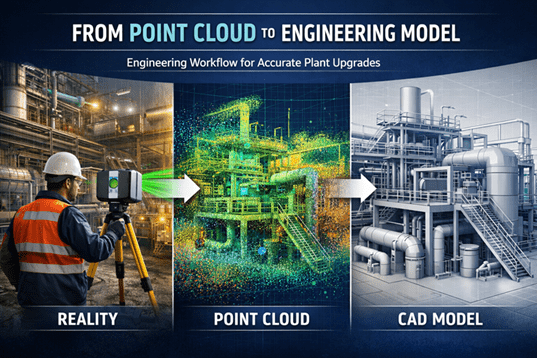
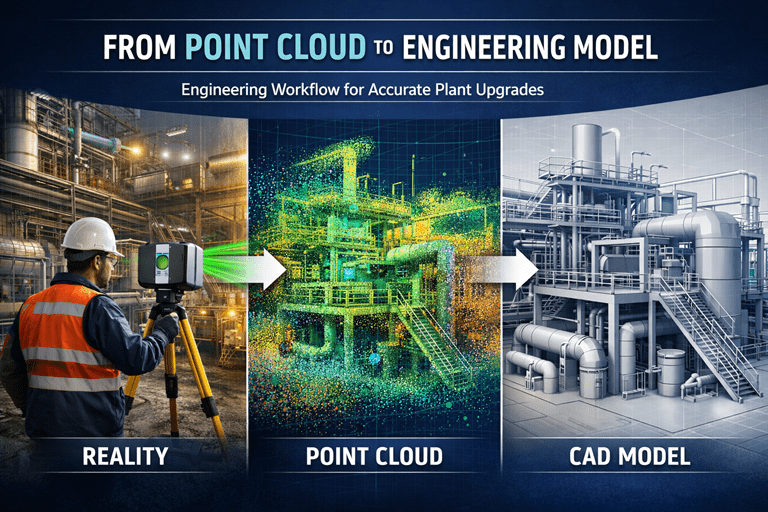
Engineering workflow showing industrial laser scanning, point cloud data, and a CAD model used for plant upgrade design.

Modern mining and industrial infrastructure projects increasingly rely on advanced digital engineering tools to support plant design, equipment upgrades, and infrastructure development. Engineers working in mining environments must often design and model complex systems including materials handling equipment, processing plant infrastructure, and structural steel frameworks.

Engineer using a laser scanner capturing an industrial facility, converting scan data into a point cloud and engineering CAD model.

One of the most commonly used design platforms for mechanical engineering and plant infrastructure modelling is SolidWorks, which allows engineers to develop detailed 3D assemblies and fabrication-ready engineering drawings.

At Hamilton By Design, many projects involve the integration of modern digital engineering workflows with practical industry experience. These workflows often include:

  • Mechanical design for mining infrastructure
  • Bulk materials handling system design
  • Industrial plant layout modelling
  • Point cloud modelling from laser scanning
  • Engineering design for plant upgrades and shutdown projects

Engineering Design in Mining Infrastructure

Mining infrastructure often includes complex systems such as conveyors, transfer stations, processing equipment, and plant structures. Designing or upgrading these systems requires accurate modelling of both existing infrastructure and proposed modifications.

Modern engineering teams frequently combine several technologies during the design process, including:

  • 3D laser scanning to capture existing plant conditions
  • Point cloud modelling to represent real-world infrastructure
  • CAD modelling using platforms such as SolidWorks
  • Engineering drawings and documentation for fabrication and construction

These tools allow engineers to develop more accurate designs and reduce risks when implementing plant modifications or shutdown upgrades.


Engineering Discussions and SolidWorks Design Examples

Engineering professionals often share practical insights, modelling approaches, and design workflows through technical blogs and engineering discussion platforms.

For those interested in SolidWorks modelling techniques, mining infrastructure design concepts, and materials handling engineering, additional discussions can be found on the following engineering blog:

Mining Infrastructure โ€“ SolidWorks Design
https://mininginfrastructuresolidworksdesign.blogspot.com/

The blog explores various topics including mechanical design workflows, industrial equipment modelling, and practical engineering approaches used when designing plant infrastructure.


Supporting Mining Engineering Projects

Hamilton By Design supports mining and industrial operators with engineering services that include mechanical design, infrastructure modelling, and reality capture technologies such as laser scanning.

Learn more about our engineering-grade scanning and modelling services:

Engineering-Grade 3D Laser Scanning for Mining and Industrial Projects
https://www.hamiltonbydesign.com.au/home/engineering-grade-3d-laser-scanning-mining-industrial/

3D Laser Scanning Across Australia
https://www.hamiltonbydesign.com.au/home/engineering-services/3d-laser-scanning/3d-laser-scanning-across-australia/

Capturing Existing Conditions Before Plant Upgrades
https://www.hamiltonbydesign.com.au/capture-existing-conditions-before-plant-upgrades/


3D LiDAR scanning and 3D modelling service button โ€” laser scanner capturing a point cloud for engineering and CAD modelling
Mechanical engineering services

Engineering Knowledge Sharing

Engineering blogs and technical discussion platforms provide an opportunity for engineers, designers, and industry professionals to share knowledge about real-world engineering challenges.

By combining practical industry experience with modern digital engineering tools, the mining and industrial sectors continue to improve the way infrastructure is designed, documented, and upgraded.

For more engineering discussions on SolidWorks design and mining infrastructure modelling, visit:

https://mininginfrastructuresolidworksdesign.blogspot.com

3D CAD Modelling Australia service banner for Hamilton By Design

From Point Cloud to Engineering Model Workflow

Engineering workflow showing industrial laser scanning, point cloud data, and a CAD model used for plant upgrade design.

Modern industrial facilitiesโ€”especially in mining, processing plants, and heavy infrastructureโ€”are complex environments where accurate site information is essential. Before engineers can design upgrades, modifications, or shutdown works, they must understand exactly what exists in the field today.

This is where the point cloud to engineering model workflow becomes critical.

Using engineering-grade 3D laser scanning, engineers can capture millions of spatial measurements in minutes, creating a highly accurate digital representation of existing plant conditions. These measurements form what is known as a point cloud, which becomes the foundation for accurate CAD models, engineering design, and upgrade planning.

Hamilton By Design specialises in this process through engineering-grade reality capture and modelling services across mining and industrial facilities.

Learn more about our scanning services here:
https://www.hamiltonbydesign.com.au/home/engineering-grade-3d-laser-scanning-mining-industrial/


Engineer using a laser scanner capturing an industrial facility, converting scan data into a point cloud and engineering CAD model.

What is a Point Cloud?

A point cloud is a dense collection of spatial coordinates captured by a 3D laser scanner. Each point represents a precise location on a surface such as steelwork, piping, equipment, or structures.

Modern scanners can capture millions of points per second, creating a digital snapshot of the real environment with millimetre-level accuracy.

Once captured, the point cloud becomes the digital foundation used by engineers to reconstruct existing plant geometry.

3D LiDAR scanning and 3D modelling service button โ€” laser scanner capturing a point cloud for engineering and CAD modelling
Mechanical engineering services

Hamilton By Design logo displayed on a blue tilted rectangle with a grey gradient background

The Point Cloud to Engineering Model Workflow

Turning raw scan data into usable engineering information involves several structured steps.

1. Project Planning and Site Preparation

Before scanning begins, engineers define:

  • Required accuracy
  • Project scope
  • Areas to be captured
  • Level of modelling detail required

This ensures the captured data supports downstream engineering tasks such as pipe routing, structural modifications, or equipment installations.

If you are planning a plant modification or shutdown project, capturing accurate field conditions early is essential.

Related article:
https://www.hamiltonbydesign.com.au/capture-existing-conditions-before-plant-upgrades/


2. Laser Scanning and Data Capture

During the field phase, laser scanners are positioned throughout the facility to capture overlapping scans of the plant.

Typical captured elements include:

  • Structural steel
  • Pipework
  • Mechanical equipment
  • Cable trays
  • Platforms and access ways
  • Tanks and vessels

Each scan records millions of measurements to create a complete 3D dataset of the site.


3. Scan Registration and Point Cloud Processing

After scanning, the raw scans must be processed. This includes:

  • Aligning multiple scans together (registration)
  • Removing noise or unwanted points
  • Optimising the dataset for modelling

This processing stage converts raw scan files into a coherent, usable point cloud model ready for engineering analysis.


4. Importing the Point Cloud into CAD Software

Once processed, the point cloud is imported into engineering software such as:

  • SolidWorks
  • AutoCAD
  • Revit
  • Plant design platforms

Within the design environment, the point cloud becomes a reference model that accurately represents real-world conditions. Engineers can rotate, section, and inspect the data to understand plant geometry before any design begins.


5. Engineering Model Creation

Using the point cloud as a guide, engineers begin creating intelligent CAD models of plant assets.

Typical modelling tasks include:

  • Pipe routing and spool modelling
  • Structural steel modelling
  • Equipment placement
  • Conveyor and mechanical system modelling
  • Access platforms and maintenance areas

The result is a clean engineering model derived directly from the scanned environment.

This process converts raw spatial data into parametric engineering objects, enabling design teams to work with accurate plant geometry.


6. Design Coordination and Clash Detection

Once the engineering model exists, it becomes a powerful tool for project planning.

Engineers can:

  • Test upgrade concepts
  • Perform clash detection
  • Evaluate maintenance access
  • Design shutdown modifications
  • Prepare fabrication drawings

Because the model reflects real site conditions, design errors and rework can be significantly reduced.


Why This Workflow Matters in Mining and Industrial Projects

Mining plants and processing facilities often evolve over decades. Drawings may be outdated, incomplete, or inaccurate.

Laser scanning solves this problem by capturing what actually exists today, not what legacy drawings suggest.

Benefits include:

  • Reduced design risk
  • Accurate retrofit engineering
  • Faster shutdown planning
  • Better contractor coordination
  • Improved safety planning

Point cloud modelling also allows engineers to handle complex plant geometries that would be difficult to measure manually.


3D Laser Scanning Across Australia

Hamilton By Design provides engineering-grade 3D laser scanning services across Australia, supporting mining operations, processing plants, and industrial facilities.

Our workflow focuses on delivering engineering-ready models, not just scan data.

Learn more here:
https://www.hamiltonbydesign.com.au/home/engineering-services/3d-laser-scanning/3d-laser-scanning-across-australia/


From Reality Capture to Engineering Insight

The transition from point cloud to engineering model is more than a technical workflowโ€”it is the bridge between physical infrastructure and digital engineering design.

By combining precise laser scanning with engineering modelling expertise, projects can move forward with confidence, knowing that designs are based on accurate site conditions.

At Hamilton By Design, we specialise in helping industrial operators convert reality capture into practical engineering outcomes for plant upgrades, shutdowns, and infrastructure projects.


If you would like to discuss how point cloud modelling can support your next project, explore our engineering scanning services here:

Name
Would you like us to arrange a phone consultation for you?
Address
3D CAD Modelling Australia service banner for Hamilton By Design

Why 3D Laser Scanning is Critical During Mining Shutdowns

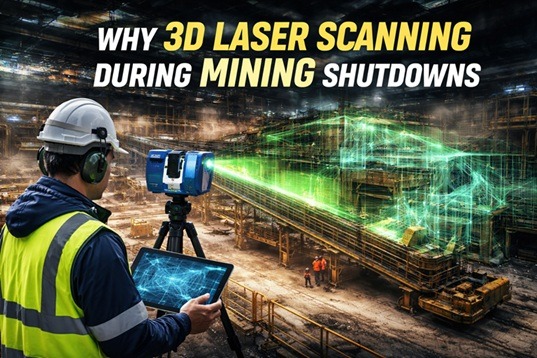
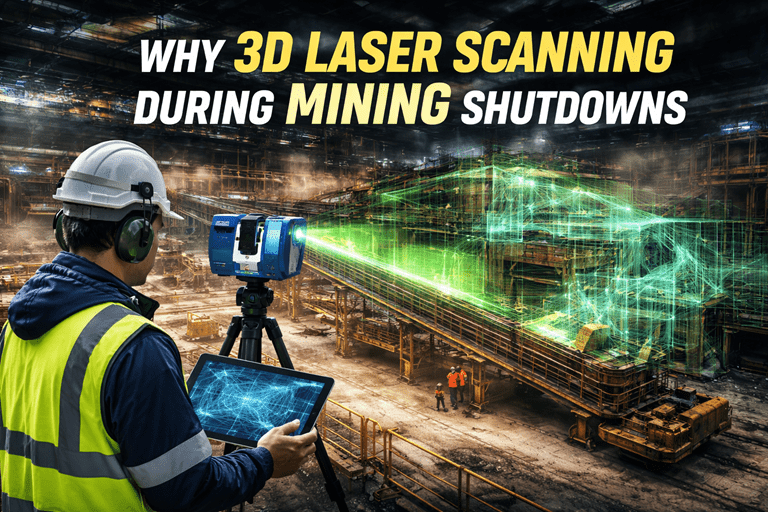
Engineer performing 3D laser scanning of a mining processing plant during a shutdown to capture accurate site conditions.

Mining shutdowns are among the most complex and high-pressure events in heavy industry. Whether the shutdown is scheduled for a processing plant, conveyor system, pump station, or structural upgrade, every hour of downtime carries significant cost.

Engineering teams must inspect, measure, design, fabricate, and install upgrades within an extremely tight timeframe. Any unexpected interference, misalignment, or dimensional error can delay commissioning and extend the shutdown.

This is why 3D laser scanning has become a critical technology for mining shutdown planning and execution.

By capturing millions of accurate measurement points in a matter of minutes, laser scanning provides engineers with a complete digital representation of existing plant conditions. These highly detailed point cloud models allow engineers to design upgrades with confidence before the shutdown even begins.

For mining operations across Australia, this approach significantly reduces risk, improves installation accuracy, and shortens shutdown durations.


3D laser scanner capturing point cloud data across a mining facility during shutdown maintenance.

The Challenge of Mining Shutdown Engineering

Mining infrastructure evolves continuously. Over decades of modifications, maintenance work, and operational changes, the as-built condition of a plant rarely matches the original drawings.

Typical shutdown upgrade projects may involve:

  • Conveyor realignments
  • Chute redesigns
  • Pump station upgrades
  • Structural steel modifications
  • Platform and access upgrades
  • Pipework tie-ins and maintenance replacements

If the design team relies on outdated drawings or manual measurements, there is a significant risk that fabricated components will not fit during installation.

In a shutdown environment, discovering a fit-up issue onsite can quickly escalate into costly delays.

Accurate site data is therefore the foundation of effective shutdown planning.


What is 3D Laser Scanning?

3D laser scanning is a reality-capture technology that records the physical environment using millions of laser measurements per second.

The result is a high-resolution point cloud representing the exact geometry of the plant, equipment, and surrounding structures.

Engineers can then convert this data into detailed 3D models used for:

  • Engineering design
  • Clash detection
  • Fabrication drawings
  • Layout verification
  • Maintenance planning

The technology allows engineers to capture large industrial facilities quickly and accurately while minimizing disruption to site operations.

Learn more about the technology here:


How 3D Scanning Improves Shutdown Planning

Accurate As-Built Plant Models

One of the biggest advantages of laser scanning is the ability to capture the true geometry of an operating plant.

Instead of relying on assumptions, engineers can design within a precise digital twin of the facility, ensuring that new equipment or structures will fit exactly as intended.

This eliminates many of the dimensional errors that traditionally occur during shutdown installations.


Faster Site Data Capture

Traditional surveying methods can take days to measure complex industrial plants.

Laser scanning dramatically accelerates this process by capturing millions of measurements in minutes.

This speed is particularly valuable during shutdown preparation because it allows engineering teams to collect comprehensive data without extended site access requirements.


Clash Detection Before Fabrication

A common shutdown problem occurs when newly fabricated equipment clashes with existing infrastructure such as pipes, structural steel, cable trays, or maintenance access routes.

By designing directly inside the scanned model, engineers can perform clash detection and clearance analysis before fabrication begins.

This ensures that components will install smoothly during the shutdown window.


Reduced Rework and Installation Delays

When plant modifications are designed using precise scan data, installation crews spend less time cutting, grinding, or modifying fabricated components onsite.

This leads to:

  • Faster installations
  • Lower shutdown risk
  • Improved safety outcomes
  • Reduced hot work and manual handling

The result is a more predictable shutdown schedule and fewer unexpected delays.


Supporting Mining Plant Upgrades

3D scanning plays a major role in engineering upgrades across mining processing plants.

Typical projects supported by scanning include:

  • CHPP chute redesign and transfer upgrades
  • Conveyor realignment and structural modifications
  • Pump and piping system upgrades
  • Walkway and platform installation
  • Structural inspections and reinforcement

Hamilton By Design regularly applies this workflow to plant upgrade projects where accurate site information is critical.

You can learn more about this process here:


Engineering-Grade Scanning Across Australia

Mining operations across Australia are increasingly adopting 3D scanning because it enables faster engineering decisions and more reliable shutdown execution.

By combining laser scanning with engineering modelling tools such as SolidWorks and advanced analysis workflows, project teams can move from site capture to fabrication-ready designs much faster than traditional survey methods allow.

Hamilton By Design provides engineering-grade scanning services for industrial facilities across the country.

Explore the national service offering here:


The Future of Digital Mining Shutdowns

The mining industry is rapidly adopting digital engineering tools to reduce operational risk and improve plant reliability.

Technologies such as:

  • 3D laser scanning
  • Digital twins
  • LiDAR modelling
  • Reality capture workflows

are transforming how shutdown projects are planned and delivered.

Instead of reacting to problems during installation, engineers can now identify risks months before the shutdown begins.

For operations where downtime can cost hundreds of thousands of dollars per hour, this shift toward data-driven engineering is a major competitive advantage.

3D LiDAR scanning and 3D modelling service button โ€” laser scanner capturing a point cloud for engineering and CAD modelling
Mechanical engineering services

Hamilton By Design logo displayed on a blue tilted rectangle with a grey gradient background

Final Thoughts

Mining shutdowns demand precision, speed, and certainty.

3D laser scanning provides engineers with the accurate site data needed to design plant upgrades that fit the first time.

By capturing existing conditions with millimetre-level accuracy, engineers can eliminate guesswork, reduce installation risks, and ensure shutdown projects are delivered safely and efficiently.

For modern mining operations, 3D laser scanning is no longer optional โ€” it is a critical tool for successful shutdown execution.


Name
Would you like us to arrange a phone consultation for you?
Address

3D CAD Modelling Australia service banner for Hamilton By Design

Lidar Scanning & Engineering in Cairns

Where Tropical Ecosystems, Marine Industry & Industrial Precision Converge

Cairns is not just a gateway to reefs and rainforests โ€” itโ€™s a strategic hub for marine engineering, coastal infrastructure, environmental projects and remote-region logistics. With its proximity to the Great Barrier Reef, the Wet Tropics rainforest, a busy regional port, defence facilities and frequent heavy industrial and marine maintenance requirements, Cairns demands precision, flexibility and deep engineering expertise.

At Hamilton By Design, we understand those needs. Our offerings โ€” 3D LiDAR laser scanning, mechanical and structural engineering, 3D modelling, and fabrication-ready drafting โ€” are designed to meet the unique challenges of Northern Queensland. Whether itโ€™s a marine-grade fabrication yard, a coastal infrastructure project, a remote-region logistยญics facility or an environmental structure upgrade โ€” we deliver accuracy, compliance and quality from start to finish.


Why Cairns Is a Special Case for Engineering & Digital Surveying

Cairns combines tropical climate, marine exposure, rainforest-adjacent terrain, heritage sensitivity and strategic infrastructure in ways few other regional Australian cities do. Key aspects include:

  • Coastal and marine infrastructure needing resistance to corrosion, saltwater, tidal influence and cyclone-proofing.
  • Environmental and ecological constraints thanks to proximity to reef and rainforest โ€” making accurate as-built documentation, impact assessments, and careful planning essential.
  • A busy port, marine services and vessel maintenance sector โ€” requiring complex structural, mechanical and fabrication-grade precision.
  • Remote-area supply chains and logistics hubs serving Cape York, Torres Strait, Gulf communities and mining / remote-site projects.
  • Mixed infrastructure: commercial, marine, industrial, tourism-facing โ€” often on tight schedules due to weather, seasonal demand or regulatory windows.

In short: for projects in Cairns, thereโ€™s no room for guesswork. Whatโ€™s needed is digital accuracy, detailed planning and structured engineering from scanning to delivery.


3D LiDAR Laser Scanning โ€” The Foundation for Reliable Project Delivery

Most coastal, marine or tropical-region facilities have complexities that challenge traditional surveying: uneven terrain, tide-influenced shorelines, dense vegetation, complex plant and structural geometry, and legacy infrastructure.

Our 3D LiDAR laser scanning solves these problems by capturing an exact โ€œdigital twinโ€ of the existing environment โ€” down to millimetre precision. That means:

  • accurate as-built geometry of buildings, wharfs, vessels, platforms, terrain, and utilities
  • precise mapping of structural steel, supports, pipework, stairs, and foundations
  • detailed spatial data for marine and coastal assets โ€” including elevation, overhangs, clearances, and water-line references
  • baseline data for planning upgrades, maintenance, or compliance audits

For any project where precision is critical โ€” from marine maintenance to coastal-infrastructure retrofits โ€” LiDAR scanning provides the data foundation you can trust.

Learn more about our scanning service: 3D Laser Scanning


3D Modelling & Drafting: Turning Point-Clouds into Work-Ready Designs

Once the scan is complete, Hamilton By Design converts raw point clouds into intelligent 3D CAD models and fabrication-ready drawings. This step is critical when building or refurbishing:

  • marine-grade structural supports and frameworks
  • coastal infrastructure (jetties, boat ramps, wharf extensions)
  • buildings, sheds, warehouses with corrosion-resistant materials
  • processing facilities for marine, aquaculture or remote-region supply
  • environmental or utility infrastructure sensitive to terrain and waterline

We provide:

  • accurate mechanical and structural models
  • general-arrangement (GA) drawings
  • detailed fabrication drawings, isometrics, BOMs
  • interference / clash detection before any welding or cutting begins
  • digital documentation for regulatory compliance, QA and future maintenance

With this workflow, you get clean, precise, build-ready plans โ€” essential for tropical marine environments where mistakes are expensive.


Engineering Services for Cairnsโ€™ Unique Industrial & Marine Needs

From marine maintenance to coastal infrastructure, Cairns projects often involve corrosion resistance, flooding, cyclone-proofing, load-bearing structures, and complex geometry. Hamilton By Design offers:

  • structural design for coastal & marine facilities (jetties, piers, decks, frames)
  • stress, vibration, fatigue and load capacity analysis (especially for salt-water, tidal and dynamic loads)
  • mechanical design for processing plants, workshops, offshore-support equipment
  • piping, ducting, and pressurised systems โ€” especially in marine, water treatment or aquaculture facilities
  • environmental compliance support โ€” ensuring designs accommodate tidal ranges, erosion, storm surges, vegetation and terrain

Whether for a harbour-side workshop, a marine-service shed, or remote-region logistics facility, we deliver structural integrity, regulatory compliance, and practical build plans.


Real-World Use Cases for Cairns โ€” Where Hamilton By Design Adds Value

Marine Infrastructure & Vessel Maintenance

For shipyards, vessel refits, port-side maintenance or marine-support infrastructure, accurate spatial data + structural modelling is critical. LiDAR scanning ensures all geometry is captured โ€” ideal for planning upgrades, retrofits or new builds with tight tolerances.

Coastal & Reef-Adjacent Infrastructure

Marine-environment facilities, boardwalks, eco-tourism builds, boat ramps, jetties or reef-support structures benefit from precise bathymetric / terrain-adjacent scans, corrosion-resistant design, and structural integrity.

Remote-Region Logistics & Utility Facilities

Supplying remote Northern Queensland or island communities often involves complex logistics, tight installation windows and harsh environmental conditions. Digital modelling + drafting supports efficient, low-risk builds and maintenance.

Industrial Workshops & Fabrication Yards

Whether for marine fabrication, equipment repair, small-scale processing, or heavy-duty maintenance โ€” these facilities benefit from accurate as-built documentation, clash detection, and fabrication-ready drawings before work begins.

Environmentally Sensitive / Compliance Projects

Projects near rainforest or reef zones often require strict regulatory compliance, environmental impact design, storm-water management, erosion control, and terrain-aware structural planning. Our engineering services integrate these factors from the start.


Hamilton By Design logo displayed on a blue tilted rectangle with a grey gradient background

Why Cairns & Hamilton By Design โ€” The Perfect Combination

Cairnsโ€™ unique blend of tropical climate, marine exposure, environmental sensitivity, remote-region logistics and industrial demand means projects here arenโ€™t simple. They require precision, compliance, resilience, and planning for extremes.

Hamilton By Design brings together:

  • 3D LiDAR laser scanning for accurate as-built documentation
  • 3D modelling & drafting to turn scan data into build-ready plans
  • Mechanical & structural engineering tailored to marine, coastal and tropical environments
  • End-to-end project documentation for compliance, QA and future maintenance

Whether youโ€™re building a marine maintenance facility, refurbishing coastal infrastructure, servicing remote-region supply chains, or building a fabrication workshop โ€” with Hamilton By Design, you get reliability, clarity and quality.

Our Clients
Name
Would you like us to arrange a phone consultation for you?
Address
3D LiDAR scanning and 3D modelling service button โ€” laser scanner capturing a point cloud for engineering and CAD modelling
Mechanical engineering services
Finite Element Analysis (FEA) engineering simulation button
Mechanical engineering services
3D LiDAR scanning and 3D modelling service button โ€” laser scanner capturing a point cloud for engineering and CAD modelling
Mechanical engineering services


Finite Element Analysis (FEA) engineering simulation button
Mechanical engineering services


3D CAD Modelling Australia service banner for Hamilton By Design


CHPP Engineering title graphic featuring bold white text reading "CHPP Engineering" centred on a blue rounded rectangle background.
Pipework Drafting title graphic featuring bold white text reading "Pipework Drafting" centred on a blue rounded rectangle background.
3D LiDAR Scanning for Engineering Projects title graphic featuring bold white text on a blue rounded rectangle background.

Finite Element Analysis (FEA) engineering simulation button
Structural drafting services button
Mechanical drafting services button


Australian Drafting logo featuring bold white text reading "Australian Drafting" centred on a blue rounded rectangle background.
Engineering Governance title graphic featuring bold white text reading "Engineering Governance" centred on a blue rounded rectangle background.
Engineering-Grade LiDAR Scanning title graphic featuring bold white text on a blue rounded rectangle background.